





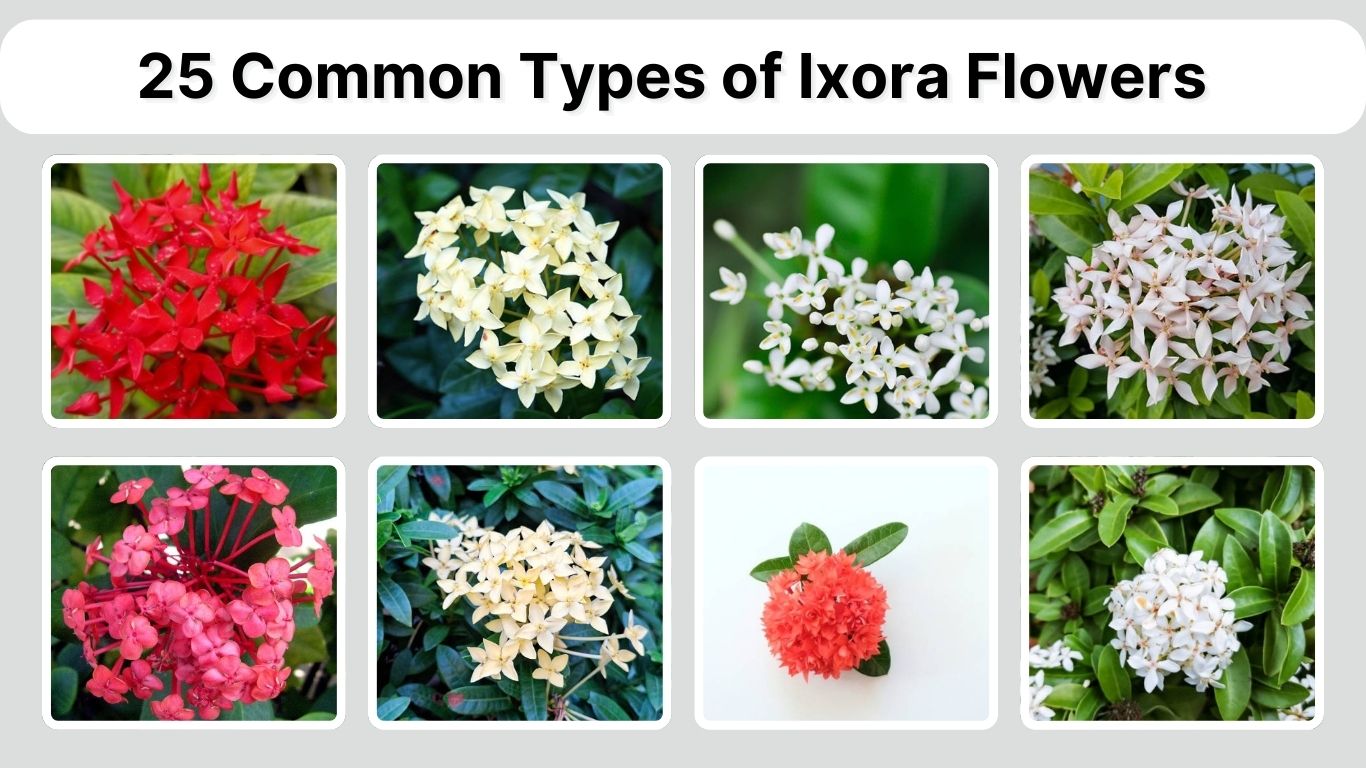
Ixora flowers are popular tropical plants known for their dense clusters of small, star-shaped blooms and glossy green foliage. They are widely grown in gardens, parks, and home landscapes for their bright colors, long flowering season, and ability to attract butterflies and other pollinators. With hundreds of species found across Asia and surrounding regions, Ixora includes both compact shrubs and small tree forms. These plants thrive in warm climates and are especially valued for hedges, borders, and decorative ornamental planting.
1. Ixora coccinea (Jungle Geranium / Flame of the Woods)
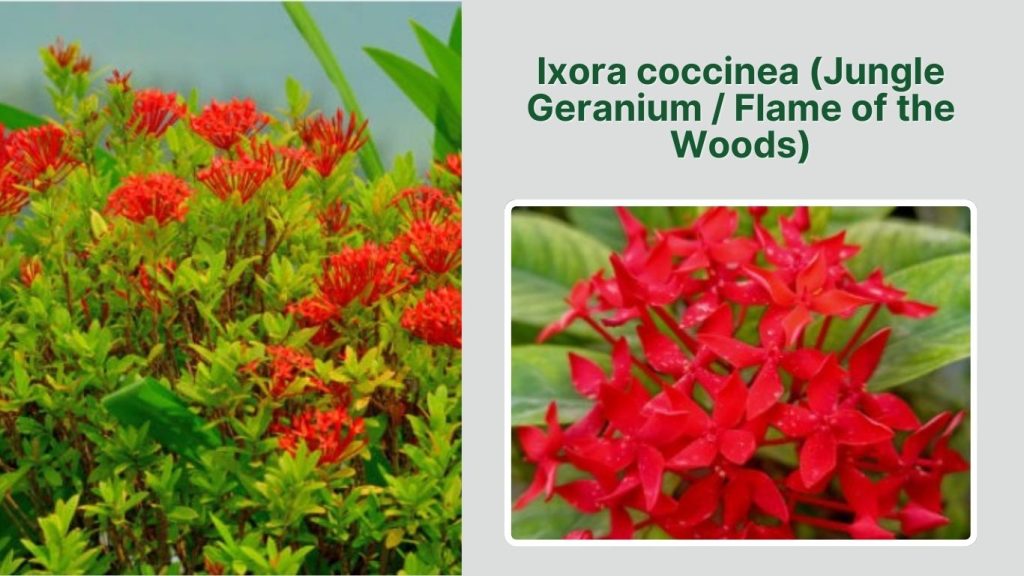
Ixora coccinea is one of the most well-known and widely cultivated Ixora species, admired for its dense clusters of bright, star-shaped flowers. It is commonly grown in tropical and subtropical gardens as a hedge, ornamental shrub, or container plant. The flowers bloom in rounded heads and are especially valued for their long flowering season and strong visual impact.
Identification
- Evergreen tropical shrub with glossy, leathery green leaves
- Flower clusters form dense, rounded heads at the branch tips
- Individual flowers are small, tubular, and star-shaped
- Common flower colors include red, orange, pink, and yellow
- Typically grows 3–6 feet tall in garden settings
Flower Characteristics
Ixora coccinea produces compact, ball-shaped inflorescences made up of dozens of tiny tubular flowers. Each flower opens into four pointed petals, creating a star-like look. The blooms are lightly fragrant and appear repeatedly throughout warm seasons, making the plant a favorite for continuous color.
Habitat and Growth
This species is native to South Asia and thrives in warm, humid climates. It prefers bright sunlight to partial shade and grows best in acidic, well-drained soil. Ixora coccinea is commonly used in tropical landscaping, borders, and as a flowering hedge in frost-free regions.
Uses and Importance
Ixora coccinea is popular in ornamental gardening, religious offerings, and traditional medicine in some cultures. Its vibrant flower clusters attract butterflies and other pollinators, making it a valuable plant for decorative gardens and biodiversity-friendly landscapes.
2. Ixora chinensis (Chinese Ixora)
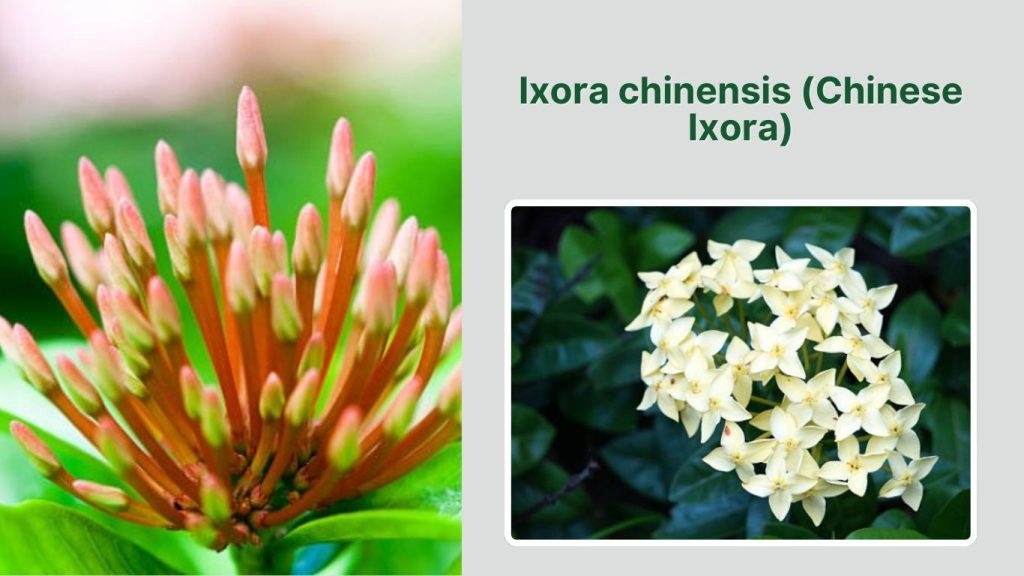
Ixora chinensis is a popular ornamental Ixora species known for its large flower clusters and soft, glossy foliage. It is widely cultivated in tropical and subtropical regions for hedges, garden borders, and container planting. The plant blooms generously, producing colorful rounded heads that add long-lasting brightness to landscapes.
Identification
- Evergreen shrub with smooth, oval, glossy green leaves
- Produces large, rounded flower clusters at branch tips
- Flowers are small, tubular, and star-shaped
- Common colors include red, pink, orange, and coral
- Typically grows 4–8 feet tall under garden conditions
Flower Characteristics
The flowers of Ixora chinensis are tightly packed into broad, dome-shaped clusters. Each tiny bloom has a narrow tube and four spreading petals. Compared to many other Ixora species, the clusters are often larger and more loosely rounded, giving the plant a fuller, showier appearance when in bloom.
Habitat and Growth
Ixora chinensis is native to southern China and Southeast Asia. It grows best in warm climates with bright light, high humidity, and acidic, well-drained soil. Regular watering and pruning encourage bushy growth and repeated flowering throughout the warm months.
Uses and Importance
This species is widely used as an ornamental hedge, foundation plant, and patio shrub. Its long flowering period and tolerance for shaping make it a favorite in formal gardens. The blooms also attract butterflies and other pollinators, supporting garden biodiversity.
3. Ixora finlaysoniana (White Jungle Flame)
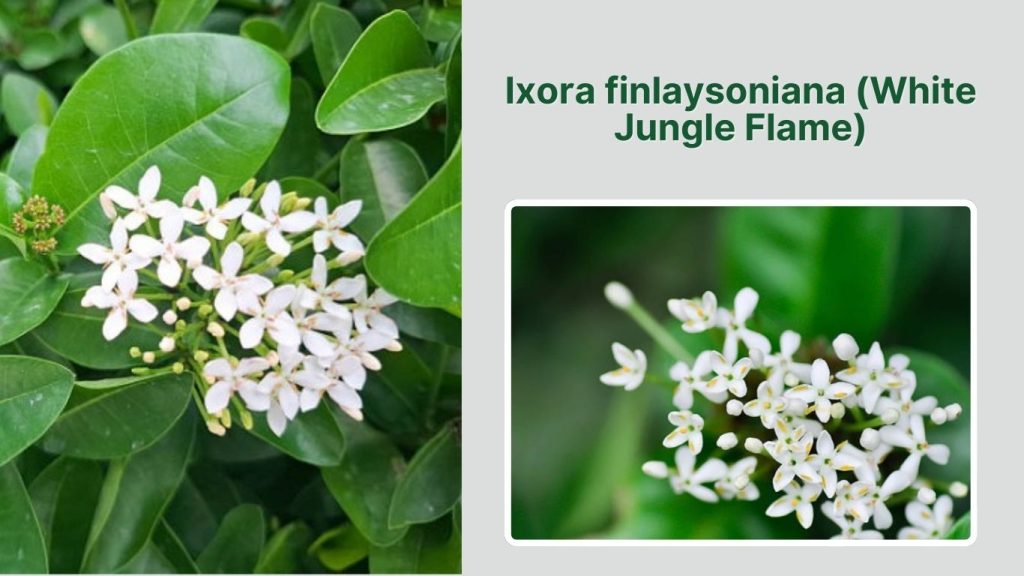
Ixora finlaysoniana is a striking Ixora species best known for its elegant white flower clusters and lush, tropical foliage. It is often grown as a landscape shrub or small ornamental tree, valued for its bright blooms that contrast beautifully against dark green leaves.
Identification
- Evergreen shrub or small tree with broad, glossy leaves
- Produces large, rounded clusters of pure white flowers
- Individual flowers are tubular with four spreading lobes
- Blooms appear mainly in warm seasons
- Can grow 6–12 feet tall in favorable tropical conditions
Flower Characteristics
The flowers of Ixora finlaysoniana are creamy white to pure white and form large, showy clusters. Each bloom has a long slender tube and four pointed petals, giving the cluster a soft, starry look. The light color and subtle fragrance make this species especially popular for ornamental gardens.
Habitat and Growth
Native to Southeast Asia, Ixora finlaysoniana thrives in tropical climates with bright light and humid air. It prefers slightly acidic, fertile, well-drained soil and responds well to regular watering. With proper care, it develops into a dense, attractive flowering shrub.
Uses and Importance
This species is commonly planted as a feature shrub, flowering screen, or small decorative tree. Its white flowers are often used in ceremonial and ornamental settings, and the plant’s nectar-rich blooms help attract butterflies and other pollinating insects.
4. Ixora javanica (Javanese Ixora)
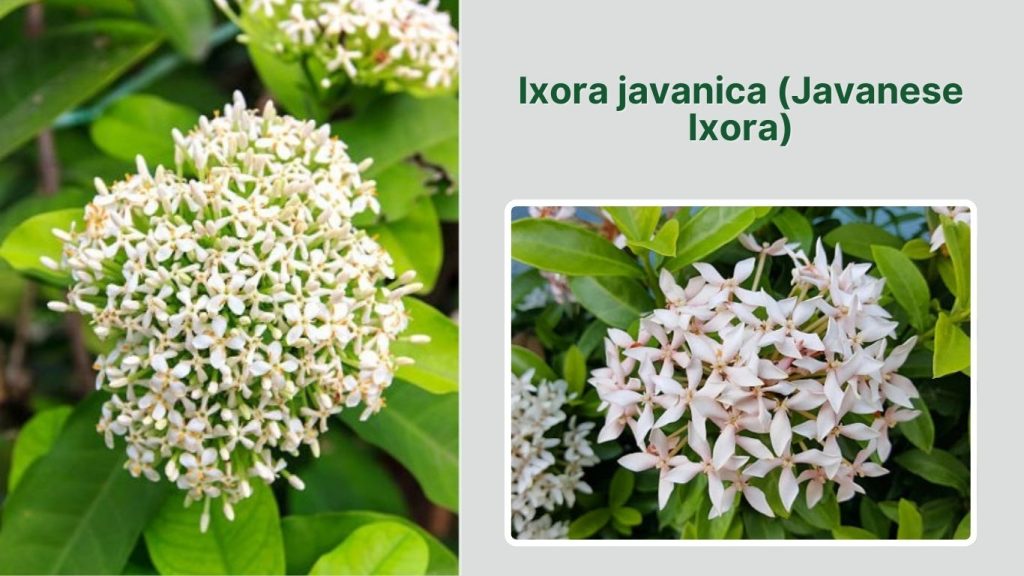
Ixora javanica is a vigorous, showy Ixora species admired for its extra-large flower heads and lush tropical appearance. It is widely planted in warm climates as a hedge, screen plant, or flowering shrub, where its bold blooms create strong visual impact throughout much of the year.
Identification
- Evergreen shrub or small tree with large, glossy leaves
- Produces very large, rounded clusters of tubular flowers
- Individual flowers are four-petaled and star-shaped
- Common colors include bright red, orange, and coral
- Can grow 8–15 feet tall in tropical landscapes
Flower Characteristics
The flowers of Ixora javanica are tightly grouped into oversized, dome-shaped clusters that can be much larger than those of common garden ixoras. Each bloom opens into four pointed lobes, forming vivid, long-lasting floral displays that often cover the plant during peak blooming.
Habitat and Growth
Native to Java and surrounding parts of Southeast Asia, this species thrives in full sun to light shade, warm temperatures, and humid conditions. It prefers acidic, well-drained soil and benefits from regular pruning to maintain shape and encourage dense flowering.
Uses and Importance
Ixora javanica is widely used in tropical landscaping as a hedge, privacy screen, or focal shrub. Its abundant nectar attracts butterflies and bees, while its large, colorful flower clusters make it a favorite for parks, resorts, and home gardens.
5. Ixora macrothyrsa (Large-Flowered Ixora)
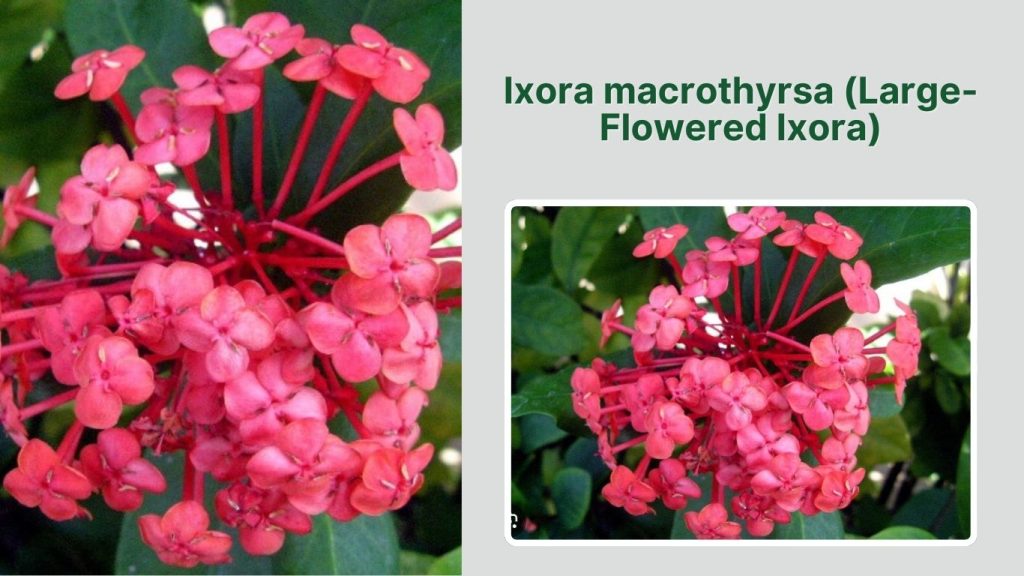
Ixora macrothyrsa is a bold, ornamental Ixora species recognized for its impressive, elongated flower clusters and vigorous growth. It is often planted as a landscape shrub or small tree in tropical regions, where its large blooms and lush foliage create a strong decorative presence.
Identification
- Evergreen shrub or small tree with thick, glossy green leaves
- Produces large, often elongated or rounded flower clusters
- Flowers are tubular with four spreading petals
- Common colors include deep red to bright scarlet
- Typically grows 8–12 feet tall in warm climates
Flower Characteristics
The blooms of Ixora macrothyrsa are larger and more elongated than many other Ixora species. Dozens of tubular flowers are packed closely together, forming dramatic clusters that stand out clearly against the foliage. The intense red coloration makes this species especially eye-catching when in full bloom.
Habitat and Growth
Native to Southeast Asia, Ixora macrothyrsa thrives in hot, humid environments with plenty of light. It prefers acidic, well-drained soil and consistent moisture. With space to grow, it develops into a robust shrub or small ornamental tree.
Uses and Importance
This species is valued mainly for landscaping, where it is used as a feature plant, screen, or flowering hedge. Its large nectar-rich blooms attract pollinators, and its upright growth habit makes it suitable for tropical gardens and roadside plantings.
6. Ixora stricta (Narrow-Leaved Ixora)
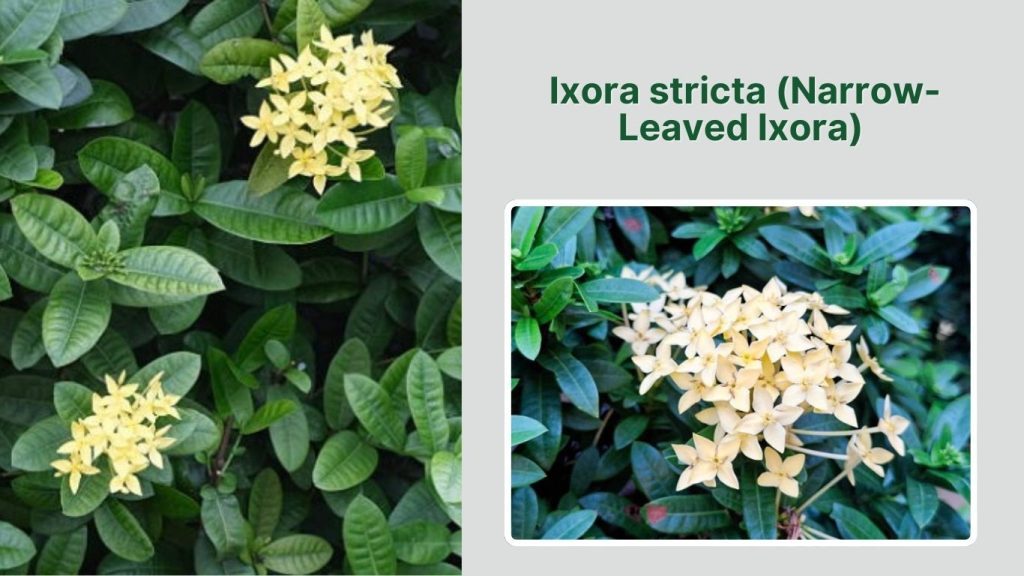
Ixora stricta is a less common but attractive Ixora species known for its narrower leaves and neatly formed flower clusters. It is often grown as an ornamental shrub in tropical gardens, appreciated for its tidy growth habit and consistent blooming.
Identification
- Evergreen shrub with narrow, elongated green leaves
- Produces compact, rounded clusters of tubular flowers
- Individual flowers are small with four pointed lobes
- Flower colors commonly range from red to orange
- Usually grows 4–7 feet tall in garden settings
Flower Characteristics
The flowers of Ixora stricta are borne in tight, rounded heads at the ends of branches. Each small tubular bloom opens into four star-like petals. Though the clusters are usually smaller than those of some Ixora species, they appear frequently and provide steady color.
Habitat and Growth
This species is native to tropical parts of South and Southeast Asia. It grows best in warm temperatures, bright sunlight, and slightly acidic, well-drained soil. Regular pruning helps maintain a dense, bushy form and encourages repeated flowering.
Uses and Importance
Ixora stricta is commonly used for low hedges, borders, and ornamental shrub plantings. Its neat foliage and manageable size make it suitable for smaller gardens. Like other ixoras, it supports butterflies and pollinating insects.
7. Ixora rosea (Pink Ixora)
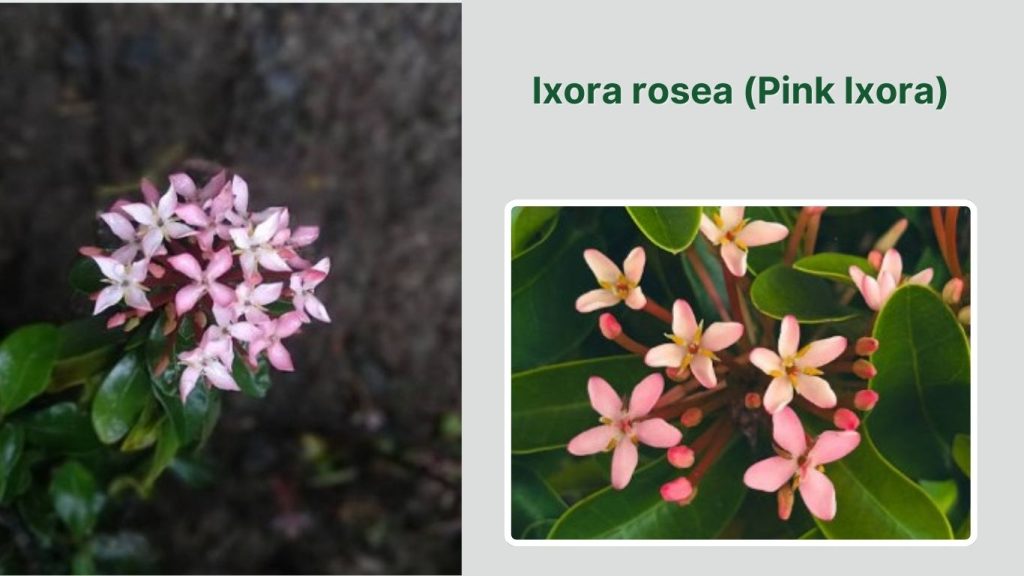
Ixora rosea is a charming Ixora species known for its soft pink flower clusters and graceful ornamental appeal. It is widely cultivated in tropical and subtropical regions for garden beds, hedges, and container planting, where its gentle color adds contrast among brighter Ixora varieties.
Identification
- Evergreen shrub with smooth, glossy green leaves
- Produces rounded clusters of pink, tubular flowers
- Individual blooms are small and star-shaped
- Flowers appear mainly in warm, sunny seasons
- Typically grows 3–6 feet tall
Flower Characteristics
The flowers of Ixora rosea form compact, dome-shaped heads made up of many tiny pink blooms. Each flower has a slender tube and four spreading petals. The soft coloration and dense clustering give the plant a delicate yet vibrant look during peak blooming.
Habitat and Growth
This species thrives in warm, humid climates with bright light. It prefers acidic, well-drained soil and regular watering. Ixora rosea responds well to light pruning, which helps keep the plant compact and promotes more frequent flowering.
Uses and Importance
Ixora rosea is commonly used in ornamental landscaping, especially where softer tones are desired. It works well as a low hedge, border shrub, or decorative pot plant. The flowers attract butterflies and other beneficial pollinators.
8. Ixora banduca (Banduka Ixora)
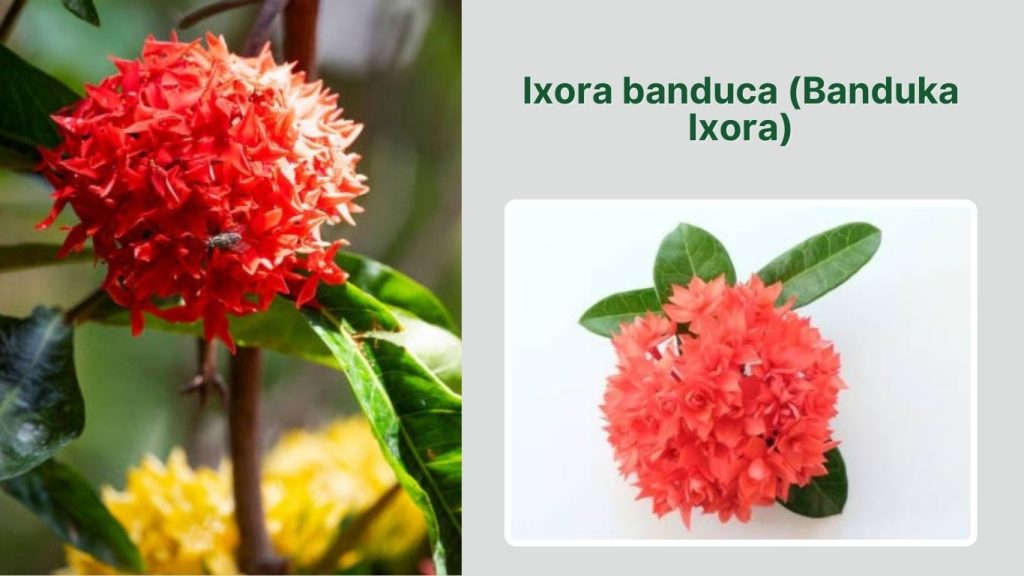
Ixora banduca is a tropical Ixora species admired for its bold red flower clusters and dense, leafy growth. It is often planted as an ornamental shrub or small tree in warm regions, where its bright blooms create strong visual interest across long flowering periods.
Identification
- Evergreen shrub or small tree with thick, dark green leaves
- Produces rounded clusters of bright red tubular flowers
- Individual flowers open into four pointed lobes
- Blooms appear at branch tips during warm seasons
- Can grow 6–12 feet tall in favorable conditions
Flower Characteristics
The flowers of Ixora banduca are tightly packed into rounded heads made up of numerous slender, tubular blooms. When open, the four-petaled flowers form a star-like pattern. The vivid red coloration makes this species especially noticeable in tropical landscapes.
Habitat and Growth
Native to parts of South and Southeast Asia, Ixora banduca thrives in warm, humid climates. It prefers full sun to partial shade and slightly acidic, well-drained soil. Consistent watering and light pruning support healthy growth and frequent flowering.
Uses and Importance
This species is used mainly in ornamental gardening as a hedge, screen plant, or flowering accent shrub. Its nectar-rich flowers attract butterflies, bees, and other pollinators, adding ecological value to decorative gardens.
9. Ixora nigricans (Black-Stem Ixora)
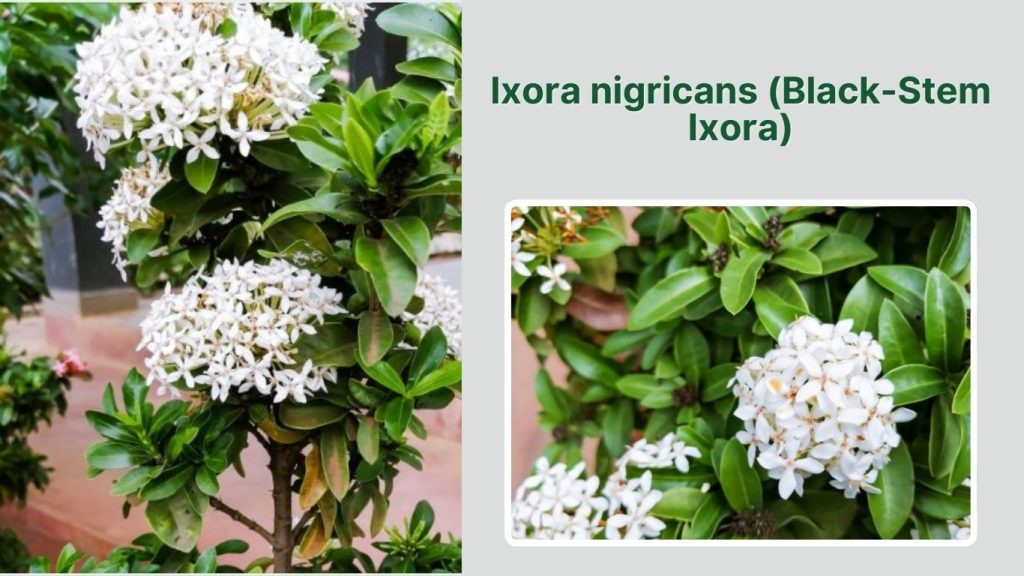
Ixora nigricans is a distinctive Ixora species recognized for its darker stems and richly colored flower clusters. It is less commonly grown than some garden ixoras, but it is valued in tropical landscaping for its unique appearance and attractive blooms.
Identification
- Evergreen shrub with dark, sometimes purplish stems
- Produces rounded clusters of tubular flowers
- Individual flowers are small and four-petaled
- Flower colors commonly range from red to deep orange
- Typically grows 5–9 feet tall
Flower Characteristics
The flowers of Ixora nigricans are arranged in dense, rounded heads at the ends of branches. Each bloom opens into a star-like shape with four pointed lobes. The contrast between the dark stems and bright flowers gives this species a striking ornamental look.
Habitat and Growth
This species is native to tropical regions of South and Southeast Asia. It grows best in warm temperatures, high humidity, and bright light. Slightly acidic, well-drained soil and regular watering help maintain healthy growth and steady flowering.
Uses and Importance
Ixora nigricans is mainly planted as an ornamental shrub or screen plant. Its unique stem coloration and vibrant blooms make it suitable for botanical gardens and collectors. Like other ixoras, it supports pollinators such as butterflies and bees.
10. Ixora pavetta (Pavetta-Leaved Ixora)
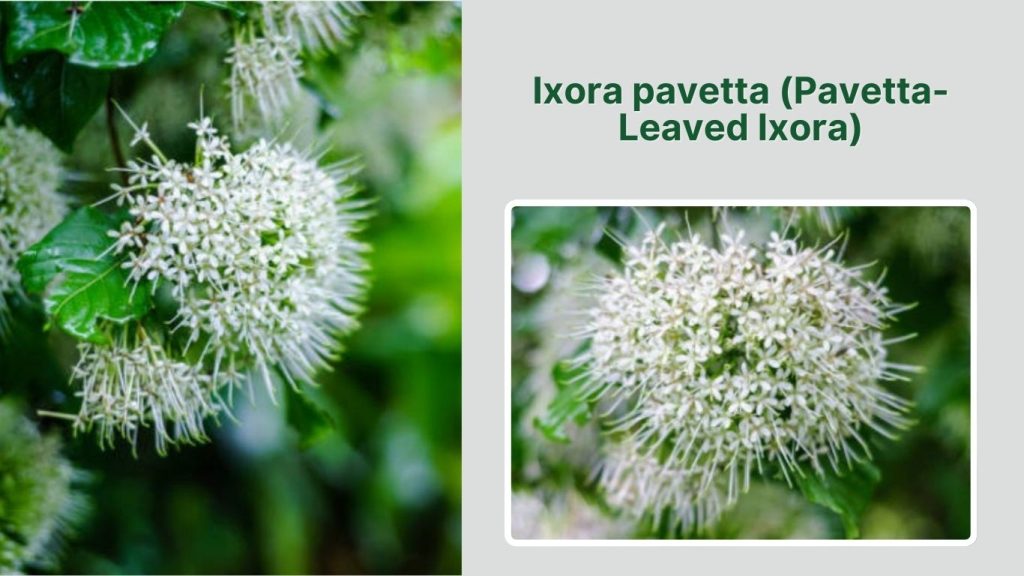
Ixora pavetta is a tropical Ixora species known for its broad leaves and neatly arranged flower clusters. It is often grown as an ornamental shrub or small tree, valued for both its attractive foliage and its bright, clustered blooms.
Identification
- Evergreen shrub or small tree with broad, smooth green leaves
- Produces rounded clusters of tubular flowers at branch tips
- Individual flowers are small, star-shaped, and four-lobed
- Common flower colors include red to orange
- Usually grows 6–12 feet tall
Flower Characteristics
The flowers of Ixora pavetta are grouped into compact, dome-shaped clusters. Each tubular bloom opens into four pointed petals, forming a star-like pattern. The clusters are typically medium to large in size and provide a strong splash of color against the wide green leaves.
Habitat and Growth
Native to tropical Asia, Ixora pavetta thrives in warm, humid climates with bright sunlight. It prefers fertile, slightly acidic, well-drained soil and regular watering. With adequate space, it develops into a well-branched ornamental shrub.
Uses and Importance
This species is used mainly in tropical landscaping as a flowering shrub, screen plant, or small ornamental tree. Its dense foliage and bright blooms make it suitable for garden borders and naturalistic plantings.
11. Ixora parviflora (Small-Flowered Ixora)
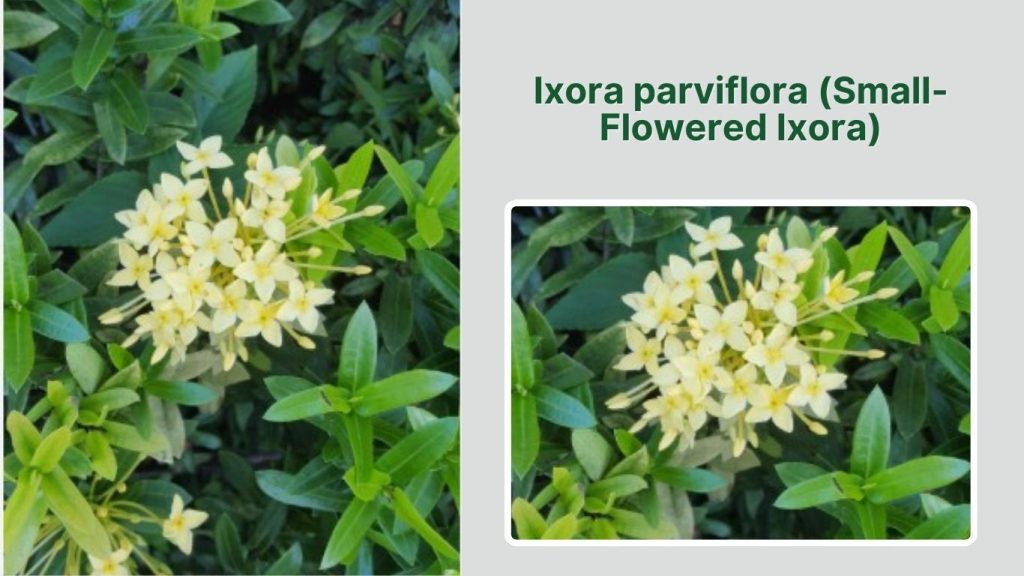
Ixora parviflora is a graceful Ixora species characterized by its smaller flower clusters and elegant foliage. It is often grown as a garden shrub or small ornamental tree, appreciated more for its neat form and subtle beauty than for oversized blooms.
Identification
- Evergreen shrub or small tree with slender, glossy leaves
- Produces small, rounded clusters of tiny tubular flowers
- Individual flowers are four-petaled and star-shaped
- Flower colors usually range from pale pink to soft white
- Commonly grows 8–15 feet tall when mature
Flower Characteristics
The flowers of Ixora parviflora are relatively small and delicate compared to many other ixoras. Numerous fine tubular blooms form compact clusters, creating a light, airy floral display. The gentle coloration gives this species a refined, understated ornamental appeal.
Habitat and Growth
Native to parts of East and Southeast Asia, this species thrives in warm climates with bright light and high humidity. It prefers well-drained, slightly acidic soil and moderate, regular watering. With age, it often develops into a small tree-like form.
Uses and Importance
Ixora parviflora is commonly used as an ornamental shrub, avenue tree, or background plant in tropical gardens. Its dense foliage makes it useful for screening, while its flowers attract butterflies and other pollinators.
12. Ixora brachiata (Branching Ixora)
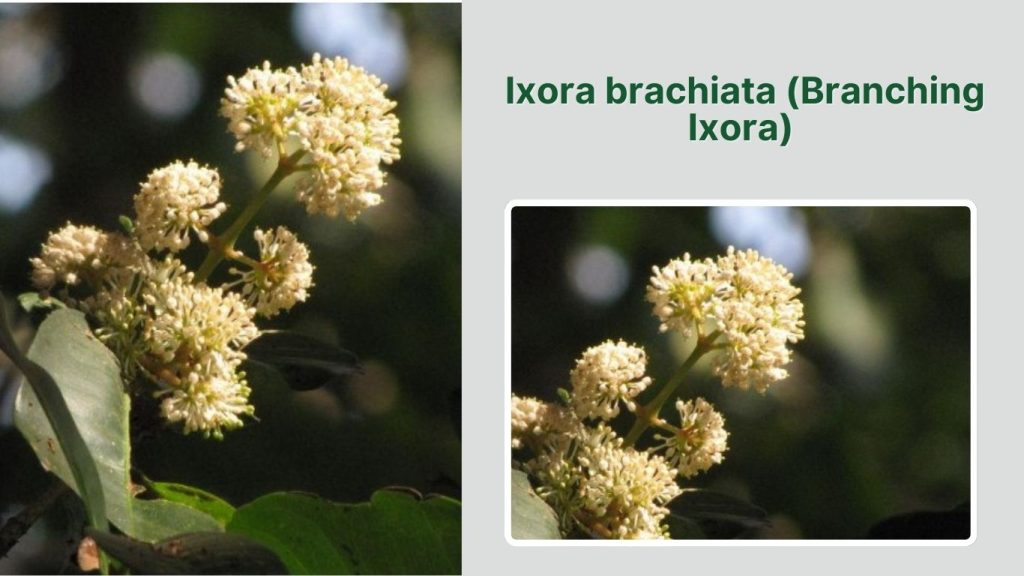
Ixora brachiata is a tropical Ixora species known for its spreading, well-branched growth habit and attractive flower clusters. It is usually grown as an ornamental shrub or small tree, valued for its structure as well as its seasonal floral displays.
Identification
- Evergreen shrub or small tree with many spreading branches
- Produces rounded clusters of tubular flowers
- Individual flowers are small with four pointed lobes
- Flower colors often range from red to orange
- Typically grows 6–12 feet tall
Flower Characteristics
The flowers of Ixora brachiata form dense, rounded heads made up of many tiny tubular blooms. Each flower opens into a star-like shape, creating a textured cluster. The blooms appear mainly during warm months and stand out clearly against the leafy branches.
Habitat and Growth
Native to tropical regions of South and Southeast Asia, this species prefers warm temperatures, bright sunlight, and humid conditions. It grows best in slightly acidic, well-drained soil and benefits from regular watering and occasional pruning.
Uses and Importance
Ixora brachiata is planted as a landscape shrub, small garden tree, or screen plant. Its branching habit makes it useful for filling space in tropical gardens, while its flowers provide nectar for butterflies and other pollinators.
13. Ixora arborea (Tree Ixora)
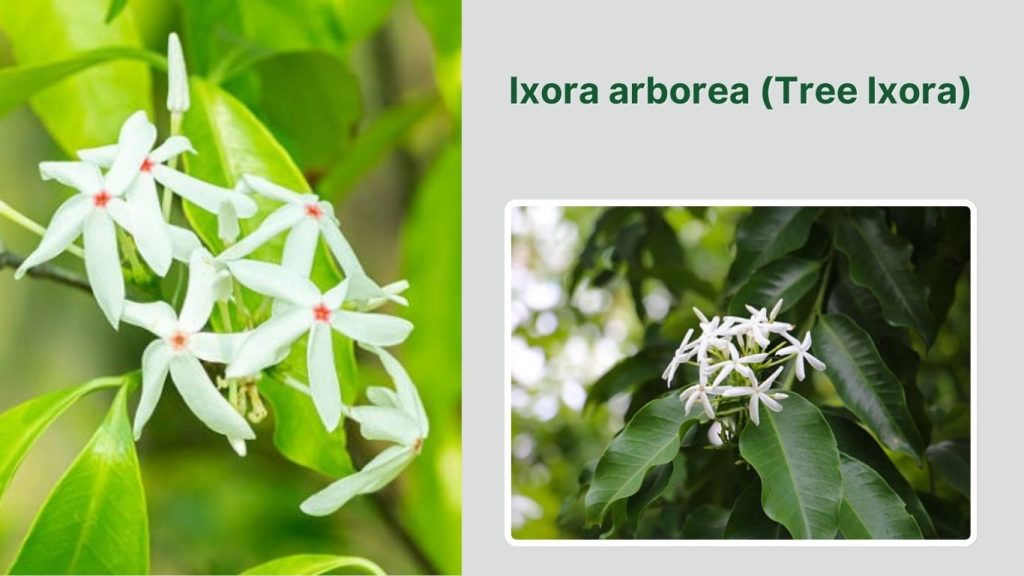
Ixora arborea is a larger Ixora species that often grows into a small tree rather than a compact shrub. It is admired for its sturdy form, glossy foliage, and bright clustered flowers, making it a striking ornamental plant in tropical landscapes.
Identification
- Evergreen small tree with a strong central trunk
- Produces rounded clusters of tubular flowers at branch ends
- Individual flowers are small, four-petaled, and star-shaped
- Flower colors usually range from red to orange
- Can reach 10–20 feet tall in favorable conditions
Flower Characteristics
The flowers of Ixora arborea appear in dense, rounded heads composed of many tubular blooms. Each flower opens into four pointed lobes, forming a vivid cluster that contrasts beautifully with the deep green leaves. The clusters are often produced in abundance during warm seasons.
Habitat and Growth
This species is native to tropical parts of Asia. It thrives in warm, humid climates with full sun to partial shade. Slightly acidic, well-drained soil and regular watering support healthy growth and flowering.
Uses and Importance
Ixora arborea is commonly planted as a small ornamental tree in gardens, parks, and along pathways. Its size and structure make it suitable as a focal plant, while its flowers attract butterflies and other beneficial insects.
14. Ixora pendula (Weeping Ixora)
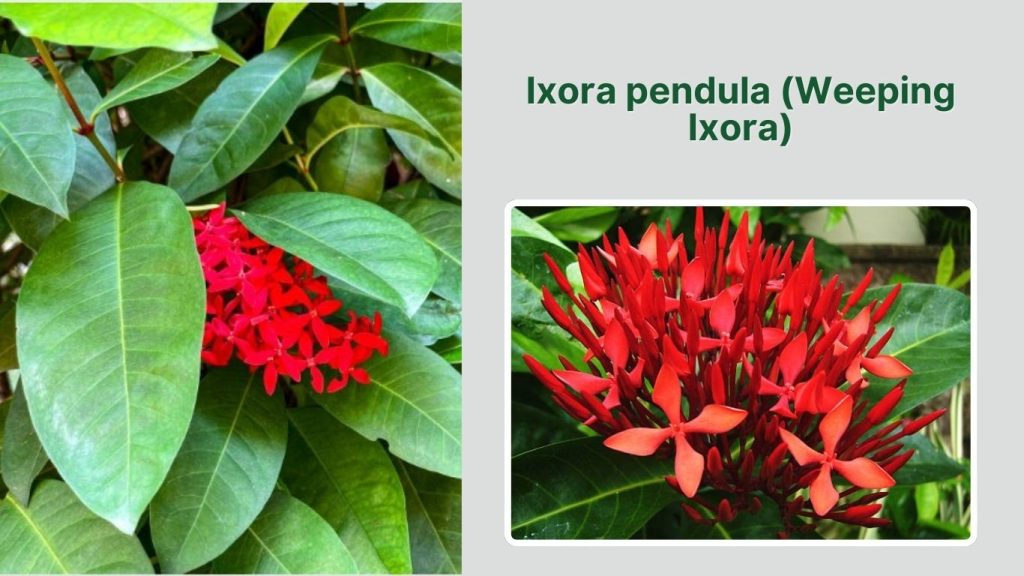
Ixora pendula is a distinctive Ixora species recognized for its slightly drooping branches and elegant flower clusters. It is less common in cultivation but valued in tropical gardens for its graceful growth habit and decorative blooms.
Identification
- Evergreen shrub or small tree with gently drooping branches
- Produces rounded clusters of tubular flowers
- Individual flowers are small with four spreading petals
- Flower colors commonly range from red to orange
- Typically grows 6–12 feet tall
Flower Characteristics
The flowers of Ixora pendula are borne in compact, rounded clusters at the tips of arching branches. Each tubular bloom opens into four pointed lobes, forming neat star-like shapes. The slightly hanging form of the branches gives the floral display a soft, cascading look.
Habitat and Growth
Native to tropical Southeast Asia, this species prefers warm temperatures, bright light, and high humidity. It grows best in slightly acidic, well-drained soil and benefits from consistent watering and light pruning to maintain shape.
Uses and Importance
Ixora pendula is mainly used as an ornamental feature plant in tropical landscapes and botanical collections. Its graceful habit makes it suitable for accent planting, and its nectar-rich flowers help attract pollinators.
15. Ixora luzonensis (Luzon Ixora)
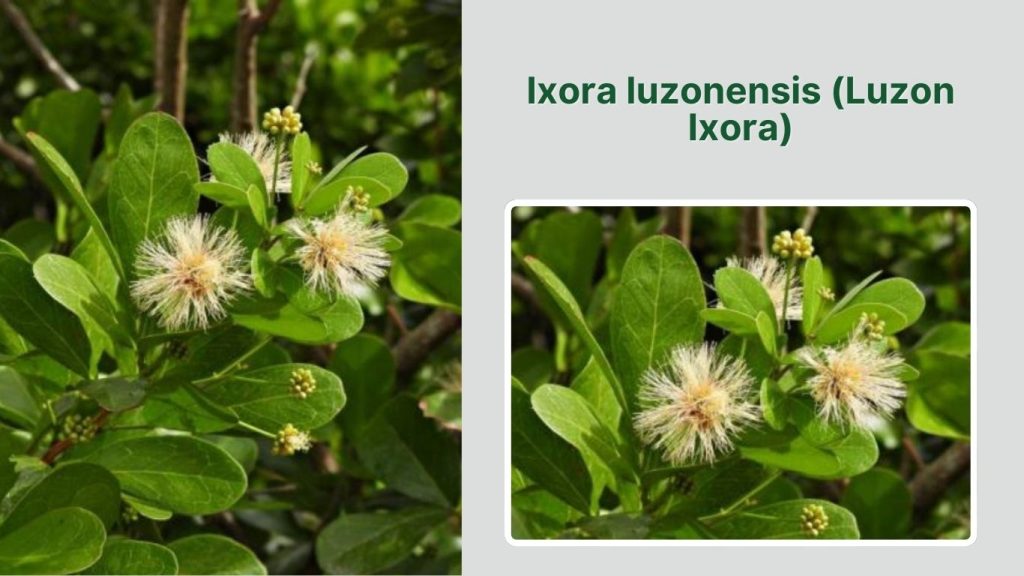
Ixora luzonensis is a tropical Ixora species native to the Philippines, admired for its attractive foliage and bright clustered blooms. It is grown as an ornamental shrub or small tree in warm regions, where it adds color and structure to garden landscapes.
Identification
- Evergreen shrub or small tree with glossy, oval green leaves
- Produces rounded clusters of tubular flowers
- Individual flowers are small, four-lobed, and star-shaped
- Flower colors commonly range from red to orange
- Typically grows 6–12 feet tall
Flower Characteristics
The flowers of Ixora luzonensis form compact, rounded heads composed of numerous slender tubular blooms. Each flower opens into four pointed petals, creating a neat star-like appearance. The clusters are showy and often appear repeatedly during warm seasons.
Habitat and Growth
This species is native to Luzon and nearby regions of the Philippines. It thrives in warm, humid climates with bright light and prefers slightly acidic, well-drained soil. Regular watering and occasional pruning support healthy growth and flowering.
Uses and Importance
Ixora luzonensis is used mainly in ornamental gardening as a hedge, screen, or flowering shrub. Its colorful blooms attract butterflies and other pollinators, making it both decorative and ecologically beneficial.
16. Ixora polyantha (Many-Flowered Ixora)
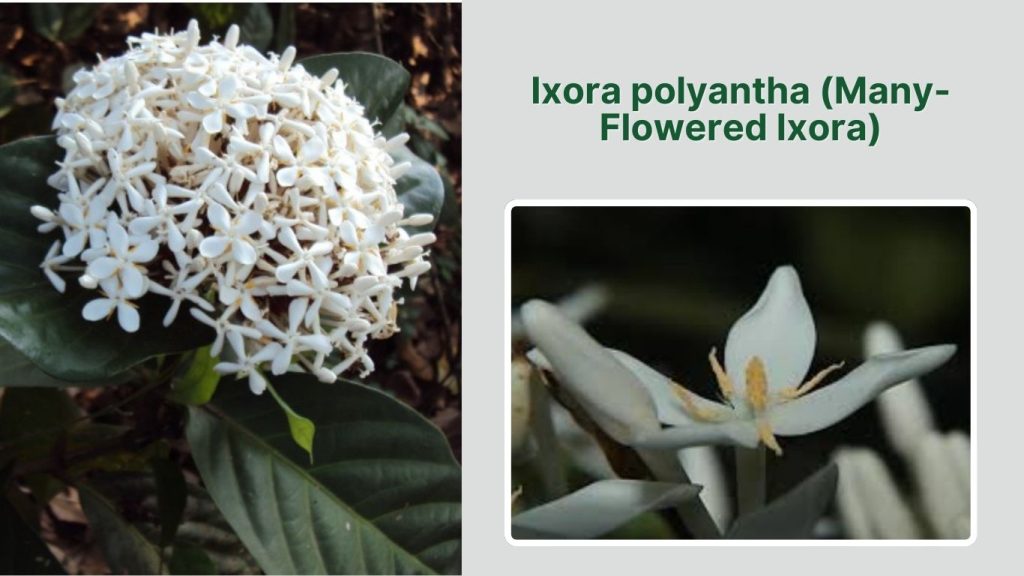
Ixora polyantha is a tropical Ixora species known for producing especially abundant flower clusters. Its name reflects its tendency to bloom heavily, covering the plant with dense, colorful heads that make it a striking ornamental shrub.
Identification
- Evergreen shrub with dense, glossy green foliage
- Produces numerous rounded clusters of tubular flowers
- Individual flowers are small, four-petaled, and star-shaped
- Flower colors usually range from red to orange
- Typically grows 4–8 feet tall
Flower Characteristics
The flowers of Ixora polyantha are produced in large numbers, forming compact, rounded heads at the tips of branches. Each tiny tubular bloom opens into four pointed lobes. When in full bloom, the plant often appears heavily covered in bright floral clusters.
Habitat and Growth
Native to tropical parts of Asia, this species thrives in warm climates with bright sunlight and high humidity. It prefers well-drained, slightly acidic soil and consistent moisture. Light pruning encourages bushier growth and even more prolific flowering.
Uses and Importance
Ixora polyantha is popular in ornamental landscaping, particularly for hedges and mass plantings where dense color is desired. Its nectar-rich flowers attract butterflies and bees, adding ecological value to decorative gardens.
17. Ixora acuminata (Pointed-Leaf Ixora)
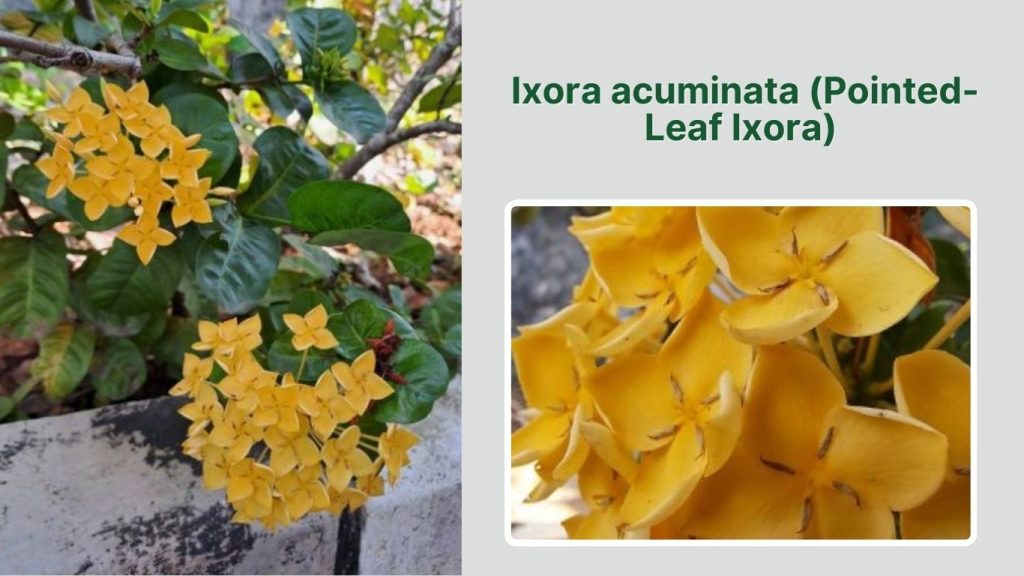
Ixora acuminata is a tropical Ixora species named for its pointed leaf tips and neat, well-defined flower clusters. It is grown mainly as an ornamental shrub or small tree, appreciated for its balanced form and decorative blooms.
Identification
- Evergreen shrub or small tree with pointed, glossy leaves
- Produces rounded clusters of tubular flowers
- Individual flowers are small, four-lobed, and star-shaped
- Flower colors commonly range from red to orange
- Typically grows 6–12 feet tall
Flower Characteristics
The flowers of Ixora acuminata are grouped into compact, rounded heads at the ends of branches. Each slender tubular bloom opens into four pointed petals, creating a clean, star-like pattern. The clusters are medium-sized and provide a bright accent to the foliage.
Habitat and Growth
Native to tropical regions of South and Southeast Asia, this species thrives in warm temperatures, bright light, and humid conditions. It grows best in slightly acidic, well-drained soil and responds well to regular watering and light pruning.
Uses and Importance
Ixora acuminata is used mainly as an ornamental landscape plant, suitable for hedges, screens, and feature shrubs. Its tidy appearance and colorful blooms make it attractive for formal and informal tropical gardens.
18. Ixora thwaitesii (Thwaites’ Ixora)
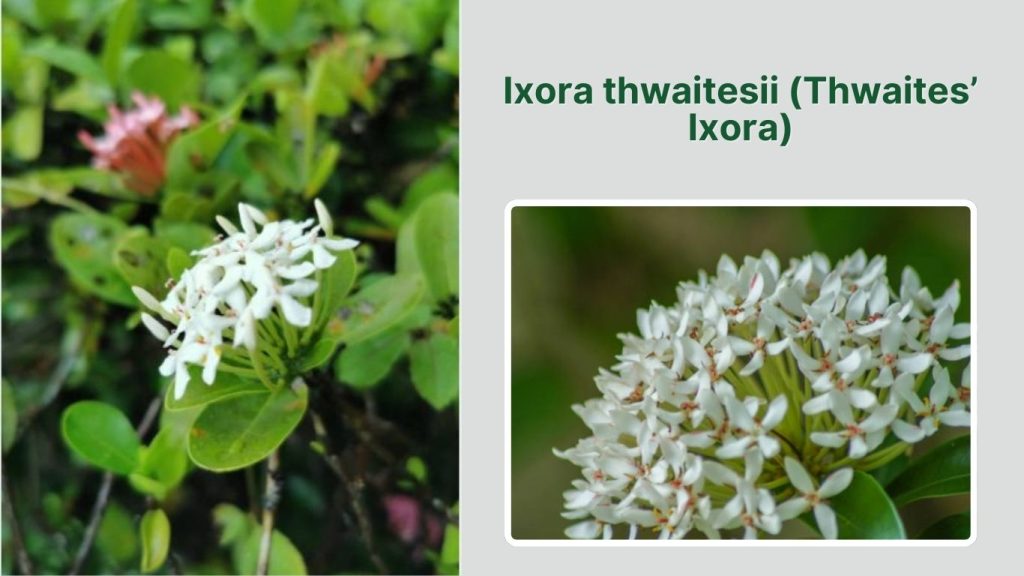
Ixora thwaitesii is a tropical Ixora species valued for its dense foliage and neatly arranged flower clusters. It is mainly found in South Asian regions and is occasionally cultivated as an ornamental shrub or small tree in warm climates.
Identification
- Evergreen shrub or small tree with broad, glossy leaves
- Produces rounded clusters of tubular flowers
- Individual flowers are small with four spreading lobes
- Flower colors usually range from red to orange
- Typically grows 6–12 feet tall
Flower Characteristics
The flowers of Ixora thwaitesii appear in compact, dome-shaped clusters made up of many slender tubular blooms. Each bloom opens into four pointed petals, forming a star-like look. The clusters provide a bright contrast against the thick green foliage.
Habitat and Growth
This species is native to tropical regions of South Asia, especially Sri Lanka and southern India. It thrives in warm, humid environments with bright light. Slightly acidic, well-drained soil and regular watering support healthy growth and seasonal flowering.
Uses and Importance
Ixora thwaitesii is mainly used as an ornamental shrub or small tree in tropical gardens. Its dense growth makes it suitable for screening and landscape planting, while its flowers attract butterflies and other pollinators.
19. Ixora grandiflora (Large-Flowered Ixora)
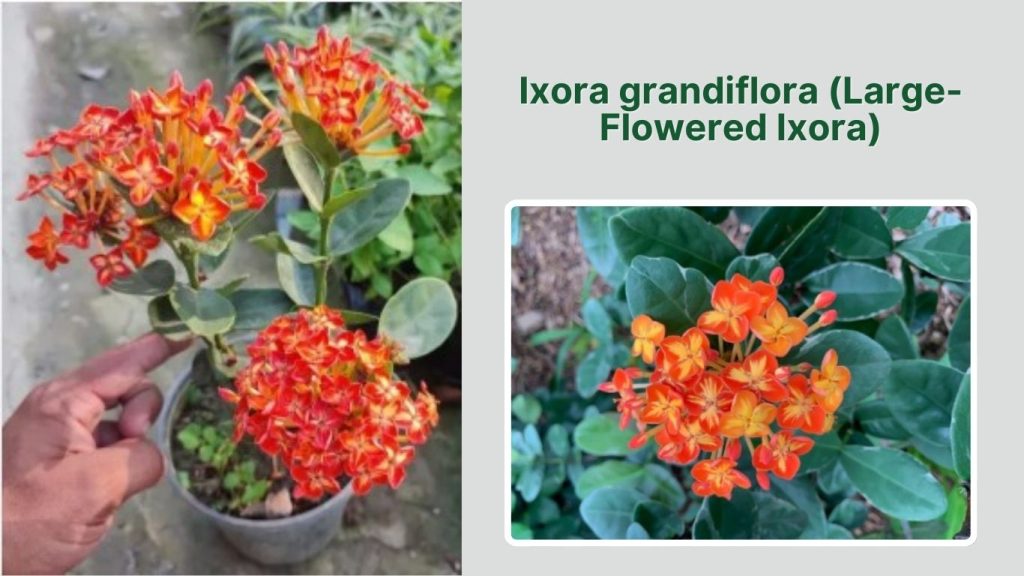
Ixora grandiflora is an impressive Ixora species admired for its larger blooms and showy flower clusters. It is grown mainly as an ornamental shrub or small tree in tropical regions, where its bold flowers create strong visual appeal in gardens and landscapes.
Identification
- Evergreen shrub or small tree with broad, glossy green leaves
- Produces large, rounded clusters of tubular flowers
- Individual flowers are bigger than many other Ixora species
- Flower colors commonly range from bright red to orange
- Typically grows 6–14 feet tall
Flower Characteristics
The flowers of Ixora grandiflora are noticeably larger and more open than those of many ixoras. Numerous tubular blooms form broad, dense clusters. When fully open, the four-petaled flowers give the cluster a bold, starry appearance that stands out clearly in the landscape.
Habitat and Growth
Native to tropical Asia, this species thrives in warm, humid climates with bright sunlight. It prefers slightly acidic, well-drained soil and consistent watering. With enough space, it develops into a strong ornamental shrub or small flowering tree.
Uses and Importance
Ixora grandiflora is widely used as a feature plant, hedge, or screen shrub. Its large, colorful blooms attract butterflies and other pollinators, while its size and structure make it suitable for decorative tropical plantings.
20. Ixora auricularis (Ear-Leaf Ixora)
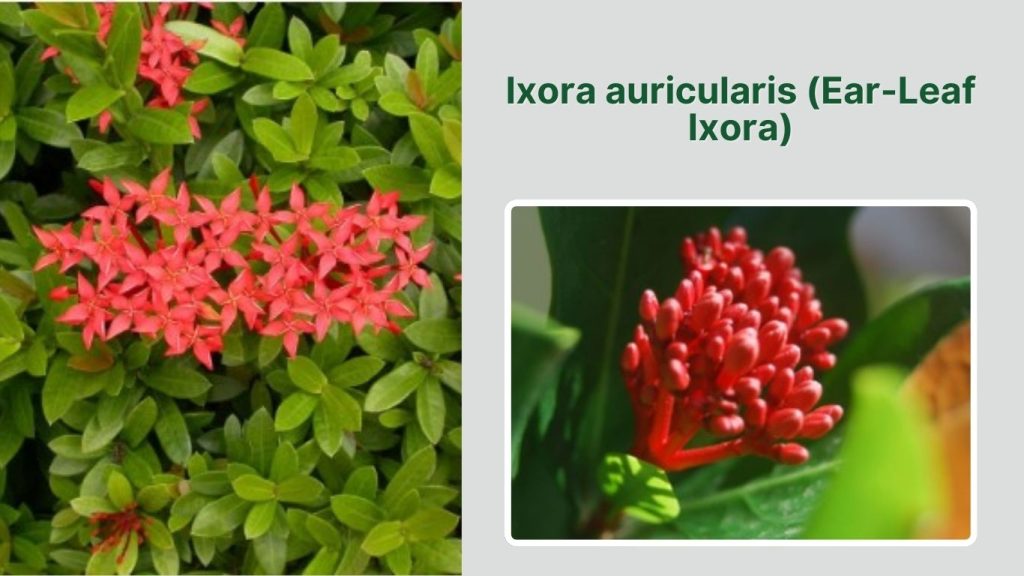
Ixora auricularis is a distinctive Ixora species named for the ear-like shape sometimes seen at the base of its leaves. It is grown mainly as an ornamental shrub or small tree in tropical regions, valued for its attractive foliage and clustered blooms.
Identification
- Evergreen shrub or small tree with uniquely shaped glossy leaves
- Produces rounded clusters of tubular flowers
- Individual flowers are small, four-lobed, and star-shaped
- Flower colors commonly range from red to orange
- Typically grows 6–12 feet tall
Flower Characteristics
The flowers of Ixora auricularis appear in neat, rounded clusters made up of many slender tubular blooms. Each flower opens into four pointed petals, creating a star-like pattern. The clusters are moderately large and provide a strong color contrast against the glossy leaves.
Habitat and Growth
Native to tropical parts of Asia, this species thrives in warm, humid climates with bright light. It prefers slightly acidic, well-drained soil and regular watering. Occasional pruning helps maintain its form and encourages better flowering.
Uses and Importance
Ixora auricularis is mainly used as an ornamental landscape plant for hedges, screens, and feature shrubs. Its decorative foliage and nectar-rich flowers make it attractive both visually and ecologically.
21. Ixora densiflora (Dense-Flowered Ixora)
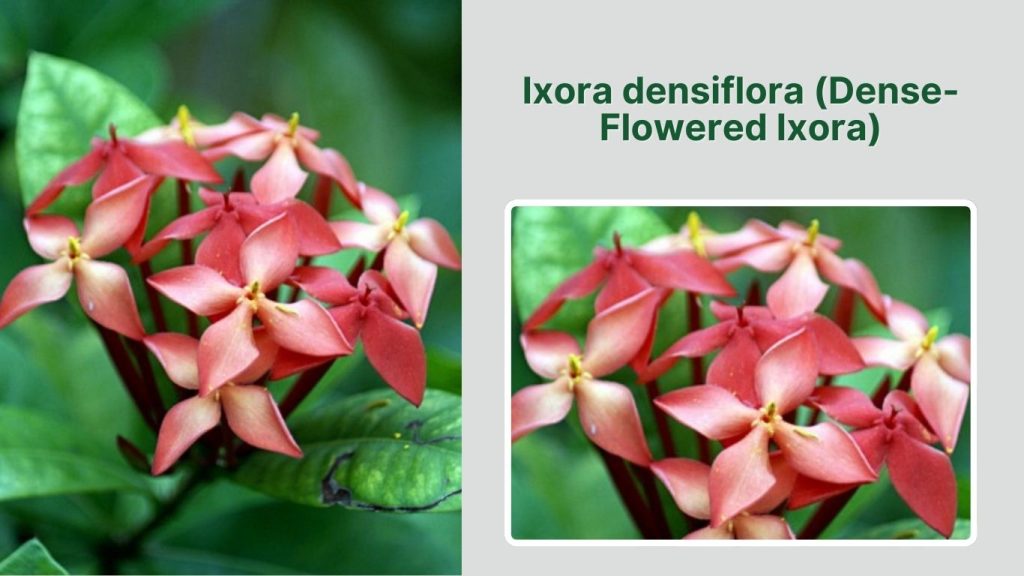
Ixora densiflora is a tropical Ixora species recognized for its tightly packed flower clusters and compact ornamental appeal. It is cultivated mainly as a shrub in warm climates, where its heavy blooming habit makes it a striking garden plant.
Identification
- Evergreen shrub with thick, glossy green leaves
- Produces very dense, rounded clusters of tubular flowers
- Individual flowers are small, four-petaled, and star-shaped
- Flower colors usually range from red to orange
- Typically grows 4–8 feet tall
Flower Characteristics
The flowers of Ixora densiflora are arranged in extremely compact heads made up of many slender tubular blooms. When in full bloom, the clusters appear thick and rounded, creating a bold mass of color. The four-petaled flowers give the cluster a finely textured, star-like look.
Habitat and Growth
Native to tropical regions of Asia, this species thrives in warm, humid environments with bright light. It prefers well-drained, slightly acidic soil and consistent moisture. Regular pruning helps maintain its compact form and encourages dense flowering.
Uses and Importance
Ixora densiflora is popular for ornamental hedges, low screens, and mass plantings. Its dense blooms attract butterflies and bees, making it both a decorative and pollinator-friendly garden plant.
22. Ixora elongata (Elongated Ixora)
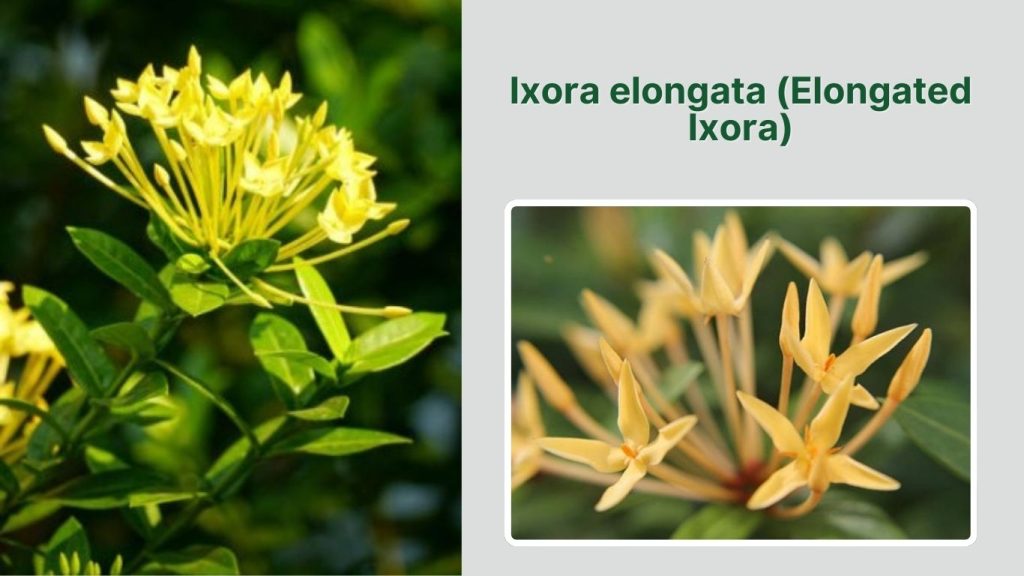
Ixora elongata is a tropical Ixora species noted for its elongated leaves and neatly formed flower clusters. It is usually grown as an ornamental shrub or small tree, appreciated for its graceful structure and colorful blooms.
Identification
- Evergreen shrub or small tree with long, narrow, glossy leaves
- Produces rounded clusters of tubular flowers
- Individual flowers are small, four-lobed, and star-shaped
- Flower colors commonly range from red to orange
- Typically grows 6–12 feet tall
Flower Characteristics
The flowers of Ixora elongata appear in compact, rounded heads composed of many slender tubular blooms. Each flower opens into four pointed petals, forming a clean, star-like pattern. The bright clusters contrast well with the elongated foliage.
Habitat and Growth
Native to tropical parts of Asia, this species thrives in warm, humid climates with bright light. It prefers slightly acidic, well-drained soil and regular watering. With space and care, it develops into an attractive ornamental shrub or small tree.
Uses and Importance
Ixora elongata is mainly used in tropical landscaping as a hedge, screen, or feature shrub. Its tidy growth habit and nectar-rich flowers make it suitable for both decorative and pollinator-friendly gardens.
23. Ixora duffii (Duff’s Ixora)
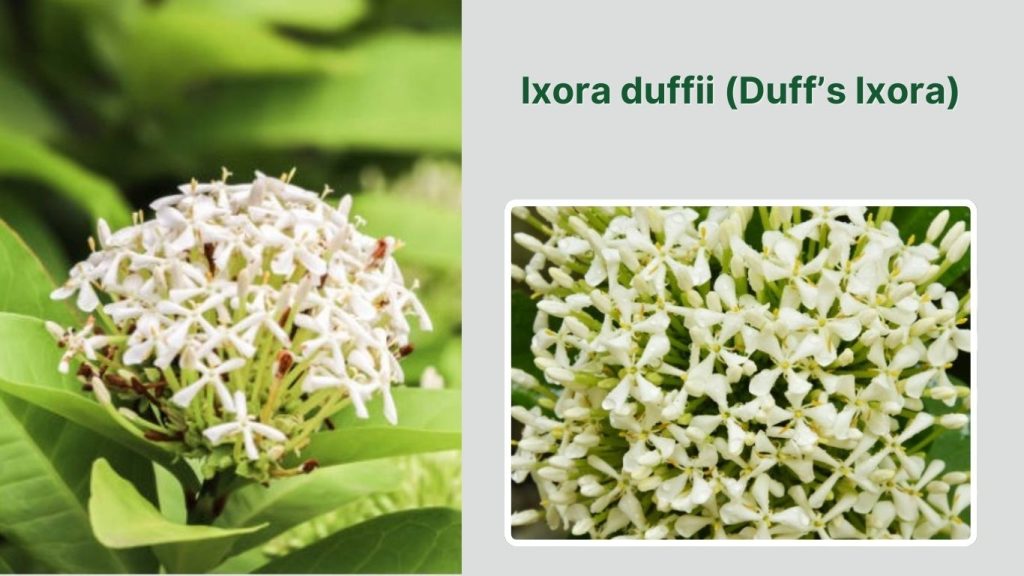
Ixora duffii is a lesser-known Ixora species valued for its attractive foliage and neatly arranged flower clusters. It is mainly found in tropical regions and is occasionally cultivated as an ornamental shrub or small tree.
Identification
- Evergreen shrub or small tree with smooth, glossy green leaves
- Produces rounded clusters of tubular flowers
- Individual flowers are small, four-petaled, and star-shaped
- Flower colors usually range from red to orange
- Typically grows 6–12 feet tall
Flower Characteristics
The flowers of Ixora duffii are grouped into compact, rounded heads at the ends of branches. Each slender tubular bloom opens into four pointed petals, creating a neat star-like look. The clusters provide moderate but consistent color throughout the blooming season.
Habitat and Growth
This species is native to tropical parts of Asia. It thrives in warm temperatures, bright light, and humid conditions. Slightly acidic, well-drained soil and regular watering support healthy growth and flowering.
Uses and Importance
Ixora duffii is mainly used as an ornamental landscape plant in tropical gardens and botanical collections. Its flowers attract pollinators, while its tidy growth habit makes it suitable for hedges and feature planting.
24. Ixora colebrookeana (Colebrooke’s Ixora)
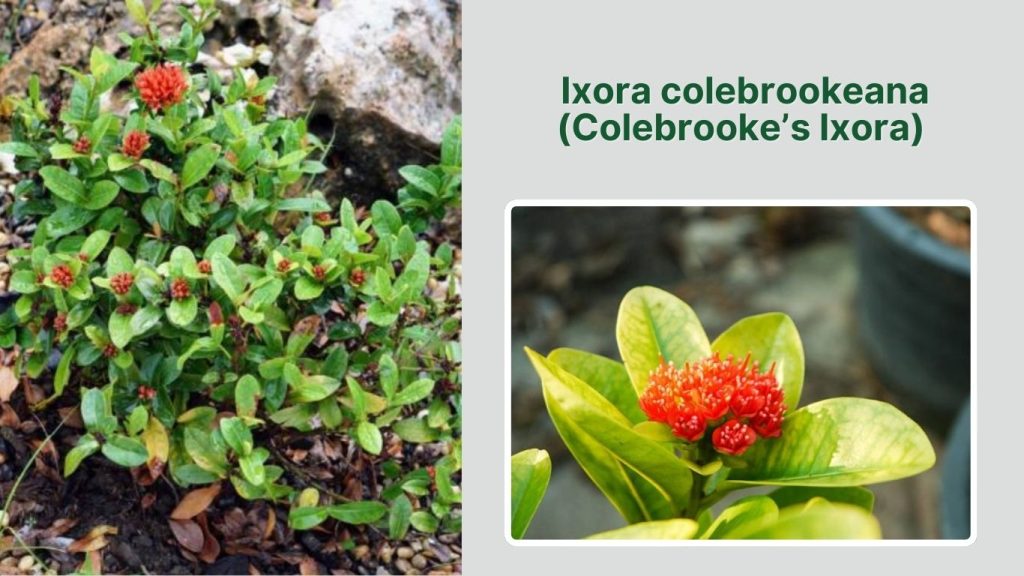
Ixora colebrookeana is a tropical Ixora species admired for its dense foliage and decorative flower clusters. It is grown mainly as an ornamental shrub or small tree, especially in warm regions where Ixora species thrive naturally.
Identification
- Evergreen shrub or small tree with thick, glossy leaves
- Produces rounded clusters of tubular flowers
- Individual flowers are small, four-lobed, and star-shaped
- Flower colors commonly range from red to orange
- Typically grows 6–12 feet tall
Flower Characteristics
The flowers of Ixora colebrookeana appear in neat, rounded clusters made up of many slender tubular blooms. Each bloom opens into four pointed petals, giving the cluster a starry texture. The floral display stands out clearly against the deep green foliage.
Habitat and Growth
Native to tropical regions of South and Southeast Asia, this species prefers warm, humid climates with bright sunlight. It grows best in slightly acidic, well-drained soil and benefits from regular watering and light pruning.
Uses and Importance
Ixora colebrookeana is used mainly in ornamental gardening as a hedge, screen plant, or flowering shrub. Its dense growth and colorful blooms make it suitable for decorative tropical landscapes.
25. Ixora undulata (Wavy-Leaf Ixora)
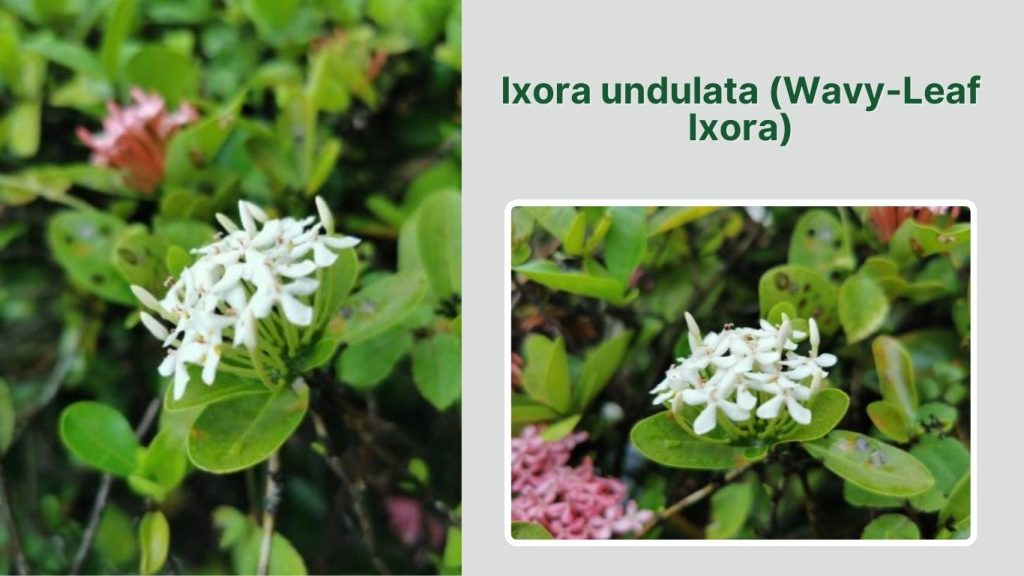
Ixora undulata is a distinctive Ixora species known for its slightly wavy leaf edges and neatly formed flower clusters. It is mainly found in tropical regions and is occasionally cultivated as an ornamental shrub or small tree for its unique foliage and bright blooms.
Identification
- Evergreen shrub or small tree with subtly wavy-edged glossy leaves
- Produces rounded clusters of tubular flowers
- Individual flowers are small, four-petaled, and star-shaped
- Flower colors commonly range from red to orange
- Typically grows 6–12 feet tall
Flower Characteristics
The flowers of Ixora undulata are arranged in compact, rounded heads made up of numerous slender tubular blooms. Each flower opens into four pointed lobes, forming a fine star-like pattern. The bright clusters contrast attractively with the textured foliage.
Habitat and Growth
Native to tropical parts of Asia, this species thrives in warm, humid climates with bright light. It prefers slightly acidic, well-drained soil and regular watering. With proper care, it develops into a dense, attractive ornamental plant.
Uses and Importance
Ixora undulata is mainly used as an ornamental shrub or small tree in tropical gardens and landscape designs. Its flowers attract butterflies and other pollinators, while its wavy leaves add subtle visual interest to plantings.
FAQs
What is the most common type of Ixora flower?
Ixora coccinea is the most common and widely grown type of Ixora flower. It is popular for its bright red, orange, pink, and yellow flower clusters. This species is commonly used in tropical gardens, hedges, and ornamental landscaping because of its long blooming period.
Are Ixora plants indoor or outdoor flowers?
Ixora plants are mainly outdoor ornamental shrubs that thrive in warm, tropical and subtropical climates. However, in cooler regions, they can be grown indoors as potted plants if they receive bright sunlight, warm temperatures, and high humidity throughout the year.
What colors do Ixora flowers come in?
Ixora flowers are available in a wide range of colors, including red, orange, yellow, pink, coral, and white. Different species and cultivated varieties produce different shades, and many gardens mix multiple Ixora types to create colorful floral displays.
How often do Ixora flowers bloom?
Ixora plants can bloom multiple times a year in warm climates. With enough sunlight, proper watering, and acidic soil, many Ixora species flower almost continuously, producing repeated clusters of blooms during spring, summer, and even into fall.
Do Ixora flowers attract pollinators?
Yes, Ixora flowers are rich in nectar and strongly attract pollinators such as butterflies, bees, and hummingbirds. Their tubular flower shape is especially suited to nectar-feeding insects and birds, making Ixora an excellent plant for pollinator-friendly gardens.