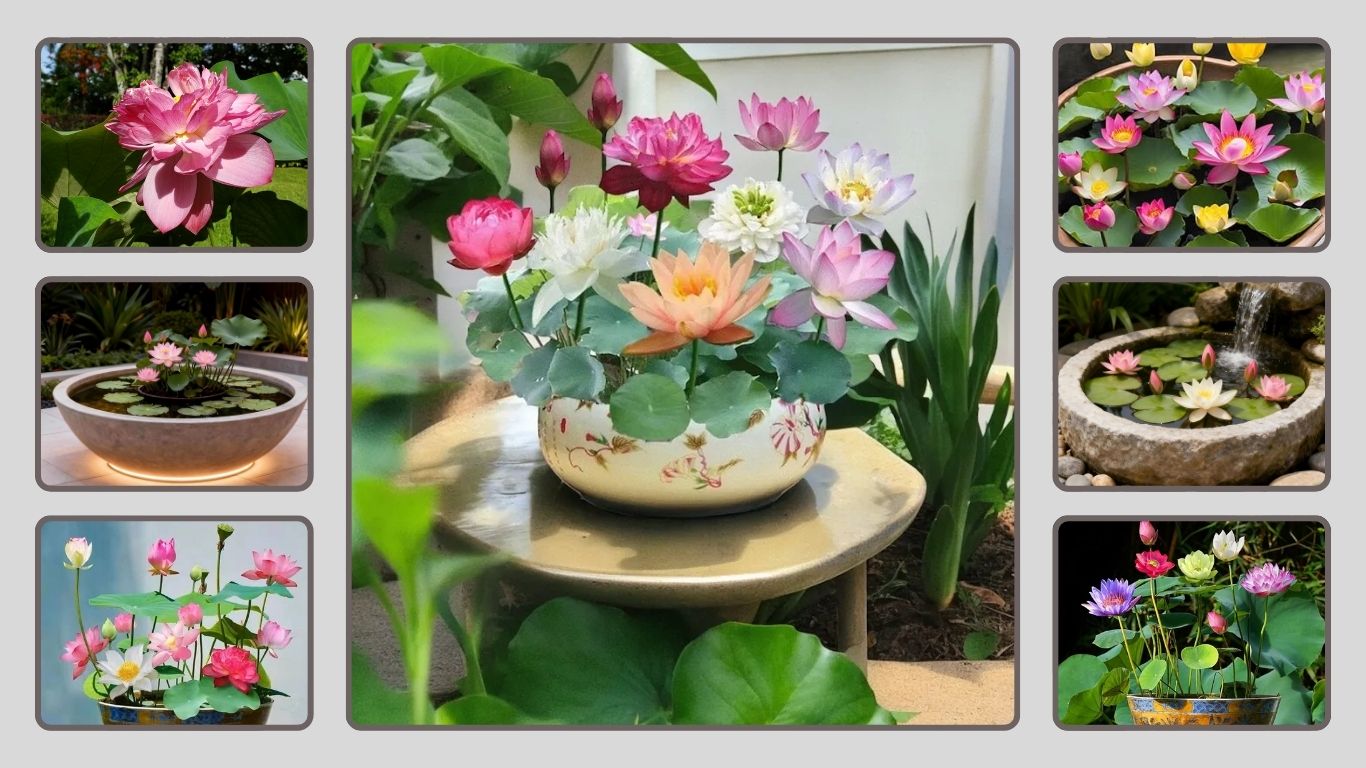






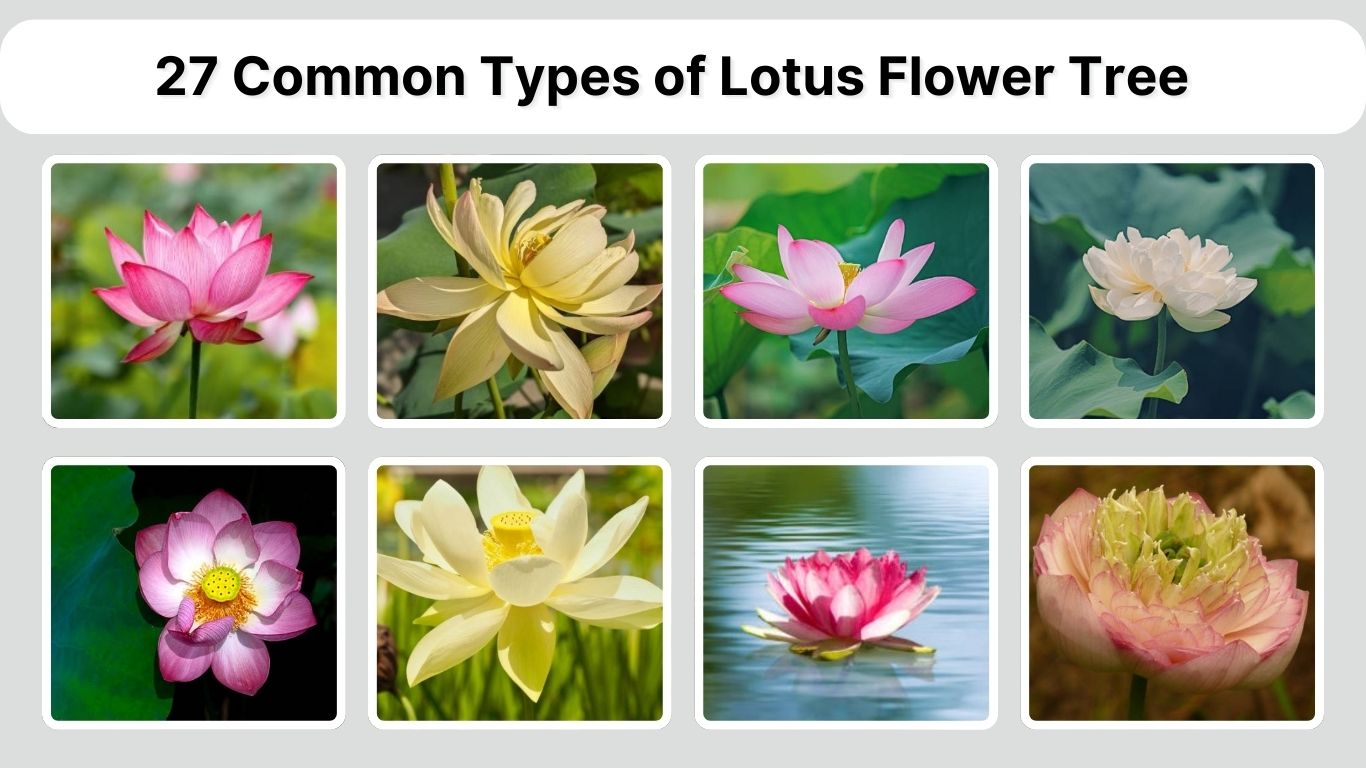
Lotus flowers are among the most admired aquatic plants in the world, celebrated for their beauty, symbolism, and remarkable growth habits. Found naturally in warm, shallow waters, lotus plants produce large round leaves, tall flower stalks, and striking blooms that rise above the surface. From classic sacred lotus types to modern ornamental cultivars, lotus varieties display an impressive range of colors, sizes, and forms, making them popular in ponds, temple gardens, and water landscapes worldwide.
1. Sacred Lotus (Nelumbo nucifera)

The sacred lotus is one of the most well-known and culturally important lotus flowers in the world. Native to Asia and Australia, it is famous for its large, fragrant blooms, perfectly round leaves, and deep spiritual symbolism in Hinduism and Buddhism. This aquatic plant thrives in still, shallow waters such as ponds, lakes, and slow-moving rivers, where it forms striking colonies of floating and emergent leaves.
Identification
- Large circular leaves that repel water and often rise above the surface
- Tall, sturdy flower stalks reaching 1–2 meters high
- Large flowers (15–30 cm wide) in shades of pink or white
- Bright yellow central seed pod shaped like a showerhead
- Thick, elongated rhizomes growing in muddy bottoms
- Waxy leaf surface that causes water to bead and roll off
Habitat
Sacred lotus naturally grows in warm, freshwater environments across India, China, Southeast Asia, and northern Australia. It prefers full sun and nutrient-rich mud at the bottom of ponds, marshes, floodplains, and slow rivers. The plant spreads rapidly through underground rhizomes, often forming dense, decorative stands.
Behavior and Growth Pattern
This lotus shows a unique daily rhythm, with flowers opening in the morning and closing in the afternoon over several days. Leaves may float on the water or rise high above it on stiff stalks. The plant is highly resilient, capable of surviving seasonal droughts and even regenerating from ancient seeds.
Uses, Diet, and Lifespan
Sacred lotus is valued both ornamentally and economically. Its seeds, roots, and young leaves are widely eaten in Asian cuisine, while different parts are used in traditional medicine. With proper conditions, lotus plants can live for many years, continually producing new leaves and flowers from long-lasting rhizomes.
2. American Lotus (Nelumbo lutea)
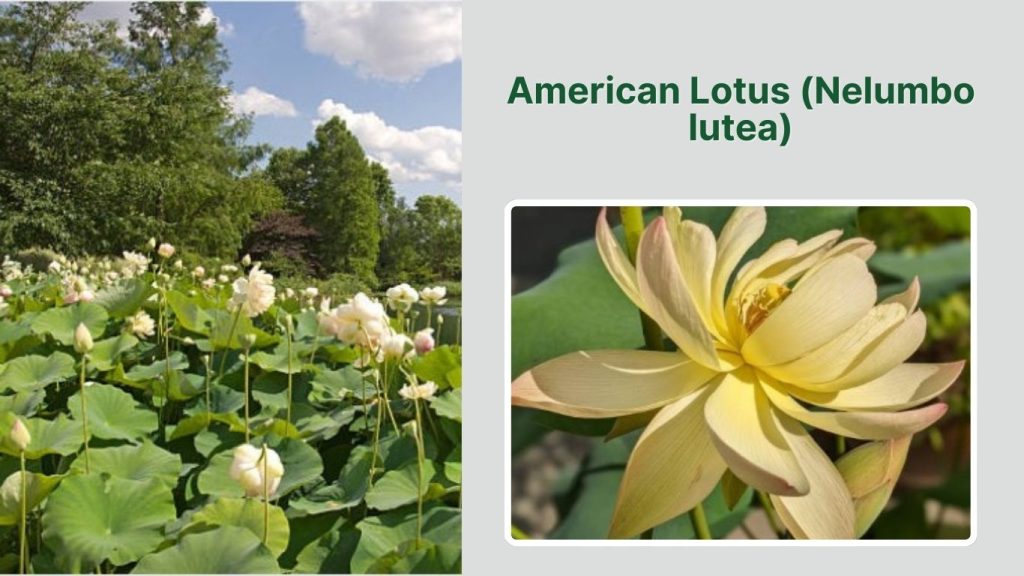
The American lotus, also known as the yellow lotus or water chinquapin, is a striking aquatic plant native to North America. It is easily recognized by its pale yellow flowers, large umbrella-like leaves, and strong presence in lakes and slow rivers. This species plays an important ecological role by providing shelter for aquatic life and food for wildlife.
Identification
- Large round leaves that rise above or float on the water
- Pale yellow to creamy yellow flowers, 15–25 cm wide
- Thick, spongy flower stalks standing well above the surface
- Prominent yellow seed pod with embedded nut-like seeds
- Broad leaves with smooth or slightly wavy edges
- Long creeping rhizomes anchored in soft mud
Habitat
American lotus grows naturally in ponds, lakes, reservoirs, marshes, and slow-moving rivers throughout the eastern and central United States, southern Canada, and parts of the Caribbean. It prefers full sunlight and warm, shallow water with soft, silty bottoms where its roots can spread easily.
Behavior and Growth Pattern
This species forms large colonies that can cover wide areas of water. Its flowers open in the morning and close by late afternoon, repeating this cycle for several days. The broad leaves often rise high above the water, shading the surface and creating cooler microhabitats below.
Uses, Diet, and Lifespan
American lotus has long been used by Indigenous peoples for food, as its seeds and rhizomes are edible and nutritious. Today, it is also cultivated as an ornamental plant in large ponds. With stable conditions, it can live for many years, spreading steadily through its underground stems.
3. Chinese Red Lotus
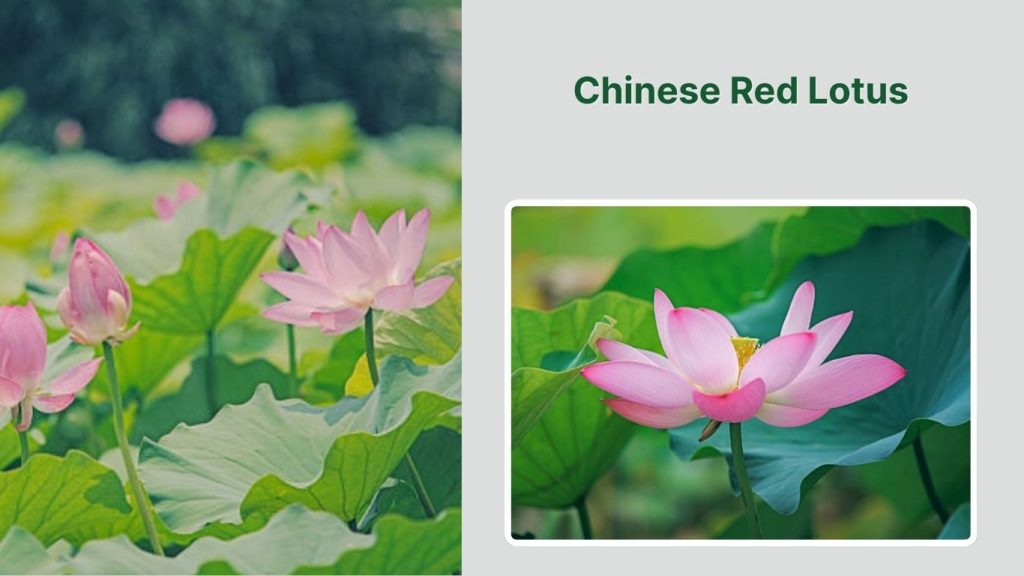
The Chinese red lotus is a popular cultivated form of the sacred lotus, widely grown across China and East Asia for its deep pink to red blooms and strong fragrance. It is especially valued in temple gardens, ornamental ponds, and traditional festivals, where it symbolizes purity, prosperity, and good fortune. Its bold flowers and tall growth make it one of the most eye-catching lotus types.
Identification
- Large circular leaves with a waxy, water-repellent surface
- Deep pink to red flowers with multiple overlapping petals
- Strong, sweet fragrance noticeable from a distance
- Bright yellow central seed pod
- Tall flower stalks rising well above the leaves
- Thick underground rhizomes in muddy soil
Habitat
Chinese red lotus thrives in warm, still freshwater environments such as garden ponds, temple pools, wetlands, and slow rivers. It prefers full sun, summer heat, and rich, muddy substrates. In cultivation, it is often planted in large containers or lined ponds where water depth can be controlled.
Behavior and Growth Pattern
This lotus opens its flowers in the morning and closes them in the late afternoon, repeating the process for several days. New leaves and buds continuously emerge during the growing season. The plant spreads laterally through rhizomes, gradually forming broad, decorative colonies.
Uses, Diet, and Lifespan
Besides its ornamental importance, the Chinese red lotus is used in traditional medicine and cuisine, with its roots and seeds commonly consumed. With proper care, a single plant can survive for decades, flowering reliably each warm season and regenerating from its hardy underground stems.
4. White Sacred Lotus

The white sacred lotus is a graceful and highly prized form of sacred lotus, known for its pure white petals and gentle fragrance. It is closely associated with spiritual symbolism in many Asian cultures, representing purity, peace, and enlightenment. Because of its elegant appearance, it is commonly planted in temple ponds, palace gardens, and decorative water features.
Identification
- Large, round leaves with a smooth, waxy surface
- Pure white flowers with a soft yellow center
- Broad, overlapping petals forming a cup-like shape
- Prominent yellow seed pod in the middle of the bloom
- Strong upright stems lifting flowers above the water
- Thick, creeping rhizomes anchored in muddy bottoms
Habitat
White sacred lotus grows best in warm, shallow freshwater such as ponds, lakes, marshes, and slow-moving rivers. It prefers full sunlight and nutrient-rich mud. In cultivation, it is often grown in controlled ponds and containers to maintain clear water and healthy flowering.
Behavior and Growth Pattern
Flowers typically open in the early morning and close by afternoon, lasting three to five days. The leaves may float or rise well above the surface, creating layered vegetation. During the growing season, new shoots appear rapidly, forming dense stands.
Uses, Diet, and Lifespan
This lotus is valued mainly for ornamental and religious purposes, but like other sacred lotus forms, its seeds and rhizomes are edible and used in traditional remedies. When well established, white sacred lotus plants can live many years, regenerating annually from underground stems.
5. Pink Sacred Lotus
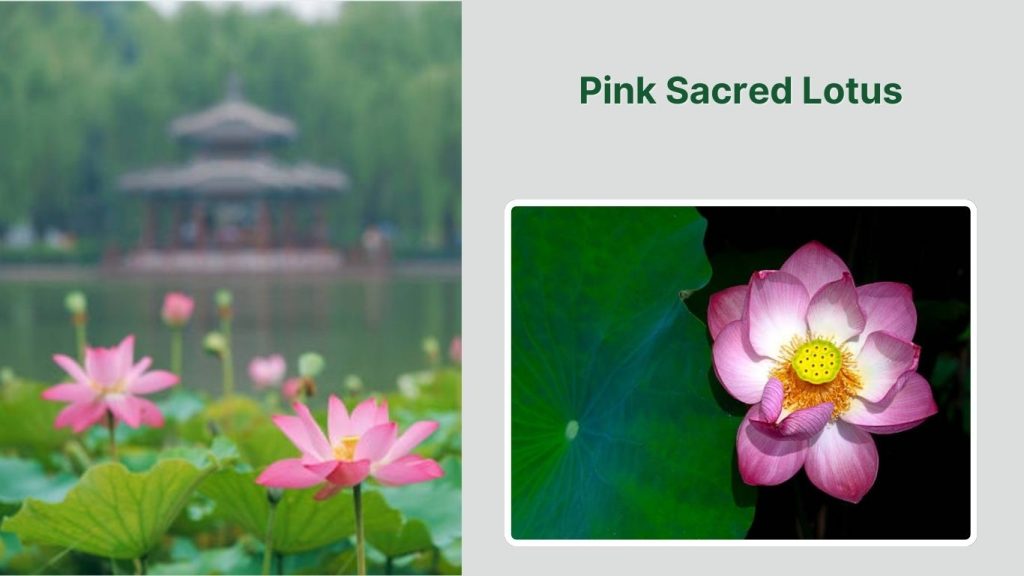
The pink sacred lotus is the most iconic and widely recognized lotus type, often considered the “true” lotus in art and literature. Its soft to deep pink blooms, large round leaves, and uplifting fragrance have made it a powerful symbol in Asian cultures, representing purity, rebirth, and spiritual awakening. It is commonly seen in temple ponds, palace gardens, and ornamental lakes.
Identification
- Large circular leaves that stand above or float on water
- Soft pink to deep rose-colored flowers with layered petals
- Bright yellow central seed pod
- Strong upright stalks supporting leaves and blooms
- Light, pleasant fragrance
- Thick rhizomes spreading through muddy soil
Habitat
Pink sacred lotus thrives in warm, shallow freshwater bodies such as ponds, marshes, floodplains, and slow rivers. It prefers full sun and fertile, muddy substrates. In cultivation, it is often grown in large containers or lined ponds where water temperature and depth remain stable.
Behavior and Growth Pattern
Flowers open in the morning and close by late afternoon, continuing this cycle for several days. Leaves emerge continuously throughout the growing season, some floating while others rise high into the air. The plant spreads outward through underground rhizomes, gradually forming wide colonies.
Uses, Diet, and Lifespan
Beyond its ornamental and spiritual value, the pink sacred lotus is widely used in Asian cuisine, where its roots, seeds, and young leaves are eaten. It also appears in traditional medicine. With proper care, plants can live for many decades, producing flowers year after year.
6. Yellow Lotus
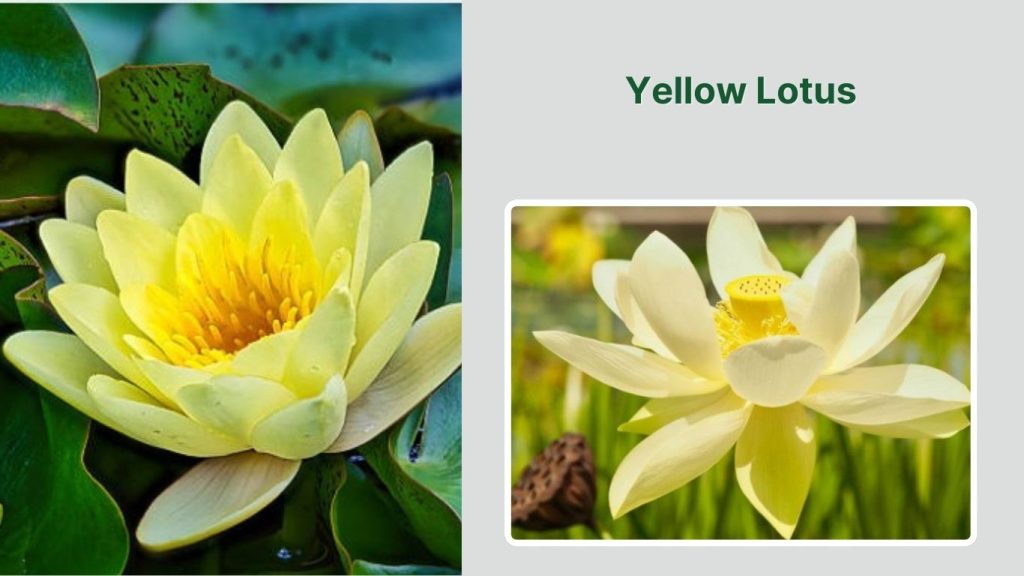
The yellow lotus is best known for its soft yellow blooms and strong presence in wetlands and shallow lakes. Unlike the Asian sacred lotus, this type is mainly associated with North America, where it is commonly called the American lotus. Its bright flowers, large leaves, and vigorous growth make it both an important native plant and a popular ornamental species.
Identification
- Broad, round leaves that may float or stand above water
- Pale yellow to creamy yellow flowers
- Thick, upright flower stalks
- Prominent yellow seed pod with embedded seeds
- Smooth leaf edges with a slightly rippled surface
- Long creeping rhizomes anchored in mud
Habitat
Yellow lotus grows naturally in lakes, ponds, marshes, reservoirs, and slow-moving rivers. It prefers warm climates, full sunlight, and shallow water with soft, silty bottoms. Large colonies often form where water levels remain stable and competition from other plants is low.
Behavior and Growth Pattern
This lotus spreads rapidly through underground rhizomes, creating wide mats of leaves. Flowers open during the morning and close later in the day over several days. The leaves can rise well above the water, shading the surface and reducing wave action below.
Uses, Diet, and Lifespan
The seeds and rhizomes of yellow lotus are edible and were traditionally harvested by Indigenous peoples as a food source. Today, it is also planted ornamentally and used in habitat restoration. With suitable conditions, yellow lotus can persist for many years, continually renewing itself from its root system.
7. Blue Lotus (Nymphaea caerulea)
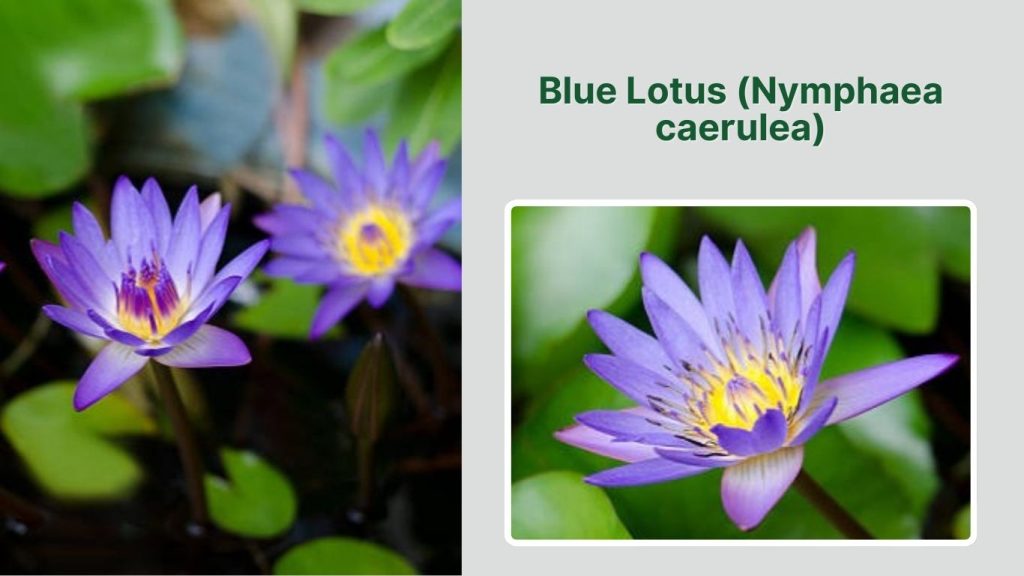
The blue lotus is a famous water lily often referred to as a “lotus” because of its historical and cultural importance, especially in ancient Egypt. It is admired for its striking blue petals, golden center, and sweet fragrance. Although botanically different from true lotus (Nelumbo), it is commonly grouped with lotus flowers in traditional references and ornamental water gardens.
Identification
- Star-shaped blue to bluish-purple flowers with a yellow center
- Floating round leaves with smooth edges
- Long flexible flower stalks rising slightly above water
- Strong, pleasant fragrance
- Flat, circular leaf blades with a central notch
- Submerged rhizomes anchored in soft mud
Habitat
Blue lotus naturally grows in slow-moving rivers, lakes, and shallow ponds across parts of Africa, especially along the Nile. It thrives in warm climates with full sunlight and calm water. In cultivation, it is commonly planted in ornamental ponds and water features.
Behavior and Growth Pattern
Flowers open in the morning and close in the afternoon or evening, often for several consecutive days. Leaves float on the surface, spreading outward to form broad mats. The plant grows from underwater rhizomes, producing new leaves and blooms throughout the warm season.
Uses, Diet, and Lifespan
Historically, blue lotus was used in ancient rituals, perfumes, and traditional remedies. Today, it is mainly ornamental and sometimes used in herbal preparations. With proper water conditions, blue lotus plants can live for many years, regenerating annually from their submerged root systems.
8. Indian Lotus
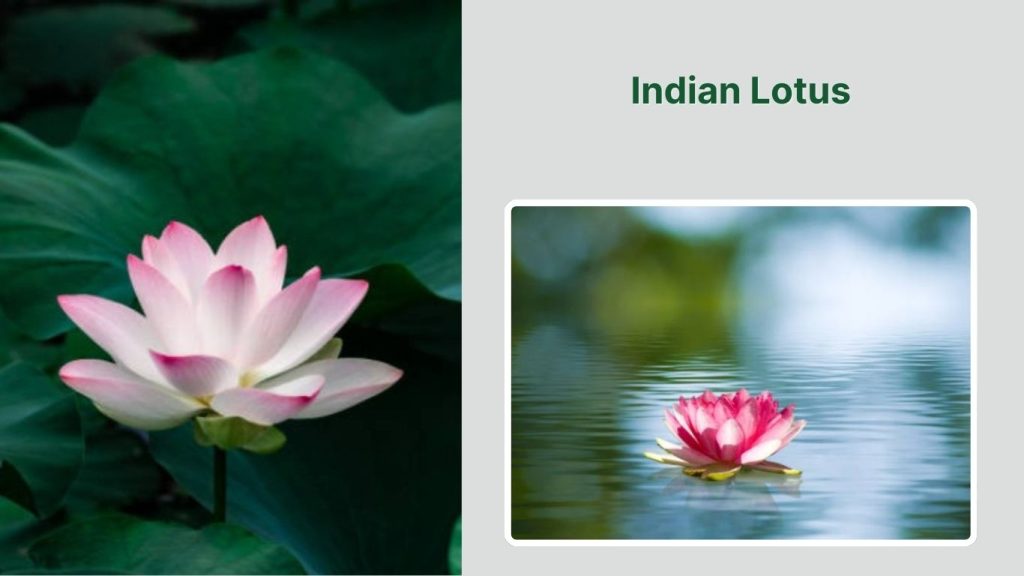
The Indian lotus is another widely used name for the sacred lotus, especially in South Asia where it holds deep religious, cultural, and ecological importance. It is the national flower of India and is closely linked to Hindu and Buddhist symbolism. Known for its large pink or white flowers and broad, water-repellent leaves, it is a dominant and beautiful aquatic plant.
Identification
- Large round leaves that rise above or float on the water
- Pink to light pink or white flowers with layered petals
- Bright yellow central seed pod
- Tall, strong stalks for both leaves and blooms
- Light, sweet fragrance
- Thick underground rhizomes growing in mud
Habitat
Indian lotus grows in ponds, lakes, marshes, floodplains, and slow-moving rivers across the Indian subcontinent and Southeast Asia. It prefers warm temperatures, full sun, and shallow, still water with nutrient-rich muddy bottoms.
Behavior and Growth Pattern
Flowers open in the morning and gradually close later in the day, repeating this cycle for several days. Leaves continuously emerge during the growing season, creating dense stands. The plant spreads by rhizomes and seeds, allowing it to colonize wide wetland areas.
Uses, Diet, and Lifespan
Every part of the Indian lotus is useful. Its roots, seeds, stems, and young leaves are widely eaten, while different parts are used in traditional medicine and religious offerings. With stable conditions, Indian lotus plants can live for many years and flower reliably each season.
9. Nelumbo ‘Alba Grandiflora’
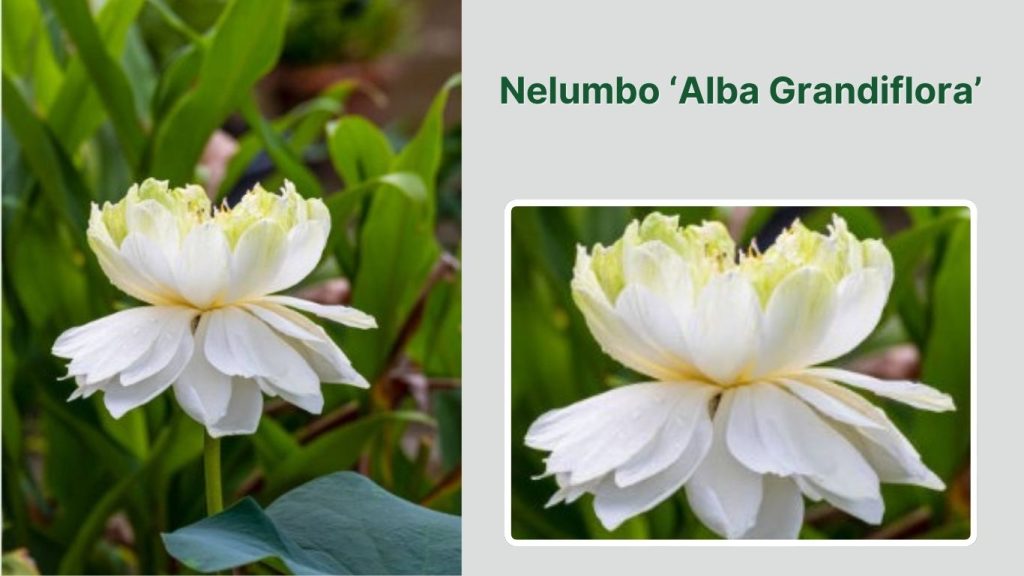
Nelumbo ‘Alba Grandiflora’ is a classic white-flowering lotus cultivar admired for its large, elegant blooms and refined garden appearance. It is widely cultivated in ornamental ponds and botanical gardens because of its strong growth, reliable flowering, and pure white petals that contrast beautifully with its bright yellow center.
Identification
- Large, round leaves with a smooth, waxy surface
- Pure white, oversized flowers with broad petals
- Bright yellow, cone-shaped central seed pod
- Tall flower stalks rising well above the water
- Soft, pleasant fragrance
- Thick rhizomes spreading through muddy soil
Habitat
This cultivar thrives in warm, shallow freshwater ponds, ornamental lakes, and large containers. It prefers full sunlight, stable water levels, and nutrient-rich mud. In colder regions, it is often grown in protected ponds or overwintered to prevent rhizome damage.
Behavior and Growth Pattern
‘Alba Grandiflora’ produces upright leaves and blooms that stand clearly above the water surface. Flowers open in the morning and close later in the day, lasting several days per bloom. The plant spreads steadily through rhizomes, forming attractive clumps over time.
Uses, Diet, and Lifespan
Although mainly grown as an ornamental lotus, its seeds and rhizomes are edible like other sacred lotus varieties. With proper care, this cultivar can live for many years, returning each warm season with vigorous growth and abundant flowering.
10. Nelumbo ‘Rosea Plena’
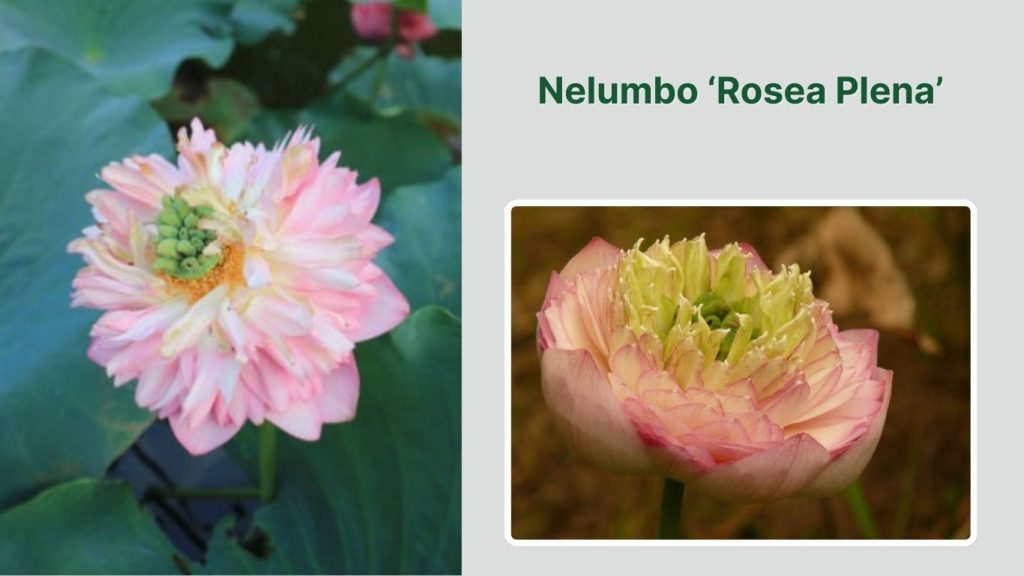
Nelumbo ‘Rosea Plena’ is a popular double-flowered lotus cultivar known for its densely layered, rose-pink petals and strong ornamental appeal. Its lush, full blooms resemble peonies, making it a favorite in decorative ponds, palace-style gardens, and botanical collections. This cultivar is valued for both its beauty and consistent flowering habit.
Identification
- Large circular leaves with a waxy, water-repellent surface
- Fully double pink flowers with many overlapping petals
- Rounded bloom shape with a peony-like appearance
- Yellow central structures often partly hidden by petals
- Tall, sturdy stems lifting flowers above the water
- Thick underground rhizomes spreading in mud
Habitat
‘Rosea Plena’ grows best in warm, still freshwater such as ornamental ponds, garden pools, and large containers. It prefers full sun, summer heat, and fertile, muddy substrates. Stable water depth supports strong stem growth and well-formed blooms.
Behavior and Growth Pattern
This lotus produces vigorous leaf growth followed by repeated flowering throughout the warm season. Each bloom opens in the morning and closes later in the day, lasting several days. Over time, the plant spreads outward through rhizomes, forming impressive flowering clusters.
Uses, Diet, and Lifespan
Primarily cultivated as an ornamental lotus, ‘Rosea Plena’ is also suitable for edible lotus production, as its rhizomes and seeds are usable like other sacred lotus types. With good care, it can live for many years, flowering reliably each season.
11. Nelumbo ‘Perry’s Giant Sunburst’
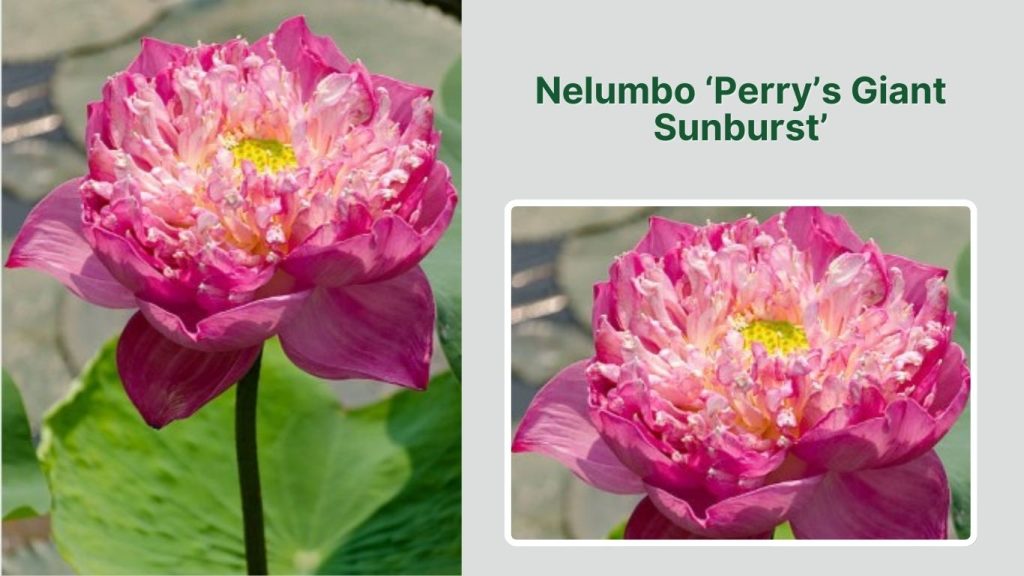
Nelumbo ‘Perry’s Giant Sunburst’ is a spectacular lotus cultivar famous for its massive blooms and radiant coloration. Developed by lotus breeder Perry D. Slocum, this variety produces very large flowers with bright yellow centers surrounded by pink, peach, and soft yellow tones. Its size and color make it one of the most striking lotus varieties for large ponds.
Identification
- Extra-large round leaves with a smooth, waxy surface
- Very large multi-toned flowers in pink, yellow, and peach shades
- Broad petals arranged in a semi-double form
- Prominent bright yellow seed pod at the center
- Tall, thick flower stalks rising well above the leaves
- Strong spreading rhizomes in muddy soil
Habitat
This cultivar thrives in spacious ponds, ornamental lakes, and deep garden water features. It prefers full sun, warm temperatures, and rich, silty mud. Because of its large size, it performs best in wide containers or open pond beds where roots can spread freely.
Behavior and Growth Pattern
‘Perry’s Giant Sunburst’ is a vigorous grower, producing tall leaves and frequent blooms throughout summer. Flowers open in the morning and close in the afternoon over several days. The plant steadily expands through underground rhizomes, forming large, dramatic stands.
Uses, Diet, and Lifespan
Grown mainly for ornamental impact, this lotus also produces edible seeds and rhizomes. With proper care and space, it can live for many years, returning each growing season with increasingly impressive growth and flowering displays.
12. Nelumbo ‘Mrs. Perry D. Slocum’
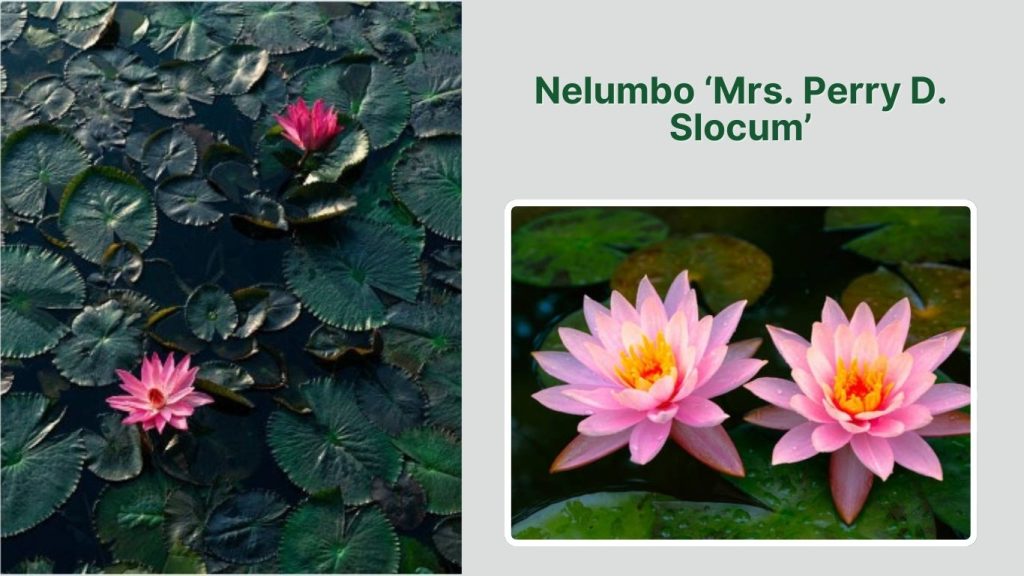
Nelumbo ‘Mrs. Perry D. Slocum’ is one of the most famous lotus cultivars in the world, celebrated for its huge, color-changing flowers. Blooms often open deep pink and gradually fade to pale pink or creamy yellow as they mature, sometimes showing several shades on the same plant. This dramatic transformation makes it a favorite in botanical gardens and large ornamental ponds.
Identification
- Very large, round leaves with a waxy surface
- Massive flowers that shift from dark pink to light pink or cream
- Broad, layered petals in a semi-double form
- Prominent yellow central seed pod
- Tall, strong stalks lifting blooms well above the water
- Thick, creeping rhizomes in muddy bottoms
Habitat
This cultivar grows best in warm, shallow freshwater ponds, large water gardens, and ornamental lakes. It requires full sun, summer heat, and nutrient-rich mud. Because of its large size, it is ideal for open pond planting rather than small containers.
Behavior and Growth Pattern
‘Mrs. Perry D. Slocum’ produces vigorous leaf growth and large numbers of buds during the warm season. Flowers open in the morning and close later in the day, lasting several days. Over time, the plant spreads outward through rhizomes, creating impressive flowering colonies.
Uses, Diet, and Lifespan
Although primarily ornamental, its seeds and rhizomes are edible like other sacred lotus varieties. With proper conditions, this lotus can live for many years, often increasing in bloom size and number as the plant matures.
13. Nelumbo ‘Momo Botan’
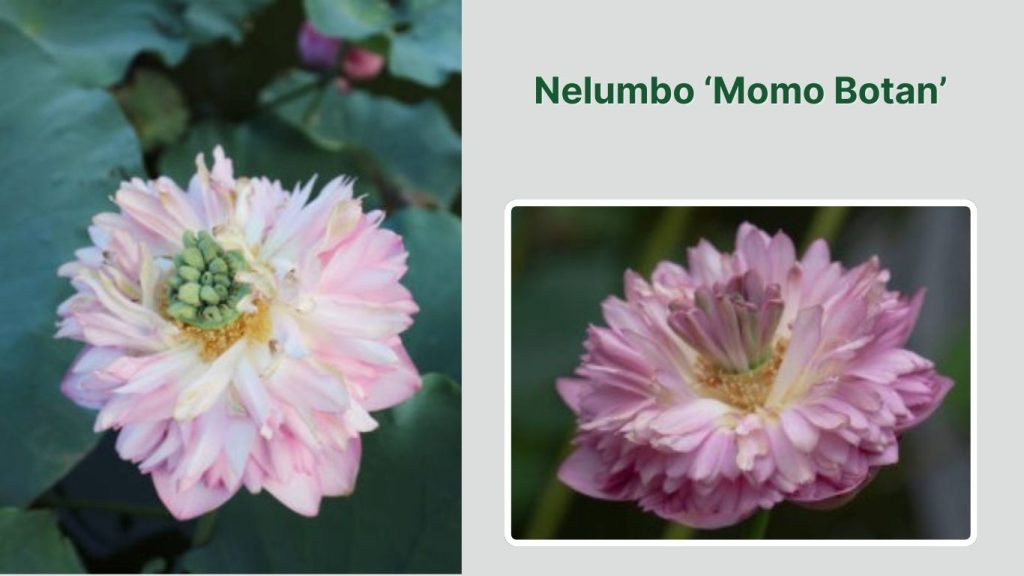
Nelumbo ‘Momo Botan’ is a striking Japanese lotus cultivar prized for its soft peach-pink coloration and elegant, layered blooms. The name “Momo Botan” roughly translates to “peach peony,” reflecting its peony-like flower form and gentle pastel tones. It is widely grown in decorative ponds, temple gardens, and lotus exhibitions.
Identification
- Large round leaves with a smooth, water-repellent surface
- Soft peach to light pink double flowers
- Broad, densely layered petals giving a peony-like shape
- Yellow central structures often partly hidden by petals
- Upright flower stalks rising above the foliage
- Thick underground rhizomes spreading through mud
Habitat
‘Momo Botan’ thrives in warm, shallow freshwater ponds, ornamental lakes, and large containers. It prefers full sunlight, calm water, and rich, muddy substrates. This cultivar performs best where water temperature remains warm and stable throughout the growing season.
Behavior and Growth Pattern
The plant produces strong leaf growth followed by repeated flowering from early to late summer. Blooms open in the morning and close later in the day, lasting several days. It spreads gradually by rhizomes, forming attractive clumps over time.
Uses, Diet, and Lifespan
Primarily cultivated for ornamental beauty, ‘Momo Botan’ also produces edible seeds and rhizomes like other lotus varieties. With good care, it can live for many years, returning each season with healthy foliage and abundant blooms.
14. Nelumbo ‘Carolina Queen’
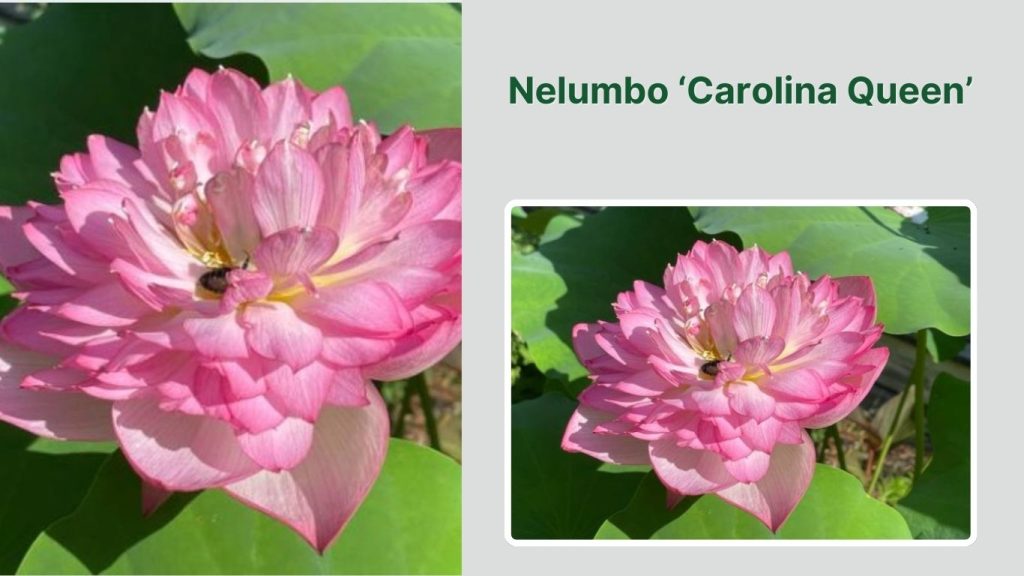
Nelumbo ‘Carolina Queen’ is a vigorous and colorful lotus cultivar known for its rich rose-pink blooms and strong garden performance. It was developed in the United States and is widely grown in ornamental ponds for its reliable flowering, sturdy stems, and classic lotus form. Its bright blossoms stand out beautifully against its large green leaves.
Identification
- Large, round, waxy leaves held above the water
- Rich rose-pink flowers with broad overlapping petals
- Bright yellow central seed pod
- Tall, sturdy flower stalks
- Light, pleasant fragrance
- Thick, spreading rhizomes anchored in mud
Habitat
‘Carolina Queen’ grows best in warm, shallow freshwater ponds, water gardens, and large planting containers. It prefers full sunlight, calm water, and fertile, muddy substrates. This cultivar adapts well to garden conditions and is often chosen for both private ponds and public displays.
Behavior and Growth Pattern
This lotus shows strong, upright growth and produces frequent blooms during the summer months. Flowers open in the morning and close in the afternoon for several days. The plant expands steadily through underground rhizomes, forming full, lush colonies.
Uses, Diet, and Lifespan
Grown mainly as an ornamental lotus, ‘Carolina Queen’ also yields edible seeds and rhizomes. With proper care and space, it can live for many years, flowering reliably and increasing in size with each growing season.
15. Nelumbo ‘Empress’
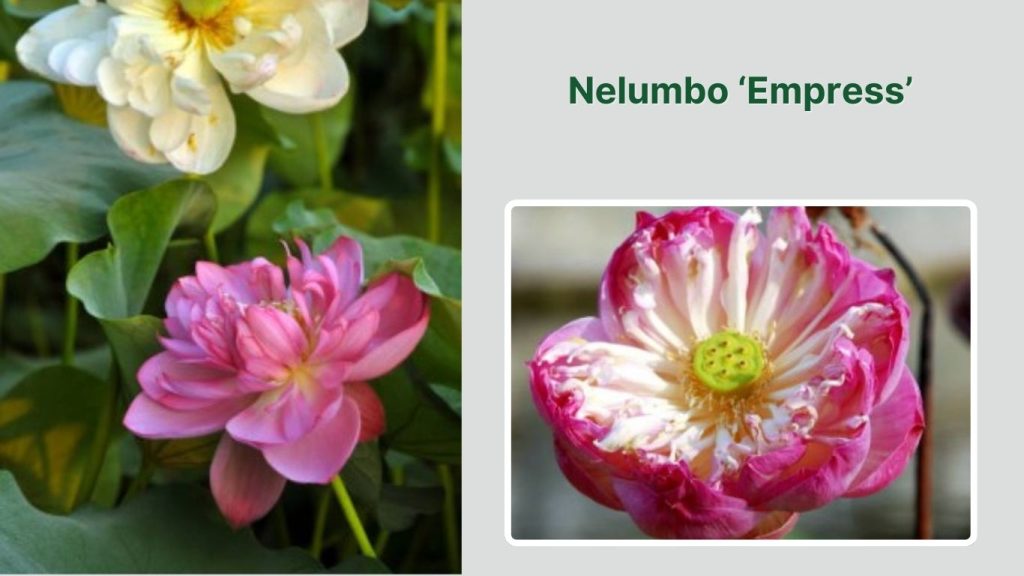
Nelumbo ‘Empress’ is a refined lotus cultivar admired for its large, elegant flowers and regal appearance. It typically produces soft pink to medium pink blooms with a classic lotus shape and a bright yellow center. Because of its balanced growth and graceful form, it is a popular choice for ornamental ponds, estate gardens, and botanical collections.
Identification
- Large circular leaves with a smooth, waxy coating
- Soft to medium pink flowers with broad, symmetrical petals
- Bright yellow central seed pod
- Upright, sturdy flower stalks rising above the leaves
- Mild, sweet fragrance
- Thick rhizomes spreading through muddy soil
Habitat
‘Empress’ grows best in warm, shallow freshwater environments such as garden ponds, ornamental lakes, and large containers. It prefers full sunlight, stable water depth, and nutrient-rich mud. Good water warmth and long daylight hours support its strongest flowering.
Behavior and Growth Pattern
This cultivar produces strong leaf growth early in the season, followed by steady blooming throughout summer. Flowers open in the morning and close later in the day over several days. The plant spreads slowly through rhizomes, forming neat, attractive stands.
Uses, Diet, and Lifespan
Primarily cultivated for decorative purposes, ‘Empress’ also produces edible seeds and rhizomes like other sacred lotus varieties. With suitable conditions, it can live for many years, returning each warm season with consistent growth and flowering.
16. Nelumbo ‘Chawan Basu’
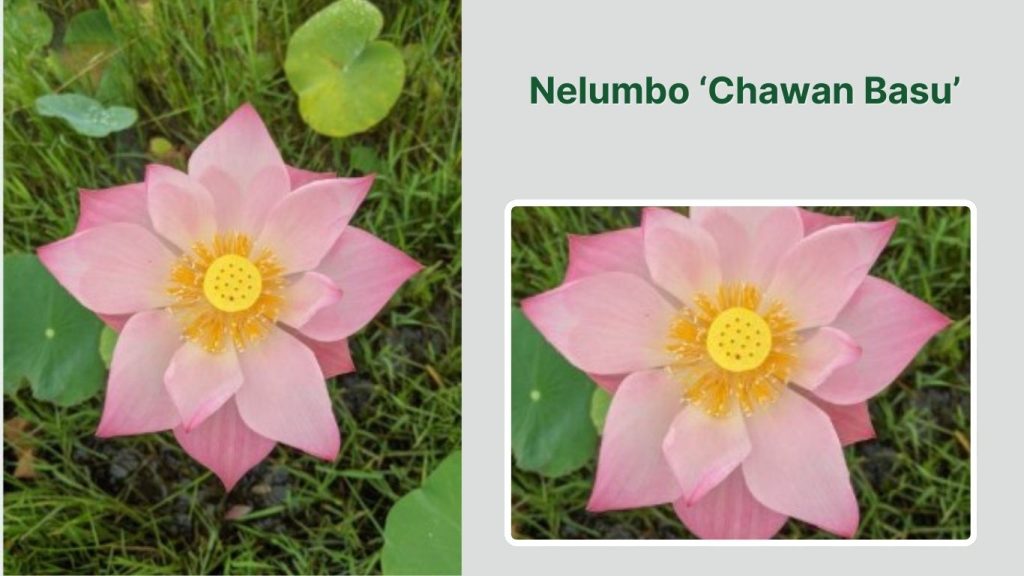
Nelumbo ‘Chawan Basu’ is a distinctive lotus cultivar valued for its elegant bloom form and subtle coloration. It is especially popular in Japanese-style gardens, where its refined appearance and balanced growth suit calm pond settings. The flowers often show soft pink to blush tones, making it a gentle, graceful addition to ornamental water landscapes.
Identification
- Large, round leaves with a smooth, water-repellent surface
- Soft pink to blush-colored flowers
- Neatly arranged petals forming a classic lotus shape
- Bright yellow central seed pod
- Upright stems holding blooms above the foliage
- Thick underground rhizomes spreading in muddy soil
Habitat
‘Chawan Basu’ grows best in warm, shallow freshwater ponds, garden pools, and large lotus containers. It prefers full sunlight, still water, and nutrient-rich mud. This cultivar performs well in ornamental settings where water depth and temperature are kept stable.
Behavior and Growth Pattern
The plant produces steady leaf growth followed by repeated flowering throughout summer. Blooms open in the morning and close later in the day, lasting several days. Over time, it spreads gradually through rhizomes, forming attractive, well-shaped clumps.
Uses, Diet, and Lifespan
Primarily an ornamental lotus, ‘Chawan Basu’ also produces edible seeds and rhizomes. With proper care, it can live for many years, maintaining reliable flowering and healthy foliage each growing season.
17. Nelumbo ‘Green Maiden’
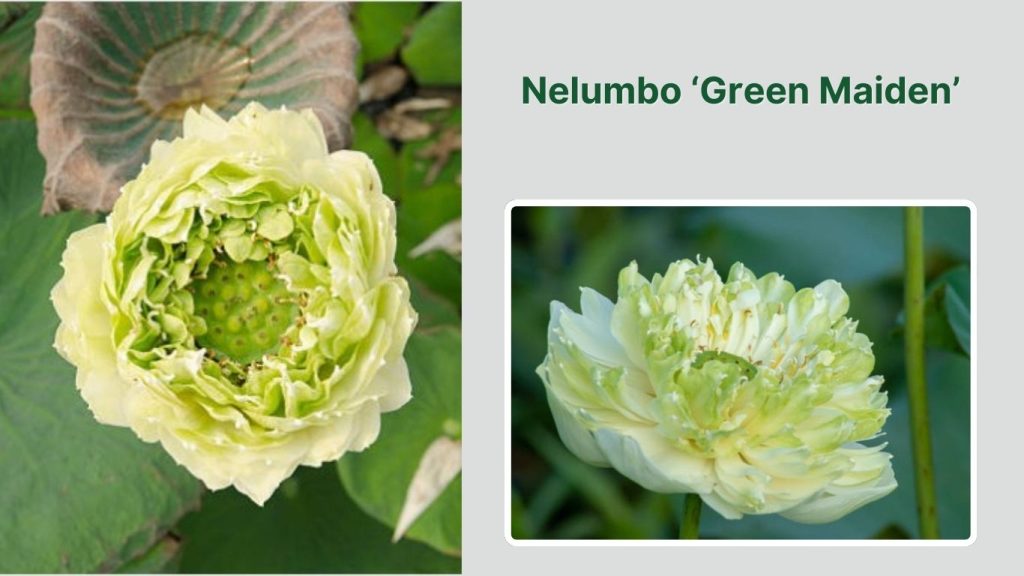
Nelumbo ‘Green Maiden’ is a rare and unusual lotus cultivar best known for its soft greenish blooms that gradually fade to creamy white. Its unique coloration sets it apart from most pink and white lotus types, making it a prized specimen for collectors, botanical gardens, and specialty water gardens. The flowers have a delicate, refined appearance with a gentle fragrance.
Identification
- Large circular leaves with a waxy, water-shedding surface
- Pale green to greenish-white flowers
- Broad petals arranged in a semi-double form
- Yellow central seed pod that becomes more visible as flowers age
- Upright flower stalks rising above the leaves
- Thick rhizomes spreading through muddy soil
Habitat
‘Green Maiden’ thrives in warm, shallow freshwater ponds, ornamental pools, and large containers. It prefers full sun, calm water, and fertile mud. Stable summer warmth helps this cultivar develop its distinctive green-tinged blooms.
Behavior and Growth Pattern
This lotus produces steady foliage growth followed by repeated blooming during the warm months. Flowers open in the morning and close later in the day over several days. The plant spreads gradually through underground rhizomes, forming elegant, manageable colonies.
Uses, Diet, and Lifespan
Although mainly grown for ornamental interest, its seeds and rhizomes are edible like those of other sacred lotus cultivars. With good care, ‘Green Maiden’ can live for many years, returning annually with healthy leaves and uniquely colored flowers.
18. Nelumbo ‘Baby Doll’
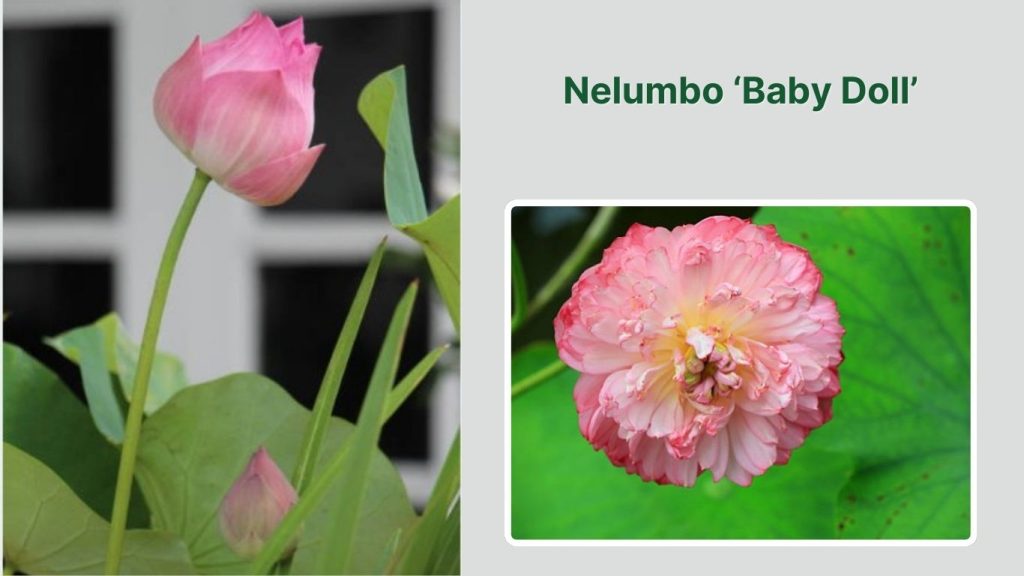
Nelumbo ‘Baby Doll’ is a charming dwarf lotus cultivar specially bred for small ponds, patio containers, and water bowls. Despite its compact size, it produces bright, attractive flowers and healthy round leaves, making it ideal for limited spaces and decorative water features. It is especially popular with home gardeners and urban growers.
Identification
- Smaller, round leaves compared to standard lotus types
- Bright pink flowers with neatly arranged petals
- Yellow central seed pod
- Shorter stems suitable for shallow containers
- Light, pleasant fragrance
- Compact rhizomes adapted to confined planting spaces
Habitat
‘Baby Doll’ grows best in shallow freshwater containers, small ponds, tubs, and decorative bowls. It prefers full sunlight, warm temperatures, and rich, muddy planting media. Because of its size, it adapts well to balcony gardens and small outdoor water features.
Behavior and Growth Pattern
This cultivar begins blooming early in the season and continues through summer. Flowers open in the morning and close later in the day, lasting several days. The plant remains compact, producing controlled growth rather than spreading aggressively.
Uses, Diet, and Lifespan
Primarily ornamental, ‘Baby Doll’ can also produce edible seeds and small rhizomes. With proper care and winter protection in cooler climates, it can live for many years, blooming reliably in containers each growing season.
19. Nelumbo ‘Red Bowl’
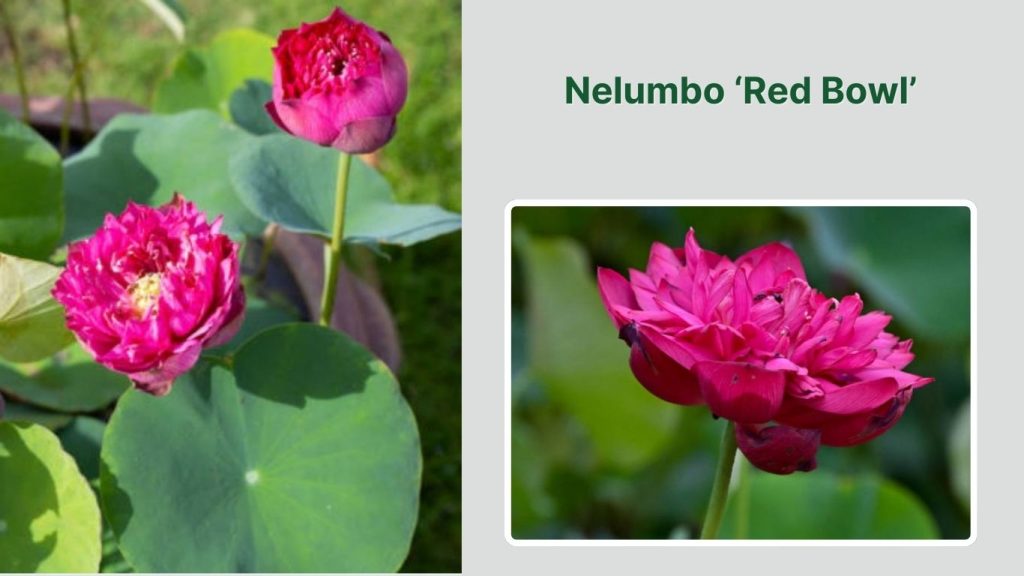
Nelumbo ‘Red Bowl’ is a compact and vividly colored lotus cultivar known for its deep red to crimson blooms and bowl-shaped flowers. It is widely grown in containers and small ponds because of its manageable size, rich color, and reliable flowering. Its bold blossoms create a strong visual contrast against bright green leaves.
Identification
- Medium-sized round leaves with a waxy surface
- Deep red to crimson, bowl-shaped flowers
- Broad petals arranged in a semi-double form
- Bright yellow central seed pod
- Sturdy stems rising just above the foliage
- Compact, spreading rhizomes
Habitat
‘Red Bowl’ thrives in warm, shallow freshwater containers, patio ponds, and small garden pools. It prefers full sun, stable water depth, and fertile mud. Because of its moderate growth, it is especially suitable for home water gardens.
Behavior and Growth Pattern
This lotus blooms repeatedly throughout summer, with flowers opening in the morning and closing later in the day over several days. Leaves and buds emerge steadily, forming a neat, attractive plant. It spreads slowly through rhizomes, remaining well contained.
Uses, Diet, and Lifespan
Grown mainly as an ornamental lotus, ‘Red Bowl’ also produces edible seeds and rhizomes. With proper seasonal care, it can live for many years, providing consistent color and structure to small water features.
20. Nelumbo ‘Angel Wings’
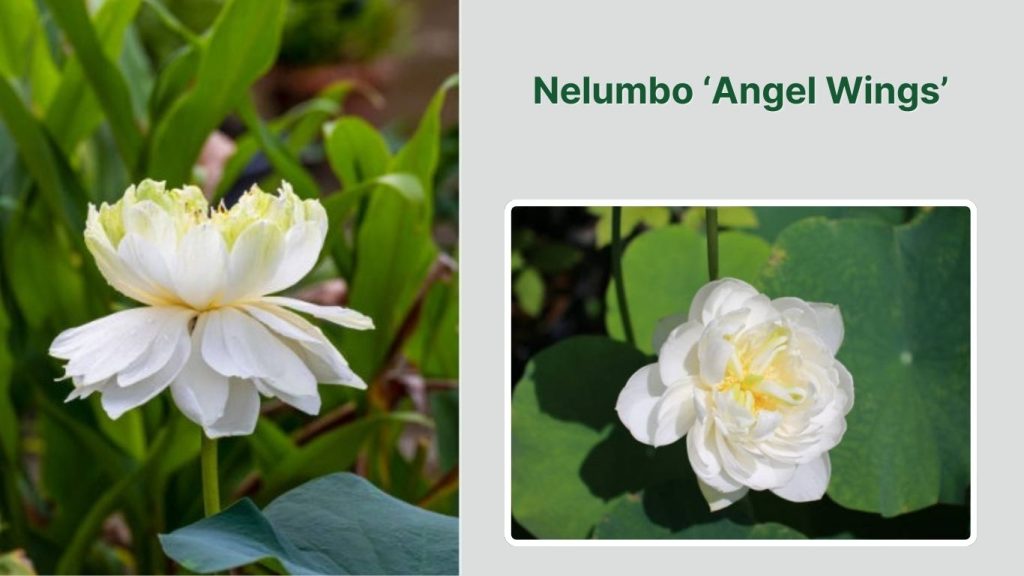
Nelumbo ‘Angel Wings’ is a graceful lotus cultivar admired for its pure white blooms and soft, elegant appearance. The flowers are delicately shaped with gently layered petals, giving them a light, floating look that inspired the cultivar’s name. It is commonly grown in ornamental ponds and garden pools for its calm, refined beauty.
Identification
- Large round leaves with a smooth, waxy surface
- Pure white flowers with softly layered petals
- Bright yellow central seed pod
- Upright, sturdy flower stalks
- Mild, pleasant fragrance
- Thick rhizomes spreading in muddy soil
Habitat
‘Angel Wings’ grows best in warm, shallow freshwater ponds, decorative lakes, and large containers. It prefers full sunlight, still water, and nutrient-rich mud. Stable summer warmth supports strong growth and clean white blooms.
Behavior and Growth Pattern
This cultivar produces healthy foliage followed by steady flowering through the warm season. Blooms open in the morning and close later in the day, lasting several days. Over time, the plant spreads through underground rhizomes, forming attractive, flowering colonies.
Uses, Diet, and Lifespan
Primarily cultivated as an ornamental lotus, ‘Angel Wings’ also yields edible seeds and rhizomes. With proper care, it can live for many years, returning each season with reliable growth and elegant blooms.
21. Nelumbo ‘Fire Opal’
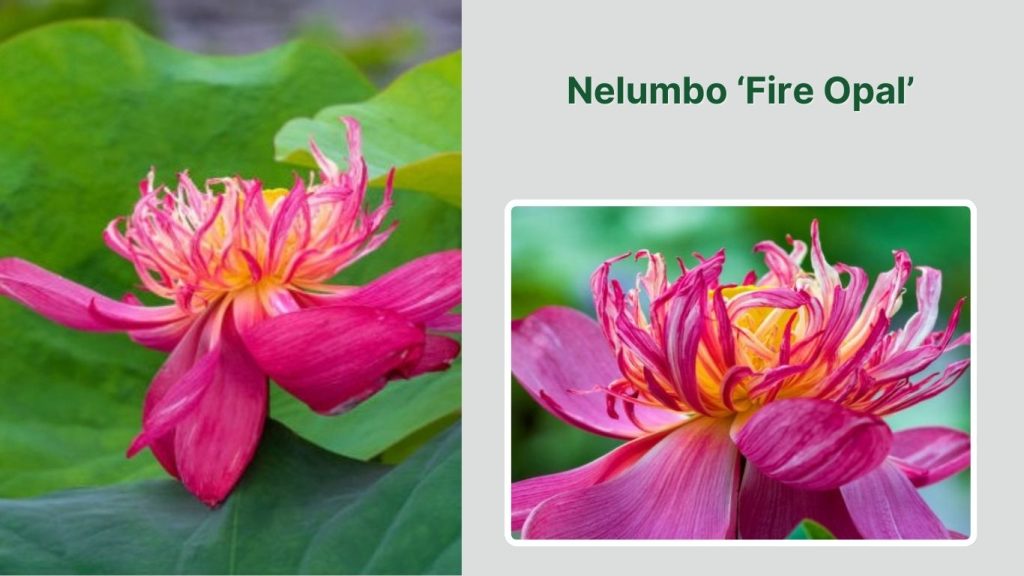
Nelumbo ‘Fire Opal’ is a vivid lotus cultivar known for its intense, glowing flower colors that range from deep coral to fiery orange-red. Its bright, jewel-like blooms stand out strongly against lush green foliage, making it a popular choice for ornamental ponds that aim for bold visual impact.
Identification
- Large, round, waxy leaves held above the water
- Bright coral, orange-red, to fiery pink flowers
- Broad petals often arranged in a semi-double form
- Prominent yellow central seed pod
- Tall, sturdy flower stalks
- Strong, spreading rhizomes anchored in mud
Habitat
‘Fire Opal’ grows best in warm, shallow freshwater ponds, ornamental lakes, and large water containers. It prefers full sunlight, still water, and rich, silty soil. Adequate warmth enhances the intensity of its flower coloration.
Behavior and Growth Pattern
This cultivar shows vigorous growth, producing abundant leaves and repeated blooms throughout summer. Flowers open in the morning and close later in the day for several days. The plant spreads steadily by underground rhizomes, forming colorful, dramatic stands.
Uses, Diet, and Lifespan
Mainly cultivated for decorative purposes, ‘Fire Opal’ also produces edible seeds and rhizomes like other sacred lotus types. With good care, it can live for many years, blooming reliably each growing season.
22. Nelumbo ‘Crimson Glory’
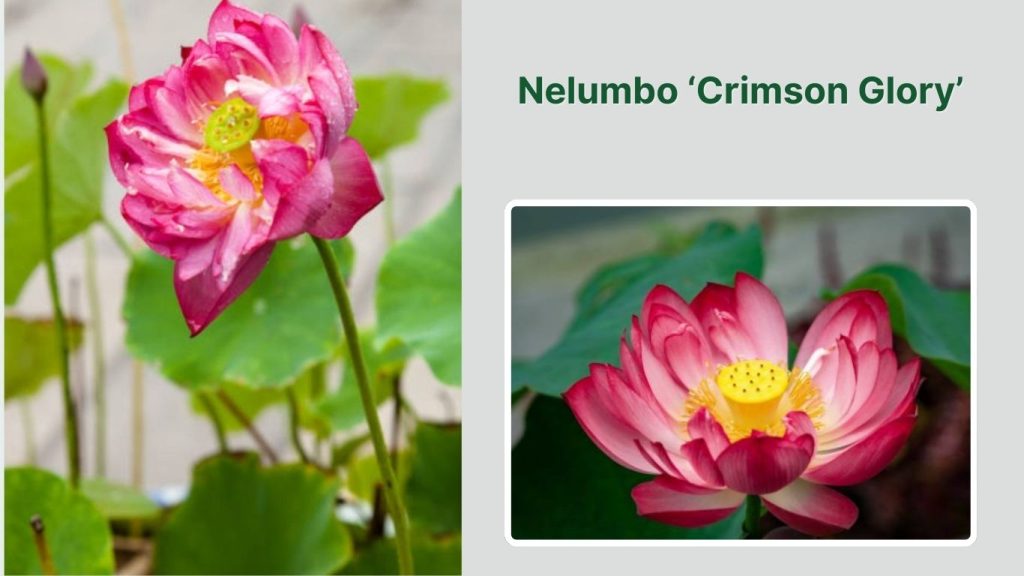
Nelumbo ‘Crimson Glory’ is a bold lotus cultivar prized for its rich crimson-red blooms and strong, upright growth. Its deep, saturated flower color makes it especially popular in ornamental ponds where dramatic contrast is desired. The large blossoms stand clearly above the foliage, creating a striking focal point in water gardens.
Identification
- Large circular leaves with a smooth, waxy surface
- Deep crimson to dark red flowers
- Broad, well-formed petals arranged in a classic lotus shape
- Bright yellow central seed pod
- Tall, sturdy stems holding blooms above the leaves
- Thick, spreading rhizomes in muddy soil
Habitat
‘Crimson Glory’ thrives in warm, shallow freshwater ponds, decorative lakes, and large planting containers. It prefers full sun, calm water, and fertile mud. Consistent warmth and sunlight help maintain its intense red coloration.
Behavior and Growth Pattern
This lotus grows vigorously, producing strong foliage followed by regular blooming throughout the warm season. Flowers open in the morning and close later in the day over several days. The plant expands steadily through underground rhizomes, forming dense, colorful clumps.
Uses, Diet, and Lifespan
Primarily grown as an ornamental lotus, ‘Crimson Glory’ also produces edible seeds and rhizomes. With proper care, it can live for many years, returning each season with reliable flowering and lush growth.
23. Nelumbo ‘Pink Peony’
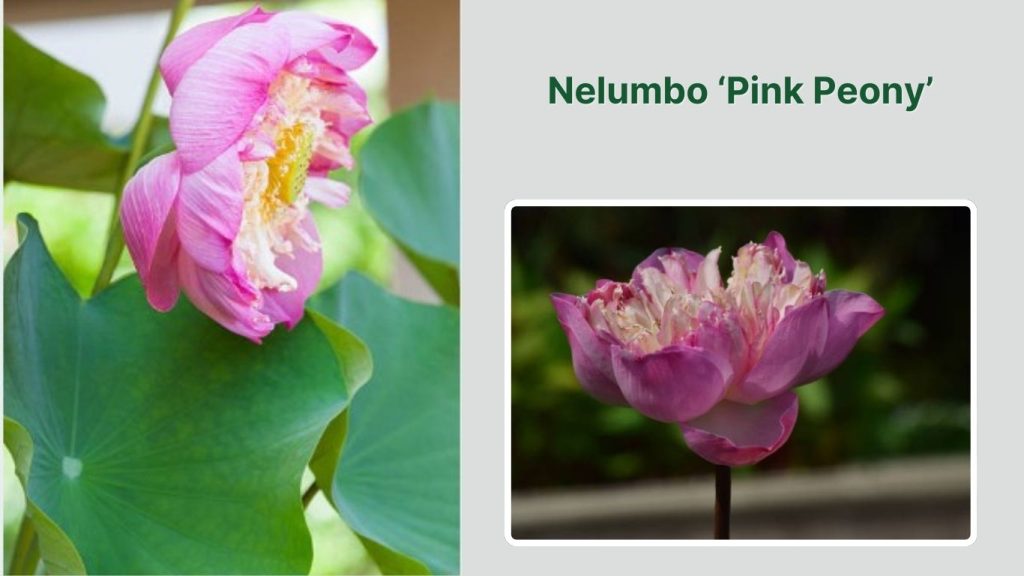
Nelumbo ‘Pink Peony’ is a lush, double-flowered lotus cultivar known for its full, rounded blooms that closely resemble peony flowers. Its soft to medium pink petals are densely layered, giving each bloom a rich, ornamental appearance. This cultivar is especially valued in decorative ponds and lotus exhibitions for its elegant form.
Identification
- Large, round leaves with a waxy surface
- Soft to medium pink double flowers
- Densely layered petals forming a peony-like shape
- Yellow central structures often partly hidden
- Upright flower stalks above the foliage
- Thick underground rhizomes spreading in mud
Habitat
‘Pink Peony’ grows best in warm, shallow freshwater ponds, ornamental pools, and large containers. It prefers full sun, still water, and nutrient-rich soil. Stable summer conditions support its strong flowering and full bloom development.
Behavior and Growth Pattern
This lotus produces healthy foliage and repeated blooms throughout the growing season. Flowers open in the morning and close later in the day, lasting several days. It spreads gradually through rhizomes, forming attractive, dense stands.
Uses, Diet, and Lifespan
Primarily cultivated for ornamental beauty, ‘Pink Peony’ also yields edible seeds and rhizomes. With proper care, it can live for many years, blooming consistently and maintaining its decorative appeal.
24. Nelumbo ‘White Cup’
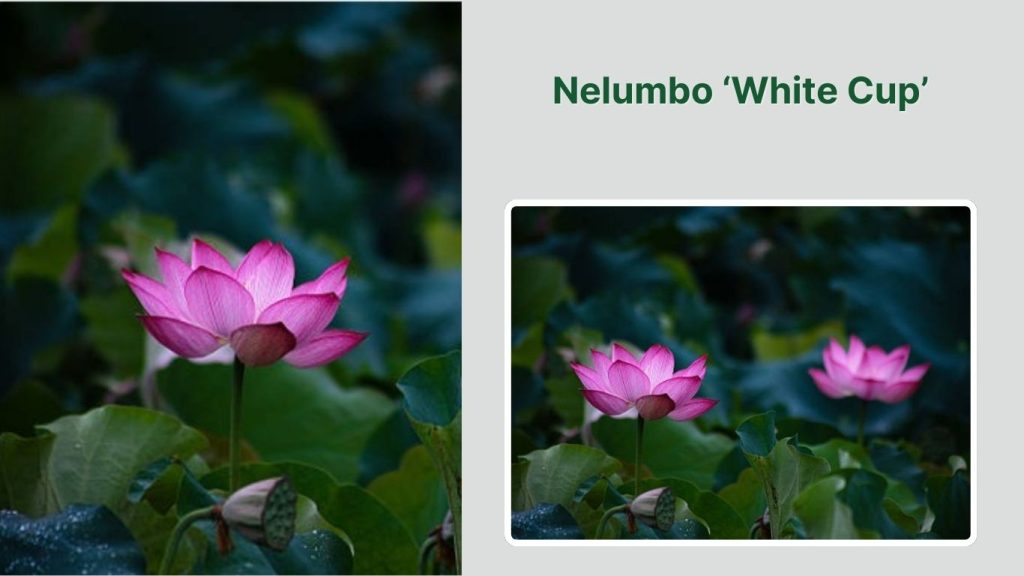
Nelumbo ‘White Cup’ is a refined lotus cultivar recognized for its cup-shaped white flowers and clean, symmetrical form. The blooms are gently curved inward, giving them a delicate chalice-like appearance. This elegant shape, combined with pure white petals, makes it a favorite for ornamental ponds and formal water gardens.
Identification
- Large circular leaves with a smooth, waxy coating
- Pure white, cup-shaped flowers
- Broad petals curving slightly inward
- Bright yellow central seed pod
- Upright, sturdy flower stalks
- Thick rhizomes spreading in muddy soil
Habitat
‘White Cup’ grows best in warm, shallow freshwater ponds, decorative lakes, and large containers. It prefers full sunlight, calm water, and fertile mud. Stable water depth and warm temperatures support consistent flowering.
Behavior and Growth Pattern
This cultivar produces steady leaf growth followed by regular blooming during summer. Flowers open in the morning and close later in the day for several days. Over time, the plant spreads through underground rhizomes, forming neat, flowering colonies.
Uses, Diet, and Lifespan
Mainly cultivated for ornamental purposes, ‘White Cup’ also produces edible seeds and rhizomes. With good care, it can live for many years, returning each season with healthy growth and elegant white blooms.
25. Nelumbo ‘Plenissima’
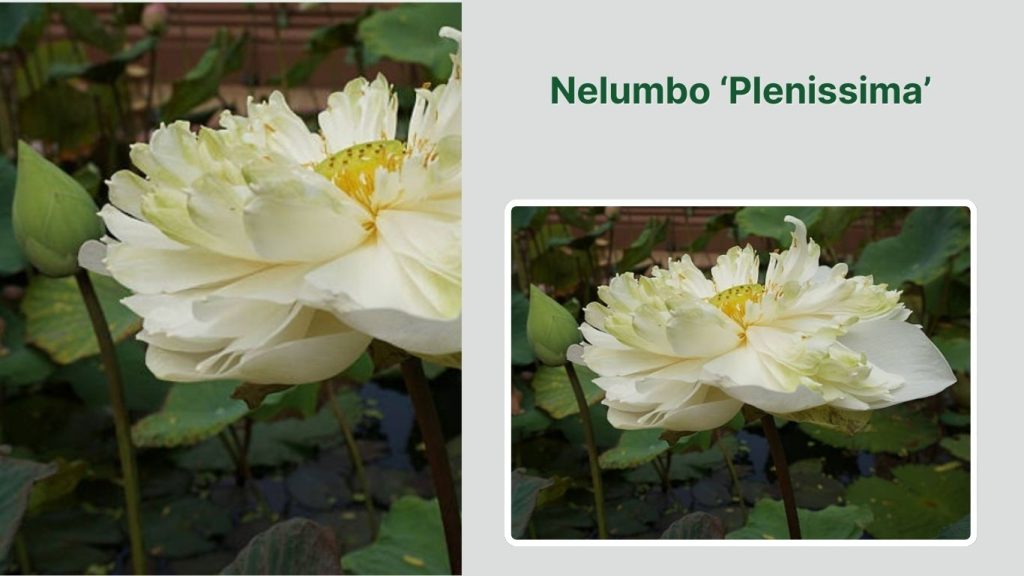
Nelumbo ‘Plenissima’ is a highly ornamental lotus cultivar admired for its extremely full, multi-petaled blooms. The flowers are densely packed with soft pink to pale rose petals, creating a luxurious, almost ruffled appearance. Because of its rich flower form, it is often featured in botanical gardens and classic water garden designs.
Identification
- Large, round leaves with a smooth, waxy surface
- Very full, double to triple-petaled pink flowers
- Densely layered petals forming a rounded bloom
- Yellow central structures often mostly hidden
- Upright flower stalks rising above the leaves
- Thick underground rhizomes spreading in mud
Habitat
‘Plenissima’ grows best in warm, shallow freshwater ponds, ornamental lakes, and large containers. It prefers full sunlight, still water, and nutrient-rich muddy soil. Consistent warmth helps the plant develop its large, well-formed blooms.
Behavior and Growth Pattern
This lotus produces strong foliage followed by repeated flowering throughout summer. Blooms open in the morning and close later in the day over several days. The plant expands gradually through rhizomes, forming lush, decorative stands.
Uses, Diet, and Lifespan
Primarily grown for ornamental beauty, ‘Plenissima’ also yields edible seeds and rhizomes. With suitable conditions, it can live for many years, reliably producing large, showy flowers each growing season.
26. Nelumbo ‘Sensation’
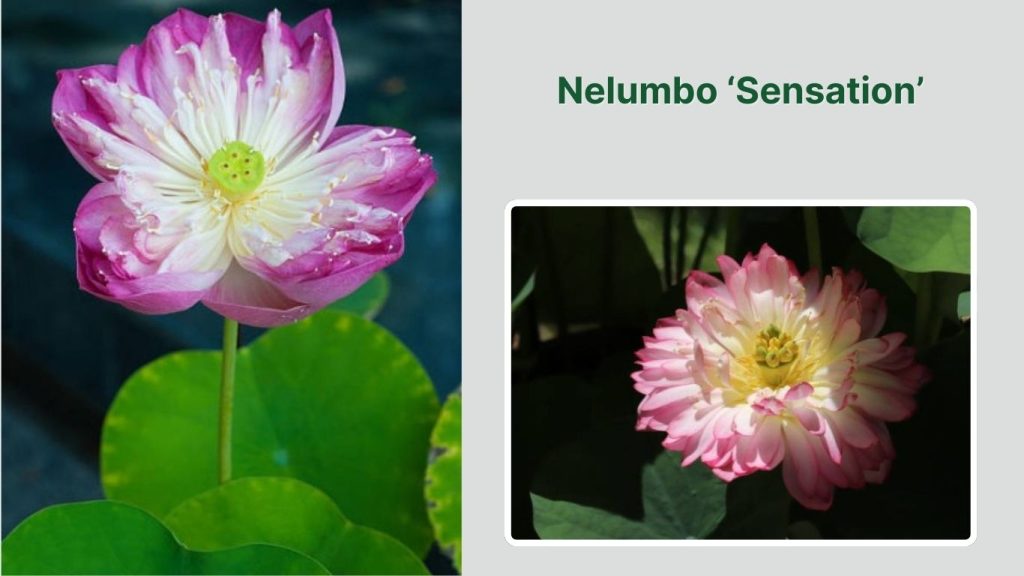
Nelumbo ‘Sensation’ is a striking lotus cultivar valued for its vivid pink blooms and strong, upright growth habit. The flowers are large, well-formed, and brightly colored, making this variety a standout choice for ornamental ponds and water gardens where bold visual appeal is desired.
Identification
- Large, round leaves with a waxy, water-repellent surface
- Bright pink flowers with broad, overlapping petals
- Prominent yellow central seed pod
- Tall, sturdy flower stalks
- Light, pleasant fragrance
- Thick, spreading rhizomes anchored in mud
Habitat
‘Sensation’ grows best in warm, shallow freshwater ponds, decorative lakes, and large planting containers. It prefers full sunlight, still water, and fertile mud. Warm temperatures enhance both its growth and flower coloration.
Behavior and Growth Pattern
This lotus shows vigorous seasonal growth, producing abundant foliage and repeated blooms through summer. Flowers open in the morning and close later in the day for several days. The plant spreads steadily through underground rhizomes, forming full, colorful colonies.
Uses, Diet, and Lifespan
Primarily cultivated for ornamental use, ‘Sensation’ also produces edible seeds and rhizomes. With proper care, it can live for many years, flowering consistently and maintaining its strong garden presence.
27. Nelumbo ‘Dream Lotus’
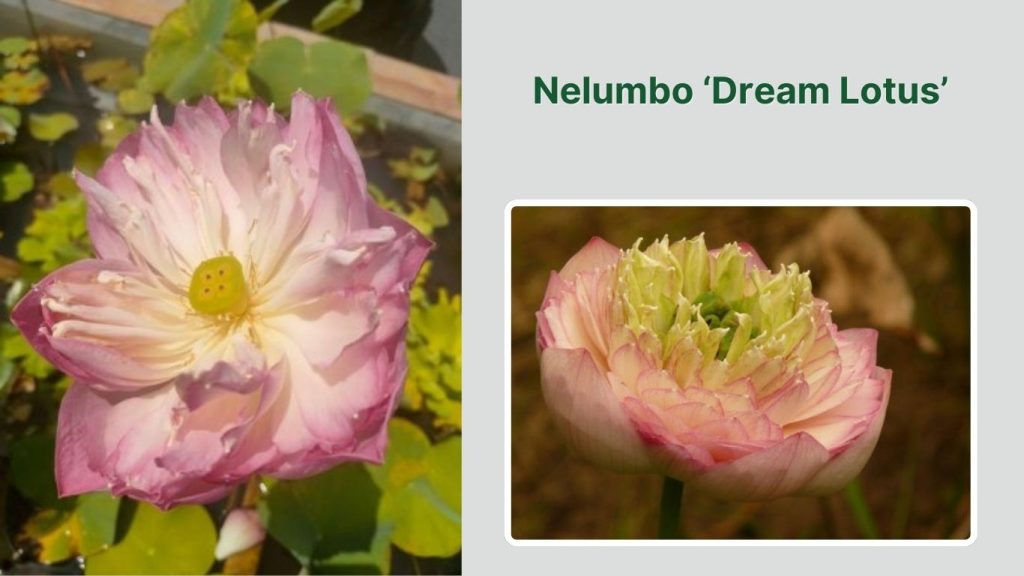
Nelumbo ‘Dream Lotus’ is a delicate and visually soothing lotus cultivar admired for its soft coloration and graceful flower form. The blooms often display gentle shades of pale pink, blush, or creamy white, giving the plant a dreamy, elegant appearance. It is commonly grown in ornamental ponds designed for calm, natural beauty.
Identification
- Large, round leaves with a smooth, waxy surface
- Soft pink to creamy white flowers
- Broad, gently layered petals
- Bright yellow central seed pod
- Upright flower stalks rising above the foliage
- Thick underground rhizomes spreading through mud
Habitat
‘Dream Lotus’ thrives in warm, shallow freshwater ponds, decorative lakes, and large containers. It prefers full sunlight, still water, and nutrient-rich muddy substrates. Stable warmth supports consistent blooming and healthy foliage.
Behavior and Growth Pattern
This cultivar produces steady leaf growth followed by repeated blooming throughout the warm season. Flowers open in the morning and close later in the day over several days. Over time, the plant spreads through rhizomes, forming elegant, manageable colonies.
Uses, Diet, and Lifespan
Mainly cultivated for ornamental purposes, ‘Dream Lotus’ also produces edible seeds and rhizomes like other sacred lotus varieties. With good care, it can live for many years, returning each season with reliable flowering and graceful beauty.
FAQs
What is the difference between true lotus and water lilies?
True lotuses belong to the genus Nelumbo and have leaves and flowers that usually rise above the water, along with a distinctive cone-shaped seed pod. Water lilies belong to the genus Nymphaea and mostly float on the surface, with round leaves that often have a slit.
How long does a lotus flower usually bloom?
Each individual lotus flower typically blooms for three to five days. The flower opens in the morning and closes in the afternoon or evening, repeating this cycle until the petals fall and the central seed pod remains.
Can lotus plants grow in small containers?
Yes, many lotus varieties, especially dwarf cultivars like ‘Baby Doll,’ grow well in containers. They need wide, shallow pots, rich muddy soil, warm temperatures, and full sunlight to flower properly.
Are all parts of the lotus plant edible?
Most parts of true lotus plants are edible, including the rhizomes (roots), seeds, young leaves, and stems. They are widely used in Asian cooking and traditional medicine, although proper identification and clean growing conditions are important.
How long can a lotus plant live?
Lotus plants can live for many years and often become stronger with age. Some lotus seeds have even been known to germinate after hundreds of years, showing the remarkable longevity of this plant.