


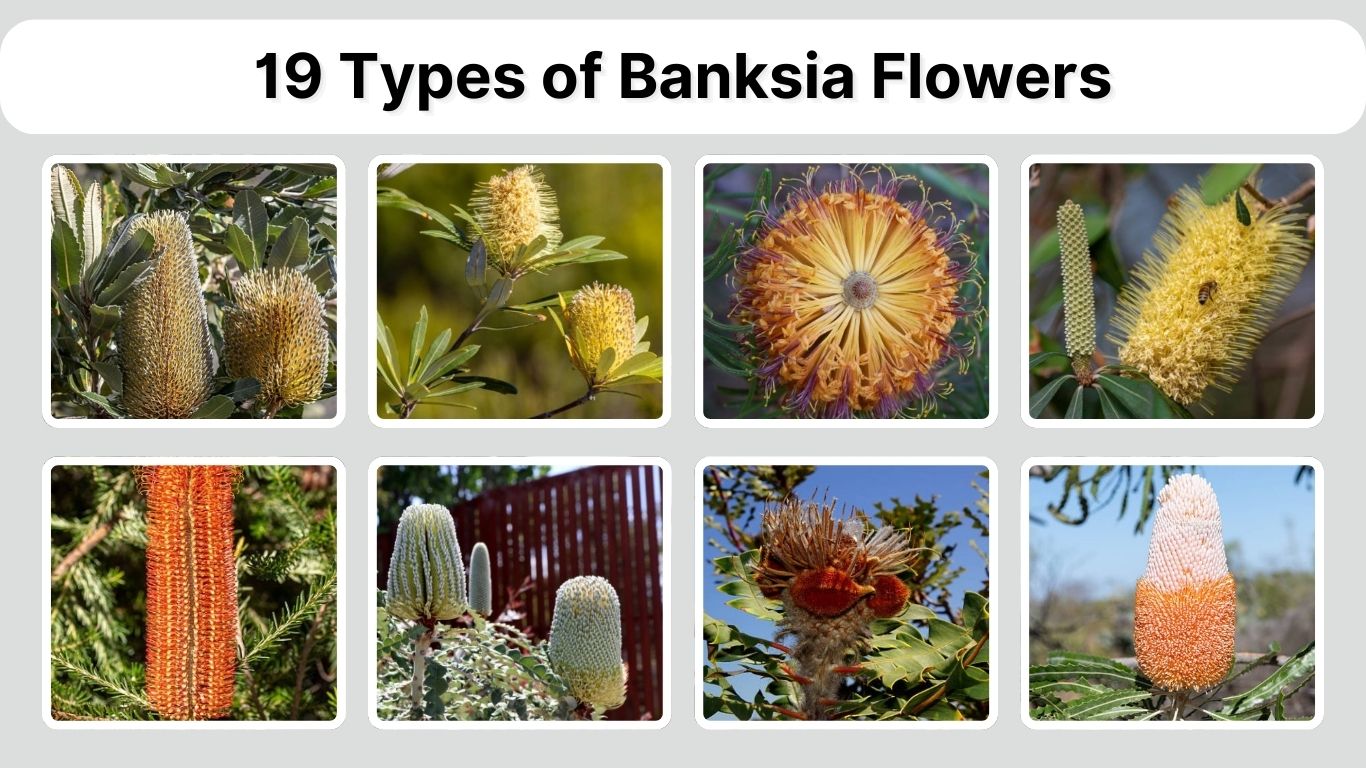
Banksia flowers are among the most iconic and visually striking blooms native to Australia, celebrated for their bold shapes, rich nectar, and ecological importance. With nearly 200 species, Banksias range from low shrubs to tall trees, each producing distinctive flower spikes that attract birds, insects, and small mammals. Found across coastal regions, forests, heathlands, and even wetlands, Banksia plants are uniquely adapted to harsh environments and fire-prone landscapes, making them a fascinating and essential part of Australia’s natural heritage.
1. Banksia serrata (Old Man Banksia)

Banksia serrata, commonly known as Old Man Banksia, is one of the most recognizable Banksia species native to eastern Australia. It is famous for its rough bark, deeply serrated leaves, and large cylindrical flower spikes. This hardy plant grows as a shrub or medium-sized tree and is well adapted to coastal conditions. Its long-lasting cones and nectar-rich flowers make it an important species in both natural ecosystems and native gardens.
Identification
- Thick, leathery leaves with deep saw-like edges
- Large cylindrical flower spikes, usually pale yellow to green
- Woody seed cones that often remain on the plant for years
- Rough, deeply fissured bark on mature plants
- Grows as a large shrub or small tree
Habitat and Distribution
Banksia serrata is native to coastal and near-coastal areas of eastern Australia, including Queensland, New South Wales, Victoria, and Tasmania. It commonly grows in sandy soils, coastal heathlands, and open woodlands. The plant tolerates wind, salt spray, and nutrient-poor soil, which allows it to thrive in harsh seaside environments.
Flowering Characteristics
The flower spikes are made up of thousands of tiny blooms packed tightly together. Flowering usually occurs from late summer to winter. The flowers produce large amounts of nectar, attracting birds, bees, and other pollinators.
Ecological Importance
Old Man Banksia provides a crucial food source for wildlife. Its woody cones protect seeds and often open after fire, helping the species regenerate and support ecosystem recovery.
2. Banksia integrifolia (Coastal Banksia)

Banksia integrifolia, commonly called Coastal Banksia, is a versatile and fast-growing Banksia species native to eastern Australia. It is especially well known for its smooth grey bark, glossy green leaves, and pale yellow flower spikes. This species is highly tolerant of wind and salt, making it one of the most common Banksias found along beaches, headlands, and coastal parks.
Identification
- Long, narrow, glossy green leaves with pale or silvery undersides
- Cylindrical flower spikes, usually pale yellow to cream
- Smooth grey bark, becoming slightly rough with age
- Woody cones with small embedded follicles
- Growth form ranges from spreading shrub to medium-sized tree
Habitat and Distribution
Coastal Banksia naturally occurs along the eastern coastline of Australia, from Queensland through New South Wales to Victoria. It thrives in sandy soils, dunes, and coastal forests, often growing right behind the beachfront. It can also adapt to inland locations with well-drained soil and full sun.
Flowering Characteristics
Flowering usually occurs from late autumn through spring. The flower spikes are rich in nectar and are made of tightly packed tiny flowers. These blooms attract many pollinators, including honeyeaters, bees, and butterflies.
Ecological Importance
Banksia integrifolia is an important food plant for coastal wildlife. Its flowers support birds and insects, while its dense growth helps stabilize sand and protect shorelines from erosion.
3. Banksia robur (Swamp Banksia)

Banksia robur, known as Swamp Banksia, is a distinctive species recognized for its large, broad leaves and bold flower spikes that change color as they age. Unlike many Banksias that prefer dry, sandy soils, this species is adapted to wetter environments. It is a striking plant in both natural wetlands and cultivated landscapes, valued for its dramatic foliage and strong architectural form.
Identification
- Very large, thick, serrated leaves with a leathery texture
- Flower spikes that open greenish, then turn yellow and finally orange-brown
- Stout, upright growth habit forming shrubs or small trees
- Woody cones with thick follicles
- Prominent central midrib on leaves
Habitat and Distribution
Swamp Banksia is native to eastern Australia, mainly in coastal New South Wales and southern Queensland. It naturally grows in swampy ground, along creek margins, and in seasonally flooded lowlands. This species tolerates waterlogged soils better than most Banksias but can also adapt to well-drained garden soils.
Flowering Characteristics
Flowering usually occurs from late summer to autumn. The large cylindrical spikes are visually striking and can reach impressive sizes. As the flowers mature, their color shifts, giving the plant a multi-toned appearance. They are rich in nectar and attract birds and insects.
Ecological Importance
Banksia robur provides valuable food resources for wetland wildlife. Its tolerance of damp conditions makes it important for stabilizing moist soils and supporting biodiversity in low-lying coastal ecosystems.
4. Banksia spinulosa (Hairpin Banksia)

Banksia spinulosa, commonly called Hairpin Banksia, is a compact and adaptable species known for its slender leaves and bright golden flower spikes tipped with contrasting styles. It is widely cultivated because of its neat growth habit, long flowering season, and tolerance of a wide range of conditions. In the wild, it contributes strongly to heathland and open woodland plant communities.
Identification
- Narrow, grass-like leaves with fine serrated edges
- Cylindrical golden flower spikes with protruding hairpin-like styles
- Low, spreading shrub growth form
- Small woody cones often hidden among foliage
- Fine, dense branching habit
Habitat and Distribution
Hairpin Banksia is native to eastern Australia, occurring from Queensland through New South Wales into Victoria. It typically grows in sandy or rocky soils, coastal heaths, and open forests. The species is highly adaptable, tolerating both coastal exposure and light frost in inland regions.
Flowering Characteristics
Flowering can occur for much of the year, with peaks in autumn and winter. The bright flower spikes are rich in nectar and stand out against the narrow foliage. These blooms attract honeyeaters, native bees, and a variety of other insects.
Ecological Importance
Banksia spinulosa provides an extended nectar source, making it valuable for supporting pollinators across seasons. Its dense growth also offers shelter for small birds and ground-dwelling wildlife.
5. Banksia marginata (Silver Banksia)

Banksia marginata, often called Silver Banksia, is a highly variable species that can grow as a low shrub or a tall tree depending on location. It is admired for its narrow leaves, pale flower spikes, and exceptional tolerance to cold and poor soils. This adaptability has made it one of the most widespread Banksias across southern Australia.
Identification
- Narrow, elongated leaves with smooth or slightly toothed margins
- Cream to pale yellow cylindrical flower spikes
- Woody cones that may persist for many years
- Smooth grey bark on young plants, becoming rough with age
- Growth form ranges from shrub to tall tree
Habitat and Distribution
Silver Banksia is found across southern Australia, including Victoria, South Australia, Tasmania, and parts of New South Wales. It grows in a wide range of environments such as coastal heathlands, grasslands, open forests, and even montane regions. The species tolerates frost, drought, and poor soils better than many other Banksias.
Flowering Characteristics
Flowering generally occurs from late winter through summer. The flower spikes are densely packed with small blooms that produce abundant nectar. These flowers attract birds, bees, and beetles.
Ecological Importance
Banksia marginata supports many nectar-feeding animals and insects. Its ability to survive in harsh climates makes it important for ecosystem stability and habitat restoration projects.
6. Banksia ericifolia (Heath Banksia)

Banksia ericifolia, known as Heath Banksia, is one of the most visually striking species, famous for its tall orange-red flower spikes and fine needle-like foliage. It is a signature plant of Australian coastal heathlands and is widely cultivated for its dramatic color and long-lasting blooms.
Identification
- Fine, narrow, needle-like leaves arranged densely along stems
- Tall cylindrical flower spikes, usually orange to reddish-orange
- Dark woody cones that remain on branches
- Upright shrub growth habit
- Rough bark on older stems
Habitat and Distribution
Heath Banksia is native to coastal regions of New South Wales and southern Queensland. It grows mainly in sandy soils, coastal heath, and open woodland. The plant prefers full sun and well-drained soil and is well adapted to wind-exposed environments.
Flowering Characteristics
Flowering usually occurs from autumn to winter. The large, brightly colored spikes are rich in nectar and highly attractive to honeyeaters, bees, and butterflies. The strong color contrast makes this species one of the most photographed Banksias.
Ecological Importance
Banksia ericifolia plays an important role in supporting pollinators during cooler months when fewer plants are in bloom. It is also adapted to fire, with cones that release seeds after heat exposure.
7. Banksia grandis (Bull Banksia)

Banksia grandis, commonly known as Bull Banksia, is one of the largest Banksia species and is easily recognized by its huge leaves and massive flower spikes. Native to southwestern Australia, this impressive plant can grow into a tall tree and is a dominant feature of forests and woodlands where it occurs.
Identification
- Very large, deeply serrated leaves with a bold, saw-like appearance
- Thick cylindrical flower spikes, usually yellow to golden
- Large woody cones with prominent follicles
- Rough, furrowed bark on mature trees
- Tall tree form with a strong central trunk
Habitat and Distribution
Bull Banksia is native to the southwest of Western Australia. It grows in open forests, woodlands, and along river margins, usually in sandy or lateritic soils. The species prefers well-drained ground and full sun but can also tolerate seasonal moisture.
Flowering Characteristics
Flowering usually takes place from late summer to winter. The flower spikes are among the largest of any Banksia species and are rich in nectar. They attract birds, insects, and small mammals.
Ecological Importance
Banksia grandis is a key food source in southwestern ecosystems. Its flowers sustain wildlife, while its large woody cones contribute to post-fire regeneration and habitat complexity.
8. Banksia attenuata (Slender Banksia)

Banksia attenuata, known as Slender Banksia, is a graceful species characterized by its narrow leaves and tall, elegant flower spikes. It is one of the most widespread Banksias in Western Australia and plays an important role in local ecosystems, particularly in sandy plains and open woodlands.
Identification
- Long, narrow leaves with fine serrations
- Tall cylindrical flower spikes, pale yellow to bright gold
- Slender woody cones held along branches
- Smooth to lightly rough bark
- Upright tree or large shrub form
Habitat and Distribution
Slender Banksia is native to southwestern Western Australia, where it grows in sandy soils, coastal plains, and open woodlands. It prefers well-drained ground and full sun and is highly tolerant of drought and poor soil nutrients.
Flowering Characteristics
Flowering usually occurs from late autumn through spring. The spikes stand upright and are densely packed with small flowers that produce abundant nectar. These blooms attract honeyeaters, native bees, and beetles.
Ecological Importance
Banksia attenuata is one of the most important nectar plants in southwestern Australia. It supports large numbers of birds and insects and contributes to the stability of sandy ecosystems.
9. Banksia baxteri (Bird’s Nest Banksia)

Banksia baxteri, commonly called Bird’s Nest Banksia, is a distinctive species known for its sprawling growth habit and massive flower spikes that often form a nest-like shape near the ground. Native to southern Western Australia, it is a striking plant of coastal heathlands and sandy shrublands.
Identification
- Broad, toothed leaves arranged in a low, spreading form
- Large cylindrical flower spikes, usually yellow to greenish-yellow
- Heavy woody cones sitting close to the plant base
- Low, prostrate to spreading shrub habit
- Thick, tough foliage
Habitat and Distribution
Bird’s Nest Banksia is native to southern coastal regions of Western Australia. It grows mainly in sandy soils, coastal heath, and low shrublands, often in wind-exposed areas. The plant is adapted to nutrient-poor soils and open, sunny locations.
Flowering Characteristics
Flowering usually occurs from late summer through autumn. The flower spikes are large and nectar-rich, attracting birds, insects, and small mammals. Their low position makes them accessible to ground-dwelling pollinators.
Ecological Importance
Banksia baxteri provides an important food source for wildlife in coastal ecosystems. Its growth form offers shelter for small animals, while its cones store seeds that are often released after fire.
10. Banksia coccinea (Scarlet Banksia)

Banksia coccinea, commonly known as Scarlet Banksia, is one of the most spectacular Banksia species, famous for its brilliant red flower spikes with contrasting pale tips. Native to southwestern Western Australia, it is highly valued for ornamental use and as a cut flower due to its vivid color and long-lasting blooms.
Identification
- Narrow, upright leaves with smooth margins
- Bright scarlet cylindrical flower spikes with cream or white tips
- Slender woody cones held along stems
- Erect shrub growth habit
- Smooth grey to brown bark
Habitat and Distribution
Scarlet Banksia is native to coastal and near-coastal regions of southwestern Western Australia. It grows in sandy, well-drained soils, often in heathlands and low shrub communities. The species prefers full sun and mild coastal climates.
Flowering Characteristics
Flowering usually occurs from late winter through spring. The intense red flower spikes are rich in nectar and attract honeyeaters and insects. The contrasting colors make this species especially visible from a distance.
Ecological Importance
Banksia coccinea plays an important role in supporting nectar-feeding birds and insects. It also contributes to plant diversity in coastal heath ecosystems and is commonly used in habitat-friendly gardens.
11. Banksia menziesii (Firewood Banksia)

Banksia menziesii, commonly known as Firewood Banksia, is a highly recognizable species noted for its colorful flower spikes that often display bands of red, pink, cream, and yellow. It is a prominent feature of southwestern Australian landscapes and blooms reliably each year.
Identification
- Broad, toothed leaves with a leathery texture
- Large cylindrical flower spikes with multicolored bands
- Woody cones that remain on branches
- Rough bark on mature plants
- Shrub to small tree growth habit
Habitat and Distribution
Firewood Banksia is native to southwestern Western Australia. It grows in sandy soils, coastal heathlands, and open woodlands. The species thrives in well-drained, nutrient-poor soils and full sun.
Flowering Characteristics
Flowering usually occurs from late autumn to spring. The large spikes are rich in nectar and attract honeyeaters, bees, and beetles. Color intensity can vary widely between plants.
Ecological Importance
Banksia menziesii is a major nectar source during winter and spring. Its long flowering season supports wildlife, while its cones help the species regenerate after bushfires.
12. Banksia speciosa (Showy Banksia)

Banksia speciosa, often called Showy Banksia, is admired for its large, dramatic flower spikes that display rich shades of red, orange, and cream. Native to the southern coast of Western Australia, this species stands out for both its ornamental appeal and its importance to native wildlife.
Identification
- Long, narrow, deeply toothed leaves with a leathery surface
- Large cylindrical flower spikes with red, orange, and cream tones
- Thick woody cones with prominent follicles
- Upright shrub to small tree growth habit
- Grey, slightly rough bark
Habitat and Distribution
Showy Banksia is native to coastal regions of southern Western Australia. It grows in sandy soils, coastal heath, and open shrublands, often in windy, exposed sites. The plant prefers full sun and excellent drainage.
Flowering Characteristics
Flowering usually occurs from late summer through winter. The large, nectar-rich spikes are highly attractive to birds and insects. The bold coloring makes this species a prominent feature in its natural habitat.
Ecological Importance
Banksia speciosa supports a wide range of nectar-feeding animals. It also contributes to coastal ecosystem stability and is adapted to fire-prone environments.
13. Banksia prionotes (Acorn Banksia)

Banksia prionotes, commonly called Acorn Banksia, is well known for its striking orange flower spikes with bright yellow tips. Native to southwestern Western Australia, it is one of the most distinctive Banksias and is often associated with sandy plains and open woodlands.
Identification
- Narrow, deeply toothed leaves with a stiff texture
- Bright orange cylindrical flower spikes with yellow tips
- Large woody cones resembling acorns
- Rough grey-brown bark
- Small tree or tall shrub growth form
Habitat and Distribution
Acorn Banksia is native to southwestern Western Australia, where it grows in deep sandy soils, open woodlands, and coastal plains. It thrives in full sun and well-drained conditions and is tolerant of drought.
Flowering Characteristics
Flowering usually occurs from late autumn through winter. The colorful spikes are rich in nectar and are highly attractive to honeyeaters, insects, and other pollinators.
Ecological Importance
Banksia prionotes is a major winter food source for nectar-feeding birds. Its large cones store seeds that are often released after fire, supporting regeneration.
14. Banksia burdettii (Burdetts Banksia)

Banksia burdettii is a unique and easily recognizable species, noted for its domed, rounded flower heads rather than the typical cylindrical spikes seen in most Banksias. Native to southwestern Western Australia, it is a striking plant of sandy heathlands and coastal plains.
Identification
- Broad, deeply serrated leaves with a leathery feel
- Rounded, dome-shaped flower heads, usually bright yellow
- Large woody cones embedded with many follicles
- Low, spreading shrub growth habit
- Rough bark and thick stems
Habitat and Distribution
Burdetts Banksia occurs naturally in sandy soils of southwestern Western Australia. It is commonly found in heathlands and low shrublands, especially in open, sun-exposed areas. The species prefers well-drained, nutrient-poor soils.
Flowering Characteristics
Flowering usually takes place from late winter through spring. The bright yellow flower heads produce abundant nectar and are highly attractive to birds and insects.
Ecological Importance
Banksia burdettii plays an important role in supporting pollinators in sandy ecosystems. Its unusual flower form adds diversity to the Banksia genus, and its seeds are often released after fire.
15. Banksia hookeriana (Hooker’s Banksia)

Banksia hookeriana, commonly called Hooker’s Banksia, is a beautiful and compact species valued for its long-lasting golden-orange flower spikes. It is native to southwestern Western Australia and is especially popular in native gardens and the cut-flower industry.
Identification
- Narrow, deeply toothed leaves with a stiff texture
- Cylindrical golden to orange flower spikes
- Woody cones with prominent follicles
- Dense, upright shrub growth habit
- Grey to brown bark
Habitat and Distribution
Hooker’s Banksia naturally occurs in coastal and inland sandy regions of southwestern Western Australia. It grows in well-drained, nutrient-poor soils, often in heathlands and low shrub communities. The plant prefers open, sunny locations.
Flowering Characteristics
Flowering usually occurs from late winter through spring. The bright spikes are rich in nectar and attract honeyeaters, bees, and beetles. The flowers are long-lasting and retain their color well.
Ecological Importance
Banksia hookeriana provides a reliable nectar source during cooler months. Its seeds are often released after fire, helping maintain plant populations in fire-prone landscapes.
16. Banksia victoriae (Victoria Banksia)

Banksia victoriae is a striking species recognized for its unusually large flower spikes with dramatic red, orange, and cream tones. Native to southwestern Western Australia, it is often found in coastal heathlands and open shrublands where it adds bold color to the landscape.
Identification
- Broad, leathery leaves with deep serrations
- Large cylindrical flower spikes with red, orange, and cream bands
- Thick woody cones with prominent follicles
- Upright shrub to small tree growth habit
- Grey, rough-textured bark
Habitat and Distribution
Victoria Banksia naturally occurs along the southern coast of Western Australia. It grows in sandy, well-drained soils, coastal heath, and open shrublands. The species thrives in full sun and is adapted to dry, nutrient-poor conditions.
Flowering Characteristics
Flowering generally takes place from late summer through winter. The large, nectar-rich spikes are highly attractive to honeyeaters and insects and are among the most visually impressive in the genus.
Ecological Importance
Banksia victoriae supports nectar-feeding wildlife during cooler months. Its woody cones protect seeds that are often released after fire, contributing to regeneration.
17. Banksia ornata (Desert Banksia)

Banksia ornata, commonly known as Desert Banksia, is a hardy species adapted to drier environments. It is known for its pale yellow flower spikes and stiff, deeply toothed leaves. This plant is an important component of inland heathlands and mallee ecosystems in southern Australia.
Identification
- Narrow, stiff leaves with sharp serrations
- Pale yellow to cream cylindrical flower spikes
- Woody cones with prominent follicles
- Dense shrub growth habit
- Rough bark on older stems
Habitat and Distribution
Desert Banksia is native to parts of South Australia, western Victoria, and southwestern New South Wales. It grows in sandy soils, mallee scrub, and inland heathlands, often in low-rainfall areas. The species tolerates drought, heat, and nutrient-poor soils.
Flowering Characteristics
Flowering usually occurs from autumn through winter. The nectar-rich flowers attract birds, bees, and beetles and provide important seasonal food sources in dry habitats.
Ecological Importance
Banksia ornata supports wildlife in arid and semi-arid ecosystems. Its flowers sustain pollinators, while its cones protect seeds that are often released after fire.
18. Banksia ashbyi (Ashby’s Banksia)

Banksia ashbyi, commonly called Ashby’s Banksia, is a bright and showy species known for its vivid orange to red flower spikes. Native to Western Australia, it is valued for both its ornamental beauty and its importance to nectar-feeding wildlife.
Identification
- Narrow, elongated leaves with fine serrations
- Bright orange to red cylindrical flower spikes
- Slender woody cones held along stems
- Upright shrub growth habit
- Smooth to lightly rough bark
Habitat and Distribution
Ashby’s Banksia is native to sandy coastal and inland areas of southwestern Western Australia. It commonly grows in well-drained soils, open shrublands, and coastal heath. The plant prefers full sun and tolerates drought well.
Flowering Characteristics
Flowering usually occurs from winter through spring. The brightly colored spikes produce abundant nectar and attract honeyeaters, bees, and other insects.
Ecological Importance
Banksia ashbyi plays a valuable role in supporting pollinators and birds. Its seeds are often released after fire, helping sustain populations in fire-prone ecosystems.
19. Banksia seminuda (River Banksia)

Banksia seminuda, known as River Banksia, is a distinctive species adapted to wetter environments than most Banksias. It is recognized for its tall growth habit, narrow leaves, and soft yellow flower spikes. This species often grows near waterways and seasonally moist sites.
Identification
- Long, narrow leaves with fine serrations
- Pale yellow cylindrical flower spikes
- Woody cones with embedded follicles
- Tall shrub to medium-sized tree form
- Grey, lightly textured bark
Habitat and Distribution
River Banksia is native to southwestern Western Australia. It commonly grows along rivers, streams, and seasonally wet flats. Unlike many Banksias, it tolerates heavier soils and periodic waterlogging, though it still prefers good drainage.
Flowering Characteristics
Flowering generally occurs from late spring through summer. The nectar-rich flowers attract birds, bees, and beetles, supporting local pollinator populations.
Ecological Importance
Banksia seminuda is important in riparian ecosystems, where it helps stabilize soil and provides food for wildlife. Its cones store seeds that are often released after fire, aiding natural regeneration.
FAQs
What makes Banksia flowers different from other flowering plants?
Banksia flowers grow in dense cylindrical or rounded spikes made up of thousands of tiny individual blooms packed tightly together. This structure produces large amounts of nectar, making Banksias extremely attractive to birds and insects. Their woody cones and fire-adapted seed release also set them apart from many other flowering plants.
Where are Banksia flowers naturally found?
Banksia flowers are native almost exclusively to Australia, with most species concentrated in Western and southwestern regions. They grow in a wide range of habitats, including coastal dunes, heathlands, open forests, and even wetlands. Different species are adapted to sandy soils, rocky areas, or seasonally wet environments.
Do Banksia plants need fire to reproduce?
Many Banksia species are fire-adapted. Their woody cones protect seeds for years and often only open after exposure to heat from bushfires. This allows seeds to be released into nutrient-rich ash beds with reduced competition, helping new plants establish and regenerate natural ecosystems.
Are Banksia flowers good for wildlife?
Yes, Banksia flowers are extremely important for wildlife. Their nectar-rich blooms provide food for honeyeater birds, bees, beetles, and even small mammals. Because different species flower at different times of year, Banksias offer a long-term and reliable food source across seasons.
Can Banksia flowers be grown in home gardens?
Many Banksia species grow well in home gardens if planted in well-drained, low-phosphorus soil and full sun. They are popular in native gardens for their striking flowers and ability to attract birds. However, they dislike heavy, waterlogged soils and excessive fertilizers.