
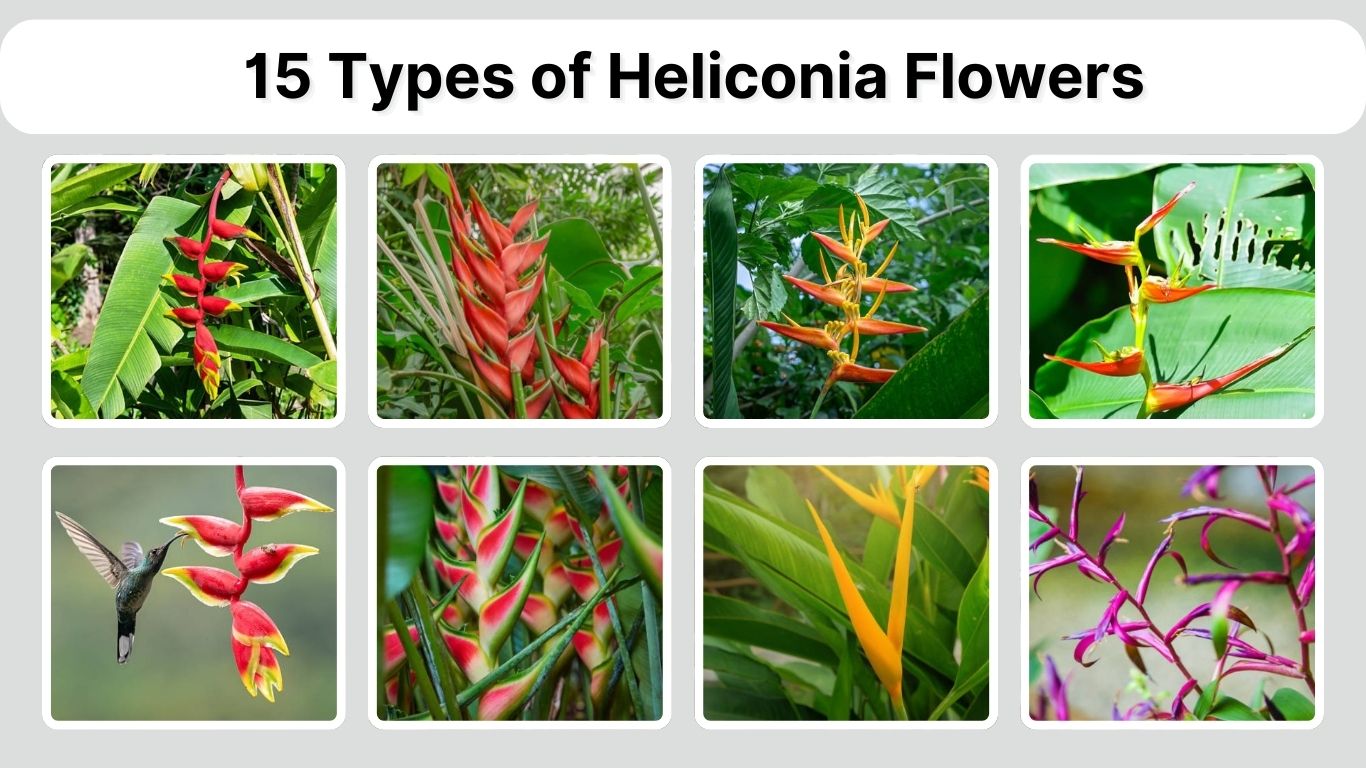
Heliconia flowers are famous for their bold colors, dramatic shapes, and unmistakable tropical beauty. Native mainly to Central and South America, along with some Pacific islands, these striking plants thrive in warm, humid environments and are closely associated with rainforests and hummingbirds. From hanging lobster-claw forms to upright, torch-like blooms, heliconias are widely grown in tropical gardens and used in the cut-flower industry for their long-lasting, eye-catching floral displays.
1. Heliconia rostrata (Hanging Lobster Claw)

Heliconia rostrata is one of the most iconic heliconia species, instantly recognized by its long, hanging flower spikes made up of bright red bracts tipped with yellow and green. Often called the Hanging Lobster Claw or False Bird of Paradise, it is widely grown in tropical gardens and used extensively in ornamental landscaping.
Identification
- Long, pendulous flower clusters
- Bright red bracts with yellow and green tips
- Large, banana-like green leaves
- Upright, clumping growth habit
- Smooth, thick flowering stems
Natural Habitat
Heliconia rostrata is native to the tropical rainforests of Central and South America, particularly in countries such as Peru, Ecuador, and Colombia. It naturally grows along forest edges, riverbanks, and moist lowland areas where humidity is high and sunlight is filtered.
Blooming Season and Growth
This heliconia can bloom several times a year in warm tropical climates. It grows from underground rhizomes and forms dense clumps that can reach 6 to 10 feet tall. The plant prefers partial sun to light shade, rich organic soil, and consistent moisture for healthy growth.
Uses and Significance
Heliconia rostrata is highly valued for tropical landscape design and the international cut-flower industry. Its long-lasting, exotic blooms symbolize tropical beauty, hospitality, and vibrant energy, making it a popular feature in resorts, botanical gardens, and decorative floral arrangements.
2. Heliconia bihai (Red Ginger Heliconia)

Heliconia bihai is a bold, upright heliconia species admired for its large, paddle-shaped leaves and stiff, colorful bracts that range from deep red to crimson with yellow or green margins. Unlike hanging types, its flower spikes stand erect, giving it a strong architectural presence in tropical landscapes.
Identification
- Upright, vertical flower spikes
- Deep red to crimson bracts with colored edges
- Large, banana-like leaves
- Thick, cane-like flowering stems
- Clumping, upright growth form
Natural Habitat
Heliconia bihai is native to the tropical rainforests of northern South America and the Caribbean. It naturally grows in moist forest clearings, riverbanks, and lowland tropical zones where rainfall is high and temperatures remain warm year-round.
Blooming Season and Growth
This species can bloom multiple times throughout the year in consistently warm climates. It forms tall, dense clumps that commonly reach 8 to 12 feet in height. It thrives in partial sun, fertile soil, and evenly moist conditions.
Uses and Significance
Heliconia bihai is widely used in tropical landscaping, privacy screens, and commercial flower production. It symbolizes strength, vitality, and exotic beauty, making it a popular choice for bold garden designs and large floral displays.
3. Heliconia psittacorum (Parrot’s Beak Heliconia)

Heliconia psittacorum is a smaller, more delicate heliconia species known for its slim leaves and brightly colored, upright flowers that resemble a parrot’s beak. Its compact size and frequent blooming make it especially popular in home gardens and container planting.
Identification
- Slender, upright flower spikes
- Orange, red, and yellow narrow bracts
- Smaller, narrow banana-like leaves
- Compact, clumping growth habit
- Thin but sturdy flowering stems
Natural Habitat
Heliconia psittacorum is native to tropical regions of Central America, South America, and the Caribbean. It grows naturally in forest edges, open clearings, and moist lowland habitats where sunlight is abundant and competition is moderate.
Blooming Season and Growth
This species flowers almost year-round in warm tropical conditions. It remains relatively compact, usually growing 3 to 5 feet tall. It prefers full sun to partial shade, rich soil, and regular watering.
Uses and Significance
Heliconia psittacorum is extensively used in ornamental gardens, patio containers, and cut-flower arrangements. It symbolizes joy, playfulness, and tropical charm due to its bright colors and long blooming period.
4. Heliconia latispatha (Broad-Spathe Heliconia)

Heliconia latispatha is a striking upright species known for its broad, overlapping bracts that display rich shades of red, orange, and yellow. Its sturdy form and long-lasting blooms make it a favorite in tropical landscaping and commercial flower gardens.
Identification
- Upright, vertical flower spikes
- Broad red, orange, or yellow bracts
- Large, glossy banana-like leaves
- Thick, strong flowering stems
- Tall, clumping growth habit
Natural Habitat
Heliconia latispatha is native to Central America and parts of northern South America. It grows naturally in open forest margins, riverbanks, and moist lowland areas where soils are fertile and rainfall is high.
Blooming Season and Growth
This species blooms several times a year in warm tropical climates. It forms tall clumps that usually reach 6 to 10 feet in height. It prefers full sun to partial shade, rich organic soil, and consistently moist conditions.
Uses and Significance
Heliconia latispatha is widely used for garden borders, tropical screens, and the cut-flower industry. It symbolizes energy, tropical abundance, and celebration, making it popular in decorative landscaping and bold floral arrangements.
5. Heliconia caribaea (Caribbean Heliconia)

Heliconia caribaea is admired for its thick, waxy bracts arranged in bold upright spikes, often showing vibrant combinations of red, yellow, and green. It is one of the most visually powerful heliconias, frequently seen in botanical gardens and tropical resorts.
Identification
- Upright, heavy flower spikes
- Bright red bracts with yellow or green margins
- Very large, paddle-shaped leaves
- Robust, cane-like stems
- Tall, dense clumping form
Natural Habitat
Heliconia caribaea is native to the Caribbean islands and northern South America. It thrives in humid tropical forests, along streams, and in open lowland areas with deep, moisture-retentive soils.
Blooming Season and Growth
This heliconia can bloom multiple times a year in tropical climates. It grows vigorously and can reach 8 to 15 feet tall under ideal conditions. It prefers partial sun, rich soil, and regular watering.
Uses and Significance
Heliconia caribaea is widely planted as a landscape focal point and for commercial cut-flower production. It symbolizes tropical richness, strength, and bold beauty, making it a dramatic choice for large garden spaces and exotic floral designs.
6. Heliconia wagneriana (Wagner’s Heliconia)

Heliconia wagneriana is a spectacular large-leaved species best known for its massive, upright flower heads and dramatic red bracts often edged with green or yellow. Its bold size and tropical look make it a dominant feature in rainforest-style gardens and botanical landscapes.
Identification
- Upright, thick flower spikes
- Broad red bracts with colored margins
- Extremely large, banana-like leaves
- Strong, tall cane-like stems
- Robust clumping growth habit
Natural Habitat
Heliconia wagneriana is native to the humid tropical forests of Central America, especially Costa Rica and Panama. It grows naturally in forest clearings, along rivers, and in moist lowland zones where rainfall is abundant and humidity remains high.
Blooming Season and Growth
This species can bloom several times throughout the year in warm tropical climates. It is one of the tallest heliconias, often reaching 10 to 20 feet in height. It thrives in partial shade, deep fertile soil, and consistently moist conditions.
Uses and Significance
Heliconia wagneriana is mainly used in large landscape designs, eco-resorts, and botanical collections. It symbolizes tropical grandeur, strength, and lush abundance, making it ideal for creating dramatic natural scenery.
7. Heliconia stricta (Dwarf Heliconia)

Heliconia stricta is a compact, upright heliconia known for its neatly arranged bracts in shades of red, pink, and yellow. Compared to giant species, it has a more manageable size and is widely cultivated for home gardens and ornamental borders.
Identification
- Upright, narrow flower spikes
- Red or pink bracts with yellow accents
- Medium-sized banana-like leaves
- Compact, clumping growth habit
- Slender but firm flowering stems
Natural Habitat
Heliconia stricta is native to Central and South America. It naturally grows in forest margins and tropical clearings where sunlight is filtered and soils remain moist and fertile.
Blooming Season and Growth
This species flowers repeatedly throughout the year in warm climates. It usually grows 3 to 6 feet tall, making it suitable for smaller tropical gardens. It prefers partial sun, well-drained rich soil, and regular watering.
Uses and Significance
Heliconia stricta is popular for ornamental landscaping, container planting, and cut flowers. It symbolizes cheerfulness, balance, and tropical charm due to its colorful but compact floral display.
8. Heliconia chartacea (Sexy Pink Heliconia)

Heliconia chartacea is famous for its dramatic hanging inflorescences, especially the popular pink forms often called “Sexy Pink.” Its long, cascading flower clusters and large tropical leaves create an instant rainforest effect wherever it is grown.
Identification
- Long, pendulous hanging flower clusters
- Large pink to red waxy bracts
- Very large banana-like leaves
- Thick, upright clumping stems
- Bold, architectural plant form
Natural Habitat
Heliconia chartacea is native to the tropical rainforests of northern South America, especially the Amazon basin. It grows in humid lowland forests, along streams, and in shaded clearings where moisture and warmth are constant.
Blooming Season and Growth
This heliconia blooms several times a year in tropical climates. It forms large clumps that can reach 8 to 15 feet tall. The plant prefers partial shade, rich organic soil, and consistent moisture.
Uses and Significance
Heliconia chartacea is widely used in luxury landscaping, botanical gardens, and the cut-flower industry. It symbolizes exotic beauty, romance, and tropical elegance because of its flowing form and vibrant color.
9. Heliconia collinsiana (Collins’ Heliconia)

Heliconia collinsiana is a striking upright species known for its thick, overlapping bracts arranged in tall, colorful flower spikes. Its blooms often show combinations of red, yellow, and green, creating a bold contrast against its broad green leaves.
Identification
- Upright, tall flower spikes
- Thick, waxy red bracts with yellow or green margins
- Broad, glossy banana-like leaves
- Strong, cane-like stems
- Tall, clumping growth habit
Natural Habitat
Heliconia collinsiana is native to Central America and southern Mexico. It grows naturally in tropical lowland forests, open woodland edges, and moist valleys with fertile, well-drained soils.
Blooming Season and Growth
This species blooms multiple times per year in warm tropical climates. It can grow 8 to 14 feet tall under favorable conditions. It thrives in partial sun, rich soil, and steady moisture.
Uses and Significance
Heliconia collinsiana is commonly planted in large tropical gardens and used in floral arrangements. It symbolizes tropical vitality, abundance, and strength, reflecting its bold form and vigorous growth.
10. Heliconia hirsuta (Hairy Heliconia)

Heliconia hirsuta is a unique species recognized for its slightly fuzzy stems and bracts, which give it a softer texture compared to most glossy heliconias. Its upright flower spikes display combinations of red, orange, and yellow, making it visually striking yet subtly different from smoother species.
Identification
- Upright flower spikes
- Red to orange bracts with yellow highlights
- Slightly hairy stems and bracts
- Medium-sized banana-like leaves
- Clumping, upright growth habit
Natural Habitat
Heliconia hirsuta is native to Central America and northern South America. It grows in humid tropical forests, forest margins, and river valleys where rainfall is high and soils are rich and moist.
Blooming Season and Growth
This species can flower several times a year in tropical climates. It generally grows 4 to 7 feet tall, making it a medium-sized heliconia. It prefers partial sun, fertile soil, and consistent watering.
Uses and Significance
Heliconia hirsuta is used in ornamental gardens and specialty floral arrangements. It symbolizes individuality and tropical diversity, appreciated for its unusual texture and vibrant coloration.
11. Heliconia metallica (Metallic Heliconia)

Heliconia metallica is admired not only for its colorful flowers but also for its shimmering foliage, which often shows metallic bronze or purplish tones. The upright flower spikes are usually red or orange, contrasting beautifully with its decorative leaves.
Identification
- Upright flower spikes
- Red to orange waxy bracts
- Leaves with metallic purple or bronze sheen
- Strong upright stems
- Dense clumping growth form
Natural Habitat
Heliconia metallica is native to the tropical forests of Central and South America. It commonly grows in shaded forest understories and moist lowland regions where humidity is high.
Blooming Season and Growth
This heliconia blooms periodically throughout the year in warm climates. It usually grows 5 to 8 feet tall. The plant prefers partial shade, rich soil, and regular moisture.
Uses and Significance
Heliconia metallica is popular in ornamental landscaping for both its flowers and decorative foliage. It symbolizes mystery, elegance, and tropical richness, making it a favorite in botanical collections and shaded garden designs.
12. Heliconia tortuosa (Twisted Heliconia)

Heliconia tortuosa is known for its unusual, slightly twisted flower spikes and narrow, colorful bracts. Its blooms are often red, orange, or yellow and attract hummingbirds, making it both decorative and ecologically important in tropical habitats.
Identification
- Upright, sometimes twisted flower spikes
- Narrow red, orange, or yellow bracts
- Slender banana-like leaves
- Thin but strong flowering stems
- Clumping, medium-sized growth habit
Natural Habitat
Heliconia tortuosa is native to Central America and northern South America. It naturally grows in tropical lowland forests, forest edges, and moist clearings where sunlight is filtered and humidity is high.
Blooming Season and Growth
This species can flower many times throughout the year in warm climates. It usually reaches 4 to 7 feet in height. It thrives in partial sun, well-drained rich soil, and consistently moist conditions.
Uses and Significance
Heliconia tortuosa is widely grown to attract hummingbirds and for ornamental purposes. It symbolizes energy, movement, and tropical vitality because of its twisted form and vivid colors.
13. Heliconia marginata (Marginated Heliconia)

Heliconia marginata is distinguished by its upright flower spikes with neatly edged bracts, often showing bright red centers bordered by yellow or green margins. Its clean color contrasts and tidy structure make it especially attractive in landscaped gardens.
Identification
- Upright, vertical flower spikes
- Red bracts with yellow or green margins
- Broad banana-like leaves
- Strong, upright flowering stems
- Dense, clumping plant form
Natural Habitat
Heliconia marginata is native to tropical regions of Central and South America. It grows in moist lowland forests, open woodland margins, and river valleys where soils are fertile and humidity is high.
Blooming Season and Growth
This heliconia blooms repeatedly in warm climates. It usually grows 5 to 9 feet tall. The plant prefers partial sun, nutrient-rich soil, and regular watering.
Uses and Significance
Heliconia marginata is commonly used in ornamental landscapes and tropical floral arrangements. It symbolizes harmony, vibrancy, and tropical elegance due to its neat form and bright color patterns.
14. Heliconia aurantiaca (Orange Heliconia)

Heliconia aurantiaca is a charming, medium-sized heliconia species recognized for its bright orange bracts that often have subtle red or yellow tones. Its upright flower spikes and compact growth habit make it especially suitable for home tropical gardens and shaded landscapes.
Identification
- Upright flower spikes
- Bright orange bracts with warm color tones
- Medium-sized banana-like leaves
- Slender, upright stems
- Compact clumping growth habit
Natural Habitat
Heliconia aurantiaca is native to Central America and southern Mexico. It grows naturally in humid tropical forests, forest margins, and shaded lowland areas where rainfall is abundant and soils remain rich and moist.
Blooming Season and Growth
This species flowers several times a year in warm climates. It typically grows 3 to 6 feet tall. It prefers partial shade, organic-rich soil, and consistent moisture.
Uses and Significance
Heliconia aurantiaca is valued for ornamental gardening, shaded borders, and small tropical landscapes. It symbolizes warmth, creativity, and tropical joy because of its vivid orange coloration.
15. Heliconia episcopalis (Bishop’s Mitre Heliconia)

Heliconia episcopalis is named for its upright bracts that resemble a bishop’s ceremonial hat. The flowers usually display combinations of red, orange, and green, and the plant has a strong vertical growth form that stands out in tropical settings.
Identification
- Upright, compact flower spikes
- Red and orange bracts with green highlights
- Broad, glossy banana-like leaves
- Strong, erect stems
- Dense, clumping growth habit
Natural Habitat
Heliconia episcopalis is native to the tropical rainforests of South America. It grows in moist forest understories and river-edge habitats where soils are fertile and humidity is consistently high.
Blooming Season and Growth
This heliconia blooms several times per year in tropical climates. It usually grows 4 to 8 feet tall. The plant prefers partial sun, rich soil, and steady watering.
Uses and Significance
Heliconia episcopalis is planted for ornamental landscapes, botanical gardens, and tropical flower arrangements. It symbolizes dignity, tropical elegance, and spiritual beauty, inspired by its distinctive flower form.