



The Bartlett pear (Pyrus communis) is one of the most popular and widely grown pear varieties in the world. Loved for its classic bell shape, smooth green skin, and sweet, aromatic flesh, it is a favorite for fresh eating, canning, and desserts. Bartlett pear trees are also valued by gardeners because they adapt well to many climates, grow vigorously, and begin producing reliable harvests within a few years when given proper care.
Bartlett Pear Tree Overview
Bartlett pears, sometimes called Williams pears, originated in Europe and later became a leading commercial pear variety in North America. The tree is medium to large in size, with an upright growth habit and spreading branches as it matures. It produces abundant white spring blossoms followed by heavy crops of soft, juicy fruit.
Bartlett pears are commonly used for fresh consumption, juice production, baby food, baking, and preserves. Their strong aroma and tender flesh make them especially popular for home gardens, where growers can harvest fruit at peak maturity and ripen it indoors for best flavor.
Identification Features of Bartlett Pear
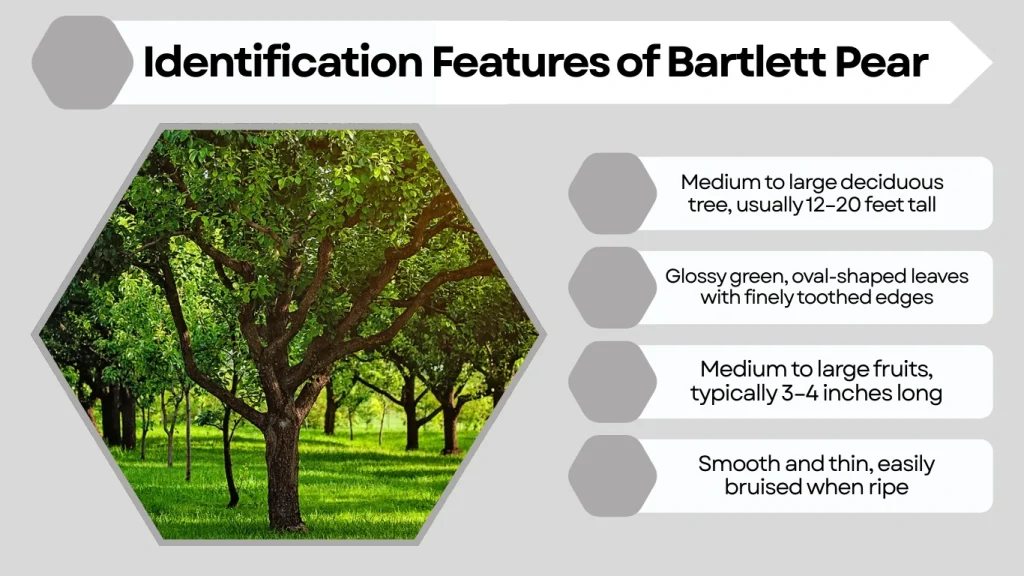
- Tree size and form: Medium to large deciduous tree, usually 12–20 feet tall in home gardens
- Leaves: Glossy green, oval-shaped leaves with finely toothed edges
- Flowers: Clusters of small white blossoms appearing in early spring
- Fruit shape: Classic pear or bell shape with a rounded base and narrow neck
- Fruit size: Medium to large fruits, typically 3–4 inches long
- Skin texture: Smooth and thin, easily bruised when ripe
These features make Bartlett pears easy to distinguish from firmer, more rounded pear varieties.
Bartlett Pear Color Development
Bartlett pears are well known for their clear color change as they ripen. Immature fruits are a deep, solid green. As harvest time approaches, the skin lightens to a brighter green. Once fully ripe, traditional Bartlett pears turn a soft, sunny yellow.
Red Bartlett pears follow a similar pattern but shift from dark maroon to a brighter red with yellow undertones. Inside, both types have creamy white flesh that becomes increasingly juicy and tender as sugars develop. The color change is one of the most reliable indicators of harvest readiness.
Bartlett Pear Growing Season
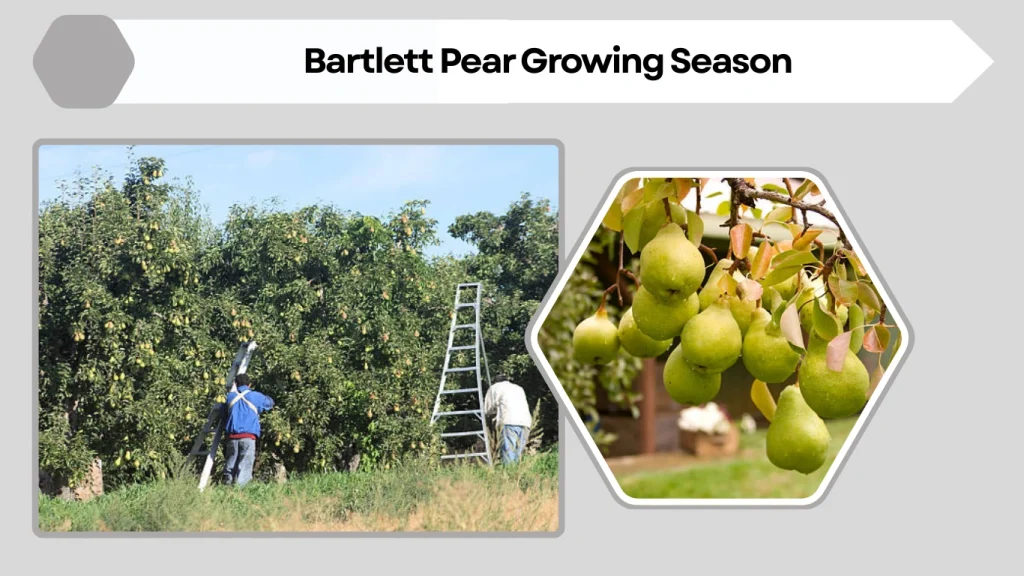
Bartlett pear trees bloom in early to mid-spring, depending on climate. White blossoms appear before full leaf-out, attracting bees and other pollinators. After pollination, fruit begins forming quickly and grows throughout late spring and summer.
Harvest season typically falls from late August to September in most temperate regions. Unlike many fruits, Bartlett pears are usually picked when mature but still firm, then ripened off the tree. This improves flavor, texture, and storage life. The full yearly cycle includes spring flowering, summer fruit development, autumn harvest, and winter dormancy.
Climate and Hardiness Requirements
Bartlett pear trees grow best in temperate regions with cold winters and warm summers. They generally perform well in USDA hardiness zones 5–8, though some can succeed slightly outside this range with protection.
These trees need a period of winter chill to produce flowers and fruit properly, usually around 800–1,200 chill hours. Full sun is essential for healthy growth and high-quality fruit, meaning at least six to eight hours of direct sunlight daily. While Bartlett pears tolerate some cold, late spring frosts can damage blossoms, so sites with good air drainage are ideal.
Soil and Planting Location Guide

Best Soil for Bartlett Pear Trees
Bartlett pear trees prefer deep, well-draining soil rich in organic matter. Loamy soils are ideal, but sandy or clay soils can be improved with compost. The best pH range is slightly acidic to neutral, around 6.0–7.0. Poor drainage can lead to root diseases and weak growth, so avoiding low, waterlogged areas is important.
Choosing the Right Planting Site
Select a location with full sun exposure and good air circulation. Space standard trees about 15–20 feet apart to allow mature canopy development. Avoid planting near large buildings or dense tree lines that block light or trap cold air.
Preparing the Soil Before Planting
Before planting, loosen the soil at least 12–18 inches deep. Remove weeds and mix in compost or well-rotted manure. If soil testing shows nutrient deficiencies, amend accordingly. Proper soil preparation gives young trees a strong foundation for rapid root establishment.
How to Plant a Bartlett Pear Tree (Step-by-Step Guide)
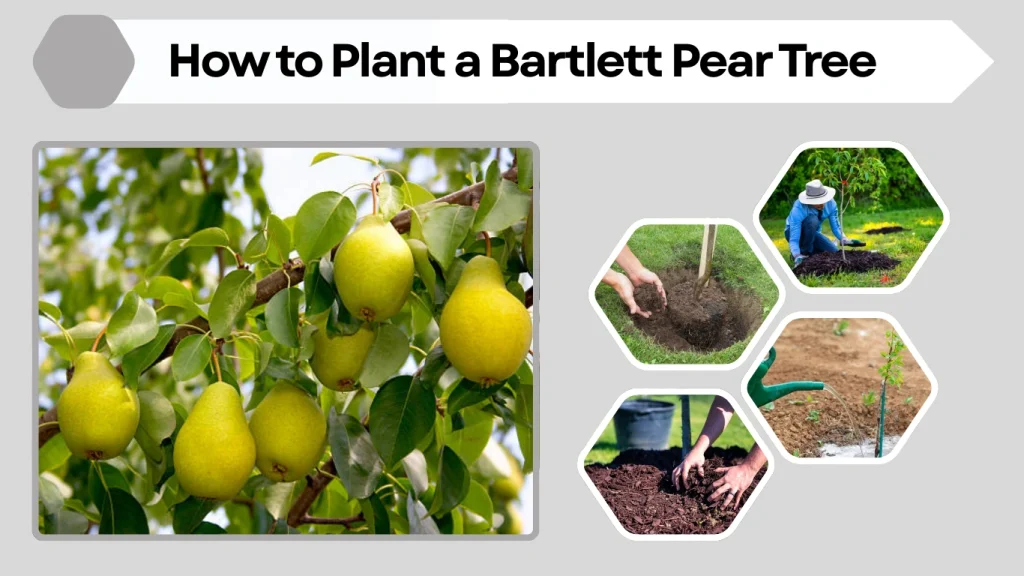
- Choose the right time: Plant bare-root trees in early spring or late fall; container trees can be planted in spring
- Dig the hole: Make it twice as wide as the root system and slightly deeper
- Position the tree: Spread roots gently and keep the graft union above soil level
- Backfill carefully: Refill with native soil, firming gently to remove air pockets
- Water thoroughly: Soak the root zone deeply after planting
- Mulch the base: Apply organic mulch to conserve moisture and suppress weeds
Watering and Fertilizing Needs
Young Bartlett pear trees need consistent moisture, especially during their first two growing seasons. Deep watering once or twice a week is better than frequent shallow watering. Mature trees are more drought tolerant but still benefit from regular deep irrigation during dry spells.
Fertilization should be moderate. In early spring, apply a balanced fruit-tree fertilizer or compost around the drip line. Too much nitrogen encourages leaf growth at the expense of fruit. Healthy trees show steady growth, dark green leaves, and good flower production.
Pruning and Training Methods
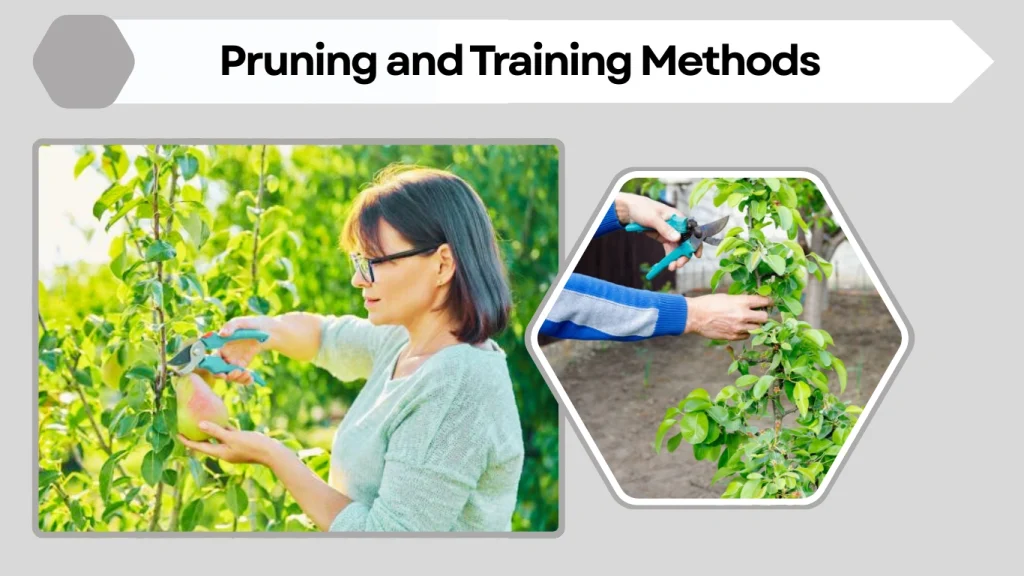
When to Prune Bartlett Pear Trees
The best time to prune is late winter or very early spring while the tree is dormant. This allows you to see the branch structure clearly and minimizes disease risk. Light summer pruning can be used to remove water sprouts or damaged growth.
How to Prune for Shape and Health
Bartlett pears are commonly trained to a central leader system. Remove dead, crossing, or crowded branches to improve air flow and sunlight penetration. Proper pruning helps prevent disease, strengthens structure, and improves fruit quality.
Training Young Trees
Training begins in the first year and strongly influences long-term productivity and tree health. Select one strong central leader and remove competing upright shoots. Choose three to five well-spaced lateral branches to form the main framework. These branches should grow at wide angles (45–60 degrees) from the trunk, which improves strength and encourages fruiting.
Use limb spreaders or soft ties to gently widen narrow branch angles. Remove weak, damaged, or inward-growing shoots each dormant season. Proper early training reduces future pruning needs, improves light distribution, and supports heavy fruit loads without breakage.
Flowering, Pollination, and Fruit Set
Bartlett pear trees produce clusters of white, five-petaled flowers in spring. While they are not reliably self-fertile, they produce far better crops when cross-pollinated. Planting another compatible pear variety nearby greatly increases fruit size, consistency, and overall yield.
Good pollinators include Anjou, Bosc, Comice, and Seckel pears. Bees and other insects are essential for pollen transfer, so avoiding insecticides during bloom is critical. Cool, wet springs can reduce pollination success, making pollinator support even more important.
Bartlett Pear Tree Care Throughout the Year
(List-item section)
- Spring: Prune before bud break, fertilize lightly, monitor for fire blight, and ensure good pollinator activity.
- Summer: Water deeply, thin excess fruit, manage pests, and remove water sprouts.
- Fall: Harvest pears, clean fallen leaves and fruit, and apply compost or mulch.
- Winter: Protect young trees from frost and rodents, inspect structure, and plan dormant pruning.
A consistent seasonal routine keeps trees productive and reduces disease pressure.
Common Pests and Diseases
Common Bartlett Pear Pests
Aphids, pear psylla, codling moths, and mites are among the most common Bartlett pear pests. Aphids and psylla weaken trees by sucking sap and spreading disease, while codling moth larvae burrow into developing fruit.
Common Diseases
Fire blight is the most serious disease affecting Bartlett pears, causing blackened shoots and flowers that appear burned. Pear scab creates dark, rough spots on fruit and leaves, while powdery mildew forms a white coating on young growth.
Prevention and Control Tips
Prune out infected wood immediately and disinfect tools between cuts. Maintain open canopies for airflow, clean up fallen debris, and use dormant sprays or organic treatments when necessary. Healthy, well-managed trees are far more resistant to serious outbreaks.
Harvesting Bartlett Pears
Bartlett pears are harvested when mature but still firm. Unlike apples, they do not ripen well on the tree. Lift the fruit gently and twist; if it separates easily, it is ready. Skin color should be light green, and lenticels may become more visible.
After harvest, ripen pears indoors at room temperature until the neck yields slightly to pressure. Proper timing prevents gritty texture and internal browning while maximizing sweetness and aroma.
Storage and Uses of Bartlett Pears
Fresh Bartlett pears can be stored in refrigeration for one to two months. For longer storage, harvest slightly earlier and keep at near-freezing temperatures with high humidity. Pears bruise easily, so careful handling is essential.
Bartlett pears are prized for canning because they hold flavor and color well. They are also excellent for baking, drying, juicing, sauces, jams, and baby food. Their soft flesh makes them ideal for both sweet and savory dishes.
FAQs
What is the best month to plant a Bartlett pear tree?
The best time to plant a Bartlett pear tree is late winter to early spring while the tree is still dormant. In mild climates, fall planting also works well. Planting during cool weather allows roots to establish before active top growth begins.
How long does a Bartlett pear tree take to bear fruit?
Most Bartlett pear trees begin producing fruit in their third to fifth year after planting. Grafted trees often fruit sooner than seed-grown trees. Full production usually develops after six to eight years, depending on care, climate, and pruning.
Do Bartlett pear trees need another tree to pollinate?
Yes, Bartlett pear trees produce significantly better harvests when cross-pollinated. Planting another compatible pear variety nearby increases fruit set, size, and consistency. Without a pollinator, crops are often light or irregular.
How can I tell when Bartlett pears are ready to harvest?
Bartlett pears are ready when their skin turns from dark green to light green and the fruit detaches easily when lifted and twisted. They should still feel firm. Ripening is completed indoors for best flavor and texture.
Can Bartlett pear trees grow well in containers?
Bartlett pears can grow in large containers when grafted onto dwarf or semi-dwarf rootstocks. Containers must provide excellent drainage, consistent watering, and regular feeding. Container-grown trees also need winter protection in colder climates.