





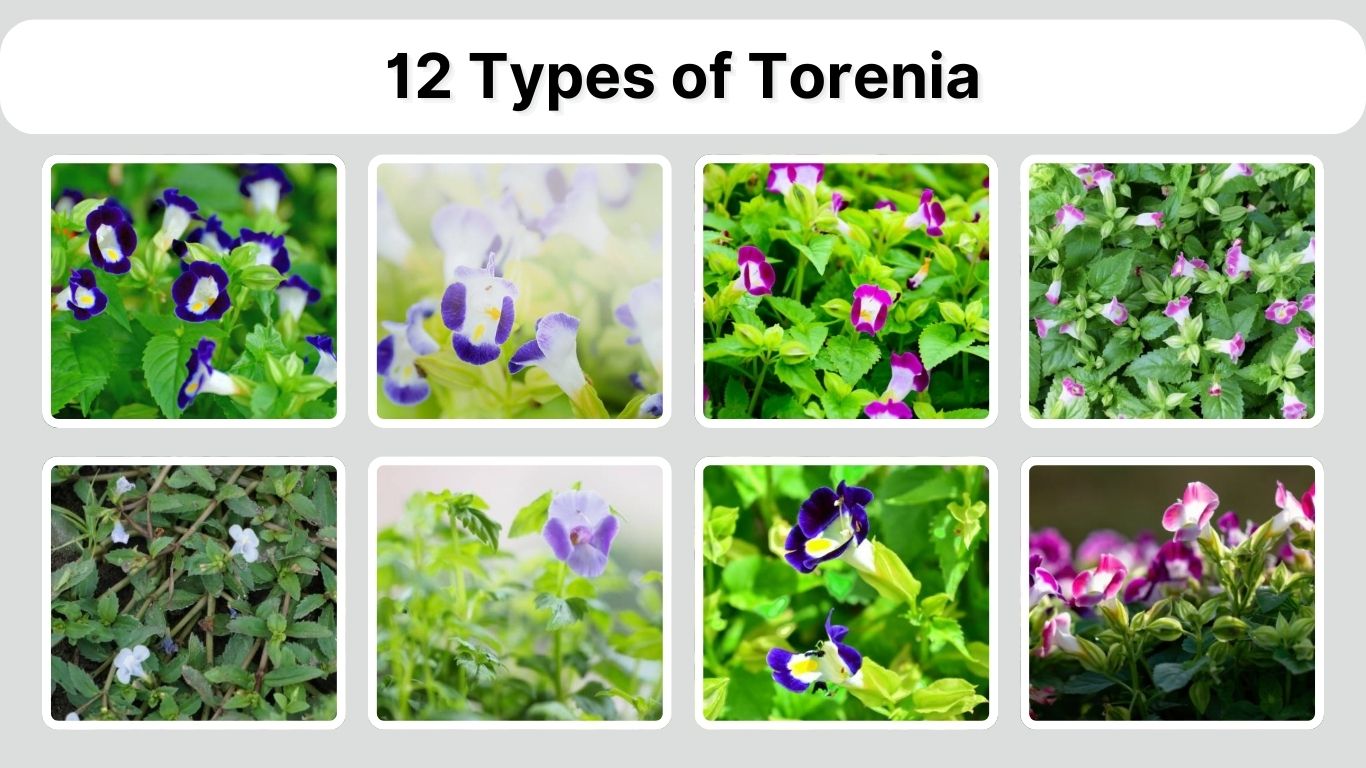
Torenia, commonly known as the wishbone flower, is a charming genus of flowering plants admired for its colorful, tubular blooms and excellent performance in partial shade. Native mainly to tropical and subtropical regions of Asia, torenia species are popular in gardens, containers, and hanging baskets. They are especially valued for their long flowering season, compact growth habit, and ability to brighten shaded spaces where many other ornamentals fail to thrive.
1. Torenia fournieri (Wishbone Flower)

Torenia fournieri is the most popular and widely grown species of torenia, commonly known as the wishbone flower. It is a compact, fast-growing ornamental plant valued for its colorful, tubular blooms and long flowering season. This species is especially popular in containers, hanging baskets, borders, and shaded garden beds because it thrives where many flowering plants struggle.
Identification
- Low-growing, bushy annual plant
- Average height: 6–12 inches
- Soft, oval to slightly pointed green leaves
- Tubular, two-lipped flowers with a small “wishbone”-shaped stamen inside
- Common flower colors include purple, blue, pink, violet, and yellow combinations
Habitat
Torenia fournieri is native to tropical and subtropical regions of Asia, particularly parts of Southeast Asia. In nature, it grows in warm, moist environments such as forest edges, open woodlands, and shaded grasslands. In gardens, it prefers partially shaded locations protected from strong midday sun and heavy winds.
Growth and Care
This plant grows quickly and begins flowering early in the season, continuing until the first frost. It prefers rich, well-drained soil that stays consistently moist but not waterlogged. Regular watering, light feeding with a balanced fertilizer, and occasional pinching help maintain compact growth and encourage more blooms throughout the season.
Flowers and Uses
The flowers of Torenia fournieri are its main attraction, often displaying contrasting throat markings that make them visually striking. Because of its shade tolerance and long blooming period, it is widely used in decorative containers, window boxes, edging, and shaded patios. It also attracts pollinators such as bees and small butterflies.
2. Torenia concolor

Torenia concolor is a lesser-known but attractive torenia species valued for its elegant form and soft, soothing flower colors. Compared to the common wishbone flower, this species often appears more natural and delicate, making it suitable for shaded gardens, botanical collections, and woodland-style landscapes. It adapts well to warm, humid climates and adds subtle beauty where brighter flowers may feel overpowering.
Identification
- Upright to slightly spreading herbaceous plant
- Average height: 10–18 inches
- Smooth, oval to lance-shaped green leaves
- Slender stems with soft branching
- Tubular flowers, usually pale blue, lavender, or soft violet
- Distinct curved stamens inside the flower
Habitat
Torenia concolor is native to parts of South and Southeast Asia, where it naturally grows in moist, shaded environments. It is commonly found along forest margins, stream banks, and damp grassy areas. These habitats provide filtered light, rich soil, and steady moisture, which closely match its preferred garden conditions.
Growth and Care
This species grows best in partial shade with protection from harsh midday sun. It prefers loose, fertile, well-drained soil that remains consistently moist. Regular watering is important, especially in warm weather. Light feeding during the growing season supports healthy foliage and continuous flowering.
Flowers and Uses
The flowers of Torenia concolor are more subtle than many ornamental torenias, often displaying soft, calming shades that blend well in naturalistic gardens. It is suitable for shaded borders, underplanting beneath shrubs, and decorative pots. Its gentle appearance makes it ideal for creating tranquil, low-contrast floral displays.
3. Torenia asiatica

Torenia asiatica is a graceful and adaptable species of torenia known for its soft foliage, slender stems, and charming tubular flowers. It is often found growing naturally in warm, humid regions and is appreciated for its ability to thrive in light shade and moist soil. This species is commonly used in natural gardens, shaded borders, and as a gentle filler plant in mixed containers.
Identification
- Delicate, spreading to slightly upright growth habit
- Average height: 8–16 inches
- Thin, green, softly textured stems
- Oval to slightly toothed green leaves
- Tubular flowers, typically pale purple, bluish, or violet
- Visible curved stamens inside the flower
Habitat
Torenia asiatica is native to South and Southeast Asia, where it grows in damp, semi-shaded environments such as forest edges, open woodland floors, and along stream sides. These areas provide consistent moisture, rich organic matter, and filtered sunlight, which suit the plant’s natural growth needs.
Growth and Care
This species performs best in partial shade and fertile, well-drained soil that stays evenly moist. It benefits from regular watering, especially during hot periods. Occasional feeding with a mild fertilizer encourages steady growth and continuous flowering. Pinching young plants can help promote a fuller, bushier shape.
Flowers and Uses
The flowers of Torenia asiatica are small but attractive, adding a soft splash of color to shaded landscapes. It works well in woodland gardens, mixed shade borders, and containers placed on patios or balconies. Its natural, slightly wild appearance makes it suitable for informal garden designs.
4. Torenia violacea

Torenia violacea is a visually striking torenia species known for its deeper, richer flower tones and elegant growth habit. It is valued by plant collectors and shade-garden enthusiasts for its ornamental appeal and reliable performance in warm, humid environments. This species adds noticeable contrast to mixed plantings, especially in partially shaded gardens and decorative containers.
Identification
- Upright to gently spreading herbaceous plant
- Average height: 10–18 inches
- Medium-green, slightly pointed leaves
- Soft but sturdy branching stems
- Tubular flowers, usually deep violet to purple
- Distinct inner markings and curved stamens
Habitat
Torenia violacea is native to tropical regions of South and Southeast Asia. In the wild, it grows in moist, semi-shaded locations such as forest clearings, stream edges, and grassy slopes. These habitats offer warmth, humidity, and filtered light, all of which support healthy growth and flowering.
Growth and Care
This plant grows best in partial shade with protection from intense direct sunlight. It prefers rich, well-drained soil that retains moisture without becoming soggy. Consistent watering, good air circulation, and light fertilization during the growing season help maintain vigorous growth and extended blooming.
Flowers and Uses
The deep-colored flowers of Torenia violacea make it an excellent choice for adding depth and contrast to shaded borders, patio containers, and hanging baskets. It pairs well with lighter-colored foliage plants and other shade-tolerant flowers. Its long blooming period also makes it useful for continuous seasonal color.
5. Torenia crustacea

Torenia crustacea is a naturally spreading torenia species often appreciated for its low, creeping growth habit and small but attractive flowers. Unlike the more upright ornamental torenias, this species frequently behaves like a groundcover in warm climates. It is well suited to moist, semi-shaded environments and is sometimes found growing wild along pathways, field edges, and garden margins.
Identification
- Low-growing, creeping to spreading plant
- Soft, trailing stems that root at the nodes
- Small, oval to rounded green leaves
- Average height: 4–10 inches
- Tubular flowers, usually pale blue to lavender
- Light-colored throat with subtle markings
Habitat
Torenia crustacea is native to South and Southeast Asia, where it commonly grows in damp, open areas such as roadsides, grasslands, paddy field margins, and forest edges. These environments provide consistent moisture, loose soil, and partial sunlight, which closely match its preferred growing conditions.
Growth and Care
This species grows easily in moist, well-drained soil and prefers partial shade, though it can tolerate gentle morning sun. Regular watering is important, especially during dry periods. Because of its spreading habit, occasional trimming helps keep it tidy and encourages denser growth.
Flowers and Uses
The small, delicate flowers of Torenia crustacea make it suitable as a groundcover in shaded gardens or as a trailing plant in containers and hanging baskets. It can also be used to soften edges of flower beds and pathways. Its natural spreading form gives gardens a relaxed, informal appearance.
6. Torenia anagallis

Torenia anagallis is a subtle and attractive torenia species recognized for its soft foliage and gently colored tubular flowers. It is more commonly found growing wild than in formal ornamental plantings, but it has strong potential for use in natural gardens and shaded landscapes. Its adaptability to warm, moist environments makes it a reliable choice for low-maintenance plantings.
Identification
- Slender, spreading to semi-upright growth habit
- Average height: 8–16 inches
- Thin green stems with light branching
- Oval to slightly toothed leaves
- Tubular flowers, usually pale violet, bluish, or lavender
- Small contrasting markings inside the flower
Habitat
Torenia anagallis is native to tropical and subtropical parts of Asia. In its natural environment, it grows in moist fields, forest margins, and along stream banks. These habitats provide rich soil, steady moisture, and partial shade, which closely resemble the conditions it prefers in cultivation.
Growth and Care
This species grows best in partial shade and fertile, well-drained soil that remains consistently moist. Regular watering and occasional feeding help support healthy foliage and prolonged blooming. It benefits from light trimming to encourage bushier growth and prevent legginess.
Flowers and Uses
The flowers of Torenia anagallis are delicate and understated, making them well suited to woodland gardens, informal borders, and mixed containers. It blends well with ferns and other shade-loving plants, adding gentle color without overpowering surrounding vegetation.
7. Torenia benthamiana

Torenia benthamiana is a less commonly cultivated torenia species valued for its graceful stems and naturally elegant appearance. It is typically found in warm, humid regions where it grows as a soft, herbaceous plant in partially shaded environments. Because of its refined form and delicate flowers, it is well suited to naturalistic gardens and botanical plant collections.
Identification
- Upright to lightly spreading herbaceous plant
- Average height: 10–20 inches
- Slender green stems with soft branching
- Oval to lance-shaped leaves with smooth edges
- Tubular flowers, often pale purple to bluish-violet
- Subtle inner markings with curved stamens
Habitat
Torenia benthamiana is native to parts of South and Southeast Asia. It naturally occurs in moist woodland margins, shaded slopes, and along streams, where soils are rich and humidity is high. These environments provide filtered light and consistent moisture, which are ideal for its growth.
Growth and Care
This species prefers partial shade and organically rich, well-drained soil. It should be watered regularly to keep the soil evenly moist, especially during warm weather. Light fertilization during the growing season supports healthy growth, while occasional pinching helps maintain a compact, attractive form.
Flowers and Uses
The soft-colored flowers of Torenia benthamiana make it suitable for shaded borders, underplanting beneath shrubs, and mixed container displays. It blends especially well with ferns, hostas, and other shade-loving plants, adding subtle floral interest without dominating the planting scheme.
8. Torenia hirsuta

Torenia hirsuta is a distinctive torenia species noted for its softly hairy stems and leaves, which give the plant a slightly fuzzy appearance. This characteristic sets it apart from many smoother-leaved torenias. It naturally grows in warm, moist regions and performs well in lightly shaded environments, making it suitable for natural gardens and shaded ornamental plantings.
Identification
- Semi-upright to spreading growth habit
- Fine hairs covering stems and leaves
- Soft, oval to slightly elongated green leaves
- Average height: 8–16 inches
- Tubular flowers, usually light purple to bluish-violet
- Delicate throat markings inside the flower
Habitat
Torenia hirsuta is native to tropical and subtropical areas of Asia. In the wild, it is commonly found in damp grasslands, forest margins, and open woodland areas where moisture is steady and sunlight is filtered through taller vegetation.
Growth and Care
This species grows best in partial shade with fertile, well-drained soil that stays consistently moist. Regular watering is essential, especially in warmer climates. Because of its softer stems, it benefits from light protection from strong wind and heavy rain. Occasional trimming encourages fuller growth.
Flowers and Uses
The gentle-colored flowers of Torenia hirsuta add soft visual interest to shaded borders, woodland gardens, and mixed containers. Its slightly fuzzy foliage also provides subtle textural contrast among smoother-leaved plants, making it a good companion plant in layered shade plantings.
9. Torenia maculata

Torenia maculata is an eye-catching torenia species known for its spotted or marked flowers, which give the plant its name. It combines ornamental appeal with a naturally graceful growth habit, making it a good choice for shaded gardens and specialty plant collections. This species thrives in warm, humid conditions and produces blooms that stand out even in low-light areas.
Identification
- Upright to gently spreading herbaceous plant
- Average height: 10–18 inches
- Smooth, medium-green leaves, oval to lance-shaped
- Slender, branching stems
- Tubular flowers with noticeable spots or contrasting markings
- Flower colors usually include purple, violet, and soft blue tones
Habitat
Torenia maculata is native to tropical regions of Asia. In nature, it grows in moist, partially shaded habitats such as forest edges, shaded clearings, and along streams. These environments provide high humidity, fertile soil, and filtered sunlight that support healthy growth.
Growth and Care
This plant prefers partial shade and loose, nutrient-rich soil that remains evenly moist. Consistent watering and good drainage are important to prevent stress and root problems. Light feeding during the growing season and occasional pinching help encourage bushier growth and extended flowering.
Flowers and Uses
The attractively marked flowers of Torenia maculata make it suitable for decorative containers, shaded borders, and collector gardens. It pairs well with foliage plants and other soft-colored flowers, adding visual detail and interest to low-light landscapes.
10. Torenia polygonoides

Torenia polygonoides is a graceful torenia species valued for its slender form and understated beauty. It is more often encountered in natural habitats than in home gardens, yet it holds strong potential for shaded landscapes and botanical collections. This species adapts well to warm, moist conditions and brings a soft, natural look to semi-shaded plantings.
Identification
- Slender, semi-upright to spreading growth habit
- Average height: 8–16 inches
- Thin green stems with light branching
- Narrow to oval green leaves
- Tubular flowers, typically pale violet, bluish, or lavender
- Fine inner markings within the flower
Habitat
Torenia polygonoides is native to South and Southeast Asia. It naturally grows in moist grasslands, forest margins, and along stream banks. These areas provide rich soil, steady moisture, and filtered sunlight, closely matching the conditions it prefers when cultivated.
Growth and Care
This species performs best in partial shade and fertile, well-drained soil that stays consistently moist. Regular watering is important, especially during warm periods. Occasional feeding and light trimming help maintain healthy growth and promote continuous flowering.
Flowers and Uses
The delicate flowers of Torenia polygonoides make it suitable for woodland gardens, shaded borders, and natural-style plantings. It blends easily with other moisture-loving, shade-tolerant plants, adding subtle color and a soft, airy texture to garden compositions.
11. Torenia glabra

Torenia glabra is a smooth-leaved torenia species appreciated for its clean foliage and elegant, tubular blooms. Compared to some of its softly hairy relatives, this species has a more polished appearance, making it attractive for both natural and decorative garden settings. It thrives in warm, humid climates and performs well in partially shaded areas with consistent moisture.
Identification
- Upright to slightly spreading growth habit
- Smooth, hairless green stems and leaves
- Oval to lance-shaped foliage with a soft sheen
- Average height: 10–18 inches
- Tubular flowers, usually light purple, bluish, or lavender
- Subtle throat markings inside the blooms
Habitat
Torenia glabra is native to tropical regions of Asia. In the wild, it grows in moist, shaded locations such as forest edges, damp meadows, and streamside environments. These habitats provide rich organic soil, steady humidity, and filtered light, all ideal for healthy development.
Growth and Care
This species grows best in partial shade and fertile, well-drained soil that remains evenly moist. Regular watering and occasional feeding encourage steady growth and prolonged flowering. Good air circulation helps keep the smooth foliage healthy and reduces the risk of fungal problems.
Flowers and Uses
The refined flowers of Torenia glabra make it suitable for shaded borders, patio containers, and underplanting beneath shrubs. Its smooth foliage contrasts nicely with textured plants like ferns and hostas, adding variety and visual balance to low-light garden spaces.
12. Torenia flava

Torenia flava is a distinctive torenia species best known for its lighter-toned blooms, which often display soft yellowish hues that are uncommon among torenias. This unique coloring makes it especially appealing for collectors and gardeners looking to diversify shaded plantings. It naturally thrives in warm, moist environments and performs well in lightly shaded gardens.
Identification
- Semi-upright to gently spreading herbaceous plant
- Average height: 8–16 inches
- Soft green, oval to slightly elongated leaves
- Slender, branching stems
- Tubular flowers, often pale yellow to yellowish-cream, sometimes with light markings
- Delicate curved stamens inside the flower
Habitat
Torenia flava is native to tropical parts of Asia. In nature, it grows in moist, partially shaded habitats such as forest margins, damp clearings, and streamside areas. These locations provide fertile soil, steady moisture, and filtered sunlight.
Growth and Care
This species prefers partial shade and loose, well-drained soil rich in organic matter. Consistent watering is important to maintain healthy growth, especially during warm weather. Light fertilization during the growing season supports flowering, while gentle trimming helps keep the plant compact.
Flowers and Uses
The pale, softly colored flowers of Torenia flava make it an excellent choice for brightening shaded borders, woodland gardens, and container arrangements. Its lighter blooms pair well with darker foliage plants, creating contrast and visual interest in low-light garden designs.
FAQs
What is Torenia commonly known as?
Torenia is most commonly known as the wishbone flower. The name comes from the small, curved stamens inside the bloom that resemble a wishbone. These plants are popular for their bright, tubular flowers and their ability to thrive in partial shade where many flowering plants struggle.
Is torenia an annual or perennial plant?
In most temperate regions, torenia is grown as an annual because it cannot tolerate frost. In tropical and subtropical climates, some torenia species can behave as short-lived perennials, continuing to grow and flower year-round if conditions remain warm and moist.
Does torenia grow better in sun or shade?
Torenia grows best in partial shade or filtered sunlight. It can tolerate gentle morning sun but often suffers in harsh afternoon heat. Shaded patios, woodland gardens, and east-facing locations usually provide the ideal balance of light for healthy growth and abundant flowering.
How often should torenia be watered?
Torenia prefers consistently moist soil. It should be watered regularly, especially during hot or dry weather. The soil should not be allowed to dry out completely, but good drainage is important to prevent waterlogging, which can lead to root problems and weak growth.
Can torenia be grown in pots and hanging baskets?
Yes, torenia is excellent for containers and hanging baskets. Its compact growth and continuous blooms make it ideal for decorative pots, window boxes, and shaded balconies. Trailing or spreading species are especially attractive in baskets where their stems can cascade naturally.