




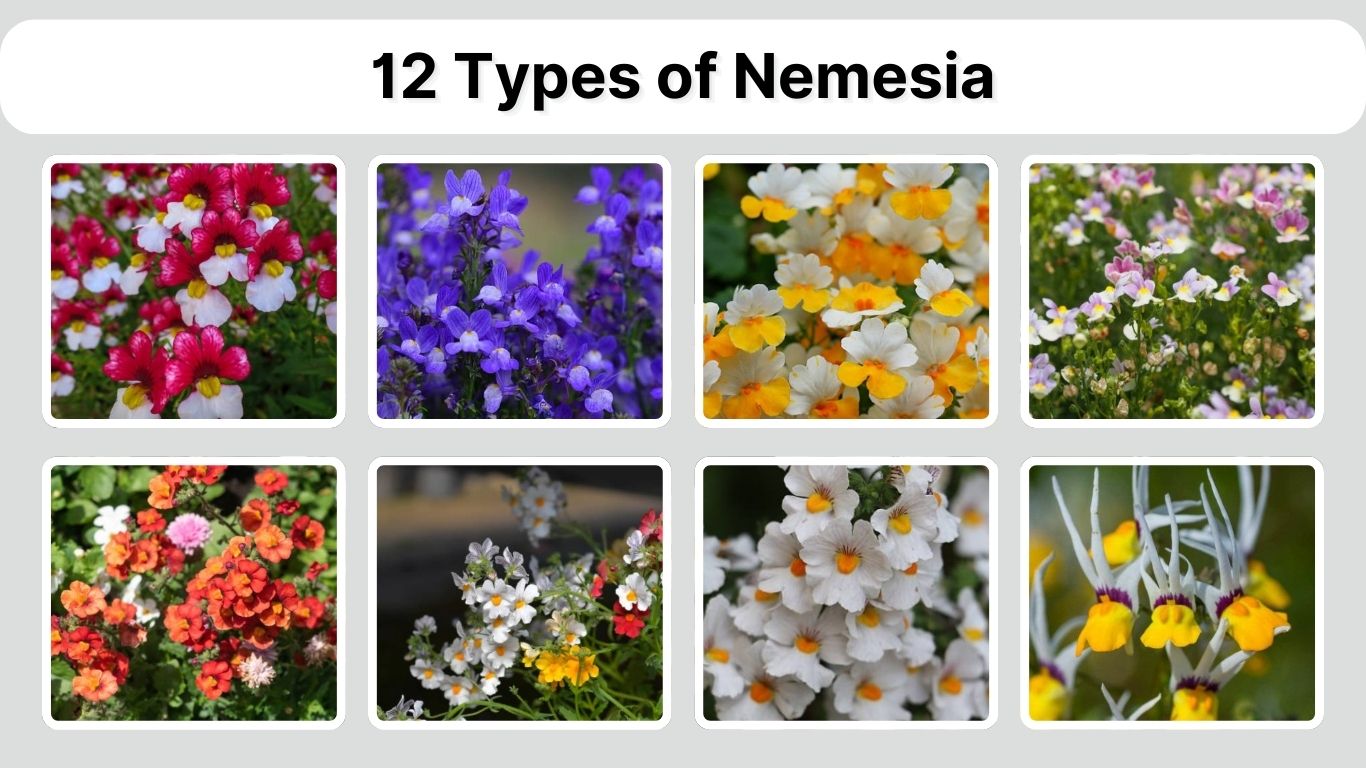
Nemesia is a colorful genus of flowering plants native mainly to South Africa, widely loved for its bright, two-lipped blossoms and long blooming season. These plants are especially popular in spring gardens, containers, and hanging baskets because they grow quickly and flower generously in cool, mild weather. With both wild species and many cultivated forms available, Nemesia offers a wide range of colors, growth habits, and garden uses, making it a versatile choice for ornamental planting and pollinator-friendly landscapes.
1. Nemesia strumosa (Cape Jewels)

Nemesia strumosa is one of the most popular and widely cultivated Nemesia species, prized for its bright, jewel-toned flowers and compact growth habit. Native to South Africa, this species is commonly used in garden beds, borders, containers, and hanging baskets. It blooms profusely in cool to mild weather and is especially valued for its long flowering season and wide range of hybrid color forms.
Identification
- Small, bushy, fast-growing annual plant
- Average height: 20–30 cm (8–12 inches)
- Soft green, narrow to lance-shaped leaves
- Two-lipped flowers with a spurred lower petal
- Blooms in vivid shades of blue, purple, red, pink, orange, yellow, and white
- Often sold as mixed-color cultivars like “Carnival,” “Sunsatia,” and “Carnival Mix”
Habitat and Natural Range
Nemesia strumosa originates from the coastal and inland regions of South Africa, where it grows in open fields, rocky slopes, and well-drained soils. In the wild, it thrives in sunny locations with moderate moisture and good air circulation. As a garden plant, it adapts well to temperate regions and is often grown as a cool-season annual.
Flowering and Seasonal Interest
This species is best known for its heavy flowering display. Blooming usually begins in early spring and can continue into early summer, with a second flush often appearing in autumn if temperatures remain mild. The flowers attract bees and other small pollinators, adding ecological value to ornamental gardens.
Growth Habit and Garden Use
Nemesia strumosa forms neat, rounded mounds that spread gently outward. Its compact structure makes it ideal for edging pathways, filling gaps in flower beds, or adding color to window boxes and patio containers. It pairs well with pansies, lobelia, and alyssum in mixed plantings.
Basic Care and Cultivation
Nemesia strumosa prefers full sun to light partial shade and grows best in loose, fertile, well-drained soil. Regular watering supports continuous blooming, but the roots should never sit in waterlogged conditions. Light deadheading and occasional trimming help encourage bushier growth and extended flowering.
2. Nemesia caerulea (Blue Nemesia)

Nemesia caerulea is a delicate, free-flowering Nemesia species known for its soft blue, lavender, and violet blooms. Native to South Africa, it is valued for its light, airy appearance and long blooming period. This species is commonly used in containers, hanging baskets, and cool-season garden beds, where it creates a gentle, cascading effect with masses of small flowers.
Identification
- Compact to slightly spreading annual or short-lived perennial
- Average height: 15–25 cm (6–10 inches)
- Fine, narrow, bright-green leaves
- Small two-lipped flowers with a faint spur
- Flower colors mainly blue, lilac, violet, and pale purple
- Often lightly fragrant, especially in warm daylight hours
Habitat and Natural Range
Nemesia caerulea is native to open grasslands and sandy areas of South Africa, where it grows in sunny sites with excellent drainage. In cultivation, it performs best in temperate climates and is frequently treated as a cool-season annual. It adapts well to pots, borders, and raised beds.
Flowering and Seasonal Interest
This species begins flowering in early spring and can continue into early summer. In mild climates, blooming may return in autumn. The abundance of small blossoms gives the plant a soft, cloud-like appearance, and the flowers are attractive to bees and other small pollinators.
Growth Habit and Garden Use
Nemesia caerulea has a naturally neat but slightly trailing habit. It works especially well along container edges, in window boxes, or as a filler plant between larger flowering species. Its subtle colors make it ideal for pastel-themed gardens and mixed seasonal displays.
Basic Care and Cultivation
Nemesia caerulea prefers full sun to partial shade and moist, well-drained soil rich in organic matter. Regular watering and light feeding support continuous flowering. Removing faded blooms and lightly trimming the plant encourages fresh growth and helps extend the blooming season.
3. Nemesia foetens (Wild Nemesia)

Nemesia foetens is a naturally occurring Nemesia species recognized for its soft-colored flowers and more relaxed, wildflower-like growth habit. Native to South Africa, it is less compact than many modern hybrids but valued for its natural charm and usefulness in informal gardens, pollinator plantings, and native-style landscapes.
Identification
- Loosely branched annual or short-lived perennial
- Average height: 20–40 cm (8–16 inches)
- Light green, narrow, slightly toothed leaves
- Two-lipped flowers with a small backward spur
- Flower colors range from pale blue and lilac to soft purple and cream
- Stems and foliage may release a noticeable scent when crushed
Habitat and Natural Range
Nemesia foetens occurs naturally in open fields, seasonal wetlands, and disturbed soils across parts of South Africa. It often grows where moisture is available in winter and spring, then completes its life cycle as conditions become warmer and drier. In gardens, it adapts well to sunny beds with good drainage.
Flowering and Seasonal Interest
Flowering typically begins in early to mid-spring and can continue into early summer. The blossoms are produced in a light, scattered pattern rather than dense clusters, giving the plant a meadow-like appearance. The flowers attract bees, hoverflies, and other beneficial insects.
Growth Habit and Garden Use
This species forms airy clumps rather than tight mounds. It is best suited to informal borders, wildflower mixes, and naturalistic plantings, where it can mingle with other seasonal bloomers. It also works well as a background or filler plant behind more compact flowering species.
Basic Care and Cultivation
Nemesia foetens grows best in full sun to light shade and prefers moderately moist, well-drained soil. It benefits from occasional watering during dry periods. Minimal maintenance is required, though light trimming after the first bloom can encourage a shorter, extended flowering phase.
4. Nemesia versicolor (Cape Nemesia)

Nemesia versicolor is a striking South African species best known for its multicolored, often sweetly scented flowers. The blooms frequently display contrasting shades of blue, purple, yellow, and white, making this species especially attractive in ornamental gardens. It has a more upright habit than many bedding Nemesias and brings both color and fragrance to spring displays.
Identification
- Upright, softly branched annual plant
- Average height: 25–45 cm (10–18 inches)
- Narrow, lance-shaped, medium-green leaves
- Two-lipped flowers with a noticeable spur
- Flowers commonly show two or more colors on a single bloom
- Often lightly to strongly fragrant, depending on the form
Habitat and Natural Range
Nemesia versicolor is native to the Western Cape region of South Africa, where it grows on open slopes, plains, and disturbed ground. It prefers sunny exposures and sandy to loamy soils with excellent drainage. In cultivation, it performs well in beds, borders, and larger containers.
Flowering and Seasonal Interest
Blooming usually starts in early spring and may continue into early summer under cool conditions. The colorful, often perfumed flowers are particularly attractive to bees and other pollinators, making this species useful in wildlife-friendly gardens.
Growth Habit and Garden Use
This species develops a slightly taller, more upright form than most compact hybrids. It is well suited for the middle of flower beds, mixed spring borders, and cottage-style gardens. Its changing flower colors add visual depth and interest to planting schemes.
Basic Care and Cultivation
Nemesia versicolor prefers full sun to partial shade and moist, well-drained soil. Regular watering supports healthy growth, especially during flowering. Deadheading spent blooms and lightly cutting back the plant can encourage continued flowering and a tidier appearance.
5. Nemesia floribunda (Floriferous Nemesia)

Nemesia floribunda is a free-flowering species valued for its abundance of small, brightly colored blooms and its soft, spreading habit. Native to South Africa, it is often found in seasonal grasslands and open flats. In gardens, it is appreciated for creating a carpet-like effect of color in spring beds and container plantings.
Identification
- Low-growing, spreading annual plant
- Average height: 15–30 cm (6–12 inches)
- Soft green, narrow leaves on slender stems
- Numerous small, two-lipped flowers with a short spur
- Flower colors commonly include blue, violet, white, pink, and yellow
- Produces blooms in loose but plentiful clusters
Habitat and Natural Range
Nemesia floribunda occurs naturally in open, sunny areas of South Africa, particularly where soils are light and well drained. It often grows in regions that receive winter rainfall and mild spring temperatures. In cultivation, it adapts well to garden beds, borders, and pots.
Flowering and Seasonal Interest
This species flowers profusely from early spring into early summer. When grown in suitable conditions, the plant becomes covered with blossoms, giving it a soft, colorful appearance. The flowers attract small pollinators, adding ecological value to ornamental plantings.
Growth Habit and Garden Use
Nemesia floribunda forms gentle mounds and spreading patches, making it ideal as a groundcover-style annual, edging plant, or filler in mixed containers. It works well in mass plantings, where its numerous small flowers create a bright, unified display.
Basic Care and Cultivation
Nemesia floribunda prefers full sun to light partial shade and thrives in fertile, well-drained soil. Consistent moisture encourages extended flowering, though the soil should never become waterlogged. Light trimming after heavy blooming helps refresh growth and prolong the display.
6. Nemesia capensis (Cape Nemesia)

Nemesia capensis is a classic South African Nemesia species admired for its elegant flowers and more upright, open growth form. It is often associated with wildflower displays and naturalistic gardens, where its soft colors and graceful stems blend well with other seasonal bloomers.
Identification
- Upright, lightly branched annual plant
- Average height: 25–50 cm (10–20 inches)
- Slender stems with narrow, soft-green leaves
- Two-lipped flowers with a distinct backward spur
- Flower colors include blue, lilac, violet, and pale yellow
- Blooms carried loosely along the upper stems
Habitat and Natural Range
Nemesia capensis is native to the Cape regions of South Africa, where it grows on open plains, sandy flats, and gentle slopes. It thrives in sunny areas with good air movement and fast-draining soils. These natural conditions make it well suited to temperate gardens with similar environments.
Flowering and Seasonal Interest
Flowering typically begins in spring and may extend into early summer. The blossoms are not densely packed but appear continuously along the stems, giving the plant a light, airy look. The flowers are attractive to bees and other pollinating insects.
Growth Habit and Garden Use
This species has a taller, looser form compared to compact bedding Nemesias. It is ideal for the middle to back of flower beds, meadow-style plantings, and wildflower mixes. It combines well with ornamental grasses and other spring annuals.
Basic Care and Cultivation
Nemesia capensis prefers full sun to partial shade and moderately moist, well-drained soil. Regular watering during dry spells supports flowering, while light pruning can help maintain shape and encourage additional blooms.
7. Nemesia barbata (Bearded Nemesia)

Nemesia barbata is a distinctive species recognized for the fine hairs often present on parts of its flowers and stems, which give rise to its common name, “bearded nemesia.” Native to South Africa, this plant has a slightly wild, natural look and is well suited to informal garden settings and native-style displays.
Identification
- Upright to softly spreading annual plant
- Average height: 20–40 cm (8–16 inches)
- Narrow, lightly toothed green leaves
- Two-lipped flowers with a short spur
- Fine hairs often visible on the flower throat or stems
- Flower colors range from pale blue and lilac to soft purple
Habitat and Natural Range
Nemesia barbata grows naturally in open areas, sandy soils, and lightly disturbed habitats in parts of South Africa. It favors sunny locations with good drainage and seasonal moisture. These conditions are easy to replicate in home gardens and wildflower plantings.
Flowering and Seasonal Interest
This species flowers mainly in spring, producing scattered but showy blooms along the upper stems. The blossoms provide nectar for bees and small insects, making the plant useful in pollinator-friendly gardens.
Growth Habit and Garden Use
Nemesia barbata forms loose clumps rather than tight mounds. It fits well into cottage gardens, wildflower borders, and mixed spring beds, where its softer structure contrasts nicely with more compact or bold flowering plants.
Basic Care and Cultivation
Nemesia barbata prefers full sun to light shade and well-drained, moderately fertile soil. Occasional watering during dry periods supports growth. Minimal maintenance is required, although light trimming after flowering can improve overall appearance.
8. Nemesia cheiranthus (Wallflower Nemesia)

Nemesia cheiranthus is a lesser-known but attractive Nemesia species, named for its wallflower-like blossoms and upright growth habit. Native to South Africa, it is appreciated for its soft, warm-toned flowers and suitability for mixed beds and naturalistic plantings.
Identification
- Upright, lightly branched annual plant
- Average height: 25–45 cm (10–18 inches)
- Narrow, slightly toothed green leaves
- Two-lipped flowers with a backward spur
- Blooms often resemble small wallflowers in form
- Flower colors commonly include cream, yellow, peach, and pale orange
Habitat and Natural Range
Nemesia cheiranthus occurs in open plains and sandy flats of South Africa, where it grows in well-drained soils under full sun. It is adapted to regions with cool, moist seasons followed by warmer, drier periods, completing most of its growth cycle in spring.
Flowering and Seasonal Interest
Flowering typically takes place from early to mid-spring. The softly colored blossoms appear along upright stems and provide gentle contrast among more vividly colored annuals. The flowers are visited by bees and other small pollinators.
Growth Habit and Garden Use
This species has a neat but open structure, making it useful for the middle layer of flower beds, cottage-style gardens, and seasonal borders. It blends well with violas, alyssum, and other cool-season annuals.
Basic Care and Cultivation
Nemesia cheiranthus grows best in full sun to partial shade and prefers fertile, well-drained soil. Regular but moderate watering supports flowering. Light pruning after the main bloom can help tidy the plant and may encourage limited reblooming.
9. Nemesia fruticans (Shrubby Nemesia)

Nemesia fruticans is one of the best-known Nemesia species in cultivation and the parent of many modern garden hybrids. It is admired for its compact, bushy form, long blooming period, and wide range of bright flower colors. Native to South Africa, this species is widely grown in containers, hanging baskets, and colorful seasonal beds.
Identification
- Compact, bushy, well-branched plant
- Average height: 20–35 cm (8–14 inches)
- Soft green, narrow to oval leaves
- Two-lipped flowers with a short spur
- Blooms appear in clusters above the foliage
- Flower colors include blue, purple, pink, red, orange, yellow, and white
Habitat and Natural Range
Nemesia fruticans originates from open regions of South Africa, where it grows in sunny sites with free-draining soil. It naturally occurs in areas with cool, moist seasons and drier summers. In gardens, it adapts well to beds, pots, and raised planters in temperate climates.
Flowering and Seasonal Interest
This species is valued for its extended flowering season. It usually begins blooming in early spring and can continue into early summer, often reblooming in autumn if conditions are mild. The abundant flowers are attractive to bees and other pollinating insects.
Growth Habit and Garden Use
Nemesia fruticans forms neat, rounded mounds that stay dense and colorful. It is ideal for borders, edging paths, patio containers, and mixed baskets. Because of its heavy blooming and tidy habit, it is one of the most commonly used Nemesia species in ornamental gardening.
Basic Care and Cultivation
Nemesia fruticans prefers full sun to light partial shade and rich, well-drained soil. Regular watering and occasional feeding promote continuous flowering. Deadheading spent blooms and lightly trimming the plant help maintain shape and encourage new flower production.
10. Nemesia affinis (Allied Nemesia)

Nemesia affinis is a lesser-known but attractive Nemesia species valued for its neat growth habit and soft, charming flowers. Native to South Africa, it is often found growing naturally in open landscapes and is sometimes used in breeding programs and specialty gardens rather than mass commercial plantings.
Identification
- Upright to gently spreading annual plant
- Average height: 20–40 cm (8–16 inches)
- Slender stems with narrow, light-green leaves
- Two-lipped flowers with a small backward spur
- Blooms usually soft blue, lilac, pale pink, or white
- Flowers borne singly or in loose clusters
Habitat and Natural Range
Nemesia affinis occurs in sunny, open habitats of South Africa, including grassy plains and lightly disturbed soils. It prefers well-drained ground and seasonal moisture, thriving especially during cooler months. These natural preferences make it suitable for spring gardens and wildflower-style plantings.
Flowering and Seasonal Interest
Flowering generally takes place in spring, with plants producing a steady succession of delicate blooms over several weeks. While not as densely flowering as some hybrid types, its subtle beauty adds texture and lightness to mixed displays.
Growth Habit and Garden Use
This species develops a balanced, open form that blends well with other annuals. It is suitable for cottage gardens, mixed borders, and native-style plantings, where it contributes gentle color without overpowering neighboring plants.
Basic Care and Cultivation
Nemesia affinis grows best in full sun to partial shade and in moderately fertile, well-drained soil. Consistent but light watering encourages healthy growth. Minimal maintenance is required, though removing faded blooms can help keep the plant looking tidy.
11. Nemesia karooensis (Karoo Nemesia)

Nemesia karooensis is a rare and regionally specific Nemesia species native to the semi-arid Karoo region of South Africa. It is adapted to more open, dry environments and is valued by native-plant enthusiasts for its resilience and subtle floral beauty.
Identification
- Upright, lightly branched annual plant
- Average height: 20–35 cm (8–14 inches)
- Narrow, slightly fleshy green leaves
- Two-lipped flowers with a short spur
- Blooms usually pale blue, lavender, or soft violet
- Flowers produced singly along upper stems
Habitat and Natural Range
Nemesia karooensis naturally occurs in the Karoo and surrounding dry inland areas of South Africa. It grows in sandy or stony soils, often in open, sunny locations. Seasonal rains trigger rapid growth and flowering before drier conditions return.
Flowering and Seasonal Interest
This species flowers mainly in spring, producing scattered but attractive blooms. While its display is more understated than highly bred garden forms, it plays an important ecological role by supporting local pollinators.
Growth Habit and Garden Use
Nemesia karooensis forms loose, upright clumps rather than dense mounds. It is best suited to native gardens, wildflower plots, and dry-tolerant ornamental plantings where a natural appearance is desired.
Basic Care and Cultivation
Nemesia karooensis prefers full sun and sharply well-drained soil. It requires moderate watering during early growth but benefits from drier conditions once established. Overwatering should be avoided to prevent root problems.
12. Nemesia melissifolia (Bee Nemesia)

Nemesia melissifolia is a charming Nemesia species named for its strong appeal to bees and other pollinators. Native to South Africa, it is known for its softly colored, nectar-rich flowers and its suitability for wildlife-friendly and naturalistic garden designs.
Identification
- Upright to softly spreading annual plant
- Average height: 25–45 cm (10–18 inches)
- Slender stems with narrow, light-green leaves
- Two-lipped flowers with a noticeable spur
- Blooms typically pale blue, mauve, cream, or soft yellow
- Flowers often produced in loose sprays
Habitat and Natural Range
Nemesia melissifolia occurs naturally in open grasslands and lightly wooded areas of South Africa. It grows best in sunny to lightly shaded sites with well-drained soil and seasonal moisture, often appearing after winter rains.
Flowering and Seasonal Interest
Flowering usually begins in spring and may extend into early summer. The nectar-rich blossoms are highly attractive to bees, butterflies, and other beneficial insects, making this species especially valuable in pollinator gardens.
Growth Habit and Garden Use
This species forms graceful, lightly branched clumps that blend easily into mixed borders and wildflower-style beds. It works well in cottage gardens, pollinator plantings, and native-inspired landscapes.
Basic Care and Cultivation
Nemesia melissifolia prefers full sun to partial shade and moderately fertile, well-drained soil. Regular watering during active growth supports flowering. Light deadheading can help maintain a neat appearance and may encourage a longer blooming period.
FAQs
What is Nemesia most commonly grown for?
Nemesia is mainly grown for its bright, long-lasting flowers and compact growth habit. It is widely used in garden beds, borders, hanging baskets, and containers. Many gardeners choose Nemesia because it blooms heavily in cool seasons and provides continuous color through spring and mild summer periods.
Is Nemesia an annual or a perennial plant?
Most Nemesia species are naturally short-lived perennials in their native South African habitats, but they are commonly grown as annuals in gardens. In mild climates, some types may survive longer, but in most regions they are replanted each year for best flowering results.
Does Nemesia prefer full sun or shade?
Nemesia grows best in full sun to light partial shade. It prefers bright light for strong flowering but benefits from some afternoon shade in warmer climates. Too much shade reduces blooming, while intense heat and direct midday sun can shorten the flowering season.
How often should Nemesia be watered?
Nemesia prefers consistently moist but well-drained soil. It should be watered regularly, especially during active growth and flowering. The soil should never become waterlogged, as excess moisture can cause root problems and reduce the plant’s overall vigor and lifespan.
Can Nemesia be grown in pots and hanging baskets?
Yes, Nemesia is very well suited for pots, window boxes, and hanging baskets. Its compact or slightly trailing habit makes it ideal for containers. When grown in pots, it benefits from fertile soil, regular watering, and light trimming to encourage bushier growth and more blooms.