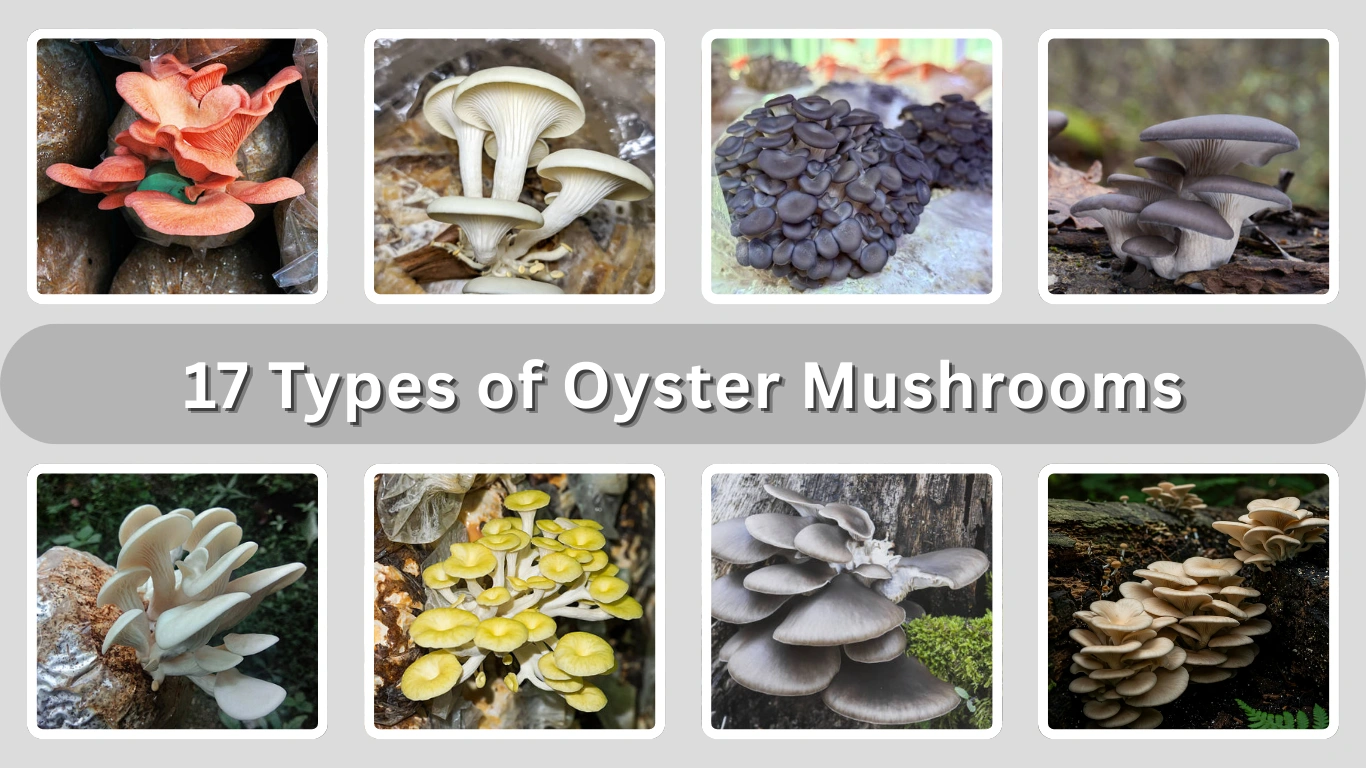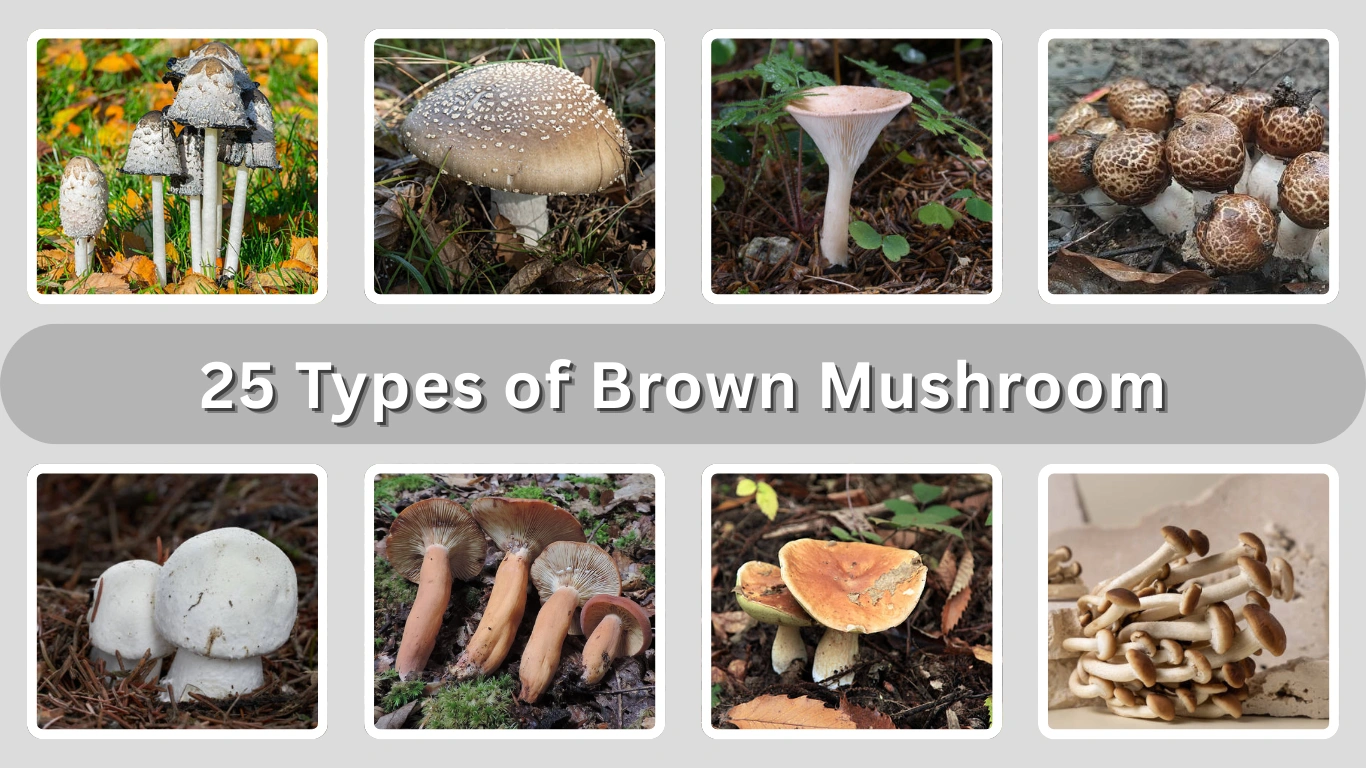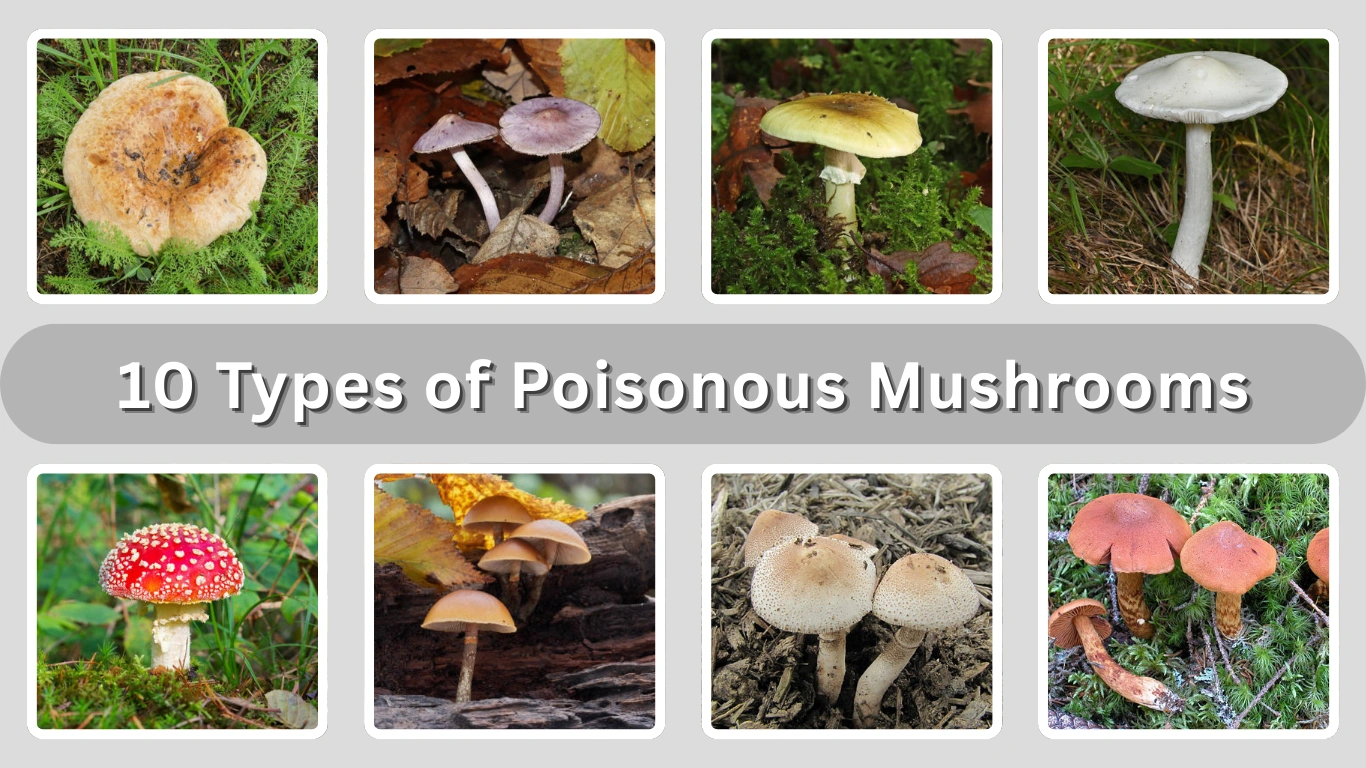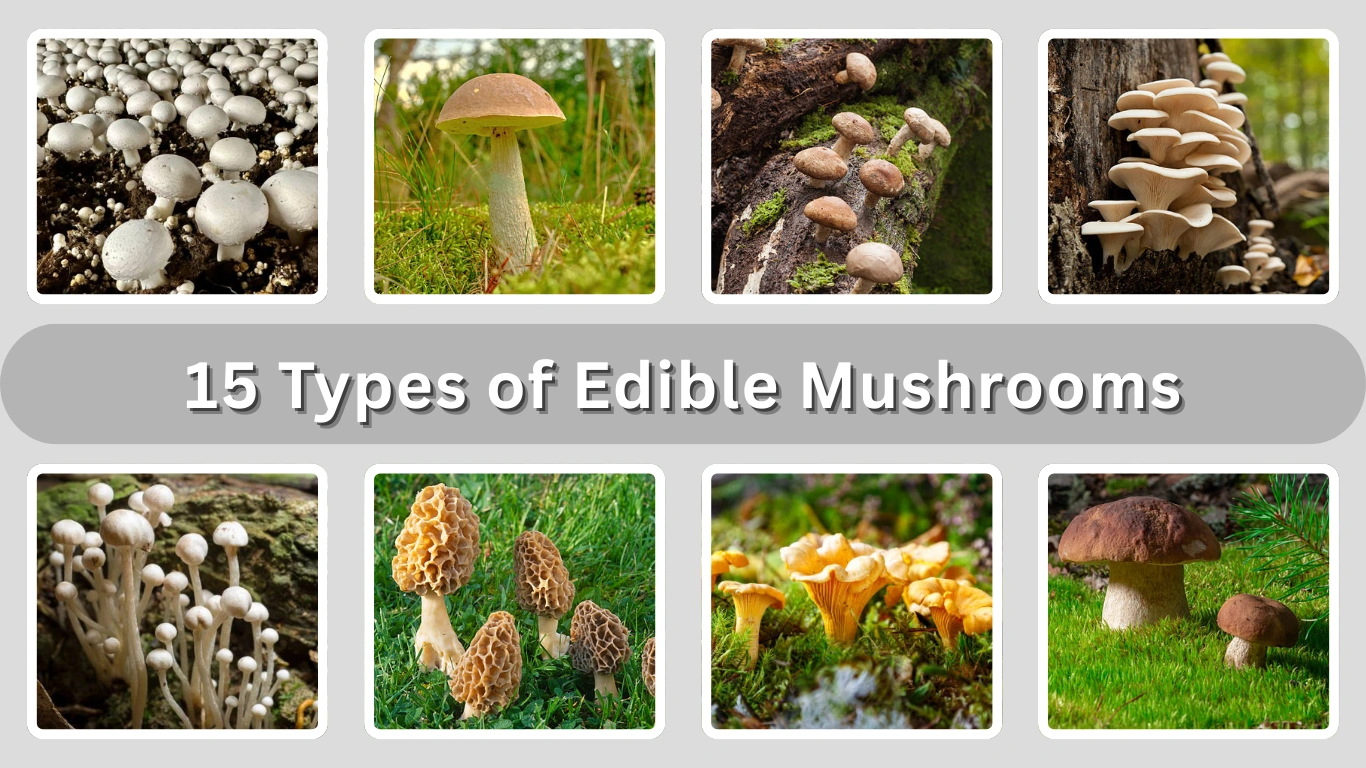






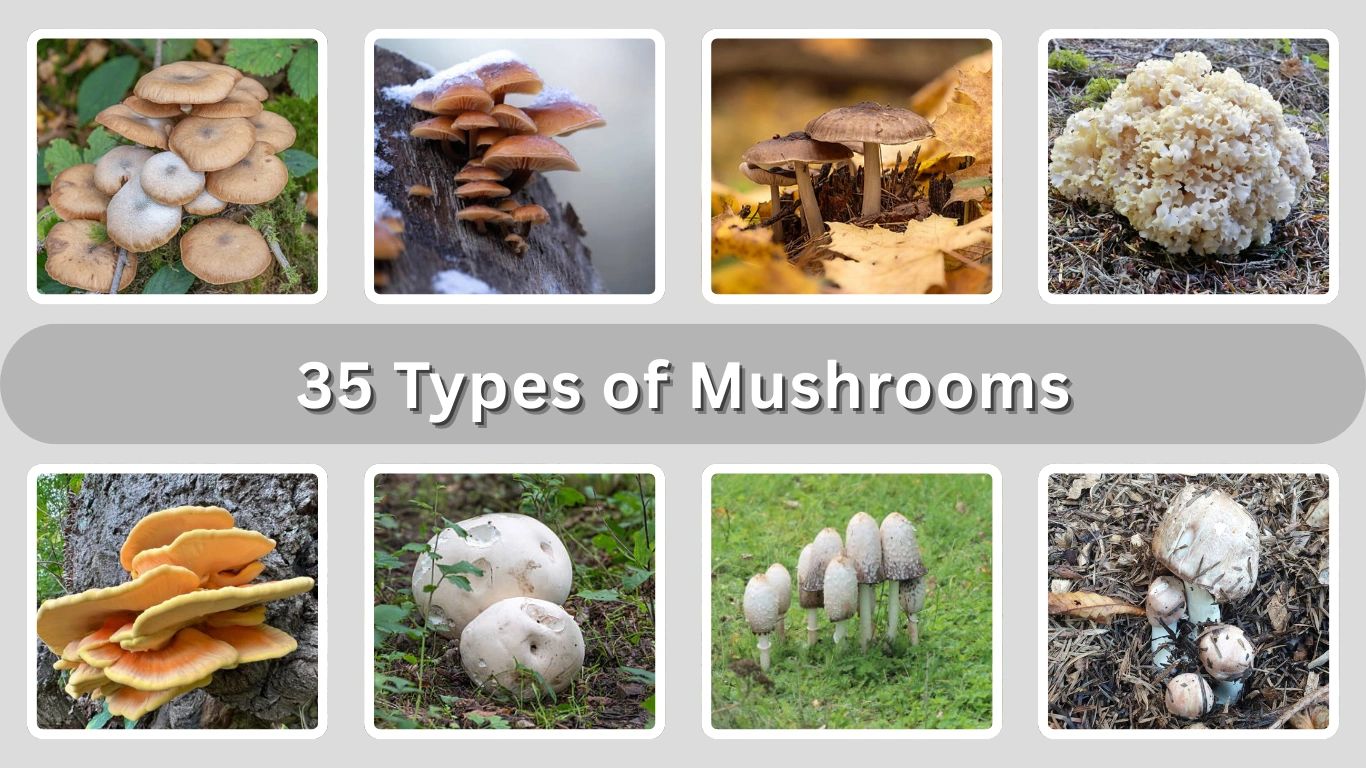
Mushrooms are fascinating fungi, offering a wide variety of flavors, textures, and health benefits. From common varieties like Button and Portobello to exotic types like Morel, Chanterelle, and Lion’s Mane, each mushroom has unique characteristics, habitats, and culinary uses. Rich in protein, fiber, and antioxidants, mushrooms are not only delicious but also highly nutritious. Whether cultivated or wild, understanding their identification, diet, and growth environment helps you enjoy them safely and make the most of their culinary and health potential.
1. Button Mushroom

Button mushrooms are one of the most common and widely consumed mushrooms worldwide. They are small, white, and have a mild flavor, making them a versatile ingredient in many dishes, from salads and soups to pizzas and stir-fries. These mushrooms are also packed with nutrients like protein, vitamins, and minerals, making them a healthy addition to any diet.
Identification
- Small, round cap that is white in color
- Short, thick stem
- Smooth texture
- Closed gills under the cap when young
Habitat
Button mushrooms are typically cultivated in controlled environments, often in composted soil or nutrient-rich substrate. They are rarely found growing wild.
Diet
As a cultivated species, button mushrooms absorb nutrients from the compost or substrate they grow in, which often includes decomposed plant matter, straw, and manure.
Lifespan & Harvest
Button mushrooms are harvested when young, before the caps fully open. They have a short shelf life and are best consumed fresh or refrigerated for up to a week.
2. Cremini Mushroom

Cremini mushrooms, also known as baby bella or brown mushrooms, are slightly older than button mushrooms, giving them a firmer texture and richer, earthier flavor. They are popular in sautés, stews, and pasta dishes and are a nutritious option, providing protein, fiber, and essential minerals.
Identification
- Small to medium-sized cap, light to dark brown
- Firm, thick stem
- Smooth surface with slightly open gills
- Round and plump appearance
Habitat
Cremini mushrooms are commonly cultivated in controlled environments, often in composted soil or nutrient-rich substrates. They can also occasionally be found in grassy fields or meadows.
Diet
These mushrooms feed on decomposed organic matter such as straw, manure, and compost, absorbing nutrients that enhance their flavor and texture.
Lifespan & Harvest
Harvested when the caps are still closed but slightly matured, cremini mushrooms have a slightly longer shelf life than button mushrooms and can be stored in the refrigerator for about a week.
3. Portobello Mushroom

Portobello mushrooms are the mature form of cremini mushrooms, known for their large, flat caps and meaty texture. They have a deep, earthy flavor and are often used as a meat substitute in burgers, sandwiches, and grilled dishes. Rich in protein, fiber, and antioxidants, they are a healthy and versatile addition to many recipes.
Identification
- Large, flat cap that is dark brown
- Thick, firm stem
- Open gills underneath the cap
- Meaty and dense texture
Habitat
Portobello mushrooms are cultivated in controlled environments with nutrient-rich substrates, though they can occasionally be found in shaded, grassy areas in the wild.
Diet
They absorb nutrients from composted organic matter, including straw, manure, and decomposed plant material, which gives them their rich flavor.
Lifespan & Harvest
Harvested at full maturity, portobello mushrooms have a slightly shorter shelf life than cremini but can be stored in the refrigerator for up to 5–7 days if fresh.
4. Shiitake Mushroom

Shiitake mushrooms are native to East Asia and are prized for their rich, smoky flavor and medicinal properties. They are commonly used in soups, stir-fries, and sauces. Shiitakes are not only delicious but also offer health benefits, including immune support and antioxidant properties.
Identification
- Brown, umbrella-shaped cap with a slightly curled edge
- Creamy-white underside with gills
- Fibrous, tough stem
- Diameter typically 2–4 inches
Habitat
Shiitake mushrooms naturally grow on decaying hardwood trees, especially oak, chestnut, and beech. They are also widely cultivated on logs or synthetic substrates.
Diet
These mushrooms feed on the cellulose and lignin in dead or decaying hardwood, breaking it down to extract nutrients.
Lifespan & Harvest
Shiitakes are harvested when the caps are fully opened but still firm. Fresh shiitakes can be stored in the refrigerator for about a week or dried for long-term use.
5. Oyster Mushroom

Oyster mushrooms are delicate, fan-shaped mushrooms known for their mild, slightly sweet flavor and tender texture. They are popular in stir-fries, soups, and sautés and are highly nutritious, offering protein, fiber, and various vitamins and minerals.
Identification
- Fan- or oyster-shaped cap, usually white, gray, or pale brown
- Short or absent stem
- Gills running down the stem (decurrent)
- Smooth, soft texture
Habitat
Oyster mushrooms grow naturally on decaying wood, such as fallen trees or dead logs, in moist and shaded environments. They are also widely cultivated on straw or sawdust blocks.
Diet
They feed on decomposed plant material, particularly hardwood, extracting nutrients from cellulose and lignin.
Lifespan & Harvest
Oyster mushrooms are harvested when the caps are young and tender. They have a short shelf life, usually 3–5 days when fresh, and can be dried for longer storage.
6. Enoki Mushroom

Enoki mushrooms are long, thin, and delicate mushrooms with small white caps, commonly used in soups, salads, and Asian dishes. They have a mild, slightly crunchy texture and are rich in protein, antioxidants, and dietary fiber, making them a nutritious and versatile ingredient.
Identification
- Small, white, convex cap
- Long, thin, clustered stems
- Smooth and delicate texture
- Gills are barely visible under the cap
Habitat
Enoki mushrooms naturally grow on the stumps of hardwood trees, especially elms, in cool, moist environments. They are also widely cultivated in controlled environments for commercial use.
Diet
These mushrooms feed on decomposing wood and organic matter, absorbing nutrients from cellulose and lignin.
Lifespan & Harvest
Enoki mushrooms are harvested when the stems are long and the caps are small and closed. Fresh enokis have a short shelf life of about 5–7 days but can be stored longer if refrigerated.
7. Morel Mushroom

Morel mushrooms are highly prized wild mushrooms known for their honeycomb-like appearance and rich, nutty flavor. They are considered a gourmet delicacy and are often used in sauces, soups, and sautés. Morels are also valued for their nutritional content, including protein, vitamins, and antioxidants.
Identification
- Distinctive cone-shaped cap with a honeycomb or pitted texture
- Hollow stem and cap
- Tan to dark brown color
- Size ranges from 2 to 12 cm in height
Habitat
Morels grow in temperate forests, often near dead or dying trees, especially elm, ash, and apple trees. They appear mainly in spring.
Diet
Morels absorb nutrients from decaying organic matter in the soil and decomposing wood, which contributes to their complex flavor.
Lifespan & Harvest
Wild morels are harvested when the caps are fully developed but still firm. They are highly perishable and should be consumed fresh or dried for long-term storage.
8. Chanterelle Mushroom

Chanterelle mushrooms are prized for their golden color, delicate texture, and fruity, slightly peppery flavor. They are a favorite in gourmet cooking, often sautéed, added to sauces, or paired with meats. Chanterelles are also nutritious, offering vitamins, minerals, and antioxidants.
Identification
- Bright yellow to golden-orange cap, often funnel-shaped
- Wavy, irregular edges
- Decurrent gills running down the stem
- Firm, smooth texture
Habitat
Chanterelles grow in temperate forests, forming symbiotic relationships with trees such as oaks, pines, and birches. They are most commonly found on mossy forest floors.
Diet
These mushrooms derive nutrients through mycorrhizal relationships with trees, exchanging minerals and sugars with their host.
Lifespan & Harvest
Chanterelles are harvested when the caps are fully developed but still firm. Fresh chanterelles can be stored for a few days refrigerated or dried for longer preservation.
9. Porcini Mushroom

Porcini mushrooms, also known as King Bolete, are highly sought-after mushrooms with a rich, nutty flavor and meaty texture. They are popular in risottos, soups, and sauces, and are valued both for their culinary and nutritional benefits, including protein, fiber, and antioxidants.
Identification
- Large, thick cap, brown to reddish-brown
- Thick, bulbous stem, usually white to pale brown
- Spongy underside (pores instead of gills)
- Firm, meaty texture
Habitat
Porcini mushrooms grow in temperate forests, often near pine, spruce, and fir trees. They form mycorrhizal relationships with tree roots and are mostly found in late summer to autumn.
Diet
Porcini mushrooms obtain nutrients through symbiosis with trees, exchanging minerals and water for sugars produced by the host plant.
Lifespan & Harvest
Porcini mushrooms are harvested when fully mature but still firm. They are highly perishable and best consumed fresh or dried for extended storage.
10. Maitake Mushroom

Maitake mushrooms, also known as “Hen of the Woods,” are prized for their unique, ruffled appearance and earthy, strong flavor. They are commonly used in soups, stir-fries, and teas. Maitakes are also valued for their health benefits, including immune support and antioxidant properties.
Identification
- Clustered, layered fronds resembling a ruffled hen
- Brown to grayish-brown color
- Thick, white base stem
- Firm, meaty texture
Habitat
Maitake mushrooms grow at the base of oak trees and other hardwoods in temperate forests. They prefer shady, moist environments and are usually found in late summer and autumn.
Diet
These mushrooms absorb nutrients from decaying organic matter in the soil and form mycorrhizal associations with nearby trees.
Lifespan & Harvest
Maitakes are harvested when fully developed but still firm. Fresh maitakes can be stored in the refrigerator for several days or dried for long-term use.
11. Lion’s Mane Mushroom

Lion’s Mane mushrooms are easily recognized by their long, white, cascading spines that resemble a lion’s mane. They have a mild, seafood-like flavor and are popular in gourmet dishes, teas, and supplements. These mushrooms are also valued for their potential cognitive and nerve-regenerative benefits.
Identification
- White, fluffy, cascading spines instead of a cap
- No traditional gills
- Clusters of spiny, dangling growths
- Soft, yet firm texture
Habitat
Lion’s Mane mushrooms grow on dead or dying hardwood trees, especially oak, beech, and maple. They are commonly found in temperate forests during late summer and autumn.
Diet
They feed on decaying hardwood, extracting nutrients from cellulose and lignin, which supports their growth and spiny structure.
Lifespan & Harvest
Harvested when the spines are long but still firm, Lion’s Mane mushrooms are highly perishable and best consumed fresh or dried for longer storage.
12. King Trumpet Mushroom

King Trumpet mushrooms, also known as King Oyster mushrooms, are large, thick-stemmed mushrooms with a mild, savory flavor and meaty texture. They are popular in grilling, roasting, and stir-fries, and are prized for their high protein content and nutritional benefits.
Identification
- Thick, white stem with a small brown cap
- Firm, dense texture
- Smooth surface
- Slightly curved cap edges
Habitat
King Trumpet mushrooms are primarily cultivated on straw or sawdust in controlled environments, though they can occasionally grow on decaying hardwood in the wild.
Diet
They absorb nutrients from decomposed plant matter, such as straw, sawdust, or composted organic material.
Lifespan & Harvest
Harvested when the stems are fully grown and caps are small, King Trumpets can be stored fresh for about a week or dried for long-term preservation.
13. Beech Mushroom

Beech mushrooms, also known as Shimeji mushrooms, are small, clustered mushrooms with a delicate, nutty flavor. They are commonly used in soups, stir-fries, and sautés, and are valued for their nutritional content, including protein, fiber, and vitamins.
Identification
- Small, brown or white caps
- Long, slender stems, often growing in clusters
- Firm texture with slightly rounded caps
- Gills are tightly packed underneath the cap
Habitat
Beech mushrooms naturally grow on decaying hardwood trees, especially beech, oak, and maple. They are also widely cultivated on sawdust blocks for commercial use.
Diet
They absorb nutrients from decomposed wood and organic matter, including cellulose and lignin.
Lifespan & Harvest
Harvested when clusters are young and firm, beech mushrooms are highly perishable and best used within a few days or can be lightly cooked and stored for short periods.
14. Hedgehog Mushroom

Hedgehog mushrooms are named for their spiny, tooth-like structures on the underside of the cap. They have a sweet, nutty flavor and firm texture, making them popular in sautés, soups, and gourmet dishes. These mushrooms are also valued for their nutritional content and digestibility.
Identification
- Cap is convex to flat, beige to light brown
- Underside covered with spines or teeth instead of gills
- Firm and dense texture
- Sturdy, short stem
Habitat
Hedgehog mushrooms grow in deciduous forests, often under hardwood trees like oak, beech, and chestnut. They are typically found on forest floors rich in leaf litter.
Diet
They feed on decomposing organic matter, such as leaf litter and decayed wood, absorbing nutrients to support growth.
Lifespan & Harvest
Harvested when caps are firm and spines intact, hedgehog mushrooms are best consumed fresh but can also be dried for long-term use.
15. Wood Ear Mushroom

Wood Ear mushrooms are thin, ear-shaped fungi known for their crunchy texture and mild, earthy flavor. They are commonly used in Asian cuisine, particularly in soups, stir-fries, and salads, and are valued for their nutritional content, including fiber and antioxidants.
Identification
- Thin, wrinkled, ear-like shape
- Dark brown to black color
- Smooth, gelatinous texture
- No visible gills
Habitat
Wood Ear mushrooms grow naturally on dead or decaying hardwood trees, especially in humid, shaded forest areas. They are also cultivated on logs or sawdust substrates.
Diet
These mushrooms absorb nutrients from decomposing wood, feeding on cellulose and lignin in dead trees.
Lifespan & Harvest
Harvested when fully grown but still tender, wood ear mushrooms are best consumed fresh or dried for extended storage.
16. Reishi Mushroom

Reishi mushrooms, also known as Lingzhi, are medicinal mushrooms prized for their bitter taste and health-promoting properties. They are commonly used in teas, extracts, and supplements to support immunity, reduce inflammation, and improve overall wellness.
Identification
- Hard, woody texture
- Kidney- or fan-shaped cap with a reddish-brown, glossy surface
- White edge along the cap
- No gills, pores on the underside
Habitat
Reishi mushrooms grow on dead or dying hardwood trees, particularly oaks, maples, and elms, in warm and humid forest environments.
Diet
They feed on decaying wood, extracting nutrients from cellulose and lignin to sustain their slow growth.
Lifespan & Harvest
Reishi mushrooms are harvested once fully mature and hardened. They are rarely consumed fresh due to their toughness and are typically dried for teas or medicinal use.
17. Turkey Tail Mushroom

Turkey Tail mushrooms are thin, fan-shaped fungi with colorful concentric zones, resembling a turkey’s tail. They are highly valued for their medicinal properties, particularly immune support, and are commonly used in teas, extracts, and supplements.
Identification
- Thin, leathery, fan-shaped cap
- Concentric color zones: brown, tan, gray, or reddish
- Pores on the underside instead of gills
- Small to medium-sized clusters
Habitat
Turkey Tail mushrooms grow on dead or decaying hardwood logs and stumps in forests, thriving in moist, shaded environments worldwide.
Diet
They feed on decomposing wood, breaking down cellulose and lignin to obtain nutrients.
Lifespan & Harvest
Harvested when fully grown but still flexible, Turkey Tail mushrooms are typically dried for long-term storage and medicinal use.
18. Chicken of the Woods

Chicken of the Woods mushrooms are large, bright orange to yellow fungi with a meaty texture and mild, chicken-like flavor. They are popular in sautés, soups, and vegetarian dishes as a meat substitute and are rich in protein and antioxidants.
Identification
- Large, overlapping shelf-like clusters
- Bright orange to yellow color
- Soft, spongy texture when young
- No gills; pores on the underside
Habitat
Chicken of the Woods grows on dead or dying hardwood trees, especially oak, chestnut, and cherry, in temperate forests.
Diet
These mushrooms feed on decaying wood, extracting nutrients from the cellulose and lignin in the tree.
Lifespan & Harvest
Harvested when the edges are still tender and bright-colored, they are best consumed fresh but can also be cooked and frozen for longer storage.
19. Puffball Mushroom

Puffball mushrooms are round or pear-shaped fungi known for their soft, spongy texture and mild flavor. They are often used in sautés, soups, and fried dishes, and some species are highly nutritious, providing protein, fiber, and antioxidants.
Identification
- Round, ball-like shape
- White to tan exterior
- No visible gills
- Soft and spongy when young
Habitat
Puffball mushrooms grow on soil, grasslands, or decaying wood in forests, meadows, and lawns, often in temperate regions.
Diet
They feed on decomposing organic matter, including soil humus and decayed plant material.
Lifespan & Harvest
Puffballs are harvested when fully white and firm inside. They spoil quickly if overripe but can be cooked fresh or dried for later use.
20. Blewit Mushroom

Blewit mushrooms are medium-sized fungi with a distinctive lilac to purple hue. They are valued for their firm texture and mild, earthy flavor, making them popular in sautés, soups, and stews. They are also a good source of protein, fiber, and vitamins.
Identification
- Cap color ranges from lilac to light purple
- Smooth, slightly convex cap
- Pale gills underneath
- Sturdy, firm stem
Habitat
Blewit mushrooms grow in leaf litter, compost, or grassy woodland areas, often in temperate forests during autumn.
Diet
They feed on decomposing organic matter, including leaf litter, soil humus, and decaying plant material.
Lifespan & Harvest
Blewits are harvested when caps are firm and fully colored. Fresh specimens should be used quickly, though they can also be dried or cooked for longer preservation.
21. Black Trumpet Mushroom

Black Trumpet mushrooms, also called Horn of Plenty, are thin, trumpet-shaped fungi with a rich, smoky flavor. They are highly prized in gourmet cooking for sauces, soups, and sautés, and are valued for their antioxidants and nutritional content.
Identification
- Dark gray to black, trumpet-shaped cap
- Hollow, thin stem
- Smooth exterior with slightly wavy edges
- Small to medium size
Habitat
Black Trumpet mushrooms grow in deciduous forests, often near oak, beech, and other hardwood trees. They thrive in mossy, shaded areas and appear during late summer to autumn.
Diet
They absorb nutrients from decomposing organic matter and leaf litter on the forest floor.
Lifespan & Harvest
Harvested when fully developed but still tender, Black Trumpet mushrooms are delicate and best used fresh or dried for long-term storage.
22. Elm Oyster Mushroom

Elm Oyster mushrooms are thin, fan-shaped fungi with a mild, slightly sweet flavor. They are commonly used in stir-fries, soups, and sautés, and are appreciated for their delicate texture and nutritional benefits, including protein and vitamins.
Identification
- Fan-shaped, pale gray to light brown cap
- Short or absent stem
- Decurrent gills running down the stem
- Smooth, tender texture
Habitat
Elm Oyster mushrooms grow naturally on dead or decaying elm and other hardwood trees in forests. They are also cultivated on logs or sawdust for commercial purposes.
Diet
They feed on decomposing wood, absorbing nutrients from cellulose and lignin in the tree.
Lifespan & Harvest
Harvested when caps are young and tender, they are best consumed fresh but can also be dried for longer storage.
23. Almond Mushroom

Almond mushrooms, also known as Agaricus subrufescens, are prized for their nutty, almond-like aroma and flavor. They are commonly used in sautés, soups, and pasta dishes, and are valued for their protein, fiber, and medicinal properties.
Identification
- Light brown to tan cap, convex when young
- White to pale gills underneath
- Smooth, firm stem
- Distinct almond-like smell when cut
Habitat
Almond mushrooms grow on rich, organic soil or compost in temperate regions and are often cultivated for commercial use.
Diet
They feed on decomposing organic matter such as compost, leaf litter, and decaying plant material, absorbing nutrients for growth.
Lifespan & Harvest
Harvested when caps are fully expanded but still firm, almond mushrooms are best consumed fresh or can be dried for longer-term use.
24. Nameko Mushroom

Nameko mushrooms are small, amber-brown mushrooms with a slightly gelatinous coating, known for their nutty flavor and slightly slippery texture. They are commonly used in soups, stir-fries, and Japanese cuisine, providing protein, fiber, and antioxidants.
Identification
- Small, orange-brown cap with a shiny, gelatinous surface
- Short, clustered stems
- Convex cap, sometimes slightly wavy
- Gills underneath the cap
Habitat
Nameko mushrooms grow naturally on decaying hardwood, especially oak, in moist, shaded forests. They are also cultivated on sawdust or logs for commercial production.
Diet
They absorb nutrients from decomposed wood and organic matter, breaking down cellulose and lignin to sustain growth.
Lifespan & Harvest
Harvested when caps are small and firm, Nameko mushrooms are best used fresh but can be lightly cooked or frozen for longer storage.
25. Cauliflower Mushroom

Cauliflower mushrooms are large, white to cream-colored fungi with a ruffled, brain-like appearance. They have a mild, nutty flavor and a firm, crunchy texture, making them popular in soups, sautés, and gourmet dishes.
Identification
- Dense, ruffled, coral-like structure
- White to cream color
- No visible gills
- Firm and crunchy texture
Habitat
Cauliflower mushrooms grow on decaying hardwood stumps, especially oak, in temperate forests. They are often found late in the growing season, during autumn.
Diet
They feed on decomposing wood, absorbing nutrients from cellulose and lignin in the decaying trees.
Lifespan & Harvest
Harvested when the structure is firm and intact, cauliflower mushrooms are best used fresh but can also be dried for long-term storage.
26. Shaggy Ink Cap

Shaggy Ink Cap mushrooms, also known as Coprinus comatus, are distinctive for their tall, cylindrical, shaggy white caps that dissolve into black ink as they mature. They have a delicate, mild flavor and are often sautéed or added to soups.
Identification
- Tall, cylindrical white cap with shaggy scales
- Hollow stem
- Gills turn black and liquefy with age
- Medium size
Habitat
Shaggy Ink Caps grow on lawns, grassy fields, and disturbed soil, often appearing in clusters during autumn in temperate regions.
Diet
They feed on decomposing organic matter, absorbing nutrients from soil humus and decayed plant material.
Lifespan & Harvest
Harvested when caps are still firm and before black ink develops, they are highly perishable and best consumed fresh.
27. Fairy Ring Mushroom

Fairy Ring mushrooms are small to medium-sized fungi often found growing in circular patterns on lawns or forest floors. They have a mild, nutty flavor and are sometimes used in soups, sauces, or sautés.
Identification
- Small to medium-sized cap, brown to tan
- Convex to flat shape
- White to cream gills underneath
- Sturdy, slender stem
Habitat
Fairy Ring mushrooms grow in grassy areas, lawns, meadows, and forest clearings, often forming circular “fairy rings” due to their radial growth pattern.
Diet
They feed on decomposing organic matter in soil and grass, absorbing nutrients from decaying plant material.
Lifespan & Harvest
Harvested when caps are fully expanded but still firm, these mushrooms are best consumed fresh and quickly due to their short shelf life.
28. Birch Bolete

Birch Bolete mushrooms are medium to large edible fungi with a firm, meaty texture and a mild, nutty flavor. They are commonly used in soups, stews, and sautés, and are rich in protein, fiber, and vitamins.
Identification
- Brown to reddish-brown convex cap
- Thick, white to pale yellow stem
- Pores instead of gills on the underside
- Firm, dense texture
Habitat
Birch Bolete mushrooms grow in temperate forests, forming symbiotic relationships with birch trees. They are usually found in late summer and autumn.
Diet
They obtain nutrients through mycorrhizal association with birch trees, exchanging minerals and sugars with the host.
Lifespan & Harvest
Harvested when caps are firm and fully developed, birch boletes are best consumed fresh or can be dried for long-term storage.
29. Giant Puffball

Giant Puffball mushrooms are large, round fungi known for their smooth, white exterior and mild, nutty flavor. They are often sliced and cooked in sautés, soups, or fried dishes, and provide protein, fiber, and antioxidants.
Identification
- Large, spherical or pear-shaped fruiting body
- White, smooth exterior when young
- No gills
- Soft and spongy inside when immature
Habitat
Giant Puffballs grow in meadows, grasslands, and open forests, often in temperate regions with rich soil.
Diet
They feed on decomposing organic matter in soil, absorbing nutrients from humus and decaying plant material.
Lifespan & Harvest
Harvested when fully white and firm inside, they are highly perishable but can also be sliced and dried or cooked for longer use.
30. Velvet Foot Mushroom

Velvet Foot mushrooms, also known as Enokitake or Flammulina velutipes, are slender mushrooms with long, dark stems and small caps. They are prized for their mild, slightly sweet flavor and are commonly used in soups, stir-fries, and salads.
Identification
- Long, dark brown to black velvety stem
- Small, light brown or tan cap
- Clustered growth
- Thin, delicate texture
Habitat
Velvet Foot mushrooms grow on decaying wood, particularly hardwood trees, in cool, moist environments. They are also widely cultivated for culinary use.
Diet
They feed on decomposing wood, absorbing nutrients from cellulose and lignin in dead or decaying trees.
Lifespan & Harvest
Harvested when stems are long and caps small, they are best consumed fresh but can be cooked or lightly preserved for short-term storage.
31. Wine Cap Mushroom

Wine Cap mushrooms, also known as King Stropharia, are medium to large mushrooms with a reddish-brown cap and meaty texture. They are popular in stir-fries, soups, and sautés, and are valued for their protein, fiber, and antioxidant content.
Identification
- Reddish-brown, convex cap with smooth surface
- White gills underneath
- Thick, sturdy stem
- Medium to large size
Habitat
Wine Cap mushrooms grow naturally on decomposing wood, straw, and composted soil, often in gardens, forest edges, and mulch beds.
Diet
They feed on decomposing organic matter, absorbing nutrients from wood chips, compost, and plant debris.
Lifespan & Harvest
Harvested when caps are fully expanded but still firm, Wine Caps are best consumed fresh or can be dried for longer storage.
32. Honey Fungus

Honey Fungus mushrooms are clustered fungi known for their honey-colored caps and slightly sweet, earthy flavor. They are edible when cooked properly and are rich in protein, fiber, and antioxidants.
Identification
- Honey-yellow to brown, convex caps
- White gills underneath
- Clustered growth on wood
- Sturdy, fibrous stems
Habitat
Honey Fungus grows on decaying hardwood and conifer stumps, tree roots, and logs in temperate forests. They often form large colonies.
Diet
They feed on decomposing wood, breaking down cellulose and lignin to absorb nutrients.
Lifespan & Harvest
Harvested when caps are fully formed and firm, honey fungi are best consumed fresh after thorough cooking or can be dried for long-term storage.
33. Cloud Ear Mushroom

Cloud Ear mushrooms, also known as White Wood Ear or Tremella fuciformis, are gelatinous, translucent fungi with a mild, slightly crunchy texture. They are commonly used in Asian soups, desserts, and herbal teas and are valued for their nutritional and medicinal properties.
Identification
- Gelatinous, frilly, or ear-shaped structure
- Translucent white to pale cream color
- Soft and slightly crunchy texture
- No visible gills
Habitat
Cloud Ear mushrooms grow on dead or decaying hardwood, particularly in tropical and subtropical forests. They are also cultivated on logs or sawdust for commercial use.
Diet
They absorb nutrients from decomposing wood and organic matter, breaking down cellulose and lignin to sustain growth.
Lifespan & Harvest
Harvested when fully developed and firm, Cloud Ear mushrooms are best consumed fresh or dried for long-term storage.
34. Winter Mushroom

Winter mushrooms, also known as Velvet Foot or Flammulina velutipes, are small, dark-capped mushrooms with long stems, prized for their mild flavor and use in soups, stir-fries, and stews. They are also rich in protein and antioxidants.
Identification
- Dark brown to black cap
- Long, slender, velvety stem
- Small, convex cap
- Clustered growth
Habitat
Winter mushrooms grow on decaying hardwood in cool, moist environments, often appearing in late autumn and winter. They are also cultivated commercially for culinary use.
Diet
They feed on decomposing wood, extracting nutrients from cellulose and lignin in dead or decaying trees.
Lifespan & Harvest
Harvested when caps are small and stems firm, winter mushrooms are best consumed fresh but can also be dried or lightly cooked for longer storage.
35. White Coral Mushroom

White Coral mushrooms are coral-like fungi with branching, delicate structures. They have a mild, slightly nutty flavor and are often used in soups, sautés, and gourmet dishes. They are also rich in fiber and antioxidants.
Identification
- Branching, coral-like white structures
- No gills
- Firm but delicate texture
- Small to medium clusters
Habitat
White Coral mushrooms grow on soil, decaying wood, or leaf litter in temperate forests. They prefer shaded, moist environments.
Diet
They absorb nutrients from decomposing organic matter, including soil humus, leaf litter, and decayed wood.
Lifespan & Harvest
Harvested when branches are firm and intact, they are best used fresh but can also be lightly cooked or dried for longer preservation.
FAQs
What are the most common edible mushrooms?
The most common edible mushrooms include Button, Cremini, Portobello, Shiitake, and Oyster mushrooms. They are widely cultivated, easy to cook, and packed with nutrients like protein, fiber, and vitamins.
How do I identify wild mushrooms safely?
Identification involves checking the cap, gills, stem, color, and growth habitat. Always consult a mushroom guide or expert, as some wild mushrooms can be toxic or deadly if misidentified.
Can all mushrooms be eaten raw?
Not all mushrooms are safe to eat raw. Some, like morels and shiitakes, need cooking to neutralize toxins or improve digestibility. Always verify safety before consuming raw mushrooms.
How should mushrooms be stored?
Fresh mushrooms should be stored in a paper bag in the refrigerator for 3–7 days, depending on type. Some varieties can also be dried for long-term storage.
What are the health benefits of mushrooms?
Mushrooms provide protein, fiber, antioxidants, and essential vitamins and minerals. Certain species, like Reishi and Lion’s Mane, offer medicinal benefits, including immune support and cognitive enhancement.