




Boat orchids, commonly known as Cymbidium orchids, are admired for their long, arching flower spikes and waxy, long-lasting blooms that often appear in late autumn or winter. Unlike many tropical orchids, cymbidiums are more tolerant of cooler temperatures, making them excellent choices for both indoor displays and outdoor growing in mild climates. With proper light, watering, and seasonal care, boat orchids grow vigorously and reward growers with spectacular flowering spikes year after year.
Understanding Boat Orchids (Cymbidium)
Boat orchids originate from Asia and Australia, where they grow in cool mountainous forests, open woodlands, and sometimes on rocky slopes. Some cymbidiums are epiphytic, growing on trees, while many are terrestrial, growing in leaf litter and soil-like environments. This makes their care slightly different from moth orchids and dendrobiums.
Cymbidiums grow from pseudobulbs—swollen stems at the base that store water and nutrients. Each pseudobulb produces long, strap-shaped leaves and eventually sends up tall flower spikes. New pseudobulbs form every year, and mature bulbs are responsible for flowering.
Boat orchids are considered cool-growing orchids. They tolerate lower temperatures than most orchids and often require cooler nights in autumn to initiate flower spikes. Their strong root systems and upright growth habit make them suitable for pots, garden beds, and outdoor containers.
How to Identify a Healthy Boat Orchid

Selecting a healthy plant ensures faster growth and stronger blooming.
- Pseudobulbs: Firm, plump, and green, not wrinkled or soft
- Leaves: Upright, strap-like leaves without black tips or yellow streaks
- Roots: Thick white or pale green roots, not brown or mushy
- New shoots: Fresh growth emerging from the base
- Overall health: No insects, mold, foul odor, or leaf spotting
Healthy cymbidiums adapt quickly, resist disease, and bloom more consistently.
Light Requirements for Boat Orchids
Indoor Light Conditions
Boat orchids need bright light to flower well. Indoors, place them near east- or south-facing windows where they receive strong light without intense midday sun. Morning sun is beneficial, but harsh afternoon rays should be filtered with sheer curtains.
Leaves should be medium green. Dark green leaves usually indicate insufficient light, while yellowing or scorched patches suggest excessive sun. If natural light is limited, full-spectrum grow lights placed 12–16 inches above the plant can support healthy growth.
Outdoor Light Conditions
Outdoors, cymbidiums grow best in full morning sun and light afternoon shade. They thrive on open patios, balconies, or garden areas where they receive several hours of sunlight but are protected from extreme heat.
Outdoor light changes seasonally. Plants may need more shade in summer and more sun in winter. Proper outdoor lighting is one of the most important factors in strong flowering.
Temperature and Humidity Needs
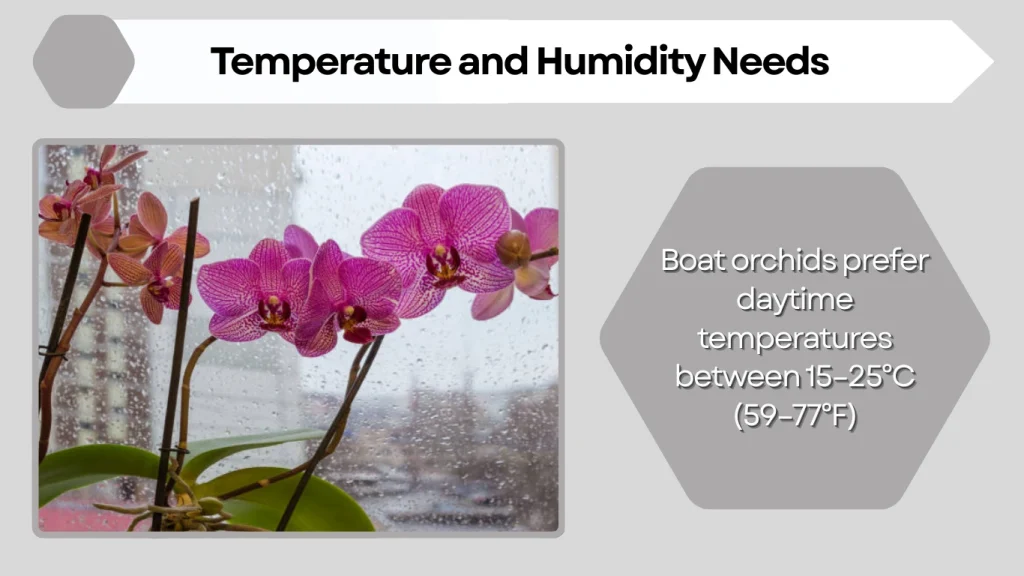
Boat orchids prefer daytime temperatures between 15–25°C (59–77°F) and cooler nights between 7–13°C (45–55°F). These cooler night temperatures in late summer and autumn are essential for flower spike initiation.
Cymbidiums enjoy moderate humidity, around 50–70%, along with good air circulation. Indoors, humidifiers or pebble trays can help maintain moisture. Outdoors, natural airflow usually provides ideal conditions, but plants should not remain constantly wet.
Unlike most orchids, cymbidiums tolerate brief cool spells, but they should be protected from heavy frost.
Watering Boat Orchids Correctly
Boat orchids like consistent moisture, especially during active growth.
- Indoor watering: Usually once or twice a week during growth
- Outdoor watering: More frequent in warm, dry weather
- Moisture balance: Keep the mix evenly moist, not waterlogged
- Overwatering signs: Yellow leaves, soft pseudobulbs, sour smell
- Underwatering signs: Wrinkled bulbs, dry leaf tips, slow growth
Water generously during spring and summer. Reduce watering slightly in winter, but never allow plants to dry out completely.
Choosing the Right Potting Mix and Container
Best Potting Media for Cymbidiums
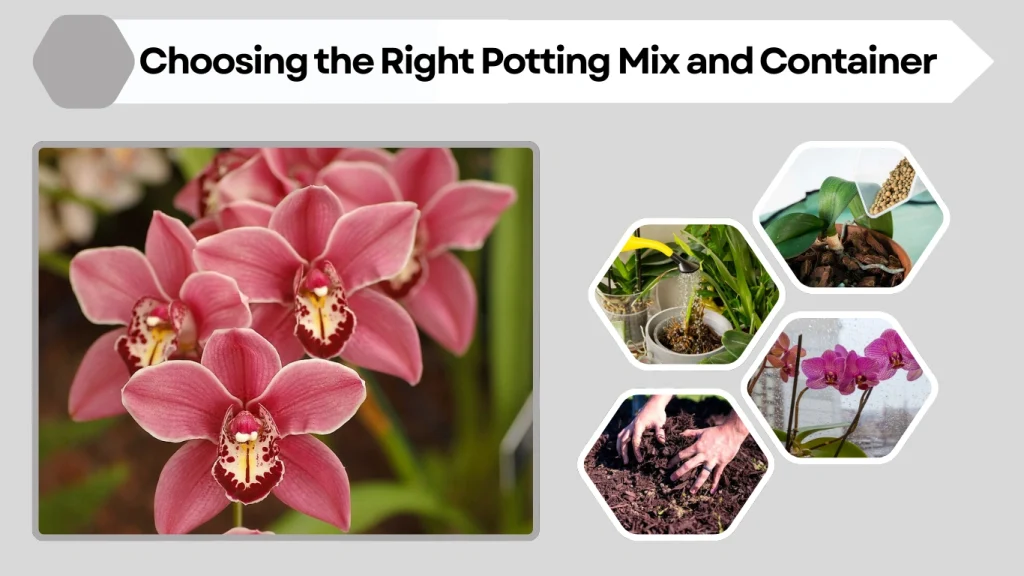
Cymbidiums prefer heavier mixes than many orchids. Bark-based orchid mixes blended with perlite, pumice, or charcoal provide moisture retention with good drainage. Some growers add a small amount of composted material to support terrestrial roots.
The ideal mix holds moisture while allowing air to reach the roots.
Best Pots and Containers
Boat orchids develop large root systems and heavy foliage, so sturdy, deeper pots are ideal. Plastic pots hold moisture longer, while clay pots improve airflow. Outdoor containers should be weighted for stability.
Repotting is usually done every two to three years after flowering, when new growth begins.
How to Grow Boat Orchids Indoors

Boat orchids grow well indoors when given strong light, cool temperatures, and consistent moisture. Place them near a bright window where they receive several hours of light daily. East- or south-facing windows are ideal. In warmer months, many growers move cymbidiums outdoors to boost growth and then bring them back inside before winter.
Use a sturdy pot with excellent drainage and a moisture-retentive orchid mix. Water thoroughly, allowing excess water to drain away. Cymbidiums prefer evenly moist roots, especially during spring and summer growth. During winter, reduce watering slightly but never allow pseudobulbs to shrivel.
Good airflow is important indoors. A small fan across the room helps prevent fungal problems. Wipe leaves occasionally to remove dust. Feed lightly during active growth, and watch for new pseudobulbs forming, which will later produce flower spikes.
How to Grow Boat Orchids Outdoors
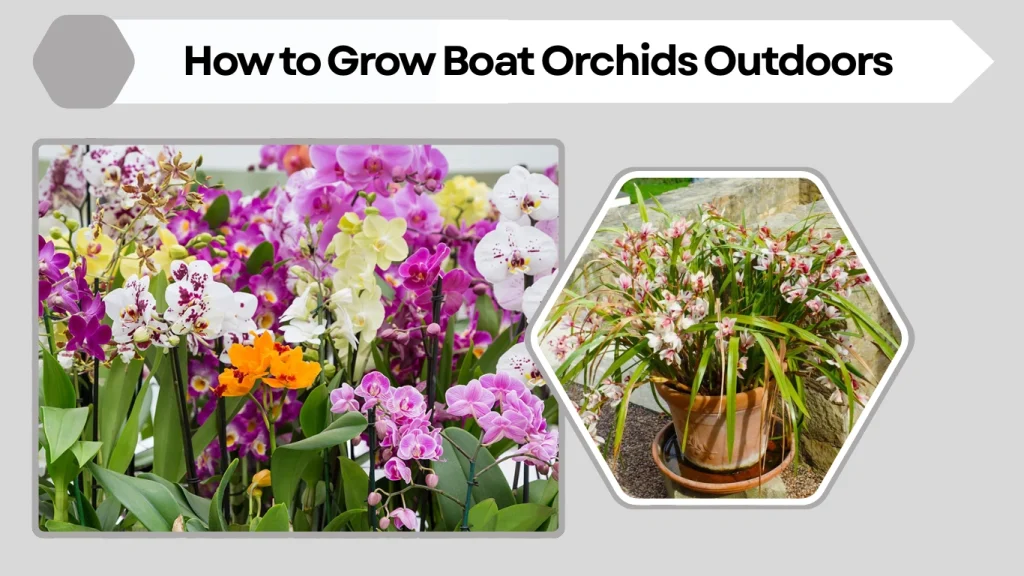
Boat orchids are outstanding outdoor orchids in mild climates. They grow well in containers on patios, balconies, or in partially shaded garden beds. Choose a location with bright light, morning sun, and protection from extreme heat and strong winds.
Outdoors, cymbidiums benefit from natural humidity and airflow, which promotes vigorous root and leaf growth. Water frequently in warm weather, especially for potted plants. Heavy rain can oversaturate the mix, so ensure containers drain well.
As autumn approaches, cooler nights help trigger flower spikes. Plants can often remain outdoors until temperatures approach freezing. In colder regions, move plants indoors or into frost-protected areas before severe cold arrives.
Fertilizing Boat Orchids for Strong Growth
Cymbidiums are heavier feeders than many orchids and respond well to regular fertilizing.
- Best fertilizers: Balanced orchid fertilizer or high-nitrogen formula in spring and summer
- Feeding schedule: Every 2 weeks during active growth
- Pre-bloom feeding: Switch to bloom-support fertilizer in late summer
- Flushing salts: Rinse pots monthly with plain water
- After flowering: Resume balanced feeding to support new growth
Always fertilize after watering to protect the roots.
How to Encourage Flowering and Reblooming
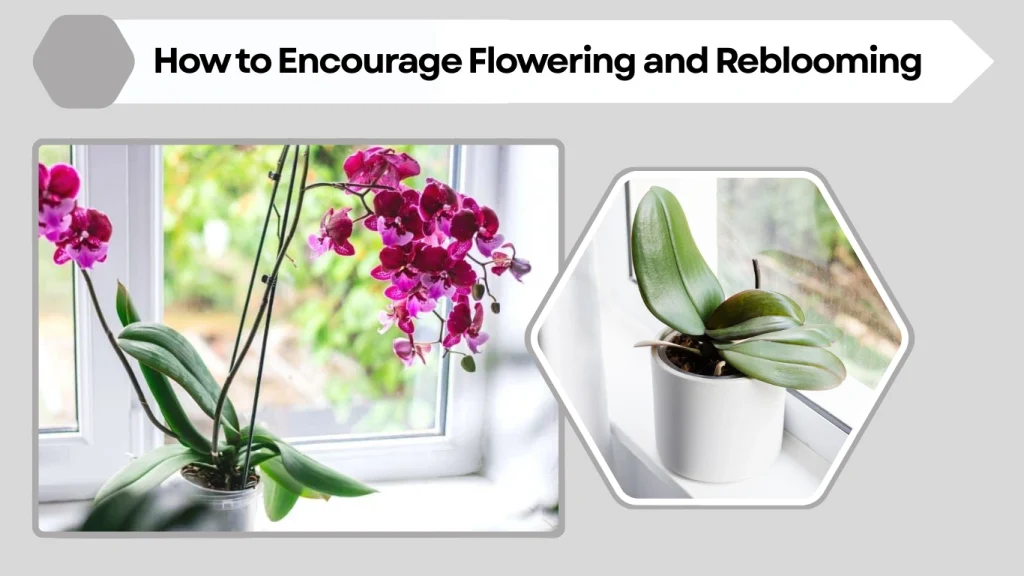
Boat orchids bloom from mature pseudobulbs. Healthy new bulbs formed during spring and summer are essential for future flowering. The most important blooming trigger is cool autumn nights combined with bright light.
From late summer onward, expose plants to cooler nighttime temperatures while keeping daytime light strong. Reduce nitrogen slightly and avoid moving plants excessively. Flower spikes usually appear from the base of mature pseudobulbs and develop slowly.
After flowering, remove spent spikes and continue regular care. Mature plants can produce multiple flower spikes each season.
Common Problems and How to Fix Them
Leaf, Bulb, and Root Problems
Yellow leaves may indicate overwatering, nutrient imbalance, or natural leaf aging. Wrinkled pseudobulbs signal dehydration or root damage. Black spots can result from fungal infection or sunburn. Root rot requires immediate repotting into fresh mix.
Flowering and Pest Problems
Failure to bloom is usually due to insufficient light or lack of cool nights. Bud drop may occur if plants are moved or stressed. Aphids, thrips, spider mites, and scale insects should be treated promptly with appropriate insect controls.
Seasonal Care Tips for Indoor and Outdoor Boat Orchids
In spring and summer, cymbidiums grow actively and need frequent watering, strong light, and regular feeding. In late summer and autumn, allow plants to experience cooler nights to encourage flowering. In winter, reduce watering slightly and protect plants from frost.
Outdoor plants may need shelter during storms. Indoor plants should be placed in the brightest cool location available.
FAQs
Can boat orchids grow outdoors all year?
Boat orchids can grow outdoors year-round in mild climates where temperatures rarely drop below freezing. In regions with cold winters, they should be moved indoors or into protected areas before heavy frost to prevent damage to leaves and pseudobulbs.
How often should I water boat orchids indoors?
Indoor boat orchids usually need watering once or twice a week during active growth. The potting mix should remain evenly moist but not waterlogged. During winter, watering frequency can be reduced slightly while still preventing the pseudobulbs from drying out.
Do boat orchids need cold weather to bloom?
Yes, cooler nighttime temperatures in late summer and autumn are essential for boat orchids to form flower spikes. Without this temperature drop, plants often produce leaves but fail to bloom, even if other care factors are correct.
Why are my cymbidium leaves turning yellow?
Yellowing leaves may result from overwatering, poor drainage, nutrient imbalance, or natural aging. If many leaves turn yellow at once, check the roots and growing conditions to identify whether excess moisture or light stress is present.
How long do boat orchid flowers last?
Boat orchid flowers are long-lasting and often remain attractive for six to ten weeks. Cooler indoor temperatures and stable humidity help extend bloom life, making cymbidiums one of the best orchids for long floral displays.