



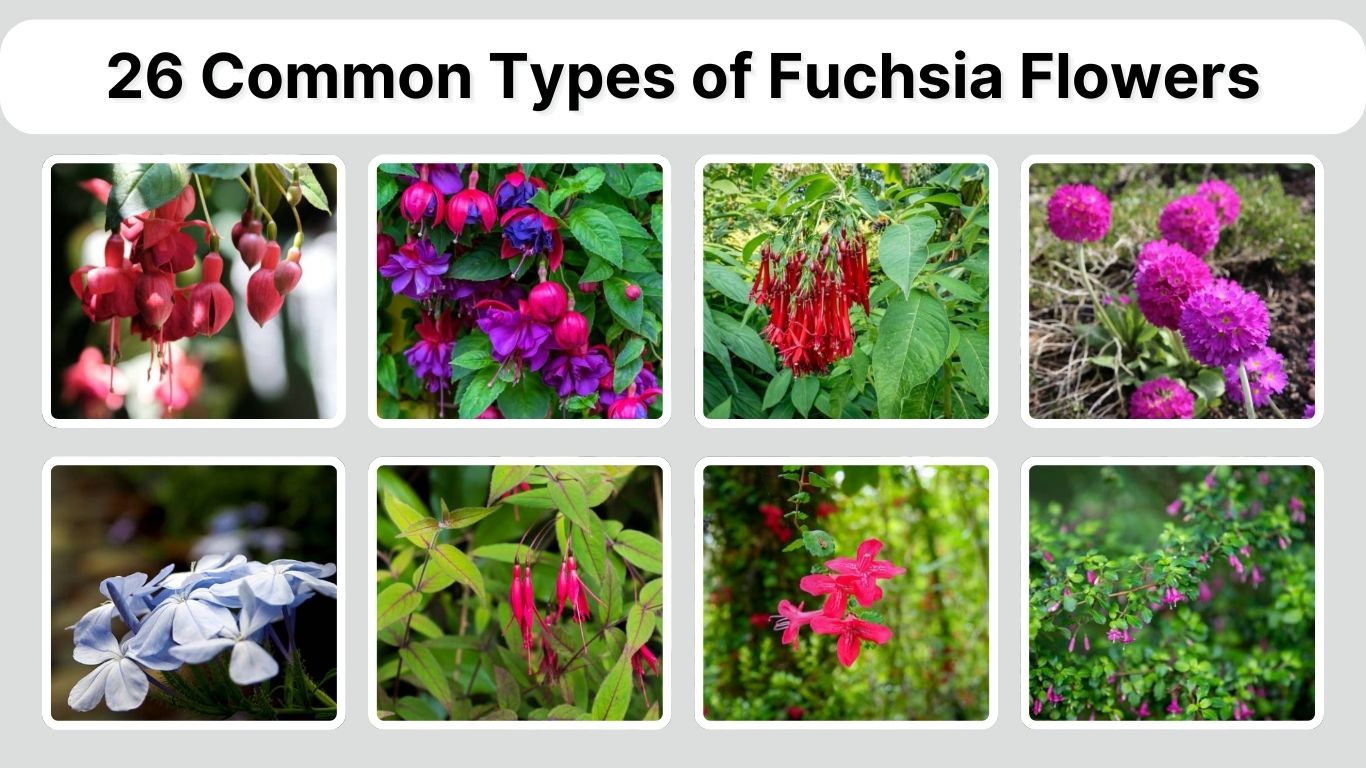
Fuchsia flowers are among the most elegant and colorful ornamental plants, celebrated for their pendulous, tubular blooms and vibrant hues ranging from red and pink to purple and white. Native to Central and South America and New Zealand, these versatile plants thrive in gardens, containers, and hanging baskets. Fuchsias not only add striking beauty to landscapes but also attract hummingbirds and pollinators. With proper care, watering, and pruning, they offer a long flowering season, making them a favorite for gardeners worldwide.
1. Fuchsia magellanica
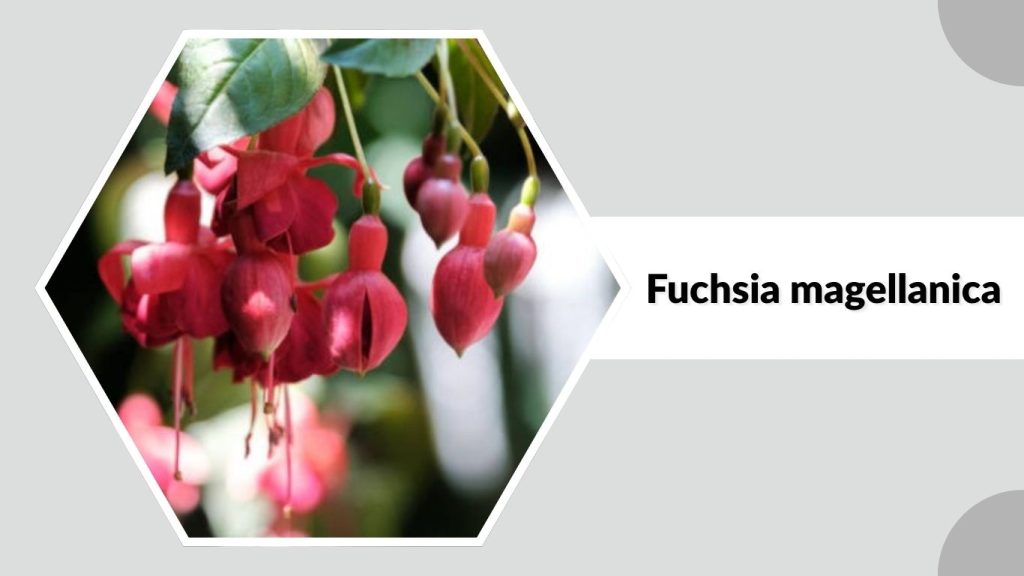
Fuchsia magellanica, commonly known as the Hardy Fuchsia, is a popular ornamental plant native to South America. Known for its striking pendulous flowers that dangle like delicate lanterns, it thrives in cooler climates and partial shade. This hardy variety is widely grown in gardens for its long flowering season and ability to attract hummingbirds and pollinators, making it both visually appealing and ecologically beneficial.
Identification
- Shrub with arching branches, reaching up to 2–3 meters in height
- Leaves: ovate, dark green, slightly serrated edges
- Flowers: tubular, pendulous, typically red sepals with purple corolla
- Stems: woody at base, flexible upper shoots
Habitat
Fuchsia magellanica prefers well-drained soil, partial shade, and moderate humidity. It is often found in temperate gardens, woodland edges, and as container plants on patios.
Blooming & Flowering
The plant blooms from late spring to autumn, producing clusters of drooping, bi-colored flowers. Its extended flowering season and vibrant hues make it a favorite for garden borders and hanging baskets.
Care & Maintenance
Requires regular watering, especially during dry periods, and benefits from light pruning to maintain shape. Hardy Fuchsia can withstand mild frost but may need protection in harsh winter climates.
2. Fuchsia triphylla
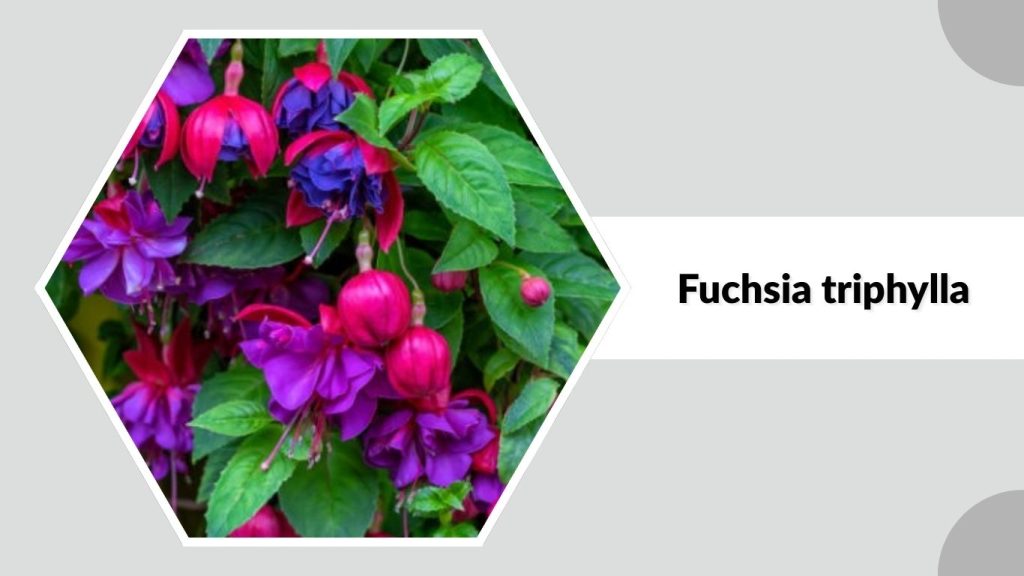
Fuchsia triphylla, often called the Firecracker Fuchsia, is admired for its slender, tubular flowers and strong fragrance. Native to the Caribbean and parts of South America, this species is ideal for attracting hummingbirds due to its nectar-rich blooms. Its elegant, pendulous flowers and climbing habit make it perfect for trellises, hanging baskets, and garden arches.
Identification
- Shrub or small climber, growing up to 1.5–2 meters
- Leaves: lance-shaped, dark green with smooth edges
- Flowers: tubular, long, bright red or pink sepals with purple corolla
- Stems: thin, flexible, often trailing
Habitat
Fuchsia triphylla thrives in partial shade with well-drained soil. It is commonly grown in subtropical gardens and can adapt to container planting, providing decorative vertical interest.
Blooming & Flowering
Blooms from late spring through fall, producing abundant, dangling flowers. Its fragrant blooms are highly attractive to hummingbirds and butterflies, enhancing garden biodiversity.
Care & Maintenance
Prefers regular watering and protection from strong winds. Light pruning after flowering encourages bushier growth and more abundant blooms in the next season.
3. Fuchsia boliviana
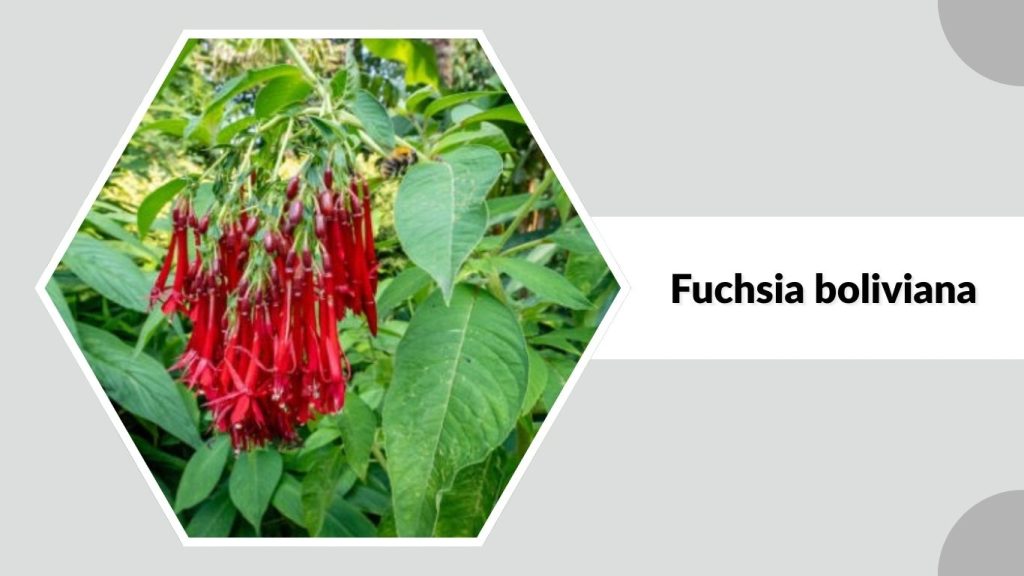
Fuchsia boliviana, commonly known as the Bolivian Fuchsia, is a striking species native to the mountainous regions of Bolivia and Peru. It is valued for its tall, upright growth and large, showy flowers that hang gracefully from the branches. This species is perfect for garden beds or borders where a dramatic vertical display is desired.
Identification
- Upright shrub, reaching 3–4 meters in height
- Leaves: large, ovate, deep green with slightly serrated edges
- Flowers: pendulous, tubular, bright red sepals with purple or pink corolla
- Stems: sturdy and woody, supporting tall flowering branches
Habitat
Thrives in well-drained, fertile soil with partial shade to full sun. It prefers cooler, mountainous climates but can be grown in temperate gardens with protection from extreme heat.
Blooming & Flowering
Fuchsia boliviana produces flowers mainly in summer and early autumn. Its large, showy blooms are excellent for attracting hummingbirds and add vibrant color to any garden.
Care & Maintenance
Requires consistent watering during dry periods and occasional pruning to remove dead or weak branches. Mulching helps retain soil moisture and protect roots during cooler months.
4. Fuchsia denticulata
Fuchsia denticulata, also known as the Tooth-leaved Fuchsia, is native to the Andean regions of South America. This species is admired for its delicate, elongated flowers and finely serrated leaves. Its compact growth habit and vibrant blossoms make it a favorite for both garden borders and container planting.
Identification
- Shrub, growing up to 1.5–2 meters in height
- Leaves: ovate with finely toothed (denticulated) edges, medium green
- Flowers: tubular, pendulous, red sepals with purple corolla
- Stems: slender, slightly woody, flexible
Habitat
Thrives in well-drained, humus-rich soil with partial shade. Commonly found in cooler, mountainous gardens or shaded woodland settings.
Blooming & Flowering
Blooms from late spring to early autumn, producing clusters of hanging flowers. Its flowers are rich in nectar, making it attractive to hummingbirds and pollinators.
Care & Maintenance
Requires regular watering and protection from strong winds. Pruning after flowering encourages new growth and maintains a compact, bushy shape.
5. Fuchsia coccinea
Fuchsia coccinea, commonly called the Scarlet Fuchsia, is native to Brazil and parts of South America. Known for its vibrant scarlet flowers, this species adds a dramatic splash of color to gardens and attracts hummingbirds and butterflies. Its upright growth habit makes it ideal for garden beds, borders, and containers.
Identification
- Upright shrub, typically 1.5–2 meters tall
- Leaves: ovate, bright green, smooth-edged
- Flowers: tubular, pendulous, vivid red sepals with pink or purple corolla
- Stems: woody at the base, flexible towards the tips
Habitat
Thrives in well-drained, fertile soil with partial shade. Prefers cooler, temperate climates but can adapt to subtropical regions with adequate moisture.
Blooming & Flowering
Flowers from late spring through autumn, producing numerous drooping, nectar-rich blooms. Its long flowering season makes it a popular choice for ornamental gardens.
Care & Maintenance
Requires regular watering, especially during dry periods, and light pruning to maintain shape. Mulching helps retain soil moisture and protect roots in cooler months.
6. Fuchsia excorticata
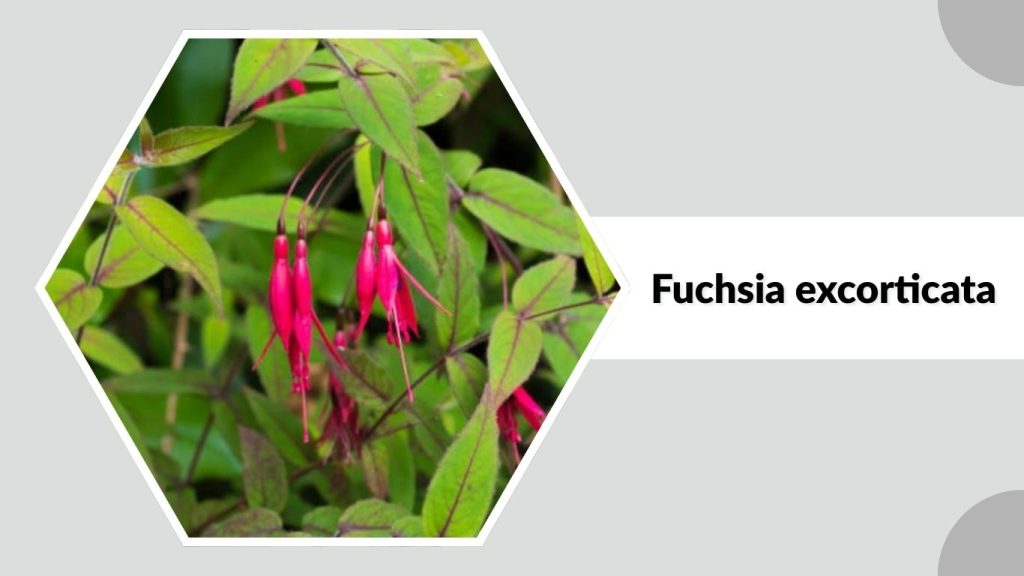
Fuchsia excorticata, commonly known as the Tree Fuchsia or Kotukutuku, is native to New Zealand. It is the largest species of Fuchsia, capable of growing as a small tree up to 10 meters tall. This species is notable for its peeling bark and large, pendulous flowers that attract native birds such as tui and bellbirds.
Identification
- Small tree, reaching 6–10 meters in height
- Leaves: large, ovate, medium to dark green, slightly serrated edges
- Flowers: pendulous, tubular, pink to red sepals with purple corolla
- Stems: thick, woody, with distinctive peeling bark
Habitat
Thrives in forests and river valleys with well-drained, fertile soil. Prefers partial shade but can tolerate full sun in temperate climates.
Blooming & Flowering
Blooms from late spring to summer, producing large clusters of nectar-rich flowers. Its long tubular flowers are highly attractive to nectar-feeding birds.
Care & Maintenance
Requires regular watering during dry spells. Pruning is minimal but can be done to maintain tree shape or remove dead branches. Mulching helps protect roots in cooler seasons.
7. Fuchsia thymifolia
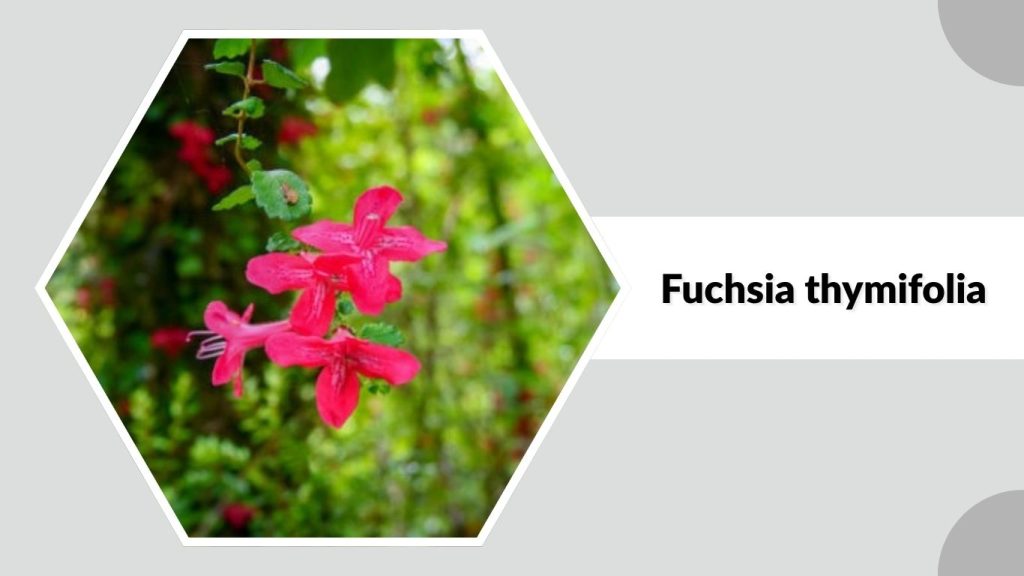
Fuchsia thymifolia, commonly called the Thyme-leaved Fuchsia, is a small, delicate species native to Central and South America. It is admired for its compact size, fine-textured leaves, and abundant small flowers, making it perfect for rock gardens, container planting, or as a border plant.
Identification
- Compact shrub, growing up to 0.5–1 meter in height
- Leaves: tiny, ovate, resembling thyme leaves, dark green
- Flowers: small, tubular, pendulous, red sepals with purple corolla
- Stems: slender, flexible, woody at the base
Habitat
Thrives in well-drained, humus-rich soil with partial shade. Prefers cooler, mountainous regions and adapts well to container cultivation.
Blooming & Flowering
Blooms from spring through late summer, producing numerous small, dangling flowers. Its nectar-rich blooms attract hummingbirds and small pollinators.
Care & Maintenance
Requires regular watering but does not tolerate waterlogged soil. Light pruning after flowering encourages bushier growth and more flowers in the next season.
8. Fuchsia microphylla
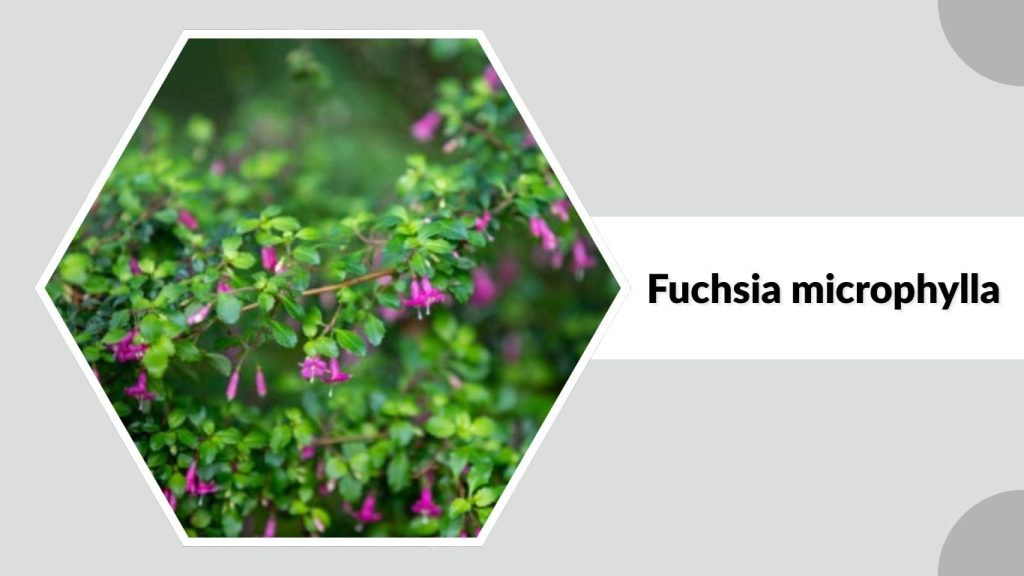
Fuchsia microphylla, commonly known as Small-leaved Fuchsia, is a low-growing, shrubby species native to Mexico and Central America. It is prized for its tiny leaves, delicate flowers, and adaptability to rock gardens or container planting. Its compact size makes it ideal for small gardens and patios.
Identification
- Shrub, typically 0.5–1 meter in height
- Leaves: very small, ovate, dark green, slightly toothed
- Flowers: tiny, pendulous, red sepals with purple corolla
- Stems: thin, woody at base, flexible upper branches
Habitat
Prefers well-drained, fertile soil and partial shade. Commonly grown in rock gardens, raised beds, or pots, and adapts well to temperate climates.
Blooming & Flowering
Blooms from late spring to early autumn, producing clusters of small, nectar-rich flowers that attract hummingbirds and pollinators.
Care & Maintenance
Requires moderate watering and protection from strong winds. Light pruning after flowering promotes bushier growth and enhances floral display.
9. Fuchsia arborescens
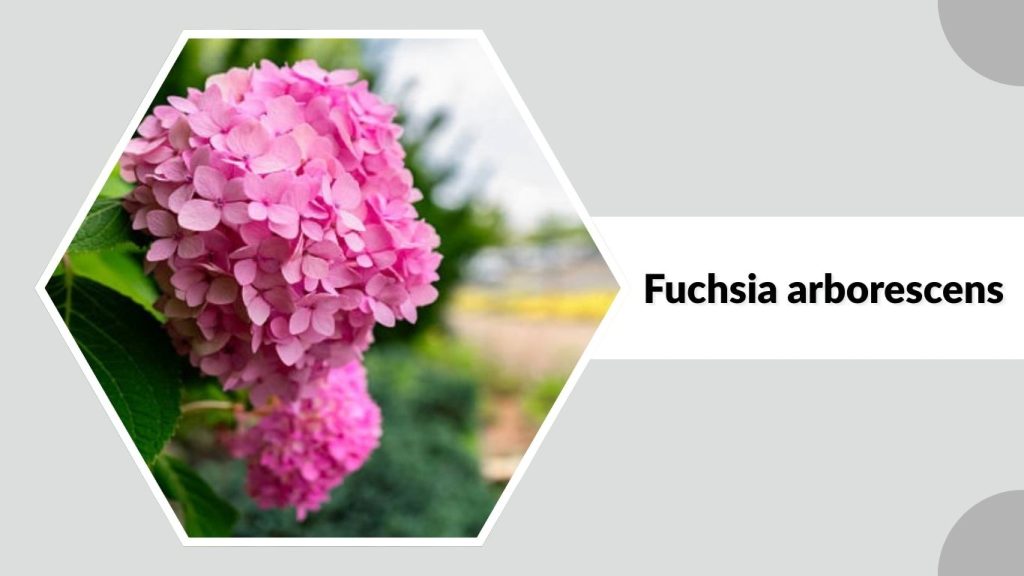
Fuchsia arborescens, commonly known as Tree Fuchsia, is a large, upright species native to the mountainous regions of Central and South America. It is admired for its tall growth habit, elegant drooping flowers, and ability to attract hummingbirds, making it a striking addition to gardens and natural landscapes.
Identification
- Upright shrub or small tree, growing up to 3–4 meters tall
- Leaves: ovate, medium to dark green, serrated edges
- Flowers: tubular, pendulous, red or pink sepals with purple corolla
- Stems: woody, sturdy, supporting tall flowering branches
Habitat
Thrives in well-drained, fertile soil with partial shade. Prefers cooler, mountainous climates and can be grown in temperate gardens with some protection from harsh sun.
Blooming & Flowering
Blooms from late spring through summer, producing clusters of hanging, nectar-rich flowers. Its tall, elegant blooms attract hummingbirds and butterflies.
Care & Maintenance
Requires consistent watering and occasional pruning to remove dead or weak branches. Mulching helps retain soil moisture and protect roots during cooler months.
10. Fuchsia procumbens
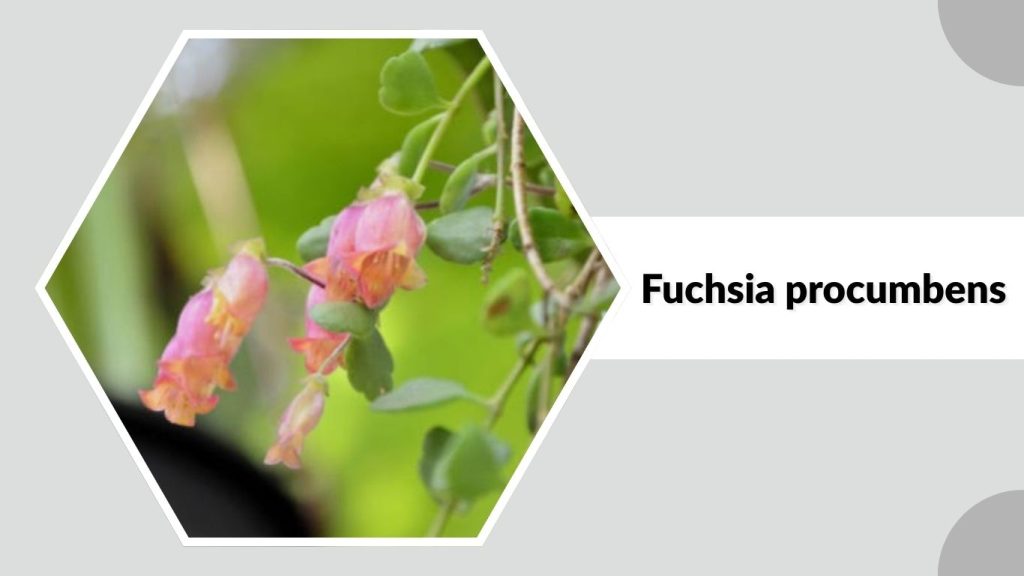
Fuchsia procumbens, commonly known as Creeping Fuchsia, is a low-growing, trailing species native to New Zealand. It is valued for its spreading habit, small leaves, and clusters of delicate, pendulous flowers. This species is ideal for ground cover, rock gardens, and container planting.
Identification
- Prostrate, trailing shrub, growing up to 0.3 meters in height
- Leaves: small, round to ovate, dark green
- Flowers: tiny, tubular, red sepals with purple corolla
- Stems: slender, creeping, rooting at nodes
Habitat
Thrives in well-drained, humus-rich soil with partial shade. Commonly used in rock gardens, as ground cover, or in hanging baskets where its trailing habit can be displayed.
Blooming & Flowering
Blooms from spring to late summer, producing numerous small, nectar-rich flowers. Its low-growing habit makes it suitable for attracting hummingbirds close to the ground.
Care & Maintenance
Requires regular watering but avoids waterlogged soil. Pruning is minimal but can be done to maintain shape and encourage denser growth.
11. Fuchsia splendens
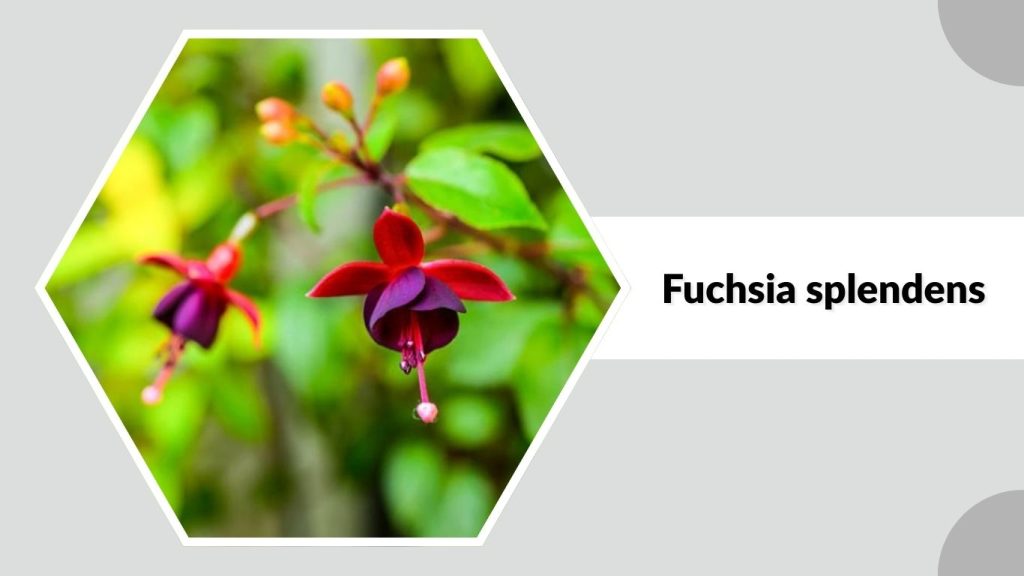
Fuchsia splendens, commonly known as Splendid Fuchsia, is a visually striking species native to Central and South America. It is admired for its vibrant, drooping flowers and medium-sized shrub form, making it a popular choice for ornamental gardens, hanging baskets, and borders.
Identification
- Shrub, growing up to 1.5–2 meters in height
- Leaves: ovate, medium green, slightly serrated edges
- Flowers: pendulous, tubular, bright red sepals with purple corolla
- Stems: woody at base, flexible upper branches
Habitat
Prefers well-drained, fertile soil with partial shade. Thrives in temperate climates and can adapt to container growth for patios or balconies.
Blooming & Flowering
Blooms from late spring to early autumn, producing abundant clusters of hanging flowers. Its nectar-rich blooms attract hummingbirds and butterflies, adding movement and life to gardens.
Care & Maintenance
Requires regular watering and occasional pruning to maintain shape. Mulching helps retain soil moisture and protects roots during cooler months.
12. Fuchsia glazioviana
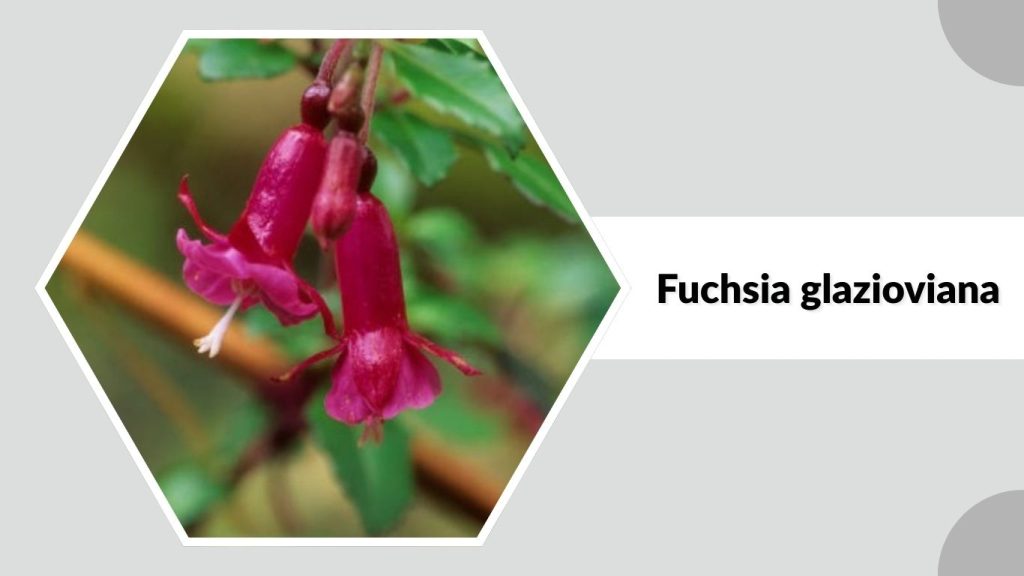
Fuchsia glazioviana, commonly called Glaziou’s Fuchsia, is a graceful shrub native to Brazil. Known for its long, pendulous flowers and vibrant colors, it is highly valued in ornamental gardens and containers. This species is ideal for attracting hummingbirds due to its nectar-rich blooms.
Identification
- Shrub, growing up to 1.5–2 meters in height
- Leaves: ovate, glossy green, slightly serrated
- Flowers: tubular, pendulous, bright red sepals with purple corolla
- Stems: woody at base, slender and flexible on upper branches
Habitat
Thrives in well-drained, fertile soil with partial shade. Prefers temperate to subtropical climates and is commonly grown in garden borders, hanging baskets, or patio containers.
Blooming & Flowering
Blooms from late spring through autumn, producing numerous hanging flowers. Its vivid flowers are highly attractive to hummingbirds and pollinating insects.
Care & Maintenance
Requires regular watering and light pruning after flowering to encourage bushier growth. Mulching helps retain soil moisture and protects roots during colder months.
13. Fuchsia procumbens var. alba
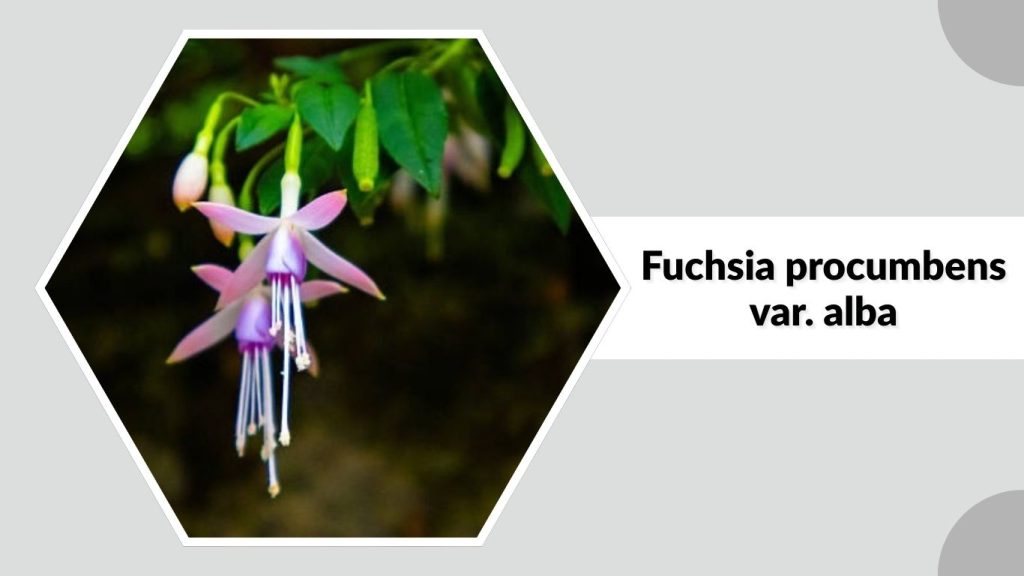
Fuchsia procumbens var. alba, commonly known as White Creeping Fuchsia, is a low-growing, trailing variety of Fuchsia procumbens. Native to New Zealand, it is admired for its delicate white flowers and spreading habit, making it ideal for ground cover, rock gardens, and container planting.
Identification
- Prostrate, trailing shrub, growing up to 0.3 meters in height
- Leaves: small, round, dark green
- Flowers: tiny, tubular, white sepals with pale purple corolla
- Stems: slender, creeping, rooting at nodes
Habitat
Thrives in well-drained, humus-rich soil with partial shade. Commonly used in rock gardens, as ground cover, or in hanging baskets where its trailing habit can be displayed.
Blooming & Flowering
Blooms from spring through late summer, producing numerous small, nectar-rich flowers. Its low-growing habit attracts hummingbirds close to the ground.
Care & Maintenance
Requires moderate watering, avoiding waterlogged soil. Minimal pruning is needed, but trimming encourages denser growth and more prolific flowering.
14. Fuchsia x hybrida
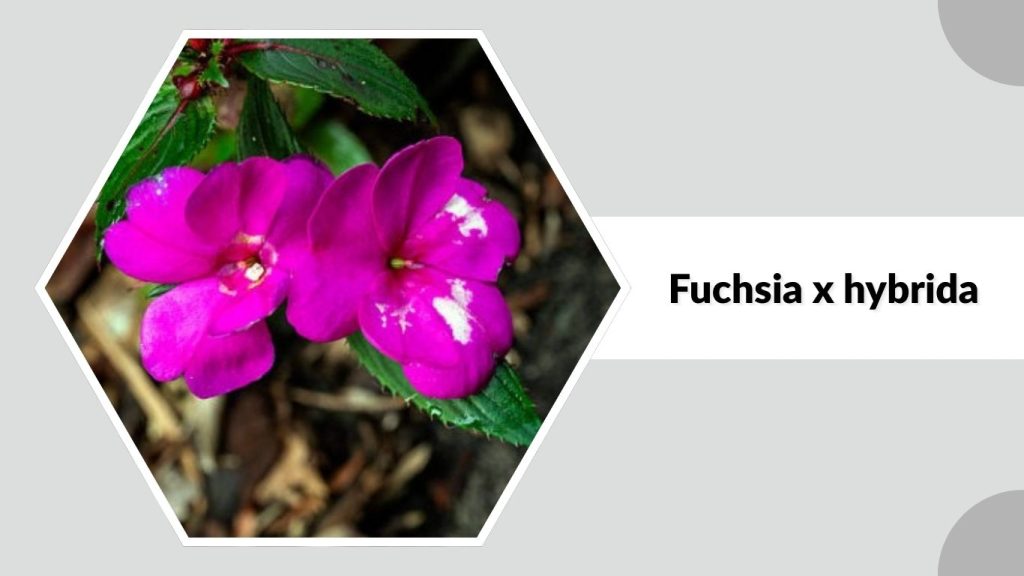
Fuchsia x hybrida, commonly known as Garden Fuchsia, is a widely cultivated hybrid valued for its vibrant, pendulous flowers and long blooming season. It is a popular choice for hanging baskets, containers, and garden borders, offering a wide variety of flower colors and forms.
Identification
- Shrub, typically 0.5–1.5 meters in height
- Leaves: ovate, medium green, slightly serrated edges
- Flowers: pendulous, tubular, colors vary including red, pink, purple, and white combinations
- Stems: woody at the base, flexible upper branches
Habitat
Thrives in well-drained, fertile soil with partial shade. Prefers temperate climates and is commonly grown in gardens, balconies, or patios.
Blooming & Flowering
Blooms from late spring through autumn, producing abundant clusters of hanging flowers. Its long flowering season makes it ideal for decorative purposes and attracting hummingbirds.
Care & Maintenance
Requires regular watering and light pruning after flowering to encourage bushier growth. Mulching helps retain soil moisture and protect roots during cooler months.
15. Fuchsia riccartonii
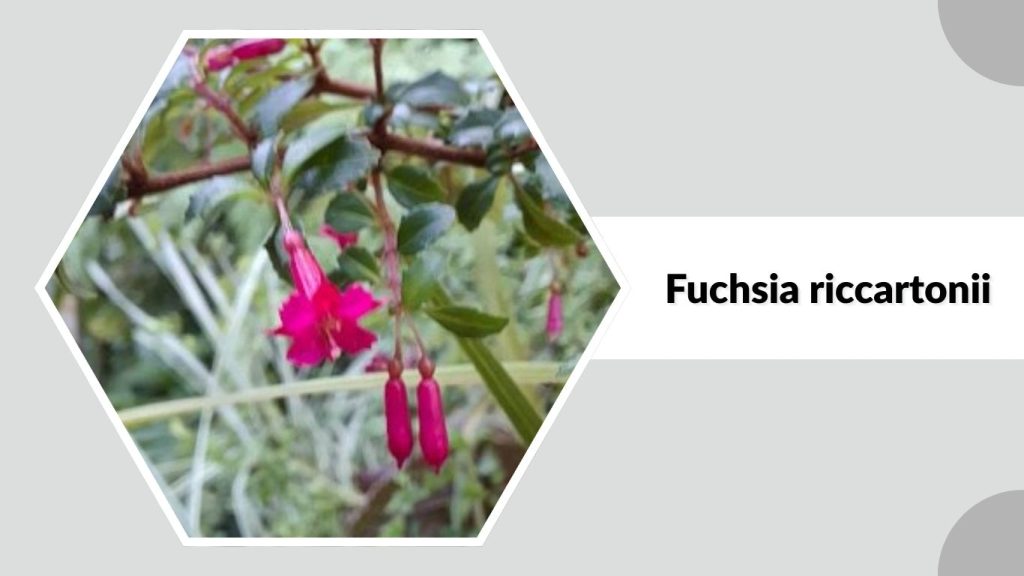
Fuchsia riccartonii, commonly known as Riccarton Fuchsia, is a hardy, evergreen species native to New Zealand. It is prized for its trailing habit, small green leaves, and abundant, vibrant flowers, making it ideal for hanging baskets, rockeries, and garden borders.
Identification
- Trailing shrub, growing up to 0.5–1 meter in height
- Leaves: small, ovate, dark green, slightly glossy
- Flowers: pendulous, tubular, bright red sepals with purple corolla
- Stems: slender, creeping, often rooting at nodes
Habitat
Thrives in well-drained, humus-rich soil with partial shade. It is commonly grown in rock gardens, containers, and hanging baskets, where its trailing habit can be showcased.
Blooming & Flowering
Blooms from spring to late summer, producing clusters of small, nectar-rich flowers. Its abundant blooms attract hummingbirds and other pollinators.
Care & Maintenance
Requires moderate watering and protection from strong winds. Light pruning encourages denser growth and more prolific flowering in the following season.
16. Fuchsia perscandens
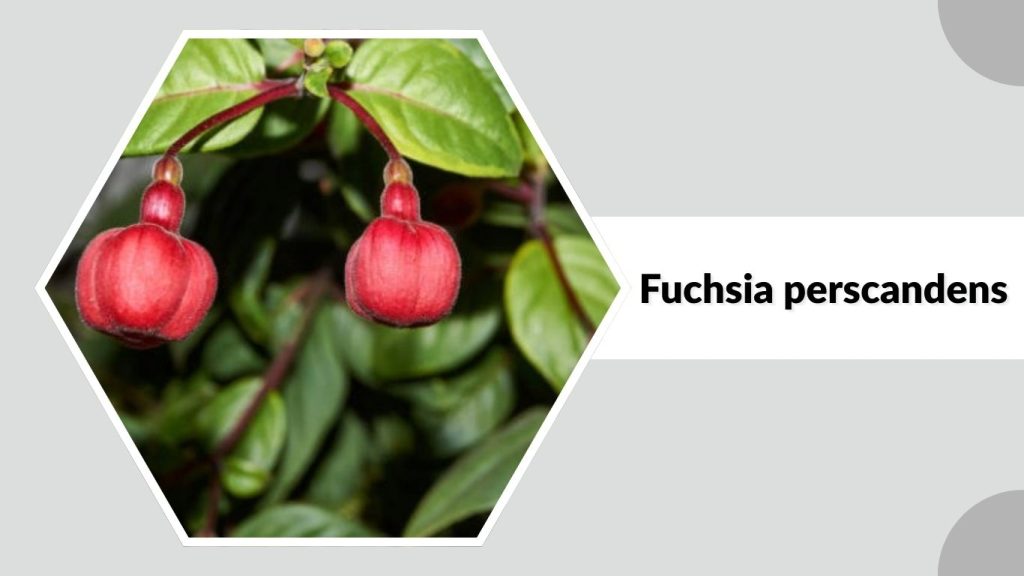
Fuchsia perscandens, commonly called Climbing Fuchsia, is a vigorous, trailing species native to New Zealand. It is known for its climbing or scrambling habit, small leaves, and abundant tubular flowers, making it perfect for trellises, fences, or as ground cover in gardens.
Identification
- Climbing or trailing shrub, growing up to 2–3 meters
- Leaves: small, ovate, medium green
- Flowers: tubular, pendulous, red sepals with purple corolla
- Stems: slender, flexible, capable of rooting at nodes
Habitat
Thrives in well-drained, humus-rich soil with partial shade. Commonly used to cover trellises, fences, or in hanging baskets where its trailing nature can be displayed.
Blooming & Flowering
Blooms from spring to late summer, producing numerous small, nectar-rich flowers. Its flowers attract hummingbirds and pollinating insects, enhancing garden biodiversity.
Care & Maintenance
Requires regular watering and support for climbing branches. Light pruning after flowering encourages bushier growth and more abundant blooms.
17. Fuchsia hatschbachii
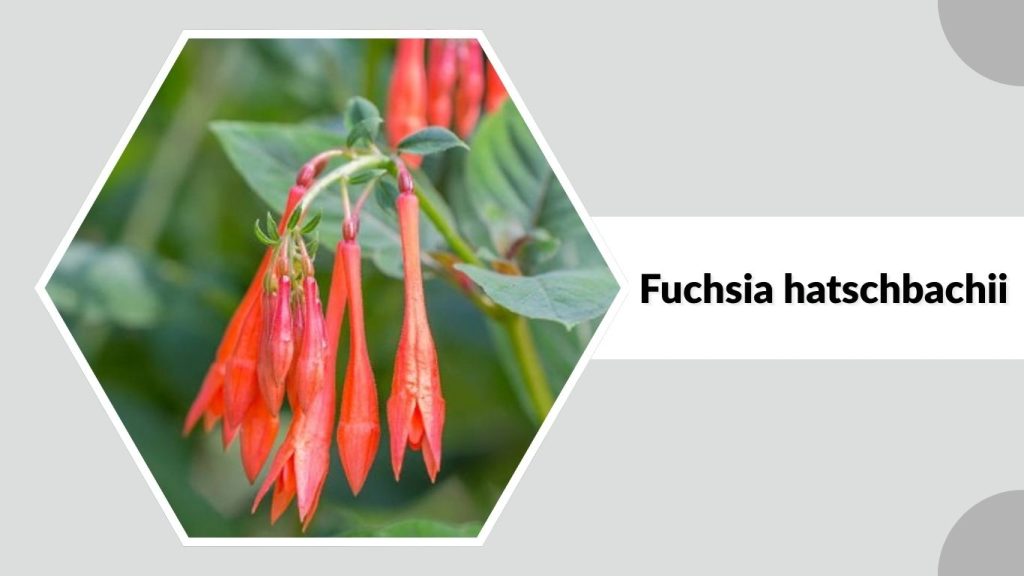
Fuchsia hatschbachii, commonly known as Hatschbach’s Fuchsia, is a rare and ornamental species native to Brazil. It is admired for its vibrant, pendulous flowers and medium-sized shrub form, making it a striking addition to gardens, borders, and containers.
Identification
- Shrub, growing up to 1–1.5 meters in height
- Leaves: ovate, dark green, slightly serrated edges
- Flowers: pendulous, tubular, bright red sepals with purple corolla
- Stems: woody at the base, flexible on upper branches
Habitat
Thrives in well-drained, fertile soil with partial shade. Prefers temperate to subtropical climates and is commonly cultivated in ornamental gardens and patios.
Blooming & Flowering
Blooms from late spring to early autumn, producing clusters of hanging, nectar-rich flowers. Its colorful flowers attract hummingbirds and other pollinators.
Care & Maintenance
Requires moderate watering and occasional pruning to maintain shape and encourage bushier growth. Mulching helps retain soil moisture and protect roots in cooler seasons.
18. Fuchsia loddigesii
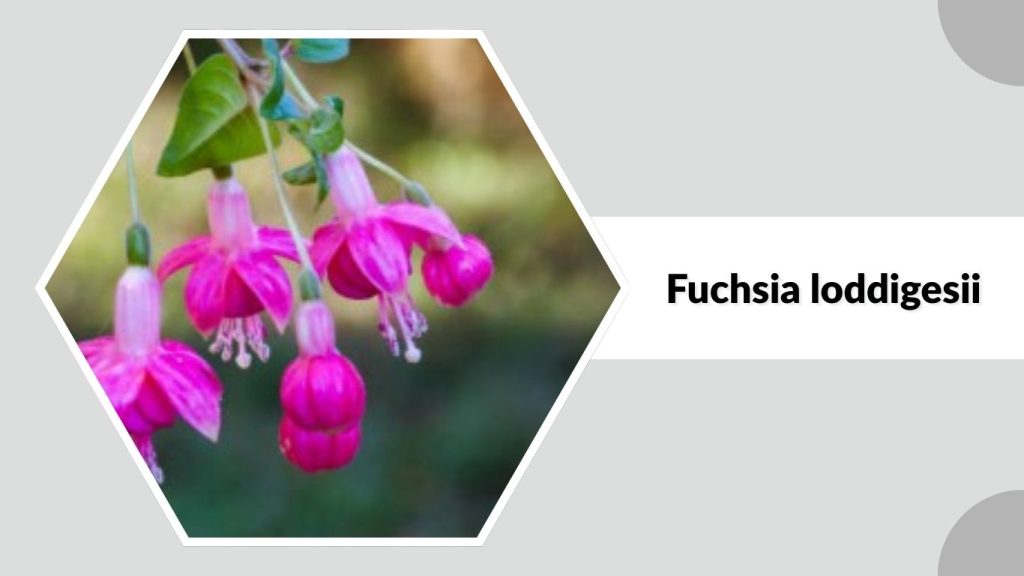
Fuchsia loddigesii, commonly known as Loddiges’ Fuchsia, is a compact and ornamental species native to Central America. It is valued for its delicate, pendulous flowers and bushy growth habit, making it ideal for containers, garden borders, and hanging baskets.
Identification
- Shrub, growing up to 1–1.5 meters in height
- Leaves: ovate, dark green, slightly serrated edges
- Flowers: tubular, pendulous, red sepals with purple corolla
- Stems: woody at the base, flexible on upper branches
Habitat
Thrives in well-drained, fertile soil with partial shade. Commonly cultivated in temperate gardens, patios, and balconies, and adapts well to container planting.
Blooming & Flowering
Blooms from late spring to early autumn, producing clusters of drooping, nectar-rich flowers. Its flowers attract hummingbirds and other pollinators, adding life and color to the garden.
Care & Maintenance
Requires regular watering and light pruning after flowering to promote bushier growth. Mulching helps retain soil moisture and protect roots during cooler months.
19. Fuchsia gesneriana
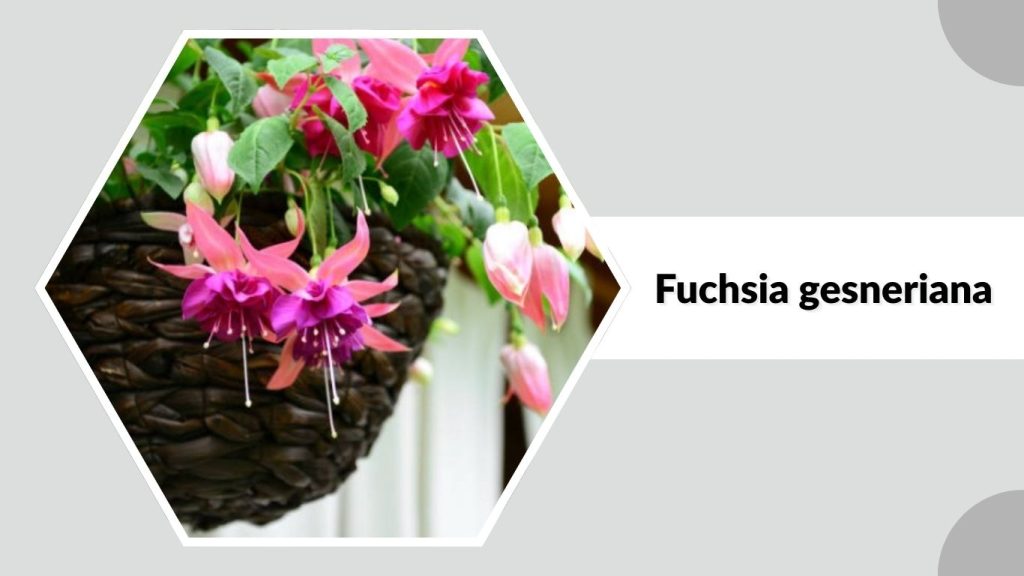
Fuchsia gesneriana, commonly known as Gesner’s Fuchsia, is a striking species native to Central America. It is admired for its pendulous, vibrant flowers and medium-sized shrub form, making it a popular choice for ornamental gardens, borders, and containers.
Identification
- Shrub, growing up to 1–1.5 meters in height
- Leaves: ovate, dark green, slightly serrated edges
- Flowers: tubular, pendulous, bright red sepals with purple corolla
- Stems: woody at the base, flexible on upper branches
Habitat
Thrives in well-drained, fertile soil with partial shade. Prefers temperate to subtropical climates and is commonly grown in garden borders, hanging baskets, and patios.
Blooming & Flowering
Blooms from late spring to early autumn, producing clusters of hanging, nectar-rich flowers. Its flowers attract hummingbirds and other pollinators, enhancing garden biodiversity.
Care & Maintenance
Requires moderate watering and occasional pruning to maintain shape and encourage denser growth. Mulching helps retain soil moisture and protect roots during cooler months.
20. Fuchsia paniculata
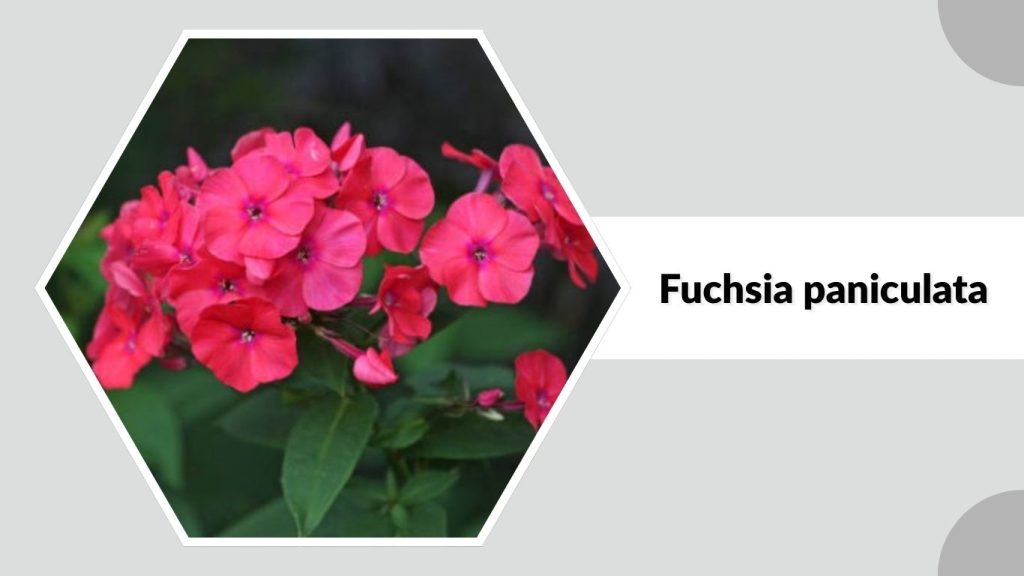
Fuchsia paniculata, commonly known as Panicle Fuchsia, is a large, upright species native to Central and South America. It is admired for its tall growth habit and showy clusters of pendulous flowers, making it ideal for garden borders, hedges, or as a focal point in landscapes.
Identification
- Upright shrub, growing up to 3–4 meters in height
- Leaves: ovate, dark green, slightly serrated edges
- Flowers: pendulous, tubular, red or pink sepals with purple corolla, arranged in panicles
- Stems: woody and sturdy, supporting large flowering clusters
Habitat
Thrives in well-drained, fertile soil with partial shade to full sun. Prefers temperate or subtropical climates and is commonly grown as an ornamental feature in gardens.
Blooming & Flowering
Blooms from late spring to early autumn, producing large, showy clusters of nectar-rich flowers. Its tall, dramatic blooms attract hummingbirds and other pollinators.
Care & Maintenance
Requires regular watering and occasional pruning to remove dead or weak branches. Mulching helps retain soil moisture and protect roots during cooler months.
21. Fuchsia macrostigma
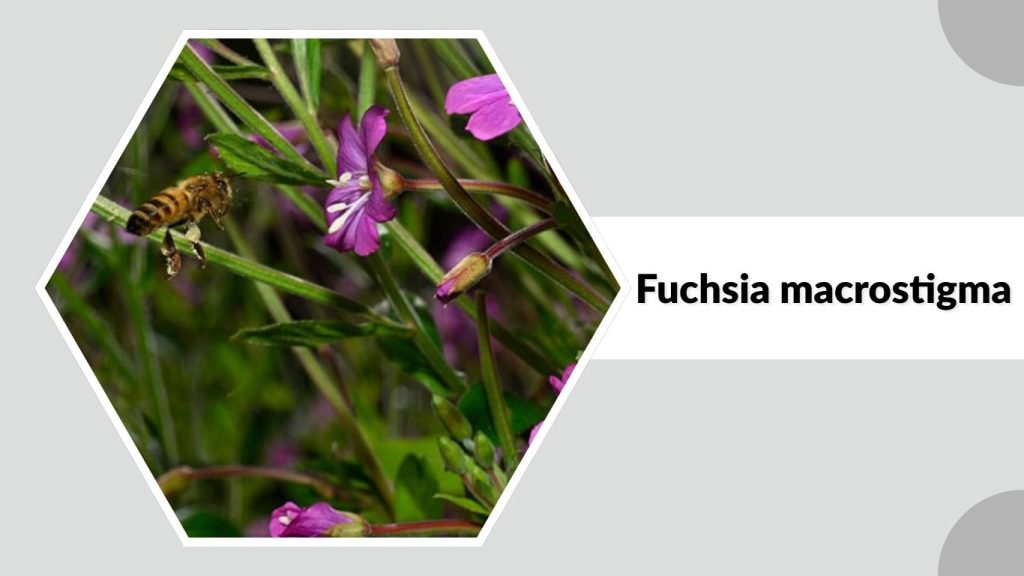
Fuchsia macrostigma, commonly known as Large-spotted Fuchsia, is a distinctive species native to South America. It is admired for its unique spotted flowers and upright shrub habit, making it an eye-catching addition to gardens and ornamental landscapes.
Identification
- Upright shrub, growing up to 1.5–2 meters in height
- Leaves: ovate, medium green, slightly serrated edges
- Flowers: pendulous, tubular, red sepals with purple corolla, often featuring dark spots
- Stems: woody at the base, slender and flexible on upper branches
Habitat
Thrives in well-drained, fertile soil with partial shade. Prefers temperate to subtropical climates and is commonly cultivated in gardens and container plantings.
Blooming & Flowering
Blooms from late spring through early autumn, producing numerous hanging flowers. Its nectar-rich blooms attract hummingbirds and other pollinators, enhancing garden biodiversity.
Care & Maintenance
Requires regular watering and light pruning after flowering to maintain a bushy, healthy shape. Mulching helps retain soil moisture and protect roots during cooler months.
22. Fuchsia x ‘Mrs Popple’
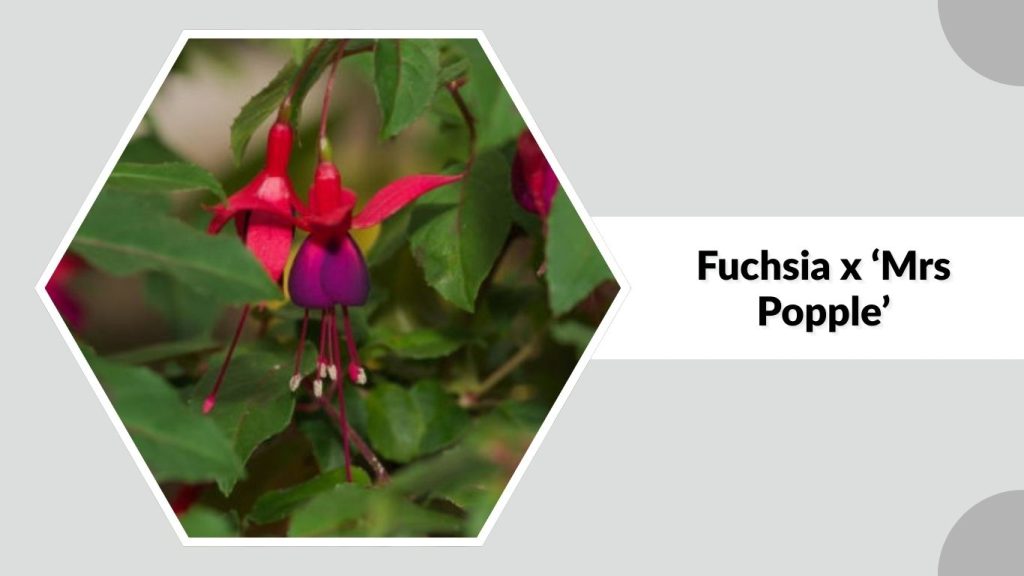
Fuchsia x ‘Mrs Popple’ is a popular hybrid cultivar known for its vibrant, pendulous flowers and compact, bushy growth habit. It is widely grown in gardens, hanging baskets, and containers for its long-lasting blooms and ornamental appeal.
Identification
- Compact shrub, growing up to 0.6–1 meter in height
- Leaves: ovate, medium green, slightly serrated edges
- Flowers: pendulous, tubular, bright pink sepals with purple corolla
- Stems: woody at the base, flexible on upper branches
Habitat
Thrives in well-drained, fertile soil with partial shade. Ideal for temperate gardens, patios, and balconies, and adapts well to container cultivation.
Blooming & Flowering
Blooms from late spring through autumn, producing abundant clusters of hanging flowers. Its nectar-rich blooms attract hummingbirds and other pollinators, enhancing garden activity.
Care & Maintenance
Requires regular watering and light pruning after flowering to encourage bushier growth and maintain shape. Mulching helps retain soil moisture and protect roots during colder seasons.
23. Fuchsia x ‘Dollar Princess’
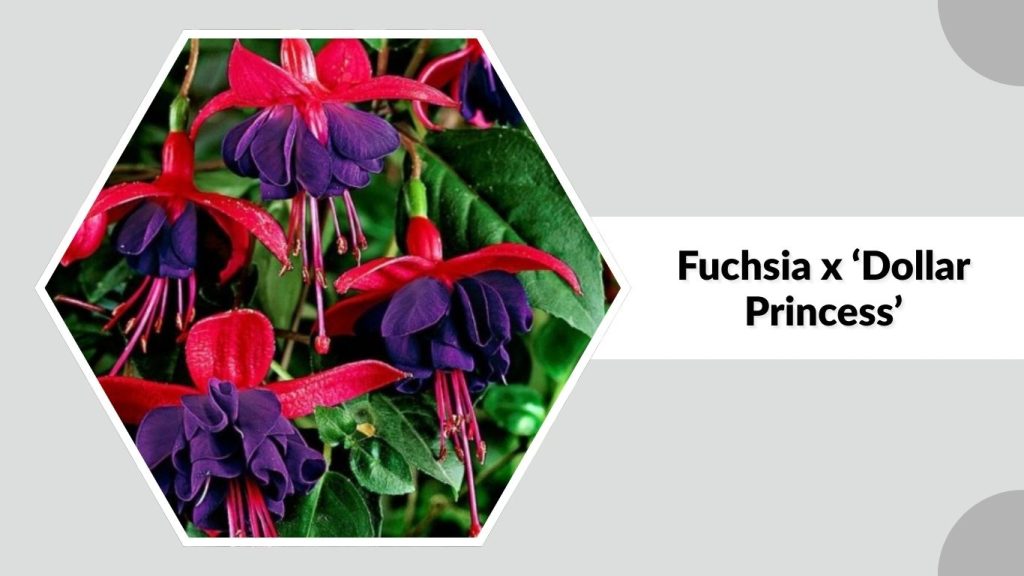
Fuchsia x ‘Dollar Princess’ is a popular hybrid cultivar celebrated for its striking, bi-colored pendulous flowers and compact, bushy habit. It is widely used in hanging baskets, containers, and garden borders for its vibrant and long-lasting blooms.
Identification
- Compact shrub, growing up to 0.6–1 meter in height
- Leaves: ovate, medium green, slightly serrated edges
- Flowers: pendulous, tubular, pink sepals with purple corolla
- Stems: woody at base, flexible on upper branches
Habitat
Thrives in well-drained, fertile soil with partial shade. Suitable for temperate gardens, patios, balconies, and container planting, where its decorative blooms can be displayed.
Blooming & Flowering
Blooms from late spring to autumn, producing abundant, dangling, nectar-rich flowers. Its long flowering season attracts hummingbirds and pollinators.
Care & Maintenance
Requires moderate watering and occasional light pruning to maintain a bushy, healthy shape. Mulching helps retain soil moisture and protects roots during cooler months.
24. Fuchsia x ‘Riccartonii Alba’
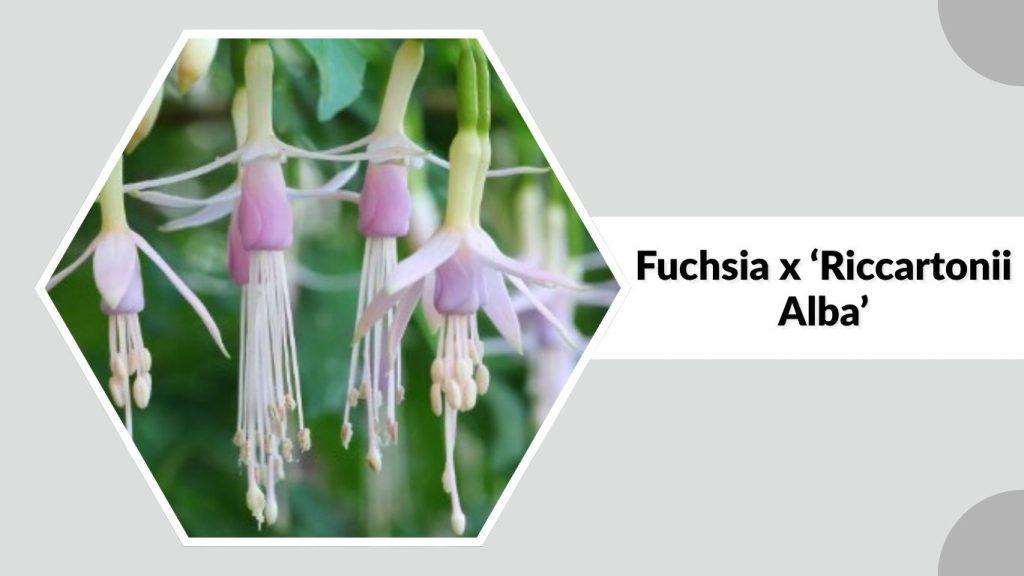
Fuchsia x ‘Riccartonii Alba’ is a popular hybrid cultivar known for its trailing habit and elegant white pendulous flowers. It is widely used in hanging baskets, containers, and garden borders for its delicate blooms and ornamental appeal.
Identification
- Trailing shrub, growing up to 0.5–1 meter in height
- Leaves: small, ovate, dark green
- Flowers: pendulous, tubular, white sepals with pale purple corolla
- Stems: slender, creeping, flexible, often rooting at nodes
Habitat
Thrives in well-drained, fertile soil with partial shade. Ideal for temperate gardens, patios, balconies, and containers where its trailing habit can be showcased.
Blooming & Flowering
Blooms from spring through late summer, producing numerous hanging, nectar-rich flowers. Its flowers attract hummingbirds and small pollinators.
Care & Maintenance
Requires regular watering and minimal pruning to encourage denser growth. Mulching helps retain soil moisture and protect roots in cooler months.
25. Fuchsia x ‘Swingtime’
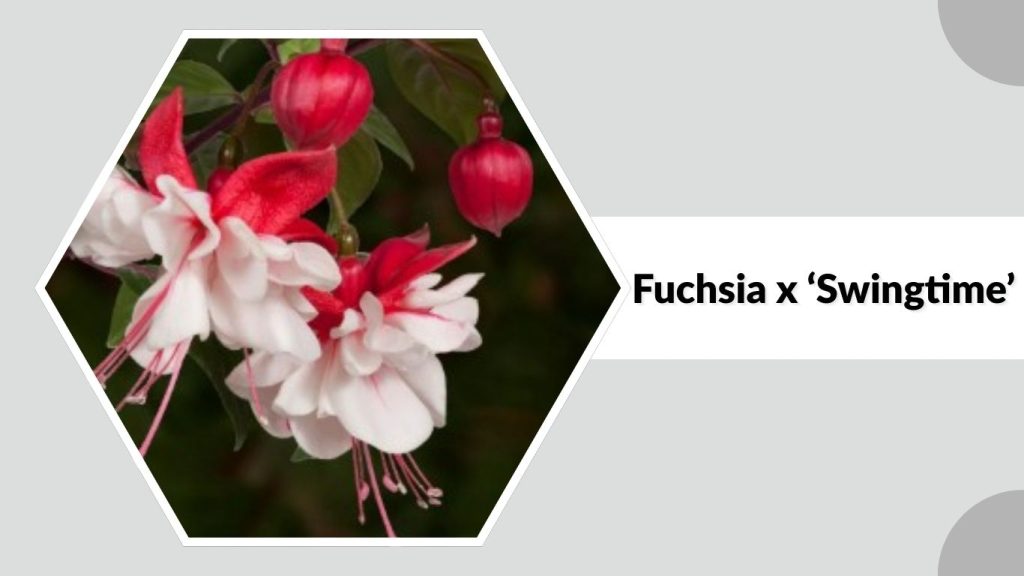
Fuchsia x ‘Swingtime’ is a vibrant hybrid cultivar admired for its pendulous, two-toned flowers and compact, bushy growth. It is commonly grown in hanging baskets, containers, and garden borders, offering long-lasting color and ornamental appeal.
Identification
- Compact shrub, growing up to 0.6–1 meter in height
- Leaves: ovate, medium green, slightly serrated edges
- Flowers: pendulous, tubular, pink sepals with purple corolla
- Stems: woody at base, flexible on upper branches
Habitat
Thrives in well-drained, fertile soil with partial shade. Suitable for temperate gardens, patios, balconies, and container cultivation.
Blooming & Flowering
Blooms from late spring through autumn, producing abundant, hanging, nectar-rich flowers. Its long flowering season attracts hummingbirds and other pollinators.
Care & Maintenance
Requires regular watering and light pruning after flowering to encourage bushier growth. Mulching helps retain soil moisture and protect roots during colder months.
26. Fuchsia x ‘Gartenmeister Bonstedt’
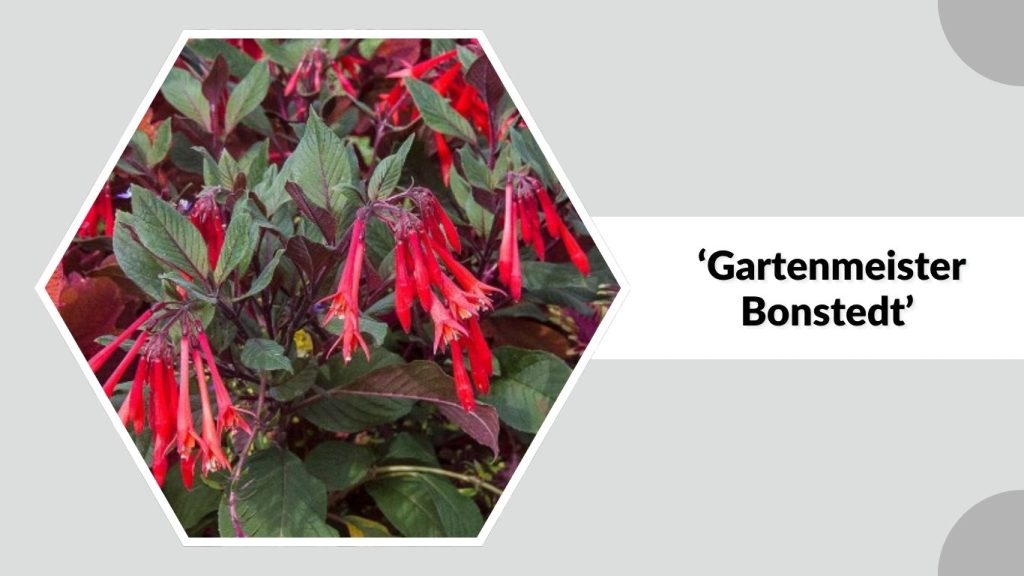
Fuchsia x ‘Gartenmeister Bonstedt’ is a robust hybrid cultivar known for its large, pendulous flowers and upright, bushy growth habit. It is widely cultivated in gardens, borders, and containers for its striking appearance and long flowering season.
Identification
- Upright shrub, growing up to 1–1.5 meters in height
- Leaves: ovate, dark green, slightly serrated edges
- Flowers: pendulous, tubular, deep red sepals with violet-purple corolla
- Stems: woody at base, flexible on upper branches
Habitat
Thrives in well-drained, fertile soil with partial shade. Ideal for temperate gardens, patios, and container planting, where its large, dramatic blooms can be showcased.
Blooming & Flowering
Blooms from late spring to early autumn, producing abundant, hanging, nectar-rich flowers. Its long flowering period makes it a favorite for attracting hummingbirds and pollinators.
Care & Maintenance
Requires regular watering and occasional light pruning to maintain a bushy, healthy shape. Mulching helps retain soil moisture and protects roots during cooler months.
FAQs
What is the best soil for growing Fuchsia flowers?
Fuchsia flowers thrive in well-drained, fertile soil rich in organic matter. A slightly acidic to neutral pH is ideal. Mixing garden soil with compost or peat helps retain moisture while ensuring proper drainage, which is crucial for healthy root development and vibrant flowering.
How often should I water Fuchsia plants?
Fuchsia plants need consistent watering, especially during dry periods. Soil should be kept moist but not waterlogged. Container-grown Fuchsias may require daily watering in hot weather, while garden-planted shrubs typically need water 2–3 times per week.
Do Fuchsia flowers attract hummingbirds?
Yes, Fuchsia flowers are highly attractive to hummingbirds due to their tubular, nectar-rich blooms. The pendulous flowers provide easy access for hummingbirds, making Fuchsias a popular choice for pollinator-friendly gardens.
How can I encourage more blooms on Fuchsia plants?
Regular pruning after flowering helps maintain a bushy shape and encourages new growth, leading to more blooms. Providing partial shade, proper watering, and fertilization with a balanced liquid fertilizer also supports abundant flowering.
Can Fuchsia plants survive frost or cold climates?
Some hardy species, like Fuchsia magellanica, can tolerate mild frost. However, most Fuchsias prefer temperate climates and may need protection from harsh frost. Container plants can be moved indoors or to sheltered areas during winter to prevent damage.