





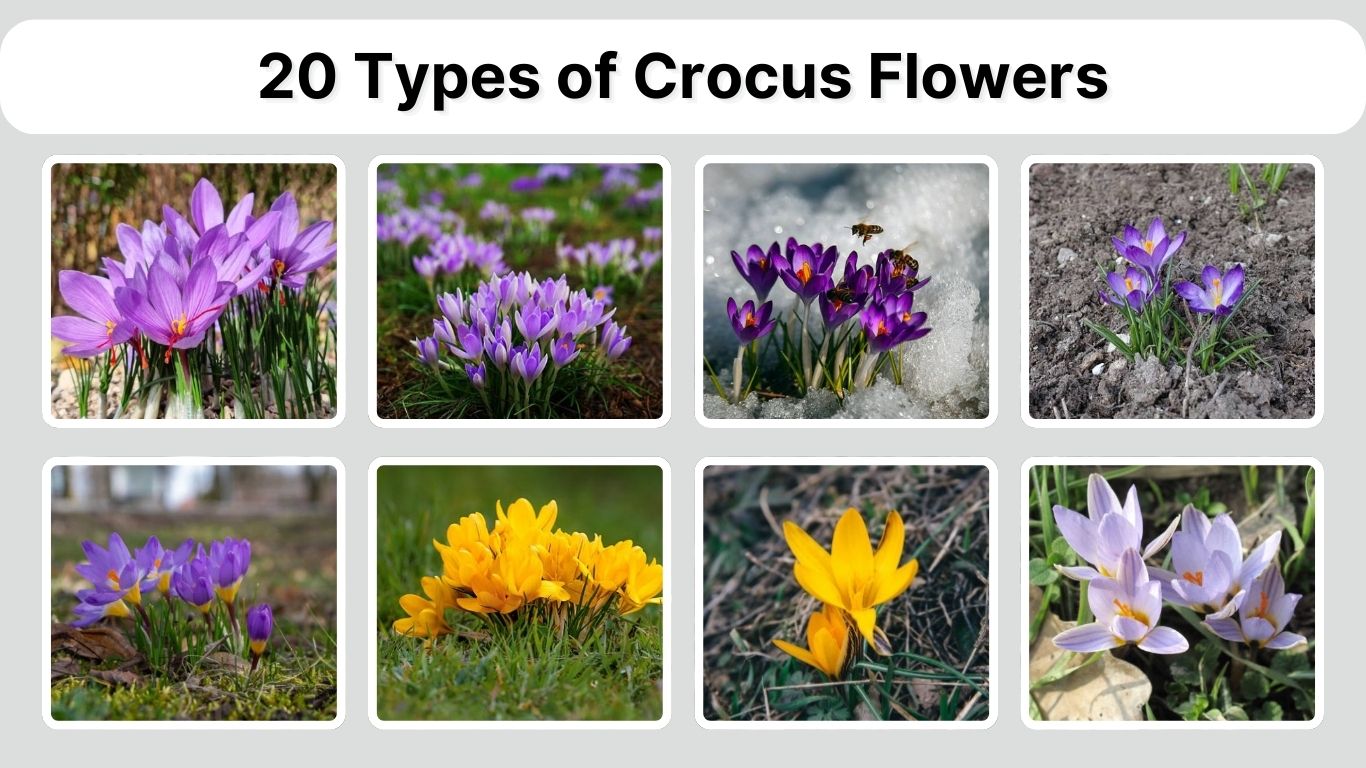
Crocus flowers are among the earliest and most beloved blooms in gardens, admired for their delicate cup-shaped petals and bright, cheerful colors. Belonging to the iris family, these small but striking plants grow from corms and appear in both spring and autumn, depending on the species. From golden yellow and pure white to soft lavender and deep violet, crocuses bring life to lawns, borders, and rock gardens, often flowering when little else is in bloom.
1. Crocus sativus (Saffron Crocus)

Crocus sativus, commonly known as the saffron crocus, is a small, autumn-flowering crocus famous worldwide for producing saffron—the most valuable spice by weight. It blooms in fall with delicate purple flowers and vivid red stigmas. Native to Southwest Asia and widely cultivated in Iran, India, and the Mediterranean region, this crocus is prized for both ornamental beauty and culinary importance.
Identification
- Small perennial bulb (corm-based) plant
- Pale to deep violet-purple petals
- Bright red, thread-like stigmas (saffron)
- Narrow, grass-like green leaves with a pale stripe
- Blooms in autumn instead of spring
Habitat
Crocus sativus prefers dry, sunny locations with well-drained soil. It grows best in Mediterranean-type climates where summers are hot and dry and winters are cool. Cultivated fields, garden beds, and light slopes are typical habitats for this species.
Blooming Season
Unlike many crocus species, saffron crocus blooms in autumn, usually from October to November. Flowers emerge before or alongside the leaves, creating a striking display of purple blossoms when most other garden plants are fading.
Uses and Importance
This species is cultivated almost entirely for its stigmas, which are hand-harvested and dried to make saffron. Saffron is widely used in cooking, traditional medicine, cosmetics, and natural dyes, making Crocus sativus one of the most economically important crocus species.
2. Crocus vernus (Spring Crocus)

Crocus vernus, commonly called the spring crocus, is one of the most popular early-blooming crocus species grown in gardens worldwide. It is best known for its large, cup-shaped flowers that appear in late winter to early spring, often pushing through snow. Native to the Alps and parts of southern Europe, this crocus is widely cultivated for bright seasonal color.
Identification
- Medium-sized corm-forming perennial
- Large, goblet-shaped flowers
- Colors include purple, violet, white, and striped forms
- Bright orange or yellow central stamens
- Narrow green leaves with a pale central stripe
Habitat
Crocus vernus naturally grows in alpine meadows, open woodlands, and grassy slopes. In cultivation, it thrives in gardens, lawns, borders, and rock gardens. It prefers full sun to light shade and well-drained soil that stays slightly moist during the growing season.
Blooming Season
Spring crocus blooms very early in the year, usually from February to March. It is often among the first flowers to appear after winter, making it a classic symbol of the changing season and early pollinator activity.
Garden Value
This species is highly valued for ornamental gardening. It naturalizes easily, spreads over time, and creates colorful carpets in lawns and flower beds. Its early blooms provide an important nectar source for bees when few other flowers are available.
3. Crocus chrysanthus (Snow Crocus)
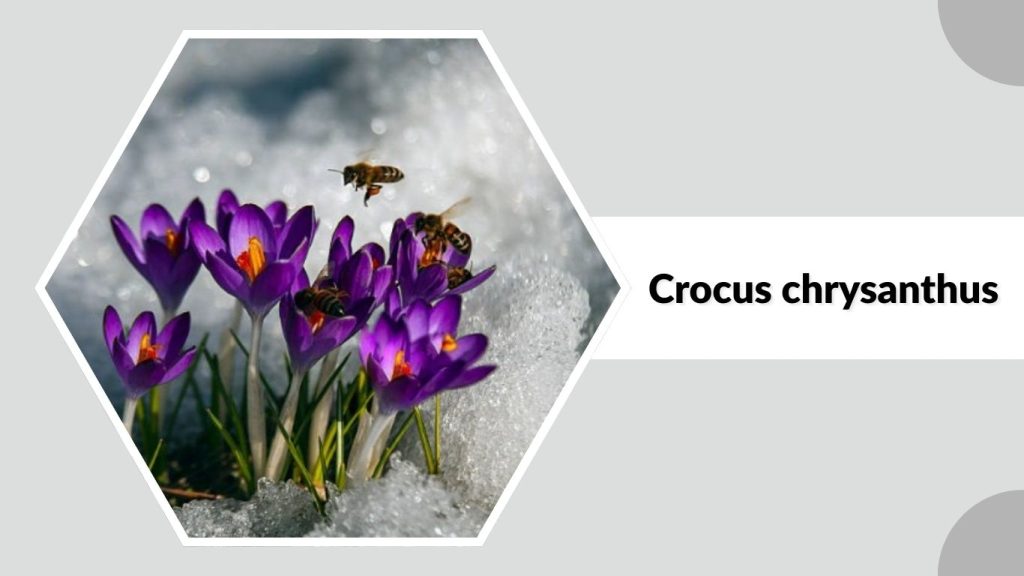
Crocus chrysanthus, often called the snow crocus or golden crocus, is a small, early-blooming species admired for its bright colors and delicate form. It is native to southeastern Europe and the Balkans, where it grows in open woodland and rocky slopes. This crocus is especially valued for flowering very early, sometimes while snow is still on the ground.
Identification
- Small, low-growing corm plant
- Star-shaped flowers that open wide in sunlight
- Commonly golden yellow, but also pale blue or striped forms
- Darker markings at the base of petals
- Thin green leaves with a pale central stripe
Habitat
Crocus chrysanthus grows naturally in grassy clearings, rocky hillsides, and woodland edges. In gardens, it performs well in rock gardens, borders, and lawns. It prefers full sun to light shade and well-drained soil, especially in areas with cool winters.
Blooming Season
This species blooms very early in the year, often from January to February. Its ability to flower through cold weather makes it one of the first true signs of spring in many temperate regions.
Garden Importance
Snow crocus is popular for mass planting because it multiplies readily and forms colorful drifts. Its early flowers are also valuable for attracting the first emerging pollinators of the season.
4. Crocus tommasinianus (Tommies Crocus)
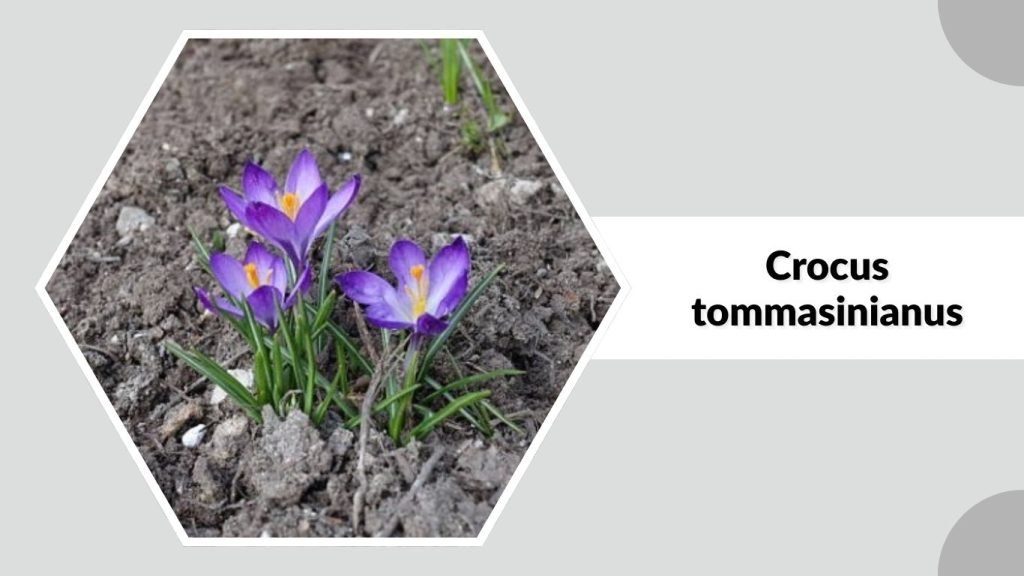
Crocus tommasinianus, commonly known as Tommies crocus, is a delicate, early-flowering crocus species loved for its soft lavender tones and reliable naturalizing habit. Native to southeastern Europe, especially the Balkans, it is one of the earliest crocuses to bloom and is especially popular in lawns and woodland gardens.
Identification
- Small, slender corm-forming perennial
- Pale lavender to lilac flowers
- Narrow, pointed petals that open star-shaped
- Bright yellow to orange stamens
- Thin leaves with a central silver stripe
Habitat
In the wild, Crocus tommasinianus grows in open woodlands, grassy slopes, and scrubby hillsides. In cultivation, it thrives in lawns, under trees, borders, and rock gardens. It prefers well-drained soil and does well in both full sun and light shade.
Blooming Season
Tommies crocus blooms very early, usually from January to February. It often flowers before larger crocus species, creating early color when most plants are still dormant.
Garden Value
This species is especially valued for its resistance to squirrels and rodents, which are less likely to dig up its corms. It spreads easily and forms soft carpets of color over time.
5. Crocus sieberi (Sieber’s Crocus)
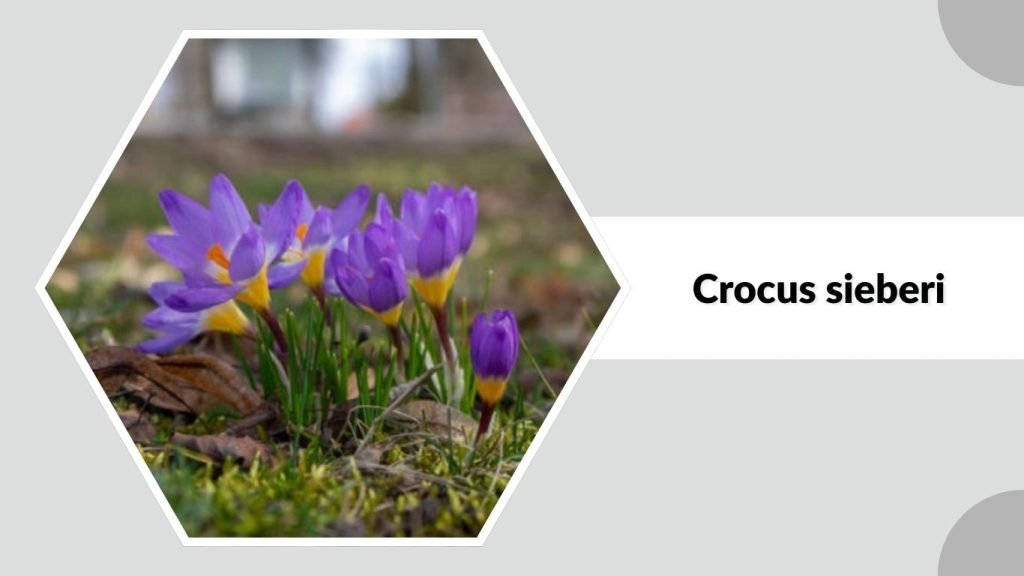
Crocus sieberi, known as Sieber’s crocus, is a charming spring-flowering species recognized for its soft pastel colors and contrasting yellow throat. It is native to Greece and surrounding regions, where it grows in mountainous meadows and open woodlands. Many cultivated varieties come from this species due to its beauty and adaptability.
Identification
- Small corm-forming perennial
- Pale lilac, lavender, or bluish petals
- Bright yellow throat and orange stamens
- Often darker markings at the petal base
- Narrow green leaves with a pale mid-stripe
Habitat
In nature, Crocus sieberi grows in alpine meadows, grassy hillsides, and open forest areas. In gardens, it performs well in rock gardens, borders, containers, and naturalized lawns. It prefers sunny locations with well-drained, slightly gritty soil.
Blooming Season
This crocus blooms in late winter to early spring, typically from February to March. Flowers open widely in sunlight and close at night or during cloudy weather.
Ornamental Use
Crocus sieberi is prized for its soft color tones and strong garden performance. It multiplies well and is often used in mixed spring bulb plantings to create early-season displays.
6. Crocus flavus (Golden Crocus)

Crocus flavus, commonly called the golden crocus, is a bright, cheerful species known for its rich yellow flowers and early spring bloom. It is native to southeastern Europe and parts of Turkey, where it naturally grows on rocky slopes and open grasslands. This crocus is widely used in gardens for its strong color and easy care.
Identification
- Low-growing, corm-based perennial
- Deep golden-yellow, cup-shaped flowers
- Darker markings on the outer petals
- Bright orange reproductive parts
- Narrow, glossy green leaves with a pale stripe
Habitat
In the wild, Crocus flavus grows in open, sunny places such as rocky hillsides and dry meadows. In cultivation, it adapts well to borders, lawns, containers, and rock gardens. It prefers full sun and well-drained soil.
Blooming Season
Golden crocus blooms in late winter to early spring, usually from February to March. Its vivid yellow flowers are especially noticeable in early-season landscapes when few other plants are in bloom.
Garden Appeal
This species is popular for mass planting because of its bright color, strong growth, and ability to naturalize. It provides an excellent early nectar source for bees.
7. Crocus angustifolius (Cloth of Gold Crocus)
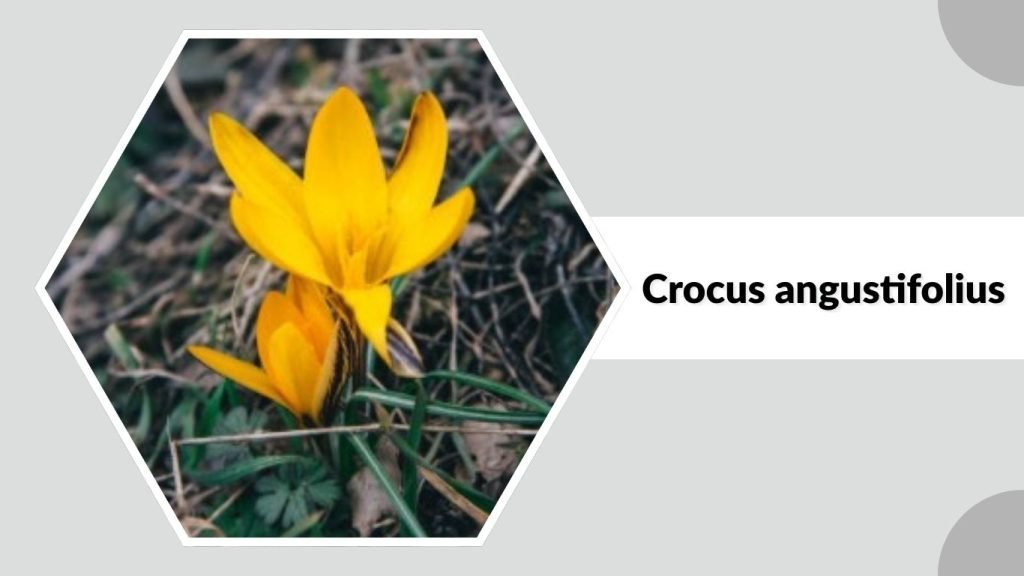
Crocus angustifolius, often called the cloth of gold crocus, is a striking early-blooming species famous for its brilliant golden-yellow flowers marked with dark bronze or brown striping. Native to southeastern Europe and parts of Turkey, this crocus brings vivid color to late winter and early spring gardens and is especially admired for its bold petal patterns.
Identification
- Small corm-forming perennial
- Bright golden-yellow flowers
- Distinct dark brown or bronze stripes on outer petals
- Orange-yellow stamens and style
- Narrow, grass-like leaves with a pale central stripe
Habitat
In the wild, Crocus angustifolius grows on rocky hillsides, open grasslands, and light woodland edges. In cultivation, it thrives in rock gardens, borders, and sunny lawns. It prefers full sun and well-drained soil, especially in areas with cool winters and dry summers.
Blooming Season
This species blooms in late winter to very early spring, commonly from February to March. Flowers open wide on sunny days and close during cold, cloudy, or nighttime conditions.
Garden Use
The cloth of gold crocus is valued for its intense color and decorative striping. It naturalizes well and is often planted in groups to create bright, eye-catching patches of early-season color.
8. Crocus biflorus (Scotch Crocus)
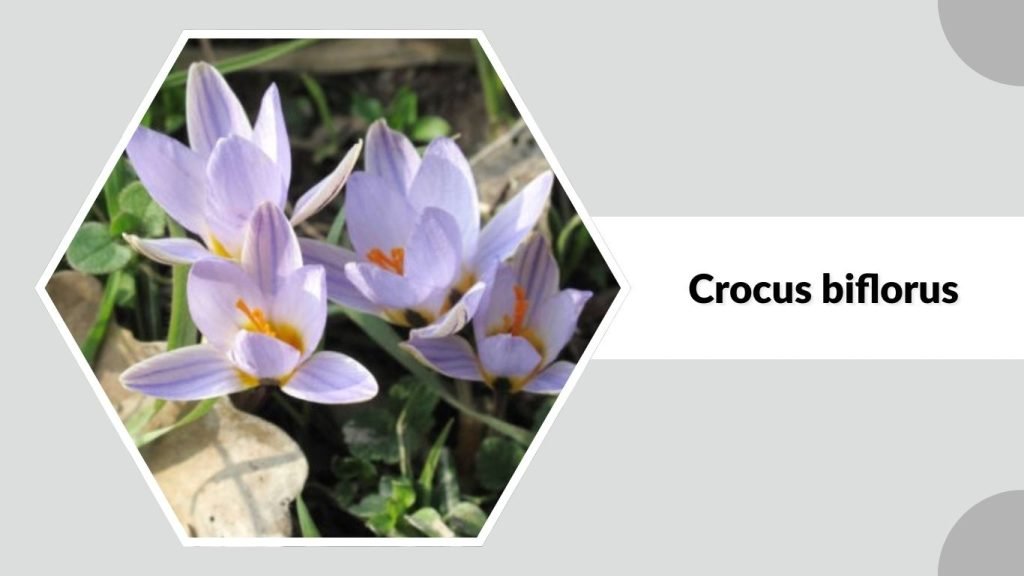
Crocus biflorus, commonly known as the Scotch crocus, is a highly variable species admired for its delicate flowers often marked with stripes, veining, or contrasting throats. It is native to southeastern Europe, the Caucasus, and parts of the Middle East, where it grows in open woodlands and grassy slopes.
Identification
- Small, corm-based perennial
- Usually white, pale lilac, or light purple flowers
- Often shows purple, blue, or yellow markings
- Bright yellow or orange throat
- Narrow leaves with a pale central stripe
Habitat
In nature, Crocus biflorus grows in meadows, light forests, and rocky grasslands. In gardens, it performs well in lawns, borders, containers, and rock gardens. It prefers sunny to lightly shaded areas with well-drained soil.
Blooming Season
This crocus blooms in late winter to early spring, typically from February to March. Its flowers are quick to open in sunlight, creating colorful displays even on cool days.
Ornamental Value
Crocus biflorus is valued for its wide range of flower forms and colors. Many popular garden varieties come from this species, making it a favorite for collectors and landscape planting.
9. Crocus speciosus (Showy Crocus)
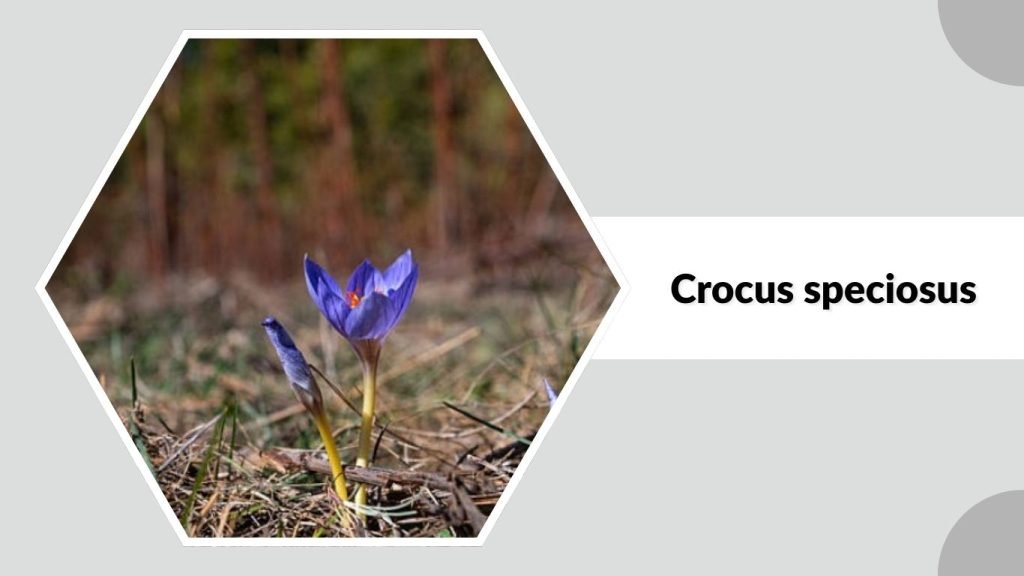
Crocus speciosus, often called the showy crocus, is an autumn-flowering species admired for its large, elegant blooms and rich violet tones. Native to southeastern Europe and western Asia, it grows naturally in open woods and mountain meadows. This crocus is especially valued for bringing color to gardens when most summer flowers have finished.
Identification
- Medium-sized, corm-forming perennial
- Large, lilac to deep violet flowers
- Prominent bright orange stigmas and yellow stamens
- Broad petals with fine veining
- Narrow green leaves that appear after flowering
Habitat
In the wild, Crocus speciosus grows in woodland clearings, grassy slopes, and mountainous regions. In gardens, it thrives in borders, rock gardens, and under deciduous trees. It prefers sunny to lightly shaded sites with well-drained soil.
Blooming Season
This species blooms in autumn, usually from September to October. Flowers often emerge before the leaves, creating a clean, striking floral display.
Garden Interest
Showy crocus is popular for fall gardens, where its large blossoms provide late-season nectar for pollinators and visual interest when few other bulbs are flowering.
10. Crocus pulchellus (Autumn Crocus)
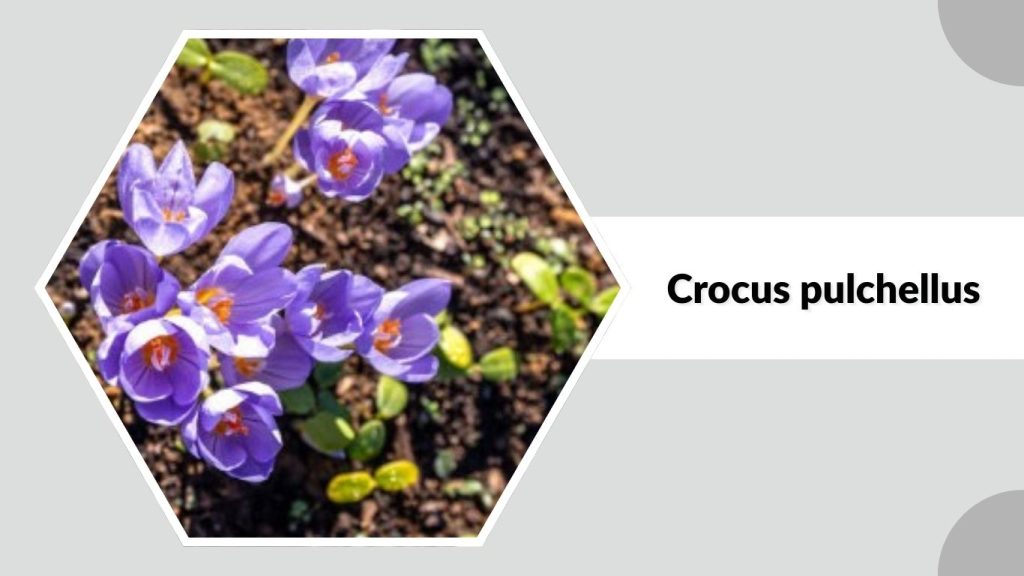
Crocus pulchellus, sometimes called the autumn crocus, is a graceful fall-blooming species known for its soft lavender flowers with darker veining. It is native to southeastern Europe and Turkey, where it grows in open woodland and grassy hillsides. This crocus adds gentle color to gardens in early autumn.
Identification
- Corm-forming perennial plant
- Pale lavender to light violet flowers
- Darker feathered veins on petals
- Bright yellow throat with orange stamens
- Slender leaves that usually appear after flowering
Habitat
In its natural range, Crocus pulchellus grows in forest edges, meadows, and rocky slopes. In gardens, it performs well in borders, under trees, and rock gardens. It prefers sunny to lightly shaded positions with well-drained soil.
Blooming Season
This species blooms in early to mid-autumn, generally from September to October. The flowers often appear before the foliage, standing clearly above the soil.
Ornamental Use
Autumn crocus is valued for extending the crocus season into fall. It naturalizes well and pairs beautifully with other autumn-flowering bulbs and perennials.
11. Crocus laevigatus (Smooth Crocus)
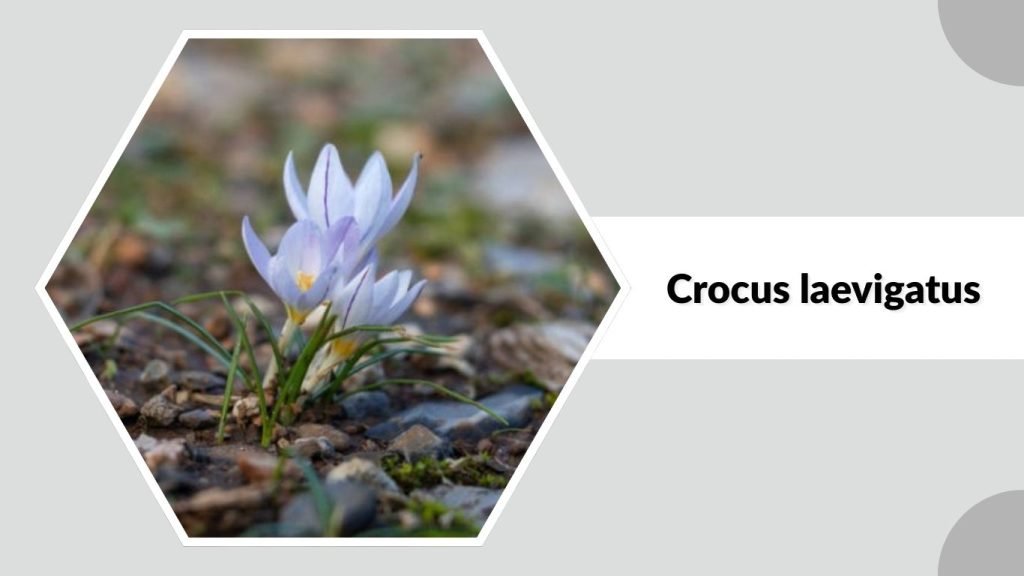
Crocus laevigatus, known as the smooth crocus, is a delicate autumn-blooming species recognized for its pale lilac flowers often marked with fine purple striping. Native to Greece and nearby regions, it grows naturally in open woodland and scrubland. This crocus is appreciated for its soft coloring and reliable fall flowering.
Identification
- Small to medium corm-forming perennial
- Pale lilac to soft violet flowers
- Fine darker stripes on the outer petals
- Yellow throat with orange reproductive parts
- Narrow leaves, usually appearing after flowering
Habitat
In the wild, Crocus laevigatus grows in rocky ground, woodland margins, and scrubby hillsides. In cultivation, it thrives in rock gardens, borders, and naturalized areas. It prefers full sun to light shade and well-drained soil.
Blooming Season
Smooth crocus blooms in autumn, typically from October to November. Its flowers often emerge before the leaves, adding subtle color late in the gardening year.
Garden Value
This species is valued for late-season interest and its graceful appearance. It combines well with other autumn bulbs and helps extend floral displays into cooler months.
12. Crocus banaticus (Banat Crocus)
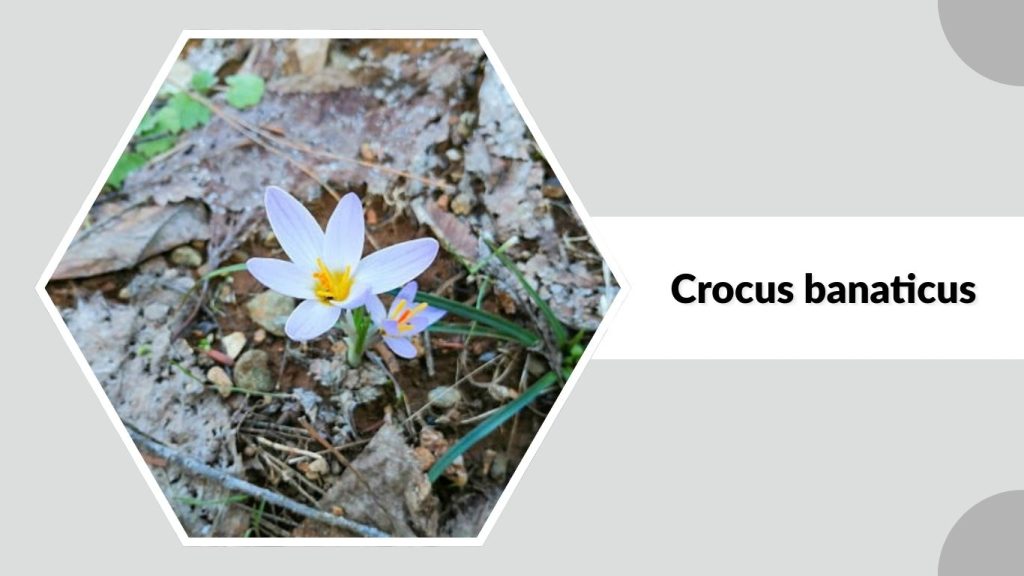
Crocus banaticus, commonly known as the Banat crocus, is a distinctive autumn-flowering species noted for its unusual, iris-like form. Native to Romania and parts of the western Balkans, it stands out from most crocuses because its inner petals are much shorter than the outer ones, giving the flower a unique, open appearance.
Identification
- Medium-sized, corm-forming perennial
- Large lavender to pale violet outer petals
- Much shorter inner petals, creating an iris-like look
- Bright yellow stamens and style
- Narrow leaves that usually appear after flowering
Habitat
In nature, Crocus banaticus grows in woodland clearings, forest edges, and grassy mountain slopes. In gardens, it performs well under deciduous trees, in borders, and in naturalized areas. It prefers partial shade to sun and well-drained, humus-rich soil.
Blooming Season
This crocus blooms in autumn, typically from September to October. Flowers often emerge before the leaves, bringing fresh color to woodland-style gardens.
Ornamental Use
Banat crocus is valued for its unusual flower shape and strong autumn presence. It is often planted in groups where its distinctive form can be easily appreciated.
13. Crocus kotschyanus (Kotschy’s Crocus)
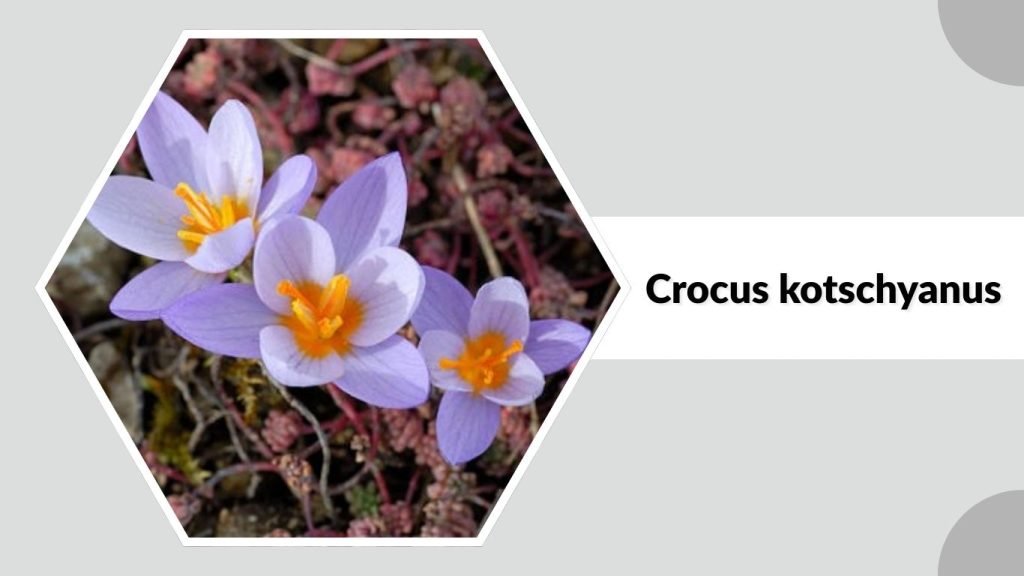
Crocus kotschyanus, known as Kotschy’s crocus, is an elegant autumn-blooming species admired for its soft lilac flowers marked with darker veining. It is native to Turkey, the Middle East, and parts of the eastern Mediterranean, where it grows in open woodland and grassy hills.
Identification
- Corm-forming perennial plant
- Pale lilac to light purple flowers
- Fine darker veins on the petals
- Yellow throat with orange-yellow stamens
- Slender leaves usually appearing after flowering
Habitat
In the wild, Crocus kotschyanus grows on grassy slopes, woodland edges, and rocky fields. In gardens, it adapts well to borders, rock gardens, and naturalized areas. It prefers sunny to lightly shaded positions with well-drained soil.
Blooming Season
This species blooms in autumn, generally from October to November. Its flowers often appear before the leaves, creating a clean and attractive floral display.
Garden Importance
Kotschy’s crocus is valued for extending color into late autumn. It naturalizes gently and is often used in mixed plantings with other fall-flowering bulbs.
14. Crocus goulimyi (Goulimy’s Crocus)
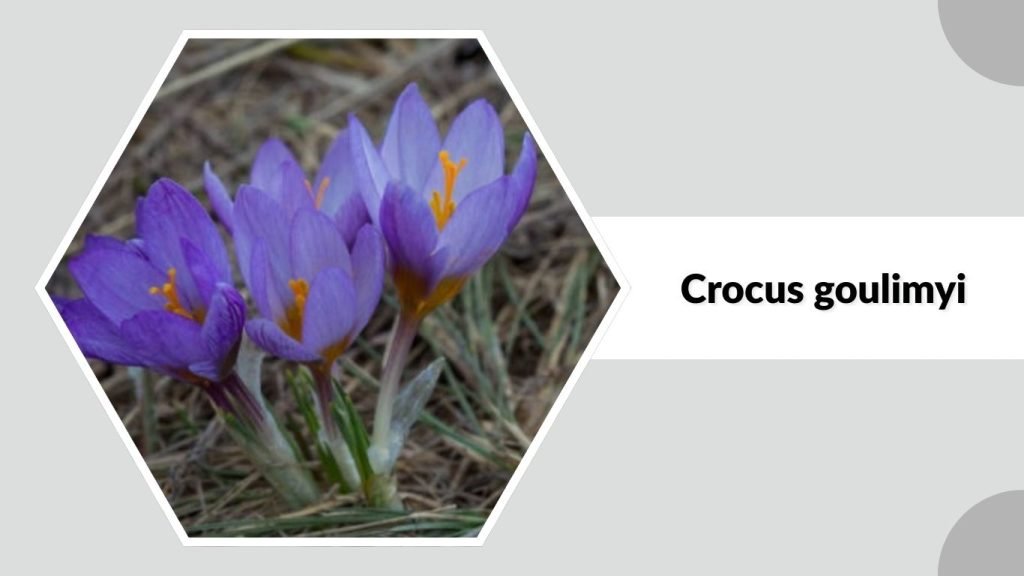
Crocus goulimyi, commonly called Goulimy’s crocus, is an autumn-blooming species known for its soft lilac flowers and distinctive dark markings near the base of the petals. It is native to southern Greece, where it grows in open, rocky landscapes and light woodland.
Identification
- Medium-sized corm-forming perennial
- Pale lilac to soft violet flowers
- Darker blotches or feathered markings at petal bases
- Bright yellow throat and orange stamens
- Narrow leaves usually emerging after flowering
Habitat
In its natural environment, Crocus goulimyi grows in rocky ground, open hillsides, and woodland margins. In gardens, it performs well in rock gardens, borders, and naturalized areas. It prefers sunny locations and well-drained soil.
Blooming Season
This crocus blooms in autumn, most often from October to November. Flowers frequently appear before the foliage, giving a neat and striking appearance.
Ornamental Use
Goulimy’s crocus is prized for its delicate coloring and subtle petal markings. It is often planted in small groups to highlight its refined beauty.
15. Crocus nudiflorus (Bare-Flowered Crocus)
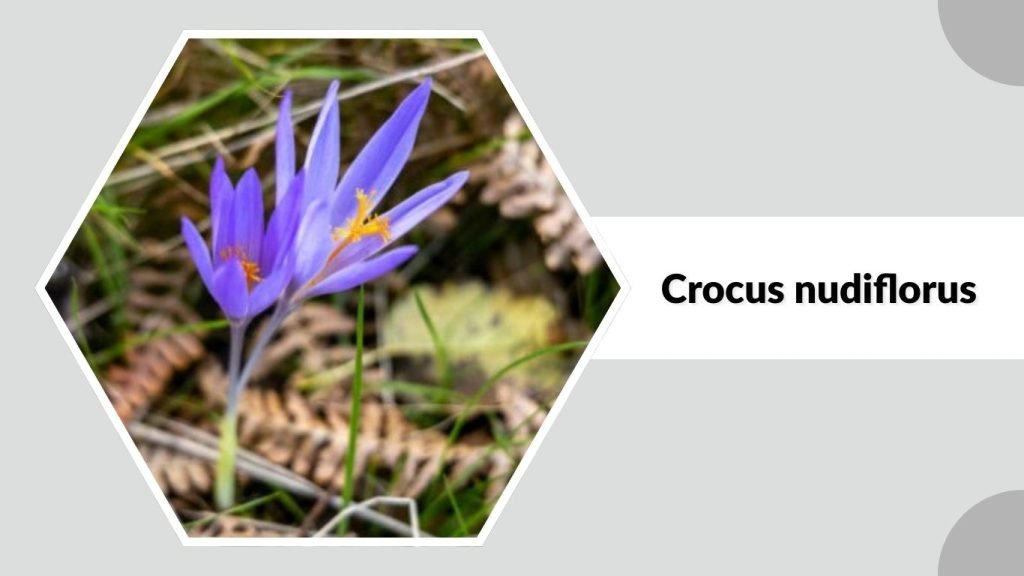
Crocus nudiflorus, known as the bare-flowered crocus, is an autumn-blooming species distinguished by flowers that appear without visible leaves. Native to southwestern Europe and parts of North Africa, it grows naturally in meadows, woodland edges, and mountain pastures.
Identification
- Corm-based perennial
- Violet to reddish-purple flowers
- Blooms without leaves (foliage appears later)
- Yellow to orange reproductive parts
- Smooth, slender flower tubes
Habitat
In the wild, Crocus nudiflorus grows in grassy fields, forest margins, and upland meadows. In gardens, it thrives in lawns, borders, and naturalized areas. It prefers sunny to lightly shaded locations with well-drained soil.
Blooming Season
This species blooms in autumn, typically from September to October. The flowers emerge directly from the soil, giving the plant its “bare-flowered” appearance.
Garden Value
Bare-flowered crocus is valued for naturalizing and creating surprise bursts of color in fall landscapes. It blends well with grasses and low-growing perennials.
16. Crocus minimus (Least Crocus)
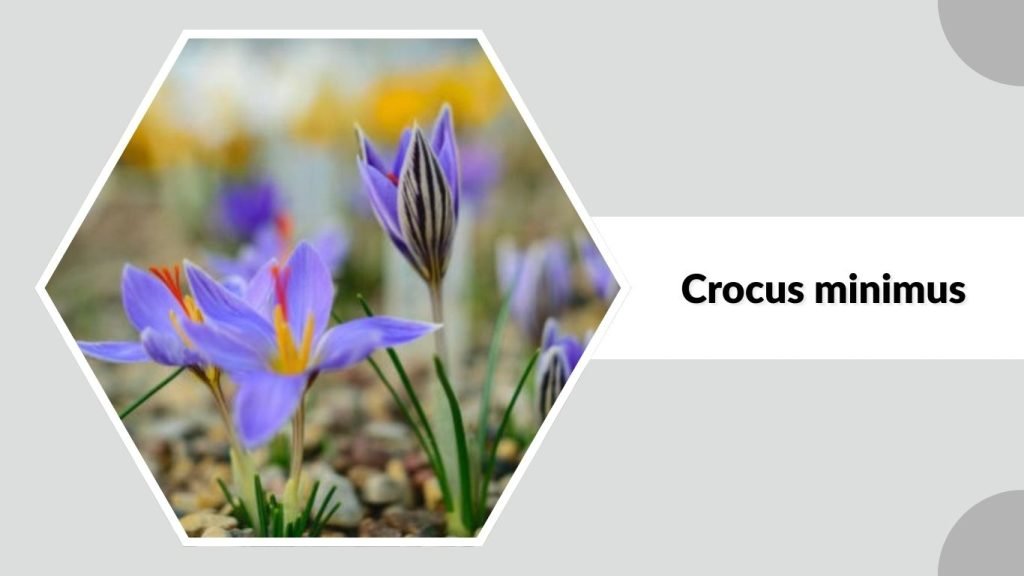
Crocus minimus, often called the least crocus, is a petite species admired for its soft lavender flowers and compact growth. Native to Corsica and Sardinia, it naturally grows in rocky grasslands and open scrub. Its small size and delicate look make it especially attractive for rock gardens and containers.
Identification
- Very small, corm-forming perennial
- Pale lavender to soft lilac flowers
- Darker purple veining on petals
- Yellow throat and stamens
- Fine, narrow leaves with a pale midline
Habitat
In the wild, Crocus minimus grows in rocky slopes, open meadows, and scrubby ground. In gardens, it thrives in rock gardens, troughs, and well-drained borders. It prefers full sun and gritty, well-drained soil.
Blooming Season
This crocus blooms in late winter to early spring, usually from February to March. Despite its small size, it can create a noticeable display when planted in groups.
Garden Appeal
Least crocus is valued for its compact habit and subtle coloring. It naturalizes gently and is ideal for small spaces and alpine-style plantings.
17. Crocus reticulatus (Reticulated Crocus)
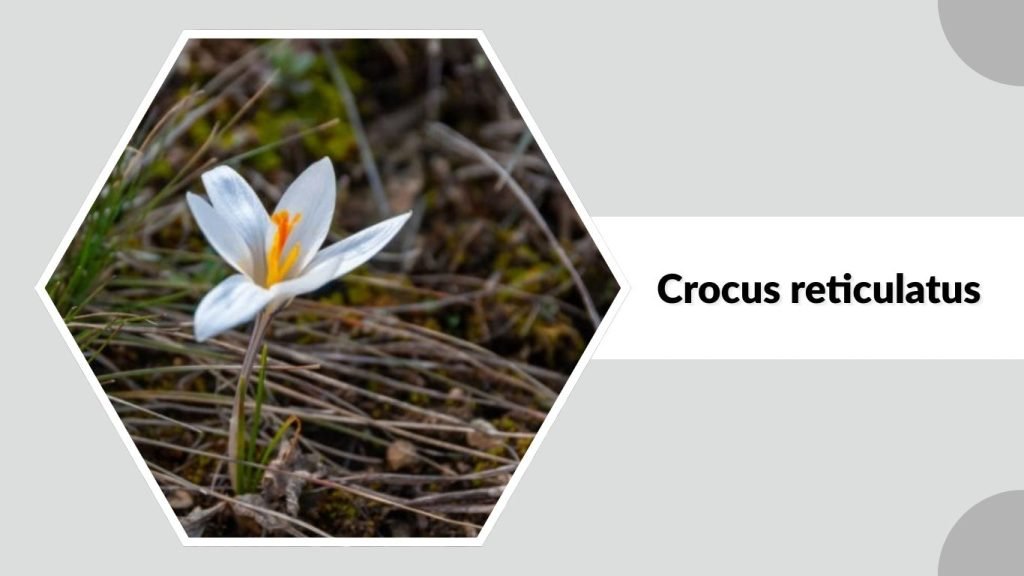
Crocus reticulatus, known as the reticulated crocus, is an early-flowering species admired for its fragrant blooms and finely netted corm covering. Native to eastern Europe and western Asia, it naturally grows in open grasslands and woodland margins.
Identification
- Small corm-forming perennial
- Pale lilac to light purple flowers
- Dark purple feathered veins and yellow throat
- Distinct netted (reticulated) corm tunic
- Narrow green leaves with a pale stripe
Habitat
In nature, Crocus reticulatus grows in meadows, steppe regions, and open woods. In gardens, it performs well in lawns, borders, and rock gardens. It prefers full sun to light shade and well-drained soil.
Blooming Season
This species blooms in very early spring, often from February to March. Its sweet fragrance and early flowers make it a favorite among gardeners.
Ornamental Value
Reticulated crocus is valued for scent as well as appearance. It naturalizes well and is often used in early-spring displays and pollinator-friendly plantings.
18. Crocus aleppicus (Aleppo Crocus)
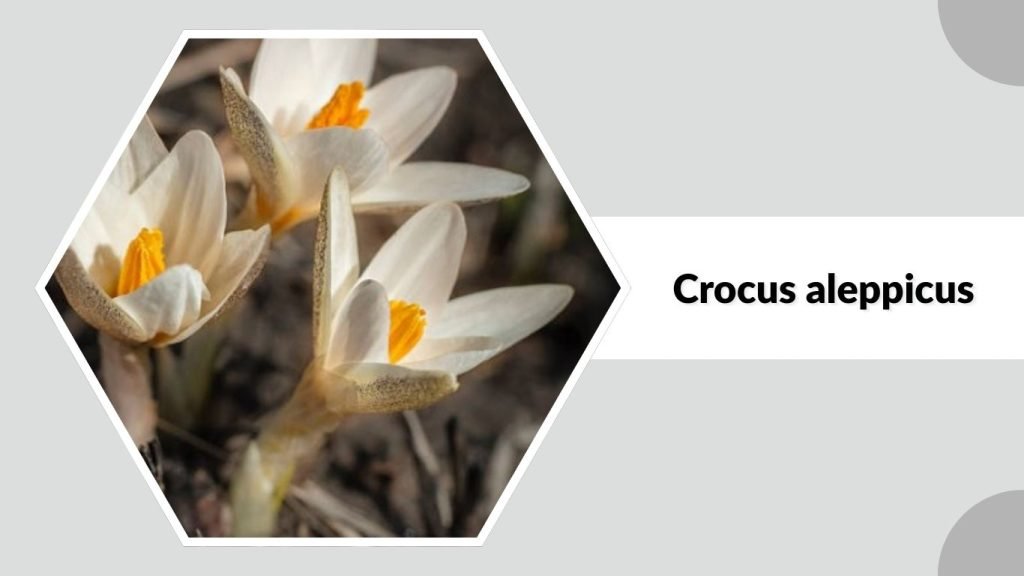
Crocus aleppicus, commonly known as the Aleppo crocus, is an autumn-blooming species recognized for its soft lilac flowers and fine dark veining. It is native to Syria, Lebanon, and surrounding regions, where it grows in open hillsides and woodland margins.
Identification
- Corm-forming perennial plant
- Pale lilac to light purple flowers
- Fine darker veins on the petals
- Yellow throat with orange stamens
- Slender leaves usually appearing after flowering
Habitat
In its natural range, Crocus aleppicus grows on rocky slopes, open scrubland, and forest edges. In cultivation, it thrives in borders, rock gardens, and naturalized areas. It prefers sunny locations with well-drained soil.
Blooming Season
This species blooms in autumn, typically from October to November. Flowers often emerge before the leaves, standing clearly above the soil.
Garden Importance
Aleppo crocus is valued for extending seasonal interest into late autumn. It blends well with other fall-flowering bulbs and low-growing perennials.
19. Crocus corsicus (Corsican Crocus)
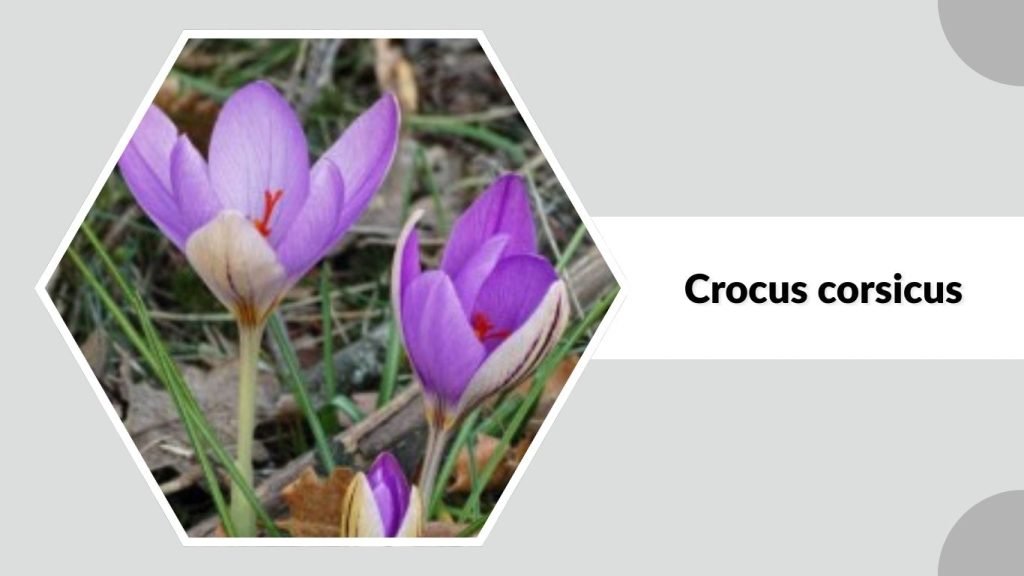
Crocus corsicus, known as the Corsican crocus, is a delicate spring-flowering species admired for its soft lavender to pale violet blooms. It is native to the Mediterranean islands of Corsica and Sardinia, where it grows naturally in rocky grasslands and open hillsides. This crocus is valued for its gentle coloring and refined appearance.
Identification
- Small corm-forming perennial
- Pale lavender to soft violet flowers
- Subtle darker veining on petals
- Bright yellow throat and orange stamens
- Narrow green leaves with a pale central stripe
Habitat
In the wild, Crocus corsicus grows in open meadows, rocky slopes, and light scrubland. In gardens, it performs well in rock gardens, borders, and alpine plantings. It prefers full sun and well-drained soil.
Blooming Season
This species blooms in late winter to early spring, usually from February to March. Flowers open wide in sunlight and close during cold or cloudy conditions.
Garden Value
Corsican crocus is prized for its soft tones and compact habit. It naturalizes gently and works beautifully in mixed early-spring bulb displays.
20. Crocus serotinus (Late Crocus)
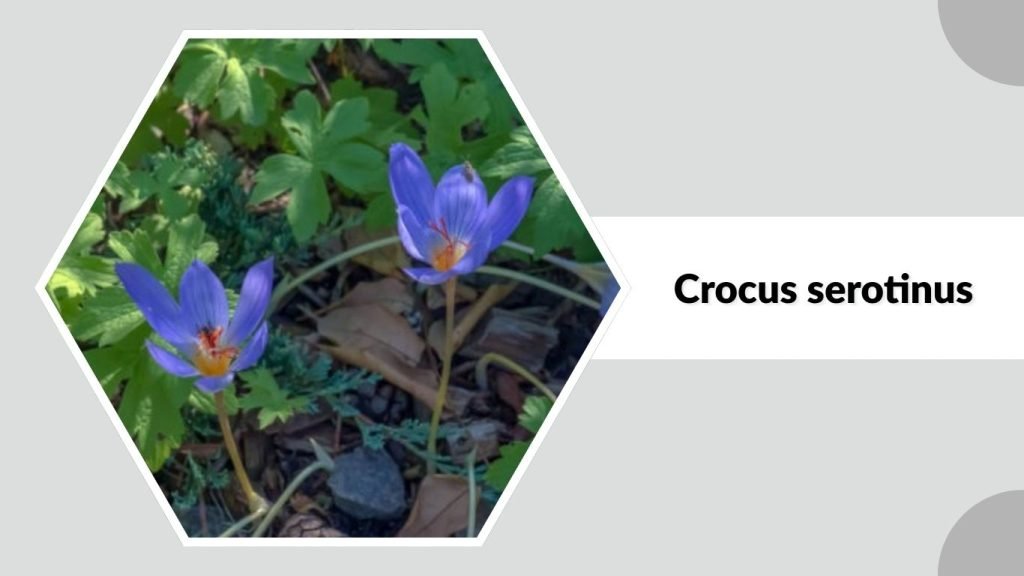
Crocus serotinus, commonly called the late crocus, is an autumn-flowering species known for its pale lilac to violet blooms and fine darker striping. It is native to the western Mediterranean region, where it grows in open fields and light woodland. This crocus brings soft color to gardens late in the growing season.
Identification
- Corm-based perennial
- Pale lilac, violet, or soft purple flowers
- Fine darker veins or stripes on petals
- Yellow throat with orange reproductive parts
- Leaves usually appear after flowering
Habitat
In nature, Crocus serotinus grows in meadows, rocky slopes, and woodland margins. In cultivation, it adapts well to borders, naturalized lawns, and rock gardens. It prefers sunny sites with well-drained soil.
Blooming Season
This species blooms in autumn, generally from October to November. Flowers often appear before the foliage, creating a clean and attractive display.
Ornamental Use
Late crocus is valued for extending garden interest into the cooler months. It naturalizes well and pairs nicely with other autumn-blooming bulbs and perennials.
FAQs
What is the best time to plant crocus bulbs?
Crocus bulbs (corms) are usually planted in late summer to early autumn, before the ground freezes. This timing allows roots to establish before winter. Spring-flowering crocuses bloom the following late winter or early spring, while autumn-flowering types bloom in the same year.
Do crocus flowers come back every year?
Yes, crocuses are perennial plants and return every year when grown in suitable conditions. With well-drained soil and enough sunlight, they multiply over time, forming larger clumps that bloom more abundantly each season.
Can crocus grow in lawns?
Crocuses grow very well in lawns because they bloom early and finish flowering before regular mowing begins. When planted in groups, they naturalize easily and create colorful carpets of flowers each spring.
Are crocus flowers easy to care for?
Crocus flowers are low-maintenance plants. They need full sun to light shade and well-drained soil. Once planted, they require little watering and no special care, making them ideal for beginners and busy gardeners.
What is the difference between spring and autumn crocus?
Spring crocuses bloom in late winter to early spring and are most commonly grown in gardens. Autumn crocuses bloom from September to November, adding late-season color. Both types grow from corms but flower in different seasons.