





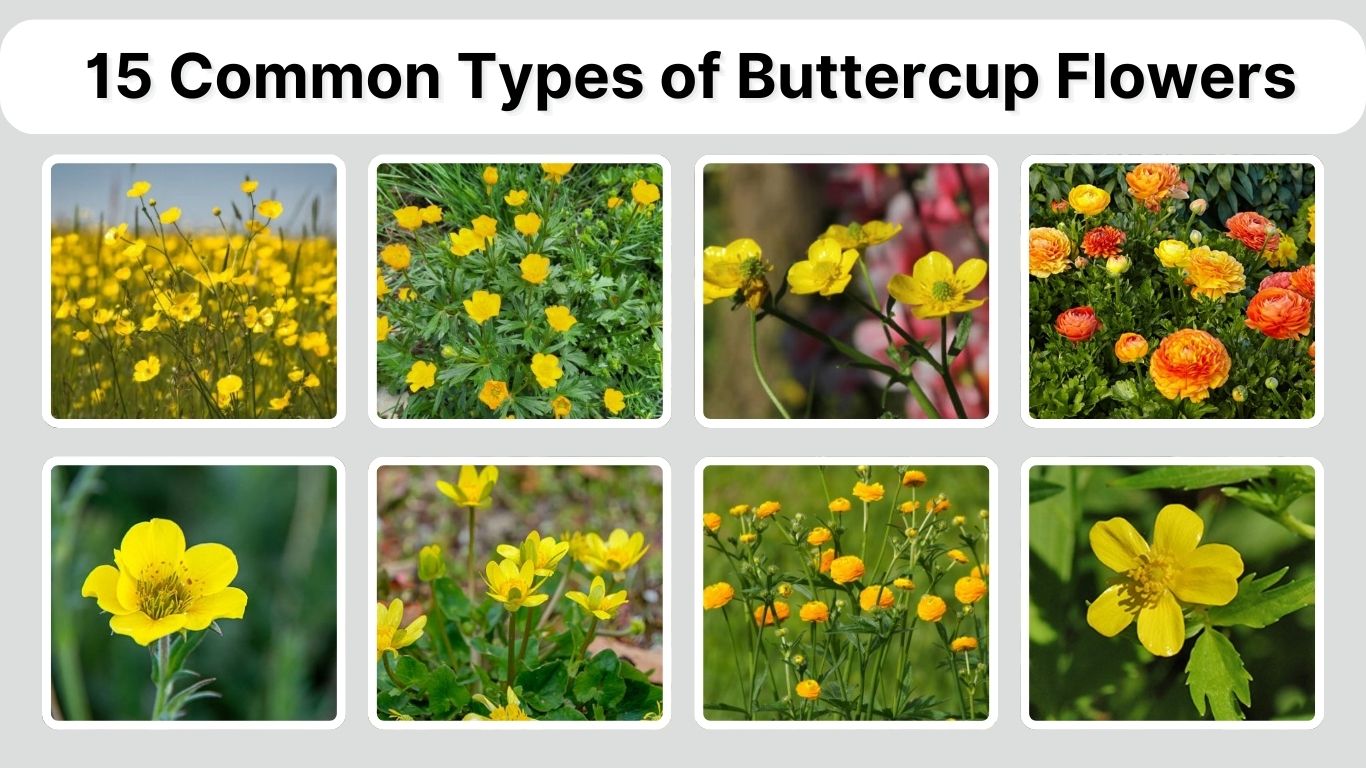
Buttercup flowers are bright, cheerful plants best known for their glossy yellow blooms and wide presence in meadows, woodlands, wetlands, and even alpine regions. Belonging mainly to the genus Ranunculus, buttercups include hundreds of species, ranging from tiny early spring wildflowers to showy garden varieties like the Persian buttercup. In this guide, you’ll discover 15 common types of buttercup flowers, along with simple identification features, habitats, and ecological importance.
1. Meadow Buttercup (Ranunculus acris)
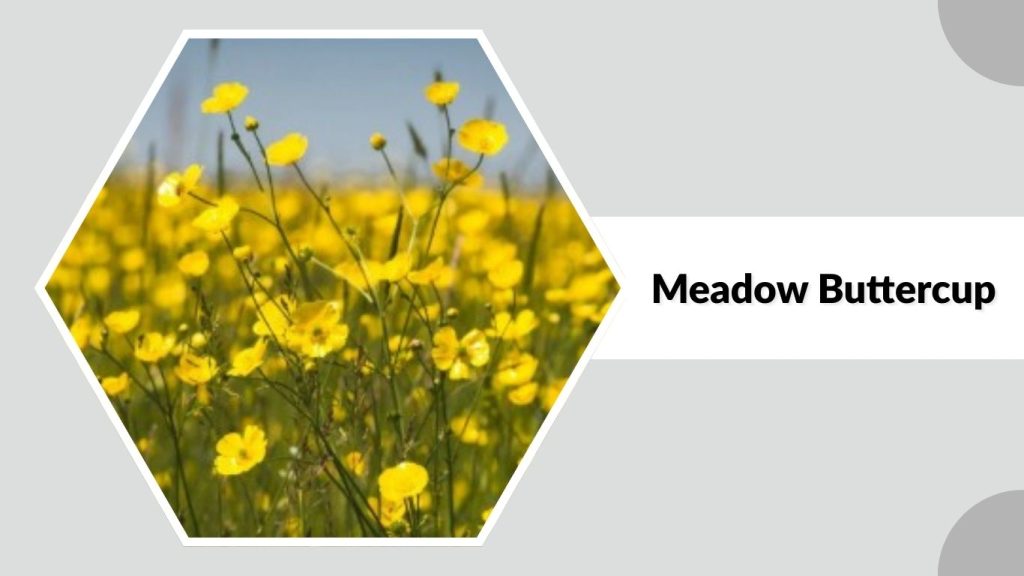
Meadow buttercup is one of the most common and easily recognized buttercup species, widely found in meadows, pastures, roadsides, and open grasslands. It is known for its bright, glossy yellow flowers, upright growth habit, and long blooming season from late spring to early summer. This species plays an important ecological role by supporting pollinators such as bees and hoverflies.
Identification
- Bright yellow, shiny flowers with 5 broad petals
- Flower diameter usually 2–3 cm
- Upright, hairy green stems
- Deeply divided, three-lobed basal leaves
- Blooms mainly from May to August
Habitat & Distribution
Meadow buttercup thrives in temperate regions across Europe, Asia, and North America. It prefers moist but well-drained soils and is commonly seen in hayfields, grassy slopes, roadside verges, and lightly grazed pastures. It tolerates cold climates well and often indicates healthy, undisturbed grassland.
Flowering Season & Growth
This plant is a perennial herb that regrows each year from its rootstock. Flowering usually begins in late spring and continues through much of summer, depending on climate. It can grow 30–90 cm tall, forming upright clumps that spread naturally through seeds.
Uses & Ecological Value
Meadow buttercup is mainly valued for its ecological importance rather than ornamental use. It provides nectar and pollen for insects and contributes to meadow biodiversity. Although attractive, it is mildly toxic to livestock when fresh, which helps prevent overgrazing and allows it to persist in natural grasslands.
2. Creeping Buttercup (Ranunculus repens)

Creeping buttercup is a fast-spreading buttercup species best known for its bright yellow flowers and creeping growth habit. Unlike upright meadow buttercup, this plant spreads by long runners (stolons) that root at the nodes, allowing it to quickly cover damp ground. It is commonly seen in lawns, gardens, riverbanks, and moist grasslands.
Identification
- Glossy yellow flowers with five rounded petals
- Flower diameter about 2–2.5 cm
- Low-growing stems that creep along the ground
- Produces rooting runners (stolons)
- Dark green, three-lobed leaves with pale markings
Habitat & Distribution
Creeping buttercup is widely distributed across Europe, Asia, and North America. It prefers moist, poorly drained soils and is especially common near ponds, ditches, stream edges, wet meadows, and shaded lawns. It tolerates trampling well, which is why it often appears in frequently walked areas.
Flowering Season & Growth
This perennial plant flowers mainly from late spring through summer. It usually grows 10–50 cm tall but spreads much wider horizontally through its creeping stems. Once established, it can form dense mats that outcompete weaker plants, making it a persistent species in damp environments.
Uses & Ecological Value
Creeping buttercup supports pollinators such as bees and flies and contributes to wetland biodiversity. However, it is often considered a weed in lawns and pastures due to its aggressive spread. Like many buttercups, the fresh plant is mildly toxic if eaten by livestock.
3. Bulbous Buttercup (Ranunculus bulbosus)
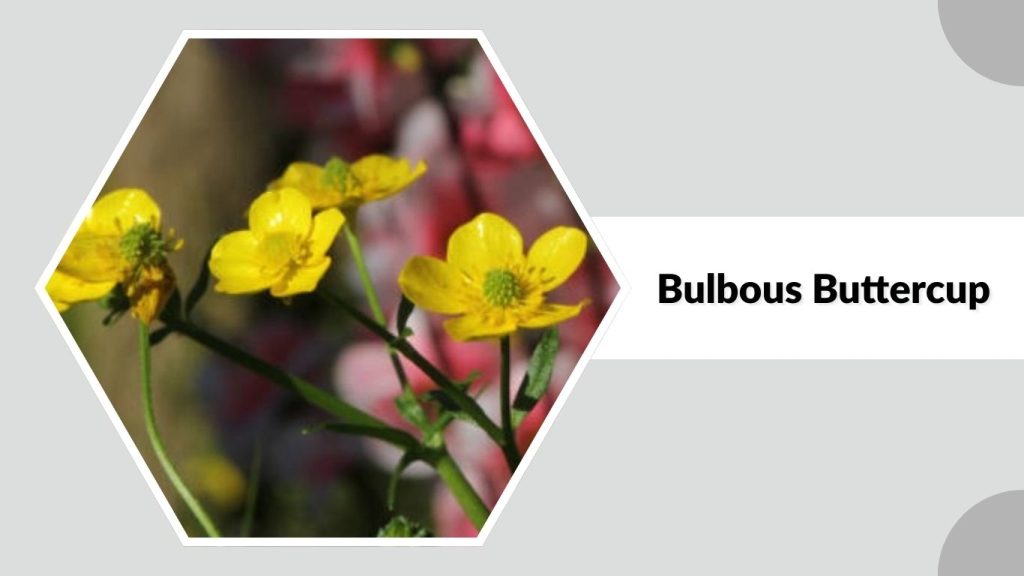
Bulbous buttercup is a distinctive buttercup species named for the swollen, bulb-like base at the bottom of its stem. It is well known for its bright yellow, glossy flowers and its preference for dry, sunny grasslands. Compared to creeping buttercup, this species has an upright growth habit and does not spread by runners.
Identification
- Shiny yellow flowers with five overlapping petals
- Flower diameter about 2–3 cm
- Upright, slightly hairy stems
- Bulb-like swollen base at the stem bottom
- Leaves deeply divided into narrow lobes
Habitat & Distribution
Bulbous buttercup is native to Europe and Western Asia and has been widely naturalized in North America. It thrives in dry meadows, open pastures, roadside banks, and calcareous grasslands. It prefers well-drained, nutrient-poor soils and full sun.
Flowering Season & Growth
This perennial flowers mainly from April to June, often earlier than many other buttercups. It typically grows 20–50 cm tall. The swollen base helps the plant store nutrients, allowing it to survive dry conditions and regrow strongly each spring.
Uses & Ecological Value
Bulbous buttercup supports early-season pollinators when few other meadow flowers are in bloom. Although visually attractive, it is rarely used ornamentally. Like other buttercups, it is toxic when fresh, discouraging grazing and helping it persist in natural grassland ecosystems.
4. Persian Buttercup (Ranunculus asiaticus)

Persian buttercup is one of the most popular ornamental buttercup species, widely grown in gardens and used in floral arrangements. It is admired for its large, rose-like blooms that appear in many vibrant colors, including red, pink, orange, yellow, and white. Unlike wild buttercups, this species is mainly cultivated rather than naturally widespread.
Identification
- Large, multi-petaled, rose-like flowers
- Wide range of bright colors
- Flower diameter often 5–8 cm
- Soft green, finely divided leaves
- Upright flowering stems
Habitat & Distribution
Persian buttercup is native to the eastern Mediterranean region, parts of Western Asia, and northeastern Africa. Today, it is cultivated worldwide in gardens, greenhouses, and flower farms. It prefers mild climates, well-drained soil, and sunny to lightly shaded locations.
Flowering Season & Growth
This perennial grows from tuberous roots and typically blooms from late winter to spring in warm regions, or spring to early summer in cooler climates. Plants usually reach 25–45 cm tall. In cold areas, tubers are often lifted and stored over winter.
Uses & Ecological Value
Persian buttercup is mainly valued for decorative use. It is popular in borders, containers, and especially as a cut flower due to its long vase life. While it does attract some pollinators, its primary role is ornamental rather than ecological.
5. Lesser Celandine (Ranunculus ficaria)
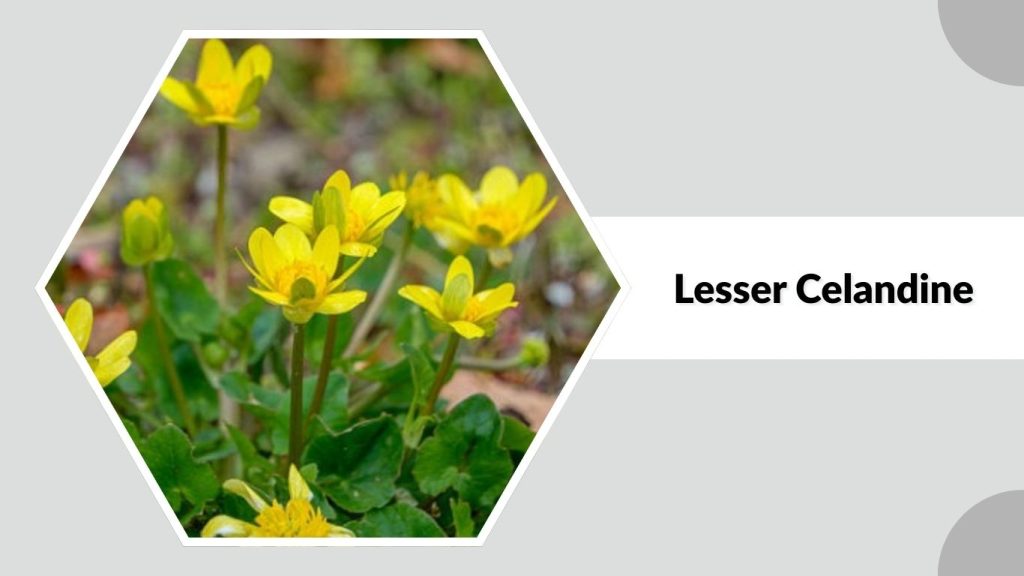
Lesser celandine is a low-growing buttercup species known for its glossy, star-shaped yellow flowers and heart-shaped leaves. It is one of the earliest spring bloomers, often carpeting woodland floors before trees fully leaf out. Its bright appearance makes it easy to spot in damp, shaded areas.
Identification
- Small, bright yellow, star-like flowers
- Usually 8–12 narrow petals
- Shiny, heart-shaped green leaves
- Low, mat-forming growth habit
- Often forms dense spring carpets
Habitat & Distribution
Lesser celandine is native to Europe and western Asia and has become naturalized in parts of North America. It thrives in moist woodlands, riverbanks, shaded gardens, and hedgerows. The plant prefers rich, damp soil and partial shade, especially in early spring.
Flowering Season & Growth
This perennial blooms very early, from late winter to mid-spring. It usually grows only 5–15 cm tall and dies back completely by early summer, surviving the rest of the year underground as small tubers and bulbils.
Uses & Ecological Value
Lesser celandine provides an important early nectar source for insects emerging after winter. Historically, it was used in folk medicine, though it is toxic when fresh. Today, it is mainly valued for its early seasonal interest and ground-covering habit.
6. Alpine Buttercup (Ranunculus alpestris)
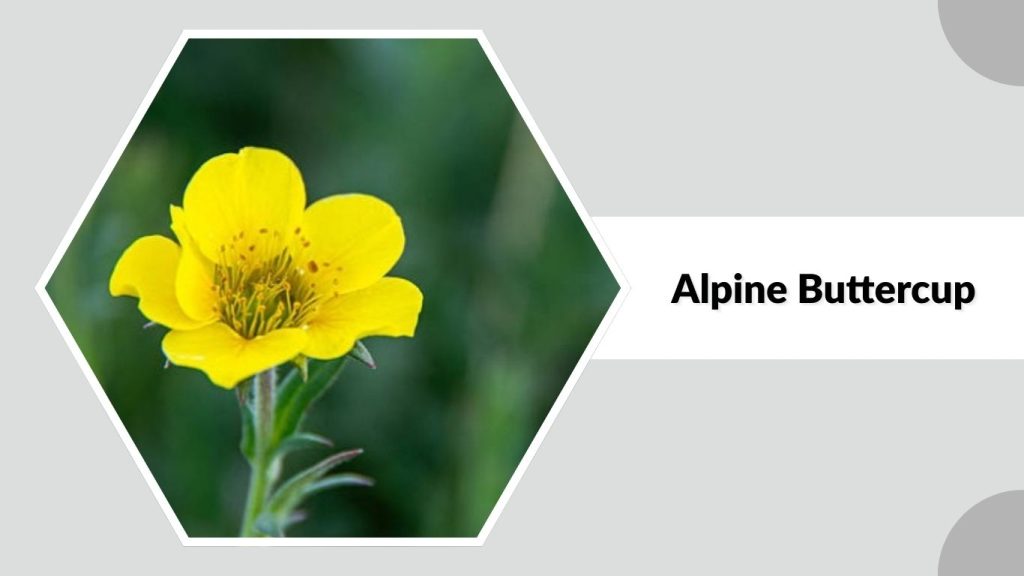
Alpine buttercup is a compact, mountain-dwelling buttercup species admired for its delicate white to pale-yellow flowers and ability to survive in harsh alpine environments. Unlike most bright-yellow buttercups, this species often has lighter-colored blooms and a neat, low-growing form suited to rocky terrain.
Identification
- Small white or pale yellow flowers
- Usually 5 rounded petals
- Low, tufted growth habit
- Short, smooth flowering stems
- Rounded to slightly lobed basal leaves
Habitat & Distribution
Alpine buttercup is native to high-altitude regions of the European Alps and nearby mountain ranges. It grows in alpine meadows, rocky slopes, and open scree, usually in cool, moist but well-drained soils. Snowmelt provides much of the moisture it needs.
Flowering Season & Growth
This perennial blooms from late spring to early summer, shortly after the snow recedes. It typically reaches only 5–15 cm in height, forming small clumps that withstand strong winds and cold temperatures.
Uses & Ecological Value
Alpine buttercup contributes to alpine meadow biodiversity and provides nectar for high-altitude insects. It is occasionally grown in rock gardens for its charm and hardiness, though it is mainly valued as a wild alpine species rather than a common garden plant.
7. Tall Buttercup (Ranunculus acris subsp. friesianus / Ranunculus arvensis – common name varies)
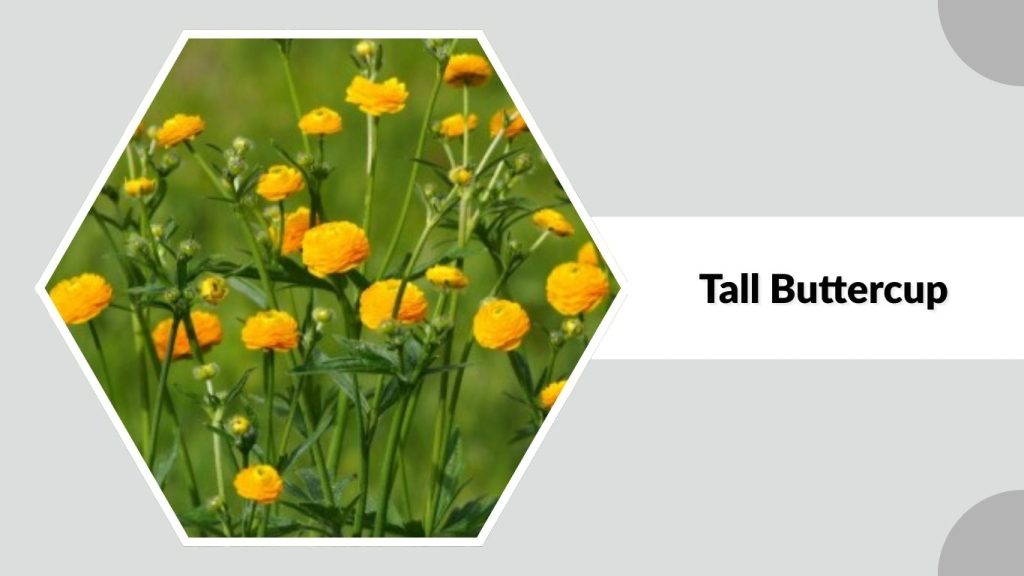
Tall buttercup is a robust buttercup type recognized for its upright growth and bright yellow flowers held well above surrounding grasses. It resembles meadow buttercup but is often taller and more vigorous, making it noticeable in unmanaged fields and roadside vegetation.
Identification
- Bright yellow, glossy flowers
- Five broad, rounded petals
- Strong, upright, branched stems
- Deeply lobed green leaves
- Generally taller than most meadow buttercups
Habitat & Distribution
Tall buttercup is found across parts of Europe, Asia, and regions where it has been introduced, including North America. It grows well in fertile meadows, roadsides, disturbed ground, and open countryside. It prefers moist to moderately dry soils with good sunlight.
Flowering Season & Growth
This perennial typically flowers from late spring through summer. It can reach 60–120 cm in height, making it one of the taller members of the buttercup group. Its height allows it to compete successfully for light in dense grasslands.
Uses & Ecological Value
Tall buttercup supports pollinators and contributes to field and meadow ecosystems. While visually striking, it is rarely cultivated and is sometimes considered a pasture weed. Like many Ranunculus species, it is toxic to livestock when fresh.
8. Swamp Buttercup (Ranunculus septentrionalis / Ranunculus hispidus – common swamp types)
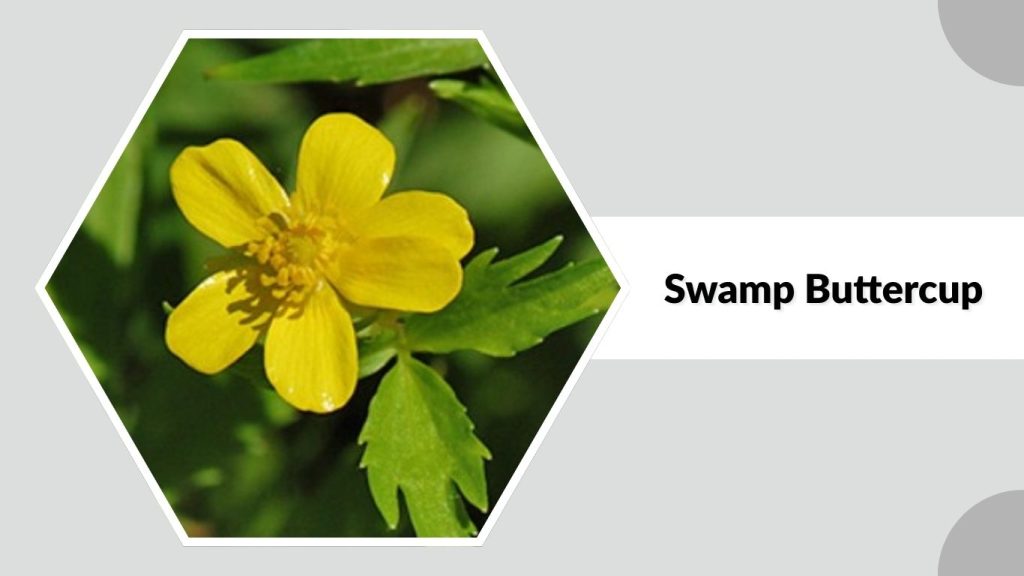
Swamp buttercup is a moisture-loving buttercup species commonly found in wetlands and low-lying areas. It is known for its soft yellow flowers, spreading habit, and preference for saturated soils. This plant often forms loose colonies along the edges of ponds and marshes.
Identification
- Bright yellow flowers with 5 petals
- Flower size about 2–3 cm wide
- Soft, sometimes hairy stems
- Broad, three-lobed green leaves
- Spreading, clump-forming growth
Habitat & Distribution
Swamp buttercup is native to North America and parts of Eurasia, depending on the species. It grows in marshes, wet meadows, stream banks, ditches, and pond edges. Consistent moisture is essential, and it rarely thrives in dry ground.
Flowering Season & Growth
This perennial blooms from mid-spring to early summer. It usually grows 20–60 cm tall, spreading slowly through roots and sometimes by seed. In ideal wet conditions, it can form attractive naturalized patches.
Uses & Ecological Value
Swamp buttercup is important for wetland ecosystems, providing nectar for insects and ground cover for small wildlife. It is occasionally used in natural pond landscapes and rain gardens, though it is mostly valued for ecological restoration rather than ornamental planting.
9. California Buttercup (Ranunculus californicus)
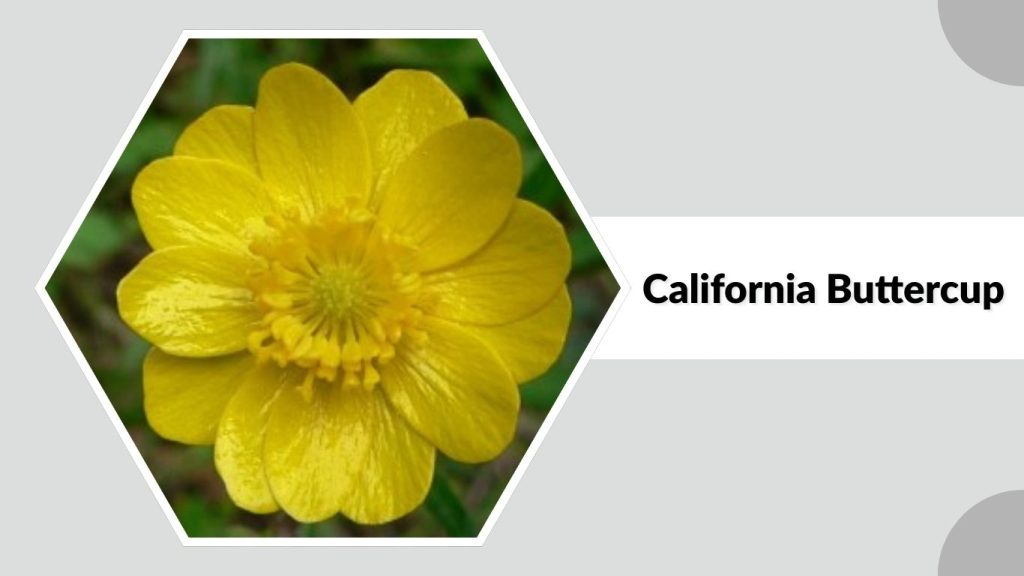
California buttercup is a native West Coast buttercup species admired for its bright yellow flowers and soft, slightly fuzzy foliage. It is a familiar sight in spring landscapes, often covering hillsides, open woodlands, and coastal grasslands with cheerful blooms.
Identification
- Bright yellow flowers with 5 shiny petals
- Flower width about 2–4 cm
- Soft, hairy stems and leaves
- Deeply lobed, rich green foliage
- Upright to slightly spreading growth habit
Habitat & Distribution
California buttercup is native to California and parts of the western United States. It grows in open meadows, foothills, coastal prairies, woodland edges, and disturbed sites. It prefers well-drained soil and full sun to light shade, especially in Mediterranean-type climates.
Flowering Season & Growth
This perennial blooms mainly from late winter through spring, sometimes extending into early summer. It usually reaches 20–60 cm in height and regrows each year from its root system after seasonal rains.
Uses & Ecological Value
California buttercup is valuable for supporting native pollinators, including bees and butterflies. It is sometimes used in native plant gardens and restoration projects to stabilize soil and enhance biodiversity. Like other buttercups, it is mildly toxic if eaten fresh.
10. Early Buttercup (Ranunculus fascicularis)
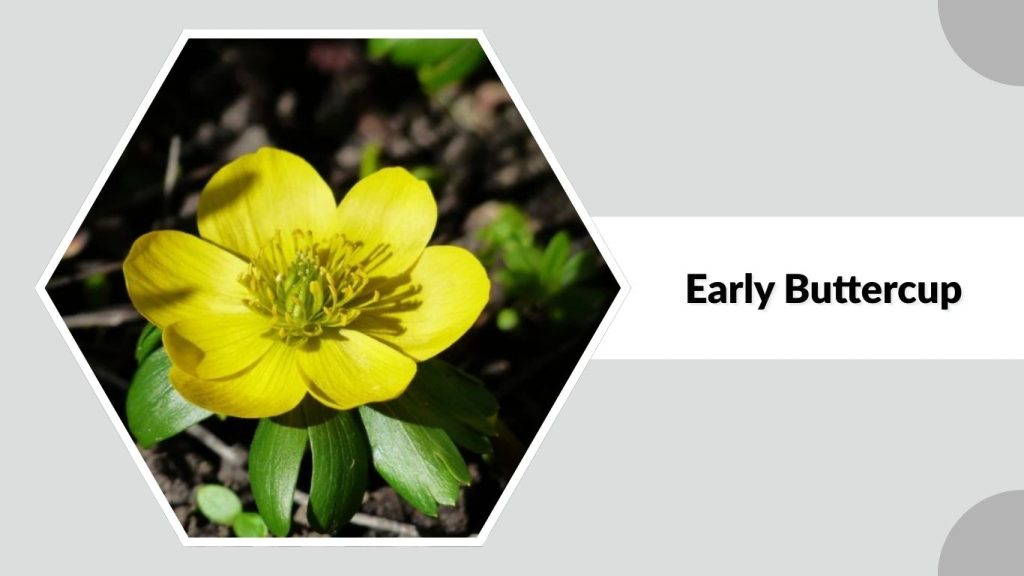
Early buttercup is a spring-flowering buttercup species named for its very early blooming period. It produces bright yellow flowers close to the ground, often appearing when winter has only just ended. Its neat, low growth and thickened roots help it survive seasonal drought and cold.
Identification
- Bright yellow flowers with 5 petals
- Blooms very early in the season
- Low-growing, clump-forming habit
- Deeply divided basal leaves
- Thick, fleshy root clusters
Habitat & Distribution
Early buttercup is native to central and eastern North America. It grows in prairies, open woodlands, rocky hillsides, and dry meadows. It prefers well-drained soil and full sun to partial shade and is often found in areas with seasonal moisture.
Flowering Season & Growth
This perennial blooms from late winter to early spring, often before most grasses have emerged. It usually reaches 10–30 cm tall and goes dormant by early summer after setting seed.
Uses & Ecological Value
Early buttercup is an important nectar source for early-emerging pollinators. It is sometimes included in native wildflower plantings to extend early-season color. Although attractive, it is toxic when fresh and not suitable for grazing areas.
11. Woodland Buttercup (Ranunculus abortivus)
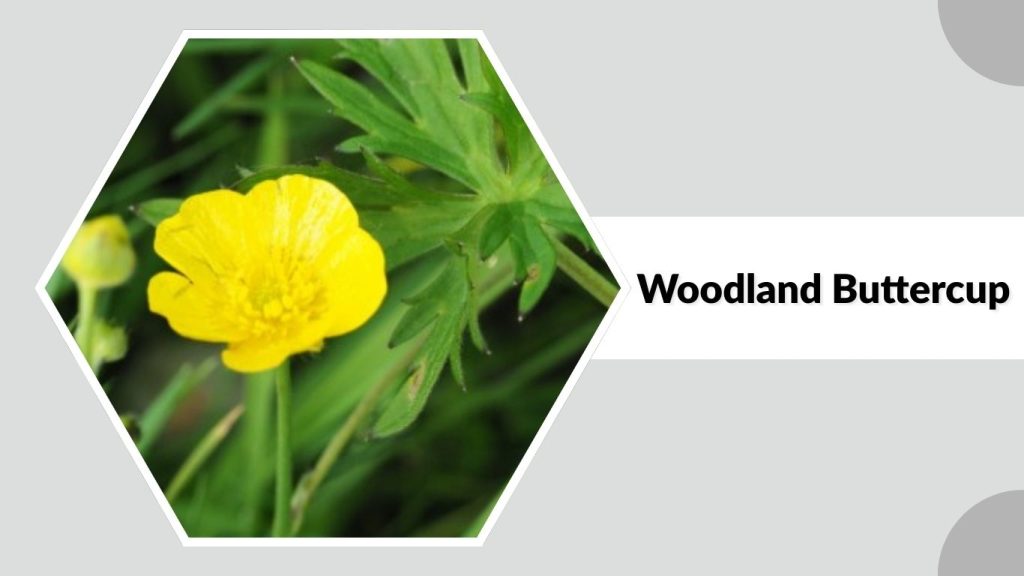
Woodland buttercup is a shade-tolerant buttercup species known for its small yellow flowers and glossy, kidney-shaped leaves. It is commonly found growing naturally in forest understories, shaded trails, and moist woodland edges, where few other buttercups thrive.
Identification
- Small, pale to bright yellow flowers
- Petals often shorter than the green sepals
- Smooth, shiny, kidney-shaped basal leaves
- Thin, branching stems
- Delicate overall appearance
Habitat & Distribution
Woodland buttercup is native to eastern and central North America. It grows in moist woodlands, shaded stream banks, forest edges, and rich soils with leaf litter. It prefers partial to full shade and moderate moisture.
Flowering Season & Growth
This perennial blooms from early spring to early summer. It usually grows 15–40 cm tall and often forms loose, scattered colonies rather than dense mats.
Uses & Ecological Value
Woodland buttercup contributes to forest-floor biodiversity and supports small pollinating insects. It is not commonly cultivated but is valued in native woodland gardens for its ability to grow in shade. Like other buttercups, it is mildly toxic when fresh.
12. Sagebrush Buttercup (Ranunculus glaberrimus)
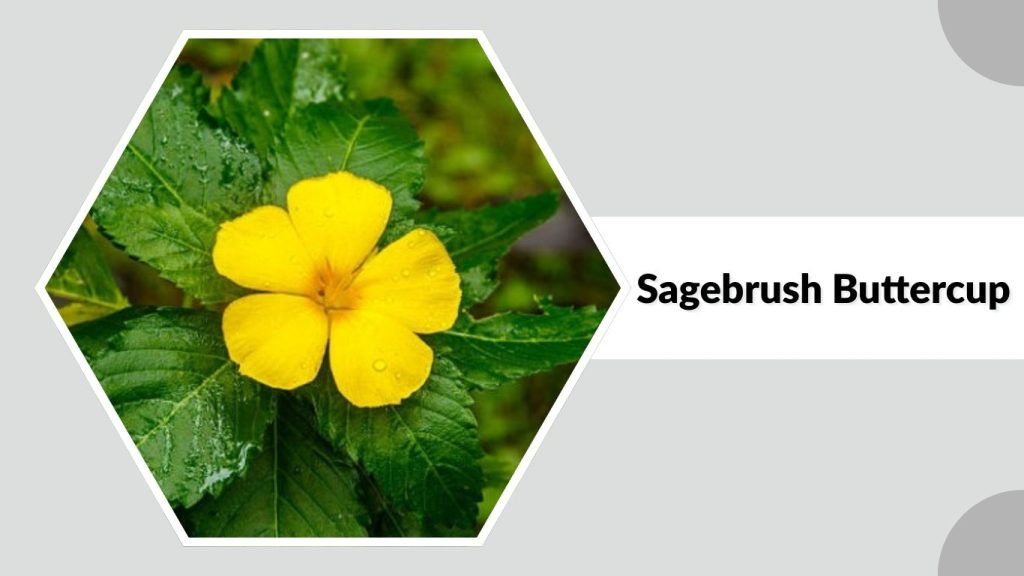
Sagebrush buttercup is a very early-blooming buttercup species native to western North America. It is often one of the first wildflowers to appear after snowmelt, producing bright yellow blooms close to the ground in open sagebrush landscapes.
Identification
- Bright yellow flowers with 5 petals
- Smooth, nearly hairless stems
- Low-growing, compact form
- Thick, fleshy basal leaves
- Often blooms while snow is still nearby
Habitat & Distribution
Sagebrush buttercup is found across the western United States and parts of western Canada. It grows in sagebrush flats, open hillsides, grasslands, and high desert areas. It prefers well-drained soils and full sun, often in cold, semi-arid environments.
Flowering Season & Growth
This perennial flowers very early, from late winter to early spring. It usually reaches only 5–15 cm tall and completes most of its life cycle before hotter weather arrives.
Uses & Ecological Value
Sagebrush buttercup provides one of the earliest nectar sources for insects in western landscapes. It is important for early-season pollinators and is sometimes included in native restoration projects for arid and semi-arid regions.
13. Tufted Buttercup (Ranunculus auricomus)
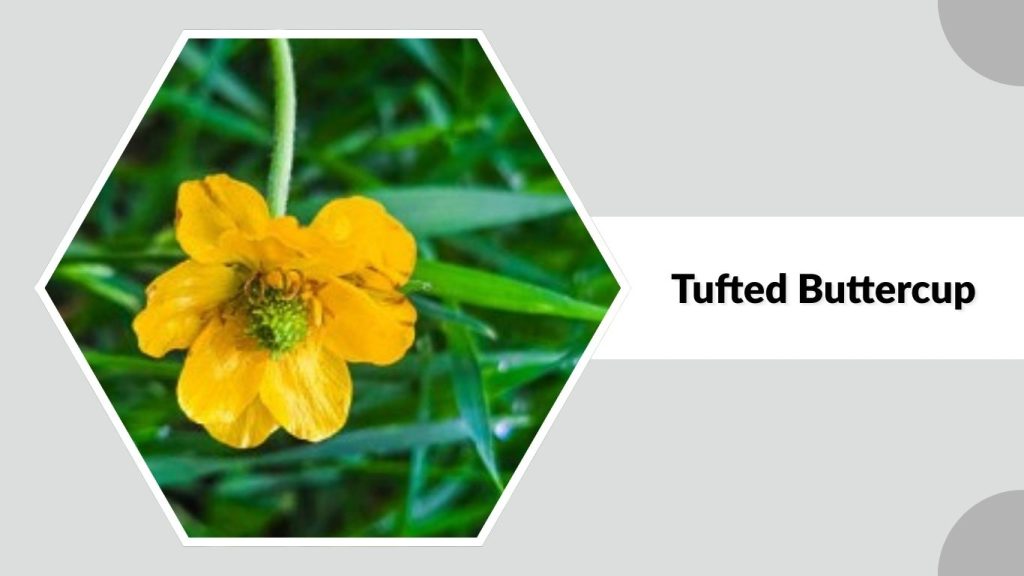
Tufted buttercup is a woodland-edge buttercup species recognized for its soft yellow flowers and deeply divided, somewhat tufted leaves. It often grows in loose clusters, giving rise to its common name. This species shows natural variation, and many closely related forms are grouped under the same name.
Identification
- Yellow flowers, often with narrow or irregular petals
- Soft, deeply cut basal leaves forming tufts
- Slender, upright stems
- Flowers usually smaller than meadow buttercup
- Clump-forming growth habit
Habitat & Distribution
Tufted buttercup is native to Europe and western Asia. It grows in open woodlands, hedgerows, shaded meadows, and grassy forest edges. It prefers moist, fertile soils and partial shade, though it can tolerate sunnier sites.
Flowering Season & Growth
This perennial blooms from mid-spring to early summer. It usually grows 20–50 cm tall and spreads slowly, forming scattered patches rather than dense colonies.
Uses & Ecological Value
Tufted buttercup contributes to woodland meadow biodiversity and supports pollinating insects. It is rarely cultivated due to its variable appearance but remains ecologically important in natural and semi-natural habitats.
14. Water Buttercup (Ranunculus aquatilis)
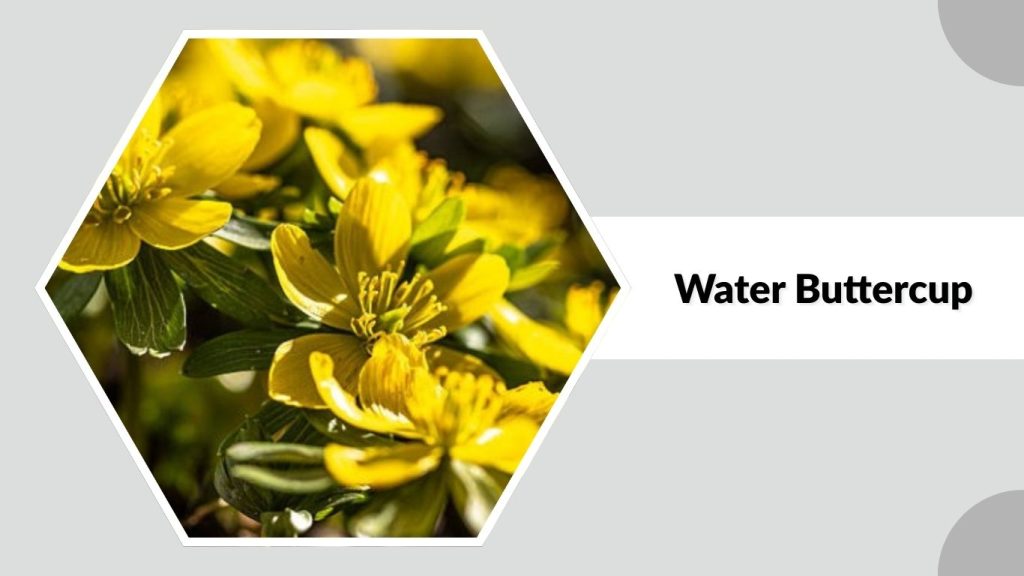
Water buttercup is an aquatic or semi-aquatic buttercup species known for its delicate white flowers with yellow centers and finely divided, thread-like underwater leaves. It is a familiar plant of ponds, slow streams, and shallow lakes, where it often forms floating mats.
Identification
- Small white flowers with yellow centers
- Finely divided, hair-like submerged leaves
- Broader floating leaves on the water surface
- Long, flexible underwater stems
- Grows rooted in shallow water
Habitat & Distribution
Water buttercup is widely distributed across Europe, Asia, Africa, and North America. It grows in still or slow-moving freshwater, including ponds, canals, ditches, and shallow lakes. It prefers clean, sunlit water.
Flowering Season & Growth
This perennial flowers from late spring through summer. It can spread extensively in suitable water conditions, forming large patches that float on or just below the surface.
Uses & Ecological Value
Water buttercup provides shelter for aquatic invertebrates and small fish while offering nectar to insects that visit its surface flowers. It is important for freshwater ecosystems and is sometimes used in wildlife ponds.
15. Rock Buttercup (Ranunculus saxatilis / similar alpine rock species)
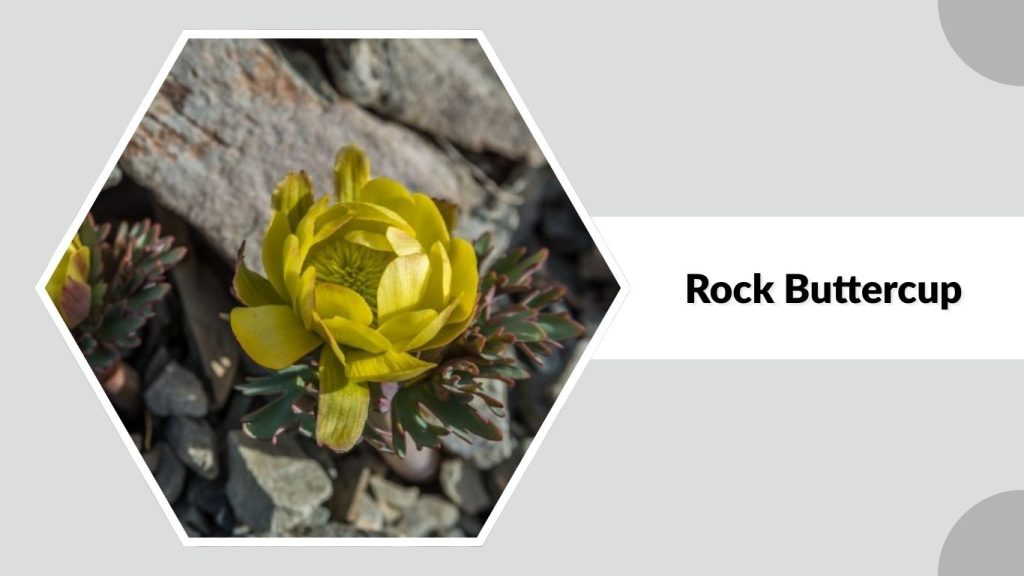
Rock buttercup refers to several closely related buttercup species that grow in rocky, mountainous habitats. These plants are adapted to thin soils, exposed slopes, and crevices, producing bright yellow flowers close to the ground.
Identification
- Bright yellow, cup-shaped flowers
- Low, compact growth form
- Thickened roots for anchoring in rock
- Small, often lobed leaves
- Short flowering stems
Habitat & Distribution
Rock buttercups are found in alpine and subalpine regions of Europe, Asia, and North America. They grow on rocky ledges, scree slopes, cliffs, and mountain grasslands where few other plants survive.
Flowering Season & Growth
They usually bloom from late spring to summer, depending on snowmelt. Most species stay under 20 cm tall and form tight clumps adapted to wind and cold.
Uses & Ecological Value
Rock buttercups help stabilize fragile mountain soils and support alpine pollinators. They are sometimes grown in rock gardens, but their main value lies in preserving alpine biodiversity.
FAQs
Are buttercup flowers toxic?
Yes, most buttercup species contain a natural chemical called ranunculin, which can irritate the skin and mouth. Fresh plants are toxic to humans and animals if eaten. Dry buttercups in hay usually lose most of their toxicity.
Do buttercups grow every year?
Most buttercups are perennials, meaning they regrow each year from their roots. Some types are annuals, but common species like meadow, creeping, and bulbous buttercup return each spring and often spread naturally.
Where do buttercups grow best?
Buttercups grow in a wide range of habitats, including meadows, woodlands, wetlands, and alpine areas. Most prefer full sun to partial shade and moist, well-drained soil, though some species thrive in water or rocky ground.
When do buttercups usually bloom?
Buttercups typically bloom from early spring through summer, depending on the species and climate. Early buttercups may flower in late winter, while meadow and swamp types often peak in late spring and early summer.
Are buttercups good for pollinators?
Yes, buttercup flowers provide nectar and pollen for bees, flies, and other insects. Early-blooming species are especially important because they support pollinators when few other flowers are available.