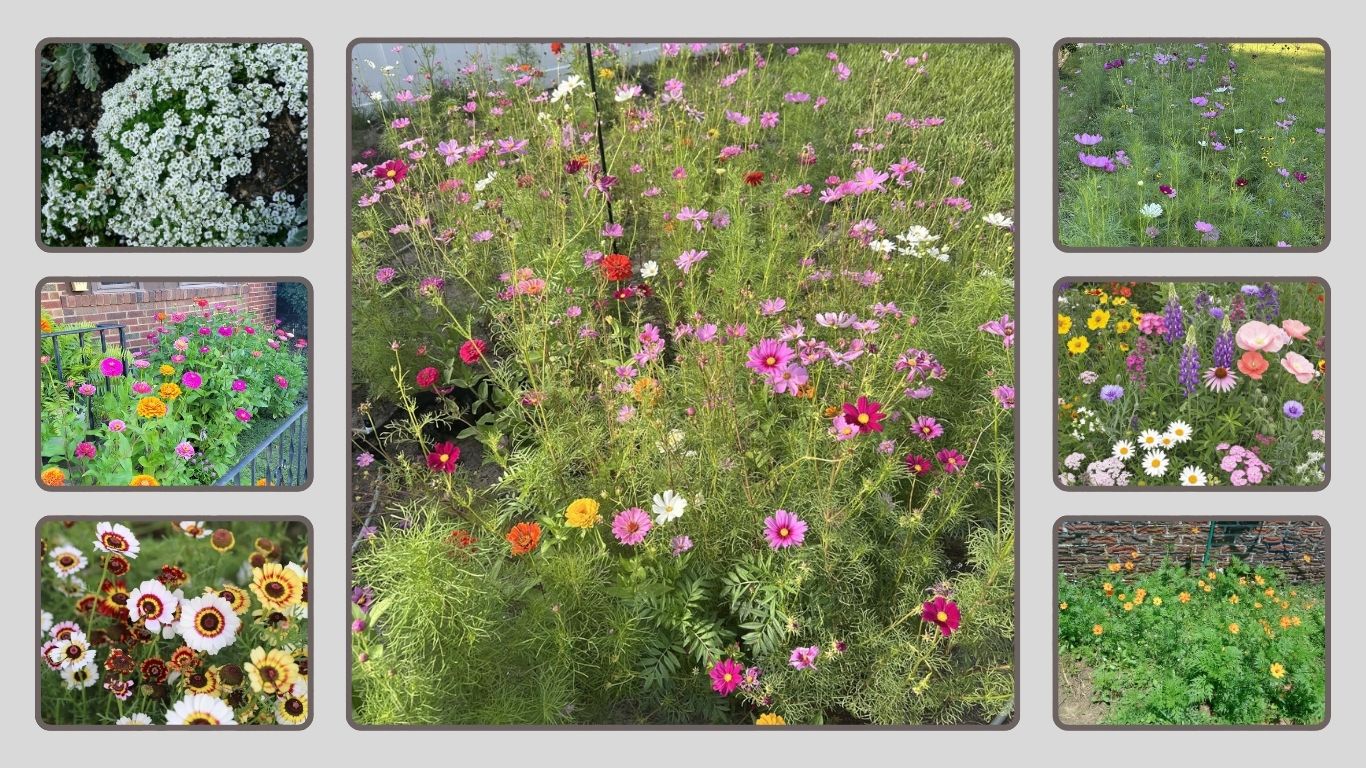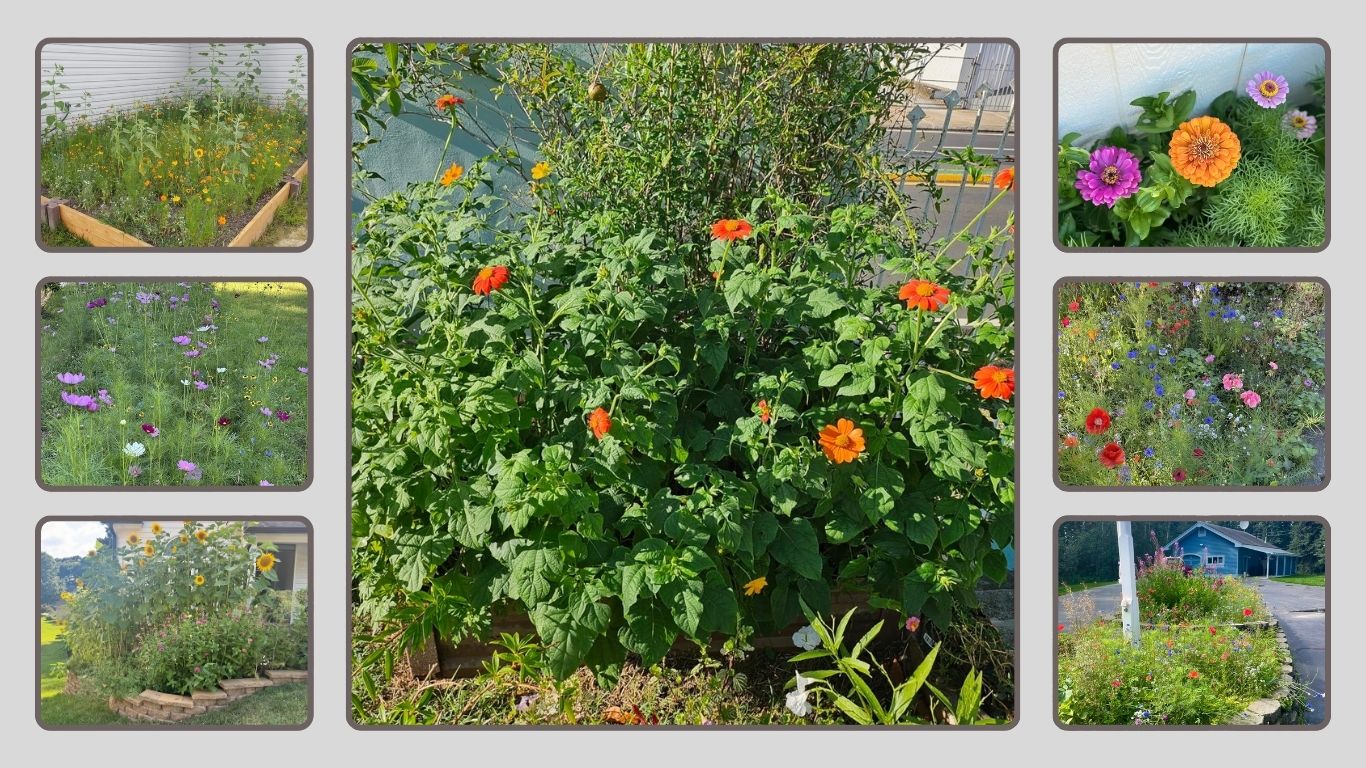






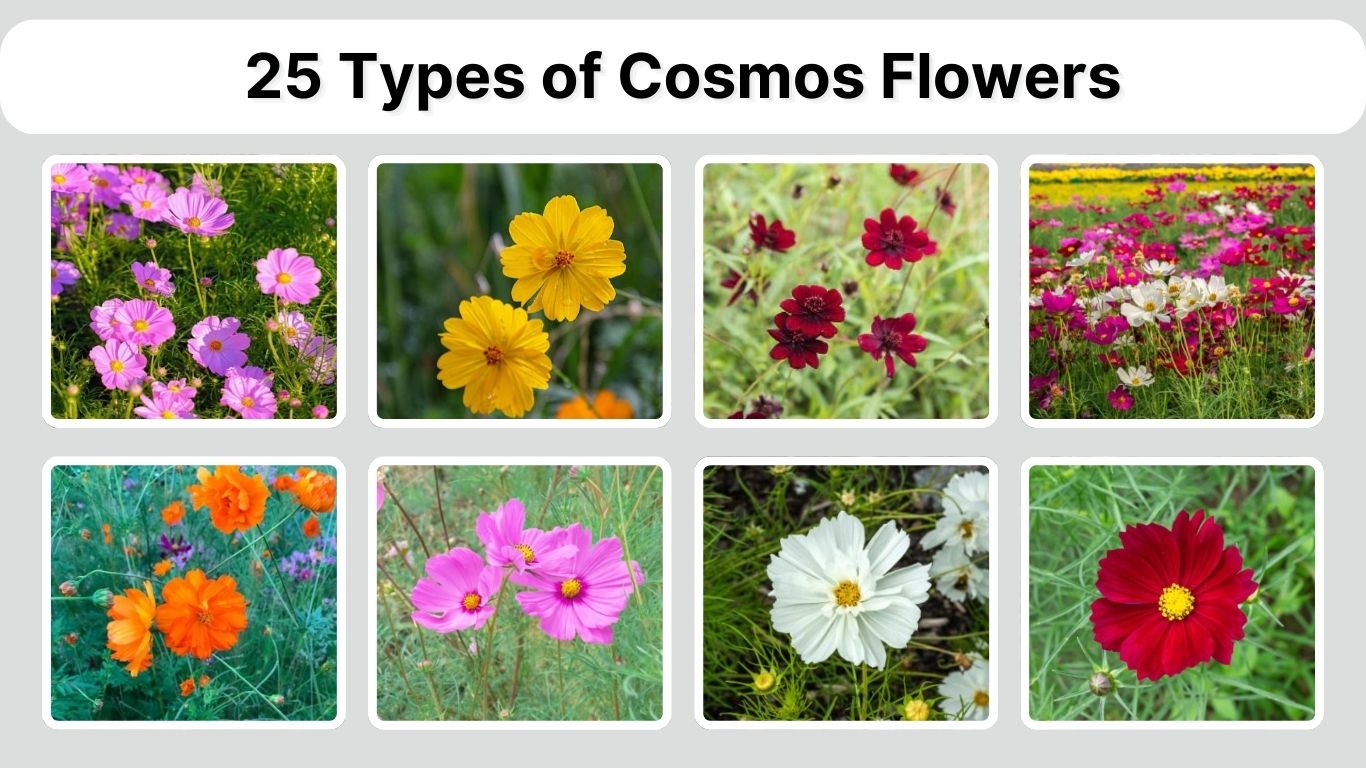
Cosmos flowers are popular garden favorites known for their delicate, feathery foliage and bright, daisy-like blooms that sway gracefully in the breeze. Native to Mexico and parts of Central America, cosmos are easy-to-grow plants that thrive in sunny conditions and bloom generously from summer to fall. They come in a wide range of colors, including white, pink, red, orange, and yellow, making them perfect for borders, containers, wildflower gardens, and pollinator-friendly landscapes.
1. Cosmos bipinnatus (Garden Cosmos)

Cosmos bipinnatus, commonly known as garden cosmos, is one of the most popular and widely grown cosmos species in the world. It is loved for its delicate, feathery foliage and large, daisy-like flowers that bloom in shades of pink, white, purple, and crimson. This fast-growing annual is easy to cultivate, attracts pollinators, and adds a soft, airy look to flower beds, borders, and cottage gardens.
Identification
- Scientific name: Cosmos bipinnatus
- Common name: Garden cosmos, Mexican aster
- Flower colors: Pink, white, rose, purple, crimson
- Bloom shape: Single, daisy-like flowers with yellow centers
- Plant type: Annual flowering plant
- Average height: 2 to 6 feet
- Leaves: Fine, feathery, thread-like foliage
- Bloom season: Summer to fall
Flower Characteristics
The flowers of Cosmos bipinnatus are typically 2 to 4 inches wide, featuring broad, rounded petals arranged around a bright yellow central disc. The blooms appear on long, slender stems, giving the plant a light and graceful appearance. Many cultivars produce single flowers, while some modern varieties offer semi-double or double forms.
Growth Habit
Cosmos bipinnatus grows upright with a loose, bushy structure and finely divided leaves that resemble soft green lace. The plant branches freely, producing multiple flowering stems throughout the season. Because of its height and airy form, it works well as a background plant, in mixed borders, or scattered naturally in wildflower gardens.
Popular Garden Uses
Garden cosmos is commonly planted in flower beds, along fences, and along walkways to create a natural, colorful display. It is also widely used in cut-flower gardens because the long stems and long-lasting blooms are excellent for fresh bouquets. In addition, it attracts bees, butterflies, and other beneficial pollinators, making it a valuable addition to wildlife-friendly gardens.
2. Cosmos sulphureus (Yellow Cosmos)

Cosmos sulphureus, commonly known as yellow cosmos or sulfur cosmos, is a bright and cheerful cosmos species admired for its vivid yellow, orange, and red-toned flowers. It is a fast-growing annual that blooms continuously through the warm months, bringing strong color and energy to gardens, borders, and pollinator-friendly landscapes.
Identification
- Scientific name: Cosmos sulphureus
- Common name: Yellow cosmos, sulfur cosmos
- Flower colors: Yellow, orange, deep orange, red-orange
- Bloom shape: Single, daisy-like flowers
- Plant type: Annual flowering plant
- Average height: 1 to 4 feet
- Leaves: Narrow, deeply lobed green foliage
- Bloom season: Summer to fall
Flower Characteristics
The flowers of Cosmos sulphureus are smaller than those of garden cosmos, usually measuring about 1.5 to 3 inches across. The petals are often slightly toothed or scalloped, surrounding a golden-yellow central disc. The intense warm colors make this species especially popular for bright garden themes and summer flower displays.
Growth Habit
Cosmos sulphureus has a more compact and bushy growth habit compared to Cosmos bipinnatus. The plants branch freely and produce masses of flowers on sturdy stems. It tolerates heat, humidity, and poor soils very well, which makes it a reliable choice for low-maintenance gardens.
Popular Garden Uses
Yellow cosmos is widely used in edging, container gardening, mass plantings, and butterfly gardens. Because of its continuous blooming and strong stems, it also works well as a cut flower. Its nectar-rich blooms attract bees, butterflies, and other beneficial insects throughout the growing season.
3. Cosmos atrosanguineus (Chocolate Cosmos)
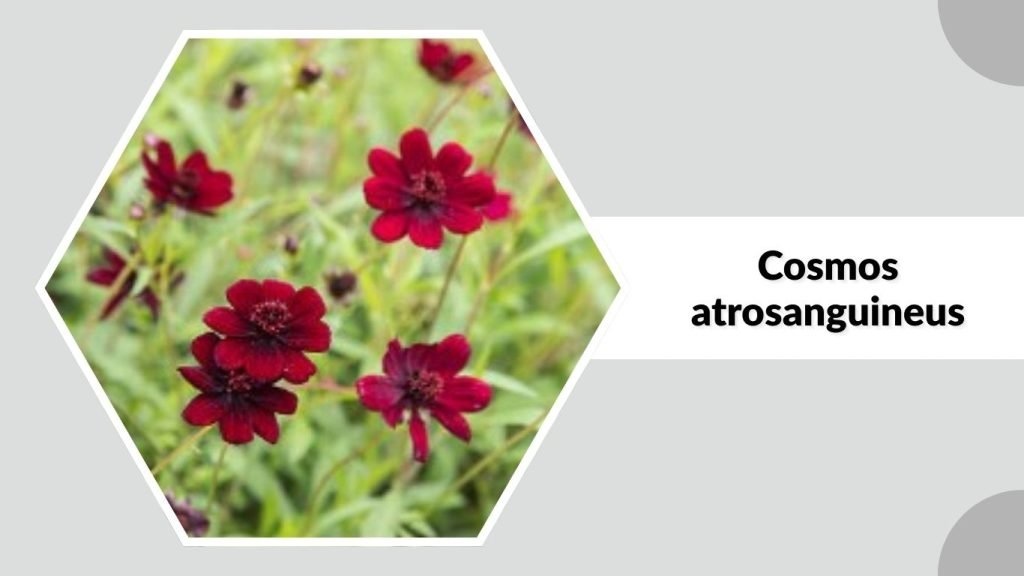
Cosmos atrosanguineus, commonly called chocolate cosmos, is a unique and rare cosmos species best known for its deep, velvety maroon flowers and light chocolate-like fragrance. Unlike most cosmos, this plant is a tender perennial grown from tuberous roots, making it especially popular in ornamental gardens and container displays.
Identification
- Scientific name: Cosmos atrosanguineus
- Common name: Chocolate cosmos
- Flower colors: Deep maroon to dark reddish-brown
- Bloom shape: Single, velvety daisy-like flowers
- Plant type: Tender perennial (often grown as annual)
- Average height: 1.5 to 2.5 feet
- Leaves: Pinnate, dark green foliage
- Bloom season: Summer to early autumn
Flower Characteristics
The flowers of chocolate cosmos are usually about 1.5 to 2 inches wide and have a rich, dark coloration that appears almost black in certain light. The central disc is dark, blending into the petals. On warm days, the blooms release a faint chocolate or vanilla-like scent, which adds to their ornamental appeal.
Growth Habit
Cosmos atrosanguineus grows in neat, upright clumps with slender, branching stems. The foliage is less feathery than garden cosmos but still finely divided. Because it forms underground tubers, the plant can be overwintered in frost-free areas or lifted and stored in colder climates.
Popular Garden Uses
Chocolate cosmos is commonly used in decorative borders, patio containers, and sensory gardens. Its dark flowers create dramatic contrast when planted alongside lighter-colored blooms. It is also valued as a cut flower, where both its rich color and subtle fragrance can be enjoyed indoors.
4. Sensation Mix Cosmos
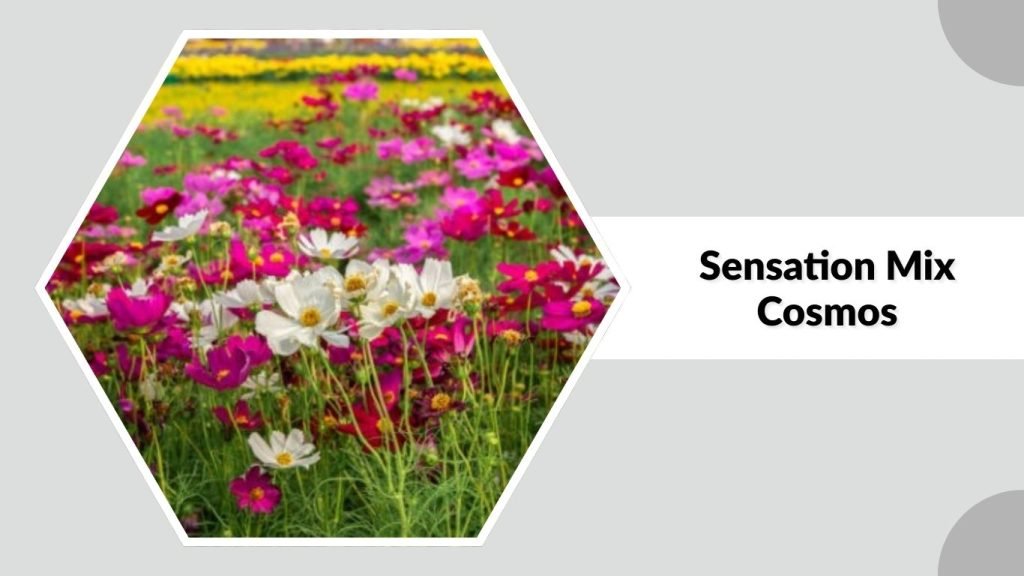
Sensation Mix Cosmos is one of the oldest and most popular cultivated varieties of cosmos, known for its tall growth, abundant blooms, and classic cottage-garden look. This mix features large, open flowers in soft and vibrant shades of pink, rose, magenta, and white, making it a favorite choice for borders and wildflower-style gardens.
Identification
- Botanical group: Cosmos bipinnatus ‘Sensation Mix’
- Common name: Sensation cosmos
- Flower colors: Pink, rose, crimson, magenta, white
- Bloom shape: Single, large daisy-like flowers
- Plant type: Annual flowering plant
- Average height: 3 to 6 feet
- Leaves: Fine, feathery, light-green foliage
- Bloom season: Early summer to fall
Flower Characteristics
Sensation Mix produces large blooms, often 3 to 4 inches wide, with broad petals and bright yellow centers. The flowers appear on long, slender stems, rising well above the foliage. Their simple but bold form makes them highly visible in the garden and very suitable for cutting.
Growth Habit
These cosmos grow tall and upright with a loose, airy structure. The finely divided leaves give the plants a soft, cloud-like appearance. They branch freely and continue to bloom heavily if spent flowers are removed regularly.
Popular Garden Uses
Sensation Mix cosmos is widely planted in cottage gardens, tall borders, and wildflower meadows. Because of their height and long stems, they are excellent for cut-flower gardens. They also attract bees, butterflies, and other pollinators, helping support garden biodiversity.
5. Bright Lights Cosmos
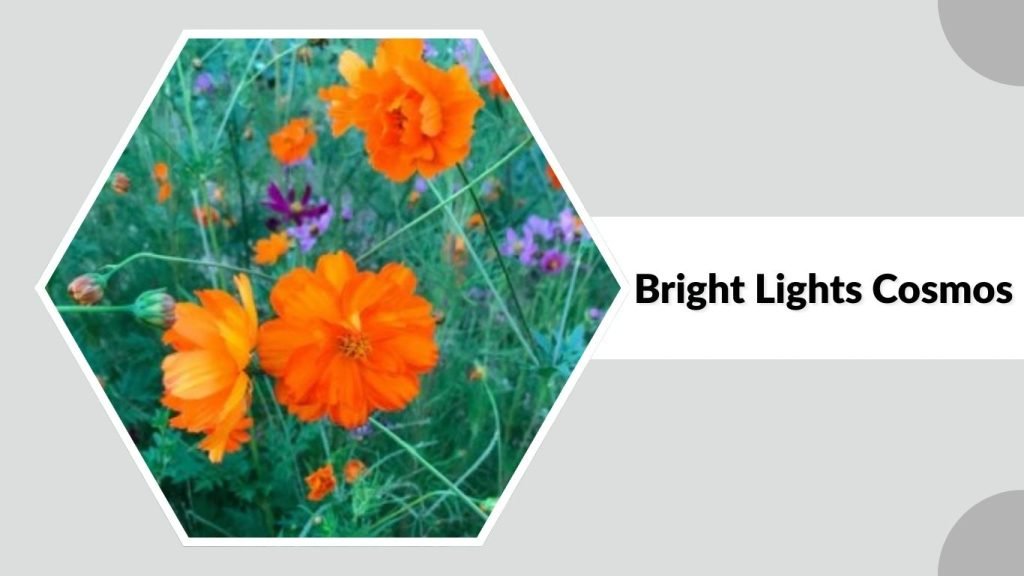
Bright Lights Cosmos is a striking and colorful cosmos variety prized for its intense, fiery shades and nonstop summer blooms. It belongs to the sulfur cosmos group and is especially valued for its heat tolerance, fast growth, and ability to create bold visual impact in garden beds and mass plantings.
Identification
- Botanical group: Cosmos sulphureus ‘Bright Lights’
- Common name: Bright Lights cosmos
- Flower colors: Yellow, gold, orange, scarlet, red-orange
- Bloom shape: Single, daisy-like flowers
- Plant type: Annual flowering plant
- Average height: 1.5 to 3 feet
- Leaves: Narrow, deeply lobed green foliage
- Bloom season: Early summer to fall
Flower Characteristics
Bright Lights produces medium-sized blooms, usually 2 to 3 inches across, with vibrant petals surrounding a golden-yellow central disc. The colors often appear in warm blends on the same plant, creating a lively and eye-catching display throughout the season.
Growth Habit
This cosmos grows in compact, bushy clumps with strong, branching stems that resist lodging. It thrives in full sun and poor to average soil, blooming heavily even in hot, dry conditions. Regular deadheading encourages continuous flowering.
Popular Garden Uses
Bright Lights cosmos is widely used in edging, container gardens, roadside plantings, and pollinator gardens. Its strong color makes it ideal for mass displays, while its nectar-rich flowers attract butterflies, bees, and other beneficial insects.
6. Sonata Pink Cosmos
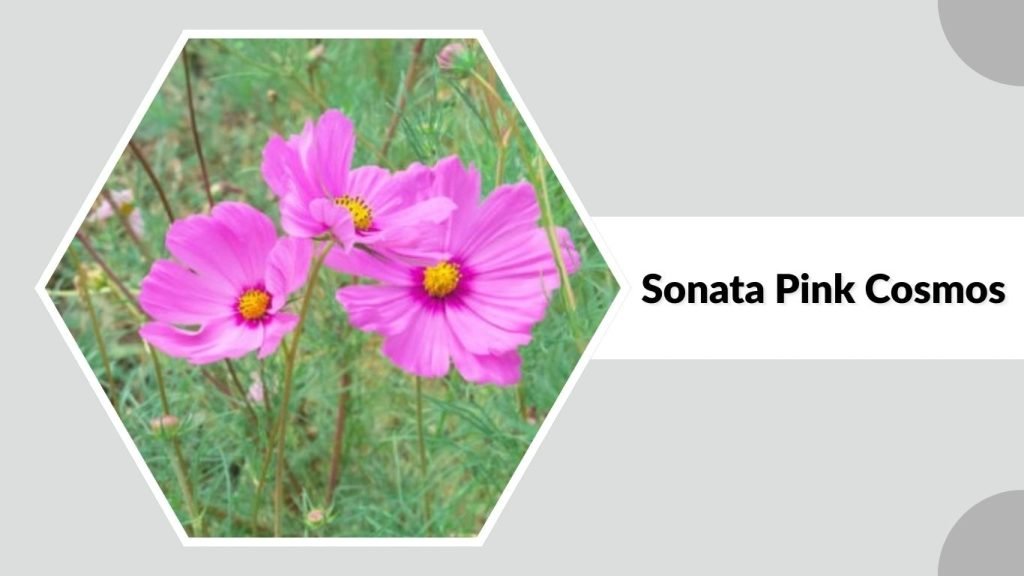
Sonata Pink Cosmos is a compact and refined cosmos variety specially bred for shorter growth and abundant flowering. It features soft pink, daisy-like blooms held neatly above finely textured foliage, making it an excellent choice for small gardens, containers, and low borders.
Identification
- Botanical group: Cosmos bipinnatus ‘Sonata Pink’
- Common name: Sonata Pink cosmos
- Flower colors: Soft to medium pink
- Bloom shape: Single, daisy-like flowers
- Plant type: Annual flowering plant
- Average height: 18 to 24 inches
- Leaves: Fine, feathery green foliage
- Bloom season: Early summer to fall
Flower Characteristics
The blooms of Sonata Pink are typically 2.5 to 3 inches wide, with smooth, rounded petals arranged around a bright yellow center. The gentle pink tones give this variety a delicate, elegant look, while the long flowering period ensures steady color in the garden.
Growth Habit
This variety grows in a compact, mounded form with well-branched stems. Unlike taller cosmos, Sonata Pink rarely needs staking. It performs best in full sun and continues flowering well into late summer with regular deadheading.
Popular Garden Uses
Sonata Pink cosmos is ideal for containers, window boxes, front-of-border plantings, and patio gardens. Its neat size and continuous blooms also make it suitable for urban gardens and decorative floral displays, while still attracting bees and butterflies.
7. Sonata White Cosmos
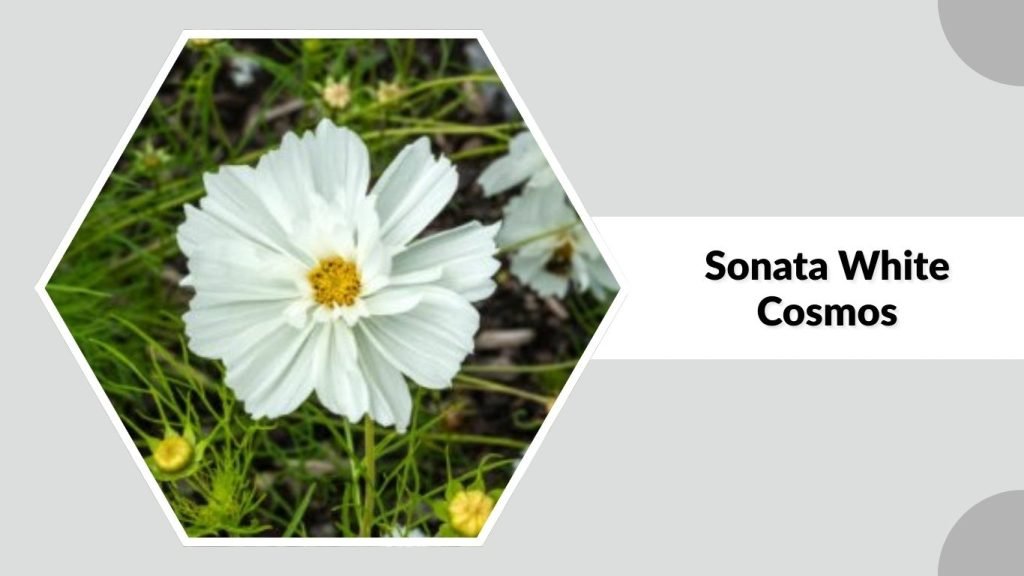
Sonata White Cosmos is a graceful, compact cosmos variety known for its pure white blooms and tidy growth habit. It offers the classic, airy beauty of traditional cosmos in a shorter form, making it perfect for small gardens, containers, and formal flower beds.
Identification
- Botanical group: Cosmos bipinnatus ‘Sonata White’
- Common name: Sonata White cosmos
- Flower colors: Pure white with yellow center
- Bloom shape: Single, daisy-like flowers
- Plant type: Annual flowering plant
- Average height: 18 to 24 inches
- Leaves: Fine, feathery green foliage
- Bloom season: Early summer to fall
Flower Characteristics
Sonata White produces 2.5 to 3-inch-wide flowers with clean white petals arranged around a bright golden center. The simple, crisp coloration makes this variety especially attractive in moon gardens and mixed floral designs.
Growth Habit
This cosmos grows in a compact, well-branched form that stays neat throughout the season. It thrives in full sun and light, well-drained soil, blooming continuously when spent flowers are removed regularly.
Popular Garden Uses
Sonata White cosmos is widely used in containers, edging, wedding gardens, and contrast plantings. Its elegant white blooms pair beautifully with brightly colored flowers and also work well in cut-flower arrangements and pollinator-friendly gardens.
8. Sonata Carmine Cosmos
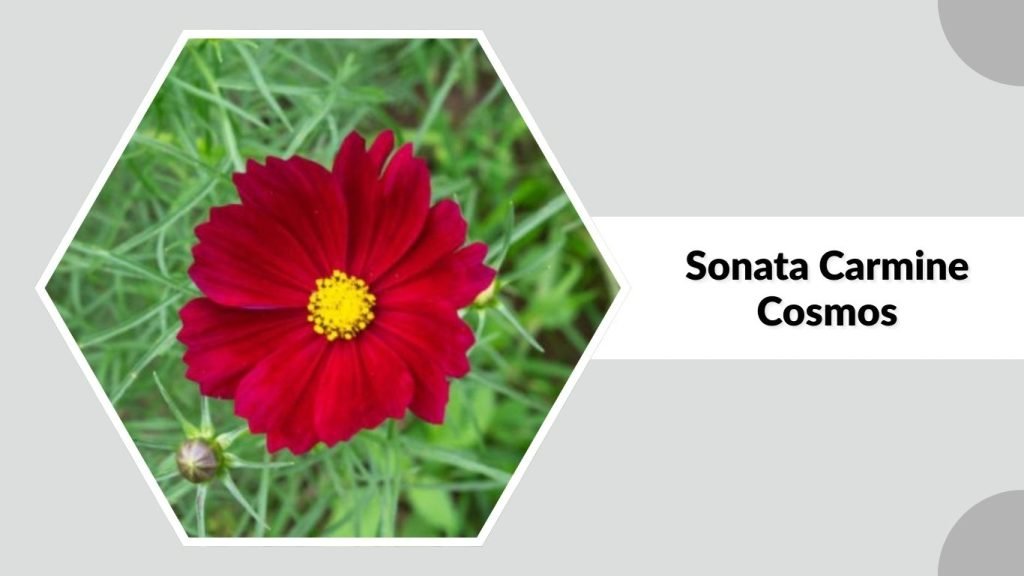
Sonata Carmine Cosmos is a compact, free-flowering cosmos variety admired for its rich carmine-pink blooms and tidy garden form. It brings strong, elegant color to small spaces while keeping the soft, airy look that cosmos flowers are famous for.
Identification
- Botanical group: Cosmos bipinnatus ‘Sonata Carmine’
- Common name: Sonata Carmine cosmos
- Flower colors: Deep carmine pink, rose-red
- Bloom shape: Single, daisy-like flowers
- Plant type: Annual flowering plant
- Average height: 18 to 24 inches
- Leaves: Fine, feathery green foliage
- Bloom season: Early summer to fall
Flower Characteristics
The blooms are usually 2.5 to 3 inches wide, featuring smooth, rounded petals in deep pink tones surrounding a bright yellow center. The saturated color makes Sonata Carmine stand out strongly in mixed plantings and floral displays.
Growth Habit
This variety grows in a compact, bushy form with multiple flowering stems. It prefers full sun and light, well-drained soil and continues blooming for months, especially when faded flowers are removed regularly.
Popular Garden Uses
Sonata Carmine cosmos is ideal for pots, low borders, raised beds, and patio gardens. Its neat size, long flowering season, and vivid color also make it popular for decorative cut-flower arrangements and pollinator gardens.
9. Double Click Rose Cosmos
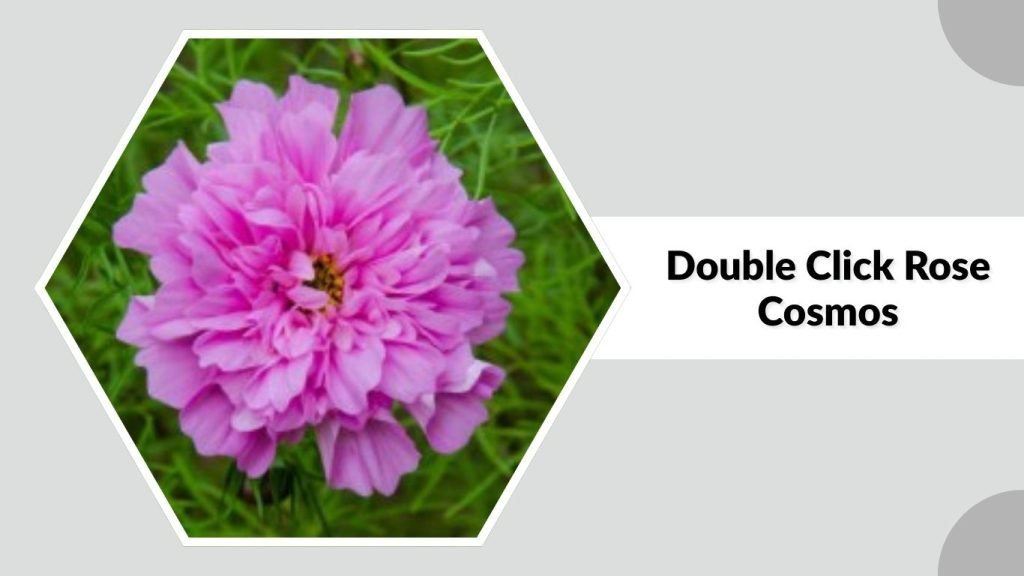
Double Click Rose Cosmos is a stunning double-flowered cosmos variety known for its full, ruffled blooms that resemble small peonies or carnations. Its rich rose-pink petals create a lush, romantic look, making it a favorite for ornamental gardens and cut-flower production.
Identification
- Botanical group: Cosmos bipinnatus ‘Double Click Rose’
- Common name: Double Click Rose cosmos
- Flower colors: Rose pink to deep pink
- Bloom shape: Double, layered, ruffled flowers
- Plant type: Annual flowering plant
- Average height: 2 to 4 feet
- Leaves: Fine, feathery green foliage
- Bloom season: Early summer to fall
Flower Characteristics
The flowers are densely packed with multiple layers of petals, giving them a soft, pom-pom or peony-like appearance. Blooms are usually 3 to 4 inches wide and often show slight variations in petal form, adding texture and depth to garden displays.
Growth Habit
Double Click Rose grows upright with freely branching stems that hold blooms well above the foliage. It thrives in full sun and moderate soil and produces flowers continuously through the warm season, especially with regular cutting or deadheading.
Popular Garden Uses
This cosmos is widely used in cottage gardens, romantic borders, and cut-flower gardens. Its long stems and full blooms make it excellent for bouquets, while its nectar-rich centers still attract bees and butterflies.
10. Double Click Cranberries Cosmos
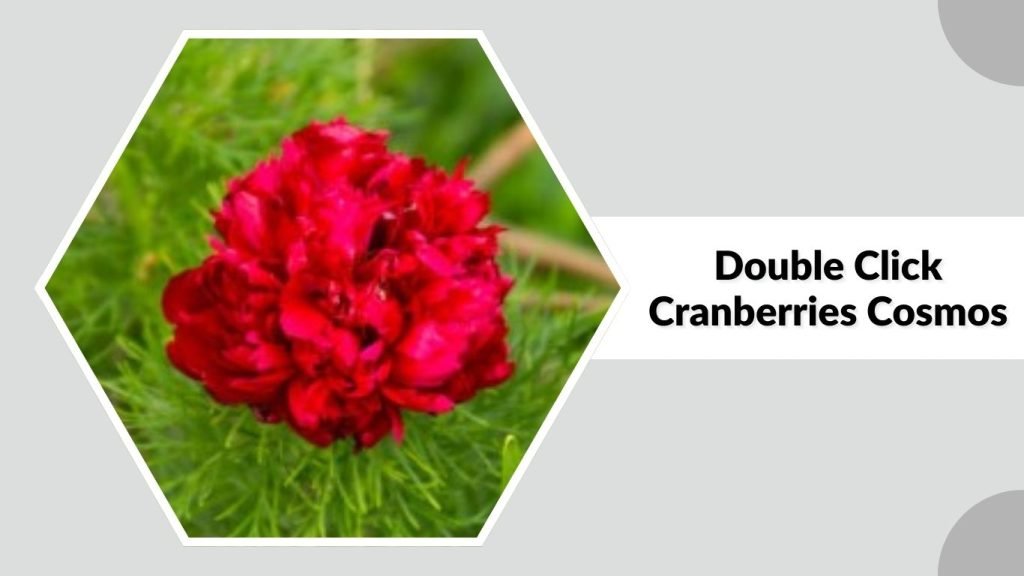
Double Click Cranberries Cosmos is a bold, double-flowered cosmos variety prized for its deep crimson to cranberry-red blooms and lush, layered petals. Its dramatic color and full flower form make it one of the most eye-catching cosmos choices for ornamental beds and floral arrangements.
Identification
- Botanical group: Cosmos bipinnatus ‘Double Click Cranberries’
- Common name: Double Click Cranberries cosmos
- Flower colors: Deep red, cranberry, burgundy tones
- Bloom shape: Double, ruffled, multi-petaled flowers
- Plant type: Annual flowering plant
- Average height: 2 to 4 feet
- Leaves: Fine, feathery green foliage
- Bloom season: Early summer to fall
Flower Characteristics
The blooms are typically 3 to 4 inches wide, with densely layered petals forming rounded, fluffy flowers. The intense red shades deepen as the flowers mature, giving the plant a rich and luxurious appearance in the garden.
Growth Habit
This variety grows upright and moderately tall, with strong branching stems that support its heavy blooms well. It thrives in full sun and well-drained soil and continues producing flowers throughout the season when regularly deadheaded.
Popular Garden Uses
Double Click Cranberries cosmos is popular in decorative borders, cottage-style gardens, and especially in cut-flower gardens. Its dramatic color makes it a standout in bouquets, while its long blooming period provides continuous harvest.
11. Sea Shells Cosmos
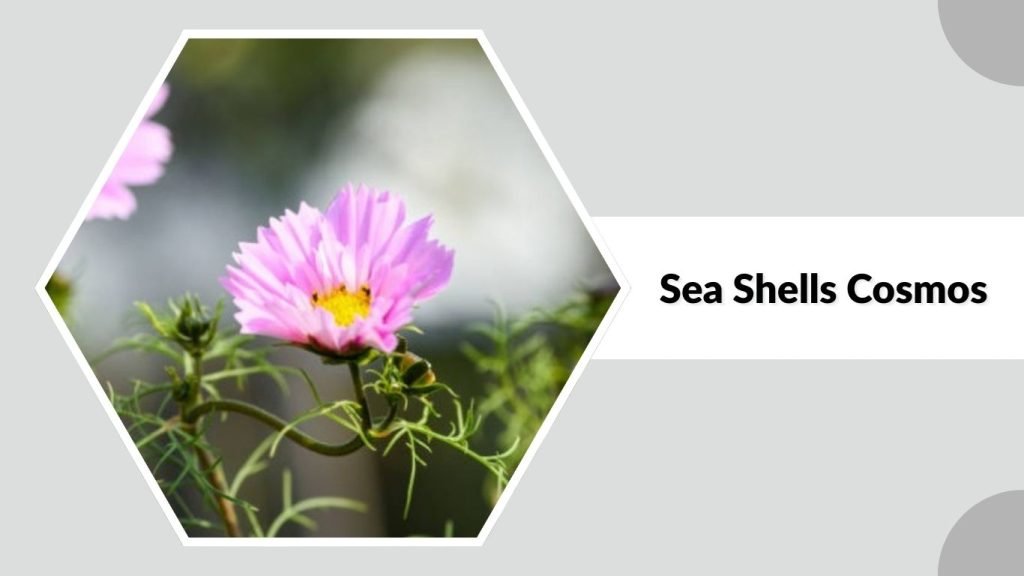
Sea Shells Cosmos is a distinctive and playful cosmos variety famous for its tubular, spoon-shaped petals that resemble small seashells. This unusual flower form sets it apart from traditional cosmos and makes it a favorite for novelty gardens and eye-catching floral displays.
Identification
- Botanical group: Cosmos bipinnatus ‘Sea Shells’
- Common name: Sea Shells cosmos
- Flower colors: White, soft pink, rose, crimson
- Bloom shape: Tubular, fluted, shell-like petals
- Plant type: Annual flowering plant
- Average height: 2 to 3 feet
- Leaves: Fine, feathery green foliage
- Bloom season: Summer to fall
Flower Characteristics
The petals are rolled into narrow tubes that flare slightly at the tips, giving each bloom a starburst or shell-like appearance. Flowers are usually 2.5 to 3 inches wide and often vary in petal shape on the same plant, creating a whimsical, textured look.
Growth Habit
Sea Shells cosmos grows upright with lightly branching stems and soft, fern-like foliage. It thrives in full sun and light soils, blooming steadily through the warm months with minimal care.
Popular Garden Uses
This variety is commonly used in mixed borders, children’s gardens, and specialty flower beds where unusual forms are desired. It is also grown for cut flowers, adding unique texture and interest to bouquets.
12. Purity Cosmos
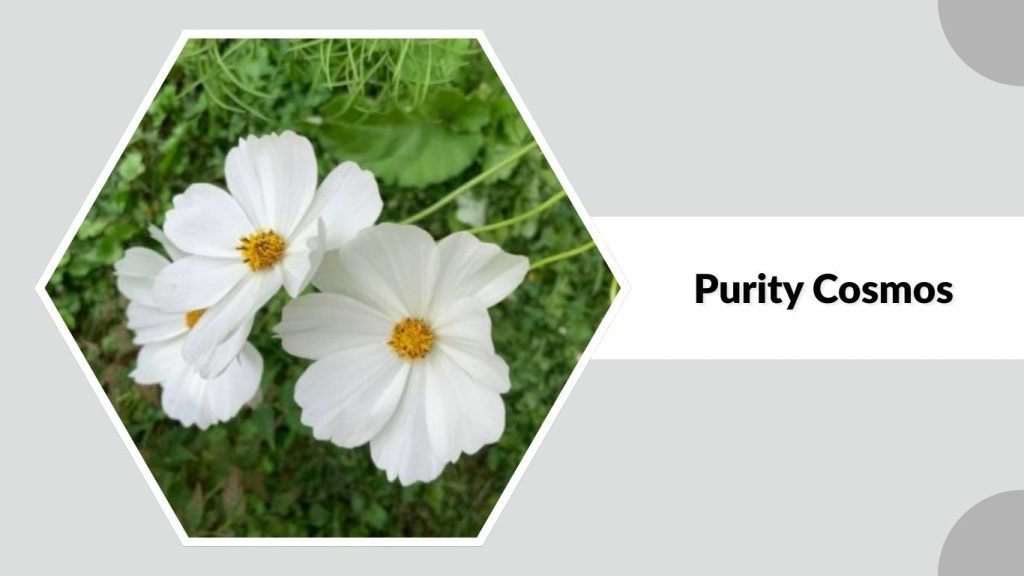
Purity Cosmos is a classic white-flowering cosmos variety admired for its large, simple blooms and elegant garden presence. It is one of the most widely grown white cosmos cultivars and is especially valued for brightening flower beds and producing excellent cut flowers.
Identification
- Botanical group: Cosmos bipinnatus ‘Purity’
- Common name: Purity cosmos
- Flower colors: Pure white with yellow center
- Bloom shape: Single, large daisy-like flowers
- Plant type: Annual flowering plant
- Average height: 3 to 5 feet
- Leaves: Fine, feathery green foliage
- Bloom season: Summer to fall
Flower Characteristics
Purity produces large blooms, often 3 to 4 inches wide, with broad white petals arranged around a bright golden center. The flowers appear on long, slender stems, giving them a floating, airy look above the foliage.
Growth Habit
This variety grows tall and upright with a loose, graceful form. It branches freely and blooms continuously through the warm season, especially when regularly deadheaded. It performs best in full sun and well-drained soil.
Popular Garden Uses
Purity cosmos is commonly planted in tall borders, cottage gardens, and cutting gardens. Its long stems and clean white flowers make it ideal for bouquets, wedding arrangements, and pollinator-friendly landscapes.
13. Dwarf Sensation Cosmos
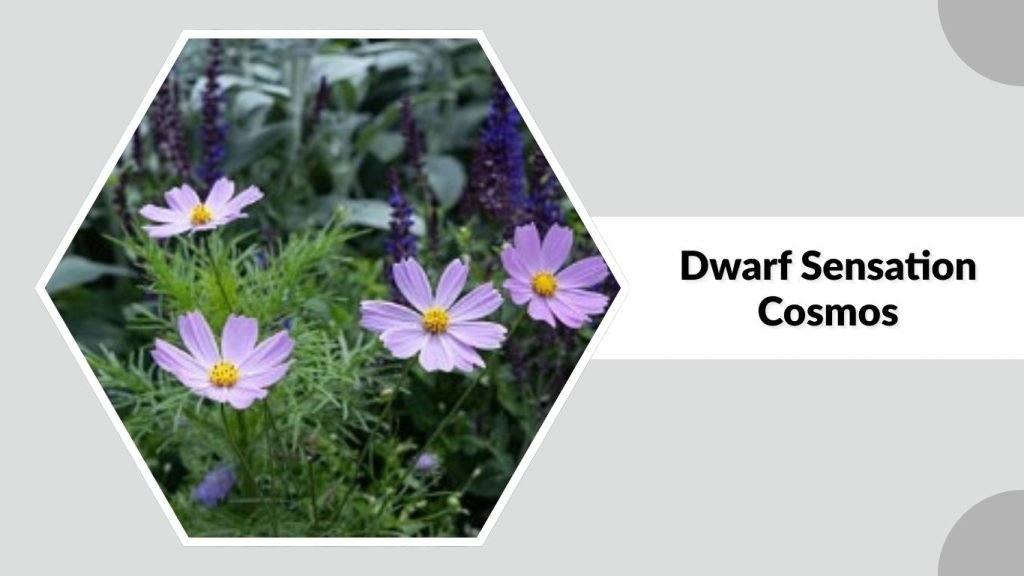
Dwarf Sensation Cosmos is a compact form of the classic Sensation series, bred to provide the same colorful, free-flowering performance in a shorter, more manageable plant. It features bright blooms in shades of pink, rose, crimson, and white, making it perfect for small gardens and container growing.
Identification
- Botanical group: Cosmos bipinnatus ‘Dwarf Sensation’
- Common name: Dwarf Sensation cosmos
- Flower colors: Pink, rose, crimson, white
- Bloom shape: Single, daisy-like flowers
- Plant type: Annual flowering plant
- Average height: 12 to 24 inches
- Leaves: Fine, feathery green foliage
- Bloom season: Summer to fall
Flower Characteristics
The flowers are medium-sized, typically 2.5 to 3 inches across, with smooth, rounded petals and bright yellow centers. They bloom abundantly and maintain strong color throughout the growing season.
Growth Habit
This variety grows in a compact, bushy form with well-branched stems. It does not usually require staking and performs well in full sun, continuing to flower steadily with regular removal of spent blooms.
Popular Garden Uses
Dwarf Sensation cosmos is widely used in pots, window boxes, edging, and small garden beds. Its neat growth, bright colors, and long flowering season also make it suitable for urban gardens and pollinator plantings.
14. Picotee Cosmos
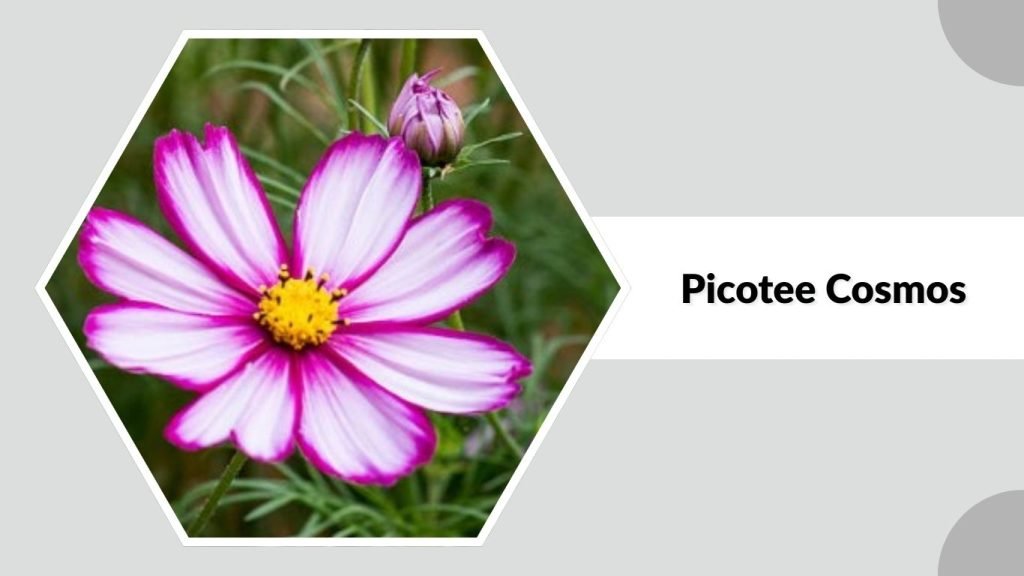
Picotee Cosmos is a striking cosmos variety known for its distinctive bicolor petals, usually featuring white or pale pink flowers edged with bold crimson or rose margins. This elegant contrast gives the blooms a refined, decorative look that stands out in both gardens and floral arrangements.
Identification
- Botanical group: Cosmos bipinnatus ‘Picotee’
- Common name: Picotee cosmos
- Flower colors: White or pale pink with dark pink or crimson edges
- Bloom shape: Single, daisy-like flowers
- Plant type: Annual flowering plant
- Average height: 2 to 4 feet
- Leaves: Fine, feathery green foliage
- Bloom season: Summer to fall
Flower Characteristics
The flowers are usually 2.5 to 3.5 inches wide, with broad petals that display clear color edging around the margins. Each bloom may vary slightly in its picotee pattern, adding visual interest and uniqueness to every plant.
Growth Habit
Picotee cosmos grows upright with lightly branching stems and soft, fern-like foliage. It prefers full sun and well-drained soil and continues blooming freely throughout the season with minimal maintenance.
Popular Garden Uses
This variety is commonly planted in ornamental borders, cottage gardens, and cutting gardens. Its attractive two-tone blooms make it especially popular for bouquets, floral decorations, and pollinator-friendly plantings.
15. Candy Stripe Cosmos
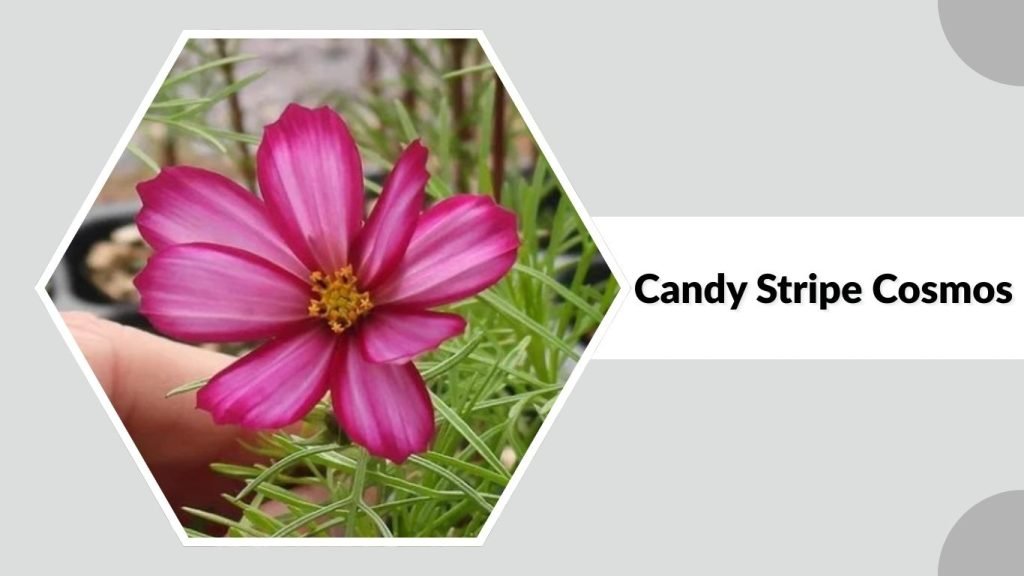
Candy Stripe Cosmos is a charming and playful cosmos variety recognized for its white petals decorated with pink streaks, splashes, and striping. Each bloom is unique, giving the plant a lively, hand-painted appearance that adds personality and softness to garden spaces.
Identification
- Botanical group: Cosmos bipinnatus ‘Candy Stripe’
- Common name: Candy Stripe cosmos
- Flower colors: White with pink streaks and stripes
- Bloom shape: Single, daisy-like flowers
- Plant type: Annual flowering plant
- Average height: 2 to 4 feet
- Leaves: Fine, feathery green foliage
- Bloom season: Summer to fall
Flower Characteristics
The blooms are typically 2.5 to 3.5 inches wide, featuring broad white petals irregularly brushed with pink lines and patches. Some flowers appear lightly striped, while others show bold splashes of color, creating a varied and artistic display.
Growth Habit
Candy Stripe cosmos grows upright with a loose, airy structure and freely branching stems. It thrives in full sun and light soil and produces continuous blooms throughout the warm months, especially when spent flowers are removed.
Popular Garden Uses
This cosmos is widely used in cottage gardens, informal borders, and cut-flower gardens. Its unusual petal patterns make it especially attractive in fresh bouquets, while its nectar-rich blooms draw bees and butterflies.
16. Radiance Cosmos
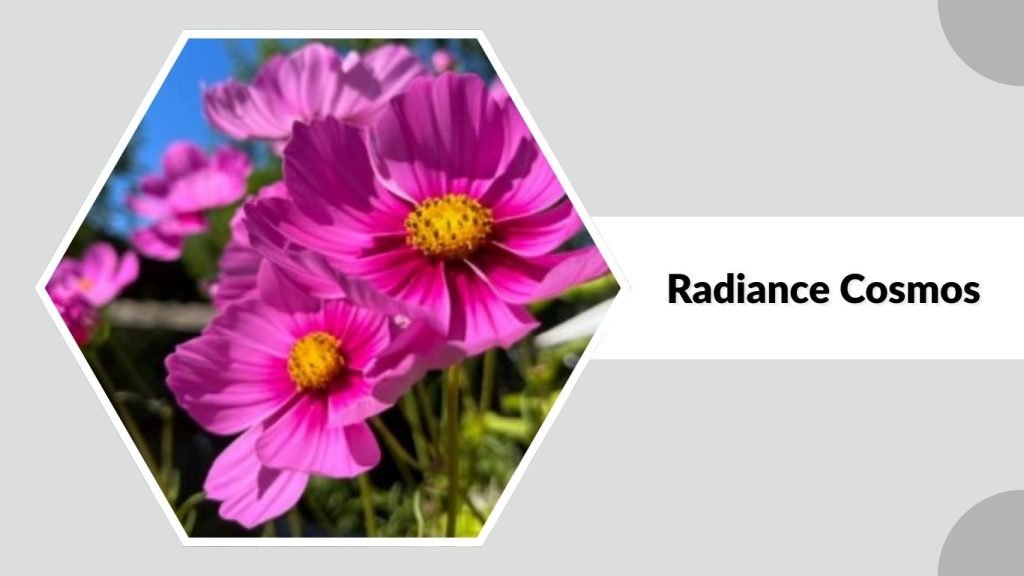
Radiance Cosmos is a classic and eye-catching cosmos variety admired for its large, bright blooms and soft color contrast. It typically features rosy pink petals with a lighter center, creating a glowing, radiant effect that stands out beautifully in sunny garden settings.
Identification
- Botanical group: Cosmos bipinnatus ‘Radiance’
- Common name: Radiance cosmos
- Flower colors: Bright pink with pale or whitish centers
- Bloom shape: Single, large daisy-like flowers
- Plant type: Annual flowering plant
- Average height: 2 to 4 feet
- Leaves: Fine, feathery green foliage
- Bloom season: Summer to fall
Flower Characteristics
Radiance produces large blooms, often 3 to 4 inches wide, with broad petals that deepen in color toward the edges and fade softly near the center. The yellow central disc adds strong contrast and enhances the flower’s luminous appearance.
Growth Habit
This variety grows upright with a light, airy structure and freely branching stems. It thrives in full sun and well-drained soil and blooms continuously through the season, especially when regularly deadheaded.
Popular Garden Uses
Radiance cosmos is commonly planted in mixed borders, cottage gardens, and cut-flower beds. Its bright color and long stems make it excellent for bouquets, while its nectar-rich flowers attract bees, butterflies, and other pollinators.
17. Versailles Red Cosmos
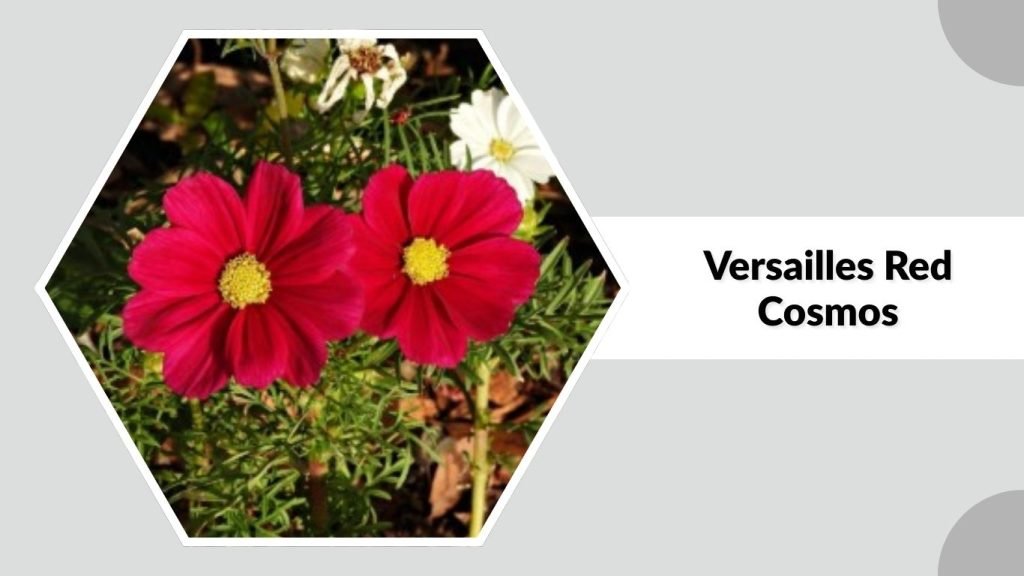
Versailles Red Cosmos is a tall, vigorous cosmos variety known for its rich red blooms and extra-long, strong stems. It was specially bred for cutting gardens, offering excellent flower production and high-quality stems ideal for floral arrangements.
Identification
- Botanical group: Cosmos bipinnatus ‘Versailles Red’
- Common name: Versailles Red cosmos
- Flower colors: Deep red, crimson
- Bloom shape: Single, daisy-like flowers
- Plant type: Annual flowering plant
- Average height: 3 to 5 feet
- Leaves: Fine, feathery green foliage
- Bloom season: Summer to fall
Flower Characteristics
The blooms are typically 2.5 to 3.5 inches wide, featuring rich red petals surrounding a bright yellow center. The long, straight stems hold the flowers upright, making them especially attractive and practical for cutting.
Growth Habit
This variety grows tall and upright with a more uniform and less sprawling form than many standard cosmos. It prefers full sun and fertile, well-drained soil and continues producing new flowers throughout the season.
Popular Garden Uses
Versailles Red cosmos is widely planted in cutting gardens, tall borders, and flower farms. Its strong stems and long vase life make it a favorite for bouquets, while its open flowers still attract bees and butterflies.
18. Versailles White Cosmos
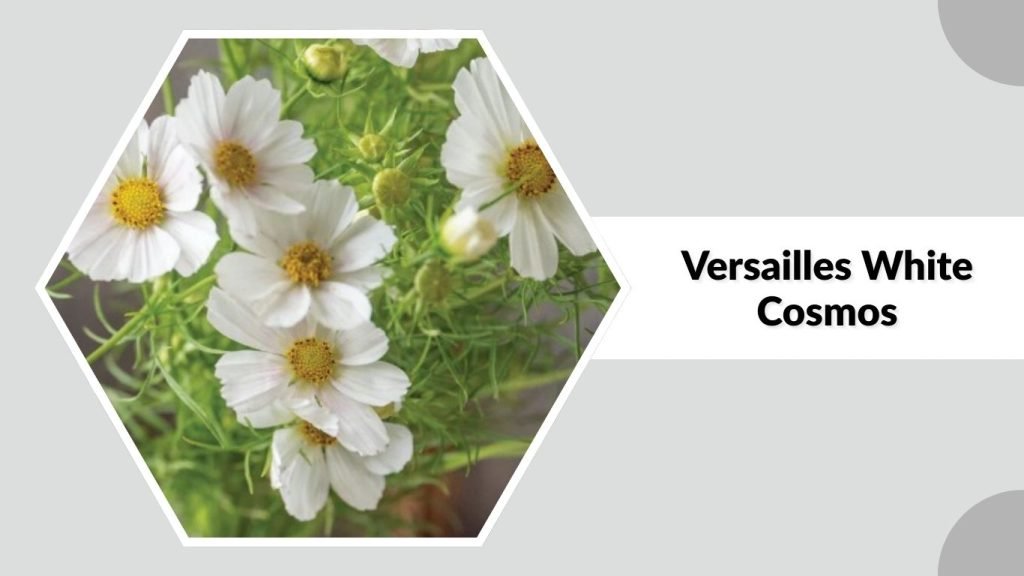
Versailles White Cosmos is a refined, tall-growing cosmos variety developed especially for high-quality cut flowers. It features pure white, open-faced blooms held on long, sturdy stems, making it both an elegant garden plant and a reliable choice for floral arrangements.
Identification
- Botanical group: Cosmos bipinnatus ‘Versailles White’
- Common name: Versailles White cosmos
- Flower colors: Pure white with yellow center
- Bloom shape: Single, daisy-like flowers
- Plant type: Annual flowering plant
- Average height: 3 to 5 feet
- Leaves: Fine, feathery green foliage
- Bloom season: Summer to fall
Flower Characteristics
The blooms are usually 2.5 to 3.5 inches wide, with smooth white petals arranged neatly around a golden central disc. The clean, simple form gives the flowers a classic, elegant appearance that works well in both formal and informal garden designs.
Growth Habit
This variety grows tall and upright with strong, straight stems that are less likely to flop than standard cosmos. It thrives in full sun and well-drained soil and flowers continuously when harvested or deadheaded regularly.
Popular Garden Uses
Versailles White cosmos is widely used in cutting gardens, tall borders, and wedding-style floral gardens. Its long stems and bright white flowers make it excellent for bouquets, while its open centers attract bees and other pollinators.
19. Versailles Tetra Cosmos
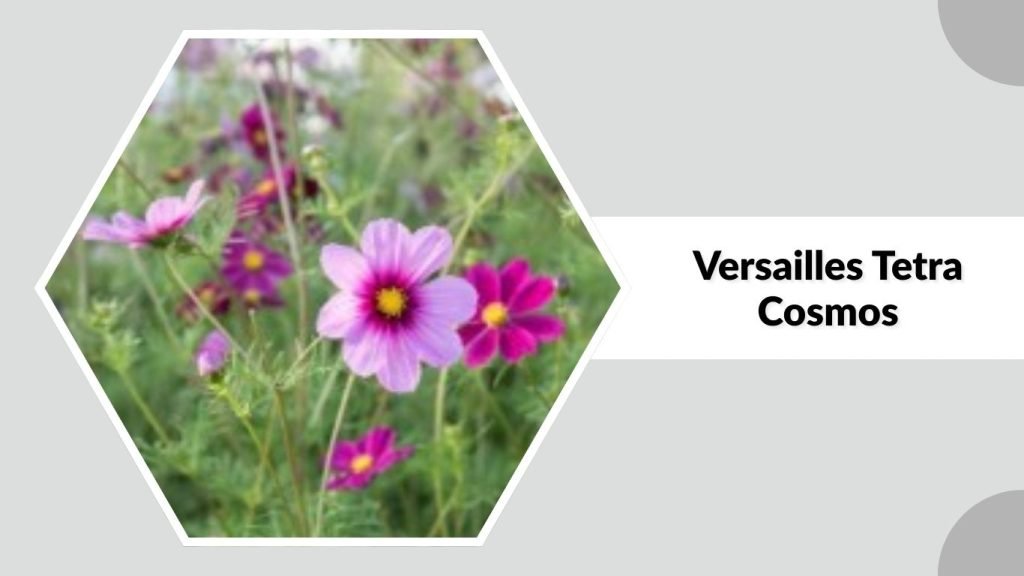
Versailles Tetra Cosmos is an improved cosmos variety developed to produce larger flowers, stronger stems, and more uniform growth. It is especially valued in cut-flower gardens for its reliable performance and high-quality blooms in mixed shades.
Identification
- Botanical group: Cosmos bipinnatus ‘Versailles Tetra’
- Common name: Versailles Tetra cosmos
- Flower colors: White, pink, rose, crimson (mix)
- Bloom shape: Single, large daisy-like flowers
- Plant type: Annual flowering plant
- Average height: 3 to 5 feet
- Leaves: Fine, feathery green foliage
- Bloom season: Summer to fall
Flower Characteristics
The blooms are typically larger than standard cosmos, often measuring 3 to 4 inches across. They feature broad, smooth petals and bright yellow centers, with colors appearing in soft to vivid tones depending on the plant.
Growth Habit
Versailles Tetra grows tall and upright with thick, straight stems designed to support the large blooms. It performs best in full sun and fertile, well-drained soil, producing abundant flowers over a long blooming season.
Popular Garden Uses
This cosmos is widely grown in professional cutting gardens, flower farms, and tall mixed borders. Its long stems, large blooms, and uniform growth habit make it excellent for bouquets, market flowers, and pollinator-friendly gardens.
20. Lemon Crest Cosmos
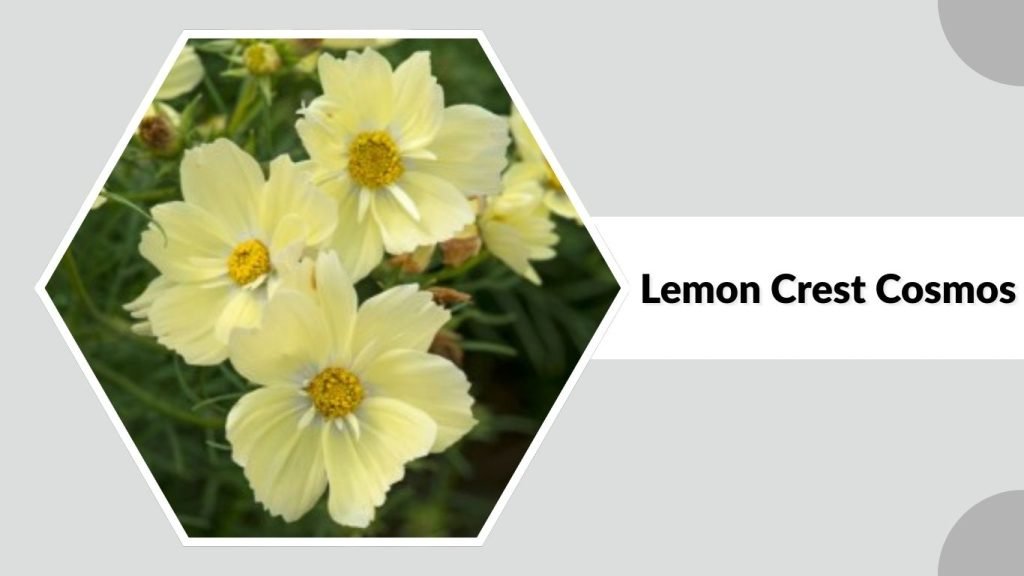
Lemon Crest Cosmos is a bright and cheerful cosmos variety celebrated for its lemon-yellow flowers and finely textured foliage. It belongs to the sulfur cosmos group and is known for its long blooming season, heat tolerance, and strong garden performance.
Identification
- Botanical group: Cosmos sulphureus ‘Lemon Crest’
- Common name: Lemon Crest cosmos
- Flower colors: Lemon yellow to golden yellow
- Bloom shape: Single, daisy-like flowers
- Plant type: Annual flowering plant
- Average height: 1.5 to 3 feet
- Leaves: Narrow, deeply cut green foliage
- Bloom season: Early summer to fall
Flower Characteristics
The blooms are usually 2 to 3 inches wide, with bright lemon-yellow petals surrounding a darker yellow central disc. The clear, fresh color makes this variety especially effective for lighting up garden spaces.
Growth Habit
Lemon Crest cosmos grows in compact, bushy clumps with well-branched stems. It thrives in full sun, tolerates heat and poor soils, and blooms continuously throughout the warm months with minimal care.
Popular Garden Uses
This cosmos is commonly planted in borders, containers, mass plantings, and pollinator gardens. Its bright flowers attract bees and butterflies, while its compact size makes it ideal for smaller garden areas.
21. Cosmic Yellow Cosmos
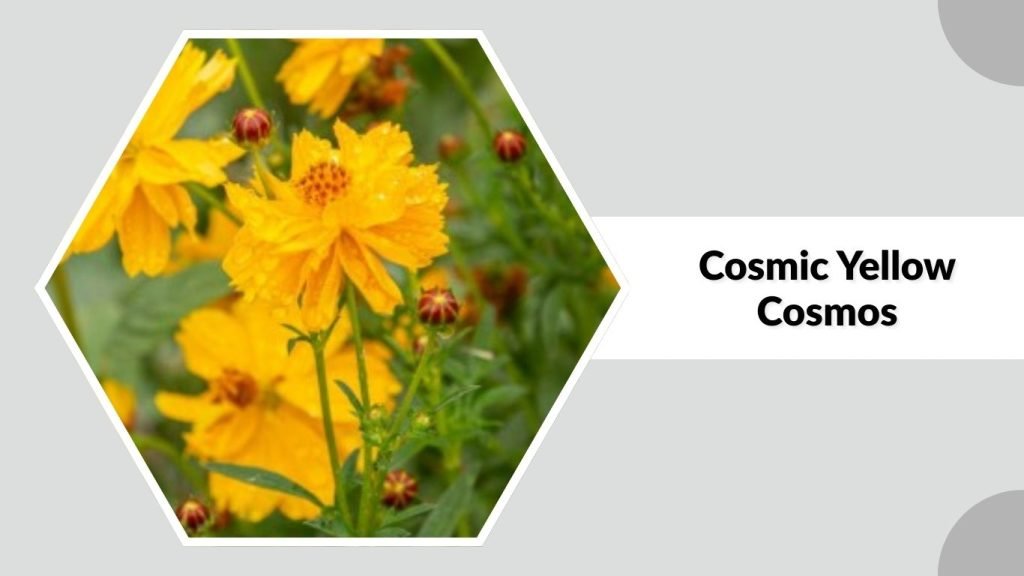
Cosmic Yellow Cosmos is a compact sulfur-cosmos variety bred for uniform growth, early flowering, and intense golden-yellow blooms. It is part of the “Cosmic” series, which is especially popular for neat garden displays and container planting.
Identification
- Botanical group: Cosmos sulphureus ‘Cosmic Yellow’
- Common name: Cosmic Yellow cosmos
- Flower colors: Bright golden yellow
- Bloom shape: Single, daisy-like flowers
- Plant type: Annual flowering plant
- Average height: 12 to 20 inches
- Leaves: Narrow, finely cut green foliage
- Bloom season: Early summer to fall
Flower Characteristics
The flowers are usually 2 to 2.5 inches wide, featuring vivid yellow petals surrounding a deeper golden central disc. The intense coloration remains strong even in full sun and high heat.
Growth Habit
Cosmic Yellow grows in a low, compact, well-branched form. It flowers earlier than many taller cosmos and continues blooming heavily throughout the season with very little maintenance.
Popular Garden Uses
This variety is ideal for containers, edging, window boxes, and small flower beds. Its bright color also makes it effective in mass plantings and pollinator gardens, where it attracts bees and butterflies.
22. Cosmic Orange Cosmos
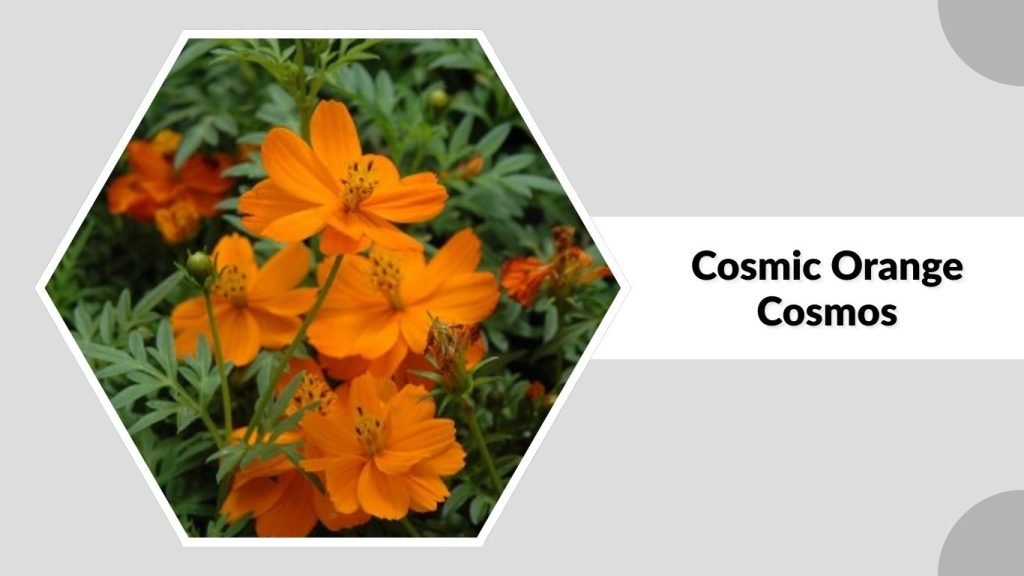
Cosmic Orange Cosmos is a vibrant, compact cosmos variety known for its intense orange blooms and tidy growth habit. It belongs to the Cosmic series, which is bred for early flowering, uniform size, and excellent performance in containers and small gardens.
Identification
- Botanical group: Cosmos sulphureus ‘Cosmic Orange’
- Common name: Cosmic Orange cosmos
- Flower colors: Bright orange to deep orange
- Bloom shape: Single, daisy-like flowers
- Plant type: Annual flowering plant
- Average height: 12 to 20 inches
- Leaves: Narrow, finely cut green foliage
- Bloom season: Early summer to fall
Flower Characteristics
The blooms are usually about 2 to 2.5 inches wide, with rich orange petals surrounding a golden-yellow central disc. The strong, warm tones make this variety especially eye-catching in sunny garden settings.
Growth Habit
Cosmic Orange grows in compact, rounded clumps with excellent branching. It begins flowering early and continues producing abundant blooms throughout the season, especially in full sun.
Popular Garden Uses
This cosmos is widely used in pots, hanging baskets, edging, and decorative garden beds. Its bright flowers attract butterflies and bees and also work well in colorful summer floral displays.
23. Xanthos Cosmos
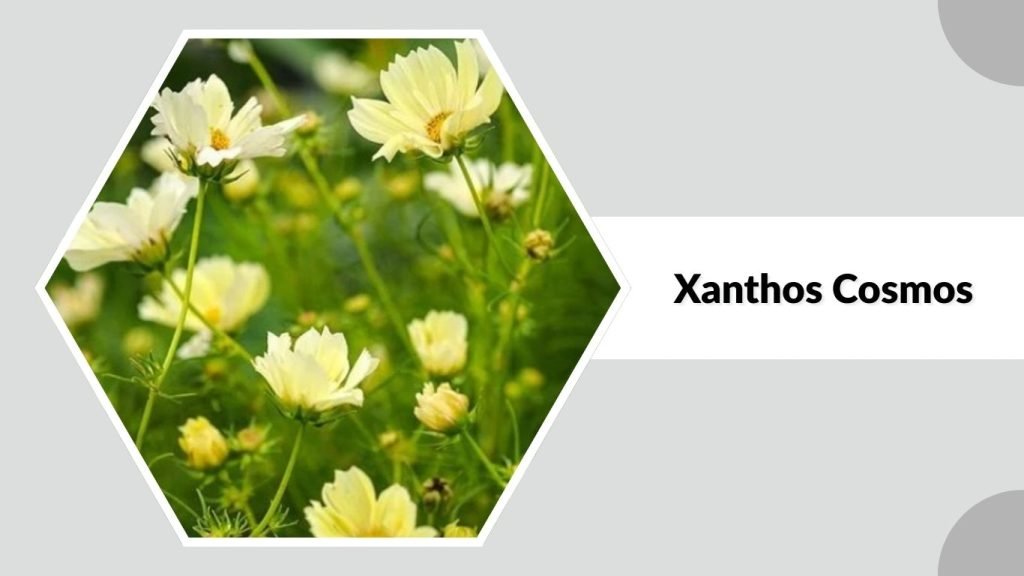
Xanthos Cosmos is a charming dwarf cosmos variety appreciated for its soft lemon-yellow blooms and naturally compact growth. It is one of the shortest cosmos types available, making it especially suitable for containers, balconies, and small garden spaces.
Identification
- Botanical group: Cosmos bipinnatus ‘Xanthos’
- Common name: Xanthos cosmos
- Flower colors: Pale yellow to creamy lemon
- Bloom shape: Single, daisy-like flowers
- Plant type: Annual flowering plant
- Average height: 10 to 16 inches
- Leaves: Fine, feathery green foliage
- Bloom season: Early summer to fall
Flower Characteristics
The flowers are about 2 to 2.5 inches wide, with soft yellow petals and a bright yellow center. The gentle color gives Xanthos a delicate, pastel appearance that blends beautifully with both bold and subtle garden palettes.
Growth Habit
Xanthos grows in a neat, low, mounded form with excellent branching. It flowers early and steadily, requiring little maintenance beyond full sun and occasional deadheading.
Popular Garden Uses
This variety is ideal for pots, window boxes, edging, and small ornamental beds. Its compact size and soft coloring also make it attractive for patio gardens and pollinator-friendly plantings.
24. Rubenza Cosmos
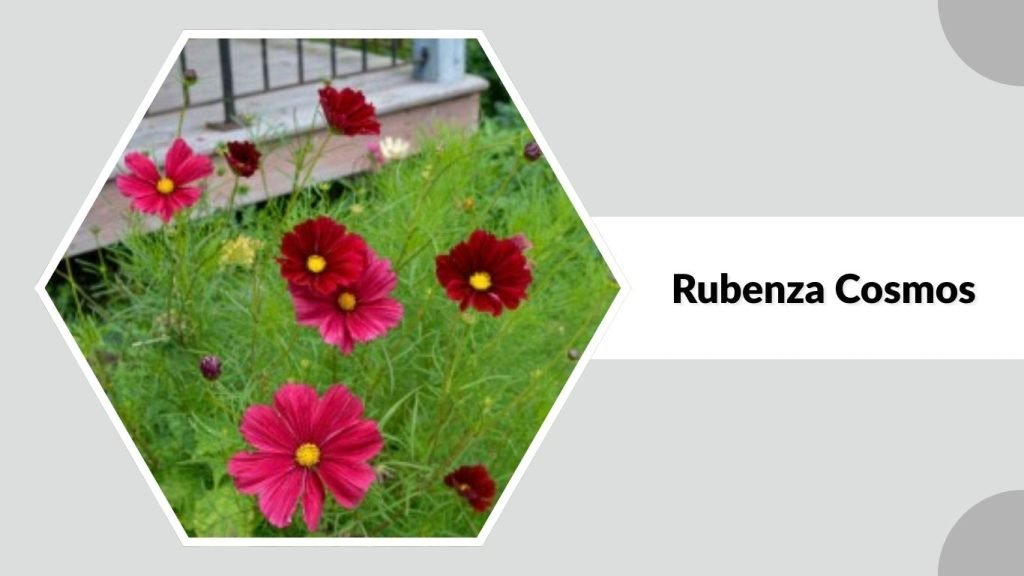
Rubenza Cosmos is a modern, award-winning cosmos variety known for its deep ruby-red buds that gradually open into rich rose-crimson flowers. As the blooms mature, they softly fade to smoky pink, creating a beautiful multitone effect on the same plant.
Identification
- Botanical group: Cosmos bipinnatus ‘Rubenza’
- Common name: Rubenza cosmos
- Flower colors: Deep ruby red fading to rose pink
- Bloom shape: Single, daisy-like flowers
- Plant type: Annual flowering plant
- Average height: 20 to 30 inches
- Leaves: Fine, feathery green foliage
- Bloom season: Early summer to fall
Flower Characteristics
The blooms are usually 2.5 to 3 inches wide. Young flowers appear dark red, then slowly fade to lighter pink shades, giving the plant a constantly changing color display throughout the season.
Growth Habit
Rubenza grows in a compact, bushy, and well-branched form. It blooms early, tolerates heat well, and continues flowering heavily with minimal care.
Popular Garden Uses
Rubenza cosmos is popular in containers, front borders, cottage gardens, and cut-flower beds. Its shifting colors add depth to garden designs, while its nectar-rich blooms attract bees and butterflies.
25. Chocolate Cosmos
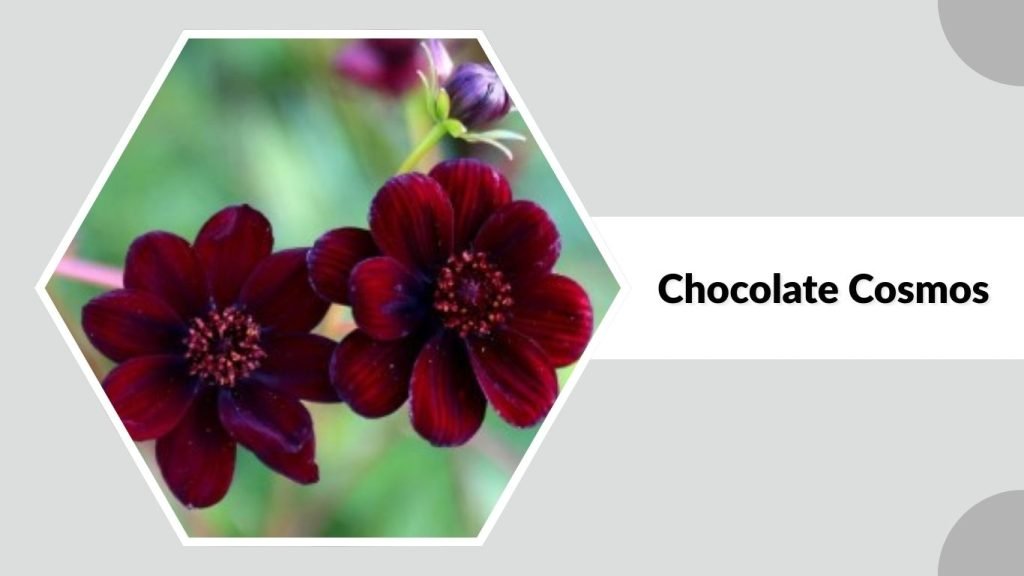
Chocolate Cosmos is a distinctive cosmos type famous for its deep, dark red to brownish flowers and subtle chocolate-like fragrance. It is botanically known as Cosmos atrosanguineus and is often grown as a specialty ornamental plant rather than a typical annual cosmos.
Identification
- Scientific name: Cosmos atrosanguineus
- Common name: Chocolate cosmos
- Flower colors: Deep maroon, dark red, chocolate-brown
- Bloom shape: Single, velvety daisy-like flowers
- Plant type: Tender perennial (often grown as annual)
- Average height: 1.5 to 2.5 feet
- Leaves: Pinnate, dark green foliage
- Bloom season: Summer to early autumn
Flower Characteristics
The blooms are about 1.5 to 2 inches wide with rich, velvety petals that appear almost black in certain lighting. On warm days, the flowers release a faint chocolate or vanilla-like scent, which adds a sensory appeal beyond their dramatic appearance.
Growth Habit
Chocolate cosmos grows in upright clumps with slender, branching stems. Unlike most cosmos, it develops tuberous roots that can be lifted and stored in cold climates. It prefers full sun and well-drained soil for best flowering.
Popular Garden Uses
This cosmos is commonly planted in decorative borders, patio containers, and sensory gardens. Its dark flowers create striking contrast in mixed plantings, and it is also valued as a cut flower for unique floral arrangements.
FAQs
What is the most common type of cosmos flower?
The most common type of cosmos flower is Cosmos bipinnatus, often called garden cosmos. It is widely grown for its feathery foliage, large daisy-like blooms, and wide color range. Most popular garden varieties, such as Sensation, Purity, and Candy Stripe, come from this species.
Are cosmos flowers annual or perennial?
Most cosmos flowers are annuals, meaning they complete their life cycle in one growing season. However, chocolate cosmos (Cosmos atrosanguineus) is a tender perennial that grows from tuberous roots and can return each year in warm climates or when overwintered indoors.
Do cosmos flowers attract pollinators?
Yes, cosmos flowers are excellent for attracting pollinators. Their open centers provide easy access to nectar and pollen, making them very attractive to bees, butterflies, and other beneficial insects throughout the summer and early fall.
Are cosmos flowers easy to grow?
Cosmos are considered very easy to grow, even for beginners. They germinate quickly, tolerate poor soil, and thrive in full sun. Once established, they require minimal care and continue blooming for months with simple deadheading.
Can cosmos flowers be grown in containers?
Yes, many cosmos varieties grow well in containers, especially compact types like Sonata, Cosmic, and Xanthos. Containers should have good drainage and be placed in full sun. Regular watering and occasional feeding help keep container-grown cosmos blooming well.