

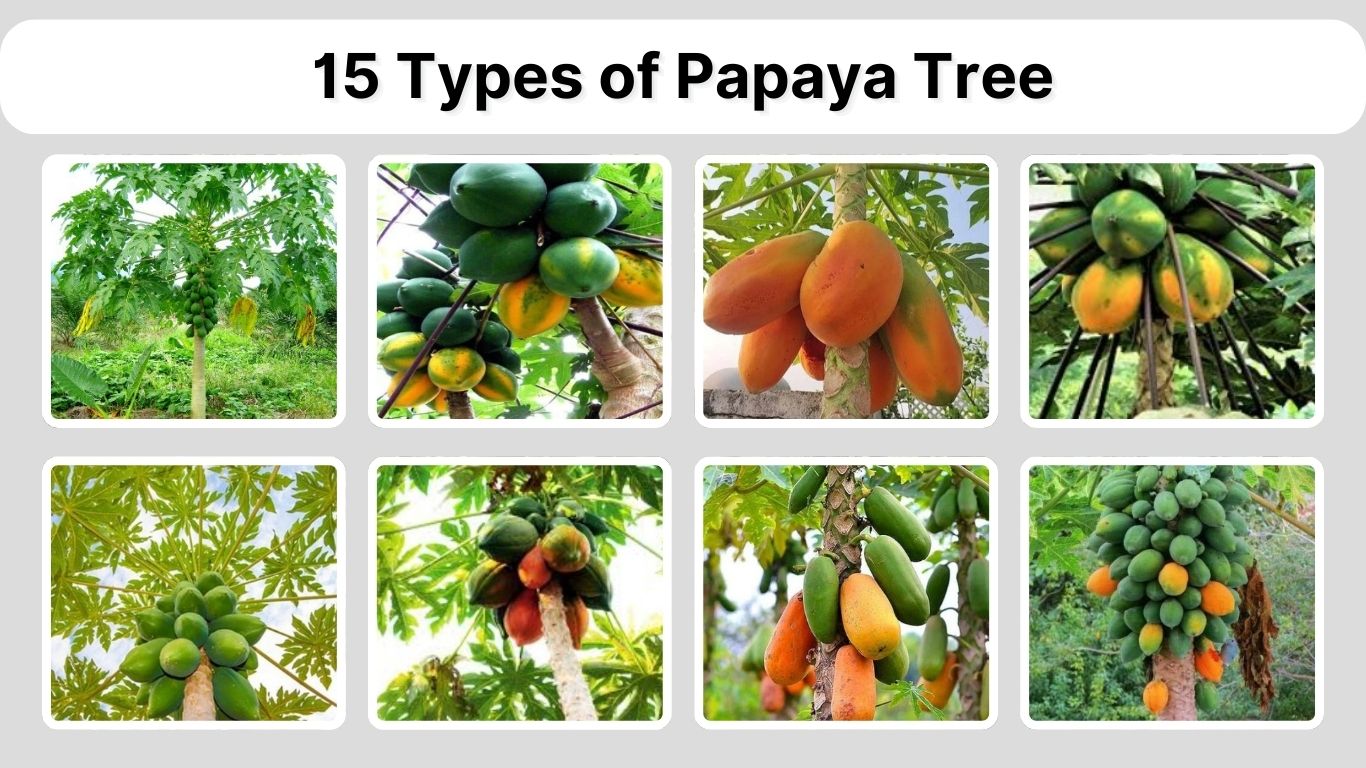
Papaya trees are fast-growing tropical plants known for their tall, soft trunks, large deeply lobed leaves, and sweet, nutrient-rich fruits. They are widely cultivated in warm regions around the world for home gardens and commercial farms. Different types of papaya trees vary in fruit size, color, flavor, and growth habit, making them suitable for many climates and uses. From small dessert papayas to large commercial varieties, papaya trees play an important role in tropical fruit production.
1. Solo Papaya Tree
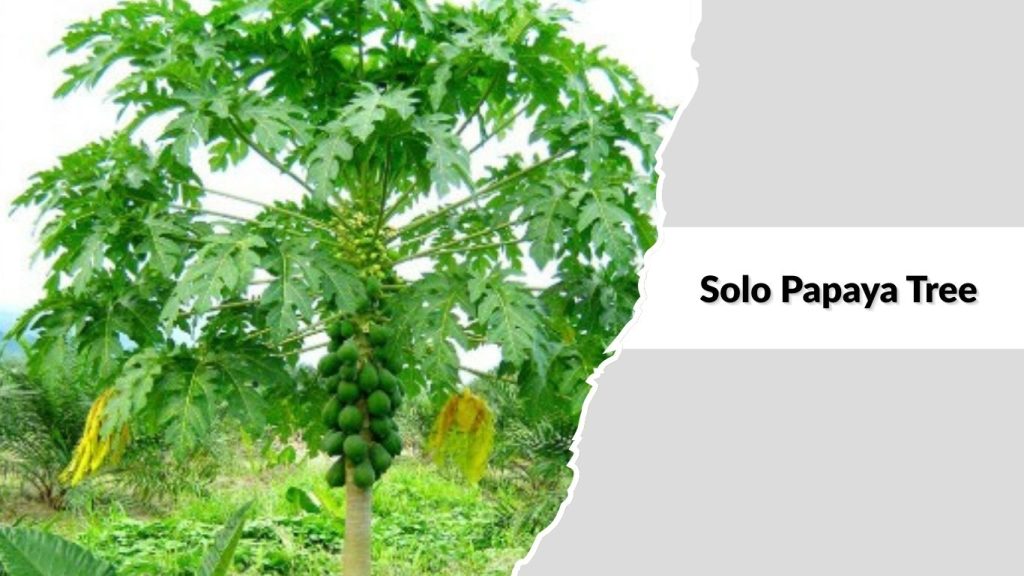
The Solo papaya tree is one of the most popular and widely cultivated papaya varieties in the world. It is best known for its small to medium-sized fruits, sweet flavor, and smooth, thin skin. Solo papaya trees are especially common in tropical and subtropical regions, where they grow quickly and begin fruiting within a year under good conditions.
Identification
- Small to medium-sized pear-shaped fruits
- Smooth yellow to orange skin when ripe
- Sweet, aromatic orange flesh
- Central hollow cavity filled with black seeds
- Slender, soft, green trunk with leaf scars
- Large, deeply lobed leaves forming a crown
Fruit Characteristics
Solo papayas typically weigh between 400 grams and 1 kilogram. The flesh is bright orange, juicy, and noticeably sweeter than many larger papaya varieties. Because of their manageable size and low seed cavity, Solo papayas are popular for fresh eating and individual servings.
Tree Growth Habit
The Solo papaya tree grows upright with a single, unbranched stem and a leafy crown at the top. It is a fast-growing plant that can reach 6 to 10 feet within the first year. Flowers emerge along the trunk below the leaves, eventually developing into hanging clusters of fruit.
Common Uses
Solo papayas are mainly eaten fresh, added to fruit salads, smoothies, and desserts. They are also used in juices and breakfast bowls. Due to their sweetness and attractive size, Solo papayas are often grown commercially for fresh markets.
2. Red Lady Papaya Tree

The Red Lady papaya tree is a high-yielding hybrid variety widely grown in tropical and subtropical regions. It is especially popular for its early fruiting habit, uniform fruit shape, and rich reddish-orange flesh. This variety is favored by both home gardeners and commercial growers because of its strong growth, disease tolerance, and consistently sweet flavor.
Identification
- Medium to large oval fruits
- Smooth green skin turning yellow when ripe
- Deep reddish-orange flesh
- Thick flesh with a small central seed cavity
- Black, round seeds clustered in the center
- Tall, straight, soft trunk with prominent leaf scars
- Large palmate leaves forming a wide crown
Fruit Characteristics
Red Lady papayas are usually larger than Solo papayas, often weighing between 1.5 and 2.5 kilograms. The flesh is firm, juicy, and very sweet, making it excellent for fresh eating. The reduced seed cavity allows for more edible flesh, which increases its market value.
Tree Growth Habit
The Red Lady papaya tree grows rapidly and can begin producing fruit within 8 to 10 months after planting. It typically grows 8 to 12 feet tall with a single, hollow stem. Flowers and fruits develop along the trunk just below the leaf crown.
Common Uses
Red Lady papayas are widely used for fresh consumption, juices, smoothies, and fruit salads. Because of their size, sweetness, and attractive flesh color, they are also popular in commercial fruit production and local markets.
3. Sunrise Papaya Tree
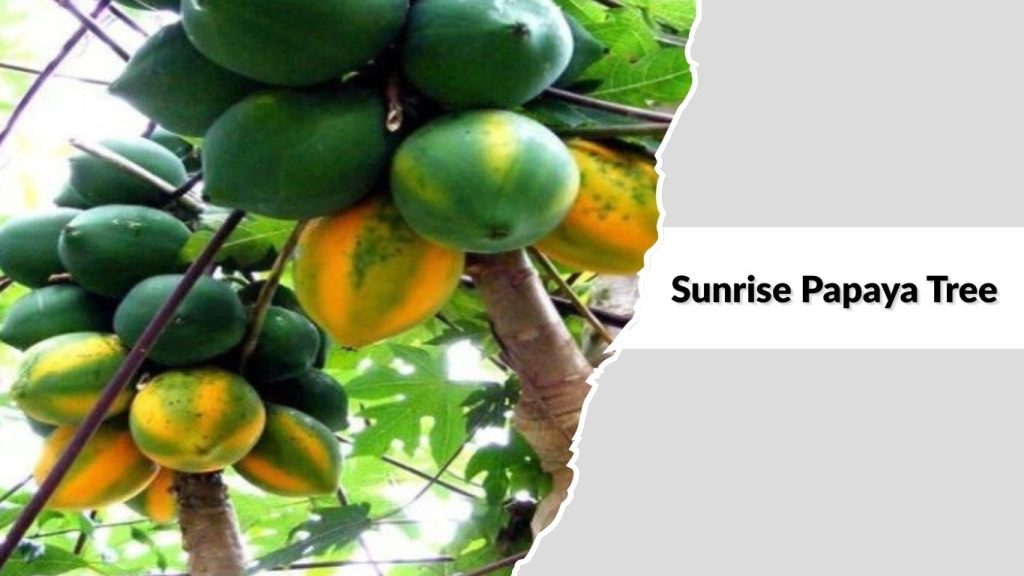
The Sunrise papaya tree is a well-known Solo-type variety that is prized for its excellent sweetness, smooth texture, and attractive appearance. It produces small to medium-sized fruits with bright orange flesh and a pleasant aroma. Sunrise papayas are commonly grown in warm regions and are especially popular for fresh consumption and local markets.
Identification
- Small to medium pear-shaped fruits
- Thin, smooth skin that turns golden yellow when ripe
- Bright orange, soft flesh
- Sweet, tropical fragrance
- Central cavity filled with glossy black seeds
- Slender green trunk with clear leaf-ring scars
- Large, deeply lobed leaves clustered at the top
Fruit Characteristics
Sunrise papayas usually weigh between 400 grams and 900 grams. The flesh is tender, juicy, and notably sweet, making it ideal for eating fresh. Their uniform shape and attractive color also make them appealing for display and retail sales.
Tree Growth Habit
The Sunrise papaya tree grows quickly and typically begins flowering within a few months of planting. It remains relatively compact compared to some larger varieties, often reaching 6 to 9 feet tall. Fruits form close to the trunk, making harvesting easier.
Common Uses
Sunrise papayas are mostly eaten fresh, sliced, or added to fruit bowls and desserts. They are also blended into smoothies and juices, and sometimes used in light tropical dishes because of their balanced sweetness and aroma.
4. Sunset Papaya Tree

The Sunset papaya tree is another popular Solo-type variety, closely related to Sunrise papaya. It is valued for its compact growth, attractive fruit color, and rich, sweet flavor. Sunset papayas are commonly cultivated in tropical regions for fresh markets, home gardens, and small-scale commercial production.
Identification
- Small to medium-sized pear-shaped fruits
- Smooth skin turning yellow-orange when ripe
- Deep orange to reddish-orange flesh
- Pleasant, sweet aroma
- Central cavity with numerous black seeds
- Short to medium-height soft trunk with leaf scars
- Broad, deeply lobed leaves at the crown
Fruit Characteristics
Sunset papayas usually weigh between 500 grams and 1 kilogram. The flesh is juicy, tender, and sweet, often considered slightly richer in flavor than some other Solo types. Their bright internal color makes them visually appealing when sliced.
Tree Growth Habit
The Sunset papaya tree grows fast and remains relatively compact, often reaching 6 to 8 feet in height. It begins fruiting early, with flowers and fruits forming along the trunk beneath the leaf canopy.
Common Uses
Sunset papayas are mainly consumed fresh and are popular in fruit salads, breakfast plates, smoothies, and juices. Their manageable size and attractive look make them ideal for home gardens and local fruit stalls.
5. Tainung No. 1 Papaya Tree
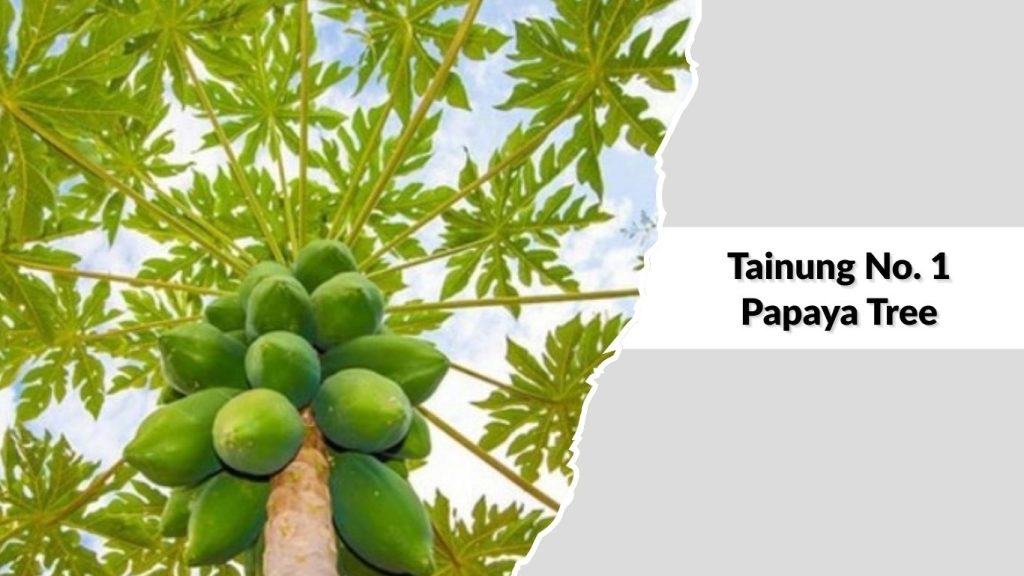
The Tainung No. 1 papaya tree is a widely cultivated hybrid variety developed in Taiwan and known for its high productivity, strong growth, and excellent fruit quality. It produces medium to large fruits with thick, sweet flesh and good shelf life, making it a favorite choice for both commercial farms and serious home growers.
Identification
- Medium to large elongated fruits
- Smooth green skin turning yellow when ripe
- Thick, bright orange to reddish flesh
- Firm texture with a small seed cavity
- Clusters of round black seeds at the center
- Tall, sturdy soft trunk with visible leaf scars
- Large, deeply lobed leaves forming a wide crown
Fruit Characteristics
Tainung No. 1 papayas commonly weigh between 1 and 2 kilograms. The flesh is firm, juicy, and sweet, which helps the fruit tolerate transport better than softer varieties. Its balanced sweetness and aroma make it suitable for both fresh eating and processing.
Tree Growth Habit
This papaya tree grows vigorously and can reach 8 to 12 feet tall. It fruits early and heavily, often producing multiple fruits along the trunk at the same time. The strong stem supports a large fruit load.
Common Uses
Tainung No. 1 papayas are widely used for fresh markets, juice production, smoothies, and fruit salads. Because of their size and firmness, they are also suitable for shipping and commercial distribution.
6. Tainung No. 2 Papaya Tree
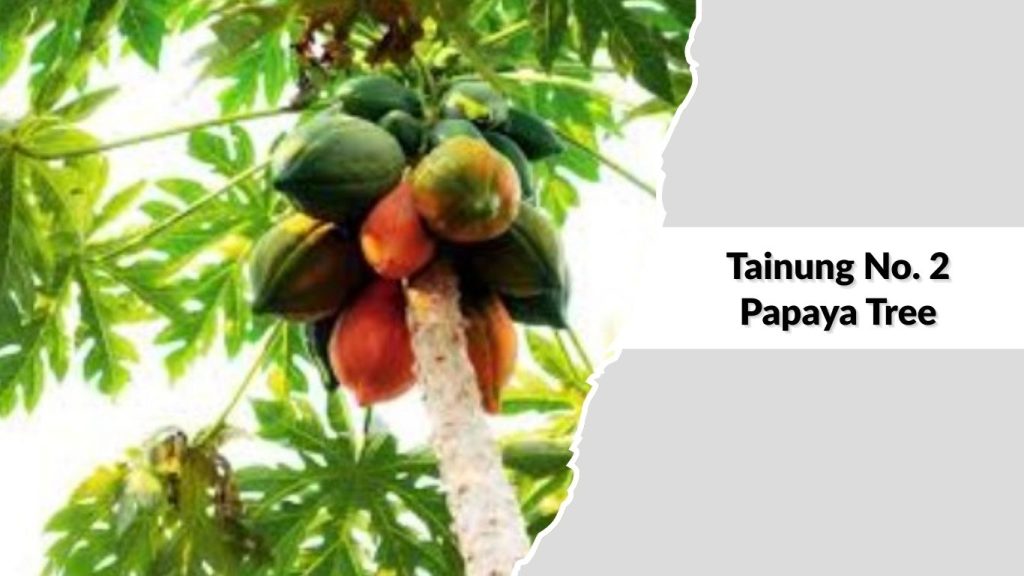
The Tainung No. 2 papaya tree is another improved hybrid variety from Taiwan, developed for higher yield, uniform fruit size, and excellent eating quality. It is well known for producing large, sweet papayas with thick flesh and a relatively small seed cavity, making it popular in both commercial orchards and home gardens.
Identification
- Large, cylindrical to oval fruits
- Smooth green skin that turns yellow-orange when ripe
- Thick, deep orange flesh
- Mild, sweet tropical aroma
- Small central cavity with black seeds
- Tall, straight, soft trunk with prominent leaf rings
- Large palmate leaves forming a broad canopy
Fruit Characteristics
Tainung No. 2 papayas often weigh between 1.5 and 2.5 kilograms. The flesh is firm, juicy, and sweet, offering more edible portion due to the reduced seed space. The uniform shape improves its market appearance.
Tree Growth Habit
The Tainung No. 2 papaya tree grows rapidly and may reach 9 to 12 feet in height. It begins fruiting early and continues producing heavily throughout the year under warm conditions, with fruits developing close to the trunk.
Common Uses
This variety is mainly grown for fresh fruit markets, juices, smoothies, and food processing. Its large size and firm texture also make it suitable for transport and commercial sale.
7. Maradol Papaya Tree
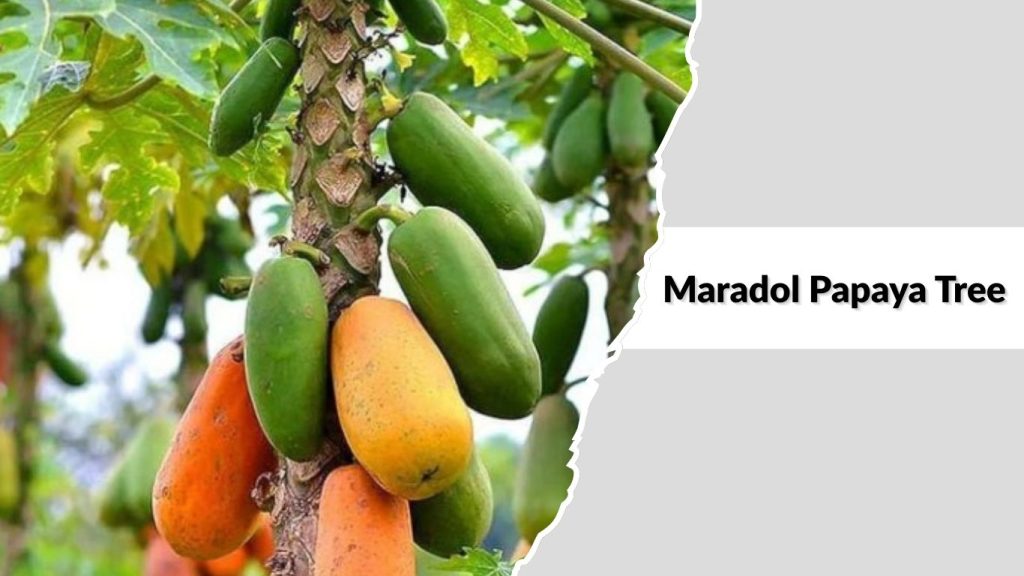
The Maradol papaya tree is a popular large-fruited variety originally developed in Mexico. It is widely grown in tropical regions because of its vigorous growth, heavy fruit production, and rich, sweet flavor. Maradol papayas are especially valued in commercial farming due to their large size, thick flesh, and attractive red-orange interior.
Identification
- Large, elongated to pear-shaped fruits
- Smooth green skin turning yellow when ripe
- Thick, reddish-orange flesh
- Sweet aroma and rich flavor
- Medium central cavity filled with black seeds
- Tall, robust soft trunk with clear leaf scars
- Large, deeply lobed leaves forming a wide crown
Fruit Characteristics
Maradol papayas commonly weigh between 2 and 3 kilograms, and sometimes even more under ideal conditions. The flesh is firm, juicy, and sweet, making it excellent for fresh slicing. Its deep color is especially appealing for fruit displays and fresh markets.
Tree Growth Habit
The Maradol papaya tree grows vigorously and can reach 8 to 12 feet tall. It fruits heavily, often producing multiple large papayas along the trunk. With proper care, it can bear fruit continuously throughout warm seasons.
Common Uses
Maradol papayas are widely used for fresh eating, fruit salads, juices, and smoothies. Because of their size and flesh thickness, they are also suitable for commercial processing and export markets.
8. Mexican Red Papaya Tree
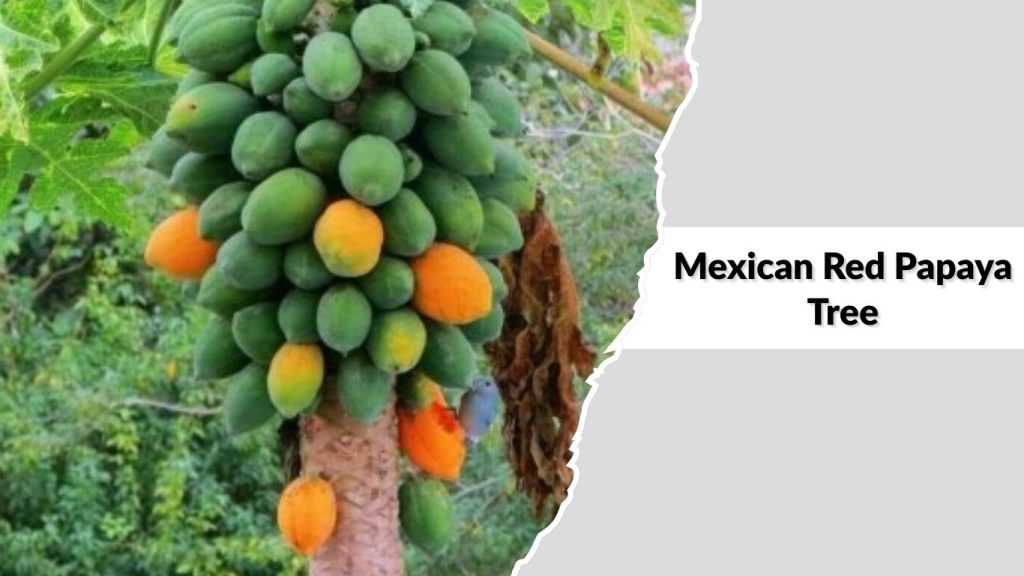
The Mexican Red papaya tree is a large-fruited variety closely related to Maradol types and is well known for its impressive size, deep red-orange flesh, and rich sweetness. It is widely cultivated in warm climates for both local consumption and commercial production, especially where large, attractive fruits are preferred.
Identification
- Very large, elongated to oval fruits
- Smooth green skin turning bright yellow when ripe
- Deep red to reddish-orange flesh
- Strong sweet aroma
- Medium-sized seed cavity with numerous black seeds
- Thick, tall soft trunk with prominent leaf scars
- Broad crown of large, lobed leaves
Fruit Characteristics
Mexican Red papayas often weigh between 2.5 and 4 kilograms. The flesh is thick, firm, and very sweet, making it excellent for slicing and fresh serving. The intense flesh color gives it high visual and market appeal.
Tree Growth Habit
This papaya tree grows fast and strong, commonly reaching 9 to 13 feet in height. It is a heavy bearer, producing large fruits along the main stem. In warm, frost-free climates, it can fruit almost year-round.
Common Uses
Mexican Red papayas are popular for fresh markets, fruit trays, smoothies, and juice production. Due to their size and sweetness, they are also widely used in commercial papaya farming and export trade.
9. Waimanalo Papaya Tree
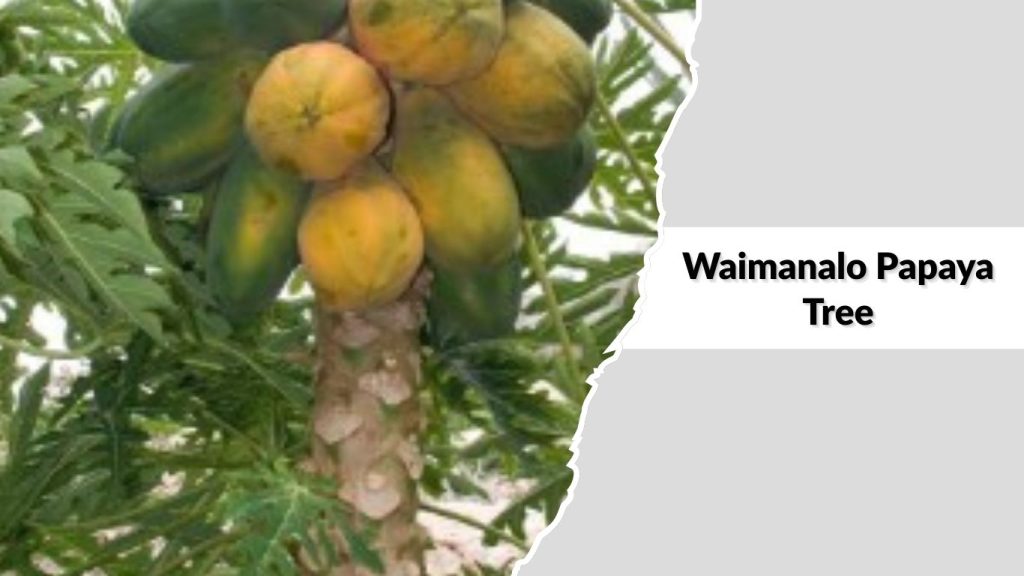
The Waimanalo papaya tree is a well-known Hawaiian variety developed for improved sweetness, attractive fruit color, and consistent production. It is considered a high-quality dessert papaya, producing medium-sized fruits with smooth skin and bright orange flesh. Waimanalo papayas are commonly grown in tropical climates and home gardens.
Identification
- Medium-sized, oval to pear-shaped fruits
- Smooth skin turning yellow when ripe
- Bright orange, soft flesh
- Sweet, mild tropical aroma
- Central cavity with black seeds
- Slender to medium-thick soft trunk with leaf scars
- Large, deeply lobed leaves at the top
Fruit Characteristics
Waimanalo papayas usually weigh between 800 grams and 1.5 kilograms. The flesh is tender, juicy, and sweet, making it excellent for fresh consumption. Its balanced flavor and appealing appearance make it popular in fresh fruit markets.
Tree Growth Habit
The Waimanalo papaya tree grows quickly and typically reaches 7 to 10 feet in height. It begins fruiting early, and fruits develop close to the trunk, allowing for easy harvesting in both home gardens and small farms.
Common Uses
Waimanalo papayas are mainly eaten fresh and are commonly used in fruit salads, smoothies, and breakfast dishes. They are also suitable for juice and light dessert preparations.
10. Honey Gold Papaya Tree
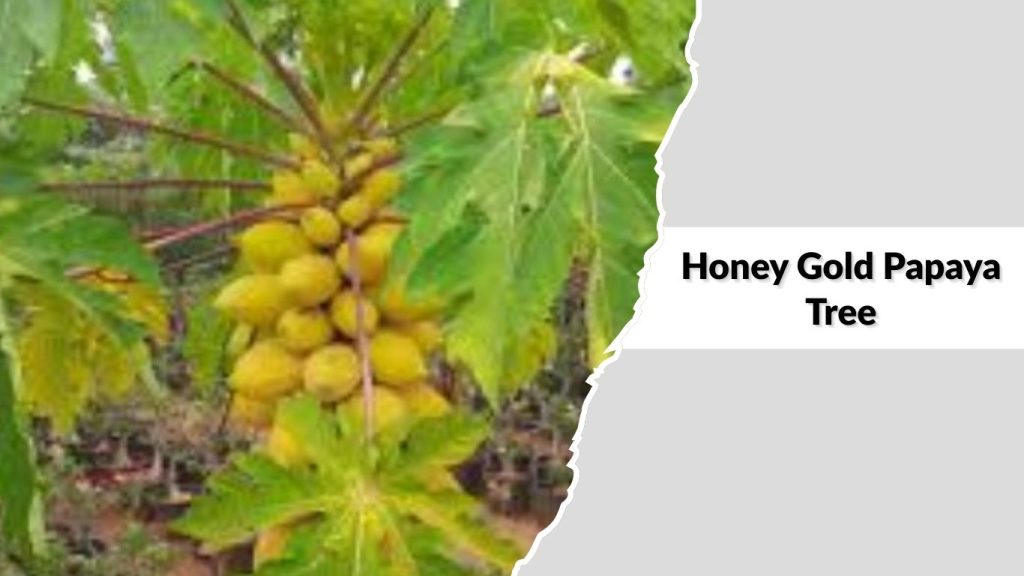
The Honey Gold papaya tree is an Australian-developed variety known for its compact size, smooth skin, and exceptionally sweet, aromatic flesh. It is a premium papaya type often grown for fresh fruit markets due to its attractive appearance, manageable fruit size, and rich flavor.
Identification
- Small to medium oval fruits
- Smooth, thin skin turning golden yellow when ripe
- Deep orange flesh with a glossy appearance
- Strongly sweet, honey-like aroma
- Small central cavity with black seeds
- Short to medium-height soft trunk with leaf scars
- Large, lobed leaves forming a neat crown
Fruit Characteristics
Honey Gold papayas typically weigh between 500 grams and 1.2 kilograms. The flesh is very sweet, juicy, and smooth, often described as having a honey-like taste. The small seed cavity increases the edible portion of the fruit.
Tree Growth Habit
The Honey Gold papaya tree is relatively compact compared to many commercial varieties, usually growing 6 to 8 feet tall. It begins fruiting early and produces uniform fruits that hang close to the trunk.
Common Uses
Honey Gold papayas are primarily eaten fresh and are popular in fruit bowls, smoothies, desserts, and breakfast dishes. Their sweetness also makes them suitable for premium fresh fruit sales.
11. Betty Papaya Tree
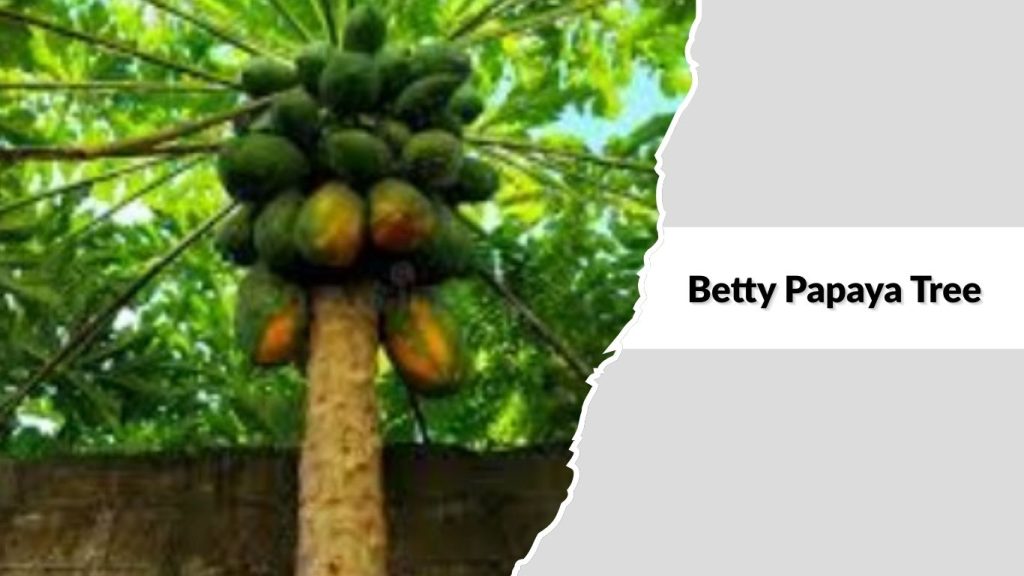
The Betty papaya tree is a productive hybrid variety known for its medium-sized fruits, good sweetness, and reliable performance in warm climates. It is appreciated by growers for its steady yields, attractive fruit shape, and pleasant flavor, making it suitable for both home gardens and small commercial farms.
Identification
- Medium-sized oval to pear-shaped fruits
- Smooth green skin turning yellow when ripe
- Bright orange flesh
- Mild, sweet tropical aroma
- Central cavity with clustered black seeds
- Straight, soft trunk with clear leaf scars
- Broad crown of large, lobed leaves
Fruit Characteristics
Betty papayas generally weigh between 1 and 1.8 kilograms. The flesh is juicy, moderately firm, and sweet, making it good for fresh consumption. The fruit has a uniform appearance, which increases its appeal in local markets.
Tree Growth Habit
The Betty papaya tree grows vigorously and can reach 7 to 11 feet in height. It begins producing fruit relatively early and continues bearing under favorable growing conditions.
Common Uses
Betty papayas are mainly used for fresh eating, fruit salads, smoothies, and juices. They are also suitable for home growing due to their consistent fruiting and manageable tree size.
12. Hortus Gold Papaya Tree
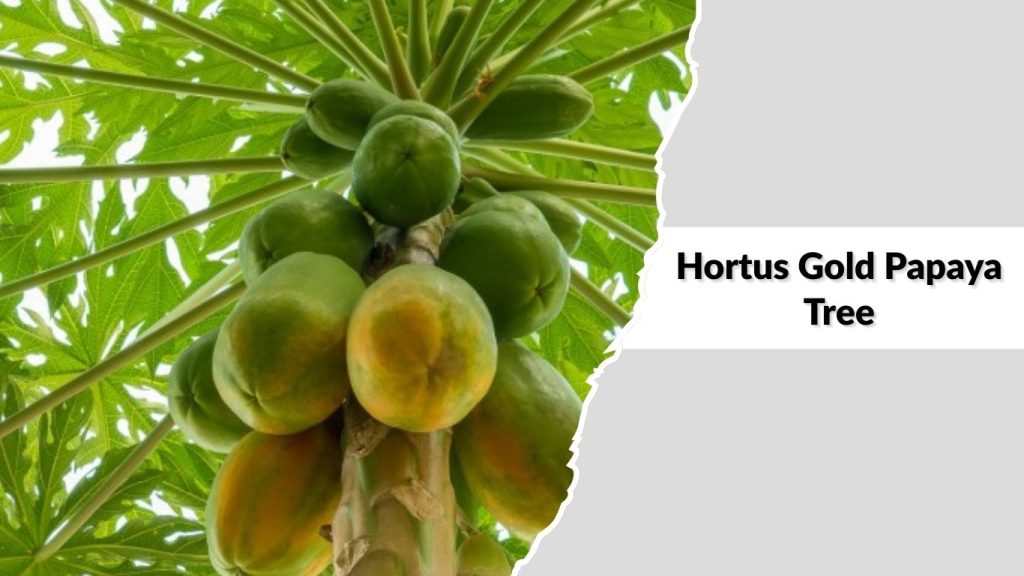
The Hortus Gold papaya tree is a high-quality variety valued for its smooth skin, rich golden-orange flesh, and pleasant sweetness. It is commonly grown in warm tropical and subtropical regions where consistent production and attractive fruit appearance are important for both home gardeners and small commercial growers.
Identification
- Medium to large oval fruits
- Smooth skin turning golden yellow when ripe
- Golden-orange, juicy flesh
- Mild, sweet aroma
- Central cavity with black seeds
- Medium to tall soft trunk with visible leaf scars
- Large, deeply lobed leaves forming a wide crown
Fruit Characteristics
Hortus Gold papayas usually weigh between 1 and 2 kilograms. The flesh is soft, juicy, and sweet, making it enjoyable for fresh eating. Its bright golden color gives it strong visual appeal in fruit markets.
Tree Growth Habit
The Hortus Gold papaya tree grows quickly and commonly reaches 8 to 11 feet in height. It begins fruiting early, with flowers and fruits developing along the main stem beneath the leaf canopy.
Common Uses
Hortus Gold papayas are mainly consumed fresh and are popular in fruit salads, smoothies, breakfast dishes, and juices. They are also suitable for local market sales due to their attractive color and flavor.
13. Coorg Honey Dew Papaya Tree
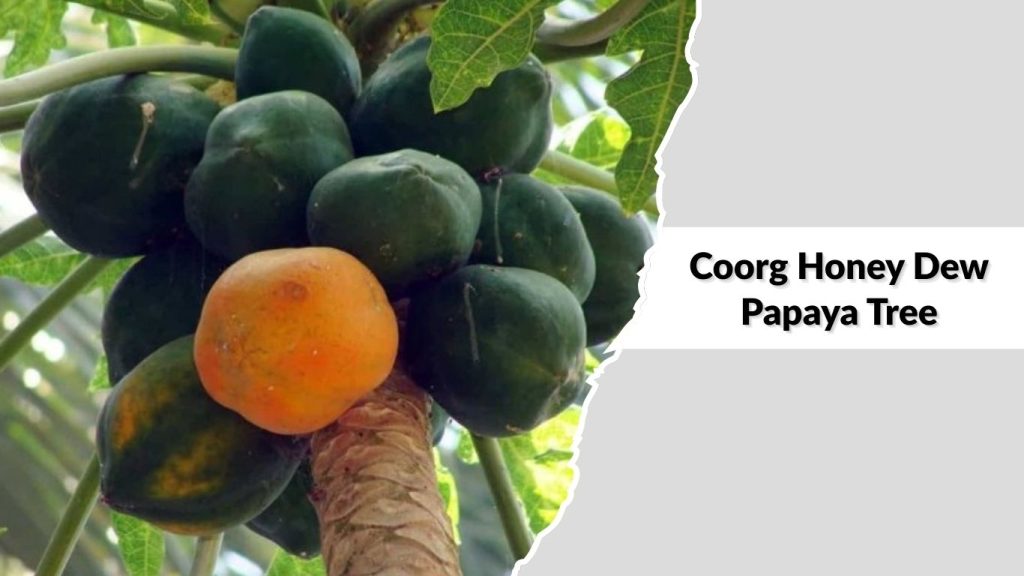
The Coorg Honey Dew papaya tree is an Indian variety known for its sweet flavor, attractive fruit shape, and good adaptability to tropical climates. It is especially popular in parts of South Asia for home gardens and farms because of its reliable fruiting and pleasant, dessert-quality flesh.
Identification
- Medium to large elongated fruits
- Smooth green skin turning yellow when ripe
- Soft, orange to reddish-orange flesh
- Sweet, mild fragrance
- Medium central cavity with black seeds
- Tall, straight soft trunk with clear leaf scars
- Large, deeply lobed leaves forming a broad crown
Fruit Characteristics
Coorg Honey Dew papayas usually weigh between 1.2 and 2 kilograms. The flesh is juicy, tender, and sweet, making it excellent for fresh eating. The fruit is known for its balanced sweetness and smooth texture.
Tree Growth Habit
The Coorg Honey Dew papaya tree grows rapidly and can reach 8 to 12 feet in height. It begins fruiting within the first year and continues to bear well under warm, humid conditions.
Common Uses
This variety is mainly used for fresh consumption, fruit salads, smoothies, and juices. It is also grown commercially in some regions because of its good fruit quality and steady production.
14. Pusa Delicious Papaya Tree
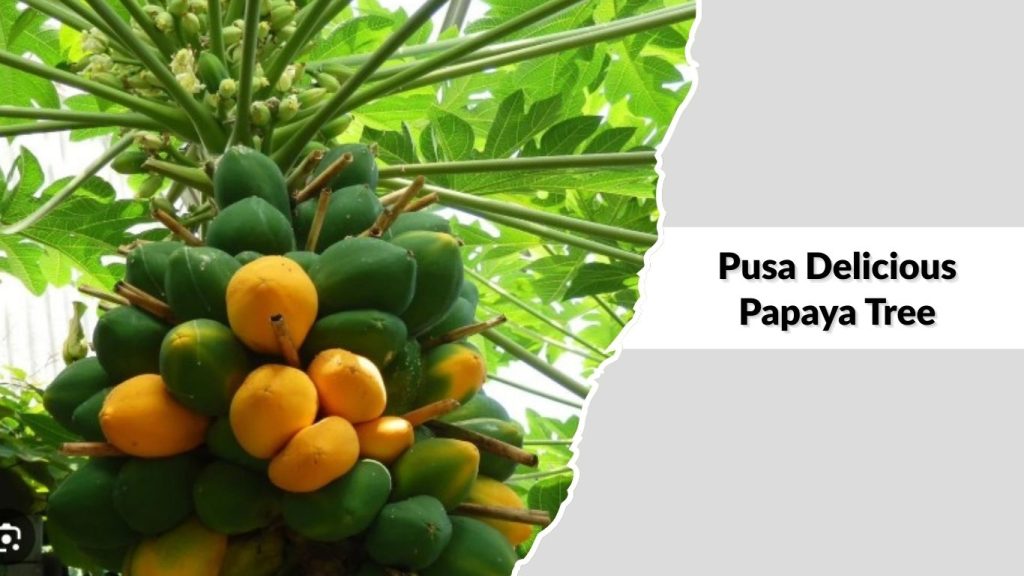
The Pusa Delicious papaya tree is a well-known Indian variety developed for improved sweetness, attractive fruit size, and consistent productivity. It is widely cultivated in tropical regions because of its good fruit quality, pleasant flavor, and suitability for both home gardens and commercial orchards.
Identification
- Medium-sized, oval to slightly elongated fruits
- Smooth green skin turning yellow when ripe
- Soft, deep orange flesh
- Sweet, mild aroma
- Central cavity with clustered black seeds
- Medium-height soft trunk with prominent leaf scars
- Large, deeply lobed leaves forming a rounded crown
Fruit Characteristics
Pusa Delicious papayas generally weigh between 800 grams and 1.5 kilograms. The flesh is juicy, tender, and sweet, making it ideal for fresh consumption. Its uniform shape and bright internal color increase its market appeal.
Tree Growth Habit
The Pusa Delicious papaya tree grows quickly and usually reaches 7 to 10 feet in height. It starts fruiting early and bears fruits along the main stem just below the leaf canopy.
Common Uses
Delicious papayas are mainly eaten fresh and are commonly used in fruit salads, smoothies, juices, and light desserts. They are also grown commercially for local fresh fruit markets.
15. Ranchi Papaya Tree
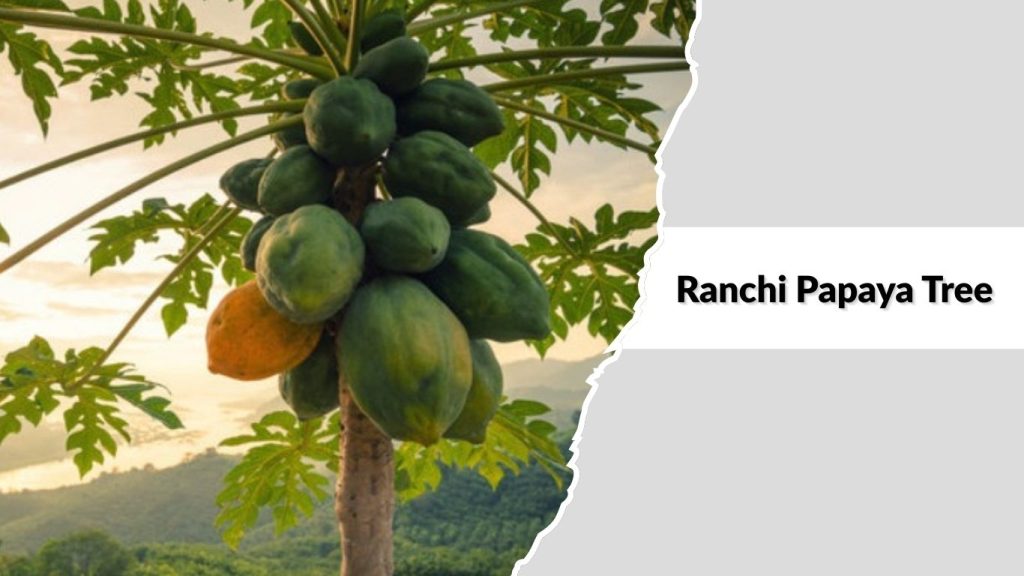
The Ranchi papaya tree is a popular Indian variety known for its strong growth, good adaptability, and reliable fruit production. It is widely grown in different tropical regions because of its medium to large fruits, pleasant sweetness, and suitability for both home cultivation and farm planting.
Identification
- Medium to large oval fruits
- Smooth green skin turning yellow when ripe
- Orange, juicy flesh
- Mild, sweet aroma
- Central cavity with numerous black seeds
- Tall, soft trunk with clear leaf-ring scars
- Large, deeply lobed leaves forming a wide crown
Fruit Characteristics
Ranchi papayas typically weigh between 1 and 2 kilograms. The flesh is juicy, soft, and mildly sweet, making it suitable for fresh eating. The fruit is appreciated for its consistent quality and simple, clean flavor.
Tree Growth Habit
The Ranchi papaya tree grows vigorously and can reach 8 to 12 feet in height. It begins fruiting within the first year and continues to produce well under warm, favorable conditions.
Common Uses
Ranchi papayas are commonly eaten fresh and used in fruit salads, juices, smoothies, and desserts. They are also suitable for local market sales and small-scale commercial production.
FAQs
What is a papaya tree?
A papaya tree is a fast-growing tropical plant that produces large, sweet, melon-like fruits. Although commonly called a tree, it is technically a giant herb with a soft, hollow trunk. Papaya trees are widely grown in warm climates for fresh fruit and commercial production.
How long does a papaya tree take to produce fruit?
Most papaya trees begin flowering within 3 to 5 months after planting and can start producing fruit in about 8 to 12 months. With proper sunlight, water, and nutrition, papaya trees grow quickly and can bear fruit continuously in warm, frost-free conditions.
Do papaya trees need full sun?
Yes, papaya trees grow best in full sun. They need at least six to eight hours of direct sunlight each day to produce healthy leaves, strong stems, and high-quality fruit. Insufficient sunlight can slow growth, reduce flowering, and lead to poor fruit development.
How tall does a papaya tree grow?
Papaya trees usually grow between 6 and 12 feet tall, depending on the variety and growing conditions. Some vigorous types can grow even taller. They have a single straight trunk with a crown of large leaves at the top and fruits developing along the stem.
Can papaya trees grow in containers?
Papaya trees can grow in large containers if given enough space, sunlight, and good drainage. Dwarf or compact varieties are better suited for pots. However, container-grown papayas may produce smaller plants and fewer fruits compared to those grown directly in the ground.