




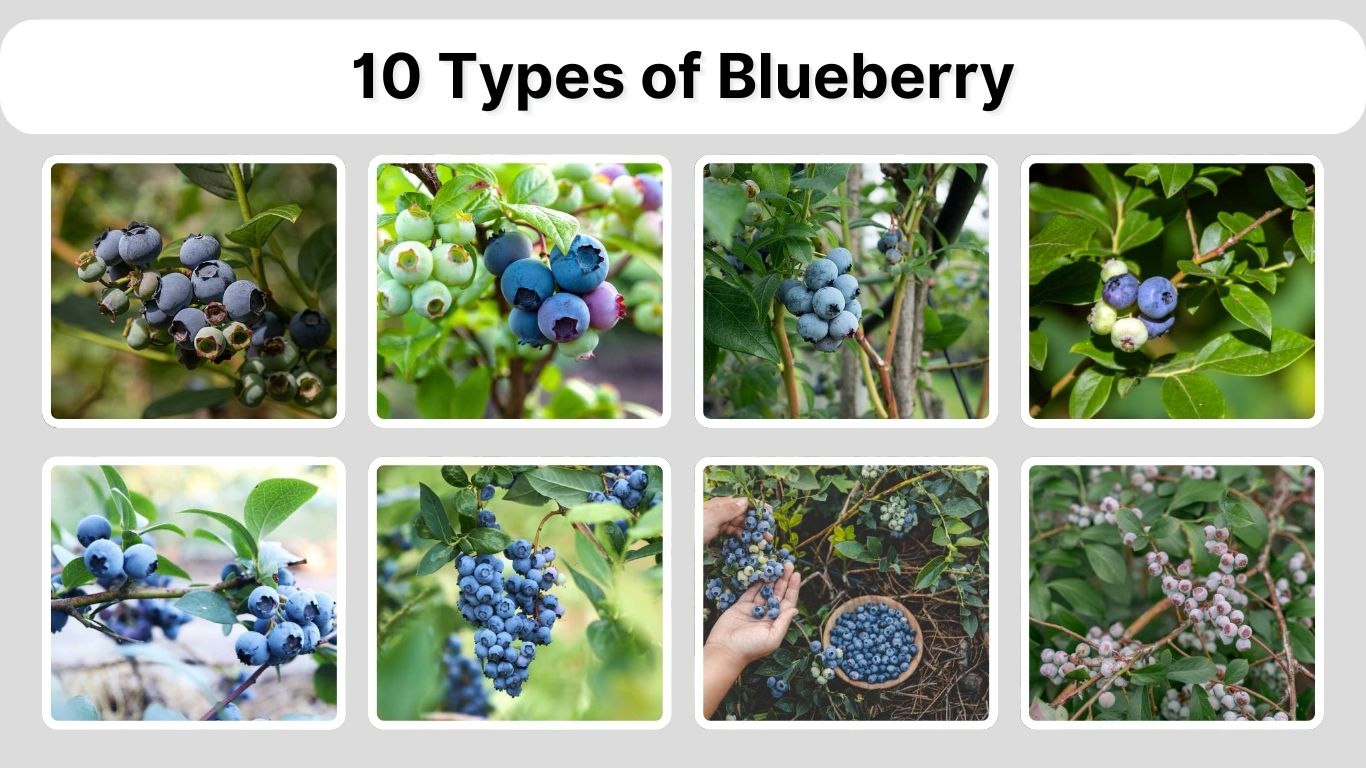
Blueberries are popular fruits known for their sweet taste, vibrant color, and impressive health benefits. Grown in many parts of the world, they come in several types, each adapted to different climates and growing conditions. From wild varieties with intense flavor to cultivated types bred for size and yield, blueberries are valued in home gardens, commercial farms, and natural landscapes. Understanding the different types of blueberries helps growers and consumers choose the best variety for taste, use, and environment.
1. Highbush Blueberry

Highbush blueberry is the most widely grown blueberry type in the world, especially popular in North America. It is valued for its high yield, large fruit size, pleasant sweetness, and versatility in both commercial farming and home gardening.
Identification
- Upright, woody shrub with a rounded to vase-shaped form
- Mature height ranges from 4 to 8 feet depending on the variety
- Produces large, firm berries with a light to deep blue color
- Berries have a powdery, wax-like coating called bloom
- Leaves are oval-shaped, medium to dark green, turning red, orange, or yellow in autumn
Growth Habit
Highbush blueberries have a perennial growth habit and can live for several decades when properly cared for. New canes emerge from the base each year, while older canes gradually decline and are removed through pruning to maintain productivity.
Climate and Soil Requirements
This blueberry type performs best in regions with cold winters and mild summers. It requires acidic soil with a pH between 4.5 and 5.5. Well-drained, organic-rich soil is essential, as the shallow root system is sensitive to waterlogging.
Flowering and Fruiting
Flowering typically occurs in spring, producing small, bell-shaped white or pale pink flowers. Fruit develops in clusters and ripens from early to mid-summer, depending on the cultivar. Cross-pollination between varieties often improves fruit size and yield.
Uses and Benefits
Highbush blueberries are widely consumed fresh and are also used in pies, muffins, jams, juices, and frozen foods. They are rich in antioxidants, vitamins, and dietary fiber, making them a popular choice for health-conscious consumers.
2. Lowbush Blueberry

Lowbush blueberry is a hardy, wild-type blueberry commonly found growing naturally in forests and open fields. It is especially known for its intense flavor and high nutritional value.
Identification
- Low-growing, spreading shrub usually 6–24 inches tall
- Small, dark blue berries with a strong, sweet-tart flavor
- Thin, green stems forming dense ground cover
- Small oval leaves that turn bright red in autumn
Growth Habit
Lowbush blueberries grow close to the ground and spread through underground rhizomes. They are long-lived perennials and often form natural colonies rather than individual shrubs.
Climate and Soil Requirements
This type thrives in cold climates and is extremely winter-hardy. It prefers acidic, sandy, or rocky soils with good drainage and low fertility, conditions similar to its natural woodland habitat.
Flowering and Fruiting
Flowering occurs in late spring, producing small, urn-shaped white or pinkish flowers. Berries are typically harvested in mid to late summer, often in alternate years due to their natural growth cycle.
Uses and Benefits
Lowbush blueberries are widely used in processed foods such as jams, syrups, sauces, and frozen products. They are especially rich in antioxidants and are often considered more flavorful than cultivated varieties.
3. Rabbiteye Blueberry

Rabbiteye blueberry is a vigorous and productive blueberry type, well adapted to warm climates. It is especially popular in the southern United States due to its heat tolerance and reliability.
Identification
- Tall, upright shrub that can grow 6–12 feet high
- Medium-sized berries that change from green to red before turning blue
- Berries have thicker skin compared to other blueberry types
- Leaves are narrow, glossy, and semi-evergreen in warm regions
Growth Habit
Rabbiteye blueberries grow rapidly and develop multiple canes, forming large bushes over time. They have a longer lifespan and are generally more tolerant of drought than other blueberry types.
Climate and Soil Requirements
This type thrives in hot, humid climates and requires fewer winter chill hours. It prefers acidic, well-drained soils and performs well even in less fertile conditions.
Flowering and Fruiting
Flowering begins in early spring, with fruit ripening later than highbush varieties, usually from mid to late summer. Planting more than one variety improves pollination and fruit yield.
Uses and Benefits
Rabbiteye blueberries are commonly used for fresh eating, baking, preserves, and freezing. Their firm skin makes them suitable for transport and longer storage.
4. Southern Highbush Blueberry

Southern Highbush blueberry is a hybrid type developed to grow well in warm regions while still producing large, high-quality fruit similar to northern highbush varieties.
Identification
- Medium-sized shrub, typically 4–6 feet tall
- Large, light to medium blue berries with a mild, sweet flavor
- Thin-skinned fruit with a smooth bloom
- Glossy green leaves, often evergreen in mild winters
Growth Habit
This blueberry type has a compact to upright growth form and establishes quickly. It is often more delicate than rabbiteye but produces earlier fruit, making it valuable for early-season harvests.
Climate and Soil Requirements
Southern Highbush blueberries require fewer chill hours and perform best in warm, subtropical climates. They need acidic, well-drained soil rich in organic matter and benefit from mulching to protect shallow roots.
Flowering and Fruiting
Flowering occurs very early in spring, sometimes late winter in warm regions. Fruit ripens earlier than most other blueberry types, often starting in late spring.
Uses and Benefits
These blueberries are prized for fresh market sales due to their early ripening, attractive appearance, and pleasant flavor. They are also used in desserts, smoothies, and fresh consumption.
5. Northern Highbush Blueberry

Northern Highbush blueberry is the classic cultivated blueberry variety grown extensively in cooler regions. It is known for its high productivity, excellent flavor, and cold hardiness.
Identification
- Tall, upright shrub growing 5–7 feet tall
- Large, firm berries with a deep blue color
- Prominent waxy bloom on fruit surface
- Broad, oval green leaves that turn bright red or orange in fall
Growth Habit
This type forms a strong, upright bush with multiple canes emerging from the base. With proper pruning, it maintains high fruit production for many years.
Climate and Soil Requirements
Northern Highbush blueberries require cold winters for dormancy and sufficient chill hours. They grow best in acidic, well-drained soil with high organic content and consistent moisture.
Flowering and Fruiting
Flowering occurs in mid to late spring after the risk of frost has passed. Fruit ripens from early to mid-summer, depending on the cultivar.
Uses and Benefits
Northern Highbush blueberries are widely used for fresh eating, baking, freezing, and processing. They are rich in antioxidants, vitamins, and fiber, making them a nutritious and popular fruit.
6. Bilberry

Bilberry is a wild blueberry relative native to Europe, valued for its deep color, strong flavor, and medicinal properties. It is smaller than cultivated blueberries but richer in pigments and antioxidants.
Identification
- Low-growing shrub, usually 12–24 inches tall
- Small, dark blue to nearly black berries
- Thin skin with deep purple flesh that stains easily
- Small, oval leaves with finely toothed edges
Growth Habit
Bilberry plants grow slowly and spread naturally in woodland and heathland areas. They form dense patches and are long-lived, thriving without intensive cultivation.
Climate and Soil Requirements
Bilberries prefer cool climates and grow best in acidic, moist, well-drained soils. They commonly thrive in forests, mountains, and moorlands with partial shade.
Flowering and Fruiting
Flowering occurs in late spring, producing solitary, bell-shaped pink or greenish flowers. Fruits ripen in mid to late summer.
Uses and Benefits
Bilberries are used fresh, dried, or processed into jams, juices, and supplements. They are especially known for supporting eye health and are highly valued for their antioxidant content.
7. Wild Blueberry

Wild blueberry refers to naturally growing blueberry plants that have not been selectively bred. These blueberries are known for their intense flavor, small size, and exceptional nutritional value.
Identification
- Low-growing plants, typically under 2 feet tall
- Small, round berries with deep blue skin
- Strong, sweet-tart taste
- Thin stems and small, narrow leaves
Growth Habit
Wild blueberries spread through underground stems and form dense colonies over large areas. They are extremely resilient and can survive harsh environmental conditions.
Climate and Soil Requirements
They thrive in cold to temperate climates and prefer acidic, well-drained soils with low fertility. Wild blueberries often grow in fields, forests, and open landscapes.
Flowering and Fruiting
Flowering occurs in late spring, followed by fruit ripening in mid to late summer. Natural pollination by native insects plays a key role in fruit development.
Uses and Benefits
Wild blueberries are commonly frozen, dried, or processed into jams and sauces. They contain higher antioxidant levels than many cultivated varieties and are considered a superfood.
8. Pink Lemonade Blueberry

Pink Lemonade blueberry is a unique ornamental blueberry variety known for its striking pink-colored fruit and decorative appeal, along with a sweet, mild flavor.
Identification
- Medium-sized shrub growing 4–5 feet tall
- Berries ripen from green to pale pink, then bright pink
- Fruit has a translucent skin with a soft bloom
- Blue-green leaves that turn golden yellow in autumn
Growth Habit
This variety has an upright, bushy growth habit and is often used in landscaping as an edible ornamental plant. It is a hybrid type developed for both beauty and fruit production.
Climate and Soil Requirements
Pink Lemonade blueberries prefer acidic, well-drained soil and grow best in full sun to partial shade. They are adaptable to a range of climates but perform best in mild to warm regions.
Flowering and Fruiting
Flowering occurs in spring, producing small white flowers with a pink tint. Fruit ripens in mid to late summer, slightly later than many blue-fruited varieties.
Uses and Benefits
These blueberries are eaten fresh, used in desserts, or added to fruit salads. Their unusual color makes them especially popular for decorative dishes and home gardens.
9. Jersey Blueberry

Jersey blueberry is a classic heirloom highbush variety known for its reliability, strong flavor, and long history of cultivation. It has been widely used in breeding programs due to its hardiness.
Identification
- Tall, vigorous shrub reaching 6–8 feet
- Medium-sized, dark blue berries
- Firm fruit with a pronounced blueberry flavor
- Green leaves that turn reddish-purple in fall
Growth Habit
Jersey blueberry plants are upright and productive, forming sturdy canes that support heavy fruit loads. They are long-lived and maintain consistent yields with proper pruning.
Climate and Soil Requirements
This variety thrives in cooler climates and requires sufficient winter chill. It prefers acidic, well-drained soil rich in organic matter and benefits from regular mulching.
Flowering and Fruiting
Flowering occurs in mid-spring, with fruit ripening in mid to late summer. It is often planted alongside other varieties to improve cross-pollination.
Uses and Benefits
Jersey blueberries are commonly used for baking, freezing, and processing. Their robust flavor makes them especially suitable for pies, muffins, and preserves.
10. Duke Blueberry

Duke blueberry is a popular early-season highbush variety known for its high yield, uniform ripening, and excellent fruit quality. It is widely grown for both commercial and home production.
Identification
- Upright, vigorous shrub growing 4–6 feet tall
- Medium to large berries with a light blue color
- Firm fruit with a small, dry picking scar
- Dark green leaves that turn yellow to orange in fall
Growth Habit
Duke blueberry plants have a strong, upright growth habit and produce fruit reliably year after year. Regular pruning helps maintain plant structure and fruit size.
Climate and Soil Requirements
This variety performs best in cool to moderate climates and requires acidic, well-drained soil. It tolerates late spring frosts better than many other varieties.
Flowering and Fruiting
Flowering occurs slightly later than some early varieties, helping avoid frost damage. Fruit ripens early in the season, usually at the start of summer.
Uses and Benefits
Duke blueberries are ideal for fresh eating, freezing, and commercial packing. Their firmness and uniform size make them excellent for storage and transport.
FAQs
What is the best climate for growing blueberries?
Blueberries grow best in cool to moderate climates, but some types are specially adapted to warm regions. The key requirement across all types is sufficient chill hours suited to the specific variety.
Do all blueberry plants need acidic soil?
Yes, all blueberry types require acidic soil, typically with a pH between 4.5 and 5.5. Without acidic conditions, plants struggle to absorb nutrients and may produce poor yields.
How long does a blueberry plant take to produce fruit?
Most blueberry plants begin producing fruit 2–3 years after planting. Full production is usually reached after 5–6 years with proper care.
Are blueberries self-pollinating?
Some blueberry varieties can self-pollinate, but planting two or more compatible varieties greatly improves fruit size, quality, and overall yield.
How long can a blueberry plant live?
With proper care, blueberry plants can live and produce fruit for 30–50 years, making them a long-term and rewarding addition to gardens and farms.