




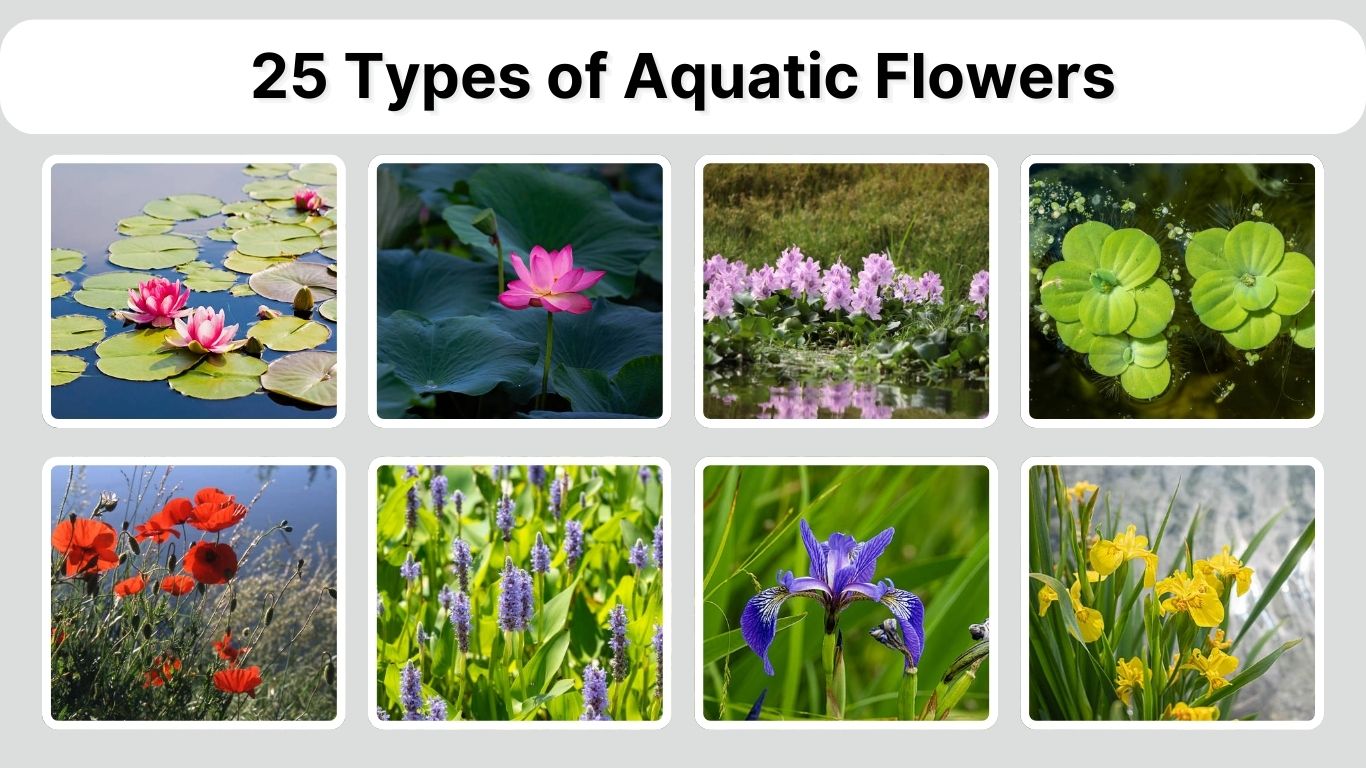
Aquatic flowers bring life, color, and natural balance to ponds, water gardens, and container water features. These plants are specially adapted to grow in water or consistently wet soil, making them ideal for both decorative and ecological purposes. From floating bloomers to marginal plants, aquatic flowers enhance visual appeal while supporting aquatic life. They also help improve water quality by reducing algae, providing shade, and creating healthy habitats, making them a beautiful and functional addition to any water landscape.
1. Water Lily

Water lilies are classic aquatic flowering plants prized for their elegant floating leaves and showy blooms. They thrive in still or slow-moving water and are commonly grown in ponds, water gardens, and large containers, where they add beauty, shade, and ecological balance.
Identification
- Botanical name: Nymphaea spp.
- Plant type: Perennial aquatic flowering plant
- Leaves: Round to oval, floating on the water surface, often with a slit from edge to center
- Flowers: Large, fragrant blooms in white, pink, yellow, red, blue, or purple
- Bloom time: Late spring through early fall
- Growth habit: Rooted in pond soil with leaves and flowers floating on the surface
Growing Conditions
Water lilies prefer full sun for strong growth and abundant flowering. They grow best in calm, freshwater environments with rich, loamy soil at the bottom and consistent water depth suited to the variety.
Care Tips
Regular removal of dead leaves and spent flowers helps keep the plant healthy. Fertilizing during the growing season encourages continuous blooming, while dividing overcrowded plants every few years prevents decline.
Uses
Water lilies are widely used in ornamental ponds and water features. They also help reduce algae growth by shading the water and provide shelter for fish and other aquatic life.
2. Lotus

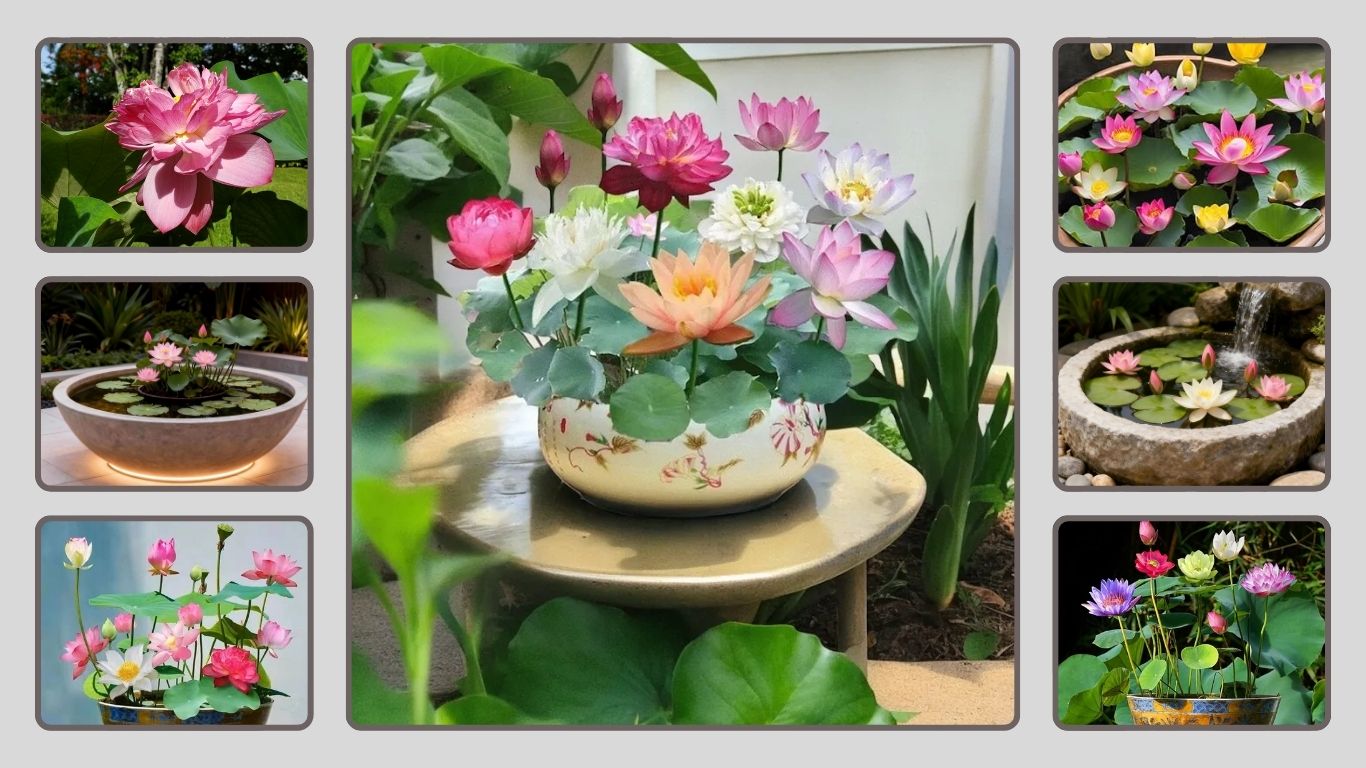
Lotus is a sacred and highly ornamental aquatic flower known for its large, dramatic blooms and cultural significance. It grows in shallow water and muddy ponds, producing striking flowers that rise above the water surface, along with broad, umbrella-like leaves.
Identification
- Botanical name: Nelumbo nucifera / Nelumbo lutea
- Plant type: Perennial aquatic flowering plant
- Leaves: Large, round, and waxy, held above the water on tall stems
- Flowers: Very large, fragrant blooms in pink, white, or yellow
- Bloom time: Summer to early fall
- Growth habit: Rooted in mud with flowers and leaves emerging well above water
Growing Conditions
Lotus plants need full sun and warm temperatures to thrive. They prefer shallow, still water with heavy, nutrient-rich soil and ample space to spread through underground rhizomes.
Care Tips
Plant lotus in wide containers to control spreading. Feed regularly during the growing season, and protect dormant rhizomes from freezing temperatures in colder climates.
Uses
Lotus is commonly grown in ornamental ponds and large water gardens. Beyond its beauty, it holds religious and cultural importance and is also valued for its edible seeds, roots, and leaves.
3. Water Hyacinth

Water hyacinth is a fast-growing floating aquatic plant admired for its glossy leaves and attractive lavender flowers. It freely floats on the water surface, making it popular for decorative ponds and water gardens in warm climates.
Identification
- Botanical name: Eichhornia crassipes
- Plant type: Free-floating perennial aquatic plant
- Leaves: Thick, glossy green leaves with swollen, spongy stalks
- Flowers: Showy lavender to violet flowers with a yellow-marked center
- Bloom time: Summer to early fall
- Growth habit: Floating plant with dangling, fibrous roots
Growing Conditions
Water hyacinth thrives in full sun and warm temperatures. It prefers still or slow-moving freshwater and grows rapidly in nutrient-rich conditions.
Care Tips
Thin plants regularly to prevent overcrowding and excessive spread. Remove dead or excess plants to maintain water quality and allow adequate air circulation.
Uses
Water hyacinth is commonly used for ornamental purposes and natural water filtration. Its dense roots help absorb excess nutrients, improving water clarity, though it should be managed carefully due to its invasive nature.
4. Water Lettuce

Water lettuce is a floating aquatic plant known for its soft, velvety leaves that resemble an open head of lettuce. It spreads easily across the water surface and is often used to add texture and natural filtration to ponds and water features.
Identification
- Botanical name: Pistia stratiotes
- Plant type: Free-floating perennial aquatic plant
- Leaves: Pale green, ribbed, and velvety, forming rosette shapes
- Flowers: Small, inconspicuous white to pale green blooms
- Bloom time: Summer
- Growth habit: Floating rosettes with long, feathery roots
Growing Conditions
Water lettuce grows best in full sun to partial shade and warm temperatures. It prefers calm, nutrient-rich freshwater and does not tolerate cold conditions well.
Care Tips
Regular thinning is necessary to prevent surface overcrowding. Protect plants from frost and remove excess growth to maintain oxygen levels in the water.
Uses
Water lettuce is widely used in ornamental ponds and aquariums for shade and nutrient absorption. Its roots provide shelter for fish and help reduce algae growth by limiting sunlight penetration.
5. Water Poppy

Water poppy is a charming aquatic plant valued for its bright, cheerful flowers and floating foliage. It spreads gently across the water surface, making it an excellent choice for ponds and shallow water gardens.
Identification
- Botanical name: Hydrocleys nymphoides
- Plant type: Perennial aquatic flowering plant
- Leaves: Rounded to heart-shaped, floating on the water surface
- Flowers: Cup-shaped, bright yellow blooms with a darker center
- Bloom time: Late spring through summer
- Growth habit: Rooted plant with floating leaves and flowers
Growing Conditions
Water poppy thrives in full sun and warm temperatures. It prefers shallow, still water with fertile soil and enough space to spread without crowding.
Care Tips
Trim excess growth to keep the plant under control and encourage continuous flowering. In cooler regions, protect or overwinter plants indoors to prevent cold damage.
Uses
Water poppy is commonly grown in ornamental ponds for its long blooming period and vibrant color. It also provides light surface shade, helping maintain balanced pond conditions.
6. Pickerelweed

Pickerelweed is a hardy, upright aquatic flowering plant admired for its glossy green leaves and vibrant spikes of blue to violet flowers. Native to wetlands and pond edges, it is both ornamental and ecologically valuable, attracting pollinators and supporting aquatic life.
Identification
- Botanical name: Pontederia cordata
- Plant type: Emergent perennial aquatic plant
- Leaves: Broad, heart-shaped to lance-shaped, glossy green, rising above the water
- Flowers: Dense spikes of blue, violet, or purple flowers with a yellow marking
- Bloom time: Late spring through summer
- Height: 2–4 feet
- Growth habit: Rooted in shallow water with upright stems
Growing Conditions
Pickerelweed grows best in full sun but tolerates light shade. It prefers shallow water, typically 2–12 inches deep, with rich, muddy soil. The plant thrives in ponds, marshes, and along slow-moving streams.
Care Tips
This plant is low maintenance once established. Remove spent flower spikes to encourage continued blooming, and divide clumps every few years to prevent overcrowding and maintain vigor.
Uses
Pickerelweed is widely used in natural and ornamental ponds, especially along margins. It provides excellent habitat for frogs, fish, and beneficial insects, while its flowers attract bees and butterflies, making it a strong choice for wildlife-friendly water gardens.
7. Blue Flag Iris

Blue flag iris is a striking marginal aquatic plant known for its sword-like foliage and elegant blue-violet flowers. It naturally grows along pond edges, marshes, and streams, adding vertical interest and vivid color to water gardens.
Identification
- Botanical name: Iris versicolor
- Plant type: Perennial emergent aquatic plant
- Leaves: Tall, narrow, sword-shaped green leaves
- Flowers: Blue to violet blooms with yellow and white markings
- Bloom time: Late spring to early summer
- Height: 2–3 feet
- Growth habit: Clump-forming, rooted in shallow water or wet soil
Growing Conditions
Blue flag iris prefers full sun to partial shade and consistently moist to wet soil. It grows best in shallow water up to a few inches deep or along pond margins with rich, organic soil.
Care Tips
Remove spent flowers to keep the plant tidy and divide clumps every few years to maintain healthy growth. The plant is cold-hardy and survives winter dormancy in most climates.
Uses
Blue flag iris is commonly planted along pond edges and wetlands for ornamental appeal and erosion control. It also supports pollinators and contributes to natural water filtration in aquatic landscapes.
8. Yellow Flag Iris

Yellow flag iris is a bold aquatic plant recognized for its bright yellow flowers and tall, upright foliage. It is commonly found along pond margins and wetlands, where it creates a dramatic visual impact.
Identification
- Botanical name: Iris pseudacorus
- Plant type: Perennial emergent aquatic plant
- Leaves: Long, sword-shaped, deep green leaves
- Flowers: Large, bright yellow blooms with subtle brown markings
- Bloom time: Late spring to early summer
- Height: 3–5 feet
- Growth habit: Clump-forming, spreading by rhizomes
Growing Conditions
Yellow flag iris thrives in full sun to partial shade. It grows well in shallow water or consistently wet soil and tolerates a wide range of growing conditions.
Care Tips
Regular division helps control its spread and maintain plant health. Remove faded flower stalks and manage growth carefully, as the plant can become aggressive in ideal conditions.
Uses
This iris is used in ornamental ponds, wetland restoration, and erosion control. Its strong root system stabilizes soil, and its vivid flowers add seasonal color to water gardens.
9. Swamp Lily

Swamp lily is an elegant aquatic and marginal plant valued for its narrow foliage and showy, fragrant flowers. It naturally grows in wetlands and along pond edges, bringing a soft, graceful look to water gardens.
Identification
- Botanical name: Crinum americanum
- Plant type: Perennial aquatic bulb plant
- Leaves: Long, strap-like, glossy green leaves
- Flowers: White, star-shaped, lightly fragrant blooms
- Bloom time: Late spring through summer
- Height: 2–4 feet
- Growth habit: Clump-forming, rooted in shallow water or saturated soil
Growing Conditions
Swamp lily prefers full sun to partial shade and consistently wet soil. It thrives in shallow water, marshy areas, or along pond margins with rich, organic soil.
Care Tips
This plant requires minimal care once established. Remove spent flowers to encourage neat growth, and protect bulbs from extreme cold in cooler climates.
Uses
Swamp lily is commonly planted along pond edges and wetlands for ornamental value. It also helps stabilize soil and provides shelter for small aquatic creatures.
10. Water Hawthorn

Water hawthorn is a graceful aquatic plant known for its delicate, fragrant flowers that bloom on the water surface. It is especially valued for flowering in cooler seasons when many other aquatic plants are dormant.
Identification
- Botanical name: Aponogeton distachyos
- Plant type: Perennial aquatic flowering plant
- Leaves: Oblong to oval, floating or submerged, dark green
- Flowers: White, forked flower spikes with dark anthers and a vanilla-like scent
- Bloom time: Fall through spring
- Growth habit: Tuberous plant rooted in pond soil with floating foliage
Growing Conditions
Water hawthorn prefers full sun to partial shade and cool to moderate water temperatures. It grows best in still or slow-moving freshwater with fertile soil at the bottom.
Care Tips
Remove old leaves during warm months when the plant goes semi-dormant. Ensure adequate water depth to protect tubers from temperature extremes.
Uses
Water hawthorn is ideal for ornamental ponds, especially for extending seasonal interest. Its fragrant blooms attract pollinators and add beauty during cooler months when few aquatic plants flower.
11. Parrot Feather

Parrot feather is a popular aquatic plant known for its soft, feathery foliage that creates a lush, textured appearance on and below the water surface. It is often used to soften pond edges and enhance natural-looking water features.
Identification
- Botanical name: Myriophyllum aquaticum
- Plant type: Perennial aquatic plant
- Leaves: Bright green, finely divided, feather-like leaves arranged in whorls
- Flowers: Small, inconspicuous white flowers
- Bloom time: Late spring to summer
- Growth habit: Rooted plant with stems that spread across the water surface
Growing Conditions
Parrot feather grows best in full sun to partial shade and prefers shallow, still water. It thrives in nutrient-rich environments and can tolerate both submerged and emergent growth.
Care Tips
Trim regularly to prevent excessive spreading and maintain a tidy appearance. Remove cuttings from the pond, as fragments can re-root easily.
Uses
This plant is widely used in ornamental ponds and water gardens for texture and contrast. It also provides cover for fish and helps improve water clarity by absorbing excess nutrients.
12. Anacharis

Anacharis is a fast-growing submerged aquatic plant valued for its ability to oxygenate water and support aquatic ecosystems. It is commonly used in ponds and aquariums to improve water quality and provide habitat for fish.
Identification
- Botanical name: Elodea canadensis
- Plant type: Perennial submerged aquatic plant
- Leaves: Narrow, bright green leaves arranged in whorls along the stem
- Flowers: Small, white, three-petaled flowers that rise above the water surface
- Bloom time: Late spring to summer
- Growth habit: Fully submerged, free-rooting or loosely anchored
Growing Conditions
Anacharis grows well in full sun to partial shade and prefers cool to moderately warm freshwater. It thrives in still or slow-moving water and adapts easily to different water depths.
Care Tips
Thin plants regularly to prevent dense growth. Remove excess stems to maintain water circulation and light penetration.
Uses
Anacharis is widely used for oxygenating ponds and aquariums. It provides shelter for fish, reduces algae growth, and helps maintain a balanced aquatic environment.
13. Cabomba

Cabomba is a delicate, ornamental aquatic plant admired for its finely divided, fan-shaped foliage. It is commonly grown as a submerged plant in ponds and aquariums, where it adds a soft, feathery texture beneath the water surface.
Identification
- Botanical name: Cabomba caroliniana
- Plant type: Perennial submerged aquatic plant
- Leaves: Bright green, finely cut, fan-like leaves arranged oppositely on the stem
- Flowers: Small, white to pale yellow flowers that emerge above the water
- Bloom time: Summer
- Growth habit: Rooted or free-floating submerged plant
Growing Conditions
Cabomba prefers full sun to partial shade and warm, still freshwater. Clear water and good light are essential for healthy, compact growth.
Care Tips
Trim stems regularly to control length and encourage bushier growth. Handle gently, as the stems are fragile and break easily.
Uses
Cabomba is used in ornamental ponds and aquariums for underwater visual interest. It also provides shelter for small fish and helps improve water quality by absorbing nutrients.
14. Hornwort

Hornwort is a hardy, free-floating submerged aquatic plant known for its needle-like foliage and adaptability. It is widely used in ponds and aquariums for oxygenation and natural water purification.
Identification
- Botanical name: Ceratophyllum demersum
- Plant type: Perennial submerged aquatic plant
- Leaves: Dark green, forked, needle-like leaves arranged in whorls
- Flowers: Tiny, inconspicuous flowers without petals
- Bloom time: Summer
- Growth habit: Rootless, free-floating or loosely anchored underwater
Growing Conditions
Hornwort grows well in full sun to partial shade and tolerates a wide range of water temperatures. It thrives in still or slow-moving freshwater and adapts to varying water depths.
Care Tips
Thin plants as needed to prevent overcrowding. Remove excess growth to maintain water flow and light penetration.
Uses
Hornwort is commonly used to oxygenate ponds and control algae growth. It provides excellent cover for fish and aquatic life while improving overall water quality.
15. American Lotus

American lotus is a bold aquatic flowering plant admired for its large leaves and striking yellow blooms. Native to North America, it is commonly found in ponds, lakes, and slow-moving waterways.
Identification
- Botanical name: Nelumbo lutea
- Plant type: Perennial aquatic flowering plant
- Leaves: Large, round, blue-green leaves held above the water
- Flowers: Large, pale yellow, lightly fragrant blooms
- Bloom time: Early to mid-summer
- Height: 3–6 feet
- Growth habit: Rhizomatous, rooted in mud with emergent leaves and flowers
Growing Conditions
American lotus thrives in full sun and warm temperatures. It prefers shallow, still water with nutrient-rich, heavy soil and ample space to spread.
Care Tips
Plant in large containers or designated pond areas to manage spreading. Remove spent flowers and old foliage to maintain plant health.
Uses
This plant is used in ornamental and natural ponds for dramatic visual impact. It also provides wildlife habitat and helps stabilize pond ecosystems.
16. Floating Heart

Floating heart is a delicate aquatic plant known for its charming floating leaves and star-like flowers. It spreads gently across the water surface, making it ideal for adding soft texture to ponds and water gardens.
Identification
- Botanical name: Nymphoides spp.
- Plant type: Perennial aquatic flowering plant
- Leaves: Small, heart-shaped, floating green leaves
- Flowers: White or yellow star-shaped blooms, often fringed
- Bloom time: Late spring through summer
- Growth habit: Rooted plant with floating foliage
Growing Conditions
Floating heart grows best in full sun to partial shade and prefers calm, shallow freshwater. It adapts well to ponds, containers, and slow-moving water features.
Care Tips
Trim excess growth to prevent overcrowding and ensure good water circulation. In cooler climates, protect plants from frost damage.
Uses
Floating heart is commonly used in ornamental ponds for surface interest and light shading. It also helps reduce algae growth and provides shelter for aquatic life.
17. Water Snowflake

Water snowflake is a graceful aquatic plant appreciated for its floating leaves and delicate, fringed flowers that resemble tiny snowflakes. It spreads attractively across the water surface and adds a soft, ornamental touch to ponds and water gardens.
Identification
- Botanical name: Nymphoides indica
- Plant type: Perennial aquatic flowering plant
- Leaves: Round to heart-shaped, floating green leaves
- Flowers: White, star-shaped flowers with finely fringed petals and a yellow center
- Bloom time: Late spring through summer
- Growth habit: Rooted plant with creeping stems and floating foliage
Growing Conditions
Water snowflake prefers full sun for best flowering but tolerates light shade. It grows well in still or slow-moving freshwater, especially in shallow ponds with fertile soil.
Care Tips
Control spread by trimming runners regularly. Remove excess plants to prevent overcrowding and to maintain healthy water circulation.
Uses
This plant is popular in ornamental ponds for its long-lasting blooms and elegant appearance. It also provides light shade, helps reduce algae growth, and offers shelter for small aquatic organisms.
18. Arrowhead

Arrowhead is a versatile aquatic plant known for its distinctive arrow-shaped leaves and delicate white flowers. It commonly grows along pond margins and in shallow water, adding height and a natural wetland look to water gardens.
Identification
- Botanical name: Sagittaria latifolia
- Plant type: Perennial emergent aquatic plant
- Leaves: Arrow-shaped, bright green leaves held above the water
- Flowers: Small white flowers with three petals and a yellow center
- Bloom time: Summer
- Height: 1–4 feet
- Growth habit: Rooted in mud with upright stems, spreads by tubers and runners
Growing Conditions
Arrowhead thrives in full sun to partial shade and prefers shallow water or consistently wet soil. It grows well in ponds, marshes, and along slow-moving streams.
Care Tips
Thin plants periodically to control spreading and maintain balance in small ponds. Remove dead foliage to keep the plant looking neat and healthy.
Uses
Arrowhead is widely used in natural and ornamental ponds for marginal planting. It supports wildlife, improves water quality, and its tubers are an important food source for birds and other aquatic animals.
19. Marsh Marigold

Marsh marigold is a cheerful, early-blooming aquatic plant known for its glossy green foliage and bright golden flowers. It naturally grows in wetlands and along stream banks, bringing vibrant color to water gardens in spring.
Identification
- Botanical name: Caltha palustris
- Plant type: Perennial emergent aquatic plant
- Leaves: Rounded to heart-shaped, dark green, glossy leaves
- Flowers: Bright yellow, buttercup-like blooms
- Bloom time: Early to mid-spring
- Height: 1–2 feet
- Growth habit: Clump-forming, rooted in shallow water or saturated soil
Growing Conditions
Marsh marigold prefers partial shade to full sun and consistently moist to wet soil. It grows best in shallow water, pond edges, and bog gardens with cool conditions.
Care Tips
Keep soil evenly moist at all times. Remove spent flowers and old foliage after blooming to maintain a tidy appearance and encourage healthy regrowth.
Uses
This plant is ideal for pond margins and bog gardens, especially for early-season color. It supports pollinators and enhances natural-looking aquatic landscapes.
20. Water Violet

Water violet is a delicate and elegant aquatic plant admired for its finely divided underwater foliage and soft lavender flowers that rise above the surface. Despite its name, it is not a true violet and is prized for its graceful appearance in calm water.
Identification
- Botanical name: Hottonia palustris
- Plant type: Perennial aquatic flowering plant
- Leaves: Feathery, deeply divided submerged leaves forming dense rosettes
- Flowers: Pale lavender to light purple flowers arranged along upright stems
- Bloom time: Late spring to early summer
- Height: 1–2 feet (flower spikes)
- Growth habit: Rooted or loosely anchored, with submerged foliage and emergent blooms
Growing Conditions
Water violet prefers full sun to partial shade and clean, still freshwater. It grows best in shallow ponds with cool to moderate temperatures and nutrient-rich soil.
Care Tips
Avoid disturbing the roots once established. Thin plants gently if growth becomes dense, and ensure good water clarity for healthy development.
Uses
Water violet is commonly used in ornamental ponds for its refined, natural look. It provides underwater shelter for aquatic life while adding subtle color and texture above the water surface.
21. Taro

Taro is a bold, tropical-looking aquatic plant grown for its large, dramatic foliage and ornamental appeal. It thrives in wet conditions and shallow water, making it a striking addition to ponds, water gardens, and bog areas.
Identification
- Botanical name: Colocasia esculenta
- Plant type: Perennial aquatic or semi-aquatic plant
- Leaves: Very large, heart-shaped to arrow-shaped leaves with prominent veins
- Flowers: Pale yellow spathe and spadix, rarely noticeable
- Bloom time: Summer
- Height: 3–6 feet
- Growth habit: Clump-forming, tuberous plant rooted in wet soil or shallow water
Growing Conditions
Taro prefers full sun to partial shade and warm, humid conditions. It grows best in shallow water or consistently wet, fertile soil rich in organic matter.
Care Tips
Keep soil or water levels consistently moist during the growing season. In cooler climates, lift and store tubers before frost or overwinter plants indoors.
Uses
Taro is widely used in ornamental water gardens for its bold foliage and tropical effect. It is also cultivated as a food crop in many regions, valued for its edible corms and leaves.
22. Water Canna

Water canna is a vibrant aquatic plant prized for its lush foliage and bold, colorful flowers. It grows well in shallow water and adds a tropical, dramatic accent to ponds and water gardens.
Identification
- Botanical name: Canna spp.
- Plant type: Perennial emergent aquatic plant
- Leaves: Large, paddle-shaped green or bronze leaves
- Flowers: Showy blooms in red, orange, yellow, or pink
- Bloom time: Summer to early fall
- Height: 3–6 feet
- Growth habit: Rhizomatous, upright clumps rooted in shallow water or wet soil
Growing Conditions
Water canna thrives in full sun and warm temperatures. It prefers shallow water or consistently moist, nutrient-rich soil and grows vigorously during the warm season.
Care Tips
Remove spent flowers to encourage continuous blooming. Divide rhizomes every few years and protect plants from frost in colder climates.
Uses
This plant is commonly used in ornamental ponds and water features for bold color and height. It also works well in bog gardens and helps create a lush, tropical landscape effect.
23. Sacred Lotus

Sacred lotus is a majestic aquatic plant celebrated for its large, fragrant flowers and deep cultural and spiritual significance. Its blooms rise gracefully above the water, making it one of the most striking plants for ponds and water gardens.
Identification
- Botanical name: Nelumbo nucifera
- Plant type: Perennial aquatic flowering plant
- Leaves: Large, round, blue-green leaves held high above the water
- Flowers: Large, fragrant blooms in shades of pink or white
- Bloom time: Summer
- Height: 4–6 feet
- Growth habit: Rhizomatous, rooted in mud with emergent leaves and flowers
Growing Conditions
Sacred lotus prefers full sun and warm conditions. It grows best in shallow, still water with heavy, fertile soil and plenty of space for rhizome expansion.
Care Tips
Plant in wide containers to manage growth and prevent overcrowding. Remove spent flowers and old leaves to maintain plant health and appearance.
Uses
Sacred lotus is widely grown in ornamental ponds and water gardens for its beauty and symbolism. It is also cultivated for its edible seeds, rhizomes, and leaves, and plays an important role in cultural and religious traditions.
24. Spider Lily

Spider lily is an eye-catching aquatic and marginal plant known for its narrow, arching petals and sweet fragrance. It grows well in wet soil and shallow water, adding elegance and a slightly exotic look to pond edges and water gardens.
Identification
- Botanical name: Hymenocallis littoralis
- Plant type: Perennial aquatic bulb plant
- Leaves: Long, strap-like, glossy green leaves
- Flowers: White, spider-shaped flowers with thin, curling petals and a central cup
- Bloom time: Late spring through summer
- Height: 2–3 feet
- Growth habit: Clump-forming, bulbous plant rooted in wet soil or shallow water
Growing Conditions
Spider lily prefers full sun to partial shade and consistently moist to wet soil. It thrives in warm climates and can grow in shallow water along pond margins or in bog gardens.
Care Tips
Keep the soil evenly moist during active growth. Remove spent flowers to maintain appearance, and protect bulbs from frost in cooler regions.
Uses
Spider lily is commonly planted along pond edges and in water gardens for its graceful blooms and fragrance. It also works well in bog gardens and adds a refined, ornamental touch to aquatic landscapes.
25. Bog Bean

Bog bean is a charming aquatic plant valued for its trifoliate leaves and delicate, fringed flowers. It naturally grows in bogs, marshes, and shallow pond edges, bringing a soft, wildflower feel to water gardens.
Identification
- Botanical name: Menyanthes trifoliata
- Plant type: Perennial aquatic flowering plant
- Leaves: Three-part, oval green leaves on long stalks
- Flowers: Star-shaped white to pale pink flowers with fringed petals
- Bloom time: Late spring to early summer
- Height: 6–12 inches
- Growth habit: Creeping, rhizomatous plant rooted in shallow water or saturated soil
Growing Conditions
Bog bean prefers full sun to partial shade and cool, shallow freshwater. It thrives in consistently wet, acidic soil and is well suited to bog gardens and natural pond margins.
Care Tips
Keep soil constantly moist and avoid allowing the plant to dry out. Control spread by trimming runners if needed.
Uses
Bog bean is ideal for naturalistic ponds and bog gardens. It supports pollinators, improves biodiversity, and adds a delicate, textured appearance to aquatic landscapes.
FAQs
Can aquatic flowers grow without soil?
Some aquatic flowers, such as water hyacinth and water lettuce, can grow without soil because they float freely on the water surface. However, many flowering aquatic plants like water lilies and lotus need soil or mud at the bottom to anchor their roots and absorb nutrients.
How much sunlight do aquatic flowering plants need?
Most aquatic flowers grow best in full sun, usually requiring 5–7 hours of direct sunlight daily. Insufficient sunlight often leads to fewer blooms and weak growth.
Are aquatic flowers hard to maintain?
Aquatic flowers are generally low-maintenance once established. Basic care includes occasional trimming, removing dead leaves, and controlling overcrowding to keep the water healthy.
Can aquatic plants survive winter?
Cold tolerance depends on the plant type. Hardy aquatic plants can survive winter dormancy outdoors, while tropical varieties usually need to be moved indoors or protected from frost.
Do aquatic flowers help keep water clean?
Yes, many aquatic plants help improve water quality by absorbing excess nutrients, reducing algae growth, and providing oxygen and habitat for aquatic life.