





Blue iris flowers are admired for their stunning shades of blue and violet, elegant form, and versatility in gardens and floral arrangements. These perennial plants symbolize hope, wisdom, and faith, making them culturally significant in art and tradition. They grow well in sunny gardens, borders, and near ponds, attracting pollinators like bees and butterflies. This guide explores their types, care, growing conditions, propagation methods, and landscaping uses, helping gardeners cultivate healthy, vibrant blooms year-round.
Types of Blue Iris Flowers
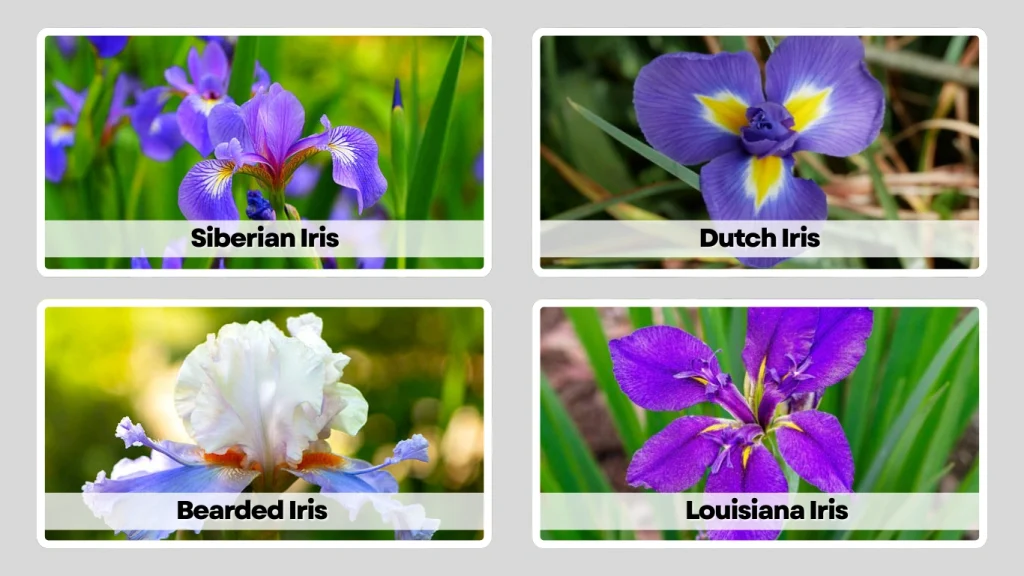
Blue iris flowers come in several species, each with unique features, bloom times, and growth requirements. Understanding the differences helps gardeners select the right type for their climate and garden style.
Siberian Iris
- Overview: Siberian iris is a hardy perennial that thrives in cooler climates and produces tall, slender blooms in various shades of blue.
- Identification:
- List item: Narrow, grass-like leaves
- Bluish-violet petals
- Height: 2–3 feet
- List item: Narrow, grass-like leaves
- Habitat: Moist meadows, pond edges, and garden borders
- Bloom Time: Late spring to early summer
- Uses: Ideal for borders, pond-side plantings, and naturalistic gardens
Dutch Iris
- Overview: Dutch iris is commonly grown for cut flowers and early spring blooms. These elegant flowers feature slender stems with delicate, bright blue petals.
- Identification: Slender, upright stems; bright blue or violet flowers
- Bloom Time: Early to mid-spring
- Uses: Excellent for bouquets, garden beds, and decorative displays
Bearded Iris
- Overview: Bearded iris is notable for the “beard” – a fuzzy line running down the center of the lower petals. Their large, showy blooms add drama and height to garden beds.
- Identification: Large, dramatic flowers; tall stems; colors range from deep blue to violet
- Habitat: Sunny garden beds with well-drained soil
- Care Tips: Requires soil that drains well; divide rhizomes every 3–4 years to maintain healthy blooms
- Bloom Time: Mid to late spring
- Uses: Ideal for ornamental borders, garden centers, and floral arrangements
Louisiana Iris
- Overview: Louisiana iris thrives in wetter, swampy environments. This species is known for its broad leaves and vibrant blue petals.
- Identification: Broad green leaves; bright blue to violet flowers; height 2–4 feet
- Bloom Time: Late spring to early summer
- Uses: Wetland gardens, water-edge planting, and naturalized landscapes
Japanese Iris
- Overview: Japanese iris is valued for its flat, large, and elegant flowers. It prefers slightly acidic soil and moist conditions.
- Identification: Glossy green leaves; violet-blue petals; blooms can be unusually wide
- Habitat: Pond edges, moist garden beds, and shaded sunny spots
- Bloom Time: Late spring to early summer
- Uses: Decorative ponds, water gardens, and formal garden settings
Growing Conditions
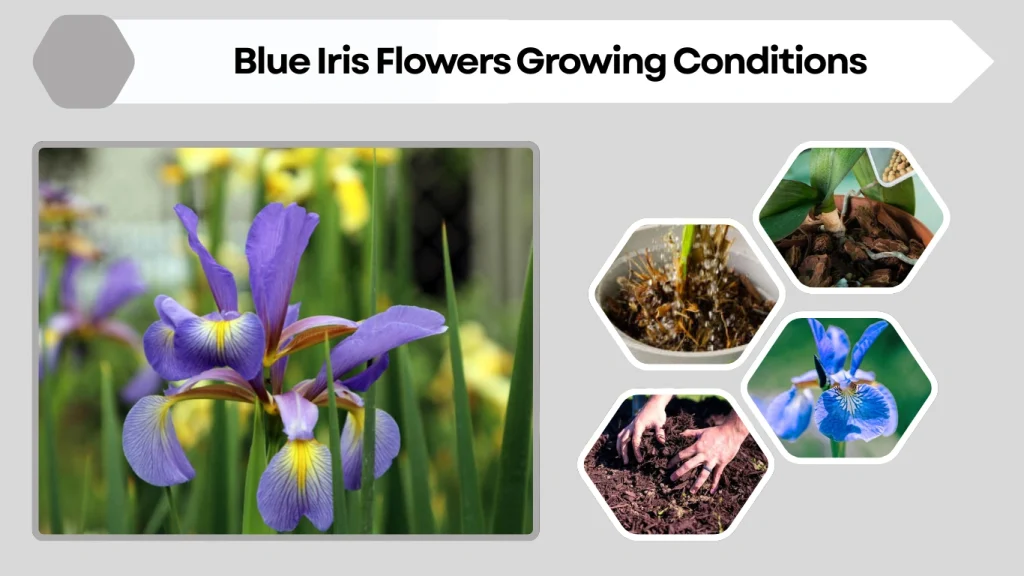
To thrive, blue iris flowers require specific conditions that support healthy growth and optimal blooming:
- Sunlight: Most species need full sun, at least 6 hours per day, for rich flower coloration.
- Soil: Well-drained loamy soil with a neutral to slightly acidic pH works best. Louisiana iris tolerates wetter soils.
- Watering: Moderate watering; soil should stay moist but not waterlogged.
- Temperature: Hardy in USDA zones 3–9 depending on the species; Siberian iris tolerates colder climates, while Louisiana iris prefers warmer, wetter areas.
Planting and Propagation
Blue iris flowers are commonly propagated through rhizome division or seeds, depending on the species and garden requirements:
- Rhizome Division: The most effective method, performed in late summer after flowering. Ensures healthy plants and promotes better blooms.
- Seed Propagation: Slower; used more for breeding or unusual cultivars. Bloom may take 2–3 years from seed.
- Spacing: Plant rhizomes 12–24 inches apart to allow airflow and prevent overcrowding.
Care and Maintenance
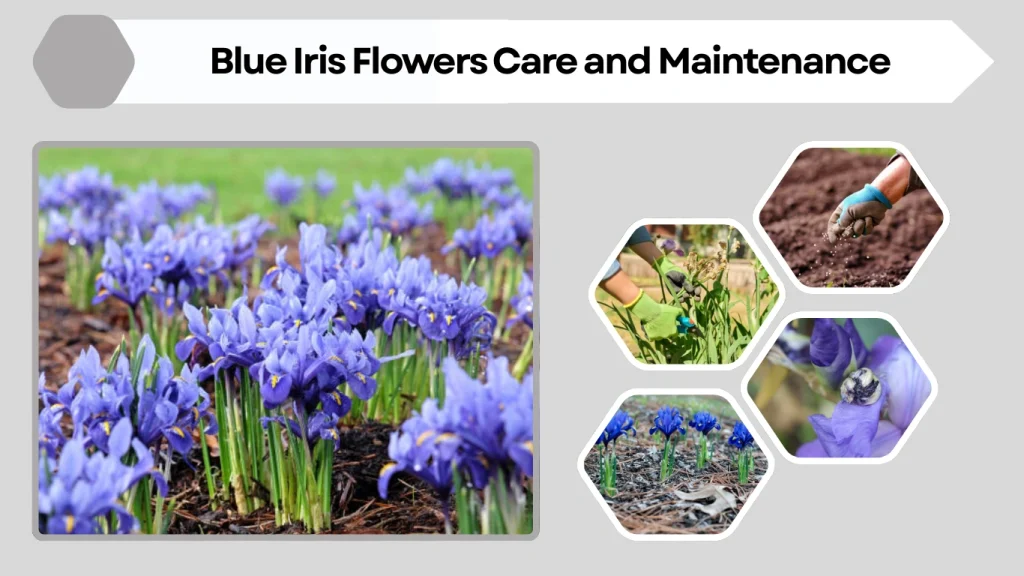
Proper care ensures vibrant blooms and healthy plants:
- Pruning: Remove spent flowers promptly to encourage new growth and prevent seed formation that can reduce blooming.
- Fertilization: Apply a balanced fertilizer in early spring and again after blooming to support rhizome development and flower production.
- Pest and Disease Management: Regularly inspect plants for aphids, iris borers, and fungal infections. Remove affected foliage immediately.
- Mulching: Use organic mulch around the base to conserve soil moisture and suppress weeds. Avoid covering rhizomes directly to prevent rot.
Common Pests and Diseases
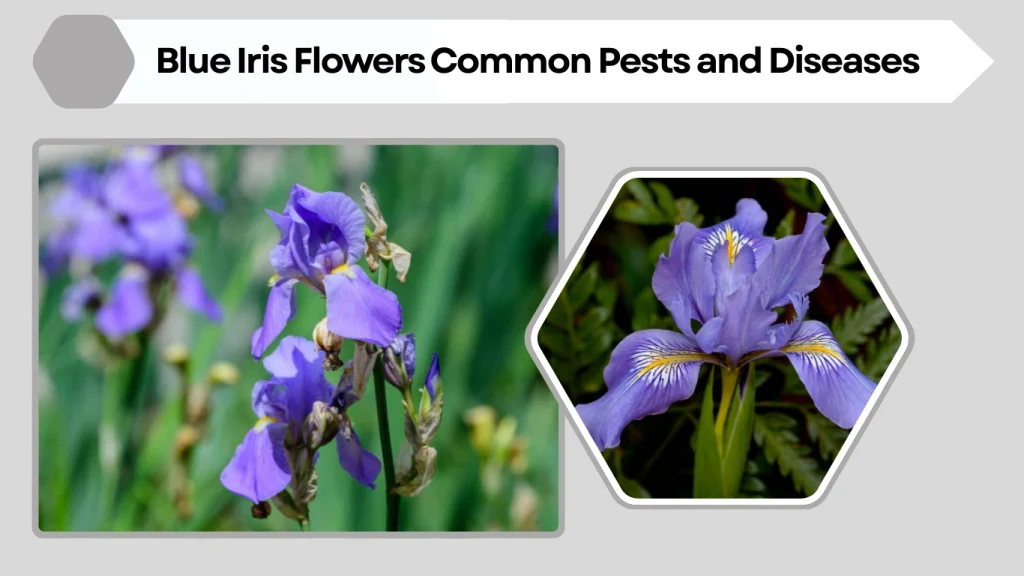
Blue iris flowers are generally hardy but can be affected by several pests and diseases:
- Iris Borers: Larvae tunnel into rhizomes, causing rot. Regular inspection and removal of infected leaves prevent spread.
- Aphids: Small insects that feed on sap, deforming flowers and transmitting viruses.
- Fungal Infections: Leaf spot and rhizome rot can occur in poorly drained soils.
- Prevention Tips: Maintain proper spacing for airflow, ensure well-drained soil, remove dead foliage, and consider insecticidal sprays if infestations occur.
Landscaping Uses
Blue iris flowers add elegance and structure to gardens:
- Borders and Edges: Their vertical blooms and vibrant blue tones make them perfect for garden lines and borders.
- Water Features: Ideal for planting near ponds, streams, and wetland areas, especially Louisiana and Japanese iris.
- Cut Flowers: Their long-lasting, sturdy stems make them excellent for bouquets and floral arrangements.
- Companion Plants: Plant alongside tulips, daffodils, hostas, and ornamental grasses for complementary textures and colors.
Symbolism and Cultural Significance
Blue iris flowers carry deep symbolism across cultures:
- Hope and Faith: Often used in religious ceremonies and rituals.
- Wisdom and Valor: Represents intellect, courage, and admiration in art and literature.
- Art and Decoration: Frequently depicted in paintings, tapestries, and floral motifs, symbolizing beauty and elegance.
Tips for Extending Bloom Time
Gardeners can extend the flowering period of blue iris flowers with a few strategies:
- Deadheading: Remove spent flowers to redirect energy into new blooms.
- Fertilization: Use bloom-boosting fertilizers to encourage longer flowering.
- Division: Replant rhizomes every few years to rejuvenate growth and maintain vigorous blooms.
- Water Management: Maintain consistent soil moisture, especially during dry periods, to avoid stress and premature wilting.
FAQs
What is the best time to plant blue iris flowers?
Late summer to early fall is ideal for rhizome establishment, though spring planting works in mild climates. Planting at these times ensures strong root growth and vibrant blooms the following season.
How often should I water blue iris plants?
Water moderately during dry periods, ensuring soil stays moist but not waterlogged. Louisiana iris tolerates wetter soils, while other species need moderate, well-drained conditions.
Can blue iris flowers grow in partial shade?
Yes, blue iris flowers can tolerate partial shade, but full sun produces larger, more vibrant blooms. Partial shade may reduce flower size and overall flower quantity.
How do I prevent iris borers and other pests?
Inspect leaves regularly, remove dead foliage, and maintain proper spacing to improve airflow. Use insecticidal sprays if necessary and ensure soil drainage to prevent rot.
How long do blue iris flowers bloom?
Bloom time varies by species, generally lasting 2–4 weeks from late spring to early summer. With proper care, including deadheading and fertilization, flowering can sometimes be extended slightly.