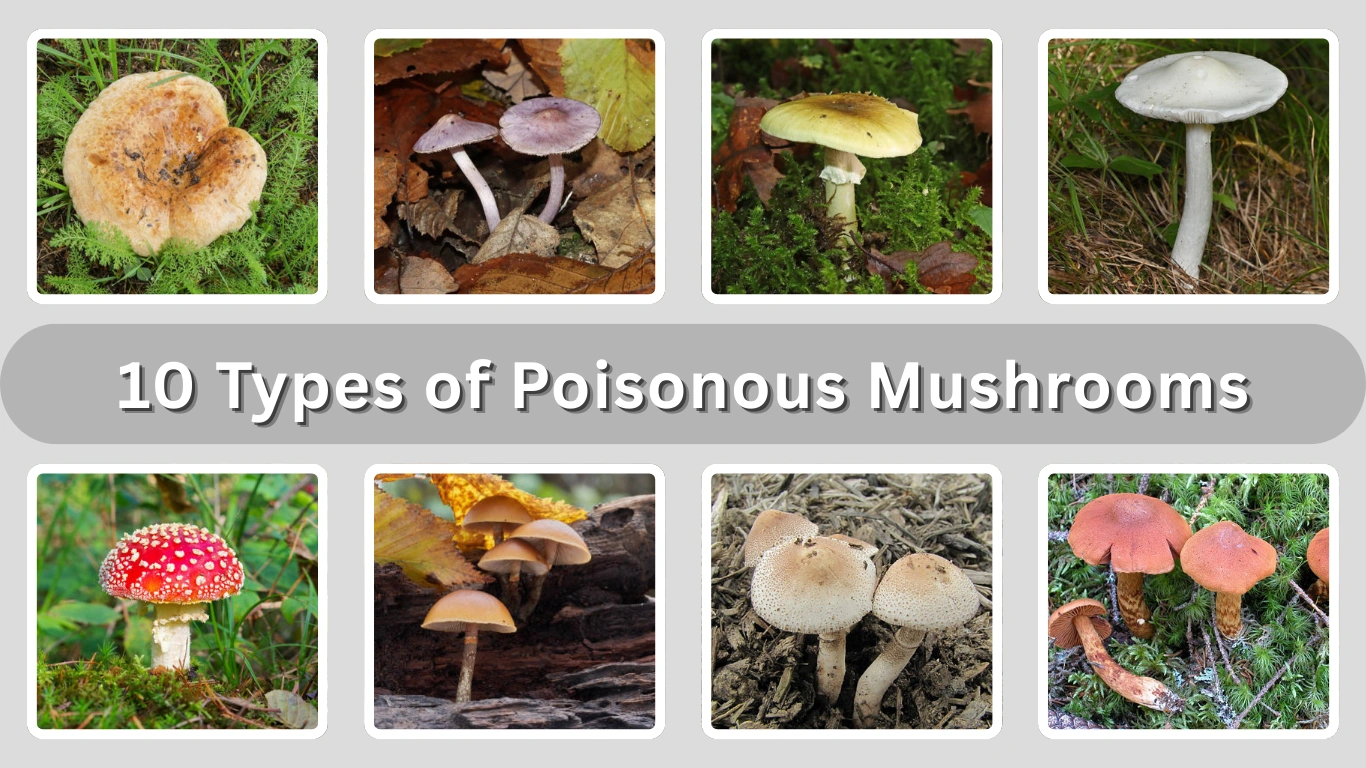






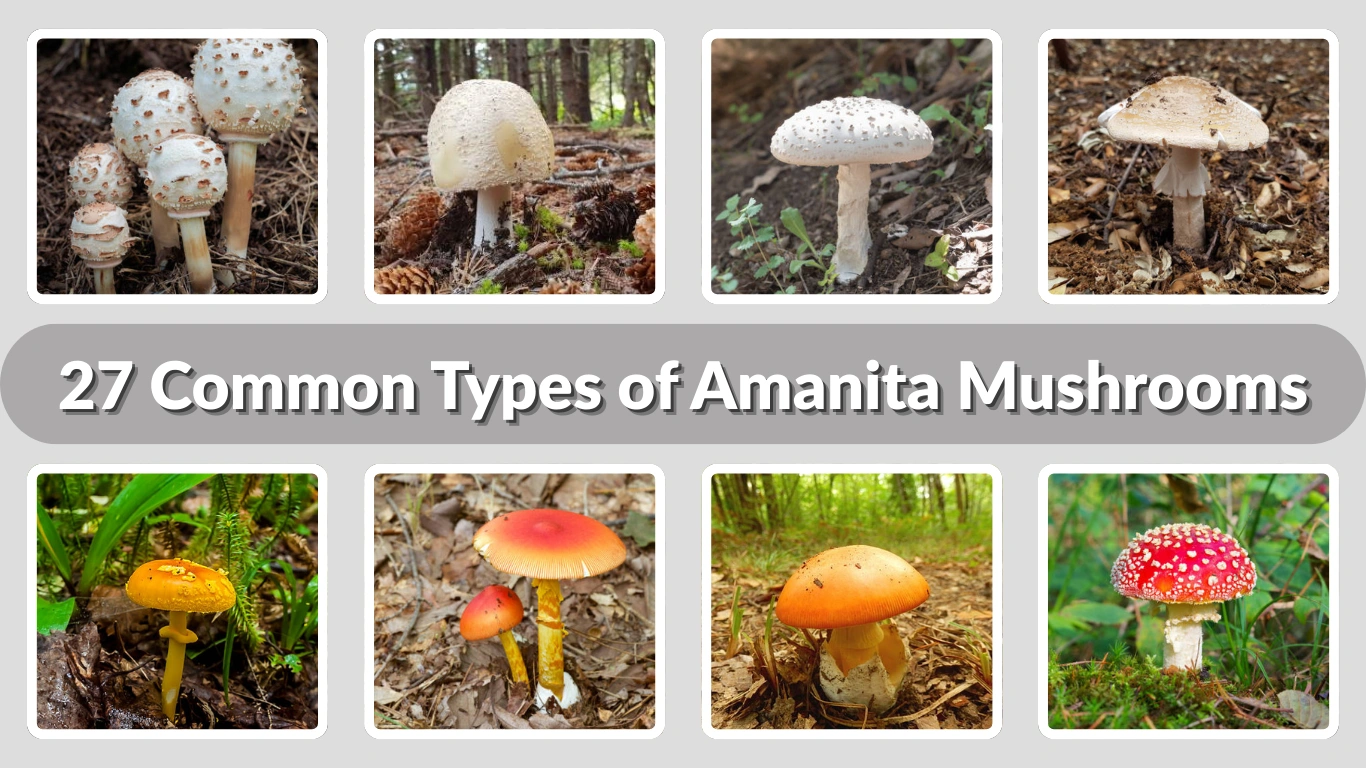
Amanita mushrooms are among the most recognizable—and most dangerous—fungi in the world. This diverse genus includes species ranging from highly prized edibles to some of the deadliest mushrooms ever documented. Found primarily in forests and woodlands, Amanitas share distinctive features such as white gills, rings, and volvas. This guide explores 27 common types of Amanita mushrooms to help with identification, awareness, and safety.
1. Amanita muscaria (Fly Agaric)
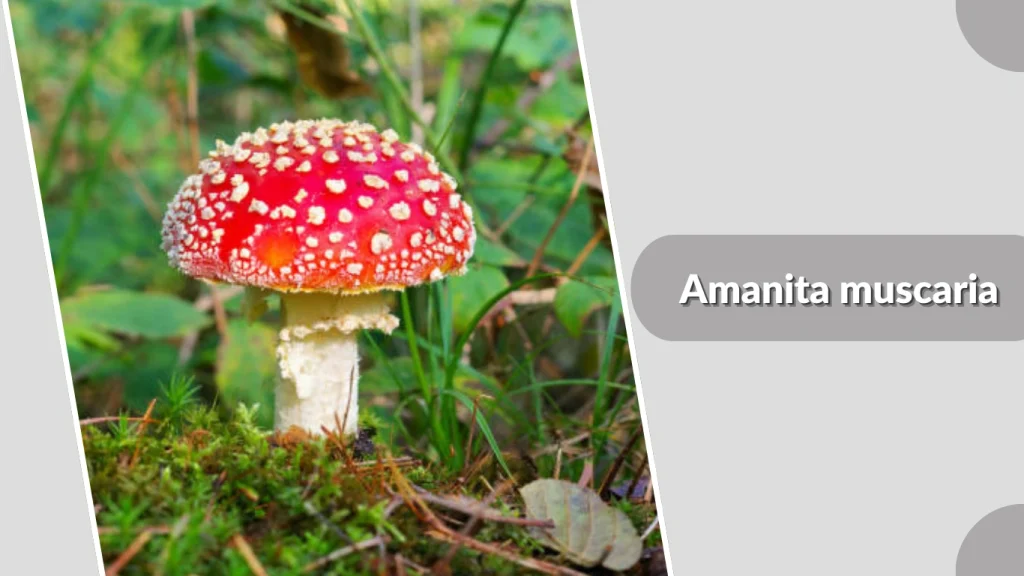
Amanita muscaria, commonly known as the fly agaric, is one of the most iconic and instantly recognizable mushrooms in the world. Famous for its bright red cap with white spots, it has deep cultural, folkloric, and historical significance. Despite its striking appearance, this species is toxic and should never be consumed without specialized knowledge and preparation.
Identification
- Bright red to orange-red cap with scattered white warty patches
- Cap typically 8–20 cm wide, becoming flatter with age
- White, free gills underneath the cap
- White stem with a hanging ring (annulus)
- Bulbous base with remnants of a white volva
Habitat and Distribution
Amanita muscaria grows in association with trees, forming mycorrhizal relationships most commonly with birch, pine, spruce, and fir. It is found in forests, woodlands, and parklands across the Northern Hemisphere, including North America, Europe, and Asia. It has also been introduced to parts of the Southern Hemisphere. Fruiting typically occurs from late summer through autumn.
Toxicity
This mushroom is toxic due to compounds such as muscimol and ibotenic acid. Consumption can cause nausea, vomiting, dizziness, confusion, hallucinations, and muscle spasms. While fatalities are rare, ingestion can be dangerous, especially for children or pets.
Notable Characteristics
The vivid coloration of Amanita muscaria serves as a natural warning sign. It is frequently depicted in fairy tales, video games, and art, making it one of the most culturally recognizable mushrooms worldwide.
2. Amanita phalloides (Death Cap)
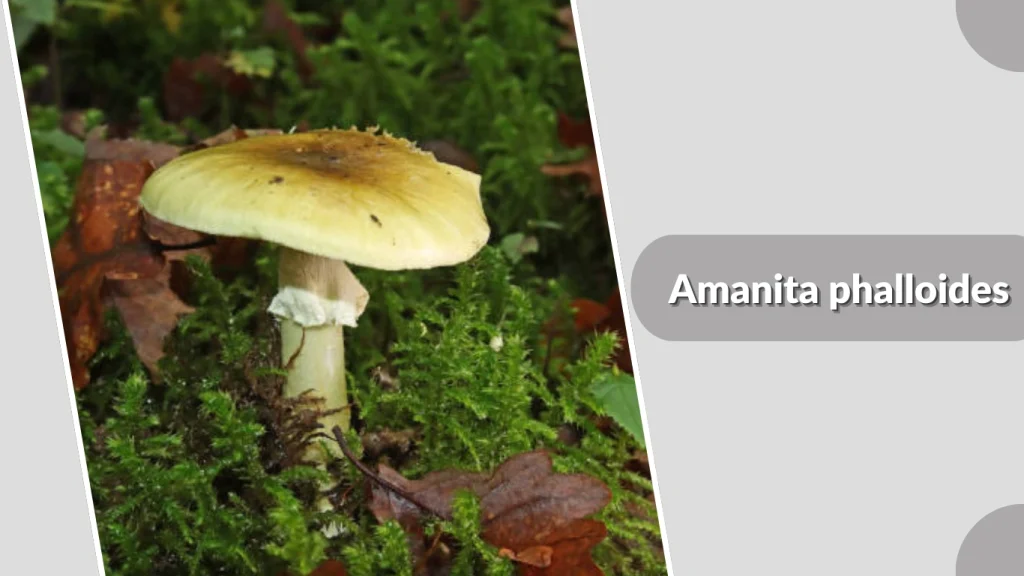
Amanita phalloides, commonly known as the death cap, is regarded as the most dangerous mushroom in the world. Responsible for the majority of fatal mushroom poisonings, it is especially hazardous due to its mild taste and resemblance to edible species. Even small amounts can cause severe organ damage.
Identification
- Cap color ranges from olive-green to yellowish or brown
- Cap typically 5–15 cm wide with a smooth, slightly sticky surface
- White, crowded gills that do not attach to the stem
- White stem with a distinct hanging ring
- Large, sac-like white volva at the base
Habitat and Distribution
Amanita phalloides grows in deciduous and mixed forests, forming mycorrhizal relationships with oak, beech, chestnut, and other hardwood trees. Native to Europe, it has spread to North America, Asia, Australia, and parts of Africa. Fruiting occurs from late summer to autumn, often in scattered groups.
Toxicity
This species contains deadly amatoxins that cause severe liver and kidney failure. Symptoms may be delayed for 6–24 hours, leading many to underestimate the danger. Without rapid medical treatment, poisoning can be fatal.
Notable Characteristics
The combination of a greenish cap, white gills, and a prominent volva makes this mushroom especially deceptive, as it can resemble edible species to inexperienced foragers.
3. Amanita virosa (Destroying Angel)
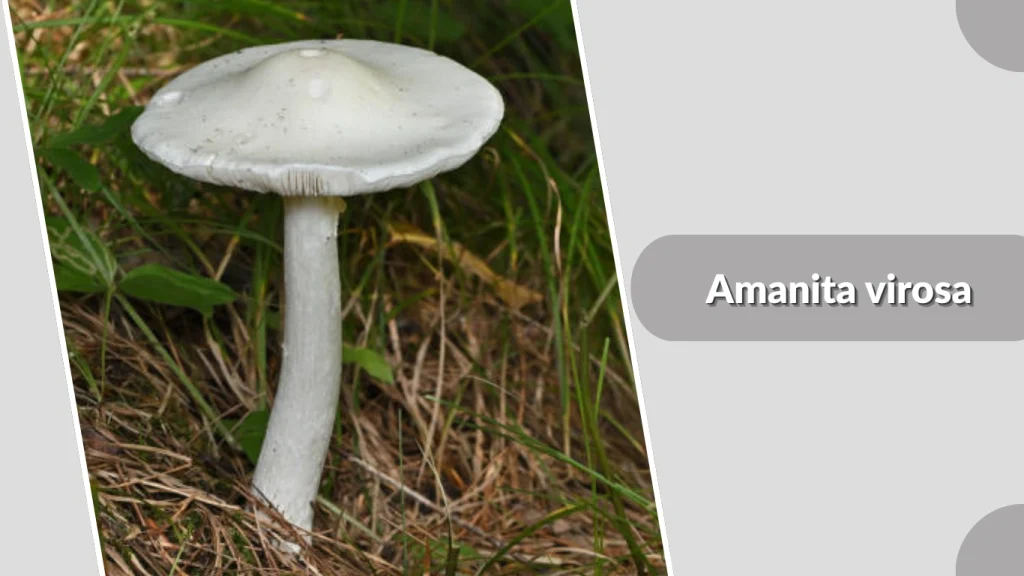
Amanita virosa, commonly known as the destroying angel, is a highly toxic mushroom infamous for its pure white appearance and deadly potency. It is often mistaken for edible white mushrooms, making it particularly dangerous to inexperienced foragers. Even small amounts can be fatal if ingested.
Identification
- Pure white cap, smooth and sometimes slightly sticky
- Cap typically 5–12 cm wide, becoming flatter with age
- White, free gills beneath the cap
- Slender white stem with a fragile ring
- Bulbous base enclosed in a white sac-like volva
Habitat and Distribution
Amanita virosa is found in coniferous and mixed forests, forming mycorrhizal relationships with spruce and other trees. It is native to Europe but has closely related species in North America. Fruiting occurs from late summer through autumn, often appearing singly or in small groups.
Toxicity
This mushroom contains potent amatoxins that cause severe liver and kidney failure. Symptoms may take many hours to appear, which increases the risk of fatal outcomes without immediate medical care.
Notable Characteristics
Its entirely white coloration combined with a ring and volva is a classic warning sign. Despite its elegant appearance, Amanita virosa is among the deadliest mushrooms known.
4. Amanita bisporigera (Eastern Destroying Angel)
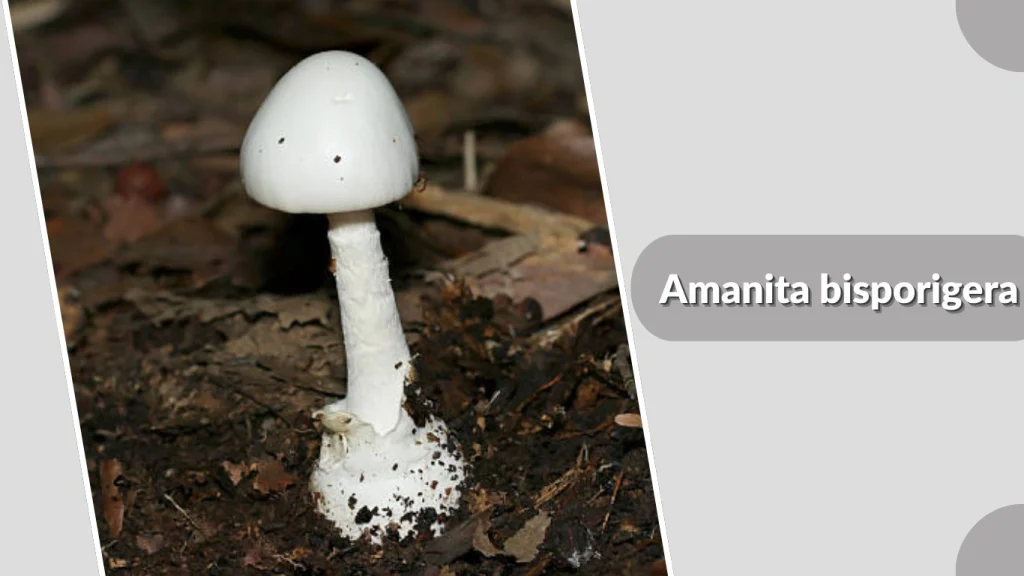
Amanita bisporigera, commonly called the eastern destroying angel, is a deadly white Amanita species found primarily in eastern North America. It closely resembles other destroying angel species and is equally dangerous, containing powerful toxins that can cause fatal poisoning.
Identification
- Pure white cap, smooth and sometimes shiny
- Cap usually 5–14 cm wide, convex to flat with age
- White, free gills
- Slender white stem with a delicate ring
- Large white volva at the bulbous base
Habitat and Distribution
This species grows in deciduous and mixed forests, forming symbiotic relationships with hardwood trees such as oak and beech. It is most common in eastern North America. Fruiting typically occurs from summer through early autumn, often appearing singly or scattered.
Toxicity
Amanita bisporigera contains lethal amatoxins that attack the liver and kidneys. Symptoms may be delayed, leading to a false sense of recovery before severe organ failure develops.
Notable Characteristics
The combination of an all-white appearance, ring, and volva makes this species especially deceptive, as it can resemble edible mushrooms such as puffballs or button mushrooms when young.
5. Amanita ocreata (Western Destroying Angel)
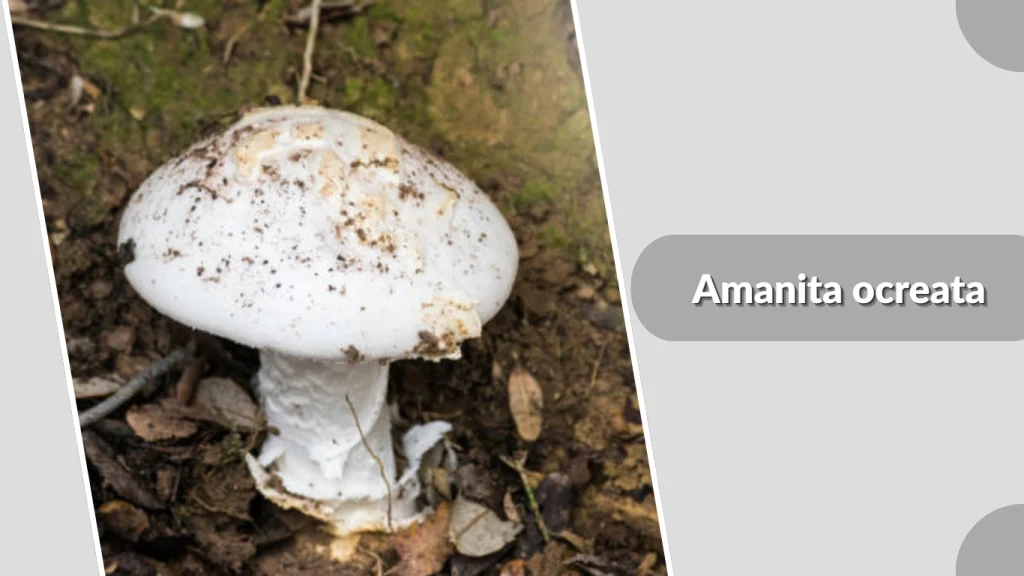
Amanita ocreata, commonly known as the western destroying angel, is an extremely toxic Amanita species native to the western regions of North America. It is closely related to other destroying angels and is responsible for numerous severe poisonings due to its resemblance to edible white mushrooms.
Identification
- White to pale cream cap, smooth and sometimes slightly sticky
- Cap typically 6–12 cm wide, convex when young, flattening with age
- White, free gills beneath the cap
- White stem with a fragile ring
- Prominent white, sac-like volva at the swollen base
Habitat and Distribution
Amanita ocreata is most commonly found along the west coast of North America, particularly in California and the Pacific Northwest. It grows in association with oak and other hardwood trees in deciduous and mixed forests. Fruiting usually occurs from late winter through spring, which is earlier than many other Amanita species.
Toxicity
This species contains deadly amatoxins that cause severe liver and kidney failure. Symptoms may not appear for many hours after ingestion, increasing the risk of fatal outcomes without prompt medical intervention.
Notable Characteristics
Its spring fruiting season and association with oak trees help distinguish Amanita ocreata from other destroying angel species, though all should be considered equally dangerous.
6. Amanita pantherina (Panther Cap)
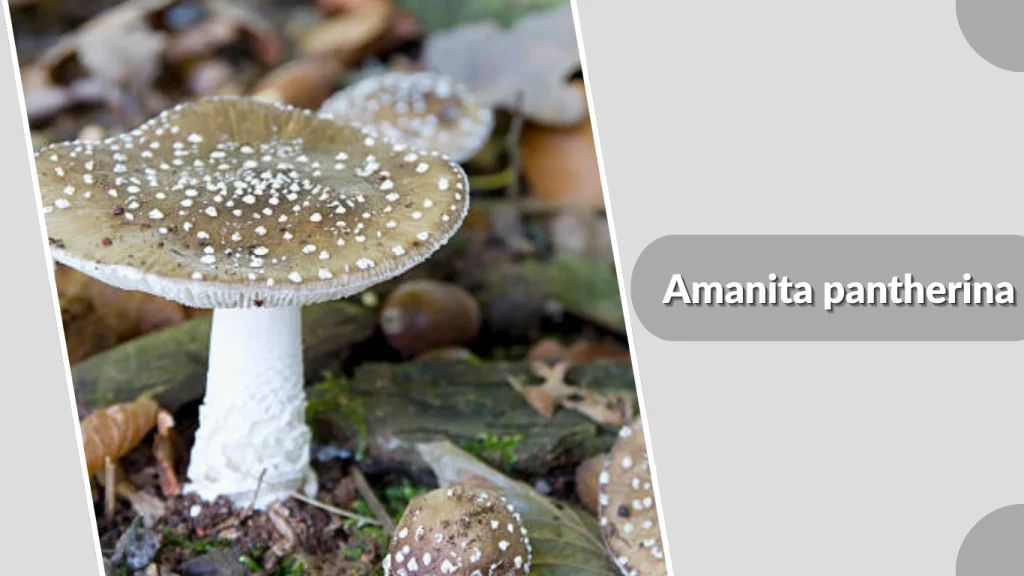
Amanita pantherina, commonly known as the panther cap, is a highly toxic Amanita species closely related to Amanita muscaria. Although less colorful, it is considered more dangerous due to its higher concentration of psychoactive and neurotoxic compounds. Its attractive appearance often leads to accidental poisoning.
Identification
- Brown to dark brown cap with scattered white warty patches
- Cap typically 5–12 cm wide, convex to flat with age
- White, free gills under the cap
- White stem with a distinct ring
- Bulbous base with white volval remnants forming concentric rings
Habitat and Distribution
Amanita pantherina grows in deciduous and coniferous forests, forming mycorrhizal associations with oak, beech, pine, and spruce. It is native to Europe and parts of Asia but has been reported in other regions. Fruiting occurs from summer through autumn, often appearing singly or in small groups.
Toxicity
This species contains muscimol and ibotenic acid, which can cause severe neurological symptoms including confusion, hallucinations, agitation, muscle spasms, and loss of coordination. In severe cases, poisoning may require hospitalization.
Notable Characteristics
The brown cap with white warts and sharply defined volval rings at the base help distinguish Amanita pantherina from similar species. Despite its elegant appearance, it is considered one of the most dangerous non-lethal Amanitas.
7. Amanita rubescens (Blusher)
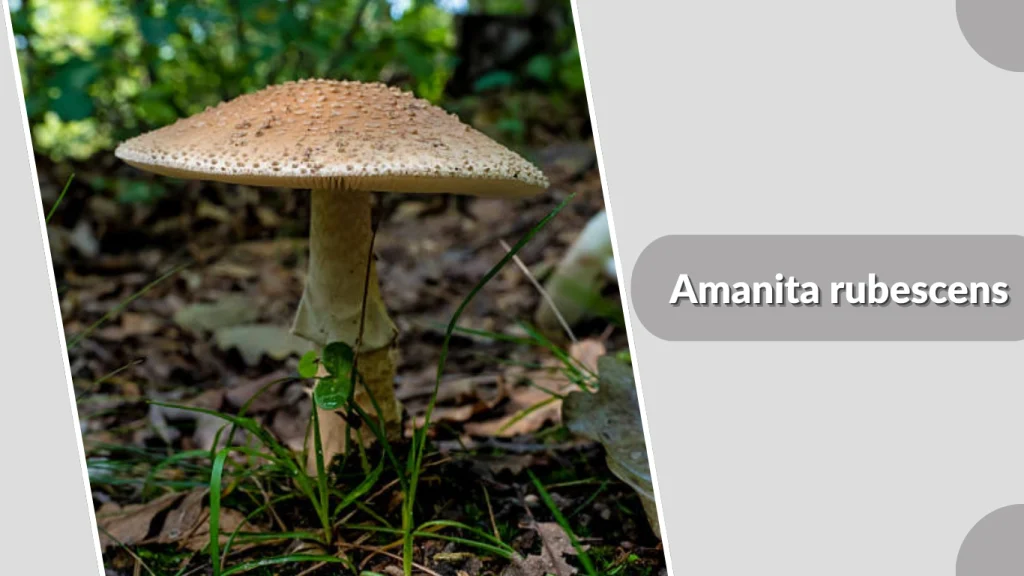
Amanita rubescens, commonly known as the blusher, is a well-known Amanita species recognized for the reddish or pinkish staining that appears when the flesh is bruised or cut. Unlike many Amanita species, it is considered edible when properly cooked, though it must never be eaten raw.
Identification
- Brownish to gray-brown cap with small gray or whitish warts
- Cap usually 6–15 cm wide, convex to flat with age
- White gills that may show reddish staining when damaged
- Sturdy stem with a ring, often showing pinkish bruising
- Bulbous base without a true sac-like volva
Habitat and Distribution
This species grows in deciduous and coniferous forests, forming mycorrhizal relationships with a wide variety of trees. It is widespread across Europe, North America, and parts of Asia. Fruiting occurs from summer through autumn, often appearing in scattered groups.
Edibility
Amanita rubescens is considered edible only after thorough cooking, as it contains heat-sensitive toxins when raw. Proper identification is critical, as it can be confused with toxic Amanita species. Many foragers avoid it due to the risks of misidentification.
Notable Characteristics
The characteristic reddish bruising of the flesh is the most reliable identifying feature, giving rise to its common name, the blusher.
8. Amanita caesarea (Caesar’s Mushroom)
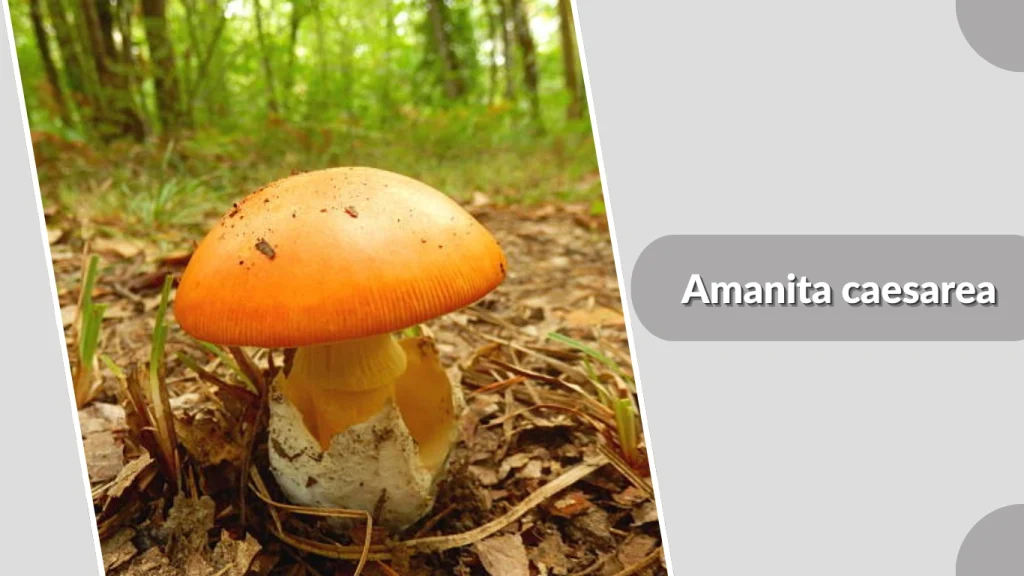
Amanita caesarea, commonly known as Caesar’s mushroom, is one of the most famous edible Amanita species and has been prized since ancient Roman times. It is admired for its striking colors, pleasant flavor, and historical significance, but accurate identification is essential due to the many toxic Amanitas it resembles.
Identification
- Bright orange to red-orange cap, smooth and shiny
- Cap typically 8–20 cm wide, convex to flat with age
- Yellow gills and yellow stem
- Prominent yellow ring on the stem
- White, sack-like volva at the base
Habitat and Distribution
This species grows in warm deciduous forests, particularly with oak and chestnut trees. It is native to southern Europe but also occurs in parts of North Africa and Asia. Fruiting usually takes place from late spring through autumn, depending on climate.
Edibility
Amanita caesarea is considered an excellent edible mushroom when correctly identified. It is traditionally eaten cooked and, in some regions, even consumed raw. Due to the high risk of confusion with deadly species, it should only be harvested by experienced foragers.
Notable Characteristics
The combination of a bright orange cap, yellow gills, and a white volva is unique among Amanita species and makes Caesar’s mushroom highly distinctive when fully developed.
9. Amanita jacksonii (American Caesar’s Mushroom)
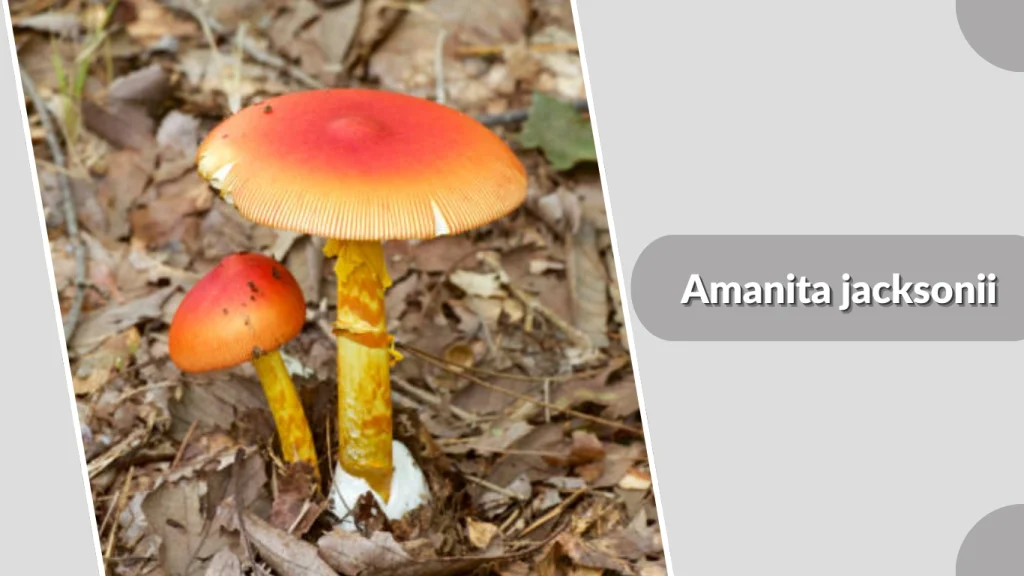
Amanita jacksonii is a North American relative of the famous Caesar’s mushroom and is highly regarded for its beauty and edibility. It shares many visual traits with Amanita caesarea but differs in range and some structural details. Despite being edible, it requires confident identification due to the presence of deadly lookalikes.
Identification
- Bright red to reddish-orange cap, smooth and slightly glossy
- Cap typically 8–15 cm wide, convex to flat with age
- Yellow gills and yellow stem
- Yellow ring present on the stem
- White to pale gray sac-like volva at the base
Habitat and Distribution
This species is found primarily in eastern and southeastern North America. It grows in deciduous and mixed forests, forming mycorrhizal relationships with hardwood trees such as oak and beech. Fruiting usually occurs from late spring through summer, often earlier than many other Amanita species.
Edibility
Amanita jacksonii is considered an excellent edible mushroom when properly identified. It is commonly cooked before consumption. Due to its resemblance to highly toxic Amanitas, it should only be collected by experienced foragers who can clearly recognize all identifying features.
Notable Characteristics
The vivid red cap combined with yellow gills and stem closely resembles Caesar’s mushroom, earning it the nickname “American Caesar.” Its North American range helps distinguish it from its European counterpart.
10. Amanita fulva (Tawny Grisette)
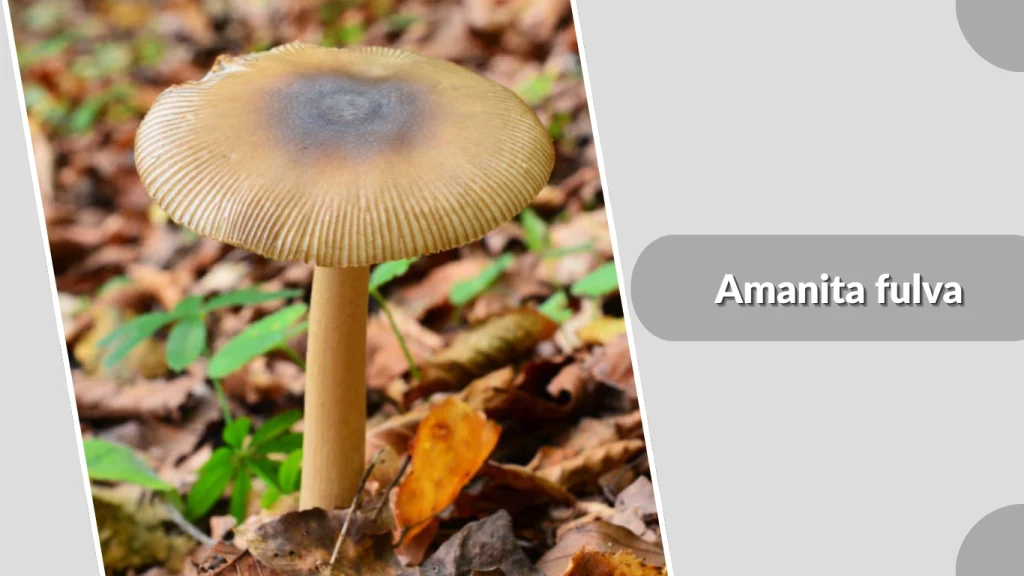
Amanita fulva, commonly known as the tawny grisette, is a slender and graceful Amanita species known for its warm brown to orange-brown cap and lack of a stem ring. It belongs to the grisette group, which is characterized by a sack-like volva and ringless stem.
Identification
- Tawny to orange-brown cap, often darker at the center
- Cap typically 5–10 cm wide with a slightly striated margin
- White to pale cream gills, free from the stem
- Slender stem without a ring
- White, sack-like volva at the base
Habitat and Distribution
This species grows in deciduous and mixed forests, commonly associated with birch, oak, and beech trees. It is widespread across Europe, parts of Asia, and North America. Fruiting occurs from summer through autumn, often appearing singly.
Edibility
Amanita fulva is considered edible by some foragers, but it is generally avoided due to the difficulty of distinguishing it from deadly ringless Amanita species. Extreme caution is advised, and many mushroom guides recommend not consuming it.
Notable Characteristics
The absence of a ring combined with a clearly visible volva and striated cap margin is characteristic of grisette Amanitas like Amanita fulva.
11. Amanita vaginata (Grisette)
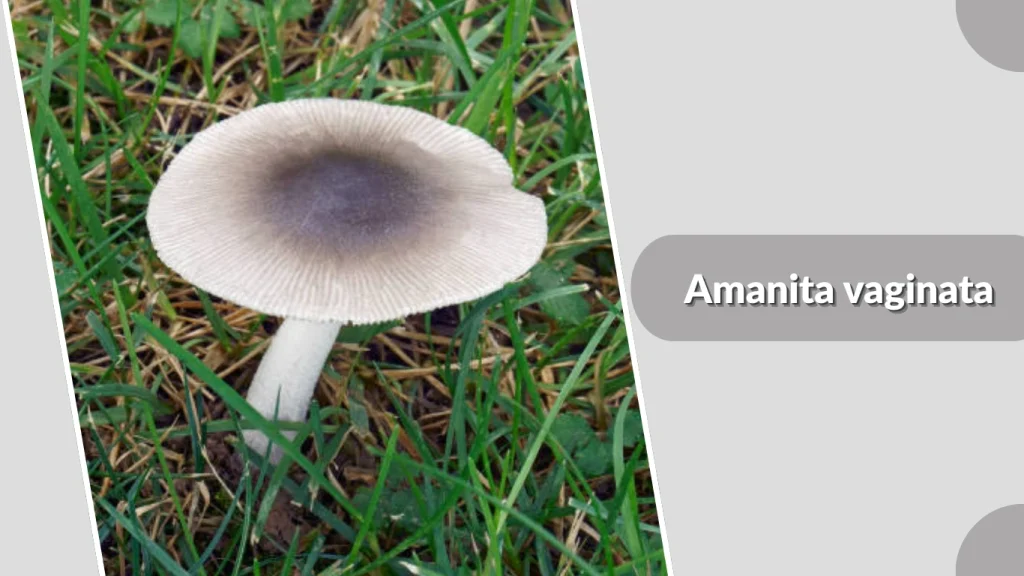
Amanita vaginata, commonly known as the grisette, is a delicate Amanita species recognized by its gray to brown cap, ringless stem, and prominent sack-like volva. It is part of a complex of similar species and is often admired for its elegant appearance rather than collected for food.
Identification
- Gray, gray-brown, or mouse-colored cap with striated margins
- Cap typically 5–12 cm wide, convex to flat with age
- White to pale gray gills, free from the stem
- Slender stem without a ring
- Large, white sac-like volva at the base
Habitat and Distribution
This species grows in deciduous and mixed forests, forming mycorrhizal relationships with a variety of hardwood trees. It is widely distributed across Europe, North America, and parts of Asia. Fruiting usually occurs from summer through autumn, often appearing singly or scattered.
Edibility
Amanita vaginata is considered edible by some sources, but it is generally not recommended due to the risk of confusion with deadly Amanita species. Many foragers choose to avoid it altogether for safety reasons.
Notable Characteristics
The combination of a ringless stem, striated cap margin, and sack-like volva is characteristic of grisette Amanitas and helps distinguish them from other groups within the genus.
12. Amanita crocea (Orange Grisette)
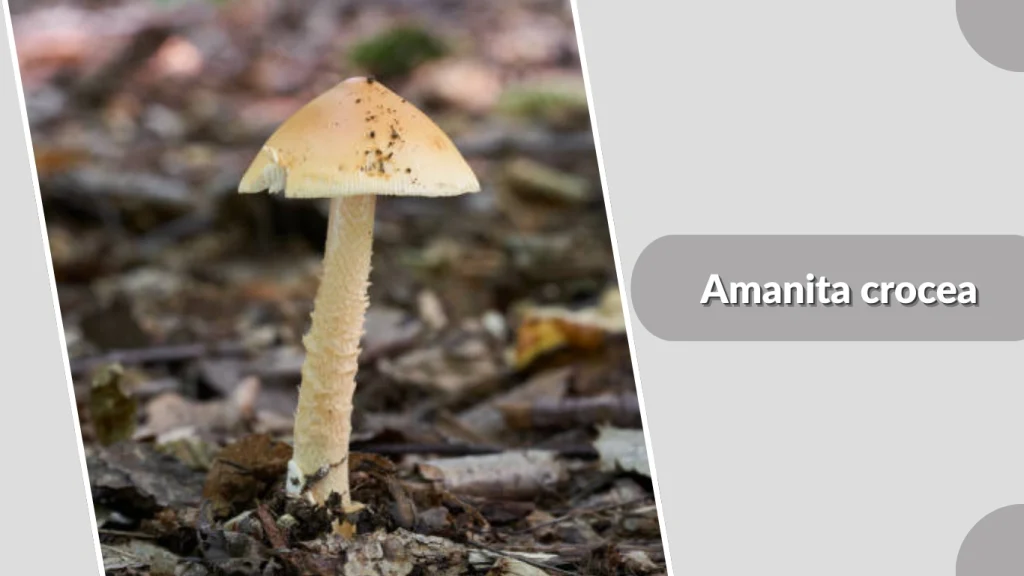
Amanita crocea, commonly known as the orange grisette, is a slender and attractive Amanita species notable for its warm orange-brown cap and ringless stem. Like other grisettes, it features a prominent volva and requires careful identification due to similarities with toxic species.
Identification
- Orange to orange-brown cap with darker central disc
- Cap typically 5–10 cm wide with strongly striated margins
- Pale cream to white gills, free from the stem
- Slender stem without a ring
- White to pale buff sac-like volva at the base
Habitat and Distribution
This species is commonly found in deciduous forests, particularly in association with birch trees. It is distributed across Europe and parts of Asia, with fruiting occurring from summer through autumn. It usually appears singly or scattered rather than in dense groups.
Edibility
Amanita crocea is sometimes listed as edible, but it is generally avoided due to the difficulty of distinguishing it from deadly ringless Amanita species. Many mycologists advise against consuming any grisette Amanitas.
Notable Characteristics
The bright orange cap combined with a ringless stem and prominent volva makes Amanita crocea visually distinctive, though caution is essential when identifying this species.
13. Amanita flavoconia (Yellow Patches)
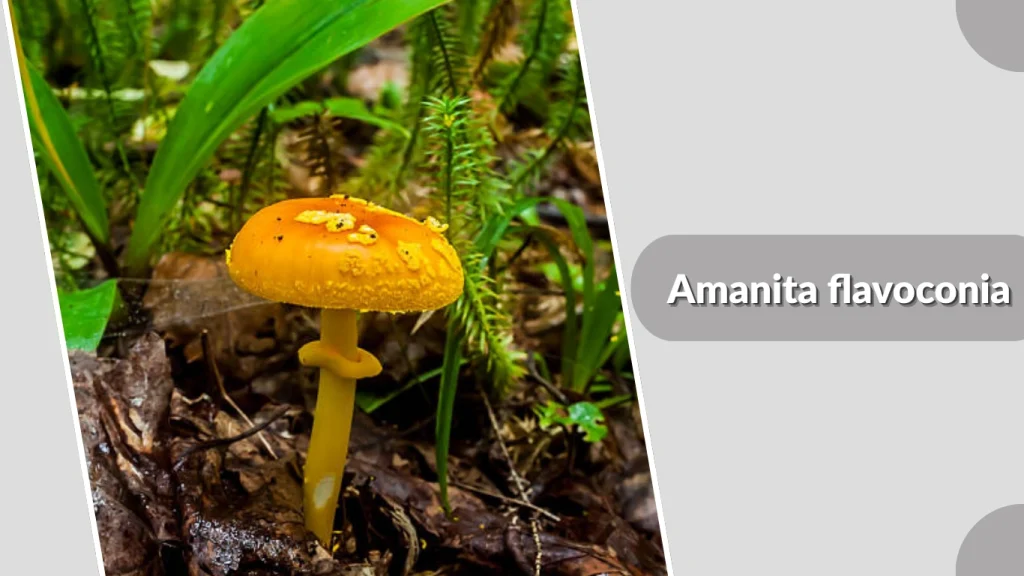
Amanita flavoconia, commonly known as yellow patches, is a colorful Amanita species recognized for its bright yellow to orange-yellow cap adorned with yellowish veil remnants. While visually appealing, it is considered toxic and should not be eaten.
Identification
- Bright yellow to orange-yellow cap with scattered yellow patches
- Cap typically 5–12 cm wide, convex to flat with age
- White to pale yellow gills, free from the stem
- Yellowish stem with a fragile ring
- Bulbous base with yellow volval remnants
Habitat and Distribution
This species is commonly found in eastern North America, growing in deciduous and mixed forests. It forms mycorrhizal relationships with hardwood trees such as oak and beech. Fruiting occurs from summer through early autumn, often appearing singly or in small groups.
Toxicity
Amanita flavoconia is considered toxic, though it is not as deadly as destroying angel species. Consumption may cause gastrointestinal distress and neurological symptoms.
Notable Characteristics
The yellow veil remnants on both the cap and base are key features, giving rise to its common name, yellow patches.
14. Amanita gemmata (Jeweled Amanita)
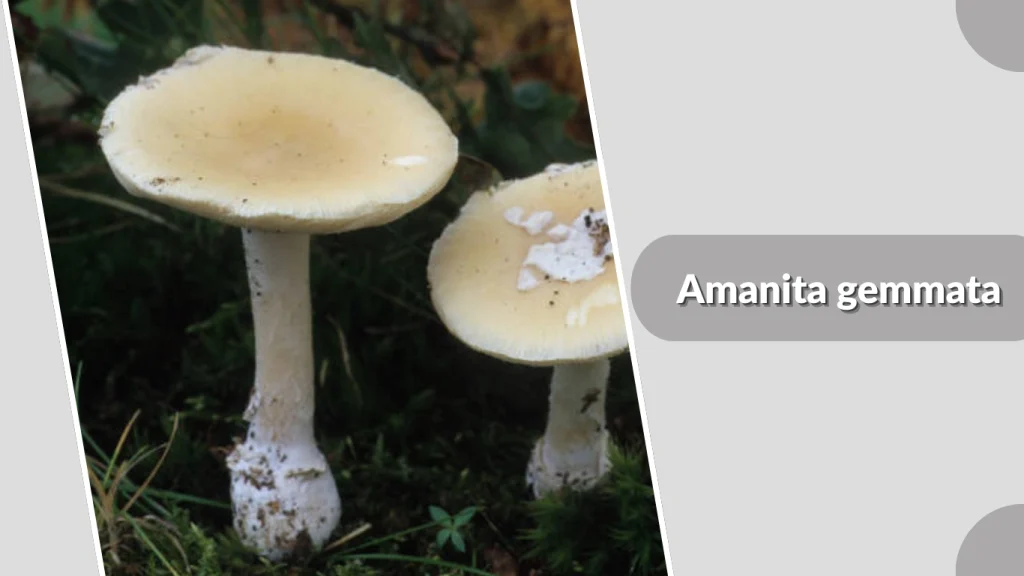
Amanita gemmata, commonly known as the jeweled amanita, is a visually striking but toxic species recognized for its yellow cap decorated with white or pale veil fragments. It is sometimes confused with edible yellow mushrooms, which makes proper identification especially important.
Identification
- Yellow to golden-yellow cap with scattered white patches
- Cap typically 5–10 cm wide, convex to flat with age
- White, free gills beneath the cap
- Pale yellow to white stem with a fragile ring
- Bulbous base with white volval remnants
Habitat and Distribution
This species grows in deciduous and coniferous forests, often associated with oak, pine, and spruce trees. Amanita gemmata is found across Europe, Asia, and parts of North America. Fruiting usually occurs from spring through autumn.
Toxicity
Amanita gemmata contains psychoactive and neurotoxic compounds similar to those in Amanita muscaria, though usually in lower concentrations. Ingestion can cause nausea, confusion, dizziness, and hallucinations.
Notable Characteristics
The bright yellow cap with jewel-like white patches gives this mushroom its common name and makes it visually appealing despite its toxic nature.
15. Amanita citrina (False Death Cap)
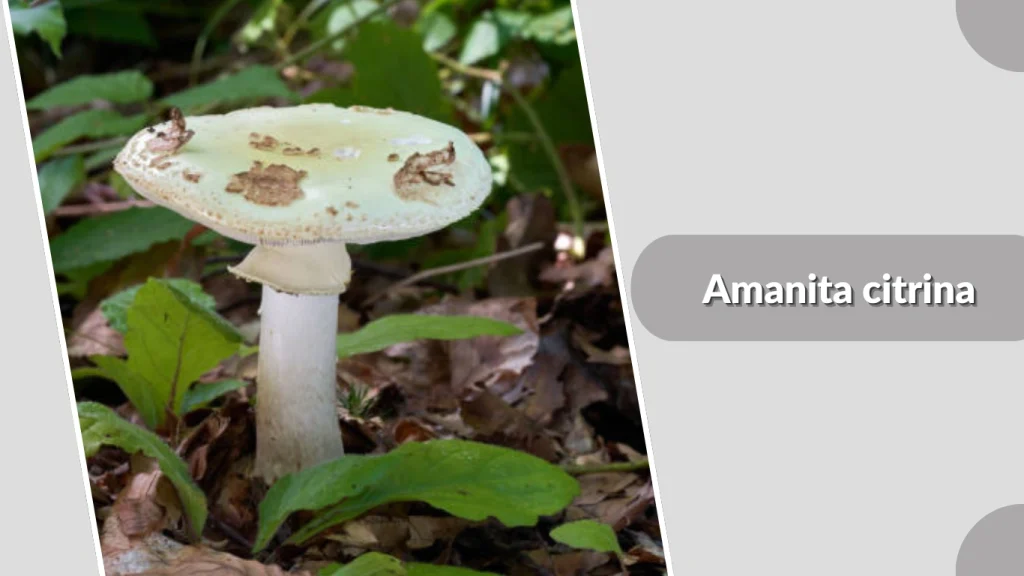
Amanita citrina, commonly known as the false death cap, closely resembles the deadly Amanita phalloides but is generally considered non-lethal. Despite this, it is regarded as toxic and unsuitable for consumption due to its unpleasant odor and potential health effects.
Identification
- Pale yellow to lemon-colored cap, sometimes whitish
- Cap typically 5–12 cm wide, smooth and slightly sticky
- White, free gills
- White stem with a fragile ring
- Bulbous base with a white sac-like volva
Habitat and Distribution
This species grows in deciduous and mixed forests, commonly associated with oak, beech, and birch trees. It is widespread across Europe and has also been reported in parts of Asia and North America. Fruiting occurs from late summer through autumn.
Toxicity
Amanita citrina is considered mildly toxic and can cause gastrointestinal discomfort if eaten. It also emits a strong odor often compared to raw potatoes, which further discourages consumption.
Notable Characteristics
The combination of a pale yellow cap, prominent volva, and strong odor helps distinguish Amanita citrina from both edible species and its deadly relatives.
16. Amanita porphyria (Purple Brown Amanita)
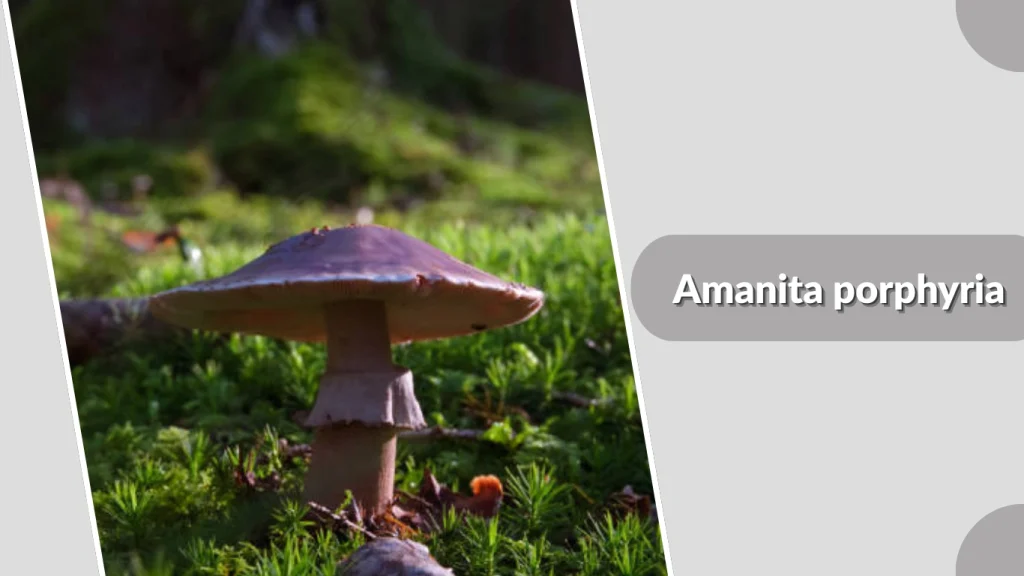
Amanita porphyria, commonly known as the purple brown amanita, is a subtly colored but toxic species recognized for its gray-brown to purplish cap tones. Its muted appearance can make it easy to overlook in woodland settings, yet it shares key structural traits with many dangerous Amanitas.
Identification
- Gray-brown to purplish-brown cap, often darker at the center
- Cap typically 4–10 cm wide, smooth with faint striations at the margin
- White to pale gray gills, free from the stem
- Slender stem with a fragile ring
- Bulbous base with grayish volval remnants
Habitat and Distribution
This species grows in coniferous and mixed forests, most often associated with spruce and pine trees. Amanita porphyria is widespread across Europe and parts of Asia, with occasional reports in North America. Fruiting usually occurs from summer through autumn, appearing singly or scattered.
Toxicity
Amanita porphyria is considered toxic and unsuitable for consumption. Ingestion may cause gastrointestinal symptoms and neurological effects, though it is not typically associated with fatal poisonings.
Notable Characteristics
Its dull, purplish-brown cap and faintly scented flesh help distinguish it from brighter Amanita species, though it still requires careful identification due to similarities with more dangerous relatives.
17. Amanita brunnescens (Brown American Star-footed Amanita)
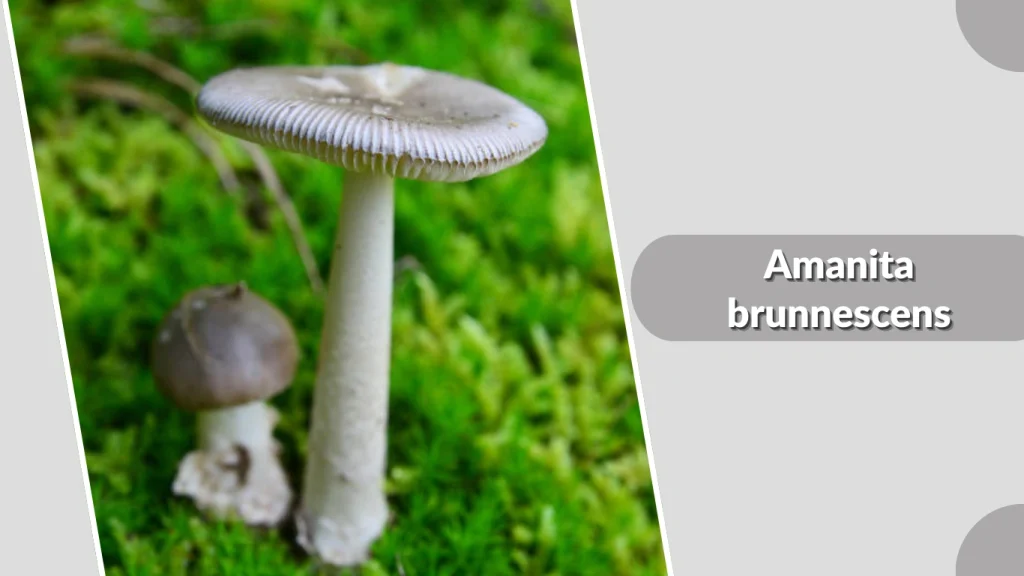
Amanita brunnescens is a North American Amanita species known for its brown cap and distinctive splitting stem base. It is considered toxic or at least unsafe to eat and is mainly of interest for identification rather than foraging.
Identification
- Brown to dark brown cap, smooth and slightly sticky
- Cap typically 6–12 cm wide, convex to flat with age
- White, free gills
- White stem with a ring that may disappear with age
- Bulbous base that often splits into star-like segments
Habitat and Distribution
This species grows in deciduous and mixed forests, commonly associated with oak and other hardwood trees. It is found primarily in eastern North America. Fruiting occurs from summer through autumn, often appearing singly or in small groups.
Toxicity
Amanita brunnescens is considered toxic or at least inedible. Consumption may result in gastrointestinal upset, and it should be avoided due to the risk of confusion with more dangerous Amanita species.
Notable Characteristics
The splitting, star-shaped base of the stem is a key identifying feature and gives rise to its common name, the star-footed amanita.
18. Amanita calyptroderma (Coccora)
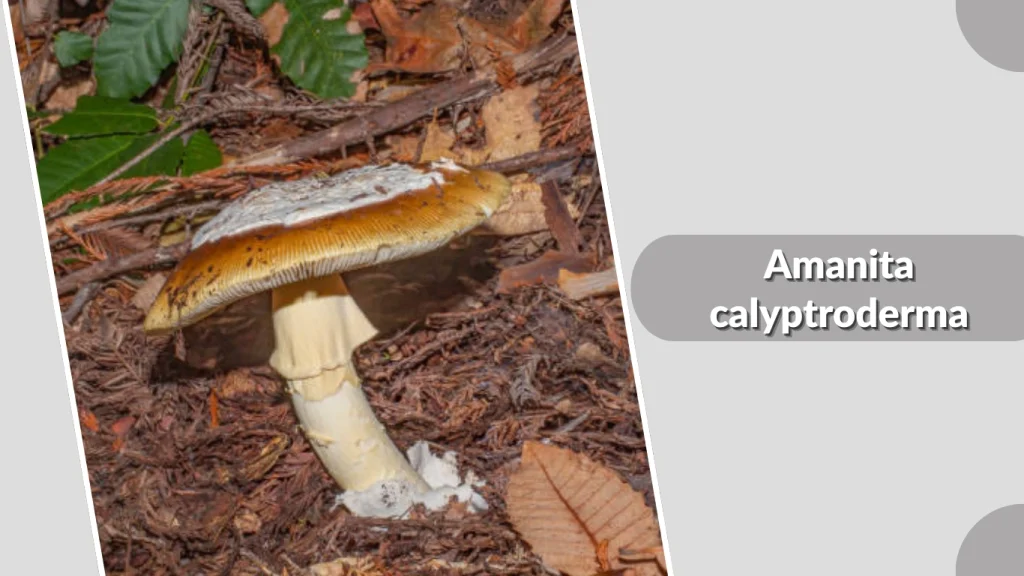
Amanita calyptroderma, commonly known as the coccora, is a large and robust Amanita species native to western North America. It is well known among experienced foragers and is considered edible when properly identified, though it closely resembles several toxic Amanita species.
Identification
- Large cap, ranging from 8–25 cm wide
- Cap color varies from white to tan or light brown
- Thick, sturdy white stem with a prominent ring
- White, free gills
- Large, sack-like white volva at the base
Habitat and Distribution
This species grows in coastal and inland forests of western North America, especially in California. It forms mycorrhizal relationships primarily with oak trees. Fruiting occurs from late fall through winter, making it one of the more distinctive cold-season Amanitas.
Edibility
Amanita calyptroderma is considered edible by knowledgeable foragers and is often cooked thoroughly before consumption. Due to the high risk of misidentification with deadly species, it should never be eaten without expert-level confidence.
Notable Characteristics
Its large size, thick flesh, and strong association with oak forests help distinguish the coccora from other Amanita species in its range.
19. Amanita cokeri (Coker’s Amanita)
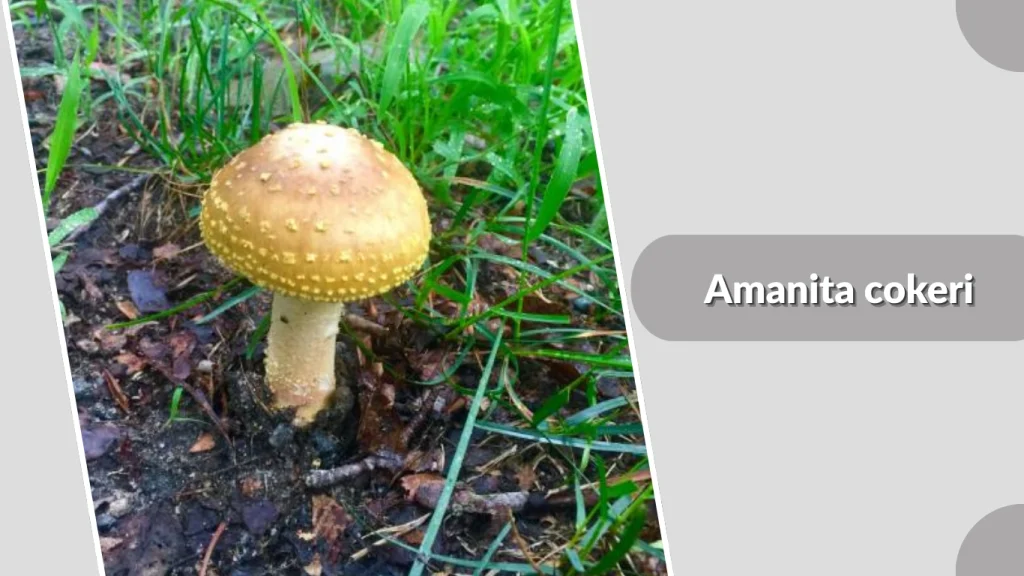
Amanita cokeri is a large, striking white Amanita species known for its shaggy appearance and thick flesh. Although impressive in size, it is considered toxic and should not be consumed. Its appearance can easily mislead foragers into confusing it with edible mushrooms.
Identification
- Large white cap with thick, cottony or shaggy patches
- Cap typically 10–25 cm wide
- White, free gills
- Thick white stem with a prominent ring
- Bulbous base with white volval remnants
Habitat and Distribution
This species grows in deciduous and mixed forests, particularly in association with oak and other hardwood trees. It is found mainly in eastern North America. Fruiting occurs from summer through early autumn, often appearing singly.
Toxicity
Amanita cokeri is considered toxic and may cause gastrointestinal distress if eaten. Due to its resemblance to deadly white Amanitas, it should always be avoided.
Notable Characteristics
The shaggy, cotton-like patches on the cap and its large size make Amanita cokeri visually distinctive among white Amanita species.
20. Amanita frostiana (Frost’s Amanita)
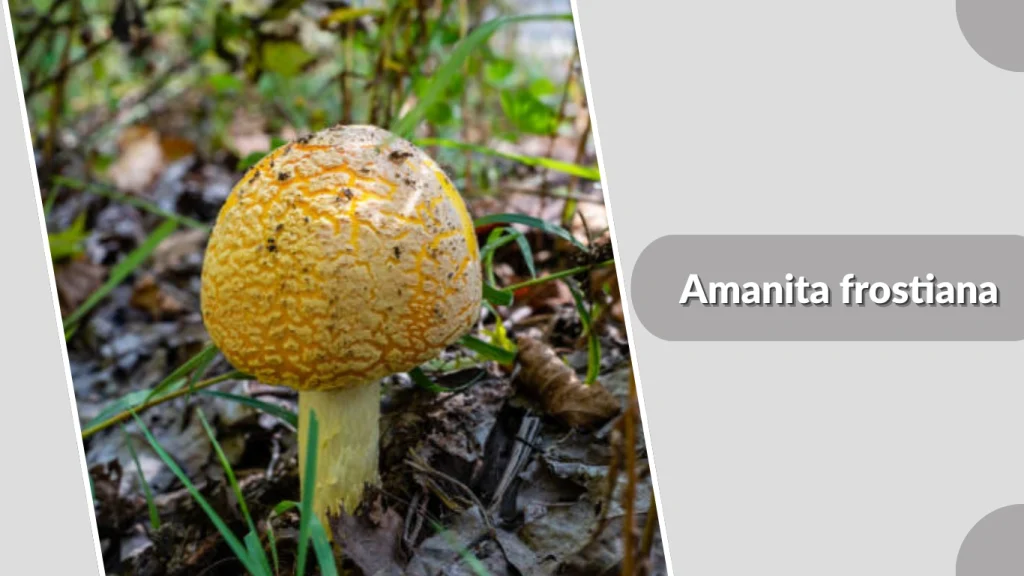
Amanita frostiana, commonly known as Frost’s Amanita, is a small but vividly colored Amanita species native to eastern North America. Its bright yellow cap and delicate structure make it eye-catching, though it is considered toxic and unsuitable for consumption.
Identification
- Bright yellow cap with scattered yellow to whitish patches
- Cap typically 3–8 cm wide, convex to flat with age
- White to pale yellow gills, free from the stem
- Slender yellowish stem with a small ring
- Bulbous base with yellowish volval remnants
Habitat and Distribution
This species grows in deciduous and mixed forests, often in association with oak trees. It is found primarily in eastern North America. Fruiting occurs from summer through early autumn, usually appearing singly or in small groups.
Toxicity
Amanita frostiana is considered toxic and may cause gastrointestinal or neurological symptoms if ingested. It is not typically associated with fatal poisonings but should still be avoided.
Notable Characteristics
The small size combined with a bright yellow cap and matching stem distinguishes Amanita frostiana from many other Amanita species in its range.
21. Amanita multisquamosa (Many-Scaled Amanita)
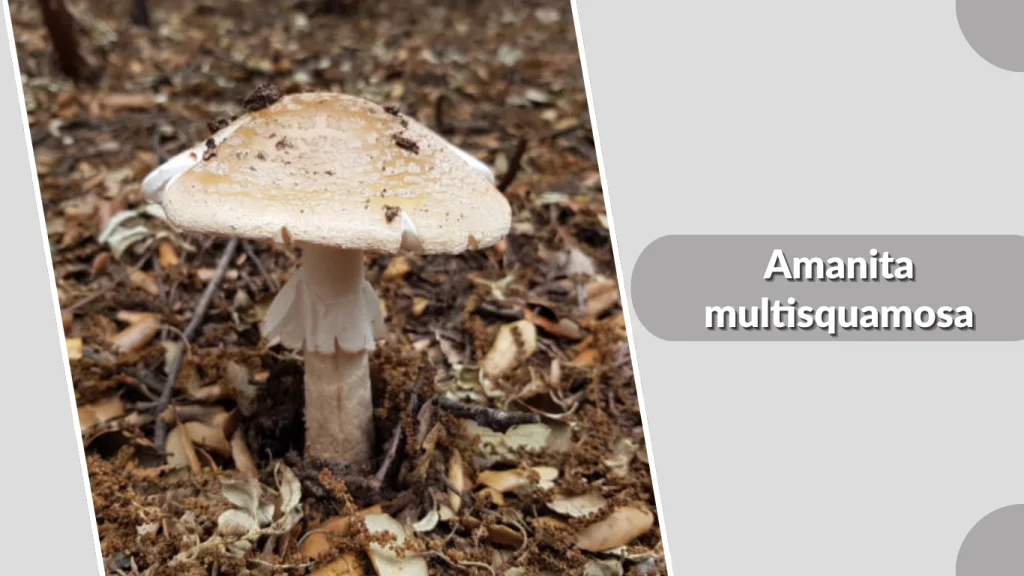
Amanita multisquamosa is a large and robust Amanita species recognized for the numerous thick, pyramid-shaped scales covering its cap. Its bold texture and size make it stand out in forested environments, though it is considered toxic and not suitable for consumption.
Identification
- Large cap, typically 10–30 cm wide
- White to pale cream cap densely covered with thick, pointed scales
- White, free gills
- Thick white stem with a prominent ring
- Bulbous base with concentric volval remnants
Habitat and Distribution
This species grows in deciduous forests, especially in association with oak and other hardwood trees. It is primarily found in eastern North America. Fruiting occurs from summer through early autumn, often appearing singly or in scattered groups.
Toxicity
Amanita multisquamosa is considered toxic and may cause gastrointestinal distress if ingested. Due to its large size and resemblance to other dangerous Amanitas, it should always be avoided as an edible species.
Notable Characteristics
The dense covering of large, sharply defined scales on the cap is the most distinctive feature and is the basis for its name, meaning “many-scaled.”
22. Amanita polypyramis (Humped Puffball Amanita)
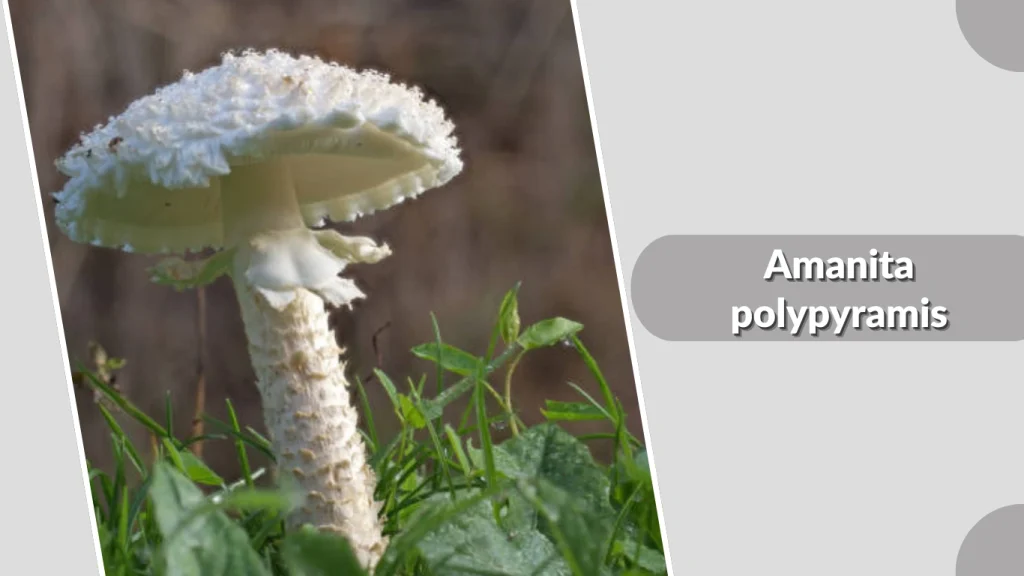
Amanita polypyramis is a large, imposing Amanita species best known for the tall, pyramid-shaped warts that densely cover its cap. Its dramatic appearance makes it easy to recognize, but it is considered toxic and should never be eaten.
Identification
- Large white cap, typically 10–25 cm wide
- Cap densely covered with tall, pointed, pyramid-like warts
- White, free gills
- Thick white stem with a well-developed ring
- Bulbous base with concentric volval rings
Habitat and Distribution
This species grows in deciduous forests, particularly in association with oak trees. It is native to eastern North America and usually fruits from summer through early autumn. Amanita polypyramis often appears singly and prefers mature woodland habitats.
Toxicity
Amanita polypyramis is considered toxic and may cause gastrointestinal symptoms if ingested. Due to its size and striking appearance, it can attract attention, but it should be avoided as a food mushroom.
Notable Characteristics
The sharply pointed, pyramid-like scales on the cap are its defining feature and make this species one of the most visually dramatic Amanitas in North America.
23. Amanita subcokeri (Lesser Coker’s Amanita)
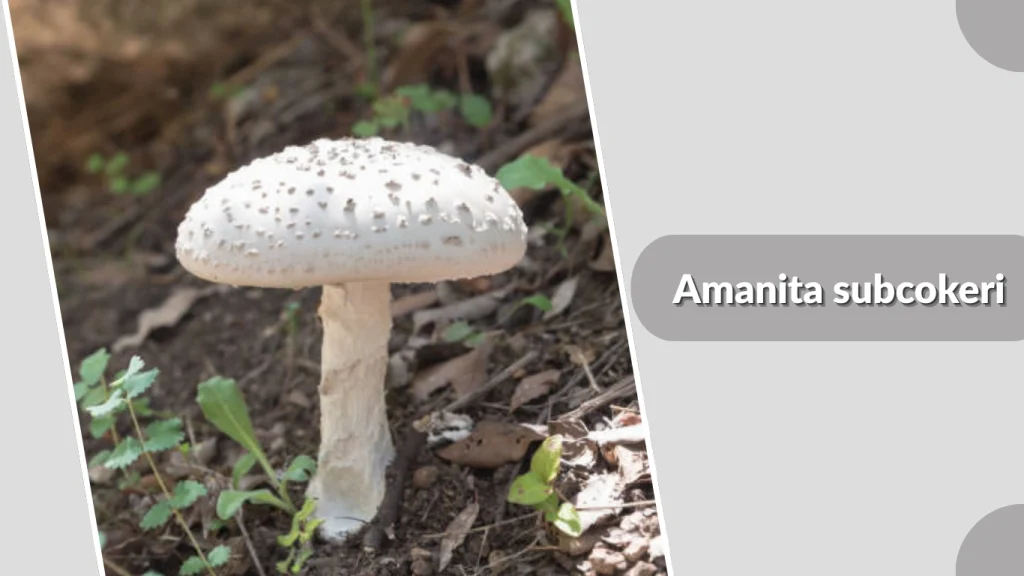
Amanita subcokeri is a white Amanita species closely related to Amanita cokeri but generally smaller and less robust. It shares many structural features with other white Amanitas and is considered toxic, making it a species of identification interest only.
Identification
- White to off-white cap with scattered cottony patches
- Cap typically 8–18 cm wide
- White, free gills
- White stem with a fragile to persistent ring
- Bulbous base with white volval remnants
Habitat and Distribution
This species grows in deciduous and mixed forests, often in association with oak and other hardwood trees. It is primarily found in eastern North America. Fruiting usually occurs from summer through early autumn, appearing singly or in small groups.
Toxicity
Amanita subcokeri is considered toxic and may cause gastrointestinal distress if consumed. Because it closely resembles deadly white Amanitas, it should always be avoided.
Notable Characteristics
Its overall white coloration and resemblance to Amanita cokeri are key traits, though it is typically smaller and less heavily textured than its close relative.
24. Amanita excelsa (False Panther Amanita)

Amanita excelsa, often called the false panther amanita, is a medium to large Amanita species that resembles the highly toxic panther cap but is generally considered less dangerous. Despite this, it is still treated as toxic or at least unsafe and is not recommended for consumption.
Identification
- Gray-brown to olive-brown cap with scattered pale warts
- Cap typically 6–15 cm wide, convex to flat with age
- White, free gills
- White to grayish stem with a well-defined ring
- Bulbous base with faint volval remnants
Habitat and Distribution
This species grows in deciduous and mixed forests, commonly associated with oak, beech, and conifer trees. Amanita excelsa is widespread across Europe and parts of Asia, with occasional records elsewhere. Fruiting occurs from summer through autumn, often appearing singly or in small groups.
Toxicity
Amanita excelsa is generally regarded as toxic or at least inedible. Consumption may cause gastrointestinal discomfort, and it should be avoided due to its similarity to more dangerous Amanita species.
Notable Characteristics
Its resemblance to Amanita pantherina, combined with a duller cap color and less pronounced warts, has earned it the name “false panther amanita.”
25. Amanita franchetii (Franchet’s Amanita)
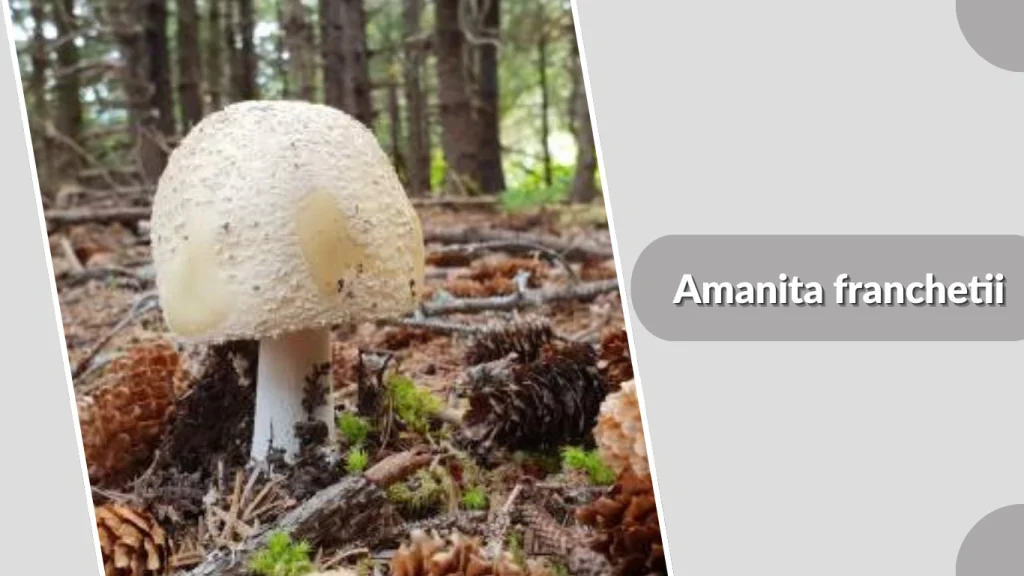
Amanita franchetii is a medium-sized Amanita species known for its yellow to olive-brown cap decorated with yellowish veil remnants. It is considered toxic and is primarily of interest for identification due to its distinctive coloration.
Identification
- Yellow-brown to olive-brown cap with yellow patches or warts
- Cap typically 5–12 cm wide, convex to flat with age
- White to pale yellow gills, free from the stem
- Yellowish stem with a fragile ring
- Bulbous base with yellow volval remnants
Habitat and Distribution
This species grows in deciduous and mixed forests, especially with oak and beech trees. It is found across Europe and parts of Asia. Fruiting occurs from summer through autumn, often appearing singly or scattered.
Toxicity
Amanita franchetii is considered toxic and may cause gastrointestinal and neurological symptoms if ingested. It should not be consumed.
Notable Characteristics
The combination of yellow veil remnants on both the cap and base, along with olive-brown tones, helps distinguish this species from other Amanitas.
26. Amanita abrupta (Abrupt-bulbed Amanita)
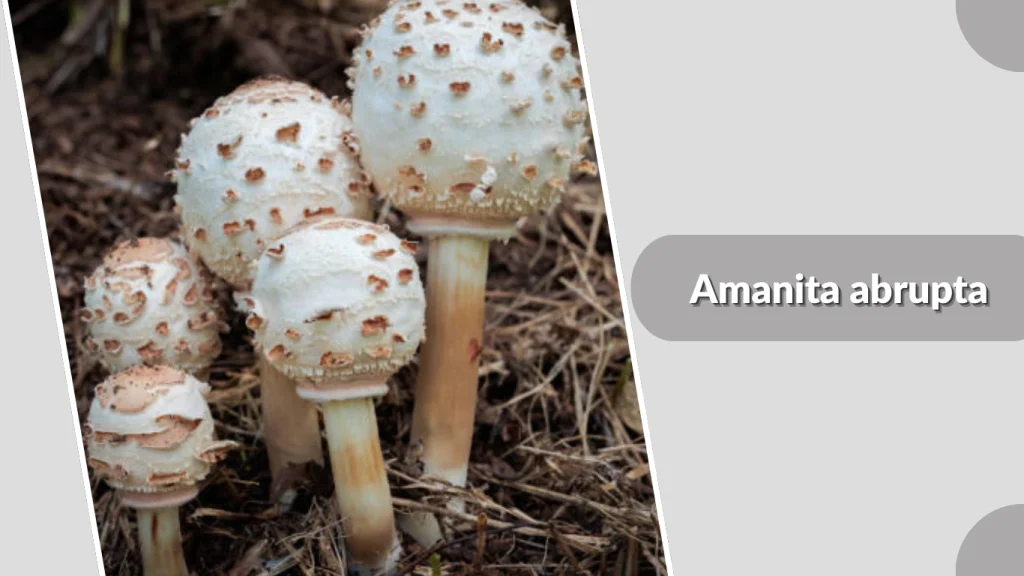
Amanita abrupta, commonly known as the abrupt-bulbed amanita, is a distinctive white Amanita species recognized by its sharply defined, swollen bulb at the base of the stem. Although visually striking, it is considered toxic and should never be eaten.
Identification
- White to creamy-white cap, smooth and slightly glossy
- Cap typically 6–14 cm wide, convex to flat with age
- White, free gills
- White stem with a fragile ring
- Abruptly swollen, sharply margined bulb at the base
Habitat and Distribution
This species grows in deciduous forests, most commonly in association with oak trees. It is found in eastern North America and parts of Asia. Fruiting occurs from summer through early autumn, usually appearing singly.
Toxicity
Amanita abrupta is considered toxic and may cause gastrointestinal distress if consumed. Due to its resemblance to deadly white Amanitas, it should always be avoided.
Notable Characteristics
The sharply defined, sudden swelling at the base of the stem is the key identifying feature and gives this species its common name.
27. Amanita pachycolea (Western Grisette)
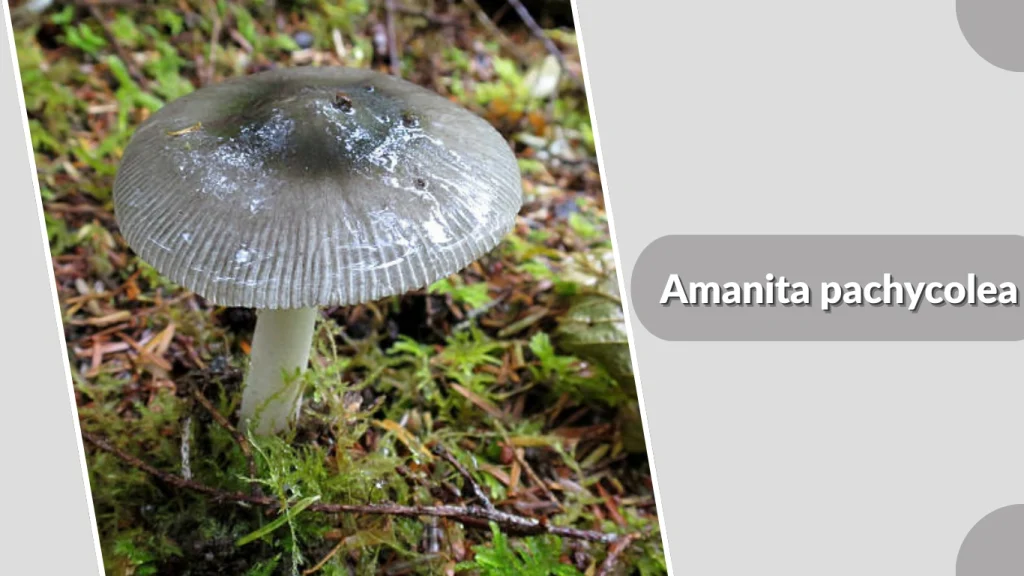
Amanita pachycolea, commonly known as the western grisette, is a tall, slender Amanita species notable for its dark gray to brown cap and lack of a stem ring. It is one of the largest members of the grisette group and is mainly valued for identification rather than consumption.
Identification
- Dark gray to brown cap with strongly striated margins
- Cap typically 7–18 cm wide
- White to pale gray gills, free from the stem
- Tall, slender stem without a ring
- Large, white to gray sack-like volva at the base
Habitat and Distribution
This species grows in coniferous and mixed forests of western North America, often associated with Douglas fir and other conifers. Fruiting occurs from late autumn through winter, making it unusual among Amanita species.
Edibility
Amanita pachycolea is considered edible by some sources, but it is generally avoided due to the difficulty of distinguishing it from toxic Amanitas. Extreme caution is advised.
Notable Characteristics
Its tall stature, dark cap, ringless stem, and winter fruiting season help distinguish Amanita pachycolea from other Amanita species in its range.
FAQs
What makes Amanita mushrooms difficult to identify safely?
Amanita mushrooms share many similar features across species, such as white gills, a ring, and a volva. Small differences in color, shape, or habitat can separate edible species from deadly ones, making misidentification extremely dangerous.
Are all Amanita mushrooms poisonous?
No, not all Amanita species are poisonous. Some are edible, but many are toxic or deadly. Because the genus includes some of the most poisonous mushrooms in the world, beginners are strongly advised to avoid eating any Amanita species.
Why are Amanita mushrooms considered so dangerous?
Several Amanita species contain amatoxins and other potent compounds that can cause severe liver and kidney failure. Symptoms may be delayed, which increases the risk of serious or fatal poisoning without immediate medical treatment.
Where do Amanita mushrooms usually grow?
Amanita mushrooms typically grow in forests and woodlands, forming symbiotic relationships with trees such as oak, pine, spruce, and birch. They are commonly found in temperate regions during warmer and wetter seasons.
Can Amanita mushrooms be confused with edible mushrooms?
Yes, many Amanita species closely resemble edible mushrooms, especially when young. This is one of the main reasons Amanitas are responsible for many mushroom poisoning cases worldwide.