




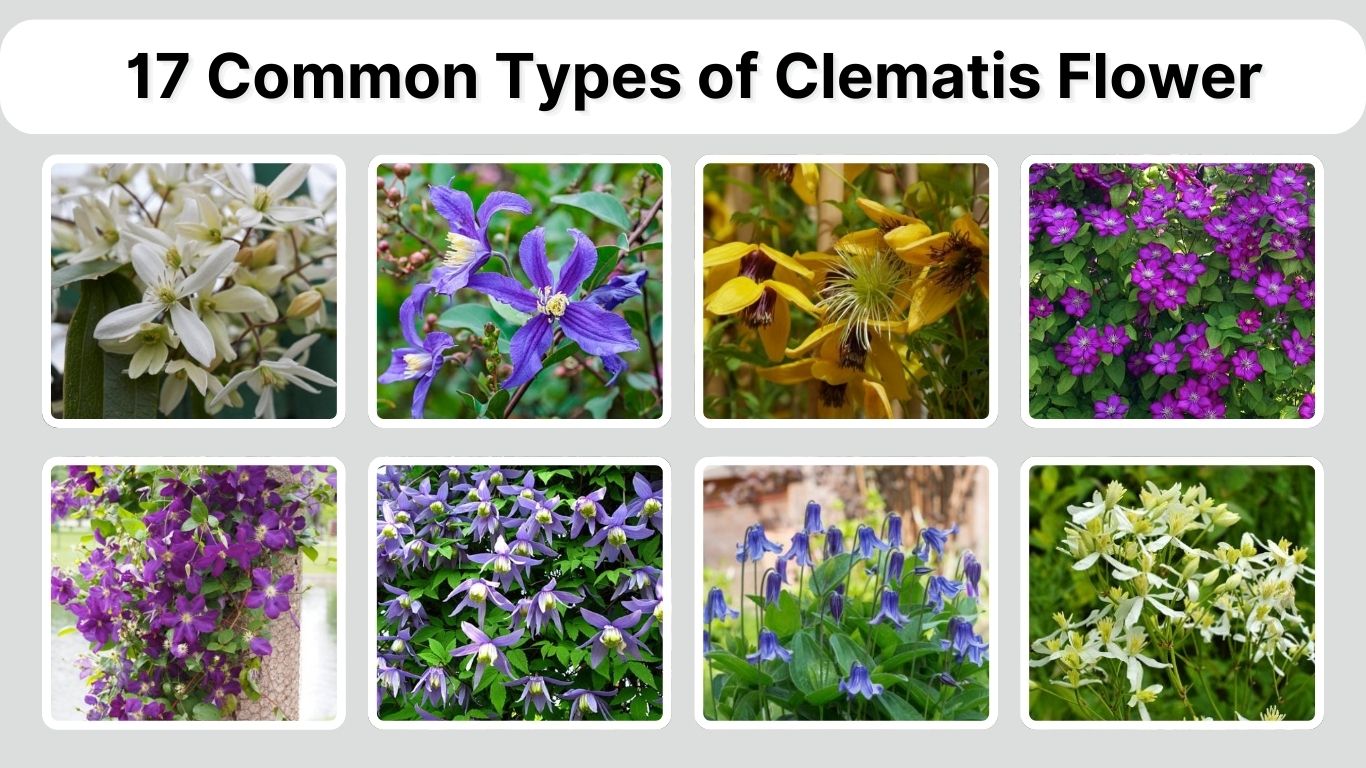
Clematis flowers are beloved climbers that bring vibrant color, fragrance, and elegance to gardens worldwide. With varieties ranging from delicate bell-shaped blooms to large, showy hybrids, Clematis can transform fences, pergolas, and walls into stunning floral displays. These hardy plants bloom from early spring to autumn, attracting pollinators like bees and butterflies. Whether you prefer compact perennials or vigorous climbers, understanding the unique traits of each type helps gardeners choose the perfect Clematis to suit any garden style.
1. Clematis Armandii

Clematis Armandii, also known as Evergreen Clematis, is a vigorous climbing vine prized for its fragrant, star-shaped white flowers. It blooms in early spring and can quickly cover trellises, fences, or walls, making it a favorite for gardeners who want year-round greenery combined with seasonal floral displays. This species thrives in full sun to partial shade and prefers well-drained soil. Its fragrant blooms attract pollinators such as bees and butterflies.
Identification
- Evergreen climbing vine
- White, star-shaped flowers
- Fragrant blooms
- Dark green, glossy leaves
- Can grow up to 20 feet
Habitat
Native to China, Clematis Armandii grows best in temperate climates. It prefers sheltered locations where it is protected from harsh winds, which can damage its delicate flowers. It is commonly planted along fences, trellises, and pergolas.
Blooming Season
This Clematis species typically blooms in early spring, around March to April, depending on the local climate. The fragrant flowers appear before the foliage fully develops, creating a striking display.
Care Tips
Clematis Armandii requires regular watering, especially during dry periods. Pruning should be done after flowering to maintain shape and encourage healthy growth. Fertilize in spring to support vigorous blooming.
2. Clematis montana

Clematis montana, commonly called the Mountain Clematis, is a fast-growing, deciduous climber known for its profuse and showy flowers. It produces small, fragrant blooms in shades of pink or white, creating a spectacular spring display. This species is ideal for covering walls, fences, or pergolas quickly and thrives in full sun with well-drained soil. It attracts pollinators such as bees and butterflies, adding both beauty and ecological value to gardens.
Identification
- Deciduous climbing vine
- Pink or white fragrant flowers
- Small, abundant blooms
- Compound green leaves
- Can grow up to 30 feet
Habitat
Native to the Himalayan region, Clematis montana thrives in temperate climates. It is often planted along walls, trellises, or fences and prefers sunny positions with shelter from strong winds.
Blooming Season
The Mountain Clematis typically blooms in late spring, around April to May, covering the plant with an impressive floral display.
Care Tips
Clematis montana requires regular watering during dry spells. Prune lightly after flowering to control size and shape. Fertilize in spring to encourage vigorous growth and flowering.
3. Clematis tangutica
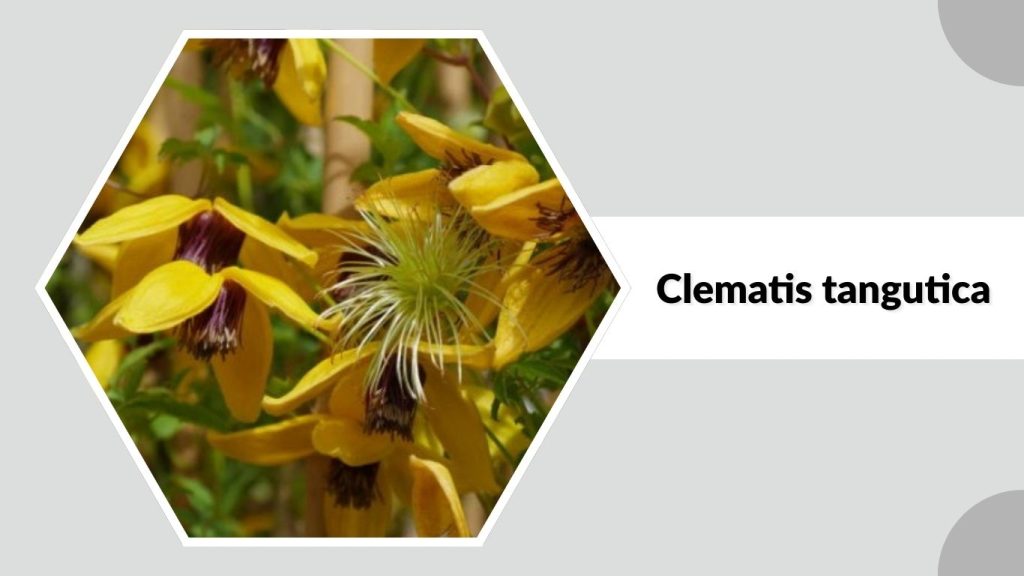
Clematis tangutica, commonly known as Golden Clematis or Golden Tiara, is a vigorous climber famous for its bright yellow, bell-shaped flowers. It blooms in summer and autumn, adding a splash of color when many other Clematis varieties have finished flowering. Its attractive seed heads provide winter interest, and it can cover fences, walls, or trellises effectively. This species thrives in full sun to partial shade and well-drained soil, making it versatile for many garden settings.
Identification
- Deciduous climbing vine
- Bright yellow, bell-shaped flowers
- Decorative silky seed heads
- Compound green leaves
- Can grow up to 10–15 feet
Habitat
Native to China and Mongolia, Clematis tangutica prefers sunny locations with some shelter from strong winds. It grows well along fences, walls, pergolas, or trained over shrubs.
Blooming Season
This species blooms from mid-summer to early autumn, often from July to September. The flowers are followed by attractive, feathery seed heads that persist into winter.
Care Tips
Clematis tangutica requires moderate watering, especially during dry periods. Prune lightly after flowering to encourage growth and flowering for the next season. Fertilize in spring for healthy blooms.
4. Clematis viticella
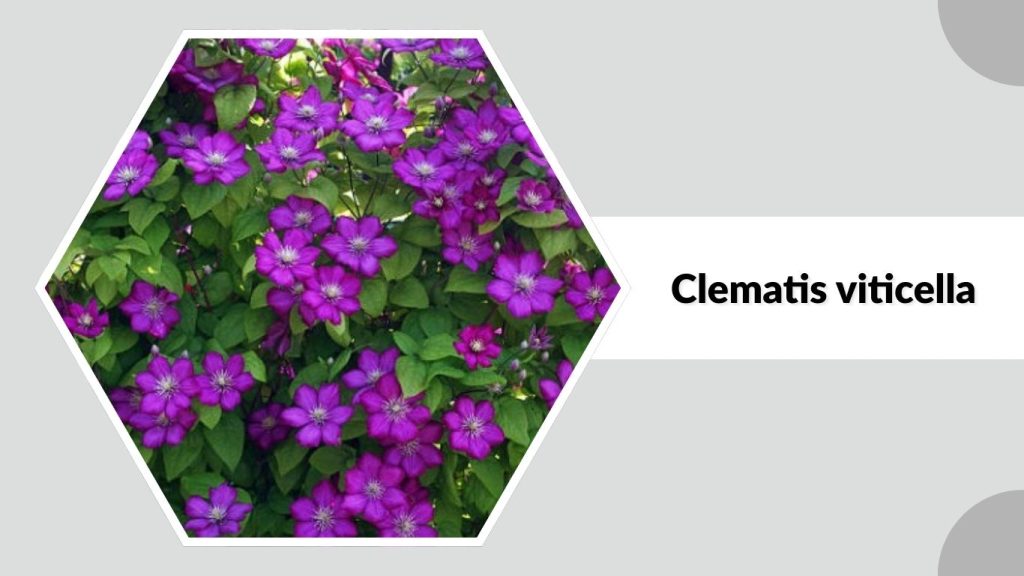
Clematis viticella, commonly called Italian Clematis, is a deciduous climbing vine celebrated for its vibrant, nodding flowers, which range from deep purple to rich red or pink. It is a hardy species that blooms profusely in summer, providing long-lasting color for fences, trellises, and pergolas. Its vigorous growth and ability to attract pollinators make it a favorite among gardeners looking for both ornamental and ecological benefits.
Identification
- Deciduous climbing vine
- Nodding flowers in purple, red, or pink
- Compound green leaves
- Hardy and vigorous growth
- Can grow up to 12–15 feet
Habitat
Native to Italy and parts of southern Europe, Clematis viticella thrives in well-drained soil and full sun. It can tolerate partial shade but produces fewer flowers in low-light conditions.
Blooming Season
This Italian Clematis typically blooms from mid-summer to early autumn, around July to September, offering a vibrant display when other Clematis species may have finished flowering.
Care Tips
Clematis viticella benefits from regular watering and mulching to retain soil moisture. Prune in early spring to encourage new growth and maintain the plant’s shape. Fertilize in spring and early summer to boost flowering.
5. Clematis jackmanii
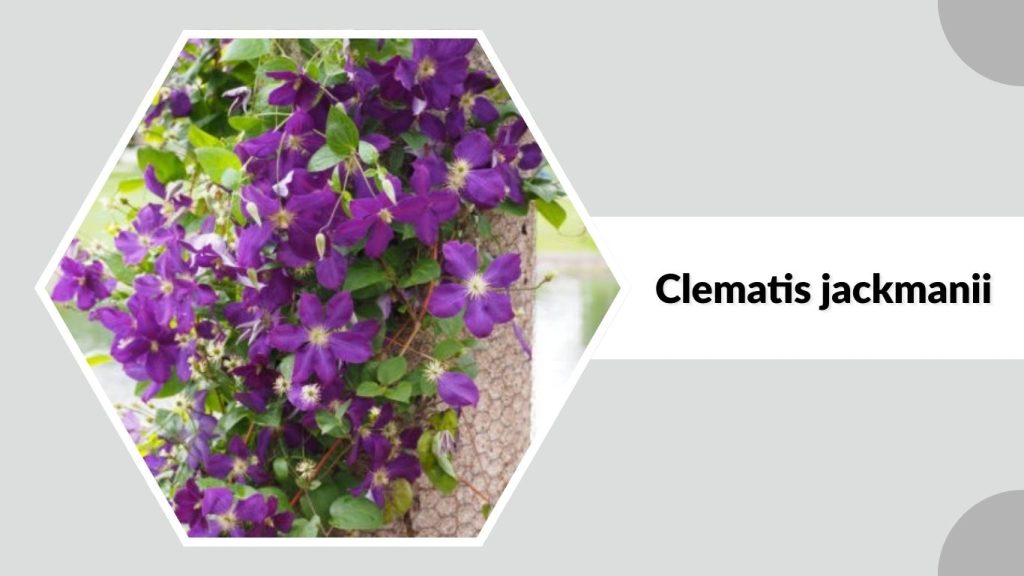
Clematis jackmanii, often called Jackman’s Clematis, is a popular deciduous climber known for its large, velvety purple flowers. It is celebrated for its abundant summer blooms and vigorous growth, making it ideal for covering fences, walls, and trellises. This species is hardy, long-flowering, and attracts pollinators such as bees and butterflies, adding both beauty and ecological value to gardens.
Identification
- Deciduous climbing vine
- Large, deep purple flowers
- Compound green leaves
- Vigorous growth
- Can grow up to 10–15 feet
Habitat
Native to England, Clematis jackmanii prefers well-drained soil and full sun, though it can tolerate partial shade. It is commonly planted along fences, pergolas, and trellises for vertical interest.
Blooming Season
Jackman’s Clematis blooms from early summer to autumn, usually between June and September, providing a long-lasting floral display.
Care Tips
Regular watering is needed, especially during dry spells. Prune in early spring to remove old growth and encourage new flowering shoots. Fertilize in spring and early summer to support healthy blooms.
6. Clematis alpina
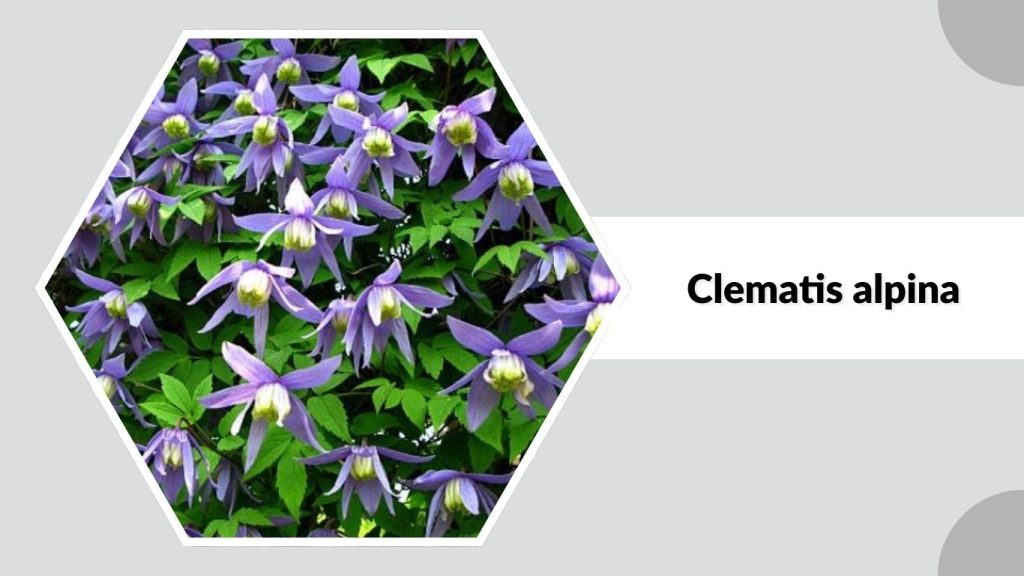
Clematis alpina, commonly called Alpine Clematis, is a slow-growing, deciduous climber admired for its bell-shaped, nodding flowers in shades of blue, purple, or pink. It blooms in early spring, making it one of the first Clematis to flower each year. Its compact growth habit makes it suitable for small gardens, rockeries, or trained along low trellises. The species attracts bees and other pollinators, adding life to early spring gardens.
Identification
- Deciduous climbing vine
- Bell-shaped flowers in blue, purple, or pink
- Compound green leaves
- Compact and slow-growing
- Can grow up to 6–10 feet
Habitat
Native to European mountains, Clematis alpina prefers well-drained soil and partial shade. It is often grown along rockeries, small trellises, or low walls, where it can climb gently.
Blooming Season
The Alpine Clematis blooms in early spring, typically from April to May, heralding the start of the garden flowering season.
Care Tips
Water regularly during dry periods and prune lightly after flowering to maintain shape. Fertilize in spring to support healthy growth and blooms. Mulching helps retain soil moisture and protect roots.
7. Clematis integrifolia
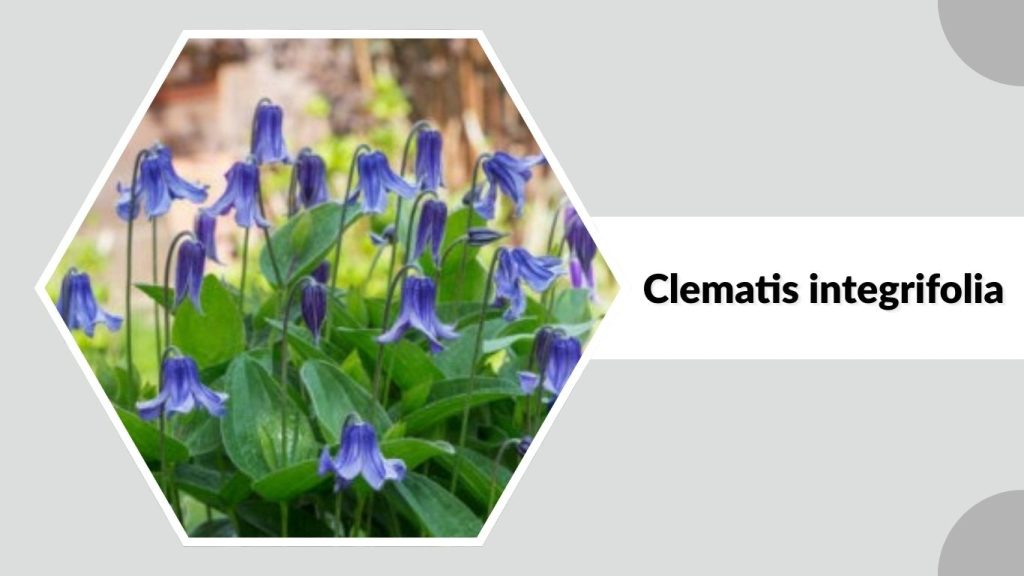
Clematis integrifolia, also known as Solitary Clematis, is a non-climbing, herbaceous species prized for its nodding, bell-shaped flowers in shades of blue, purple, or white. Unlike most Clematis, it grows as a bushy perennial rather than a vine, making it ideal for borders or containers. It blooms in mid to late summer and attracts pollinators such as bees and butterflies.
Identification
- Herbaceous perennial (non-climbing)
- Bell-shaped flowers in blue, purple, or white
- Compound green leaves
- Bushy growth habit
- Can grow up to 2–3 feet
Habitat
Native to Europe and western Asia, Clematis integrifolia thrives in well-drained soil and full sun to partial shade. It is suitable for garden borders, beds, or containers.
Blooming Season
This Clematis species blooms from mid-summer to early autumn, typically July to September, offering long-lasting color in the garden.
Care Tips
Water regularly and ensure good drainage. Cut back dead stems after flowering to encourage healthy growth. Fertilize in spring to support flowering.
8. Clematis recta
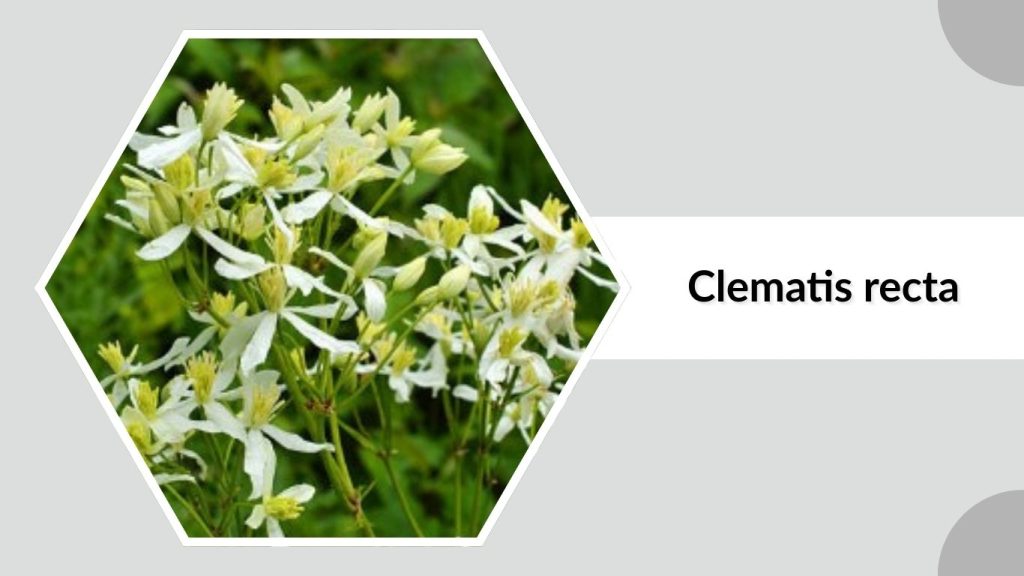
Clematis recta, commonly called Ground Clematis or Erect Clematis, is a herbaceous, upright-growing species that differs from climbing Clematis. It produces small, fragrant white flowers in summer, forming clusters at the top of the stems. Its vertical, bushy habit makes it suitable for borders, garden beds, or naturalistic plantings. This species attracts pollinators such as bees and butterflies and adds structural interest to garden landscapes.
Identification
- Herbaceous, upright perennial
- Small, fragrant white flowers in clusters
- Compound green leaves
- Bushy and vertical growth habit
- Can grow up to 3–4 feet
Habitat
Native to Europe and western Asia, Clematis recta prefers well-drained soil in full sun to partial shade. It is often planted in borders, mixed beds, or wildflower-style gardens.
Blooming Season
Ground Clematis blooms from mid-summer to early autumn, typically July to September, offering a steady display of delicate white flowers.
Care Tips
Regular watering during dry periods is recommended. Cut back old stems after flowering to maintain shape and encourage new growth. Fertilize in spring for healthy development and flowering.
9. Clematis florida
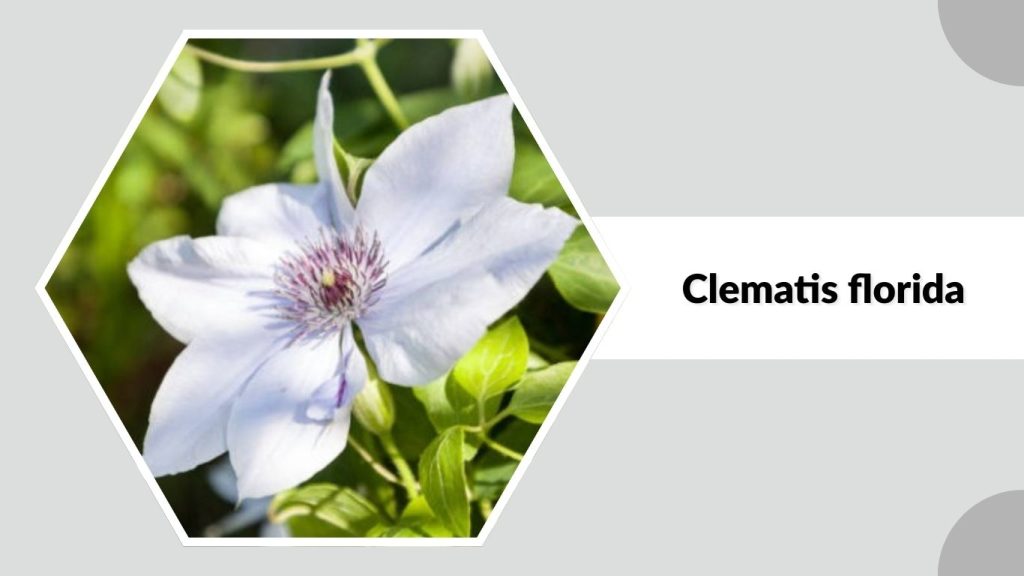
Clematis florida, commonly known as Japanese Clematis, is a deciduous climber admired for its fragrant, star-shaped flowers that appear in shades of white, pink, or lavender. It blooms in spring, adding early-season color to trellises, walls, or fences. This species is valued for its vigorous growth, attractive foliage, and ability to attract pollinators like bees and butterflies. Its elegant flowers and climbing habit make it a garden favorite.
Identification
- Deciduous climbing vine
- Star-shaped flowers in white, pink, or lavender
- Fragrant blooms
- Compound green leaves
- Can grow up to 10–15 feet
Habitat
Native to Japan, Clematis florida thrives in well-drained soil and prefers full sun to partial shade. It is often grown on trellises, fences, pergolas, or walls for vertical interest.
Blooming Season
Japanese Clematis blooms in spring, usually between April and May, producing an early floral display in temperate gardens.
Care Tips
Water regularly, especially during dry periods. Prune lightly after flowering to maintain shape and encourage healthy growth. Fertilize in spring to support abundant blooms.
10. Clematis ‘Nelly Moser’
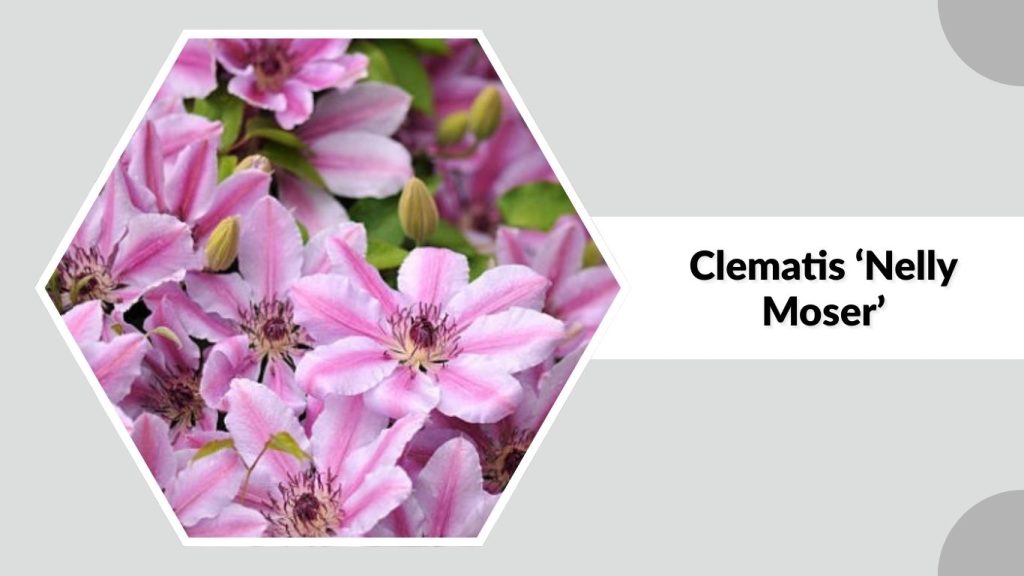
Clematis ‘Nelly Moser’ is a popular hybrid climber known for its large, pale pink flowers with deep magenta stripes. It blooms in late spring to early summer, providing an elegant and eye-catching display. This variety is vigorous and ideal for covering fences, trellises, or pergolas. Its striking flowers attract pollinators, adding both ornamental and ecological value to gardens.
Identification
- Deciduous climbing vine
- Large, pale pink flowers with magenta stripes
- Fragrant blooms
- Compound green leaves
- Can grow up to 10–12 feet
Habitat
Developed in England, Clematis ‘Nelly Moser’ thrives in well-drained soil and full sun to partial shade. It is commonly trained along walls, trellises, or pergolas for vertical garden interest.
Blooming Season
This Clematis hybrid blooms from late spring to early summer, typically May to June, producing a striking floral display that can last several weeks.
Care Tips
Regular watering is essential during dry periods. Prune lightly after flowering to maintain shape and encourage next season’s blooms. Fertilize in spring and early summer for optimal flowering.
11. Clematis ‘The President’
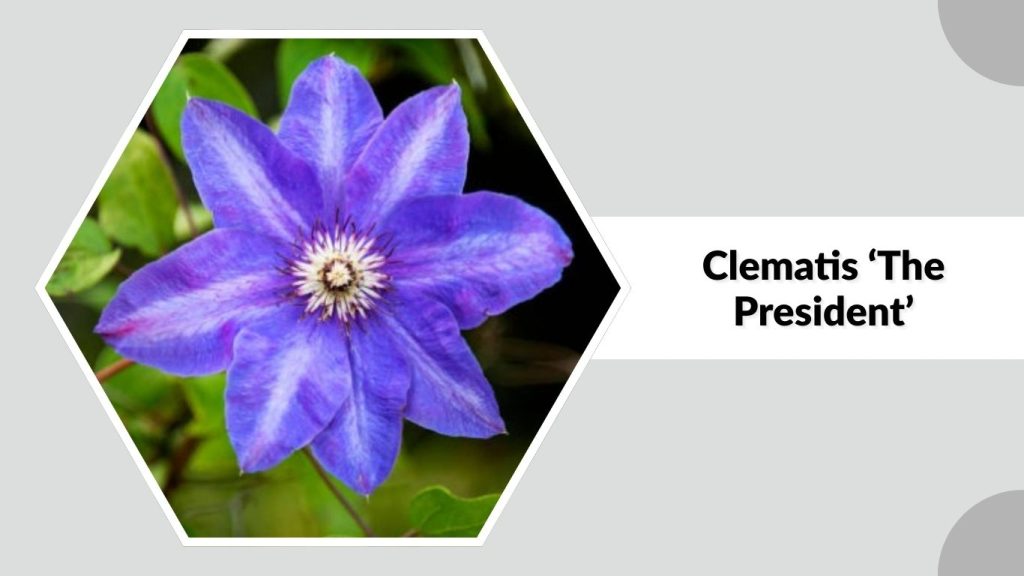
Clematis ‘The President’ is a robust hybrid climber known for its large, deep violet-blue flowers. It is highly vigorous and produces abundant blooms during the summer, making it ideal for fences, walls, and pergolas. Its striking color and climbing habit make it a standout in any garden, while its flowers attract pollinators like bees and butterflies.
Identification
- Deciduous climbing vine
- Large, deep violet-blue flowers
- Compound green leaves
- Vigorous growth
- Can grow up to 12–15 feet
Habitat
This hybrid thrives in well-drained soil with full sun to partial shade. It is commonly planted along fences, trellises, and pergolas to create vertical interest and lush coverage.
Blooming Season
‘The President’ blooms in summer, usually from June to August, offering a long-lasting and vibrant display of color in gardens.
Care Tips
Regular watering is needed during dry periods. Prune lightly after flowering to encourage healthy growth and flowering for the next season. Fertilize in spring to support robust blooms.
12. Clematis ‘Piilu’
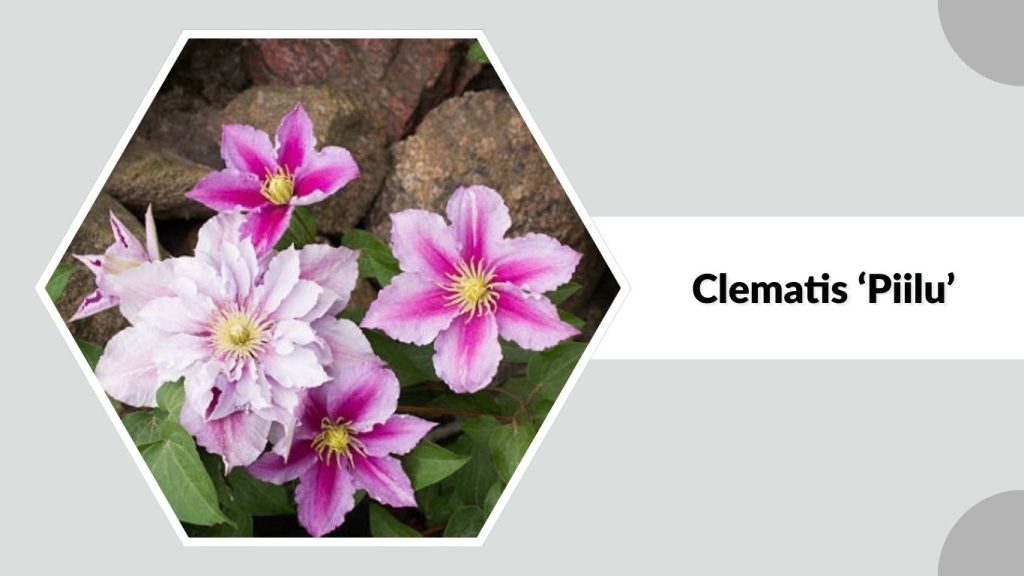
Clematis ‘Piilu’ is a compact hybrid climber appreciated for its pale pink to lavender flowers with a subtle fragrance. It blooms profusely in late spring to early summer and is ideal for smaller trellises, containers, or fences. Its delicate flowers and manageable size make it perfect for cottage-style gardens or mixed borders.
Identification
- Deciduous climbing vine
- Pale pink to lavender flowers
- Lightly fragrant blooms
- Compound green leaves
- Can grow up to 6–8 feet
Habitat
Developed in Finland, Clematis ‘Piilu’ thrives in well-drained soil and full sun to partial shade. It is often used on small trellises, fences, or garden arches.
Blooming Season
This hybrid blooms from late spring to early summer, typically May to June, producing abundant flowers that enhance garden aesthetics.
Care Tips
Water regularly, particularly during dry spells. Prune lightly after flowering to maintain shape and encourage healthy growth. Fertilize in spring for optimal blooming.
13. Clematis ‘Dr. Ruppel’
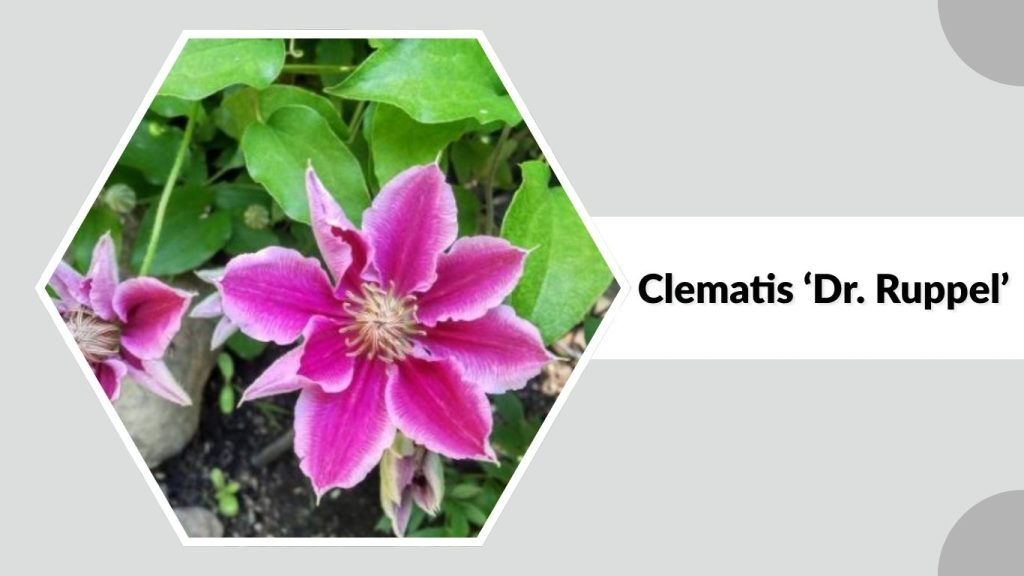
Clematis ‘Dr. Ruppel’ is a vigorous hybrid climber recognized for its striking deep purple flowers with a velvety texture. It blooms in summer, producing large, showy blossoms that create a dramatic focal point in gardens. This species is ideal for fences, walls, or pergolas, and its flowers attract pollinators such as bees and butterflies.
Identification
- Deciduous climbing vine
- Deep purple, velvety flowers
- Compound green leaves
- Vigorous growth
- Can grow up to 10–12 feet
Habitat
This hybrid thrives in well-drained soil with full sun to partial shade. It is commonly planted along fences, pergolas, and walls to provide vertical interest and coverage.
Blooming Season
‘Dr. Ruppel’ blooms in mid to late summer, typically from July to August, offering a long-lasting display of vibrant color.
Care Tips
Regular watering during dry periods is recommended. Prune lightly after flowering to maintain shape and encourage healthy growth. Fertilize in spring and early summer for optimal flowering.
14. Clematis ‘Ville de Lyon’
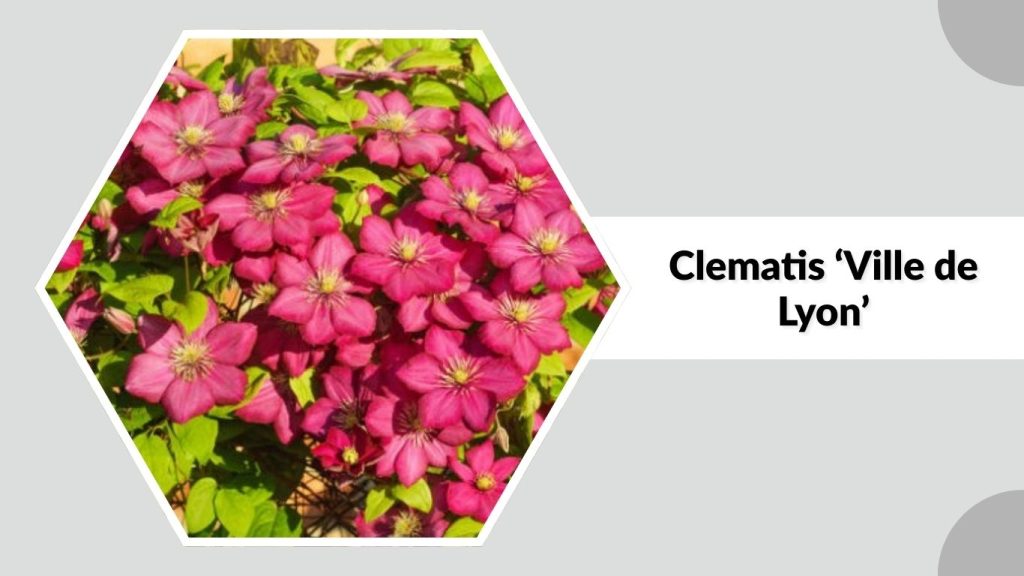
Clematis ‘Ville de Lyon’ is a hybrid climber celebrated for its large, rich violet-blue flowers with a central tuft of white stamens. It blooms from late spring to summer, producing abundant, eye-catching flowers. Its vigorous growth makes it perfect for covering fences, walls, or pergolas, while attracting pollinators like bees and butterflies.
Identification
- Deciduous climbing vine
- Large violet-blue flowers with white stamens
- Compound green leaves
- Vigorous growth
- Can grow up to 10–15 feet
Habitat
Developed in France, Clematis ‘Ville de Lyon’ thrives in well-drained soil and full sun to partial shade. It is ideal for vertical gardening on trellises, walls, or pergolas.
Blooming Season
This hybrid blooms from late spring to summer, typically May to July, producing an extended display of colorful blossoms.
Care Tips
Water regularly during dry spells. Prune lightly after flowering to maintain shape and encourage next season’s blooms. Fertilize in spring to support abundant flowering.
15. Clematis ‘Evipo042’ (Sweet Autumn Clematis)
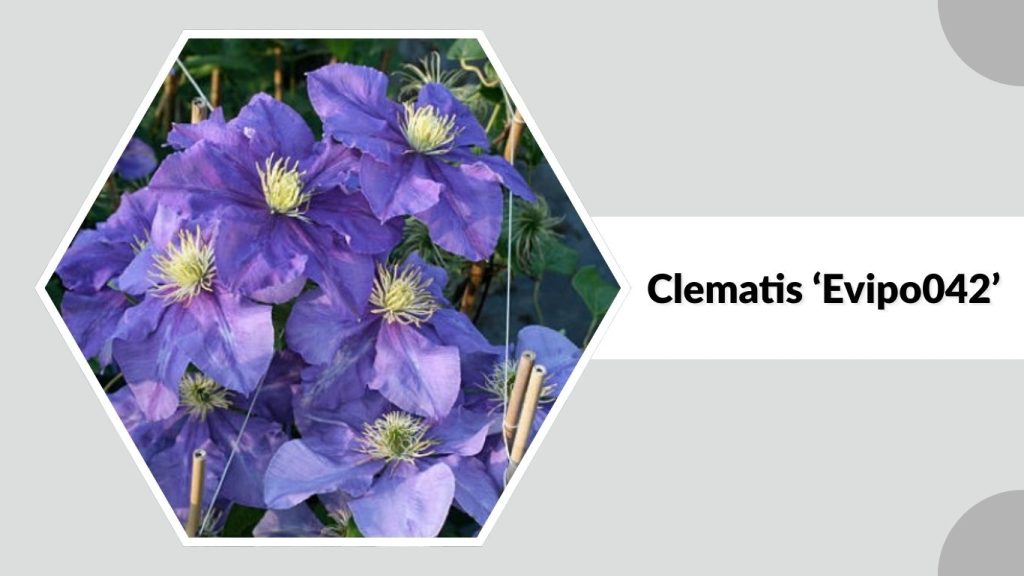
Clematis ‘Evipo042’, commonly known as Sweet Autumn Clematis, is a vigorous, fast-growing climber admired for its small, fragrant white flowers that bloom in late summer and autumn. It creates a spectacular floral display, often covering fences, trellises, and walls. Its sweet scent attracts pollinators such as bees and butterflies, adding both beauty and ecological value to gardens.
Identification
- Deciduous climbing vine
- Small, fragrant white flowers
- Compound green leaves
- Very vigorous growth
- Can grow up to 20–30 feet
Habitat
This hybrid thrives in well-drained soil with full sun to partial shade. It is commonly planted along fences, pergolas, and walls, ideal for creating large-scale vertical coverage.
Blooming Season
Sweet Autumn Clematis blooms from late summer to autumn, typically August to October, providing a long-lasting and fragrant floral display.
Care Tips
Regular watering is essential, especially during dry periods. Prune heavily in early spring to control size and encourage vigorous growth. Fertilize in spring to support abundant blooms.
16. Clematis ‘Rouge Cardinal’
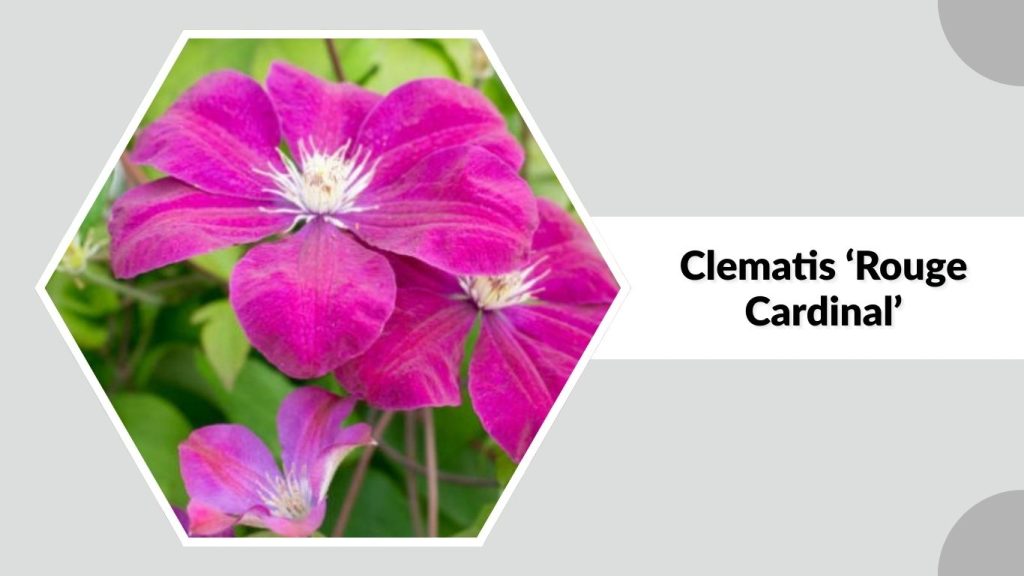
Clematis ‘Rouge Cardinal’ is a hybrid climber known for its striking, deep red flowers and vigorous growth. It blooms in summer, producing abundant, eye-catching flowers that add dramatic color to trellises, fences, and walls. This variety attracts pollinators such as bees and butterflies, enhancing garden biodiversity.
Identification
- Deciduous climbing vine
- Large, deep red flowers
- Compound green leaves
- Vigorous growth
- Can grow up to 10–15 feet
Habitat
Developed in France, Clematis ‘Rouge Cardinal’ prefers well-drained soil and full sun to partial shade. It is ideal for vertical planting on fences, pergolas, and trellises.
Blooming Season
This hybrid blooms in summer, typically June to August, offering a long-lasting and vivid display of red flowers.
Care Tips
Water regularly during dry periods. Prune lightly after flowering to maintain shape and encourage the next season’s growth. Fertilize in spring to enhance flowering.
17. Clematis ‘Henryi’
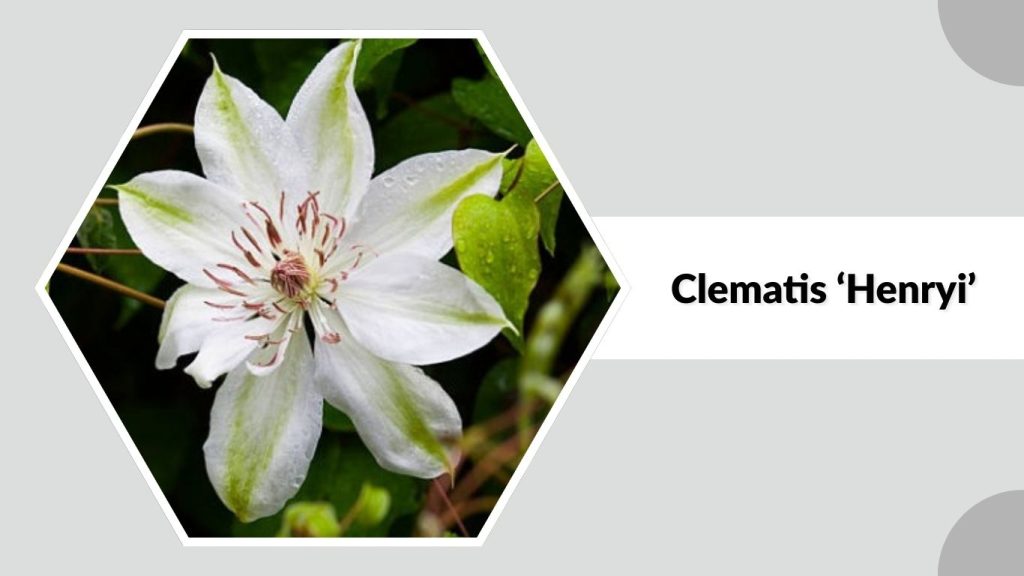
Clematis ‘Henryi’ is a vigorous hybrid climber known for its large, pure white flowers and robust growth. It blooms in early to mid-summer, creating a striking display against fences, walls, or pergolas. Its long-lasting blooms attract pollinators like bees and butterflies, making it both beautiful and beneficial for garden ecology.
Identification
- Deciduous climbing vine
- Large, pure white flowers
- Compound green leaves
- Vigorous growth
- Can grow up to 10–15 feet
Habitat
Developed in England, Clematis ‘Henryi’ thrives in well-drained soil with full sun to partial shade. It is ideal for vertical planting on fences, trellises, and pergolas, adding elegance to garden landscapes.
Blooming Season
This hybrid blooms in early to mid-summer, typically June to July, producing large, showy flowers that last for several weeks.
Care Tips
Regular watering is important during dry spells. Prune lightly after flowering to encourage healthy growth and maintain shape. Fertilize in spring for abundant blooms.
FAQs
What is the best way to grow Clematis?
Clematis thrives in well-drained soil with full sun to partial shade. Plant roots in cool, shaded soil while the vine grows upwards into sunlight. Regular watering, mulching, and spring fertilization help support healthy growth and abundant blooms.
How do I prune Clematis?
Pruning depends on the type. Early-blooming species are lightly pruned after flowering, while late-flowering or vigorous hybrids are cut back in early spring. Correct pruning encourages healthy growth and maximizes flower production.
When do Clematis flowers bloom?
Clematis species bloom at different times. Alpine and early hybrids flower in spring, while varieties like Sweet Autumn Clematis and Clematis tangutica bloom from summer into autumn, providing extended seasonal interest.
Can Clematis grow in containers?
Yes, many Clematis varieties, especially smaller hybrids like Clematis ‘Piilu’ or Clematis integrifolia, thrive in containers. Ensure proper soil, drainage, and support structures like trellises or stakes.
Are Clematis flowers safe for pets?
Clematis contains compounds that may cause mild stomach upset if ingested by pets. While generally not highly toxic, it’s best to prevent cats and dogs from chewing the leaves or flowers.