





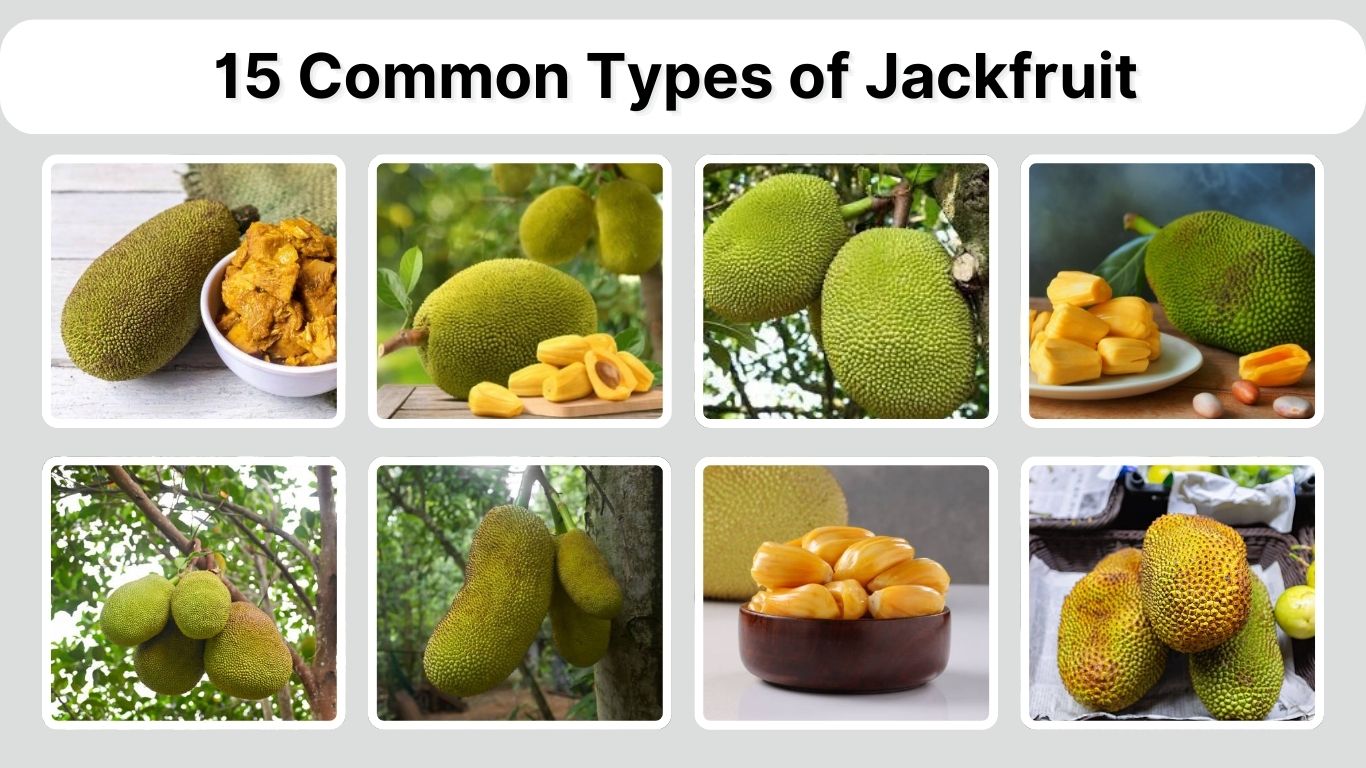
Jackfruit is one of the largest and most versatile tropical fruits, loved for its unique flavor, aroma, and wide range of uses. From firm, sweet varieties ideal for fresh eating to softer, fibrous types suited for cooking, each jackfruit type has its own distinct characteristics. Understanding the common types of jackfruit helps you choose the right variety for taste, texture, and culinary purpose, whether you enjoy it ripe, semi-ripe, or as part of savory dishes.
1. Khaja Jackfruit
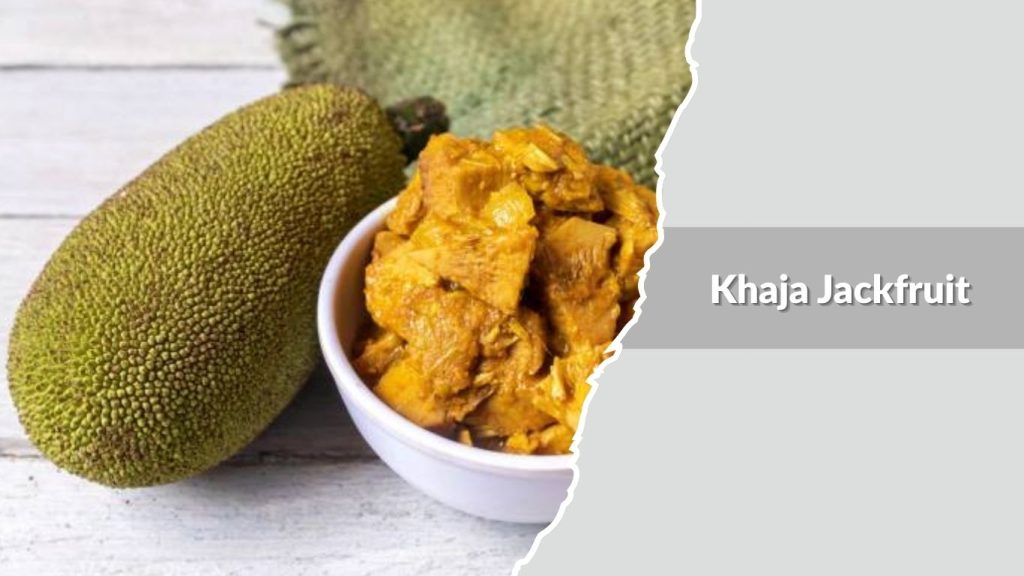
Khaja jackfruit is a commonly known jackfruit type valued for its eating quality and recognizable fruit traits. It’s often identified by its overall shape, rind texture, and the way its bulbs (pods) look and feel when ripe. Below are the key details to help you recognize and understand this variety.
Identification
- Shape and size: Medium to large, usually oval to oblong
- Skin: Green to yellow-green with prominent, pointed spikes
- Flesh (bulbs): Thick, firm bulbs; typically sweet when fully ripe
- Aroma: Noticeably strong jackfruit fragrance at ripeness
- Seeds: Medium-sized, oval, and smooth
Taste & Texture
Khaja is generally appreciated for a sweeter flavor profile and a firmer bite, making it enjoyable for fresh eating. The bulbs tend to hold their shape well compared to softer types.
Culinary Uses
This type is commonly eaten ripe as a fruit, and it can also be used in desserts where firm, sweet bulbs are preferred—such as mixed fruit dishes, sweet preparations, or simply chilled and served.
Season & Availability
Khaja jackfruit is typically seen during the main jackfruit season, though exact timing varies by region. In local markets, it’s often most available when peak harvests are underway.
2. Gila Jackfruit
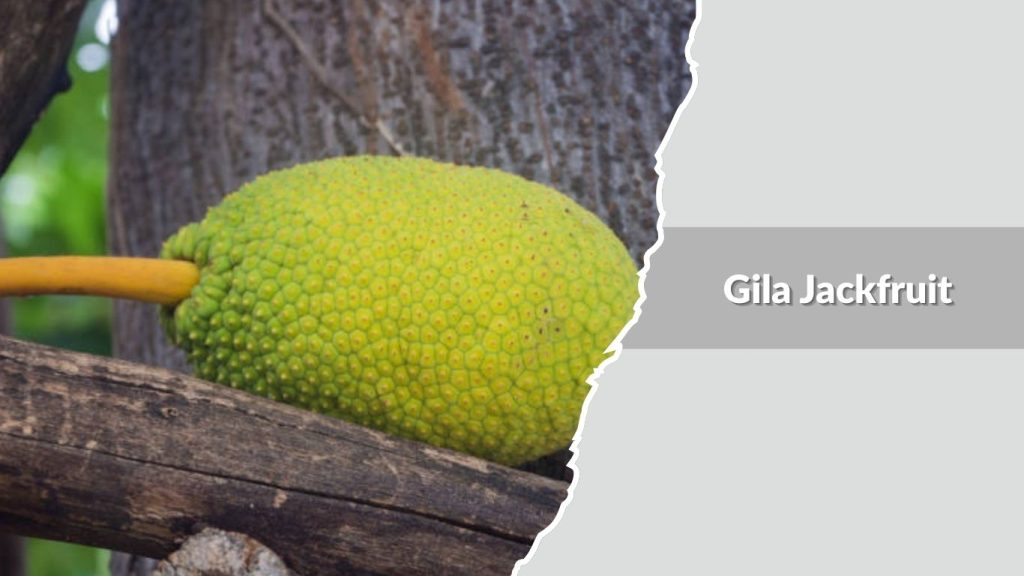
Gila jackfruit is known for its softer bulbs and milder overall character compared to firmer varieties. It’s commonly found in local markets and is often chosen for its juicy flesh and easy-to-eat texture.
Identification
- Shape and size: Medium to large, usually round to slightly oblong
- Skin: Green with shorter, less sharp spikes
- Flesh (bulbs): Soft, fibrous, and juicy
- Aroma: Mild to moderately sweet
- Seeds: Medium-sized and fairly smooth
Taste & Texture
Gila has a mildly sweet taste with a soft, sometimes slightly fibrous texture. The bulbs tend to break apart easily, making it less chewy than firmer types.
Culinary Uses
This variety is popular for fresh consumption and is also used in smoothies, fruit salads, and sweet preparations where a softer texture is preferred.
Season & Availability
Gila jackfruit appears mainly during peak jackfruit season and is widely available in regions where jackfruit is commonly grown.
3. Hazari Jackfruit
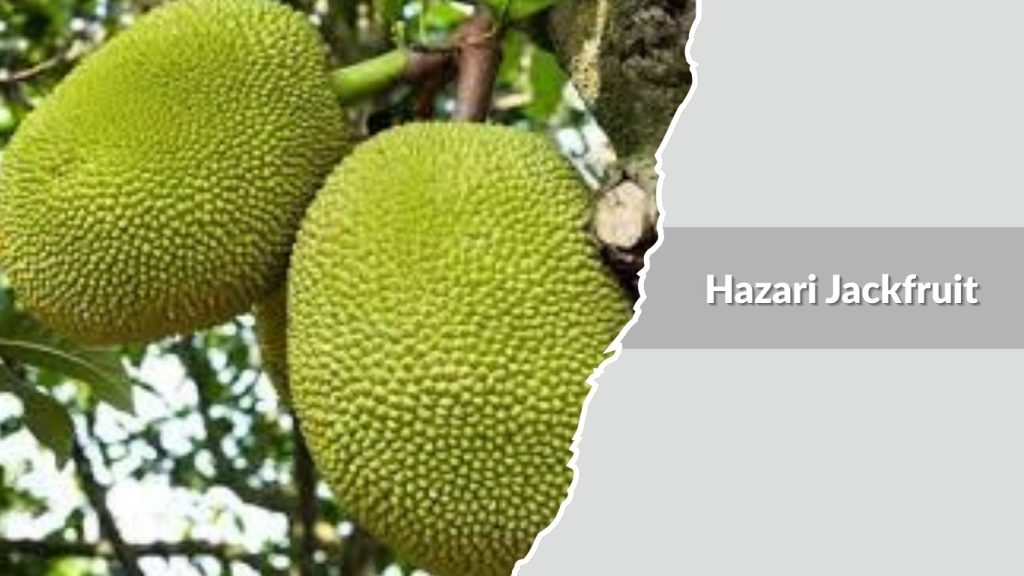
Hazari jackfruit is appreciated for its balanced flavor and medium-firm bulbs. It sits between very soft and very firm varieties, making it versatile for different uses.
Identification
- Shape and size: Medium to large, elongated oval shape
- Skin: Green to yellowish-green with evenly spaced spikes
- Flesh (bulbs): Moderately firm and well-defined
- Aroma: Pleasant and moderately strong
- Seeds: Oval, medium-sized, and light brown
Taste & Texture
Hazari offers a balanced sweetness with a firm-yet-tender bite. The bulbs are less fibrous, giving it a clean mouthfeel when ripe.
Culinary Uses
It is suitable for eating fresh and works well in both sweet dishes and light cooking applications due to its moderate firmness.
Season & Availability
Hazari jackfruit is generally available throughout the main harvesting season, with peak availability depending on local climate and growing conditions.
4. Jarda Jackfruit
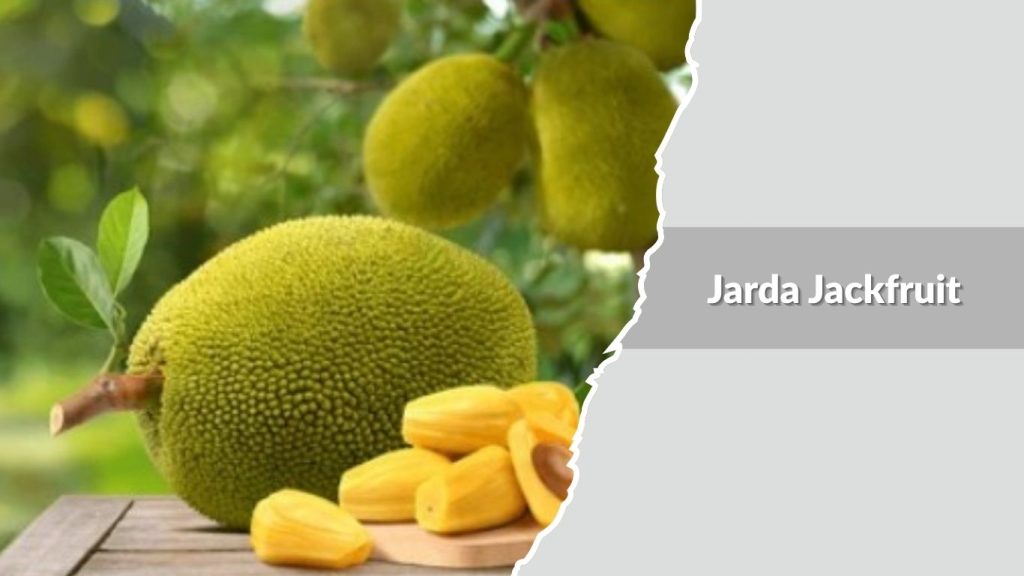
Jarda jackfruit is a well-known variety admired mainly for its rich color and sweetness. It stands out visually because of its deep yellow to orange-hued bulbs, which often signal a higher sugar content. This variety is commonly preferred by people who enjoy strongly flavored, aromatic jackfruit and is often associated with premium-quality ripe fruit.
Identification
- Shape and size: Medium to large, generally oval
- Skin: Green with moderately sharp, well-spaced spikes
- Flesh (bulbs): Thick, fleshy bulbs with a deep yellow to orange color
- Aroma: Strong, sweet, and distinctly jackfruit-like
- Seeds: Medium to large, oval, and firm
Taste & Texture
Jarda jackfruit is known for its pronounced sweetness and rich flavor. The bulbs are usually firm but not dry, offering a satisfying bite with minimal fibrousness. When fully ripe, the texture becomes slightly tender while still holding its shape, making it appealing for direct consumption.
Culinary Uses
This variety is especially popular for eating fresh due to its intense sweetness. It is also used in traditional desserts, sweet jackfruit preparations, and festive dishes where color and flavor are important. In some regions, Jarda is chosen specifically for making sweet preserves and jackfruit-based sweets.
Season & Availability
Jarda jackfruit is typically harvested during the peak jackfruit season. Availability can vary by region, but it is often in high demand when fully ripe fruits appear in local markets.
5. Durasha Jackfruit
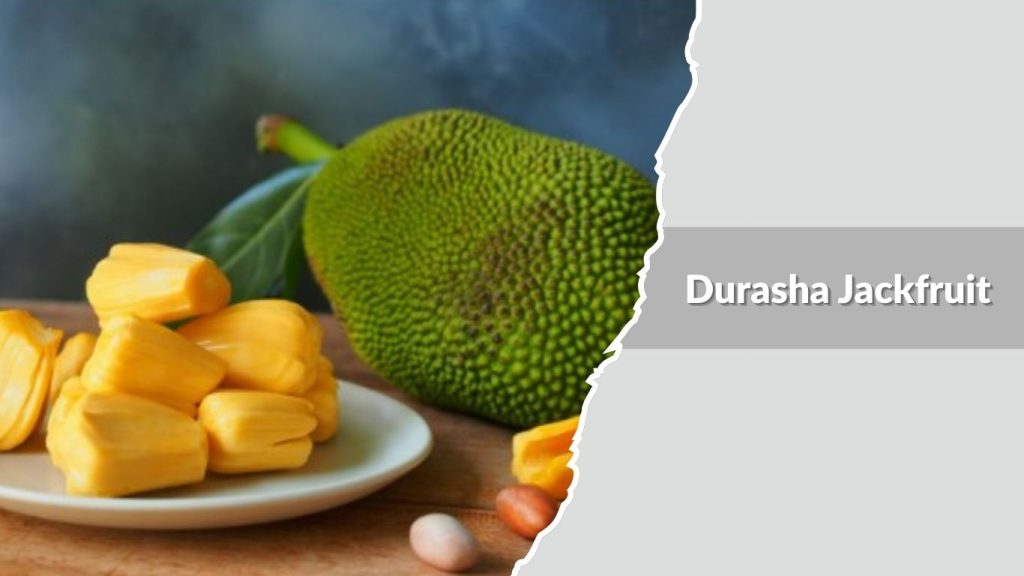
Durasha jackfruit is recognized for its comparatively milder sweetness and more fibrous texture. It is often considered a versatile variety, suitable for both ripe and semi-ripe uses. Because of its structure, it is commonly selected for cooking rather than only fresh eating.
Identification
- Shape and size: Large, elongated to oblong
- Skin: Thick, green skin with firm, pronounced spikes
- Flesh (bulbs): Pale yellow to light golden, slightly fibrous
- Aroma: Mild to moderate fragrance
- Seeds: Large, round to oval, and firm
Taste & Texture
Durasha has a gentle sweetness rather than an intense sugary taste. The bulbs are firmer and more fibrous, giving them a chewy texture. This makes the variety less juicy but more structured, especially when not fully ripe.
Culinary Uses
This jackfruit type is widely used in cooking. Semi-ripe or unripe Durasha is often prepared in savory dishes, curries, and stir-fries because the flesh holds up well to heat. When ripe, it can still be eaten fresh but is more commonly used in cooked or processed forms.
Season & Availability
Durasha jackfruit generally appears during the main harvesting season and is widely available in areas where jackfruit is cultivated. Its durability and size make it a common choice in local markets during peak months.
6. Champa Jackfruit
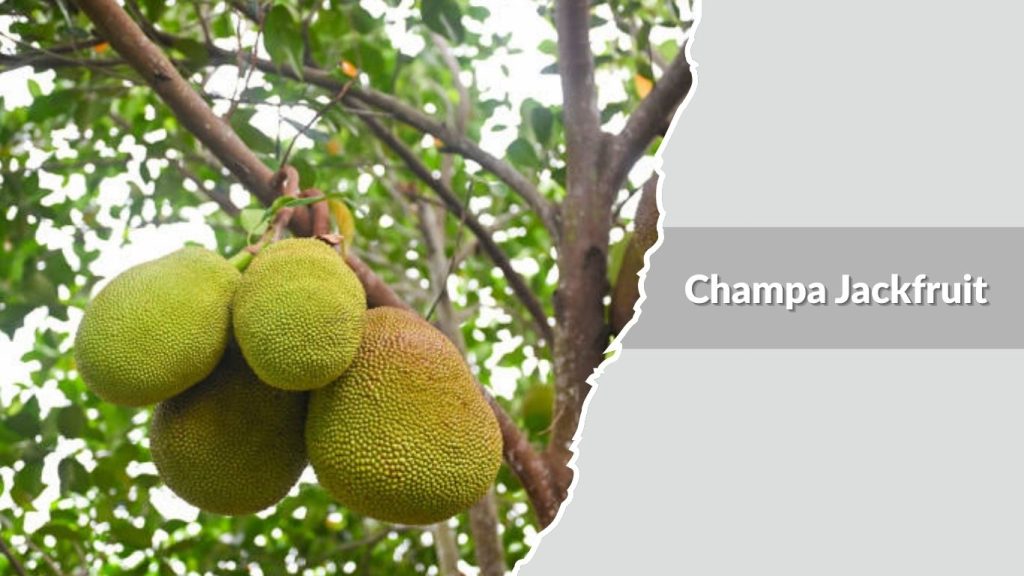
Champa jackfruit is a popular variety known for its pleasant aroma and well-balanced sweetness. It is often recognized by its attractive bulbs and is commonly enjoyed as a table fruit. This variety is favored by those who like a flavorful but not overpoweringly sweet jackfruit.
Identification
- Shape and size: Medium to large, oval to slightly elongated
- Skin: Green with evenly distributed, medium-length spikes
- Flesh (bulbs): Bright yellow, thick, and fairly firm
- Aroma: Sweet, floral, and noticeable
- Seeds: Medium-sized, oval, and smooth
Taste & Texture
Champa offers a balanced sweet flavor with a gentle, aromatic profile. The bulbs are firm yet tender, with low fiber content, making them easy to chew and enjoyable when fully ripe.
Culinary Uses
This variety is mainly eaten fresh but is also suitable for desserts, fruit bowls, and light sweet dishes. Its attractive color and aroma make it a good choice for presentation-focused preparations.
Season & Availability
Champa jackfruit is usually available during the main jackfruit season, with peak supply depending on regional climate and cultivation practices.
7. Singapore Jackfruit
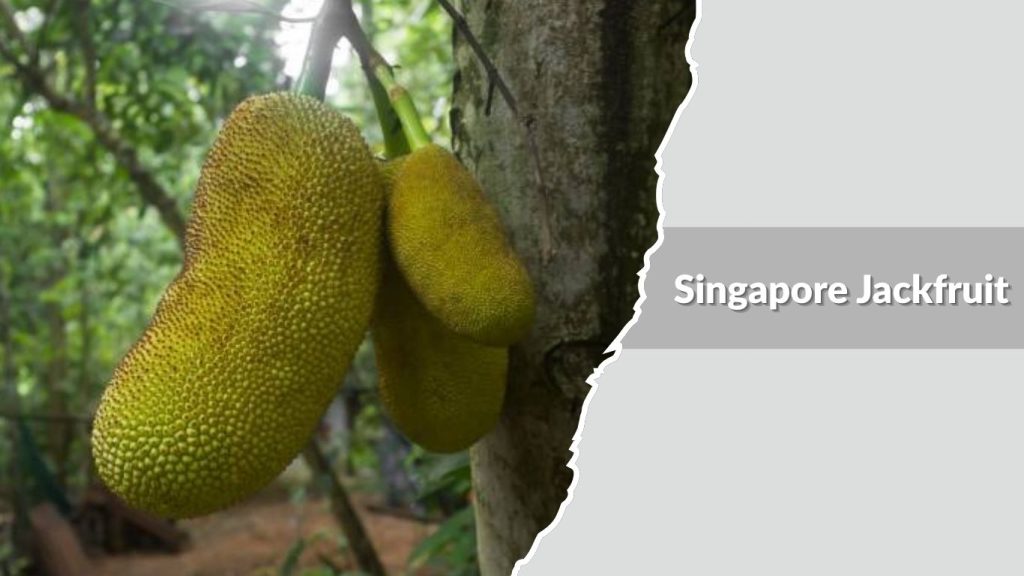
Singapore jackfruit is a well-known improved variety, often grown for its uniform fruits and consistent quality. It is valued for its neat bulb structure, moderate sweetness, and reliable yield, making it popular among growers and consumers alike.
Identification
- Shape and size: Medium-sized, round to oval
- Skin: Green with short, closely packed spikes
- Flesh (bulbs): Yellow, firm, and well-defined
- Aroma: Mild to moderately sweet
- Seeds: Small to medium, oval, and smooth
Taste & Texture
This variety has a mild to moderately sweet taste, appealing to those who prefer a less intense jackfruit flavor. The bulbs are firm and less fibrous, giving a clean and pleasant mouthfeel.
Culinary Uses
Singapore jackfruit is suitable for fresh consumption and is also used in salads, desserts, and processed products due to its uniform bulb size and firm texture.
Season & Availability
Singapore jackfruit is commonly available during the harvesting season and is often found in markets where improved or hybrid jackfruit varieties are cultivated.
8. Golden Nugget Jackfruit
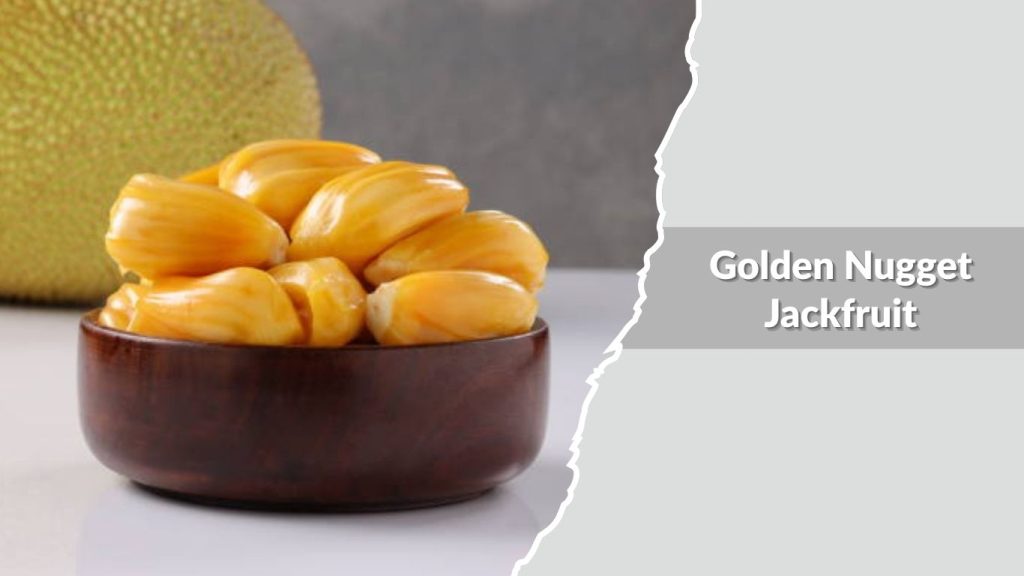
Golden Nugget jackfruit is valued for its attractive appearance and rich-colored bulbs. It is often considered a high-quality variety due to its sweetness, aroma, and relatively low fiber content. This type is popular among people who prefer visually appealing, dessert-style jackfruit.
Identification
- Shape and size: Medium to large, oval
- Skin: Green with short to medium, blunt spikes
- Flesh (bulbs): Deep golden yellow, thick, and fleshy
- Aroma: Strong, sweet, and inviting
- Seeds: Medium-sized, oval, and firm
Taste & Texture
Golden Nugget offers a rich sweetness with a smooth, firm texture. The bulbs are juicy but not overly soft, with minimal fibrous strands, making them pleasant to chew and easy to separate.
Culinary Uses
This variety is mainly consumed fresh and is also popular for desserts, ice creams, and sweet jackfruit-based recipes where flavor and color are important.
Season & Availability
Golden Nugget jackfruit is typically available during peak jackfruit season and is often seen in markets that sell premium or selected jackfruit varieties.
9. Black Gold Jackfruit
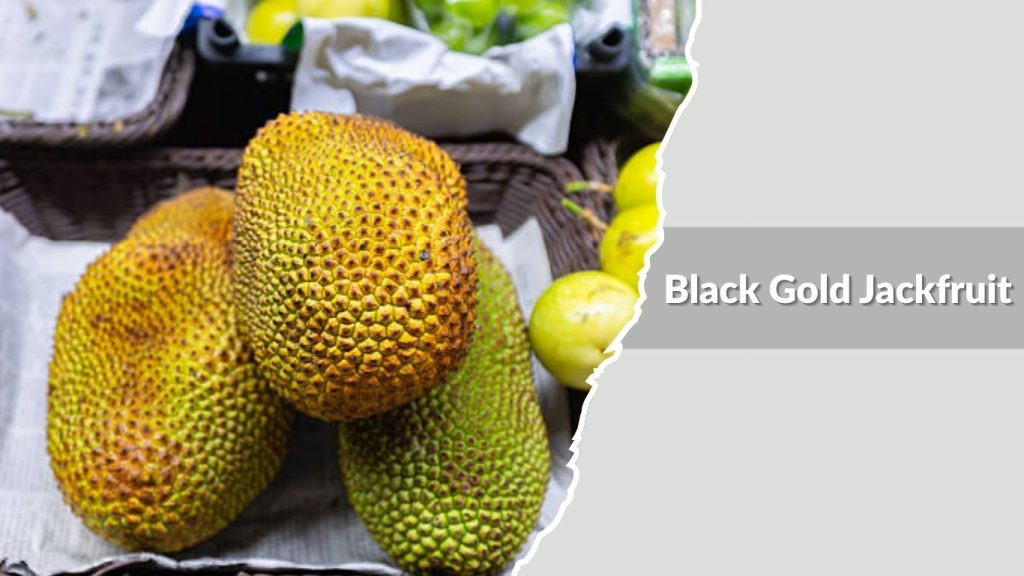
Black Gold jackfruit is a distinctive variety known for its dark-toned skin and flavorful bulbs. It is often grown for both home consumption and local markets due to its strong taste and reliable fruit quality.
Identification
- Shape and size: Medium to large, round to oval
- Skin: Dark green to slightly blackish with short, dense spikes
- Flesh (bulbs): Yellow to deep yellow, firm and well-formed
- Aroma: Moderate to strong jackfruit fragrance
- Seeds: Medium-sized, oval, and smooth
Taste & Texture
Black Gold has a well-rounded sweetness with a slightly rich, earthy undertone. The bulbs are firm and moderately juicy, offering a satisfying texture without excessive fiber.
Culinary Uses
This variety is suitable for fresh eating and can also be used in sweet preparations and processed products because the bulbs retain their shape well.
Season & Availability
Black Gold jackfruit is generally harvested during the main jackfruit season and is commonly available in regions where this variety is cultivated.
10. Dang Rasimi Jackfruit
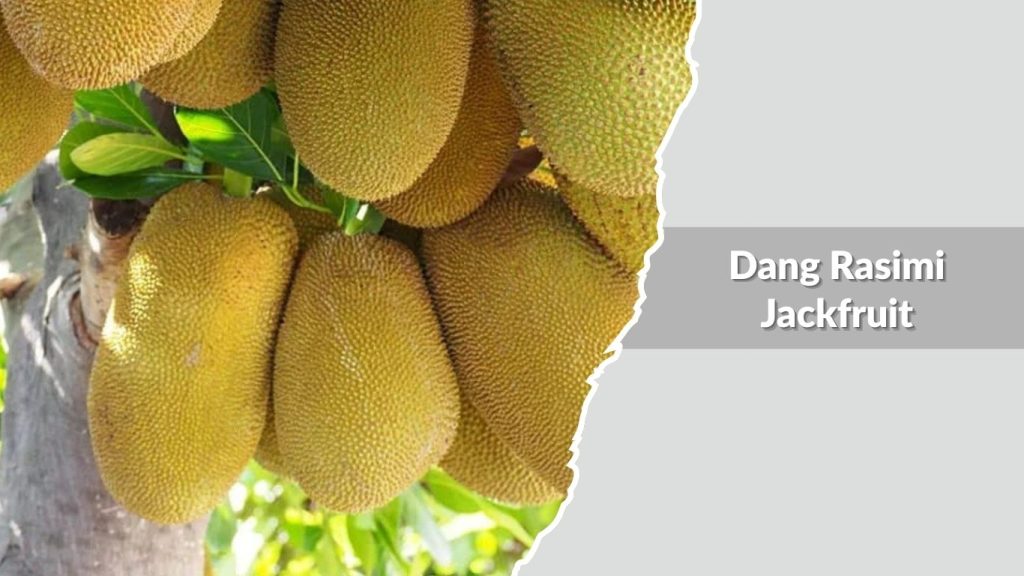
Dang Rasimi jackfruit is known for its large fruit size and well-developed bulbs. It is often appreciated for its balanced sweetness and sturdy texture, making it suitable for both fresh consumption and light cooking.
Identification
- Shape and size: Large, elongated to oval
- Skin: Green with prominent, sharp spikes
- Flesh (bulbs): Yellow, thick, and moderately firm
- Aroma: Mild to moderately strong
- Seeds: Large, oval, and firm
Taste & Texture
Dang Rasimi offers a pleasant sweetness without being overpowering. The bulbs are firm and slightly chewy, with moderate fiber that gives structure while still being enjoyable to eat.
Culinary Uses
This variety can be eaten fresh when fully ripe and is also used in cooked dishes when semi-ripe. Its firm bulbs hold up well in curries and mixed preparations.
Season & Availability
Dang Rasimi jackfruit is usually available during the main harvesting season and is commonly found in local markets in jackfruit-growing regions.
11. Cochin Jackfruit
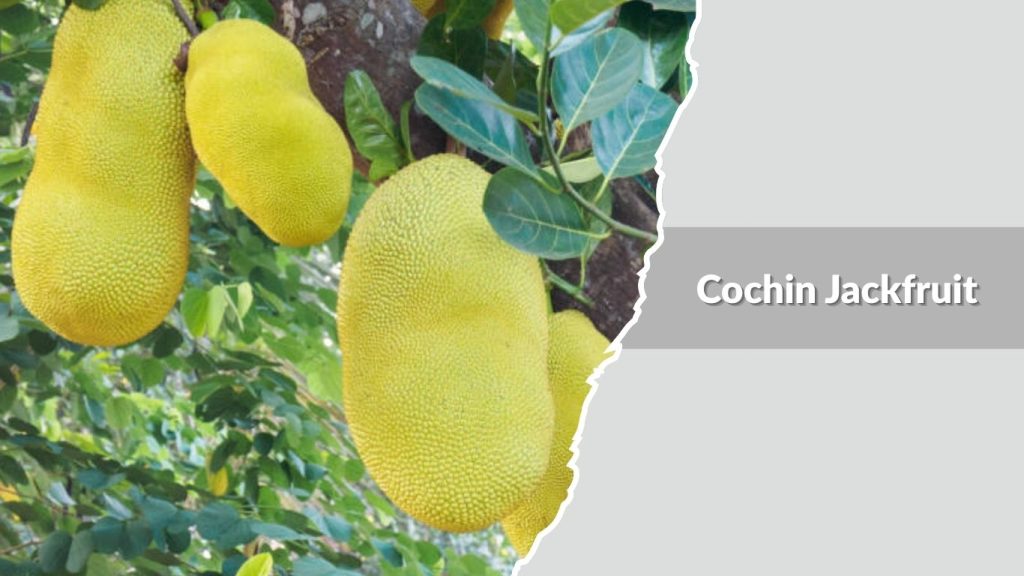
Cochin jackfruit is a regional variety recognized for its soft bulbs and juicy nature. It is commonly grown in coastal and humid areas and is favored by those who enjoy a tender, moist jackfruit texture.
Identification
- Shape and size: Medium to large, oval to round
- Skin: Green with shorter, softer spikes
- Flesh (bulbs): Light yellow to golden, soft and juicy
- Aroma: Mild, sweet fragrance
- Seeds: Medium-sized, oval, and smooth
Taste & Texture
Cochin has a gentle sweetness and a very soft, juicy texture. The bulbs are less firm and may be slightly fibrous, making them easy to chew but less structured.
Culinary Uses
This variety is mostly eaten fresh and is also used in sweet dishes, smoothies, and traditional preparations where a softer consistency is desired.
Season & Availability
Cochin jackfruit appears during the main jackfruit season and is commonly available in regions where this variety is traditionally cultivated.
12. Varikka Jackfruit
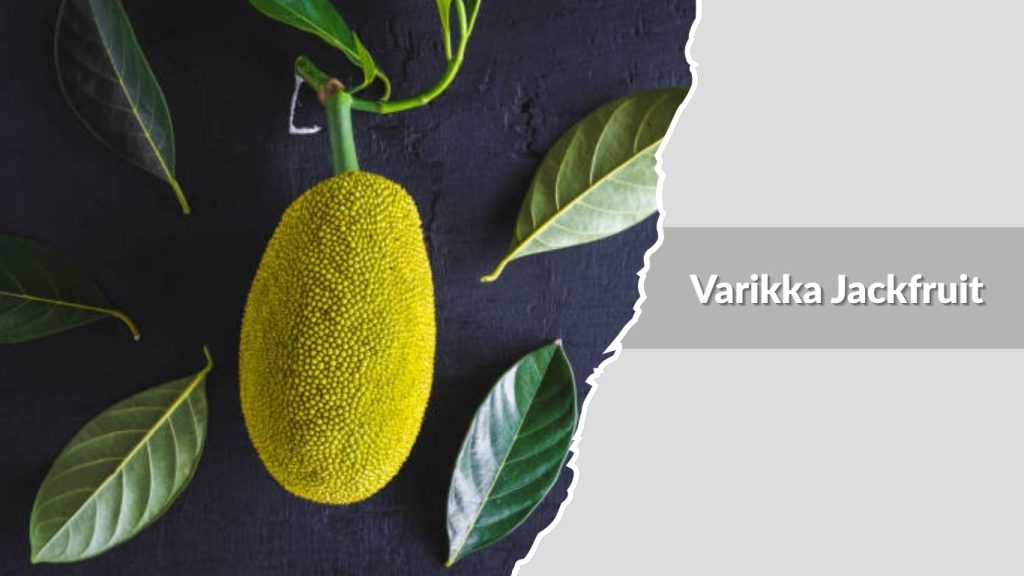
Varikka jackfruit is one of the most popular and highly valued jackfruit types, especially known for its firm bulbs and excellent eating quality. It is often considered a premium variety due to its sweetness, texture, and low fiber content, making it a favorite for fresh consumption.
Identification
- Shape and size: Medium to large, oblong
- Skin: Green with well-defined, moderately sharp spikes
- Flesh (bulbs): Thick, firm, and bright yellow
- Aroma: Sweet and moderately strong
- Seeds: Medium-sized, oval, and smooth
Taste & Texture
Varikka jackfruit is prized for its rich sweetness and firm, crisp texture. The bulbs are meaty and non-fibrous, offering a clean bite that holds its shape well even when fully ripe.
Culinary Uses
This variety is mainly eaten fresh and is also used in premium desserts and festive dishes. Because of its firmness, it is sometimes lightly cooked or added to sweet preparations without losing texture.
Season & Availability
Varikka jackfruit is widely available during the peak jackfruit season and is commonly found in markets that sell high-quality or selected jackfruit varieties.
13. Koozha Jackfruit
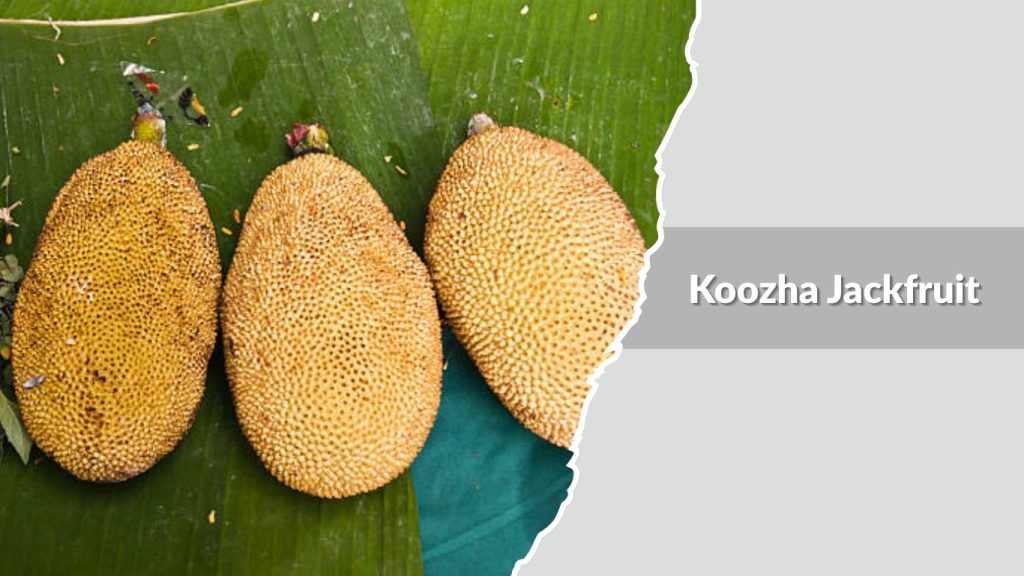
Koozha jackfruit is known for its softer flesh and milder flavor compared to firmer varieties like Varikka. It is often chosen for cooking and processing due to its fibrous structure and adaptability.
Identification
- Shape and size: Medium to large, round to oval
- Skin: Green with softer, closely packed spikes
- Flesh (bulbs): Pale yellow, soft, and fibrous
- Aroma: Mild and less intense
- Seeds: Medium to large, oval, and firm
Taste & Texture
Koozha has a mild sweetness and a soft, fibrous texture. The bulbs tend to break apart easily, making them less suitable for neat fresh serving but ideal for cooked dishes.
Culinary Uses
This variety is commonly used in curries, stews, and traditional savory dishes, especially when unripe or semi-ripe. When ripe, it is still eaten fresh but is more often processed or cooked.
Season & Availability
Koozha jackfruit is generally available during the main harvesting season and is common in regions where cooking jackfruit is a dietary staple.
14. Muttam Varikka Jackfruit
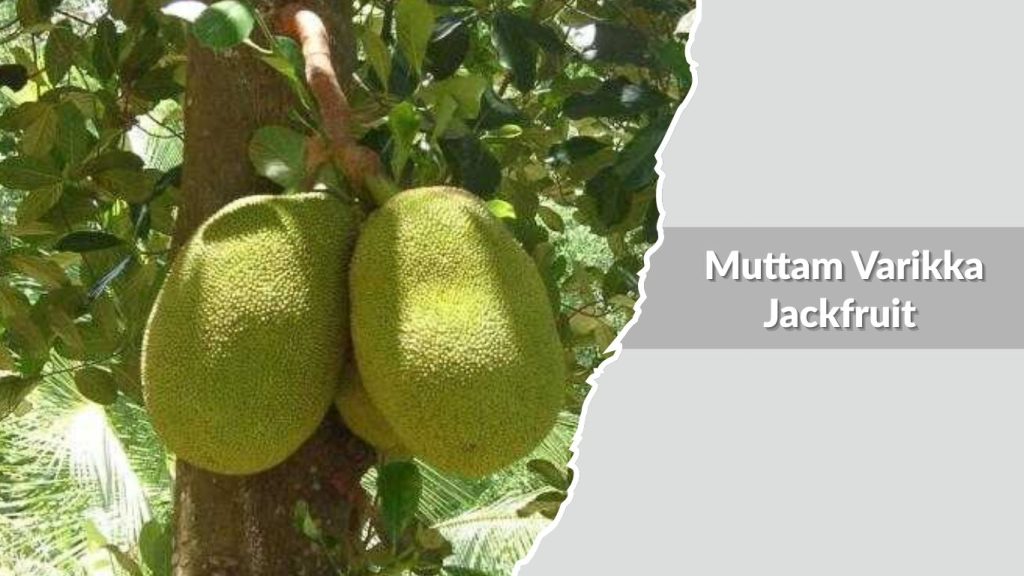
Muttam Varikka jackfruit is a well-regarded sub-type of Varikka, known for its compact bulbs and excellent sweetness. It is often preferred for its consistent quality and attractive bulb structure, making it a favorite for fresh consumption.
Identification
- Shape and size: Medium-sized, oval to slightly round
- Skin: Green with evenly spaced, moderately sharp spikes
- Flesh (bulbs): Thick, firm, and deep yellow
- Aroma: Sweet and pleasant
- Seeds: Medium-sized, oval, and smooth
Taste & Texture
Muttam Varikka offers a rich, sweet flavor with a firm yet tender texture. The bulbs are meaty and low in fiber, giving a clean, satisfying bite when ripe.
Culinary Uses
This variety is mainly eaten fresh and is also used in high-quality desserts and festive dishes. Its firmness allows the bulbs to retain shape even in light cooking or sweet preparations.
Season & Availability
Muttam Varikka jackfruit is usually available during the peak jackfruit season and is commonly found in markets that specialize in premium jackfruit varieties.
15. Gulabi Jackfruit
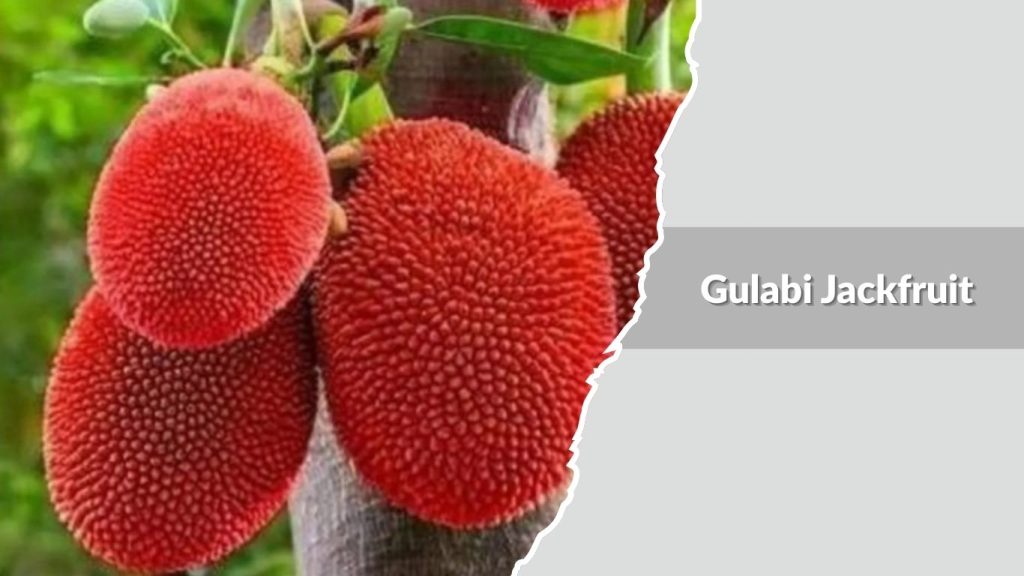
Gulabi jackfruit is named for its distinctive pinkish to reddish bulb color, which sets it apart from most yellow-fleshed varieties. It is often grown as a specialty jackfruit and is prized for its unique appearance and mild sweetness.
Identification
- Shape and size: Medium to large, oval
- Skin: Green with medium-length spikes
- Flesh (bulbs): Pinkish, light red, or rose-colored
- Aroma: Mild and subtly sweet
- Seeds: Medium-sized, oval, and smooth
Taste & Texture
Gulabi has a gentle sweetness with a soft to moderately firm texture. The flavor is lighter compared to deep-yellow varieties, making it appealing to those who prefer a mild jackfruit taste.
Culinary Uses
This variety is commonly eaten fresh and is also used in fruit salads, desserts, and decorative preparations because of its unusual color.
Season & Availability
Gulabi jackfruit is typically available during the main jackfruit season but is less common than yellow-fleshed varieties, often found in select local markets or home gardens.