




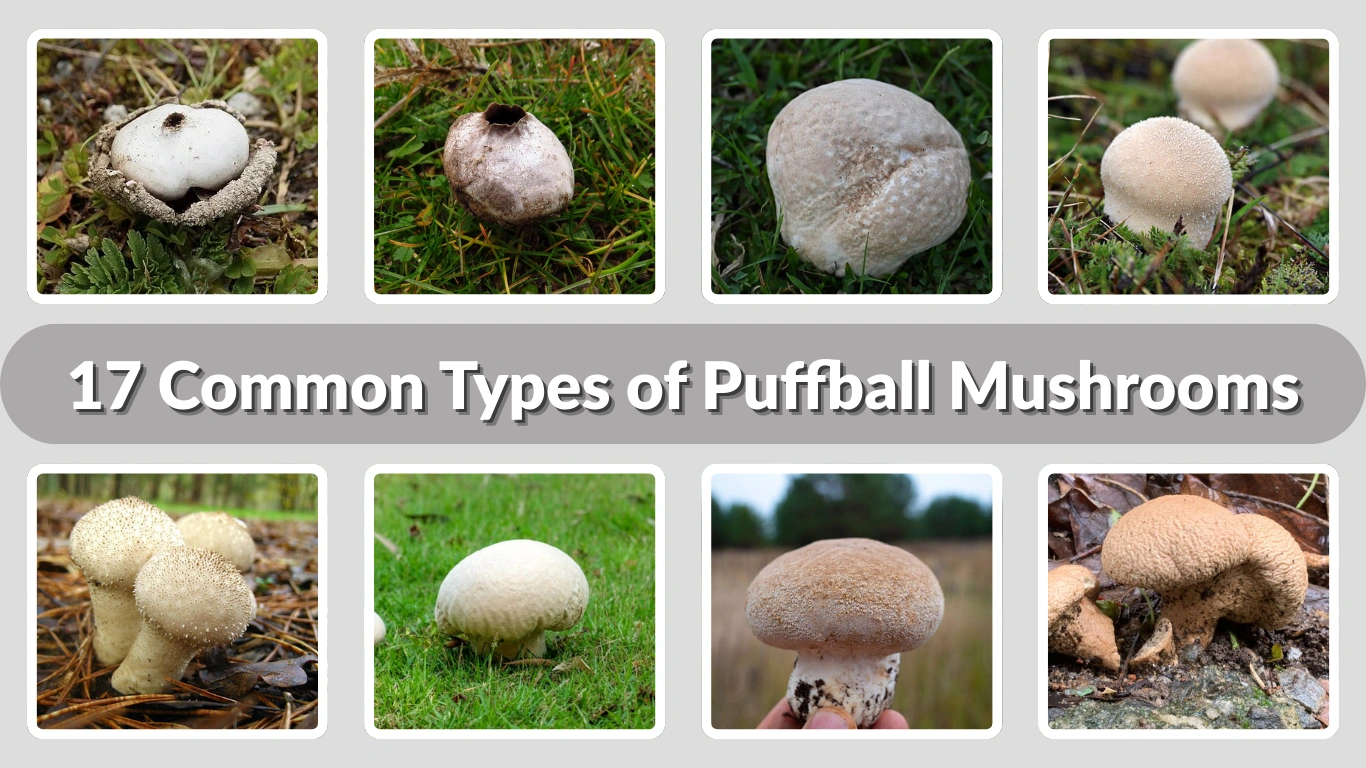
Puffball mushrooms are a unique and fascinating group of fungi known for their round shape and spore-releasing interiors. Found across forests, grasslands, and even desert landscapes, these mushrooms vary widely in size, texture, and habitat. Some species are edible when young, while others are best appreciated for identification purposes only. This guide explores 17 common types of puffball mushrooms, highlighting their key characteristics and natural environments.
1. Lycoperdon perlatum (Common Puffball)

Lycoperdon perlatum, commonly known as the common puffball or gem-studded puffball, is one of the most widespread and easily recognized puffball mushrooms. It is frequently found in forests, gardens, and grassy areas, especially after rainfall. This species is well known for its distinctive textured surface and reliable appearance across many regions, making it a familiar sight for mushroom foragers.
Identification
- Small to medium-sized, usually 2–6 cm tall
- Pear-shaped or round body with a narrowed base
- Covered in small white, cone-shaped spines or “gems” that rub off with age
- Interior flesh is pure white when young and edible
- Matures to an olive-brown interior that releases spores when compressed
Habitat and Distribution
Lycoperdon perlatum commonly grows on soil rich in organic matter. It appears in deciduous and coniferous forests, woodland paths, lawns, and disturbed ground. This species is widely distributed across North America, Europe, and parts of Asia, often growing singly or in small clusters from late summer through autumn.
Edibility
This puffball is considered edible only when young, while the interior flesh remains completely white and firm. Once the inside turns yellow, olive, or brown, it should not be eaten. It is mild in flavor and commonly sliced and sautéed, breaded, or added to soups. Proper identification is essential to avoid confusing it with immature toxic mushrooms.
Notable Characteristics
The outer spines give this puffball a sandpaper-like texture when fresh, which helps distinguish it from smoother puffball species. When mature, it releases spores in visible brown clouds when touched or stepped on.
2. Calvatia gigantea (Giant Puffball)
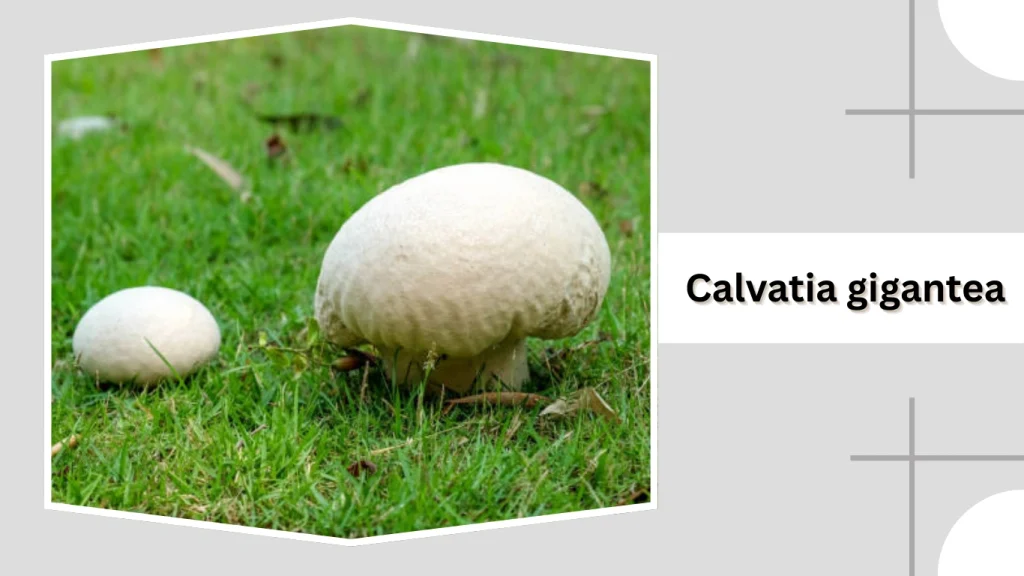
Calvatia gigantea, commonly known as the giant puffball, is one of the largest and most striking puffball mushrooms in the world. It is famous for its massive size and smooth white surface, often resembling a large ball resting on the ground. Because of its visibility and impressive dimensions, it is one of the most easily recognized puffballs even by beginners.
Identification
- Very large, ranging from 20–70 cm wide, sometimes larger
- Round to slightly flattened shape with no visible stem
- Smooth, white outer surface when young, turning yellowish with age
- Interior flesh must be solid, pure white when immature
- Develops a brown, powdery spore mass as it matures
Habitat and Distribution
Calvatia gigantea grows in open habitats such as grasslands, meadows, pastures, parklands, and forest edges. It is commonly found in late summer and autumn, often appearing singly or in fairy-ring patterns. This species has a broad distribution across North America, Europe, and other temperate regions of the world.
Edibility
This is one of the most highly regarded edible puffballs when harvested young. As long as the interior flesh is completely white, it is safe to eat and has a mild, pleasant flavor. Due to its size, a single specimen can provide multiple servings. It is often sliced into thick slabs and grilled, fried, or used as a meat substitute.
Notable Characteristics
The sheer size of the giant puffball is its most defining feature. Mature specimens can release enormous quantities of spores, sometimes visible as large brown clouds when disturbed.
3. Calvatia cyathiformis (Purple-spored Puffball)
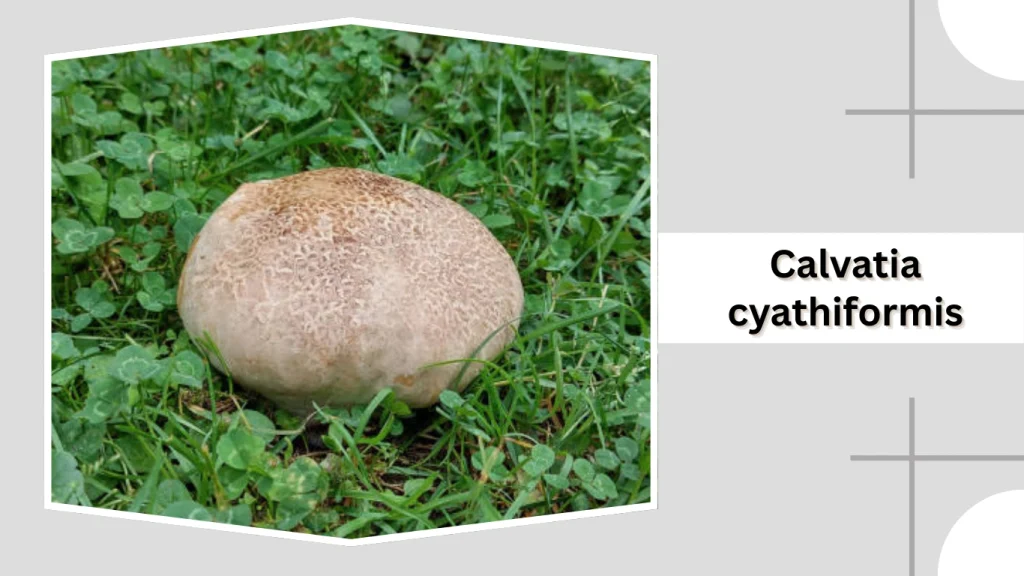
Calvatia cyathiformis, commonly called the purple-spored puffball, is a medium to large puffball species recognized for the distinctive color of its mature spores. It is commonly encountered in grassy areas and open landscapes and is often overlooked until it reaches maturity and begins releasing spores.
Identification
- Medium to large size, typically 5–15 cm wide
- Round to slightly flattened shape with a short, thick base
- Outer surface smooth to finely cracked, white to pale tan when young
- Interior flesh white and firm when immature
- Spore mass turns dark purple-brown at maturity
Habitat and Distribution
This species primarily grows in open, grassy environments such as lawns, fields, roadsides, and pastures. It is especially common in prairies and well-maintained grassy areas. Calvatia cyathiformis is widely distributed across North America and appears from late summer through fall, often growing alone or in small groups.
Edibility
Calvatia cyathiformis is edible when young and the interior flesh is completely white. Once the interior begins to darken or show purple coloration, it should no longer be consumed. When harvested at the right stage, it has a mild flavor and can be prepared in a variety of ways, including sautéing or breading.
Notable Characteristics
The defining feature of this puffball is its deep purple spore mass at maturity, which clearly separates it from other Calvatia species. When fully mature, it releases spores in dark clouds when compressed or broken open.
4. Bovista plumbea (Lead-gray Puffball)
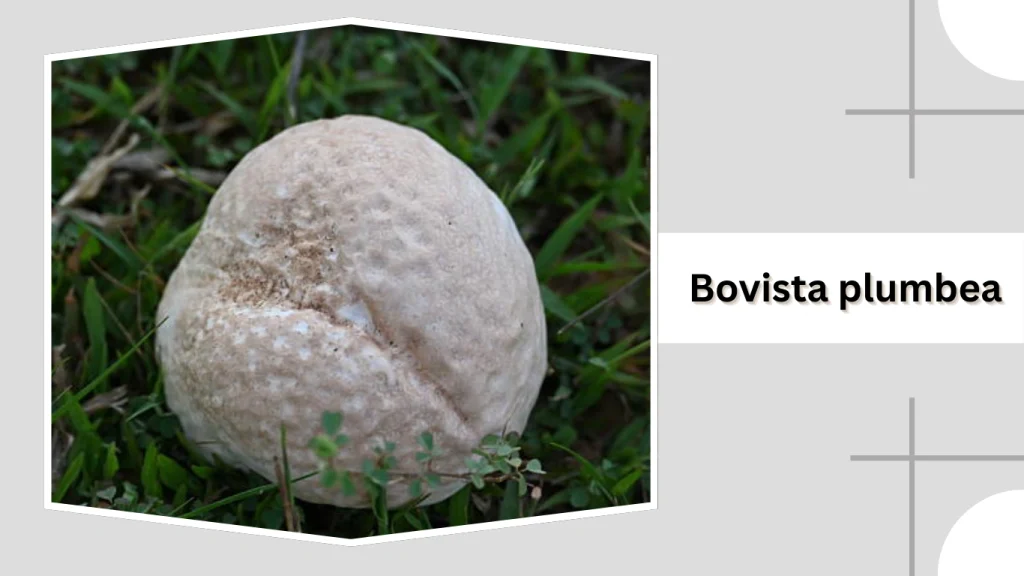
Bovista plumbea, commonly known as the lead-gray puffball, is a small but distinctive puffball mushroom noted for its smooth surface and grayish tones at maturity. It is often found in open grassy habitats and is easily overlooked due to its modest size. Despite this, it is one of the more commonly encountered Bovista species in suitable conditions.
Identification
- Small, usually 1–5 cm in diameter
- Round to slightly flattened shape with no visible stem
- Outer surface smooth and white when young
- Outer skin turns gray to lead-colored as it matures
- Interior flesh white when young, becoming brown and powdery with age
Habitat and Distribution
Bovista plumbea typically grows in grasslands, lawns, pastures, and roadside edges. It prefers well-drained soil and open exposure rather than dense forest environments. This species is widely distributed across Europe, North America, and parts of Asia. Fruiting usually occurs from late summer through autumn, often appearing singly or scattered rather than in dense clusters.
Edibility
This puffball is considered edible only at a very young stage, when the interior flesh is completely white and firm. Due to its small size, it is rarely collected for culinary purposes. Once the interior begins to discolor or soften, it should not be consumed. As with all puffballs, careful identification is necessary to avoid confusion with immature toxic mushrooms.
Notable Characteristics
A key feature of Bovista plumbea is the way the outer skin peels away as it matures, revealing the darker spore case beneath. When fully mature, it releases spores through a small opening at the top when disturbed.
5. Bovista nigrescens (Dark Puffball)
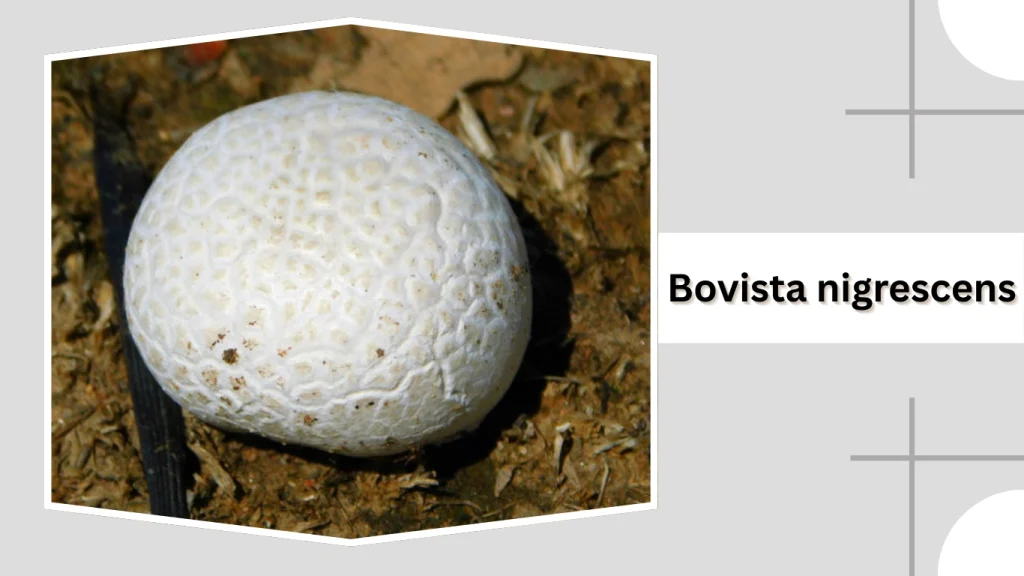
Bovista nigrescens is a small puffball species recognized by its tendency to darken significantly as it matures. It is less commonly discussed than some other Bovista species but can be found in suitable grassy habitats. Its compact form and subtle color changes make careful observation important for correct identification.
Identification
- Small, typically 2–6 cm in diameter
- Round to slightly flattened shape without a distinct stem
- Outer surface white to pale gray when young
- Surface darkens to brown or nearly black with age
- Interior flesh white when immature, turning dark brown and powdery
Habitat and Distribution
This species is most often found in open grasslands, meadows, pastures, and sometimes sandy soils. It favors well-drained ground and open sunlight. Bovista nigrescens has been recorded across parts of Europe and North America, usually appearing in late summer and autumn. It may grow singly or scattered across an area rather than forming clusters.
Edibility
Bovista nigrescens is edible only at a very young stage, when the interior flesh is solid and completely white. Due to its small size and quick maturation, it is not commonly harvested for food. Once the interior begins to darken or soften, it should be discarded.
Notable Characteristics
The rapid darkening of the outer surface and interior spore mass is a defining trait of this species. Mature specimens release spores through an opening at the top when compressed, producing dark brown spore clouds.
6. Lycoperdon pyriforme (Pear-shaped Puffball)
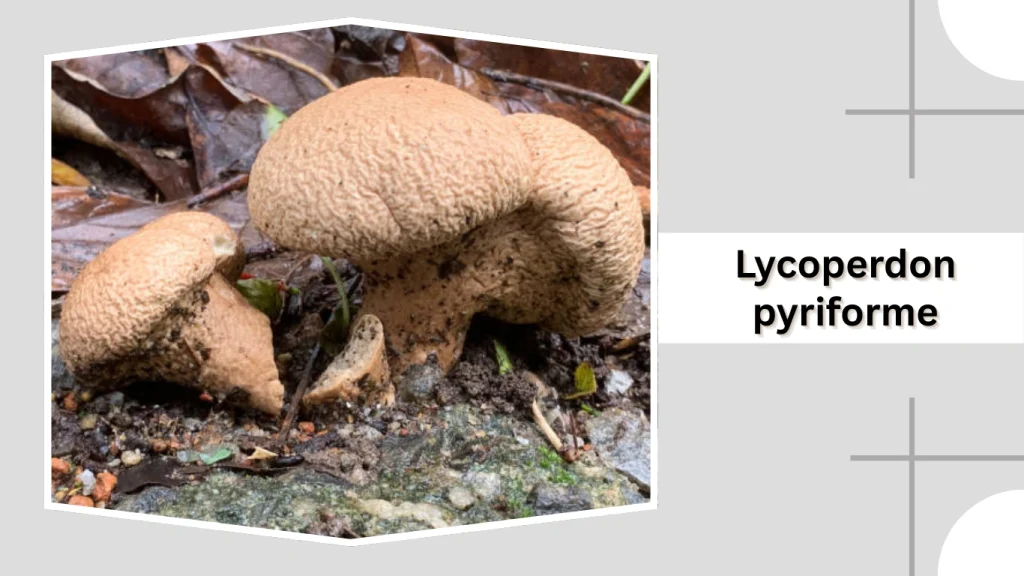
Lycoperdon pyriforme, commonly known as the pear-shaped puffball, is a distinctive species that often grows in dense clusters on decaying wood. Unlike many puffballs that grow directly on soil, this species has a strong association with rotting logs and stumps, making it easier to identify in the field.
Identification
- Small to medium-sized, typically 2–5 cm tall
- Pear-shaped body with a narrowed base
- Outer surface covered in fine spines or granules when young
- Spines wear off, leaving a smoother, yellow-brown surface
- Interior flesh white when young, turning olive-brown at maturity
Habitat and Distribution
Lycoperdon pyriforme primarily grows on well-rotted hardwood and conifer wood, including logs, stumps, and buried roots. It is commonly found in forests and wooded areas, often appearing in tight clusters. This species is widespread across North America, Europe, and parts of Asia, fruiting from late summer through fall.
Edibility
This puffball is edible when young, provided the interior flesh is completely white and firm. Its flavor is mild, and it is often sautéed or added to mixed mushroom dishes. Because it grows on wood rather than soil, it can sometimes be cleaner than ground-growing puffballs, but proper identification is still essential.
Notable Characteristics
The clustered growth habit on decaying wood is one of the most reliable features for identifying Lycoperdon pyriforme. Mature specimens release spores through a small pore at the top when compressed.
7. Lycoperdon echinatum (Spiny Puffball)
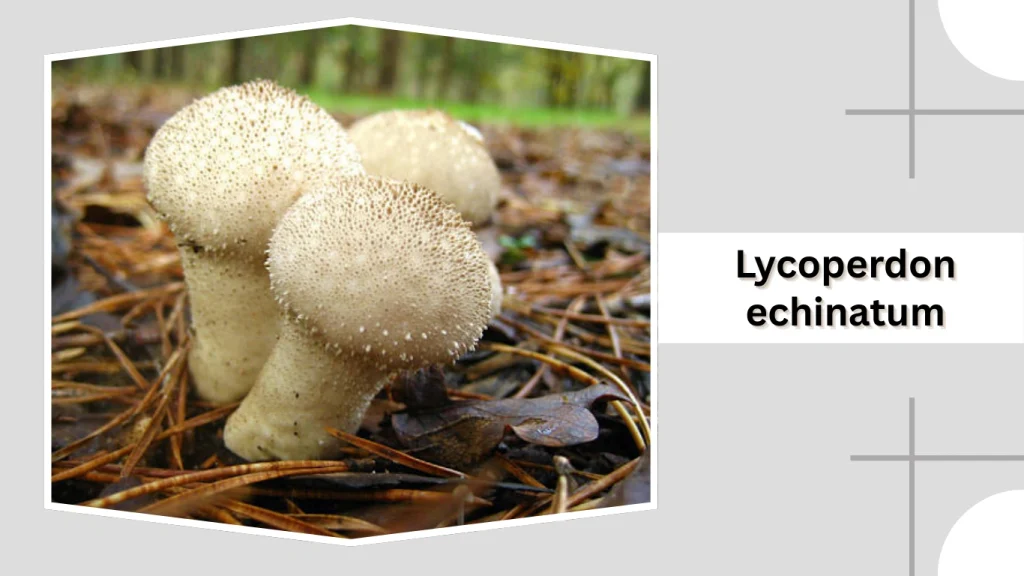
Lycoperdon echinatum, commonly called the spiny puffball, is a visually striking species known for its long, sharp spines covering the outer surface. These prominent spines give it a bristly appearance that clearly separates it from smoother puffball species. It is less common than some other Lycoperdon species and is often associated with mature woodland habitats.
Identification
- Small to medium size, typically 2–6 cm in diameter
- Round to slightly pear-shaped body
- Covered in long, pointed spines that may form star-like clusters
- Spines darken and fall off as the mushroom ages
- Interior flesh white when young, becoming brown and powdery at maturity
Habitat and Distribution
This species is usually found in deciduous forests, especially in leaf litter and humus-rich soil. It favors shaded, undisturbed woodland environments and often appears singly or in small groups. Lycoperdon echinatum is distributed across parts of Europe, North America, and Asia, with fruiting occurring from late summer through autumn.
Edibility
Lycoperdon echinatum is considered edible when young, but it is not commonly collected due to its rarity and small size. The interior flesh must be completely white before consumption. As with all puffballs, any discoloration inside indicates it is no longer suitable for eating.
Notable Characteristics
The long, stiff spines are the most defining feature of this species. When mature, the puffball releases spores through a pore at the top, often after the spines have fallen away.
8. Lycoperdon marginatum (Margined Puffball)
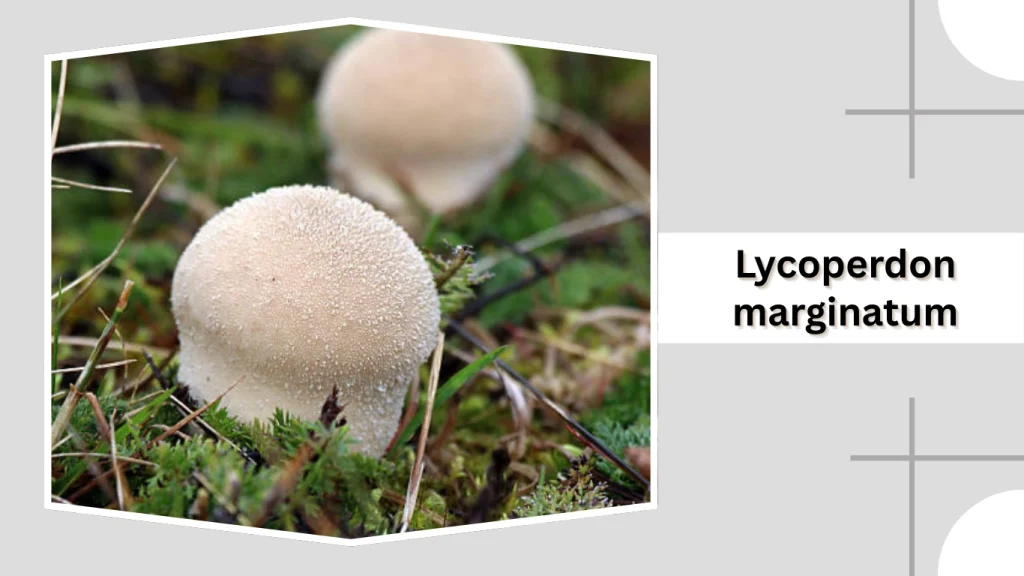
Lycoperdon marginatum, commonly known as the margined puffball, is a small but distinctive puffball species named for the noticeable boundary between its upper spore case and lower sterile base. This subtle structural feature helps separate it from other similar-looking Lycoperdon species. It is typically found in woodland environments with rich organic soil.
Identification
- Small, usually 2–5 cm tall
- Round to pear-shaped body with a well-defined base
- Outer surface finely textured or slightly granular when young
- Distinct margin separating the spore case from the sterile base
- Interior flesh white when immature, turning brown as spores develop
Habitat and Distribution
Lycoperdon marginatum grows on soil in deciduous and mixed forests, often among leaf litter and moss. It prefers shaded areas with good moisture levels and nutrient-rich ground. This species is distributed across parts of Europe and North America and typically fruits from late summer into early autumn, appearing singly or in small scattered groups.
Edibility
This puffball is edible only when young and the interior flesh is completely white. Due to its small size and relatively thin flesh, it is not a popular edible species. Once the interior begins to darken or soften, it should not be consumed.
Notable Characteristics
The clearly defined margin at the base is the key identifying feature of this species. When mature, Lycoperdon marginatum releases spores through a small apical opening when pressure is applied.
9. Lycoperdon molle (Soft Puffball)
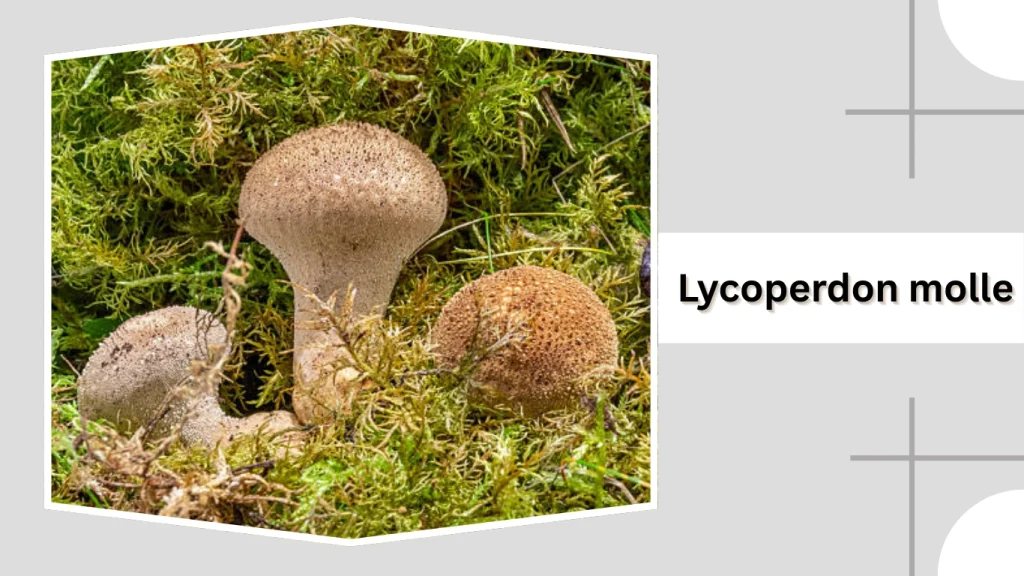
Lycoperdon molle, commonly referred to as the soft puffball, is a small woodland species recognized by its fine, velvety surface texture when young. It is less commonly encountered than many other Lycoperdon species and is typically found in undisturbed forest environments with rich organic matter.
Identification
- Small, usually 2–4 cm in diameter
- Round to slightly pear-shaped body
- Outer surface soft, finely hairy, or velvety when young
- Surface becomes smoother and darker with age
- Interior flesh white when immature, turning brown at maturity
Habitat and Distribution
This species grows on soil in deciduous and mixed forests, often among leaf litter, moss, and decomposing plant material. It favors moist, shaded habitats and well-developed woodland floors. Lycoperdon molle has been recorded in parts of Europe and North America, fruiting from late summer through autumn.
Edibility
Lycoperdon molle is considered edible only when very young and the interior flesh is completely white. Because of its small size and relative scarcity, it is rarely collected for culinary use. Any sign of interior discoloration indicates it should not be eaten.
Notable Characteristics
The soft, velvety outer surface is the most distinctive feature of this puffball. As it matures, a small pore forms at the top, allowing spores to be released when the mushroom is compressed or disturbed.
10. Lycoperdon nigrescens (Dusky Puffball)
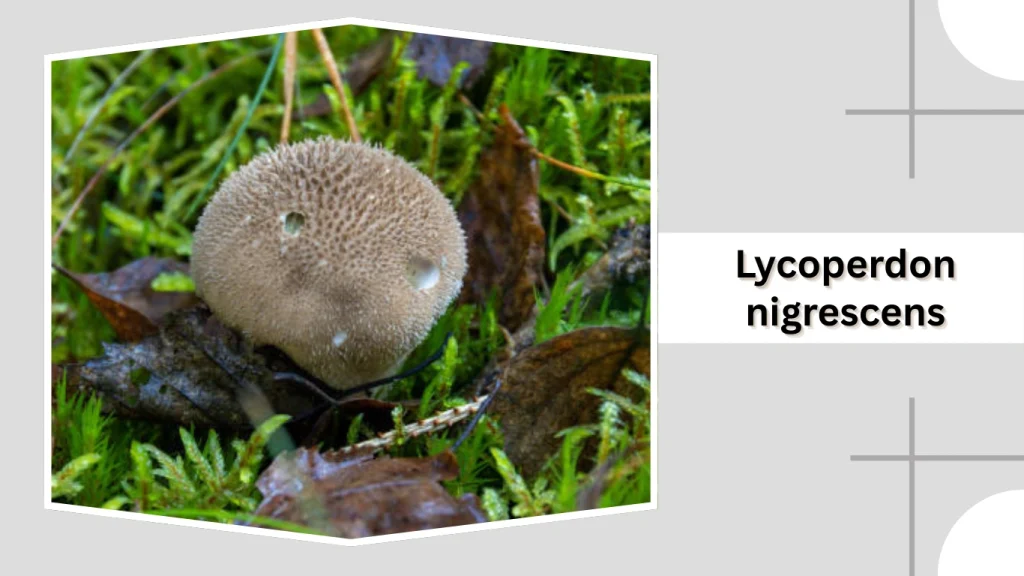
Lycoperdon nigrescens, commonly known as the dusky puffball, is a small to medium-sized puffball species that gradually darkens as it matures. It is closely related to other Lycoperdon species but can be distinguished by its surface texture and tendency to develop darker tones relatively early in its life cycle.
Identification
- Small to medium size, typically 3–7 cm tall
- Round to pear-shaped body with a short sterile base
- Outer surface covered in fine spines or granules when young
- Spines wear off, leaving a darker, brownish surface
- Interior flesh white when young, becoming dark brown at maturity
Habitat and Distribution
This species grows on soil in deciduous and mixed forests, often in areas rich in leaf litter and organic debris. It prefers moist woodland conditions and shaded environments. Lycoperdon nigrescens is found across parts of Europe and North America and usually fruits from late summer into autumn, appearing singly or scattered.
Edibility
Lycoperdon nigrescens is edible only at an early stage when the interior flesh is completely white and firm. Once discoloration begins, it should not be consumed. Due to its modest size and similarity to other species, it is not commonly gathered for food.
Notable Characteristics
The gradual darkening of both the surface and spore mass is a key feature of this species. Mature specimens release spores through an apical pore when pressed or disturbed.
11. Calvatia utriformis (Mosaic Puffball)
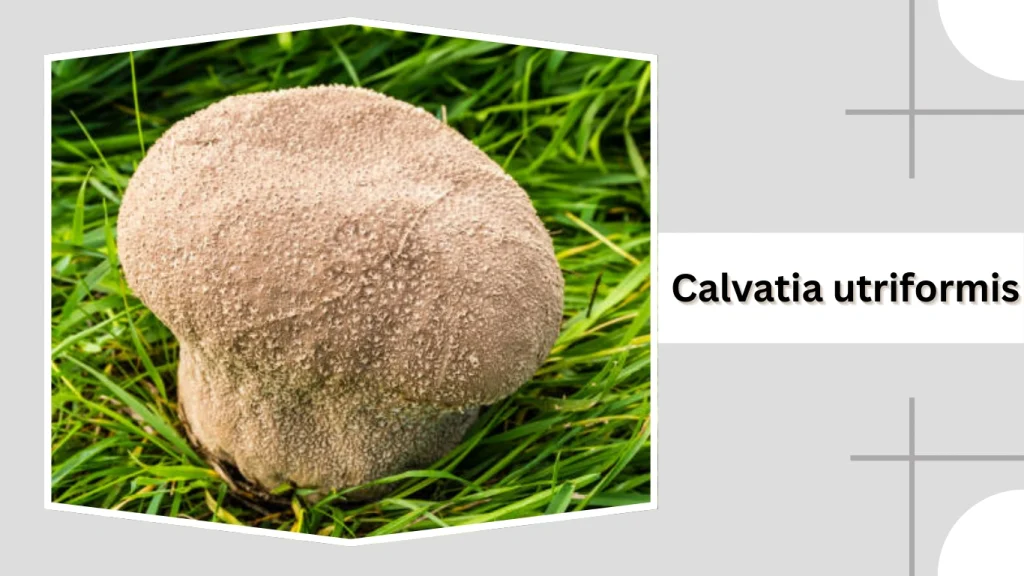
Calvatia utriformis, commonly known as the mosaic puffball or skull-shaped puffball, is a large and robust species recognized by its cracked, mosaic-like outer surface. It is often mistaken for the giant puffball when young but can be distinguished by its thicker outer wall and distinctive surface pattern as it matures.
Identification
- Large, typically 10–25 cm wide
- Round to somewhat flattened or skull-shaped
- Outer surface white when young, developing large cracked or mosaic patterns
- Thick, tough outer rind compared to other puffballs
- Interior flesh white when immature, turning yellow-brown with age
Habitat and Distribution
This species grows in open habitats such as grasslands, pastures, dunes, and roadsides. It prefers sandy or well-drained soils and full to partial sunlight. Calvatia utriformis is widely distributed across Europe, North America, and parts of Asia, fruiting from summer through autumn and often appearing singly.
Edibility
Calvatia utriformis is edible when young and the interior flesh is completely white. However, its thick rind often requires peeling before cooking. The flavor is mild, and it can be prepared in similar ways to other edible puffballs, such as frying or grilling.
Notable Characteristics
The cracked, mosaic-like surface is the most defining feature of this species. When fully mature, the top breaks open irregularly to release large quantities of spores.
12. Calvatia craniiformis (Brain Puffball)
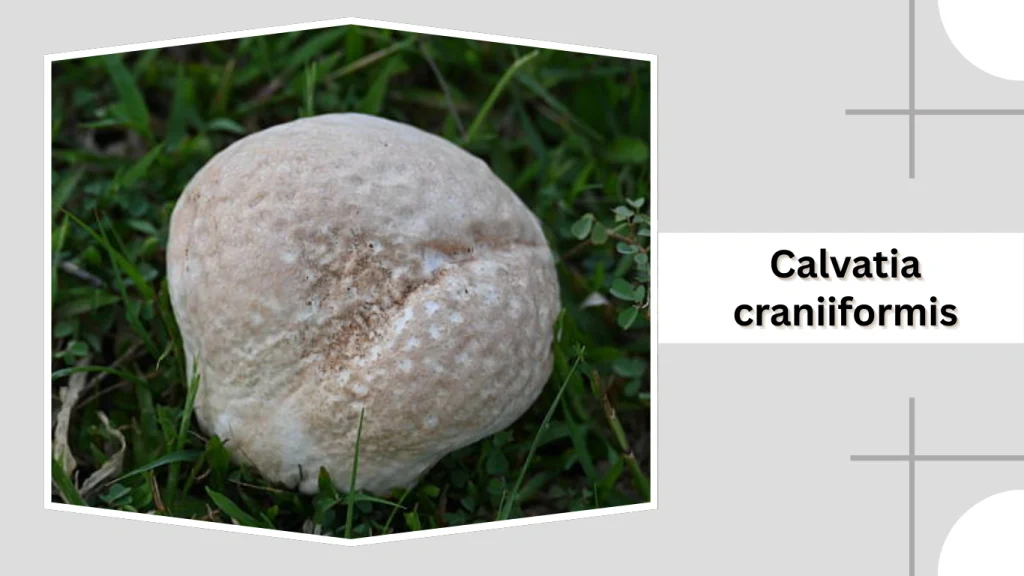
Calvatia craniiformis, commonly known as the brain puffball, is a large and unusual-looking puffball species named for its wrinkled, brain-like surface. Its distinctive shape makes it one of the easier large puffballs to recognize once mature, especially in open grassy habitats.
Identification
- Large, usually 10–30 cm wide
- Irregular, rounded form with folded or brain-like surface lobes
- White to pale cream when young
- Surface becomes yellowish to brown with age
- Interior flesh white and firm when immature, turning brown at maturity
Habitat and Distribution
This species typically grows in open areas such as fields, lawns, pastures, and grassy clearings. It prefers nutrient-rich soil and moderate sunlight. Calvatia craniiformis is most commonly found in eastern and central North America, fruiting from late summer through fall, often appearing singly.
Edibility
Calvatia craniiformis is edible when young, provided the interior flesh is completely white. It has a mild flavor and soft texture, making it suitable for slicing and cooking in various dishes. Once the interior begins to discolor, it should no longer be eaten.
Notable Characteristics
The brain-like folds on the surface are the most distinctive feature of this puffball. When fully mature, the outer surface breaks apart irregularly, allowing spores to disperse freely into the air.
13. Vascellum pratense (Meadow Puffball)
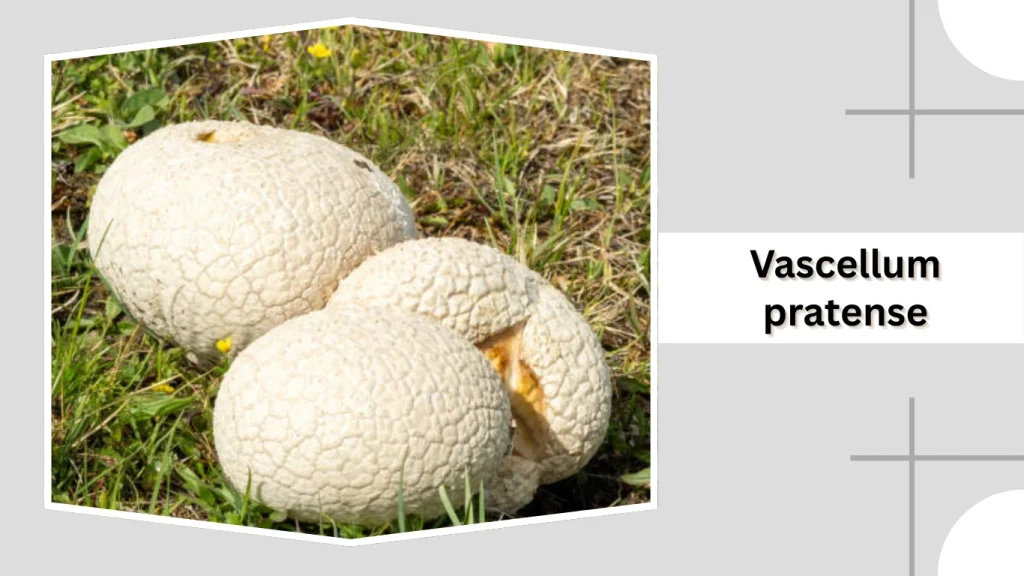
Vascellum pratense, commonly called the meadow puffball, is a small to medium-sized puffball frequently found in open grassy areas. It is often confused with small Lycoperdon species, but it has structural differences that become more apparent as it matures. This species is common and widely distributed, making it a familiar puffball in lawns and fields.
Identification
- Small to medium size, typically 3–7 cm wide
- Round to slightly flattened shape with a short base
- Outer surface smooth to finely granular when young
- Distinct internal diaphragm separating spores from the sterile base
- Interior flesh white when immature, turning olive-brown at maturity
Habitat and Distribution
Vascellum pratense grows in meadows, lawns, pastures, parks, and grassy roadsides. It prefers open, sunny locations with well-drained soil. This species is widespread across North America, Europe, and other temperate regions, fruiting from late summer through autumn. It commonly appears singly or scattered, sometimes in loose groups.
Edibility
This puffball is edible when young and the interior flesh is completely white and firm. Due to its modest size, it is usually collected in quantity if used for food. Once the interior begins to darken or soften, it should not be eaten.
Notable Characteristics
The internal diaphragm is a key feature that distinguishes this species from similar puffballs. When mature, spores are released through a pore at the top when the mushroom is disturbed.
14. Handkea excipuliformis (Pestle Puffball)
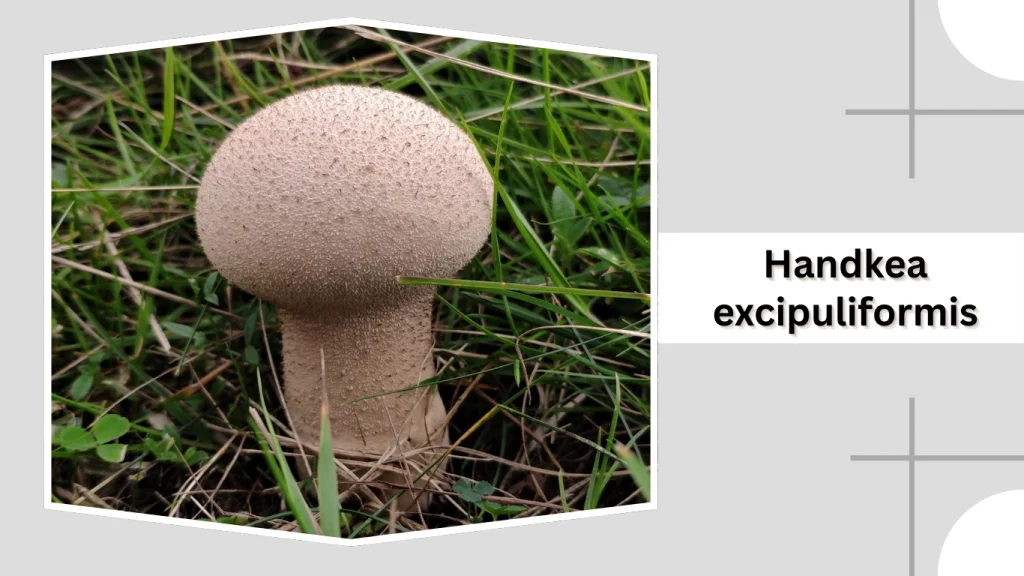
Handkea excipuliformis, commonly known as the pestle puffball, is a tall, elegant puffball species distinguished by its elongated shape and prominent sterile base. Unlike round puffballs, this species has a more upright, column-like form, making it relatively easy to recognize in the field.
Identification
- Medium to large size, typically 10–20 cm tall
- Club-shaped or pestle-like form with a long sterile base
- Upper spore case rounded and clearly distinct from the stem-like base
- Outer surface smooth to slightly granular
- Interior flesh white when immature, turning brown at maturity
Habitat and Distribution
This species grows in deciduous and mixed forests, often on rich soil among leaf litter. It prefers shaded woodland environments and well-developed forest floors. Handkea excipuliformis is widely distributed across Europe and parts of North America, fruiting from late summer through autumn, usually appearing singly or scattered.
Edibility
Handkea excipuliformis is edible when young and the interior flesh of the spore case is completely white. The sterile base is typically discarded. It has a mild flavor and can be sliced and cooked similarly to other edible puffballs.
Notable Characteristics
The tall, pestle-like shape with a clearly defined sterile base is the most distinctive feature of this puffball. Mature specimens release spores from an opening at the top of the spore case.
15. Bovistella radicata (Rooted Puffball)
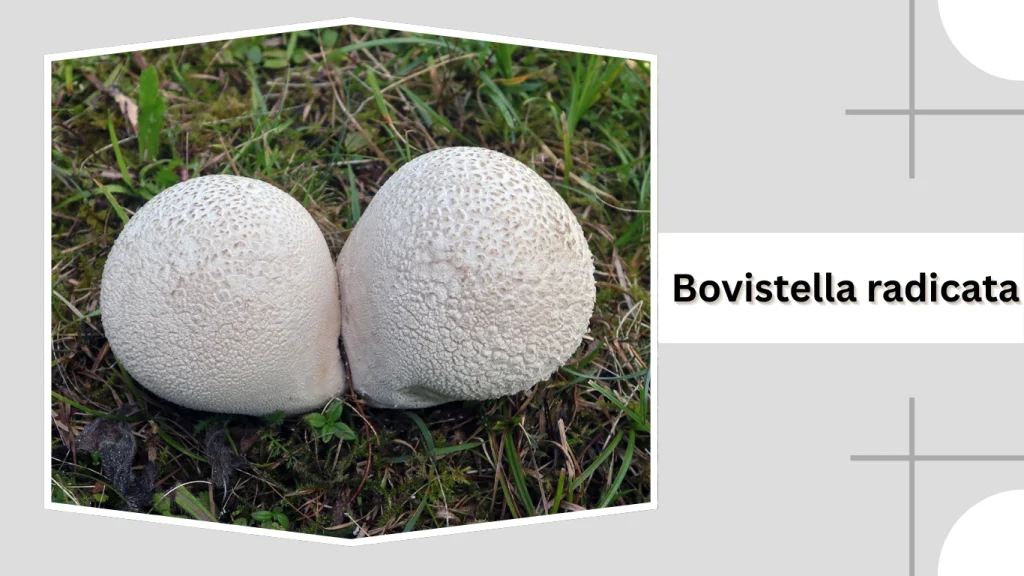
Bovistella radicata, commonly known as the rooted puffball, is a distinctive puffball species recognized by its deep, root-like base that anchors it into the soil. This underground extension sets it apart from many other puffballs and makes it easier to identify when carefully excavated.
Identification
- Small to medium size, typically 4–10 cm wide
- Round to slightly flattened spore case
- Prominent root-like sterile base extending deep into the ground
- Outer surface smooth to slightly textured
- Interior flesh white when young, turning brown at maturity
Habitat and Distribution
This species grows in sandy or well-drained soils, often in open areas such as grasslands, prairies, and scrubby habitats. It is commonly found in arid or semi-arid environments. Bovistella radicata is distributed across parts of North America and other dry regions, fruiting from summer through fall, usually appearing singly.
Edibility
Bovistella radicata is edible when young and the interior flesh is completely white. Due to its firm texture, it can be cooked in various ways, including sautéing or grilling. As always, any specimen showing interior discoloration should not be consumed.
Notable Characteristics
The long, root-like base is the defining feature of this puffball. When mature, the spore case releases spores through a small apical opening when disturbed.
16. Disciseda candida (White Desert Puffball)
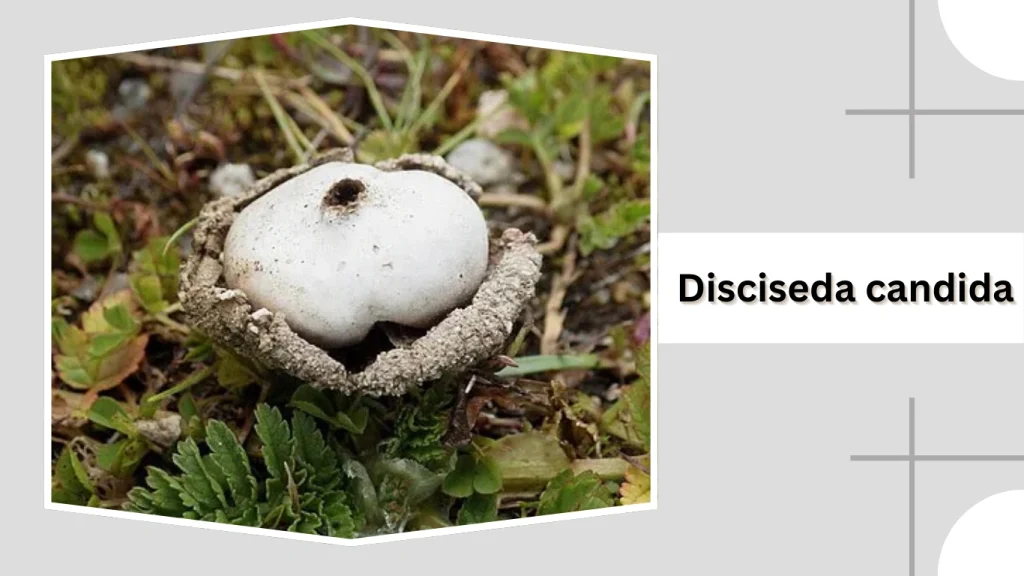
Disciseda candida, commonly known as the white desert puffball, is a small puffball species adapted to dry, arid environments. It is often partially buried in sandy soil, with only the upper portion visible above ground. Its pale coloration helps it blend into desert landscapes.
Identification
- Small, typically 2–6 cm in diameter
- Round to slightly flattened shape
- Outer surface white to pale cream
- Often partially buried with a flattened base
- Interior flesh white when young, becoming brown and powdery at maturity
Habitat and Distribution
This species grows in deserts, semi-arid regions, sandy plains, and dry grasslands. It prefers loose, well-drained soil and open sunlight. Disciseda candida is found in parts of North America, Europe, and other arid regions, fruiting after rainfall events, usually in summer and autumn.
Edibility
Disciseda candida is considered edible only when young and the interior flesh is completely white. However, due to its small size and desert habitat, it is rarely collected for food. Any specimen showing discoloration or softening inside should be avoided.
Notable Characteristics
A key characteristic of this species is its tendency to open irregularly at maturity rather than forming a single defined pore. This allows spores to disperse when wind or rain disturbs the fruiting body.
17. Disciseda bovista (Desert Puffball)
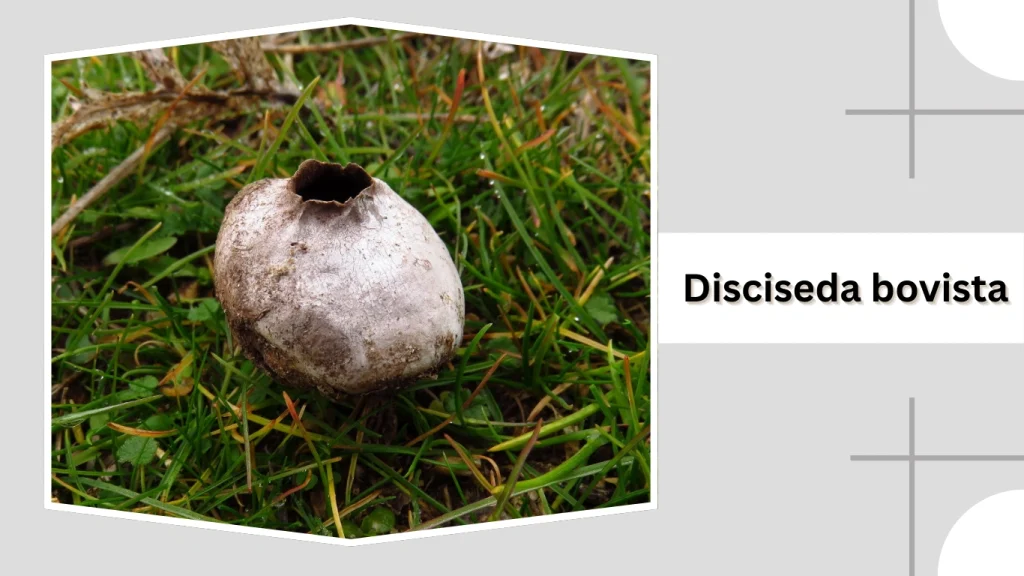
Disciseda bovista is a puffball species well adapted to dry, sandy, and desert-like environments. It is closely related to other Disciseda species and is often overlooked due to its tendency to remain partially buried in soil. This adaptation helps protect it from extreme temperatures and moisture loss.
Identification
- Small to medium size, typically 3–8 cm wide
- Round to flattened shape, often appearing sunken into the ground
- Outer surface pale tan to off-white
- Thick outer wall that cracks irregularly at maturity
- Interior flesh white when young, turning brown and dusty
Habitat and Distribution
This species is most commonly found in deserts, arid grasslands, sandy plains, and dry scrublands. It favors loose, sandy soils and open, exposed conditions. Disciseda bovista occurs in parts of North America, Europe, and other arid regions, usually fruiting after periods of rainfall.
Edibility
Disciseda bovista is edible only when very young and the interior flesh is completely white. Due to its habitat and modest size, it is not widely used as a food mushroom. Once the interior darkens or becomes powdery, it should not be consumed.
Notable Characteristics
Unlike many puffballs that release spores through a single pore, Disciseda bovista often splits open irregularly, allowing spores to disperse when disturbed by wind or rain.
FAQs
What is the easiest way to identify a puffball mushroom?
The easiest method is to cut the mushroom in half vertically. A true puffball will be completely solid and white inside when young, with no visible gills, cap, or stem structure. Any sign of internal shapes or discoloration means it is not a safe puffball.
Are all puffball mushrooms edible?
No, not all puffballs are edible. Only young puffballs with pure white interior flesh are considered edible. Once the interior turns yellow, brown, or powdery, the mushroom should not be eaten.
Where do puffball mushrooms commonly grow?
Puffball mushrooms grow in a wide range of habitats, including forests, grasslands, lawns, meadows, deserts, and even decaying wood. Different species prefer different environments, from moist woodland soil to dry sandy terrain.
When is the best time to find puffball mushrooms?
Most puffball mushrooms fruit from late summer through autumn, especially after periods of rainfall. Some desert species appear shortly after rain events in otherwise dry seasons.
Can puffball mushrooms be confused with poisonous mushrooms?
Yes, young puffballs can be confused with immature toxic mushrooms such as certain Amanita species. Cutting the mushroom open and checking for any developing cap or stem structures inside is essential for safe identification.