

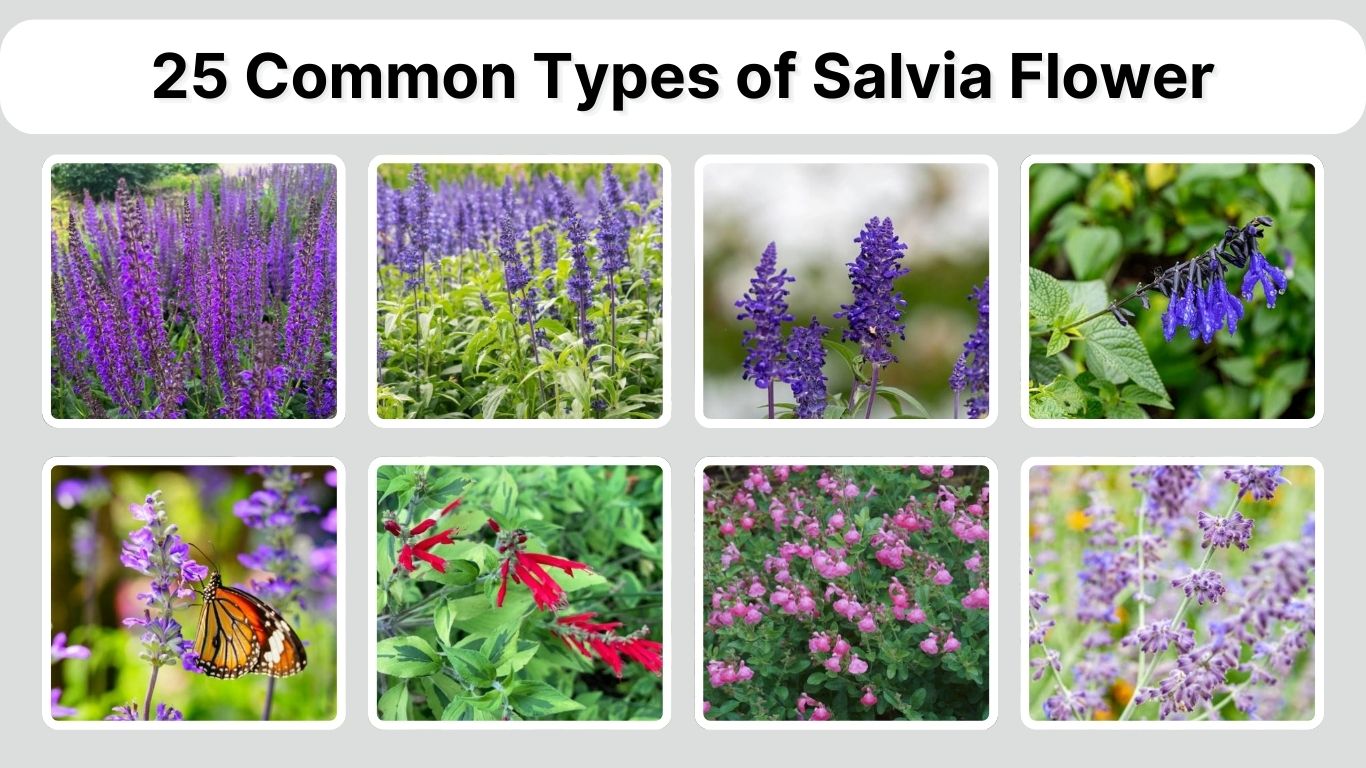
Salvia flowers are a diverse and vibrant group of plants belonging to the mint family, known for their long blooming season, rich colors, and strong appeal to pollinators. With hundreds of species found around the world, salvias range from compact garden plants to tall, shrubby varieties. They produce tubular blossoms in shades of blue, purple, red, pink, and white, making them popular in ornamental landscapes, wildlife gardens, and herb collections.
1. Salvia officinalis (Common Sage)

Salvia officinalis, commonly known as common sage, is one of the most widely recognized and cultivated salvia species in the world. It is valued both as an ornamental flowering plant and as a traditional culinary and medicinal herb. This evergreen perennial produces soft, gray-green aromatic leaves and attractive spikes of purple to bluish flowers that bloom mainly in late spring to early summer, making it popular in gardens, herb beds, and pollinator-friendly landscapes.
Identification
- Scientific name: Salvia officinalis
- Common names: Common sage, garden sage, culinary sage
- Plant type: Evergreen perennial herb
- Flower color: Purple to bluish-violet
- Leaf color and texture: Gray-green, soft, and aromatic
- Mature height: About 12–30 inches
- Blooming season: Late spring to early summer
- Growth habit: Bushy, compact, and woody at the base
Habitat
Salvia officinalis is native to the Mediterranean region, where it naturally grows on sunny, rocky hillsides with well-drained soil. In cultivation, it adapts well to gardens across temperate regions and prefers full sun, good air circulation, and light, well-drained soil. It is drought-tolerant once established and performs well in herb gardens, borders, and container plantings.
Flower Characteristics
The flowers of common sage grow in upright spikes above the foliage and are usually purple, lavender, or bluish in color. Each small, tubular bloom is rich in nectar, making it attractive to bees, butterflies, and other pollinators. Flowering typically begins in late spring and can extend into early summer, adding soft color and fragrance to the garden.
Uses and Importance
Salvia officinalis is best known for its culinary value, where its leaves are widely used to flavor meats, sauces, and stuffing. Beyond cooking, it has a long history in traditional medicine and herbal remedies. In ornamental gardening, common sage is appreciated for its attractive foliage, delicate flowers, and ability to support pollinator populations.
2. Salvia splendens (Scarlet Sage)
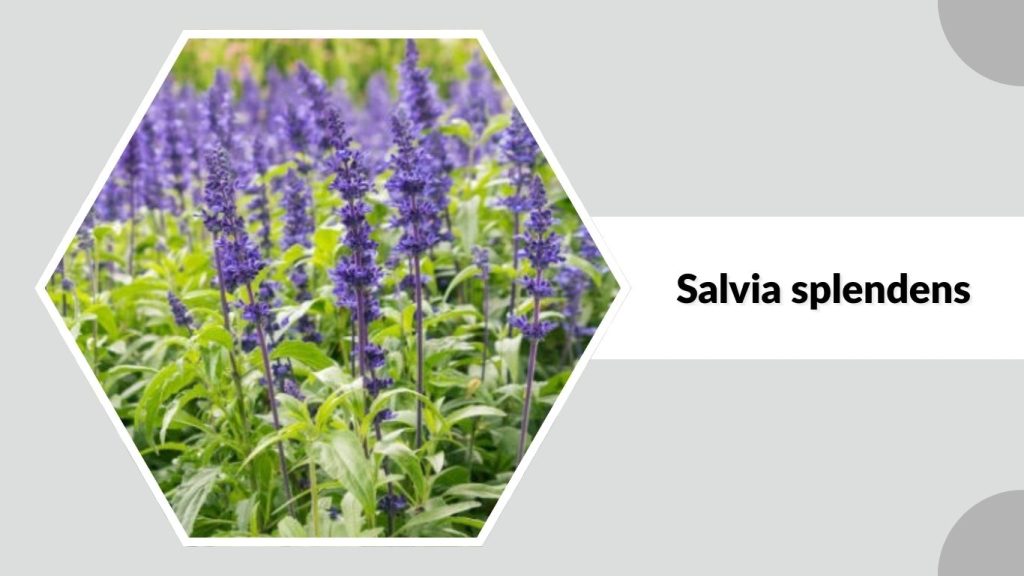
Salvia splendens, commonly known as scarlet sage, is a popular ornamental salvia species widely grown for its vivid, showy flower spikes. Unlike many perennial salvias, this species is often cultivated as an annual in gardens, especially in cooler climates. It produces dense clusters of bright red tubular flowers that bloom continuously from late spring until the first frost, making it a favorite choice for flower beds, borders, and container displays.
Identification
- Scientific name: Salvia splendens
- Common names: Scarlet sage, tropical sage
- Plant type: Tender perennial, often grown as an annual
- Flower color: Bright red (also available in purple, pink, and white cultivars)
- Leaf color and texture: Dark green, soft, and slightly glossy
- Mature height: About 12–24 inches
- Blooming season: Late spring through fall
- Growth habit: Upright, compact, and bushy
Habitat
Salvia splendens is native to Brazil, where it grows in warm, humid regions with plenty of sunlight. In gardens, it thrives in full sun to partial shade and prefers fertile, well-drained soil with consistent moisture. It performs best in warm temperatures and is widely used in mass plantings, edging, and decorative containers.
Flower Characteristics
The flowers are long, tubular, and arranged in dense, upright spikes that stand out vividly against the dark green foliage. Their intense scarlet-red color is especially attractive to hummingbirds and pollinating insects. With regular deadheading, the plant continues to produce blooms throughout the growing season.
Uses and Importance
Scarlet sage is primarily grown for ornamental purposes, adding strong color contrast to landscape designs. It is commonly used in public gardens, home flower beds, and patio containers. Its long blooming period and pollinator-friendly flowers make it a valuable plant for creating vibrant and wildlife-supporting garden spaces.
3. Salvia nemorosa (Woodland Sage)
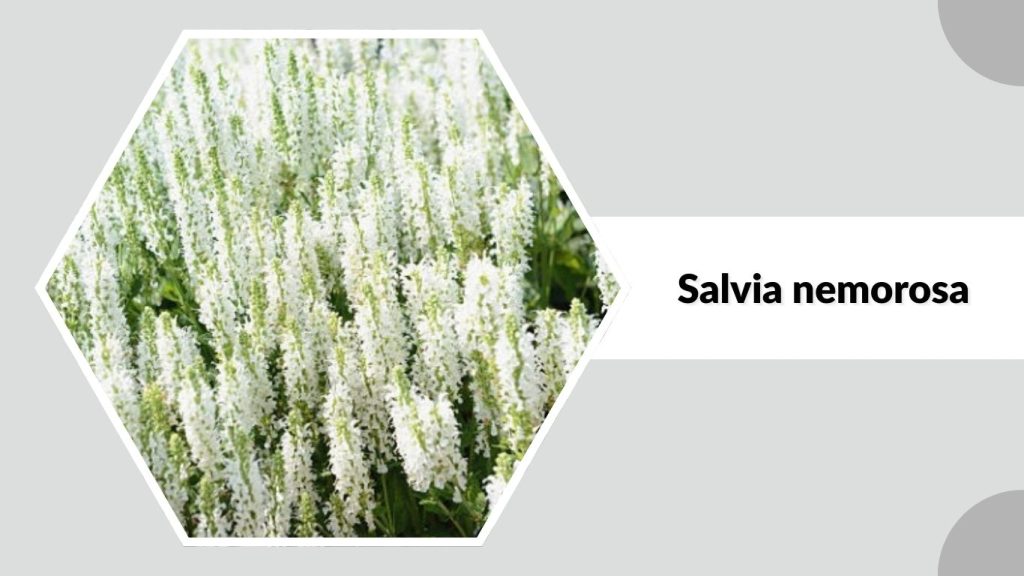
Salvia nemorosa, commonly called woodland sage, is a hardy perennial salvia prized for its dense spikes of violet-blue flowers and long blooming season. It is one of the most popular salvias in ornamental gardening due to its compact growth, drought tolerance, and strong attraction to bees and butterflies. Blooming from late spring into summer, and often reblooming after trimming, it is widely used in borders, cottage gardens, and pollinator landscapes.
Identification
- Scientific name: Salvia nemorosa
- Common names: Woodland sage, Balkan clary
- Plant type: Hardy perennial
- Flower color: Violet, blue, or purple
- Leaf color and texture: Deep green, narrow, lightly textured
- Mature height: About 12–24 inches
- Blooming season: Late spring to mid-summer (often reblooms)
- Growth habit: Upright, clump-forming
Habitat
Salvia nemorosa is native to central and eastern Europe and western Asia, where it naturally grows in open woodlands, meadows, and dry slopes. In cultivation, it thrives in full sun and well-drained soil. It tolerates poor soils and dry conditions once established, making it a reliable choice for low-maintenance gardens.
Flower Characteristics
The flowers are small, tubular, and packed closely along upright spikes that rise above the foliage. Colors range from deep violet to bluish-purple, often with contrasting darker calyces. These blooms are rich in nectar and are highly attractive to bees, butterflies, and other beneficial pollinators.
Uses and Importance
Woodland sage is widely used as a border plant, edging flower beds, and filling mixed perennial gardens. Its long-lasting blooms, neat form, and strong pollinator value make it especially important in eco-friendly landscapes. It is also deer-resistant and often selected for drought-tolerant garden designs.
4. Salvia farinacea (Mealycup Sage)
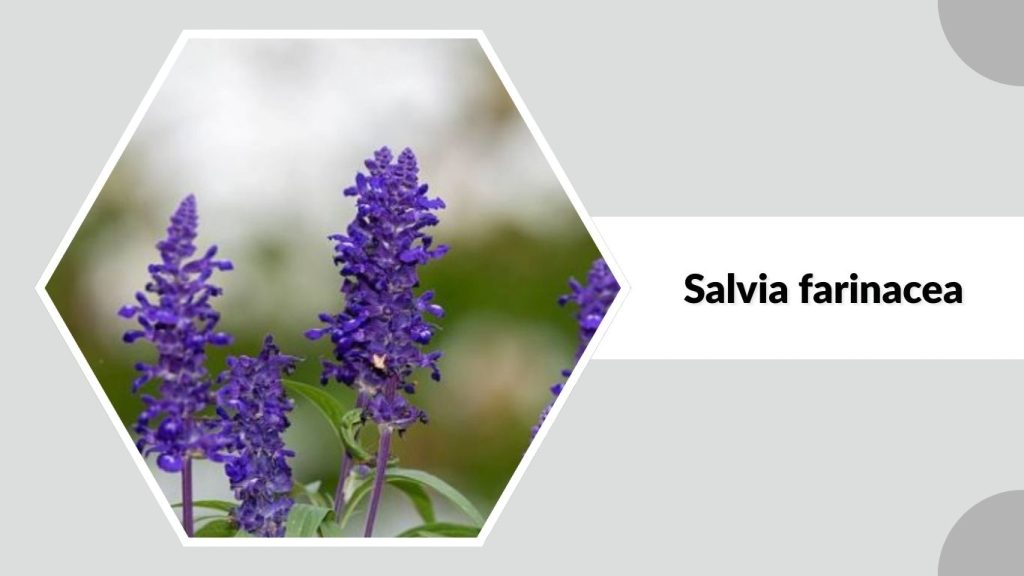
Salvia farinacea, commonly known as mealycup sage, is a graceful flowering salvia admired for its tall, slender spikes of blue to violet blooms. It is widely grown as an annual or tender perennial and is especially popular in warm-climate gardens. The plant blooms over a long season, from late spring through fall, adding vertical interest and cool-toned color to flower beds, borders, and container gardens.
Identification
- Scientific name: Salvia farinacea
- Common names: Mealycup sage, blue sage
- Plant type: Tender perennial, often grown as an annual
- Flower color: Blue, violet, sometimes white
- Leaf color and texture: Medium green, soft, lightly fuzzy
- Mature height: About 18–36 inches
- Blooming season: Late spring to fall
- Growth habit: Upright, airy, clump-forming
Habitat
Salvia farinacea is native to Texas and Mexico, where it naturally grows in open fields and sunny grasslands. In gardens, it prefers full sun and well-drained soil but tolerates heat and moderate drought very well. It is often used in mass plantings in warm regions and performs well in containers.
Flower Characteristics
The flowers are small and tubular, tightly arranged along tall spikes. Their most common color is a rich, clear blue, though cultivated varieties may also appear in deep purple or pure white. The stems and flower cups often have a silvery or powdery look, which gives rise to the name “mealycup.”
Uses and Importance
Mealycup sage is valued mainly for its ornamental beauty and long blooming period. It is excellent for attracting butterflies, bees, and hummingbirds. Because of its upright form and continuous flowering, it is often used to add height and rhythm to landscape designs.
5. Salvia guaranitica (Anise-scented Sage)
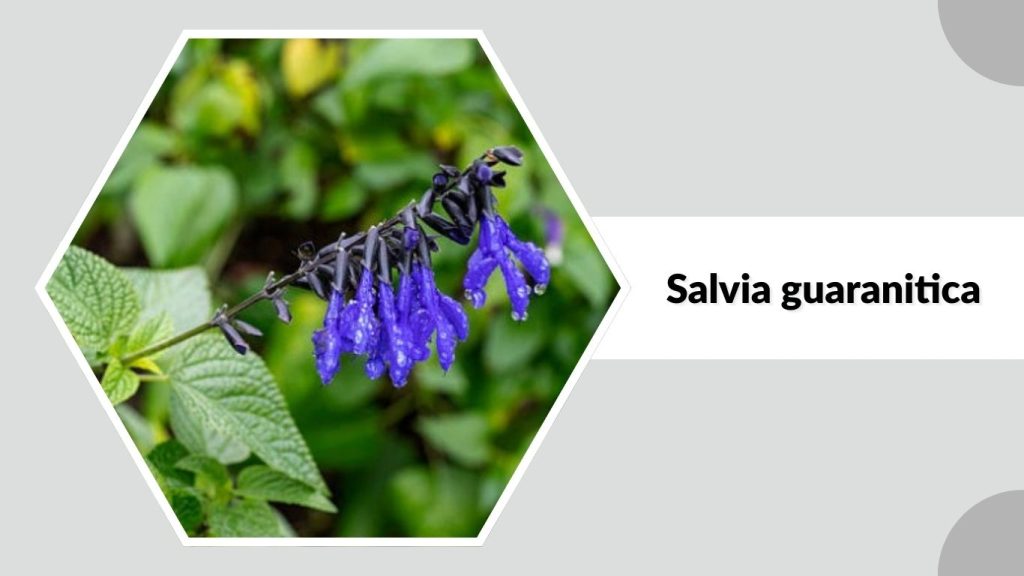
Salvia guaranitica, commonly known as anise-scented sage, is a striking ornamental salvia famous for its intense deep-blue flowers and aromatic foliage. This species is a fast-growing perennial in warm climates and is often grown as a seasonal plant in cooler regions. It produces tall, dramatic flower spikes from midsummer through fall, making it a favorite for adding bold color and height to garden borders.
Identification
- Scientific name: Salvia guaranitica
- Common names: Anise-scented sage, hummingbird sage
- Plant type: Perennial in warm climates, annual elsewhere
- Flower color: Deep cobalt blue with dark calyces
- Leaf color and texture: Bright green, soft, strongly aromatic
- Mature height: About 3–6 feet
- Blooming season: Midsummer to fall
- Growth habit: Tall, spreading, upright clumps
Habitat
Salvia guaranitica is native to South America, particularly Brazil, Paraguay, and Argentina. It naturally grows along forest edges and open woodlands. In cultivation, it thrives in full sun to light shade and prefers fertile, well-drained soil with regular moisture. It tolerates heat well and returns strongly each year in frost-free regions.
Flower Characteristics
The flowers are long, tubular, and a rich velvety blue, often paired with nearly black or deep purple flower cups. They are produced in loose, elongated spikes that rise well above the foliage. These nectar-rich blooms are especially attractive to hummingbirds, butterflies, and large bees.
Uses and Importance
Anise-scented sage is primarily used as a dramatic ornamental plant in landscape design. Its tall growth makes it excellent for the back of borders, wildlife gardens, and tropical-style plantings. The fragrant leaves and exceptional pollinator appeal further increase its garden value.
6. Salvia leucantha (Mexican Bush Sage)
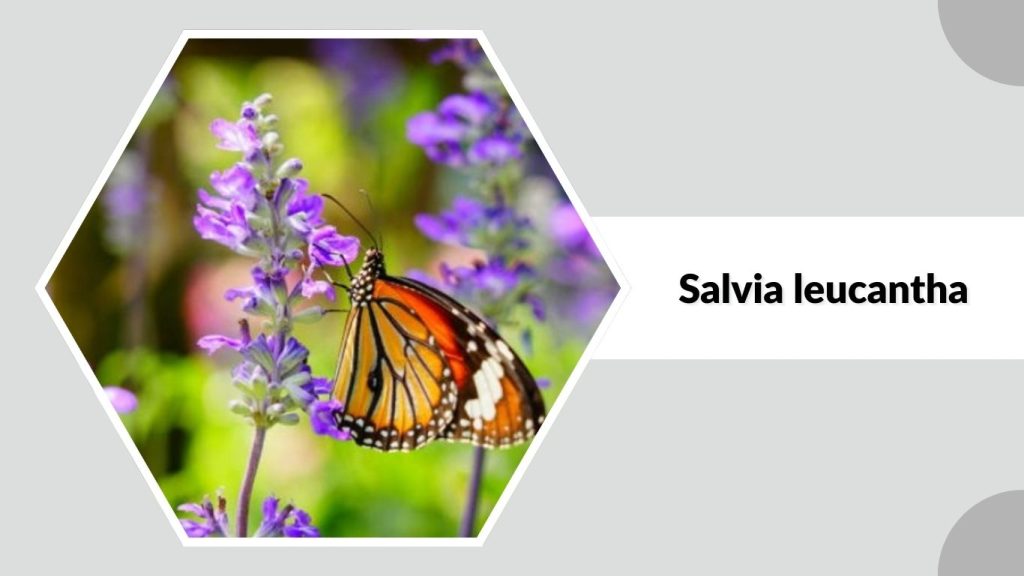
Salvia leucantha, commonly known as Mexican bush sage, is a highly ornamental salvia admired for its soft, velvety flower spikes and graceful, arching form. This species blooms from late summer through fall, when many other garden plants begin to fade. Its purple and white flower spikes and silvery-green foliage make it a standout choice for borders, pollinator gardens, and decorative landscapes.
Identification
- Scientific name: Salvia leucantha
- Common names: Mexican bush sage, velvet sage
- Plant type: Perennial in warm climates, annual in cooler regions
- Flower color: Purple with white accents
- Leaf color and texture: Gray-green, narrow, softly hairy
- Mature height: About 3–4 feet
- Blooming season: Late summer to fall
- Growth habit: Arching, bushy, spreading
Habitat
Salvia leucantha is native to Mexico and Central America, where it naturally grows in sunny, open areas. In gardens, it prefers full sun and well-drained soil and is highly tolerant of heat and moderate drought. It performs especially well in warm climates and can be grown as a seasonal ornamental in colder regions.
Flower Characteristics
The flowers are densely packed in long, fuzzy spikes covered with soft hairs, giving them a velvety appearance. The rich purple bracts contrast beautifully with the small white tubular flowers. These blooms are rich in nectar and are extremely attractive to butterflies, bees, and hummingbirds.
Uses and Importance
Mexican bush sage is widely used for late-season color, adding texture and softness to garden designs. It works well as a background plant, in wildlife gardens, and in large containers. Its long bloom time and pollinator value make it an important ornamental salvia.
7. Salvia elegans (Pineapple Sage)
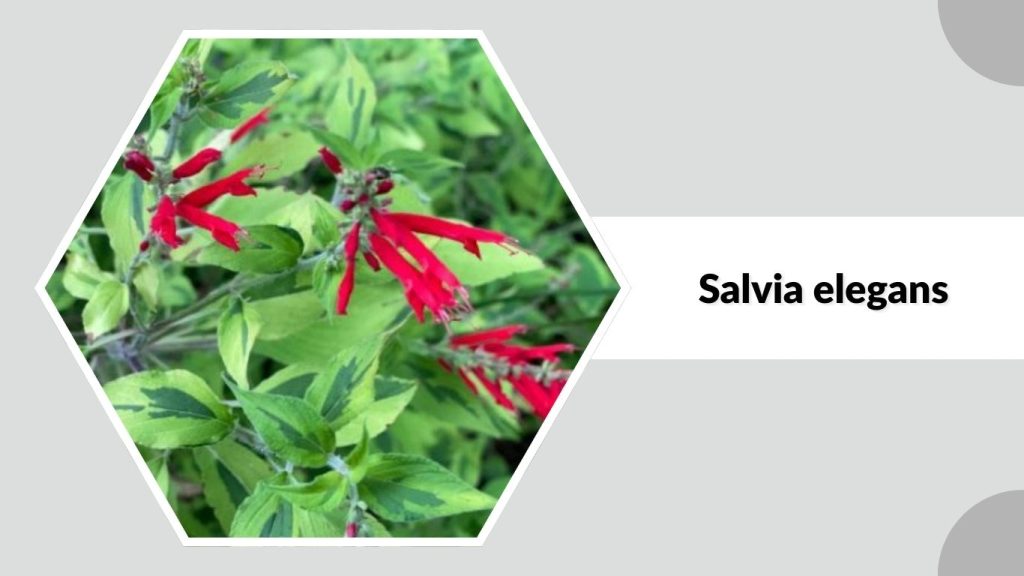
Salvia elegans, commonly known as pineapple sage, is a fragrant and decorative salvia species loved for its bright red flowers and strongly scented leaves. When the foliage is crushed, it releases a sweet pineapple-like aroma, which makes this plant especially popular in herb gardens and sensory landscapes. It blooms from late summer into fall, producing vivid flower spikes that attract hummingbirds and other pollinators.
Identification
- Scientific name: Salvia elegans
- Common names: Pineapple sage, tangerine sage
- Plant type: Tender perennial, often grown as an annual
- Flower color: Bright red
- Leaf color and texture: Light green, soft, strongly aromatic
- Mature height: About 3–5 feet
- Blooming season: Late summer to fall
- Growth habit: Upright, bushy, fast-growing
Habitat
Salvia elegans is native to Mexico and Guatemala, where it grows in warm, sunny regions. In cultivation, it thrives in full sun to partial shade and prefers fertile, well-drained soil with regular watering. It tolerates heat well but is sensitive to frost, so it is often grown as a seasonal plant in cooler climates.
Flower Characteristics
The flowers are tubular, vivid red, and arranged along upright spikes that rise above the foliage. Their bright color and nectar-rich structure make them especially attractive to hummingbirds. Flowering usually begins in late summer and can continue until the first frost.
Uses and Importance
Pineapple sage is valued both as an ornamental plant and as a culinary herb. Its fragrant leaves are sometimes used in teas, fruit dishes, and desserts. In gardens, it is prized for late-season color, pleasant aroma, and strong appeal to pollinators.
8. Salvia greggii (Autumn Sage)
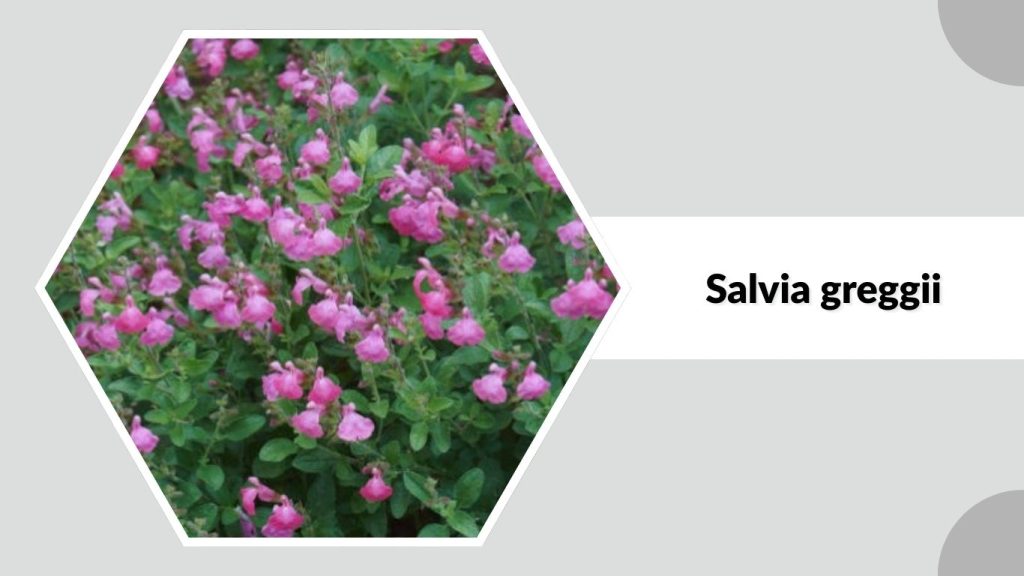
Salvia greggii, commonly known as autumn sage, is a compact, free-flowering salvia species famous for its long blooming season and colorful display. It produces masses of small tubular flowers from spring through fall, often blooming almost continuously in warm climates. With its shrubby form and excellent heat tolerance, it is a popular choice for borders, rock gardens, and pollinator-friendly landscapes.
Identification
- Scientific name: Salvia greggii
- Common names: Autumn sage, cherry sage
- Plant type: Woody perennial shrub
- Flower color: Red, pink, coral, purple, or white
- Leaf color and texture: Small, green, aromatic
- Mature height: About 2–3 feet
- Blooming season: Spring to fall
- Growth habit: Compact, bushy, rounded
Habitat
Salvia greggii is native to Texas and northern Mexico, where it naturally grows on dry hillsides and open, rocky areas. In cultivation, it thrives in full sun and well-drained soil. It is highly drought-tolerant once established and performs well in hot, dry climates.
Flower Characteristics
The flowers are small, tubular, and produced in great numbers along the stems. Colors vary widely among cultivars, ranging from bright red to soft pink, purple, and creamy white. These nectar-rich blooms are especially attractive to bees, butterflies, and hummingbirds.
Uses and Importance
Autumn sage is widely used as a low hedge, border plant, and accent shrub in ornamental gardens. Its exceptionally long bloom period, colorful flowers, and minimal care needs make it valuable for sustainable and wildlife-friendly landscaping.
9. Salvia microphylla (Baby Sage)
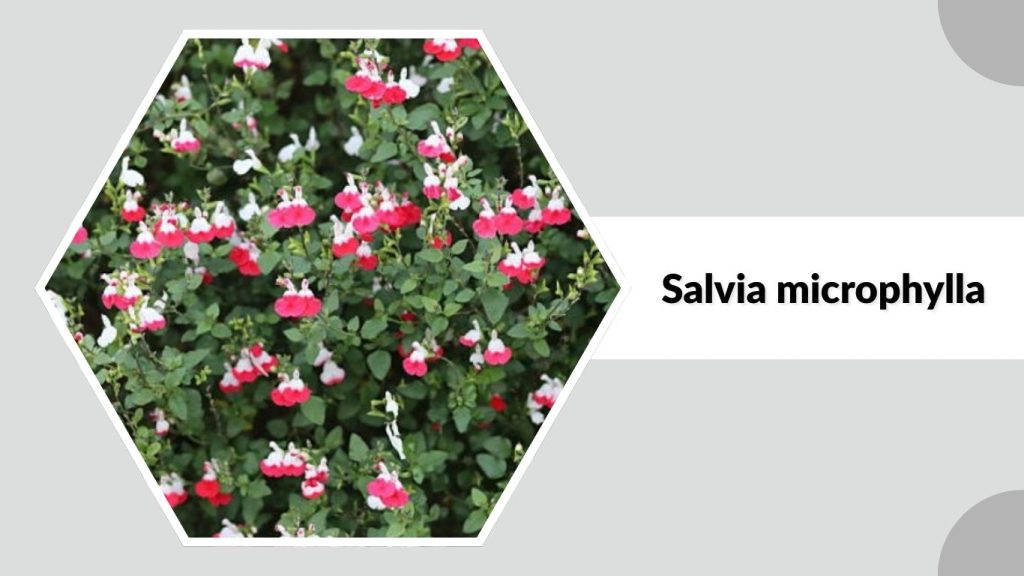
Salvia microphylla, commonly known as baby sage, is a small-leaved, shrubby salvia known for its delicate appearance and continuous flowering habit. Closely related to Salvia greggii, this species produces masses of colorful, tubular blooms over a long season, often from spring well into autumn. Its airy form, fragrant foliage, and rich flower colors make it a favorite in cottage gardens and pollinator landscapes.
Identification
- Scientific name: Salvia microphylla
- Common names: Baby sage, blackcurrant sage
- Plant type: Woody perennial shrub
- Flower color: Red, pink, magenta, purple, or bicolored
- Leaf color and texture: Small, green, aromatic
- Mature height: About 2–4 feet
- Blooming season: Spring to fall
- Growth habit: Bushy, spreading, lightly arching
Habitat
Salvia microphylla is native to Mexico and parts of the southwestern United States, where it grows in open woodlands and rocky mountain slopes. In gardens, it prefers full sun to light shade and well-drained soil. It tolerates heat and moderate drought and is well suited to warm, dry garden climates.
Flower Characteristics
The flowers are slender, tubular, and borne along thin stems above the foliage. They are often brightly colored and sometimes have darker throats or contrasting tones. These blooms are rich in nectar and are highly attractive to bees, butterflies, and hummingbirds.
Uses and Importance
Baby sage is commonly used as a flowering shrub in borders, mixed perennial beds, and wildlife gardens. Its long flowering season and graceful habit make it ideal for adding soft texture and continuous color. It is also valued for its fragrant leaves and ease of care.
10. Salvia divinorum
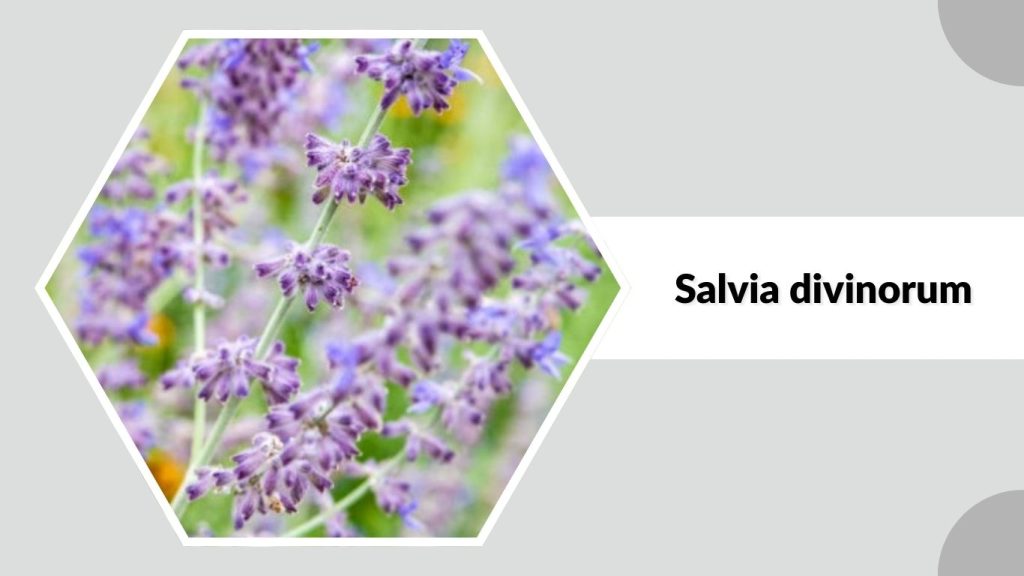
Salvia divinorum is a unique and lesser-known salvia species that is notable for both its ornamental qualities and its historical cultural significance. Unlike many brightly flowering salvias, this plant is grown more for its large, soft green leaves and tall, airy flower stalks. It produces delicate, pale flowers in late summer to fall and prefers shaded, moist environments rather than full sun.
Identification
- Scientific name: Salvia divinorum
- Common names: Diviner’s sage, ska María Pastora
- Plant type: Tender perennial herb
- Flower color: Pale blue to white
- Leaf color and texture: Large, soft, bright green
- Mature height: About 3–6 feet
- Blooming season: Late summer to fall
- Growth habit: Upright, spreading, fragile stems
Habitat
Salvia divinorum is native to the cloud forests of Oaxaca, Mexico, where it grows in humid, shaded mountain environments. In cultivation, it prefers partial to full shade, rich organic soil, and consistently moist conditions. It does not tolerate drought or cold well and is usually grown in protected garden areas or containers.
Flower Characteristics
The flowers are small and delicate, typically pale blue or white, and arranged along tall, slender spikes. Compared to other salvias, the blooms are subtle and less showy, with more visual emphasis placed on the plant’s lush foliage. Flowering occurs mainly in late summer and autumn.
Uses and Importance
Salvia divinorum has long been used in traditional cultural practices in parts of Mexico. In ornamental gardening, it is valued as a foliage plant for shaded gardens and specialty collections. Its unusual growth habits and soft, lush appearance make it distinct from most sun-loving salvia species.
11. Salvia sclarea (Clary Sage)
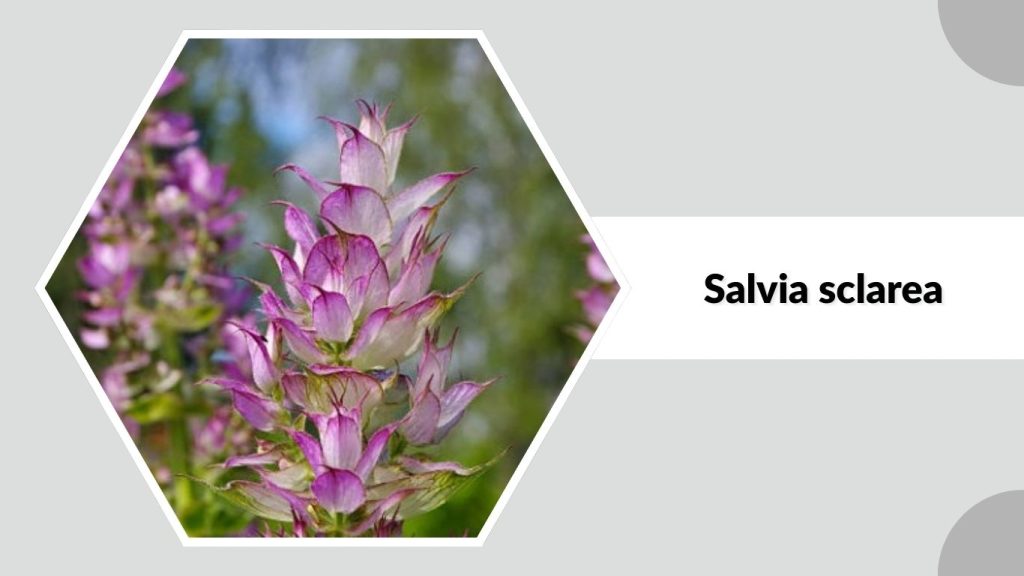
Salvia sclarea, commonly known as clary sage, is a striking biennial or short-lived perennial salvia admired for its large, aromatic leaves and showy flower bracts. Unlike many salvias that are grown mainly for their flowers, clary sage is equally valued for its decorative foliage. It produces tall flowering stems topped with pastel pink, lavender, or white blooms that create a dramatic display from late spring into summer.
Identification
- Scientific name: Salvia sclarea
- Common names: Clary sage, clear eye
- Plant type: Biennial or short-lived perennial
- Flower color: Pale pink, lavender, or white
- Leaf color and texture: Large, gray-green, wrinkled, strongly aromatic
- Mature height: About 2–4 feet
- Blooming season: Late spring to early summer
- Growth habit: Upright, clump-forming
Habitat
Salvia sclarea is native to southern Europe and western Asia, where it grows in open fields, rocky slopes, and sunny meadows. In gardens, it prefers full sun and well-drained soil. It tolerates dry conditions once established and performs well in herb gardens, cottage gardens, and naturalistic plantings.
Flower Characteristics
The flowers are borne in tall, branching clusters surrounded by large, colorful bracts that are often more visually striking than the blooms themselves. Colors range from soft pink to lilac and creamy white. The blooms are lightly fragrant and attract bees and other pollinating insects.
Uses and Importance
Clary sage is widely known for its use in herbal traditions and essential oil production. In ornamental gardens, it is valued for its dramatic height, textured leaves, and pastel flower spikes. It is often used as a focal plant in borders and herb gardens.
12. Salvia coccinea (Tropical Sage)
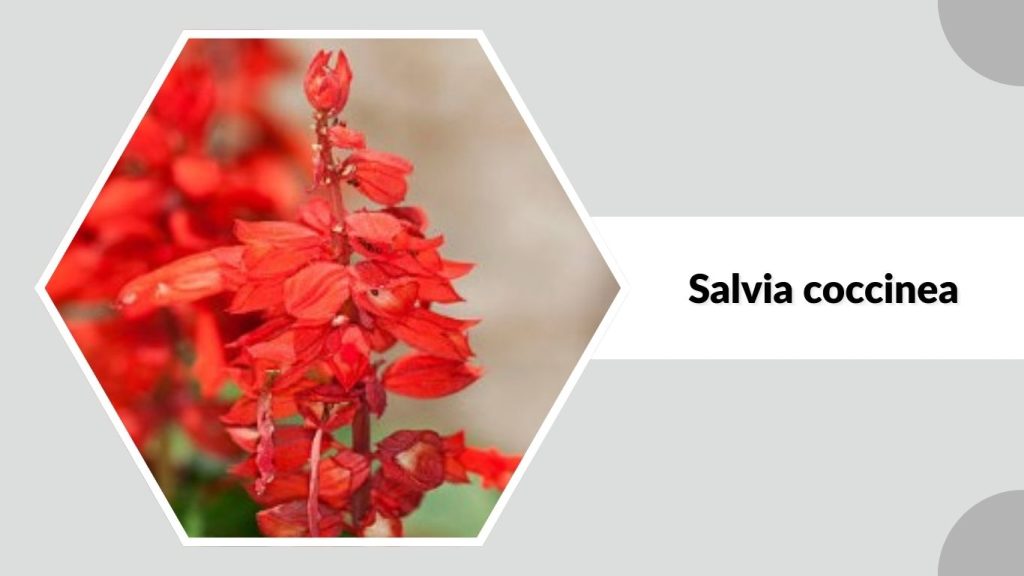
Salvia coccinea, commonly known as tropical sage, is a delicate, free-flowering salvia species admired for its airy spikes of bright red blossoms. It is a fast-growing annual or short-lived perennial that blooms generously from late spring through fall. Its light, graceful structure and vivid flower color make it a popular choice for cottage gardens, wildflower plantings, and pollinator-friendly landscapes.
Identification
- Scientific name: Salvia coccinea
- Common names: Tropical sage, scarlet sage
- Plant type: Annual or short-lived perennial
- Flower color: Bright red (also pink and white forms)
- Leaf color and texture: Light green, soft, lightly hairy
- Mature height: About 1–3 feet
- Blooming season: Late spring to fall
- Growth habit: Upright, open, branching
Habitat
Salvia coccinea is native to the southern United States, Mexico, and Central America, where it naturally grows in open fields, woodland edges, and disturbed sites. In cultivation, it thrives in full sun to partial shade and prefers moderately moist, well-drained soil. It self-seeds easily in suitable climates.
Flower Characteristics
The flowers are small, tubular, and spaced along slender spikes that rise above the foliage. Their bright red color makes them especially attractive to hummingbirds. With regular deadheading, the plant continues to flower steadily throughout the growing season.
Uses and Importance
Tropical sage is widely used in ornamental gardens for its long blooming period and natural, meadow-like appearance. It is especially valuable in wildlife gardens due to its strong attraction to hummingbirds, bees, and butterflies. Its easy growth and reseeding habit make it popular for informal plantings.
13. Salvia uliginosa (Bog Sage)
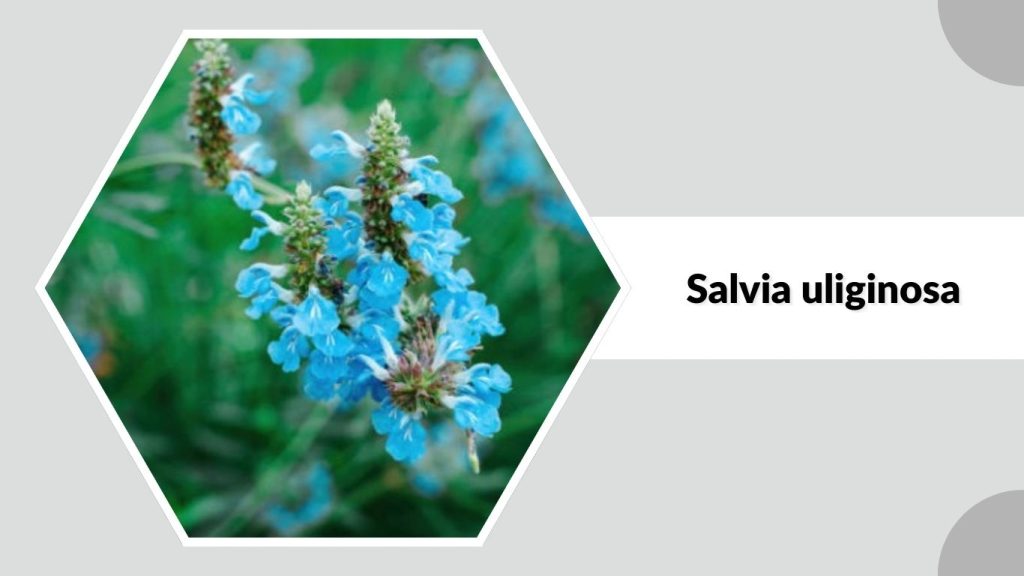
Salvia uliginosa, commonly known as bog sage, is a tall, moisture-loving salvia species appreciated for its clear sky-blue flowers and elegant growth habit. Unlike many salvias that prefer dry soil, this species thrives in consistently moist conditions. It blooms from midsummer into fall, producing airy spikes of blue blossoms that add height and softness to garden landscapes.
Identification
- Scientific name: Salvia uliginosa
- Common names: Bog sage, blue anise sage
- Plant type: Perennial
- Flower color: Sky blue
- Leaf color and texture: Bright green, lightly aromatic
- Mature height: About 4–6 feet
- Blooming season: Midsummer to fall
- Growth habit: Tall, upright, spreading
Habitat
Salvia uliginosa is native to South America, particularly Brazil, Uruguay, and Argentina, where it grows near streams, wetlands, and damp meadows. In gardens, it prefers full sun to light shade and consistently moist, well-drained soil. It is ideal for rain gardens, pond edges, and low-lying landscape areas.
Flower Characteristics
The flowers are tubular and soft blue, arranged in loose, branching spikes above the foliage. Their light color and open structure give the plant an airy, floating appearance. The nectar-rich blooms attract bees, butterflies, and other pollinators.
Uses and Importance
Bog sage is commonly used in water-wise landscape designs where soil remains moist. It is valued for late-season color, vertical interest, and pollinator support. Its tall form makes it suitable for the back of borders and naturalistic plantings.
14. Salvia patens (Gentian Sage)
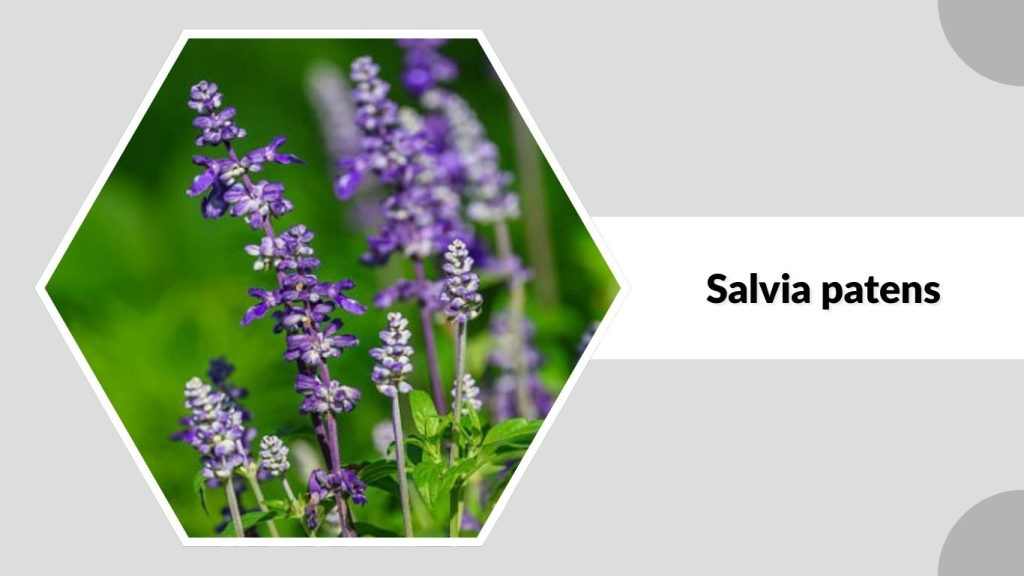
Salvia patens, commonly known as gentian sage, is a striking ornamental salvia species best known for its large, intensely blue flowers. Its bold blooms and compact, tidy form make it highly valued in flower borders and decorative garden designs. Blooming mainly from summer into early autumn, this species brings vivid color and visual impact to mixed plantings.
Identification
- Scientific name: Salvia patens
- Common names: Gentian sage
- Plant type: Perennial (often grown as annual in cooler regions)
- Flower color: Deep gentian blue
- Leaf color and texture: Medium green, soft, slightly heart-shaped
- Mature height: About 1.5–3 feet
- Blooming season: Summer to early fall
- Growth habit: Upright, clump-forming
Habitat
Salvia patens is native to the highlands of Mexico, where it grows in open grasslands and forest clearings. In gardens, it prefers full sun to partial shade and fertile, well-drained soil with moderate moisture. It benefits from warm conditions and protection from strong winds.
Flower Characteristics
The flowers are large, tubular, and intensely blue, among the bluest of all salvia species. They are borne singly or in small clusters along upright stems. Their vivid color and nectar-rich structure make them very attractive to bees and hummingbirds.
Uses and Importance
Gentian sage is mainly used as an ornamental accent plant due to its bold flower color. It is ideal for borders, containers, and mixed perennial beds. Its brilliant blue blooms provide strong contrast and visual interest in garden landscapes.
15. Salvia apiana (White Sage)
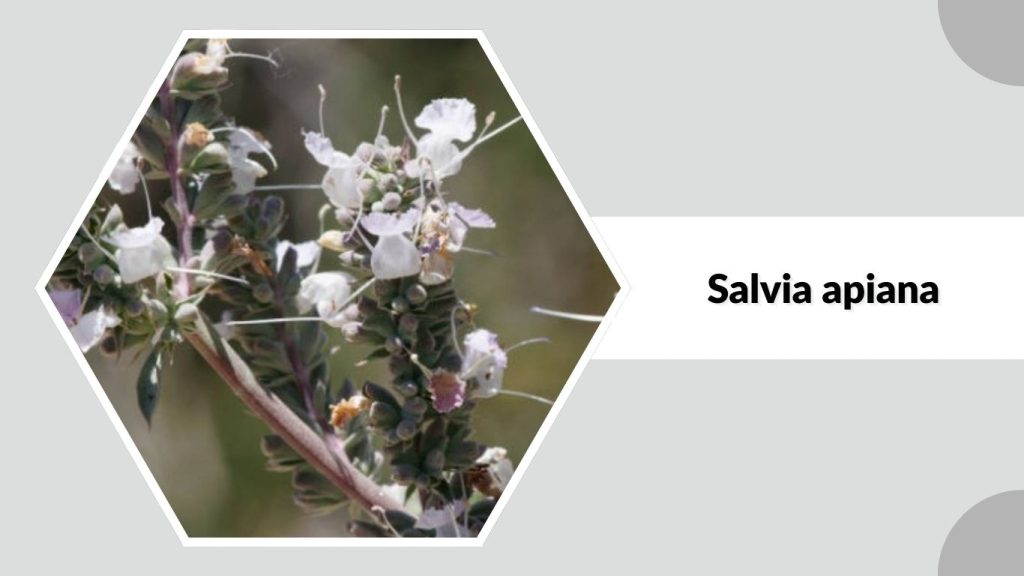
Salvia apiana, commonly known as white sage, is a distinctive salvia species admired for its silvery-white foliage and tall, elegant flower stalks. Unlike many salvias grown mainly for colorful blooms, this plant is especially valued for its aromatic leaves and striking leaf color. It produces soft white to pale lavender flowers in late spring and early summer, creating a gentle and graceful garden display.
Identification
- Scientific name: Salvia apiana
- Common names: White sage, sacred sage
- Plant type: Evergreen perennial shrub
- Flower color: White to pale lavender
- Leaf color and texture: Silvery-white, thick, strongly aromatic
- Mature height: About 3–5 feet
- Blooming season: Late spring to early summer
- Growth habit: Upright, open, woody
Habitat
Salvia apiana is native to southern California and northern Mexico, where it grows on dry slopes, coastal sage scrub, and open chaparral habitats. In cultivation, it prefers full sun and very well-drained soil. It is highly drought-tolerant once established and does not tolerate heavy, wet soils.
Flower Characteristics
The flowers are small, tubular, and borne along tall, branching stalks that rise well above the foliage. Their pale coloration contrasts softly with the silvery leaves. The blooms are attractive to bees and other pollinating insects.
Uses and Importance
White sage is widely known for its aromatic foliage and traditional cultural uses. In ornamental gardens, it is valued for drought-tolerant landscaping, native plant gardens, and sensory plantings. Its unique leaf color also makes it a strong visual accent plant.
16. Salvia verticillata (Whorled Sage)
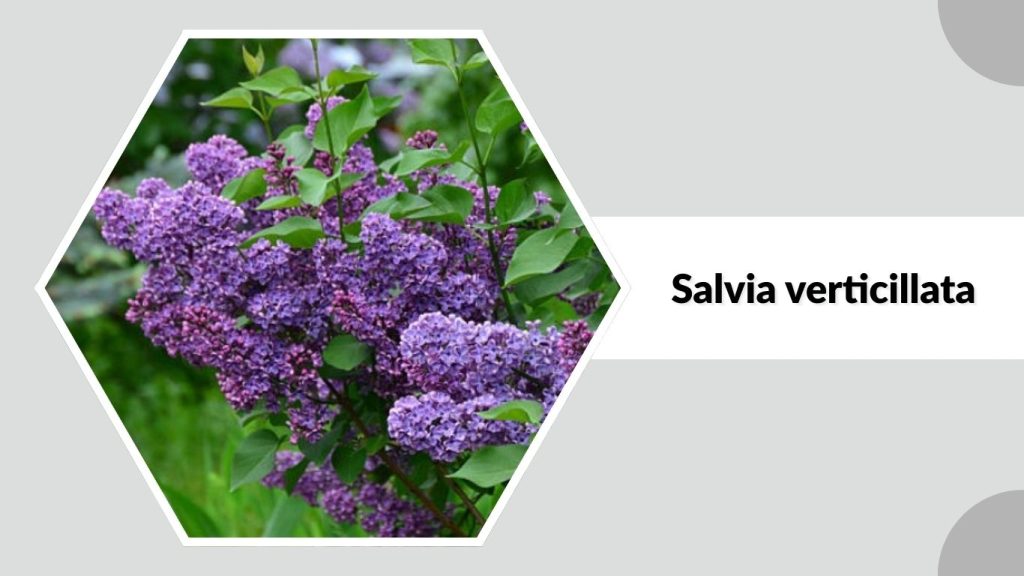
Salvia verticillata, commonly known as whorled sage, is a hardy perennial salvia appreciated for its dense, rounded flower clusters and long-lasting blooms. It produces rich purple to violet flowers arranged in distinctive whorls along upright stems. Blooming from early summer into early autumn, this species is well suited to perennial borders, meadow gardens, and pollinator-friendly landscapes.
Identification
- Scientific name: Salvia verticillata
- Common names: Whorled sage, lilac sage
- Plant type: Hardy perennial
- Flower color: Purple to violet
- Leaf color and texture: Medium green, slightly hairy, heart-shaped
- Mature height: About 18–30 inches
- Blooming season: Early summer to early fall
- Growth habit: Upright, clump-forming
Habitat
Salvia verticillata is native to Europe and western Asia, where it grows in open meadows, grasslands, and woodland edges. In gardens, it prefers full sun to light shade and well-drained soil. It is tolerant of a range of soils and is relatively drought-resistant once established.
Flower Characteristics
The flowers are small, tubular, and densely arranged in circular whorls around the stems, giving the plant a layered, textured appearance. Their rich purple color attracts bees, butterflies, and other beneficial insects throughout the blooming season.
Uses and Importance
Whorled sage is commonly used in perennial borders and naturalistic plantings. Its extended bloom period and compact form make it valuable for continuous color. It is also prized for its ability to support pollinators and adapt to varied garden conditions.
17. Salvia pratensis (Meadow Sage)
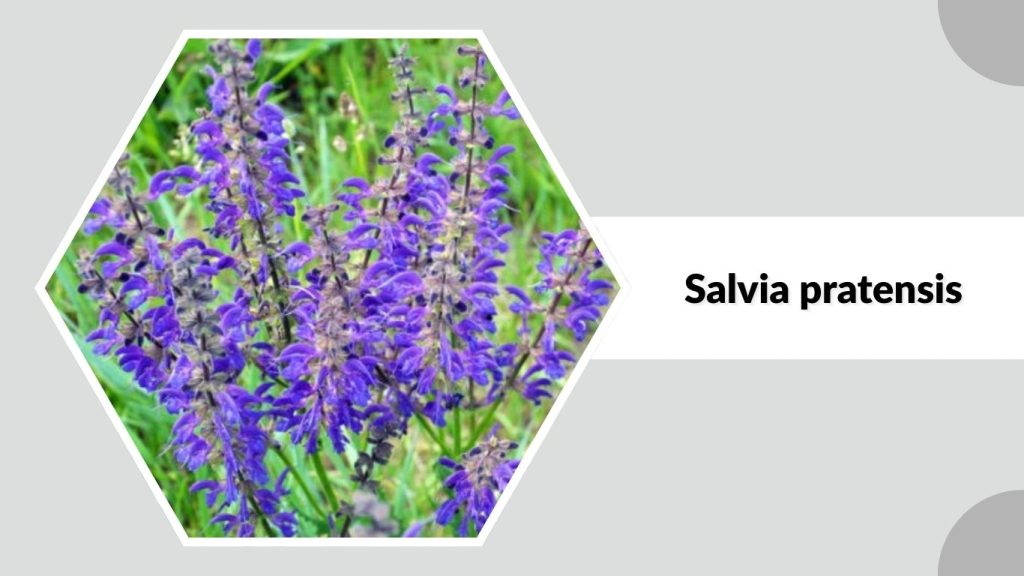
Salvia pratensis, commonly known as meadow sage, is a classic perennial salvia admired for its tall, elegant spikes of violet-blue flowers and natural meadow-like appearance. Blooming mainly from late spring through early summer, it brings early-season color to borders and wildflower gardens. Its upright form and nectar-rich blooms make it both visually appealing and ecologically valuable.
Identification
- Scientific name: Salvia pratensis
- Common names: Meadow sage, meadow clary
- Plant type: Hardy perennial
- Flower color: Violet-blue to deep purple
- Leaf color and texture: Dark green, slightly wrinkled, softly hairy
- Mature height: About 18–36 inches
- Blooming season: Late spring to early summer
- Growth habit: Upright, clump-forming
Habitat
Salvia pratensis is native to Europe and western Asia, where it grows naturally in open meadows, grasslands, and sunny slopes. In gardens, it prefers full sun and well-drained soil. It is tolerant of poor soils and moderate drought once established, making it suitable for low-maintenance landscapes.
Flower Characteristics
The flowers are tubular and borne in spaced whorls along tall stems. Their rich blue and purple tones stand out strongly against the green foliage. These blooms are highly attractive to bees, butterflies, and other pollinating insects.
Uses and Importance
Meadow sage is widely used in wildflower meadows, cottage gardens, and perennial borders. Its early bloom time, graceful habit, and pollinator support make it an important species for biodiversity-friendly garden designs.
18. Salvia hispanica (Chia Sage)
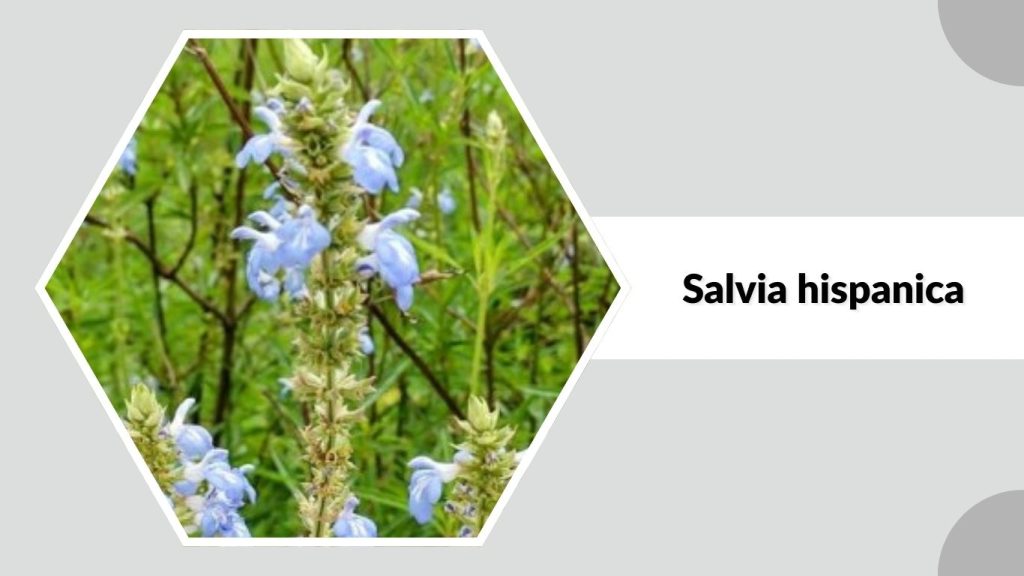
Salvia hispanica, commonly known as chia sage, is a fast-growing annual salvia species best known for its nutritious seeds rather than its ornamental value. However, it also produces attractive spikes of small blue to purple flowers that add subtle beauty to gardens. Blooming from midsummer into early fall, this plant combines decorative appeal with practical importance.
Identification
- Scientific name: Salvia hispanica
- Common names: Chia, chia sage
- Plant type: Annual herb
- Flower color: Blue to purple
- Leaf color and texture: Bright green, soft, slightly serrated
- Mature height: About 3–4 feet
- Blooming season: Midsummer to early fall
- Growth habit: Upright, branching
Habitat
Salvia hispanica is native to Mexico and Guatemala, where it grows in warm, sunny regions with moderate rainfall. In cultivation, it prefers full sun and well-drained soil with regular moisture. It thrives in warm climates and is commonly grown in herb gardens and agricultural settings.
Flower Characteristics
The flowers are small, tubular, and arranged in dense, upright spikes. Their pale blue to violet coloration attracts bees and other pollinators. Although not as showy as many ornamental salvias, the flowers contribute to the plant’s overall decorative and ecological value.
Uses and Importance
Chia sage is globally important as the source of chia seeds, which are widely consumed for their nutritional benefits. In gardens, it is valued as both a useful crop plant and a pollinator-friendly species. Its rapid growth and tall form also make it suitable for mixed garden beds.
19. Salvia azurea (Blue Sage)
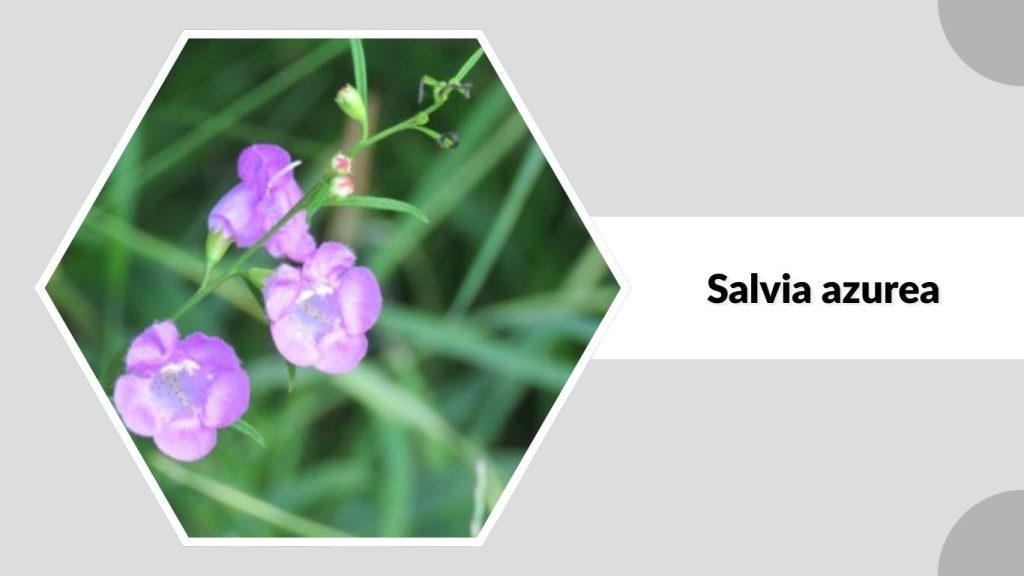
Salvia azurea, commonly known as blue sage, is a tall, airy salvia species valued for its soft sky-blue flowers and graceful movement in the garden. Blooming from late summer into fall, it adds lightness and height to landscapes when many other plants begin to fade. Its loose flower spikes and slender stems give it a natural, meadow-like appearance.
Identification
- Scientific name: Salvia azurea
- Common names: Blue sage, azure sage
- Plant type: Hardy perennial
- Flower color: Pale to sky blue
- Leaf color and texture: Gray-green, narrow, lightly rough
- Mature height: About 3–5 feet
- Blooming season: Late summer to fall
- Growth habit: Tall, open, clump-forming
Habitat
Salvia azurea is native to central and southern regions of North America, where it grows in prairies, open fields, and dry grasslands. In cultivation, it prefers full sun and well-drained soil. It is highly drought-tolerant once established and performs well in naturalistic and low-water gardens.
Flower Characteristics
The flowers are tubular and soft blue, arranged loosely along tall, branching spikes. They sway easily in the wind, creating a light and delicate visual effect. The blooms are rich in nectar and strongly attract bees, butterflies, and other beneficial insects.
Uses and Importance
Blue sage is widely used in prairie gardens, wildlife landscapes, and perennial borders. Its late-season flowering, tall structure, and drought resistance make it especially valuable for extending color and supporting pollinators into autumn.
20. Salvia chamaedryoides (Germander Sage)
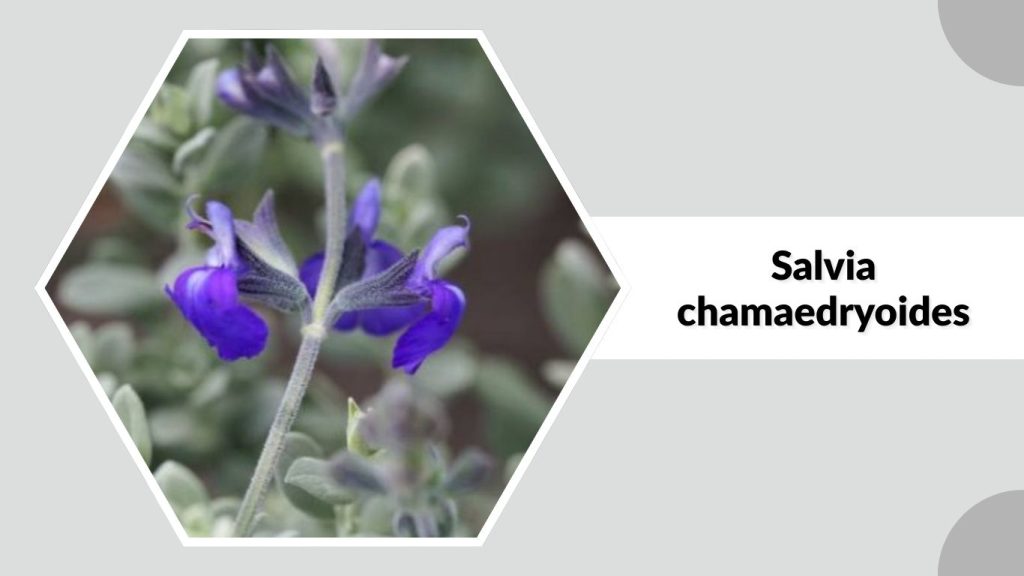
Salvia chamaedryoides, commonly known as germander sage, is a low-growing ornamental salvia prized for its vivid blue flowers and silvery-gray foliage. Unlike many tall salvias, this species forms compact, spreading mounds that make it ideal for edging, rock gardens, and containers. It blooms mainly from late spring through summer, often with repeat flowering in warm climates.
Identification
- Scientific name: Salvia chamaedryoides
- Common names: Germander sage, blue oak sage
- Plant type: Perennial
- Flower color: Bright blue
- Leaf color and texture: Silvery-gray, small, velvety
- Mature height: About 12–18 inches
- Blooming season: Late spring to summer
- Growth habit: Low, spreading, mound-forming
Habitat
Salvia chamaedryoides is native to Mexico, where it grows in dry, rocky regions and open slopes. In gardens, it prefers full sun and very well-drained soil. It is highly drought-tolerant once established and performs well in hot, dry, and coastal garden conditions.
Flower Characteristics
The flowers are tubular, intensely blue, and borne on short upright stems above the silvery foliage. Their strong color contrast makes the blooms stand out clearly in garden settings. The nectar-rich flowers attract bees, butterflies, and other pollinators.
Uses and Importance
Germander sage is widely used as a groundcover-style salvia in rock gardens, borders, and decorative containers. Its compact size, striking foliage, and bright flowers make it excellent for small gardens and water-wise landscape designs.
21. Salvia involucrata (Roseleaf Sage)
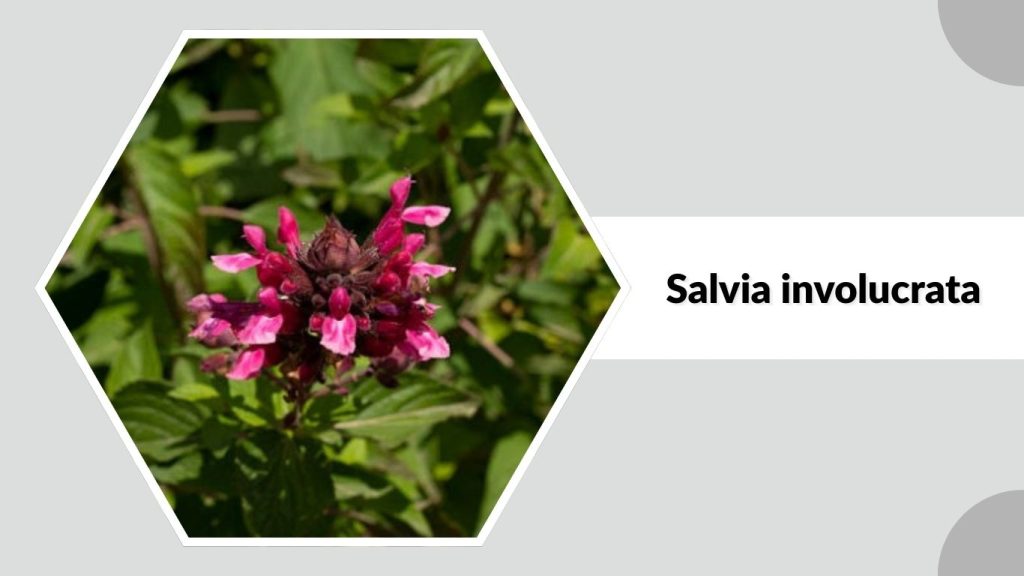
Salvia involucrata, commonly known as roseleaf sage, is a tall, showy salvia species admired for its large, bright pink flower heads and lush foliage. Blooming from late summer through fall, it brings bold color and tropical character to gardens. Its vigorous growth and long-lasting blooms make it a favorite for adding height and drama to ornamental borders.
Identification
- Scientific name: Salvia involucrata
- Common names: Roseleaf sage, rosy-leaf sage
- Plant type: Perennial in warm climates
- Flower color: Bright pink to rose-red
- Leaf color and texture: Deep green, large, softly textured
- Mature height: About 4–6 feet
- Blooming season: Late summer to fall
- Growth habit: Tall, upright, bushy
Habitat
Salvia involucrata is native to Mexico, where it grows in warm regions and open woodland edges. In cultivation, it prefers full sun to partial shade and fertile, well-drained soil with regular moisture. It performs best in warm climates and can be grown as a seasonal ornamental in cooler areas.
Flower Characteristics
The flowers are tubular and bright pink, emerging from large, colorful bracts that give the flower clusters a full, rose-like appearance. These nectar-rich blooms are highly attractive to hummingbirds, butterflies, and bees.
Uses and Importance
Roseleaf sage is mainly grown as a dramatic ornamental plant. It is ideal for the back of borders, tropical-style gardens, and wildlife landscapes. Its bold flowers, large leaves, and late-season bloom period make it especially valuable for extending garden color into autumn.
22. Salvia canariensis (Canary Island Sage)
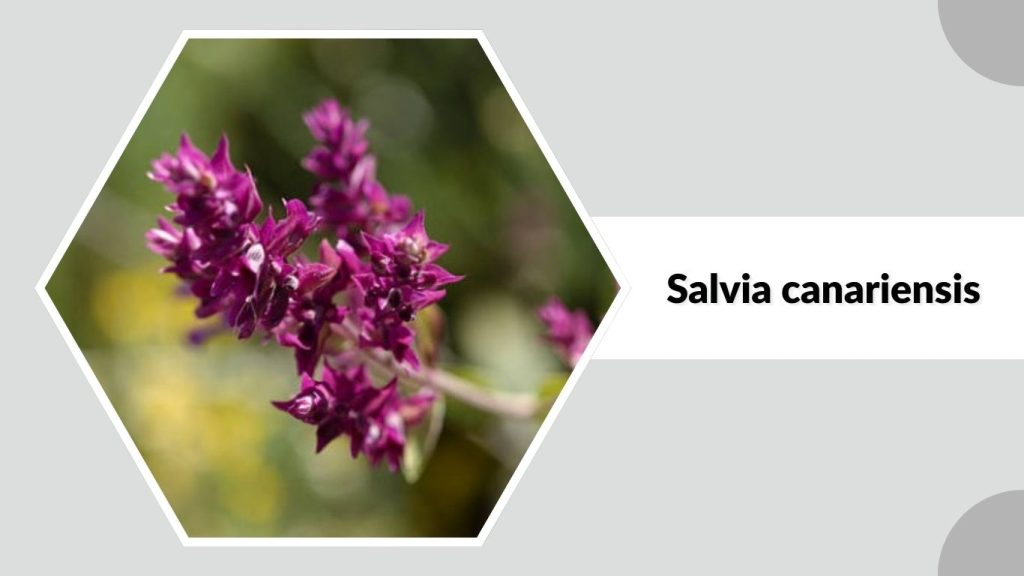
Salvia canariensis, commonly known as Canary Island sage, is a robust and highly decorative salvia species known for its large leaves and dense whorls of soft purple flowers. This plant creates a bold, architectural presence in the garden and is especially valued in warm, dry-climate landscapes. Blooming mainly in spring and early summer, it produces tall flowering stems that rise above a broad rosette of textured foliage.
Identification
- Scientific name: Salvia canariensis
- Common names: Canary Island sage
- Plant type: Perennial shrub
- Flower color: Lavender to soft purple
- Leaf color and texture: Large, gray-green, thick, softly hairy
- Mature height: About 4–6 feet
- Blooming season: Spring to early summer
- Growth habit: Upright, bushy, architectural
Habitat
Salvia canariensis is native to the Canary Islands, where it grows on sunny, rocky slopes and dry hillsides. In cultivation, it prefers full sun and very well-drained soil. It is drought-tolerant once established and well suited to Mediterranean-style, coastal, and water-wise gardens.
Flower Characteristics
The flowers are tubular and arranged in thick, rounded whorls along tall stems. Their soft purple color contrasts beautifully with the broad, pale foliage. The blooms attract bees and other pollinators and are produced in impressive vertical displays.
Uses and Importance
Canary Island sage is primarily grown as a landscape feature plant. Its bold foliage and tall flower spikes make it ideal for focal points, large borders, and dry garden designs. It is especially appreciated for its strong structure and low-water needs.
23. Salvia dorisiana (Fruit-scented Sage)
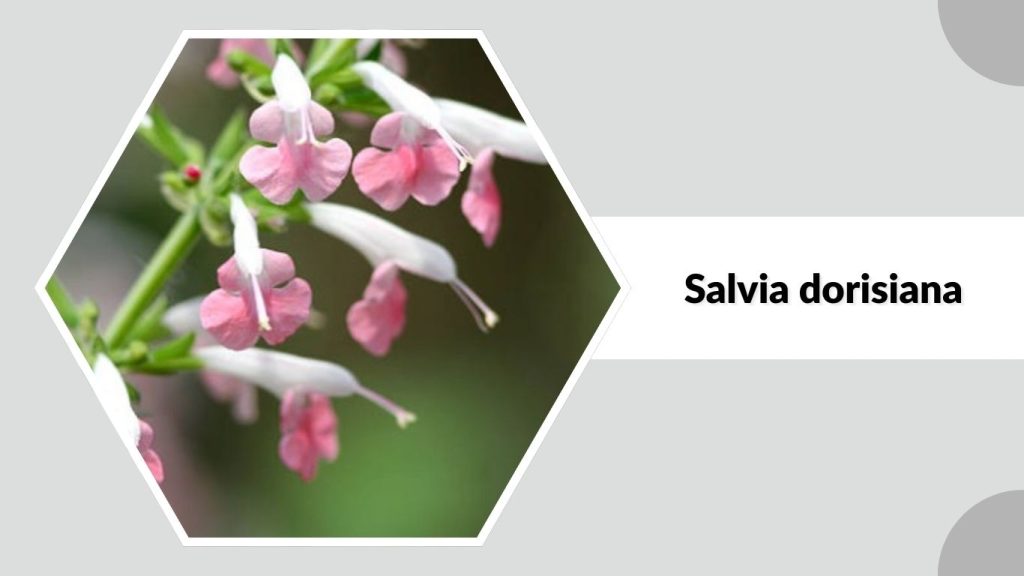
Salvia dorisiana, commonly known as fruit-scented sage, is a rare and unusual salvia species best known for its extremely fragrant foliage. When the large leaves are touched, they release a strong fruity aroma often compared to tropical fruit or candy. It also produces attractive soft pink flowers, making it both a sensory and ornamental plant. Blooming mainly from winter through spring in warm climates, it adds interest when many plants are dormant.
Identification
- Scientific name: Salvia dorisiana
- Common names: Fruit-scented sage
- Plant type: Tender perennial shrub
- Flower color: Soft pink to pale rose
- Leaf color and texture: Large, bright green, velvety, highly aromatic
- Mature height: About 4–6 feet
- Blooming season: Winter to spring (warm climates)
- Growth habit: Upright, bushy, spreading
Habitat
Salvia dorisiana is native to Honduras, where it grows in warm, humid mountain regions. In gardens, it prefers partial shade, fertile soil, and consistent moisture. It does not tolerate frost well and is usually grown in protected outdoor spaces or large containers.
Flower Characteristics
The flowers are tubular and pale pink, arranged in loose clusters above the foliage. While not as bold as some salvias, they provide soft color and are attractive to bees and other pollinators. The fragrant leaves remain the plant’s most distinctive feature.
Uses and Importance
Fruit-scented sage is mainly grown as a specialty ornamental and sensory plant. It is highly valued in fragrance gardens, botanical collections, and tropical-style landscapes. Its unique scent and lush foliage make it especially appealing to plant enthusiasts.
24. Salvia discolor (Andean Sage)
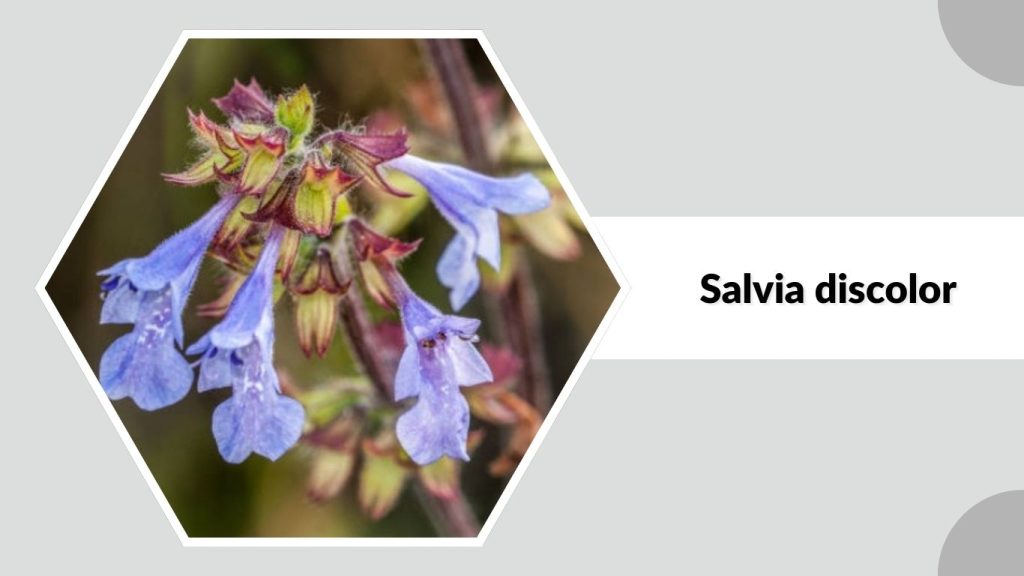
Salvia discolor, commonly known as Andean sage, is a striking salvia species admired for its unusual dark flowers and silvery foliage. It produces deep purple to almost black tubular blooms that contrast beautifully with its pale, velvety leaves. Blooming mainly from summer into fall, this plant adds dramatic color and texture to ornamental gardens.
Identification
- Scientific name: Salvia discolor
- Common names: Andean sage
- Plant type: Perennial shrub
- Flower color: Deep purple to nearly black
- Leaf color and texture: Silvery-gray, soft, velvety
- Mature height: About 2–3 feet
- Blooming season: Summer to fall
- Growth habit: Upright, bushy, compact
Habitat
Salvia discolor is native to Peru, where it grows in high-altitude regions with cool temperatures and well-drained soils. In cultivation, it prefers full sun to light shade and fertile, well-drained soil. It performs well in mild climates and benefits from some protection from extreme heat.
Flower Characteristics
The flowers are tubular and very dark in color, often appearing almost black, which is rare among garden plants. They are borne along upright stems above the silvery foliage. These nectar-rich blooms attract bees, butterflies, and hummingbirds.
Uses and Importance
Andean sage is primarily grown as an ornamental plant for its dramatic color contrast. It is ideal for borders, containers, and collector gardens. Its unusual dark blooms and soft foliage texture make it a standout feature plant.
25. Salvia mexicana (Mexican Sage)
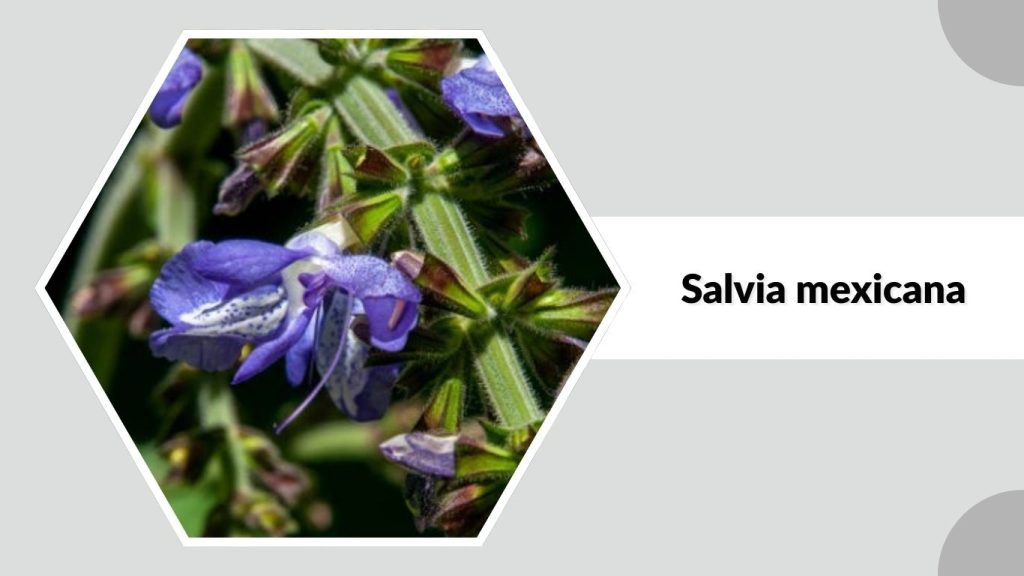
Salvia mexicana, commonly known as Mexican sage, is a tall and elegant salvia species valued for its long spikes of rich blue to violet flowers. Blooming from late summer through fall, it adds strong vertical interest and late-season color to gardens. Its graceful form and lush foliage make it a popular choice for ornamental borders and wildlife-friendly landscapes.
Identification
- Scientific name: Salvia mexicana
- Common names: Mexican sage
- Plant type: Perennial shrub
- Flower color: Deep blue to violet
- Leaf color and texture: Medium to dark green, soft, lightly aromatic
- Mature height: About 4–7 feet
- Blooming season: Late summer to fall
- Growth habit: Tall, upright, bushy
Habitat
Salvia mexicana is native to Mexico and Central America, where it grows in warm, mountainous regions and open woodlands. In cultivation, it prefers full sun to partial shade and fertile, well-drained soil with regular moisture. It thrives in warm climates and may be grown as a seasonal plant in cooler areas.
Flower Characteristics
The flowers are tubular and borne in long, arching spikes above the foliage. Their rich blue to purple tones make them highly attractive to bees, butterflies, and hummingbirds. The blooms are especially valuable for providing nectar late in the growing season.
Uses and Importance
Mexican sage is mainly grown as a landscape ornamental. It is ideal for the back of borders, tropical-style gardens, and pollinator plantings. Its tall structure, late bloom time, and vivid flowers make it an excellent choice for extending garden interest into autumn.
FAQs
What are salvia flowers best known for?
Salvia flowers are best known for their long blooming period, vibrant colors, and strong attraction to pollinators such as bees, butterflies, and hummingbirds. They belong to the mint family and include hundreds of species ranging from low-growing ground covers to tall, shrubby plants used widely in ornamental gardens.
Are salvia flowers annuals or perennials?
Salvia flowers can be annuals, perennials, or tender perennials depending on the species and climate. Some types like scarlet sage are often grown as annuals, while others such as woodland sage and white sage are long-lived perennials that return each year in suitable growing conditions.
Do salvia plants need full sun?
Most salvia plants grow best in full sun, where they produce the most flowers and strongest growth. However, some species prefer partial shade, especially in hot climates. Providing at least six hours of sunlight daily usually results in healthier plants and more abundant blooms.
Are salvia flowers good for pollinators?
Yes, salvia flowers are excellent for pollinators. Their tubular blooms are rich in nectar and specially shaped to attract bees, butterflies, and hummingbirds. Planting different salvia species can provide a continuous food source for pollinators from spring through fall.
How do you care for salvia plants?
Salvia plants generally prefer well-drained soil, moderate watering, and plenty of sunlight. Many species are drought-tolerant once established. Regular deadheading or light pruning encourages more blooms, and cutting back perennials after flowering helps maintain plant shape and health.