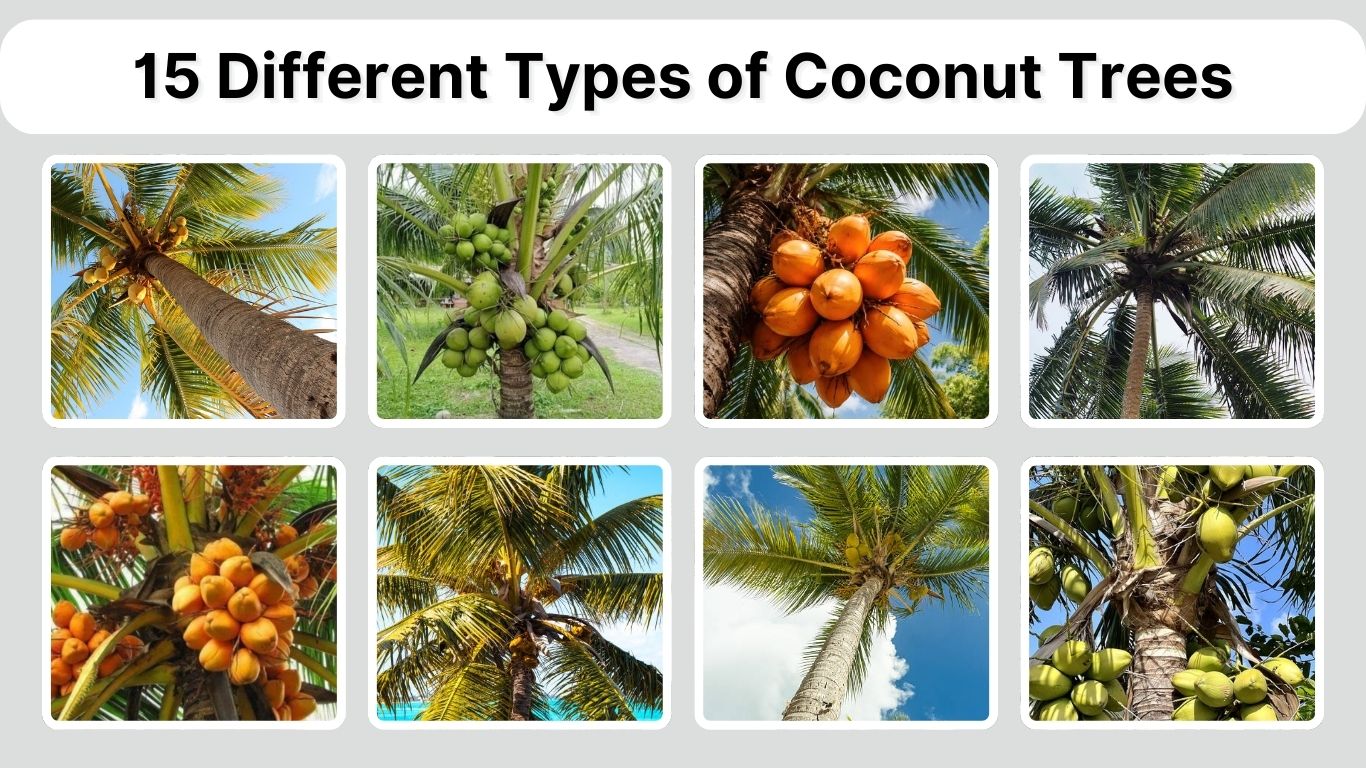
Coconut trees are among the most valuable and versatile palms found in tropical and coastal regions worldwide. From tall, long-living varieties grown for copra and oil to dwarf types prized for tender coconut water, each coconut tree has unique characteristics and uses. Understanding the different types of coconut trees helps farmers, gardeners, and enthusiasts choose the right variety for cultivation, landscaping, or commercial production. Below is a detailed guide to 15 popular coconut tree varieties, highlighting their key features and importance.
1. Tall Coconut Tree
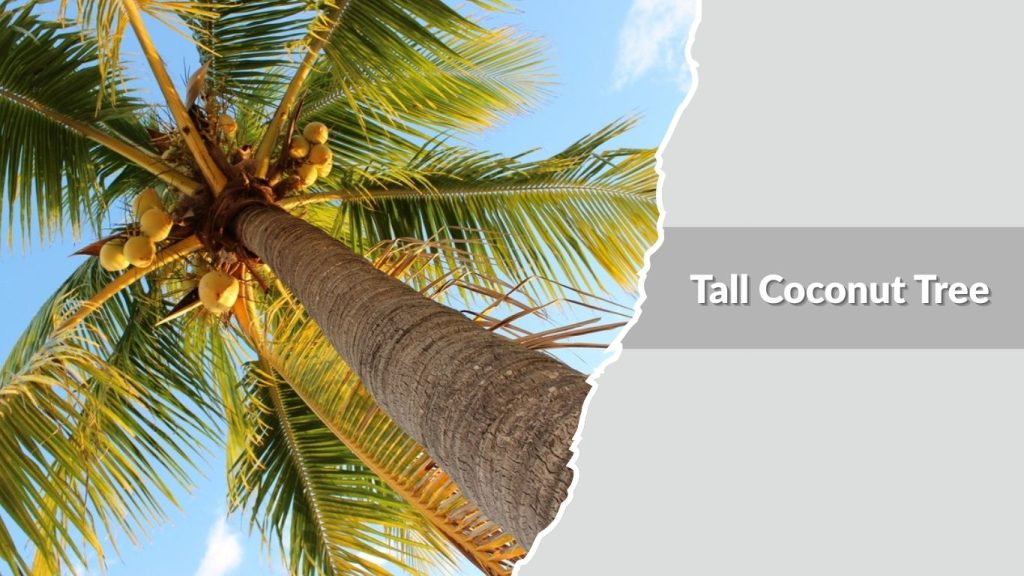
The Tall Coconut Tree is one of the most widely cultivated coconut varieties in the world. It is known for its long lifespan, high yield, and adaptability to diverse tropical climates. This variety is commonly grown for copra, oil, and other commercial coconut products.
Identification
- Tall, slender trunk reaching 20–30 meters
- Large feathery leaves up to 6 meters long
- Fruits are medium to large in size
- Begins bearing fruit after 6–8 years
Growth Habit
The Tall Coconut Tree grows upright with a strong trunk and a wide crown. It thrives best in coastal and tropical regions with sandy or well-drained soils.
Uses
This variety is primarily used for coconut oil production, copra, coconut milk, and coir. The timber and leaves are also used in construction and handicrafts.
Lifespan
Tall Coconut Trees are long-lived and can continue producing coconuts for 60–80 years under favorable conditions.
2. Dwarf Coconut Tree
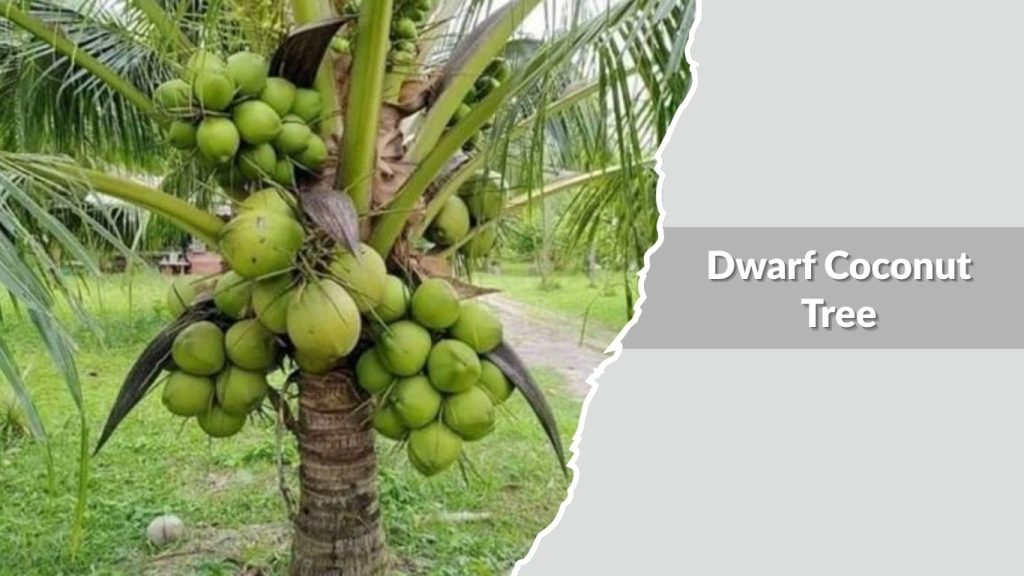
The Dwarf Coconut Tree is a compact and early-bearing variety that is especially popular in home gardens and small plantations. Compared to tall types, it begins fruiting much earlier and is easier to manage due to its shorter height. This variety is widely cultivated in tropical regions for tender coconuts and ornamental purposes.
Identification
- Short trunk, usually 8–12 meters tall
- Compact crown with shorter fronds
- Small to medium-sized coconuts
- Starts bearing fruit within 3–4 years
Growth Habit
The Dwarf Coconut Tree grows slowly and maintains a relatively short stature throughout its life. Its compact size makes harvesting easier and reduces the risk of damage from strong winds. It performs best in warm, humid climates with good sunlight and well-drained soil.
Uses
This variety is mainly grown for tender coconut water, which is sweet and refreshing. It is also used for small-scale coconut production and landscaping due to its neat appearance and manageable height.
Lifespan
Dwarf Coconut Trees have a shorter productive life compared to tall varieties. On average, they remain economically productive for about 30–40 years under good growing conditions.
3. King Coconut Tree
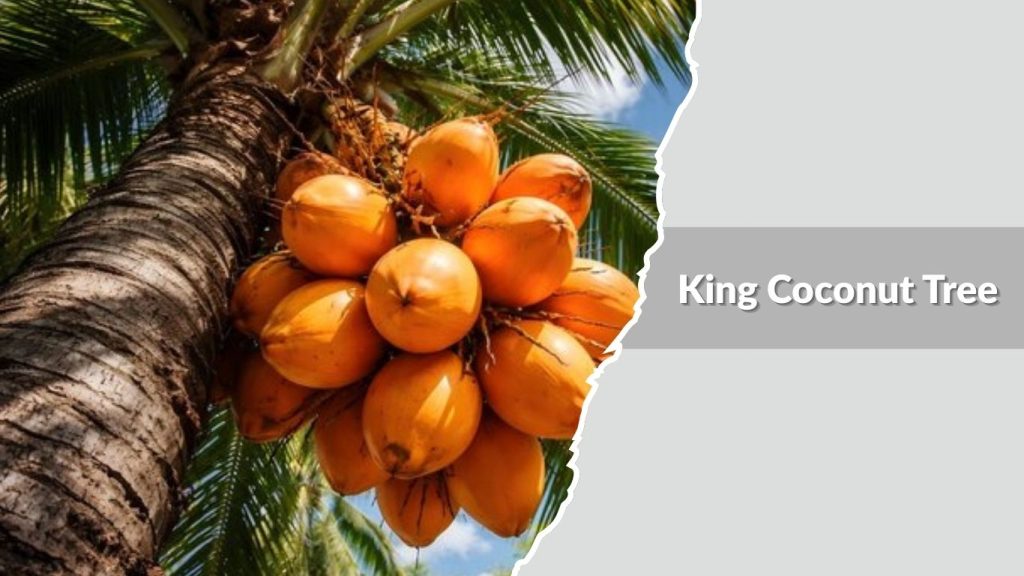
The King Coconut Tree is a distinctive coconut variety best known for its bright orange fruits and high-quality coconut water. It is especially famous in Sri Lanka, where it is valued more for drinking purposes than for oil or copra production.
Identification
- Medium-height palm with a straight trunk
- Bright orange or yellow-orange coconuts
- Thin husk with abundant sweet water
- Elongated fruit shape
Growth Habit
The King Coconut Tree grows upright with a graceful appearance and a well-spread crown. It prefers tropical coastal climates and performs best in sandy or loamy soils with good moisture availability. The tree is moderately fast-growing and adapts well to warm environments.
Uses
This variety is primarily cultivated for its naturally sweet and mineral-rich coconut water. It is commonly consumed fresh and is also popular in traditional and health-focused beverages.
Lifespan
King Coconut Trees generally have a moderate lifespan, producing fruit reliably for about 40–50 years when grown under favorable climatic and soil conditions.
4. Malayan Tall Coconut Tree
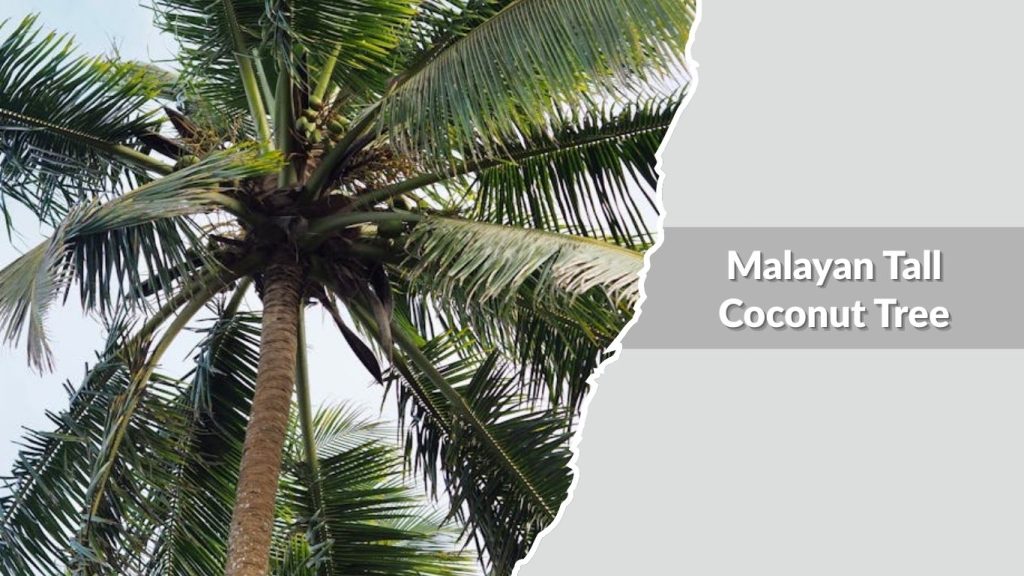
The Malayan Tall Coconut Tree is a well-known commercial variety valued for its high yield and strong adaptability to tropical climates. It is widely cultivated across Southeast Asia and other coconut-growing regions due to its consistent production and good-quality nuts. This variety is commonly used in large plantations and plays an important role in the coconut industry.
Identification
- Tall, straight trunk reaching 20–30 meters
- Large, green coconuts with thick husk
- Broad crown with long arching fronds
- Bears fruit after 6–7 years
Growth Habit
The Malayan Tall Coconut Tree grows vigorously and develops a strong trunk capable of withstanding coastal winds. It prefers warm temperatures, high humidity, and well-drained sandy or loamy soils. The tree requires ample sunlight and regular rainfall for optimal growth and nut production.
Uses
This variety is mainly cultivated for copra and coconut oil production. The nuts are also used for coconut milk, desiccated coconut, and other processed coconut products. Its timber and leaves are sometimes used for local construction and thatching.
Lifespan
Malayan Tall Coconut Trees are long-living and can remain productive for 60–80 years when properly managed, making them a reliable choice for long-term coconut farming.
5. Malayan Dwarf Coconut Tree
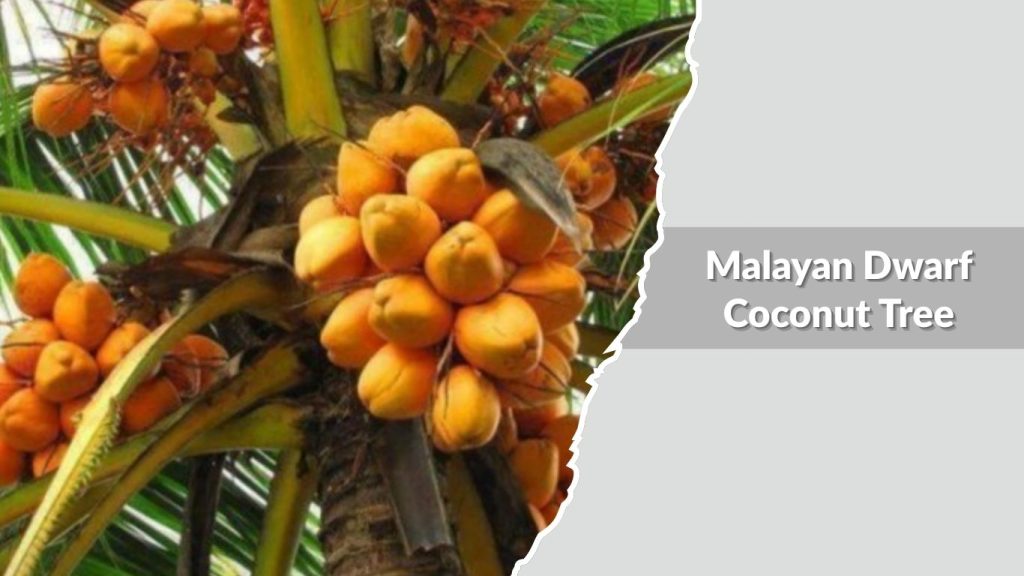
The Malayan Dwarf Coconut Tree is a popular early-bearing variety known for its short height and ease of maintenance. It is widely grown in home gardens and small farms, especially for tender coconuts. This variety is appreciated for its fast maturity and consistent fruiting.
Identification
- Short trunk, usually 8–10 meters tall
- Compact crown with closely spaced leaves
- Small to medium-sized coconuts
- Starts bearing fruit within 3–4 years
Growth Habit
The Malayan Dwarf Coconut Tree grows slowly and maintains a compact form throughout its life. Due to its low height, it is less vulnerable to wind damage and easier to harvest. It thrives in tropical climates with well-drained soil, regular watering, and full sunlight.
Uses
This variety is mainly grown for tender coconut water, which is mildly sweet and refreshing. It is also used in breeding programs and is popular as an ornamental palm due to its neat and attractive appearance.
Lifespan
Malayan Dwarf Coconut Trees have a shorter productive lifespan compared to tall varieties, typically producing well for about 35–45 years under favorable growing conditions.
6. West Coast Tall Coconut Tree
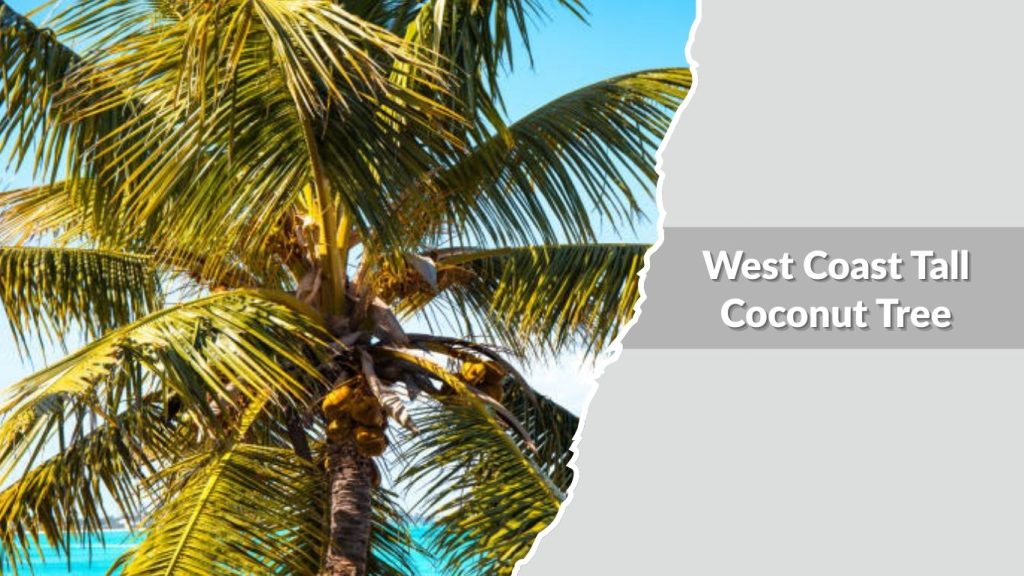
The West Coast Tall Coconut Tree is one of the most important traditional coconut varieties cultivated in coastal regions. It is highly valued for its adaptability, steady yield, and good-quality nuts. This variety is commonly grown by farmers for commercial coconut production and has proven reliability over decades.
Identification
- Tall, robust trunk reaching 20–30 meters
- Medium to large green coconuts
- Thick husk with high copra content
- Begins fruiting after 6–8 years
Growth Habit
The West Coast Tall Coconut Tree grows upright with a strong stem and a broad crown of long fronds. It performs well in tropical coastal climates with sandy or laterite soils. The tree is tolerant of saline conditions and requires regular rainfall or irrigation for optimal growth.
Uses
This variety is widely cultivated for copra and coconut oil production. The nuts are also used for coconut milk, desiccated coconut, and household consumption. Leaves and husk fibers are commonly used for thatching and coir making.
Lifespan
West Coast Tall Coconut Trees are long-lived and can remain productive for 60–80 years when grown under suitable environmental and management conditions.
7. East Coast Tall Coconut Tree
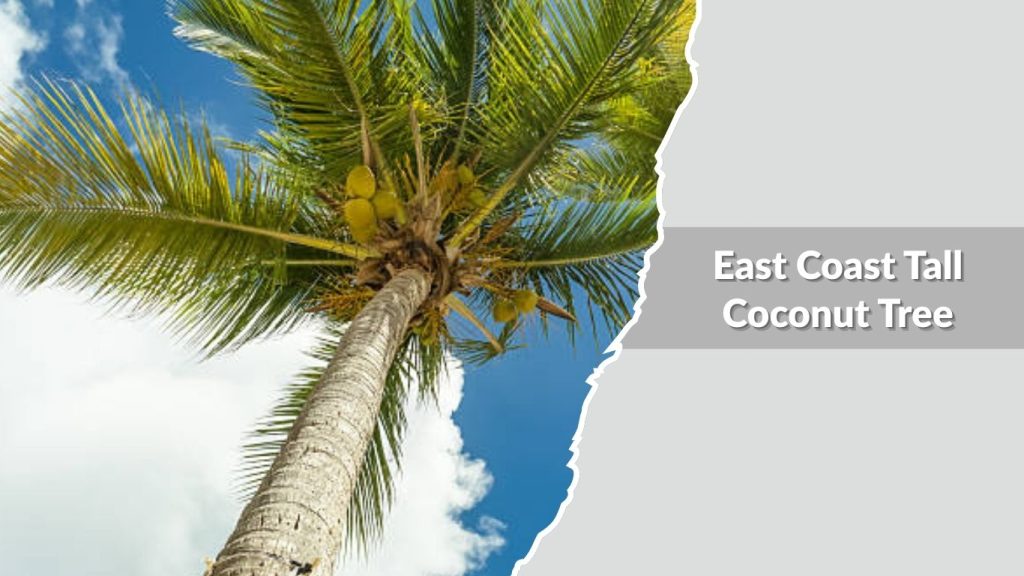
The East Coast Tall Coconut Tree is a hardy coconut variety adapted to coastal and semi-coastal regions. It is known for its resilience, moderate yield, and suitability to diverse soil conditions. This variety is often cultivated in traditional coconut-growing areas.
Identification
- Tall, straight trunk with a wide crown
- Medium-sized coconuts with green to yellow husk
- Good copra yield
- Starts bearing fruit after 6–7 years
Growth Habit
The East Coast Tall Coconut Tree grows steadily and develops a strong trunk that can tolerate wind and variable weather conditions. It thrives in tropical climates with well-drained soils and adequate sunlight. The tree adapts well to both sandy coastal soils and inland loamy soils.
Uses
This variety is mainly grown for copra, coconut oil, and culinary coconut uses. It is also used for coir production and traditional construction materials such as roofing and fencing.
Lifespan
East Coast Tall Coconut Trees have a long productive life, often yielding coconuts for 55–75 years under favorable growing conditions.
8. Tiptur Tall Coconut Tree
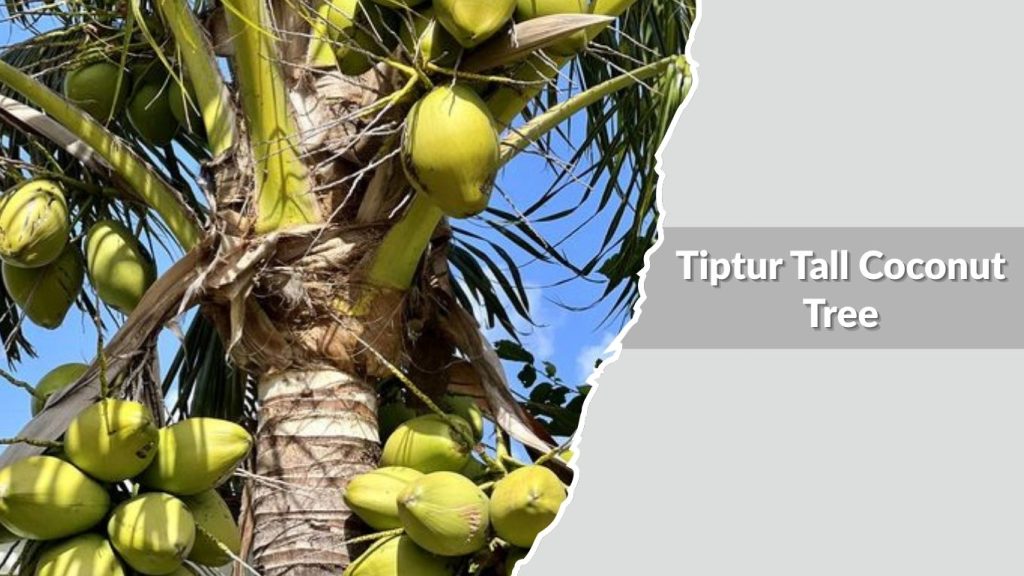
The Tiptur Tall Coconut Tree is a well-known indigenous coconut variety primarily cultivated in southern India. It is valued for its high copra content and suitability for oil production. Farmers prefer this variety for its stable yield and adaptability to traditional farming systems.
Identification
- Tall, straight trunk reaching 20–25 meters
- Medium to large round coconuts
- Thick shell with high copra recovery
- Begins fruiting after 6–7 years
Growth Habit
The Tiptur Tall Coconut Tree grows upright with a sturdy trunk and a moderately dense crown. It performs best in tropical climates with moderate to high rainfall. The tree prefers red loamy or well-drained soils and responds well to regular irrigation and organic manuring.
Uses
This variety is mainly cultivated for copra and coconut oil extraction due to its high oil content. The nuts are also used for culinary purposes, while the husk is suitable for coir production. Leaves and wood are used locally for roofing and fuel.
Lifespan
Tiptur Tall Coconut Trees are long-lived and can remain productive for 60–70 years when grown under proper management and favorable environmental conditions.
9. Laccadive Ordinary Coconut Tree
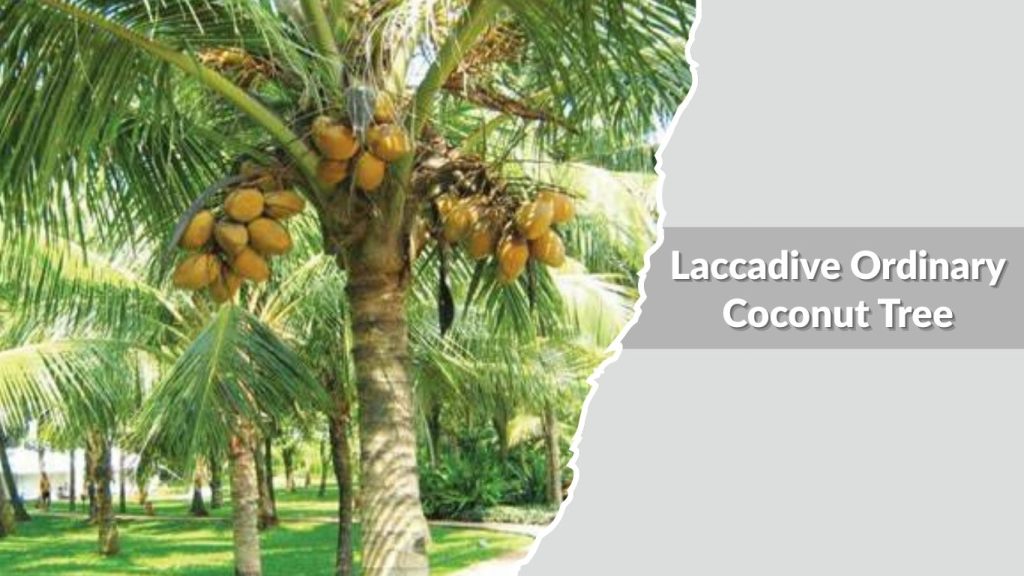
The Laccadive Ordinary Coconut Tree is a traditional tall variety originating from island and coastal regions. It is known for its adaptability to sandy soils and saline conditions, making it suitable for coastal cultivation. This variety is commonly grown in island ecosystems and coastal belts.
Identification
- Tall palm with a slender trunk
- Medium-sized elongated coconuts
- Moderate husk thickness with good kernel
- Starts bearing fruit after 6–8 years
Growth Habit
The Laccadive Ordinary Coconut Tree grows steadily and develops a flexible trunk that helps it withstand strong coastal winds. It thrives in tropical coastal climates and performs well in sandy soils with good drainage. The tree tolerates salinity better than many inland coconut varieties.
Uses
This variety is mainly used for household coconut needs, copra production, and oil extraction. The husk is used for coir, and the shells are often utilized for handicrafts and fuel. It is also an important variety for sustaining coconut cultivation in island regions.
Lifespan
Laccadive Ordinary Coconut Trees have a long productive lifespan, typically yielding coconuts for 55–70 years when grown in suitable coastal and island environments.
10. Laccadive Micro Coconut Tree
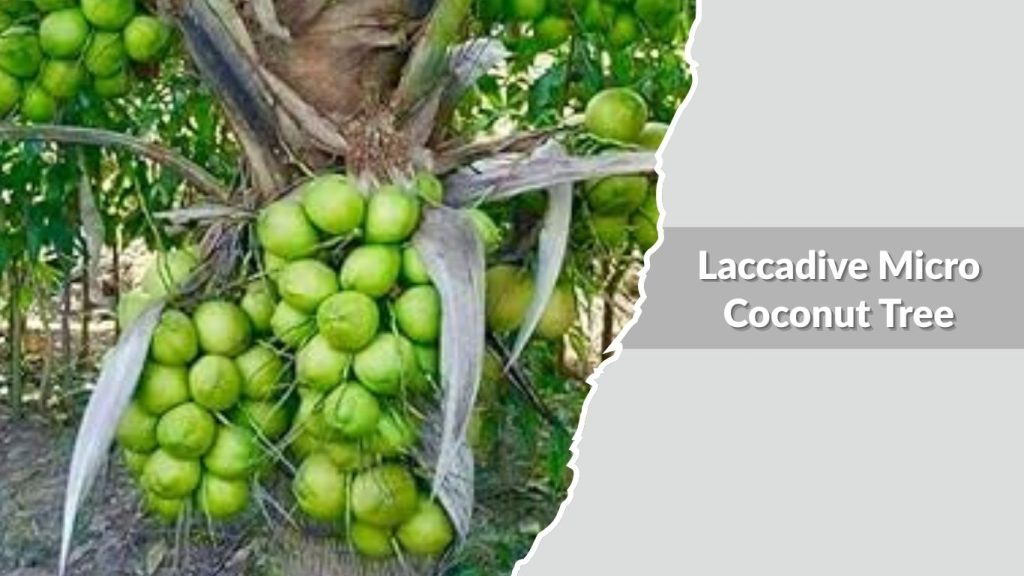
The Laccadive Micro Coconut Tree is a lesser-known tall coconut variety adapted to island and coastal conditions. It is recognized for its smaller-sized nuts and steady productivity. This variety is suitable for regions where soil fertility is moderate and environmental conditions are challenging.
Identification
- Tall palm with a relatively slender trunk
- Small to medium-sized coconuts
- Thin husk with good kernel quality
- Begins bearing fruit after 6–8 years
Growth Habit
The Laccadive Micro Coconut Tree grows upright and develops a flexible stem that helps it tolerate strong coastal winds. It thrives in tropical island climates with sandy, well-drained soils. The tree performs well under moderate rainfall and can adapt to slightly saline conditions.
Uses
This variety is mainly cultivated for household coconut consumption and small-scale oil production. The nuts are suitable for coconut milk and culinary uses, while the husk and shell are used for coir and fuel purposes.
Lifespan
Laccadive Micro Coconut Trees generally remain productive for 55–65 years when grown under favorable coastal and island conditions.
11. Chowghat Tall Coconut Tree
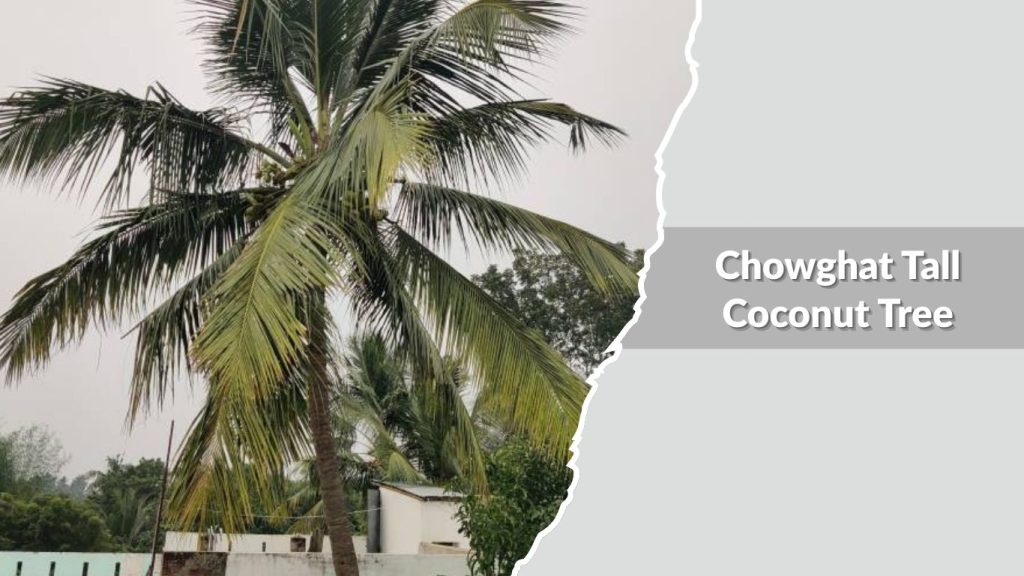
The Chowghat Tall Coconut Tree is a high-yielding coconut variety developed for commercial cultivation. It is widely grown due to its uniform growth, good nut size, and high copra content. This variety is particularly popular among farmers seeking consistent productivity.
Identification
- Tall, straight trunk with a dense crown
- Medium to large round coconuts
- Thick kernel with high copra yield
- Starts bearing fruit after 6–7 years
Growth Habit
The Chowghat Tall Coconut Tree grows vigorously and forms a strong trunk capable of supporting heavy nut loads. It prefers tropical climates with well-distributed rainfall and fertile, well-drained soils. Regular fertilization enhances its yield and overall growth performance.
Uses
This variety is primarily cultivated for copra and coconut oil production. The nuts are also used for desiccated coconut, coconut milk, and other value-added coconut products. Leaves and timber are used for traditional construction and agricultural needs.
Lifespan
Chowghat Tall Coconut Trees have a long productive life, often yielding coconuts for 60–75 years under good management and environmental conditions.
12. Chowghat Dwarf Coconut Tree
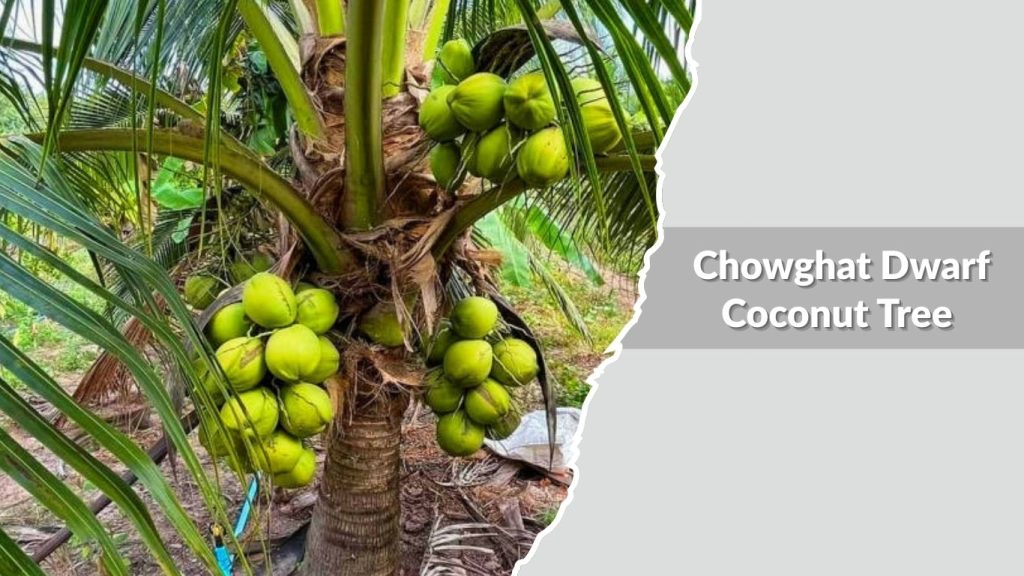
The Chowghat Dwarf Coconut Tree is a compact and early-bearing variety developed for efficient coconut cultivation. It is especially suitable for small farms and home gardens due to its short height and ease of management. This variety is valued for its quick maturity and regular fruiting.
Identification
- Short trunk, usually 7–10 meters tall
- Compact crown with closely spaced fronds
- Small to medium-sized coconuts
- Begins bearing fruit within 3–4 years
Growth Habit
The Chowghat Dwarf Coconut Tree grows slowly and maintains a low height throughout its life. Its compact structure makes harvesting easier and reduces vulnerability to wind damage. It thrives in tropical climates with well-drained soil, adequate sunlight, and regular watering.
Uses
This variety is mainly cultivated for tender coconut water and household coconut needs. It is also used in breeding programs and is favored for ornamental planting due to its neat and attractive appearance.
Lifespan
Chowghat Dwarf Coconut Trees generally have a productive lifespan of about 30–40 years under favorable growing conditions.
13. Andaman Ordinary Coconut Tree
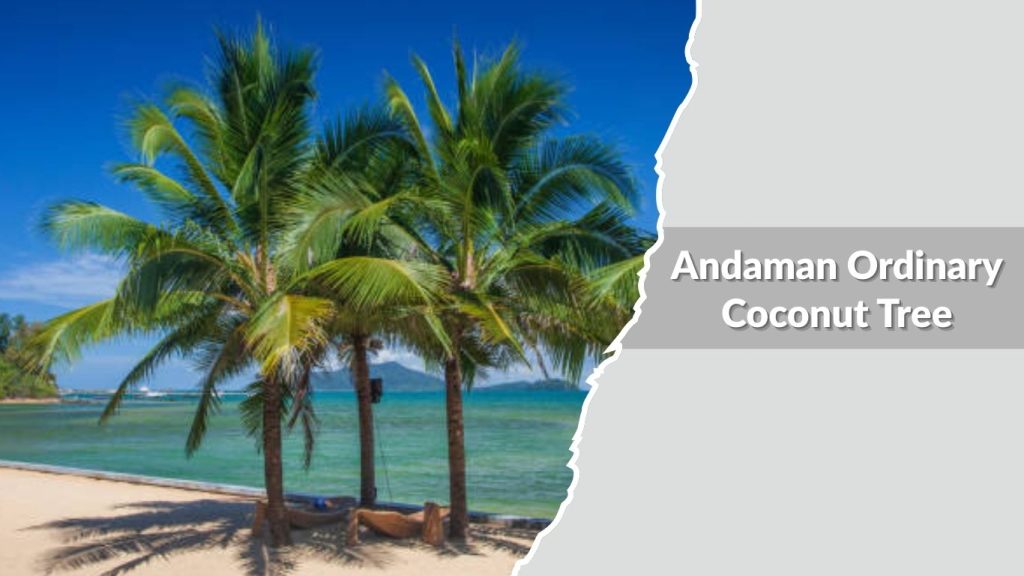
The Andaman Ordinary Coconut Tree is a traditional tall variety native to island ecosystems. It is well adapted to coastal environments and is known for its resilience to wind and saline conditions. This variety plays an important role in coconut cultivation in island and coastal regions.
Identification
- Tall palm with a straight, sturdy trunk
- Medium-sized coconuts with thick husk
- Good kernel quality suitable for copra
- Starts bearing fruit after 6–8 years
Growth Habit
The Andaman Ordinary Coconut Tree grows steadily and develops a strong trunk capable of withstanding coastal winds and storms. It thrives in tropical island climates with sandy or loamy soils and benefits from regular rainfall and good drainage.
Uses
This variety is primarily grown for copra and coconut oil production. The nuts are also used for culinary purposes, while the husk and shell are utilized for coir, fuel, and local handicrafts.
Lifespan
Andaman Ordinary Coconut Trees are long-lived and can remain productive for 55–70 years when grown under suitable island and coastal conditions.
14. Fiji Dwarf Coconut Tree
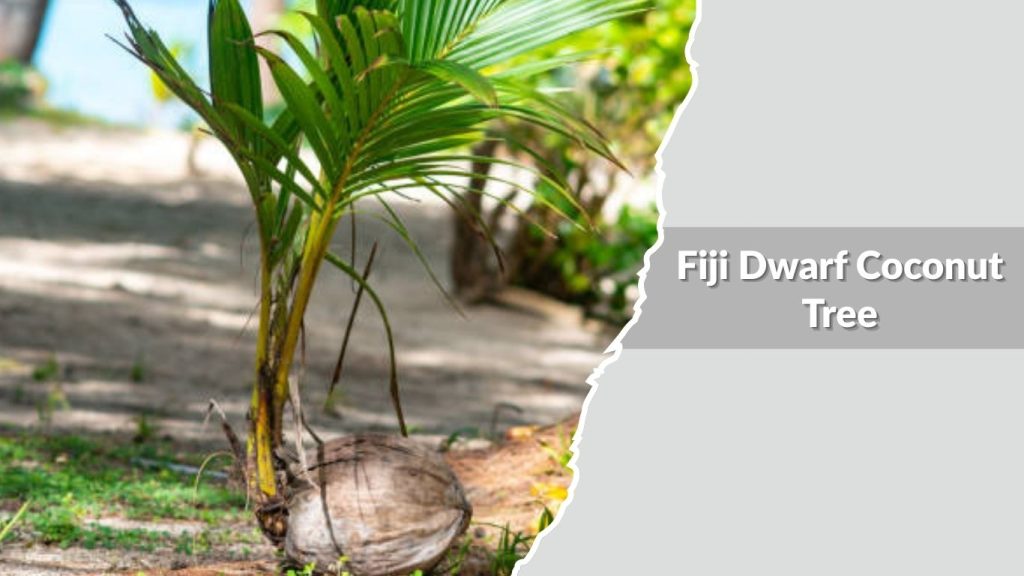
The Fiji Dwarf Coconut Tree is a compact coconut variety well suited for tropical island climates. It is valued for its early bearing nature and attractive appearance, making it popular in home gardens and coastal landscaping. This variety is also known for its tolerance to certain coconut diseases.
Identification
- Short trunk, usually 8–10 meters tall
- Compact crown with short, broad fronds
- Small to medium-sized coconuts
- Begins bearing fruit within 3–4 years
Growth Habit
The Fiji Dwarf Coconut Tree grows slowly and maintains a manageable height throughout its life. It thrives in warm, humid climates with well-drained sandy or loamy soils. Due to its shorter stature, it is less affected by strong winds and easier to harvest.
Uses
This variety is mainly cultivated for tender coconut water and household coconut use. It is also commonly planted as an ornamental palm in coastal areas, resorts, and gardens because of its neat form.
Lifespan
Fiji Dwarf Coconut Trees typically remain productive for about 30–40 years under favorable tropical growing conditions.
15. Philippine Tall Coconut Tree
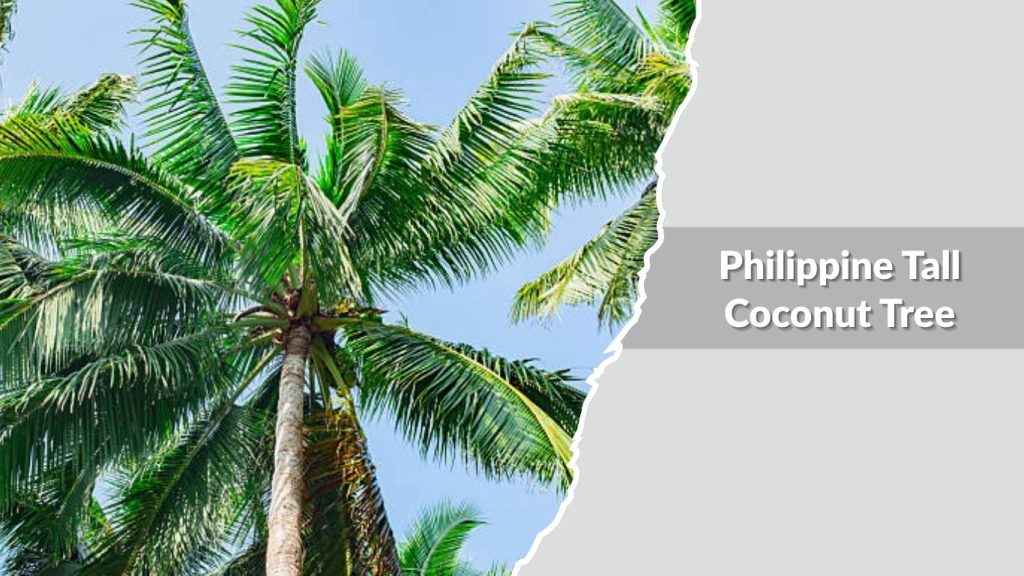
The Philippine Tall Coconut Tree is a widely grown tall coconut variety known for its adaptability and consistent yield. It is an important commercial variety in many coconut-producing regions due to its good nut quality and versatility.
Identification
- Tall, straight trunk reaching 20–30 meters
- Medium to large coconuts with thick husk
- High copra and oil content
- Starts bearing fruit after 6–8 years
Growth Habit
The Philippine Tall Coconut Tree grows vigorously with a strong trunk and a well-spread crown. It performs well in tropical climates with high rainfall and well-drained soils. The tree adapts to both coastal and inland conditions with proper care.
Uses
This variety is mainly cultivated for copra, coconut oil, coconut milk, and other processed coconut products. The husk and shell are used for coir, fuel, and handicrafts, while the timber is used for construction.
Lifespan
Philippine Tall Coconut Trees are long-lived and can remain productive for 60–80 years when grown under good management and favorable environmental conditions.