





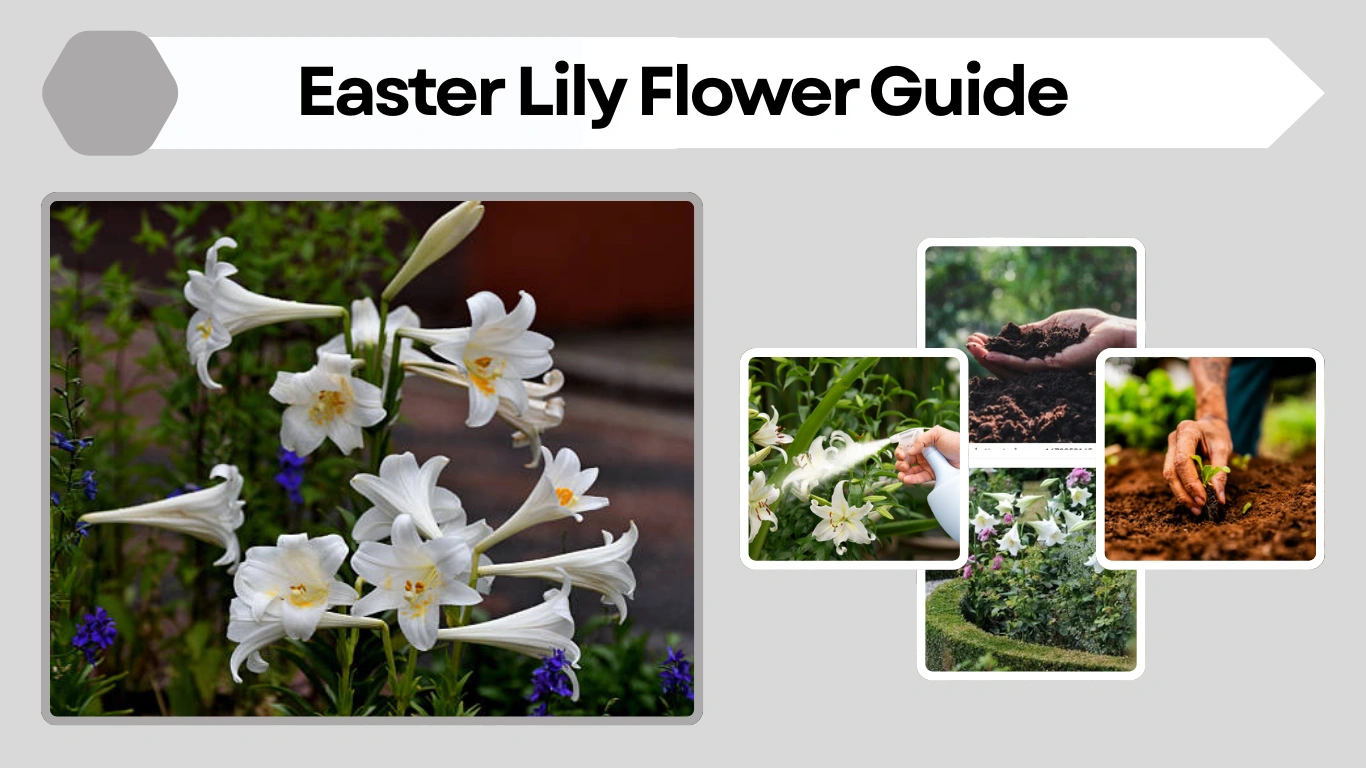
The Easter lily flower is one of the most recognized symbols of spring and renewal, especially associated with the Easter season. Known for its large, trumpet-shaped white blooms and sweet fragrance, the Easter lily is widely used in homes, churches, and gardens. Beyond its seasonal beauty, the Easter lily flower carries deep religious and cultural meaning and is also valued as an ornamental plant. This guide explores what the Easter lily is, how to identify it, its types, and the symbolism that has made it famous worldwide.
Easter Lily Flower Overview
The Easter lily flower refers primarily to Lilium longiflorum, a true lily species admired for its elegant white blooms and strong fragrance. It naturally flowers in late spring and early summer, but through controlled cultivation, it is commonly forced to bloom around Easter, which has helped shape its modern name and tradition.
Easter lilies grow from bulbs and develop long, slender stems lined with glossy green leaves. At the top of each stem, several outward-facing, trumpet-shaped flowers appear, often lasting for weeks. Their clean white color and soft scent make them a favorite for indoor displays and formal floral arrangements.
Although often treated as temporary holiday plants, Easter lilies are hardy perennials in suitable climates. When planted outdoors, they can return year after year, producing increasingly larger clumps and more blooms with proper care.
What Is an Easter Lily Flower Plant?

Botanical classification
The Easter lily belongs to the genus Lilium in the Liliaceae family. Unlike calla lilies or peace lilies, Easter lilies are true lilies, sharing their botanical group with Asiatic and Oriental lilies.
Scientific name and family
The scientific name of the Easter lily is Lilium longiflorum. It is native to parts of southern Japan and Taiwan, where it grows in coastal regions and grassy slopes.
Is Easter lily a true lily?
Yes, the Easter lily is a true lily. It grows from a scaly bulb and produces multiple trumpet-shaped flowers, which are key characteristics of true lilies.
Natural origin and native range
In the wild, Easter lilies thrive in warm, well-drained environments. Their natural habitat includes sandy soils, open hillsides, and areas with bright light and moderate moisture.
Identification of Easter Lily Flowers
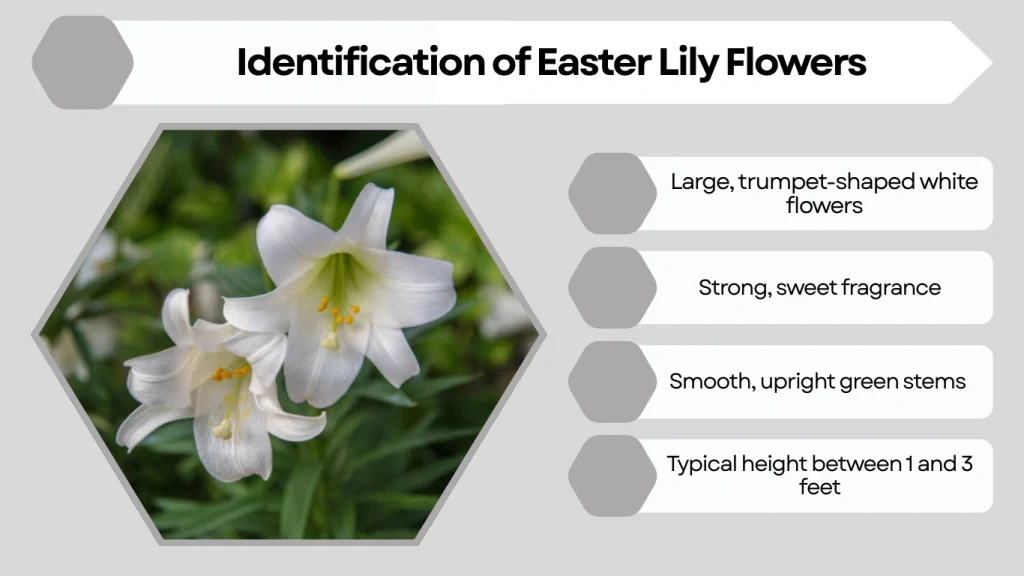
- Large, trumpet-shaped white flowers
- Strong, sweet fragrance
- Smooth, upright green stems
- Narrow, glossy leaves arranged along the stem
- Typical height between 1 and 3 feet
- Bulb-based underground growth system
Types of Easter Lily Flowers
Traditional white Easter lily
The traditional white Easter lily is the most common and widely grown type. It features pure white blooms and a strong fragrance, making it the standard variety sold during the Easter season.
Dwarf Easter lily varieties
Dwarf forms are more compact and suited for indoor pots and small gardens. They maintain the same flower shape and fragrance but grow on shorter stems.
Garden Easter lilies
Some Easter lilies are cultivated specifically for outdoor gardens. These varieties tend to be more cold-tolerant and vigorous, producing larger clumps over time.
Hybrid and cultivated Easter lilies
Modern hybrids focus on stronger stems, improved flower count, and better disease resistance, while still preserving the classic Easter lily appearance.
Easter Lily Flower Meaning and Symbolism
Religious symbolism
The Easter lily flower is deeply associated with Christianity, symbolizing the resurrection of Jesus Christ, purity, and new life. It is commonly displayed in churches during Easter celebrations.
Cultural meanings
Beyond religion, Easter lilies represent hope, renewal, and peace. They are often given as gifts during spring holidays and used in formal ceremonies.
Spiritual interpretations
Spiritually, the Easter lily is linked to innocence, rebirth, and divine beauty. Its white color reinforces its connection with purity and spiritual clarity.
Modern symbolic use
Today, Easter lilies are also symbols of sympathy and remembrance, often appearing in memorial services and tribute arrangements.
Colors of Easter Lily Flowers

- Classic white Easter lily flower
- Cream-toned Easter lilies
- Pale yellow Easter lily varieties
- Rare and hybrid color forms
Where Easter Lily Flowers Grow Naturally
Easter lilies are native to parts of southern Japan and Taiwan, where they grow in warm coastal regions and on open hillsides. In these environments, they receive bright sunlight, good air circulation, and well-drained soil, all of which support strong bulb development.
In the wild, Easter lilies often grow in sandy or loamy soils that allow excess water to drain away quickly. This natural setting explains why Easter lilies prefer moist but not waterlogged conditions when cultivated in gardens.
Today, Easter lilies are grown worldwide. Large-scale cultivation occurs in regions with mild climates, and the plants are widely sold as seasonal flowering bulbs. They also adapt well to home gardens when planted in suitable outdoor conditions.
How to Grow Easter Lily Flowers

- Choose a sunny to lightly shaded location
- Use loose, well-drained, fertile soil
- Plant bulbs 6 to 8 inches deep
- Space plants to allow airflow
- Water regularly but avoid soggy soil
- Apply balanced fertilizer during active growth
- Mulch to protect roots and retain moisture
Easter Lily Flower Care Guide
Water and moisture control
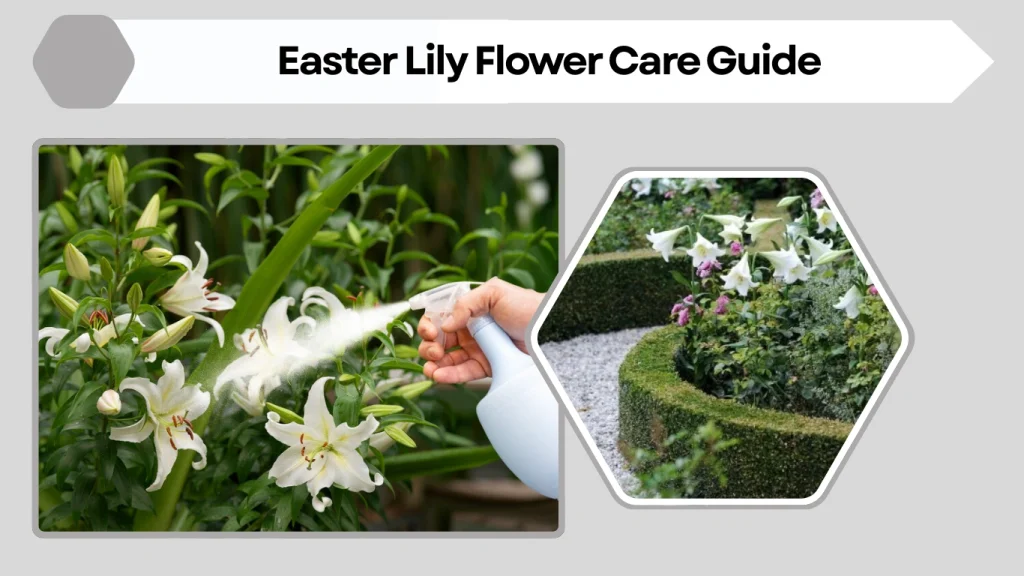
Easter lilies need consistent moisture, especially while actively growing and blooming. The soil should remain slightly moist but never saturated, as excess water can cause bulb rot.
Light and temperature
They prefer bright light and moderate temperatures. Outdoors, full sun to partial shade is ideal. Indoors, placing plants near a bright window encourages strong stems and longer-lasting blooms.
Pruning and deadheading
Removing spent flowers prevents energy loss and helps the plant focus on strengthening its bulb. Leaves should be left intact until they naturally yellow, as they provide nutrients to the bulb.
Winter care and dormancy
After flowering, Easter lilies gradually enter dormancy. In colder climates, bulbs benefit from mulch or being lifted and stored in a cool, dry place until spring.
Easter Lily Life Cycle
The Easter lily life cycle begins as a dormant bulb beneath the soil. In spring, shoots emerge, followed by leaf development and the formation of flower buds.
As buds mature, trumpet-shaped blooms open and release a sweet fragrance. After the flowering stage, the plant directs energy back into the bulb.
Leaves slowly fade as the plant enters dormancy. During this resting period, the bulb stores nutrients that support the next year’s growth and flowering.
Common Problems and Diseases
- Aphids and spider mites
- Botrytis blight and fungal leaf spot
- Bulb rot due to overwatering
- Yellowing leaves from nutrient imbalance
- Weak flowering caused by low light
Easter Lily in History, Art, and Traditions
The Easter lily has long been associated with Christian symbolism, representing purity and resurrection. Its use in churches during Easter dates back centuries and remains a strong tradition today.
In art, Easter lilies often appear in religious paintings, altar decorations, and spring-themed illustrations. Their graceful shape and bright color have made them enduring symbols of hope.
Commercially, Easter lilies are one of the most important holiday flowering plants, with millions grown annually for seasonal displays and gifts.
Are Easter Lily Flowers Toxic?
Easter lilies are extremely toxic to cats. Even small amounts of pollen or petal ingestion can cause severe kidney failure. Immediate veterinary attention is required if exposure is suspected.
Dogs and humans are less sensitive, but ingestion can still cause digestive irritation. Because of the risk to cats, Easter lilies should never be placed in homes where cats are present.
When handling Easter lilies, especially indoors, it is advisable to clean fallen pollen and wash hands after contact.
FAQs
What is an Easter lily flower?
An Easter lily flower is a true lily species known scientifically as Lilium longiflorum. It is famous for its large white trumpet-shaped blooms and sweet fragrance and is closely associated with the Easter season.
Why are Easter lilies white?
White symbolizes purity, renewal, and resurrection, which is why Easter lilies are traditionally white. This color has reinforced their long-standing religious and cultural significance.
How long do Easter lily flowers last?
Easter lily flowers typically last one to two weeks indoors. Outdoor plants may bloom longer depending on weather conditions and care.
Can Easter lilies be planted outdoors?
Yes, Easter lilies can be planted outdoors in well-drained soil and suitable climates. With proper care, they can return and bloom each year.
Are Easter lilies safe for pets?
Easter lilies are not safe for cats and can be fatal if ingested. They should be kept completely away from cats and placed carefully in pet-accessible environments.