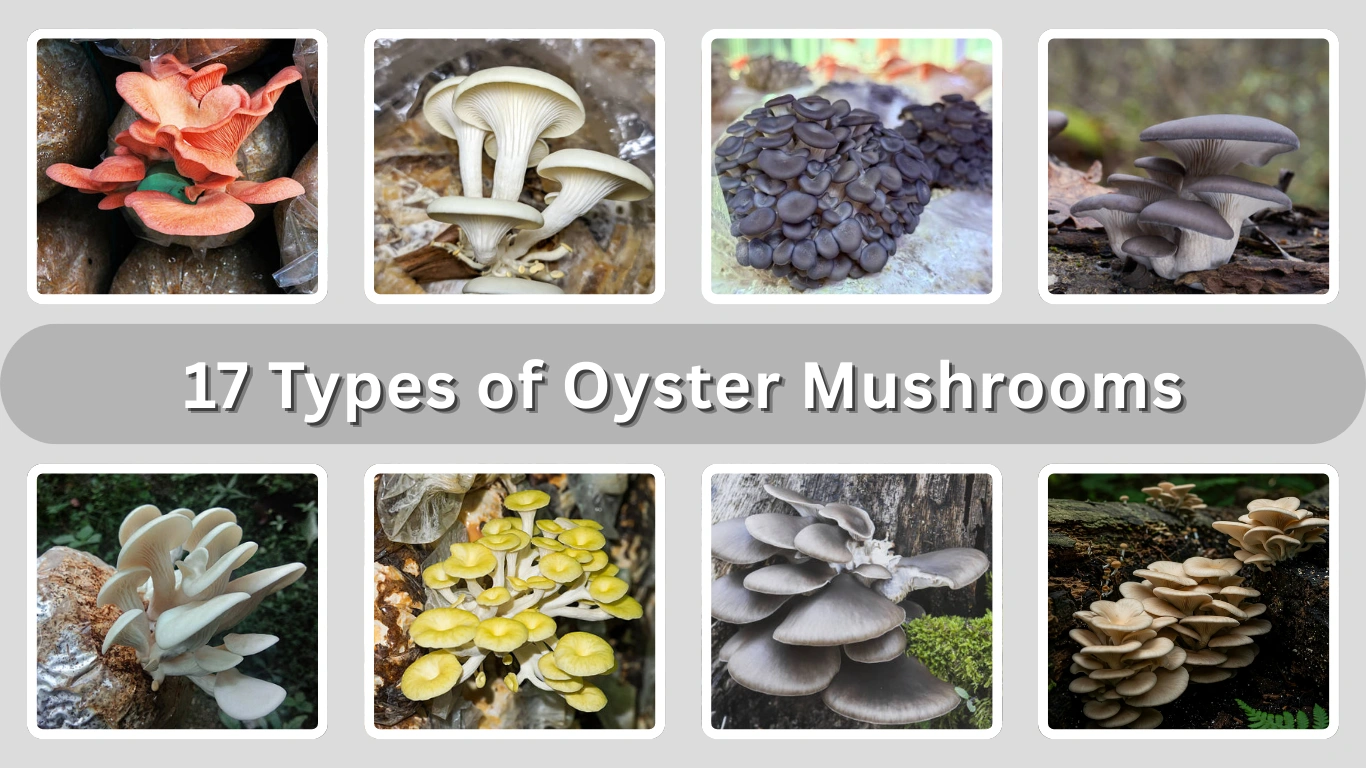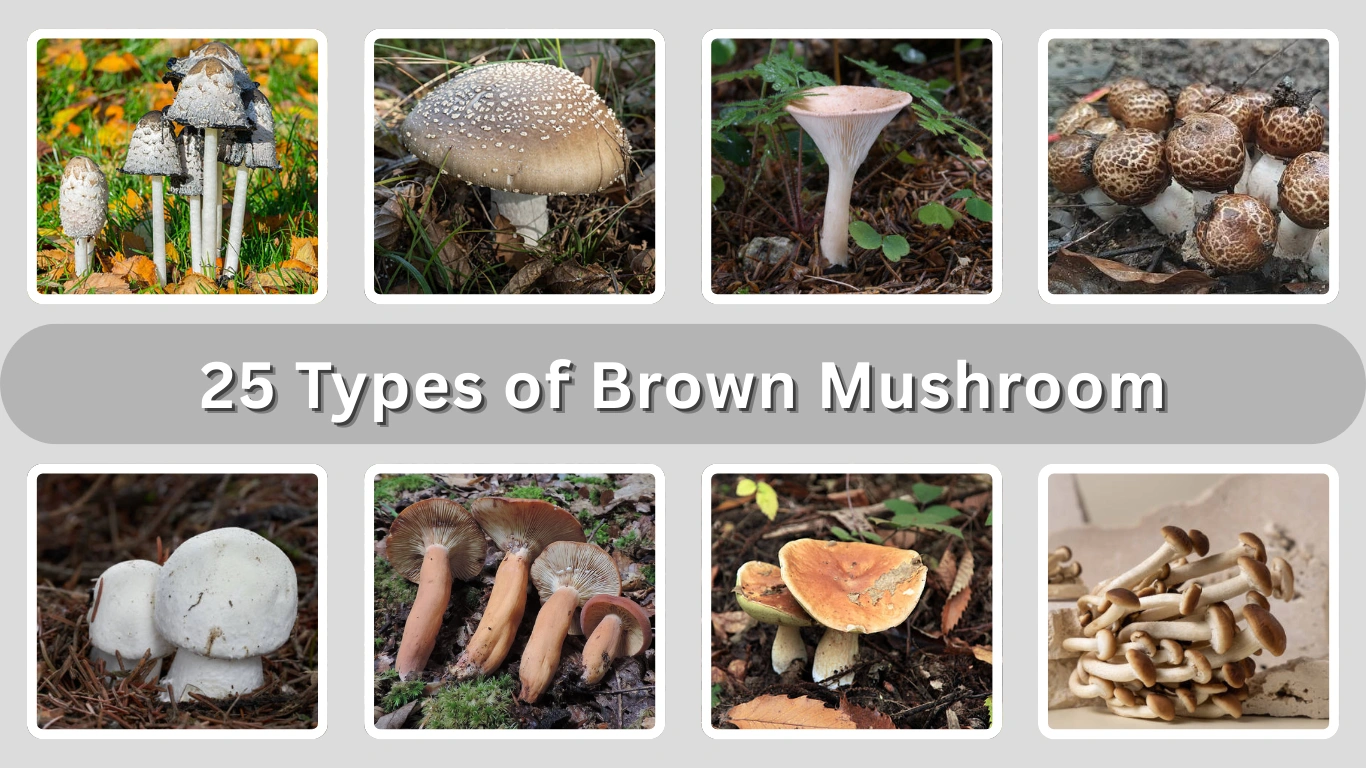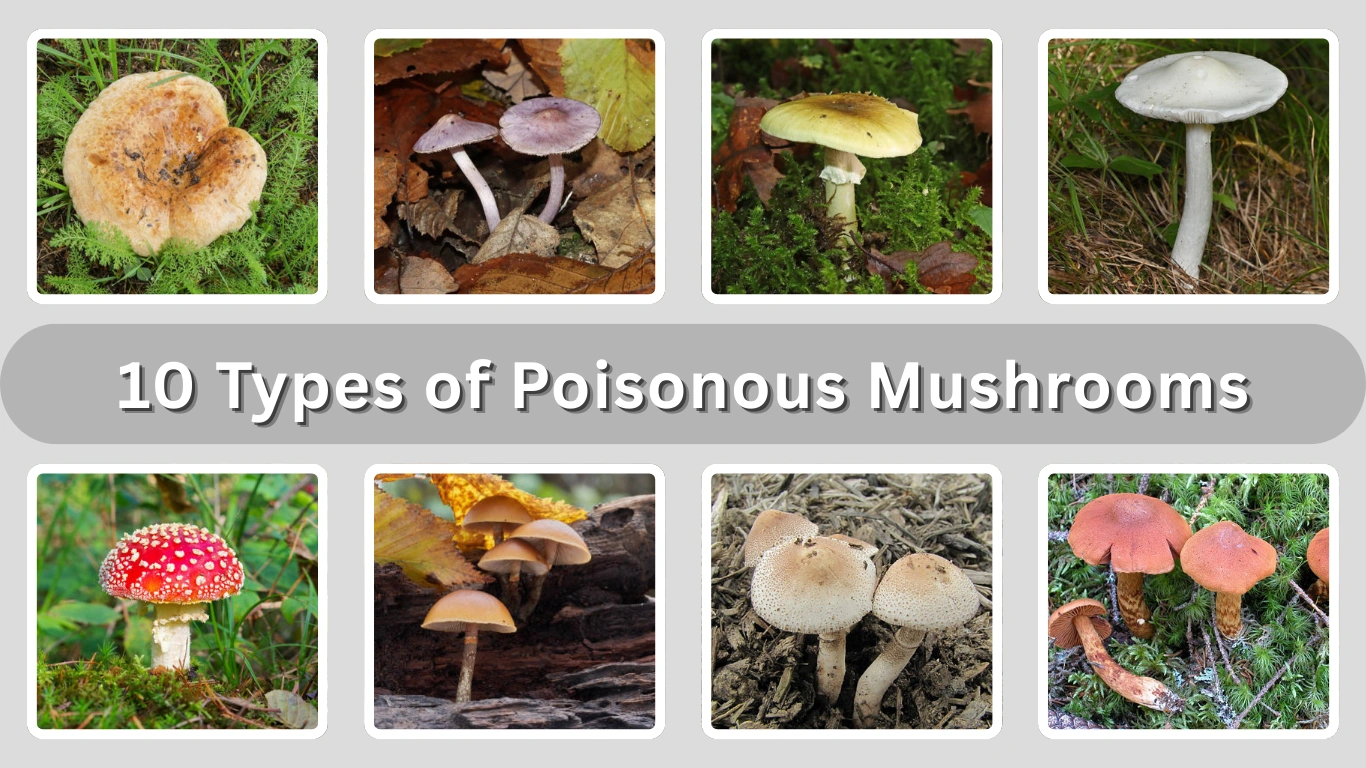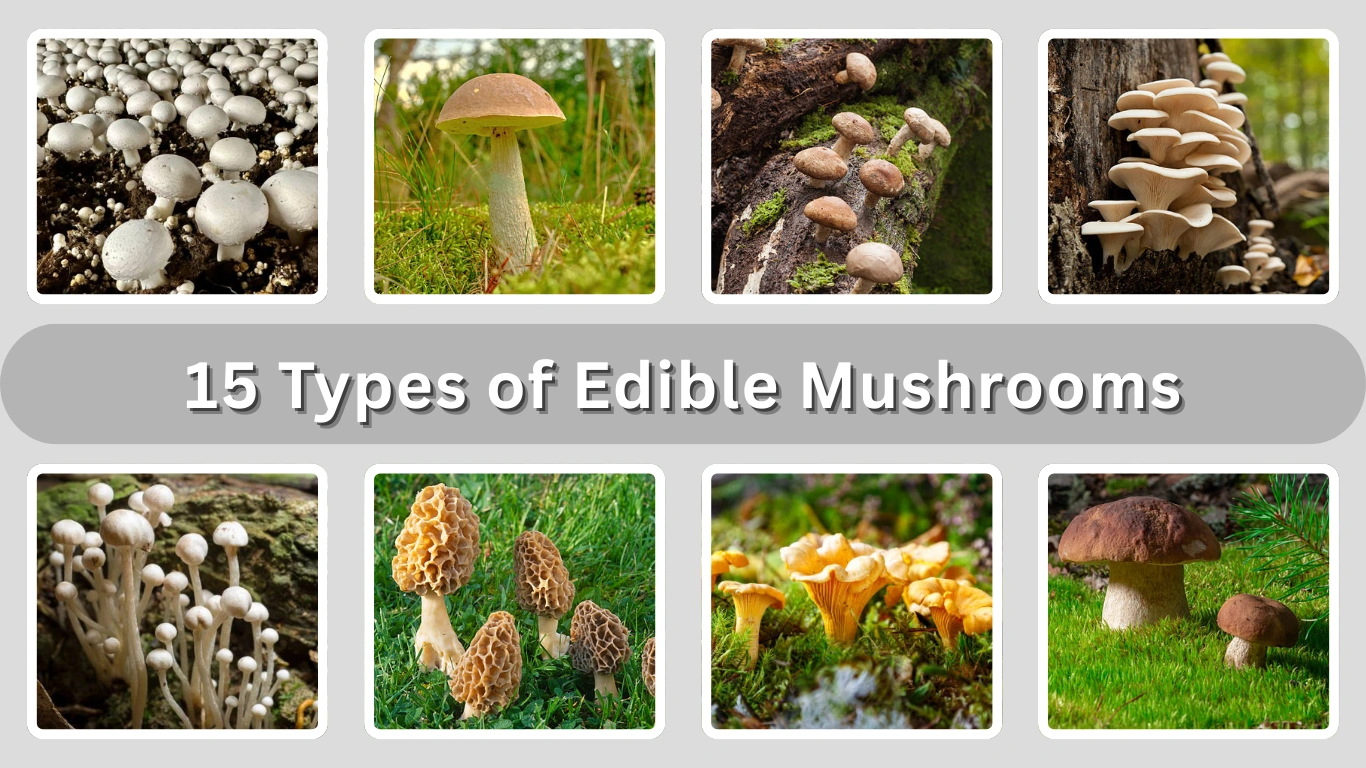




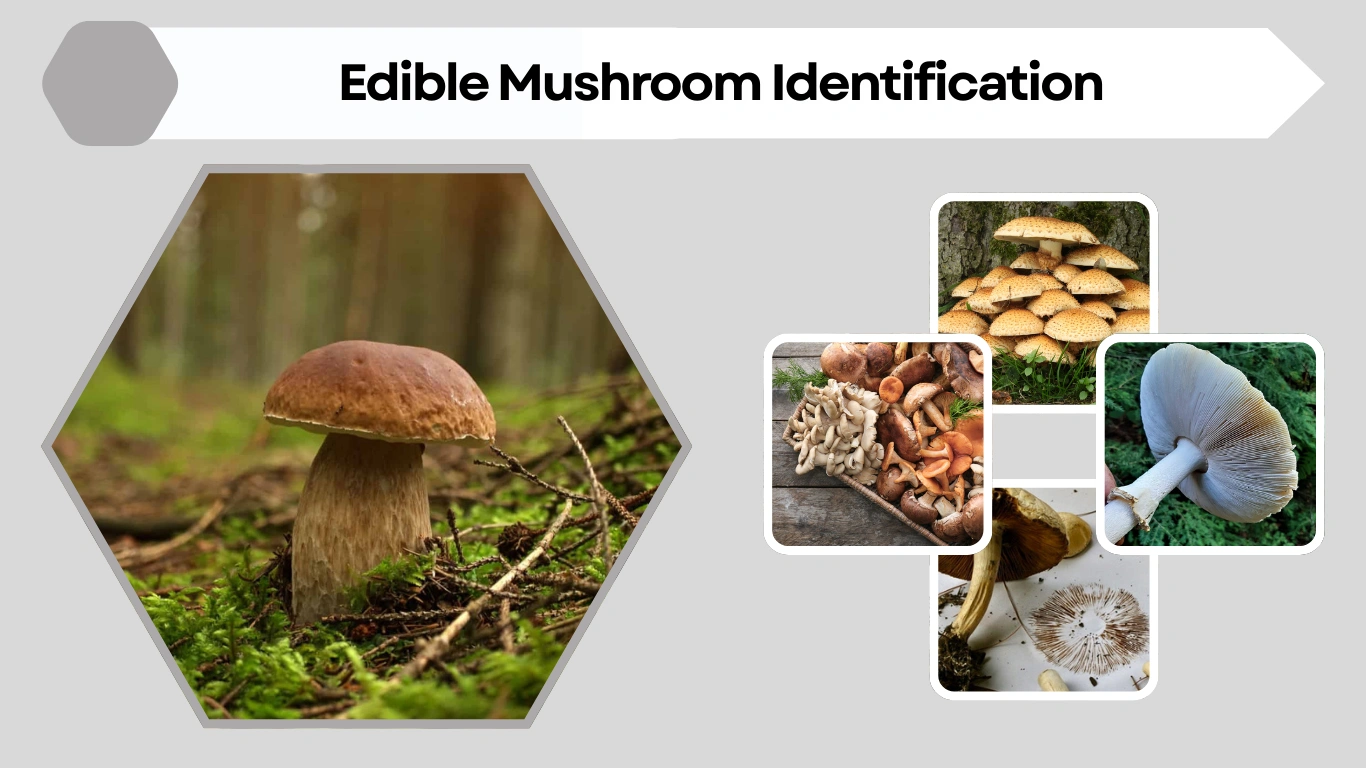
Edible mushroom identification is both a rewarding skill and a serious responsibility. Wild mushrooms can be nutritious, flavorful, and abundant, but they can also be dangerously toxic if misidentified. Each year, thousands of mushroom poisoning cases occur worldwide due to confusion between edible species and their poisonous look-alikes. This guide is designed for beginners and curious learners who want to understand how to identify edible mushrooms safely. It emphasizes caution, observation, and proper methods rather than shortcuts or myths.
Understanding Mushrooms: Basic Concepts
What Is a Mushroom?
Mushrooms are fungi, not plants. Unlike plants, fungi do not photosynthesize. Instead, they absorb nutrients from organic matter such as decaying wood, soil, or living trees. The visible mushroom is only the fruiting body; the main organism exists underground or within wood as a network of fine threads called mycelium. Understanding this helps explain why mushrooms appear suddenly and often in specific habitats.
Anatomy of a Mushroom
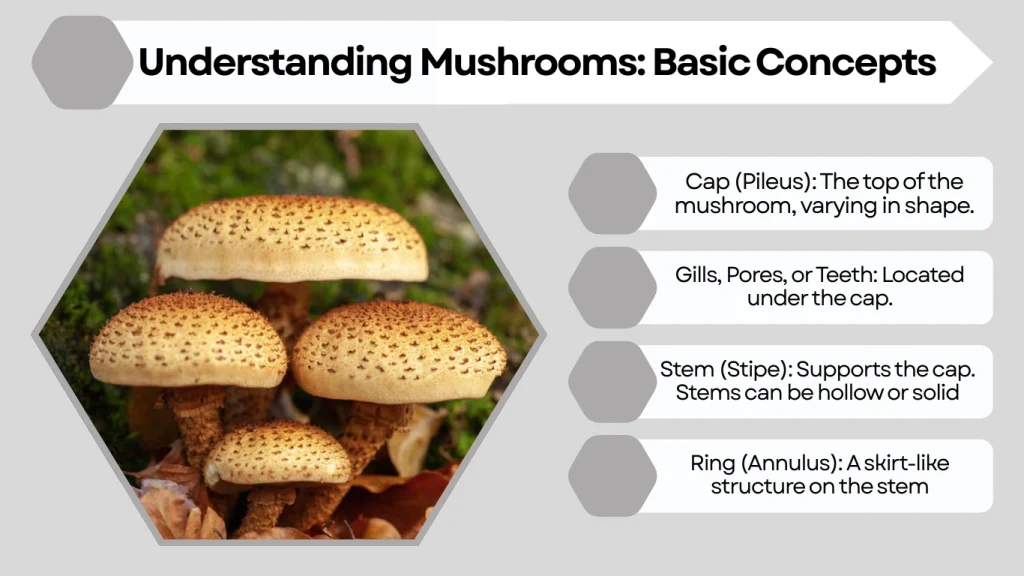
Correct identification begins with learning mushroom anatomy. Each part provides important clues:
- Cap (Pileus): The top of the mushroom, varying in shape, size, color, and texture. Caps may be smooth, scaly, sticky, or dry.
- Gills, Pores, or Teeth: Located under the cap. Gills are thin blade-like structures, pores look like tiny holes, and teeth resemble small spines.
- Stem (Stipe): Supports the cap. Stems can be hollow or solid, thick or thin, smooth or textured.
- Ring (Annulus): A skirt-like structure on the stem, left from a protective veil.
- Volva: A cup-like structure at the base of some mushrooms, often hidden underground and critically important for identification.
- Spore Print: The color of spores released from the gills or pores, used as a key identification tool.
Ignoring even one of these features can lead to dangerous mistakes.
Mushroom Growth Stages
Mushrooms change significantly as they mature. Young mushrooms may look very different from older ones, sometimes resembling entirely different species. Identification should ideally be done on mature, healthy specimens, not very young “button” mushrooms or decaying ones, as key features may be undeveloped or distorted.
Safety First: Rules of Mushroom Identification
Golden Rules for Beginners
The most important rule is simple: never eat a wild mushroom unless you are 100% certain of its identity. Guessing, relying on partial matches, or trusting memory alone is unsafe. Beginners should focus on learning a small number of easily identifiable species rather than trying to recognize many at once.
Avoid common myths such as “poisonous mushrooms turn silver black” or “if animals eat it, it’s safe.” These beliefs are false and have caused many poisonings.
The Danger of Look-Alikes
Many edible mushrooms have toxic or even deadly counterparts that appear nearly identical. In some cases, the differences are subtle—such as spore color, habitat, or the presence of a volva. Some poisonous species cause delayed symptoms, making them especially dangerous because medical treatment may come too late.
When Not to Harvest
Do not collect mushrooms from polluted areas such as roadsides, industrial zones, or chemically treated lawns. Avoid mushrooms that are old, slimy, heavily insect-infested, or moldy. Additionally, always respect local laws and protected areas where foraging may be restricted or illegal.
Key Identification Methods
Visual Characteristics
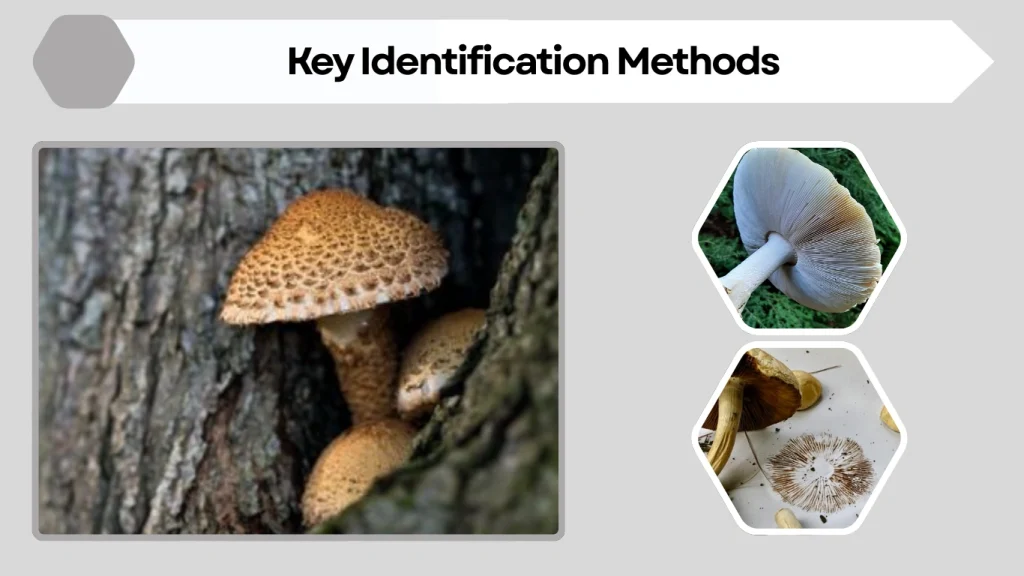
Careful observation is the foundation of mushroom identification. Note the cap shape (convex, flat, funnel-shaped), surface texture, and color variations. Examine the underside of the cap to determine whether it has gills, pores, or teeth. Observe how the gills attach to the stem—free, attached, or running down the stem—as this detail is often critical.
Spore Prints
A spore print is one of the most reliable identification tools. To make one, place the cap gill-side down on white and dark paper, cover it, and leave it for several hours. The spore color—white, brown, black, pink, or other shades—can help narrow down species and eliminate dangerous possibilities.
Key Identification Methods (Continued)
Smell and Texture
Smell can provide helpful identification clues, though it should never be used alone. Some edible mushrooms have distinctive aromas described as almond-like, anise-scented, or earthy, while others may smell unpleasant or chemical. Texture is equally important. Certain mushrooms snap cleanly when broken, while others are fibrous or rubbery. These traits can help confirm an identification when combined with visual features.
Habitat and Season
Where and when a mushroom grows is often just as important as how it looks. Some species grow only on wood, others directly from soil, and some appear exclusively near certain tree species. Seasonality also matters; many mushrooms fruit only in specific months or weather conditions. A mushroom found outside its known habitat or season should be treated with suspicion, even if it resembles an edible species.
Common Edible Mushrooms (Beginner-Friendly)
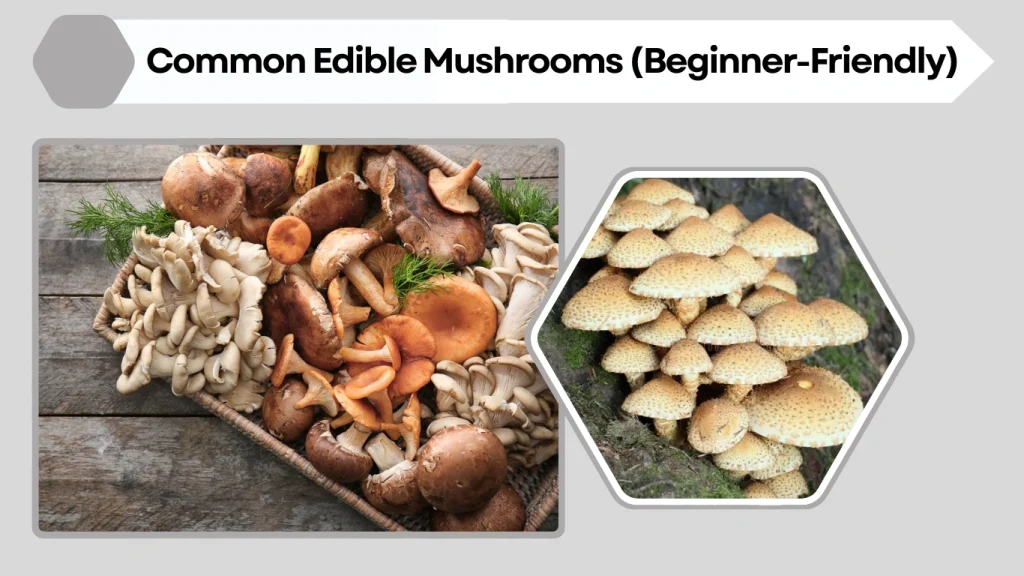
For beginners, it is safest to start with mushrooms that have distinctive features and few dangerous look-alikes. These mushrooms are often widely documented and commonly foraged.
Some edible mushrooms are easily recognized due to their unique shapes, colors, or growth habits. Others grow in clusters or directly on wood, reducing confusion with soil-growing poisonous species. However, even beginner-friendly mushrooms require careful confirmation using multiple identification features.
It is recommended to learn one species at a time, study its key characteristics, understand its look-alikes, and confirm identification with reliable field guides or experienced foragers before consumption.
Dangerous and Toxic Mushrooms to Avoid
Deadly Poisonous Species
Certain wild mushrooms contain toxins that can cause severe organ damage or death, even in small amounts. Some of the most dangerous species closely resemble edible mushrooms, especially when young. These toxins are not destroyed by cooking, drying, or freezing.
One of the greatest dangers is delayed poisoning, where symptoms appear many hours after consumption. By the time nausea, vomiting, or abdominal pain begins, serious internal damage may already be occurring. This is why prevention through careful identification is far more effective than treatment.
Common Identification Mistakes
Mistakes often occur when people rely on color alone, harvest immature mushrooms, or assume that “familiar-looking” mushrooms are safe. Skipping steps such as checking the base of the stem for a volva or making a spore print can lead to fatal errors. Every identification should be deliberate, methodical, and verified.
Tools and Resources for Identification
Field Guides and Books
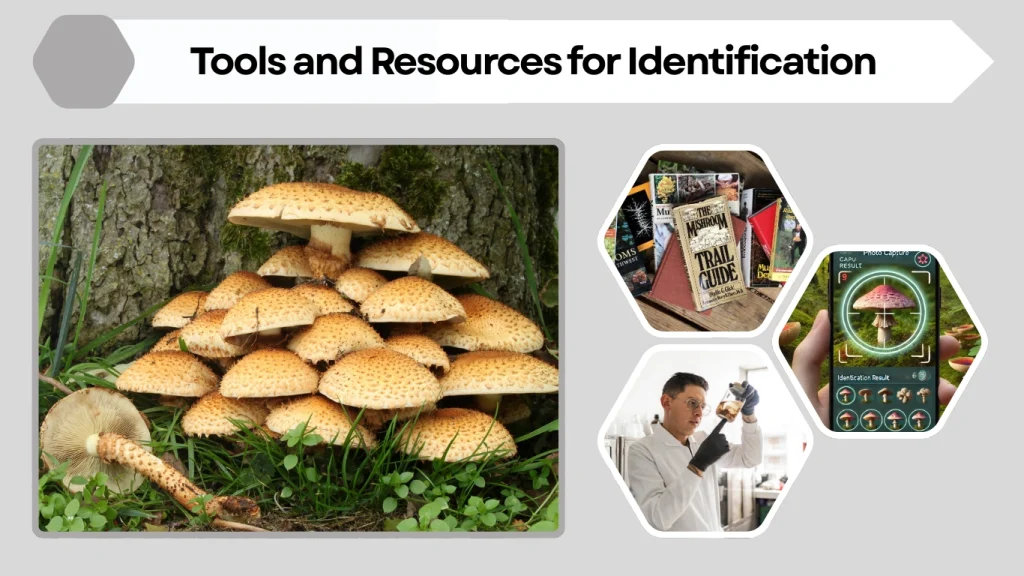
A high-quality regional field guide is one of the most valuable tools for mushroom identification. Good guides include clear photographs, detailed descriptions, habitat information, and warnings about toxic look-alikes. Books should always be chosen based on the geographic region where foraging takes place.
Mobile Apps and Online Resources
Mushroom identification apps and online databases can be useful for learning and comparison, but they should never be relied upon as the sole source of identification. Image recognition technology is imperfect, and errors can be dangerous. Apps are best used as learning aids, not final authorities.
Learning From Experts
Joining local mushroom clubs or mycological societies provides opportunities to learn directly from experienced foragers. Group forays, workshops, and guided walks allow beginners to see mushrooms in their natural habitats and ask questions in real time. Learning alongside others greatly reduces risk.
Harvesting and Handling Edible Mushrooms
Ethical and Sustainable Foraging
Responsible foraging protects both ecosystems and future harvests. Take only what you plan to use, avoid damaging surrounding plants, and leave some mushrooms behind to release spores. Use baskets or mesh bags rather than plastic, allowing spores to spread naturally.
Safe Handling and Storage
Wild mushrooms should be kept separate from store-bought mushrooms until they are fully identified. Clean them gently with a brush or cloth rather than soaking in water. Most fresh mushrooms should be refrigerated and used within a few days, while drying is a popular method for long-term storage.
Preparing and Eating Wild Mushrooms
Many wild mushrooms should never be eaten raw, even if they are edible when cooked. Cooking improves digestibility and can reduce mild toxins present in some species. When trying a new edible mushroom for the first time, eat a small portion and wait 24 hours to ensure there is no adverse reaction.
Never serve wild mushrooms to others unless you are completely confident in their identification and preparation.
Conclusion
Edible mushroom identification is a skill built through patience, observation, and respect for nature. While foraging can be deeply rewarding, safety must always come first. By learning mushroom anatomy, following strict identification rules, using reliable resources, and avoiding shortcuts, beginners can reduce risks and grow their knowledge responsibly. With time and experience, mushroom identification becomes not just a practical skill, but a deeper way to connect with the natural world.