






The green carnation flower stands out among ornamental plants because of its unusual and refreshing color. While most carnations are known for reds, pinks, and whites, green carnations offer a unique look that symbolizes renewal, freshness, and good fortune. They are often used in themed events, festive decorations, and modern floral arrangements. With long-lasting blooms and strong stems, green carnations are valued both as cut flowers and as garden plants, making them increasingly popular among florists and home gardeners alike.
What Is a Green Carnation Flower?
A green carnation is a color form of the carnation plant, scientifically known as Dianthus caryophyllus. Carnations belong to the Caryophyllaceae family and are native to the Mediterranean region. Through selective breeding and, in some cases, floral dyeing, carnations are now available in many colors, including green.
Some green carnations are naturally bred varieties that develop green-toned petals, while others are traditional white carnations that have been dyed to achieve a bright or deep green shade. Both types are widely used in the floral industry. Naturally green carnations tend to have softer, pale green or lime-colored petals, whereas dyed carnations can appear vivid emerald or neon green.
Green carnations share the same strong stems, narrow bluish-green leaves, and layered flower form as other carnations, making them suitable for both decorative and practical use.
Botanical Description of Green Carnations

Plant structure
Green carnation plants are herbaceous perennials that usually grow between 12 and 24 inches tall. The stems are upright, smooth, and sturdy, designed to support full flower heads. Leaves are narrow, elongated, and gray-green to bluish-green in color, arranged opposite each other along the stem.
The plants form compact clumps and send up multiple flowering stems during the blooming season. Their shallow, fibrous roots require well-drained soil and moderate moisture to stay healthy.
Flower characteristics
The flowers of green carnations are round and layered, made up of many overlapping petals with finely frilled edges. Depending on the variety, the green color may range from pale mint and apple green to deeper lime or emerald tones. Some blooms show hints of cream or yellow mixed into the green.
Many green carnations carry a light, spicy fragrance similar to cloves, although some modern florist varieties are bred more for appearance than scent. Flower size varies, with standard types producing large, single blooms and spray types producing clusters of smaller flowers on branching stems.
Origin and History of Green Carnations
Carnations have been cultivated for more than two thousand years and originated in the Mediterranean region. Ancient Greeks and Romans valued them for decoration and ceremonial use. The genus name “Dianthus” means “flower of the gods,” reflecting their historic importance.
Green carnations, however, are a more recent development. Naturally green varieties emerged through selective breeding as horticulturists experimented with expanding carnation color ranges. The popularity of green carnations increased significantly with their association with St. Patrick’s Day celebrations, where green flowers symbolize Irish heritage, luck, and festivity.
Dyed green carnations also became common in the commercial flower industry because white carnations absorb colored water easily, allowing florists to create bright green blooms for events, marketing displays, and novelty arrangements.
Meaning and Symbolism of Green Carnation Flowers
Traditional meanings
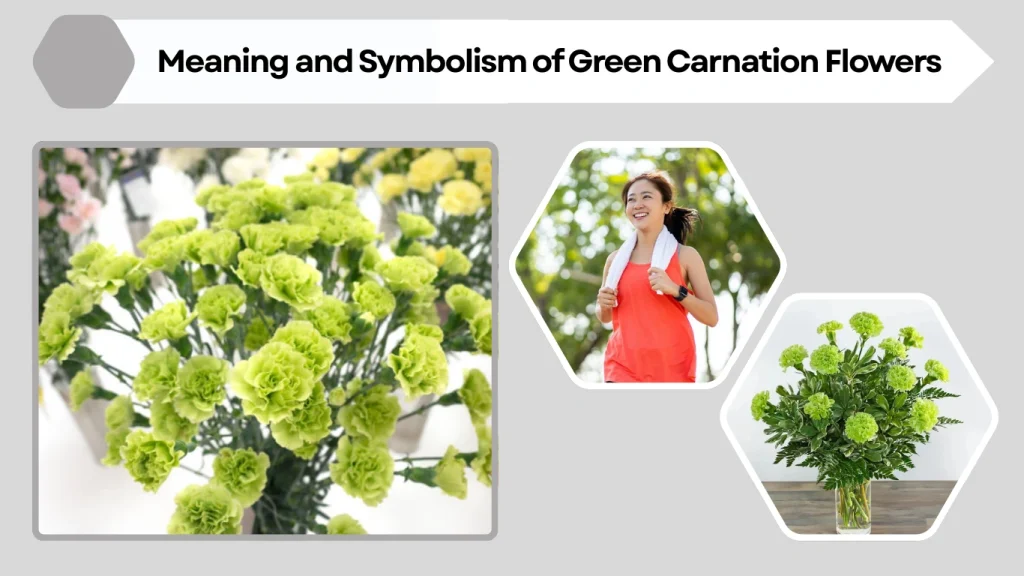
Green carnations are most often associated with renewal, freshness, good health, and good luck. The green color reflects growth, nature, and balance. Because of this, green carnations are frequently used in arrangements meant to symbolize new beginnings, positive energy, and harmony.
They are also linked to prosperity and youthfulness, making them suitable for congratulatory gifts, housewarmings, and celebratory occasions.
Cultural and modern symbolism
In modern culture, green carnations are strongly associated with St. Patrick’s Day and Irish-themed events. They are worn as accessories, used in parades, and featured in festive floral designs.
Green carnations are also popular in eco-themed weddings, contemporary floral art, and branding displays because they communicate freshness and originality. Their unusual color makes them a favorite for creative and non-traditional arrangements.
Types and Varieties of Green Carnations
There are several forms of green carnations used in gardens and floral design.
- Naturally bred green carnations: Cultivars that produce light green or lime-tinted petals.
- Dyed green carnations: White carnations colored using floral dyes for bright green shades.
- Standard green carnations: Large single blooms on long stems.
- Spray green carnations: Multiple small flowers on branching stems.
- Miniature and decorative varieties: Compact plants for containers and borders.
How to Grow Green Carnations
Climate and sunlight needs
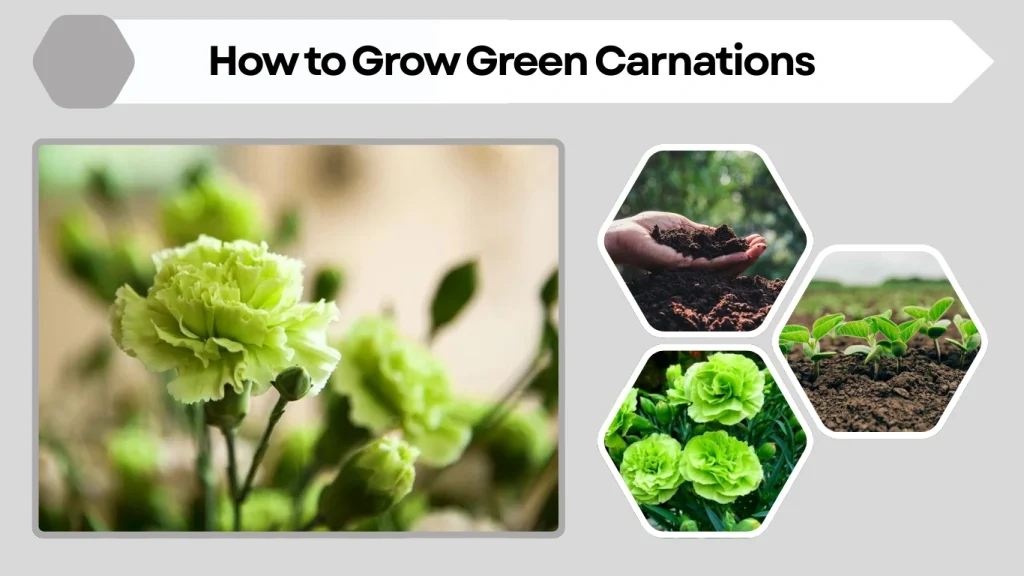
Green carnations grow best in full sun, requiring at least five to six hours of direct light daily. They prefer moderate temperatures and good air circulation. Mild climates support longer blooming periods, while extreme heat or prolonged frost can reduce flowering and plant strength.
Soil requirements
Green carnations prefer loose, fertile, well-drained soil. Heavy or waterlogged soil can cause root rot and weak growth. The ideal soil pH is slightly alkaline to neutral, around 6.5 to 7.5. Mixing compost or aged organic matter into garden soil improves drainage and nutrient availability. In containers, a quality potting mix with added perlite or sand works well.
Planting methods
Green carnations can be grown from seeds, cuttings, or nursery plants. Seeds are often started indoors and transplanted once frost danger has passed. Cuttings are commonly used to preserve specific varieties. Plants should be spaced to ensure airflow and reduce disease risk. When planting, keep the crown slightly above soil level to prevent moisture from collecting around the stem.
Green Carnation Care Guide
- Watering: Water regularly but avoid overwatering. Let the topsoil dry slightly between waterings.
- Fertilizing: Apply a balanced fertilizer during active growth. Too much nitrogen can reduce flowering.
- Pruning and deadheading: Remove faded blooms to encourage new flowers and tidy growth.
- Supporting stems: Tall varieties may need light staking.
- Pest and disease monitoring: Watch for aphids, spider mites, and fungal problems.
Blooming Season and Flower Longevity
Green carnations usually bloom from late spring through summer, with some varieties flowering into early autumn. In mild climates or greenhouse conditions, they may bloom nearly year-round. Individual flowers can last two to three weeks on the plant and up to three weeks as cut flowers when properly cared for.
Common Problems When Growing Green Carnations
Typical problems include yellowing leaves, poor flowering, and weak stems. Overwatering is the most common cause of disease, often leading to root rot. Poor air circulation can encourage fungal infections. Pests such as aphids and thrips may damage buds and foliage. Ensuring good sunlight, spacing, and drainage helps prevent most issues.
Uses of Green Carnation Flowers

Floral and decorative uses
Green carnations are widely used in themed bouquets, modern floral arrangements, weddings, and corporate displays. Their unusual color makes them popular for St. Patrick’s Day events, eco-themed celebrations, and creative floral designs.
Garden and landscape uses
In gardens, green carnations are planted in beds, borders, and containers. They blend well with white and pastel flowers and add a refreshing contrast to traditional garden colors.
Cultural and novelty uses
Green carnations are often worn or displayed during Irish cultural events, festivals, and promotional activities. They are also used in photo shoots and artistic installations.
Green Carnation vs Other Carnation Colors
Green carnations symbolize renewal and luck, while red carnations emphasize love and passion, white carnations focus on purity and remembrance, pink carnations often represent gratitude, and yellow carnations are associated with cheerfulness and friendship. Green varieties stand out for modern, festive, and symbolic arrangements.
Harvesting and Storing Green Carnations
Green carnations should be cut early in the morning when buds are partially open. Cut stems at an angle and place them immediately into clean water. Remove lower leaves and change vase water every few days. Keep flowers in a cool, shaded area to extend freshness.
Interesting Facts About Green Carnations
Green carnations are especially popular during St. Patrick’s Day celebrations. White carnations absorb dye easily, making them one of the most commonly colored flowers in the floral industry. Naturally green carnations are relatively rare and valued for their soft, fresh tones.
FAQs
What does a green carnation symbolize?
Green carnations symbolize renewal, good luck, growth, and harmony.
Are green carnations natural?
Some green carnations are naturally bred, while many bright green carnations are white flowers dyed with floral coloring.
How long do green carnations last?
With proper care, green carnations can last up to two to three weeks as cut flowers.
Can you grow green carnations at home?
Yes. Naturally green carnation varieties can be grown at home in gardens or containers with proper sunlight and well-drained soil.
Are green carnations good for special events?
Yes. Their unique color makes them popular for themed events, weddings, festivals, and modern floral designs.