






Peace lilies (Spathiphyllum) are popular for their glossy green leaves, elegant white blooms, and ability to adapt well to indoor environments. They are often described as easy plants, but long-term success depends on proper light, watering habits, and humidity control. Peace lilies can also grow outdoors in warm, frost-free regions, where they thrive in shade and moist soil. This step-by-step care guide explains how to look after peace lilies as houseplants and outdoor plants, covering daily routines, growing conditions, and essential maintenance practices.
Quick Peace Lily Care Overview
Peace lilies prefer bright, indirect light, consistently moist but well-drained soil, warm temperatures, and moderate to high humidity. They tolerate low light, but flowering improves with better light exposure. Whether grown indoors or outdoors, the main goals are to avoid harsh direct sun, prevent waterlogged roots, and maintain stable growing conditions.
Step-by-Step Peace Lily Care Guide

This step-by-step routine forms the foundation of peace lily care for both indoor plants and outdoor container specimens.
- Step 1: Start with the right light
Place peace lilies where they receive bright, filtered light. Indoors, this means near an east- or north-facing window or several feet back from a brighter window. Outdoors, choose full shade or dappled shade. Avoid strong midday sun, which can scorch leaves. - Step 2: Check soil moisture regularly
Before watering, test the soil with your finger. When the top 2–3 cm (about one inch) feels slightly dry, it is time to water. Peace lilies enjoy moisture, but constantly wet soil quickly damages their roots. - Step 3: Water deeply and correctly
Water until excess moisture drains from the bottom of the pot. This ensures the entire root zone is hydrated. Always empty saucers after watering so the plant never sits in standing water. - Step 4: Maintain humidity
Peace lilies are tropical plants and respond well to humid air. Grouping plants, placing them in naturally humid rooms, or using pebble trays can prevent brown leaf tips and improve overall growth. - Step 5: Feed lightly during active growth
During spring and summer, apply a diluted, balanced fertilizer occasionally. Heavy feeding is unnecessary and often harmful. In fall and winter, reduce or stop feeding as growth slows. - Step 6: Groom and inspect the plant
Remove yellowing leaves and spent blooms to keep the plant healthy and attractive. Wipe dust from leaves and regularly check for pests or signs of root stress. - Step 7: Adjust care seasonally
In warm, bright months, peace lilies need more frequent watering. In cooler, darker months, they use less water and should be allowed to dry slightly more between watering.
Indoor Peace Lily Care

Best light placement inside the home
Peace lilies thrive in bright, indirect light but adapt well to medium and low-light rooms. Too little light results in fewer flowers and slower growth, while too much direct sun can burn leaves. Ideal locations include living rooms with filtered daylight, bedrooms, offices, and bright hallways.
Watering routine for houseplants
Indoor peace lilies often need watering about once a week, though this varies with temperature, pot size, and season. Drooping leaves can signal thirst, but repeated severe drooping weakens the plant. Aim for steady moisture rather than cycles of extreme dryness and soaking.
Humidity and airflow
They prefer moderate to high humidity. Bathrooms and kitchens often provide ideal conditions. Avoid placing peace lilies near heating vents, air conditioners, or cold drafts, which dry the air and stress foliage.
Pot choice and drainage
Always use containers with drainage holes. Peace lilies dislike waterlogged soil. Decorative outer pots are fine only if excess water is removed promptly after watering.
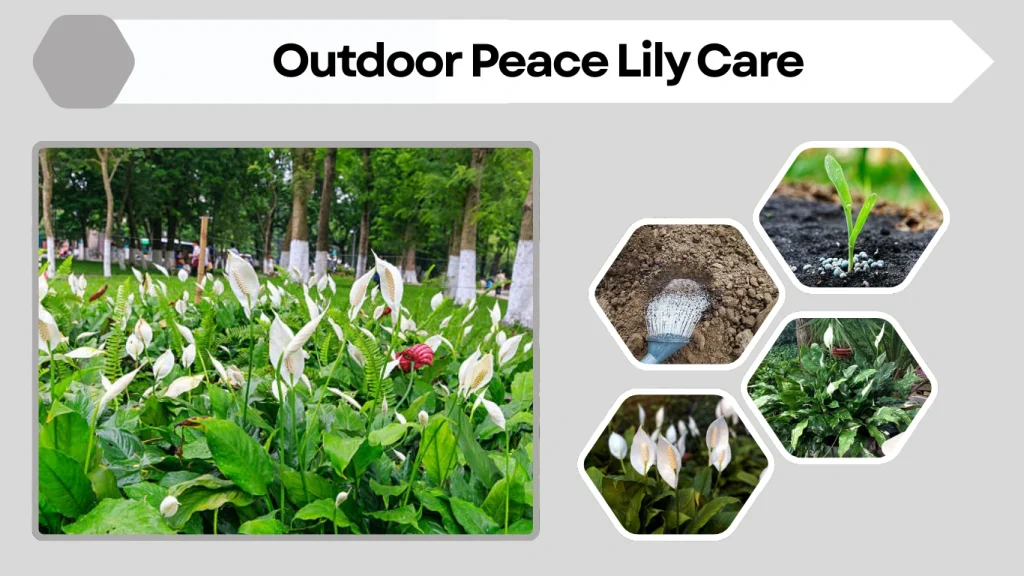
Outdoor Peace Lily Care
Where outdoor peace lilies grow best
Outdoors, peace lilies grow best in shaded gardens, under trees, or on covered patios where light is filtered. They perform well as border plants or container plants in tropical and subtropical landscapes.
Climate and temperature limits
Peace lilies grow outdoors year-round only in frost-free climates. Temperatures below about 13°C (55°F) slow growth, and frost can kill the plant. In cooler regions, peace lilies should be grown in pots and moved indoors before cold weather arrives.
Outdoor watering approach
Outdoor plants dry out faster, especially in warm weather. They may need more frequent watering, sometimes several times per week. However, drainage is still essential. The soil should remain evenly moist but never soggy.
Wind and weather protection
Strong wind can tear leaves and dry out soil quickly. Heavy rain may oversaturate roots. Sheltered locations provide the best outdoor growing conditions.
Soil, Potting Mix, and Repotting
Best potting mix
Peace lilies prefer loose, organic-rich soil that holds moisture but drains well. This balance allows roots to breathe while staying hydrated.
When to repot
Repot every one to two years or when roots begin circling the pot and water drains through too quickly. Slight root crowding encourages blooming, but extreme crowding restricts growth.
Repotting basics
Move the plant to a container only one size larger. Refresh the soil, water thoroughly, and place the plant in gentle light for one to two weeks while it adjusts.
Watering Peace Lilies the Right Way

Proper watering is the most important factor in peace lily care. The goal is consistent moisture without saturation. Using room-temperature water, allowing excess to drain freely, and occasionally flushing the soil to remove mineral buildup all help maintain strong roots and healthy foliage.
Fertilizing and Bloom Support
Peace lilies are not heavy feeders, but gentle nutrition supports healthy foliage and flowering.
Best feeding schedule
Feed peace lilies during their active growing season, typically spring through summer. A diluted, balanced fertilizer applied lightly is sufficient. Overfeeding can cause brown leaf tips, weak growth, and salt buildup in the soil.
How to encourage flowering
Blooms depend mainly on light. Move the plant to brighter indirect light if flowering slows. Keep watering consistent, avoid frequent stress, and allow the plant to become slightly root-bound. Removing old blooms helps redirect energy toward new flower production.
What to avoid
Avoid heavy fertilizer doses and feeding during fall and winter, when growth naturally slows.
Pruning, Cleaning, and Routine Maintenance
Leaf and flower pruning
Remove yellow or damaged leaves by cutting them at the base with clean scissors. Spent blooms should also be cut off near the soil line to maintain appearance and prevent unnecessary energy use.
Cleaning the foliage
Wipe leaves with a damp cloth every few weeks. This removes dust, improves photosynthesis, and discourages pests.
General upkeep habits
Rotate the pot occasionally so the plant grows evenly. Keep the soil surface free of fallen debris and check drainage holes to make sure they remain clear.
Common Problems and How to Fix Them
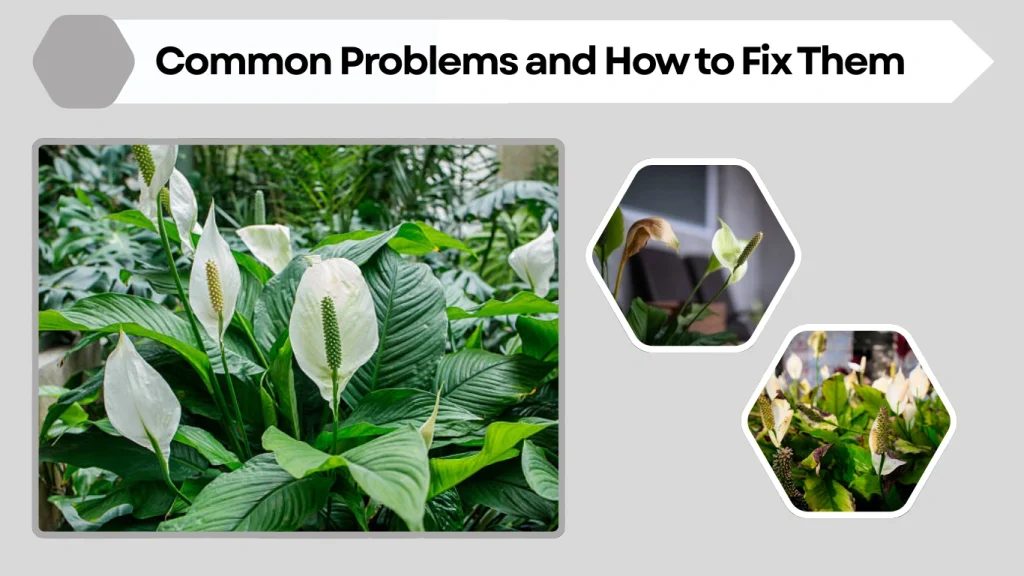
Yellow leaves
Often caused by overwatering, poor drainage, or low nutrient availability. Let the top soil dry slightly before watering and ensure excess water can escape.
Brown leaf tips and edges
Usually linked to low humidity, mineral buildup from tap water, or inconsistent watering. Increase humidity, flush soil monthly, and avoid overfertilizing.
Drooping leaves
Drooping is commonly a sign of thirst and often corrects quickly after watering. If the soil is already wet, drooping may indicate root problems or cold stress.
Lack of flowers
Most often caused by insufficient light. Move the plant to a brighter location with indirect sunlight and maintain stable care routines.
Root rot and pests
Root rot results from constant wet soil and shows as black, mushy roots and a sour smell. Peace lilies rarely suffer serious pest problems, but spider mites, aphids, and mealybugs may appear in very dry indoor conditions.
Troubleshooting Routine
When a peace lily looks unhealthy, a simple diagnostic process can identify the problem.
- Check soil moisture and drainage
- Examine roots if the plant is repeatedly drooping
- Look for pests under leaves and along stems
- Review recent changes in light, temperature, or feeding
- Correct only one issue at a time to avoid further stress
This steady approach prevents overcorrection and allows the plant to recover gradually.
Seasonal Peace Lily Care Plan
Spring and summer
Growth is strongest during warm, bright months. Water more frequently, feed lightly, and expect new leaves and blooms to develop.
Fall and winter
Growth slows as light decreases. Reduce watering, stop fertilizing, and protect the plant from cold drafts and dry indoor air.
Pet and Child Safety
Peace lilies contain calcium oxalate crystals that cause irritation if chewed. Symptoms may include mouth discomfort, drooling, and mild digestive upset. Keep plants out of reach of pets and young children, especially in indoor spaces.
FAQs
How often should I water a peace lily step by step?
Check the soil surface first. When the top inch feels slightly dry, water thoroughly until excess drains from the pot. Empty the saucer after 10–15 minutes. Repeat this process rather than following a fixed schedule, as light, heat, and season all influence watering needs.
Can peace lilies grow outside permanently?
Peace lilies can grow outdoors year-round only in frost-free climates. They thrive in shaded, humid locations. In cooler regions, they should be grown in containers and moved indoors before temperatures drop, as cold can permanently damage the foliage and roots.
What is the best indoor light for peace lilies?
Bright, indirect light is ideal. Peace lilies tolerate low light but bloom less often. Avoid strong direct sunlight, especially from south- or west-facing windows, because it can scorch leaves and fade their rich green color.
Why does my peace lily keep getting brown tips?
Brown tips usually result from dry air, mineral buildup in soil, inconsistent watering, or excess fertilizer. Increase humidity, water evenly, flush the soil occasionally, and feed lightly. Using filtered or rainwater can also reduce tip browning over time.
How do I save an overwatered peace lily?
Remove the plant from its pot and inspect the roots. Trim away soft, blackened roots and repot into fresh, well-draining soil in a clean pot with drainage holes. Water lightly at first and allow the soil surface to dry slightly between future watering sessions.