





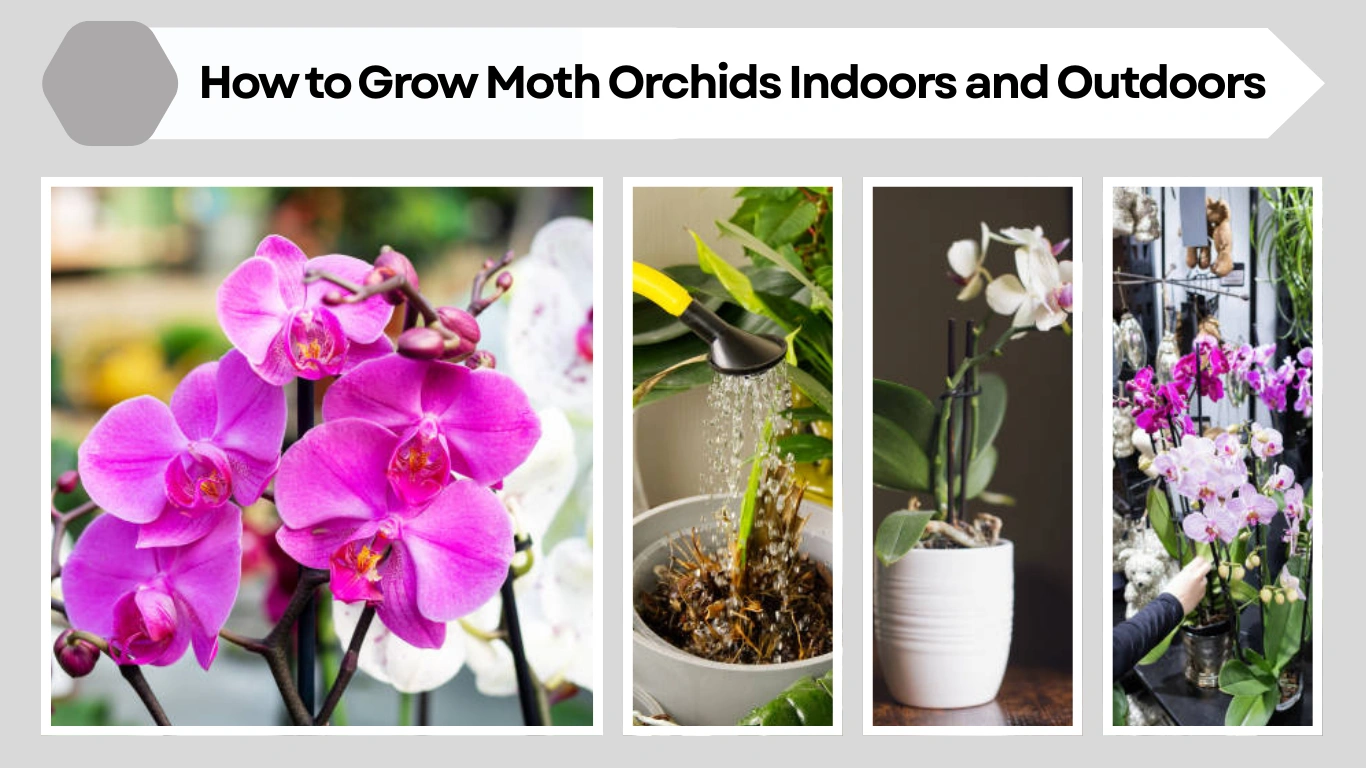
Moth orchids (Phalaenopsis orchids) are among the most popular flowering plants in the world, known for their long-lasting blooms, glossy leaves, and beginner-friendly nature. They adapt beautifully to indoor environments and can also grow outdoors in warm climates when given proper shade and moisture. Whether you want to grow moth orchids on a windowsill or in a shaded garden space, this guide explains lighting, watering, potting, and early care basics to help your orchids grow strong and bloom consistently.
Understanding Moth Orchids (Phalaenopsis)
Moth orchids are tropical epiphytic plants, meaning they naturally grow attached to trees rather than in soil. In the wild, they cling to bark, absorbing moisture and nutrients from rain, air, and organic debris. This is why their roots are thick, silvery, and exposed—they are designed to breathe.
Unlike many houseplants, moth orchids do not like compact soil. They prefer loose, airy growing media that allows water to drain quickly. Their broad, fleshy leaves store moisture, helping the plant survive short dry periods. Most Phalaenopsis orchids bloom once or twice a year, producing arching flower spikes that can hold flowers for two to four months.
Moth orchids are ideal for indoor growing because they thrive in average home temperatures and indirect light. Outdoors, they perform well in tropical and subtropical regions where frost is not a risk. Understanding their natural growth habit is the foundation for successful care both indoors and outside.
How to Identify a Healthy Moth Orchid
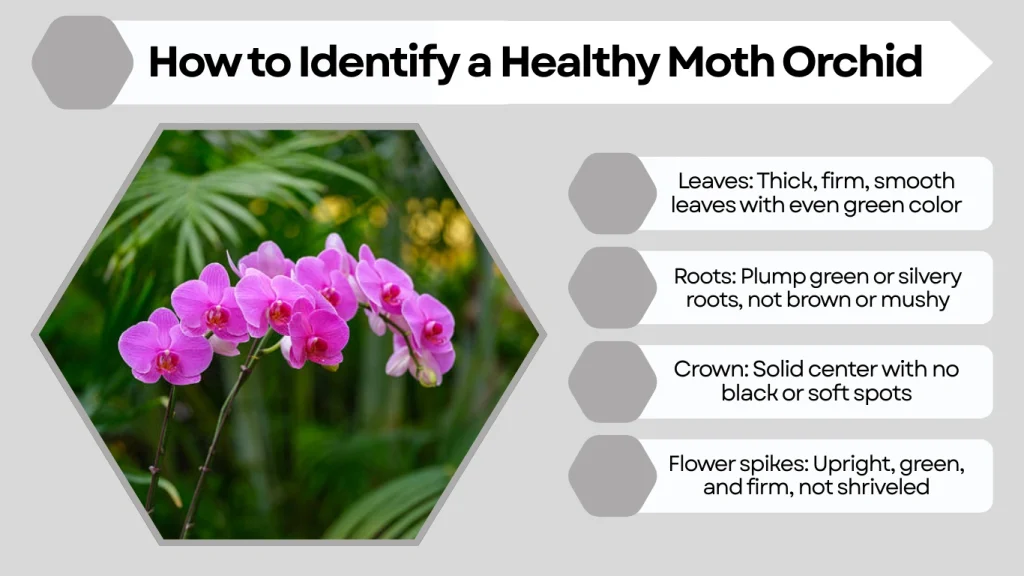
Starting with a healthy plant greatly improves your success rate. Before buying or repotting a moth orchid, examine these key features.
- Leaves: Thick, firm, smooth leaves with even green color
- Roots: Plump green or silvery roots, not brown or mushy
- Crown: Solid center with no black or soft spots
- Flower spikes: Upright, green, and firm, not shriveled
- Overall condition: No insects, sticky residue, mold, or foul odor
A healthy orchid establishes faster, resists disease better, and reblooms more reliably.
Light Requirements for Growing Moth Orchids
Indoor Light Conditions
Moth orchids need bright but indirect light. Direct sunlight, especially from south- or west-facing windows, can burn their leaves. An east-facing window is ideal because it provides gentle morning sun. North-facing windows also work if the room is bright.
Healthy light exposure results in medium green leaves. Dark green leaves often indicate low light, while yellowish or red-tinged leaves can signal too much sun. If natural light is limited, full-spectrum grow lights placed about 10–14 inches above the plant work very well.
Outdoor Light Conditions
Outdoors, moth orchids must be protected from harsh sunlight. They grow best under trees, shade cloth, patios, or covered balconies where they receive filtered or dappled light. Morning sun is beneficial, but midday and afternoon sun should be avoided.
Outdoor light changes seasonally, so placement may need adjusting throughout the year. Too much sun causes scorched leaves, while too little reduces flowering.
Temperature and Humidity Needs

Moth orchids prefer temperatures between 18–30°C (65–86°F) during the day and slightly cooler nights. These conditions are naturally found in most homes. Sudden cold drafts, heaters, or air conditioners blowing directly on plants should be avoided.
Humidity between 50–70% is ideal. Indoors, humidity can be increased with pebble trays, grouping plants together, or using a humidifier. Outdoors, natural air moisture is often sufficient, but good airflow is still important to prevent fungal problems.
Moth orchids are not frost-tolerant. If temperatures fall below 12°C (54°F), outdoor plants must be moved inside immediately.
Watering Moth Orchids Correctly

Watering mistakes are the most common reason orchids fail. The roots must stay moist but never soggy.
- Indoor watering: Usually once every 7–10 days, depending on temperature and potting mix
- Outdoor watering: More frequent in warm, dry weather; less during rainy periods
- Best method: Soak the pot thoroughly, then allow it to drain completely
- Overwatering signs: Yellow leaves, soft crown, black or mushy roots
- Underwatering signs: Wrinkled leaves, thin roots, slow growth
Always water in the morning so leaves and crown dry before nightfall. Never allow water to sit in the center of the plant.
Choosing the Right Potting Mix and Container
Best Potting Media for Moth Orchids
Moth orchids require airy mixes that dry quickly. Common options include fir bark, coconut husk, sphagnum moss, or blended orchid mixes. Bark dries faster and suits over-waterers, while moss holds moisture longer and suits dry indoor environments.
The goal is to balance moisture retention with airflow so roots can breathe.
Best Pots and Drainage Systems
Clear plastic orchid pots are excellent because they allow you to monitor root health and moisture levels. Slotted pots improve airflow. Clay pots dry faster but are heavier. Repotting is usually needed every 1–2 years or when the mix breaks down.
How to Grow Moth Orchids Indoors
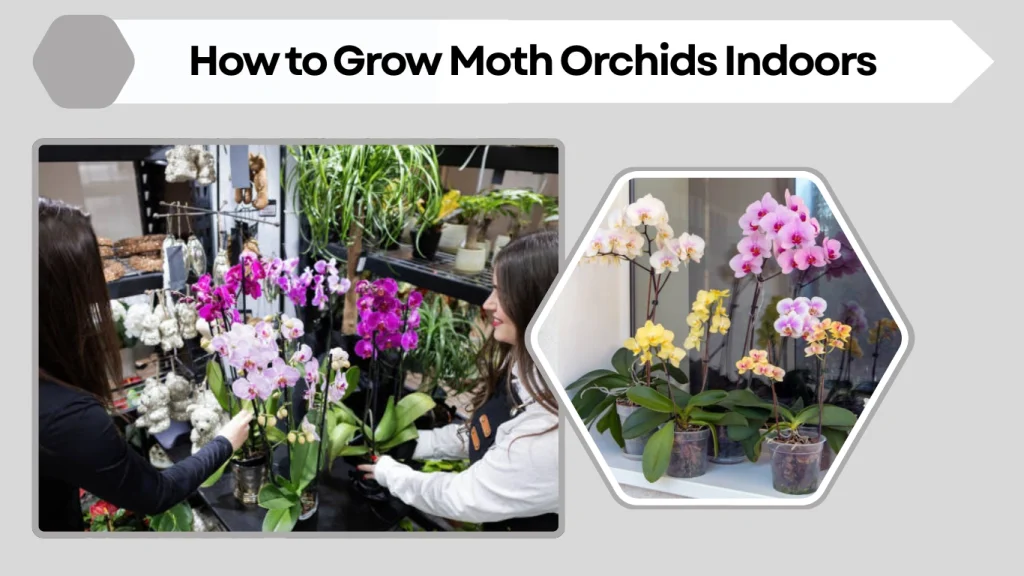
Growing moth orchids indoors is ideal for most people because home conditions closely match their natural needs. Place your orchid near a bright window with filtered light, keeping it away from direct sun rays. East-facing windows are best, while sheer curtains can protect plants in brighter rooms.
Use a well-draining orchid potting mix and a container with good airflow. Water only when the roots turn silvery and the pot feels light. After watering, allow all excess water to drain. Never let the orchid sit in standing water.
Indoor orchids benefit from gentle air circulation. A small fan across the room helps prevent fungal disease and strengthens leaves. Wipe leaves occasionally to remove dust so they can absorb light efficiently. Feed lightly every two weeks during active growth using diluted orchid fertilizer.
How to Grow Moth Orchids Outdoors

Moth orchids grow well outdoors in tropical and subtropical climates where temperatures stay warm year-round. They are commonly grown on shaded patios, balconies, or under trees. Choose a location with bright, indirect light and protection from heavy rain and strong winds.
Outdoors, orchids may be grown in pots or mounted on bark or wooden slabs. Mounted orchids dry faster and require more frequent watering. Potted orchids offer more moisture control and are easier to move when weather changes.
Outdoor orchids need close temperature monitoring. When nights drop below 12°C (54°F), bring plants indoors. Outdoor growing often results in faster leaf growth and stronger root systems due to better airflow and natural humidity.
Fertilizing Moth Orchids for Strong Growth
Moth orchids benefit from regular but gentle feeding. Over-fertilizing can damage roots, so weaker solutions used consistently are best.
- Best fertilizers: Balanced orchid fertilizer or 20-20-20 formula
- Indoor feeding: Every 2 weeks during spring and summer
- Outdoor feeding: Weekly at quarter strength during active growth
- Flushing salts: Rinse the pot with plain water once a month
- Blooming vs rest: Reduce feeding slightly after flowers drop
Always fertilize after watering, never on dry roots.
How to Encourage Reblooming in Moth Orchids

After flowers fade, moth orchids enter a resting phase before producing new blooms. If the flower spike stays green, it can be trimmed just above a node to encourage a side spike. If the spike turns brown, cut it at the base.
A slight drop in nighttime temperature often triggers new flower spikes. Place the plant in a cooler location at night for two to three weeks while maintaining good light during the day.
Consistent care, proper light, and patience are key. Most healthy moth orchids rebloom once a year, and mature plants may bloom twice.
Common Problems and How to Fix Them
Leaf and Root Problems
Yellow leaves often result from overwatering or natural leaf aging. Limp leaves indicate dehydration or root damage. Black, mushy roots signal rot and require immediate repotting in fresh mix. Crown rot is usually caused by water sitting in the plant center and must be dried quickly.
Flower and Growth Issues
Bud drop can result from temperature stress, low humidity, or sudden movement. Failure to bloom is usually caused by low light. Sunburn appears as white or brown patches on leaves. Pests such as mealybugs and spider mites should be removed promptly.
Seasonal Care Tips for Indoor and Outdoor Orchids
In summer, orchids grow actively and require more water, light, and feeding. Protect them from heat and intense sunlight. In winter, growth slows. Reduce watering, stop heavy feeding, and protect plants from cold drafts and heaters.
Outdoor orchids may need shelter during heavy rains and relocation during cold spells. Indoor orchids should be moved closer to light sources in winter months.
FAQs
Can moth orchids grow outdoors all year round?
Moth orchids can grow outdoors year-round only in warm climates where temperatures remain above 12°C (54°F). In tropical and subtropical regions, they thrive under shaded patios or trees. In cooler climates, they must be moved indoors before cold weather to prevent leaf and root damage.
How often should I water moth orchids indoors?
Most indoor moth orchids need watering every 7–10 days, depending on room temperature, humidity, and potting mix. Water when roots appear silvery and the pot feels light. Always allow excess water to drain completely to prevent root rot and crown infections.
What is the best window direction for moth orchids?
East-facing windows are ideal because they provide gentle morning sunlight. North-facing windows also work in bright rooms. South or west windows require sheer curtains to filter intense sunlight and protect leaves from scorching and heat stress.
Why are my moth orchid leaves turning yellow?
Yellow leaves can result from overwatering, natural aging, sunburn, or poor drainage. Check the roots first. Healthy roots are firm and green. If roots are brown or mushy, reduce watering and repot the orchid in fresh, airy orchid mix.
How long do moth orchid flowers usually last?
Moth orchid blooms are long-lasting and commonly stay attractive for two to four months. With stable light, temperature, and humidity, some flowers remain even longer. Proper care after blooming increases the chance of strong reblooming the following season.