





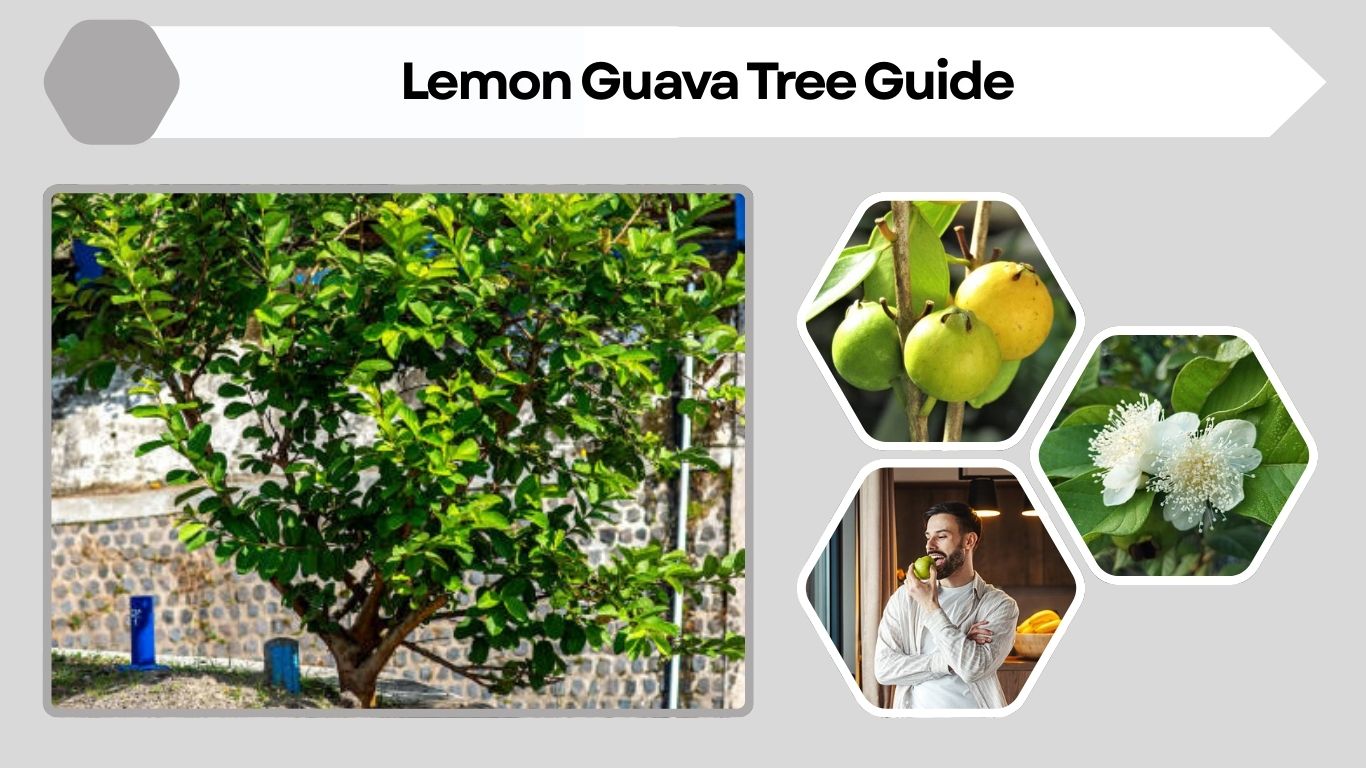
Lemon guava is a lesser-known but highly valued tropical fruit tree admired for its fragrant fruit, attractive foliage, and impressive health benefits. With a citrus-like aroma and sweet-tangy flavor, it stands apart from common guava varieties. Gardeners appreciate lemon guava for its low maintenance needs, while fruit lovers enjoy its nutritional richness and versatility in the kitchen. This article explores what lemon guava is, how to identify the tree and fruit, and why it is gaining popularity among home growers and health-conscious consumers.
What Is Lemon Guava?
Lemon guava is a tropical fruit produced by a small evergreen tree scientifically known as Psidium cattleianum var. lucidum. It belongs to the Myrtaceae family, which also includes common guava, clove, and eucalyptus. The fruit gets its name from its subtle lemon-like aroma and refreshing citrus notes.
Native to parts of South America, lemon guava has spread to tropical and subtropical regions worldwide. It is commonly grown in home gardens, small orchards, and as an ornamental plant due to its glossy leaves and attractive growth habit. Compared to regular guava, lemon guava fruits are usually smaller but more aromatic.
Lemon Guava Tree Overview
Tree Size and Growth Habit
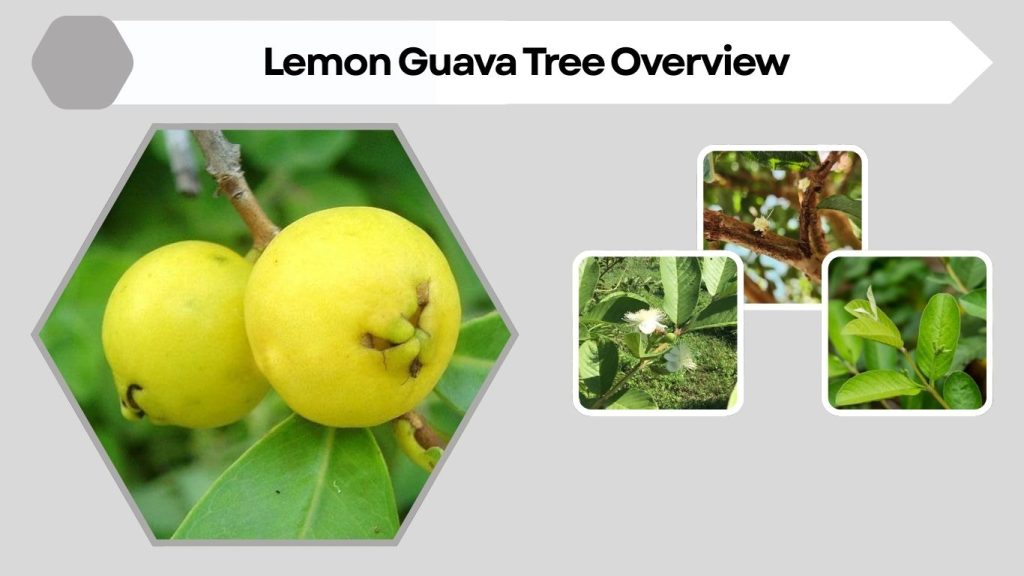
The lemon guava tree is a compact, slow-to-moderate-growing evergreen tree. Under favorable conditions, it typically reaches a height of 10 to 20 feet, making it suitable for small gardens and container planting. The tree has a dense, rounded canopy, which provides good shade and visual appeal.
Because of its manageable size, lemon guava is often used as a hedge plant or landscape tree. It responds well to pruning and can be shaped easily, which makes it ideal for urban and backyard gardening.
Leaves, Flowers, and Bark
Lemon guava leaves are thick, glossy, and dark green, with a smooth texture and an oval shape. When crushed, the leaves release a mild aromatic scent, a common trait in guava species. The tree produces small white flowers with prominent stamens, usually blooming in late spring or early summer.
The bark is smooth and light brown to gray in color, sometimes peeling slightly as the tree matures. The flowers are not only visually appealing but also attract pollinators such as bees, contributing to better fruit production.
Lemon Guava Fruit Description
Appearance and Texture
Lemon guava fruits are generally round to oval and smaller than common guava fruits. The skin is smooth and thin, turning yellow or yellow-green when fully ripe. Inside, the flesh is pale yellow to creamy white and soft when mature.
The fruit contains small seeds that are usually edible, though some people prefer to remove them when preparing juices or preserves. The overall texture is tender and juicy, making it enjoyable to eat fresh.
Taste and Aroma Profile
One of the most distinctive features of lemon guava is its flavor. The fruit offers a sweet taste with noticeable citrus undertones, often described as a blend of guava and lemon. The aroma is strong and pleasant, even more pronounced than that of regular guava.
Compared to common guava, lemon guava is less musky and more refreshing, which makes it popular for fresh consumption, beverages, and desserts.
How to Identify Lemon Guava
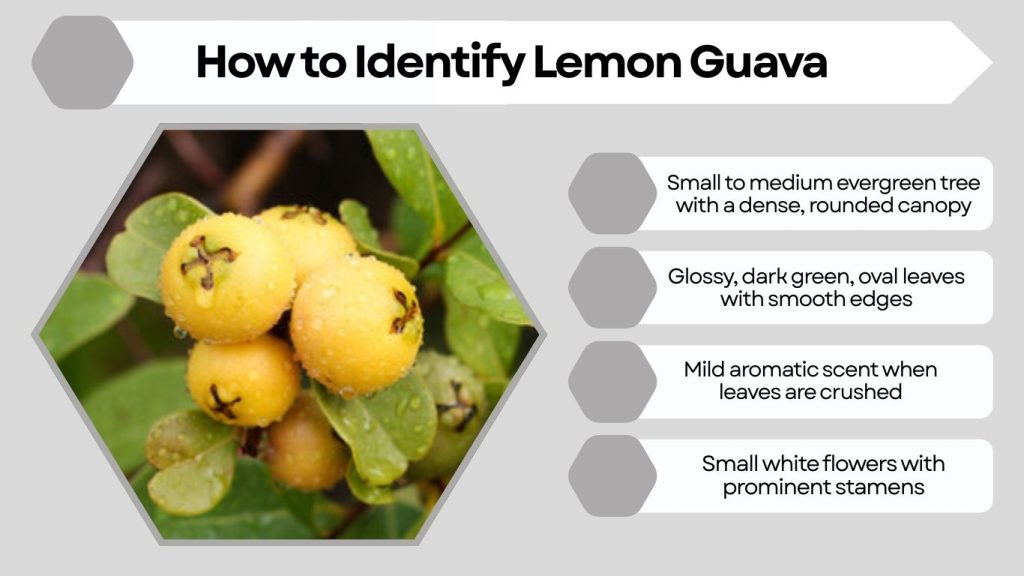
- Small to medium evergreen tree with a dense, rounded canopy
- Glossy, dark green, oval leaves with smooth edges
- Mild aromatic scent when leaves are crushed
- Small white flowers with prominent stamens
- Round to oval fruits, smaller than common guava
- Yellow or yellow-green skin when ripe
- Pale yellow or creamy flesh inside
- Strong citrus-like, lemony aroma
- Sweet flavor with noticeable lemon notes
Nutritional Value of Lemon Guava
Lemon guava is packed with essential nutrients that support overall health. It is especially rich in vitamin C, which helps strengthen the immune system and fight oxidative stress. The fruit also contains dietary fiber, aiding digestion and promoting gut health.
In addition to vitamins, lemon guava provides minerals such as potassium and magnesium, which support heart function and muscle health. Antioxidant compounds found in the fruit help protect cells from damage and contribute to healthy skin and metabolism.
Health Benefits of Lemon Guava

Boosts Immune System
Lemon guava is an excellent source of vitamin C, a nutrient well known for its role in strengthening the immune system. Regular consumption helps the body fight infections, reduces the severity of common colds, and supports faster recovery. The antioxidants present in lemon guava also help neutralize free radicals, protecting the body from cellular damage.
Supports Digestive Health
The dietary fiber found in lemon guava plays a vital role in maintaining a healthy digestive system. Fiber improves bowel regularity, prevents constipation, and supports beneficial gut bacteria. Eating lemon guava may also help soothe mild digestive discomfort and improve nutrient absorption.
Promotes Heart and Metabolic Health
Lemon guava contains potassium and other minerals that help regulate blood pressure and support cardiovascular health. Its fiber content can assist in lowering bad cholesterol levels, reducing the risk of heart disease. Additionally, the fruit’s low calorie and sugar content make it suitable for people managing weight or blood sugar levels.
Enhances Skin and Hair Health
Thanks to its antioxidants and vitamin C, lemon guava supports collagen production, which is essential for maintaining healthy skin. Regular intake may help reduce signs of aging, such as fine lines and dullness. The nutrients also contribute to stronger hair roots and improved scalp health.
Culinary and Practical Uses
Culinary Uses
Lemon guava is enjoyed in many culinary applications due to its refreshing flavor. It can be eaten fresh as a snack or sliced into fruit salads. The fruit is commonly used to make juices, smoothies, and refreshing beverages. Lemon guava is also ideal for preparing jams, jellies, sauces, and desserts, as its natural pectin helps achieve a good consistency.
Traditional and Medicinal Uses
In traditional practices, different parts of the lemon guava tree have been used for medicinal purposes. The leaves are often brewed into herbal teas believed to support digestion and help manage mild inflammation. While these uses are based on traditional knowledge, they continue to be popular in many cultures.
Ornamental and Landscaping Uses
Beyond fruit production, lemon guava is valued as an ornamental plant. Its glossy leaves, compact size, and fragrant flowers make it attractive in home gardens. It is often planted as a hedge, screen, or container tree, adding both beauty and functionality to landscapes.
How to Grow Lemon Guava
Climate and Soil Requirements
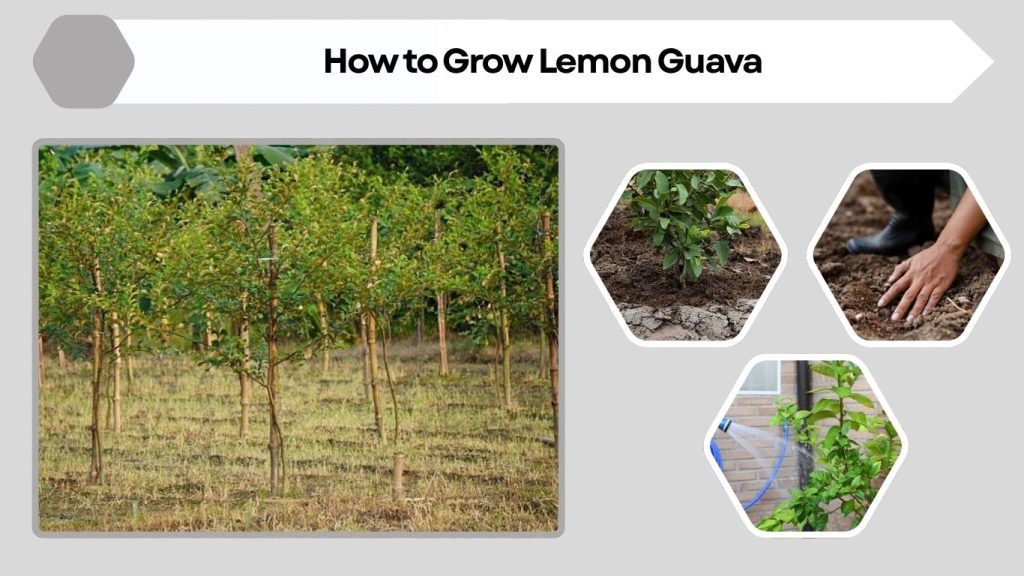
Lemon guava thrives in warm tropical and subtropical climates. It prefers full sun but can tolerate partial shade. The tree grows best in well-draining soil with a slightly acidic to neutral pH. Once established, it shows moderate drought tolerance.
Planting Methods
Lemon guava can be grown from seeds, though seed-grown plants may take longer to bear fruit. For quicker results, gardeners often choose nursery-grown plants or propagate the tree through cuttings. Proper spacing allows good air circulation and healthy growth.
Watering, Fertilizing, and Pruning
Regular watering is important during the early growth stage, while mature trees require moderate watering. Applying a balanced fertilizer a few times a year encourages healthy foliage and fruit production. Light pruning helps maintain shape, remove dead branches, and improve airflow.
Harvesting and Storage
Lemon guava fruits are ready to harvest when they turn yellow and release a strong, pleasant aroma. Ripe fruits should be picked gently by hand to avoid bruising. Fresh lemon guava can be stored at room temperature for a few days or refrigerated to extend shelf life.
Common Pests and Diseases
Like other guava varieties, lemon guava can be affected by fruit flies, aphids, and scale insects. Fungal diseases may occur in overly humid conditions. Regular monitoring, proper pruning, and good garden hygiene help prevent most issues.
Possible Side Effects and Precautions
Although lemon guava is generally safe to eat, excessive consumption may cause digestive discomfort due to its fiber content. People with sensitive digestion should consume it in moderation. The seeds are edible but may be avoided by individuals with digestive concerns.
Conclusion
Lemon guava is a versatile fruit tree that offers nutritional value, health benefits, and ornamental appeal. Its compact size, fragrant fruit, and ease of care make it an excellent choice for home gardeners and fruit enthusiasts alike. Whether enjoyed fresh, used in recipes, or grown as a landscape plant, lemon guava is a rewarding addition to any garden.
FAQs
What does lemon guava taste like?
Lemon guava has a sweet, mildly tangy flavor with noticeable citrus notes. Its taste is often described as a blend of traditional guava and lemon, making it more refreshing and less musky than common guava varieties.
Is lemon guava the same as strawberry guava?
No, lemon guava and strawberry guava are different varieties. Lemon guava has yellow skin and pale flesh with a citrus-like flavor, while strawberry guava usually has red skin, red or pink flesh, and a sweeter, berry-like taste.
Can lemon guava be eaten raw?
Yes, lemon guava can be eaten raw. The fruit is commonly consumed fresh, either whole or sliced. Its thin skin and soft flesh make it easy to eat, though some people prefer removing the seeds.
How long does a lemon guava tree take to bear fruit?
A lemon guava tree grown from seed typically takes 3 to 5 years to produce fruit. Trees grown from cuttings or nursery plants may start fruiting sooner, often within 2 to 3 years under good growing conditions.
Can lemon guava be grown in pots?
Yes, lemon guava grows well in containers due to its compact size. With proper sunlight, regular watering, and occasional pruning, it can thrive in large pots on patios or balconies.
Is lemon guava invasive?
In some tropical regions, lemon guava can spread aggressively if not managed properly. Regular pruning and controlled planting help prevent unwanted spread, especially in areas where it is considered invasive.