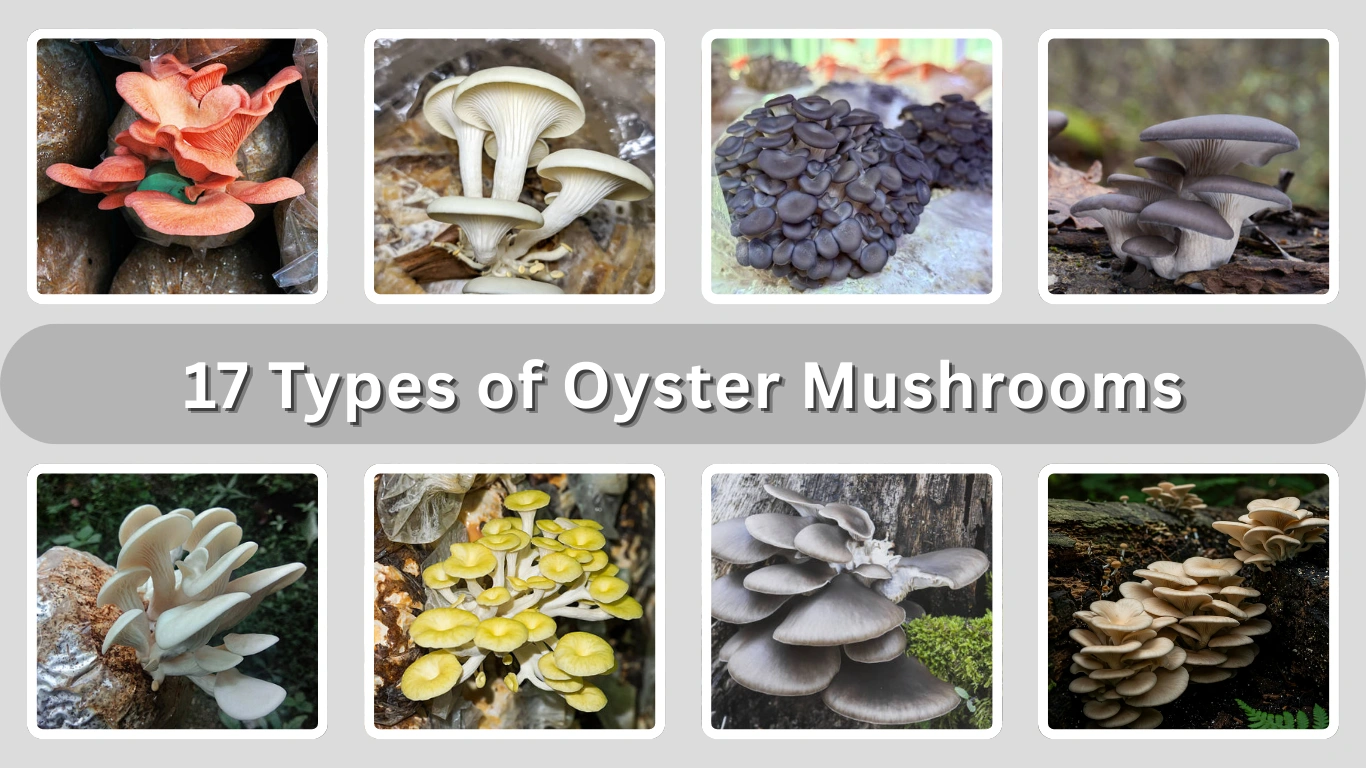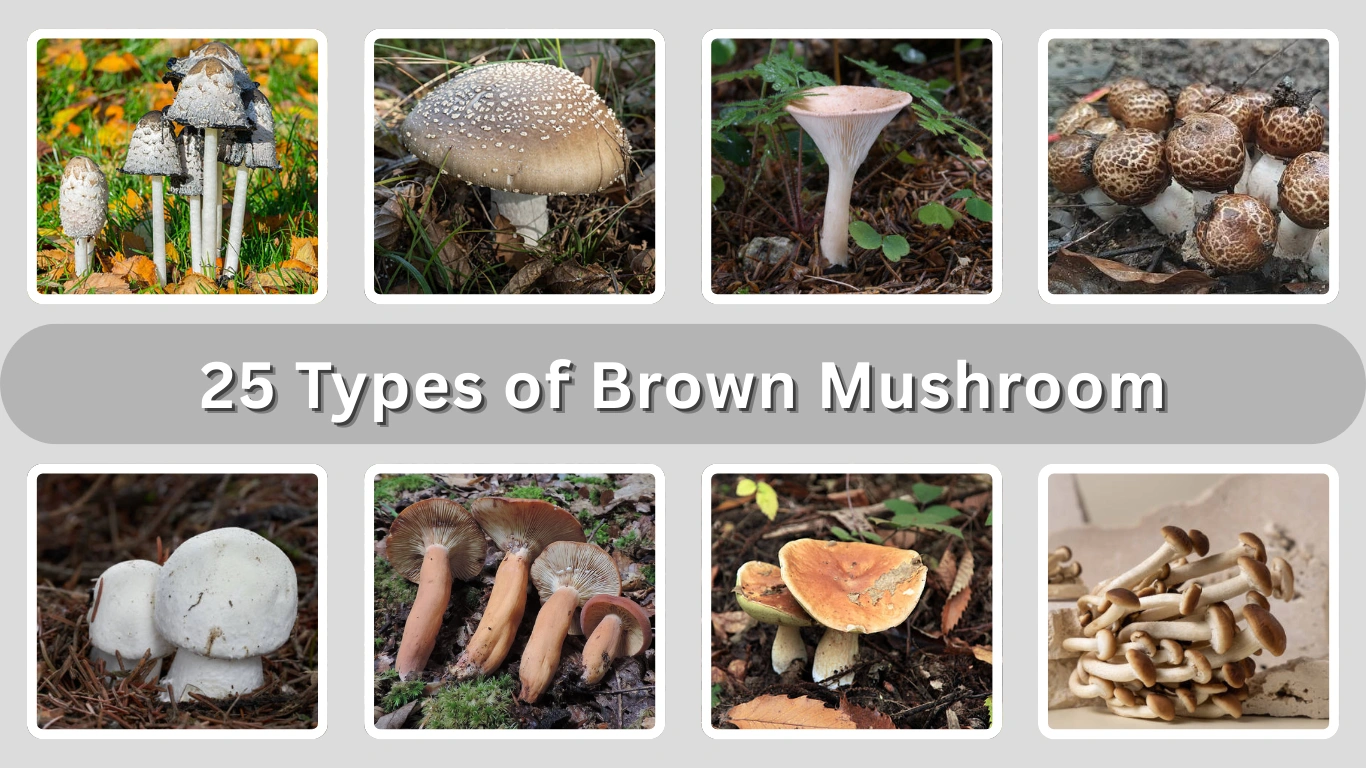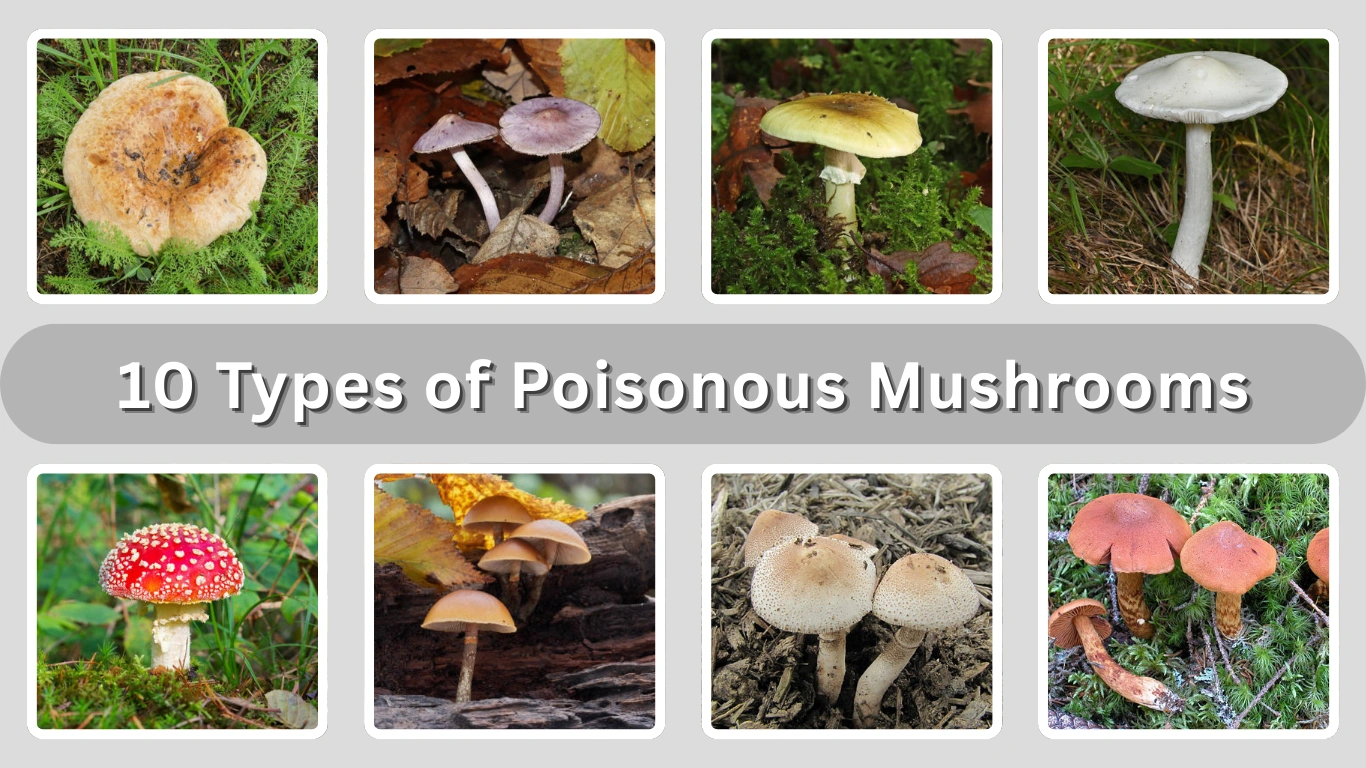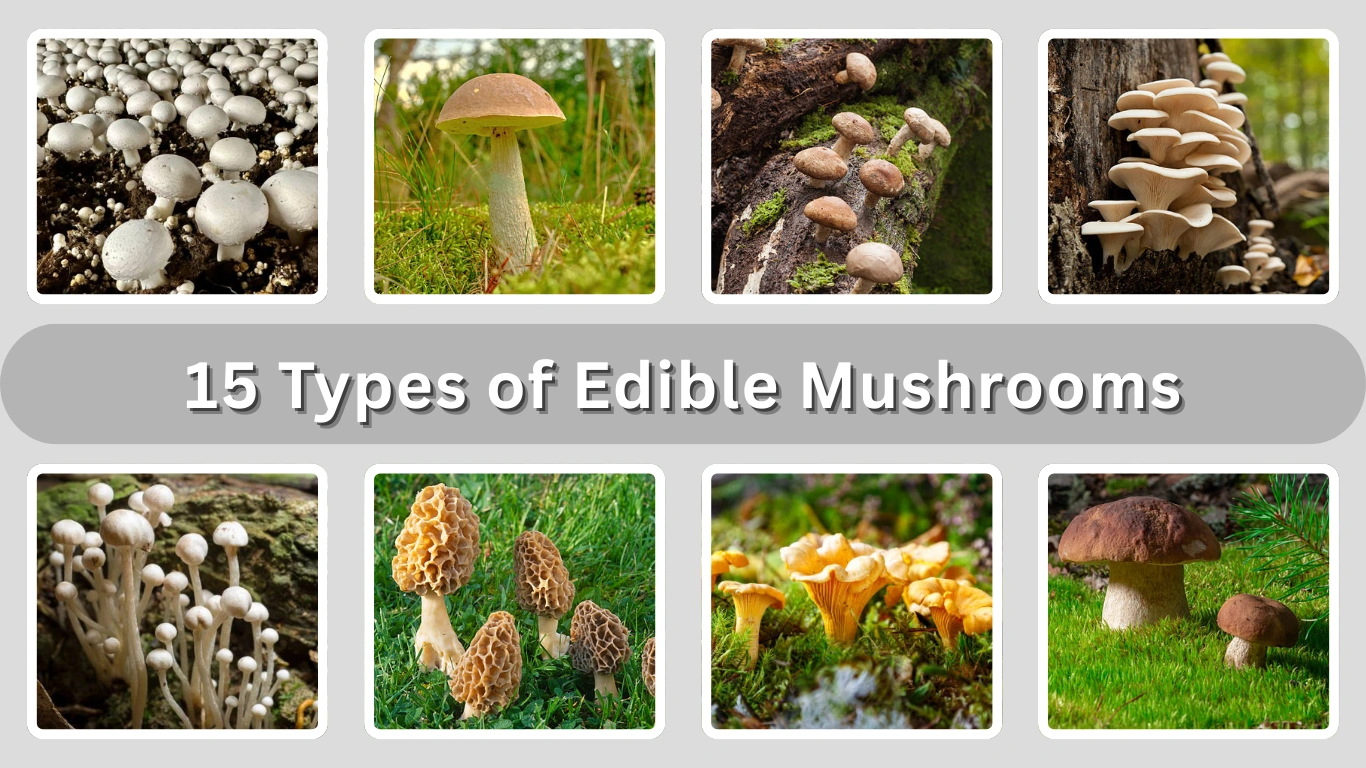






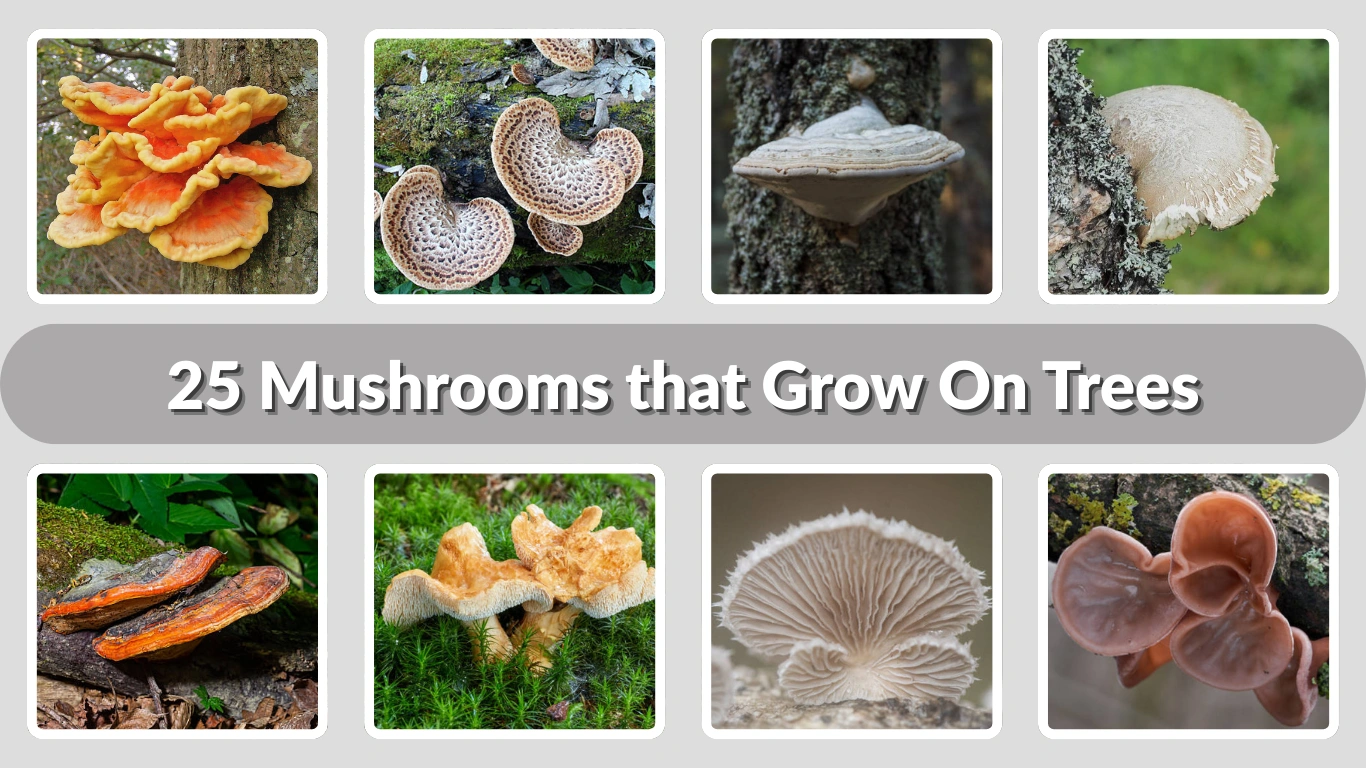
Mushrooms that grow on trees are fascinating organisms that play an essential role in forest ecosystems. They thrive on decaying wood, breaking it down and recycling nutrients back into the environment. Many of these mushrooms are not only visually striking but also offer various culinary and medicinal benefits. From the vibrant Chicken of the Woods to the medicinal Reishi, these fungi are both beautiful and beneficial to nature and humans alike.
1. Chicken of the Woods (Laetiporus sulphureus)
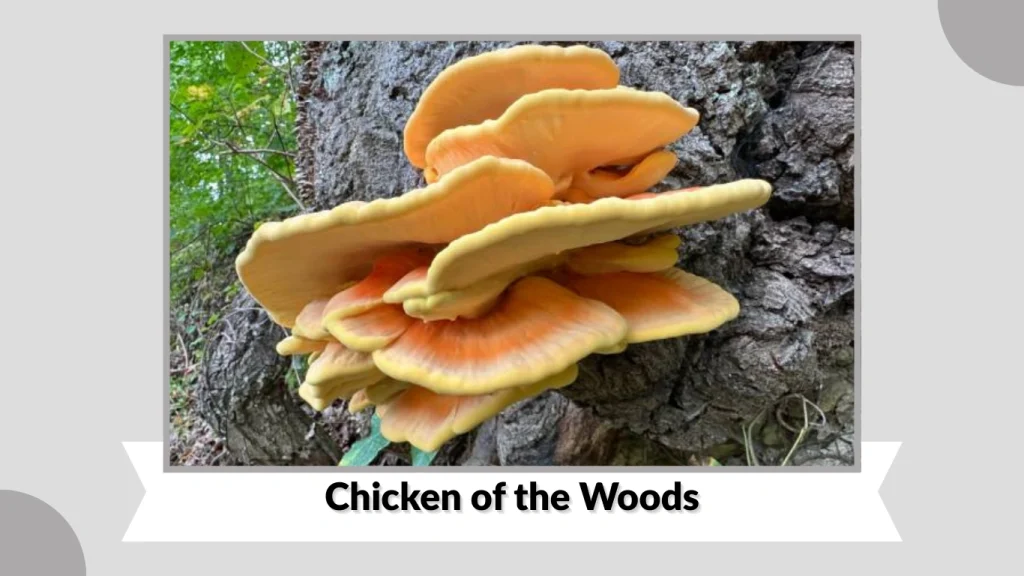
Chicken of the Woods is a vibrant, edible mushroom commonly found growing on trees, particularly hardwoods like oak and cherry. It is known for its bright yellow to orange color and its meaty texture, which resembles chicken, hence the name. This mushroom is popular among foragers due to its distinctive appearance and culinary versatility. It is often used in various dishes, offering a unique flavor and texture that can stand in for meat.
Identification
- Cap: Bright yellow to orange, often with a smooth or slightly bumpy texture.
- Shape: Fan or shelf-like structure that can grow in layers.
- Size: Can reach up to 12 inches in diameter.
- Gills: White or cream-colored with a smooth underside.
- Stem: Lacking a central stem; attached directly to the tree surface.
- Spore Print: White to pale yellow.
Habitat and Distribution
Chicken of the Woods typically grows on dead or decaying hardwood trees, such as oak, cherry, or beech. It can also be found on stumps or logs, often in clusters. This mushroom is most common in the summer and fall, particularly in temperate regions.
Culinary Uses
As one of the most popular edible mushrooms, Chicken of the Woods is often used as a meat substitute in vegetarian and vegan dishes. Its texture and taste are often compared to chicken, making it a great addition to stews, soups, and stir-fries. However, it is important to properly identify this mushroom and ensure it has been cooked well, as consuming it raw can cause digestive upset in some individuals.
2. Artist’s Conk (Ganoderma applanatum)
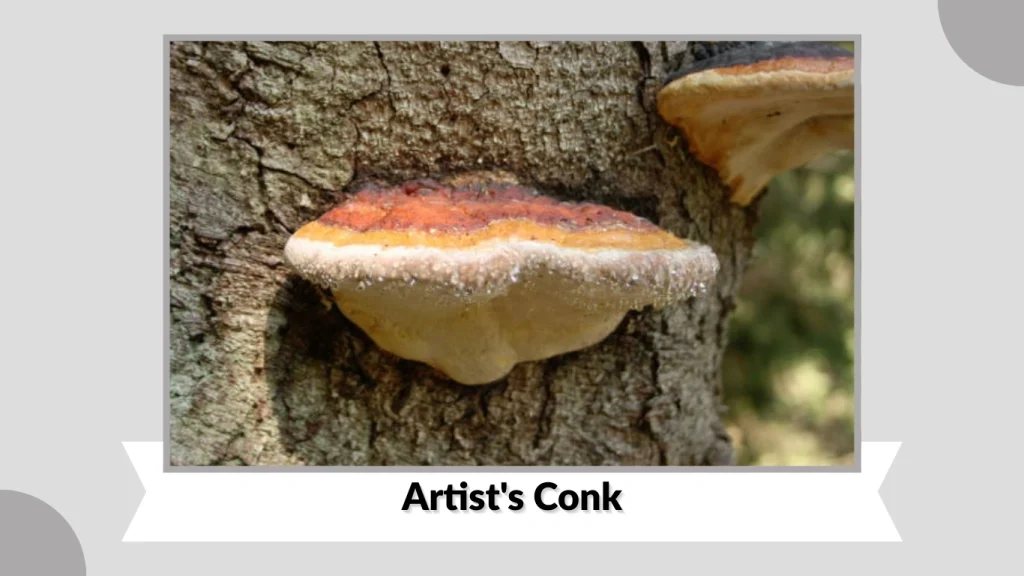
Artist’s Conk is a large, woody mushroom typically found on decaying hardwood trees, such as oak, beech, or maple. Known for its distinctive appearance, it has a hard, brownish cap with a smooth surface that darkens with age. It is often referred to as the “artist’s conk” because of its ability to display carvings, as the surface can be scratched to leave marks that last for years.
Identification
- Cap: Hard, woody, brownish, often with concentric rings.
- Shape: Shelf-like or conical, with a smooth upper surface.
- Size: Can grow up to 12 inches in diameter.
- Gills: White to light brown pores on the underside.
- Stem: Thick and stem-like, but usually off-center.
- Spore Print: White to cream.
Habitat and Distribution
Artist’s Conk is found on dead or dying hardwood trees, particularly in temperate regions. It is typically located at the base of trees or on fallen logs, often appearing in late summer or fall.
Uses and Importance
While not edible, Artist’s Conk has medicinal uses in traditional practices, especially in Asia, where it is believed to have various health benefits. It has also been used historically for carving, as its tough surface can hold intricate designs.
3. Oyster Mushroom (Pleurotus ostreatus)
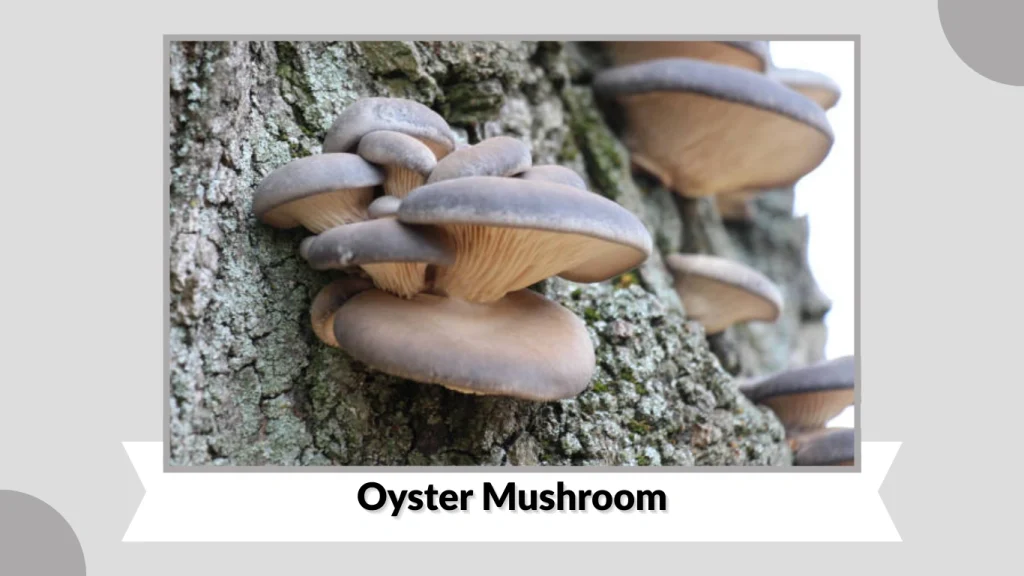
Oyster Mushroom is a widely recognized and popular edible mushroom known for its delicate, oyster-shaped cap and mild flavor. This mushroom thrives on decaying wood and is easy to identify due to its distinct shape, color variations, and soft, tender texture. It is commonly cultivated and foraged, making it a staple in many kitchens around the world.
Identification
- Cap: Oyster-shaped, ranging from white to pale gray or tan.
- Shape: Broad, fan-shaped with a smooth surface.
- Size: Typically 2 to 10 inches in diameter.
- Gills: White or pale cream, running down the stem.
- Stem: Short to absent, with the cap often growing directly from the substrate.
- Spore Print: White to lilac.
Habitat and Distribution
Oyster Mushrooms grow on decaying hardwood trees, such as beech, maple, and oak. They are found in temperate and subtropical forests and are particularly common in the late summer to fall. These mushrooms can also be found growing on fallen logs or stumps.
Culinary Uses
Oyster Mushrooms are prized for their soft, tender texture and delicate, slightly anise-like flavor. They can be sautéed, roasted, or used in soups and stews. Oyster mushrooms are a great addition to stir-fries, pasta dishes, and even vegan recipes as a substitute for meat.
4. Turkey Tail (Trametes versicolor)
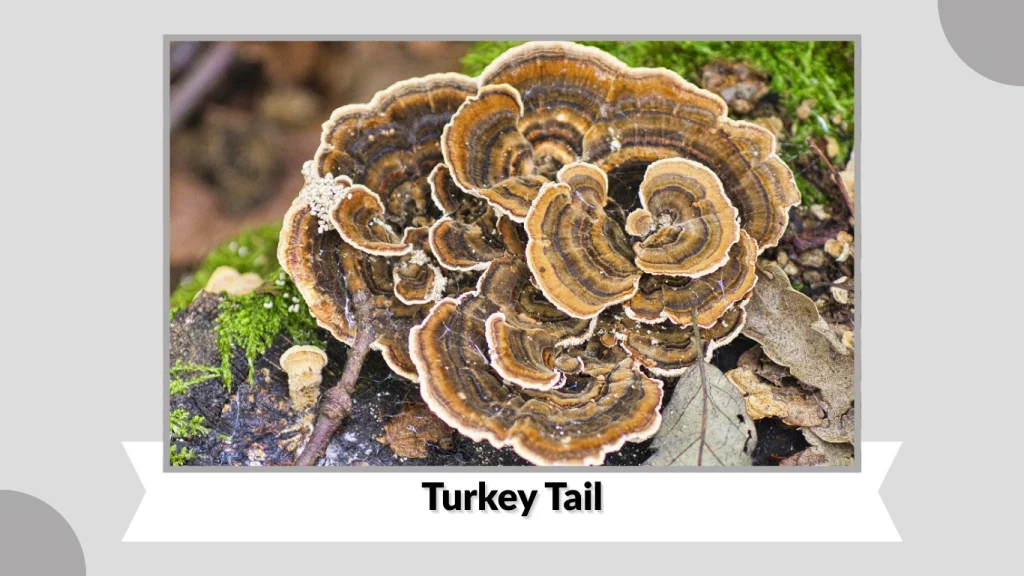
Turkey Tail is a strikingly colorful and beautiful mushroom that grows on decaying wood, particularly on hardwood trees. It gets its name from its fan-like shape and vibrant colors, which resemble the tail feathers of a turkey. Though often small, Turkey Tail is found in large clusters, making it easily noticeable in forests and wooded areas.
Identification
- Cap: Small, with concentric rings of colors such as white, brown, yellow, and purple.
- Shape: Fan-shaped, often overlapping in clusters.
- Size: Usually 1 to 4 inches in diameter.
- Gills: Pores on the underside, white to cream.
- Stem: Thin, short, and off-center.
- Spore Print: White to cream.
Habitat and Distribution
Turkey Tail thrives on decaying hardwoods, such as oak, maple, and beech. It is commonly found in forests during the fall and winter months, typically growing in clusters on fallen logs, stumps, or tree trunks. This mushroom is widespread, occurring in temperate regions around the world.
Medicinal Uses
Turkey Tail is highly valued for its medicinal properties. It has been used in traditional medicine, particularly in Asia, for its immune-boosting and anti-inflammatory effects. The mushroom contains polysaccharides, which are thought to support immune health, making it a popular choice for supplements and health tonics.
5. Lion’s Mane (Hericium erinaceus)
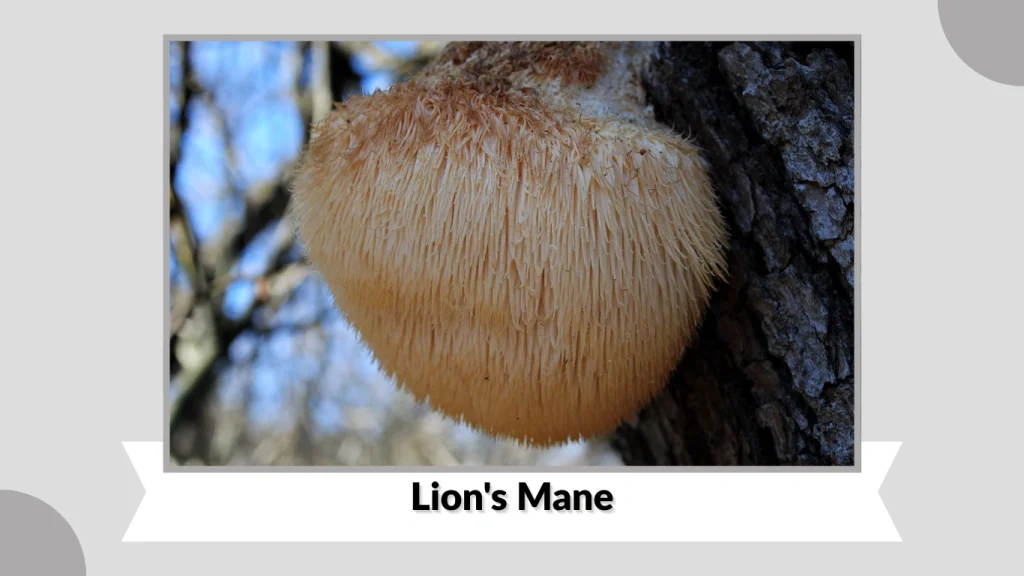
Lion’s Mane is a unique and distinctive mushroom known for its white, hair-like spines that resemble the mane of a lion. It grows primarily on hardwood trees like oak and beech, and its striking appearance makes it easily identifiable. In addition to its visual appeal, Lion’s Mane is highly regarded for its culinary and medicinal properties.
Identification
- Cap: White, with long, cascading spines resembling a lion’s mane.
- Shape: Round to irregular, with spines instead of a traditional cap.
- Size: Can grow up to 8 inches in diameter.
- Gills: Lacking traditional gills; instead, spines hang from the cap.
- Stem: Thick, white, and short.
- Spore Print: White.
Habitat and Distribution
Lion’s Mane grows on hardwood trees, especially those that are decaying, such as oak and beech. It is typically found in the late summer and fall in temperate forests across North America, Europe, and Asia.
Culinary and Medicinal Uses
Lion’s Mane is celebrated for both its culinary and medicinal benefits. The flesh is tender, with a flavor reminiscent of seafood, and it is often used in soups, stir-fries, or as a meat substitute in vegetarian dishes. Medicinally, Lion’s Mane is known for its potential to support brain health and cognitive function, with studies suggesting it may aid in nerve regeneration and improve memory.
6. Birch Polypore (Fomitopsis betulina)
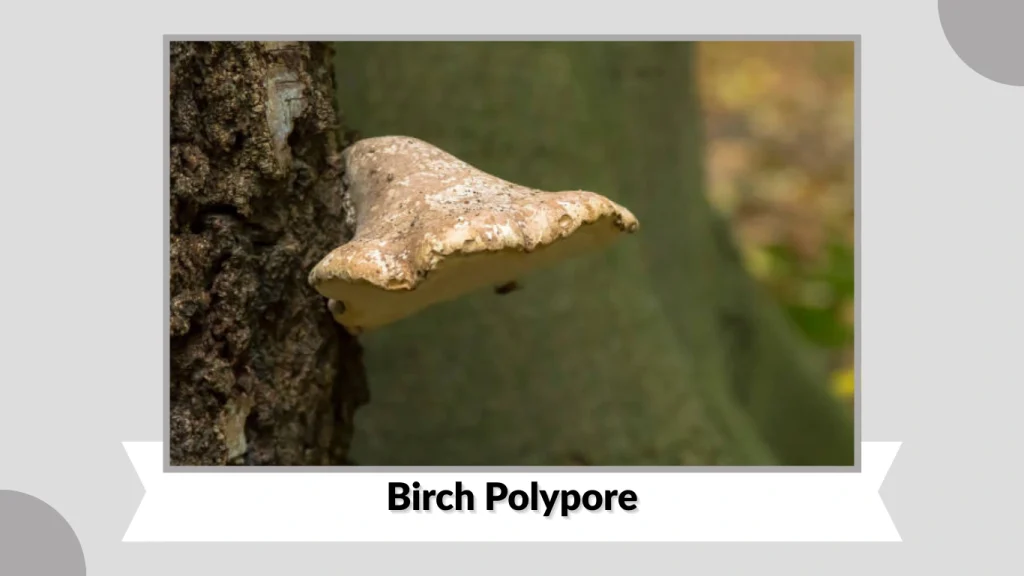
Birch Polypore is a distinctive mushroom commonly found on birch trees. It is easily recognized by its white to light brown, leathery cap and its frequent occurrence on dead or decaying birch wood. While not typically consumed for its taste, it has been used in traditional medicine and for its medicinal properties.
Identification
- Cap: White to light brown, leathery, with a smooth or slightly wavy texture.
- Shape: Flat to convex, with a tough, woody texture.
- Size: Can grow up to 8 inches in diameter.
- Gills: White pores on the underside.
- Stem: Often absent or short, attached directly to the substrate.
- Spore Print: White.
Habitat and Distribution
Birch Polypore grows on dead or decaying birch trees, stumps, and logs. It can be found in temperate forests, especially during the summer and fall months. This species is primarily found in regions with abundant birch trees.
Medicinal Uses
Birch Polypore has been used in folk medicine for centuries. It is known for its antibacterial and anti-inflammatory properties and has traditionally been used in tinctures or teas to help treat infections or digestive issues. It has also been used as a material for making fire starters due to its ability to burn even when wet.
7. Reishi (Ganoderma lucidum)
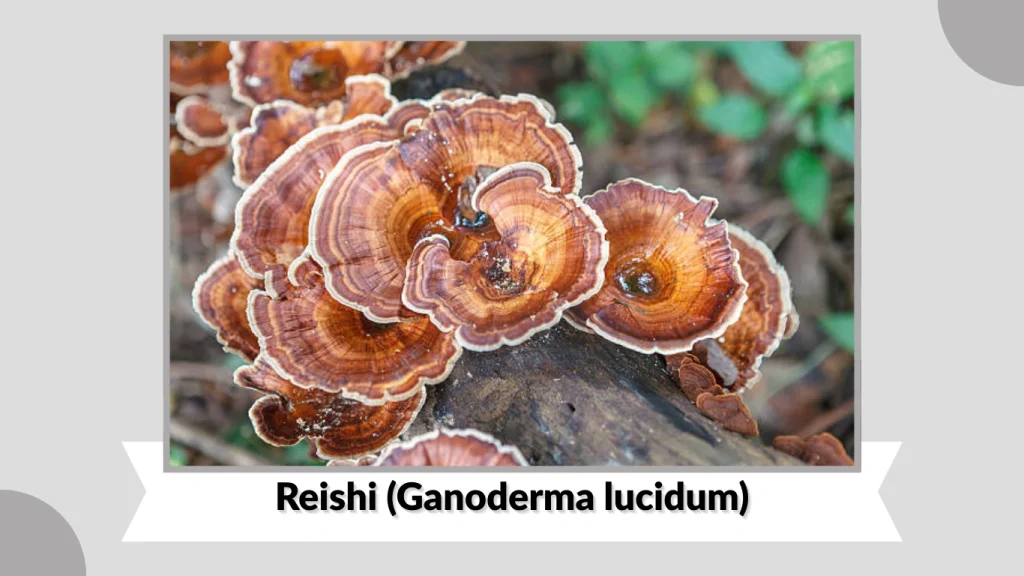
Reishi, also known as “Lingzhi,” is a highly regarded medicinal mushroom that has been used for thousands of years in traditional Chinese medicine. Known for its glossy red to brown cap and distinct kidney-like shape, Reishi grows on hardwood trees, particularly those that are decaying. This mushroom is revered for its health benefits and is often consumed in extract form rather than fresh.
Identification
- Cap: Glossy, reddish-brown, with a varnished appearance.
- Shape: Kidney-shaped, with a curved or fan-like structure.
- Size: Can grow up to 12 inches in diameter.
- Gills: White to yellow pores on the underside.
- Stem: Thick, off-center, and often curved.
- Spore Print: Brownish.
Habitat and Distribution
Reishi typically grows on decaying hardwood trees, particularly oaks, maples, and other broadleaf trees. It is found in temperate regions, particularly in Asia, North America, and parts of Europe. Reishi fruits during the late summer and fall.
Medicinal Uses
Reishi is primarily known for its medicinal properties and is often used to boost the immune system, reduce stress, and improve overall health. Rich in antioxidants and compounds like triterpenoids and polysaccharides, Reishi is commonly used in herbal teas, extracts, and supplements. It is believed to have anti-inflammatory, anti-cancer, and anti-aging effects.
8. Chaga (Inonotus obliquus)
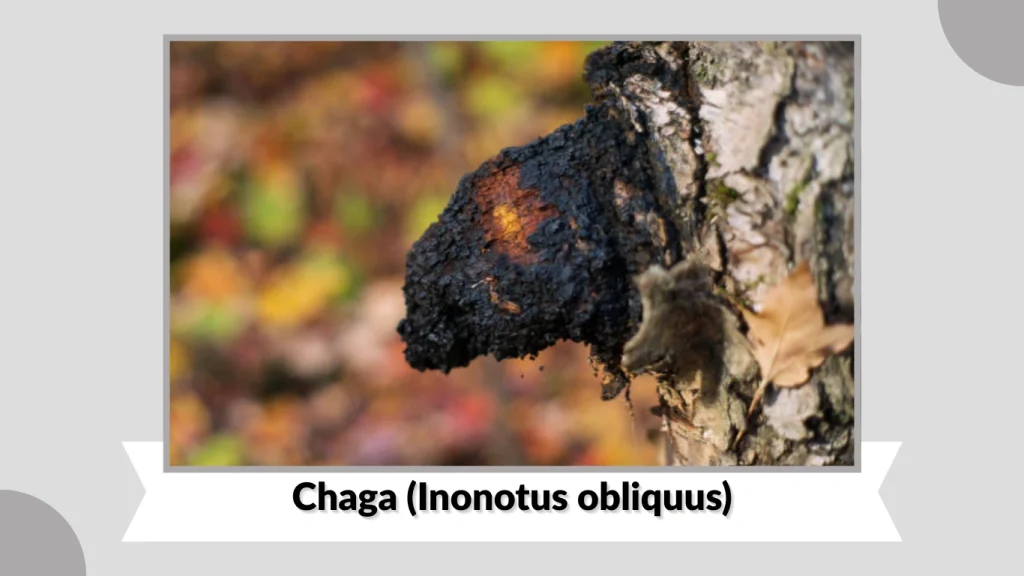
Chaga is a dark, hard mushroom that grows predominantly on birch trees. It has a unique appearance, resembling burnt charcoal, and is widely known for its medicinal benefits. Although it is not consumed in its raw form, it is used primarily as a tea or supplement, praised for its potential health-boosting properties.
Identification
- Cap: Irregular, dark brown to black, resembling burnt charcoal.
- Shape: Lumpy, irregular mass, often found growing on the side of birch trees.
- Size: Can grow up to 12 inches in diameter.
- Gills: No gills; the underside is a dark, corky surface.
- Stem: Typically no stem; attached directly to the tree.
- Spore Print: Brownish.
Habitat and Distribution
Chaga predominantly grows on birch trees, although it can also be found on other hardwoods like alder. This mushroom is typically found in colder climates, particularly in the northern parts of North America, Europe, and Asia. It thrives on older, dead, or decaying trees, often in forests with a cold, temperate climate.
Medicinal Uses
Chaga has been used in traditional medicine for centuries, especially in Russia and Northern Europe. It is considered a powerful antioxidant, believed to help support the immune system, reduce inflammation, and improve overall vitality. Chaga is commonly consumed as a tea, where it is said to have adaptogenic properties that help the body cope with stress. It is also used in various health supplements for its potential to promote healthy skin and fight oxidative damage.
9. Velvet Foot (Flammulina velutipes)
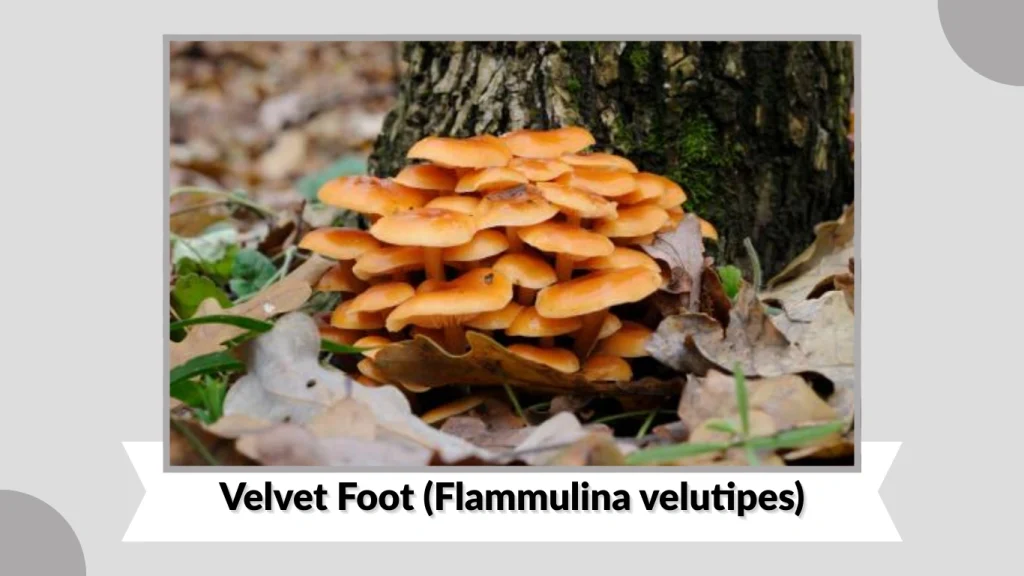
Velvet Foot, also known as Enoki, is a small and delicate mushroom that grows on decaying hardwood trees, typically in clusters. Its long, slender stems and small, yellow to orange caps make it easily identifiable. While it is widely cultivated for culinary purposes, it can also be found in the wild, where it thrives in cooler temperatures.
Identification
- Cap: Small, yellow to orange, smooth, and convex.
- Shape: Long, slender stems with small, elongated caps.
- Size: Cap diameter is typically 1-3 cm, with stems up to 10 cm tall.
- Gills: White to cream, tightly spaced.
- Stem: Slender, velvety texture, typically dark brown near the base.
- Spore Print: White.
Habitat and Distribution
Velvet Foot mushrooms grow on dead or decaying hardwood trees, especially in temperate climates. They are most commonly found in autumn and winter, growing in clusters on logs, stumps, or fallen branches. Enoki mushrooms are particularly known for thriving in cooler environments and can often be found in shaded forest areas.
Culinary Uses
Velvet Foot mushrooms are highly valued in Asian cuisine, particularly in Japanese and Chinese dishes. They are commonly used in soups, stir-fries, and salads. When cooked, they have a mild, slightly sweet flavor and a pleasant texture. Cultivated varieties of Enoki are available year-round, making them a popular addition to many dishes.
10. Shaggy Mane (Coprinus comatus)
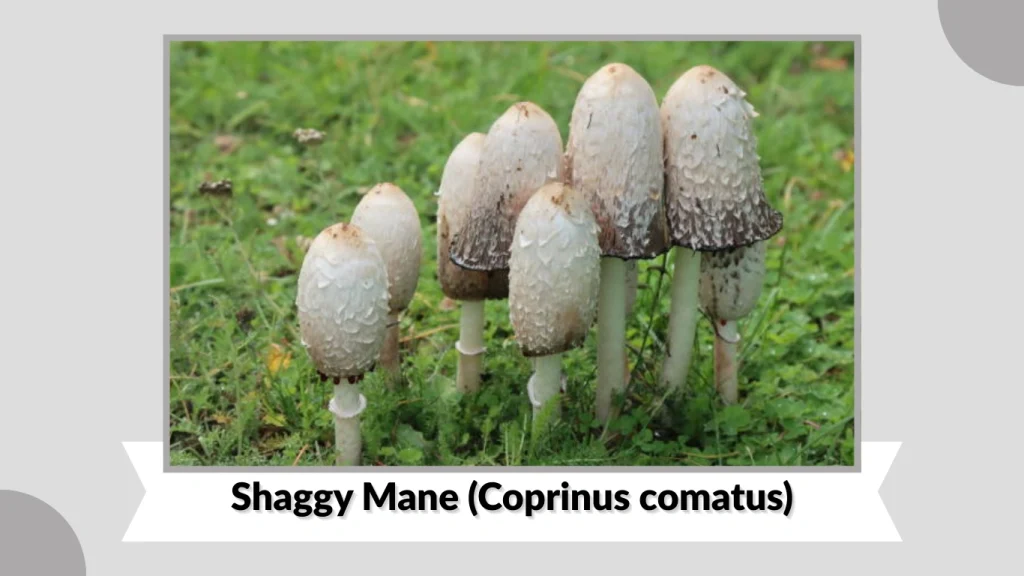
Shaggy Mane, also known as the “Ink Cap,” is an intriguing mushroom with a distinctive appearance. Its long, white, shaggy cap gradually dissolves into an inky black liquid as it matures, which is how it gets its common name. This mushroom is edible when young, though it must be consumed soon after harvest due to its rapid deterioration.
Identification
- Cap: White and shaggy, tapering towards the top, becoming black and inky as it matures.
- Shape: Cylindrical with a prominent, shaggy texture.
- Size: Can grow up to 6-8 inches tall.
- Gills: Close, white to black as the mushroom matures.
- Stem: Long, smooth, white, and hollow.
- Spore Print: Black.
Habitat and Distribution
Shaggy Mane typically grows on decaying organic matter, such as compost piles or the roots of decaying trees, often in grassy areas or lawns. It is most commonly found in the late summer to fall months in temperate regions around the world.
Culinary Uses
Shaggy Mane is prized for its delicate, mild flavor when young. It is best consumed fresh, as it deteriorates quickly and becomes inky. Commonly sautéed or used in soups, it is a flavorful addition to various dishes. However, it should not be consumed with alcohol, as it contains compounds that can cause adverse reactions when combined with alcohol.
11. Wood Ear (Auricularia auricula-judae)
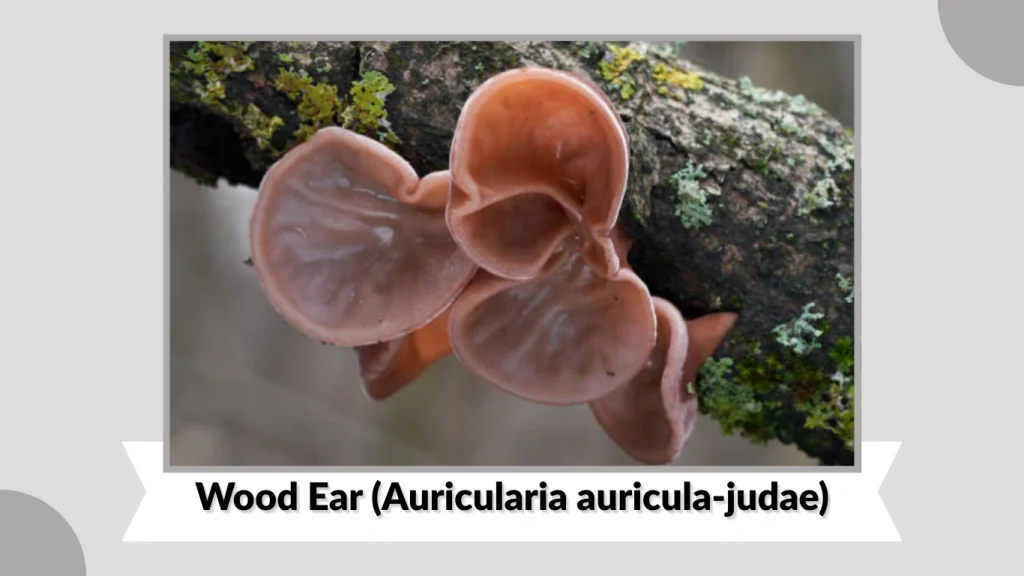
Wood Ear is a distinctive mushroom with a gelatinous texture, often found growing on decaying wood, particularly on elder trees. Its dark, ear-shaped appearance and rubbery texture make it stand out, and it is widely used in culinary dishes, especially in Asian cuisine.
Identification
- Cap: Dark brown to black, translucent, and ear-shaped.
- Shape: Jelly-like, often curled or lobed, resembling an ear.
- Size: Typically 1 to 3 inches in diameter.
- Gills: Smooth, with a rubbery, gelatinous feel.
- Stem: Often absent or short, with the cap growing directly from the substrate.
- Spore Print: White to cream.
Habitat and Distribution
Wood Ear mushrooms are typically found growing on decaying hardwoods, particularly elder and other broad-leaved trees. They thrive in moist, temperate environments and are most commonly seen in the late spring through fall. This mushroom is widespread, found in forests across Europe, North America, and Asia.
Culinary Uses
Wood Ear is commonly used in Chinese, Japanese, and other East Asian cuisines. Its texture is rubbery and crisp when rehydrated, making it a popular ingredient in soups, stir-fries, and salads. It is often valued for its ability to absorb flavors in broths and sauces. Wood Ear mushrooms are also believed to have health benefits, particularly for improving circulation and boosting immune health.
12. Polypore (Trametes hirsuta)
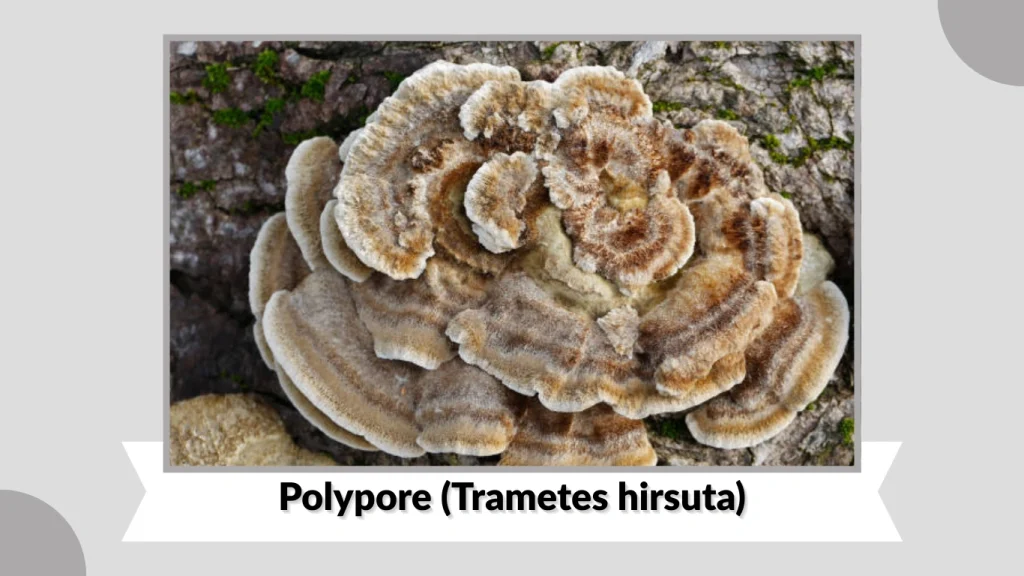
Polypore, also known as the Hairy Polypore, is a small, shelf-like mushroom that grows on decaying hardwood trees. Its fuzzy, hairy texture and white to pale coloration make it an interesting find for mushroom enthusiasts. While not commonly consumed, it is notable for its role in breaking down wood and its use in traditional medicine.
Identification
- Cap: White to light brown, with a fuzzy or hairy surface.
- Shape: Shelf-like, often overlapping in clusters.
- Size: Typically 2 to 4 inches in diameter.
- Gills: Fine pores on the underside, white to cream.
- Stem: Off-center, short, or absent.
- Spore Print: White to cream.
Habitat and Distribution
Polypore mushrooms grow on dead or decaying hardwood trees, often found on logs or tree trunks. This species is commonly found in temperate forests and is most abundant during the fall and spring months. It is widespread, occurring in regions across North America, Europe, and Asia.
Medicinal and Ecological Role
Polypore mushrooms, like many other fungi, play an important role in breaking down dead plant material in forest ecosystems. Though not typically used for food, certain species of Polypore mushrooms have been utilized in traditional medicine for their potential antimicrobial and anti-inflammatory properties. However, more research is needed to fully understand their medicinal benefits.
13. Honey Mushroom (Armillaria mellea)
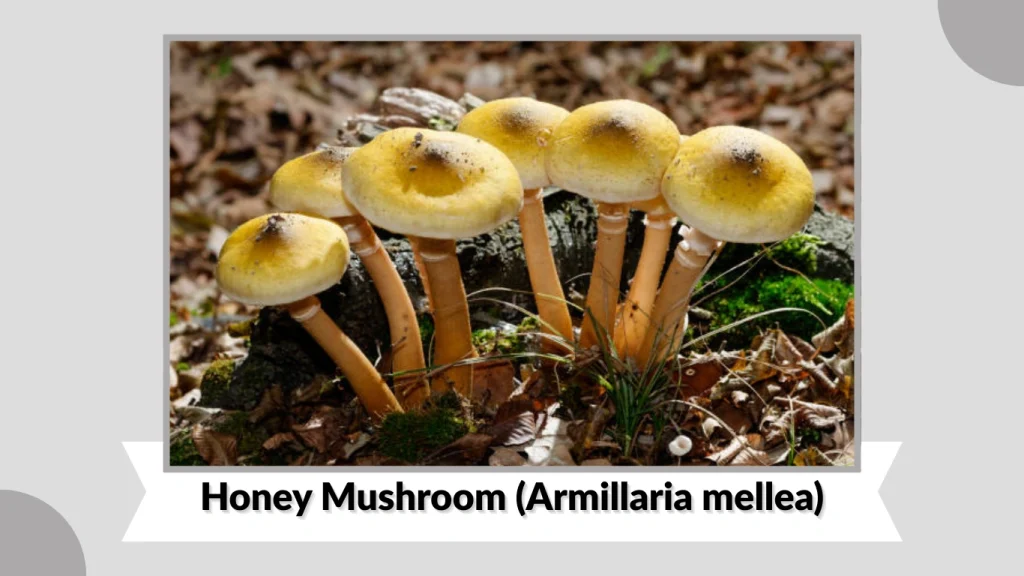
Honey Mushroom is a parasitic fungus that grows on the roots of trees, often leading to the decay of the host tree. It is known for its distinctive honey-colored caps and its ability to form large, interconnected colonies. Honey Mushrooms are widespread and can often be found in forests during the fall, where they thrive on decaying wood.
Identification
- Cap: Yellow to honey-brown, smooth, with a slightly sticky texture when young.
- Shape: Convex to flat, with a prominent central depression.
- Size: Can range from 2 to 5 inches in diameter.
- Gills: White to cream-colored, with a distinct spacing.
- Stem: Yellowish, with a ring near the top; often covered in a sticky substance.
- Spore Print: White to cream.
Habitat and Distribution
Honey Mushrooms are found on the roots of living or dead trees, especially hardwoods such as oak, beech, and poplar. They are commonly seen in late summer and fall, growing in clusters on decaying wood. This mushroom is widespread across temperate regions, including North America, Europe, and parts of Asia.
Culinary Uses
Though Honey Mushrooms are edible, they should be properly cooked, as raw consumption can lead to digestive discomfort. When prepared correctly, they have a sweet, mild flavor that works well in soups, stews, or sautéed dishes. It is important to note that while some varieties are safe to eat, others may cause allergic reactions, so proper identification is key before consumption.
14. Split Gill (Schizophyllum commune)
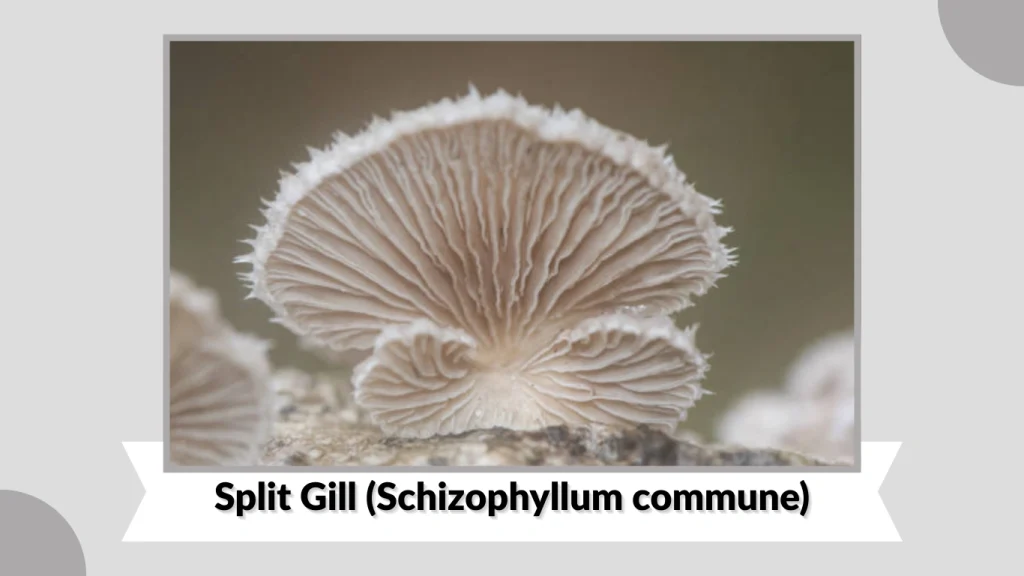
Split Gill is a small, distinctive mushroom known for its split, fan-shaped cap that resembles the gills of fish. It is commonly found growing on decaying wood, particularly in tropical and subtropical forests. This species is widely distributed and is often noted for its ability to thrive in a variety of environmental conditions.
Identification
- Cap: White to pale gray, split in a fan-like shape, with noticeable grooves.
- Shape: Thin, fan-shaped, and finely textured.
- Size: Typically 1 to 3 inches in diameter.
- Gills: Split into multiple grooves, resembling fish gills.
- Stem: Short to absent; the cap often grows directly on the wood.
- Spore Print: White to cream.
Habitat and Distribution
Split Gill mushrooms are found on decaying wood, particularly on fallen logs and stumps in tropical and subtropical regions. Though more common in warmer climates, they can also be found in temperate areas. These mushrooms typically fruit during the summer and fall.
Ecological Role
Split Gill plays an important ecological role in breaking down wood and other organic matter. As a wood-decaying fungus, it contributes to nutrient cycling in forests. It is also notable for its resilience in various environmental conditions, often growing in both dry and humid climates. Although not commonly consumed, it has been studied for its potential medicinal properties.
15. Sulfur Shelf (Laetiporus cincinnatus)
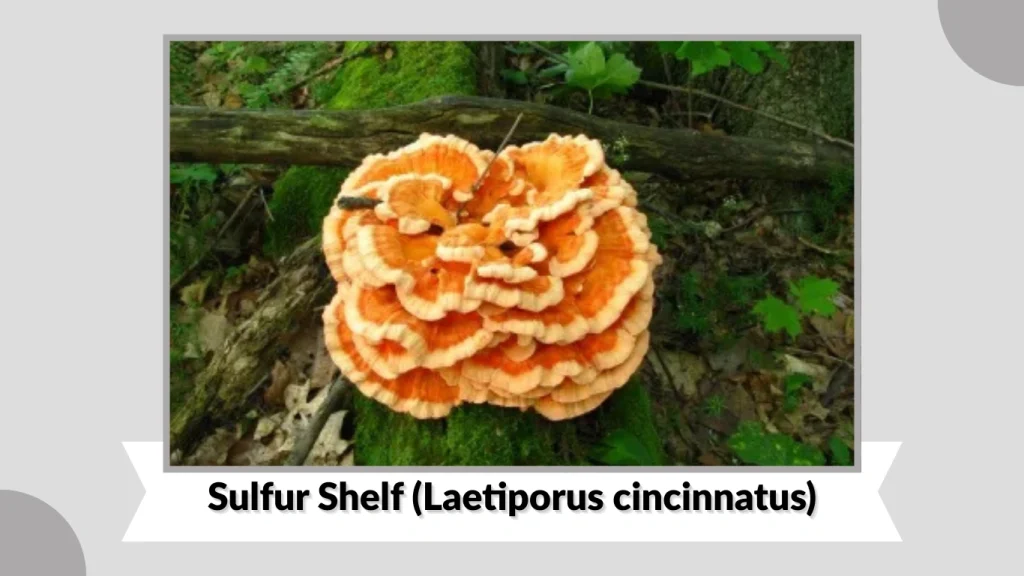
Sulfur Shelf, also known as the “Chicken of the Woods,” is a vibrant and striking mushroom that grows in clusters on decaying hardwood trees. It is known for its bright yellow to orange color and fan-shaped caps, resembling a shelf. Often found in forested areas, this mushroom is sought after by foragers due to its edible nature and flavorful taste.
Identification
- Cap: Bright yellow to orange, often with a smooth or slightly wavy surface.
- Shape: Fan or shelf-like, typically growing in overlapping clusters.
- Size: Can grow up to 12 inches in diameter.
- Gills: White to cream-colored pores on the underside.
- Stem: Lacking a central stem; attached directly to the wood.
- Spore Print: White to yellowish.
Habitat and Distribution
Sulfur Shelf mushrooms typically grow on decaying hardwood trees, particularly oak, cherry, or beech. It is most commonly found in the summer and fall, particularly in temperate forests. The mushroom can also grow on stumps and fallen logs, often in clusters.
Culinary Uses
Sulfur Shelf, like its cousin Chicken of the Woods, is prized for its meaty texture and mild, savory flavor. It is commonly used as a substitute for chicken in vegetarian dishes. When prepared correctly, it can be sautéed, roasted, or added to soups and stews. It’s important to cook this mushroom thoroughly, as consuming it raw can cause digestive issues for some individuals.
16. Tooth Fungus (Hydnum repandum)
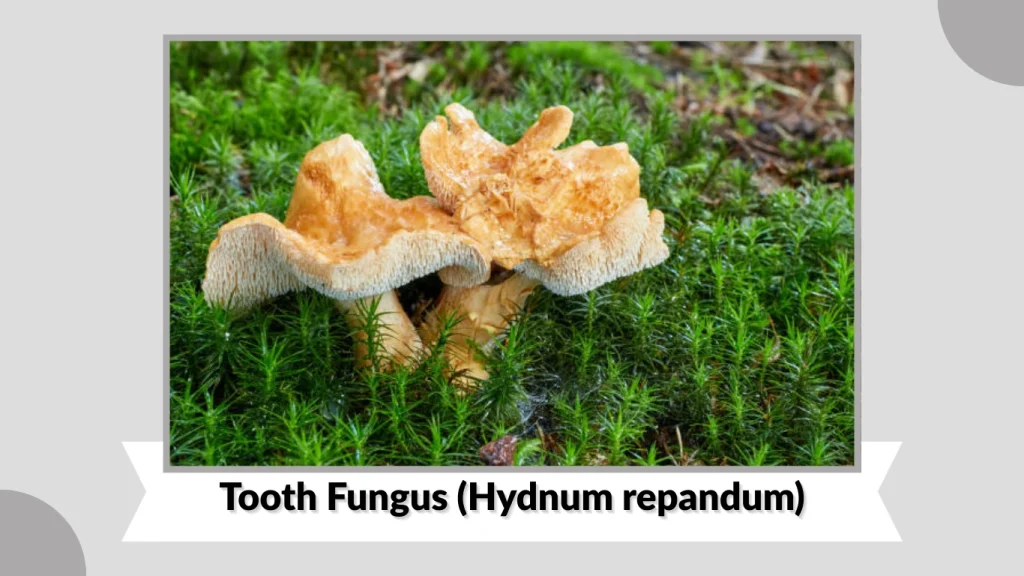
Tooth Fungus, also known as the “Sweet Tooth,” is a unique mushroom with a distinctive appearance. Instead of gills or pores, its underside is covered in small, tooth-like structures. It is highly regarded for its culinary qualities, particularly for its sweet flavor and crunchy texture. Tooth Fungus grows on decaying wood in forests and is found in both temperate and tropical regions.
Identification
- Cap: White to pale orange, with a smooth, convex surface.
- Shape: Funnel-shaped, often irregular in form.
- Size: Typically 2 to 5 inches in diameter.
- Gills: Tooth-like projections (not true gills or pores).
- Stem: Short to medium length, pale to whitish.
- Spore Print: White.
Habitat and Distribution
Tooth Fungus is typically found on the ground around decaying wood, especially under coniferous trees like pines and firs. It grows in clusters and is commonly found in forests during the late summer to fall months. The mushroom thrives in both temperate and boreal forests across North America and Europe.
Culinary Uses
Tooth Fungus is edible and is valued for its mild, sweet flavor and firm texture. It is often used in soups, stews, and sauces, or sautéed as a side dish. The tooth-like structures provide a unique texture that is appreciated in various dishes. It should be cooked before consumption, as it can be tough and unpleasant when raw.
17. King Oyster (Pleurotus eryngii)
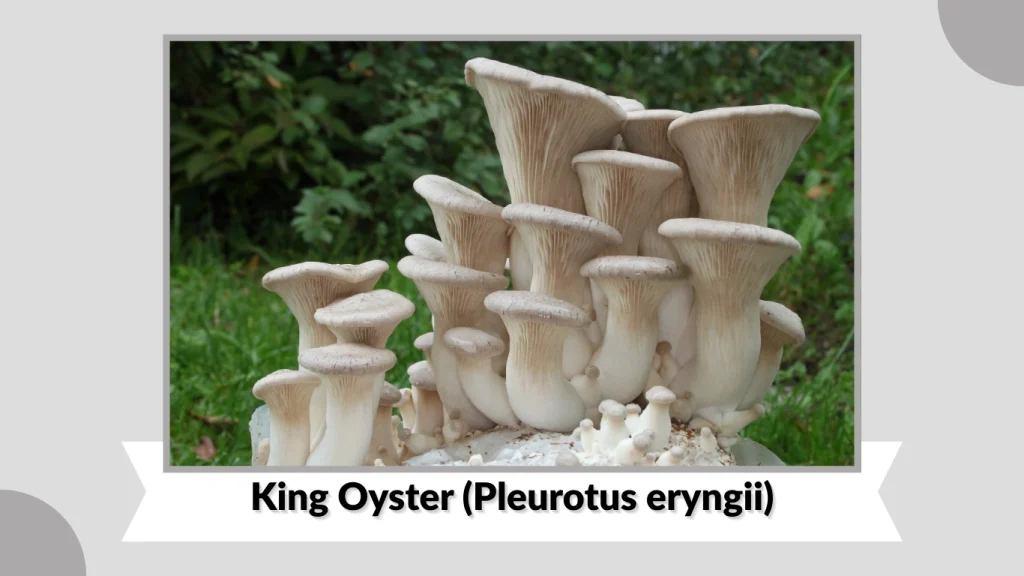
King Oyster, also known as King Trumpet, is a large and flavorful mushroom known for its thick, meaty stems and small, broad caps. It is a favorite among chefs due to its firm texture and versatility in cooking. King Oyster mushrooms grow on decaying wood and are often found in forests, but they are also widely cultivated for culinary use.
Identification
- Cap: Light brown to cream, small and flat with a smooth surface.
- Shape: Large, thick, and trumpet-shaped with a broad cap and a robust stem.
- Size: Can grow up to 10 inches tall, with caps typically 2-4 inches in diameter.
- Gills: White, dense, and closely spaced.
- Stem: Thick, white to light brown, and cylindrical.
- Spore Print: White.
Habitat and Distribution
King Oyster mushrooms grow on decaying hardwoods, including oak, beech, and poplar. They are found in temperate and subtropical forests, though they are also cultivated worldwide. The species is typically seen in late summer through fall in the wild but is available year-round in cultivated forms.
Culinary Uses
King Oyster mushrooms are known for their firm, meaty texture and mild, nutty flavor. They are incredibly versatile in cooking, often used in stir-fries, soups, and pasta dishes. The thick stems can be sliced and cooked similarly to meat, making them a popular meat substitute in vegetarian and vegan recipes.
18. Fomitopsis pinicola (Red-belted Polypore)
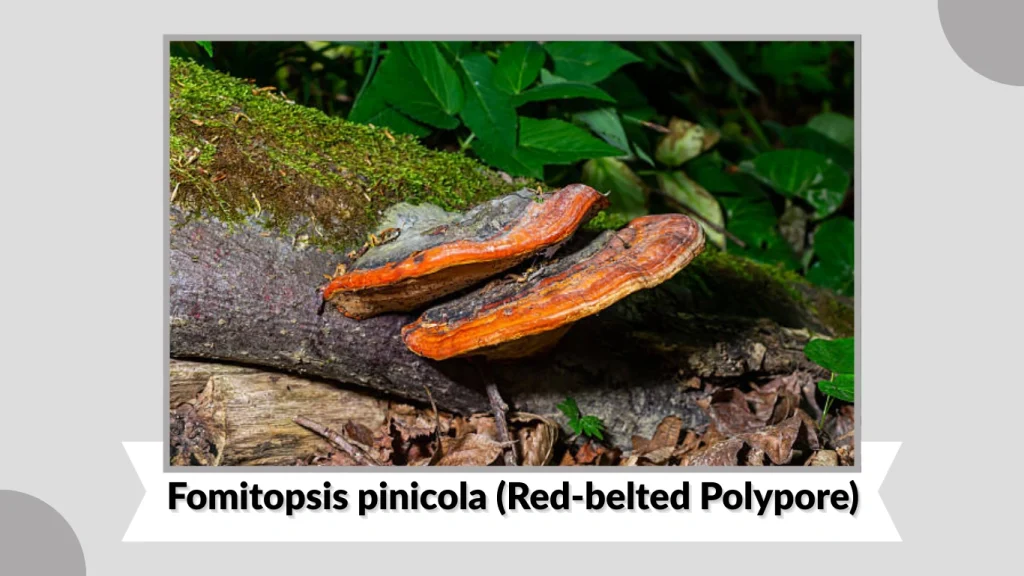
Fomitopsis pinicola, commonly known as the Red-belted Polypore, is a large and striking mushroom that typically grows on the trunks of coniferous trees. It has a distinct red or orange band around its edges, which makes it easily identifiable. While it is not commonly consumed due to its tough texture, it plays an important ecological role as a wood-decaying fungus.
Identification
- Cap: Red to orange band around the edges, with a yellow to brownish center.
- Shape: Shelf-like, flat, and often growing in overlapping clusters.
- Size: Can reach up to 12 inches in diameter.
- Gills: Yellow to brown pores on the underside.
- Stem: Typically off-center, short, or absent.
- Spore Print: White.
Habitat and Distribution
The Red-belted Polypore is typically found on the trunks of dead or decaying coniferous trees, particularly pines and spruces. It is common in temperate forests and can be found in North America, Europe, and parts of Asia. This species is seen throughout the year, especially in forests that have an abundance of conifer trees.
Ecological Role
As a wood-decaying fungus, Fomitopsis pinicola is an important decomposer in forest ecosystems. It helps break down the lignin and cellulose in trees, facilitating nutrient recycling. While not edible due to its tough, woody texture, the Red-belted Polypore is valuable for its ecological contributions. It also has been studied for its potential medicinal properties, particularly for its antimicrobial and antioxidant activities.
19. Birch Polypore (Piptoporus betulinus)
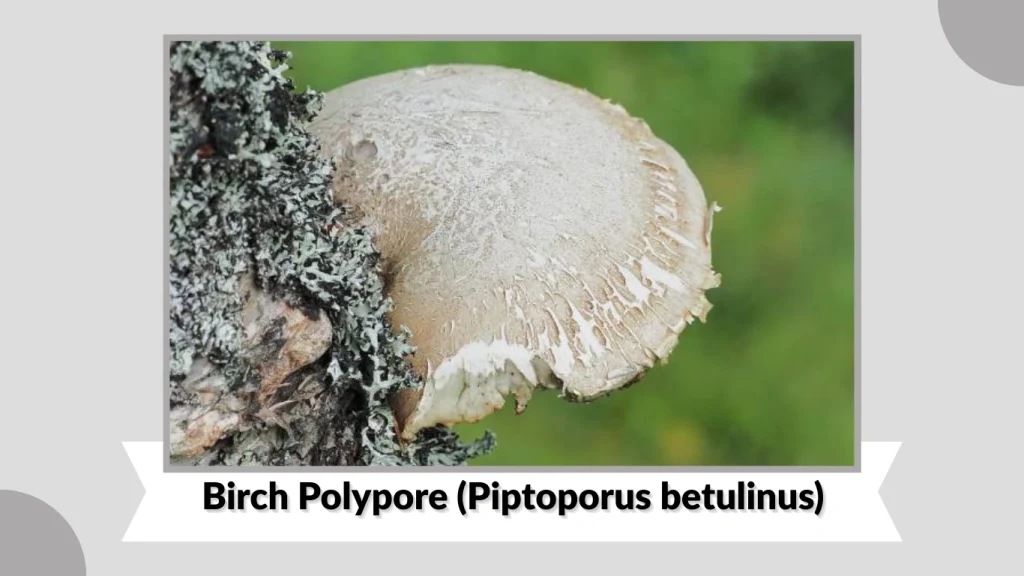
Birch Polypore is a prominent wood-decaying fungus that grows exclusively on birch trees, earning its name from its primary host. This tough, bracket-shaped mushroom is known for its medicinal uses and its role in the decomposition of birch wood. Its appearance changes as it matures, from a smooth white cap to a more rugged and cracked surface.
Identification
- Cap: White to pale brown, with a smooth or cracked surface.
- Shape: Shelf-like, with a broad, irregular form.
- Size: Typically 3 to 10 inches in diameter.
- Gills: White pores on the underside.
- Stem: Short to absent; the cap attaches directly to the tree.
- Spore Print: White to cream.
Habitat and Distribution
Birch Polypore is found growing on the trunks or stumps of dead or decaying birch trees. It is commonly found in temperate forests across North America, Europe, and parts of Asia. This species fruits from late spring to autumn, primarily on birch species like Betula pendula (silver birch) and Betula papyrifera (paper birch).
Medicinal Uses
Birch Polypore has been traditionally used for its medicinal properties, particularly in Europe and Asia. It is thought to possess antibacterial, antifungal, and immune-boosting properties. In some cultures, it has been used to treat ailments like colds, fevers, and digestive issues. The mushroom is also known for its ability to assist in wound healing due to its antiseptic properties. However, it is typically used in extract form rather than consumed directly.
20. Lenzites (Lenzites betulina)
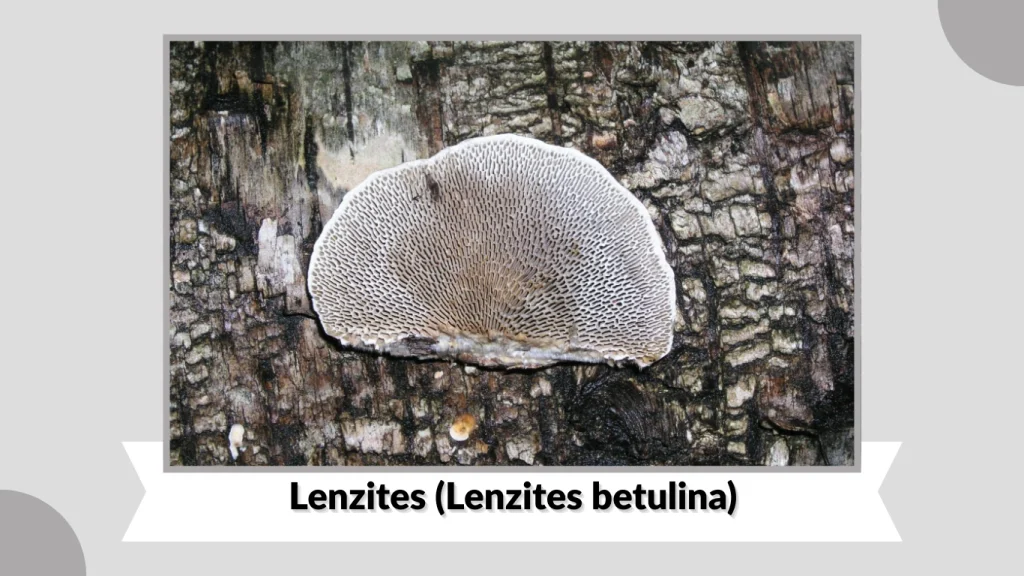
Lenzites, also known as the “Turkey-tail Polypore,” is a common wood-decaying fungus found on decaying hardwood trees. It has a fan-shaped, often overlapping cap with concentric, brownish, and white bands. This mushroom is noted for its ecological role in breaking down lignin in wood and is sometimes used in traditional medicine for its purported healing properties.
Identification
- Cap: Fan-shaped, with concentric bands of brown, white, and orange.
- Shape: Shelf-like, often growing in overlapping clusters.
- Size: Typically 2 to 6 inches in diameter.
- Gills: Small pores on the underside.
- Stem: Typically absent or short; the cap attaches directly to the wood.
- Spore Print: White to cream.
Habitat and Distribution
Lenzites mushrooms are found on decaying hardwood trees, particularly oaks, beech, and birch. They grow on stumps, logs, and fallen branches, often appearing in clusters. They are common in temperate forests and are found in regions across North America, Europe, and parts of Asia.
Medicinal Uses
Lenzites mushrooms are sometimes used in traditional herbal medicine, especially in Asia, where they are believed to have anti-inflammatory and immune-boosting properties. While not commonly consumed for food, this species has been studied for its potential medicinal value, including its use in combating infections and supporting general health. Further research is needed to confirm its effectiveness in these areas.
21. False Turkey Tail (Stereum ostrea)
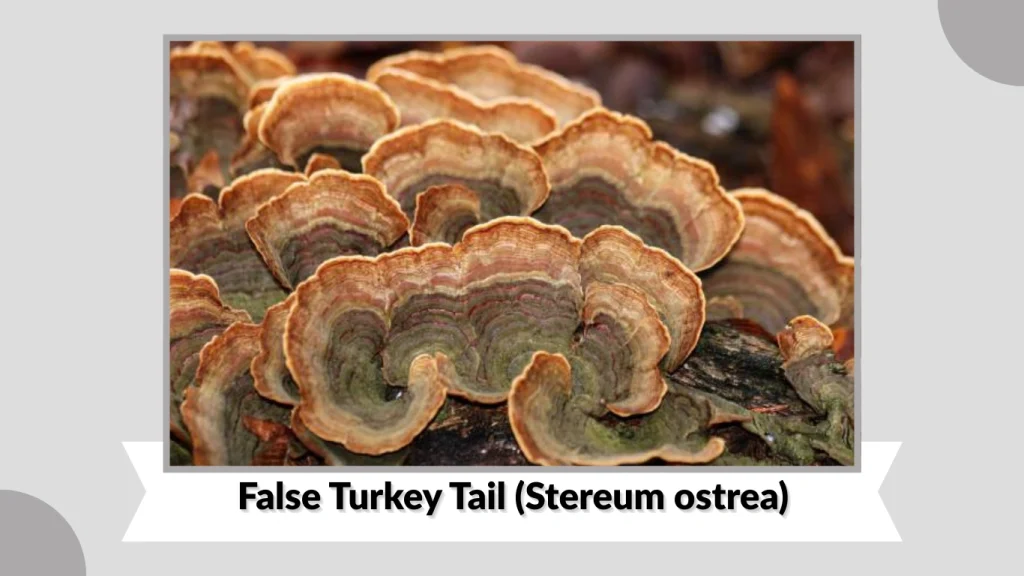
False Turkey Tail, also known as the “Oyster Fungus,” is a colorful, shelf-like mushroom that grows on dead hardwood trees. Despite its similar appearance to Turkey Tail, it can be distinguished by its smooth, non-porous underside. This species is often found in forests and contributes to the decomposition of wood.
Identification
- Cap: Fan-shaped, with concentric bands of colors such as orange, brown, and white.
- Shape: Shelf-like, often overlapping in clusters.
- Size: Typically 2 to 4 inches in diameter.
- Gills: Smooth, non-porous underside (distinguishing feature from Turkey Tail).
- Stem: Short, off-center, or absent.
- Spore Print: White to cream.
Habitat and Distribution
False Turkey Tail mushrooms are commonly found on decaying hardwood trees, particularly oaks, beech, and other broadleaf species. They thrive in temperate forests, growing on fallen logs, stumps, or tree trunks. This species can be found year-round, but it is most abundant in the fall and winter months.
Ecological Role
As a wood-decaying fungus, False Turkey Tail plays an important role in nutrient recycling within forest ecosystems. It helps break down dead wood and organic matter, returning valuable nutrients to the soil. Though not widely used for culinary or medicinal purposes, this mushroom is an important species in its habitat, contributing to the overall health of the forest.
22. Hoof Fungus (Fomes fomentarius)
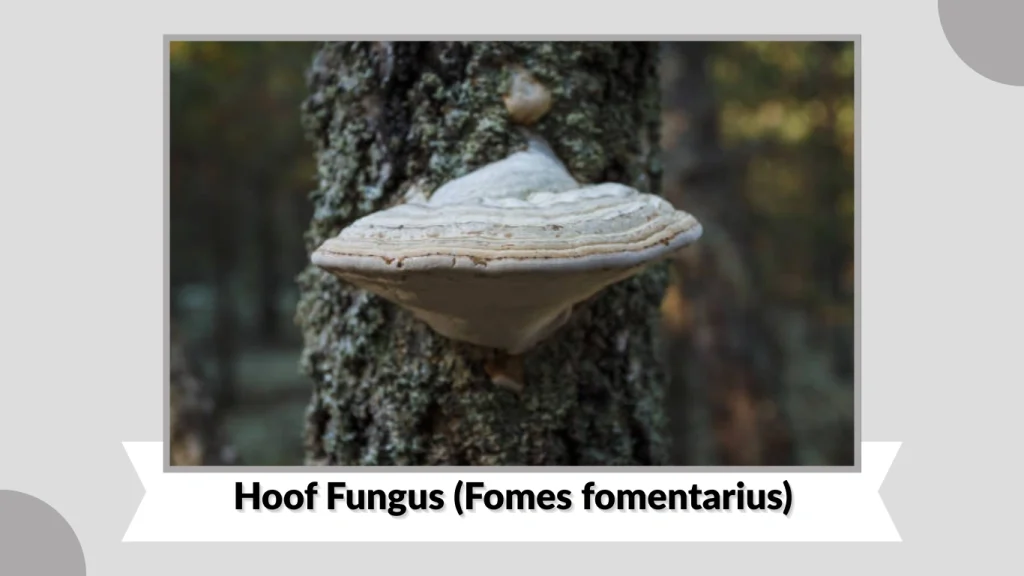
Hoof Fungus, also known as Tinder Fungus, is a large, woody mushroom that grows on decaying trees, particularly birch. Its name comes from its hoof-like shape and tough texture. Historically, it has been used as a fire starter due to its ability to smolder for long periods, making it a valuable resource for survival situations.
Identification
- Cap: Brown to gray, rough, and hoof-shaped.
- Shape: Flat, irregularly shaped, with a curved, hoof-like appearance.
- Size: Can grow up to 12 inches in diameter.
- Gills: Small pores on the underside, typically white to cream.
- Stem: Short to absent; the cap attaches directly to the tree.
- Spore Print: White to cream.
Habitat and Distribution
Hoof Fungus primarily grows on the trunks of dead or decaying hardwood trees, especially birch and beech. It is found in temperate regions across North America, Europe, and Asia, often appearing during the late spring through fall. This species is particularly common in forests with abundant birch trees.
Historical and Medicinal Uses
Hoof Fungus has a long history of use in folk medicine and survival techniques. Its tough texture and ability to smolder made it a vital tool for early humans, who used it as a fire starter. Medicinally, it has been used in traditional medicine for its purported antimicrobial and anti-inflammatory properties. While it is not commonly consumed today, some studies suggest it may have potential in modern herbal medicine.
23. Cracked Cap Polypore (Polyporus umbellatus)
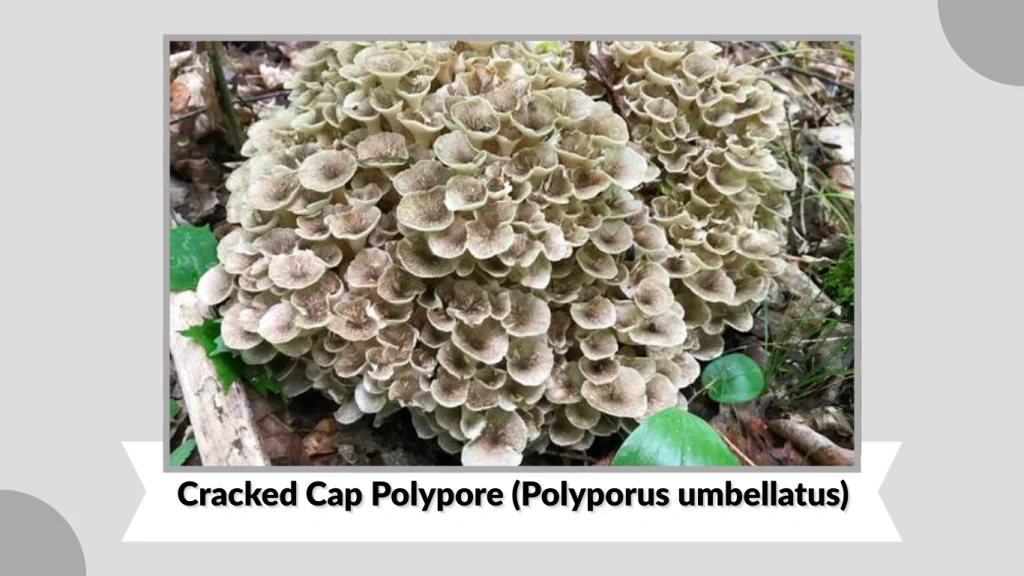
Cracked Cap Polypore is a less common but fascinating mushroom that grows on decaying wood, particularly on the roots of hardwood trees. It is easily recognizable by its large, cracked cap and its shelf-like structure. Though not commonly consumed for food, this species has been of interest due to its potential medicinal uses in traditional herbal medicine.
Identification
- Cap: Brown to reddish-brown, with cracks that form a pattern resembling scales or flakes.
- Shape: Shelf-like, often growing in overlapping clusters.
- Size: Can grow up to 8 inches in diameter.
- Gills: White pores on the underside.
- Stem: Short, central, and off-center.
- Spore Print: White.
Habitat and Distribution
Cracked Cap Polypore typically grows on decaying hardwood trees, particularly oaks, and is commonly found on the roots or at the base of trees. This species is most commonly found in temperate forests during the late summer and fall months. It is found across North America and Europe, although it is relatively rare.
Medicinal Uses
Cracked Cap Polypore has a long history of use in traditional medicine, particularly in China and other parts of Asia. It has been studied for its potential immune-boosting and anti-inflammatory effects. Some believe it can be used to treat various ailments, such as digestive issues and infections. However, more research is required to confirm its medicinal benefits.
24. Polyporus squamosus
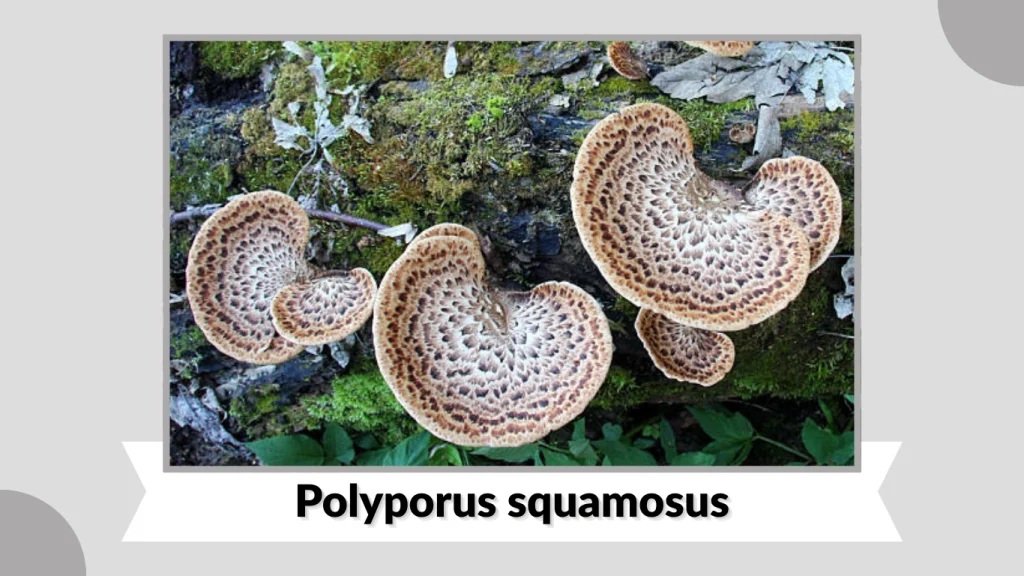
Polyporus squamosus, also known as the “Scaly Polypore,” is a wood-decaying fungus commonly found on dead hardwood trees. Its cap is covered in distinctive, scale-like patterns that give it a textured appearance. This mushroom plays an important role in forest ecosystems by helping decompose dead wood, though it is not typically used for culinary purposes.
Identification
- Cap: Brown to yellowish-brown, with scaly, concentric rings on the surface.
- Shape: Flat, round, or slightly irregular, often forming in overlapping clusters.
- Size: Typically 4 to 8 inches in diameter.
- Gills: Small, white pores on the underside.
- Stem: Short, off-center, and thick.
- Spore Print: White.
Habitat and Distribution
Polyporus squamosus is found growing on dead or decaying hardwood trees, especially oaks, maples, and beech. It thrives in temperate forests and can often be found on logs, stumps, or the bases of trees. This species is generally seen during the warmer months, from late spring to fall, in forests across North America and Europe.
Ecological Role
As a decomposer, Polyporus squamosus plays an important role in breaking down lignin and cellulose in dead wood, recycling nutrients back into the soil. While it is not commonly consumed for food, this species is important in forest ecosystems for nutrient cycling and wood decay. Additionally, it is a potential source for research into fungal decomposition processes and environmental sustainability.
25. Chicken Mushroom (Laetiporus conifericola)
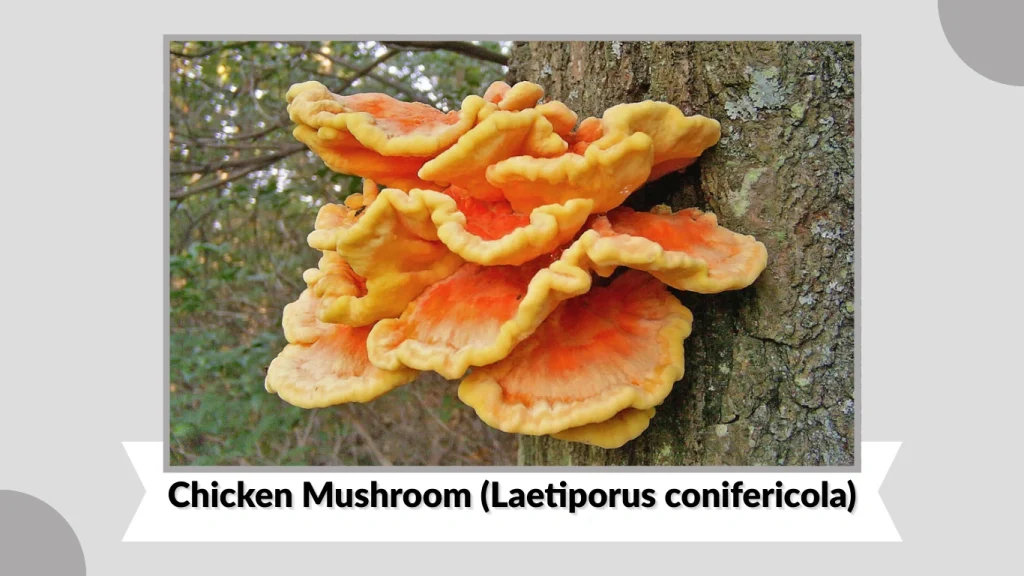
Chicken Mushroom, also known as Laetiporus conifericola, is closely related to the Chicken of the Woods and shares similar culinary appeal. It is distinguished by its bright yellow to orange color and a meaty texture that mimics chicken, making it a popular choice among foragers and chefs alike. Unlike its relatives, Chicken Mushroom is typically found growing on coniferous trees, such as pines and firs.
Identification
- Cap: Bright yellow to orange, with a smooth surface.
- Shape: Fan-shaped or shelf-like, often growing in overlapping clusters.
- Size: Can grow up to 10 inches in diameter.
- Gills: White to pale cream, with small pores on the underside.
- Stem: Lacking a central stem; attaches directly to the wood.
- Spore Print: White.
Habitat and Distribution
Chicken Mushroom grows on decaying coniferous trees, such as pine, spruce, and fir. It thrives in temperate forests and is typically found in the summer and fall months. This species is widely distributed across North America and parts of Europe, particularly in areas where coniferous trees are abundant.
Culinary Uses
Like its cousin, Chicken of the Woods, Chicken Mushroom is prized for its meaty texture and mild, savory flavor. It is often used as a chicken substitute in vegetarian and vegan dishes. The mushroom can be sautéed, grilled, or used in soups and stews. However, it is important to ensure proper identification, as some Laetiporus species may cause digestive upset if not prepared correctly.
FAQs
1. What are the most common mushrooms that grow on trees?
Many mushrooms grow on trees, with some of the most common being Chicken of the Woods, Turkey Tail, Oyster Mushroom, and Lion’s Mane. These mushrooms typically grow on decaying wood or tree trunks, playing an essential role in decomposing organic material.
2. Are all mushrooms that grow on trees edible?
No, not all mushrooms that grow on trees are edible. While species like Oyster Mushrooms and Chicken of the Woods are popular for consumption, others like Artist’s Conk or Reishi are medicinal or inedible. It’s essential to properly identify mushrooms before consumption, as some may be toxic or cause digestive issues.
3. How can I identify an edible mushroom growing on a tree?
To identify an edible mushroom, focus on its size, shape, color, and texture. Look for key features such as the type of cap, gills or pores, and stem characteristics. It’s also crucial to consider the tree it is growing on (e.g., hardwood or coniferous tree). Always consult a reliable field guide or expert before foraging for mushrooms.
4. Can you cook all the tree-growing mushrooms?
Not all mushrooms growing on trees are suitable for cooking. While some like Oyster Mushrooms and Chicken of the Woods are delicious when prepared properly, others like Artist’s Conk are tough and typically not consumed. Some mushrooms also need to be cooked thoroughly to avoid digestive issues.
5. How do mushrooms that grow on trees contribute to the ecosystem?
Mushrooms that grow on trees, such as Polypores and Birch Polypores, play a vital role in the ecosystem by breaking down dead or decaying wood. This process recycles nutrients back into the soil, helping to maintain the health of the forest and support new plant growth.