





The peace lily is one of the most popular indoor flowering plants in the world, valued for its elegant white blooms, glossy green leaves, and easy-care nature. Beyond its beauty, the peace lily is admired for its air-purifying reputation and strong symbolic meaning connected to peace, purity, and renewal. Native to tropical regions of the Americas and Southeast Asia, peace lilies thrive in warm, shaded environments. This guide explores what peace lilies are, how to identify them, their common types, natural habitat, and key benefits.
What Is a Peace Lily Flower?
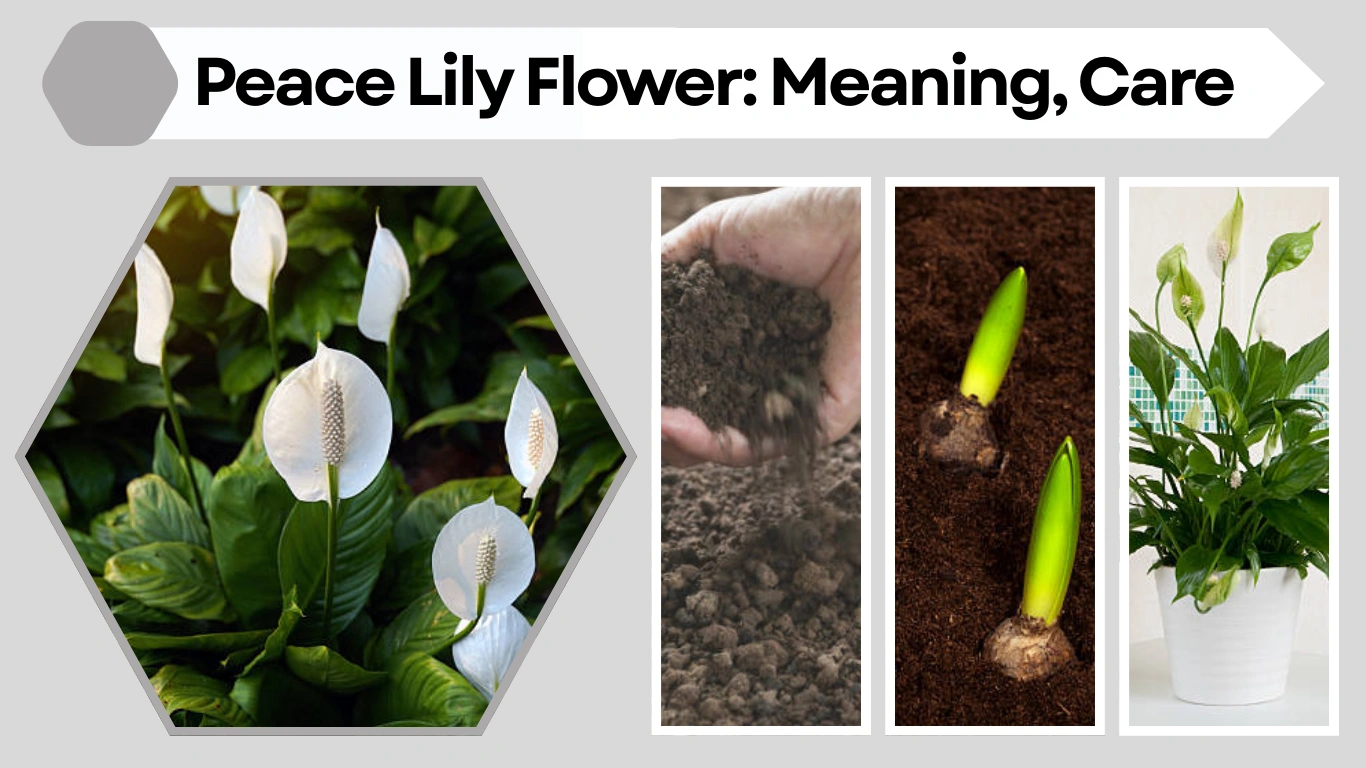
The peace lily belongs to the genus Spathiphyllum and is a member of the Araceae family. Despite its name, it is not a true lily. The plant’s distinctive “flower” is actually a white spathe, a leaf-like structure that surrounds a central spadix, which holds the tiny true flowers.
Peace lilies are evergreen tropical plants that grow in clumps and produce long, arching leaves. They are widely cultivated as houseplants because they tolerate low light, adapt well to indoor conditions, and bloom periodically throughout the year. Outdoors, peace lilies grow as understory plants in warm, humid climates.
Peace Lily Flower Identification

- White or creamy spathe surrounding a central spadix
- Glossy, dark green, lance-shaped leaves
- Smooth, arching leaf structure
- Compact to medium growth habit
- Average indoor height of 1 to 4 feet
- Blooms that appear several times a year
- Mild, subtle fragrance or no scent
- Thick green stems rising from the base
- Clump-forming plant structure
- Strong contrast between white blooms and green foliage
Common Types of Peace Lily Plants
Spathiphyllum wallisii
Spathiphyllum wallisii is one of the most common peace lily species used in homes. It is a compact plant with slender leaves and relatively small but abundant white spathes. Because of its manageable size and consistent blooming, it is ideal for tabletops, shelves, and small indoor spaces.
Mauna Loa Peace Lily
The Mauna Loa peace lily is known for its larger leaves and more prominent white flowers. It can grow taller than many standard varieties and produces broad, glossy foliage that gives it a bold appearance. This type is often chosen as a floor plant or office centerpiece.
Domino Peace Lily
The Domino peace lily stands out for its variegated leaves, which feature white streaks and patterns across deep green foliage. While its flowers are similar to other peace lilies, its decorative leaves make it especially popular for ornamental indoor plant collections.
Sensation Peace Lily
The Sensation peace lily is the largest commonly available variety. It can reach several feet in height and width, with massive, ribbed leaves and large white spathes. Because of its size, it is often used in spacious rooms, hotel lobbies, and indoor landscape designs.
Natural Habitat and Distribution

Peace lilies are native to tropical rainforests of Central and South America, as well as parts of Southeast Asia. In the wild, they grow beneath dense forest canopies where sunlight is filtered and humidity remains high. They are commonly found along riverbanks and forest floors, rooted in rich, moist soil.
These natural conditions explain why peace lilies prefer indirect light, warm temperatures, and consistent moisture when grown indoors. Their ability to thrive in shaded environments makes them well suited to life as houseplants.
Benefits of Peace Lily Flower
Peace lilies are valued not only for their beauty but also for their practical and emotional benefits. They are widely believed to improve indoor environments by helping filter certain airborne pollutants. Their broad leaves also contribute to increasing indoor humidity, which can benefit skin comfort and respiratory health.
From a decorative perspective, peace lilies instantly brighten interior spaces with their clean white blooms and lush foliage. Emotionally, they are associated with calmness and harmony, making them popular in homes, offices, hospitals, and wellness spaces.
How to Grow Peace Lily Plants

- Choose a healthy plant with firm, green leaves
- Use a well-draining, peat-based potting mix
- Select a pot with drainage holes
- Place in bright, indirect light
- Water when the top inch of soil feels dry
- Keep temperature between 18–27°C (65–80°F)
- Maintain moderate to high humidity
- Avoid cold drafts and direct sunlight
- Rotate the pot occasionally for even growth
Peace Lily Care Guide
Watering Peace Lilies
Peace lilies like evenly moist soil but not soggy conditions. Overwatering can lead to root rot, while underwatering causes drooping leaves. Water thoroughly, allow excess water to drain, and empty the saucer to prevent standing moisture.
Light Requirements
Peace lilies thrive in bright, indirect light. They tolerate low light but bloom less frequently under dim conditions. Direct sunlight should be avoided, as it can scorch the leaves and fade the flowers.
Fertilizing Peace Lilies
Feed peace lilies every six to eight weeks during spring and summer using a balanced, diluted houseplant fertilizer. Excess fertilizer may cause brown leaf tips and reduced flowering.
Pruning and Cleaning
Remove yellow or brown leaves at the base to keep the plant healthy. Wipe leaves occasionally with a damp cloth to remove dust and improve light absorption. Cutting spent flowers encourages new growth.
Peace Lily Flower Meaning and Symbolism
Peace lilies symbolize peace, purity, sympathy, and renewal. They are often associated with tranquility and healing, which is why they are commonly given as sympathy plants or used in meditation and wellness spaces. The white spathe represents innocence and calm, while the green leaves symbolize life and growth.
Peace Lily Lifecycle

- Germination or division stage
- Leaf and root development
- Clump expansion
- Bud formation
- Flowering stage
- Gradual decline of blooms
- Rest and energy storage
Common Problems With Peace Lilies
Pests
Spider mites, mealybugs, and aphids may infest peace lilies, especially in dry indoor environments. These pests feed on plant sap, causing yellowing or speckled leaves. Regular cleaning and proper humidity reduce infestations.
Diseases and Disorders
Root rot from overwatering is the most serious problem. Yellow leaves may indicate overwatering, poor drainage, or low light. Brown leaf tips often result from dry air, chemical buildup, or inconsistent watering. Lack of blooms is usually linked to insufficient light or nutrients.
Propagation of Peace Lily
Peace lilies are propagated through division. When repotting, gently separate the root clumps so each section has leaves and roots. Replant divisions in fresh soil and water well. The best time for propagation is spring or early summer.
Peace Lily in Homes and Interior Design
Peace lilies are popular in living rooms, bedrooms, and offices because they adapt well to indoor lighting and add natural elegance. Their upright leaves and white flowers complement modern and traditional décor styles. They are also commonly used in Feng Shui to promote balance and positive energy.
FAQs
Is peace lily safe for indoors?
Peace lilies are safe as indoor plants, but they are mildly toxic to pets and humans if ingested. They should be kept out of reach of children and animals.
How often does a peace lily bloom?
Peace lilies usually bloom once or twice a year, often in spring and sometimes again in autumn. With excellent care and light, some plants may flower more frequently.
Why are my peace lily leaves turning yellow?
Yellow leaves often result from overwatering, poor drainage, or low light. Adjust watering habits and ensure the plant receives bright, indirect light.
Can peace lilies grow in low light?
Yes, peace lilies tolerate low light well, but flowering is reduced. For regular blooms, medium to bright indirect light is recommended.
How long do peace lilies live?
With proper care, peace lilies can live for many years, often over a decade. Regular repotting, proper watering, and good light help extend their lifespan.