






The saffron plant is famous worldwide as the source of saffron, the most expensive spice on Earth. It produces delicate purple flowers with bright red threads that are carefully harvested and dried. Beyond its high market value, the saffron plant is also admired for its beauty and adaptability to home gardens. With proper soil, sunlight, and seasonal care, saffron plants can thrive in small spaces, containers, or garden beds, making them suitable for both beginner and experienced growers.
What Is a Saffron Plant
The saffron plant is a flowering perennial known scientifically as Crocus sativus. Unlike many plants grown for seeds or leaves, saffron is valued for its tiny red stigmas, which are used as a spice, coloring agent, and traditional remedy.
Saffron is expensive because each flower produces only three usable threads, and harvesting must be done by hand. Thousands of flowers are required to make a small amount of dried saffron. This slow, labor-intensive process is what gives the saffron plant its legendary status.
The saffron plant also differs from many ornamental crocus species. It blooms in autumn instead of spring and does not produce viable seeds. All saffron plants are propagated from underground corms, making careful cultivation essential for long-term growth.
Botanical Profile of the Saffron Plant

Scientific name and classification
The saffron plant belongs to the iris family, Iridaceae, and its full botanical name is Crocus sativus. It is a sterile hybrid that has been cultivated by humans for thousands of years and does not exist naturally in the wild.
Physical structure of the plant
Instead of a true bulb, the saffron plant grows from a corm, which stores nutrients and produces shoots, leaves, and flowers. The leaves are thin, grass-like, and deep green, often appearing with or shortly after flowering. The flower is violet-purple with three bright red stigmas rising from the center. These stigmas are the harvested saffron threads.
How saffron plants reproduce
Because Crocus sativus is sterile, it cannot reproduce by seed. New plants form when the main corm produces several smaller corms each year. These daughter corms can be separated during dormancy and replanted, allowing saffron growers to expand their crop naturally over time.
Origin and Natural Habitat of Saffron
Saffron is believed to have originated in parts of Southwest Asia, where early farmers selectively cultivated crocus plants for their aromatic stigmas. Over centuries, saffron cultivation spread to regions such as Persia, India, Greece, and later into Europe and North Africa.
The saffron plant thrives in climates with hot, dry summers and cool, mild winters. These conditions help the corms mature properly and support strong flowering. Historically, saffron was grown along ancient trade routes, becoming one of the most prized agricultural products in the world.
Today, saffron is cultivated in many countries, including Iran, India, Spain, Greece, Morocco, and Afghanistan. While commercial production focuses on large fields, the plant’s modest size makes it equally suitable for home gardens and container growing.
Growth Cycle of the Saffron Plant
Seasonal growth stages
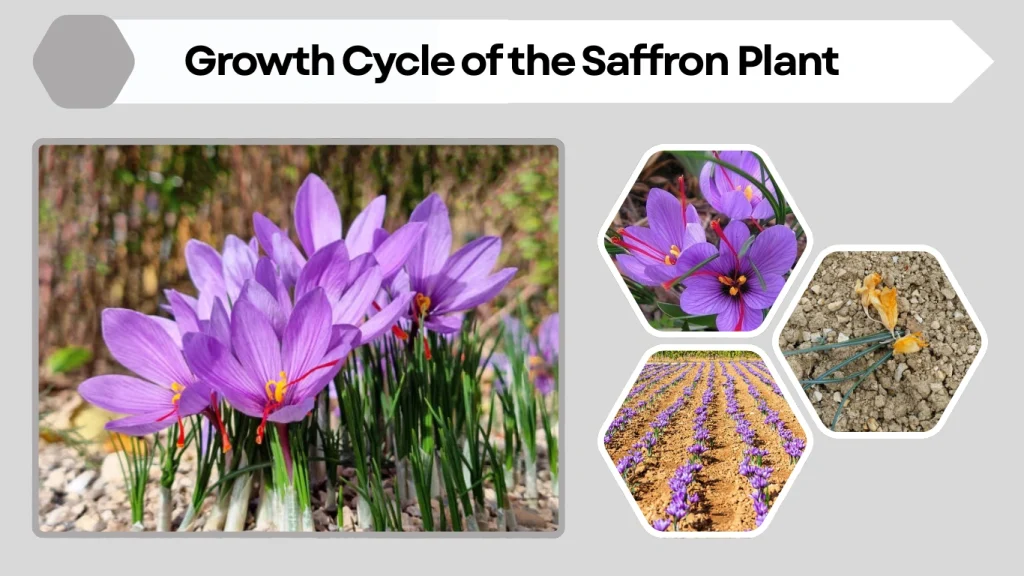
The saffron plant follows a unique annual cycle. It is usually planted in late summer. Shoots emerge as temperatures cool, and flowering begins in autumn. After blooming, the plant continues producing leaves through winter and early spring, storing energy in the corm.
Flowering season explained
Saffron flowers appear for a very short time, often only two to three weeks each year. Each flower opens for a single day, making daily harvesting essential during the blooming season. This brief flowering window is the most critical phase of saffron cultivation.
Dormancy and regrowth
By late spring, the leaves turn yellow and dry out. At this stage, the plant enters summer dormancy. During this resting period, the corms develop underground and prepare for the next cycle. With proper care, saffron plants return and bloom again every year.
How to Identify a Saffron Plant
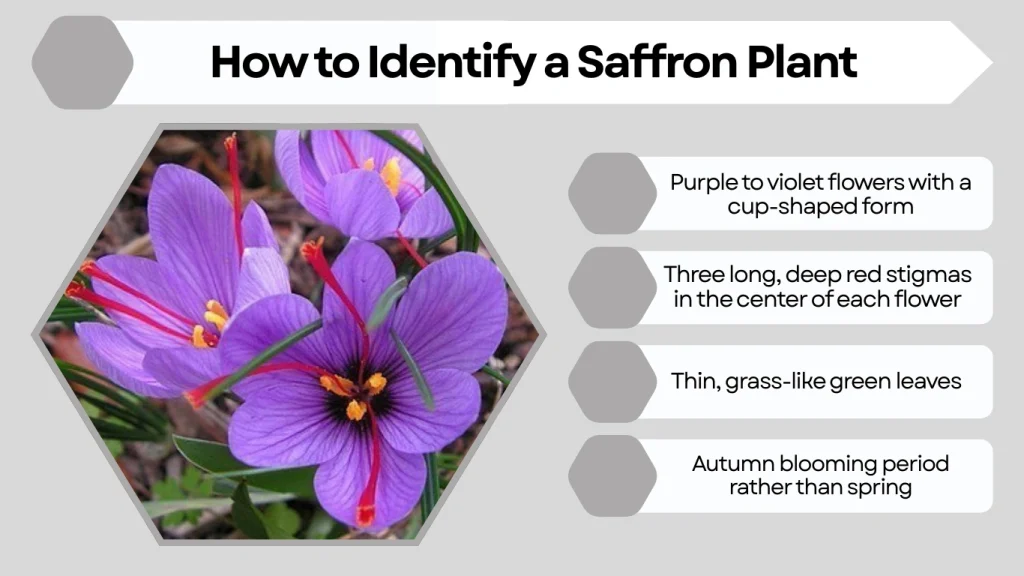
The saffron plant can be recognized by several clear features that distinguish it from other crocus varieties and autumn-flowering plants.
- Purple to violet flowers with a cup-shaped form
- Three long, deep red stigmas in the center of each flower
- Thin, grass-like green leaves
- Autumn blooming period rather than spring
- Rounded underground corm instead of a true bulb
- Strong aroma released when stigmas are crushed
How to Grow Saffron Plants

Climate and sunlight needs
Saffron plants grow best in areas with full sun and dry conditions. They require at least six hours of direct sunlight daily and prefer moderate autumn temperatures with cooler winters. Excess humidity and constant rain can damage corms and reduce flowering.
Soil requirements
Loose, sandy, and well-draining soil is essential. Heavy or compact soil should be amended with sand and organic matter to prevent waterlogging. Slightly neutral to mildly alkaline soil supports healthy corm development and flower production.
Best places to grow saffron
Saffron can be grown in garden beds, raised plots, pots, or large containers. Container growing is especially popular because it allows better control over drainage and makes it easier to protect plants from heavy rain.
Planting Saffron Corms
Saffron plants are grown from corms rather than seeds. The best time to plant them is in late summer to early autumn, before cooler weather begins. This timing allows the corms to establish roots and prepare for autumn flowering.
Plant corms about 3 to 5 inches deep, with the pointed end facing upward. Space them roughly 3 to 4 inches apart so new corms have room to develop. In garden beds, raised rows or loose soil improve drainage and reduce the risk of rot.
After planting, water lightly once to settle the soil. Do not soak the area. During the early stages, minimal moisture is enough until green shoots appear.
Saffron Plant Care Throughout the Year
Watering routine
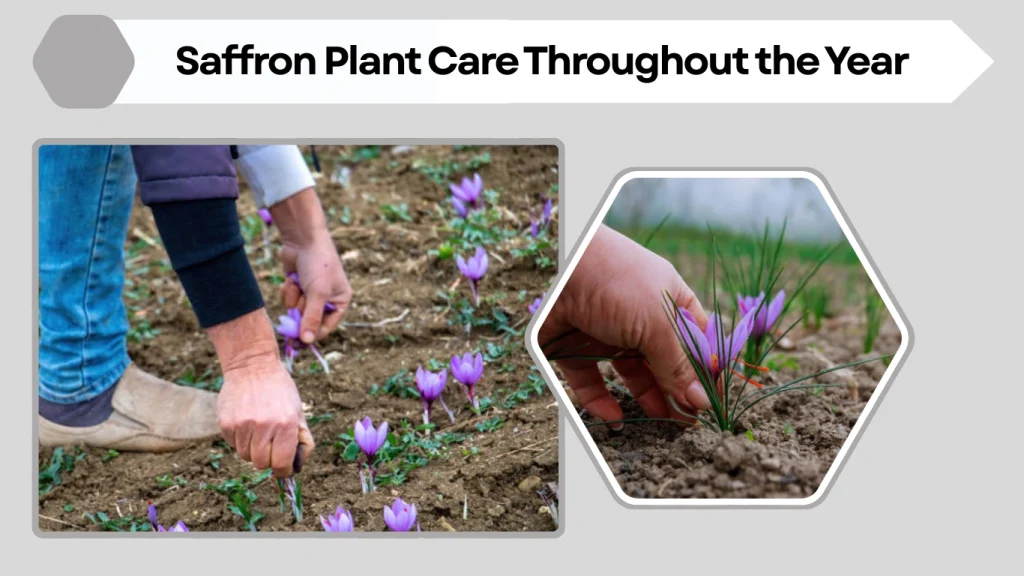
During the active growing season in autumn and winter, saffron plants need light but regular watering. The soil should dry slightly between waterings. Overwatering is the most common cause of failure. Once the leaves begin to yellow in late spring, watering should be reduced sharply.
Feeding and fertilizing
Saffron does not require heavy feeding. Mixing compost into the soil before planting usually provides enough nutrients. During leaf growth, a mild organic fertilizer once a month can help strengthen developing corms. Avoid nitrogen-heavy fertilizers, which encourage leaves but reduce flowering.
Seasonal maintenance
Keep the growing area weed-free, as weeds compete for nutrients and moisture. Allow leaves to remain after flowering until they dry naturally. This phase is critical because the plant stores energy for the next season’s blooms. During dormancy, protect corms from excessive rain and extreme heat.
Common Problems with Saffron Plants
Saffron is relatively hardy, but poor conditions can affect growth and flower production.
- Corm rot: Caused by waterlogged soil and poor drainage.
- Poor flowering: Often due to immature corms, low sunlight, or early leaf removal.
- Pest damage: Rodents, mites, and insects may attack corms and leaves.
- Fungal disease: Occurs in humid, stagnant environments.
- Frost stress: Heavy frost can damage blooms and young shoots.
- Overcrowding: Too many corms in one area reduce flower size and yield.
Harvesting from the Saffron Plant
When saffron flowers are ready
Harvesting begins as soon as the flowers fully open. The bright red stigmas are most aromatic and potent at this stage. Flowers should be picked daily during the flowering season.
How saffron threads are collected
Gently pluck the flower and open it by hand. Remove the three red stigmas carefully, avoiding the yellow parts. Use clean fingers or tweezers to maintain quality.
Post-harvest plant care
After harvesting, allow the leaves to continue growing naturally. They support corm development underground and determine the strength of next year’s flowers.
Drying and Storing Saffron
Fresh saffron threads must be dried immediately to preserve aroma and color. Spread them thinly on paper in a warm, dark, well-ventilated place. They can also be dried using very low heat in an oven or dehydrator.
Once fully dry, store saffron in an airtight glass container. Keep it away from light, heat, and moisture. Properly stored saffron can remain potent for two to three years, often developing deeper aroma over time.
Uses and Benefits of the Saffron Plant
Culinary uses
The saffron plant is cultivated mainly for its stigmas, which are used to flavor and color dishes such as rice, sweets, sauces, and beverages. A small amount provides strong aroma, golden color, and unique taste.
Medicinal and traditional uses
Saffron has long been valued in traditional medicine. It has been associated with mood support, digestion, and antioxidant properties. While not a replacement for medical treatment, saffron continues to be studied for its potential health benefits.
Ornamental value
Beyond spice production, saffron plants add beauty to gardens. Their autumn-blooming purple flowers create striking contrast when few other plants are in bloom.
How Long Saffron Plants Live and Multiply
Saffron plants are perennial and return each year when properly cared for. One corm typically produces several new corms annually. Over time, a small planting can expand into a productive saffron patch.
Every three to four years, corms should be lifted and divided during summer dormancy. This prevents overcrowding, improves flowering, and keeps plants healthy for long-term cultivation.
FAQs
What does a saffron plant look like?
A saffron plant has thin, grass-like leaves and produces violet-purple flowers in autumn. Each flower contains three bright red stigmas in the center. These stigmas are harvested and dried to make saffron spice.
How long does a saffron plant take to flower?
Saffron plants usually bloom about six to ten weeks after planting, depending on climate and care. Once established, they flower every autumn, with each bloom lasting only one day.
Can saffron plants grow indoors?
Yes, saffron plants can grow indoors if they receive strong sunlight or full-spectrum grow lights. Containers with excellent drainage and good airflow are essential for successful indoor saffron cultivation.
How many saffron plants are needed for one gram?
On average, about 150 to 170 saffron flowers are required to produce one gram of dried saffron. Because each plant produces only a few flowers, larger plantings result in better yields.
Do saffron plants come back every year?
Yes, saffron plants are perennial. After flowering, they grow leaves, store energy, and enter dormancy in summer. They regrow and bloom again each autumn.