






The spider lily flower is admired for its unusual, thread-like petals and long, arching stamens that create a dramatic, spider-like appearance. Unlike traditional lilies, spider lily flowers belong to several related plant groups, most commonly Lycoris, Hymenocallis, and Nerine. They are widely known for their striking colors, deep symbolism, and seasonal blooming habits. From the red spider lily flower linked with powerful meanings to the rare-looking white and pink forms, spider lilies attract gardeners, artists, and flower enthusiasts worldwide.
Spider Lily Flower Overview
The spider lily flower plant stands out because of its unique structure. Its narrow, curling petals and extended stamens give the bloom a delicate yet bold form that instantly draws attention. Spider lilies often bloom suddenly, producing flowers on bare stems before or after leaves appear, which adds to their mysterious reputation.
Most spider lily flower plants grow from bulbs and follow a seasonal growth cycle that includes a distinct flowering period and a resting phase. This unusual pattern, combined with their vivid colors, has made them important symbols in folklore, art, and cultural traditions.
Today, spider lily flowers are grown not only in gardens but also in parks, temple grounds, and ornamental landscapes. Their ability to thrive with minimal care and return year after year adds to their popularity across both tropical and temperate regions.
What Is a Spider Lily Flower Plant?

Botanical classification
Spider lilies are not true lilies. They belong mainly to the genera Lycoris, Hymenocallis, and Nerine, all within the Amaryllidaceae family. Each group shares the spider-like petal shape but differs slightly in structure and growing habits.
Scientific genera
The red spider lily flower is most often Lycoris radiata. The white spider lily flower usually refers to Hymenocallis littoralis, while many pink spider lily flower varieties belong to Nerine. Together, these plants are commonly grouped under the name “spider lily.”
Spider lily flower plant growth habit
Spider lily flower plants grow from underground bulbs. Many species send up flower stalks without leaves, creating the illusion of flowers rising directly from the soil.
Native regions and natural habitats
Spider lilies are native to East Asia, southern China, Japan, and parts of tropical America. They naturally grow in fields, forest edges, riverbanks, and coastal regions.
Identification of Spider Lily Flowers
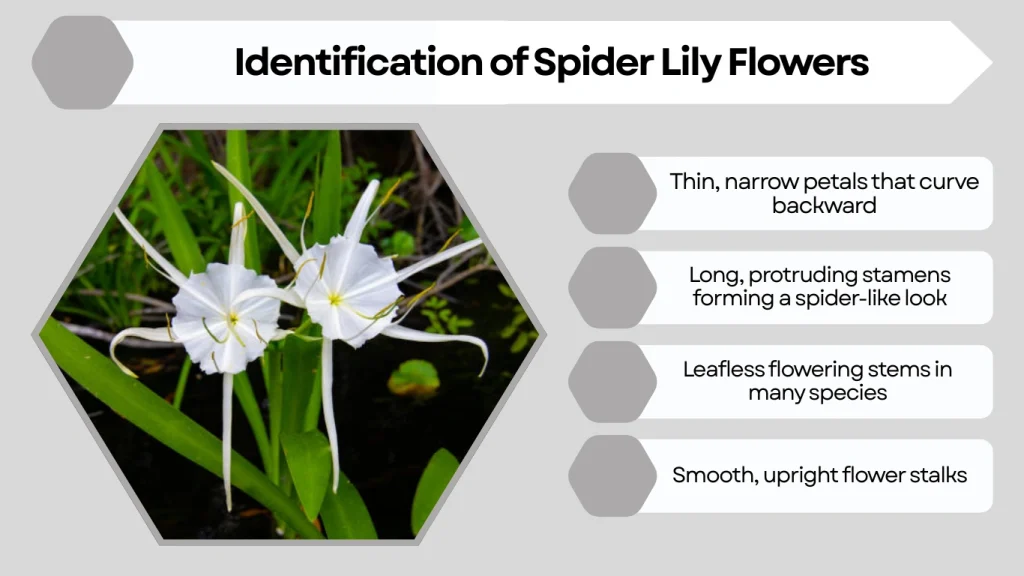
- Thin, narrow petals that curve backward
- Long, protruding stamens forming a spider-like look
- Leafless flowering stems in many species
- Smooth, upright flower stalks
- Blooming season from late summer to autumn
- Bulb-based underground structure
Spider Lily Flower Colors
- Red spider lily flower
- White spider lily flower
- Pink spider lily flower
- Blue spider lily flower (myth and artistic form)
- Yellow and orange spider lilies
- Cultivated and hybrid color varieties
Red Spider Lily Flower
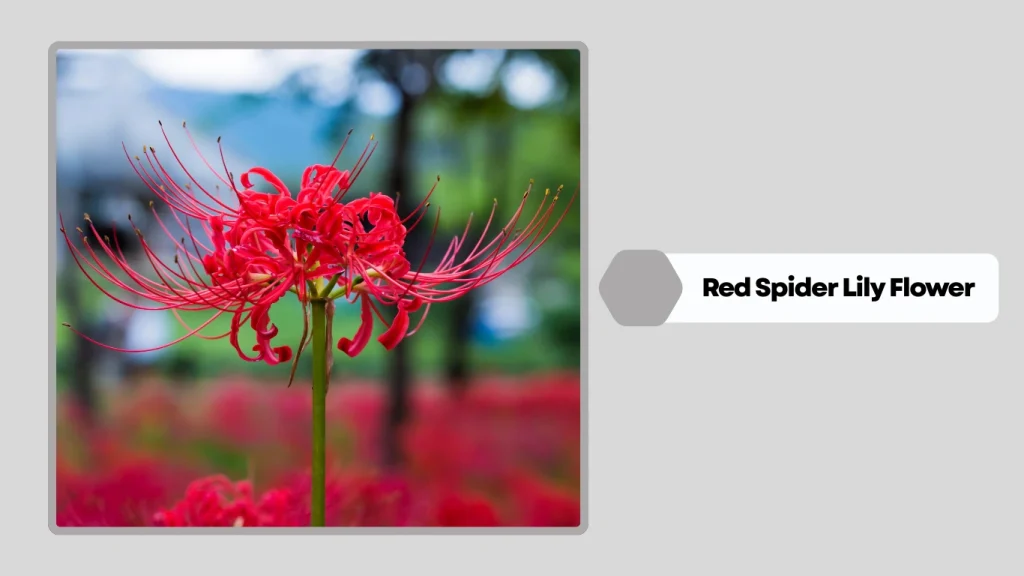
Red spider lily flower meaning
The red spider lily flower meaning is deeply rooted in East Asian culture. It is often associated with death, remembrance, final goodbyes, and the cycle of rebirth. In Japan, it is traditionally planted near cemeteries and along paths to honor the dead.
Cultural significance in Asia
Red spider lilies appear frequently in poetry, folklore, and traditional stories. They symbolize the separation between life and death and are often linked with spiritual transitions.
Red spider lily flower symbolism
Beyond mourning, the red spider lily flower symbolism also includes passion, intense emotion, and transformation. Its sudden blooming adds to its image as a flower of dramatic change.
Seasonal blooming behavior
Red spider lily flowers typically bloom in late summer or early autumn, often after heavy rains, when their bright red color contrasts strongly with fading landscapes.
White Spider Lily Flower
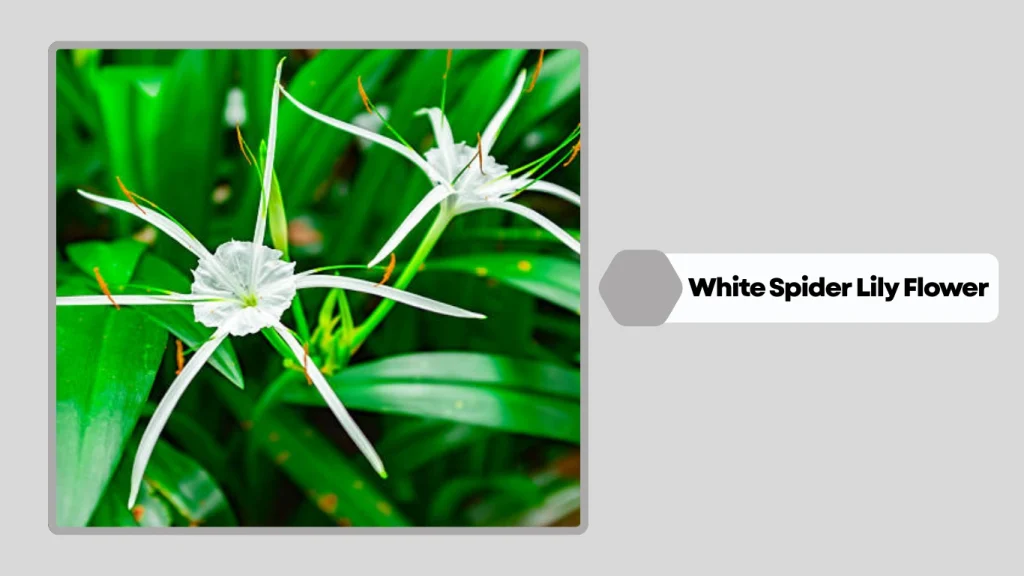
White spider lily flower meaning
The white spider lily flower meaning is commonly associated with purity, hope, and spiritual clarity. Unlike red spider lilies, white forms often symbolize peace and protection.
Spiritual symbolism
White spider lilies are used in many cultures as symbols of renewal and divine beauty. Their star-like shape and soft fragrance contribute to their spiritual reputation.
Garden and landscape uses
White spider lily flower plants are popular in coastal gardens, water-edge plantings, and ornamental landscapes. They thrive in warm climates and moist soil.
Comparison with other white lilies
Although often compared to peace lilies or calla lilies, white spider lilies are botanically different and easily recognized by their narrow petals and long stamens.
Blue Spider Lily Flower
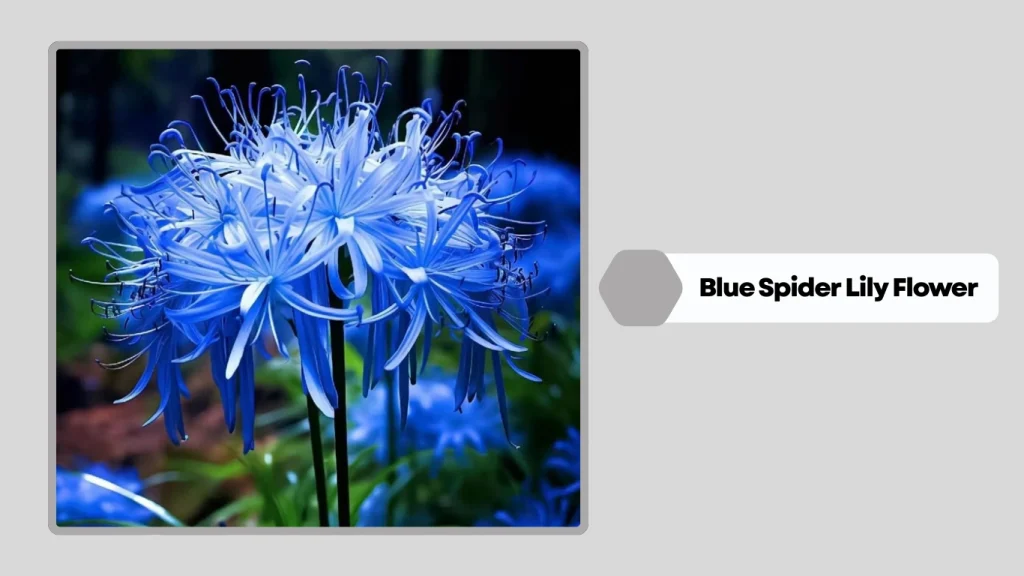
Do blue spider lilies really exist?
True blue spider lily flowers do not exist in nature. No spider lily species produces natural blue pigment. Most images of blue spider lilies are digitally enhanced or artistically created.
Blue spider lily flower meaning
In symbolic and modern interpretations, the blue spider lily flower meaning often represents mystery, the supernatural, and rare beauty.
Blue spider lily plant myths and hybrids
Some pale lavender or silvery spider lilies may appear bluish under certain lighting, but they are not genetically blue spider lily plants.
Blue spider lily demon slayer flower influence
The popularity of the blue spider lily demon slayer flower comes from anime and fictional stories, where it is portrayed as a powerful and mythical plant.
Pink Spider Lily Flower
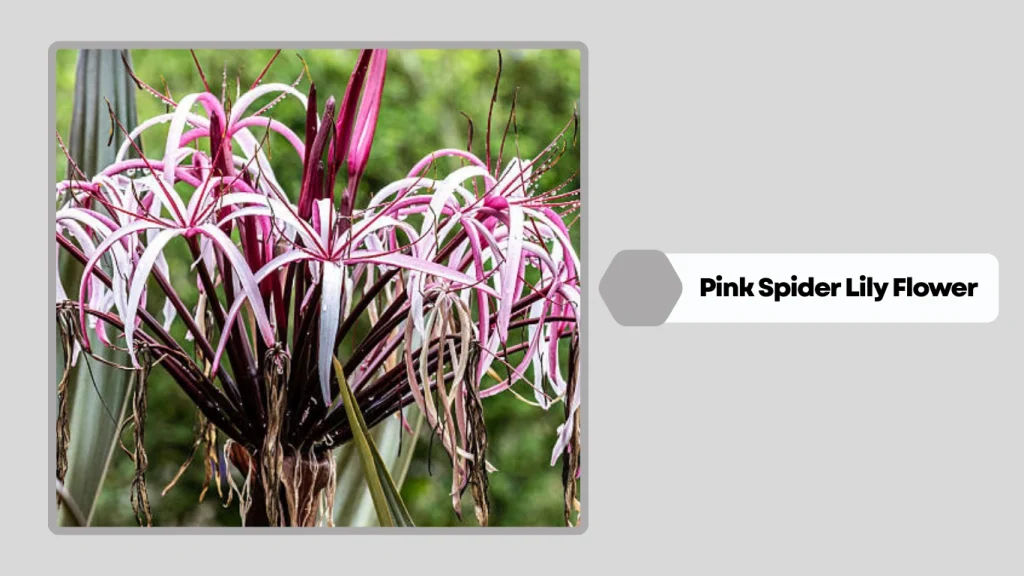
Pink spider lily flower meaning
Pink spider lily flower meaning is generally linked to love, gentle emotions, admiration, and grace.
Ornamental value
Pink spider lilies are widely used in ornamental gardens because they provide a softer contrast to the intense red forms.
Use in gardens and floral design
They are commonly planted in borders and used in floral displays to bring elegance and light color variation.
Types of Spider Lilies
- Red spider lilies (Lycoris radiata)
- White spider lilies (Hymenocallis littoralis)
- Golden spider lilies (Lycoris aurea)
- Pink spider lilies (Nerine bowdenii)
- Hybrid spider lily varieties
Spider Lily Flower Meaning and Symbolism
Spider lily flower meaning varies widely across cultures, but it is always connected with powerful emotional and spiritual themes. In many Asian traditions, spider lilies symbolize separation, impermanence, and the passage between life and death. Their sudden blooming on bare stems has long been viewed as a sign of transition and remembrance.
Spider lily flower symbolism is also tied to transformation and rebirth. Because the leaves and flowers often appear at different times, the plant represents cycles, endings, and new beginnings. This unique growth habit has inspired countless legends, poems, and spiritual interpretations.
In modern symbolism, spider lilies are not only associated with loss but also with courage, intense love, and personal change. Their striking form and bold colors make them a favorite symbol in art, tattoos, and storytelling.
Spider Lily Flower Names
Spider lily flower names vary depending on region, species, and cultural background. The most widely known common name is “red spider lily,” but many other names exist.
Common spider lily flower names include hurricane lily, surprise lily, naked lady lily, and equinox flower. These names often reflect the plant’s sudden flowering habit or seasonal blooming time.
Scientific spider lily flower names are mainly found within the genera Lycoris, Hymenocallis, and Nerine. Traditional and regional names are also common in Japan, China, and parts of the Americas, where spider lilies have long been part of folklore and local culture.
Where Spider Lily Flowers Grow Naturally
Spider lily flowers are native primarily to East Asia, including China, Japan, and Korea. Some species are also native to parts of tropical America and southern Africa. In the wild, they are often found growing in fields, along forest edges, and near riverbanks.
These plants thrive in climates with warm summers, mild winters, and seasonal rainfall. Their bulbs prefer loose, well-drained soil but can tolerate periods of moisture, especially during their active growing phase.
Today, spider lilies are cultivated worldwide and have naturalized in many regions. They are commonly seen in gardens, temple grounds, and ornamental landscapes, where their sudden blooms create dramatic seasonal displays.
How to Grow Spider Lily Flower Plants
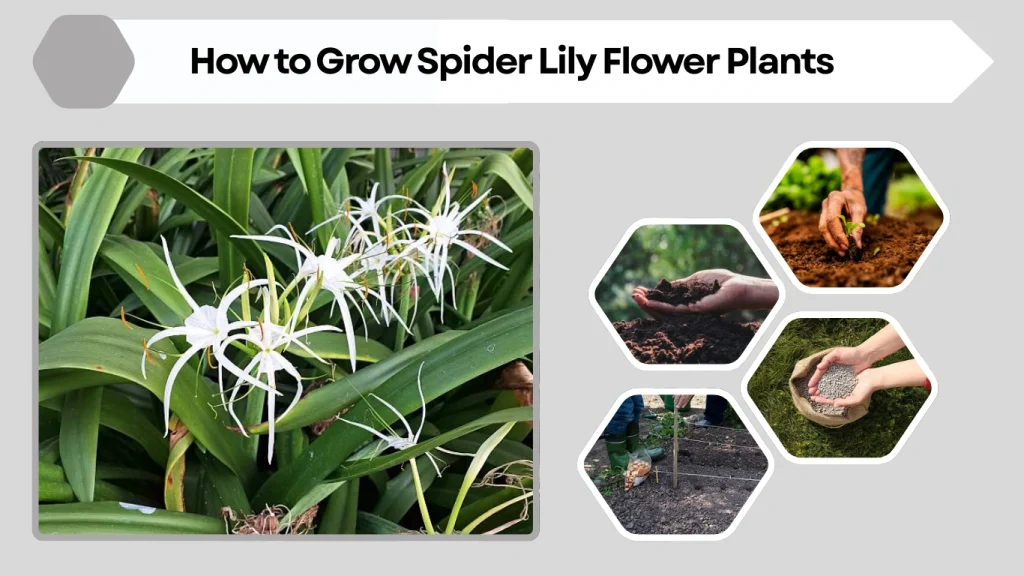
- Choose a sunny to partially shaded location
- Plant bulbs in loose, well-drained soil
- Place bulbs about 4 to 6 inches deep
- Space plants to allow airflow and spreading
- Water regularly during active growth
- Reduce watering during dormancy
- Feed lightly with a balanced fertilizer
Spider Lily Flower Plant Life Cycle
The spider lily life cycle begins underground as a dormant bulb. When environmental conditions become favorable, leaves or flower stalks emerge, depending on the species.
Flowering often occurs suddenly, sometimes after rainfall or temperature shifts. After blooming, some species produce leaves, while others send up foliage before flowering.
As the season ends, leaves gradually die back, and the plant returns to dormancy. During this resting stage, the bulb stores energy for the next growth cycle.
Common Problems and Diseases
- Bulb rot caused by excess moisture
- Aphids and spider mites feeding on foliage
- Fungal leaf spot and blight
- Poor flowering due to insufficient sunlight
- Yellowing leaves from nutrient imbalance
Spider Lily Flower in Art and Popular Culture
Spider lilies appear frequently in traditional paintings, poetry, and modern visual media. Their symbolic meaning has made them popular in tattoo art and decorative design.
In recent years, spider lilies have gained global recognition through anime, games, and fantasy stories. The blue spider lily demon slayer flower is one of the most famous fictional examples, portraying the plant as a rare and supernatural symbol.
Because of their dramatic form and emotional symbolism, spider lilies continue to inspire artists and storytellers across cultures.
Are Spider Lily Flowers Toxic?
Spider lily flowers are toxic if ingested. They contain alkaloids that can cause nausea, vomiting, abdominal pain, and dizziness. Both humans and animals can be affected.
Pets are especially vulnerable, and ingestion may lead to serious illness. For this reason, spider lilies should be planted away from areas accessible to animals and small children.
When handling spider lily bulbs or cutting flowers, it is recommended to wash hands thoroughly afterward.
FAQs
What is a spider lily flower?
A spider lily flower is an ornamental plant known for its thin, curling petals and long stamens that resemble a spider. It commonly belongs to the genera Lycoris, Hymenocallis, or Nerine and is valued for its beauty and symbolism.
What does a red spider lily flower mean?
Red spider lily flower meaning is often connected with remembrance, separation, death, and transformation. In East Asian cultures, it is strongly associated with spiritual transitions and honoring the dead.
Is the blue spider lily flower real?
No, true blue spider lily flowers do not exist in nature. Most blue spider lily images are fictional, digitally altered, or inspired by anime and artistic representations.
How many spider lily flower colors exist?
Spider lily flower colors naturally include red, white, pink, yellow, and orange. Blue is not a natural color but appears in art and popular culture.
What are the most common spider lily flower names?
Common spider lily flower names include red spider lily, hurricane lily, surprise lily, naked lady lily, and equinox flower. Scientific names usually fall under Lycoris, Hymenocallis, and Nerine.