

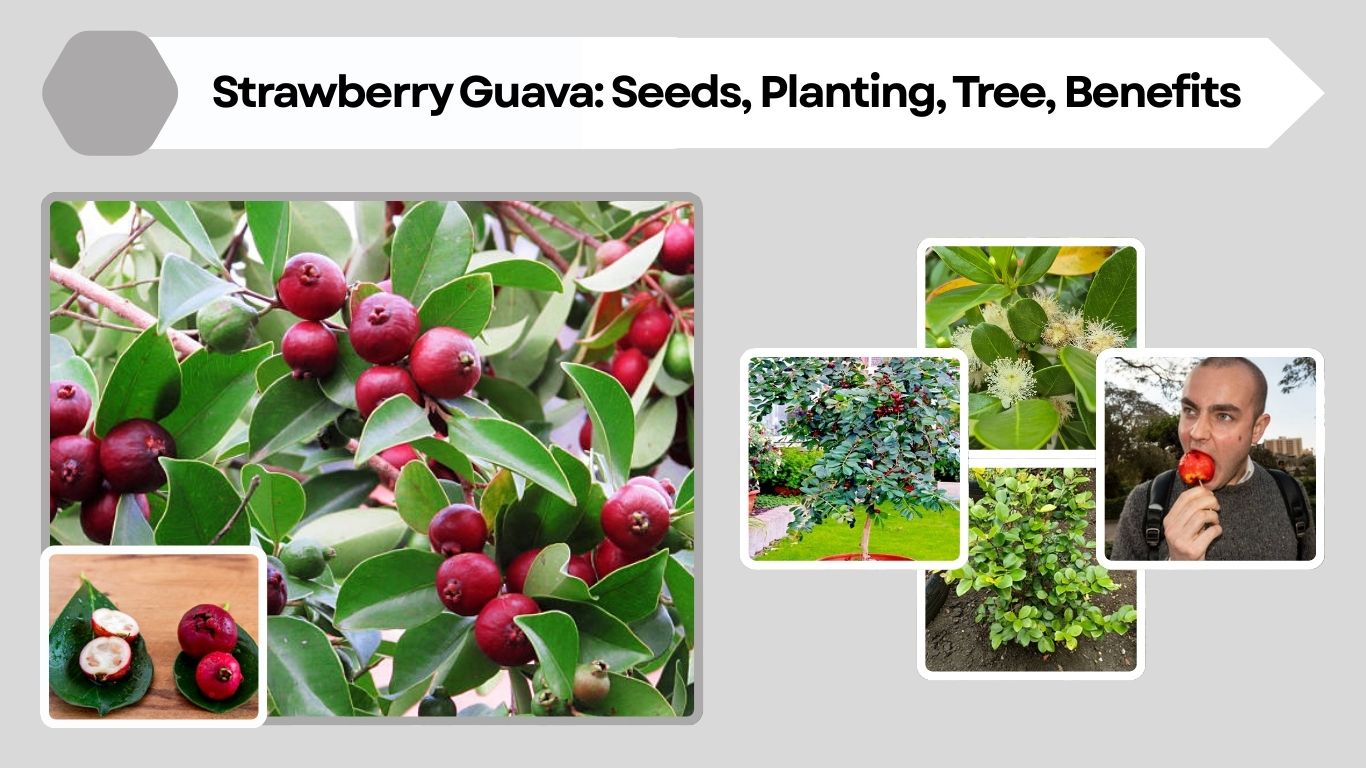
Strawberry guava is a small tropical fruit tree loved for its attractive appearance, fragrant flowers, and sweet, aromatic fruits. It is easier to grow than common guava and adapts well to gardens, containers, and even patios. Because of its compact size and low maintenance needs, strawberry guava has become popular among home gardeners and fruit enthusiasts worldwide. Beyond gardening value, the fruit is also known for its nutritional and health benefits. This article explores strawberry guava identification, tree characteristics, growing conditions, seeds, and planting methods to help you understand and grow this unique fruit successfully.
What Is Strawberry Guava?
Strawberry guava (Psidium cattleianum) is a tropical and subtropical fruit tree belonging to the Myrtaceae family. It is commonly known as strawberry guava, cherry guava, or Cattley guava. Despite the name, it is not a hybrid of strawberry and guava; instead, the name comes from its strawberry-like aroma and flavor.
Native to coastal Brazil, strawberry guava has spread to many parts of the world, including Asia, Africa, the Pacific Islands, and warmer regions of the United States. Compared to common guava (Psidium guajava), strawberry guava is smaller, more cold-tolerant, and has a richer, sweeter taste with fewer pest issues. These qualities make it an excellent choice for home gardens and container growing.
Strawberry Guava Identification
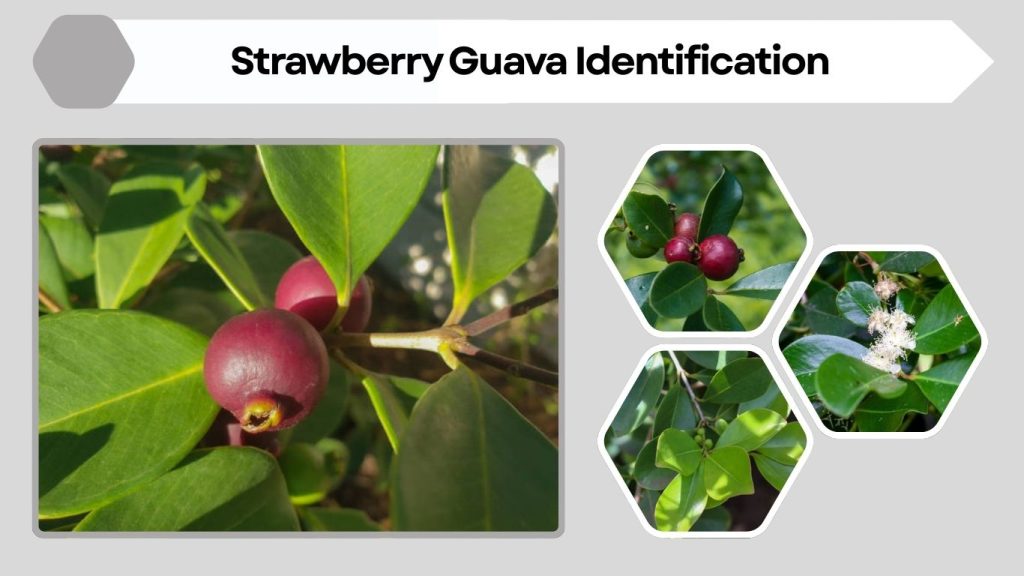
Correct identification is important for gardeners, especially because strawberry guava closely resembles other guava species. Its tree, leaves, flowers, and fruits have distinct characteristics that make it easy to recognize.
Tree Characteristics
The strawberry guava tree is an evergreen shrub or small tree that typically grows between 6 and 15 feet tall. It has a dense, rounded canopy with multiple branches, giving it an attractive ornamental appearance. The bark is smooth and light brown to gray, often peeling slightly as the tree matures. Due to its compact size, the tree is well suited for small gardens and container planting.
Leaves, Flowers, and Fruit
Leaves
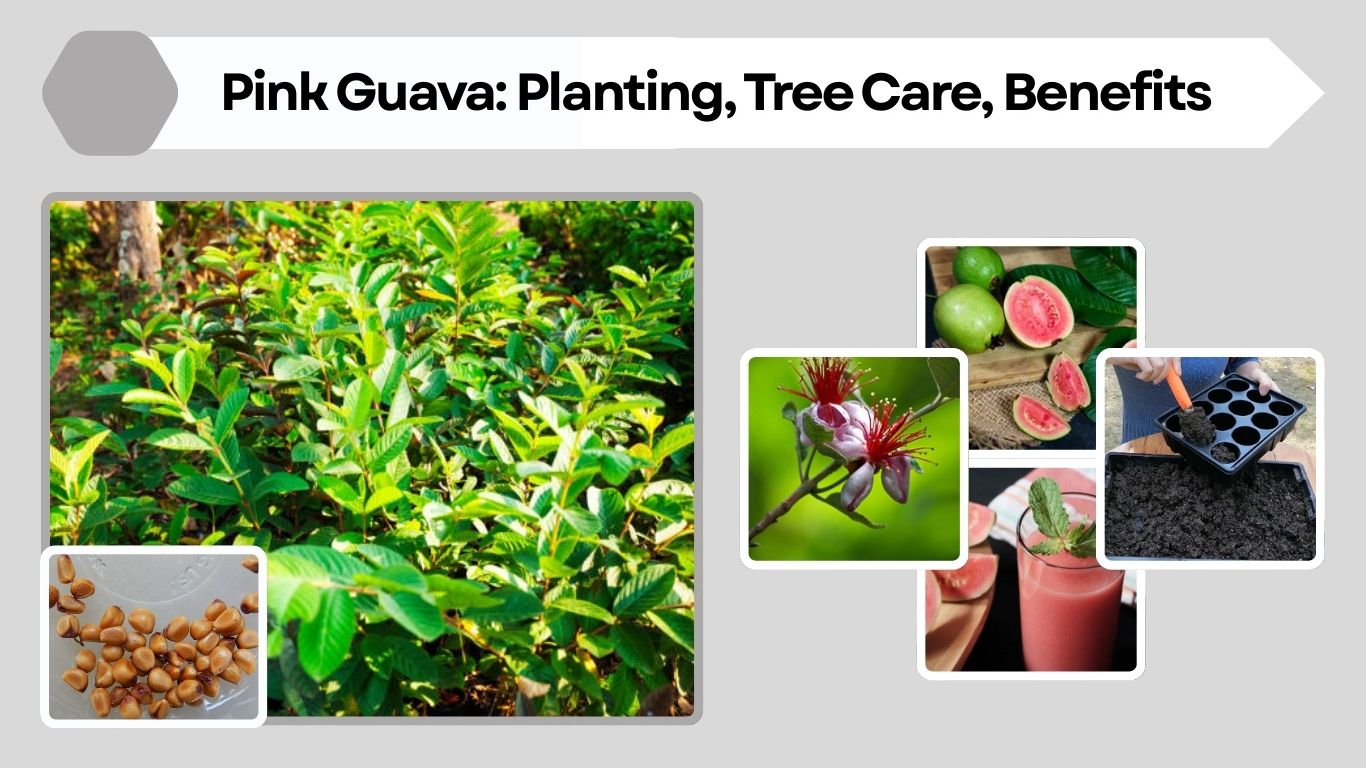
Strawberry guava leaves are oval-shaped, thick, and leathery with a glossy dark green upper surface and a lighter underside. The leaves grow opposite each other along the branches and release a mild aroma when crushed. Their evergreen nature allows the tree to remain attractive throughout the year.
Flowers
The flowers are small, white, and highly fragrant. They usually bloom in late spring or early summer, depending on climate. Each flower contains numerous long stamens, giving it a fluffy appearance. Strawberry guava flowers are self-fertile, but pollination by bees and other insects improves fruit production.
Fruit
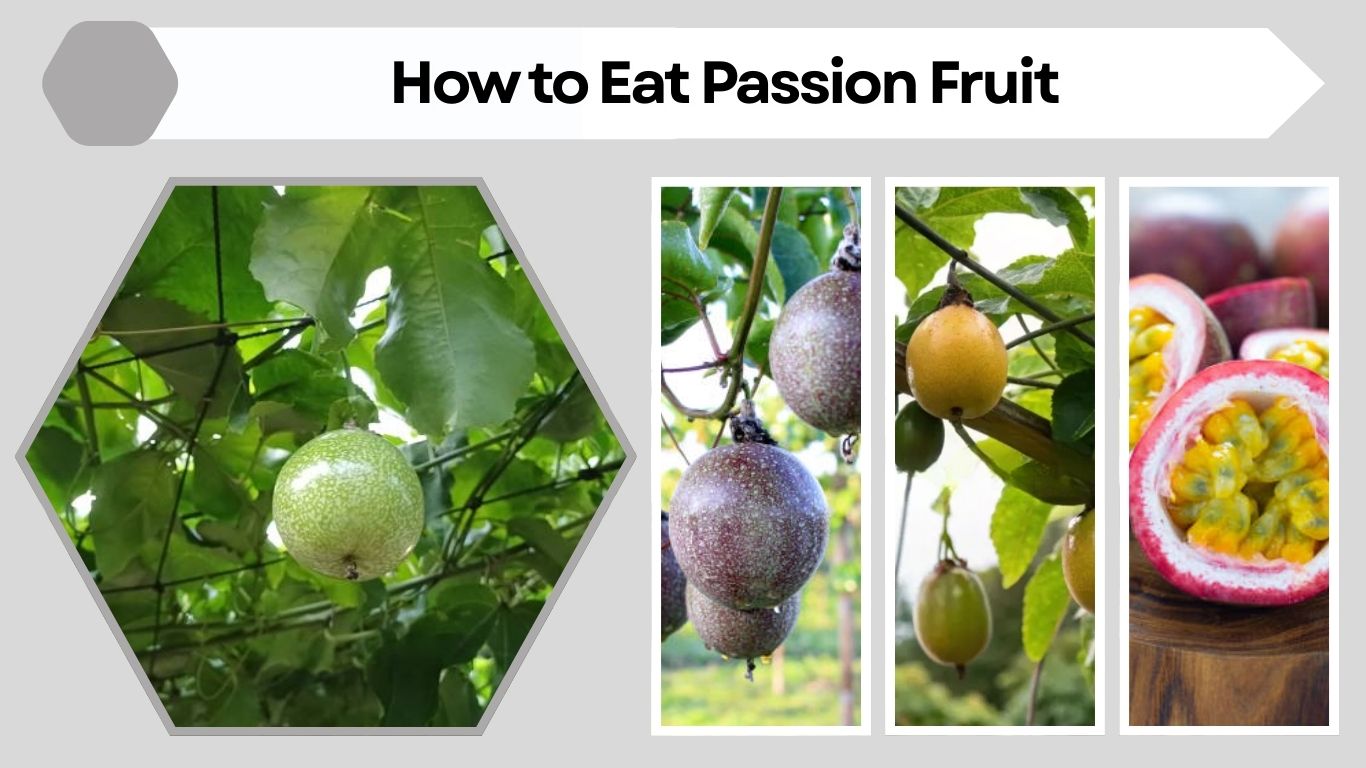
The fruit is round to slightly oval, about 1 to 2 inches in diameter. When ripe, the skin turns deep red or yellow, depending on the variety. Inside, the flesh is soft, juicy, and aromatic with a sweet-tart flavor. Small edible seeds are embedded throughout the pulp. The fruit’s unique fragrance is one of its most distinguishing features.
Strawberry Guava Tree Growth and Care
Strawberry guava is known for being hardy and adaptable, making it suitable for both beginner and experienced gardeners.
Climate and Growing Conditions
Strawberry guava grows best in tropical and subtropical climates and thrives in USDA hardiness zones 9–11. It tolerates light frost better than common guava but may suffer damage in prolonged freezing conditions. The tree prefers warm temperatures and moderate humidity but can adapt to a range of environments once established.
Soil Requirements
Well-draining soil is essential for healthy strawberry guava growth. The tree performs well in sandy loam or loamy soils but can tolerate slightly clay-based soil if drainage is adequate. The ideal soil pH ranges from 5.5 to 7.0. Adding organic matter such as compost improves soil structure and nutrient availability.
Sunlight and Water Needs
Strawberry guava grows best in full sun, requiring at least 6–8 hours of direct sunlight daily for optimal fruit production. Partial shade is tolerated but may reduce flowering and yield. Regular watering is important during the early growth stage, while mature trees become moderately drought-tolerant. Overwatering should be avoided, as it can lead to root problems.
Pruning and Maintenance
Pruning helps maintain the shape of the strawberry guava tree and encourages healthy growth. Light pruning should be done after fruiting to remove dead, damaged, or crossing branches. This also improves air circulation and sunlight penetration within the canopy. Strawberry guava generally requires minimal maintenance and is resistant to many common pests and diseases. Occasional issues may include fruit flies or scale insects, but these can usually be managed with proper sanitation and organic treatments.
Strawberry Guava Seeds
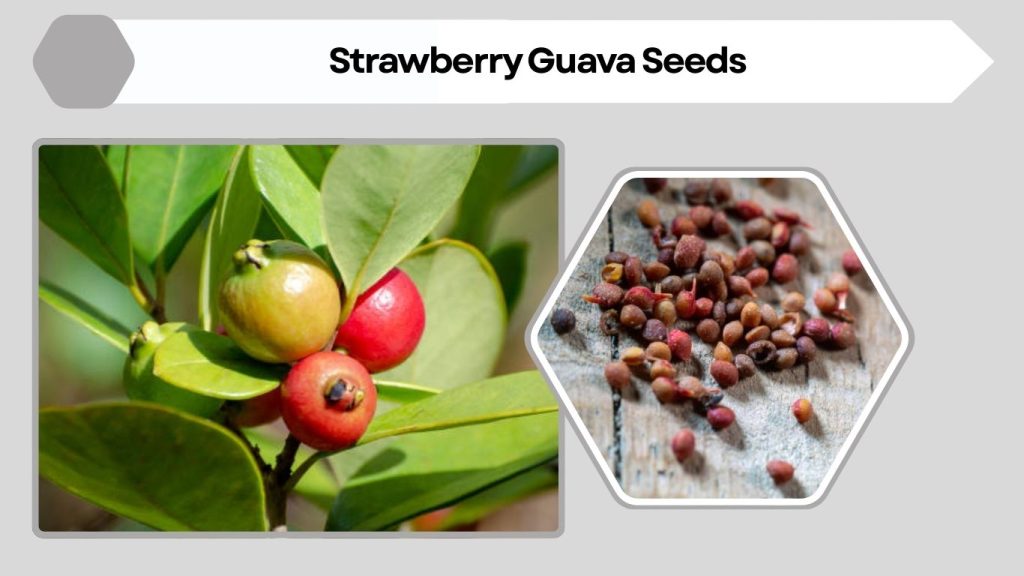
Strawberry guava seeds are small, hard, and pale yellow to light brown in color. Each fruit contains multiple seeds embedded in the soft pulp. These seeds are viable and can be used to grow new plants, although seed-grown trees may take longer to produce fruit compared to grafted plants.
How to Collect Strawberry Guava Seeds
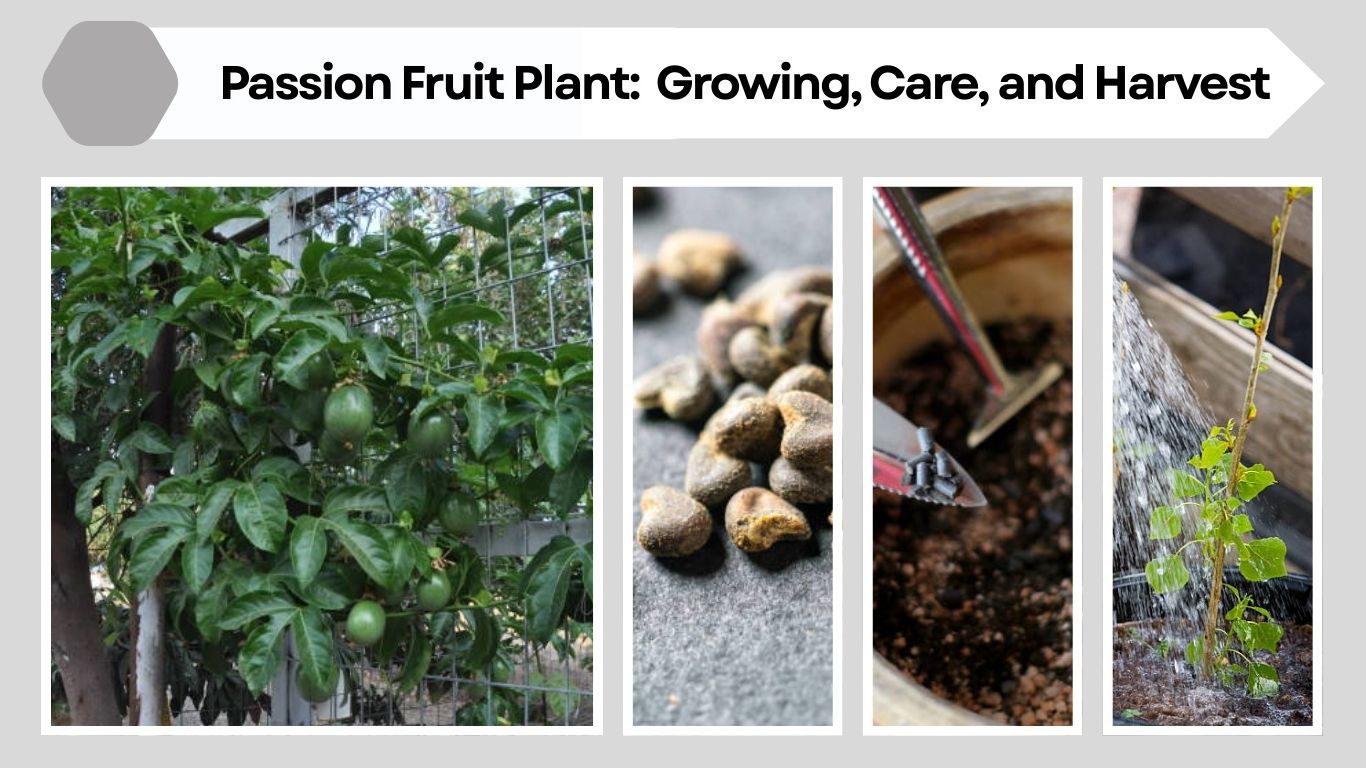
To collect seeds, choose fully ripe fruits with deep color and strong aroma. Cut the fruit open and scoop out the pulp containing the seeds. Rinse the pulp under running water while gently rubbing it to separate the seeds. Once cleaned, spread the seeds on a paper towel and allow them to air-dry for several days in a shaded, well-ventilated area. Dried seeds can be stored in a cool, dry place until planting.
Seed Germination Process
Strawberry guava seeds usually germinate within 2 to 6 weeks under the right conditions. Warm temperatures and consistent moisture are essential for successful germination.
Germination Conditions
Seeds should be planted in a light, well-draining seed-starting mix. The ideal temperature range for germination is between 70°F and 85°F. Keep the soil moist but not soggy, and place the container in a warm, bright location away from direct sunlight.
Tips for Better Germination
Soaking seeds in warm water for 12–24 hours before planting can improve germination rates. Light scarification, such as gently rubbing the seed coat with sandpaper, may also help. Avoid planting seeds too deep; covering them lightly with soil is sufficient.
How to Plant Strawberry Guava
Strawberry guava can be grown from seeds, seedlings, or young nursery plants. Growing from seeds is slower but rewarding for gardeners who enjoy starting plants from scratch.
Planting from Seeds
Fill a container with well-draining potting mix and plant the seeds about ¼ inch deep. Water lightly and cover the container with a plastic dome or clear wrap to retain moisture. Once seedlings emerge, remove the cover and place the container in bright light. When seedlings develop several true leaves, they can be transplanted into larger pots or directly into the ground.
Best Time to Plant
The best time to plant strawberry guava is during spring or early summer when temperatures are warm. In cooler regions, starting seeds indoors allows the plant to establish before being moved outdoors.
Transplanting Seedlings
Seedlings should be transplanted when they are at least 6–8 inches tall and have a strong root system. Space trees about 10–15 feet apart if planting in the ground. Water thoroughly after transplanting to help the roots settle.
Growing Strawberry Guava in Pots
Strawberry guava adapts well to container growing, making it ideal for patios and balconies. Choose a pot that is at least 12–18 inches wide with drainage holes. Use a high-quality potting mix and place the container in full sun. Regular watering and occasional feeding help maintain healthy growth.
Benefits of Strawberry Guava
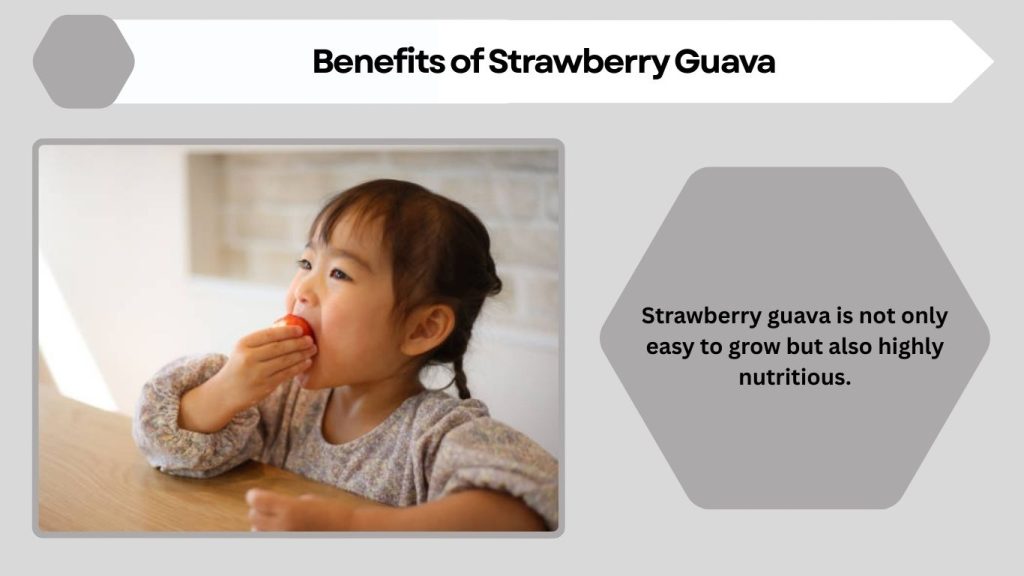
Strawberry guava is not only easy to grow but also highly nutritious.
Nutritional Value
The fruit is rich in vitamin C, providing strong antioxidant support. It also contains vitamin A, potassium, and dietary fiber, making it a healthy addition to a balanced diet.
Health Benefits
Regular consumption of strawberry guava may help boost immunity, support digestion, and improve heart health. The antioxidants found in the fruit help protect cells from damage and may reduce inflammation.
Culinary and Practical Uses
Strawberry guava can be eaten fresh or used in juices, jams, jellies, and desserts. Its sweet fragrance makes it popular for flavoring beverages and baked goods.
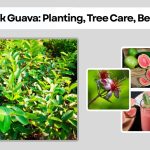
Strawberry Guava Pictures
Visual identification is helpful when growing strawberry guava. Pictures of the tree, leaves, flowers, and ripe fruits can help gardeners confirm plant identity and recognize maturity stages. Images of cut fruit also highlight the flesh color and seed distribution.
Conclusion
Strawberry guava is a versatile and attractive fruit tree that offers beauty, flavor, and health benefits. With proper identification, basic care, and simple planting techniques, it can thrive in gardens, containers, and small spaces. Whether grown for its delicious fruit or ornamental value, strawberry guava is an excellent choice for gardeners looking for a low-maintenance and rewarding plant.
FAQs
How long does strawberry guava take to produce fruit?
Strawberry guava grown from seed usually takes 2 to 4 years to produce fruit. Trees grown from grafted or nursery plants may begin fruiting sooner, often within 1 to 2 years under ideal growing conditions.
Can strawberry guava grow indoors?
Strawberry guava can be grown indoors when young, but it performs best outdoors. If grown indoors, it needs bright sunlight, preferably near a south-facing window or under grow lights. Container-grown plants can be moved outside during warm months.
Is strawberry guava invasive?
In some tropical regions, strawberry guava is considered invasive because it spreads easily by seed. Gardeners should check local regulations and manage fallen fruit to prevent uncontrolled spreading.
What does strawberry guava taste like?
Strawberry guava has a sweet, slightly tart flavor with a strong fruity aroma. The taste is often described as a mix of strawberry and tropical guava, making it popular for fresh eating and desserts.
Are strawberry guava seeds edible?
Yes, strawberry guava seeds are edible and safe to consume. They are small and hard but can be swallowed whole when eating the fruit. Some people prefer straining them out when making juices or jams.
Does strawberry guava need a pollinator?
Strawberry guava is self-fertile, meaning it can produce fruit on its own. However, pollination by bees and other insects can significantly increase fruit yield.
How often should strawberry guava be watered?
Young plants need regular watering to establish strong roots. Once mature, strawberry guava is moderately drought-tolerant and only requires watering during dry periods or extended heat.