





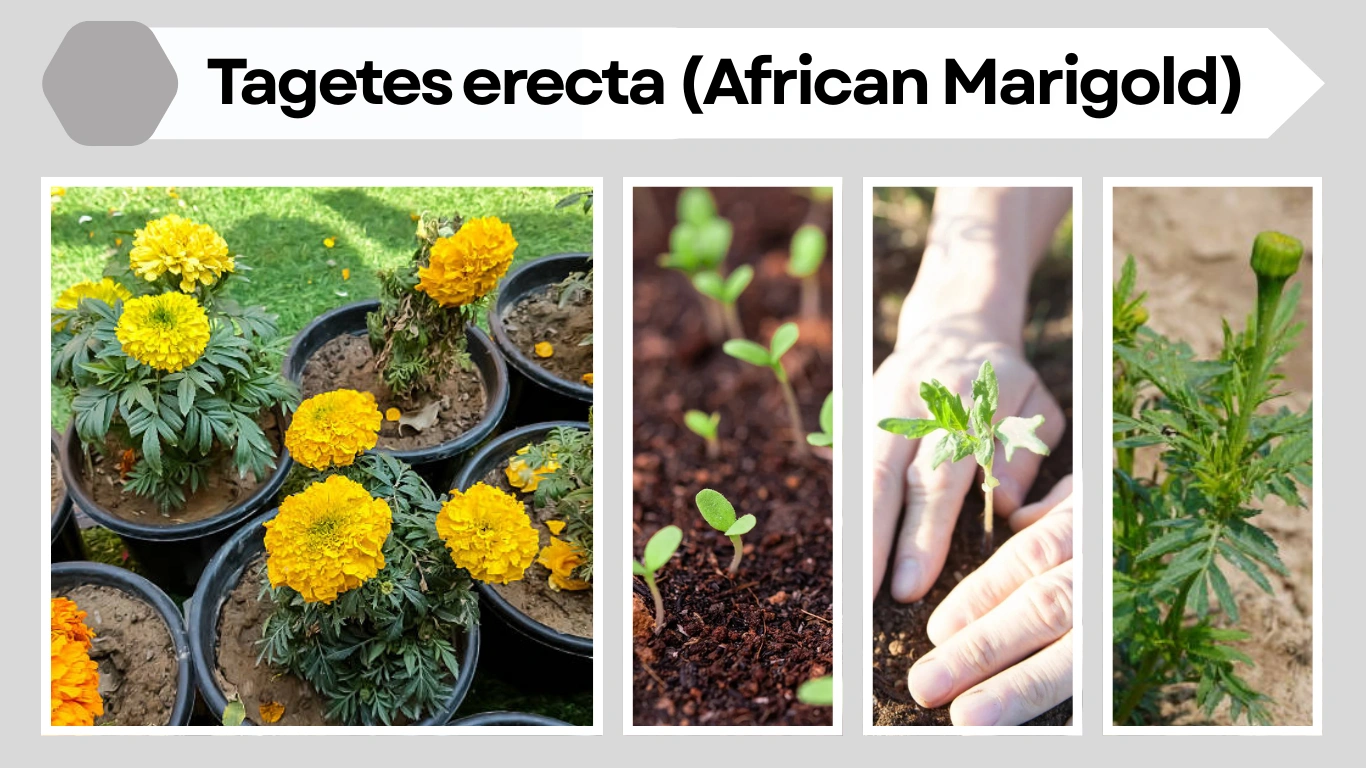
Tagetes erecta, commonly known as African marigold or Aztec marigold, is a bold, fast-growing flowering plant valued for its large blooms, vibrant colors, and strong garden performance. Native to Mexico and Central America, this species is now widely cultivated across Asia, Africa, and the Americas. Its tall growth habit, long flowering season, and natural pest-repelling qualities make it a favorite in home gardens, landscapes, religious plantings, and commercial flower production.
Botanical Profile of Tagetes erecta
Tagetes erecta belongs to the Asteraceae family, which also includes sunflowers, daisies, and chrysanthemums. It is a true annual plant, completing its entire life cycle—from seed to flower to seed—within a single growing season. Under warm conditions, it grows quickly and begins blooming within 7 to 10 weeks after sowing.
The plant develops an upright, branching structure with firm green stems and strongly aromatic foliage. Its flowers are large composite heads made up of hundreds of tightly packed florets, forming the familiar rounded, ball-shaped blooms. Because of its adaptability, Tagetes erecta is cultivated in tropical, subtropical, and warm temperate regions around the world.
Beyond ornamental use, the species is also valued in agriculture and traditional practices due to natural compounds that help suppress soil pests and harmful microorganisms.
Identification and Key Characteristics

Tagetes erecta has several distinct features that make it easy to recognize in gardens and flower fields.
- Plant height and spread: Commonly reaches 40–100 cm tall with a bushy, upright form
- Stems: Thick, green, and strongly branched to support heavy blooms
- Leaves: Deeply divided, pinnate, and strongly aromatic when crushed
- Flowers: Large, round, and densely packed, often 7–12 cm across
- Bloom colors: Bright yellow, golden, deep orange, and creamy tones
- Growth habit: Fast-growing annual with continuous flowering in warm weather
These characteristics make African marigolds especially suitable for borders, mass displays, and cut-flower gardens.
Types and Popular Varieties of Tagetes erecta
Many cultivated varieties of Tagetes erecta have been developed to enhance flower size, color intensity, uniform growth, and disease resistance. Tall types are widely grown for landscaping and cut-flower production, producing thick stems and oversized blooms.
Dwarf and compact varieties are bred for container gardening, edging, and small beds. These plants stay shorter but still produce large, showy flowers. Hybrid cultivars often focus on early blooming, improved heat tolerance, and synchronized flowering, which is especially important for commercial flower farming and festival markets.
Popular groups include giant-flowered African marigolds, compact bedding marigolds, and F1 hybrids used in professional horticulture.
Flower Structure and Color Variations

Single vs. Double Blooms
Most Tagetes erecta varieties produce fully double flowers, with tightly layered petals forming round, pom-pom-like heads. Some strains also develop semi-double blooms, which show a visible central disc surrounded by layered ray florets.
Common Color Shades
The flowers appear mainly in yellow, golden, lemon, deep orange, and occasionally creamy white. Modern hybrids offer improved color stability and uniformity.
Seasonal Bloom Changes
Bloom size and intensity often increase once plants are fully established. Cooler nights can deepen flower color, while extreme heat may slightly reduce bloom diameter.
Fragrance and Pollen Traits
African marigolds have a mild but distinctive scent. Their flowers are rich in pollen, attracting bees and beneficial insects.
Natural Habitat and Origin
Tagetes erecta is native to Mexico and parts of Central America, where it naturally grows in open fields, hillsides, and well-drained soils. In its native range, it thrives under full sun, warm temperatures, and seasonal rainfall patterns.
Through trade and cultural exchange, the plant spread rapidly to South America, Africa, India, and Southeast Asia. Today, it is especially significant in South Asian countries, where it is widely cultivated for garlands, ceremonies, festivals, and commercial flower markets.
Its natural tolerance to heat, sunlight, and varied soils has allowed it to adapt successfully to many different growing regions worldwide.
How to Grow Tagetes erecta

Growing African marigolds is simple, making them ideal for beginners and large-scale growers alike.
- Choosing seeds or seedlings: Use fresh seeds or healthy nursery transplants
- Best planting time: Sow after the last frost or at the beginning of warm seasons
- Soil preparation: Loose, well-drained soil enriched with compost
- Sunlight requirements: At least 6–8 hours of direct sunlight daily
- Spacing guidelines: 25–40 cm between plants for good air circulation
- Watering routine: Moderate, regular watering without waterlogging
Under good conditions, seedlings establish quickly and begin producing buds within a few weeks.
Soil, Light, and Climate Requirements
Ideal Soil Conditions
Tagetes erecta grows best in fertile, well-draining soil with a neutral to slightly acidic pH. Sandy loam and garden soil mixed with organic compost support strong root development and heavy flowering.
Sunlight Needs
Full sun is essential for tall growth and large blooms. Plants grown in partial shade often become leggy and produce fewer flowers.
Temperature and Hardiness
African marigolds prefer warm temperatures between 18°C and 32°C. They are sensitive to frost and grow poorly in prolonged cold conditions.
Humidity Tolerance
They tolerate moderate humidity well but need good air circulation to prevent fungal problems.
Watering and Fertilization Practices
Consistent watering is essential for healthy growth and prolonged flowering. Tagetes erecta prefers evenly moist soil, especially during early growth and bud formation. Deep watering two to three times a week is usually sufficient, depending on climate and soil type. Overwatering should be avoided, as soggy soil can lead to root rot and fungal diseases.
Fertilization helps support the plant’s rapid growth and heavy blooms. A balanced, slow-release fertilizer applied at planting time provides a strong foundation. Light feeding every two to three weeks with a flower-promoting fertilizer encourages continuous bud production. Excessive nitrogen should be avoided, as it can produce lush leaves at the expense of flowers.
Organic compost, vermicompost, and liquid seaweed feeds are also excellent options for maintaining soil fertility and overall plant health.
Growth Stages and Life Cycle
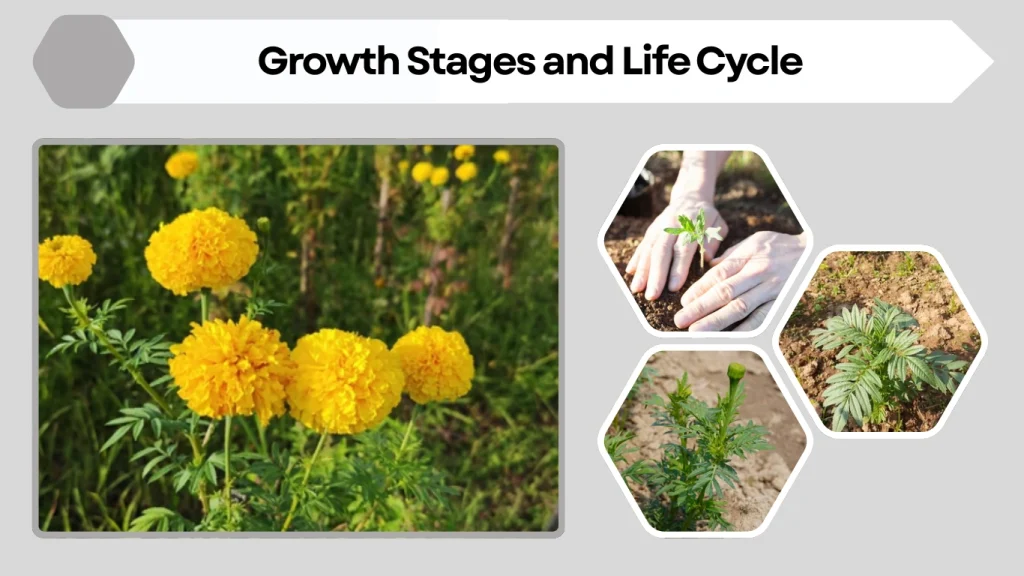
Tagetes erecta completes its entire life cycle in one season, moving quickly through well-defined stages.
- Seed germination: Seeds sprout within 4–7 days in warm, moist soil
- Seedling stage: Young plants form true leaves and establish roots
- Vegetative growth: Rapid stem and leaf development begins
- Bud formation: Flower buds appear at the tips of branches
- Flowering phase: Large blooms open and repeat continuously
- Seed production: Mature flowers dry and produce viable seeds
With regular deadheading, the flowering phase can continue for several months.
Common Pests and Diseases
Insect Pests
Aphids, spider mites, whiteflies, and thrips are the most common pests affecting African marigolds. These insects feed on plant sap, causing leaf curling, yellowing, and reduced flowering. Regular inspection and early treatment with neem oil or insecticidal soap help control infestations.
Fungal and Bacterial Problems
Root rot, powdery mildew, and leaf spot can occur in poorly drained soil or humid conditions. These diseases often show as wilting, white powdery patches, or dark leaf spots.
Prevention Methods
Good spacing, well-drained soil, full sunlight, and proper watering significantly reduce disease risk.
Natural Treatment Options
Removing affected plant parts, improving airflow, and applying organic fungicides are usually effective.
Tagetes erecta Companion Planting Benefits
African marigolds are well known for their role in companion planting. Their roots release natural compounds that help suppress harmful nematodes in the soil. When grown near vegetables such as tomatoes, peppers, and beans, they can reduce pest pressure and improve soil conditions.
Their bright flowers also attract pollinators and beneficial insects, helping create a healthier garden ecosystem. For this reason, Tagetes erecta is often included in organic gardens and sustainable farming systems.
Uses of Tagetes erecta
Tagetes erecta is widely grown for ornamental landscaping, where it is used in borders, beds, and mass plantings. In many cultures, especially in South Asia and Latin America, its flowers are essential for garlands, religious offerings, weddings, and festivals.
The petals are also used as a natural dye source and as an ingredient in poultry feed to enhance egg yolk color. In traditional medicine, extracts have been used for their antimicrobial and anti-inflammatory properties. The plant is further valued for its natural insect-repelling qualities.
Harvesting Flowers and Seeds
Flowers are best harvested in the morning when they are fully open and fresh. Regular cutting encourages new blooms and keeps plants productive. Harvested flowers can be used fresh or dried for storage.
For seed collection, allow several healthy flowers to dry naturally on the plant. Once fully dry, the seed heads can be removed, and the seeds separated and stored in a cool, dry place. Properly stored seeds remain viable for several years.
Seasonal Care and Maintenance
Routine deadheading prevents seed formation and stimulates new flower buds. Light pruning improves air circulation and helps maintain compact growth. Tall varieties may benefit from staking to prevent bending or breakage.
Mulching helps conserve moisture, regulate soil temperature, and reduce weed growth. At the end of the growing season, spent plants should be removed to prevent disease carryover and to prepare the soil for the next planting cycle.
FAQs
What is Tagetes erecta commonly known as?
Tagetes erecta is commonly called African marigold or Aztec marigold. Despite the name “African,” it is native to Mexico and Central America. The plant earned its common name after being widely cultivated in Africa and later introduced to Asia and Europe.
Is Tagetes erecta annual or perennial?
Tagetes erecta is an annual plant. It completes its full life cycle—from germination to flowering and seed production—within one growing season. In warm climates it may self-seed easily, giving the appearance of perennial growth.
How long does Tagetes erecta take to bloom?
African marigolds usually begin blooming about 7 to 10 weeks after sowing seeds. With proper sunlight, watering, and deadheading, they continue producing flowers for several months until temperatures drop significantly.
Can Tagetes erecta grow in pots?
Yes, Tagetes erecta grows well in containers if the pot is large enough and has good drainage. Dwarf varieties are especially suitable. Potted plants need full sun, regular watering, and light feeding to maintain strong flowering.
Why is Tagetes erecta used in vegetable gardens?
It is commonly planted in vegetable gardens because its roots help suppress soil nematodes and its scent can deter certain pests. Additionally, its bright flowers attract pollinators and beneficial insects, supporting healthier crop growth.