





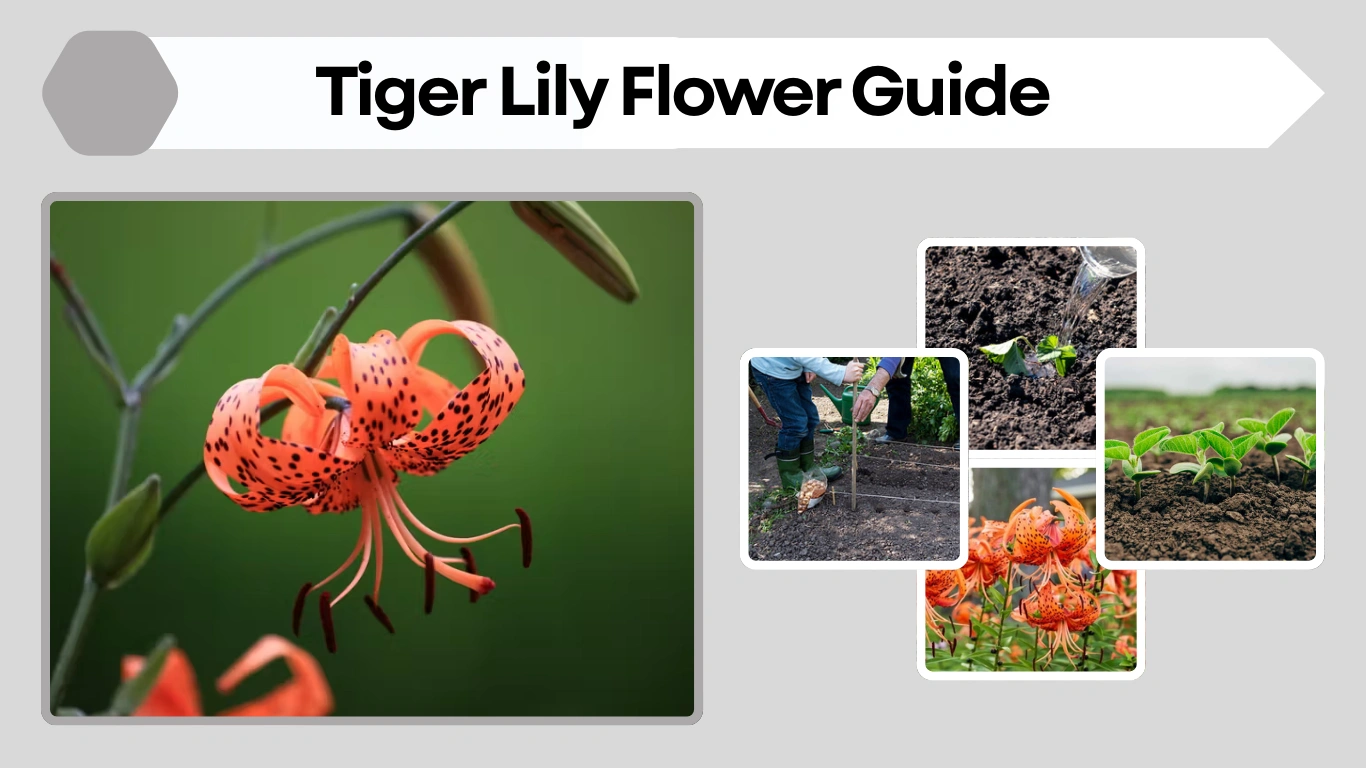
The tiger lily flower is one of the most recognizable and dramatic lilies in the world, known for its fiery colors, dark spots, and strongly recurved petals. From classic orange blooms to rare-looking shades often seen in art, tiger lily flowers attract gardeners, artists, and flower lovers alike. Many people also search for what is a tiger lily flower, how different colors look, and even artificial tiger lily flowers for decoration. This guide explores identification, natural forms, and the most popular tiger lily colors.
What Is a Tiger Lily Flower?
What is a tiger lily flower? A tiger lily is a true lily belonging to the genus Lilium, most commonly Lilium lancifolium (also called Lilium tigrinum). It is named for its bold, dark spots that resemble a tiger’s pattern. Tiger lily flowers are perennial plants that grow from bulbs and return every year with tall stems and large, showy blooms.
The traditional tiger lily flower is bright orange with black or deep brown freckles, but over time, gardeners have developed many cultivated forms. Tiger lily flowers are native to parts of East Asia, especially China, Korea, and Japan, and are now widely naturalized in North America and Europe. They are admired for their hardiness, fast growth, and ability to thrive with relatively little care.
Identification of Tiger Lily Flowers

Tiger lily flowers have several clear features that make them easy to recognize in gardens and in the wild.
- Bright, bold petals covered in dark spots
- Strongly curved or “reflexed” petals that bend backward
- Tall, upright stems that often reach 3 to 5 feet
- Narrow, lance-shaped leaves arranged along the stem
- Summer blooming season, usually mid to late summer
- Little bulbils (small dark growths) forming along the stem in many plants
These bulbils are unique to tiger lilies and allow the plant to reproduce quickly. Over time, one plant can form large, natural-looking colonies.
Orange Tiger Lily Flower (Classic Tiger Lily)
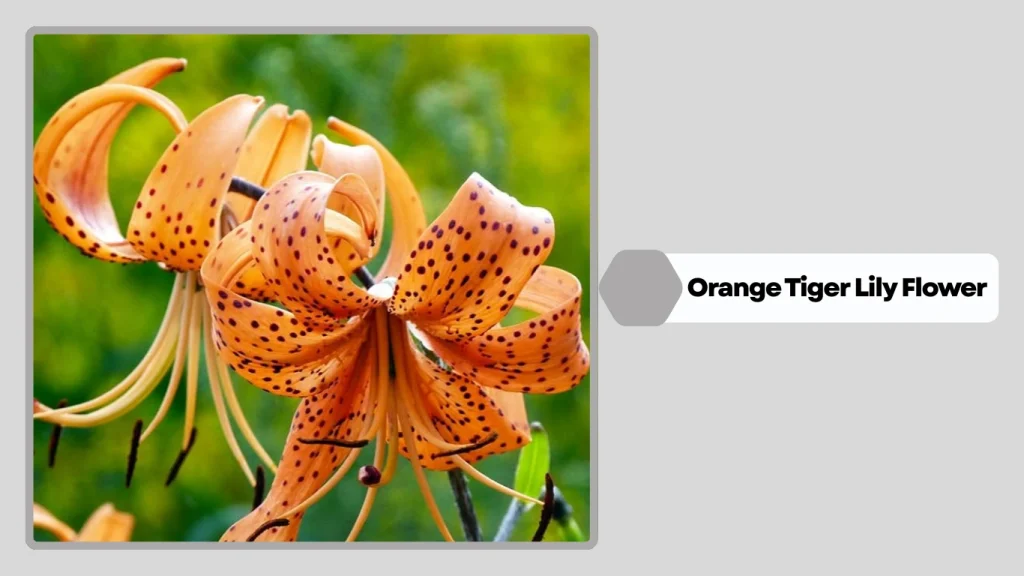
The orange tiger lily flower is the most well-known and widely grown form. This is the classic tiger lily seen in cottage gardens, roadside patches, and wildflower-style landscapes. Its intense orange petals are heavily marked with dark spots, creating the iconic “tiger” appearance.
Orange tiger lily flowers usually bloom in mid to late summer, producing large, downward-facing blossoms that attract butterflies and other pollinators. They are extremely hardy and can tolerate a wide range of soils, from garden beds to open fields. Because of their strong stems and long-lasting blooms, orange tiger lilies are also popular as cut flowers.
Symbolically, the orange tiger lily flower is often associated with confidence, passion, pride, and prosperity. In many cultures, it represents boldness and positive energy, which matches its striking appearance.
Yellow Tiger Lily Flower Varieties
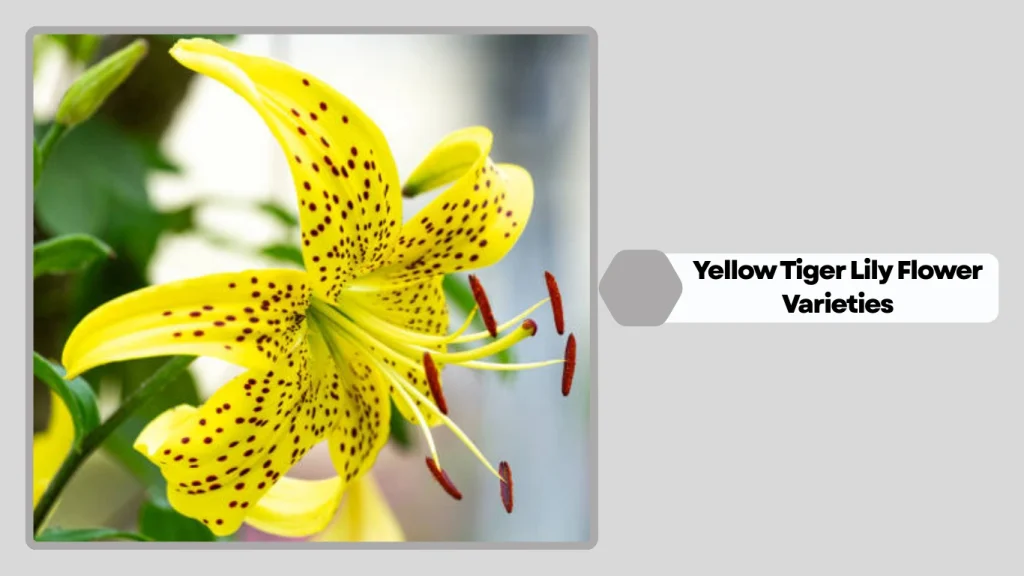
Yellow tiger lily flower forms are less common in nature but appear frequently among hybrid lilies inspired by the tiger lily’s structure and spotting. These flowers feature golden to lemon-yellow petals, sometimes with lighter or reddish freckles.
Yellow tiger lily flowers are prized for bringing a softer, sunnier tone to gardens while still keeping the exotic, curved-petal look. They pair well with purple, blue, and white flowering plants and are often used in landscape designs focused on bright summer color.
In gardens, yellow forms are usually bred hybrids rather than true wild tiger lilies. They prefer similar conditions: well-drained soil, full sun to partial sun, and moderate watering.
Red Tiger Lily Flower Types
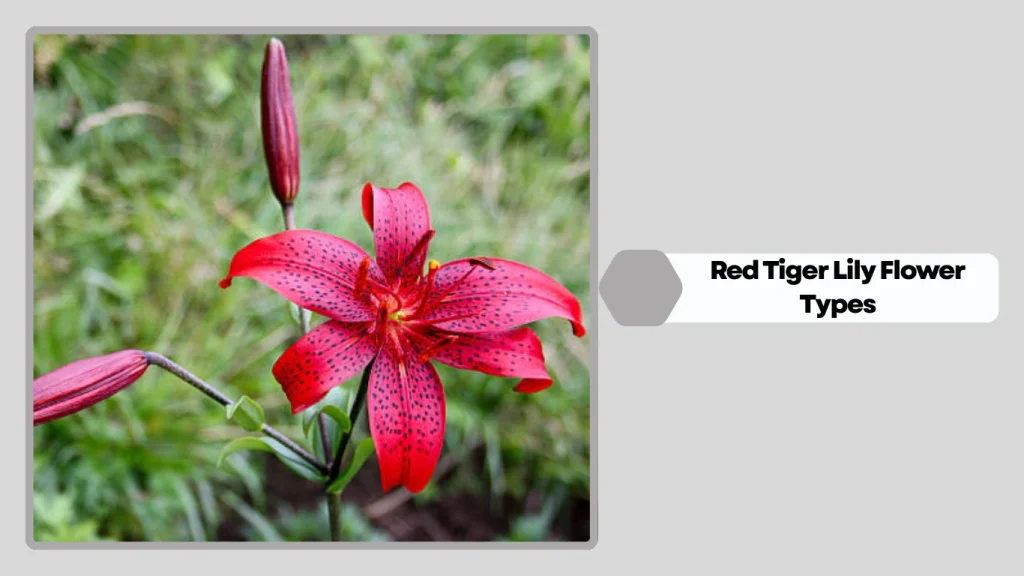
Red tiger lily flower varieties range from deep scarlet to dark crimson shades. Some appear almost burgundy in low light. These forms are mainly the result of selective breeding between tiger lilies and other Asiatic lily species.
Red tiger lily flowers are valued for their dramatic, almost tropical look. Their darker tones make the black spotting even more visible, giving the flowers a rich, high-contrast appearance. They are frequently used in bold garden themes, romantic landscapes, and decorative floral displays.
Because red pigments are less stable in true tiger lilies, many red forms are technically hybrids, but they still carry the familiar spotted, recurved-petal shape that defines tiger lilies.
Pink Tiger Lily Flower Forms

Pink tiger lily flower types are softer and more delicate in appearance compared to orange or red forms. These range from pale blush to deeper rose shades. Some pink varieties show light spotting, while others display stronger freckles similar to traditional tiger lilies.
Pink tiger lily flowers are especially popular in ornamental gardens and bouquet-style planting designs. They blend well with white lilies, lavender-colored plants, and pastel-themed flower beds. Pink forms are commonly seen in cultivated hybrids and are often marketed as “tiger-style lilies” rather than true wild tiger lilies.
Their appeal lies in combining the exotic shape of a tiger lily with the gentle, romantic tone of pink.
Purple Tiger Lily Flower: Rare and Hybrid Colors
Many people search for the purple tiger lily flower, but truly purple tiger lilies do not exist naturally. What are often labeled as purple tiger lily flowers are usually deep maroon, wine-colored hybrids, or digitally enhanced images.
Some advanced hybrids display very dark reddish-purple tones that appear purple under certain lighting. These flowers are bred to intensify pigment while keeping the tiger lily’s characteristic spots and curved petals.
Purple-toned tiger lily flowers are highly valued by collectors because they look unusual and dramatic, making them stand out in specialty gardens and exotic plant collections.
Blue Tiger Lily Flower: Myth, Art, and Hybrid Claims
Many people search for the blue tiger lily flower, but in nature, true blue tiger lilies do not exist. No species in the Lilium genus naturally produces blue pigment. When blue tiger lily flowers appear online, they are usually the result of digital editing, dyed petals, or artistic interpretation.
Some breeders have developed very pale lavender or silvery-toned lilies that may look bluish under certain lighting, but these are not genetically blue. The idea of a blue tiger lily flower is most common in fantasy artwork, floral illustrations, and decorative prints, where color rules are not limited by biology. This is one reason tiger lilies are so popular in visual design and symbolic art.
White Tiger Lily Flower and Light-Colored Hybrids
White tiger lily flower varieties are often confused with other white lilies. True wild tiger lilies are not white, but breeders have created light-colored hybrids that carry the spotted pattern and recurved petals associated with tiger lilies.
These white and cream-toned forms bring a more elegant and soft appearance to gardens while still keeping the dramatic lily shape. White tiger lily flower hybrids are widely used in formal gardens, wedding landscapes, and decorative planting schemes because they reflect light well and combine easily with almost any color palette.
Although they resemble traditional tiger lilies, most white forms are complex hybrids rather than direct descendants of wild Lilium lancifolium.
Types of Tiger Lily Flowers

Tiger lily flowers appear in both wild and cultivated forms. Over time, horticulturists have developed many variations that expand color, petal count, and plant size.
- Wild tiger lily flowers (Lilium lancifolium)
- Double tiger lily flowers with extra layers of petals
- Hybrid tiger lily flowers bred for new colors
- Dwarf tiger lily flowers for container gardens
- Giant tiger lily flowers for landscape focal points
Each type keeps the signature spotted pattern and curved petal structure, but they vary greatly in height, color intensity, and bloom size.
How to Grow Tiger Lily Flowers

Tiger lily flowers are considered easy to grow and suitable for both beginner and experienced gardeners. They thrive in many climates and return reliably each year.
- Choose a sunny to partially shaded location
- Use loose, well-drained soil rich in organic matter
- Plant bulbs 4 to 6 inches deep with the pointed end up
- Space bulbs 8 to 12 inches apart
- Water thoroughly after planting, then moderately
- Apply a balanced fertilizer in early spring
- Mulch to keep roots cool and soil moist
Once established, tiger lily flowers often spread on their own through underground bulbs and above-ground bulbils.
Common Problems and Diseases
Although tiger lilies are hardy, they can still face pests and diseases, especially when grown in crowded or poorly drained areas.
- Aphids that weaken stems and spread disease
- Lily beetles that chew leaves and buds
- Botrytis blight causing brown leaf spots
- Bulb rot from excessive moisture
- Fungal infections in humid climates
- Damage from deer, rabbits, and rodents
Regular inspection, good air circulation, and proper watering habits greatly reduce these problems.
Tiger Lily Flower Painting and Artistic Uses
Tiger lily flower painting has been popular for centuries because of the flower’s bold shape, intense colors, and natural contrast. Artists often choose tiger lilies as subjects for watercolor, oil, and digital art due to their dynamic petal curl and dramatic spotting.
In symbolic artwork, tiger lilies are used to represent pride, independence, courage, and prosperity. Their striking appearance makes them common in tattoo designs, wall prints, fabric patterns, and botanical illustrations. The tiger lily’s form allows artists to explore movement, texture, and vivid color layering in a single subject.
Artificial Tiger Lily Flowers
Artificial tiger lily flowers are widely used in home décor, weddings, hotel arrangements, and craft projects. They are usually made from silk, latex, foam, or high-grade plastic to mimic the natural curve and spotted detail of real tiger lilies.
Many people choose artificial tiger lily flowers because they last indefinitely, require no maintenance, and remain colorful in all environments. High-quality versions are often nearly indistinguishable from fresh flowers and are especially popular in decorative centerpieces, office spaces, and photo backdrops.
Uses of Tiger Lily Flowers
Tiger lily flowers are valued for more than just their beauty. They serve practical and cultural purposes across many regions.
In gardens, they are used as borders, background plants, and naturalized wildflower accents. In floral design, they provide height and drama in bouquets. In art and symbolism, tiger lilies appear in paintings, tattoos, and decorative motifs. Artificial tiger lily flowers expand these uses into permanent decorative and commercial settings.
Are Tiger Lily Flowers Safe?
Tiger lily flowers are extremely toxic to cats. Even small amounts of pollen or petal ingestion can cause severe kidney failure. Dogs and humans are less sensitive, but mild digestive irritation can still occur. For pet-friendly gardens, tiger lilies should be planted in inaccessible areas or avoided entirely.
FAQs
What is a tiger lily flower and how is it different from other lilies?
A tiger lily flower is a true lily from the genus Lilium, best known for its bright color, dark spots, and strongly curved petals. Unlike many other lilies, tiger lilies often produce small bulbils on their stems, allowing them to spread easily and form dense colonies.
Are blue and purple tiger lily flowers real?
True blue tiger lily flowers do not exist in nature. Purple tiger lily flower forms are usually very dark red or maroon hybrids, or digitally altered images. Some cultivated lilies appear purplish under certain lighting, but genetically blue tiger lilies have not been naturally developed.
How long do tiger lily flowers bloom?
Tiger lily flowers typically bloom for two to three weeks in mid to late summer. Each stem opens multiple buds in sequence, extending the overall flowering period. With proper care and favorable weather, gardens can enjoy continuous blooms for nearly a month.
Can artificial tiger lily flowers look realistic?
High-quality artificial tiger lily flowers can look extremely realistic. Many modern versions copy the natural spotting, petal curve, and color shading of real tiger lilies. They are often used in professional decorations, photography, and indoor displays where live plants are impractical.
Are tiger lily flowers good for beginner gardeners?
Yes, tiger lily flowers are excellent for beginners. They are hardy, tolerate a wide range of soils, and require minimal maintenance. Once planted, they often return every year and multiply naturally, making them one of the easiest perennial lilies to grow.