



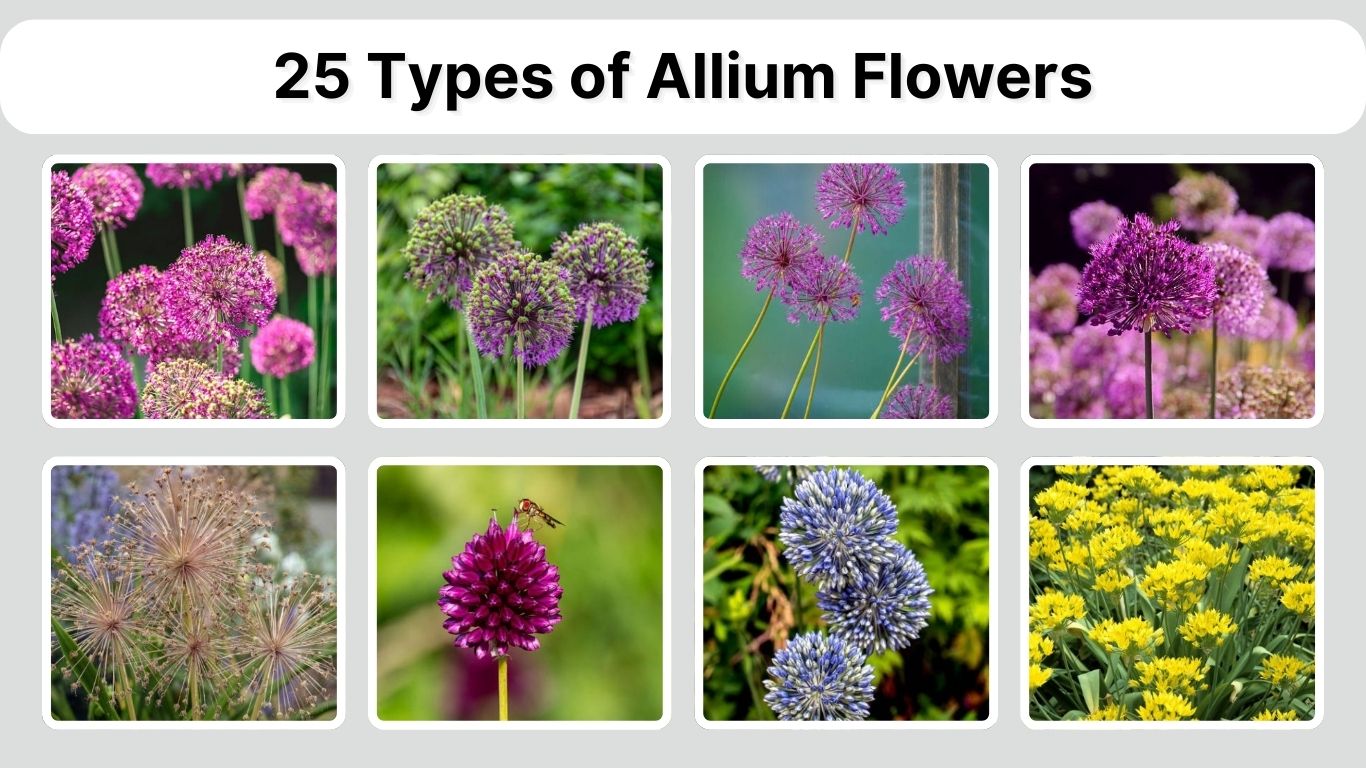
Allium flowers are a stunning group of ornamental bulbs known for their striking, globe-shaped blooms and vibrant colors, ranging from deep purple and pink to soft white and rare blue shades. These versatile plants add height, texture, and architectural interest to gardens, borders, rockeries, and containers. Easy to grow and often long-lasting, Alliums attract pollinators while remaining deer-resistant. With varieties suitable for both formal landscapes and naturalized plantings, they bring elegance and charm to any spring or early summer garden.
1. Allium giganteum
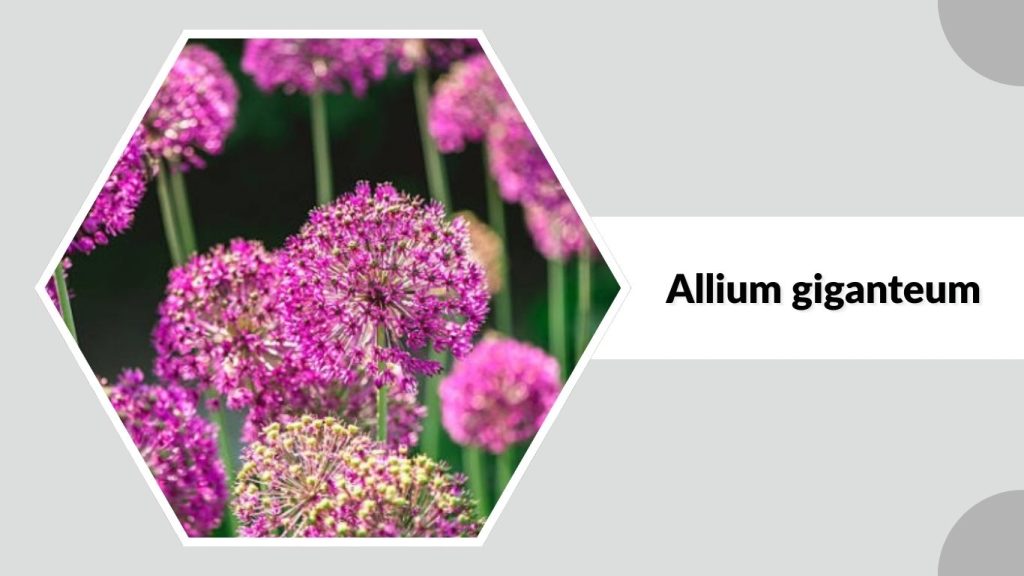
Allium giganteum is one of the tallest and most dramatic ornamental alliums, famous for its huge, round purple flower heads held high on strong, straight stems. It is widely grown in gardens for its architectural look, long-lasting blooms, and excellent performance as a cut or dried flower.
Identification
- Tall flowering stems that often reach 3 to 5 feet in height
- Large, perfectly round flower globes made up of hundreds of tiny star-shaped purple florets
- Broad, strap-like basal leaves that appear early and usually begin to fade by flowering time
- Strong, upright growth habit with a bold, vertical presence in garden beds
Habitat
Allium giganteum is native to Central and Southwestern Asia, especially regions of Iran and surrounding areas. It naturally grows on open mountain slopes, rocky hillsides, and well-drained soils where it receives plenty of sunlight and experiences cool winters followed by dry, warm summers.
Flowering Season
This allium typically blooms in late spring to early summer. Its flowers open after many spring bulbs have finished, making it valuable for extending seasonal color in gardens. The spherical flower heads can remain attractive for weeks, even after the individual florets fade.
Uses in Gardening
Allium giganteum is commonly used as a focal plant in borders, cottage gardens, and modern landscape designs. Its tall stems make it ideal for planting behind shorter perennials, and the dried seed heads are often kept for ornamental interest or used in floral arrangements.
2. Allium hollandicum
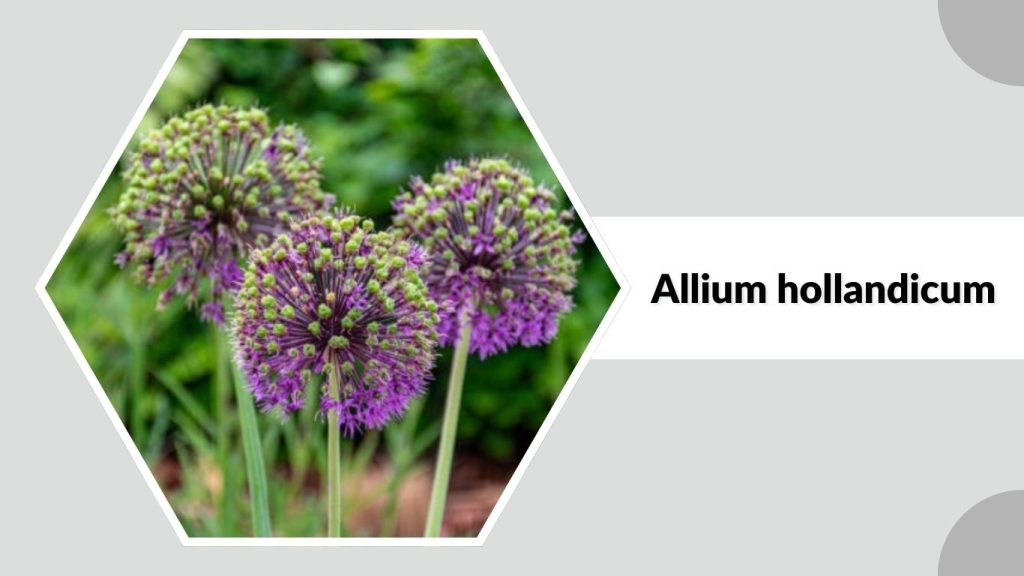
Allium hollandicum is a very popular ornamental allium, best known for its perfectly round, deep purple flower heads and strong, upright stems. It is widely grown in home gardens and landscapes because it is easy to grow, long-lasting, and visually striking in borders and mixed beds.
Identification
- Upright stems usually growing 2 to 3 feet tall
- Dense, globe-shaped flower heads made of many tiny violet-purple star flowers
- Narrow, gray-green basal leaves that emerge early in spring
- Neat, symmetrical growth form ideal for formal and informal gardens
Habitat
Allium hollandicum originates from Central Asia and thrives in open, sunny locations with well-drained soil. In its natural environment, it grows on slopes and grasslands where moisture is moderate in spring and the soil becomes drier in summer.
Flowering Season
This species typically blooms in late spring, often slightly earlier than Allium giganteum. The blooms last several weeks and remain attractive even as they dry, adding long-term structure and color to garden spaces.
Uses in Gardening
Allium hollandicum is widely used in perennial borders, pollinator gardens, and ornamental bulb displays. It pairs well with tulips, peonies, and ornamental grasses, and its strong stems make it excellent for both fresh and dried floral arrangements.
3. Allium christophii
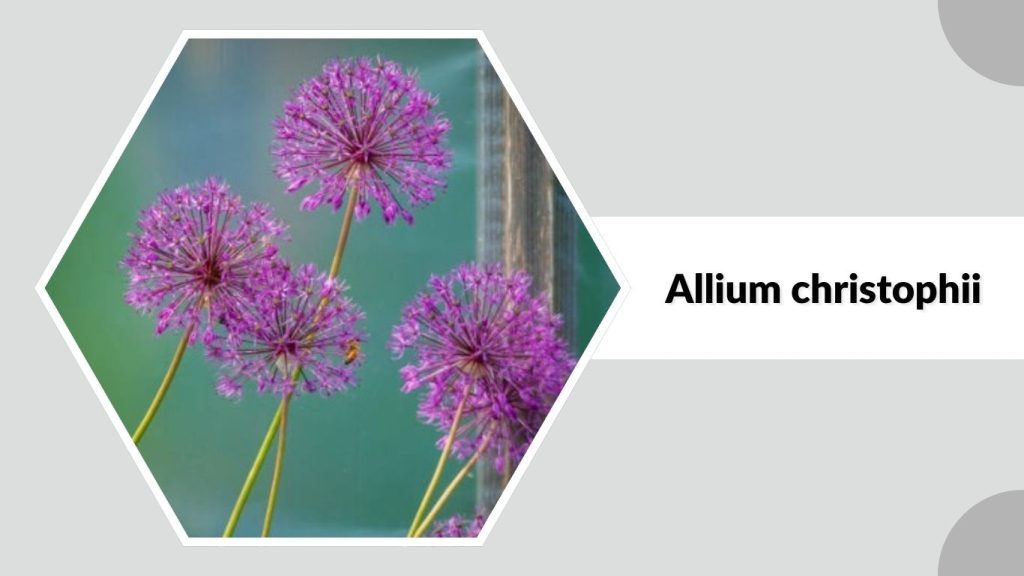
Allium christophii, often called Star of Persia, is famous for its enormous, airy flower heads made up of metallic-looking star-shaped blooms. It has a lighter, more open appearance than many other alliums, giving gardens a soft, firework-like effect that looks striking both fresh and dried.
Identification
- Very large, loose, globe-shaped flower heads that can reach 8–10 inches wide
- Silvery-violet, star-shaped florets with a subtle metallic shine
- Medium-height stems, usually 1.5 to 2 feet tall
- Broad, blue-green basal leaves that appear in early spring
Habitat
Allium christophii is native to Central Asia, particularly regions of Iran and Turkmenistan. It naturally grows on rocky slopes and dry, open hillsides, preferring full sun and sharply drained soil where bulbs are not exposed to standing moisture.
Flowering Season
This species blooms in late spring to early summer. The flower heads develop more slowly than many alliums but remain decorative for a long time, even after drying, making them valuable for long-lasting garden interest.
Uses in Gardening
Allium christophii is widely planted in ornamental borders, rock gardens, and mixed bulb beds. Because the dried flower heads keep their shape, it is especially popular for dried floral arrangements and as a structural accent among low-growing perennials.
4. Allium aflatunense
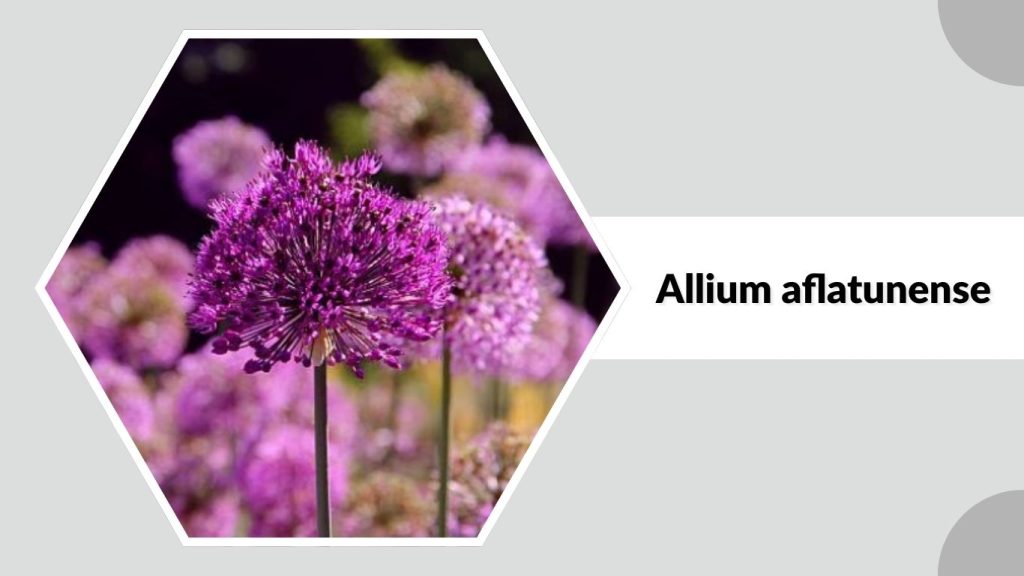
Allium aflatunense is one of the classic ornamental alliums, valued for its rich purple flower balls and strong, upright growth. It is a reliable spring-blooming bulb that brings bold color and vertical interest to garden beds, borders, and bulb displays.
Identification
- Straight, sturdy stems typically growing 2 to 3 feet tall
- Compact, globe-shaped flower heads made up of many small, deep purple florets
- Broad, gray-green leaves that emerge early and often begin to yellow by bloom time
- Neat, architectural form that stands out clearly among other spring flowers
Habitat
Allium aflatunense is native to Central Asia, where it grows on open slopes, rocky hillsides, and dry grasslands. It prefers full sun and well-drained soil, reflecting the seasonal pattern of cool, moist springs followed by warm, dry summers.
Flowering Season
This species usually flowers in mid to late spring. Its blooms open slightly earlier than many giant alliums, making it useful for creating a layered flowering sequence in ornamental bulb plantings.
Uses in Gardening
Allium aflatunense is commonly planted in perennial borders, cottage gardens, and mixed spring bulb beds. It combines well with tulips and late daffodils, and its long-lasting blooms are suitable for both fresh and dried floral arrangements.
5. Allium schubertii
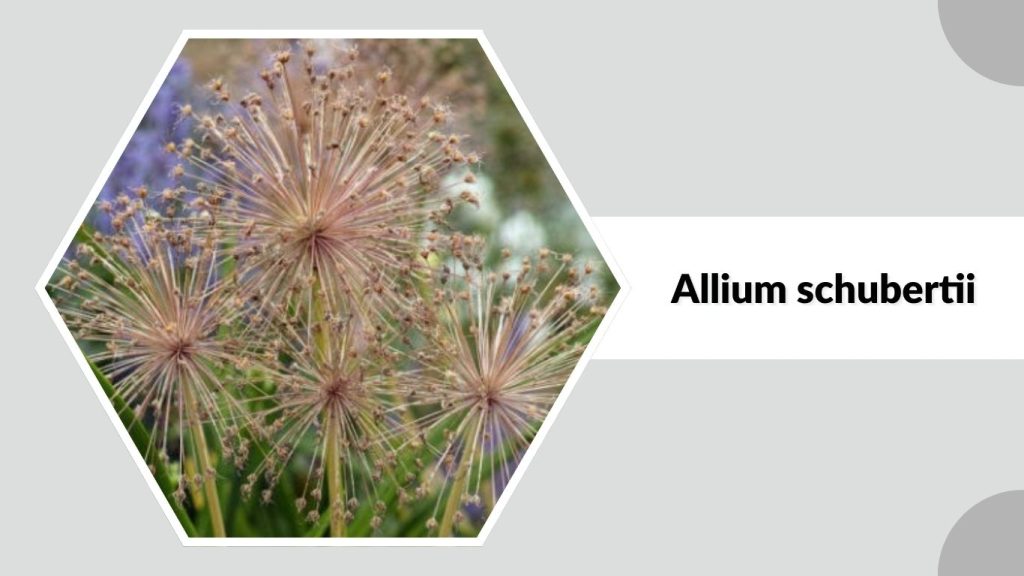
Allium schubertii is one of the most unusual-looking alliums, famous for its dramatic, exploding-firework flower heads. Instead of a tight globe, its blooms spread outward in all directions, creating a starburst shape that makes it a true statement plant in ornamental gardens.
Identification
- Very large, starburst-shaped flower heads with florets on long, uneven stalks
- Pink to lilac star-shaped flowers radiating outward like fireworks
- Medium-height stems, usually 12 to 20 inches tall
- Broad, blue-green basal leaves that appear in early spring
Habitat
Allium schubertii is native to the Middle East, particularly parts of Israel, Jordan, and surrounding regions. It naturally grows in dry, rocky, and sandy areas where drainage is excellent and sunlight is abundant throughout the growing season.
Flowering Season
This allium blooms in late spring to early summer. The flowers open gradually, enhancing the firework effect, and the dried seed heads remain highly decorative long after blooming has finished.
Uses in Gardening
Allium schubertii is widely used as a focal point in rock gardens, modern landscapes, and bulb displays. Its dried flower heads are especially popular in floral design, where they are used in both fresh and dried arrangements for dramatic visual impact.
6. Allium sphaerocephalon
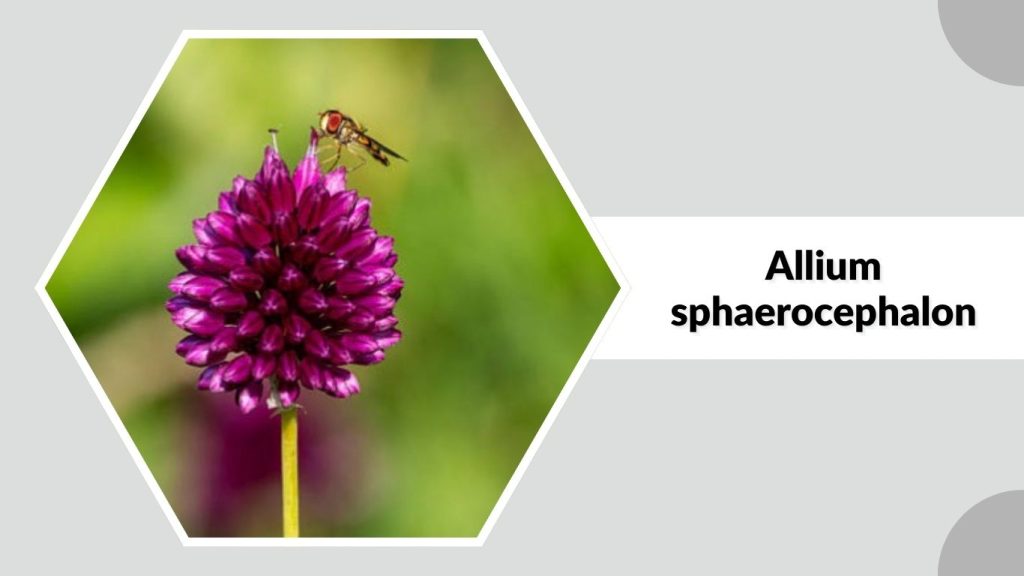
Allium sphaerocephalon, commonly known as drumstick allium, is admired for its compact, egg-shaped flower heads that change color as they mature. It adds a playful texture and strong vertical accent to gardens, while also being easy to grow and attractive to pollinators.
Identification
- Slender, upright stems typically growing 1.5 to 2.5 feet tall
- Dense, oval to egg-shaped flower heads rather than perfect spheres
- Flowers opening from green to deep purple or wine-red at the top
- Narrow, grass-like basal leaves that blend easily with other plants
Habitat
This species is native to Europe, North Africa, and parts of Western Asia. It naturally grows in meadows, open woodlands, and dry grassy slopes, favoring sunny locations with well-drained soils.
Flowering Season
Allium sphaerocephalon blooms from late spring into early summer. The long-lasting flower heads continue to provide ornamental interest even as they dry, extending their seasonal appeal.
Uses in Gardening
Drumstick allium is widely planted in borders, wildflower-style gardens, and pollinator plantings. It works well in mass plantings, between grasses, or among perennials, and it is also suitable for cutting and drying.
7. Allium caeruleum
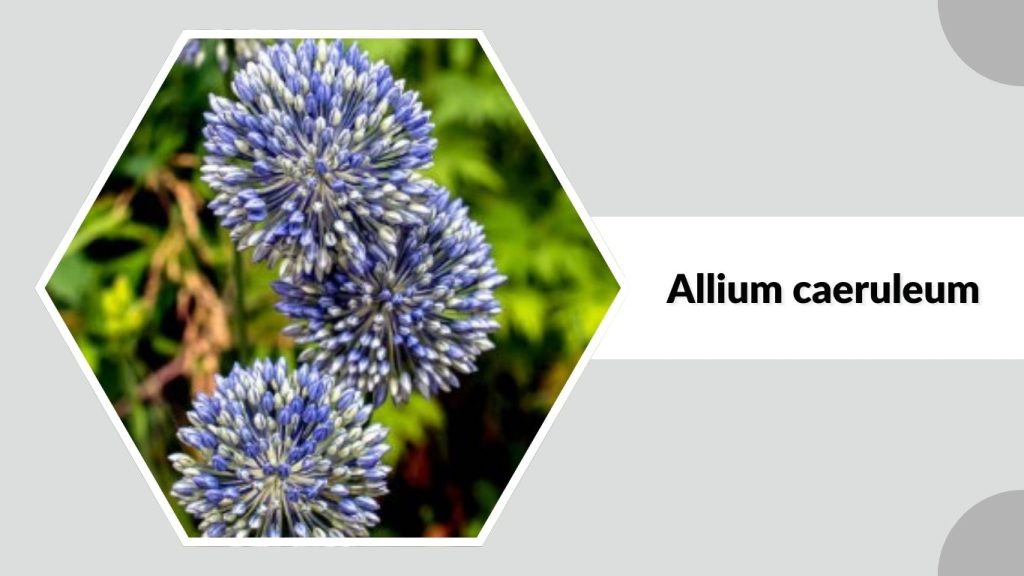
Allium caeruleum, often called blue allium, is prized for its vivid true-blue flower heads, a rare color among ornamental bulbs. Its neat size and intense color make it an excellent accent plant in spring gardens and mixed bulb plantings.
Identification
- Slender stems usually growing 12 to 24 inches tall
- Small, tight, round flower heads made of bright sky-blue florets
- Narrow, strap-like gray-green leaves emerging from the base
- Compact growth habit that fits well among shorter spring flowers
Habitat
Allium caeruleum is native to Central Asia, where it grows on dry, open slopes and steppe regions. It prefers full sun and well-drained soils, reflecting its adaptation to climates with moist springs and dry summers.
Flowering Season
This species blooms in late spring to early summer. Its strong blue color appears after many early spring bulbs fade, adding a fresh burst of color to the garden.
Uses in Gardening
Allium caeruleum is commonly planted in rock gardens, borders, and container displays. It combines beautifully with yellow and white spring flowers and is also suitable for cutting, where its unusual blue color stands out in floral arrangements.
8. Allium moly
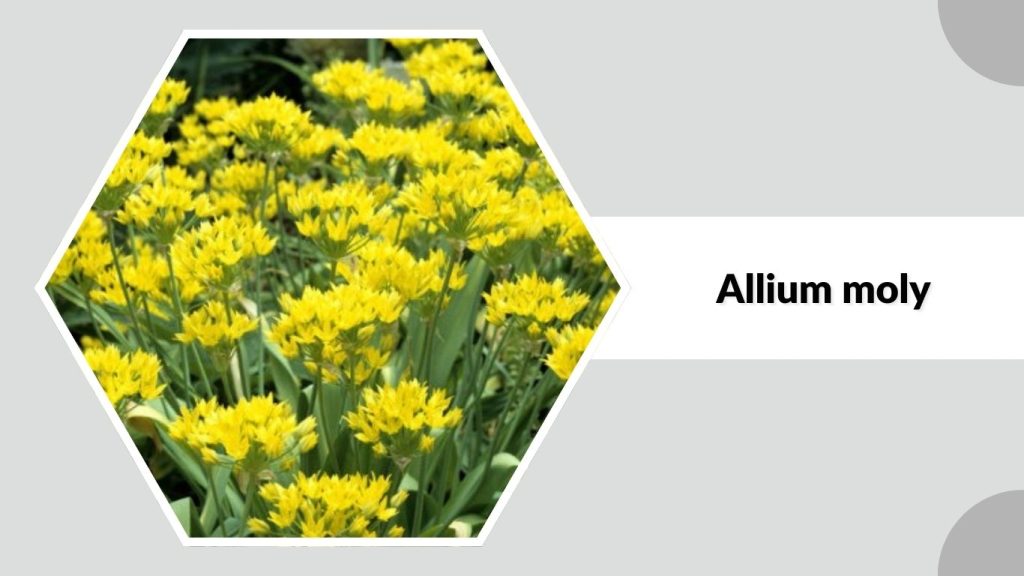
Allium moly, commonly known as golden garlic, is a cheerful, low-growing allium loved for its bright yellow, star-shaped flowers. It spreads gently over time and is especially useful for adding warm color to borders, rock gardens, and naturalized spring displays.
Identification
- Short flowering stems usually growing 8 to 12 inches tall
- Loose clusters of bright golden-yellow, star-shaped flowers
- Broad, soft green leaves forming a low clump at the base
- Compact, spreading habit suitable for edging and groundcover-style plantings
Habitat
Allium moly is native to southern Europe, particularly the Mediterranean region. It naturally grows in rocky meadows, woodland edges, and open slopes where soils are well drained and sunlight is plentiful.
Flowering Season
This species typically blooms in mid to late spring. The flowers often appear in generous clusters and can last for several weeks, creating a bright carpet effect when planted in groups.
Uses in Gardening
Allium moly is widely used in rock gardens, path edges, and cottage-style borders. It naturalizes easily, returns reliably each year, and pairs well with blue and purple spring flowers for strong color contrast.
9. Allium karataviense
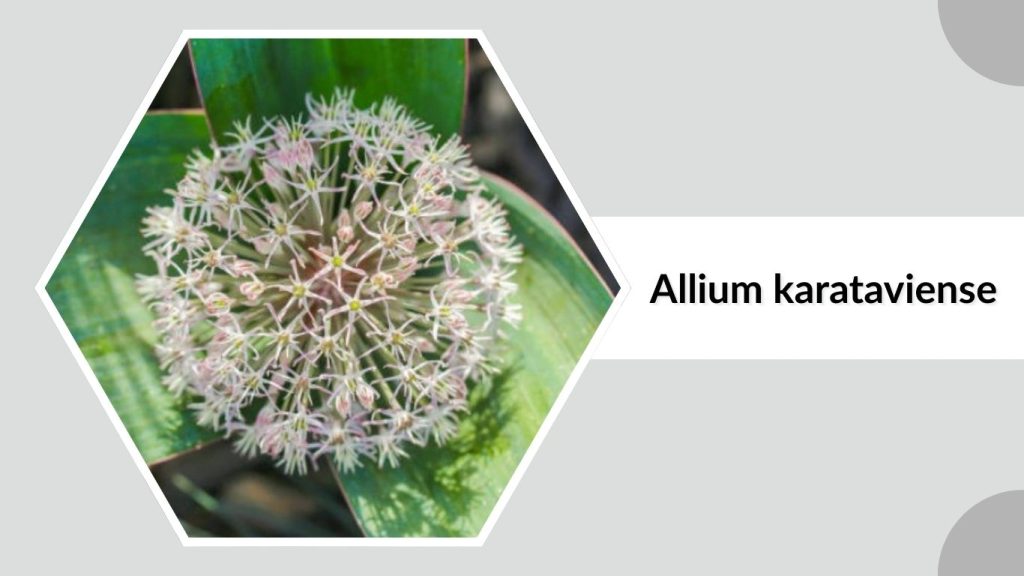
Allium karataviense is a distinctive ornamental allium known for its broad, decorative leaves and low, rounded flower heads. Unlike tall alliums, this species grows close to the ground, making it ideal for front borders, containers, and rock gardens where foliage beauty is just as important as flowers.
Identification
- Short stems usually only 8 to 12 inches tall
- Dense, round flower heads in soft pink to pale lilac shades
- Very broad, blue-gray leaves that are often the most striking feature
- Compact, low-growing habit with bold, sculptural foliage
Habitat
Allium karataviense is native to Central Asia, particularly mountainous regions of Kazakhstan and surrounding areas. It naturally grows on rocky slopes and well-drained hillsides, where soils are gritty and moisture drains away quickly.
Flowering Season
This species blooms in mid to late spring. Its flowers rise just above the foliage, and both blooms and leaves remain attractive together, giving it a longer decorative season than many taller alliums.
Uses in Gardening
Allium karataviense is widely used in rock gardens, container plantings, and the front of borders. Its dramatic leaves make it excellent as a feature plant, and it combines well with low-growing perennials and alpine-style plantings.
10. Allium roseum
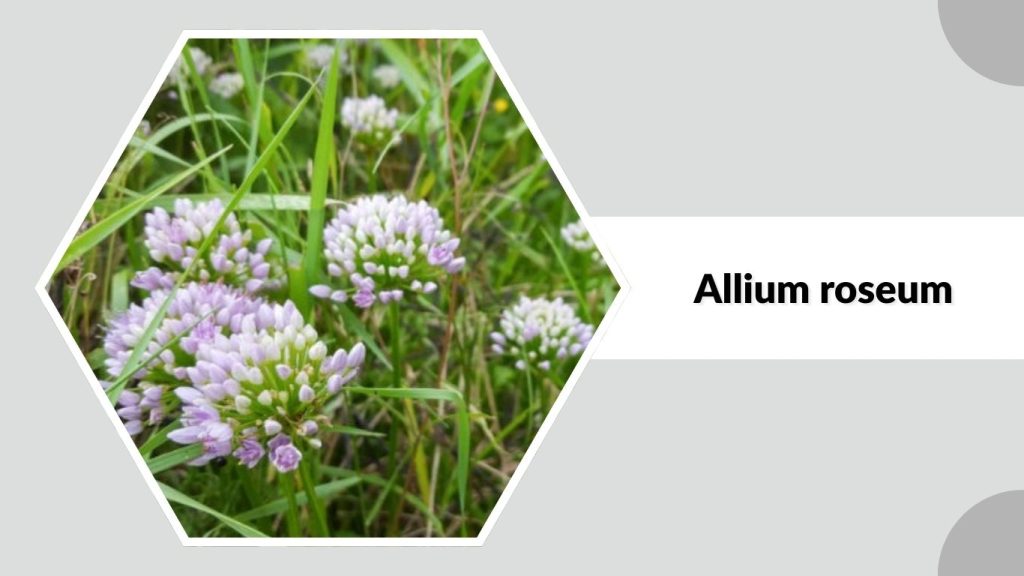
Allium roseum is a graceful ornamental allium appreciated for its soft pink blooms and light, airy appearance. It produces loose clusters of star-shaped flowers and often forms attractive colonies over time, making it a charming choice for naturalized and cottage-style gardens.
Identification
- Slender stems typically growing 12 to 20 inches tall
- Loose, rounded clusters of pale pink to rosy star-shaped flowers
- Narrow, gray-green basal leaves that emerge early in the season
- Light, delicate overall form compared to giant ornamental alliums
Habitat
Allium roseum is native to the Mediterranean region, where it grows in open grasslands, rocky hillsides, and coastal areas. It prefers sunny positions and well-drained soil, tolerating dry conditions once established.
Flowering Season
This species blooms from mid to late spring. The flowers open gradually, giving a long display period, and the plants often continue to look attractive as seed heads develop.
Uses in Gardening
Allium roseum is commonly planted in cottage gardens, wildflower-style borders, and naturalized areas. It mixes well with other spring bulbs and low perennials, and it is also suitable for cutting and informal floral arrangements.
11. Allium atropurpureum
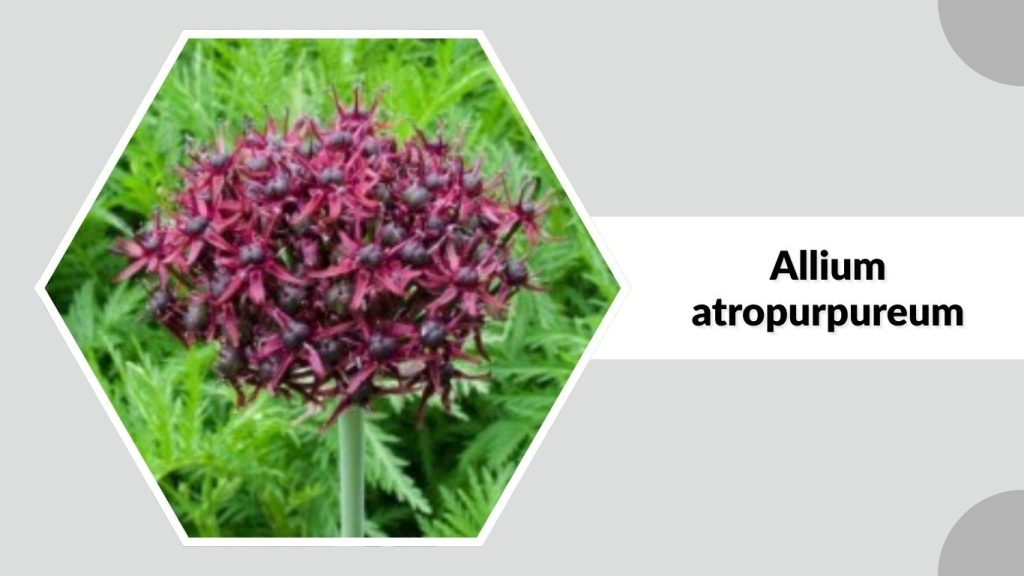
Allium atropurpureum is a striking ornamental allium recognized for its deep wine-red to almost blackish-purple flower heads. Its rich, dramatic color makes it stand out among lighter spring blooms and adds strong contrast to mixed borders and bulb plantings.
Identification
- Upright stems usually growing 2 to 3 feet tall
- Dense, rounded flower heads packed with dark reddish-purple florets
- Narrow, gray-green basal leaves that appear in early spring
- Bold, intense coloration that remains eye-catching even from a distance
Habitat
Allium atropurpureum is native to Eastern Europe and Western Asia. It naturally grows in open grasslands, steppe regions, and sunny slopes, preferring well-drained soils and full sun exposure.
Flowering Season
This species blooms in late spring to early summer. The flowers hold their color well and remain ornamental for several weeks before slowly drying on the stem.
Uses in Gardening
Allium atropurpureum is widely used in ornamental borders, modern landscape designs, and mixed bulb beds. It pairs beautifully with pastel-colored flowers, ornamental grasses, and silver-leaved plants, and it is also suitable for cutting and drying.
12. Allium cowanii
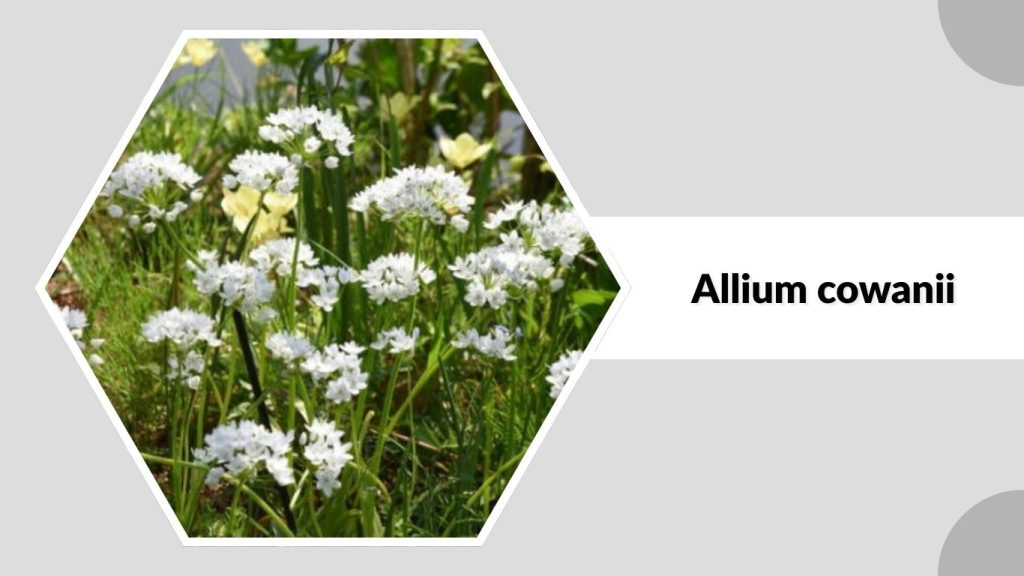
Allium cowanii is a delicate and charming ornamental allium, valued for its pure white, star-shaped flowers and light, graceful form. It brings brightness and freshness to spring gardens and is especially effective when planted in drifts or naturalized among low-growing plants.
Identification
- Slender stems typically growing 10 to 16 inches tall
- Loose clusters of white, star-shaped flowers often with a faint green or pale center
- Narrow, grass-like basal leaves forming soft clumps
- Light, airy overall appearance well suited to informal plantings
Habitat
Allium cowanii is native to the Mediterranean region and parts of Western Asia. It naturally grows in open grasslands, rocky slopes, and light woodland edges where soils are free-draining and sunlight is plentiful.
Flowering Season
This species usually blooms in late spring. The flowers open in succession within each cluster, extending the display period and keeping the plants attractive for several weeks.
Uses in Gardening
Allium cowanii is commonly planted in cottage gardens, rock gardens, and naturalized bulb areas. Its white flowers combine easily with almost any color scheme, and it is also a popular choice for cutting and small floral arrangements.
13. Allium neapolitanum
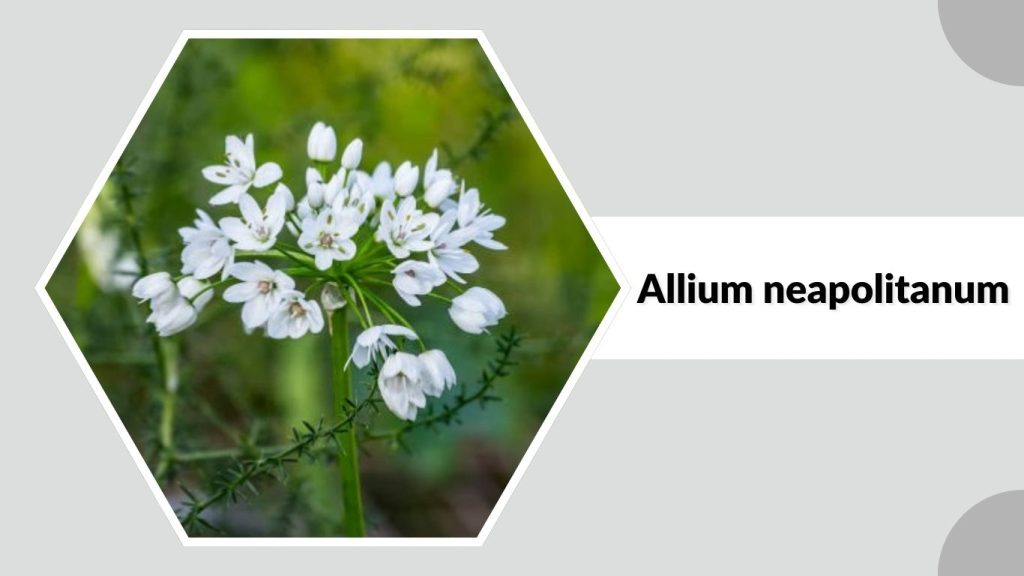
Allium neapolitanum, often called Naples garlic, is a classic ornamental allium known for its clean white flower clusters and fresh, springtime look. It is easy to grow, lightly fragrant, and often naturalizes well, making it a favorite for both formal borders and relaxed garden settings.
Identification
- Slender stems usually growing 12 to 18 inches tall
- Flat to slightly rounded clusters of pure white, star-shaped flowers
- Bright green, strap-like basal leaves emerging early in the season
- Neat, upright habit with a light, elegant appearance
Habitat
Allium neapolitanum is native to southern Europe, North Africa, and parts of Western Asia. It naturally grows in meadows, open hillsides, and lightly wooded areas where soil drains well and sunlight is abundant.
Flowering Season
This species blooms in mid to late spring. Its flowers often appear in abundance and can last several weeks, providing a long-lasting white accent in spring gardens.
Uses in Gardening
Allium neapolitanum is widely planted in borders, containers, and naturalized areas. It pairs beautifully with colorful spring bulbs and low perennials and is also well suited for fresh-cut floral arrangements.
14. Allium unifolium
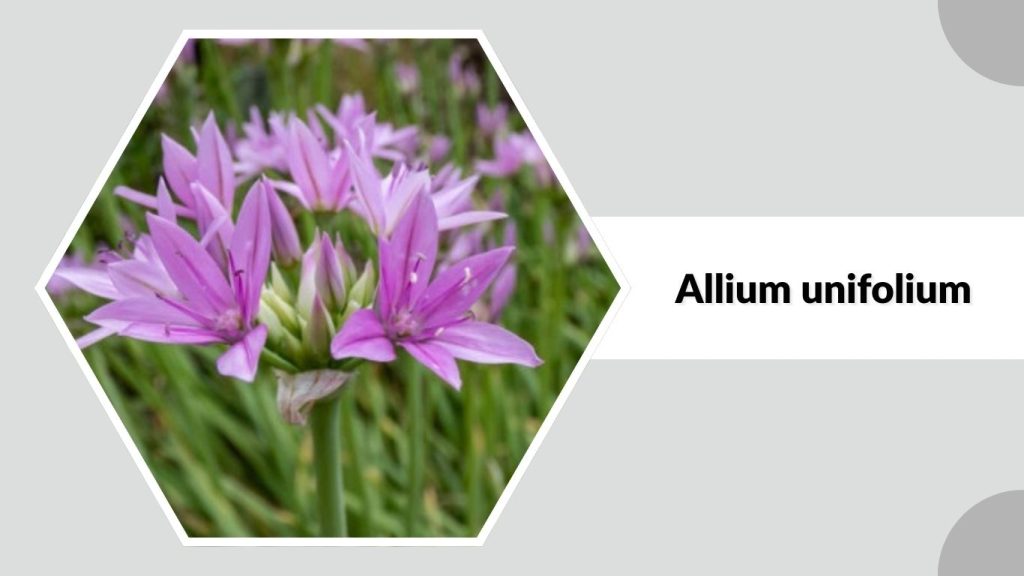
Allium unifolium, commonly known as one-leaf onion, is a charming ornamental allium admired for its soft pink flower clusters and its tendency to form attractive colonies. It is especially popular in naturalistic plantings where gentle color and spreading growth are desired.
Identification
- Slender stems typically growing 12 to 18 inches tall
- Rounded clusters of light pink to rosy-lilac star-shaped flowers
- Narrow, bright green leaves, often appearing to arise singly
- Clump-forming habit that slowly spreads over time
Habitat
Allium unifolium is native to western North America, particularly California and Oregon. It naturally grows in meadows, open woodlands, and moist spring grasslands that dry out as summer approaches.
Flowering Season
This species blooms in late spring to early summer. The soft-colored blooms open over several weeks, creating a gentle, long-lasting display.
Uses in Gardening
Allium unifolium is commonly used in wildflower-style gardens, cottage borders, and naturalized areas. It combines well with native plants and spring perennials and is also suitable for cutting and informal floral designs.
15. Allium flavum
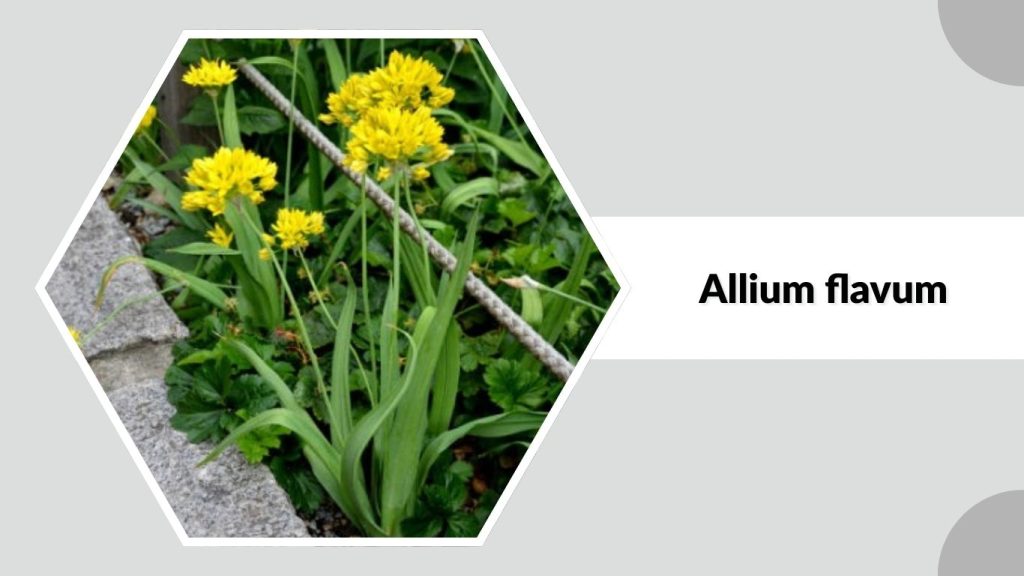
Allium flavum is a graceful ornamental allium known for its nodding, bell-shaped flowers and soft yellow tones. Unlike many globe-flowered alliums, it has a looser, more delicate look that adds subtle texture and movement to sunny garden spaces.
Identification
- Thin, arching stems usually growing 12 to 24 inches tall
- Loose clusters of small, drooping, pale yellow to greenish flowers
- Narrow, grass-like leaves forming fine-textured clumps
- Light, airy growth habit that sways gently in the breeze
Habitat
Allium flavum is native to central and southern Europe, where it grows on dry meadows, rocky slopes, and open hillsides. It prefers full sun and well-drained soil and is well adapted to drier garden conditions.
Flowering Season
This species typically blooms in early to mid-summer, later than many spring alliums. Its long-lasting flowers extend the ornamental allium season into the warmer months.
Uses in Gardening
Allium flavum is often planted in rock gardens, dry borders, and naturalistic plantings. Its subtle flowers blend beautifully with ornamental grasses and drought-tolerant perennials and are also suitable for delicate floral arrangements.
16. Allium oreophilum
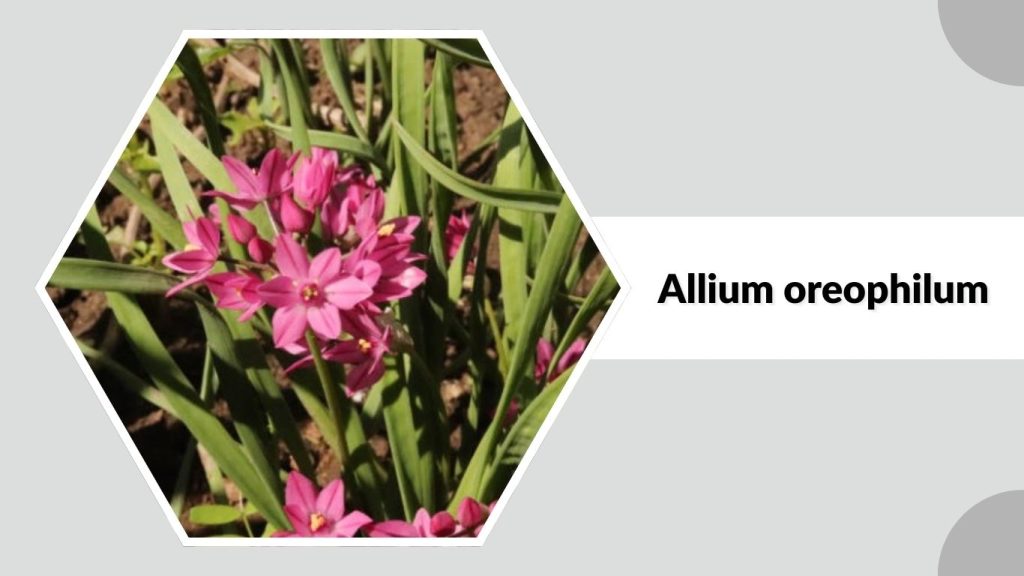
Allium oreophilum is a low-growing ornamental allium valued for its bright, starry flowers and neat, compact habit. It forms colorful clusters close to the ground, making it ideal for the front of borders, rock gardens, and alpine-style plantings.
Identification
- Short stems usually growing 6 to 10 inches tall
- Rounded clusters of vivid rose-pink to magenta star-shaped flowers
- Narrow, grass-like green leaves forming a tidy clump
- Compact size with flowers held just above the foliage
Habitat
Allium oreophilum is native to Central Asia, where it grows in mountainous regions, rocky slopes, and open meadows. It thrives in sunny locations with sharply drained soil.
Flowering Season
This species blooms in late spring. The flowers open in bright clusters and provide a strong burst of color at a time when many low spring bulbs are still active.
Uses in Gardening
Allium oreophilum is commonly used in rock gardens, edging, containers, and alpine beds. Its small size makes it perfect for foreground planting, and it combines well with other dwarf bulbs and spring-flowering perennials.
17. Allium triquetrum
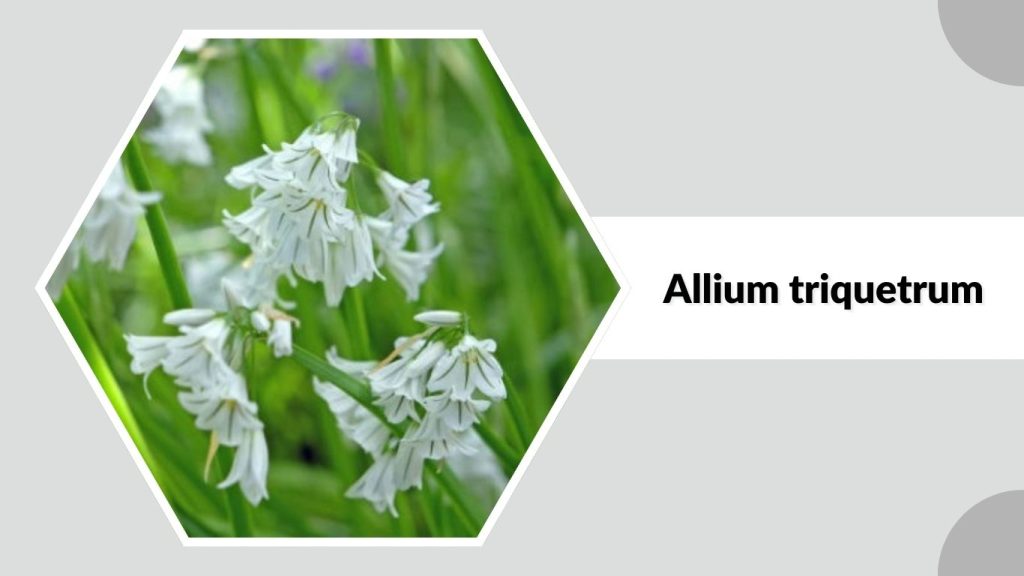
Allium triquetrum, commonly known as three-cornered leek, is a distinctive ornamental and naturalized allium recognized for its nodding white flowers and triangular stems. It has a light, woodland feel and often forms spreading colonies where conditions suit it.
Identification
- Slender, triangular stems typically growing 12 to 18 inches tall
- Drooping, bell-shaped white flowers often marked with a green stripe
- Soft, bright green, strap-like leaves arising from the base
- Graceful, arching flower clusters with a slightly fragrant scent
Habitat
Allium triquetrum is native to the western Mediterranean region. It naturally grows in damp meadows, stream edges, and light woodland, preferring moist but well-drained soils and partial to full sun.
Flowering Season
This species blooms in early to mid-spring. Its nodding flowers appear relatively early and can form carpets of white in favorable locations.
Uses in Gardening
Allium triquetrum is planted in woodland-style gardens, naturalized areas, and informal borders. It is valued for early spring interest, gentle movement, and its ability to fill spaces beneath shrubs and trees.
18. Allium nigrum
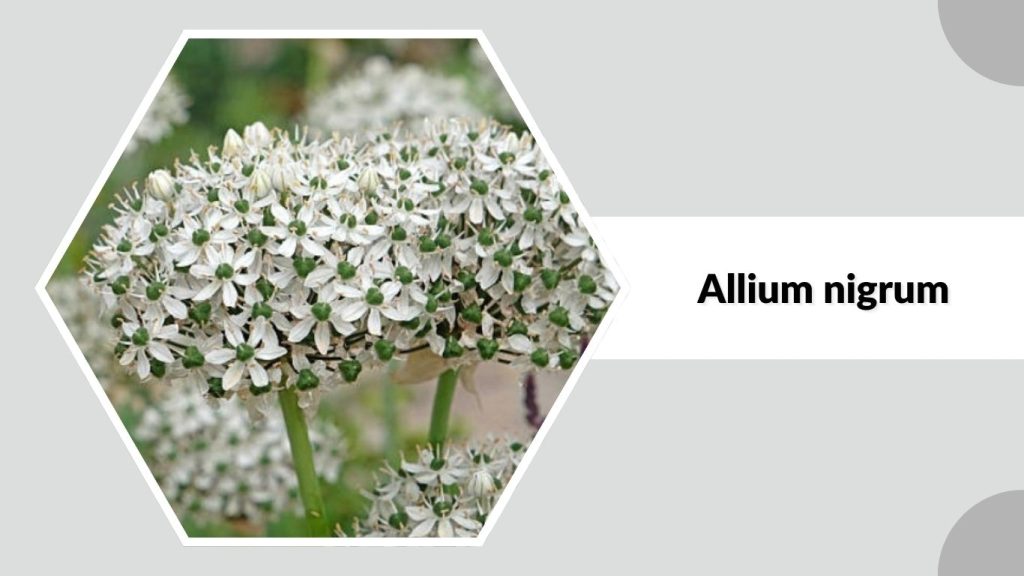
Allium nigrum is an elegant ornamental allium known for its creamy white flower clusters and contrasting dark centers. It offers a refined, sophisticated look and is often chosen for gardens that favor soft color palettes and structured spring displays.
Identification
- Strong, upright stems usually growing 18 to 30 inches tall
- Rounded, slightly domed flower heads of white to pale green flowers
- Dark, almost blackish ovaries that create a striking central contrast
- Broad, gray-green basal leaves appearing early in the season
Habitat
Allium nigrum is native to southern Europe and parts of Western Asia. It naturally grows on open hillsides, meadows, and rocky slopes where soils are well drained and sunlight is abundant.
Flowering Season
This species blooms in late spring. The long-lasting flower heads remain attractive for weeks and continue to provide interest as they gradually dry.
Uses in Gardening
Allium nigrum is widely used in formal borders, contemporary gardens, and mixed bulb plantings. It pairs beautifully with pastel spring flowers, ornamental grasses, and silver-leaved plants, and it is also suitable for cutting.
19. Allium cernuum
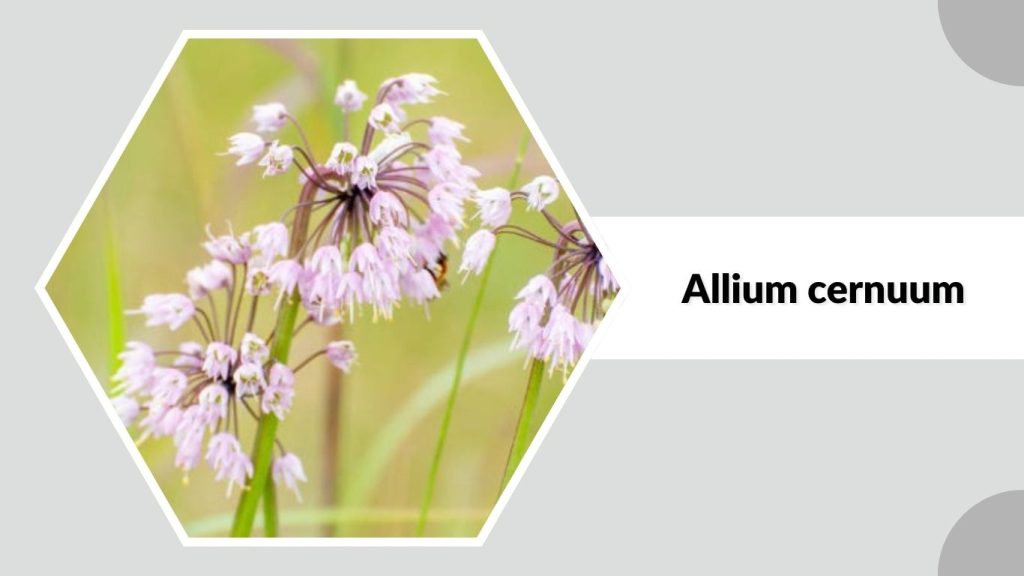
Allium cernuum, commonly known as nodding onion, is a graceful allium species admired for its gently drooping flower clusters and soft pink blooms. It has a natural, meadow-like charm and is widely appreciated in both ornamental and native-style gardens.
Identification
- Slender, arching stems typically growing 12 to 24 inches tall
- Nodding, loose clusters of pale pink to lavender flowers
- Narrow, grass-like leaves arising from the base
- Delicate, flowing form that gives a soft, natural appearance
Habitat
Allium cernuum is native to North America, where it grows in prairies, open woodlands, rocky slopes, and meadows. It prefers sunny to lightly shaded areas with well-drained soil.
Flowering Season
This species blooms from late spring into early summer. The nodding flowers open gradually, creating an extended flowering period and attracting a wide range of pollinators.
Uses in Gardening
Allium cernuum is often planted in native plant gardens, wildflower meadows, and informal borders. It blends beautifully with grasses and perennials and is also suitable for naturalizing and ecological garden designs.
20. Allium ursinum
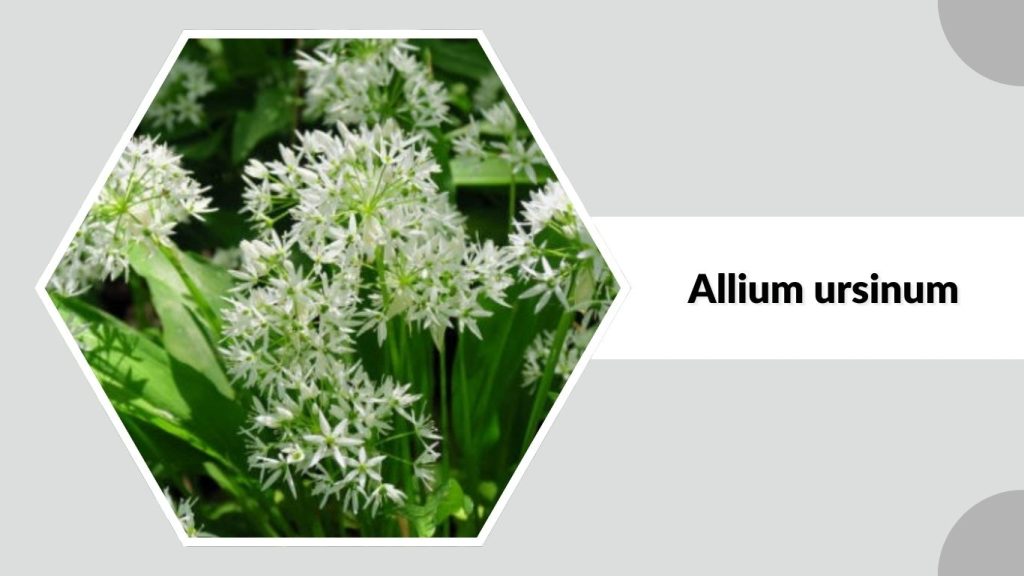
Allium ursinum, commonly called wild garlic or bear’s garlic, is a fragrant ornamental and edible allium. Its lush green leaves and clusters of starry white flowers make it ideal for woodland gardens and shaded naturalized areas, while the foliage is also valued for culinary uses.
Identification
- Stems usually 12 to 18 inches tall
- Umbel clusters of small, star-shaped white flowers
- Broad, lance-shaped green leaves with a strong garlic scent
- Clump-forming habit that spreads via bulbs and rhizomes
Habitat
Allium ursinum is native to Europe and parts of Asia. It naturally grows in damp, shaded woodlands, along streams, and in fertile, moist soils rich in organic matter.
Flowering Season
This species blooms in mid to late spring. The white flower clusters appear above the lush green foliage, creating a striking contrast in shaded garden areas.
Uses in Gardening
Allium ursinum is commonly planted in woodland-style gardens, shaded borders, and naturalized areas. It is also valued for culinary use, with leaves harvested for salads, pesto, and seasoning.
21. Allium fistulosum
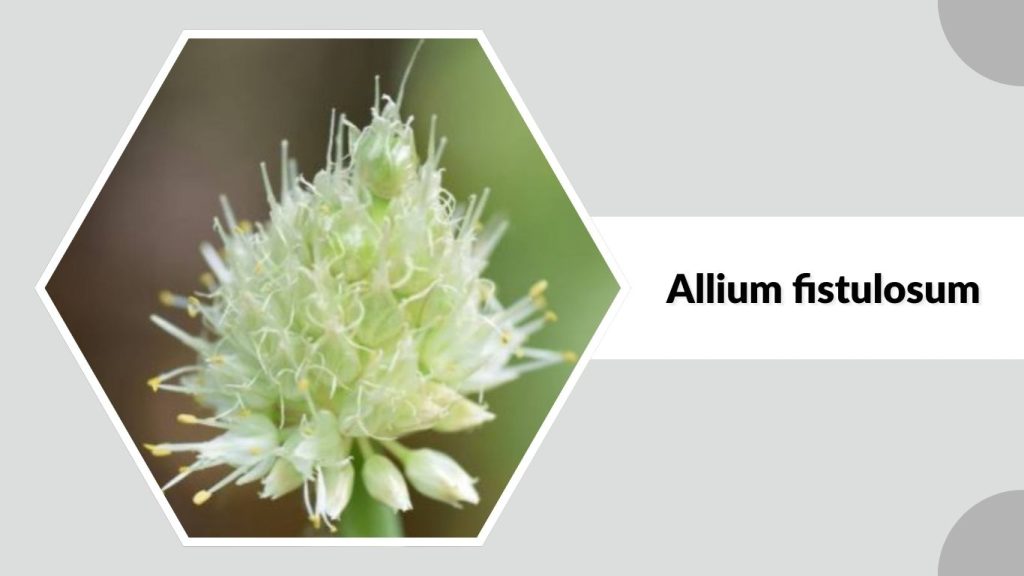
Allium fistulosum, commonly known as Welsh onion, is a versatile allium grown for both ornamental and edible purposes. It produces slender green stems topped with attractive clusters of small, white to pale pink flowers, making it suitable for kitchen gardens and decorative borders alike.
Identification
- Hollow, tubular green stems growing 2 to 3 feet tall
- Loose umbels of white to pale pink flowers at the top of stems
- Narrow, strap-like leaves forming dense clumps
- Upright, strong-growing habit that holds flower heads well above foliage
Habitat
Allium fistulosum is native to East Asia and thrives in well-drained soils with full sun exposure. It is commonly found in garden beds, cultivated fields, and open meadows where it can spread gradually.
Flowering Season
This species typically blooms in late spring to early summer. The flower clusters are long-lasting and attract pollinators such as bees and butterflies.
Uses in Gardening
Allium fistulosum is widely used in vegetable and herb gardens for its edible leaves and mild-flavored bulbs. Ornamental plantings also benefit from its neat vertical stems and delicate flower clusters, which can be used in fresh-cut arrangements.
22. Allium senescens
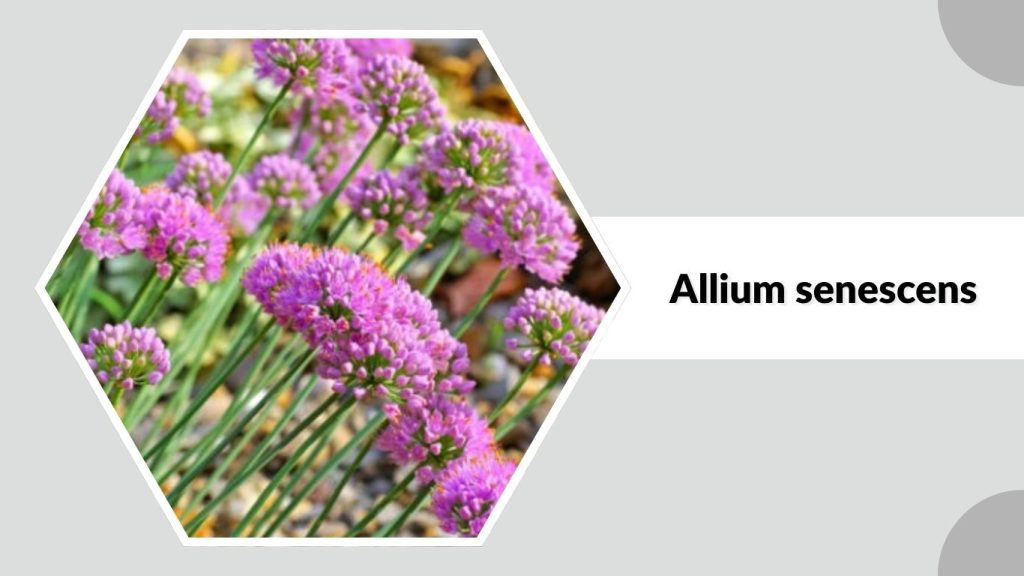
Allium senescens, commonly known as German garlic or mountain garlic, is an ornamental allium prized for its small, star-shaped flowers and striking silver-green foliage. It forms neat clumps and adds texture and subtle color to rock gardens, borders, and naturalized plantings.
Identification
- Stems typically grow 8 to 18 inches tall
- Rounded umbels of tiny pink to lavender star-shaped flowers
- Silvery-gray, strap-like leaves forming dense basal clumps
- Compact, low-growing habit suitable for foreground planting
Habitat
Allium senescens is native to Europe and parts of Asia, growing naturally in rocky slopes, alpine meadows, and well-drained hillsides. It prefers full sun to partial shade and tolerates dry conditions once established.
Flowering Season
This species blooms in late spring to early summer. Its flowers are delicate and long-lasting, often attracting pollinators such as bees and butterflies.
Uses in Gardening
Allium senescens is commonly planted in rock gardens, alpine beds, and the front of perennial borders. Its silver foliage provides ornamental interest even when not in bloom, and the flowers are suitable for small-scale cutting and floral arrangements.
23. Allium tuberosum
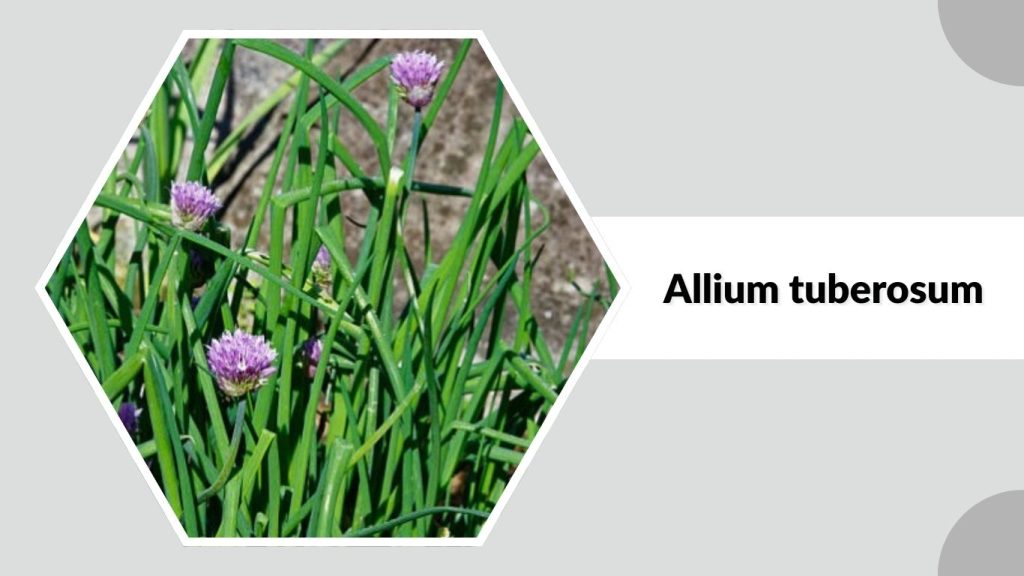
Allium tuberosum, commonly called garlic chives, is an ornamental and edible allium known for its flat, grassy leaves and clusters of small, star-shaped white flowers. Its mild garlic scent makes it popular in culinary use, while the flowers add charm to garden beds.
Identification
- Upright stems growing 18 to 24 inches tall
- Flat, strap-like leaves with a soft garlic fragrance
- Loose clusters of white, star-shaped flowers atop slender stems
- Clump-forming habit that spreads gradually via seeds and rhizomes
Habitat
Allium tuberosum is native to East Asia. It naturally grows in meadows, grassy slopes, and open fields where soils are fertile, well-drained, and sunlight is plentiful.
Flowering Season
This species blooms in late summer to early autumn, extending the flowering season of ornamental alliums. The white flowers are attractive to pollinators such as bees and butterflies.
Uses in Gardening
Allium tuberosum is widely planted in herb gardens, borders, and container gardens. Its edible leaves are used in cooking, and the delicate white flowers make excellent additions to fresh-cut floral arrangements.
24. Allium azureum
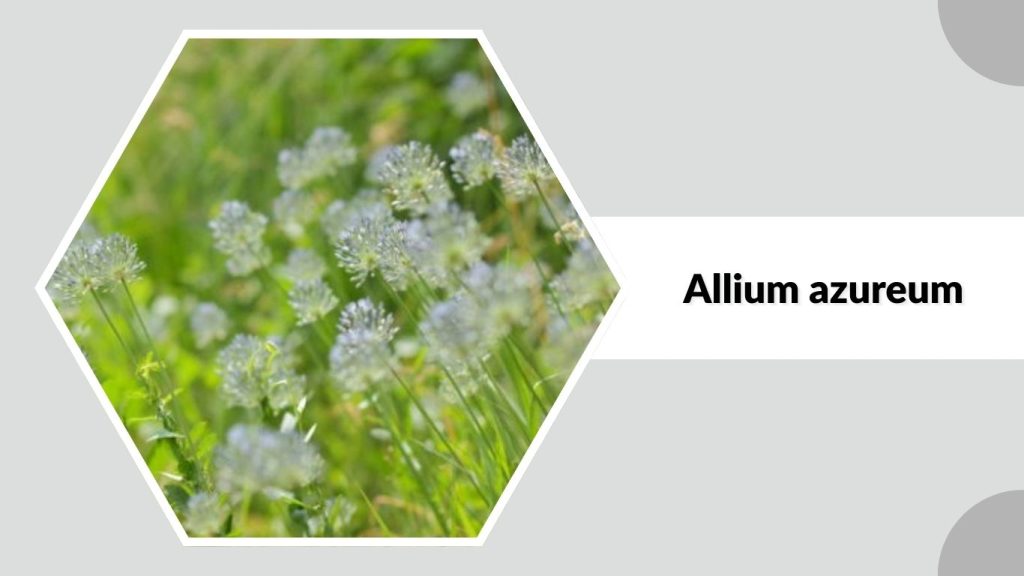
Allium azureum is a striking ornamental allium valued for its vibrant blue flower clusters and neat, upright growth. Its bold color makes it a standout in borders, rock gardens, and bulb displays, providing a rare and refreshing blue accent in spring gardens.
Identification
- Upright stems typically growing 12 to 18 inches tall
- Rounded umbels of bright, sky-blue star-shaped flowers
- Narrow, strap-like green leaves emerging from the base
- Compact, tidy habit that holds flower heads well above foliage
Habitat
Allium azureum is native to Central Asia, thriving on open slopes, rocky meadows, and well-drained soils. It prefers full sun and moderate moisture, adapting well to garden cultivation.
Flowering Season
This species blooms in mid to late spring. Its vivid blue flowers create a long-lasting display and attract pollinators such as bees and butterflies.
Uses in Gardening
Allium azureum is commonly planted in borders, rock gardens, and alpine-style beds. Its striking color contrasts beautifully with pink, white, and yellow spring flowers, and the flower heads are suitable for cutting and dried arrangements.
25. Allium oreophilum ‘Zwanenburg’
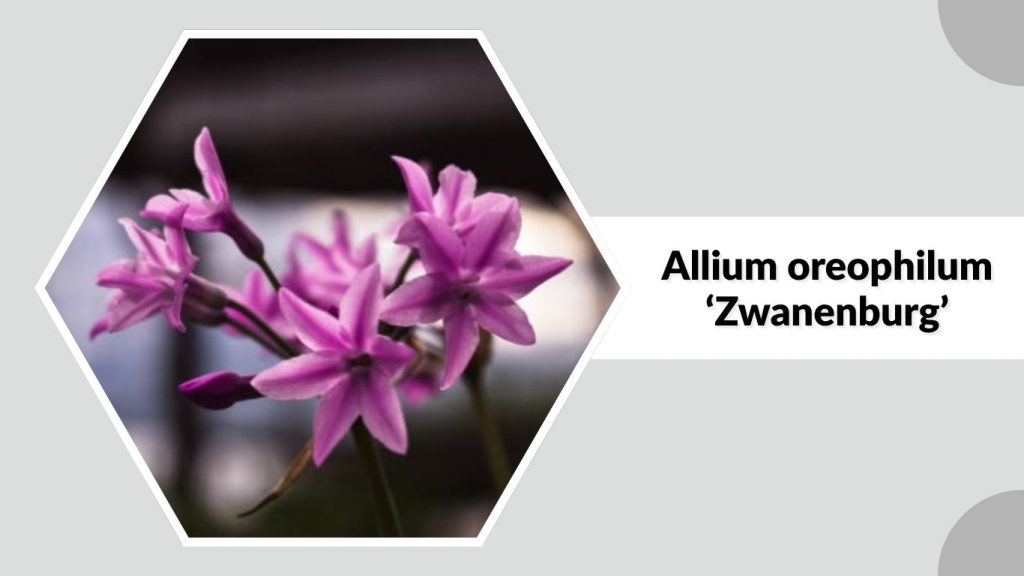
Allium oreophilum ‘Zwanenburg’ is a cultivated variety of Allium oreophilum, admired for its vibrant pinkish-purple, tightly packed flower heads and compact growth. It is popular in ornamental gardens for its bold color, long-lasting blooms, and tidy, low-maintenance habit.
Identification
- Short stems usually growing 6 to 10 inches tall
- Dense, rounded umbels of bright pink-purple star-shaped flowers
- Narrow, grass-like green leaves forming a neat clump
- Compact size ideal for front borders and rock gardens
Habitat
This cultivated variety thrives in sunny, well-drained garden soils. It is suited to rockeries, containers, and naturalized plantings where space is limited and early spring color is desired.
Flowering Season
It blooms in late spring, producing long-lasting flower heads that maintain vibrant color even as they begin to dry, offering extended ornamental interest.
Uses in Gardening
Allium oreophilum ‘Zwanenburg’ is commonly used in rock gardens, borders, and container plantings. Its bright flowers make excellent ground-level accents, and it is suitable for fresh-cut or dried floral arrangements.
FAQs
What is the best soil for Allium flowers?
Allium flowers thrive in well-drained soil with moderate fertility. Sandy or loamy soils are ideal, and bulbs should not sit in waterlogged conditions, as excess moisture can cause rot. Adding organic matter can improve soil structure and promote healthy growth.
How much sunlight do Allium plants need?
Most Allium species require full sun to bloom optimally. They need at least 6 hours of direct sunlight daily, although some low-growing or woodland types can tolerate partial shade. Full sun encourages stronger stems and more vibrant flower colors.
When is the best time to plant Allium bulbs?
Allium bulbs are typically planted in the fall, a few weeks before the first frost. Planting in autumn allows bulbs to establish roots during winter, preparing them for spring or early summer flowering.
How can I propagate Allium flowers?
Alliums can be propagated through bulbs, offsets, or seeds. The easiest method is to divide mature bulbs in late summer or early autumn. Some species, like Allium tuberosum, can also self-seed and form colonies naturally.
Are Allium flowers deer and pest resistant?
Yes, most Allium species are naturally deer- and rodent-resistant due to their strong garlic-like odor. They are also relatively pest-free, making them ideal for low-maintenance gardens and mixed borders.