






Amaranth flowers are vibrant, fast-growing plants admired for their dramatic plumes, tassel-like blooms, and richly colored foliage. Found in gardens across warm and temperate regions, they range from tall, upright varieties to low, spreading types, each offering unique visual appeal. Beyond their beauty, amaranths have a long history of cultivation for food, traditional uses, and ornamental landscaping. Their resilience, easy care, and long-lasting flowers make them popular choices for home gardens, borders, and decorative floral displays.
1. Amaranthus caudatus (Love-Lies-Bleeding)

Amaranthus caudatus, commonly known as Love-Lies-Bleeding, is one of the most ornamental amaranth species, famous for its long, drooping tassel-like flower clusters. Native to South America, this plant is widely grown in gardens for its dramatic appearance, fast growth, and vibrant colors ranging from deep crimson to purplish red.
Identification
- Long, hanging, rope-like flower tassels
- Deep red to burgundy blooms
- Broad, oval green to reddish leaves
- Upright central stem with cascading side plumes
- Can grow 3–6 feet tall
- Soft, velvety flower texture
Habitat and Growth
Love-Lies-Bleeding grows best in warm climates with full sun and well-drained soil. It thrives in gardens, open fields, and ornamental landscapes, often used as a background plant because of its height and striking hanging flowers.
Flowering Characteristics
The plant produces dense clusters of tiny flowers that form dramatic, trailing plumes. These blooms appear in mid to late summer and can last until early fall, maintaining their color even after drying, which makes them popular for dried flower arrangements.
Uses and Significance
Amaranthus caudatus is grown both as an ornamental and a traditional food plant in some cultures. Its seeds are edible and highly nutritious, while the plant itself has historical importance in ancient South American civilizations for ceremonial and decorative purposes.
2. Amaranthus cruentus (Red Amaranth)
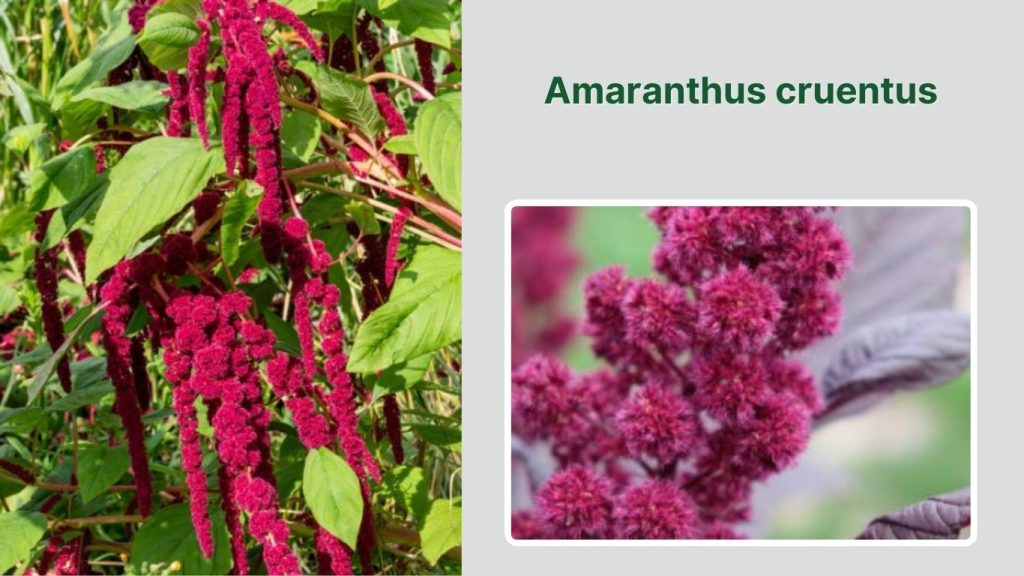
Amaranthus cruentus, commonly called Red Amaranth, is a fast-growing flowering plant valued for its upright, feathery flower heads and striking red to magenta tones. Native to Central America, it is widely cultivated both as an ornamental garden flower and as a traditional crop plant because of its attractive appearance and nutritional value.
Identification
- Upright, dense, plume-shaped flower heads
- Bright red to deep magenta blooms
- Tall, sturdy central stem
- Large, pointed green or reddish leaves
- Typically grows 4–7 feet tall
- Fine, clustered flower texture
Habitat and Growth
Red Amaranth thrives in full sun and warm temperatures, preferring fertile, well-drained soil. It is commonly grown in home gardens, farms, and open landscapes, where it develops rapidly and produces abundant flower plumes throughout the summer season.
Flowering Characteristics
The flowers form thick, upright spikes made up of countless tiny blossoms. Blooming usually begins in early to mid-summer and continues into fall. The strong vertical flower structure makes this species popular for borders, decorative beds, and cut-flower use.
Uses and Significance
Amaranthus cruentus is grown both for beauty and utility. Its colorful plumes make it a favorite ornamental, while its leaves and seeds are edible and widely used in traditional cuisines. The plant is also valued for its resilience and ability to grow in hot climates.
3. Amaranthus hypochondriacus (Prince’s Feather)
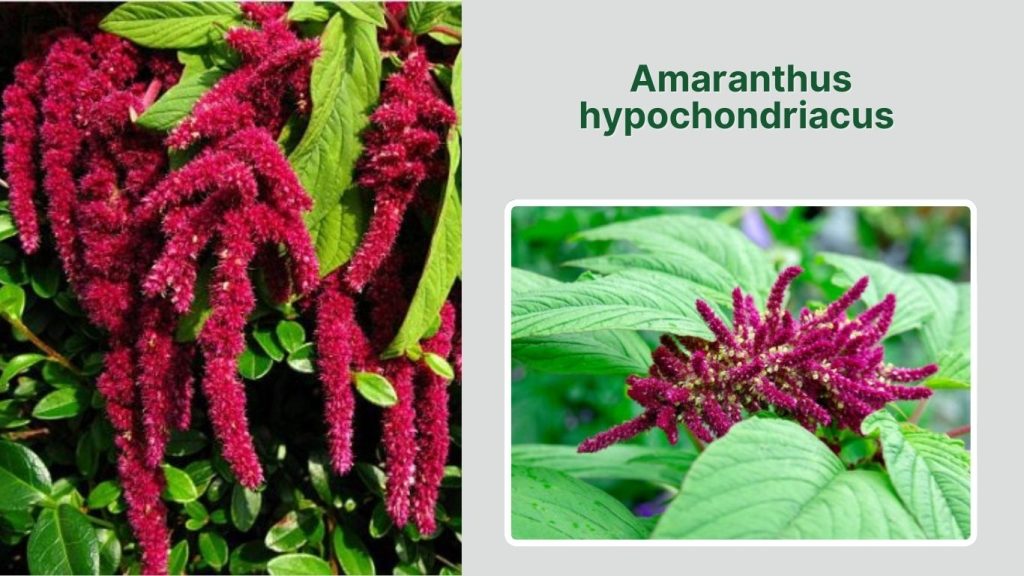
Amaranthus hypochondriacus, widely known as Prince’s Feather, is a tall, eye-catching amaranth species recognized for its upright, flame-shaped flower plumes and rich red to purple coloring. Native to Mexico and Central America, it has long been cultivated both as an ornamental flower and as a traditional grain plant because of its beauty and productivity.
Identification
- Tall, upright, feather-like flower plumes
- Deep red, crimson, or purplish flower color
- Strong, erect main stem
- Broad, green to reddish leaves
- Common height of 4–8 feet
- Dense, velvety flower clusters
Habitat and Growth
Prince’s Feather grows best in full sun with warm temperatures and moderately fertile, well-drained soil. It adapts well to garden beds, open fields, and ornamental borders, where it develops rapidly and forms impressive vertical displays throughout the growing season.
Flowering Characteristics
The plant produces large, upright flower spikes composed of countless tiny blooms packed tightly together. Flowering typically starts in early summer and continues into autumn. The plumes hold their shape and color well, making them popular for fresh and dried floral arrangements.
Uses and Significance
Amaranthus hypochondriacus is prized for both ornamental and practical uses. In addition to its dramatic garden presence, its seeds are harvested as a nutritious pseudo-grain, and the plant has historical importance in traditional agriculture and cultural practices of Mesoamerica.
4. Amaranthus tricolor (Joseph’s Coat)
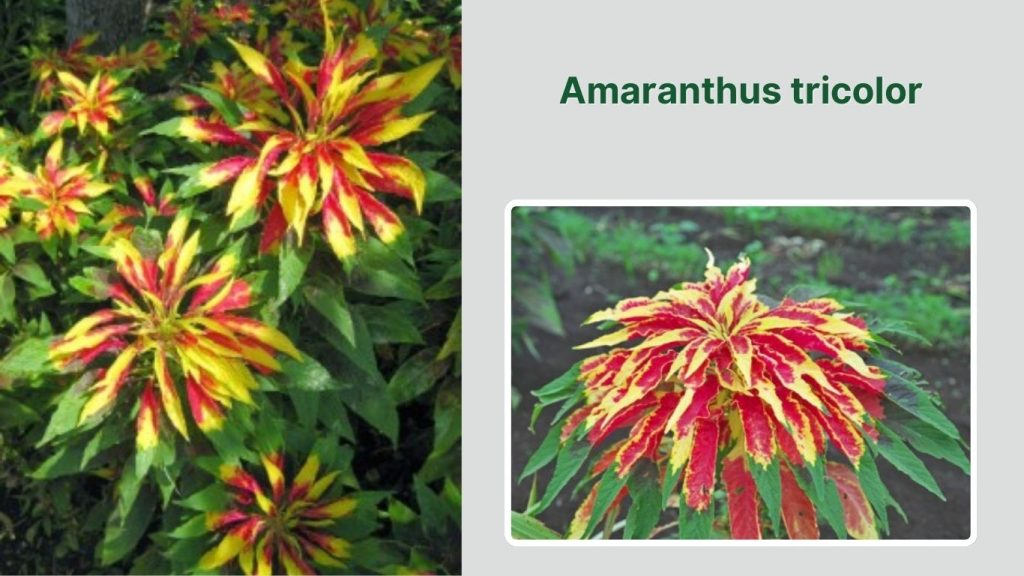
Amaranthus tricolor, commonly called Joseph’s Coat, is a highly ornamental amaranth species best known for its brilliantly colored foliage and compact, upright growth habit. Native to tropical Asia, this plant is widely grown in gardens for its dramatic leaf colors, which often display striking combinations of red, yellow, orange, green, and purple.
Identification
- Brightly multicolored leaves (red, yellow, orange, green)
- Upright, bushy growth form
- Smaller, less showy flower clusters
- Smooth, oval to lance-shaped leaves
- Typically grows 2–4 feet tall
- Soft, fine-textured flowers hidden among foliage
Habitat and Growth
Joseph’s Coat thrives in warm, sunny environments and prefers moist, well-drained soil. It is commonly grown in garden beds, borders, and containers, where its vivid foliage color intensifies in full sunlight and warm conditions.
Flowering Characteristics
Unlike many amaranth grown mainly for their plumes, this species produces relatively small, greenish to reddish flowers that are not the main ornamental feature. Blooming occurs in summer, but the plant’s visual appeal comes primarily from its colorful, layered leaves.
Uses and Significance
Amaranthus tricolor is valued mostly as an ornamental foliage plant, though in many Asian countries its young leaves are also eaten as a leafy vegetable. Its bold colors make it popular in landscape design, decorative gardens, and tropical-themed plantings.
5. Amaranthus retroflexus (Redroot Amaranth)
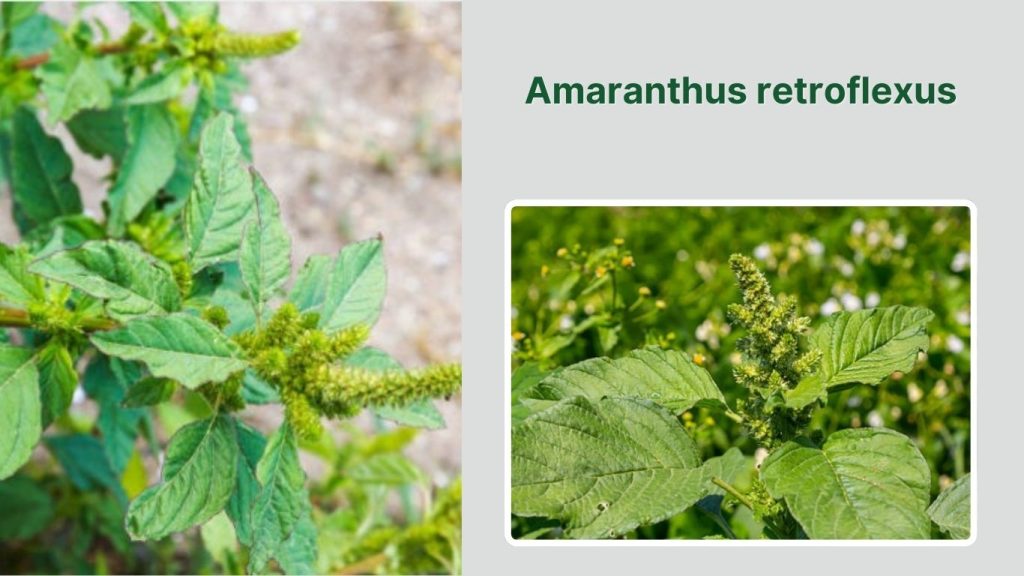
Amaranthus retroflexus, commonly known as Redroot Amaranth, is a hardy, fast-growing amaranth species recognized for its dense green flower clusters and distinctive reddish taproot. Native to North America, this plant is often found growing wild but is also appreciated for its traditional uses and ecological importance.
Identification
- Thick, green, bristly flower spikes
- Reddish central taproot
- Rough, oval to diamond-shaped leaves
- Stout, upright stems
- Typically grows 2–5 feet tall
- Compact, tightly packed flower clusters
Habitat and Growth
Redroot Amaranth grows vigorously in full sun and adapts easily to many soil types, especially disturbed soils, gardens, roadsides, and agricultural fields. It is drought-tolerant once established and spreads readily through abundant seed production.
Flowering Characteristics
The plant produces stiff, densely packed green flower spikes from mid-summer to early fall. Though less colorful than ornamental amaranths, the flowers attract various insects and contribute to the plant’s high seed output.
Uses and Significance
Historically, Redroot Amaranth has been used as a leafy vegetable and grain source by indigenous communities. Today, it is valued for its resilience, wildlife benefits, and nutritional potential, though it is also commonly considered a vigorous wild plant in many regions.
6. Amaranthus palmeri (Palmer Amaranth)

Amaranthus palmeri, known as Palmer Amaranth, is a tall, fast-growing amaranth species recognized for its long, slender flower spikes and exceptional adaptability. Native to the southwestern United States and northern Mexico, it has become widely distributed due to its vigorous growth and high seed production.
Identification
- Long, narrow, upright flower spikes
- Smooth, hairless stems
- Bright green, diamond-shaped leaves
- Prominent central stem with branching flower stalks
- Common height of 3–7 feet
- Fine, tightly packed green flowers
Habitat and Growth
Palmer Amaranth thrives in hot, sunny environments and tolerates a wide range of soil types. It is commonly found in open fields, gardens, disturbed ground, and agricultural landscapes, where it grows rapidly and can reach impressive heights in a single season.
Flowering Characteristics
The plant produces elongated, upright flower spikes made up of numerous tiny green blossoms. Flowering typically occurs from mid-summer through early fall, with female plants forming dense seed heads capable of producing hundreds of thousands of seeds.
Uses and Significance
Although often recognized for its aggressive growth habit, Palmer Amaranth also has traditional value as a leafy vegetable and wildlife food source. Its rapid development and high tolerance to heat make it an important species for ecological and agricultural study.
7. Amaranthus viridis (Green Amaranth)
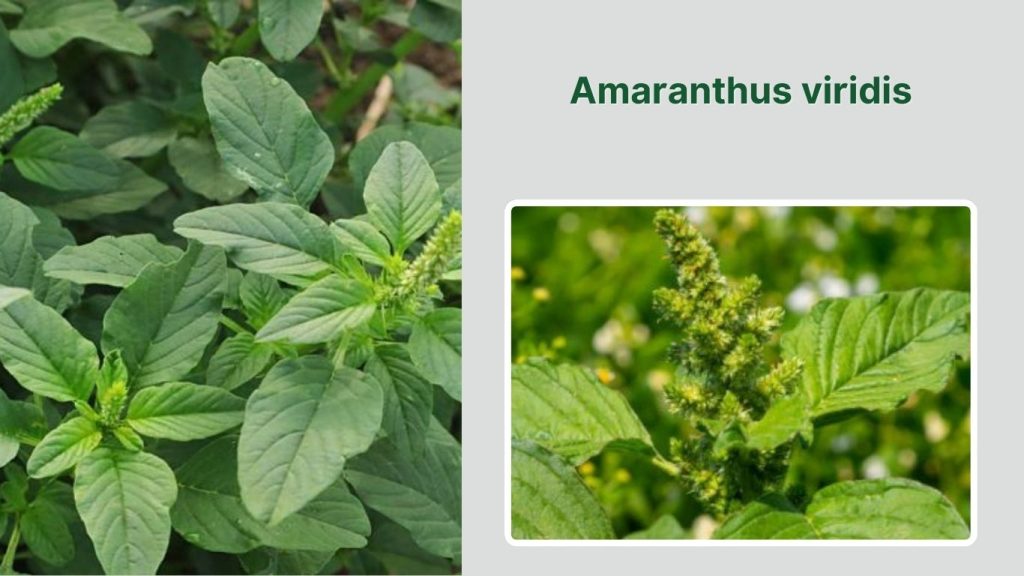
Amaranthus viridis, commonly called Green Amaranth, is a soft-stemmed, fast-growing amaranth species valued for its tender leaves and delicate green flower clusters. Native to tropical regions but now widespread around the world, this plant is commonly found in warm climates and is often grown both as a leafy vegetable and a natural garden plant.
Identification
- Bright green, smooth leaves
- Slender, branching stems
- Small, green, clustered flowers
- Soft, non-woody plant structure
- Typically grows 1–3 feet tall
- Fine, compact flower heads
Habitat and Growth
Green Amaranth thrives in full sun to partial shade and prefers moist, well-drained soil. It commonly grows in gardens, roadsides, cultivated fields, and open tropical landscapes, showing rapid growth during warm, rainy seasons.
Flowering Characteristics
The flowers are small and green, forming compact clusters along the stems and leaf axils. Blooming occurs mainly in summer, followed by the development of numerous tiny seeds that allow the plant to spread easily.
Uses and Significance
Amaranthus viridis is widely cultivated as a nutritious leafy vegetable in many parts of Asia, Africa, and the Pacific. Beyond its food value, it also plays a role in traditional medicine and supports local ecosystems by providing food for insects and birds.
8. Amaranthus spinosus (Spiny Amaranth)
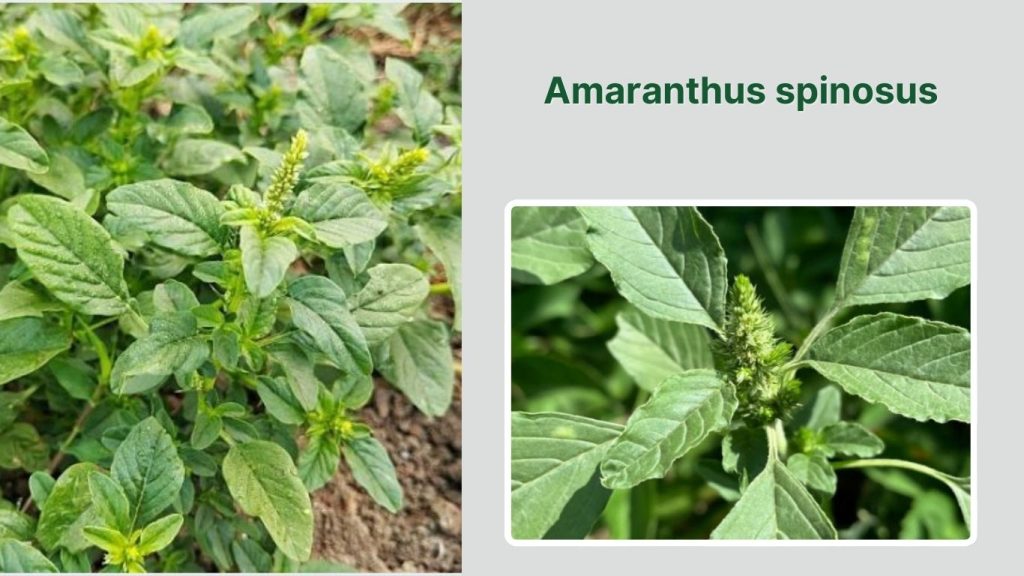
Amaranthus spinosus, commonly known as Spiny Amaranth, is a distinctive amaranth species recognized for the sharp spines that grow from its leaf axils and its slender green flower clusters. Native to tropical America, it has spread widely across warm regions of the world and is often found in open, disturbed habitats.
Identification
- Sharp, stiff spines at leaf nodes
- Narrow, green flower spikes
- Smooth, oval to lance-shaped leaves
- Upright, branching stems
- Typically grows 2–4 feet tall
- Small, tightly packed green flowers
Habitat and Growth
Spiny Amaranth thrives in hot, sunny conditions and grows well in a wide range of soils. It commonly appears in roadsides, gardens, farmlands, and open fields, where it establishes quickly and tolerates dry conditions once mature.
Flowering Characteristics
The plant produces slender, green flower spikes that emerge from both stem tips and leaf axils. Flowering usually begins in mid-summer and continues into fall, with prolific seed production ensuring rapid spread.
Uses and Significance
Despite its spiny nature, Amaranthus spinosus has traditional uses as a leafy vegetable and medicinal plant in several cultures. It is also important ecologically, providing food for insects and birds, and is studied for its resilience in harsh environments.
9. Amaranthus blitum (Purple Amaranth)
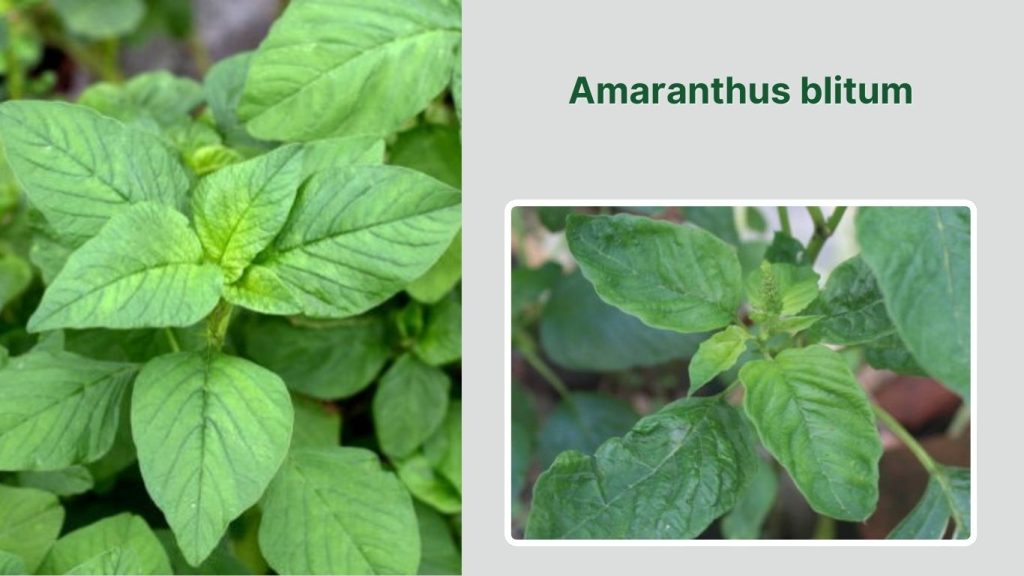
Amaranthus blitum, often called Purple Amaranth, is a low-growing to moderately tall amaranth species known for its soft leaves and compact flower clusters. Native to the Mediterranean region and parts of Asia, this plant is widely naturalized and appreciated for both its ornamental foliage and traditional food uses.
Identification
- Green to purplish leaves
- Soft, spreading to upright stems
- Small, clustered greenish-purple flowers
- Rounded to oval leaf shape
- Typically grows 1–3 feet tall
- Fine-textured, compact flower heads
Habitat and Growth
Purple Amaranth grows well in warm climates with full sun to partial shade. It is commonly found in gardens, cultivated plots, roadsides, and open fields, adapting easily to different soil types as long as drainage is adequate.
Flowering Characteristics
The flowers are small and subtle, forming compact clusters along the stems and in leaf axils. Blooming usually occurs in summer, followed by abundant seed formation that allows the plant to reseed naturally.
Uses and Significance
Amaranthus blitum is widely used as a leafy vegetable in many regions and is valued for its mild flavor and nutritional content. It also contributes to biodiversity by supporting pollinators and providing ground-level vegetation cover.
10. Amaranthus dubius (Spleen Amaranth)
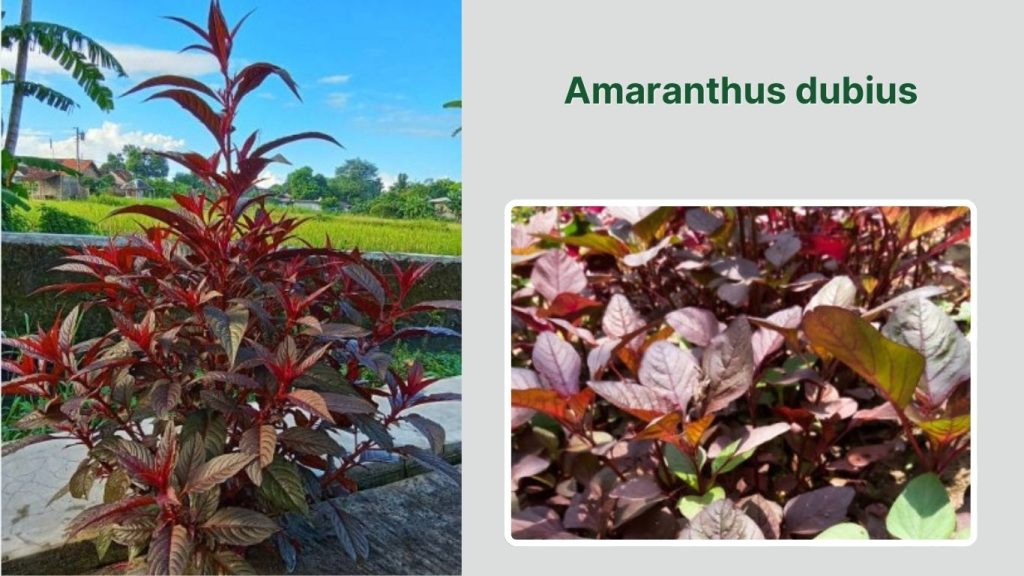
Amaranthus dubius, commonly known as Spleen Amaranth, is a fast-growing amaranth species valued for its tender leaves and upright green flower clusters. Native to tropical America, it is now widely cultivated and naturalized in many warm regions of the world, especially where it is grown as a leafy vegetable.
Identification
- Broad, soft, bright green leaves
- Upright, branching growth habit
- Dense, green flower clusters
- Smooth, fleshy stems
- Typically grows 2–4 feet tall
- Compact terminal and axillary flower heads
Habitat and Growth
Spleen Amaranth thrives in warm temperatures, full sun to light shade, and moist, well-drained soil. It commonly grows in home gardens, farms, open fields, and disturbed sites, showing rapid development during the growing season.
Flowering Characteristics
The plant produces tight, green flower clusters at the stem tips and leaf axils. Flowering generally occurs from mid-summer to early fall, followed by the formation of numerous small seeds that ensure easy propagation.
Uses and Significance
Amaranthus dubius is especially valued as a nutritious leafy vegetable in tropical and subtropical regions. In addition to its food value, it plays a role in traditional practices and contributes to sustainable gardening due to its fast growth and productivity.
11. Amaranthus graecizans (Prostrate Amaranth)
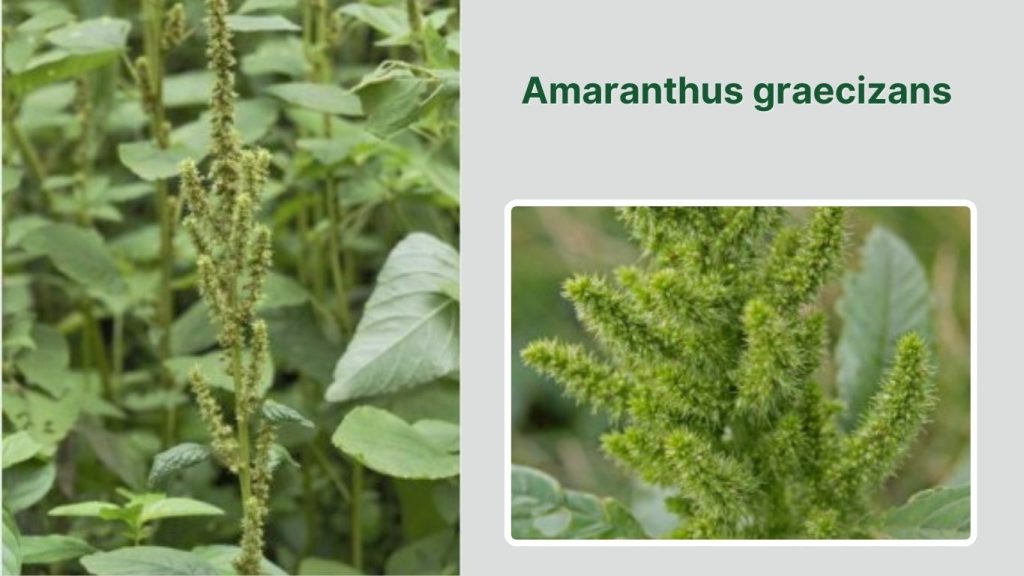
Amaranthus graecizans, commonly known as Prostrate Amaranth, is a low-growing amaranth species characterized by its spreading habit and small, compact flower clusters. Native to parts of Europe, Africa, and Asia, this plant is well adapted to warm, dry conditions and is often found growing close to the ground.
Identification
- Low, spreading or prostrate growth form
- Thin, branching stems along the ground
- Small, oval green leaves
- Tiny green flower clusters
- Usually grows under 1 foot tall
- Fine, inconspicuous blossoms
Habitat and Growth
Prostrate Amaranth thrives in full sun and tolerates dry, sandy, or disturbed soils. It is commonly seen along paths, roadsides, gardens, and open, sun-exposed areas where taller plants struggle to survive.
Flowering Characteristics
The flowers are very small and appear in compact clusters in the leaf axils. Blooming occurs through summer into early fall, with rapid seed production that allows the plant to spread quickly over open ground.
Uses and Significance
Amaranthus graecizans has been traditionally used as a leafy vegetable in some cultures and is also valued for its role in soil stabilization. Its ability to grow in poor soils makes it ecologically important in dry and open environments.
12. Amaranthus powellii (Powell Amaranth)
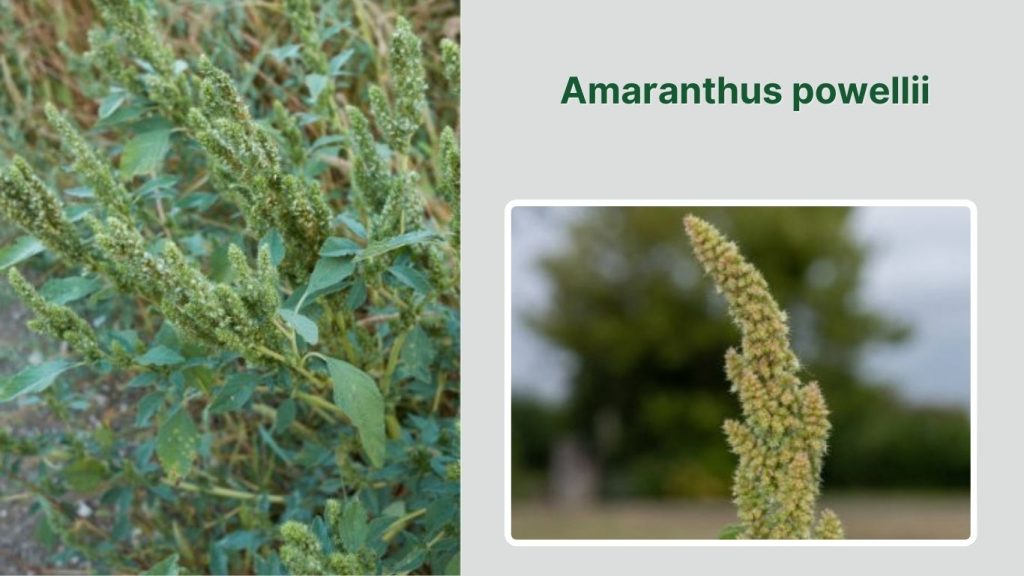
Amaranthus powellii, commonly called Powell Amaranth, is a tall, upright amaranth species recognized for its narrow leaves and long, green flower spikes. Native to North America, this plant is widely distributed and often found growing in open, sunny locations where it develops rapidly.
Identification
- Tall, upright growth habit
- Long, slender, green flower spikes
- Narrow, pointed leaves
- Smooth, sturdy central stem
- Common height of 3–6 feet
- Densely packed tiny green flowers
Habitat and Growth
Powell Amaranth thrives in full sun and adapts well to many soil types, particularly fertile and disturbed soils. It is commonly seen in gardens, agricultural fields, roadsides, and open landscapes, where it benefits from warm temperatures.
Flowering Characteristics
The plant produces elongated flower spikes composed of numerous tiny green blossoms. Flowering typically occurs from mid-summer to early fall, followed by abundant seed production that supports easy natural reseeding.
Uses and Significance
Although often growing wild, Amaranthus powellii has been traditionally used as a leafy green and wildlife food source. It also contributes to ecosystem diversity and is studied for its adaptability and rapid growth in open habitats.
13. Amaranthus hybridus (Smooth Amaranth)
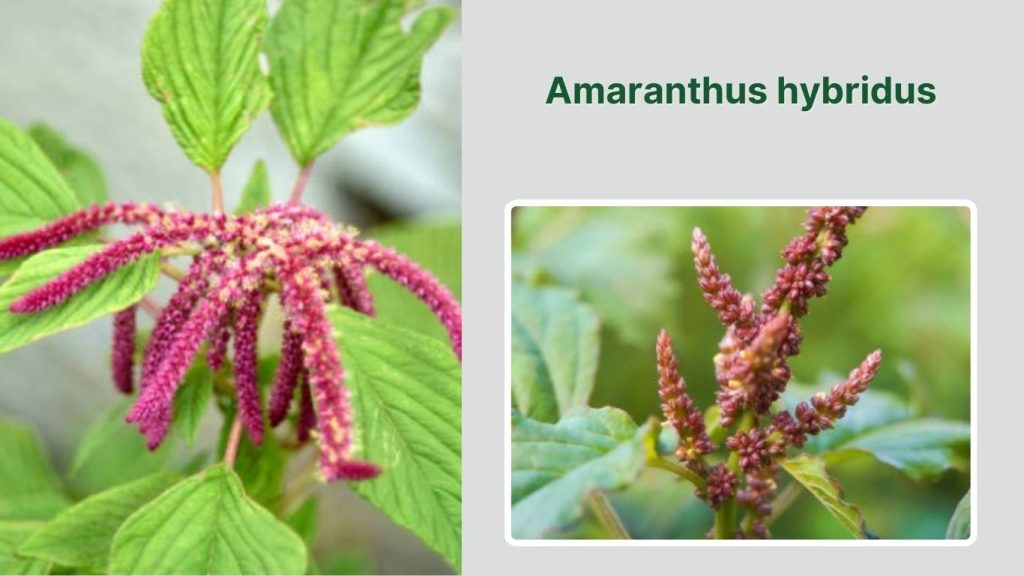
Amaranthus hybridus, commonly known as Smooth Amaranth, is a tall, versatile amaranth species noted for its hairless stems and leaves and its dense green flower clusters. Native to the Americas, this plant is widely distributed and often found in both cultivated and wild settings.
Identification
- Smooth, hairless stems and leaves
- Upright, branching growth habit
- Thick, green flower spikes
- Broad, oval to diamond-shaped leaves
- Typically grows 3–6 feet tall
- Dense, compact flower clusters
Habitat and Growth
Smooth Amaranth thrives in warm climates with full sun and fertile, well-drained soil. It commonly grows in gardens, farmlands, roadsides, and disturbed sites, where it establishes quickly and grows vigorously.
Flowering Characteristics
The plant produces dense green flower spikes at the stem tips and along the upper branches. Flowering usually takes place from mid-summer into fall, followed by the formation of large quantities of small, dark seeds.
Uses and Significance
Amaranthus hybridus has long been valued as a leafy vegetable and grain source in traditional agriculture. It also supports wildlife and pollinators and is appreciated for its resilience, making it a useful plant in sustainable and low-maintenance landscapes.
14. Amaranthus albus (Tumbleweed Amaranth)
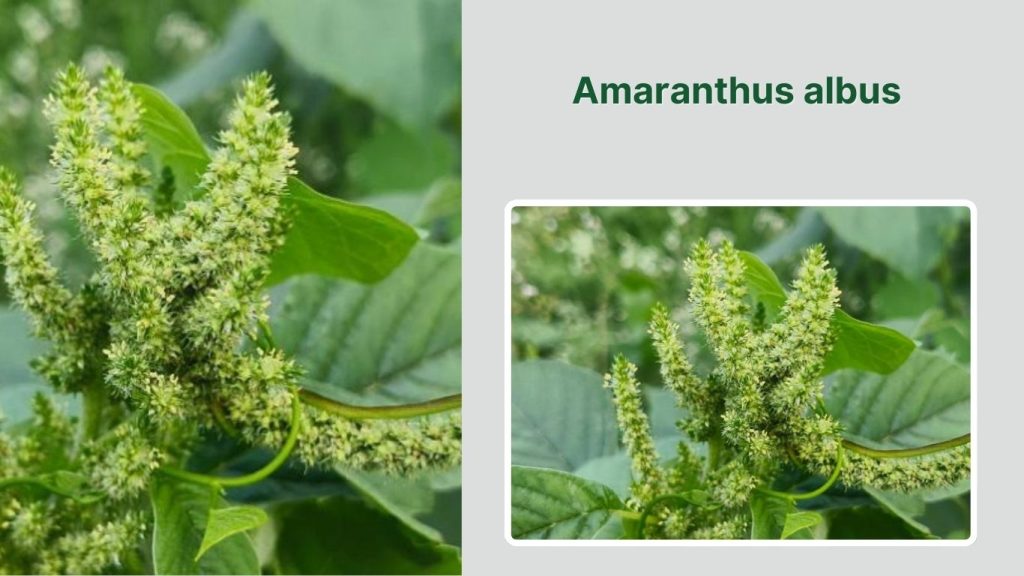
Amaranthus albus, commonly known as Tumbleweed Amaranth, is a highly branched amaranth species recognized for its rounded growth habit and pale green appearance. Native to North America, this plant is well adapted to dry, open environments and is often seen in sandy or disturbed areas.
Identification
- Rounded, bushy growth form
- Many thin, spreading branches
- Small, narrow pale-green leaves
- Tiny greenish-white flower clusters
- Typically grows 1–3 feet tall
- Breaks off when dry, forming a “tumbleweed” shape
Habitat and Growth
Tumbleweed Amaranth thrives in full sun and tolerates dry, sandy, and nutrient-poor soils. It commonly grows along roadsides, open fields, deserts, and disturbed ground, where few other plants survive easily.
Flowering Characteristics
The plant produces very small, inconspicuous flowers in tight clusters along the branches. Flowering occurs in summer, followed by seed development. As the plant dries, it can detach and roll with the wind, dispersing seeds over wide areas.
Uses and Significance
Amaranthus albus plays an ecological role in soil coverage and seed dispersal in dry regions. Although not widely cultivated, it has been historically used in limited traditional practices and is studied for its extreme drought tolerance and survival strategies.
15. Amaranthus tuberculatus (Waterhemp)
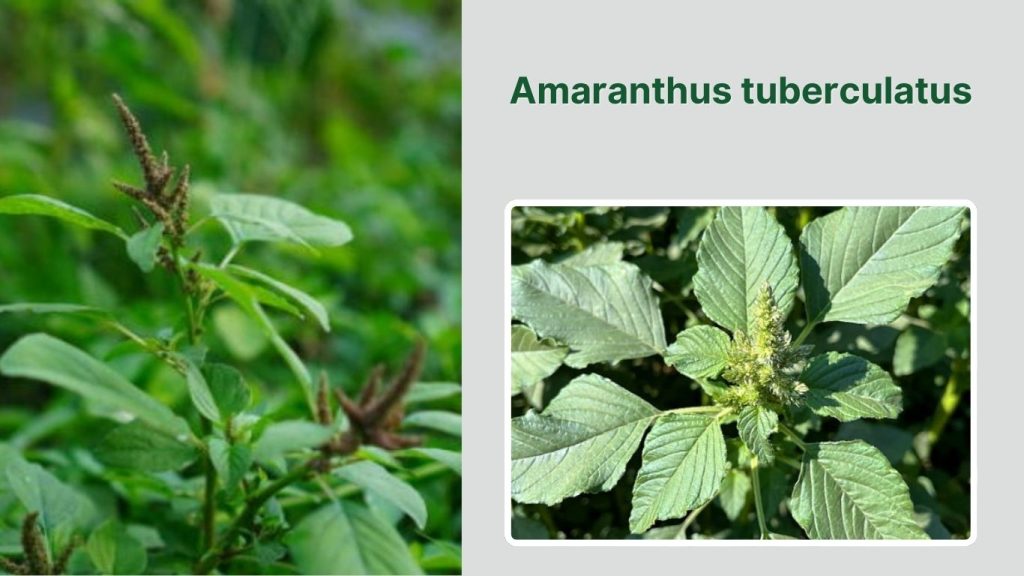
Amaranthus tuberculatus, commonly known as Waterhemp, is a slender, tall amaranth species adapted to moist environments and riverine habitats. Native to North America, it is widely distributed and recognized for its narrow leaves, smooth stems, and elongated green flower spikes.
Identification
- Tall, slender, upright growth habit
- Smooth, hairless stems
- Narrow, lance-shaped green leaves
- Long, thin green flower spikes
- Typically grows 3–7 feet tall
- Fine, tightly packed tiny flowers
Habitat and Growth
Waterhemp thrives in moist to moderately wet soils and prefers full sun. It commonly grows along riverbanks, wetlands, agricultural fields, and low-lying disturbed areas, where it benefits from regular moisture and warm temperatures.
Flowering Characteristics
The plant produces elongated flower spikes at the stem tips and upper branches. Flowering usually occurs from mid-summer into fall, with female plants producing large quantities of small seeds that allow rapid natural spread.
Uses and Significance
Amaranthus tuberculatus is ecologically important in wetland and riparian systems, providing ground cover and food for wildlife. It is also of interest in botanical and agricultural studies due to its strong adaptability to different moisture conditions.
FAQs
What is an amaranth flower best known for?
Amaranth flowers are best known for their striking plumes or tassel-like blooms and vibrant colors such as red, purple, gold, and green. Many species are also valued for their dramatic foliage. Beyond ornamentals, amaranths have long been cultivated for edible leaves and nutritious seeds.
Are amaranth flowers easy to grow?
Yes, most amaranth species are easy to grow and suitable for beginners. They thrive in warm temperatures, full sun, and well-drained soil. Amaranths grow quickly from seed, tolerate heat well, and generally require minimal care once established, making them popular garden plants.
Do all amaranth plants produce showy flowers?
Not all amaranths are grown mainly for flowers. Some, like Love-Lies-Bleeding and Prince’s Feather, have very showy blooms, while others produce small, green flower clusters and are grown more for foliage or edible leaves. Visual appeal varies greatly by species.
Are amaranth flowers edible or only ornamental?
Many amaranth species are both ornamental and edible. The young leaves are commonly used as leafy vegetables in different cultures, and the seeds are harvested as a nutritious pseudo-grain. However, some types are grown mainly for decorative purposes in gardens.
When do amaranth flowers usually bloom?
Amaranth flowers typically bloom from early or mid-summer through fall, depending on climate and species. Once flowering begins, many varieties continue producing blooms for several weeks, often retaining strong color and form until the first cold temperatures arrive.