


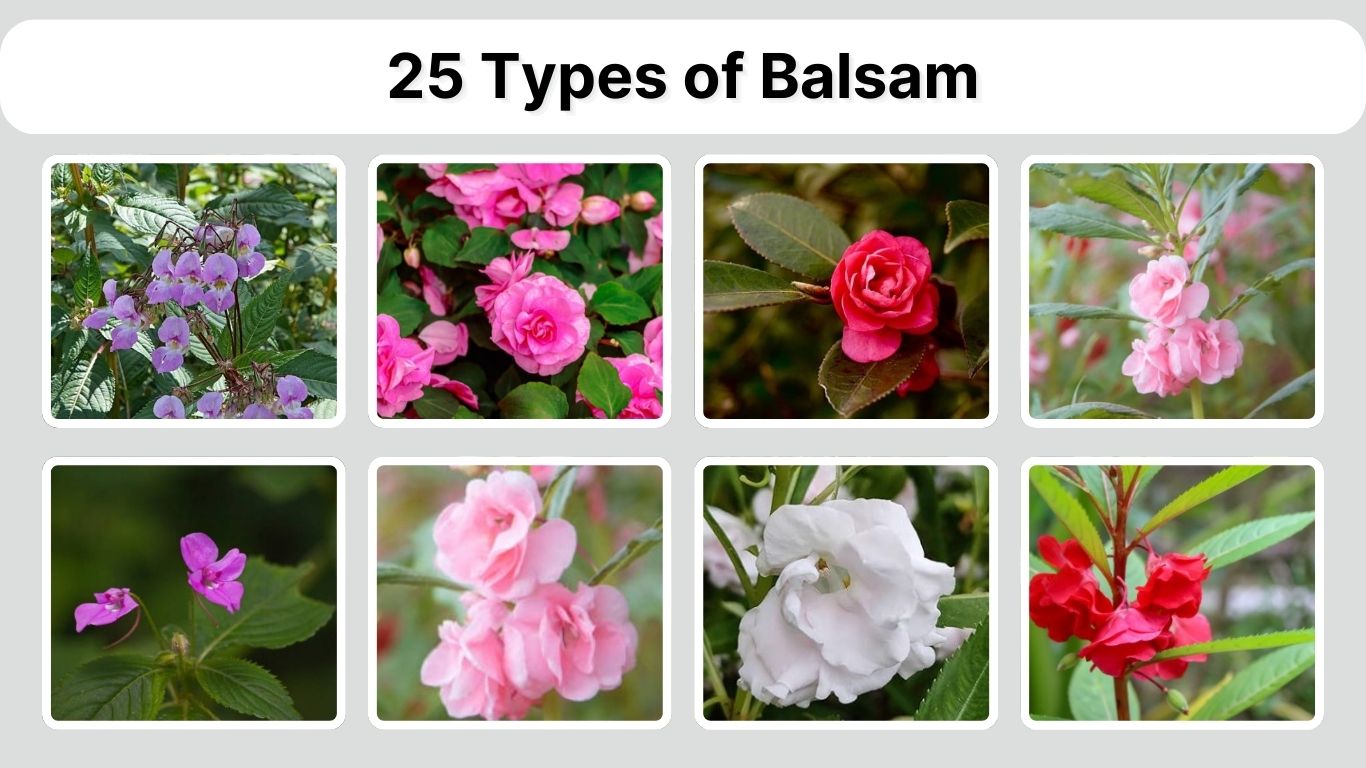
Balsam plants, mainly from the genus Impatiens, are popular flowering plants known for their bright blooms, soft stems, and fast-growing nature. They are widely grown in home gardens, containers, and natural landscapes across tropical and temperate regions. Balsams are especially loved for their long flowering season and the unique seed pods that burst open when touched. From garden balsam to wild jewelweed, different types of balsam offer a wide range of colors, forms, and ornamental value.
1. Garden Balsam (Impatiens balsamina)
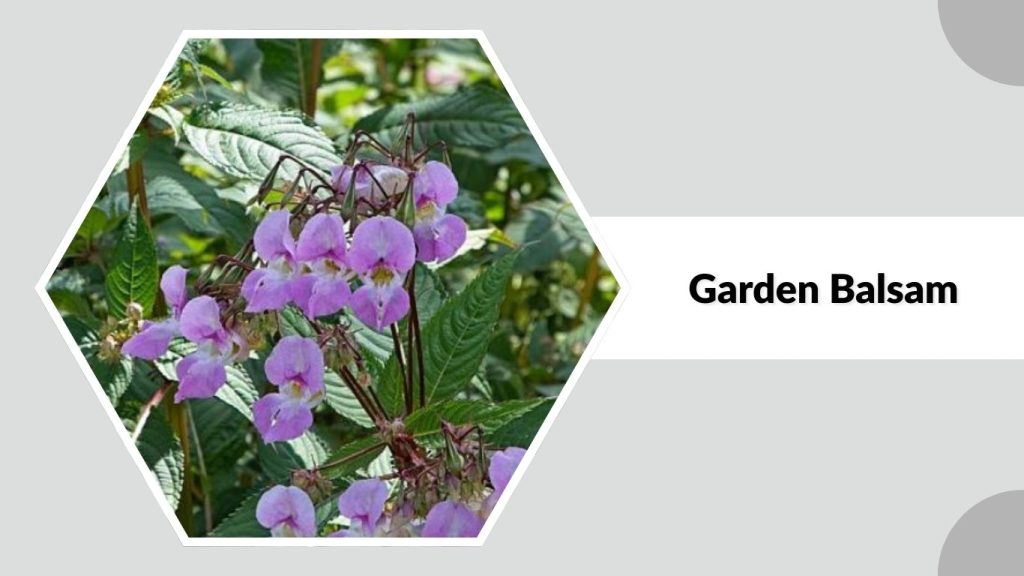
Garden balsam is a popular annual flowering plant widely grown in home gardens for its bright, rose-like blooms and easy maintenance. Native to South and Southeast Asia, it is especially valued for quick growth, long flowering season, and ability to thrive in warm, humid climates. The plant is often called “rose balsam” or “touch-me-not” because of its seed pods that burst open when touched.
Identification
- Scientific name: Impatiens balsamina
- Common names: Garden balsam, Rose balsam, Touch-me-not
- Plant type: Annual flowering herb
- Average height: 30–75 cm (1–2.5 ft)
- Stem: Thick, fleshy, and upright
- Leaves: Lance-shaped, toothed edges, bright green
- Flowers: Single or double, rose-like, various colors
- Seed pods: Explosive, burst when mature
Appearance
Garden balsam produces showy flowers that grow closely along the stem, giving the plant a dense, colorful look. Blooms may be single or double and resemble small roses or camellias. Flower colors commonly include pink, red, white, purple, and bi-color combinations, making it a favorite for decorative borders and pots.
Habitat and Growing Conditions
This plant prefers warm temperatures, partial to full sunlight, and moist but well-drained soil. It thrives in tropical and subtropical regions and grows well in garden beds, containers, and roadside areas. Garden balsam tolerates humidity well and blooms heavily during the summer and rainy seasons.
Uses and Importance
Garden balsam is mainly grown as an ornamental plant, valued for its fast growth and vibrant flowers. In traditional practices, parts of the plant have also been used for natural dyes and folk remedies. Because it attracts bees and butterflies, it can also support pollinators in home gardens.
2. Rose Balsam (Impatiens balsamina ‘Rose’ types)
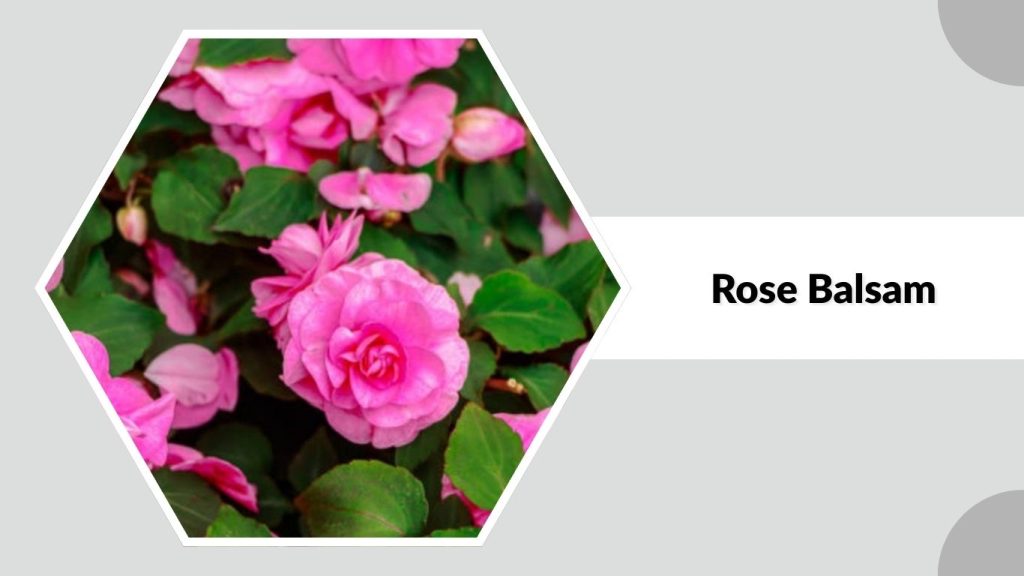
Rose balsam is a cultivated form of garden balsam known for its dense, rose-like double flowers and strong ornamental appeal. It is commonly grown in flower beds and containers because of its compact growth, bright colors, and long blooming season. Rose balsam is especially popular in tropical and subtropical gardens, where it flowers continuously with minimal care.
Identification
- Scientific name: Impatiens balsamina (rose-flowered cultivars)
- Common names: Rose balsam, Double balsam
- Plant type: Annual flowering plant
- Average height: 30–60 cm (1–2 ft)
- Stem: Fleshy, upright, green to reddish
- Leaves: Narrow, pointed, serrated edges
- Flowers: Double, rose-shaped, clustered along stems
- Flower colors: Pink, red, white, purple, mixed shades
Appearance
Rose balsam is easily recognized by its thick, layered petals that closely resemble miniature roses. The flowers grow along the stem rather than only at the tips, giving the plant a full, colorful appearance. The foliage is bright green and forms a strong contrast with the vivid blooms.
Habitat and Growing Conditions
This plant grows best in warm climates with moderate sunlight and consistently moist, well-drained soil. It performs well in garden borders, pots, and balcony containers. Rose balsam prefers partial sun but can tolerate full sun if watered regularly.
Uses and Importance
Rose balsam is mainly cultivated as an ornamental flower for home gardens, parks, and decorative landscapes. It is also used in seasonal floral displays and attracts pollinators such as bees and butterflies, making it useful for supporting small garden ecosystems.
3. Camellia Balsam (Impatiens balsamina ‘Camellia’ types)
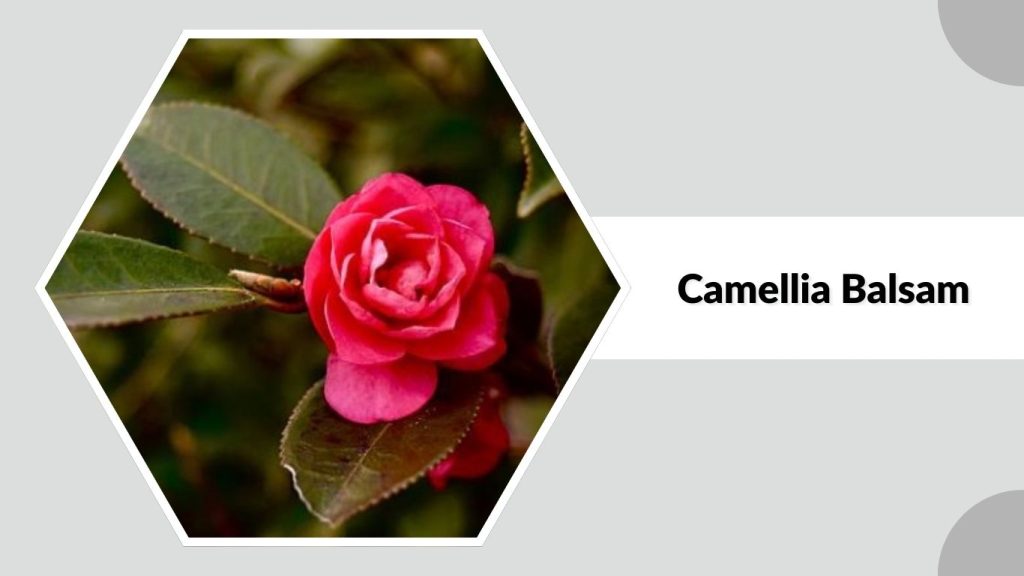
Camellia balsam is a showy cultivated form of garden balsam, admired for its large, rounded, camellia-like blooms and thick, upright growth. It is widely grown as an ornamental annual because of its heavy flowering habit, bright colors, and ability to thrive in warm, humid conditions. This type is especially valued for producing full, decorative flowers along much of the stem.
Identification
- Scientific name: Impatiens balsamina (camellia-flowered cultivars)
- Common names: Camellia balsam, Camellia-flowered balsam
- Plant type: Annual flowering herb
- Average height: 30–70 cm (1–2.3 ft)
- Stem: Thick, fleshy, upright
- Leaves: Lance-shaped, toothed margins, glossy green
- Flowers: Fully double, camellia-like, densely packed
- Flower colors: White, pink, red, purple, bi-colors
Appearance
Camellia balsam produces large, layered flowers that look similar to small camellias. The blooms are tightly packed with petals and appear in clusters along the stem, giving the plant a lush, ornamental look. The rich green foliage further enhances the contrast and makes the flowers stand out strongly in garden settings.
Habitat and Growing Conditions
This balsam prefers warm temperatures, bright filtered sunlight, and moist, fertile soil with good drainage. It grows well in garden beds, containers, and decorative borders. Regular watering and light feeding encourage continuous blooming throughout the growing season.
Uses and Importance
Camellia balsam is primarily grown for decorative purposes in gardens and floral displays. Its long-lasting, colorful flowers make it popular for seasonal landscaping, home gardens, and public parks, where quick growth and visual impact are desired.
4. Double-Flowered Balsam (Impatiens balsamina double cultivars)
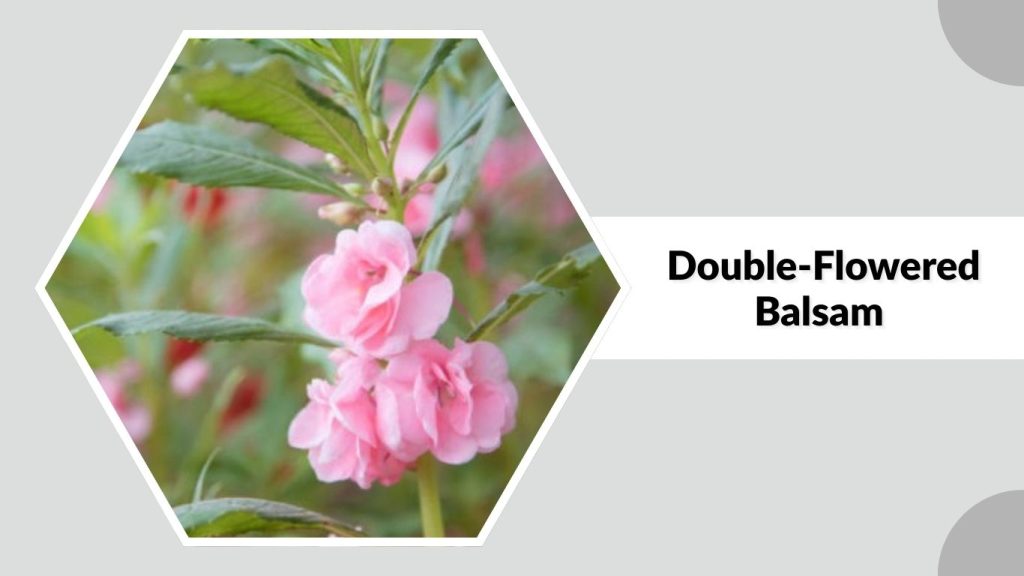
Double-flowered balsam refers to garden balsam varieties that produce thick, multi-layered petals, giving the blooms a full, rose- or camellia-like appearance. These forms are highly valued for ornamental gardening because they create dense, colorful displays and flower heavily along the stems. They are commonly grown in tropical and subtropical regions as fast-growing annuals.
Identification
- Scientific name: Impatiens balsamina (double-flowered cultivars)
- Common names: Double balsam, Double-flowered garden balsam
- Plant type: Annual flowering plant
- Average height: 30–75 cm (1–2.5 ft)
- Stem: Thick, juicy, upright
- Leaves: Narrow, pointed, serrated edges
- Flowers: Fully double, layered petals, rose-like
- Flower colors: Red, pink, white, purple, mixed shades
Appearance
Double-flowered balsam produces compact, rounded blooms with many overlapping petals. The flowers often grow closely along the stem, giving the plant a heavily ornamented look. Compared to single-flowered forms, these varieties appear fuller and more decorative, making them especially popular in ornamental beds and containers.
Habitat and Growing Conditions
This type grows best in warm climates with partial to full sunlight and consistently moist, well-drained soil. It performs well in garden borders, pots, and seasonal flower beds. Adequate watering and good airflow help maintain healthy growth and prolonged blooming.
Uses and Importance
Double-flowered balsam is mainly used as an ornamental plant for landscaping, home gardens, and decorative displays. Its dense blooms make it suitable for creating colorful focal points, and it is often chosen for festival gardens and outdoor floral arrangements.
5. Single-Flowered Balsam (Impatiens balsamina single forms)
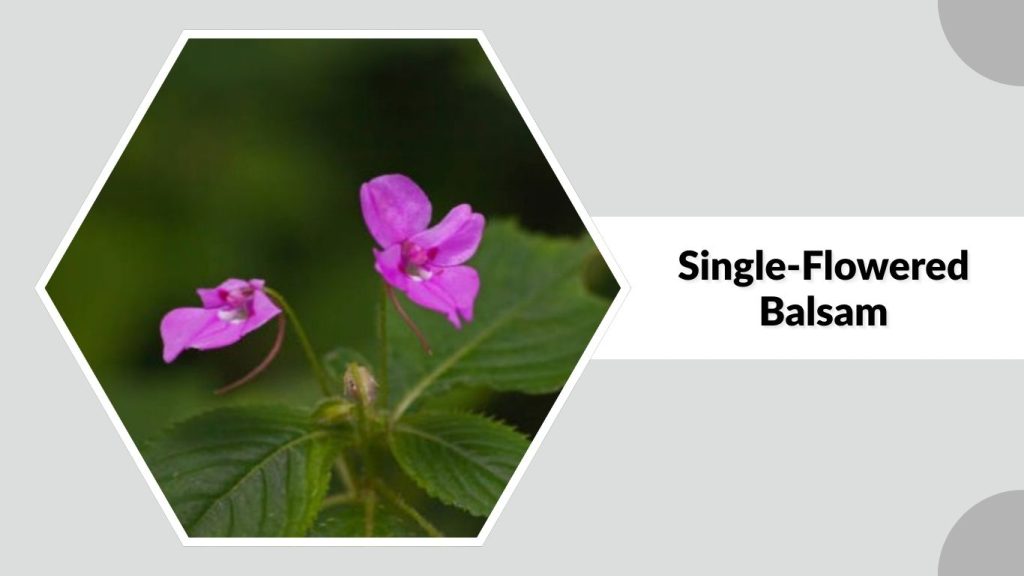
Single-flowered balsam is a simpler form of garden balsam that produces open, flat flowers with fewer petals. Unlike double varieties, these plants show their natural floral structure more clearly and are often closer to wild or traditional garden types. They are fast-growing annuals and are widely cultivated for their bright colors, ease of care, and long blooming season.
Identification
- Scientific name: Impatiens balsamina (single-flowered forms)
- Common names: Single balsam, Garden balsam
- Plant type: Annual flowering herb
- Average height: 30–70 cm (1–2.3 ft)
- Stem: Fleshy, upright, green
- Leaves: Lance-shaped, serrated edges
- Flowers: Single, flat to slightly cupped, five-petaled
- Flower colors: Pink, red, white, purple, light violet
Appearance
Single-flowered balsam has more open blooms with visible centers, giving the plant a lighter and more natural look. The flowers grow along the stem and contrast well with the narrow, glossy green leaves. Because the petals are fewer, the colors often appear brighter and more distinct than in double forms.
Habitat and Growing Conditions
This balsam thrives in warm temperatures, partial sunlight, and moist but well-drained soil. It is commonly found in home gardens, roadsides, and open fields in tropical and subtropical regions. The plant grows quickly from seed and begins flowering within a short time.
Uses and Importance
Single-flowered balsam is grown mainly as an ornamental plant but is also appreciated for seed production and traditional gardening. Its simple flowers attract bees and butterflies, making it useful for pollinator-friendly gardens and natural-style landscapes.
6. White Balsam (Impatiens balsamina white cultivars)
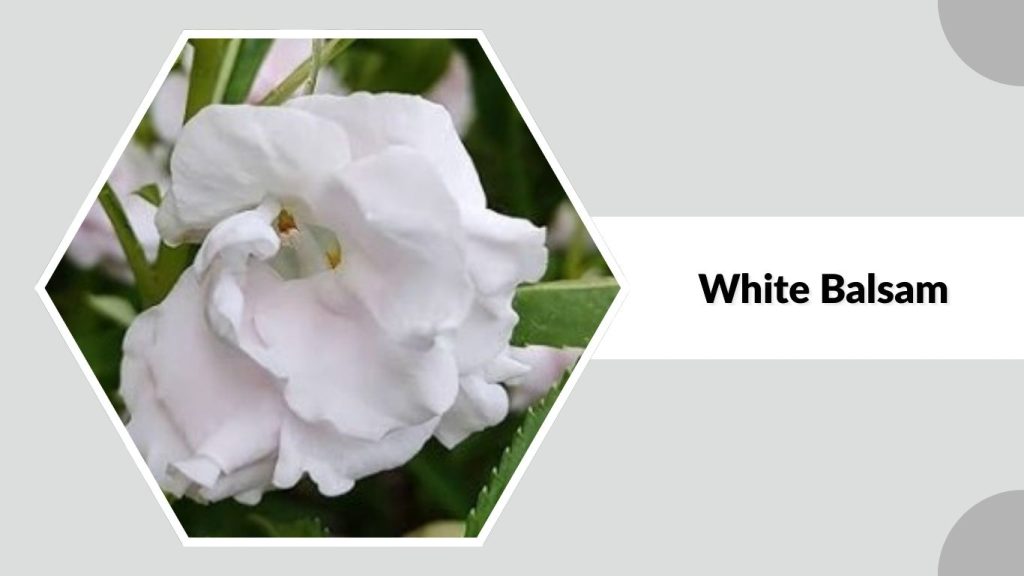
White balsam is a cultivated form of garden balsam known for its pure white or creamy-white blooms. It is commonly grown in ornamental gardens where light-colored flowers are desired for contrast or themed landscaping. Like other balsams, it is a fast-growing annual that flowers heavily in warm, humid conditions.
Identification
- Scientific name: Impatiens balsamina (white-flowered cultivars)
- Common names: White balsam, White garden balsam
- Plant type: Annual flowering herb
- Average height: 30–70 cm (1–2.3 ft)
- Stem: Thick, fleshy, upright
- Leaves: Narrow, pointed, serrated edges
- Flowers: Single or double, white to creamy-white
- Bloom position: Along the leaf axils of the stem
Appearance
White balsam produces soft, bright blooms that stand out strongly against its deep green foliage. The flowers may be single or fully double, depending on the cultivar. When in full bloom, the plant appears densely covered with white blossoms, giving it a clean and elegant ornamental look.
Habitat and Growing Conditions
This type grows best in warm temperatures, partial sunlight, and moist, fertile, well-drained soil. It is suitable for garden beds, pots, and decorative borders. Regular watering encourages continuous flowering throughout the growing season.
Uses and Importance
White balsam is mainly grown as an ornamental plant for gardens, parks, and decorative landscapes. Its light-colored flowers are often used in themed gardens, contrast planting, and seasonal floral displays.
7. Pink Balsam (Impatiens balsamina pink cultivars)
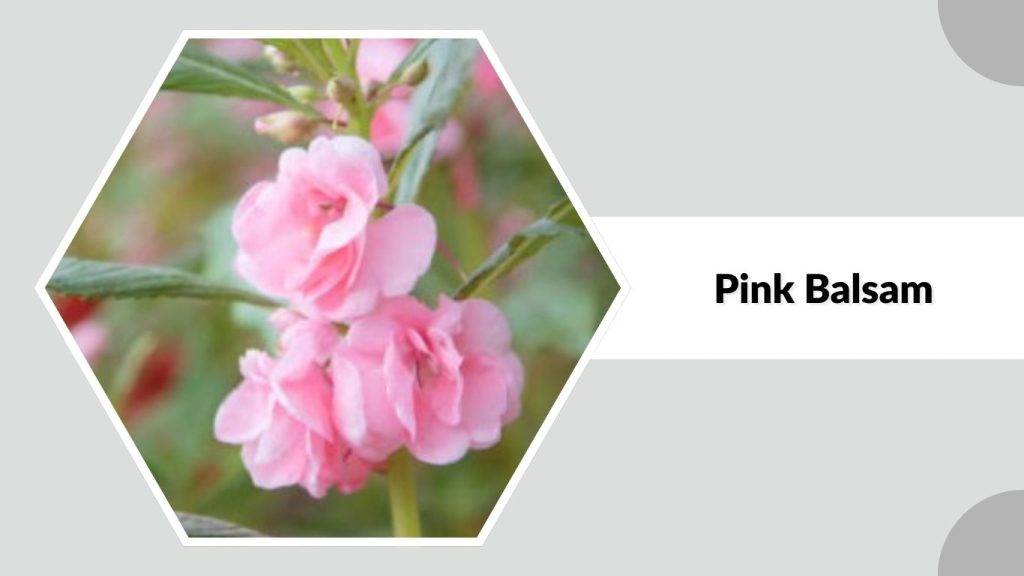
Pink balsam is a popular ornamental form of garden balsam recognized for its soft to bright pink flowers and dense blooming habit. It is widely planted in home gardens, flower borders, and containers because of its cheerful color, fast growth, and long flowering period. Pink-flowered balsams are especially common in tropical and subtropical regions.
Identification
- Scientific name: Impatiens balsamina (pink-flowered cultivars)
- Common names: Pink balsam, Pink garden balsam
- Plant type: Annual flowering herb
- Average height: 30–75 cm (1–2.5 ft)
- Stem: Fleshy, upright, green to reddish
- Leaves: Lance-shaped, finely serrated edges
- Flowers: Single or double, various shades of pink
- Bloom position: Along the stem at leaf joints
Appearance
Pink balsam produces attractive blossoms that may range from pale blush to deep rose. The flowers grow closely along the upright stems, creating a colorful vertical display. Combined with glossy green foliage, the pink blooms give the plant a soft yet vibrant ornamental appeal.
Habitat and Growing Conditions
This balsam prefers warm climates, partial to full sunlight, and moist, well-drained soil. It grows well in garden beds, pots, and seasonal borders. Consistent watering and moderate feeding promote healthy growth and extended blooming.
Uses and Importance
Pink balsam is mainly cultivated for ornamental purposes. It is often used to brighten garden spaces, line walkways, and decorate balconies. Its flowers also attract pollinating insects, supporting small garden ecosystems.
8. Red Balsam (Impatiens balsamina red cultivars)
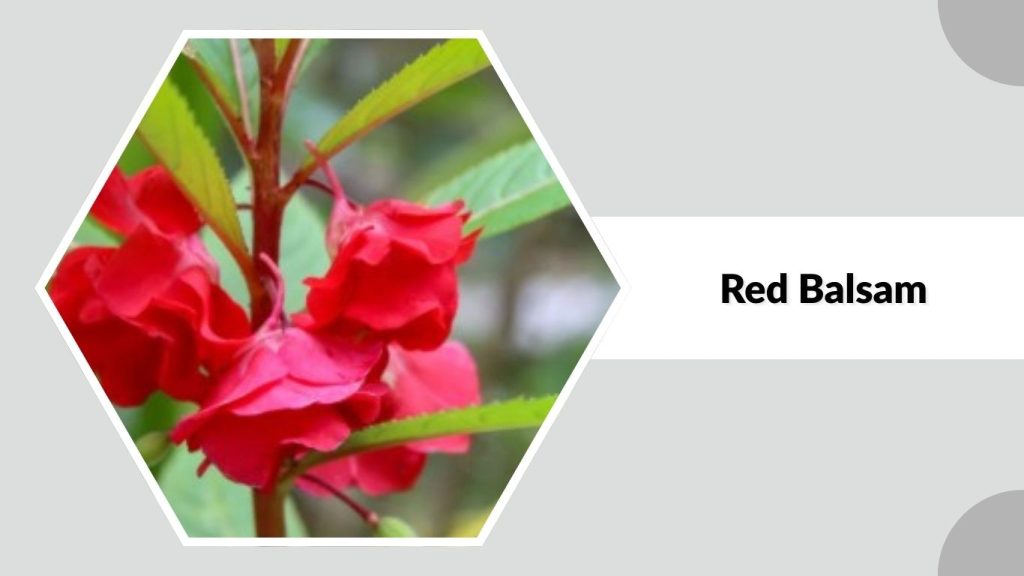
Red balsam is a striking form of garden balsam known for its vivid red to deep crimson flowers. It is commonly grown as an ornamental annual because of its bold color, rapid growth, and heavy blooming habit. Red balsam plants are widely used in garden borders, flower beds, and decorative containers.
Identification
- Scientific name: Impatiens balsamina (red-flowered cultivars)
- Common names: Red balsam, Red garden balsam
- Plant type: Annual flowering herb
- Average height: 30–75 cm (1–2.5 ft)
- Stem: Thick, fleshy, upright
- Leaves: Narrow, pointed, serrated margins
- Flowers: Single or double, bright red to deep red
- Bloom position: Along the stem at leaf axils
Appearance
Red balsam produces eye-catching flowers that stand out strongly against its rich green leaves. The blooms grow closely along the stem, giving the plant a dense, upright, and colorful appearance. Depending on the variety, flowers may be simple or fully double, adding to their ornamental value.
Habitat and Growing Conditions
This plant thrives in warm, humid climates with partial to full sunlight. It prefers moist, fertile, well-drained soil and performs well in garden beds, borders, and containers. Regular watering supports continuous flowering throughout the season.
Uses and Importance
Red balsam is mainly used as an ornamental plant for decorative landscaping. Its bold flowers make it suitable for creating visual highlights in gardens and for seasonal floral displays, while also attracting bees and other pollinators.
9. Purple Balsam (Impatiens balsamina purple cultivars)
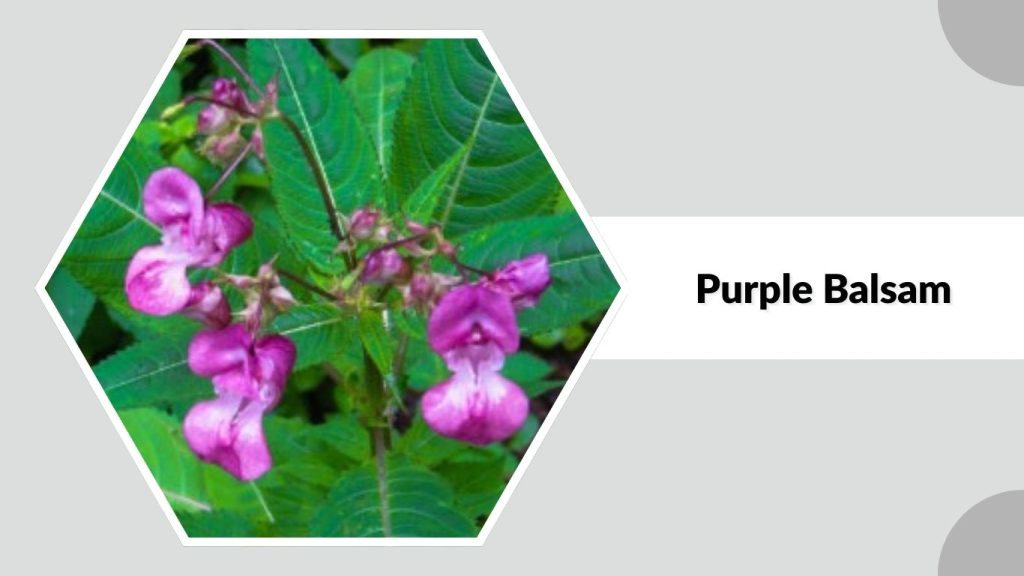
Purple balsam is an ornamental form of garden balsam valued for its rich purple to violet-colored flowers. It is commonly grown in home gardens and landscape borders where deeper, dramatic flower colors are desired. Like other balsams, it is a fast-growing annual that blooms profusely in warm, humid environments.
Identification
- Scientific name: Impatiens balsamina (purple-flowered cultivars)
- Common names: Purple balsam, Violet balsam
- Plant type: Annual flowering herb
- Average height: 30–70 cm (1–2.3 ft)
- Stem: Fleshy, upright, green to reddish
- Leaves: Lance-shaped, finely serrated margins
- Flowers: Single or double, purple to violet shades
- Bloom position: Along the stem at leaf joints
Appearance
Purple balsam produces deep-toned blooms that give the plant a rich and elegant appearance. The flowers are arranged closely along the upright stems, creating a vertical display of color. The contrast between the dark purple flowers and bright green leaves enhances its ornamental appeal.
Habitat and Growing Conditions
This balsam prefers warm temperatures, partial sunlight, and moist, well-drained soil. It grows well in garden beds, containers, and decorative borders. Adequate watering and light feeding help maintain healthy growth and extended flowering.
Uses and Importance
Purple balsam is mainly cultivated as an ornamental plant for gardens, walkways, and seasonal landscapes. Its distinctive flower color makes it useful for contrast planting and themed garden designs, while also supporting pollinating insects.
10. Lavender Balsam (Impatiens balsamina lavender cultivars)
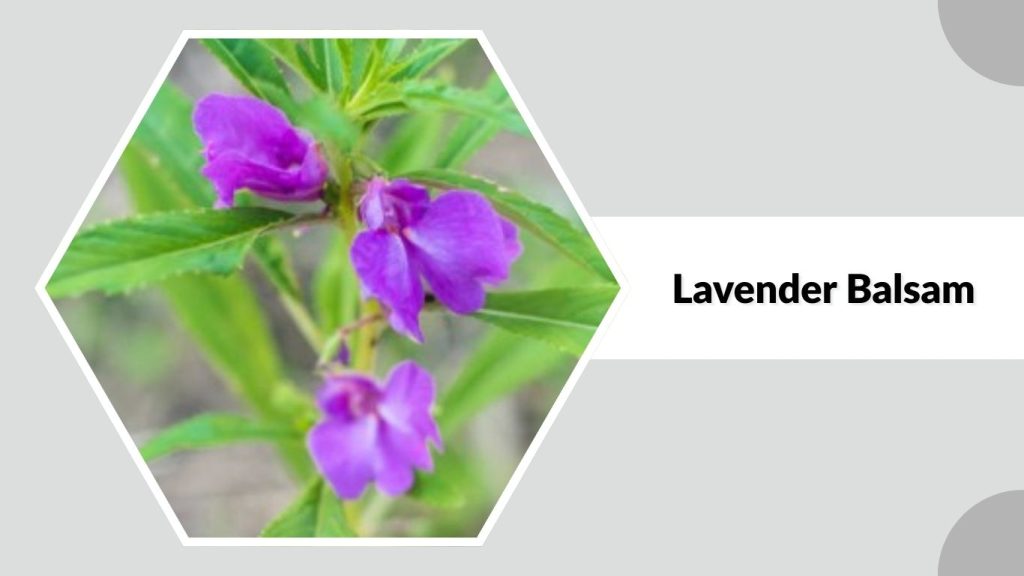
Lavender balsam is a decorative form of garden balsam known for its soft lavender to light purple flowers. It is widely grown in home gardens for its gentle color tones, fast growth, and long flowering season. This type is especially valued where pastel-colored plants are used to create calm, visually pleasing garden spaces.
Identification
- Scientific name: Impatiens balsamina (lavender-flowered cultivars)
- Common names: Lavender balsam, Light purple balsam
- Plant type: Annual flowering herb
- Average height: 30–70 cm (1–2.3 ft)
- Stem: Thick, fleshy, upright
- Leaves: Narrow, pointed, serrated edges
- Flowers: Single or double, lavender to pale purple
- Bloom position: Along the stem at leaf axils
Appearance
Lavender balsam produces delicate-colored blooms that give the plant a soft, soothing appearance. The flowers grow densely along the stem, forming a vertical column of gentle color. The light purple tones contrast subtly with the glossy green leaves, enhancing its ornamental value.
Habitat and Growing Conditions
This balsam grows best in warm climates with partial to full sunlight and moist, fertile, well-drained soil. It performs well in garden beds, pots, and balcony containers. Regular watering supports steady growth and continuous blooming.
Uses and Importance
Lavender balsam is mainly used as an ornamental plant for decorative borders, home gardens, and container planting. Its pastel blooms are suitable for themed gardens, mixed flower beds, and visual softening of landscapes.
11. Orange Balsam (Impatiens balsamina orange cultivars)
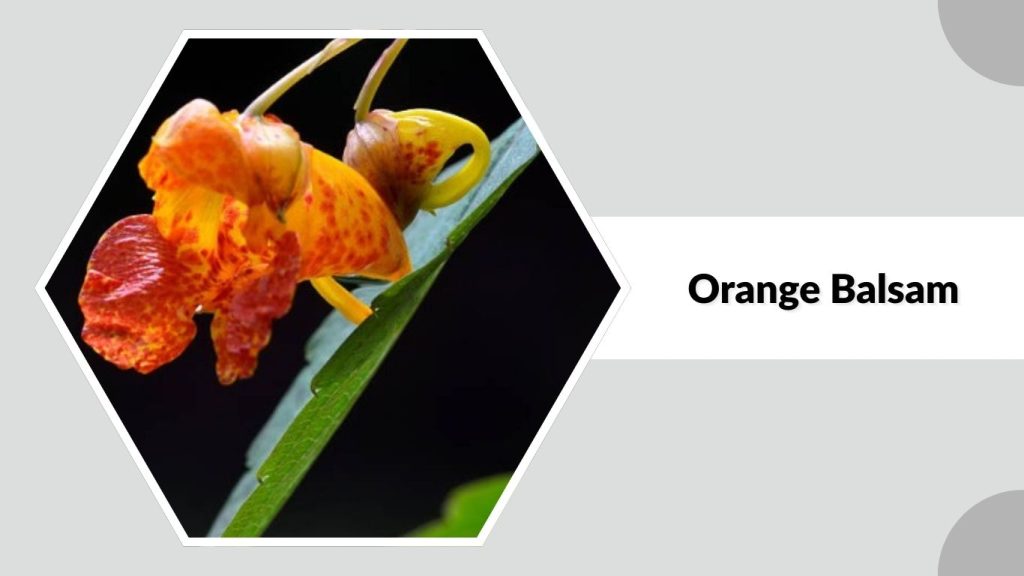
Orange balsam is a bright and attractive form of garden balsam valued for its warm orange to coral-colored flowers. It is commonly grown as an ornamental annual because of its fast growth, dense blooming habit, and strong visual impact. Orange balsam is often used to add vibrant color to garden beds, borders, and container displays.
Identification
- Scientific name: Impatiens balsamina (orange-flowered cultivars)
- Common names: Orange balsam, Orange garden balsam
- Plant type: Annual flowering herb
- Average height: 30–70 cm (1–2.3 ft)
- Stem: Fleshy, upright
- Leaves: Lance-shaped, serrated margins
- Flowers: Single or double, orange to coral shades
- Bloom position: Along the stem at leaf joints
Appearance
Orange balsam produces vivid, warm-toned flowers that stand out clearly against its rich green foliage. The blooms are arranged along the upright stem, creating a strong vertical display. Depending on the variety, flowers may appear simple or densely layered, increasing their ornamental appeal.
Habitat and Growing Conditions
This balsam prefers warm temperatures, partial sunlight, and consistently moist, well-drained soil. It grows well in open gardens, flower borders, and containers. Adequate watering and good soil fertility encourage continuous flowering throughout the season.
Uses and Importance
Orange balsam is mainly grown for ornamental purposes. Its bright flowers are used to create eye-catching garden displays, seasonal landscaping, and colorful container arrangements, while also attracting pollinating insects.
12. Dwarf Balsam (Impatiens balsamina dwarf cultivars)
Dwarf balsam is a compact-growing form of garden balsam developed for small gardens, borders, and container planting. Unlike standard balsam, it remains shorter while still producing abundant, colorful flowers. This makes it ideal for edging, pots, and areas where space is limited but strong visual impact is desired.
Identification
- Scientific name: Impatiens balsamina (dwarf cultivars)
- Common names: Dwarf balsam, Compact garden balsam
- Plant type: Annual flowering herb
- Average height: 15–30 cm (6–12 inches)
- Stem: Short, thick, fleshy, upright
- Leaves: Narrow, pointed, finely serrated
- Flowers: Single or double, various bright colors
- Growth habit: Bushy and compact
Appearance
Dwarf balsam forms small, dense plants covered with flowers that appear closely packed along the stems. Despite its short height, it produces relatively large blooms, giving it a full and colorful look. The compact structure makes it especially suitable for neat garden designs and decorative containers.
Habitat and Growing Conditions
This type grows best in warm climates with partial sunlight and moist, well-drained soil. It performs very well in pots, window boxes, and garden borders. Regular watering and light feeding promote healthy growth and continuous blooming.
Uses and Importance
Dwarf balsam is mainly used as an ornamental plant for edging, container gardening, balcony displays, and small landscape spaces. Its compact form makes it easy to manage while still providing bright seasonal color.
13. Tall Balsam (Impatiens balsamina tall cultivars)
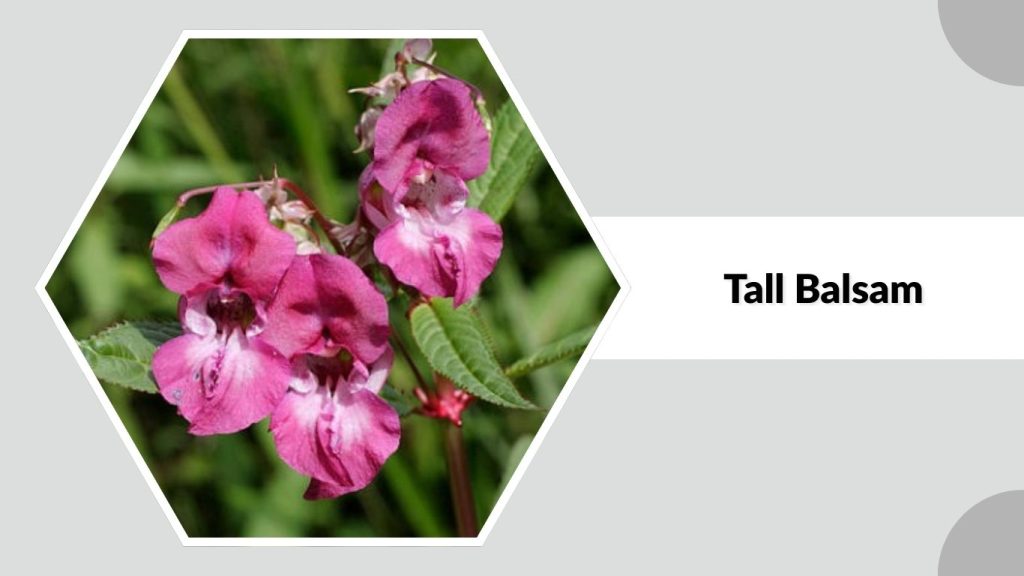
Tall balsam refers to garden balsam varieties that grow higher than standard forms, producing long upright stems lined with colorful flowers. These types are valued for creating vertical interest in gardens and are often planted at the back of flower beds or along fences. They maintain the same fast growth and heavy blooming habit as other balsams.
Identification
- Scientific name: Impatiens balsamina (tall-growing cultivars)
- Common names: Tall balsam, Giant balsam
- Plant type: Annual flowering herb
- Average height: 60–100 cm (2–3.3 ft)
- Stem: Thick, fleshy, strongly upright
- Leaves: Lance-shaped, serrated edges
- Flowers: Single or double, various bright colors
- Growth habit: Erect, column-like
Appearance
Tall balsam produces flowers along much of its elongated stem, giving the plant a striking vertical form. The blooms appear from the lower leaf joints up toward the top, creating a colorful pillar effect. Its height and dense flowering make it stand out among shorter annuals.
Habitat and Growing Conditions
This balsam grows best in warm climates with partial to full sunlight and moist, fertile, well-drained soil. It performs well in open garden beds and sheltered outdoor spaces. Adequate watering and spacing support strong upright growth and prolonged flowering.
Uses and Importance
Tall balsam is mainly cultivated as an ornamental plant for background planting, garden borders, and decorative landscaping. Its height makes it useful for adding structure and depth to flower beds and seasonal garden designs.
14. Spotted Balsam (Impatiens species with spotted flowers)
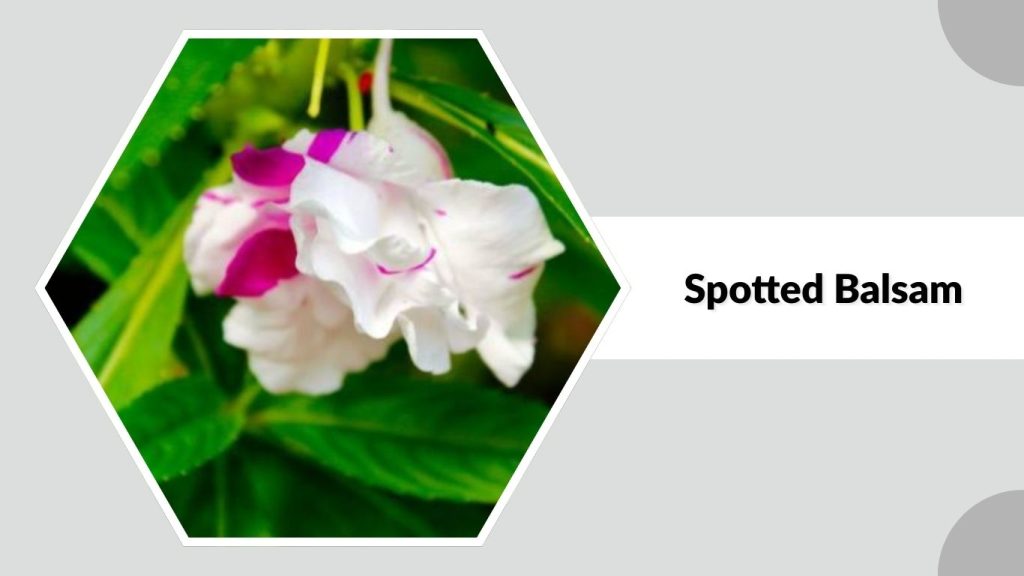
Spotted balsam refers to balsam types that produce flowers marked with contrasting spots, streaks, or blotches. These decorative patterns give the plant a distinctive and ornamental appearance compared to solid-colored forms. Spotted balsams are often grown in gardens where unusual flower designs and visual interest are desired.
Identification
- Scientific name: Impatiens spp. (spotted-flowered types)
- Common names: Spotted balsam, Spotted jewelweed
- Plant type: Annual flowering herb
- Average height: 30–90 cm (1–3 ft)
- Stem: Soft, fleshy, upright
- Leaves: Oval to lance-shaped, finely toothed
- Flowers: Spotted or speckled, often yellow, orange, or pink
- Flower markings: Red, brown, or purple spots
Appearance
Spotted balsam produces delicate flowers decorated with noticeable dots or patches of darker color. The blooms often hang slightly or grow from leaf axils, creating a natural, wildflower-like look. The patterned petals make this type easily recognizable and visually attractive.
Habitat and Growing Conditions
This balsam prefers moist, fertile soil and partial shade to filtered sunlight. It grows well in warm, humid environments and is often found near streams, damp gardens, and shaded borders. Regular moisture supports healthy growth and flowering.
Uses and Importance
Spotted balsam is grown mainly as an ornamental plant and is also valued in natural-style gardens. Its flowers attract pollinators such as bees and butterflies, and it is sometimes planted to enhance biodiversity in garden spaces.
15. Himalayan Balsam (Impatiens glandulifera)
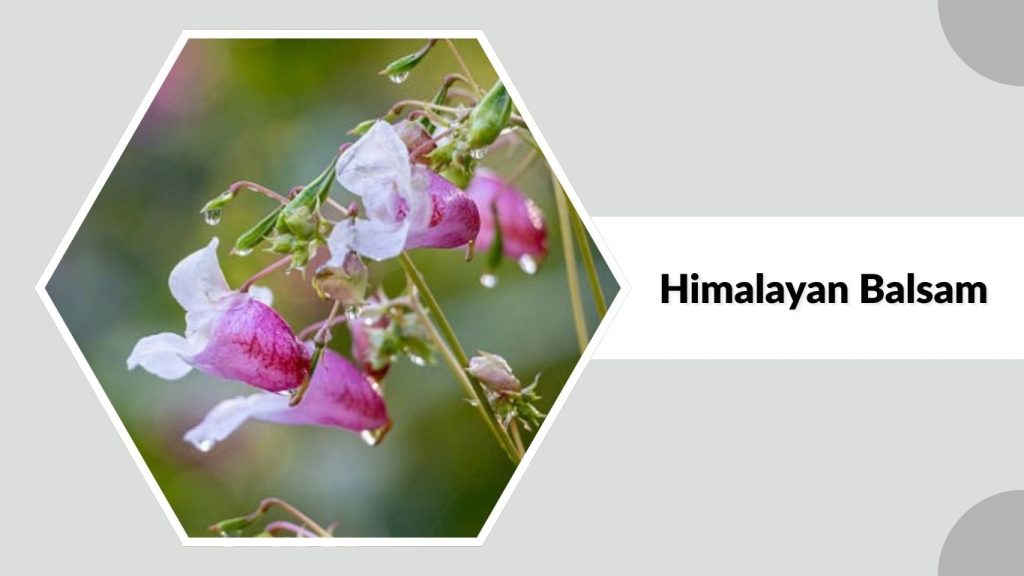
Himalayan balsam is a tall, fast-growing balsam species native to the Himalayan region of Asia. It is well known for its large, showy flowers, hollow stems, and explosive seed pods. Because of its rapid spread and strong growth, it is both admired as an ornamental plant and recognized in many regions as an invasive species.
Identification
- Scientific name: Impatiens glandulifera
- Common names: Himalayan balsam, Policeman’s helmet, Indian balsam
- Plant type: Annual flowering herb
- Average height: 1–2.5 m (3–8 ft)
- Stem: Thick, hollow, green to reddish
- Leaves: Long, lance-shaped, toothed edges, often in whorls
- Flowers: Large, helmet-shaped, pink to purple
- Seed pods: Long, narrow, explosive when touched
Appearance
Himalayan balsam produces tall, bamboo-like stems with clusters of large, curved flowers near the upper parts of the plant. The blooms are usually pink or purplish, sometimes white, and are noticeably bigger than those of common garden balsam. Its lush foliage and height make it very prominent in any landscape.
Habitat and Growing Conditions
This species prefers moist, nutrient-rich soil and grows especially well along rivers, ditches, forest edges, and damp wastelands. It thrives in partial shade to full sun and can quickly dominate areas with sufficient moisture. It germinates easily from seed and completes its life cycle within one growing season.
Uses and Importance
Himalayan balsam is sometimes grown as an ornamental for its large flowers and nectar production, which strongly attracts bees. However, in many countries it is considered invasive because it spreads aggressively and outcompetes native plants, making management and control an important ecological concern.
16. Touch-Me-Not Balsam (Impatiens noli-tangere and related species)
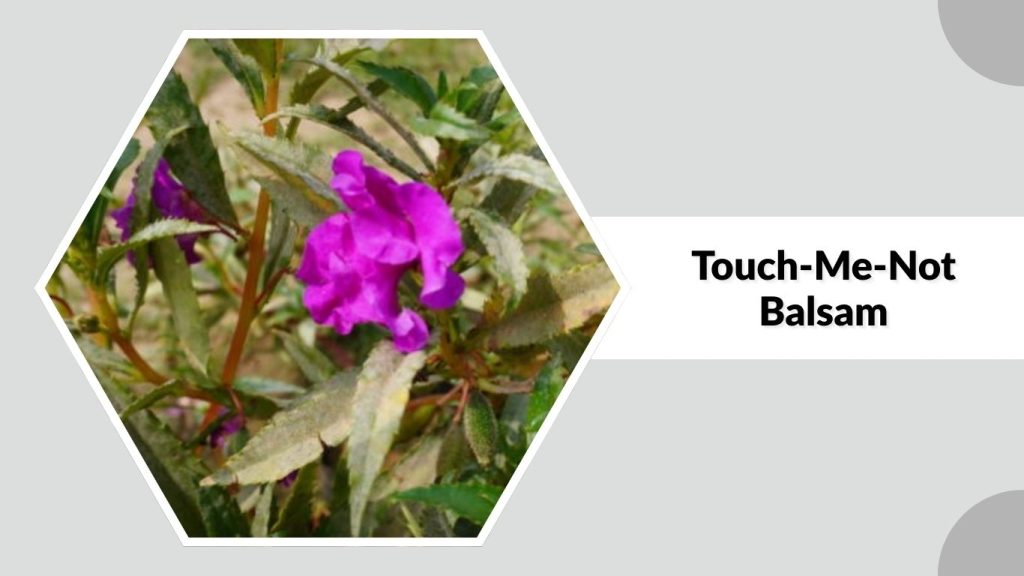
Touch-me-not balsam is a common name used for balsam species known for their sensitive seed pods that burst open when touched. This characteristic explosive dispersal is a defining feature of many Impatiens plants. Touch-me-not balsams are found both in the wild and in cultivation, especially in moist, shaded environments.
Identification
- Scientific name: Impatiens noli-tangere and other Impatiens spp.
- Common names: Touch-me-not, Wild balsam
- Plant type: Annual flowering herb
- Average height: 30–100 cm (1–3.3 ft)
- Stem: Soft, fleshy, upright or slightly spreading
- Leaves: Oval to lance-shaped, toothed margins
- Flowers: Yellow, pink, or pale orange, often spotted
- Seed pods: Highly sensitive, burst when touched
Appearance
Touch-me-not balsam produces delicate, slightly hanging flowers with curved shapes and soft colors. The foliage is light green and tender. When the seed pods mature, even a light touch causes them to coil suddenly and scatter seeds, making the plant especially interesting to observe.
Habitat and Growing Conditions
This balsam naturally grows in moist, shaded areas such as forest edges, stream banks, and damp meadows. It prefers cool to warm temperatures, rich soil, and consistent moisture. Partial shade is ideal for healthy growth.
Uses and Importance
Touch-me-not balsam is valued for nature gardens, educational planting, and wildlife-friendly landscapes. Its flowers provide nectar for insects, and the plant is sometimes used in traditional practices. It also plays a role in natural ecosystems by colonizing moist ground quickly.
17. Jewelweed Balsam (Impatiens capensis and related species)
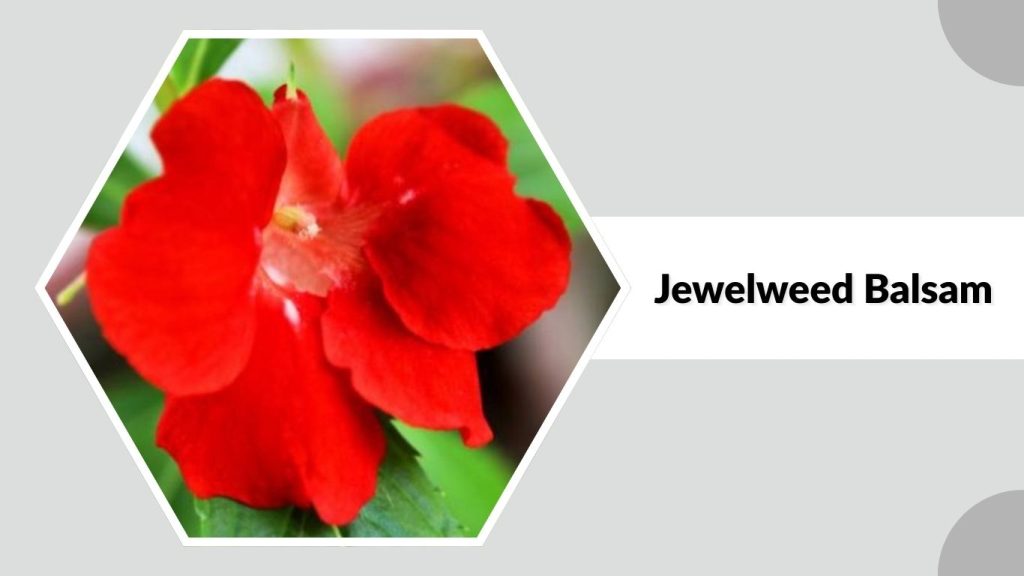
Jewelweed balsam is a wild balsam species native to North America, well known for its delicate, jewel-like flowers and soothing sap. It is closely related to touch-me-not plants and shares the same explosive seed pods. Jewelweed commonly grows in moist, shaded habitats and is valued both as a native wildflower and for traditional uses.
Identification
- Scientific name: Impatiens capensis (also Impatiens pallida in some regions)
- Common names: Jewelweed, Spotted jewelweed, Orange jewelweed
- Plant type: Annual flowering herb
- Average height: 60–150 cm (2–5 ft)
- Stem: Succulent, translucent, branching
- Leaves: Oval, soft, finely toothed edges
- Flowers: Orange or yellow, often spotted, trumpet-shaped
- Seed pods: Explosive, coil and burst when touched
Appearance
Jewelweed produces small, delicate flowers that hang from thin stalks. The blooms often appear orange or yellow with darker spots, giving them a jewel-like look. The watery, almost translucent stems and soft leaves make the plant appear fragile, though it grows vigorously in suitable conditions.
Habitat and Growing Conditions
This balsam thrives in damp, shady environments such as stream banks, wetlands, forest floors, and moist ditches. It prefers rich, consistently moist soil and partial shade. Jewelweed often forms dense stands during the summer growing season.
Uses and Importance
Jewelweed is valued as a native wildflower that supports pollinators, especially hummingbirds and bees. Traditionally, its sap has been used to soothe skin irritations. Ecologically, it plays an important role in stabilizing moist soils and providing seasonal nectar sources.
18. Pale Touch-Me-Not (Impatiens pallida)
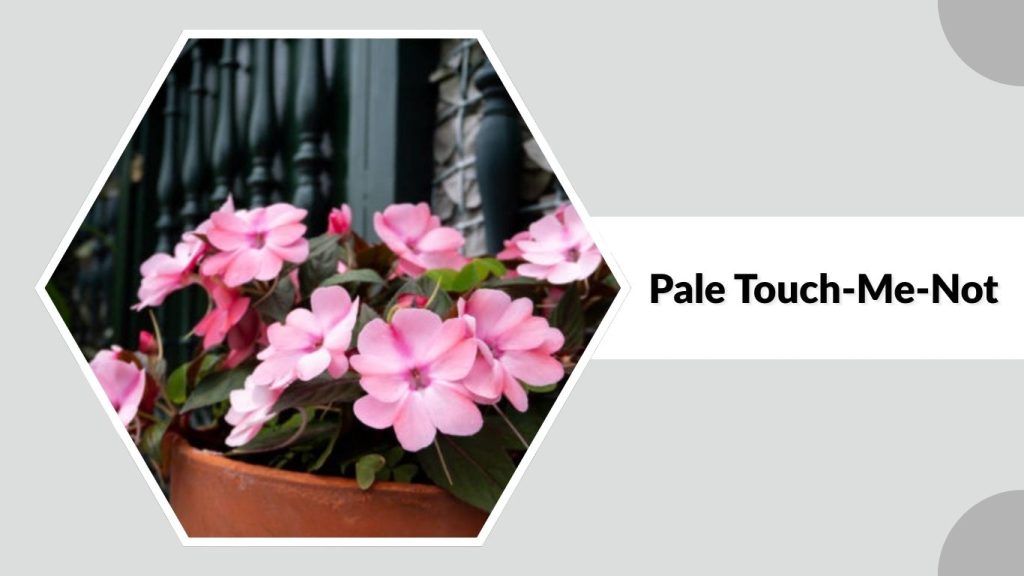
Pale touch-me-not is a wild balsam species native to North America, closely related to jewelweed. It is recognized for its soft yellow flowers, tender stems, and explosive seed pods. This plant commonly grows in moist, shaded habitats and is an important seasonal wildflower in woodland and wetland ecosystems.
Identification
- Scientific name: Impatiens pallida
- Common names: Pale touch-me-not, Yellow jewelweed
- Plant type: Annual flowering herb
- Average height: 60–150 cm (2–5 ft)
- Stem: Smooth, succulent, light green
- Leaves: Oval to lance-shaped, toothed margins
- Flowers: Pale yellow, lightly spotted, tubular
- Seed pods: Burst open when touched
Appearance
Pale touch-me-not produces gently drooping, pale yellow flowers that often have faint reddish spots. The soft, watery stems and light green leaves give the plant a delicate appearance. When mature, its seed pods spring open with the slightest contact, scattering seeds away from the parent plant.
Habitat and Growing Conditions
This species grows best in moist, shady places such as forest understories, wet meadows, stream edges, and shaded gardens. It prefers cool to warm conditions, rich soil, and constant moisture. Partial to full shade is ideal for healthy growth.
Uses and Importance
Pale touch-me-not is valued as a native wildflower that supports pollinators, including bees and hummingbirds. It also contributes to healthy woodland ecosystems by covering moist ground, reducing soil erosion, and providing seasonal nectar.
19. Yellow Jewelweed (Impatiens pallida)
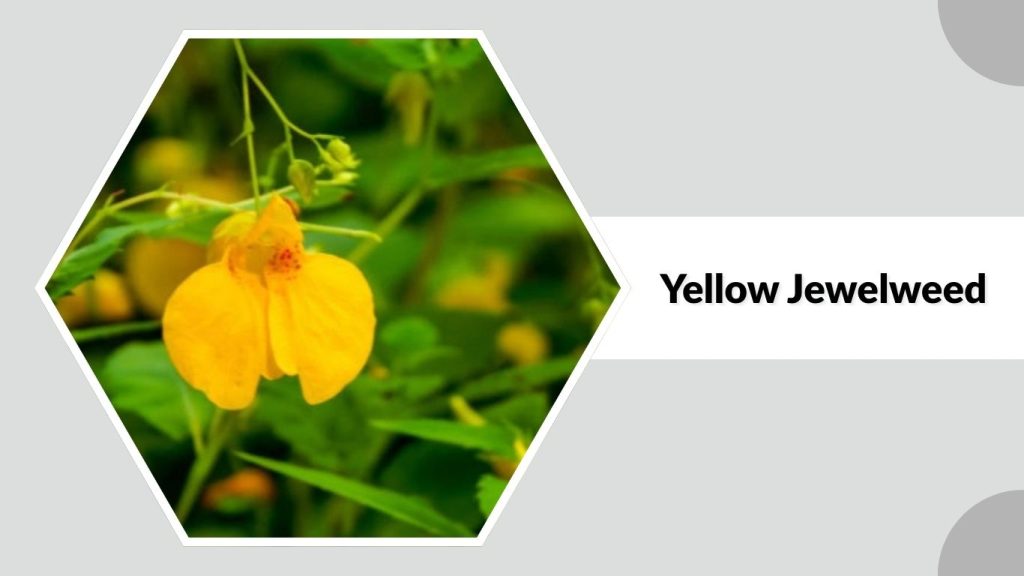
Yellow jewelweed is a wild balsam closely related to pale touch-me-not and is best known for its soft yellow, trumpet-shaped flowers. It naturally grows in moist, shaded habitats and is a common sight along forest streams and damp woodland edges. Like other balsams, it has sensitive seed pods that burst when touched.
Identification
- Scientific name: Impatiens pallida
- Common names: Yellow jewelweed, Pale touch-me-not
- Plant type: Annual flowering herb
- Average height: 60–150 cm (2–5 ft)
- Stem: Succulent, smooth, light green
- Leaves: Oval, thin, finely toothed edges
- Flowers: Yellow, tubular, lightly spotted
- Seed pods: Explosive when mature
Appearance
Yellow jewelweed produces hanging, pale yellow flowers that often carry small reddish spots inside the petals. The plant has soft, watery stems and tender leaves, giving it a fragile look despite its vigorous growth. Its gentle flower color makes it stand out in shaded woodland areas.
Habitat and Growing Conditions
This balsam prefers consistently moist soil and partial to full shade. It thrives along stream banks, wet forests, shaded ditches, and damp gardens. High humidity and rich organic soil strongly support its growth and flowering.
Uses and Importance
Yellow jewelweed is important for wildlife-friendly and natural gardens. Its flowers provide nectar for bees and hummingbirds, and the plant helps stabilize moist soils. It is also traditionally recognized for its soothing plant sap.
20. Balsamina Camellia Mix (Impatiens balsamina mixed camellia cultivars)
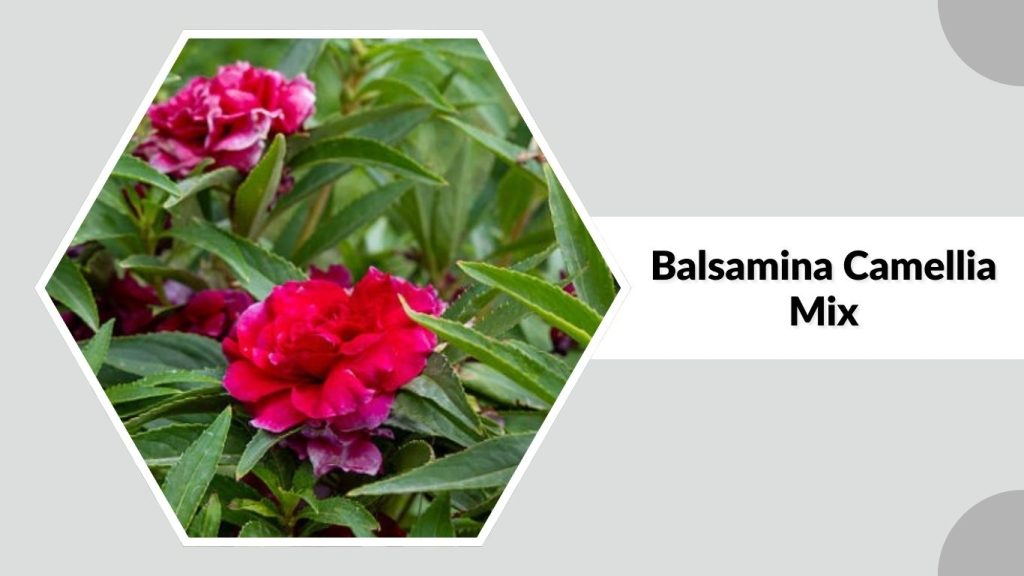
Balsamina camellia mix refers to a group of cultivated garden balsams grown from mixed seeds that produce camellia-like double flowers in many colors. These mixes are popular in home gardens because a single planting can produce white, pink, red, purple, and bi-colored blooms together. They are fast-growing annuals that flower heavily in warm seasons.
Identification
- Scientific name: Impatiens balsamina (camellia-flowered mixed cultivars)
- Common names: Balsamina camellia mix, Camellia balsam mix
- Plant type: Annual flowering herb
- Average height: 30–70 cm (1–2.3 ft)
- Stem: Thick, fleshy, upright
- Leaves: Lance-shaped, serrated edges, bright green
- Flowers: Fully double, camellia-like, multi-colored
- Bloom habit: Dense flowers along the stem
Appearance
Balsamina camellia mix produces large, rounded, layered blooms that resemble small camellia flowers. Because the plants grow from mixed seed, each plant may show a different flower color. When planted together, they create a colorful, varied display with dense green foliage and heavy flowering.
Habitat and Growing Conditions
This balsam grows best in warm temperatures, partial to full sunlight, and moist, fertile, well-drained soil. It performs well in garden beds, borders, and containers. Regular watering and light feeding encourage continuous blooming throughout the season.
Uses and Importance
Balsamina camellia mix is mainly grown as an ornamental plant for colorful garden displays and seasonal landscaping. It is widely used in home gardens and public flower beds where a mixed, vibrant look is desired, and it also attracts pollinating insects.
21. Tom Thumb Balsam (Impatiens balsamina ‘Tom Thumb’)
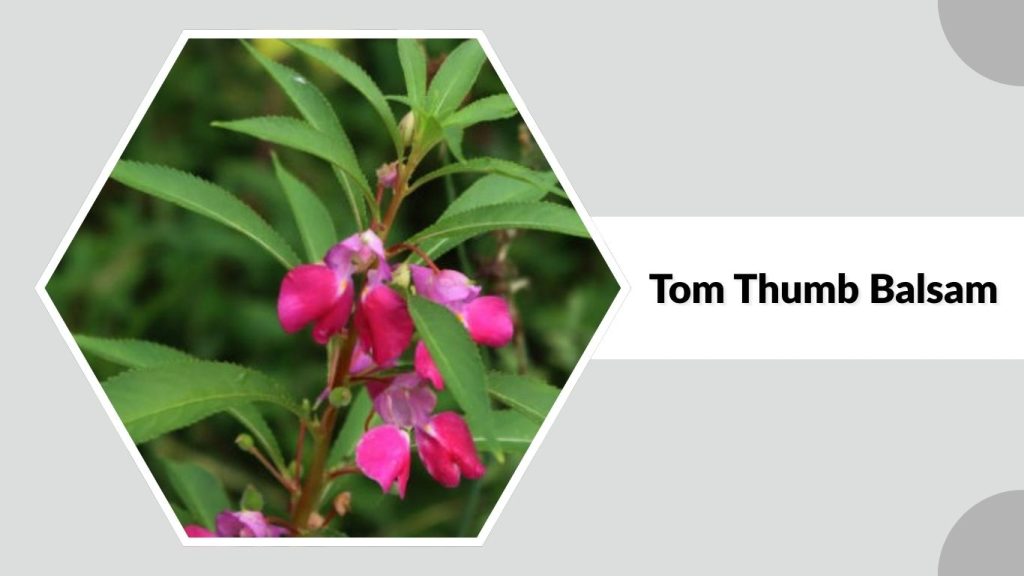
Tom Thumb balsam is a miniature, dwarf variety of garden balsam developed for compact spaces and container gardening. It is known for its short height, bushy growth, and relatively large, colorful flowers. This type is especially popular for edging, pots, and decorative displays where a neat, low-growing plant is needed.
Identification
- Scientific name: Impatiens balsamina ‘Tom Thumb’
- Common names: Tom Thumb balsam, Miniature balsam
- Plant type: Annual flowering herb
- Average height: 15–25 cm (6–10 inches)
- Stem: Short, fleshy, upright
- Leaves: Narrow, pointed, finely serrated
- Flowers: Single or double, various bright colors
- Growth habit: Very compact and bushy
Appearance
Tom Thumb balsam forms small, dense plants covered with relatively large flowers for their size. The blooms grow closely along the short stems, creating a colorful mound-like appearance. Despite its miniature form, it flowers abundantly and provides strong visual impact.
Habitat and Growing Conditions
This balsam grows best in warm climates with partial sunlight and moist, well-drained soil. It performs especially well in pots, window boxes, and small garden beds. Regular watering and moderate feeding help maintain compact growth and continuous blooming.
Uses and Importance
Tom Thumb balsam is mainly used as an ornamental plant for container gardening, edging, and decorative arrangements. Its small size makes it suitable for balconies, patios, and indoor-outdoor seasonal displays.
22. Bush Balsam (Impatiens balsamina bushy cultivars)
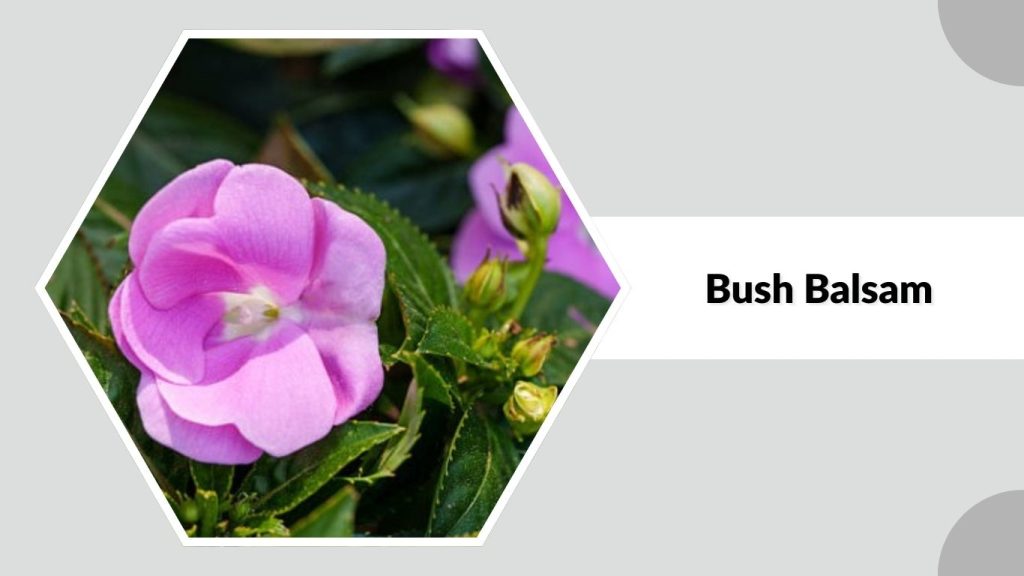
Bush balsam refers to garden balsam types that naturally develop a fuller, more branched, and bush-like growth form. Instead of growing mainly as a single upright stem, these plants produce multiple side branches, resulting in a compact, rounded appearance with abundant flowering. They are especially popular for creating dense, colorful garden patches.
Identification
- Scientific name: Impatiens balsamina (bushy cultivars)
- Common names: Bush balsam, Bushy garden balsam
- Plant type: Annual flowering herb
- Average height: 30–60 cm (1–2 ft)
- Stem: Fleshy, upright, with many branches
- Leaves: Lance-shaped, serrated edges
- Flowers: Single or double, various bright colors
- Growth habit: Rounded and bushy
Appearance
Bush balsam forms compact, well-branched plants covered with flowers from top to bottom. The blooms appear along both the main stem and side branches, giving the plant a full, colorful appearance. This growth habit makes it more spread-out and dense compared to tall, single-stem balsams.
Habitat and Growing Conditions
This balsam grows well in warm temperatures, partial to full sunlight, and moist, fertile, well-drained soil. It performs well in garden beds, borders, and container planting. Light pinching during early growth can further encourage bushy form and heavier flowering.
Uses and Importance
Bush balsam is mainly cultivated as an ornamental plant for mass planting, garden borders, and decorative landscaping. Its dense shape and heavy flowering make it useful for filling spaces quickly with seasonal color.
23. Carnation-Flowered Balsam (Impatiens balsamina carnation types)
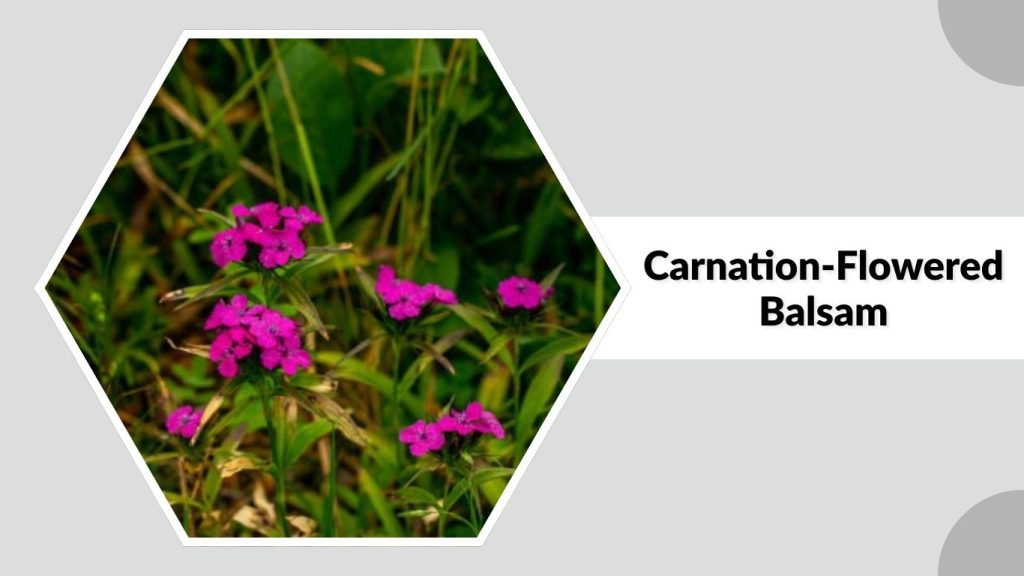
Carnation-flowered balsam is a decorative cultivated form of garden balsam known for its ruffled, layered petals that resemble carnation blooms. These plants are grown mainly for their unusual flower texture and rich colors. They combine the fast growth and heavy blooming habit of balsam with a more textured floral appearance.
Identification
- Scientific name: Impatiens balsamina (carnation-flowered cultivars)
- Common names: Carnation balsam, Carnation-flowered garden balsam
- Plant type: Annual flowering herb
- Average height: 30–70 cm (1–2.3 ft)
- Stem: Thick, fleshy, upright
- Leaves: Narrow, pointed, serrated margins
- Flowers: Ruffled, multi-layered, carnation-like
- Flower colors: Red, pink, white, purple, mixed shades
Appearance
Carnation-flowered balsam produces blooms with frilled and densely packed petals, giving them a soft, textured look. The flowers are borne along the stem, often close together, creating a decorative vertical display. The combination of ruffled petals and bright colors makes this type visually distinctive.
Habitat and Growing Conditions
This balsam prefers warm climates, partial sunlight, and moist, fertile, well-drained soil. It grows well in garden beds, borders, and containers. Regular watering and light feeding encourage strong growth and prolonged flowering.
Uses and Importance
Carnation-flowered balsam is mainly grown as an ornamental plant for decorative gardens, floral displays, and seasonal landscaping. Its unusual flower form makes it suitable for specialty plantings and mixed ornamental beds.
24. Variegated Balsam (Impatiens balsamina variegated cultivars)
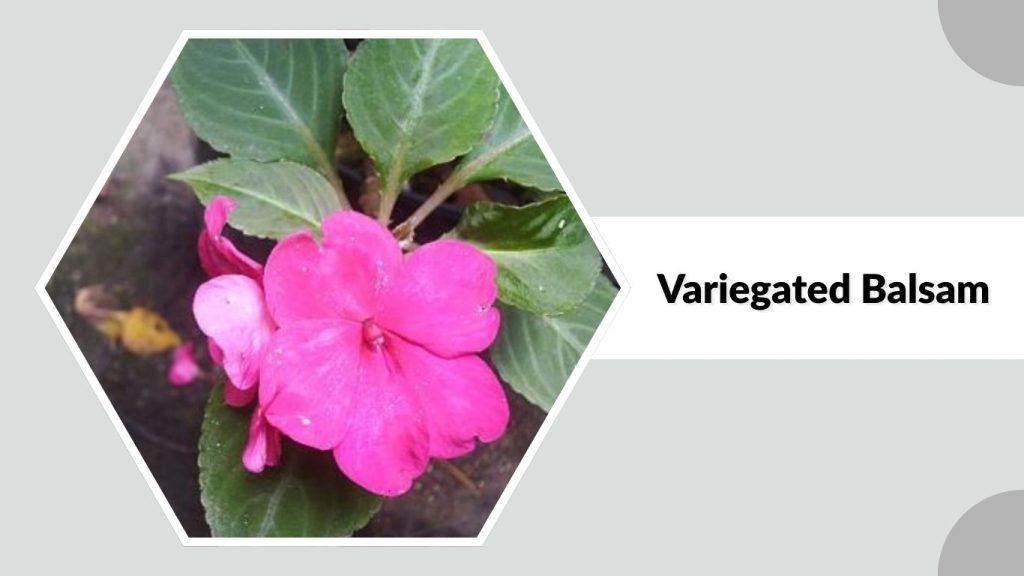
Variegated balsam is a cultivated form of garden balsam valued not only for its colorful flowers but also for its decorative foliage. The leaves show patterns of green mixed with creamy white or yellow, making the plant attractive even when it is not in full bloom. This type adds both floral and leaf interest to ornamental plantings.
Identification
- Scientific name: Impatiens balsamina (variegated-leaf cultivars)
- Common names: Variegated balsam, Variegated garden balsam
- Plant type: Annual flowering herb
- Average height: 30–65 cm (1–2.1 ft)
- Stem: Fleshy, upright
- Leaves: Variegated green with cream or yellow margins
- Flowers: Single or double, various bright colors
- Growth habit: Upright to lightly branched
Appearance
Variegated balsam features attractive patterned leaves that brighten garden spaces even before flowering. When in bloom, the colorful flowers rise from among the pale-edged foliage, creating strong contrast. This combination gives the plant a decorative look throughout much of the growing season.
Habitat and Growing Conditions
This balsam grows best in warm temperatures, partial sunlight, and moist, well-drained soil. It performs well in garden beds, borders, and containers. Protection from intense midday sun helps maintain leaf color and overall plant health.
Uses and Importance
Variegated balsam is mainly used as an ornamental plant for decorative landscaping, container gardening, and mixed borders. Its foliage interest makes it useful in gardens designed for extended visual appeal.
25. Wild Balsam (Impatiens species)
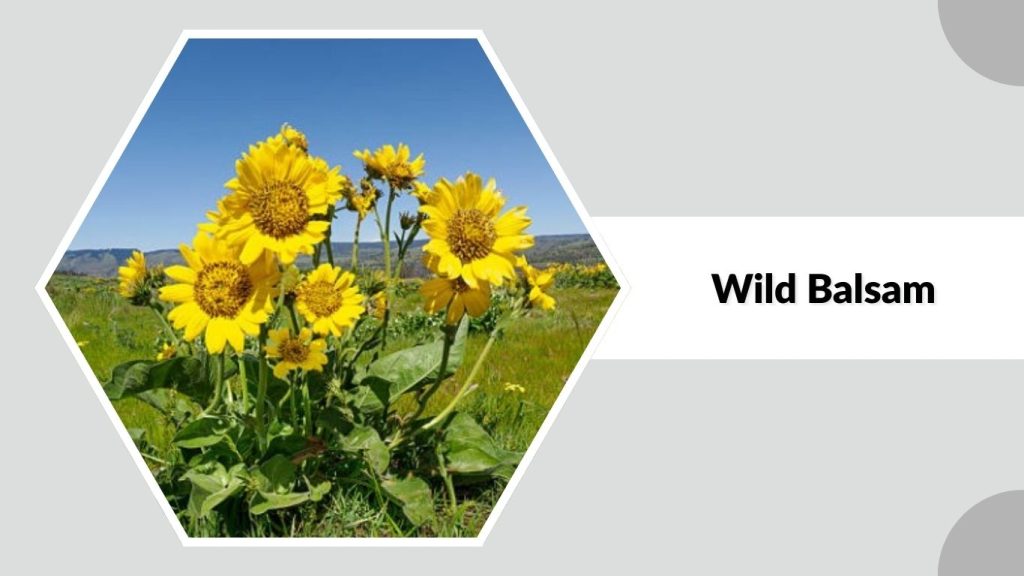
Wild balsam is a general term used for naturally occurring balsam species that grow without cultivation in forests, wetlands, and mountainous regions. These plants are valued for their delicate flowers, ecological role, and characteristic explosive seed pods. Wild balsams differ in size and color depending on species but share many common features of the Impatiens group.
Identification
- Scientific name: Impatiens spp.
- Common names: Wild balsam, Wild touch-me-not
- Plant type: Annual or short-lived perennial herb
- Average height: 30–150 cm (1–5 ft)
- Stem: Soft, fleshy, often translucent
- Leaves: Oval to lance-shaped, toothed margins
- Flowers: Yellow, pink, orange, or purple, often spotted
- Seed pods: Explosive, burst open when touched
Appearance
Wild balsam plants usually have tender stems and soft green leaves with drooping or outward-facing flowers. The blooms are often delicate, curved, and lightly patterned. Their natural form gives them a graceful, wildflower appearance rather than a structured garden look.
Habitat and Growing Conditions
Wild balsam typically grows in moist, shaded environments such as forest understories, stream banks, damp valleys, and mountain slopes. They prefer rich, humus-filled soil and consistent moisture. Many species thrive in partial to full shade.
Uses and Importance
Wild balsam plays an important ecological role by providing nectar for insects and birds, covering moist soil, and supporting biodiversity. Some species are also used in traditional practices, while others are appreciated in natural and wildlife-friendly gardens.
FAQs
What is the balsam plant mainly known for?
Balsam plants are mainly known for their bright, colorful flowers and their unique seed pods that burst open when touched. Most balsams belong to the genus Impatiens and are popular as ornamental plants in gardens. Many types also thrive in moist conditions and bloom heavily in warm seasons.
Is garden balsam the same as touch-me-not?
Garden balsam and touch-me-not are closely related, but they are not always the same plant. Garden balsam usually refers to Impatiens balsamina, a cultivated ornamental species. Touch-me-not is a common name used for several wild Impatiens species known for their explosive seed pods.
Where do balsam plants grow best?
Balsam plants grow best in warm climates with moist, well-drained soil. Most types prefer partial sunlight, although some can tolerate full sun if watered regularly. Wild balsams are often found in shaded, damp places such as forest edges, stream banks, and wetlands.
Are balsam plants annual or perennial?
Most balsam plants, including garden balsam and jewelweed, are annuals, meaning they complete their life cycle in one growing season. Some species in the Impatiens group can behave as short-lived perennials in tropical regions where frost does not occur.
Do balsam plants attract pollinators?
Yes, balsam plants attract many pollinators, including bees, butterflies, and sometimes hummingbirds. Their nectar-rich flowers make them valuable in wildlife-friendly gardens. Wild balsam species are especially important for supporting pollinators in moist forest and wetland ecosystems.