





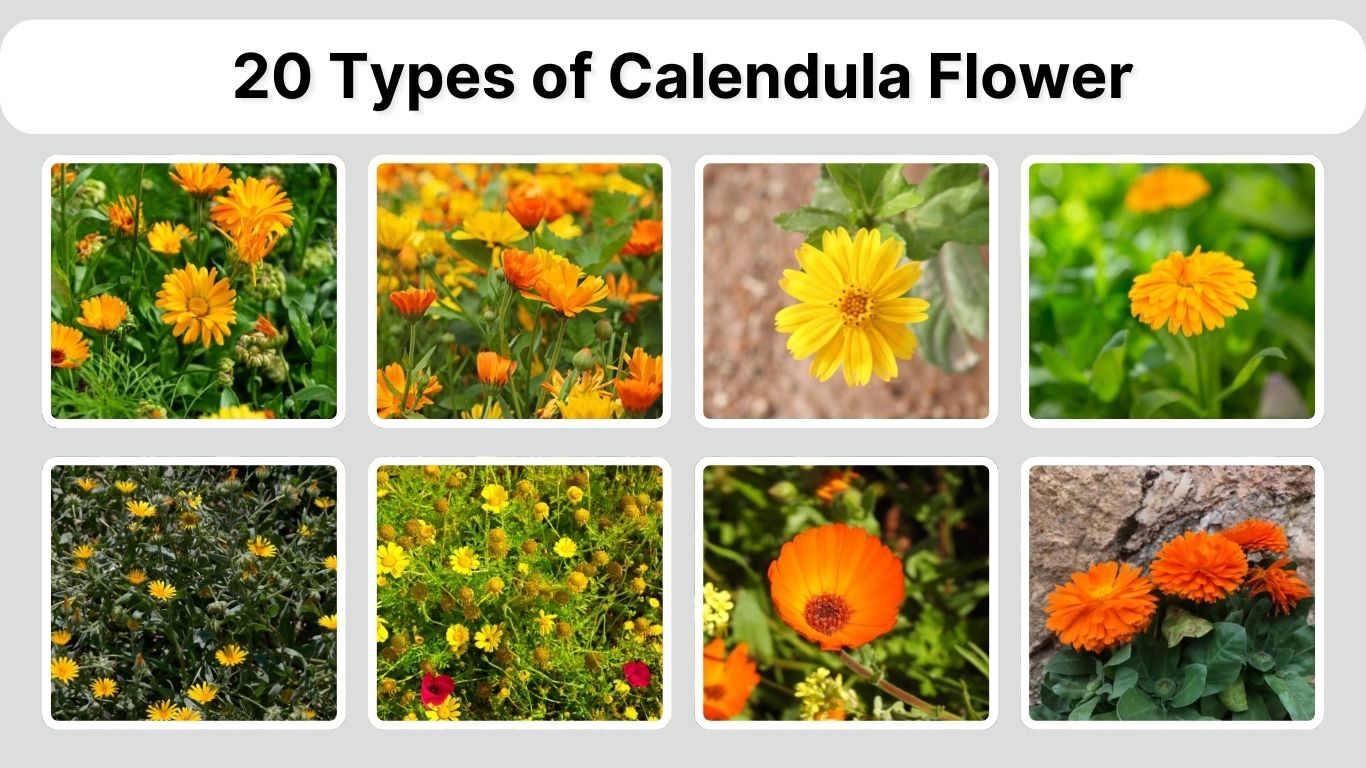
Calendula flowers, often called marigolds, are admired for their bright colors, easy growth, and long flowering season. While Calendula officinalis is the most familiar type, the calendula group includes many wild and regional species found mainly around the Mediterranean, North Africa, and parts of the Middle East. These flowers range from soft yellow to deep orange and thrive in sunny, well-drained habitats. Calendula plants are valued for ornamental beauty, ecological importance, and, in some species, traditional herbal uses.
1. Calendula officinalis (Pot Marigold)
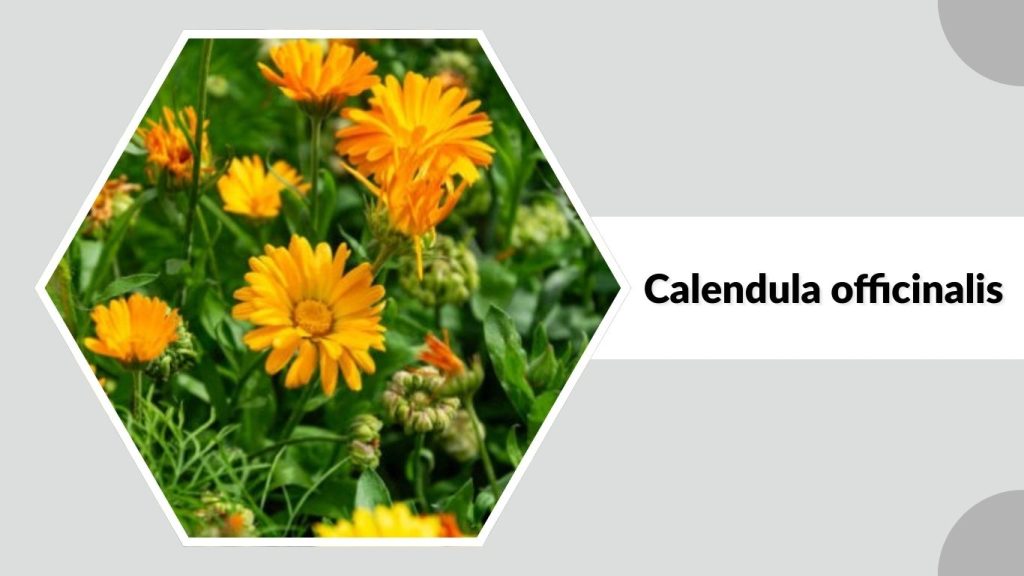
Calendula officinalis is the most well-known and widely cultivated type of calendula flower. It is prized for its bright orange to golden-yellow blooms, long flowering season, and strong medicinal and ornamental value. This species is commonly grown in home gardens, herb gardens, and commercial flower beds around the world.
Identification
- Bright orange to deep yellow daisy-like flowers
- Flower heads usually 5–7 cm wide
- Soft, slightly sticky, light-green leaves
- Grows 30–60 cm tall
- Blooms from early spring to late fall
- Mild, slightly spicy herbal scent
Flower Appearance
The flowers of Calendula officinalis are full, layered, and daisy-shaped, often with a dark central disc. Petals may be single, semi-double, or fully double depending on the variety. The vivid warm colors make this plant popular for borders, containers, and companion planting.
Habitat and Growth
This species thrives in full sun and well-drained soil. It grows easily in temperate and subtropical regions and is often treated as an annual. Calendula officinalis is tolerant of cooler weather and continues blooming even when many summer flowers fade.
Uses and Importance
Calendula officinalis is widely used in herbal medicine, skincare products, and natural dyes. The petals are edible and sometimes added to salads, teas, and rice dishes. Gardeners also value it for attracting pollinators and helping deter certain garden pests.
2. Calendula arvensis (Field Marigold)
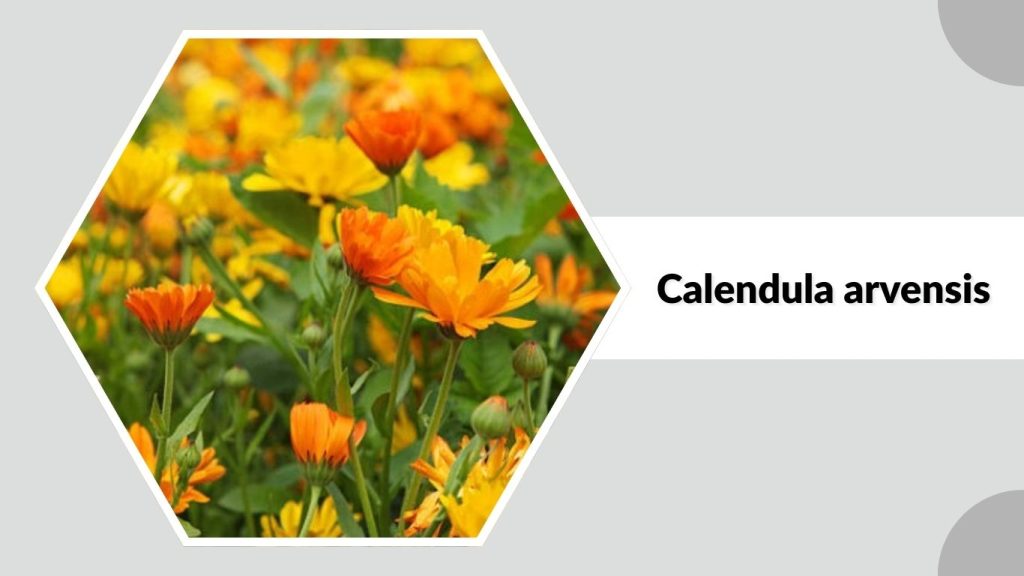
Calendula arvensis is a smaller, wild-growing calendula species commonly found in fields, roadsides, and open landscapes. It is valued for its cheerful yellow blooms, hardy nature, and ability to grow in poor soils. This species is especially common in Mediterranean regions.
Identification
- Bright yellow to pale orange daisy-like flowers
- Smaller flower heads, usually 2–4 cm wide
- Narrow, slightly hairy green leaves
- Low-growing plant, typically 10–30 cm tall
- Long blooming season in mild climates
- Light, herbal scent
Flower Appearance
The flowers are simple and open-faced, with narrow petals surrounding a yellow central disc. Compared to pot marigold, the blooms are smaller but produced in large numbers, creating a carpet-like display in natural settings.
Habitat and Growth
Calendula arvensis thrives in sunny, open areas with well-drained soil. It is often found growing wild in meadows, farmlands, and along paths. The plant is drought-tolerant, fast-growing, and easily self-seeds.
Uses and Importance
This species has been traditionally used in folk remedies and natural dyes. It is also valued in ecological gardening for supporting pollinators and adding seasonal color to wildflower gardens and natural landscapes.
3. Calendula tripterocarpa (Desert Marigold)
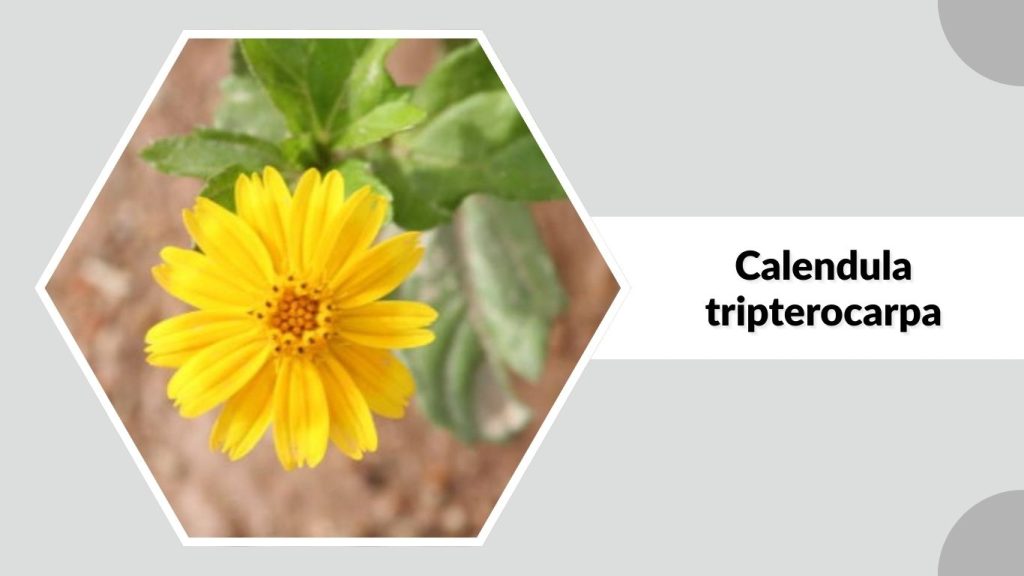
Calendula tripterocarpa is a hardy calendula species adapted to dry and semi-arid environments. It is known for its bright yellow flowers, tough growth habit, and ability to thrive in harsh, open landscapes. This species is mostly found across North Africa and parts of the Middle East.
Identification
- Bright yellow, daisy-like flowers
- Medium-sized flower heads, around 3–5 cm wide
- Narrow, slightly rough or hairy leaves
- Compact, bushy growth form
- Typically grows 20–40 cm tall
- Blooms mainly in spring and early summer
Flower Appearance
The blooms are vivid yellow with evenly spaced petals and a clear central disc. Flowers often appear in clusters, creating a strong color contrast against the gray-green foliage. Their simple but striking look makes them noticeable in dry landscapes.
Habitat and Growth
Calendula tripterocarpa prefers full sun and sandy or rocky soils. It is well adapted to desert margins, dry plains, and steppe regions. The plant shows strong drought tolerance and completes its life cycle quickly after seasonal rains.
Uses and Importance
This species is mainly valued for ecological and ornamental purposes in dry-climate gardens. It supports local pollinators and is sometimes used in native plant landscaping and habitat restoration projects.
4. Calendula stellata (Starry Marigold)
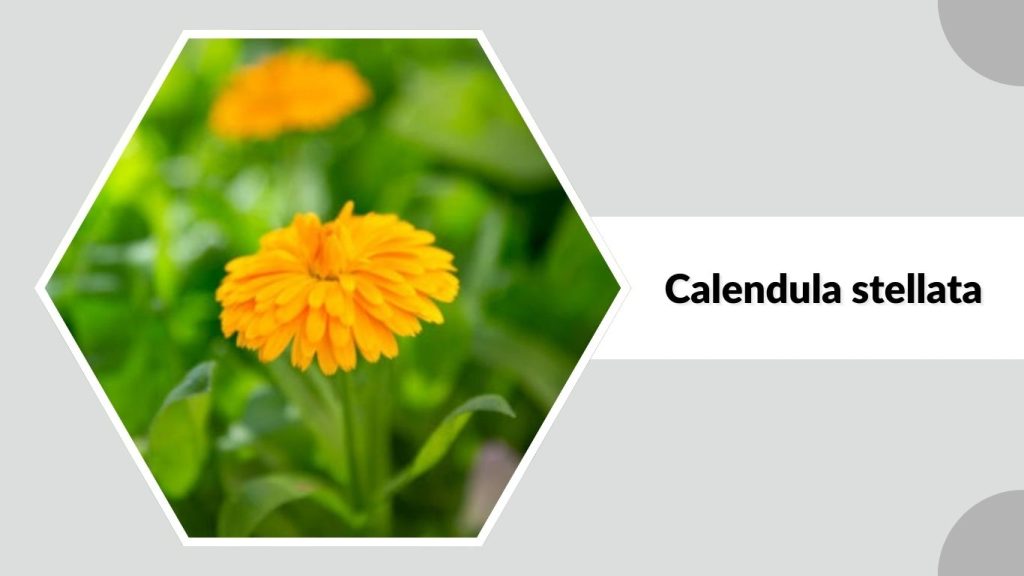
Calendula stellata is a distinctive calendula species named for its star-like seed shape and neat, bright flowers. It is commonly found in Mediterranean regions, where it grows naturally in open, sunny habitats. This species is admired for both its ornamental charm and botanical uniqueness.
Identification
- Bright yellow to orange daisy-like flowers
- Flower heads about 3–5 cm wide
- Soft green, slightly hairy leaves
- Low to medium height, usually 20–40 cm
- Produces star-shaped, spiny seeds
- Blooms mainly from spring to early summer
Flower Appearance
The flowers are open and radiant, with evenly spaced petals forming a clean circular shape around a golden central disc. Their cheerful color and tidy form make them appealing in wildflower gardens and native plant collections.
Habitat and Growth
Calendula stellata thrives in full sun and well-drained soils. It naturally grows in fields, coastal zones, and disturbed land across parts of Southern Europe and North Africa. The plant is easy to grow, drought-tolerant, and often self-seeds.
Uses and Importance
This species is mainly grown for ornamental and educational purposes. Its unusual star-shaped fruits make it interesting for botanical study, while the flowers attract bees and other pollinators.
5. Calendula suffruticosa (Shrubby Marigold)
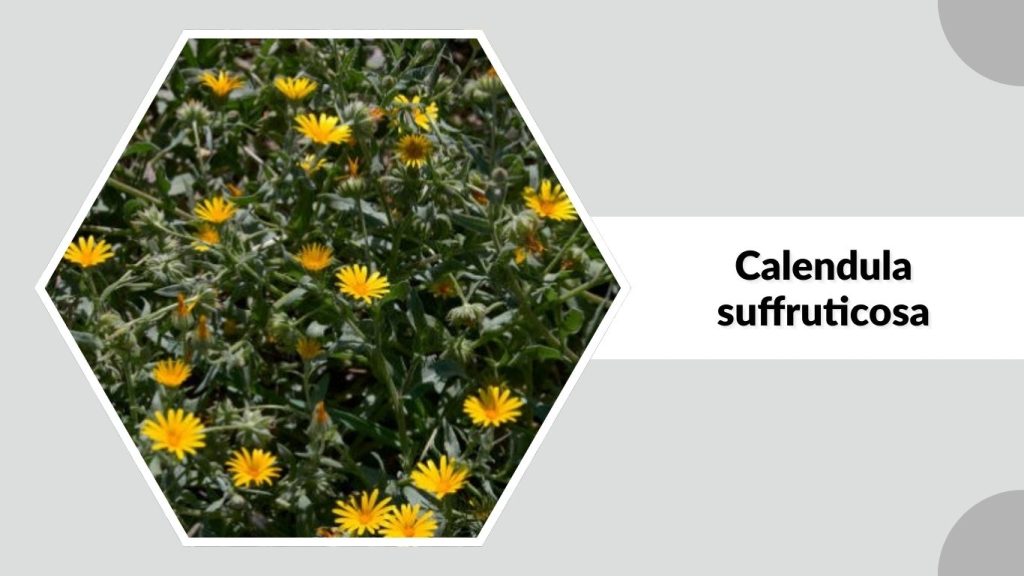
Calendula suffruticosa is a semi-woody calendula species known for its bushy form and long-lasting blooms. Unlike many annual calendulas, this plant often behaves as a short-lived perennial in mild climates. It is native to parts of the western Mediterranean region.
Identification
- Bright yellow to golden-orange flowers
- Medium-sized flower heads, about 4–6 cm wide
- Thick, slightly leathery green leaves
- Semi-woody, shrubby growth habit
- Typically grows 30–80 cm tall
- Extended blooming season in warm areas
Flower Appearance
The flowers are bold and sunny, with broad petals arranged around a rich yellow center. Because the plant branches freely, multiple blooms often appear at once, giving it a full, decorative look.
Habitat and Growth
Calendula suffruticosa grows best in full sun with well-drained, moderately dry soil. It is naturally found on coastal slopes, rocky ground, and open scrublands. The plant is drought-tolerant once established and suited to Mediterranean-style gardens.
Uses and Importance
This species is valued mainly for ornamental planting and landscape use. Its shrubby habit makes it useful for low hedges, borders, and pollinator gardens, where it provides long-term color and nectar.
6. Calendula palaestina (Palestinian Marigold)
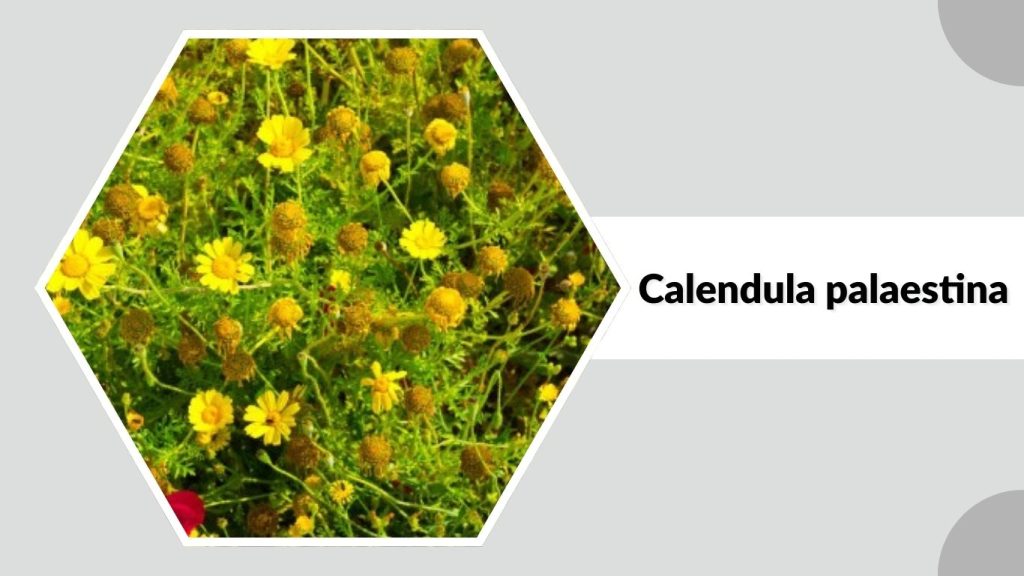
Calendula palaestina is a lesser-known calendula species native to the Eastern Mediterranean region. It is recognized for its soft yellow blooms, natural resilience, and ability to thrive in open, sunny habitats. This species is mainly found growing wild rather than in cultivated gardens.
Identification
- Pale yellow to light orange daisy-like flowers
- Flower heads usually 3–5 cm wide
- Soft, slightly hairy, light-green leaves
- Slender stems with a spreading habit
- Typically grows 20–40 cm tall
- Blooms mainly in spring
Flower Appearance
The flowers are delicate and bright, with narrow petals surrounding a yellow central disc. Their lighter coloration gives the plant a gentle, airy look compared to the deeper shades of common calendula varieties.
Habitat and Growth
Calendula palaestina prefers full sun and well-drained soils. It naturally grows in grasslands, hillsides, and disturbed soils throughout parts of the Middle East. The plant is drought-tolerant and completes its life cycle quickly in seasonal climates.
Uses and Importance
This species plays an important ecological role in its native range, supporting insects and early-season pollinators. It is also of interest to native plant collectors and botanical gardens focused on regional flora.
7. Calendula eckerleinii (Eckerlein’s Marigold)
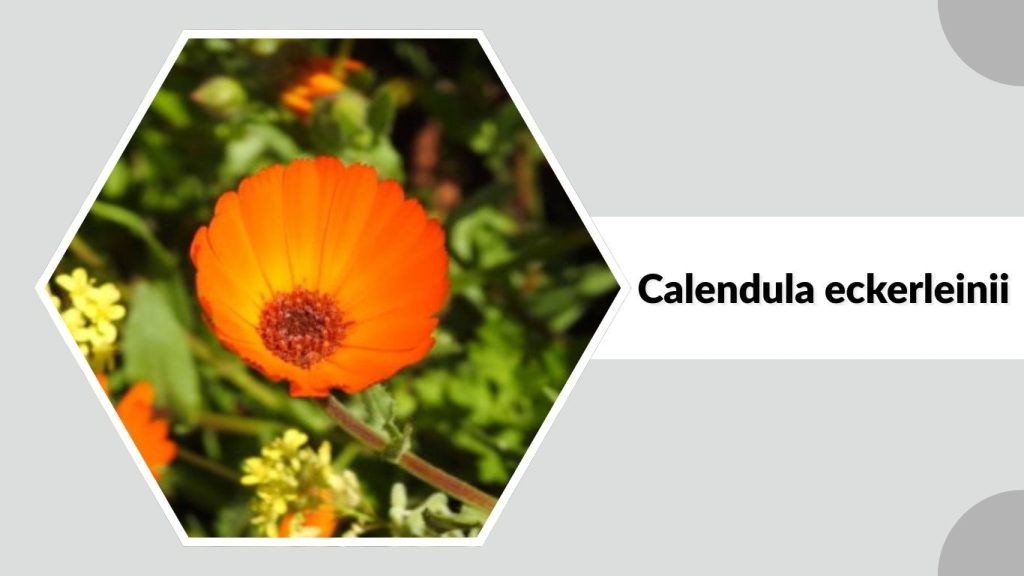
Calendula eckerleinii is a rare calendula species native to limited regions of North Africa. It is known for its bright, cheerful flowers and compact growth habit. Because of its restricted natural range, this species is mainly encountered in botanical references and specialized native plant collections.
Identification
- Bright yellow to golden-orange daisy-like flowers
- Medium-sized flower heads
- Narrow, slightly hairy leaves
- Compact, low-growing form
- Usually reaches 15–30 cm in height
- Blooms mainly in spring
Flower Appearance
The blooms are vivid and eye-catching, with neat rows of petals around a bright central disc. Though smaller than garden calendula, the flowers stand out strongly against the plant’s green foliage.
Habitat and Growth
Calendula eckerleinii grows naturally in open, dry landscapes, often in sandy or rocky soils. It prefers full sun and shows good tolerance to drought and wind, making it well suited to arid and semi-arid regions.
Uses and Importance
This species is mainly important for conservation and botanical study. It contributes to local ecosystems by supporting insects and is valued by plant enthusiasts who focus on rare and native flowering plants.
8. Calendula maroccana (Moroccan Marigold)
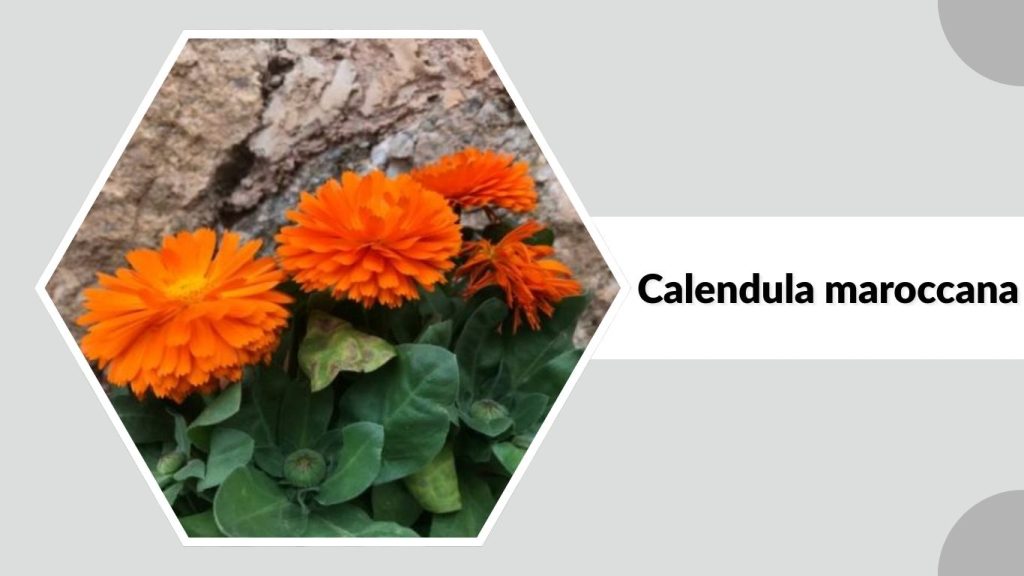
Calendula maroccana is a North African calendula species known for its bright flowers and natural hardiness. It grows wild in open, sunny environments and is adapted to dry conditions. This species is especially associated with Morocco and nearby regions.
Identification
- Bright yellow to orange daisy-like flowers
- Medium-sized flower heads, about 3–5 cm wide
- Soft green, slightly hairy leaves
- Upright, branching stems
- Typically grows 20–45 cm tall
- Blooms mainly in spring
Flower Appearance
The flowers are cheerful and open, with rounded petals forming a simple daisy shape. Their warm coloration stands out strongly in natural landscapes and native plant gardens.
Habitat and Growth
Calendula maroccana thrives in full sun and well-drained, sandy, or rocky soils. It is commonly found on dry slopes, open plains, and disturbed ground. The plant is drought-tolerant and completes its growth cycle quickly after rainfall.
Uses and Importance
This species is primarily valued for ecological purposes and native landscaping. It supports pollinators and adds seasonal color to restoration projects and Mediterranean-style gardens.
9. Calendula incana (Hoary Marigold)
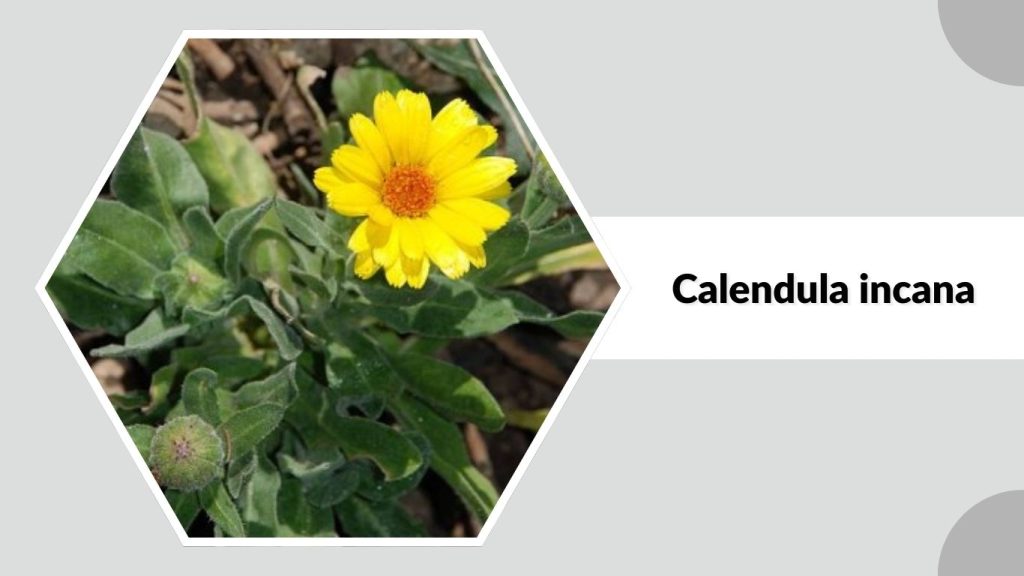
Calendula incana is a distinctive calendula species recognized for its silvery-gray foliage and bright yellow blooms. The contrast between its pale leaves and sunny flowers makes it especially attractive in natural and ornamental plantings. It is native to parts of the Mediterranean and North Africa.
Identification
- Bright yellow daisy-like flowers
- Flower heads about 3–5 cm wide
- Silvery-gray, softly hairy leaves
- Low, spreading growth habit
- Typically grows 15–35 cm tall
- Blooms mainly in spring and early summer
Flower Appearance
The flowers are vivid and open, with smooth, evenly arranged petals around a golden central disc. The pale, woolly foliage highlights the flower color, giving the plant a soft yet striking visual effect.
Habitat and Growth
Calendula incana prefers full sun and dry, well-drained soils. It naturally grows in coastal areas, sandy plains, and rocky hillsides. The plant is drought-tolerant and well adapted to bright, exposed environments.
Uses and Importance
This species is valued for ornamental and ecological use, especially in dry gardens and native landscapes. Its flowers attract pollinators, while its unique foliage adds textural contrast to plantings.
10. Calendula alata (Winged Marigold)
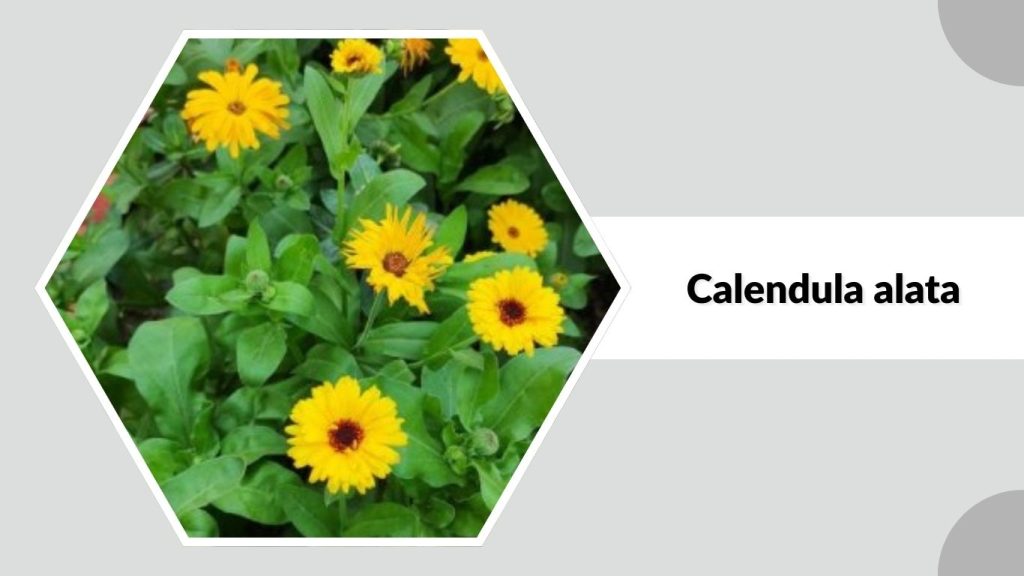
Calendula alata is a distinctive calendula species named for the wing-like structures found on its seeds. It is native to Mediterranean and North African regions, where it grows in open, sunny habitats. This plant is admired for its simple beauty and botanical interest.
Identification
- Bright yellow to orange daisy-like flowers
- Medium-sized flower heads, about 3–5 cm wide
- Light green, slightly hairy leaves
- Slender, upright stems
- Typically grows 20–40 cm tall
- Produces characteristic winged seeds
Flower Appearance
The flowers are clean and bright, with evenly spaced petals forming a classic daisy shape. Their cheerful yellow-orange tones make them noticeable in wildflower meadows and native plant settings.
Habitat and Growth
Calendula alata thrives in full sun and well-drained soils. It is commonly found in grasslands, open fields, and lightly disturbed land. The plant grows quickly, flowers readily, and tolerates dry conditions.
Uses and Importance
This species is mainly valued for botanical study, ecological gardening, and native plant collections. Its flowers attract pollinators, and its unique seed structure makes it interesting for educational and research purposes.
11. Calendula persica (Persian Marigold)
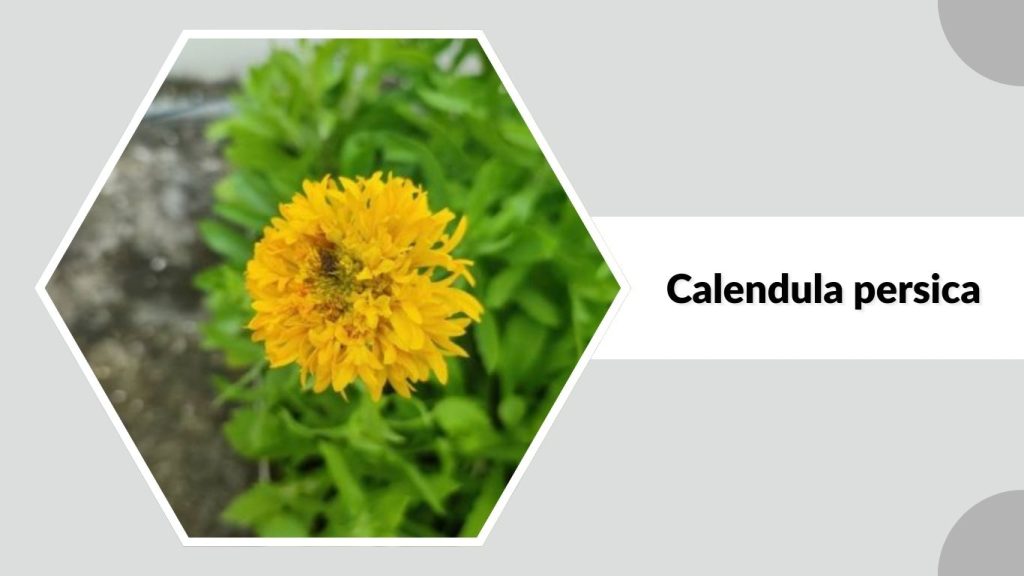
Calendula persica is a rare calendula species native to parts of the Middle East and Iran. It is appreciated for its bright, sunny flowers and natural adaptability to dry, open environments. This species is mostly found in the wild and is of interest to botanists and native plant enthusiasts.
Identification
- Bright yellow daisy-like flowers
- Medium-sized flower heads
- Narrow, slightly hairy green leaves
- Slender, upright to spreading stems
- Typically grows 20–40 cm tall
- Blooms mainly in spring
Flower Appearance
The flowers are clear yellow with a neat ring of petals around a golden central disc. Their simple, open form gives them a light and natural look, ideal for wildflower-style plantings.
Habitat and Growth
Calendula persica prefers full sun and well-drained, often sandy or rocky soils. It naturally grows on hillsides, plains, and open scrubland. The plant is drought-tolerant and completes its life cycle quickly after seasonal rains.
Uses and Importance
This species contributes to local ecosystems by providing nectar for insects. It is also valued for conservation, botanical research, and native plant garden collections.
12. Calendula aegyptiaca (Egyptian Marigold)
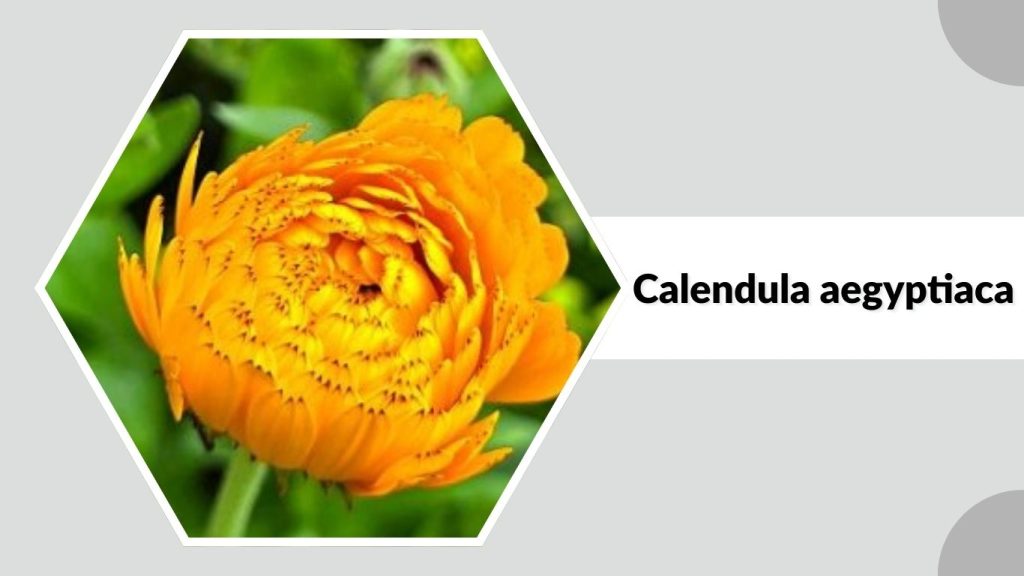
Calendula aegyptiaca is a calendula species native to Egypt and surrounding North African regions. It is adapted to warm, dry climates and open landscapes. The plant is known for its bright flowers, compact form, and ecological importance in its natural habitats.
Identification
- Bright yellow to golden-orange daisy-like flowers
- Medium-sized flower heads, about 3–5 cm wide
- Light green to gray-green, slightly hairy leaves
- Upright, branching growth habit
- Typically grows 20–45 cm tall
- Blooms mainly in spring
Flower Appearance
The flowers are vivid and cheerful, with smooth petals arranged around a bright central disc. Their warm color contrasts nicely with the softer-toned foliage, making them noticeable even from a distance.
Habitat and Growth
Calendula aegyptiaca thrives in full sun and sandy or rocky, well-drained soils. It naturally grows in desert margins, open plains, and dry valleys. The plant is drought-tolerant and suited to arid and semi-arid environments.
Uses and Importance
This species plays a role in supporting pollinators and local biodiversity. It is mainly valued in native landscaping, ecological restoration, and botanical collections focused on desert-adapted plants.
13. Calendula tomentosa (Woolly Marigold)
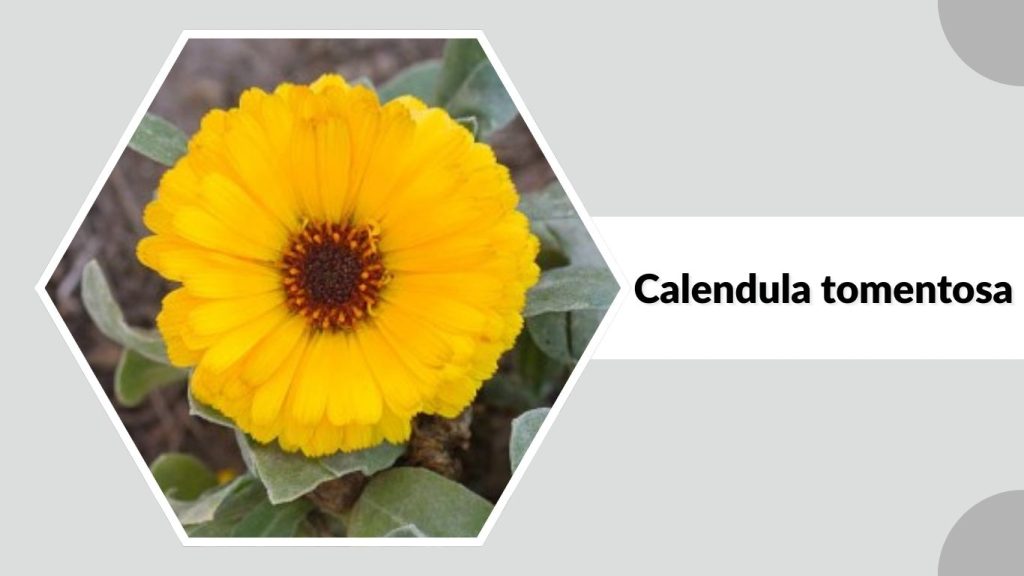
Calendula tomentosa is a distinctive calendula species named for its soft, woolly foliage. It is native to Mediterranean and North African regions, where it grows in dry, sunny habitats. The contrast between its fuzzy leaves and bright flowers makes it especially appealing.
Identification
- Bright yellow to orange daisy-like flowers
- Medium-sized flower heads
- Densely hairy, gray-green leaves
- Soft, velvety texture on stems and foliage
- Typically grows 20–40 cm tall
- Blooms mainly in spring
Flower Appearance
The flowers are vivid and open, with evenly spaced petals surrounding a golden central disc. Their bright color stands out strongly against the silvery, wool-covered leaves.
Habitat and Growth
Calendula tomentosa thrives in full sun and dry, well-drained soils. It naturally grows on rocky slopes, coastal areas, and open scrublands. The plant is drought-tolerant and well adapted to exposed environments.
Uses and Importance
This species is valued for ornamental use in dry gardens and native plantings. It also contributes ecologically by supporting pollinators and adding plant diversity to natural landscapes.
14. Calendula algarbiensis (Algarve Marigold)
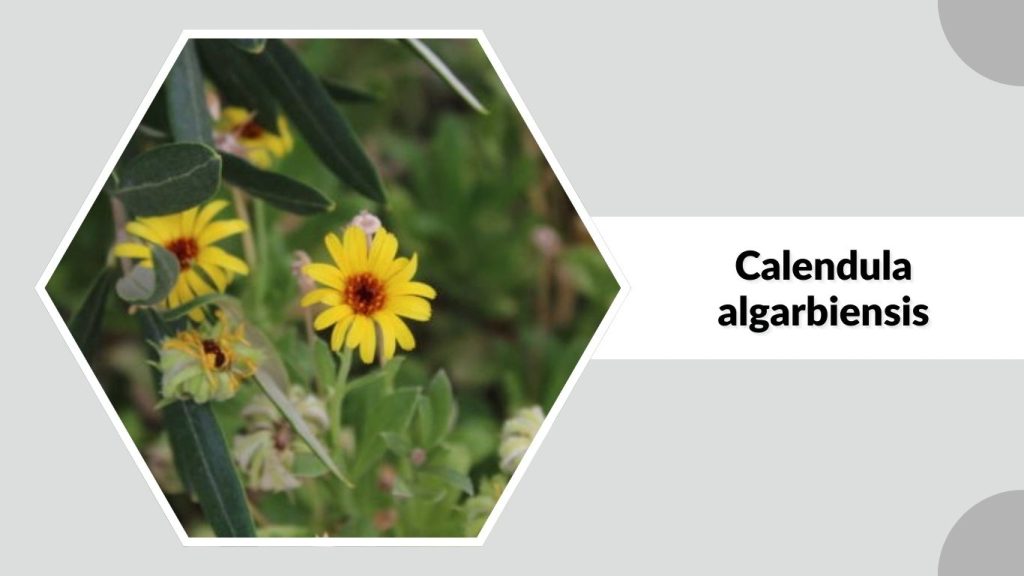
Calendula algarbiensis is a rare calendula species native to southern Portugal, particularly the Algarve region. It is valued for its bright flowers, compact form, and importance in regional biodiversity. This species is mostly found in natural habitats and protected areas.
Identification
- Bright yellow daisy-like flowers
- Medium-sized flower heads
- Soft green, slightly hairy leaves
- Low to moderately upright growth habit
- Typically grows 15–35 cm tall
- Blooms mainly in spring
Flower Appearance
The flowers are open and sunny, with smooth petals arranged around a golden central disc. Their clean shape and bright color make them noticeable in natural meadows and native plant displays.
Habitat and Growth
Calendula algarbiensis grows in full sun and prefers sandy or rocky, well-drained soils. It naturally occurs in coastal zones, open fields, and lightly disturbed land. The plant shows good drought tolerance.
Uses and Importance
This species is important for conservation and ecological restoration. It supports pollinators and is of special interest to botanists and native plant gardeners focused on Iberian flora.
15. Calendula lanzae (Lanza’s Marigold)
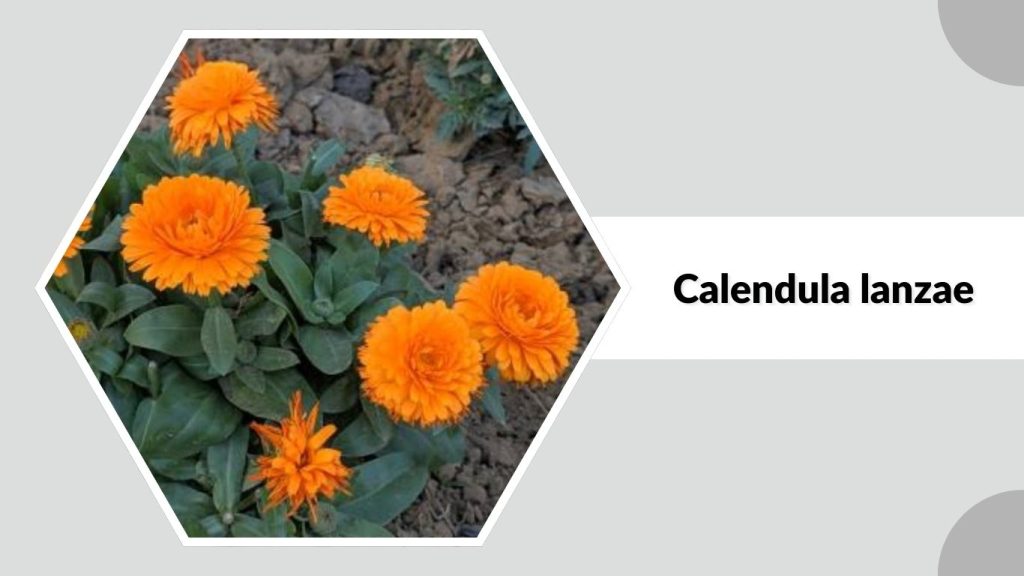
Calendula lanzae is a lesser-known calendula species native to parts of North Africa. It is recognized for its bright, cheerful flowers and adaptability to dry, open environments. This species is mainly encountered in the wild and in specialized botanical collections.
Identification
- Bright yellow to orange daisy-like flowers
- Medium-sized flower heads
- Light green, slightly hairy leaves
- Upright, branching growth habit
- Typically grows 20–45 cm tall
- Blooms mainly in spring
Flower Appearance
The flowers are vivid and open, with neatly arranged petals surrounding a golden central disc. Their warm coloration makes them stand out in natural landscapes.
Habitat and Growth
Calendula lanzae thrives in full sun and well-drained, often sandy or rocky soils. It naturally grows on dry plains, slopes, and open scrubland. The plant is drought-tolerant and completes its growth cycle quickly after rainfall.
Uses and Importance
This species contributes to native ecosystems by supporting insects and early-season pollinators. It is also valued for conservation, botanical research, and native plant garden collections.
16. Calendula denticulata (Toothed Marigold)
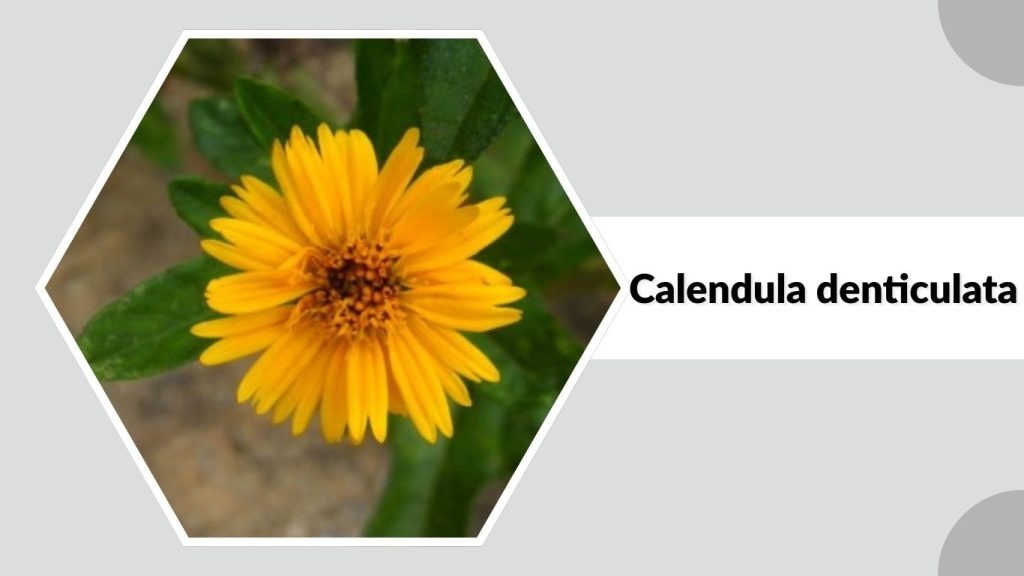
Calendula denticulata is a distinctive calendula species named for the finely toothed edges of its leaves. It is native to Mediterranean and North African regions, where it grows naturally in open, sunny habitats. This species is appreciated for both its subtle foliage detail and bright blooms.
Identification
- Bright yellow to orange daisy-like flowers
- Medium-sized flower heads
- Green leaves with fine, toothed margins
- Slender, branching stems
- Typically grows 20–40 cm tall
- Blooms mainly in spring
Flower Appearance
The flowers are clear and radiant, with evenly spaced petals forming a classic daisy shape around a bright central disc. They appear singly or in small clusters above the foliage.
Habitat and Growth
Calendula denticulata prefers full sun and well-drained soils. It naturally occurs in grasslands, rocky slopes, and open fields. The plant is drought-tolerant and well suited to Mediterranean-style environments.
Uses and Importance
This species is mainly valued for ecological gardening, botanical interest, and native plant landscaping. Its flowers attract pollinators and add seasonal color to natural plant communities.
17. Calendula granatensis (Granada Marigold)
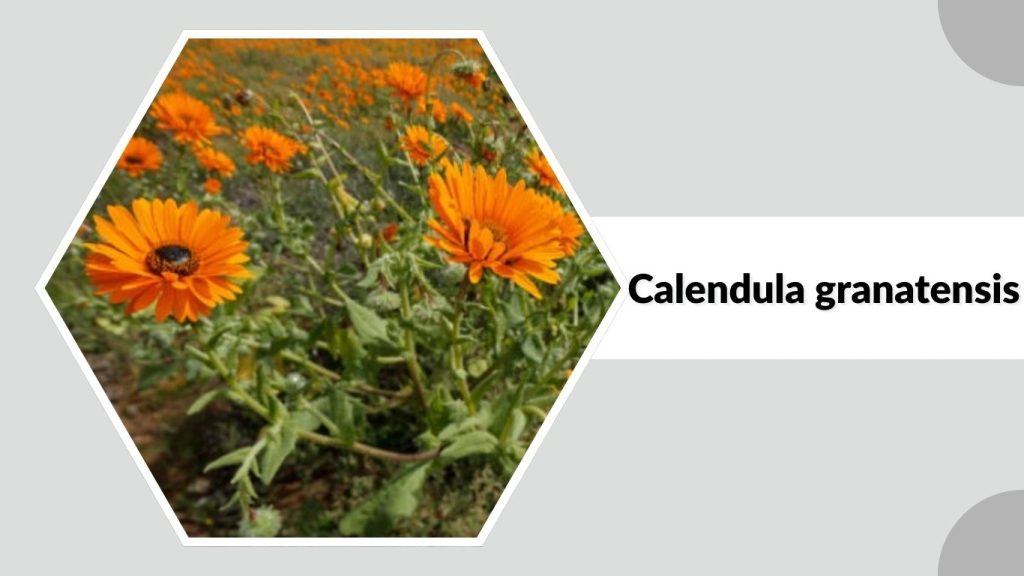
Calendula granatensis is a rare calendula species native to parts of southern Spain, especially around the Granada region. It is known for its bright flowers, delicate structure, and importance in local ecosystems. This species is mainly found in natural habitats and botanical references.
Identification
- Bright yellow daisy-like flowers
- Medium-sized flower heads
- Soft green, slightly hairy leaves
- Slender, lightly branching stems
- Typically grows 15–35 cm tall
- Blooms mainly in spring
Flower Appearance
The flowers are open and radiant, with smooth petals arranged neatly around a golden central disc. Their cheerful color makes them stand out clearly against the surrounding greenery.
Habitat and Growth
Calendula granatensis thrives in full sun and well-drained soils. It naturally grows in open grasslands, hillsides, and lightly disturbed areas. The plant shows good drought tolerance and adapts well to Mediterranean climates.
Uses and Importance
This species is important for conservation and botanical study. It supports pollinators and contributes to regional biodiversity, making it valuable in native plant protection and restoration efforts.
18. Calendula platycarpa (Broad-fruited Marigold)
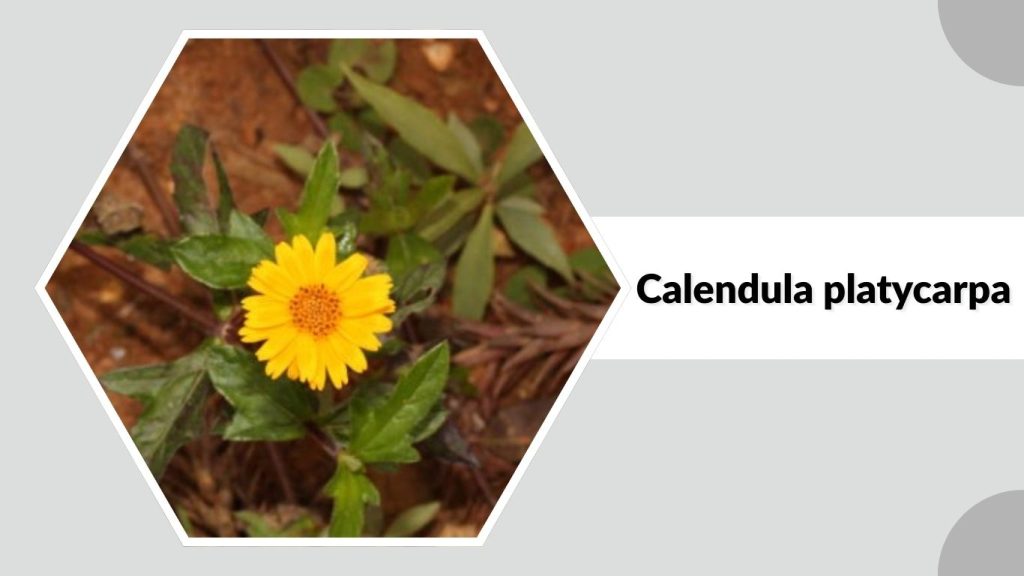
Calendula platycarpa is a calendula species named for its broad, flattened fruits. It is native to Mediterranean and North African regions, where it grows in open, sunny habitats. This species is recognized mainly for its botanical features and natural resilience.
Identification
- Bright yellow to orange daisy-like flowers
- Medium-sized flower heads
- Light green, slightly hairy leaves
- Upright to spreading growth habit
- Typically grows 20–40 cm tall
- Produces broad, flattened seeds
Flower Appearance
The flowers are clean and vivid, with evenly arranged petals forming a classic daisy shape around a bright central disc. Their sunny coloration makes them easy to notice in natural landscapes.
Habitat and Growth
Calendula platycarpa thrives in full sun and well-drained, sandy, or rocky soils. It naturally occurs in open fields, dry plains, and disturbed ground. The plant is drought-tolerant and fast growing.
Uses and Importance
This species is mainly valued for ecological gardening, native landscaping, and botanical research. It supports pollinators and contributes to the diversity of wildflower habitats.
19. Calendula pachysperma (Thick-seeded Marigold)
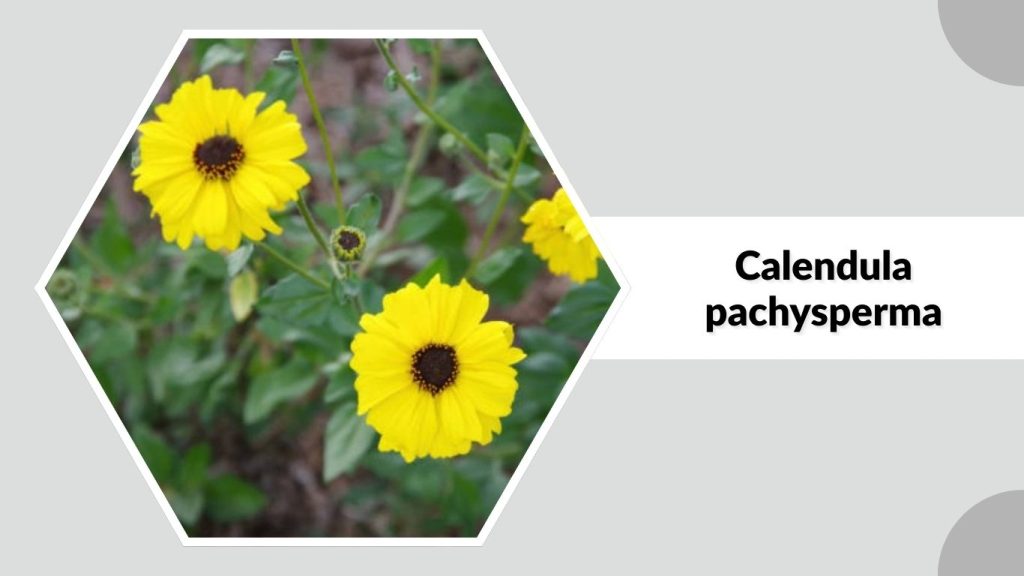
Calendula pachysperma is a calendula species recognized for its thick, robust seeds and hardy nature. It is native to Mediterranean and North African regions, where it grows in open, sunlit habitats. This species is mainly of interest for botanical and ecological purposes.
Identification
- Bright yellow to orange daisy-like flowers
- Medium-sized flower heads
- Green, slightly hairy leaves
- Upright, branching stems
- Typically grows 20–40 cm tall
- Produces thick, sturdy seeds
Flower Appearance
The flowers are vivid and open, with smooth petals arranged around a golden central disc. Their bright coloration contrasts nicely with the green foliage.
Habitat and Growth
Calendula pachysperma thrives in full sun and well-drained soils. It naturally grows in dry grasslands, plains, and rocky areas. The plant shows good drought tolerance and adapts well to exposed environments.
Uses and Importance
This species supports pollinators and adds seasonal color to natural habitats. It is mainly valued for conservation, botanical study, and native plant landscaping.
20. Calendula lusitanica (Portuguese Marigold)
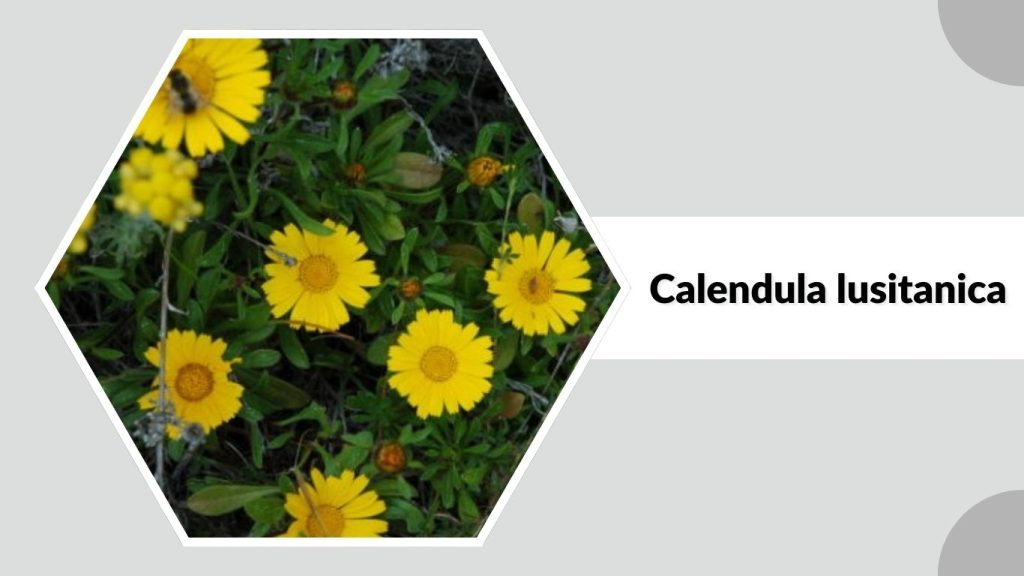
Calendula lusitanica is a calendula species native to the Iberian Peninsula, particularly Portugal and parts of western Spain. It is known for its bright flowers, compact growth habit, and ecological importance. This species is mainly found in natural habitats and native plant communities.
Identification
- Bright yellow daisy-like flowers
- Medium-sized flower heads
- Soft green, slightly hairy leaves
- Low to moderately upright growth habit
- Typically grows 15–35 cm tall
- Blooms mainly in spring
Flower Appearance
The flowers are open and cheerful, with smooth petals arranged around a golden central disc. Their sunny color makes them easily noticeable in wildflower meadows and open landscapes.
Habitat and Growth
Calendula lusitanica thrives in full sun and well-drained soils. It naturally grows in fields, grasslands, and lightly disturbed ground. The plant is drought-tolerant and well suited to Mediterranean climates.
Uses and Importance
This species is important for ecological gardening and conservation. It supports pollinators and contributes to regional biodiversity, making it valuable for native plant protection and habitat restoration.
FAQs
What is the most common type of calendula flower?
Calendula officinalis is the most common and widely grown type of calendula. It is popular in home gardens and commercial cultivation because of its bright orange and yellow flowers, long blooming season, and wide range of ornamental, culinary, and herbal uses.
Are all calendula species edible?
Not all calendula species are considered edible. Calendula officinalis is the primary species used in food and herbal products. Other wild calendula types are mainly valued for ecological and ornamental purposes, and their safety for consumption is not well studied.
Where do calendula flowers naturally grow?
Most calendula species are native to the Mediterranean region, North Africa, and parts of the Middle East. They commonly grow in open fields, grasslands, coastal areas, and dry, sunny landscapes with well-drained soil.
Do calendula plants grow back every year?
Many calendula species are annuals, meaning they complete their life cycle in one season. However, some types, such as Calendula suffruticosa, can behave as short-lived perennials in mild climates and may return for multiple growing seasons.
Are calendula flowers good for pollinators?
Yes, calendula flowers are excellent for pollinators. Their open, brightly colored blooms attract bees, butterflies, and other beneficial insects, helping support local ecosystems and making them valuable additions to wildlife-friendly gardens.