


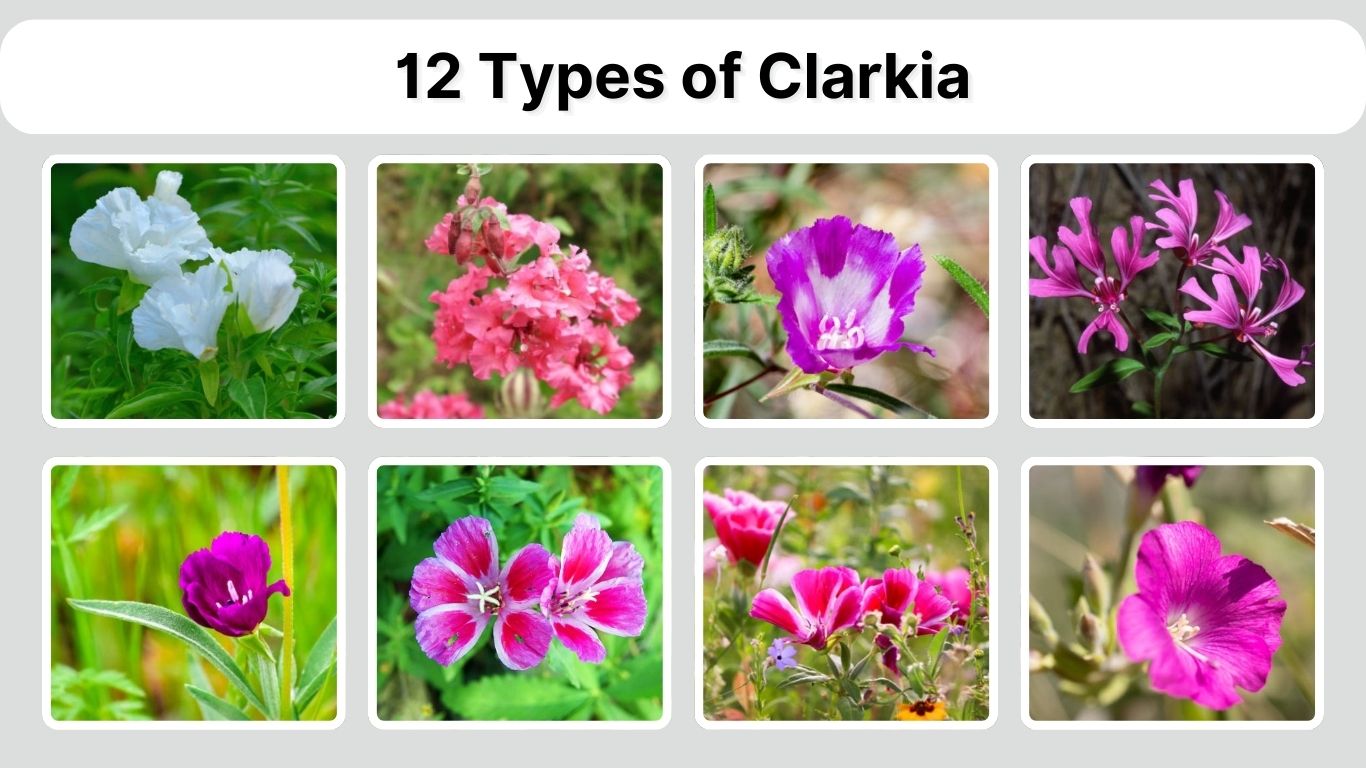
Clarkia is a colorful genus of annual wildflowers native mainly to western North America, especially California. These plants are admired for their silky, cup-shaped to ribbon-like blooms, which appear in shades of pink, purple, red, and lavender. Clarkia species thrive in sunny, well-drained locations and are widely used in wildflower gardens, native landscapes, and pollinator-friendly plantings. Their easy growth, long flowering season, and natural reseeding ability make them popular among gardeners and nature enthusiasts.
1. Clarkia amoena (Farewell-to-Spring)

Clarkia amoena, commonly known as Farewell-to-Spring, is one of the most popular and widely grown Clarkia species. It is admired for its silky, cup-shaped flowers and long blooming season, often flowering when many spring blooms begin to fade. Native to western North America, this annual wildflower is frequently used in gardens, borders, and wildflower mixes because of its easy growth and bright ornamental value.
Identification
- Soft, cup-shaped flowers with four broad petals
- Colors range from pink and rose to lavender and white
- Slender, upright stems with narrow green leaves
- Typically grows 1 to 3 feet tall
- Blooms in late spring to early summer
Habitat
Clarkia amoena naturally grows in open woodlands, grasslands, and coastal hills of California and Oregon. It prefers sunny locations with well-drained soil and is often found thriving in meadows, roadsides, and light forest clearings.
Flower Characteristics
The flowers are satiny and showy, often with darker markings near the center. Each bloom usually has four petals that may be rounded or slightly notched, giving the plant a delicate, ornamental appearance that attracts bees and butterflies.
Growth Habit
This species grows as an upright annual with branching stems. It germinates easily from seed, develops quickly, and blooms within a few months, making it a favorite choice for seasonal color in home gardens and native plant landscapes.
2. Clarkia unguiculata (Elegant Clarkia)

Clarkia unguiculata, commonly called Elegant Clarkia, is a striking annual wildflower known for its tall stems and showy, butterfly-like blooms. Native to California and parts of Oregon, it is widely grown in wildflower gardens and native plant landscapes. Its long flowering period and graceful appearance make it a favorite for borders, meadows, and pollinator gardens.
Identification
- Four narrow, fan-shaped petals with claw-like bases
- Flower colors include pink, magenta, red, and lavender
- Tall, slender, upright stems
- Narrow, lance-shaped green leaves
- Typically grows 2 to 4 feet tall
Habitat
Elegant Clarkia naturally grows in dry open slopes, grasslands, and woodland edges. It thrives in full sun and well-drained soil and is commonly seen along roadsides, foothills, and coastal ranges.
Flower Characteristics
The flowers are delicate yet dramatic, with widely spaced petals that give them a light, airy look. Dark central markings are common and help attract bees, butterflies, and other pollinators.
Growth Habit
This species is a fast-growing annual that branches freely and produces many blooms along tall flowering stems. It reseeds easily and is often used in large naturalized plantings and seasonal wildflower displays.
3. Clarkia rubicunda (Ruby Chalice Clarkia)
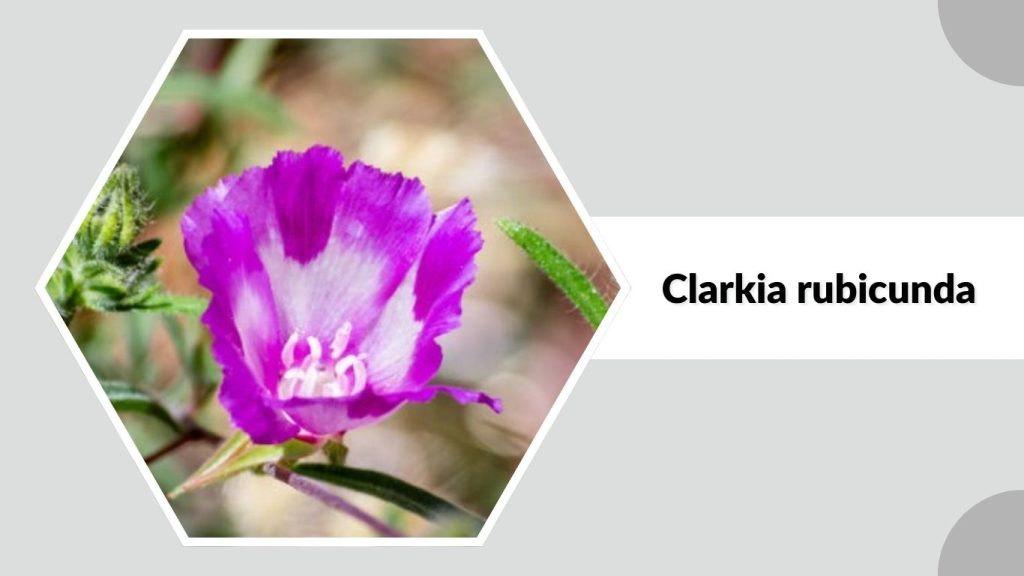
Clarkia rubicunda, known as Ruby Chalice Clarkia, is a beautiful annual wildflower admired for its deep rose to crimson blooms and compact, bushy form. Native mainly to coastal California, this species is often included in wildflower mixes and ornamental gardens because of its rich color and long-lasting flowering period.
Identification
- Cup-shaped flowers with four broad petals
- Petal colors range from deep rose to ruby red
- Darker markings near the flower center
- Slender green stems with narrow leaves
- Usually grows 1 to 2 feet tall
Habitat
Ruby Chalice Clarkia naturally occurs in coastal grasslands, open slopes, and light woodland areas. It prefers full sun to partial shade and well-drained, slightly sandy soils.
Flower Characteristics
The blooms are satiny and vibrant, often appearing in loose clusters along the upper stems. The intense red and pink shades make this species especially attractive in ornamental and native plant gardens.
Growth Habit
This is a compact annual plant with branching stems and a tidy shape. It grows quickly from seed and flowers reliably, making it suitable for borders, containers, and mass plantings.
4. Clarkia concinna (Red Ribbons)

Clarkia concinna, commonly called Red Ribbons, is a unique and eye-catching Clarkia species known for its long, narrow, ribbon-like petals. Native to California, this annual wildflower stands out from other Clarkia types because of its dramatic flower shape and deep pink to red coloration. It is often grown in native gardens and wildflower plantings for its ornamental appeal.
Identification
- Long, narrow, ribbon-shaped petals
- Flowers in deep pink, rose, or red tones
- Thin, upright stems with fine green leaves
- Open, airy flower structure
- Typically grows 1 to 3 feet tall
Habitat
Red Ribbons Clarkia naturally grows in open woodlands, chaparral, and grassy slopes. It prefers sunny to lightly shaded locations with well-drained soil and is frequently found on hillsides and forest edges.
Flower Characteristics
The petals are dramatically elongated and often twisted, giving the flowers a flowing, ribbon-like appearance. This unusual form makes the plant especially attractive to native pollinators and wildflower enthusiasts.
Growth Habit
This species grows as a slender annual with lightly branching stems. It blooms from late spring into early summer and reseeds easily under suitable growing conditions.
5. Clarkia purpurea (Purple Clarkia)
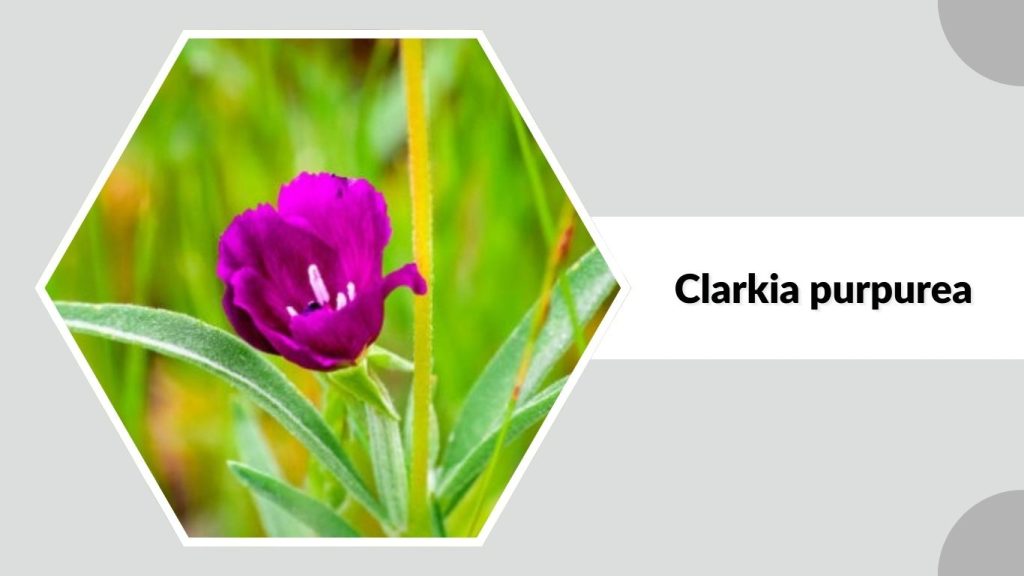
Clarkia purpurea, commonly known as Purple Clarkia, is an attractive annual wildflower recognized for its richly colored blossoms and graceful growth. Native to California and parts of the Pacific Northwest, this species is often found in wildflower meadows and natural landscapes, where it adds vivid purple and magenta tones during the blooming season.
Identification
- Four-petaled flowers with rounded to slightly notched edges
- Colors range from purple and magenta to deep pink
- Slender green stems with narrow leaves
- Prominent central stamens
- Typically grows 1 to 3 feet tall
Habitat
Purple Clarkia naturally grows in open fields, coastal hills, and woodland clearings. It prefers full sun and well-drained soil and is commonly seen along slopes, roadsides, and meadow habitats.
Flower Characteristics
The flowers are satiny and brightly colored, often displaying subtle darker markings near the base of the petals. They attract a variety of pollinators, including bees and butterflies.
Growth Habit
This species grows upright with lightly branching stems. It completes its life cycle in one season, germinating quickly and producing abundant blooms from late spring to early summer.
6. Clarkia gracilis (Slender Clarkia)
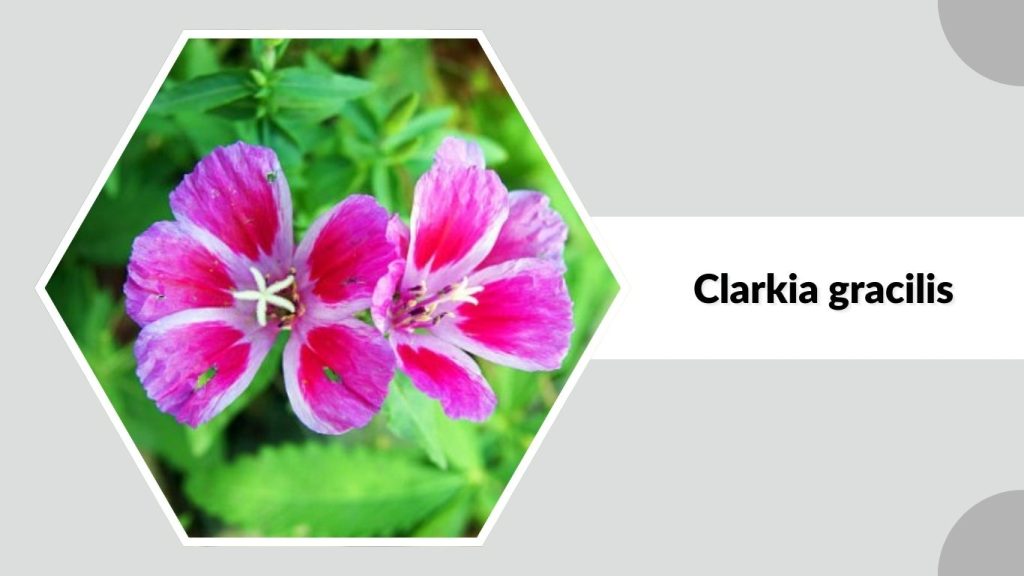
Clarkia gracilis, commonly called Slender Clarkia, is a delicate annual wildflower appreciated for its thin stems and soft, pastel-colored blooms. Native to California, this species is often included in native seed mixes and wildflower gardens because of its refined appearance and adaptability to open, sunny landscapes.
Identification
- Small, four-petaled flowers with narrow, delicate petals
- Colors range from pale pink and lavender to light purple
- Very slender, upright stems
- Fine, narrow green leaves
- Usually grows 1 to 2 feet tall
Habitat
Slender Clarkia naturally occurs in grasslands, open slopes, and light woodland areas. It thrives in full sun and prefers dry to moderately moist, well-drained soils.
Flower Characteristics
The blooms are light and airy, often with faint markings near the center. Their soft coloration and small size give the plant an elegant, subtle beauty compared to more boldly colored Clarkia species.
Growth Habit
This species has a fine-textured, branching form and produces numerous small flowers along its upper stems. It grows quickly from seed and completes its life cycle within one growing season.
7. Clarkia bottae (Punchbowl Clarkia)
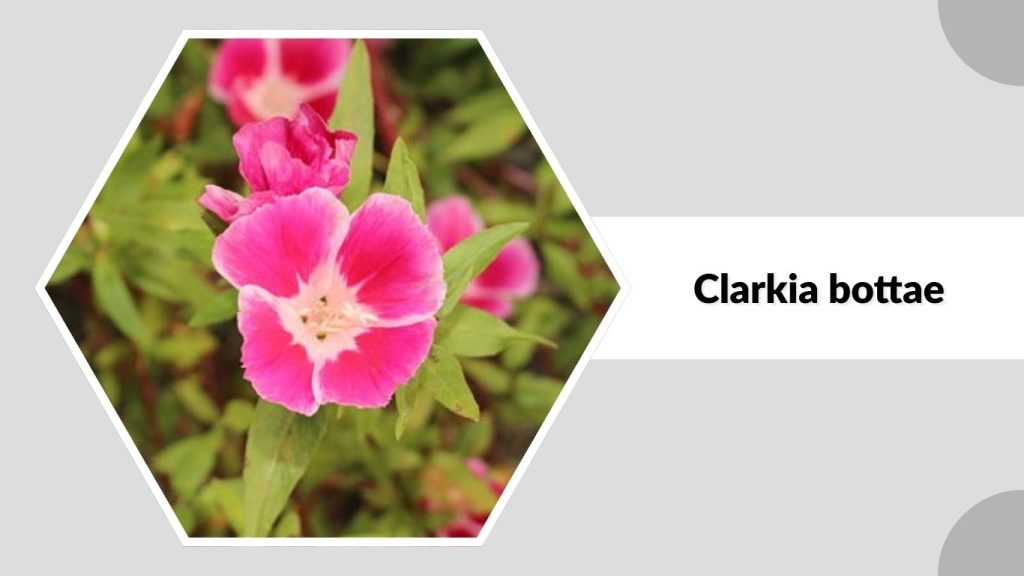
Clarkia bottae, commonly known as Punchbowl Clarkia, is a charming annual wildflower valued for its neat growth habit and soft pink to lavender blooms. It is native to California, where it grows in open, dry habitats and seasonal grasslands. Because of its compact form and gentle coloration, it is often used in native plant gardens and wildflower displays.
Identification
- Four-petaled, cup-shaped flowers
- Petal colors range from light pink to lavender
- Slender stems with narrow green leaves
- Distinct central stamens
- Typically grows 1 to 2 feet tall
Habitat
Punchbowl Clarkia naturally grows in open slopes, grasslands, and sandy or rocky soils. It prefers full sun and well-drained conditions and is commonly found in foothills and valley regions.
Flower Characteristics
The flowers are soft-toned and satiny, often with subtle darker markings near the center. They bloom along the upper parts of the stems and attract bees and other pollinating insects.
Growth Habit
This species has a compact, upright form with lightly branching stems. It grows easily from seed, blooms in late spring, and reseeds naturally in favorable environments.
8. Clarkia speciosa (Beautiful Clarkia)
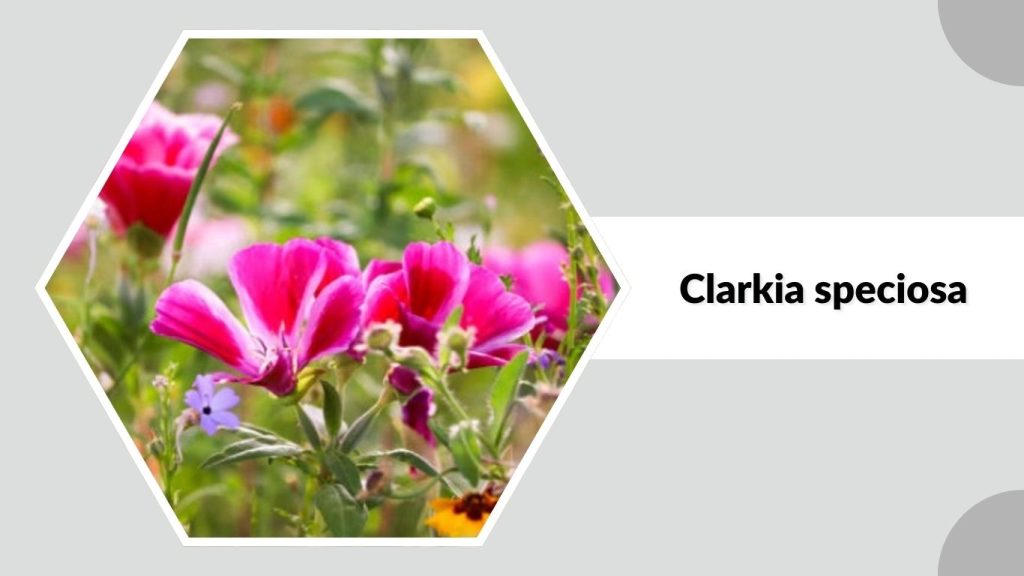
Clarkia speciosa, commonly called Beautiful Clarkia, is a delicate annual wildflower known for its elegant blooms and fine-textured appearance. Native to California, this species adds soft color and graceful form to native gardens, meadows, and naturalized plantings.
Identification
- Four-petaled flowers with slightly ruffled edges
- Colors range from pale pink to soft lavender
- Thin, upright stems with narrow leaves
- Light, airy flower arrangement
- Typically grows 1 to 2 feet tall
Habitat
Beautiful Clarkia naturally occurs in grasslands, open woodland edges, and coastal slopes. It thrives in full sun and prefers well-drained, sandy or loamy soils.
Flower Characteristics
The blooms are soft-toned and silky, often with faint central markings. Their subtle beauty and gentle coloration make this species appealing for mixed wildflower gardens and native landscapes.
Growth Habit
This species grows as a slender annual with lightly branching stems. It germinates readily from seed and blooms from late spring into early summer.
9. Clarkia williamsonii (Williamson’s Clarkia)
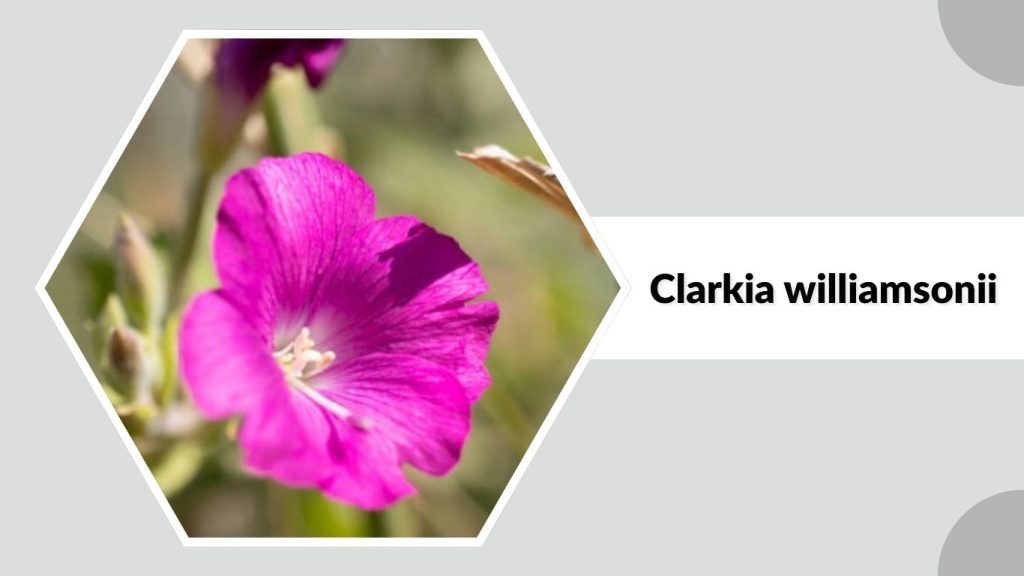
Clarkia williamsonii, commonly known as Williamson’s Clarkia, is a striking annual wildflower admired for its vivid blooms and strong upright stems. Native to California, this species is often found in foothill regions and open woodland habitats, where it adds bright color to spring and early summer landscapes.
Identification
- Four broad, showy petals
- Colors range from deep pink to bright magenta
- Dark central markings on petals
- Slender, upright green stems
- Typically grows 1 to 3 feet tall
Habitat
Williamson’s Clarkia naturally grows in open slopes, foothills, and woodland clearings. It prefers sunny locations with well-drained soils and is commonly seen in grasslands and light forest edges.
Flower Characteristics
The flowers are bold and eye-catching, often with contrasting darker patterns near the base of the petals. They are attractive to bees and other native pollinators.
Growth Habit
This species grows upright with lightly branching stems and produces multiple blooms along the upper portions of the plant. It completes its life cycle in one season and often reseeds naturally.
10. Clarkia lassenensis (Lassen Clarkia)
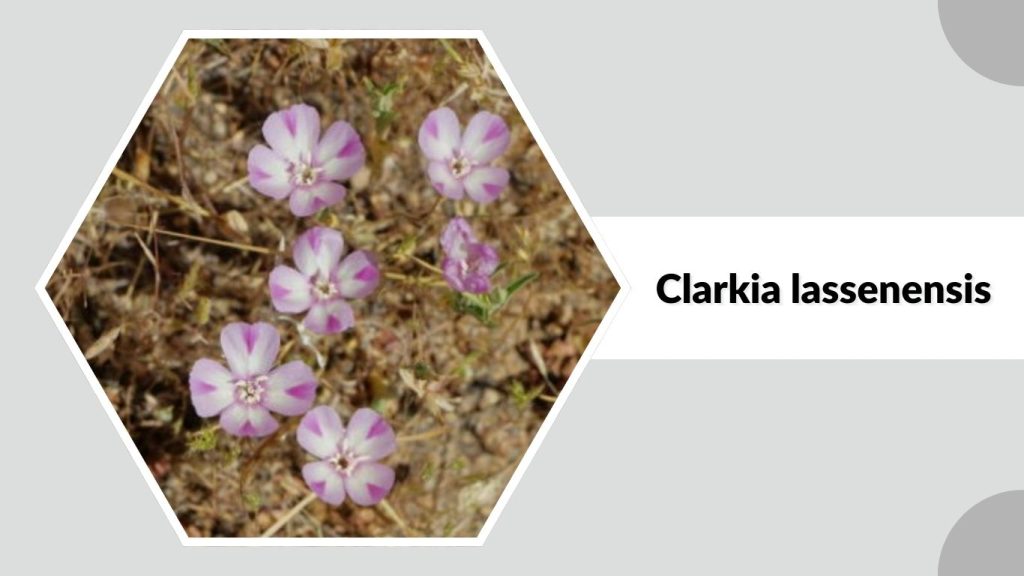
Clarkia lassenensis, commonly known as Lassen Clarkia, is a graceful annual wildflower valued for its soft-colored blooms and mountain-adapted nature. Native to northern California, particularly around the Lassen region, this species is well suited to cooler climates and open upland habitats.
Identification
- Four-petaled flowers with rounded edges
- Colors range from pale pink to light lavender
- Slender stems with narrow green leaves
- Subtle darker markings near the flower center
- Typically grows 1 to 2 feet tall
Habitat
Lassen Clarkia naturally grows in open mountain meadows, forest clearings, and gentle slopes. It prefers full sun to partial shade and well-drained soils, often at higher elevations.
Flower Characteristics
The blooms are soft, silky, and lightly colored, giving the plant a delicate appearance. They attract native bees and small pollinators during the late spring and early summer blooming period.
Growth Habit
This species has an upright, lightly branched form. It grows from seed each year, flowers reliably in suitable climates, and may reseed under natural conditions.
11. Clarkia biloba (Two-lobed Clarkia)
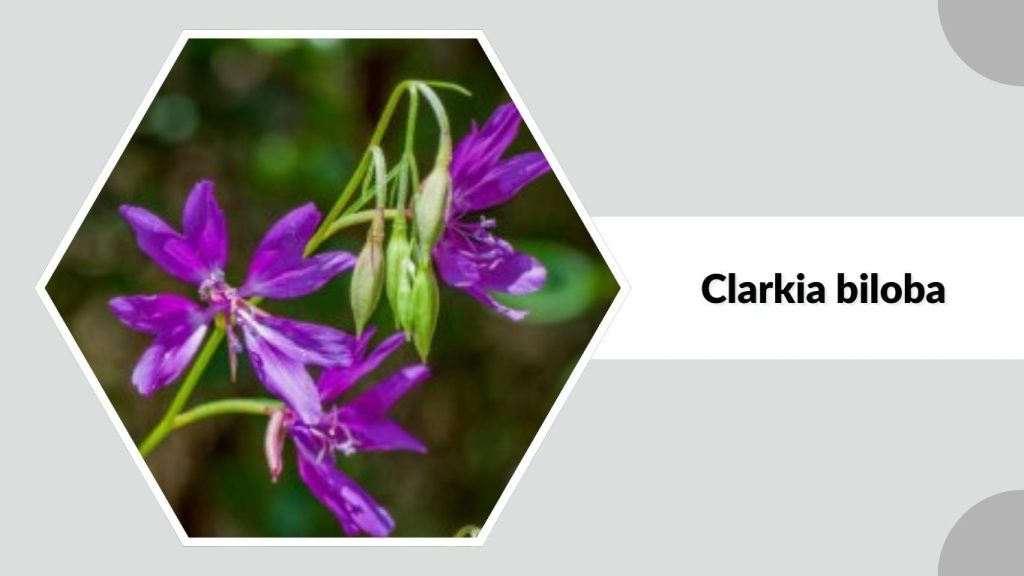
Clarkia biloba, commonly called Two-lobed Clarkia, is a distinctive annual wildflower recognized for its uniquely shaped petals and soft, attractive coloring. Native to California, this species is often seen in seasonal wildflower displays and native plant habitats, where it adds subtle beauty and botanical interest.
Identification
- Petals distinctly divided into two lobes
- Flower colors range from light pink to lavender
- Slender, upright stems
- Narrow, smooth-edged green leaves
- Typically grows 1 to 2 feet tall
Habitat
Two-lobed Clarkia naturally grows in open grasslands, dry slopes, and woodland edges. It prefers sunny locations with well-drained soils and is commonly found in foothill and valley regions.
Flower Characteristics
The blooms are delicate and unique, with petal lobes giving the flowers a soft, notched appearance. Subtle color variations and fine textures make this species appealing in native gardens.
Growth Habit
This species grows upright with lightly branching stems. It completes its life cycle in one growing season, germinating in early spring and flowering from late spring into early summer.
12. Clarkia epilobioides (Canyon Clarkia)
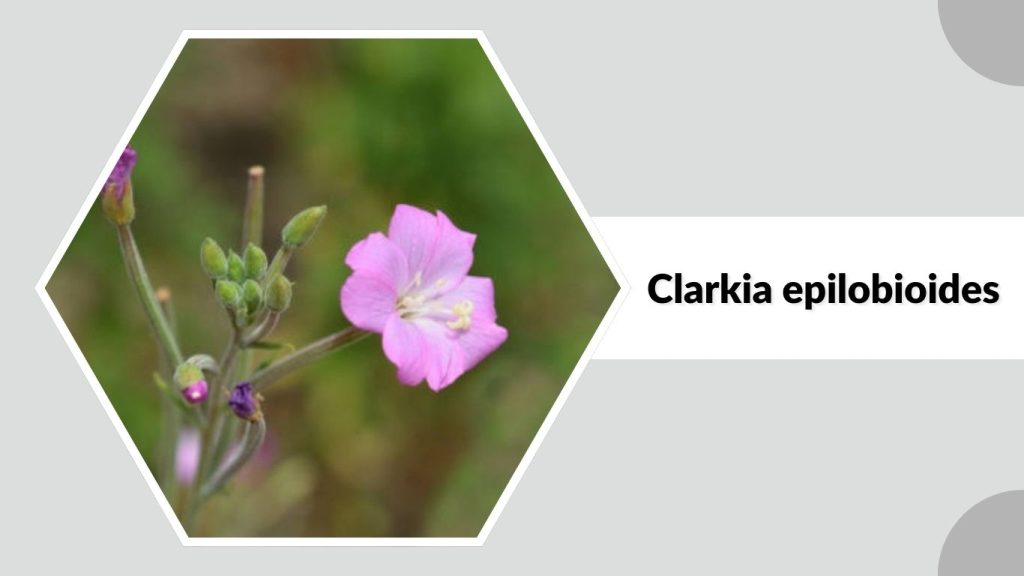
Clarkia epilobioides, commonly known as Canyon Clarkia, is a charming annual wildflower appreciated for its soft-toned blooms and preference for sheltered habitats. Native to California, this species is often found in canyons and along shaded slopes, where it contributes gentle color to spring landscapes.
Identification
- Four-petaled, cup-shaped flowers
- Colors range from pale pink to light lavender
- Slender stems with narrow green leaves
- Soft, satiny petal texture
- Typically grows 1 to 2 feet tall
Habitat
Canyon Clarkia naturally grows in shaded canyons, woodland edges, and moist slopes. It prefers partial shade to full sun and well-drained soils with some seasonal moisture.
Flower Characteristics
The flowers are delicate and silky, often with faint markings near the center. Their gentle coloring makes them attractive additions to native plant gardens and naturalized settings.
Growth Habit
This species grows as a slender annual with lightly branching stems. It germinates from seed, blooms in late spring, and completes its life cycle within a single growing season.
FAQs
What is Clarkia and where is it naturally found?
Clarkia is a genus of flowering plants in the evening primrose family (Onagraceae). Most Clarkia species are native to western North America, especially California. They commonly grow in grasslands, open woodlands, coastal hills, and mountain slopes where there is plenty of sunlight and well-drained soil.
Are Clarkia plants annual or perennial?
Most Clarkia species are annual plants, meaning they complete their entire life cycle—from germination to seed production—within one growing season. They sprout in early spring, bloom in late spring to early summer, and then set seed before dying back.
Do Clarkia flowers attract pollinators?
Yes, Clarkia flowers are excellent pollinator plants. Their colorful, open blooms attract bees, butterflies, and other beneficial insects. Because of this, Clarkia species are often included in wildflower mixes and native plant gardens designed to support local pollinator populations.
How easy is it to grow Clarkia from seed?
Clarkia is generally very easy to grow from seed. Seeds can be directly sown outdoors in fall or early spring. They prefer full sun and well-drained soil, and once established, most species require very little care or watering.
What are Clarkia plants commonly used for?
Clarkia plants are commonly used in wildflower gardens, native plant landscapes, borders, and meadow-style plantings. Their long bloom time, bright colors, and ability to reseed naturally make them popular choices for adding seasonal color and supporting pollinators.