




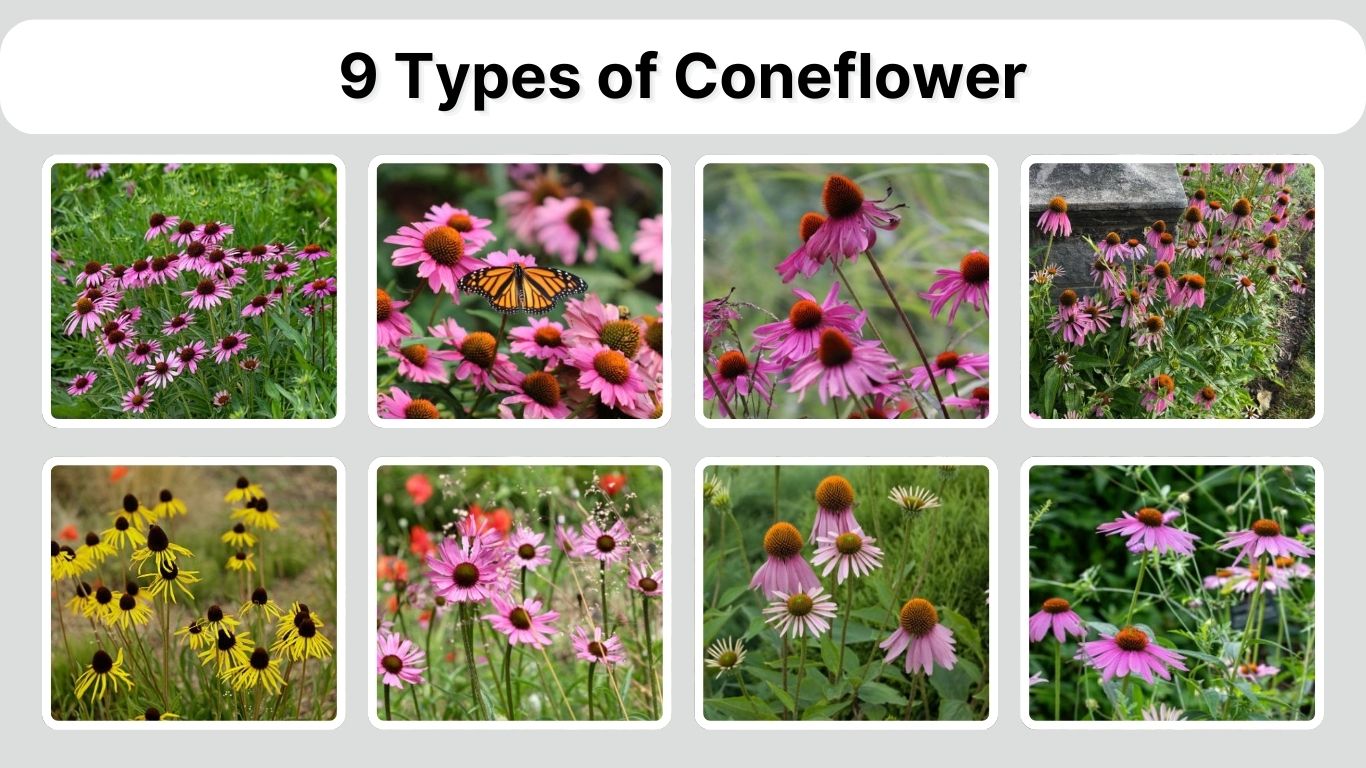
Coneflowers, scientifically known as Echinacea, are popular flowering plants admired for their bold, daisy-like blooms and raised central cones. Native mainly to North America, they naturally grow in prairies, meadows, and open woodlands. Coneflowers are widely planted in gardens because they are hardy, drought tolerant once established, and easy to maintain. Their long summer blooming season and strong appeal to bees, butterflies, and birds make them an essential choice for pollinator and native plant gardens.
1. Echinacea purpurea (Purple Coneflower)
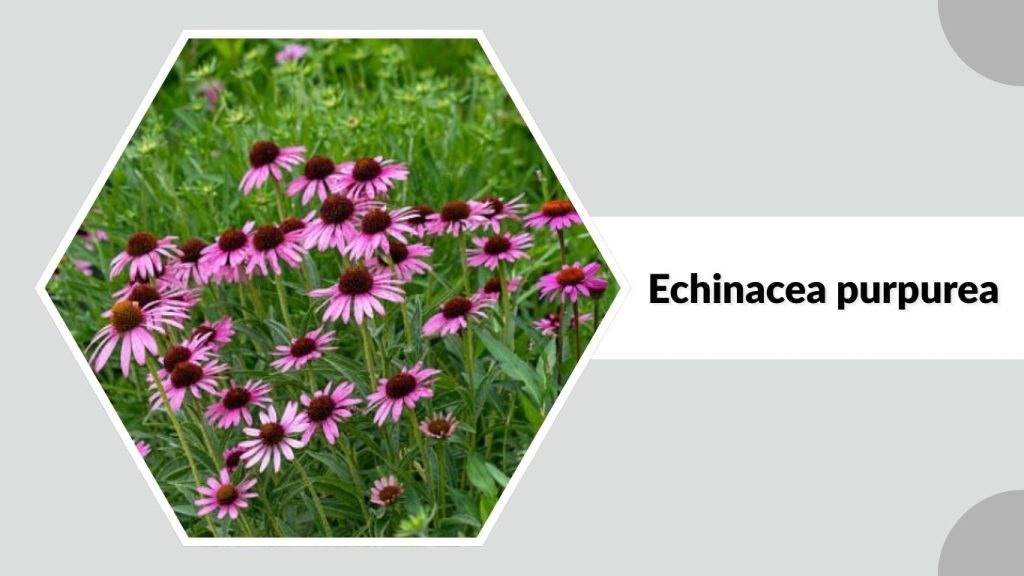
Echinacea purpurea is the most well-known and widely grown coneflower species, famous for its large purple-pink petals and prominent spiky central cone. Native to central and eastern North America, it is a hardy, long-blooming perennial that thrives in gardens, prairies, and pollinator landscapes. Its bold flowers, strong stems, and easy care make it a staple in ornamental and native plant gardens.
Identification
- Large purple to pink drooping petals
- Prominent raised central cone, orange to copper-brown
- Upright, sturdy stems
- Broad, dark green, slightly rough leaves
- Typically grows 24–48 inches tall
Habitat
Echinacea purpurea naturally grows in open woodlands, prairies, and meadow edges. It prefers full sun but tolerates light shade and grows best in well-drained soil, adapting well to clay, loam, and moderately dry conditions.
Growth Habit
This species forms upright clumps with strong, unbranched stems. It does not spread aggressively but slowly expands over time, making it well suited for perennial borders and naturalized plantings.
Flowering and Season
Purple coneflower blooms from early summer through late summer, and often into early fall. Deadheading can encourage extended flowering, while leaving some seed heads provides winter interest and food for birds.
Garden Uses
Echinacea purpurea is widely used in pollinator gardens, prairie-style landscapes, cottage gardens, and cut-flower beds. It pairs well with black-eyed Susans, ornamental grasses, and salvias, while attracting bees, butterflies, and songbirds.
2. Echinacea angustifolia (Narrowleaf Coneflower)
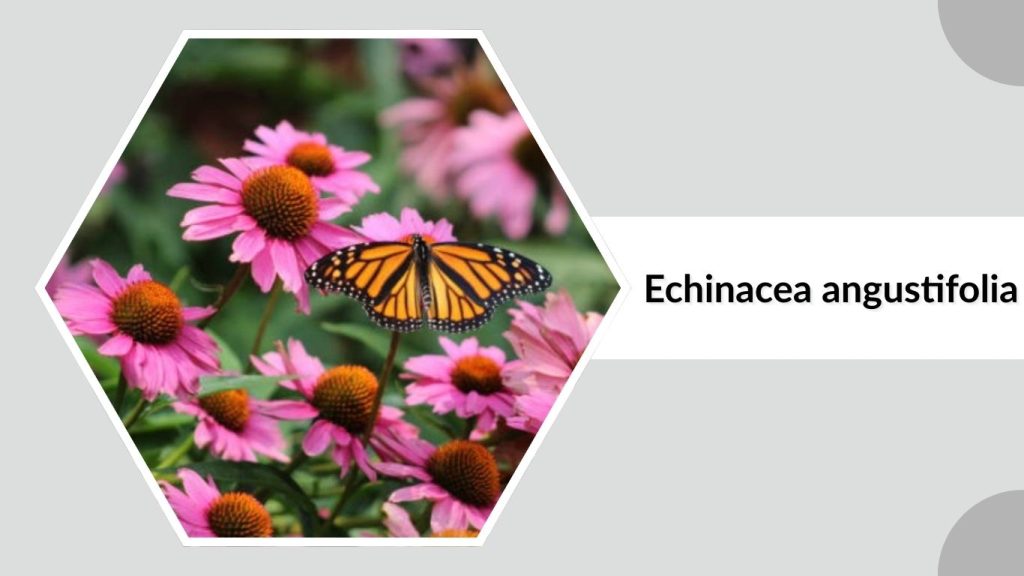
Echinacea angustifolia is a classic prairie coneflower species valued for its narrow leaves and soft pink to pale purple flowers. Native to central North America, it is especially adapted to dry prairies and open plains. Its toughness, deep root system, and traditional medicinal history make it one of the most respected wild coneflowers.
Identification
- Pale pink to light purple drooping petals
- Prominent, spiky central cone, orange-brown
- Narrow, lance-shaped leaves
- Slender but sturdy upright stems
- Typically grows 12–24 inches tall
Habitat
Echinacea angustifolia naturally grows in dry prairies, plains, and open grasslands. It thrives in full sun and well-drained, often sandy or rocky soil, and is extremely drought tolerant once established.
Growth Habit
This species forms tight, upright clumps and develops a deep taproot. It does not spread aggressively and is slower growing than some other coneflower species.
Flowering and Season
Narrowleaf coneflower blooms from early to mid-summer. Flowering can last several weeks, especially in dry, sunny conditions.
Garden Uses
Echinacea angustifolia is ideal for native plant gardens, prairie restorations, dry borders, and xeriscapes. It supports pollinators and is often chosen for naturalistic and low-water landscapes.
3. Echinacea pallida (Pale Purple Coneflower)
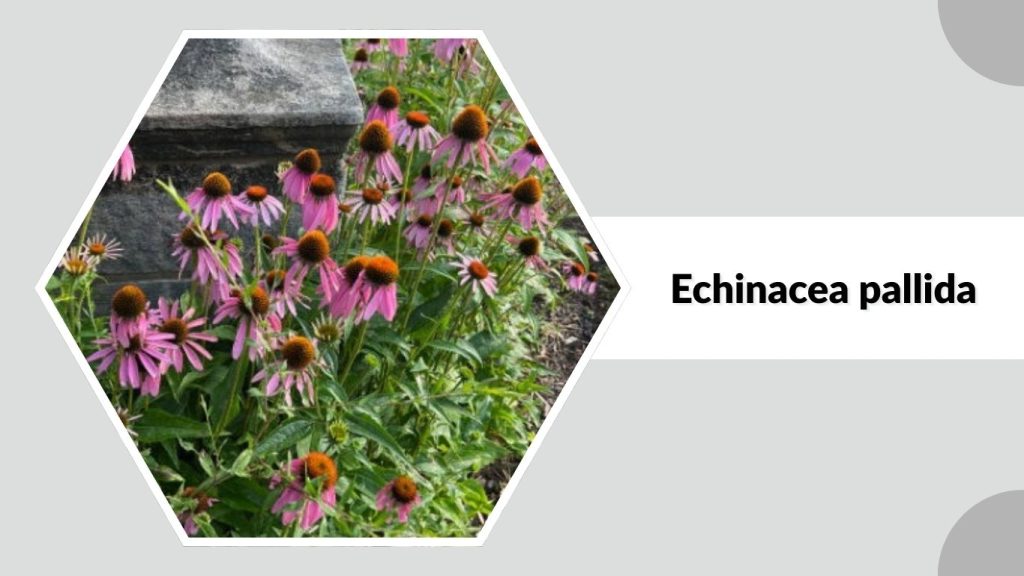
Echinacea pallida is an elegant coneflower species known for its very narrow, drooping petals and soft lavender to pale pink coloration. Native to central North America, it is commonly found in prairies and open grasslands. Its refined appearance and strong drought tolerance make it a favorite in native plantings and prairie-style gardens.
Identification
- Very narrow, drooping pale pink to lavender petals
- Tall, prominent central cone, often darker brown
- Slender, upright stems
- Narrow, gray-green leaves
- Typically grows 24–48 inches tall
Habitat
Echinacea pallida naturally grows in dry prairies, limestone glades, and open plains. It thrives in full sun and well-drained soil, particularly sandy, rocky, or gravelly conditions.
Growth Habit
This species forms upright clumps and develops a deep taproot. It is long-lived, slow to establish, and does not spread aggressively.
Flowering and Season
Pale purple coneflower blooms from late spring into early summer, often earlier than many other Echinacea species.
Garden Uses
Echinacea pallida is ideal for prairie gardens, native plant landscapes, dry borders, and pollinator plantings. Its tall form and delicate petals pair beautifully with grasses and other wildflowers.
4. Echinacea paradoxa (Yellow Coneflower)
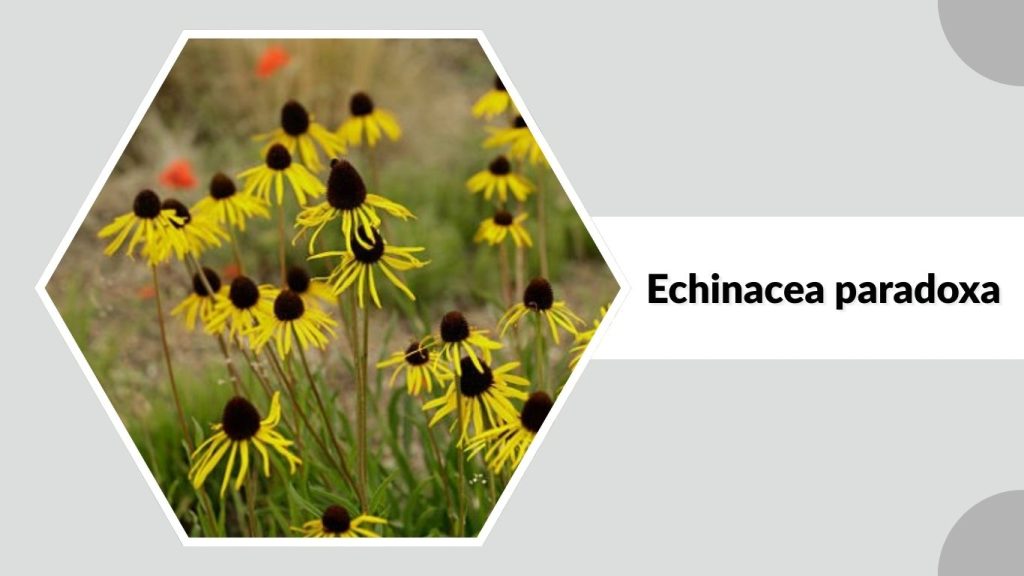
Echinacea paradoxa is unique among coneflowers because it naturally produces bright yellow petals instead of pink or purple. Native to the central United States, it grows in prairies and open rocky hillsides. Its bold color, strong stems, and drought tolerance make it an outstanding choice for sunny gardens and native plant landscapes.
Identification
- Bright yellow, drooping ray petals
- Prominent dark brown to orange central cone
- Upright, sturdy stems
- Narrow to lance-shaped green leaves
- Typically grows 24–48 inches tall
Habitat
Echinacea paradoxa naturally grows in prairies, glades, and rocky open slopes. It thrives in full sun and well-drained, often rocky or limestone-based soils.
Growth Habit
This species forms upright clumps and is long-lived once established. It does not spread aggressively and maintains a strong, architectural presence in the landscape.
Flowering and Season
Yellow coneflower blooms from early to mid-summer. Its bright color stands out strongly against grasses and other prairie plants.
Garden Uses
Echinacea paradoxa is ideal for prairie gardens, native plantings, dry borders, and pollinator gardens. It attracts bees and butterflies and adds a unique yellow tone to coneflower collections.
5. Echinacea tennesseensis (Tennessee Coneflower)
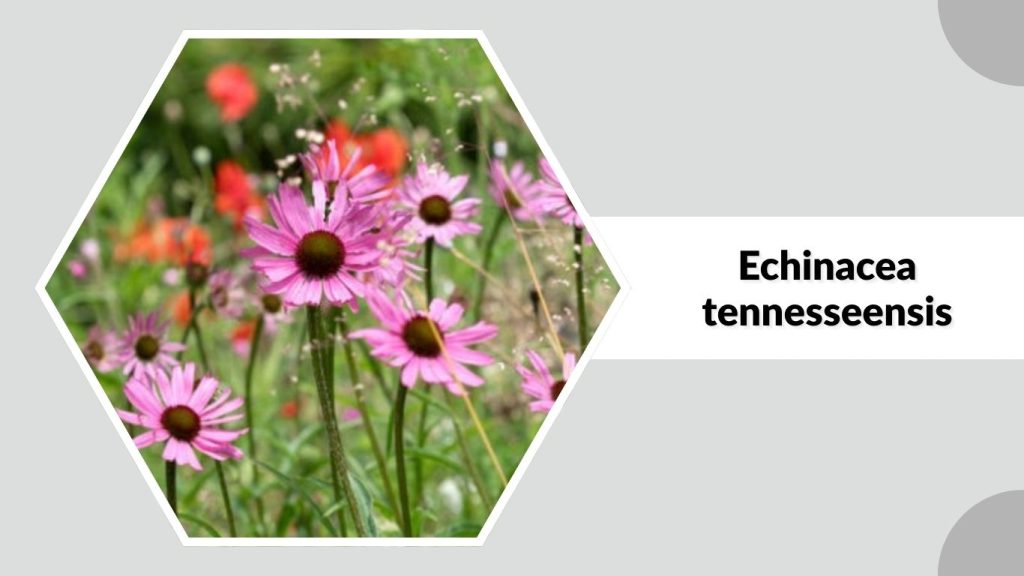
Echinacea tennesseensis is a rare and distinctive coneflower species native to a small region of central Tennessee. Unlike most coneflowers, its petals are more upright rather than strongly drooping. Its unique form, rosy-purple color, and conservation story make it especially valued in native and specialty gardens.
Identification
- Rose-pink to purple petals held more upright
- Prominent central cone, often dark orange-brown
- Upright, sturdy stems
- Narrow, dark green leaves
- Typically grows 18–30 inches tall
Habitat
Echinacea tennesseensis naturally grows in cedar glades and open rocky prairies. It prefers full sun and very well-drained, often limestone-based soils.
Growth Habit
This species forms compact, upright clumps and is longer-lived than many coneflowers. It remains well-behaved and does not spread aggressively.
Flowering and Season
Tennessee coneflower blooms from late spring into summer. Its distinctive flower form makes it especially noticeable in bloom.
Garden Uses
Echinacea tennesseensis is ideal for native plant gardens, rock gardens, dry borders, and conservation-focused landscapes. It supports pollinators while adding botanical interest.
6. Echinacea simulata (Wavy-Leaved Coneflower)
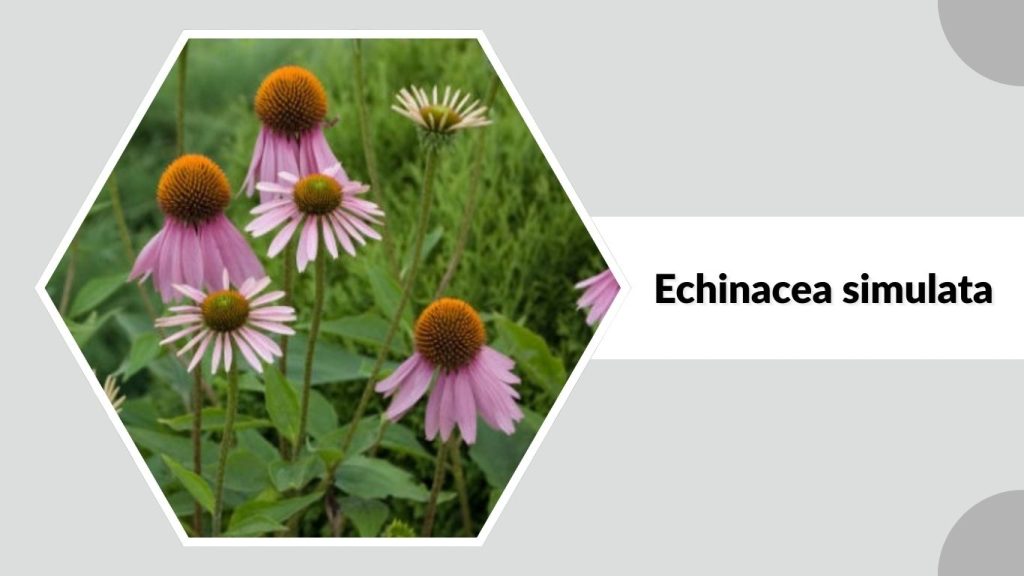
Echinacea simulata is a tall, elegant coneflower species often confused with pale purple coneflower but distinguished by its wavy leaves and rich lavender-pink petals. Native to the central United States, it inhabits prairies and open woodlands. Its graceful stature and resilience make it a strong choice for prairie gardens and naturalistic landscapes.
Identification
- Narrow, drooping lavender to pink petals
- Prominent dark brown to orange central cone
- Tall, upright stems
- Wavy-edged, narrow green leaves
- Typically grows 24–48 inches tall
Habitat
Echinacea simulata naturally grows in prairies, glades, and open woodland edges. It thrives in full sun and well-drained soils, often limestone-based.
Growth Habit
This species forms upright, long-lived clumps with deep roots. It is slow to establish but very drought tolerant once mature.
Flowering and Season
Wavy-leaved coneflower blooms from early to mid-summer. The flowers are long-lasting and stand well above surrounding grasses.
Garden Uses
Echinacea simulata is ideal for prairie plantings, native gardens, dry borders, and pollinator landscapes. Its height and soft color blend well with grasses and other wildflowers.
7. Echinacea laevigata (Smooth Coneflower)
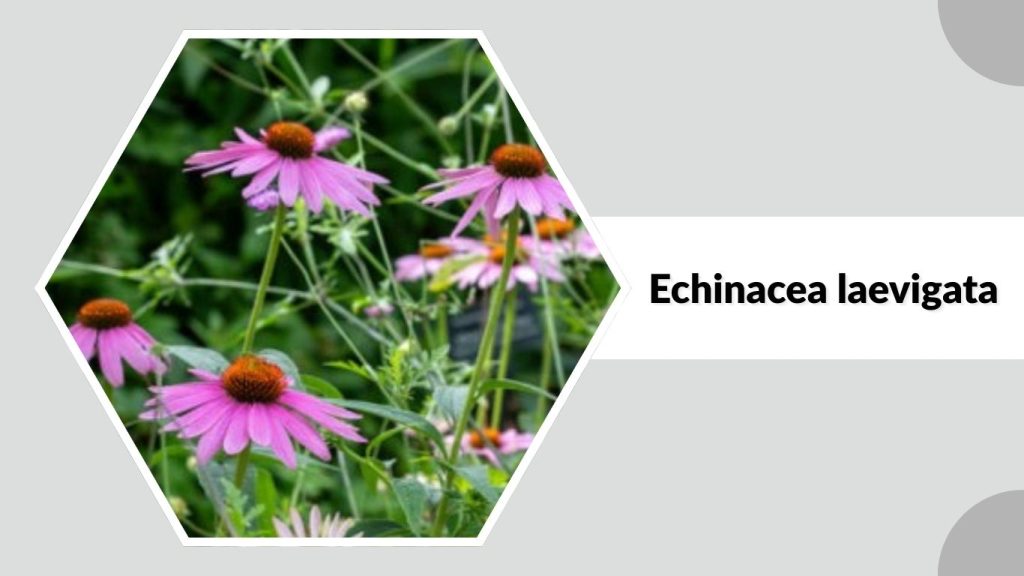
Echinacea laevigata is a rare and elegant coneflower species recognized for its smooth, nearly hairless stems and leaves. Native to the southeastern United States, it naturally grows in open woodlands and rocky glades. Because of its limited range and threatened status, it is especially valued in conservation plantings and native gardens.
Identification
- Soft pink to pale purple drooping petals
- Prominent dark brown central cone
- Smooth, mostly hairless stems
- Narrow, lance-shaped green leaves
- Typically grows 24–40 inches tall
Habitat
Echinacea laevigata naturally occurs in open woods, rocky slopes, and glades. It prefers full sun to light partial shade and well-drained, often mineral-rich soils.
Growth Habit
This species forms upright clumps and grows more slowly than common garden coneflowers. It is long-lived once established and does not spread aggressively.
Flowering and Season
Smooth coneflower blooms from late spring through early summer. Its flowers are fewer but elegant and long-lasting.
Garden Uses
Echinacea laevigata is best suited for native plant gardens, woodland edges, rock gardens, and conservation-focused landscapes. It supports pollinators while adding botanical value.
8. Echinacea atrorubens (Topeka Purple Coneflower)
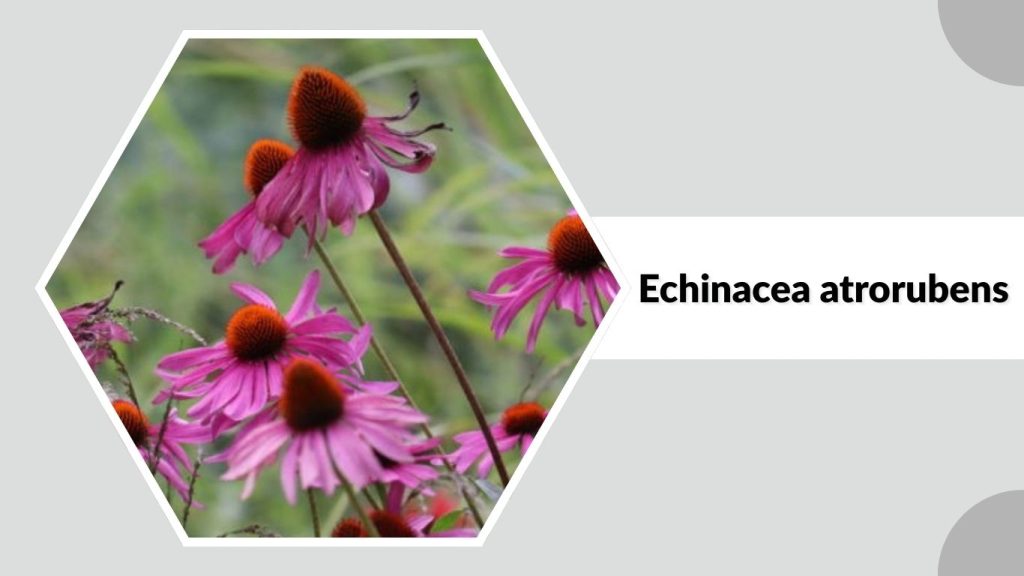
Echinacea atrorubens is a striking coneflower species known for its deep rose to reddish-purple petals and tall, upright form. Native to the central United States, it grows naturally in tallgrass prairies and open plains. Its rich color and strong stems make it attractive in prairie-style and pollinator gardens.
Identification
- Deep rose to reddish-purple drooping petals
- Prominent dark central cone
- Tall, upright stems
- Narrow to lance-shaped green leaves
- Typically grows 30–50 inches tall
Habitat
Echinacea atrorubens naturally grows in prairies, plains, and open grasslands. It thrives in full sun and well-drained soils, tolerating heat and drought well.
Growth Habit
This species forms tall, upright clumps and remains well-behaved in garden settings. It establishes steadily and is long-lived.
Flowering and Season
Topeka purple coneflower blooms from early to mid-summer. Its bold coloring makes it stand out strongly among grasses and wildflowers.
Garden Uses
Echinacea atrorubens is ideal for prairie gardens, native plant landscapes, pollinator gardens, and sunny borders. It attracts bees and butterflies while adding height and color.
9. Echinacea sanguinea (Sanguine Purple Coneflower)
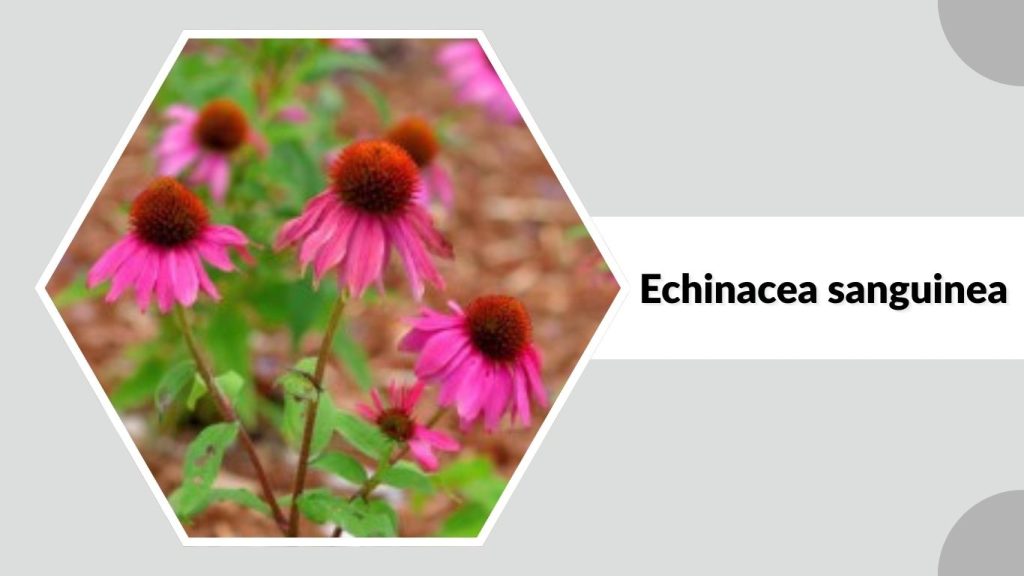
Echinacea sanguinea is a distinctive coneflower species valued for its deep magenta to wine-colored petals and slender, graceful form. Native to the south-central United States, it inhabits open prairies and dry plains. Its unusual dark coloration makes it a standout addition to native and specialty gardens.
Identification
- Deep magenta to reddish-purple drooping petals
- Prominent dark brown central cone
- Slender, upright stems
- Narrow, lance-shaped green leaves
- Typically grows 18–36 inches tall
Habitat
Echinacea sanguinea naturally grows in open prairies and dry grasslands. It prefers full sun and well-drained, often sandy or rocky soils.
Growth Habit
This species forms upright, lightly branched clumps and is drought tolerant once established. It remains contained and non-aggressive.
Flowering and Season
Sanguine coneflower blooms from early to mid-summer. The dark-toned flowers provide strong contrast against lighter prairie plants.
Garden Uses
Echinacea sanguinea is well suited for native plant gardens, prairie restorations, dry borders, and pollinator plantings. It supports pollinators while offering a unique color.
FAQs
What is the most common type of coneflower?
Echinacea purpurea, or purple coneflower, is the most common and widely grown coneflower species. It is popular because it is easy to grow, long blooming, tolerant of different soil types, and very attractive to bees, butterflies, and other pollinators.
Are all coneflowers purple in color?
No, not all coneflowers are purple. While many species have pink or purple petals, some types such as Echinacea paradoxa naturally produce bright yellow flowers, and others show shades ranging from pale lavender to deep reddish-purple.
Do coneflowers need full sun to grow well?
Coneflowers grow best in full sun and usually need at least six hours of direct sunlight each day. Some species tolerate light partial shade, but too much shade can reduce flowering and cause weak, floppy growth.
How long do coneflowers bloom?
Most coneflowers bloom from early or mid-summer into late summer. With regular deadheading, many plants continue producing flowers longer, and if seed heads are left, they also provide fall and winter interest.
Are coneflowers good for pollinator gardens?
Yes, coneflowers are excellent for pollinator gardens. Their large, nectar-rich blooms attract bees and butterflies, and their seed heads later provide food for birds, making them valuable plants for wildlife-friendly landscapes.