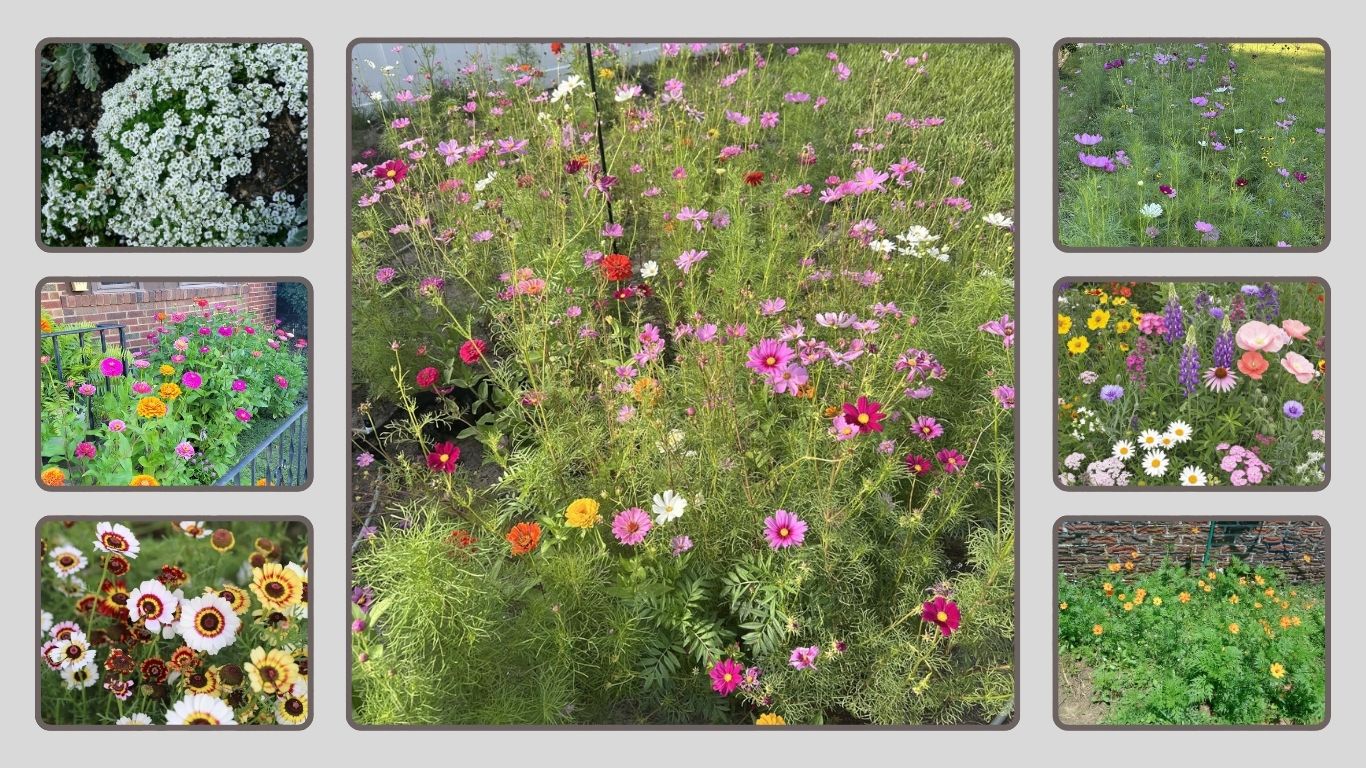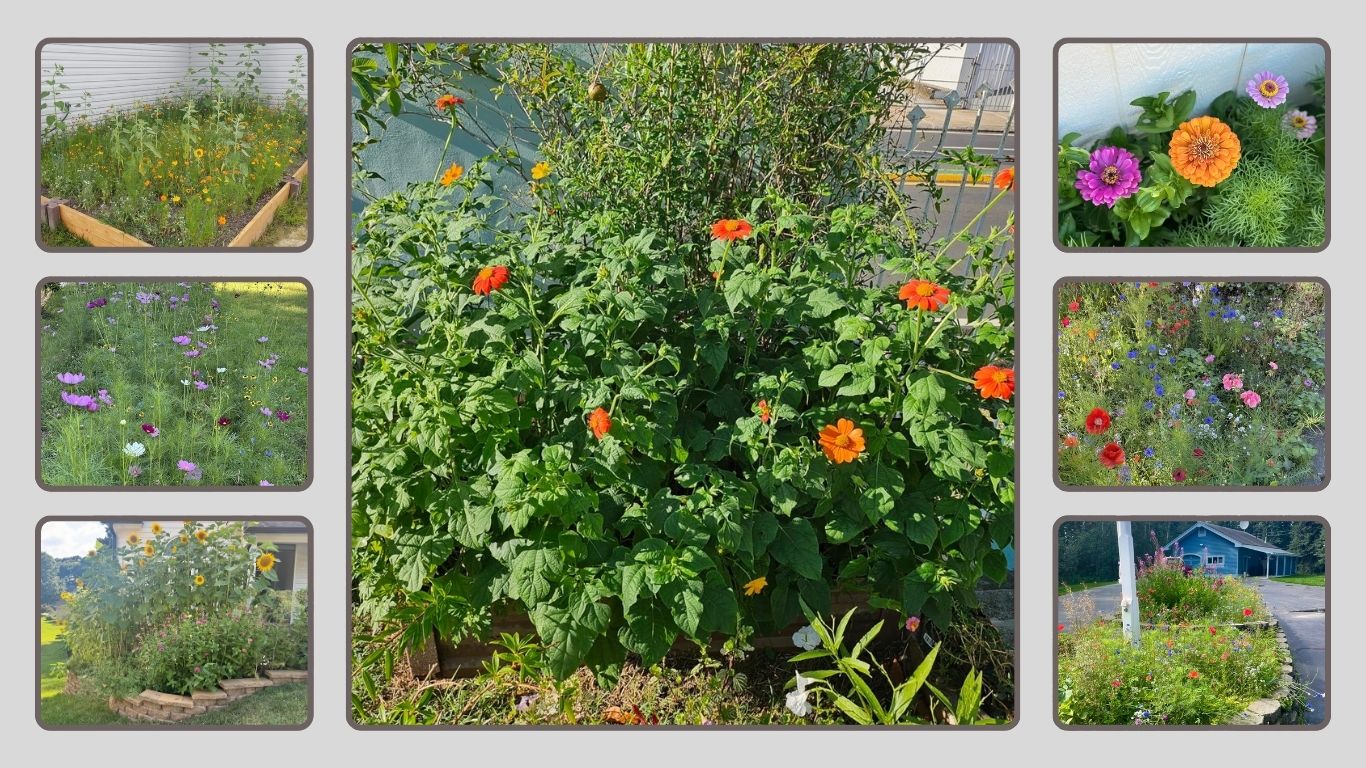




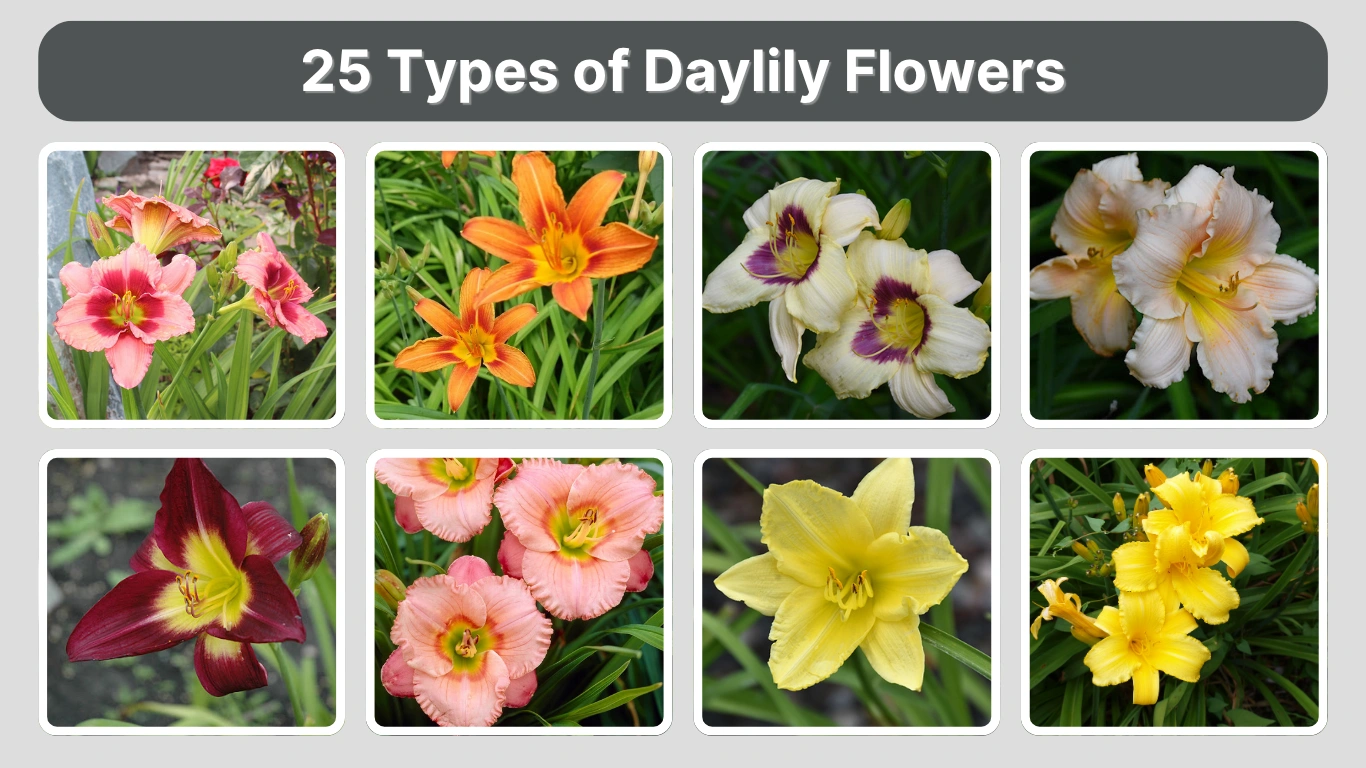
Daylilies (Hemerocallis) are beloved for their vibrant blooms, easy care, and ability to thrive in a wide range of climates. With thousands of cultivars available, gardeners can choose from an incredible array of colors, shapes, and sizes to suit any landscape style—from cottage borders to formal beds. Many daylilies are also fragrant, reblooming, and drought-tolerant, making them a staple in both beginner and expert gardens. Below, you’ll find 25 beautiful types of daylily flowers, each offering unique features and charm to inspire your next planting season.
1. Stella de Oro Daylily

Stella de Oro is one of the most popular and widely grown daylilies in the world. Known for its compact size, golden-yellow blooms, and repeat-flowering habit, it’s a favorite among gardeners for borders, containers, and mass plantings.
Identification
- Color: Golden yellow
- Bloom Size: 2.5–3 inches
- Plant Height: 10–12 inches
- Form: Compact, with ruffled petals and a slight fragrance
- Bloom Duration: Reblooms from early summer into fall
Origin and Popularity
Introduced in 1975 by breeder Walter Jablonski, Stella de Oro quickly became a staple in landscapes due to its hardiness, long blooming season, and low maintenance needs. It has won numerous horticultural awards and is ideal for beginner gardeners.
Growing and Blooming Season
Begins blooming in late spring or early summer and continues to rebloom in cycles throughout the season. Prefers full sun to partial shade and thrives in USDA zones 3–10. It tolerates drought and poor soil once established.
Companion Plants
Pairs beautifully with lavender, coreopsis, salvia, and ornamental grasses. Its golden tone adds warmth and contrast when planted near purples, blues, or deep reds in flower beds or borders.
2. Happy Returns Daylily

Happy Returns is a cheerful, lemon-yellow daylily known for its compact size and reliable reblooming. With soft pastel blooms and a gentle fragrance, it’s a favorite for borders, containers, and cottage gardens.
Identification
- Color: Light lemon yellow
- Bloom Size: 2.5–3 inches
- Plant Height: 15–18 inches
- Form: Ruffled petals with a rounded shape
- Bloom Duration: Reblooms from early summer into fall
Origin and Popularity
Developed as a lighter-colored sibling to ‘Stella de Oro,’ Happy Returns has gained popularity for its soft hue and consistent blooming. It’s especially appreciated in pastel or monochrome garden designs.
Growing and Blooming Season
Begins blooming in late spring and reblooms into early fall. Thrives in full sun to light shade and adapts well to USDA zones 3–9. Low maintenance and cold-hardy, it’s ideal for beginners and seasoned gardeners alike.
Companion Plants
Pairs beautifully with blue and purple flowers like salvia or catmint. Also works well alongside ornamental grasses, white phlox, or pink coneflowers for a bright and balanced color palette.
3. Catherine Woodbury Daylily

Catherine Woodbury is a graceful and fragrant daylily with soft lavender-pink petals and a pale green throat. Known for its delicate coloring and elegant shape, it brings a touch of refinement to summer borders.
Identification
- Color: Lavender-pink with a greenish-yellow throat
- Bloom Size: 5–6 inches
- Plant Height: 24–30 inches
- Form: Broad petals with a slightly ruffled edge
- Bloom Duration: Mid to late summer
Origin and Popularity
Introduced in the 1960s, this classic cultivar remains popular for its fragrance, soft tones, and overall elegance. It’s a go-to choice for romantic and pastel-themed gardens.
Growing and Blooming Season
Blooms in mid to late summer and prefers full sun to partial shade. Thrives in USDA zones 3–9. With proper care, it will return reliably year after year, though it is not a reblooming variety.
Companion Plants
Looks stunning with white or soft pink roses, blue salvia, or lavender. Complements other pastel-colored perennials like Shasta daisy or balloon flower in gentle, soothing garden arrangements.
4. Pardon Me Daylily

Pardon Me is a compact, reblooming daylily known for its rich, wine-red blooms and contrasting yellow-green throat. Its vivid color and small size make it a great choice for edging, containers, and small-space gardens.
Identification
- Color: Deep red with a yellow-green throat
- Bloom Size: 2.5–3 inches
- Plant Height: 18 inches
- Form: Rounded blooms with slightly recurved petals
- Bloom Duration: Reblooms from mid-summer into fall
Origin and Popularity
Introduced in the early 1980s, Pardon Me quickly gained popularity due to its bold color and extended bloom period. It’s ideal for adding dramatic contrast to lighter-colored plantings.
Growing and Blooming Season
Begins blooming in mid-summer and reblooms well into fall. Thrives in full sun to partial shade and performs reliably in USDA zones 3–9. It’s easy to grow and tolerant of a variety of soil types.
Companion Plants
Combines beautifully with yellow daylilies like ‘Stella de Oro’ or ‘Happy Returns.’ Also works well with blue or white flowers like nepeta, Russian sage, or Shasta daisies for bold contrast.
5. Red Volunteer Daylily
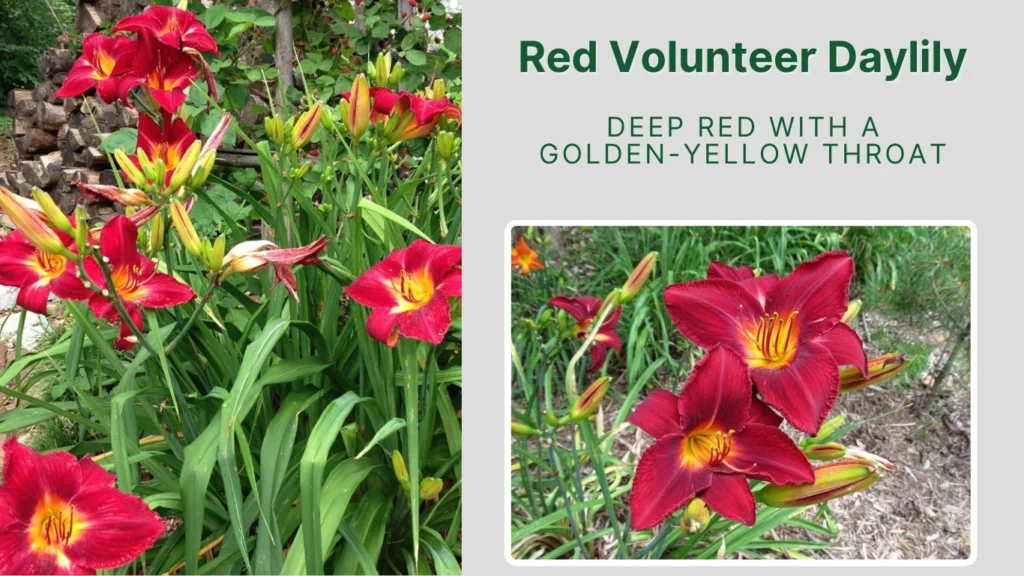
Red Volunteer is a tall, bold daylily variety with large, velvety crimson-red flowers and a glowing yellow throat. Its striking color and size make it perfect for the middle or back of garden borders.
Identification
- Color: Deep red with a golden-yellow throat
- Bloom Size: 6–7 inches
- Plant Height: 28–32 inches
- Form: Large, broad petals with smooth edges
- Bloom Duration: Blooms in mid-summer
Origin and Popularity
A classic cultivar introduced in the 1980s, Red Volunteer remains a favorite among gardeners for its saturated color, impressive size, and dramatic garden impact.
Growing and Blooming Season
Blooms once in mid-summer. Prefers full sun and moist, well-drained soil. Hardy in USDA zones 3–9. Its tall height and large blooms make it ideal for layered perennial borders.
Companion Plants
Pairs well with golds, creams, and purples—try pairing it with coreopsis, echinacea, or blue balloon flower. Its vivid red also contrasts beautifully with ornamental grasses and silver foliage.
6. Ruby Spider Daylily

Ruby Spider is a show-stopping daylily known for its enormous, spidery blooms in vibrant ruby red with a bold yellow center. Its dramatic flower form and vivid contrast make it a centerpiece in any garden bed.
Identification
- Color: Rich ruby red with a bright yellow throat
- Bloom Size: 8–9 inches
- Plant Height: 30–34 inches
- Form: Spider type with long, narrow, arching petals
- Bloom Duration: Blooms in early to mid-summer
Origin and Popularity
Introduced in the 1990s, Ruby Spider has won numerous awards and remains one of the most popular spider-form daylilies. It’s especially favored for large displays and bold, architectural planting schemes.
Growing and Blooming Season
Blooms in early to mid-summer. Prefers full sun and well-drained soil. Thrives in USDA zones 3–9 and performs best when planted in open spaces where its large blooms can stand out.
Companion Plants
Perfect with yellow or white daylilies, ornamental grasses, or purple-leaved plants like Heuchera. Pairs well with cone flowers, liatris, or coreopsis for vibrant summer color mixes.
7. Siloam Double Classic Daylily

Siloam Double Classic is a soft, romantic daylily with fully double blooms in blush-pink tones and a delicate ruffled form. Its elegant flowers and compact size make it ideal for borders and cottage-style gardens.
Identification
- Color: Soft pink with a hint of peach
- Bloom Size: 4–5 inches
- Plant Height: 16–18 inches
- Form: Double blooms with layered, ruffled petals
- Bloom Duration: Blooms in mid to late summer
Origin and Popularity
A standout from the famous Siloam hybrid line, this cultivar is beloved for its rose-like, double flowers and gentle color. It’s an excellent choice for romantic or pastel-themed gardens.
Growing and Blooming Season
Blooms in mid to late summer. Grows well in USDA zones 3–9, preferring full sun to light shade and moderately moist soil. Compact and low-maintenance, it thrives in small spaces and containers.
Companion Plants
Combines beautifully with white daisies, lavender, and blue salvia. Works especially well in soft, layered borders with silver-foliage plants and pastel roses.
8. Joan Senior Daylily
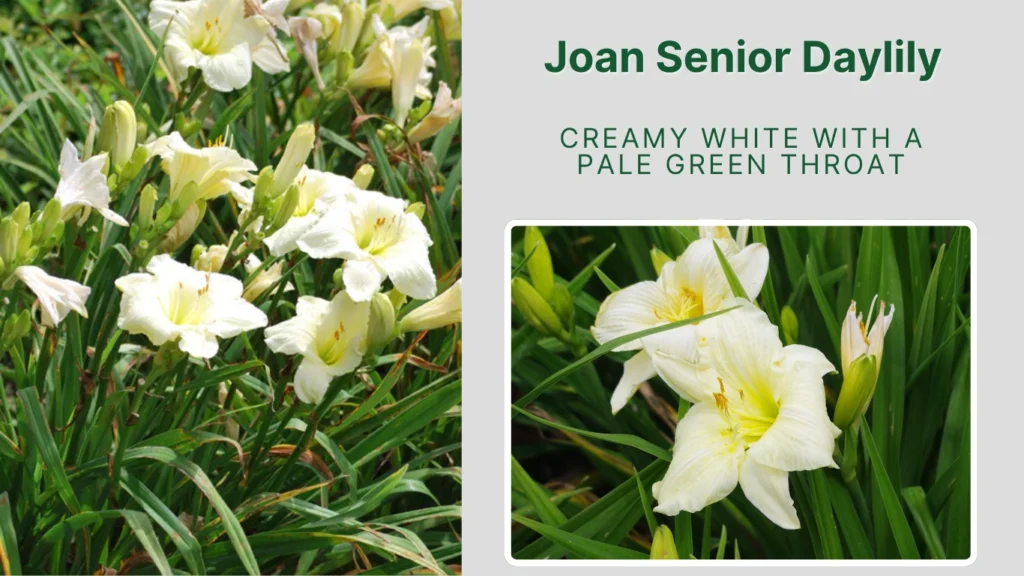
Joan Senior is a classic, near-white daylily known for its refined beauty and exceptional performance. With creamy white petals and a soft green throat, it’s often used to brighten shady spots or serve as a neutral anchor in colorful plantings.
Identification
- Color: Creamy white with a pale green throat
- Bloom Size: 5–6 inches
- Plant Height: 26–30 inches
- Form: Broad, ruffled petals with a graceful habit
- Bloom Duration: Mid to late summer
Origin and Popularity
Introduced in the 1980s, Joan Senior has remained a garden favorite for its elegant color and adaptability. It’s often chosen for moon gardens or spaces where lighter blooms are needed for contrast.
Growing and Blooming Season
Blooms from mid to late summer. Performs well in USDA zones 3–9 and thrives in full sun to partial shade. Low-maintenance and long-lived, it’s perfect for both formal beds and informal borders.
Companion Plants
Pairs beautifully with deep purples like salvia or verbena, or alongside red daylilies like ‘Pardon Me’ for contrast. Also great with silver foliage or soft pink perennials for a romantic garden feel.
9. Purple de Oro Daylily

Purple de Oro is a compact, reblooming daylily with vibrant purple blooms and a contrasting golden throat. It brings rich color to garden edges, containers, or mass plantings and is perfect for small spaces.
Identification
- Color: Deep purple with a yellow-gold throat
- Bloom Size: 2.5–3 inches
- Plant Height: 14–18 inches
- Form: Rounded petals with a slight flare
- Bloom Duration: Reblooms from early summer into fall
Origin and Popularity
A modern companion to ‘Stella de Oro,’ this cultivar offers the same dependable performance in a deeper, richer color. It’s perfect for gardeners who want continuous color with minimal upkeep.
Growing and Blooming Season
Starts blooming in early summer and reblooms through fall. Best in USDA zones 3–9. Tolerates drought once established and thrives in full sun with well-drained soil.
Companion Plants
Looks striking with yellow or orange daylilies like ‘Happy Returns’ or ‘Stella de Oro.’ Also pairs well with low-growing sedum, dianthus, or ornamental grasses for bold texture and contrast.
10. Little Grapette Daylily

Little Grapette is a charming miniature daylily known for its rich grape-purple blooms and compact size. It’s perfect for edging, rock gardens, and containers where space is limited but color impact is desired.
Identification
- Color: Deep grape-purple with a greenish-yellow throat
- Bloom Size: 2–2.5 inches
- Plant Height: 12–14 inches
- Form: Petite, rounded flowers with smooth petals
- Bloom Duration: Early to mid-summer
Origin and Popularity
Introduced in the 1970s, Little Grapette has remained a favorite among gardeners who appreciate its vibrant color and small stature. It’s widely used in tight spaces or as a neat front-border plant.
Growing and Blooming Season
Blooms in early summer and may rebloom lightly in ideal conditions. Thrives in USDA zones 3–9, in full sun to partial shade. Very low maintenance and drought-tolerant once established.
Companion Plants
Pairs well with small yellow varieties like ‘Happy Returns’ or ‘Stella de Oro.’ Also beautiful beside lamb’s ear, creeping thyme, or low-growing blue perennials like campanula.
11. Hyperion Daylily

Hyperion is a classic heirloom daylily loved for its tall stature, lemon-yellow blooms, and delightful fragrance. Its elegant, trumpet-shaped flowers and long stems make it a standout in mixed perennial borders.
Identification
- Color: Soft lemon yellow
- Bloom Size: 4–5 inches
- Plant Height: 36–40 inches
- Form: Narrow, recurved petals with an open trumpet shape
- Bloom Duration: Mid to late summer
Origin and Popularity
Introduced in the 1920s, Hyperion remains a garden favorite for its timeless beauty, fragrance, and reliable performance. It’s particularly attractive in cottage and classic-style gardens.
Growing and Blooming Season
Blooms mid to late summer. Hardy in USDA zones 3–9 and prefers full sun to partial shade. Tall and graceful, it does best with good air circulation and regular watering during blooming.
Companion Plants
Complements deep blue or purple flowers like delphinium or Russian sage. Also lovely with daisies, echinacea, and ornamental grasses for a layered, summer-flowering border.
12. Autumn Red Daylily

Autumn Red is a bold, early-blooming daylily with rich red petals and a vibrant yellow throat. Its warm coloring and reliable flowering habit make it a favorite for adding heat and energy to summer gardens.
Identification
- Color: Deep crimson red with a bright yellow throat
- Bloom Size: 4–5 inches
- Plant Height: 24–30 inches
- Form: Wide, slightly ruffled petals with a rounded shape
- Bloom Duration: Early to mid-summer
Origin and Popularity
As one of the stronger red varieties, Autumn Red stands out in mass plantings and sunny borders. Its long-standing reputation for dependability and boldness makes it a must-have in vibrant color palettes.
Growing and Blooming Season
Blooms early in the summer season and holds well into mid-summer. Best suited for USDA zones 3–9. Prefers full sun and average, well-drained soil. Once established, it’s drought-tolerant and low-maintenance.
Companion Plants
Pairs beautifully with yellow daylilies like ‘Happy Returns’ or white varieties such as ‘Joan Senior.’ Also works well with rudbeckia, bee balm, or ornamental grasses for a fiery garden design.
13. Frans Hals Daylily
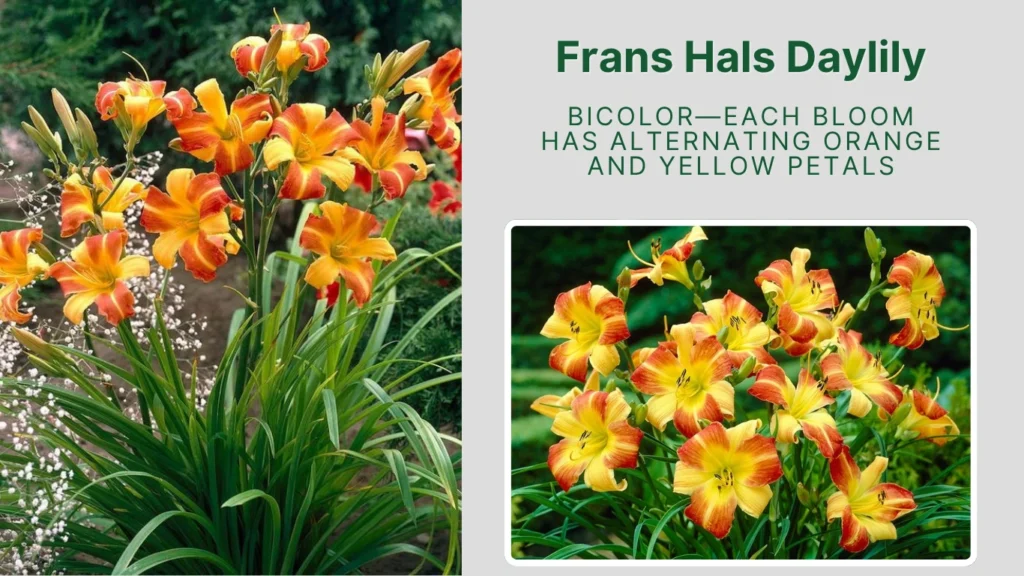
Frans Hals is a striking bicolor daylily featuring alternating orange and golden-yellow petals. This variety delivers a bold, playful look and blooms heavily during mid-summer, making it a favorite for color-packed gardens.
Identification
- Color: Bicolor—each bloom has alternating orange and yellow petals
- Bloom Size: 4–5 inches
- Plant Height: 24–30 inches
- Form: Open-faced blooms with slightly recurved petals
- Bloom Duration: Mid-summer
Origin and Popularity
Named after the Dutch Golden Age painter, Frans Hals is loved for its artistic, eye-catching color combination. It has been a reliable garden performer for decades.
Growing and Blooming Season
Blooms in mid-summer and thrives in USDA zones 3–9. Performs best in full sun and well-drained soil. Durable and low-maintenance, it’s well-suited for mass plantings and sunny borders.
Companion Plants
Stunning when paired with solid yellow or red daylilies. Also looks great with salvia, black-eyed Susan, or contrasting purple blooms like verbena or liatris.
14. Mary Todd Daylily

Mary Todd is a bright and cheerful daylily variety featuring rich golden-yellow blooms that bring sunshine to any garden space. Known for its large flowers and excellent performance, it’s a standout in sunny borders.
Identification
- Color: Vivid golden yellow
- Bloom Size: 5–6 inches
- Plant Height: 24–30 inches
- Form: Wide, rounded petals with gentle ruffles
- Bloom Duration: Mid-summer
Origin and Popularity
Introduced in the 1960s, Mary Todd has remained a garden classic due to its consistent blooms, striking color, and strong growth habit. It’s particularly loved in traditional and formal garden designs.
Growing and Blooming Season
Blooms during mid-summer and thrives in full sun. Hardy in USDA zones 3–9. It performs well in a variety of soil types and is drought-tolerant once established, making it a great low-care option.
Companion Plants
Pairs beautifully with deep blues and purples like salvia, veronica, or lavender. It also contrasts well with burgundy foliage and red or pink daylilies like ‘Pardon Me’ or ‘Strawberry Candy.’
15. Chicago Apache Daylily
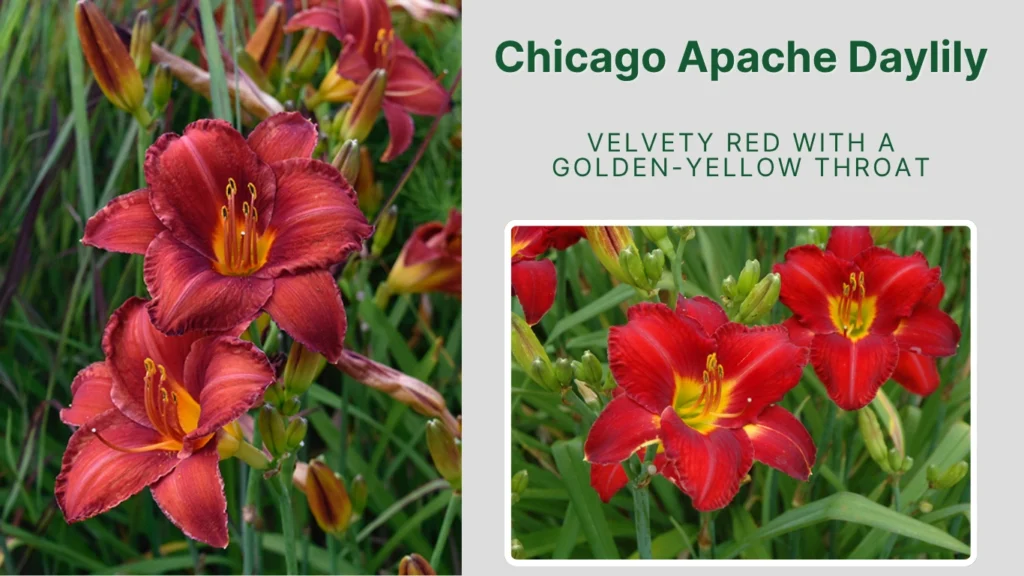
Chicago Apache is a bold, deep red daylily with velvety petals and a glowing golden throat. Its rich tones and sturdy form make it an excellent focal point in garden beds and borders.
Identification
- Color: Velvety red with a golden-yellow throat
- Bloom Size: 5–6 inches
- Plant Height: 26–30 inches
- Form: Open, flat blooms with slightly ruffled edges
- Bloom Duration: Mid to late summer
Origin and Popularity
Introduced in the 1980s, Chicago Apache remains one of the most popular red daylilies thanks to its striking appearance and reliable blooming. It’s especially popular in bold, warm-themed landscapes.
Growing and Blooming Season
Blooms mid to late summer. Grows best in USDA zones 3–9. Prefers full sun and average, well-drained soil. Low-maintenance and heat-tolerant, it’s ideal for sunny perennial beds.
Companion Plants
Pairs well with bright yellow varieties like ‘Mary Todd’ or soft pinks for contrast. Also looks striking with ornamental grasses, black-eyed Susans, or blue-flowering perennials like agastache.
16. Big Time Happy Daylily

Big Time Happy is a vibrant, long-blooming daylily known for its cheerful yellow flowers and extended flowering period. As an improved version of ‘Happy Returns,’ it offers larger blooms and even more garden impact.
Identification
- Color: Bright yellow
- Bloom Size: 4–5 inches
- Plant Height: 18–22 inches
- Form: Broad, overlapping petals with a smooth edge
- Bloom Duration: Reblooms from early summer into fall
Origin and Popularity
Bred for improved performance and flower size, Big Time Happy has become a top choice for gardeners seeking low-maintenance, long-blooming color. It’s perfect for mass plantings and foundation beds.
Growing and Blooming Season
Begins blooming in early summer and continues to rebloom through fall. Thrives in full sun to part shade and performs well in USDA zones 3–9. Heat and drought tolerant once established.
Companion Plants
Pairs beautifully with purple coneflowers, salvia, and pink yarrow. Also mixes well with other yellow and red daylilies to create a warm and sunny color palette.
17. Barbara Mitchell Daylily
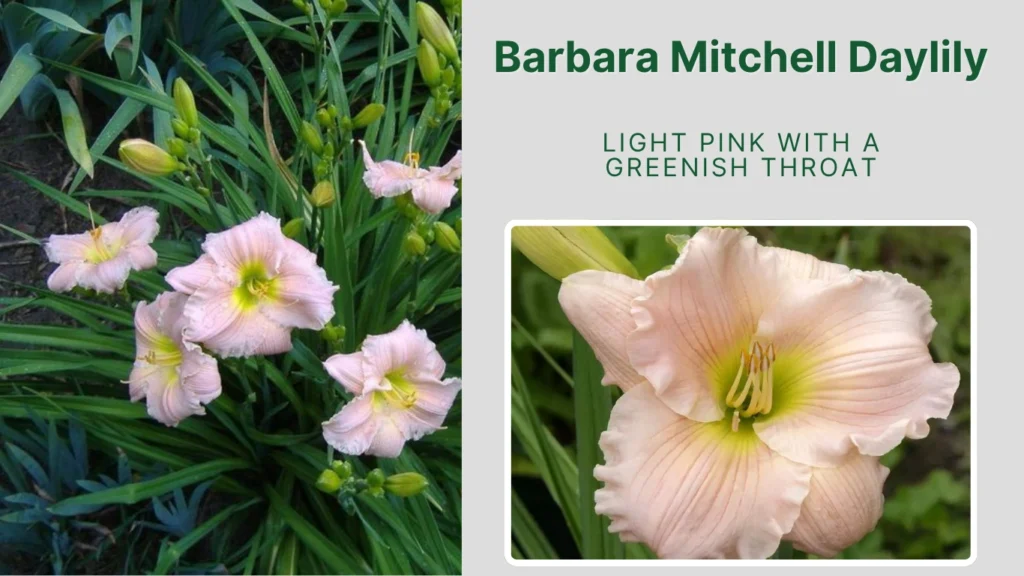
Barbara Mitchell is an elegant and refined daylily with soft pink petals and a glowing green throat. Known for its smooth texture and symmetrical form, it’s a favorite in pastel-themed or formal garden settings.
Identification
- Color: Light pink with a greenish throat
- Bloom Size: 5–6 inches
- Plant Height: 22–26 inches
- Form: Rounded petals with gentle ruffles
- Bloom Duration: Mid-summer
Origin and Popularity
Introduced in the 1980s, this cultivar quickly gained popularity for its grace and consistency. Its soft tone makes it perfect for romantic garden schemes and mixed perennial borders.
Growing and Blooming Season
Blooms in mid-summer and thrives in USDA zones 3–9. Prefers full sun to part shade and well-drained soil. It’s easy to grow and well-suited for borders, front-yard beds, and cutting gardens.
Companion Plants
Pairs well with lavender, dusty miller, and pale yellow or white daylilies. Also looks beautiful with rose bushes, dianthus, or pastel echinacea in a soft, serene garden palette.
18. Elegant Candy Daylily

Elegant Candy is a refined and eye-catching daylily with soft pink petals accented by a deep rose-red eye and a green throat. It’s a reblooming variety that adds both charm and color contrast to borders and mixed beds.
Identification
- Color: Light pink with a deep rose-red eye and green throat
- Bloom Size: 4–5 inches
- Plant Height: 22–24 inches
- Form: Slightly ruffled petals with defined eye zone
- Bloom Duration: Reblooms from early summer to fall
Origin and Popularity
Bred for both beauty and performance, Elegant Candy is admired for its reliable reblooming and graceful color pattern. It’s a favorite in cottage-style and layered perennial gardens.
Growing and Blooming Season
Blooms early in the summer and reblooms well into fall. Thrives in USDA zones 3–9 in full sun or part shade. Easy to grow, drought-tolerant, and great for mass planting.
Companion Plants
Pairs beautifully with lavender, Shasta daisies, and purple coneflowers. Its eye-catching colors also make it a great companion to soft yellow and white daylilies in pastel-themed beds.
19. Night Beacon Daylily

Night Beacon is a striking daylily known for its deep purple petals and glowing lime-green throat. Its dramatic coloration makes it ideal for evening gardens and for creating contrast in bright planting schemes.
Identification
- Color: Deep purple with a vivid chartreuse-green throat
- Bloom Size: 4–5 inches
- Plant Height: 20–24 inches
- Form: Rounded petals with slight recurving
- Bloom Duration: Mid to late summer
Origin and Popularity
This bold cultivar stands out for its nighttime appeal and vibrant color contrast. It’s particularly loved by gardeners who want to add depth and mystery to their perennial displays.
Growing and Blooming Season
Blooms in mid to late summer and performs well in USDA zones 3–9. Prefers full sun and well-drained soil. Tolerant of heat and occasional dry conditions once established.
Companion Plants
Pairs beautifully with white or yellow daylilies like ‘Joan Senior’ or ‘Happy Returns.’ Also contrasts well with light perennials such as baby’s breath, silver lamb’s ear, or creamy phlox for a dramatic effect.
20. Double Orange Daylily (Hemerocallis fulva ‘Kwanso’)

Double Orange Daylily, also known as Hemerocallis fulva ‘Kwanso’, is a vigorous, old-fashioned favorite with bold, double-layered orange blooms. Its lush, full flowers and ability to naturalize make it a standout in informal or wild-style plantings.
Identification
- Color: Bright orange with deeper orange-red highlights
- Bloom Size: 4–5 inches
- Plant Height: 34–40 inches
- Form: Fully double with multiple petal layers
- Bloom Duration: Mid to late summer
Origin and Popularity
A historic garden variety, this daylily is known for spreading easily and thriving in tough spots. It’s commonly seen along roadsides and in old homesteads, and remains popular for its reliability and strong presence.
Growing and Blooming Season
Blooms from mid to late summer and spreads rapidly through underground rhizomes. Performs well in USDA zones 3–9. Thrives in full sun and tolerates poor soils and occasional drought.
Companion Plants
Best planted with bold companions like black-eyed Susan, echinacea, or ornamental grasses. Its orange tone pops against purples, blues, or whites in meadow-style or low-maintenance beds.
21. Fairy Tale Pink Daylily

Fairy Tale Pink is a soft and romantic daylily with pastel pink petals, a rose eye zone, and a glowing green throat. Its rounded, ruffled blooms bring a dreamy elegance to any garden.
Identification
- Color: Blush pink with a rose eye and green throat
- Bloom Size: 5–6 inches
- Plant Height: 24–28 inches
- Form: Gently ruffled, wide petals with full shape
- Bloom Duration: Mid-summer
Origin and Popularity
A beloved variety among pastel garden enthusiasts, Fairy Tale Pink is known for its classic charm and graceful color blend. It’s often featured in romantic garden designs and formal borders.
Growing and Blooming Season
Blooms in mid-summer and thrives in USDA zones 3–9. Prefers full sun or light shade and moist, well-drained soil. Low-maintenance and easy to grow, with consistently beautiful results.
Companion Plants
Lovely when paired with lavender, catmint, pale daisies, or soft yellow daylilies. Its gentle hues also harmonize well with white roses and pink coneflowers in pastel or cottage-style garden designs.
22. Pandora’s Box Daylily

Pandora’s Box is a striking and elegant daylily featuring creamy white petals with a bold purple eye zone and green throat. Its crisp color contrast and refined shape make it a favorite for brightening garden beds.
Identification
- Color: Creamy white with a dark purple eye and green throat
- Bloom Size: 4–5 inches
- Plant Height: 20–24 inches
- Form: Rounded, slightly ruffled petals with strong eye zone
- Bloom Duration: Mid to late summer
Origin and Popularity
Known for its clean coloring and bold center, Pandora’s Box is a popular choice in themed gardens and mixed perennial beds. Its eye-catching contrast stands out in both pastel and bold color schemes.
Growing and Blooming Season
Blooms mid to late summer. Performs best in USDA zones 3–9, in full sun to light shade. Easy to grow, low-maintenance, and adaptable to various soil conditions.
Companion Plants
Combines beautifully with purple coneflowers, catmint, and ornamental grasses. Also striking when paired with solid-color daylilies in yellow or plum tones for vibrant contrast.
23. Bold Tiger Daylily

Bold Tiger is a dramatic bicolor daylily featuring golden-yellow petals with a fiery red-orange eye zone. With its vivid tones and energetic flair, it adds excitement and warmth to any garden design.
Identification
- Color: Golden yellow with a red-orange eye and green throat
- Bloom Size: 5–6 inches
- Plant Height: 26–30 inches
- Form: Broad, flat blooms with slightly recurved tips
- Bloom Duration: Mid-summer
Origin and Popularity
Loved for its tiger-like coloration and strong garden presence, Bold Tiger is a standout in bold border designs and sunny beds. It’s perfect for gardeners who enjoy rich, fiery colors.
Growing and Blooming Season
Blooms in mid-summer. Thrives in USDA zones 3–9 with full sun and well-drained soil. Tolerates heat and drought once established, making it a great low-care option.
Companion Plants
Pairs well with red and orange blooms like ‘Chicago Apache’ or ‘Autumn Red.’ Also complements purple and blue perennials like salvia, agastache, or liatris for vivid contrast.
24. Hemerocallis fulva (Orange Daylily)
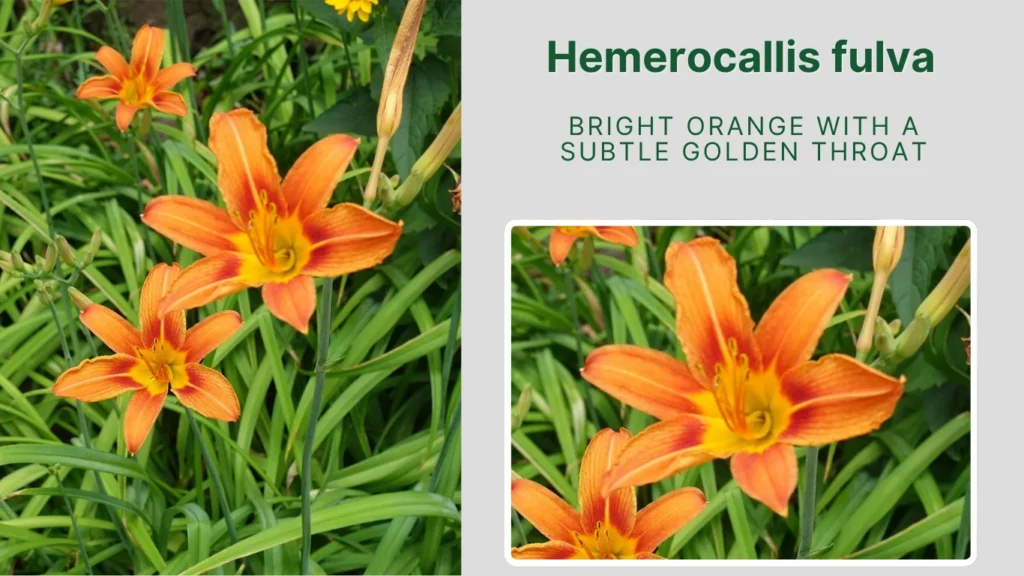
Hemerocallis fulva, commonly known as the Orange Daylily or Tawny Daylily, is a hardy, old-fashioned variety often seen naturalized along roadsides and in meadows. Its vibrant orange blooms and vigorous spreading habit make it a reliable, low-maintenance choice.
Identification
- Color: Bright orange with a subtle golden throat
- Bloom Size: 4–5 inches
- Plant Height: 36–48 inches
- Form: Open-faced blooms with recurved petals
- Bloom Duration: Early to mid-summer
Origin and Popularity
Native to Asia and widely naturalized in North America, Hemerocallis fulva is popular for its durability, adaptability, and ability to fill large areas. It spreads by rhizomes and can form dense clumps over time.
Growing and Blooming Season
Blooms in early to mid-summer. Grows best in USDA zones 3–9, tolerating a wide range of soils and conditions. Ideal for erosion control and naturalistic plantings.
Companion Plants
Pairs well with native wildflowers, grasses, and other tough perennials like black-eyed Susan, bee balm, or goldenrod in informal, low-maintenance gardens.
25. Strawberry Candy Daylily

Strawberry Candy is a vibrant and award-winning daylily with warm pink petals, a rose-red eye zone, and a golden throat. Its standout coloring and reliable reblooming make it a garden favorite.
Identification
- Color: Rose-pink with a darker eye and golden center
- Bloom Size: 4–5 inches
- Plant Height: 24–26 inches
- Form: Ruffled petals with a strong central eye
- Bloom Duration: Early to mid-summer with reblooming potential
Origin and Popularity
A highly acclaimed cultivar, Strawberry Candy has won multiple awards for its beauty and performance. It’s especially popular in colorful borders and mixed perennial beds.
Growing and Blooming Season
Blooms from early to mid-summer and may rebloom later in the season. Grows in USDA zones 3–9 and performs best in full sun with fertile, well-drained soil.
Companion Plants
Stunning with lavender, coreopsis, or pale yellow daylilies. Also works well alongside roses, salvia, and purple coneflowers in romantic or vibrant summer gardens.