


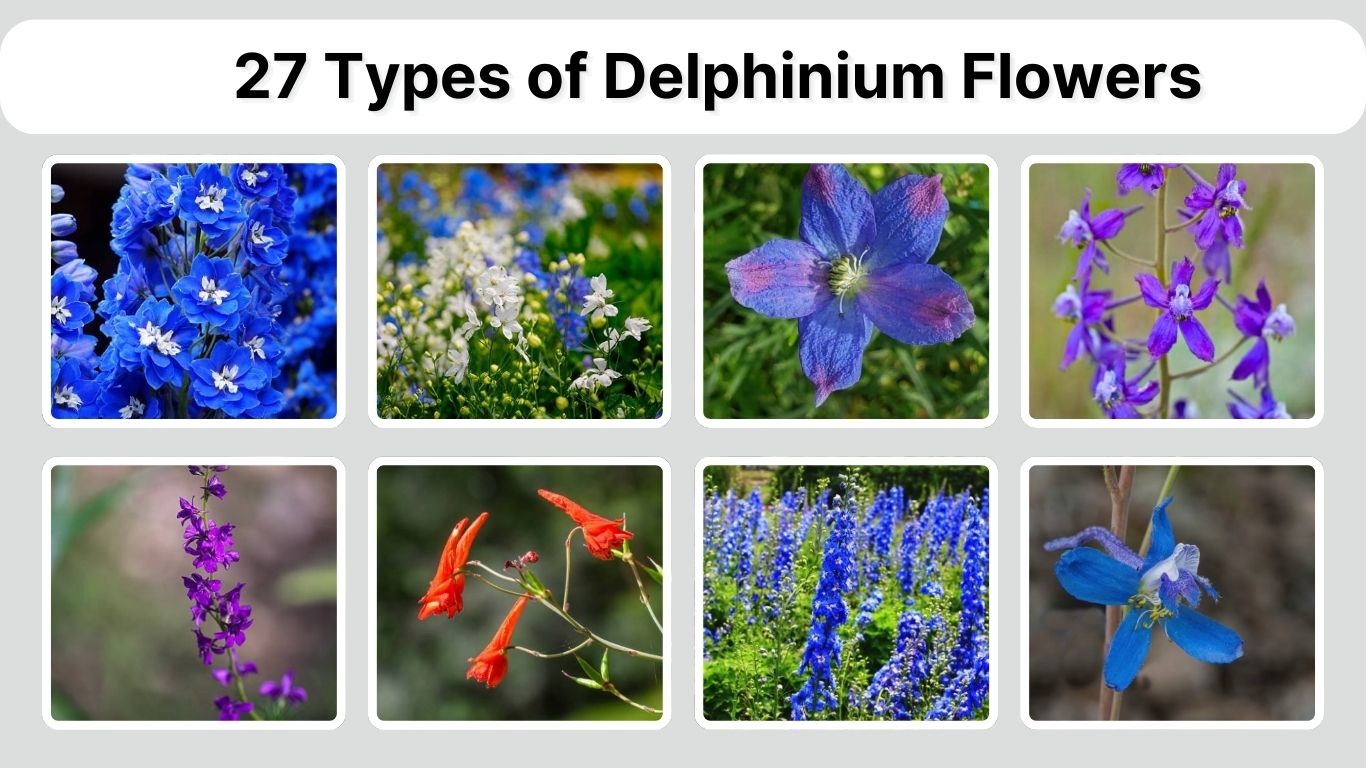
Delphiniums are stunning perennial and annual flowers known for their tall, elegant spikes and vibrant colors, ranging from deep blues and purples to reds, pinks, yellows, and whites. These versatile plants add height, drama, and charm to garden borders, rockeries, and wildflower meadows. Popular among gardeners and pollinators alike, Delphiniums require well-drained soil, full sun, and occasional staking for support. With proper care, they provide long-lasting blooms that enhance any landscape with vertical beauty and vivid floral displays.
1. Delphinium elatum
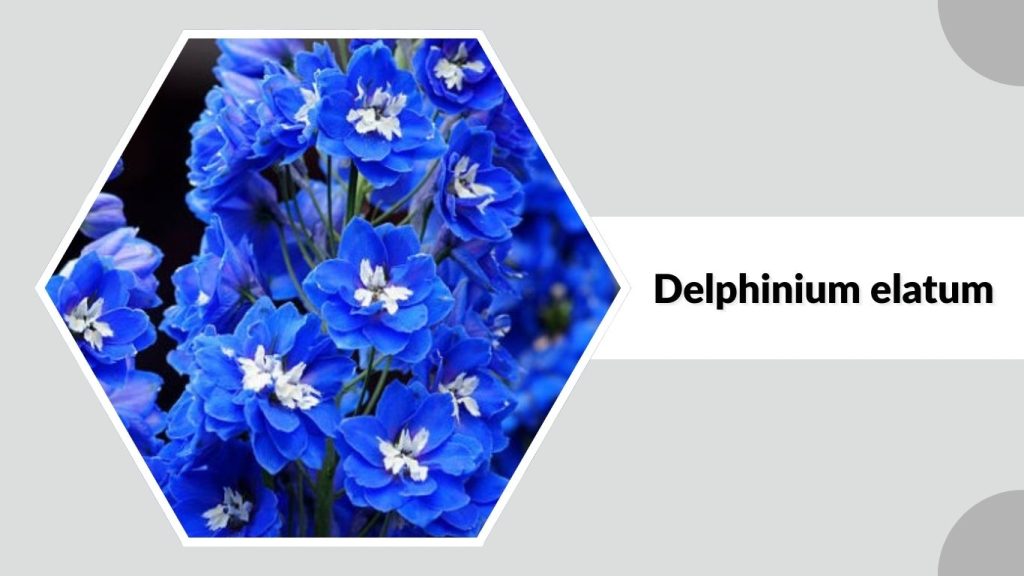
Delphinium elatum, commonly known as tall larkspur, is a striking perennial that adds height and vibrant color to gardens. Known for its tall, erect spikes covered in beautiful blue, purple, or white flowers, it thrives in well-drained soil and sunny locations. This species is particularly popular in cottage gardens and flower borders for its dramatic floral display during the summer months.
Identification
- Tall, upright stems reaching 1.2–2 meters
- Spikes densely packed with blue, violet, or white flowers
- Deeply lobed, palmate green leaves
Habitat
Delphinium elatum is native to Europe and Asia and prefers temperate climates. It grows best in full sun but can tolerate partial shade, provided the soil is rich and well-draining.
Growth and Care
This species requires staking due to its tall flower spikes, regular watering, and occasional fertilization during the growing season. Deadheading spent blooms can encourage a longer flowering period.
Flowering Season
Delphinium elatum typically blooms in mid to late summer, offering a spectacular display of dense flower spikes that can last for several weeks under optimal conditions.
2. Delphinium grandiflorum
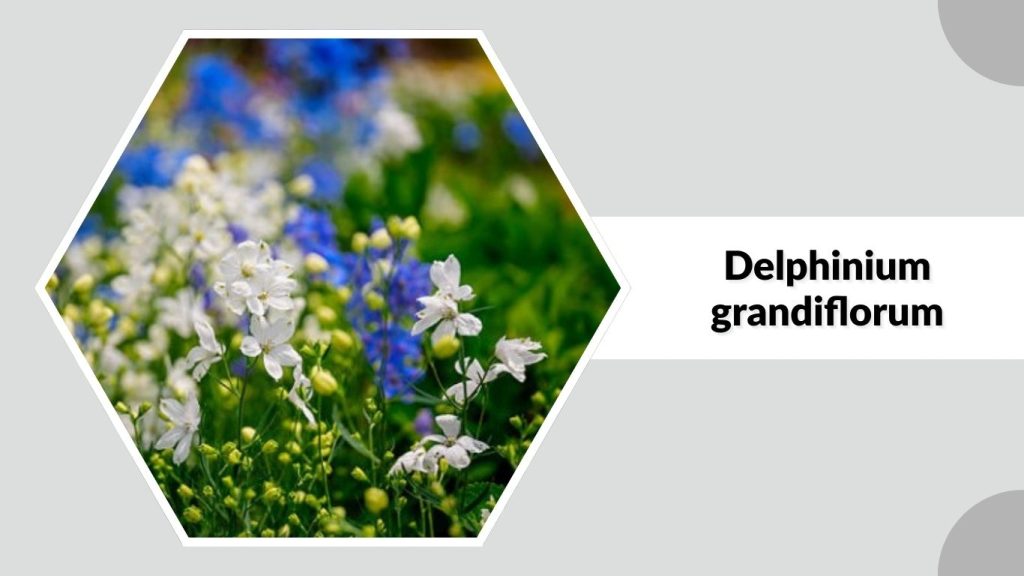
Delphinium grandiflorum, also known as Chinese larkspur, is a charming perennial with a more compact stature than its taller relatives. It produces delicate, sky-blue flowers on shorter stems, making it ideal for rock gardens, borders, and containers. This species is valued for its long-lasting blooms and ability to naturalize in suitable garden conditions.
Identification
- Shorter stems, usually 30–60 cm tall
- Soft sky-blue, sometimes purple or white flowers
- Lobed, green leaves forming a basal rosette
Habitat
Native to Siberia and Mongolia, Delphinium grandiflorum thrives in well-drained, fertile soil with full sun exposure. It prefers cooler climates and benefits from protection from strong winds.
Growth and Care
This species is relatively low-maintenance. Regular watering during dry periods and light fertilization can promote healthy growth. Deadheading spent flowers encourages rebloom and keeps the plant tidy.
Flowering Season
Delphinium grandiflorum typically blooms from late spring to early summer, providing vibrant color in smaller garden spaces.
3. Delphinium belladonna
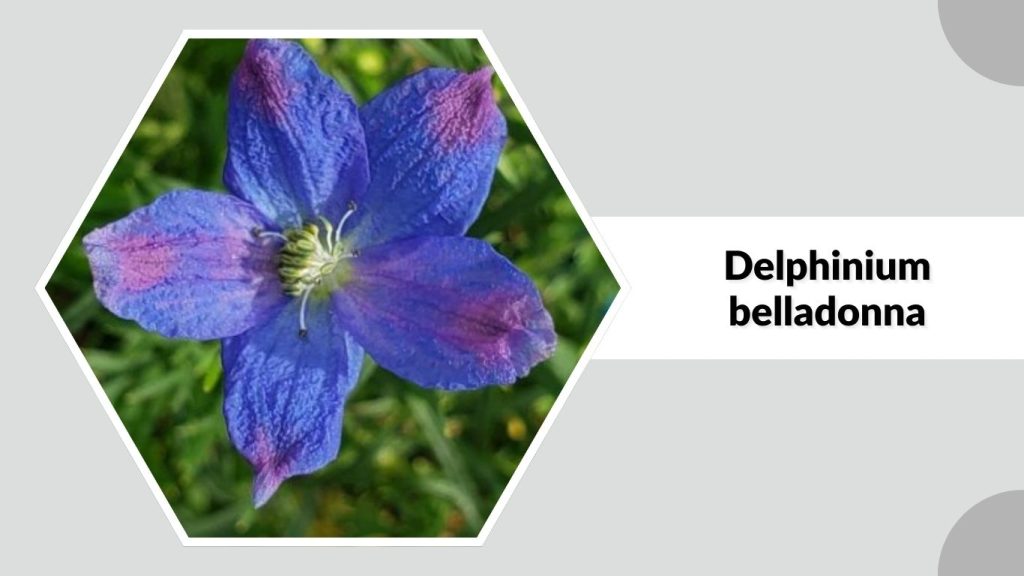
Delphinium belladonna, commonly called belladonna larkspur, is a perennial known for its elegant, tall spikes of deep violet to purple flowers. It produces fragrant blooms that attract pollinators like bees and butterflies. This species is admired for its vertical garden presence and works well in borders, mixed perennial beds, and cottage-style gardens.
Identification
- Erect stems reaching 1–1.5 meters tall
- Dense spikes of violet or purple flowers
- Finely divided, lance-shaped green leaves
Habitat
Native to South Africa, Delphinium belladonna thrives in well-drained soil under full sun. It prefers temperate regions and benefits from shelter from strong winds to protect its tall flower spikes.
Growth and Care
This species requires staking for support due to its height. Moderate watering and occasional fertilization enhance flower production. Removing spent blooms can prolong the flowering period.
Flowering Season
Delphinium belladonna typically blooms in late spring to early summer, offering a showy floral display for several weeks.
4. Delphinium cardinale
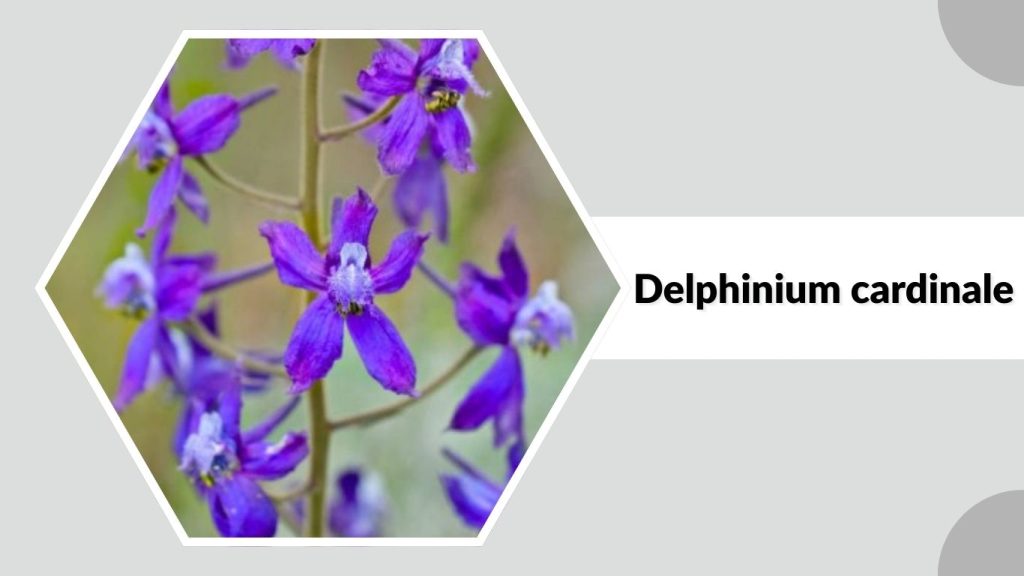
Delphinium cardinale, commonly known as scarlet larkspur, is a striking perennial native to California. Unlike most Delphiniums that bloom in blue or purple, this species features vibrant red flowers that stand out in any garden. It is highly attractive to hummingbirds and adds a bold splash of color to sunny borders and wildflower gardens.
Identification
- Stems grow 1–1.5 meters tall
- Bright red, tubular flowers arranged in spikes
- Deeply lobed, dark green leaves
Habitat
Native to California, Delphinium cardinale thrives in well-drained soil with full sun exposure. It prefers Mediterranean climates and can tolerate dry conditions once established.
Growth and Care
This species requires minimal care once established. Occasional watering and mulching help retain soil moisture. Staking may be necessary to support taller flower spikes.
Flowering Season
Delphinium cardinale blooms from late spring to midsummer, providing an eye-catching display that attracts hummingbirds and pollinators.
5. Delphinium ajacis
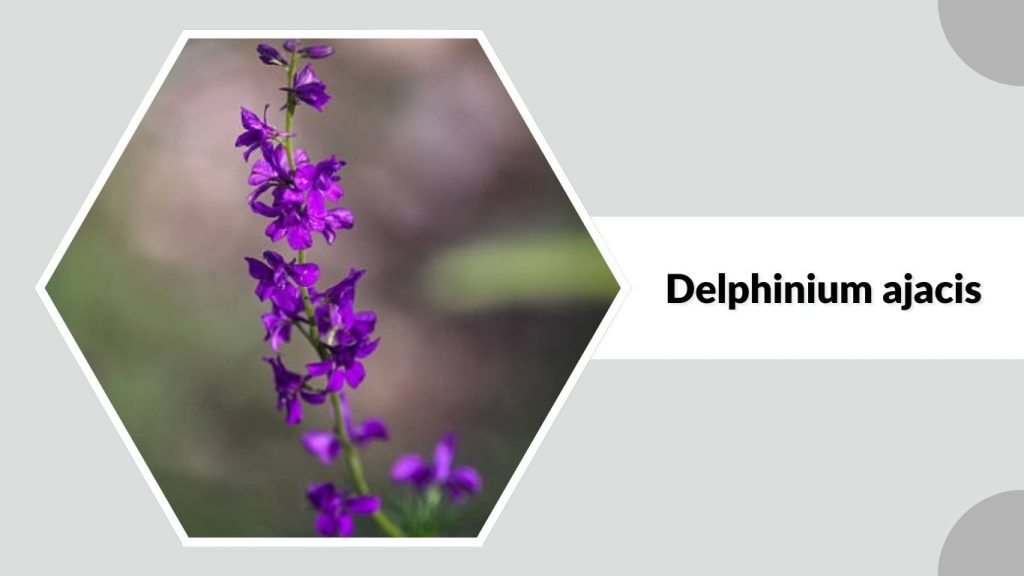
Delphinium ajacis, commonly called Rocket Larkspur or annual larkspur, is a popular annual species prized for its tall, colorful flower spikes. Unlike perennial Delphiniums, it completes its life cycle in one season, making it ideal for brightening borders, cut flower gardens, and containers with vibrant shades of blue, purple, pink, and white.
Identification
- Stems grow 60–120 cm tall
- Flower spikes with dense clusters of blue, purple, pink, or white blossoms
- Finely divided, feathery green leaves
Habitat
Native to the Mediterranean region, Delphinium ajacis prefers well-drained, fertile soil and full sun. It is best suited to temperate climates and benefits from protection against strong winds.
Growth and Care
As an annual, it requires regular watering and fertilization during its growing season. Deadheading spent flowers encourages prolonged blooming and a tidy appearance.
Flowering Season
Delphinium ajacis blooms from late spring through early summer, providing a short but spectacular floral display in gardens.
6. Delphinium hybridum
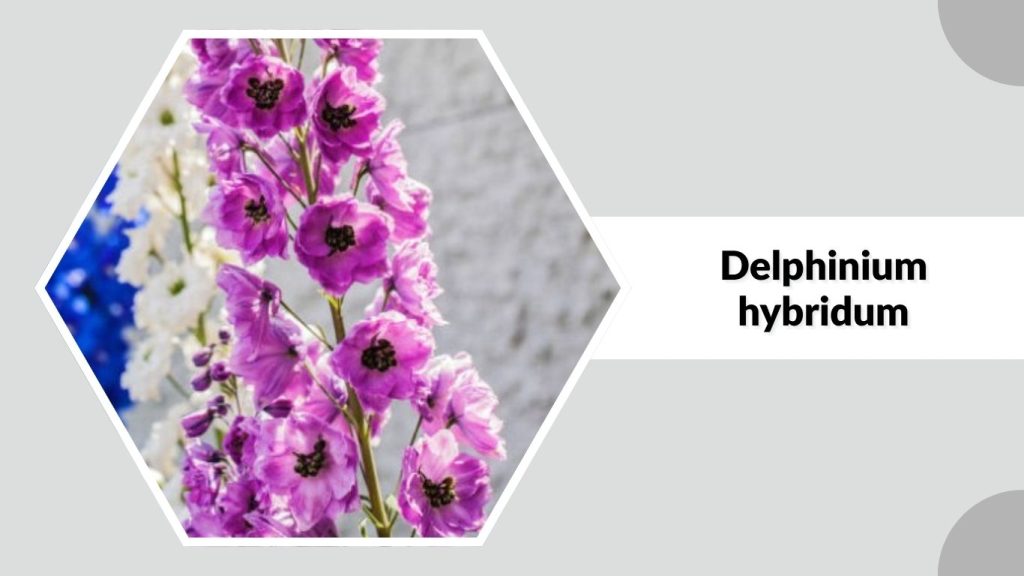
Delphinium hybridum, commonly known as hybrid larkspur, is a cultivated variety developed by crossing different Delphinium species to produce enhanced colors, flower size, and disease resistance. This hybrid is highly popular among gardeners seeking tall, showy spikes in shades ranging from deep blue to soft pink and white, making it ideal for borders and floral arrangements.
Identification
- Stems grow 1–2 meters tall
- Large, dense flower spikes in blue, purple, pink, or white
- Deeply lobed green leaves
Habitat
Delphinium hybridum thrives in well-drained, fertile soil with full sun exposure. It prefers temperate climates and benefits from shelter from strong winds to protect its tall flower spikes.
Growth and Care
This species requires staking due to its height. Regular watering, mulching, and fertilization enhance growth and flowering. Deadheading spent blooms promotes a longer flowering season.
Flowering Season
Delphinium hybridum typically blooms from mid to late summer, producing dramatic floral spikes that serve as a focal point in garden designs.
7. Delphinium nudicaule
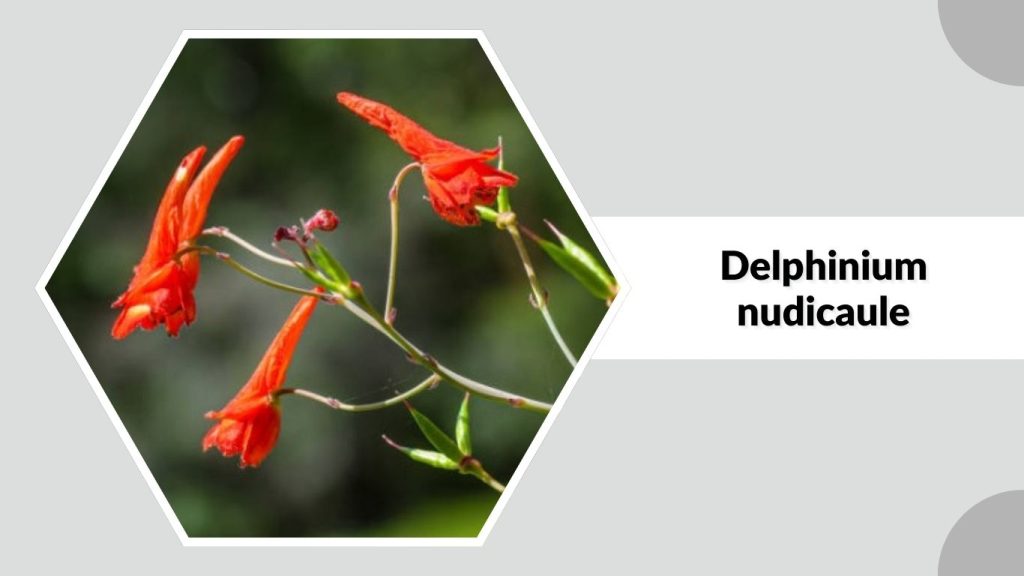
Delphinium nudicaule, commonly known as red larkspur or scarlet larkspur, is a striking perennial notable for its bright red or orange tubular flowers. Unlike the taller blue-flowered species, this Delphinium is shorter and attracts hummingbirds, making it a favorite for pollinator-friendly gardens and naturalized wildflower areas.
Identification
- Stems grow 60–90 cm tall
- Bright red or orange tubular flowers in loose spikes
- Finely divided green foliage at the base
Habitat
Native to western North America, Delphinium nudicaule prefers well-drained soil and full sun. It thrives in temperate climates and is commonly found along meadows and open woodlands.
Growth and Care
This species is relatively low-maintenance. Water regularly during dry periods and provide light fertilization to encourage healthy growth. Staking may be needed for taller flower spikes.
Flowering Season
Delphinium nudicaule blooms in late spring to early summer, offering a vivid splash of color that draws hummingbirds and other pollinators.
8. Delphinium perenne
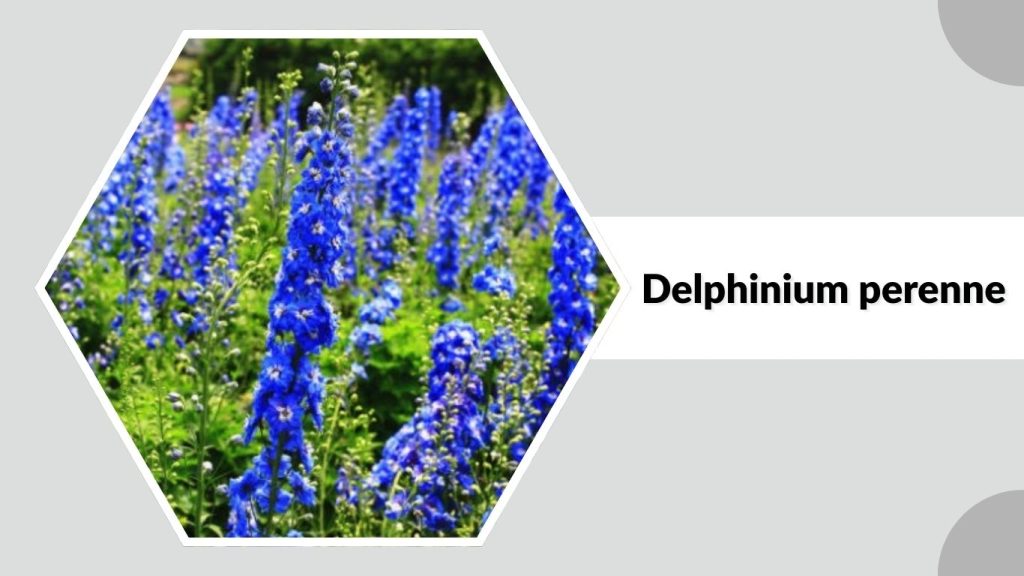
Delphinium perenne, commonly known as perennial larkspur, is a hardy species prized for its tall, showy spikes of blue to violet flowers. It is widely cultivated in temperate gardens for borders, cottage gardens, and cut flower arrangements. Its robust growth and long-lasting blooms make it a favorite among perennial enthusiasts.
Identification
- Stems grow 1–1.5 meters tall
- Flower spikes with dense blue, violet, or occasionally white flowers
- Deeply lobed, palmate green leaves
Habitat
Native to Europe and Asia, Delphinium perenne thrives in well-drained, fertile soil with full sun exposure. It prefers temperate climates and benefits from protection against strong winds.
Growth and Care
Staking is recommended due to its tall flower spikes. Regular watering, fertilization, and deadheading spent flowers promote healthy growth and extended blooming. Mulching helps retain soil moisture.
Flowering Season
Delphinium perenne blooms from early to mid-summer, producing striking floral displays that can last several weeks under optimal conditions.
9. Delphinium pacificum
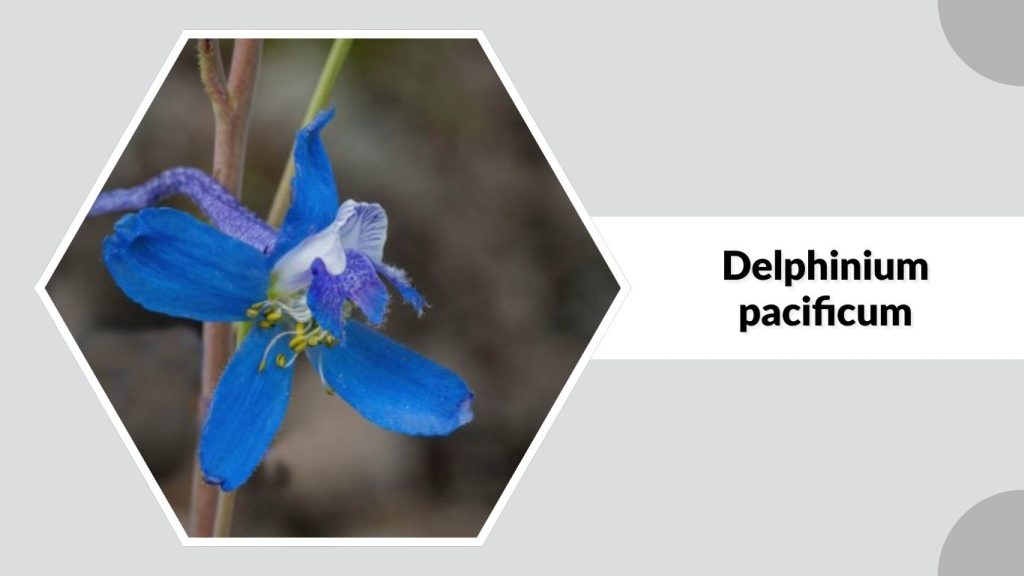
Delphinium pacificum, commonly known as Pacific larkspur, is a perennial species native to the western regions of North America. It features tall spikes of vibrant blue flowers that add elegance to garden borders and natural landscapes. This species is appreciated for its adaptability and long-lasting blooms.
Identification
- Stems grow 1–1.5 meters tall
- Bright blue flower spikes with multiple blossoms
- Deeply lobed, dark green leaves
Habitat
Native to the Pacific Coast of North America, Delphinium pacificum thrives in well-drained soil with full sun. It grows naturally in meadows, open woodlands, and along slopes with moderate moisture.
Growth and Care
This species benefits from staking due to its tall stems. Regular watering and fertilization encourage healthy growth, while removing spent flowers prolongs blooming. Mulching helps retain soil moisture and protects roots.
Flowering Season
Delphinium pacificum blooms from late spring to mid-summer, providing striking vertical color in garden settings.
10. Delphinium exaltatum
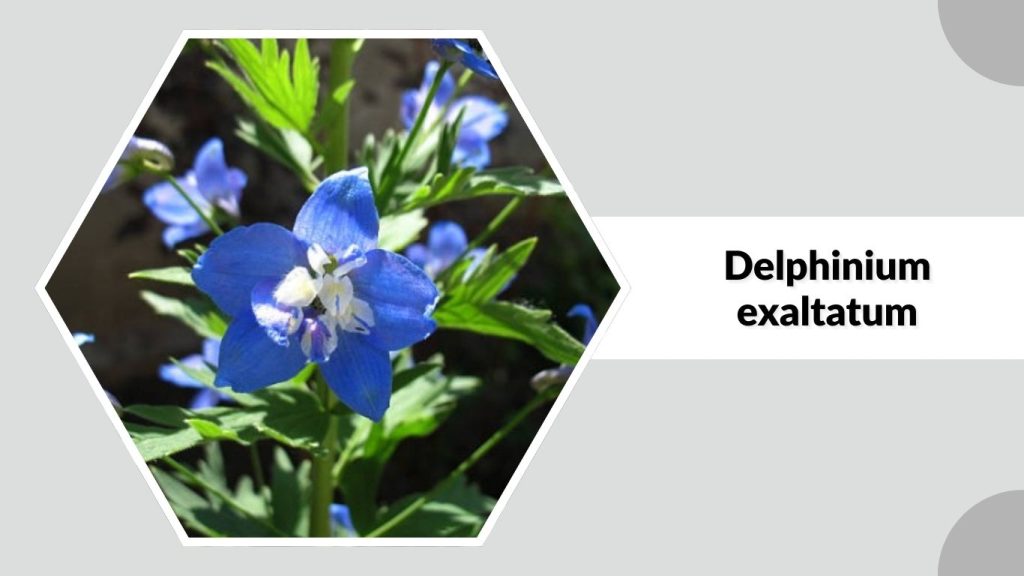
Delphinium exaltatum, commonly known as tall larkspur or prairie larkspur, is a robust perennial species native to North American prairies. It is admired for its impressive height and dense spikes of blue to violet flowers, making it a standout in wildflower meadows and large garden borders.
Identification
- Stems grow 1.5–2 meters tall
- Dense flower spikes in shades of blue or violet
- Deeply lobed, palmate green leaves
Habitat
Native to central and eastern North America, Delphinium exaltatum thrives in well-drained soils with full sun. It is commonly found in prairies, meadows, and open woodlands, preferring temperate climates.
Growth and Care
This species requires staking to support tall flower spikes. Regular watering, fertilization, and deadheading spent blooms encourage prolonged flowering. Mulching helps conserve soil moisture.
Flowering Season
Delphinium exaltatum typically blooms in mid to late summer, providing dramatic vertical color that attracts pollinators like bees and butterflies.
11. Delphinium trolliifolium
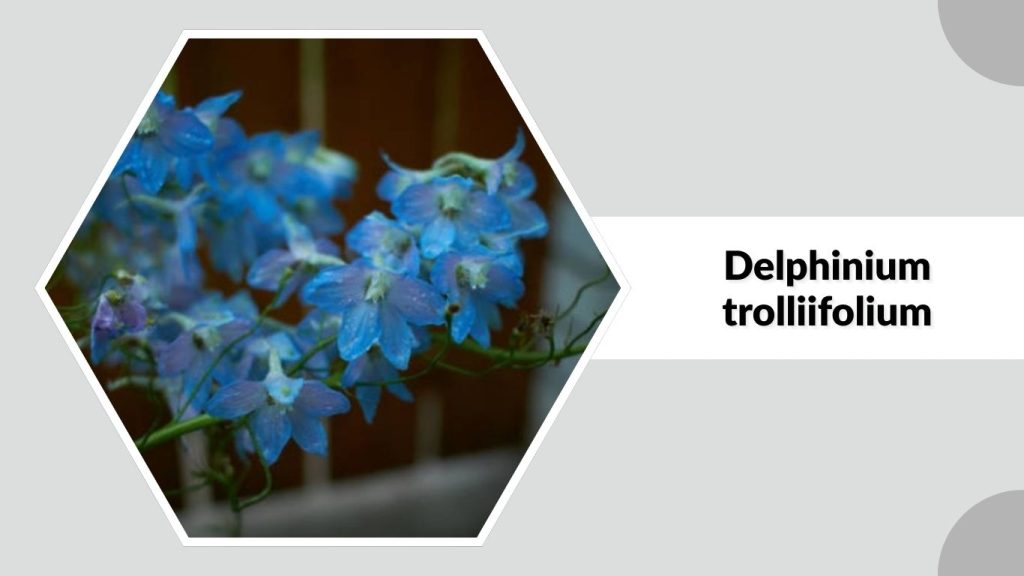
Delphinium trolliifolium, commonly called Trollius-leaved larkspur, is a perennial species valued for its delicate, sky-blue to violet flower spikes. This species is appreciated for its unique foliage that resembles Trollius leaves, and it performs well in temperate gardens and shaded borders.
Identification
- Stems grow 60–120 cm tall
- Sky-blue to violet flower spikes
- Foliage resembles Trollius leaves, deeply lobed and green
Habitat
Native to western North America, Delphinium trolliifolium prefers well-drained soil with full sun to partial shade. It thrives in woodland edges, meadows, and cool temperate climates.
Growth and Care
This species benefits from staking to support flower spikes. Regular watering during dry spells and occasional fertilization help maintain healthy growth. Deadheading spent blooms encourages longer flowering.
Flowering Season
Delphinium trolliifolium blooms from late spring to early summer, producing elegant spikes that attract pollinators and enhance garden aesthetics.
12. Delphinium cheilanthum
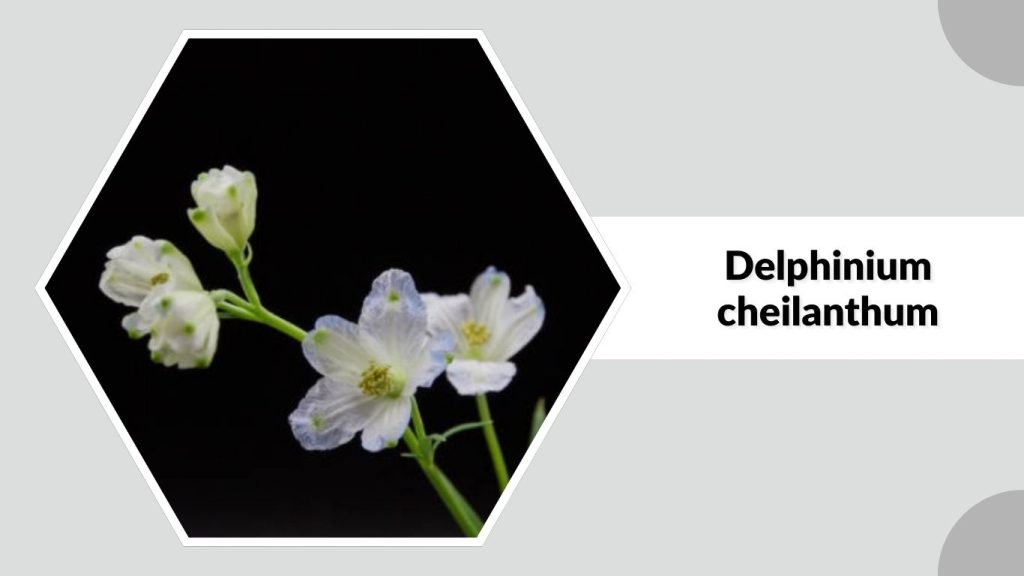
Delphinium cheilanthum, commonly known as rock larkspur, is a perennial species native to rocky and mountainous regions. It features striking blue to purple flowers on slender spikes and is admired for its ability to thrive in less fertile, well-drained soils, making it ideal for rock gardens and naturalized landscapes.
Identification
- Stems grow 40–80 cm tall
- Slender spikes with blue to purple flowers
- Finely divided, green foliage
Habitat
Native to western North America, Delphinium cheilanthum thrives in rocky, well-drained soils with full sun exposure. It is often found on slopes, cliffs, and open meadows at higher elevations.
Growth and Care
This species requires minimal maintenance. Occasional watering and light fertilization encourage healthy growth. Staking may be needed for taller flower spikes. Deadheading spent blooms promotes extended flowering.
Flowering Season
Delphinium cheilanthum blooms in late spring to early summer, offering a delicate and vibrant floral display in rocky or naturalized garden areas.
13. Delphinium bruninianum
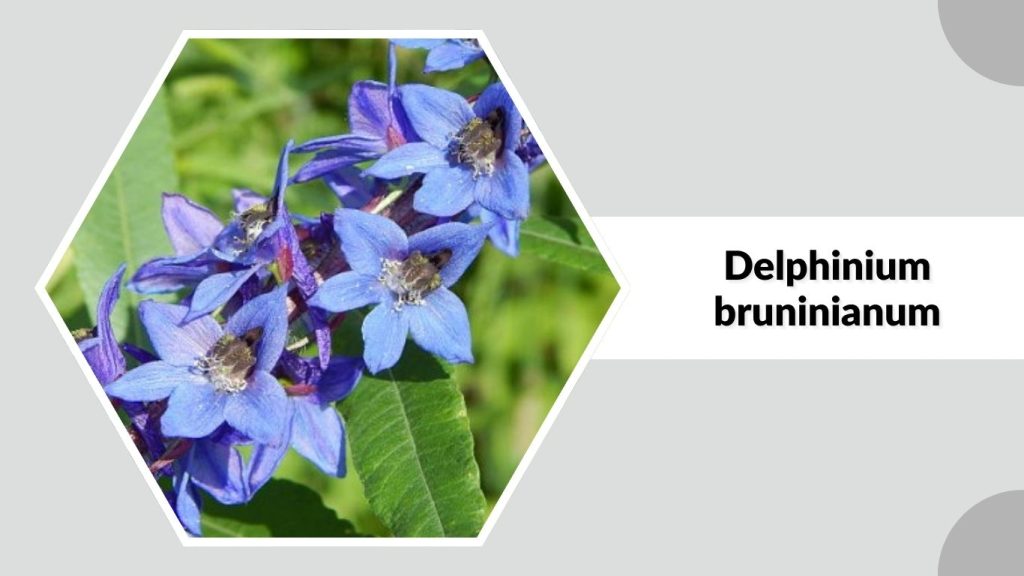
Delphinium bruninianum, commonly known as Brunin’s larkspur, is a perennial species appreciated for its compact growth and vibrant flower spikes. It produces clusters of deep blue to violet blossoms, making it a popular choice for borders, rock gardens, and pollinator-friendly plantings.
Identification
- Stems grow 50–100 cm tall
- Dense spikes of deep blue to violet flowers
- Finely divided green leaves
Habitat
Native to mountainous regions of Central Asia, Delphinium bruninianum thrives in well-drained, fertile soil with full sun to partial shade. It prefers temperate climates and tolerates rocky or sloped terrain.
Growth and Care
This species requires staking for taller spikes. Regular watering, fertilization, and deadheading spent blooms encourage healthy growth and prolonged flowering. Mulching helps maintain soil moisture.
Flowering Season
Delphinium bruninianum blooms from late spring to mid-summer, providing vivid floral spikes that attract bees and butterflies to the garden.
14. Delphinium hansenii
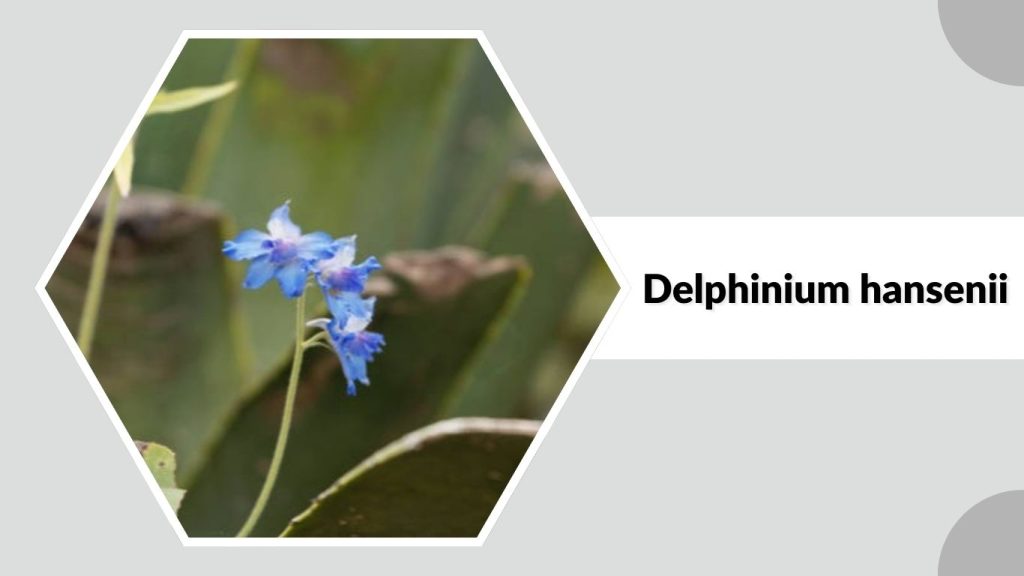
Delphinium hansenii, commonly known as Hansen’s larkspur, is a perennial species notable for its vibrant blue to violet flower spikes and compact growth habit. This species is valued for its ability to thrive in well-drained soils and for attracting pollinators, making it ideal for garden borders and wildflower plantings.
Identification
- Stems grow 60–120 cm tall
- Flower spikes with bright blue to violet blossoms
- Deeply lobed green leaves
Habitat
Native to California and parts of western North America, Delphinium hansenii prefers well-drained soil with full sun exposure. It can grow on slopes, meadows, and open woodlands, thriving in temperate climates.
Growth and Care
This species benefits from staking to support taller flower spikes. Regular watering, light fertilization, and deadheading spent blooms promote healthy growth and prolonged flowering.
Flowering Season
Delphinium hansenii blooms in late spring to early summer, offering vivid color and vertical interest in garden landscapes.
15. Delphinium staphisagria
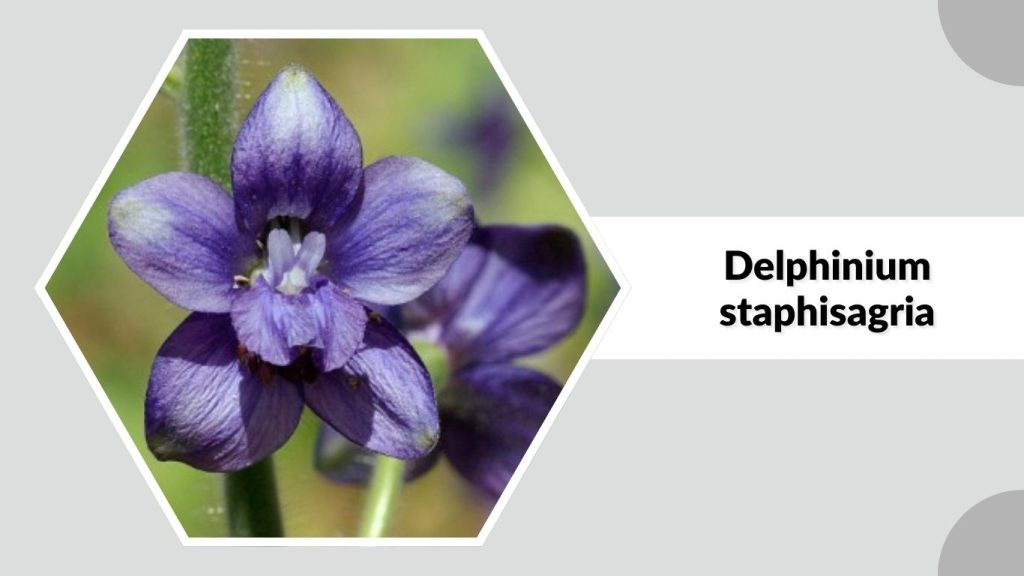
Delphinium staphisagria, commonly known as stavesacre or devil’s claw, is a perennial species recognized for its tall, striking spikes of violet-blue flowers. Historically, it has been used for medicinal purposes, but in gardens, it is valued for its architectural height and dramatic floral display.
Identification
- Stems grow 1–1.5 meters tall
- Spikes of violet-blue flowers
- Pinnately divided, green leaves
Habitat
Native to the Mediterranean region, Delphinium staphisagria prefers well-drained, fertile soils and full sun exposure. It grows naturally on rocky slopes, open fields, and dry meadows.
Growth and Care
This species requires staking to support tall flower spikes. Moderate watering, fertilization, and deadheading spent blooms help maintain vigorous growth. Caution is advised as all parts are toxic if ingested.
Flowering Season
Delphinium staphisagria blooms in late spring to early summer, producing elegant vertical spikes that attract pollinators and add height to garden borders.
16. Delphinium halteratum
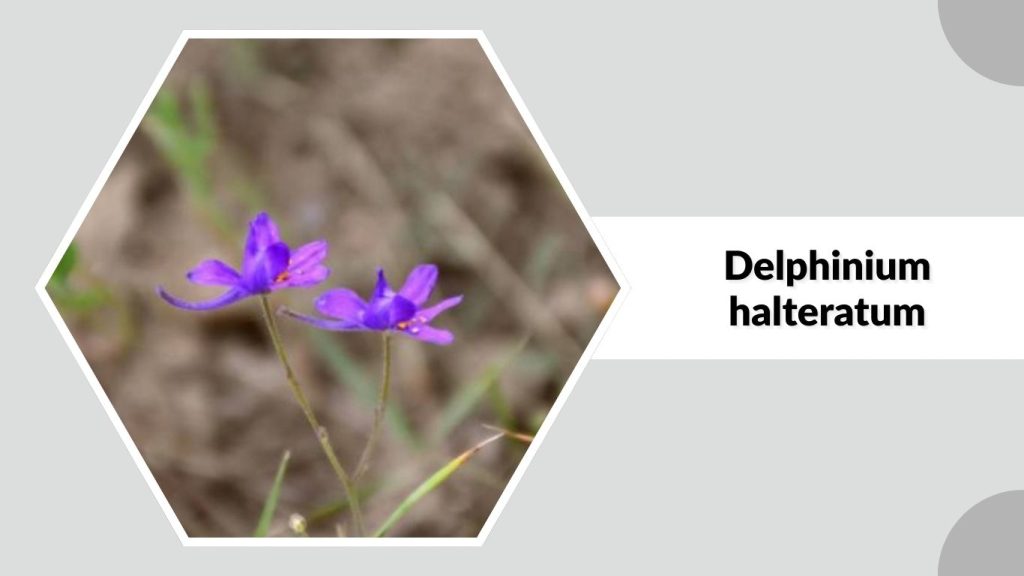
Delphinium halteratum, commonly known as rocky larkspur, is a perennial species notable for its compact growth and clusters of bright blue to purple flowers. It is ideal for rock gardens, borders, and naturalized areas due to its adaptability to well-drained soils and cooler climates.
Identification
- Stems grow 40–80 cm tall
- Dense clusters of bright blue to purple flowers
- Finely divided green leaves
Habitat
Native to southern Europe, Delphinium halteratum thrives in rocky, well-drained soils with full sun. It is often found on hillsides, slopes, and open meadows.
Growth and Care
This species requires minimal maintenance. Occasional watering and light fertilization promote healthy growth. Staking may be necessary for taller flower spikes. Deadheading encourages a longer flowering period.
Flowering Season
Delphinium halteratum blooms in late spring to early summer, providing a colorful and compact floral display in gardens and natural landscapes.
17. Delphinium viscidum
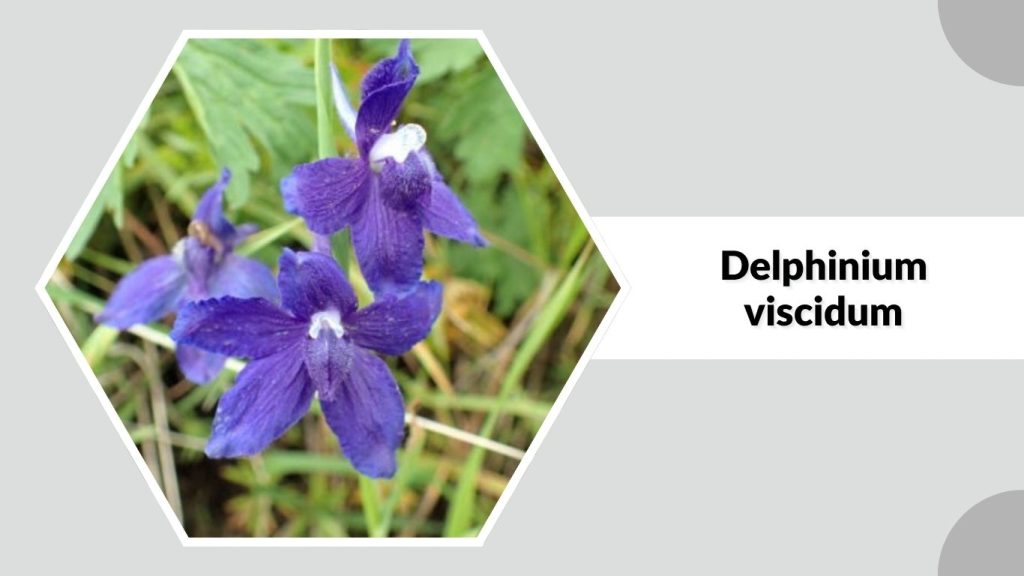
Delphinium viscidum, commonly known as sticky larkspur, is a perennial species recognized for its striking blue to violet flowers and slightly sticky foliage. It is valued for garden borders, meadows, and pollinator-friendly plantings, adding vertical interest and vibrant color.
Identification
- Stems grow 60–120 cm tall
- Spikes of blue to violet flowers
- Sticky, finely divided green leaves
Habitat
Native to western North America, Delphinium viscidum prefers well-drained soil and full sun to partial shade. It grows naturally in meadows, open woodlands, and foothills.
Growth and Care
This species benefits from staking due to its taller flower spikes. Regular watering and light fertilization encourage healthy growth. Deadheading spent blooms prolongs flowering.
Flowering Season
Delphinium viscidum blooms from late spring to early summer, producing elegant vertical spikes that attract pollinators and enhance garden aesthetics.
18. Delphinium andersonii
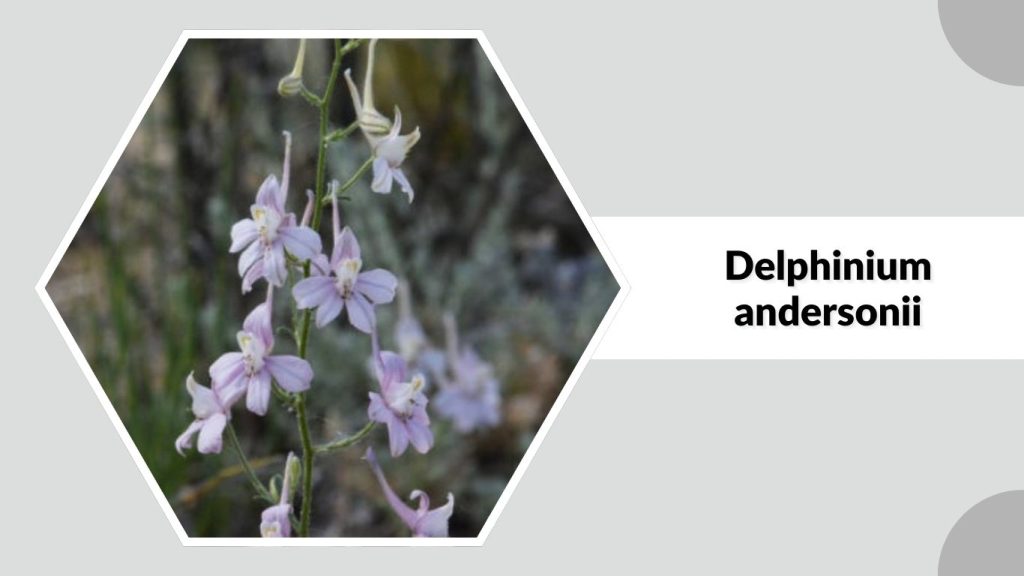
Delphinium andersonii, commonly known as Anderson’s larkspur, is a perennial species prized for its tall, vibrant flower spikes and robust growth. Its blue to violet blossoms make it a popular choice for wildflower gardens, borders, and naturalized landscapes in temperate regions.
Identification
- Stems grow 1–1.5 meters tall
- Dense spikes of blue to violet flowers
- Deeply lobed, green foliage
Habitat
Native to western North America, Delphinium andersonii thrives in well-drained soil with full sun exposure. It naturally occurs in open meadows, rocky slopes, and foothill regions.
Growth and Care
This species requires staking for support of tall flower spikes. Regular watering and light fertilization promote vigorous growth. Deadheading spent flowers encourages longer flowering.
Flowering Season
Delphinium andersonii blooms in late spring to early summer, providing a dramatic vertical display that attracts bees, butterflies, and other pollinators.
19. Delphinium depauperatum
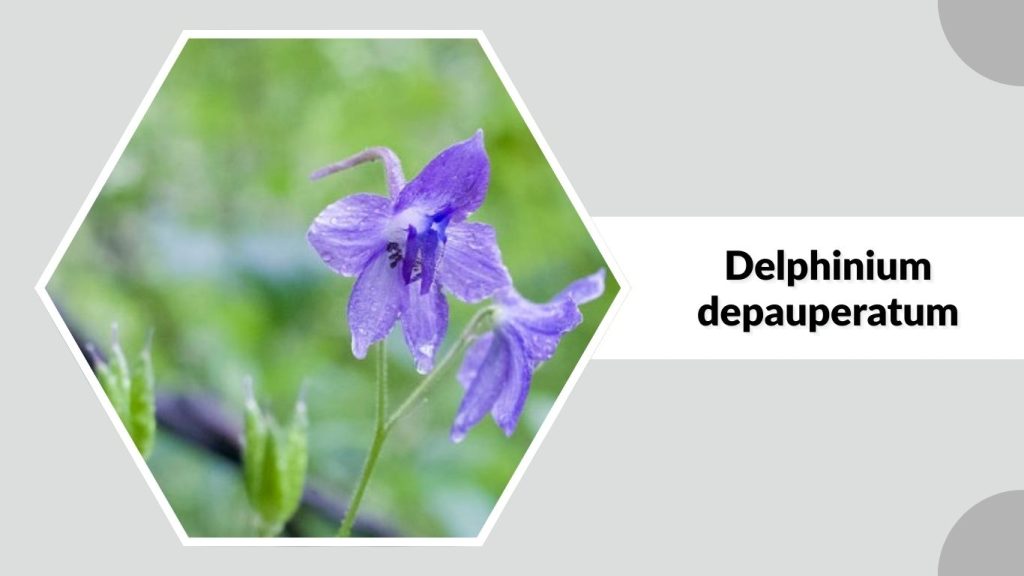
Delphinium depauperatum, commonly known as slender larkspur, is a compact perennial species noted for its delicate spikes of blue to purple flowers. Its shorter stature and graceful blooms make it ideal for rock gardens, borders, and smaller garden spaces.
Identification
- Stems grow 30–60 cm tall
- Slender spikes with blue to purple flowers
- Finely divided green leaves
Habitat
Native to western North America, Delphinium depauperatum thrives in well-drained, rocky soils with full sun to partial shade. It is commonly found on slopes, hillsides, and open meadows.
Growth and Care
This species requires minimal care. Occasional watering and light fertilization encourage healthy growth. Deadheading spent flowers promotes a longer flowering period.
Flowering Season
Delphinium depauperatum blooms from late spring to early summer, providing subtle yet elegant floral displays suitable for compact garden areas.
20. Delphinium decorum
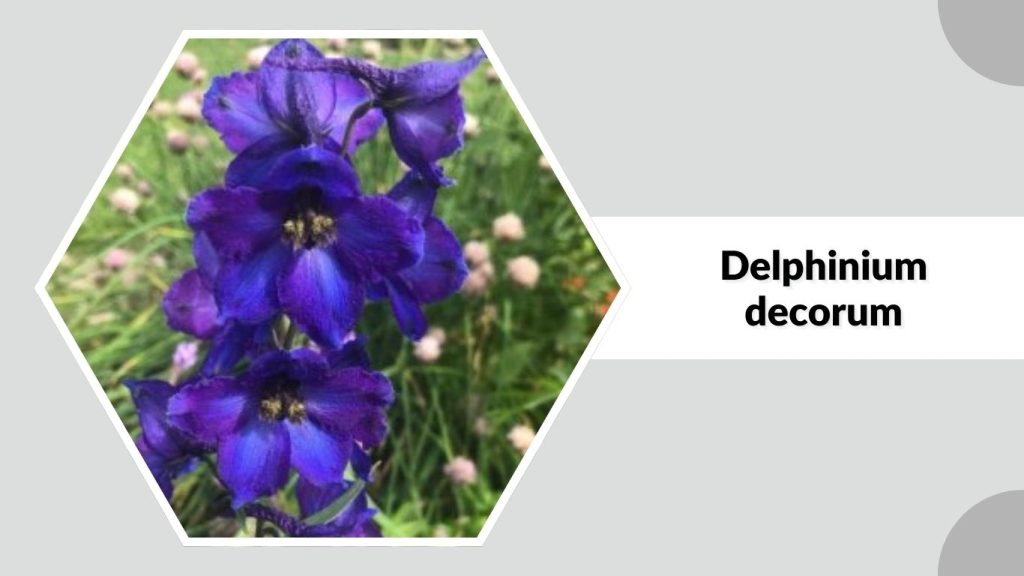
Delphinium decorum, commonly known as pleasant larkspur, is a perennial species admired for its tall, elegant spikes of violet-blue flowers. It is popular in cottage gardens, borders, and wildflower plantings for its striking vertical presence and ability to attract pollinators.
Identification
- Stems grow 1–1.5 meters tall
- Flower spikes with violet-blue blossoms
- Deeply lobed, palmate green leaves
Habitat
Native to western North America, Delphinium decorum thrives in well-drained soils with full sun. It naturally occurs in meadows, hillsides, and open woodland areas, preferring temperate climates.
Growth and Care
This species requires staking to support tall flower spikes. Regular watering, light fertilization, and deadheading spent blooms promote healthy growth and extended flowering.
Flowering Season
Delphinium decorum blooms in late spring to early summer, producing elegant floral spikes that enhance garden aesthetics and attract pollinators.
21. Delphinium luteum
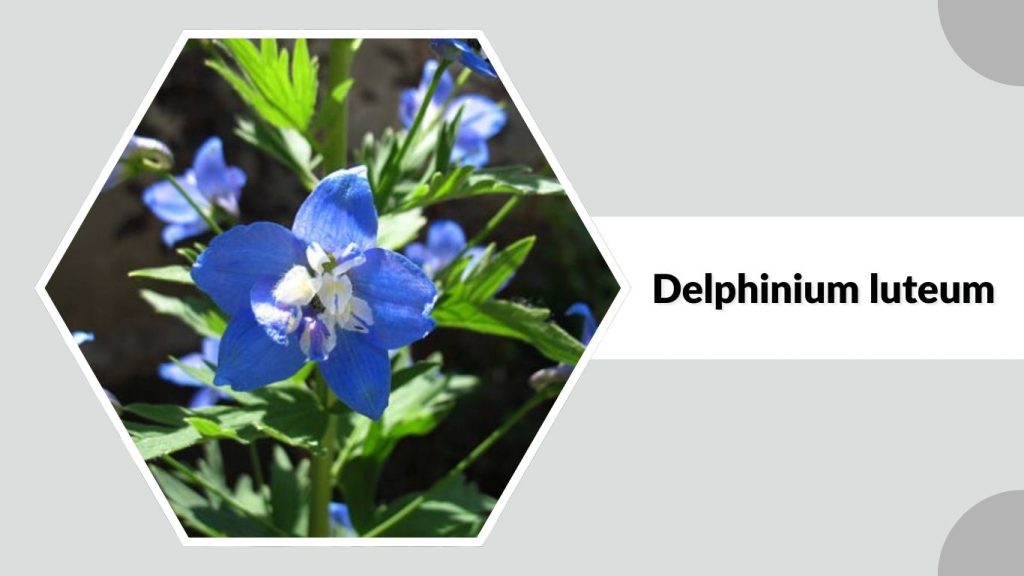
Delphinium luteum, commonly known as yellow larkspur, is a rare perennial species admired for its bright yellow flowers, a unique color among Delphiniums. It adds a cheerful splash to garden borders, meadows, and wildflower plantings, while attracting pollinators like bees and butterflies.
Identification
- Stems grow 60–120 cm tall
- Spikes of bright yellow flowers
- Deeply lobed green leaves
Habitat
Native to coastal California, Delphinium luteum thrives in well-drained soil with full sun exposure. It prefers temperate climates and can tolerate sandy or rocky soils.
Growth and Care
This species benefits from staking to support taller spikes. Regular watering and light fertilization encourage healthy growth. Deadheading spent flowers promotes a longer flowering period.
Flowering Season
Delphinium luteum blooms from late spring to early summer, providing a vibrant and uncommon floral display in gardens.
22. Delphinium parishii
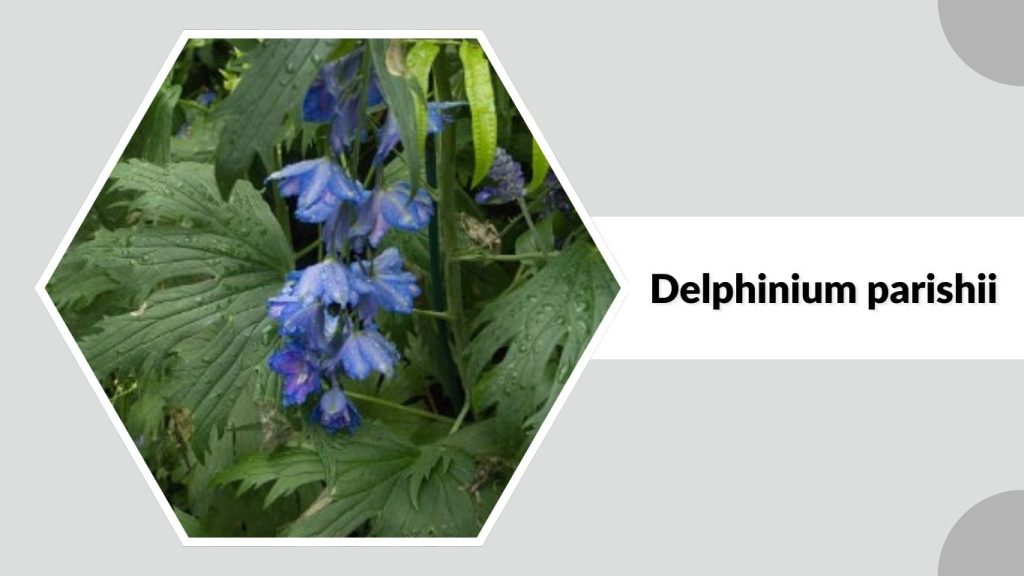
Delphinium parishii, commonly known as Parish’s larkspur, is a perennial species known for its delicate spikes of deep blue to violet flowers. It is popular in wildflower gardens and rockeries for its compact size and attractive blooms.
Identification
- Stems grow 40–90 cm tall
- Spikes of deep blue to violet flowers
- Finely divided green leaves
Habitat
Native to southern California and northern Mexico, Delphinium parishii thrives in well-drained soils with full sun to partial shade. It is commonly found in rocky slopes, chaparral, and open meadows.
Growth and Care
This species requires minimal maintenance. Occasional watering and light fertilization support healthy growth. Deadheading spent flowers promotes longer flowering and keeps the plant tidy.
Flowering Season
Delphinium parishii blooms from late spring to early summer, providing a subtle yet colorful display that attracts pollinators to the garden.
23. Delphinium californicum
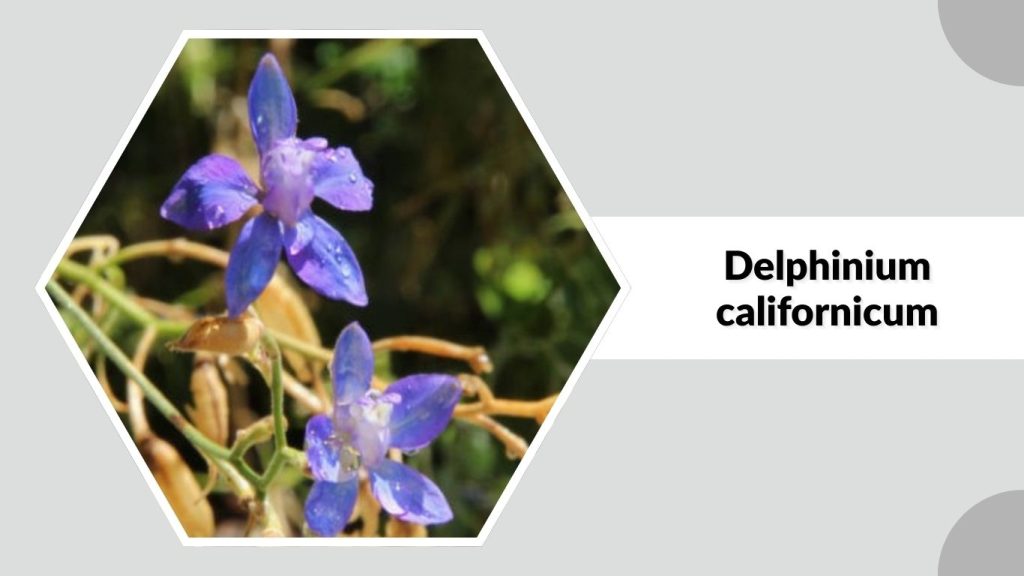
Delphinium californicum, commonly known as California larkspur, is a perennial species prized for its tall spikes of vibrant blue to purple flowers. It is well-suited for garden borders, wildflower meadows, and naturalized landscapes, providing a striking vertical accent.
Identification
- Stems grow 1–1.5 meters tall
- Dense flower spikes of blue to purple blossoms
- Deeply lobed green leaves
Habitat
Native to California, Delphinium californicum thrives in well-drained soil with full sun. It naturally occurs on slopes, meadows, and open woodland areas in temperate climates.
Growth and Care
This species requires staking to support tall flower spikes. Regular watering, light fertilization, and deadheading spent blooms encourage prolonged flowering and healthy growth.
Flowering Season
Delphinium californicum blooms in late spring to mid-summer, producing dramatic vertical floral displays that attract pollinators.
24. Delphinium scopulorum
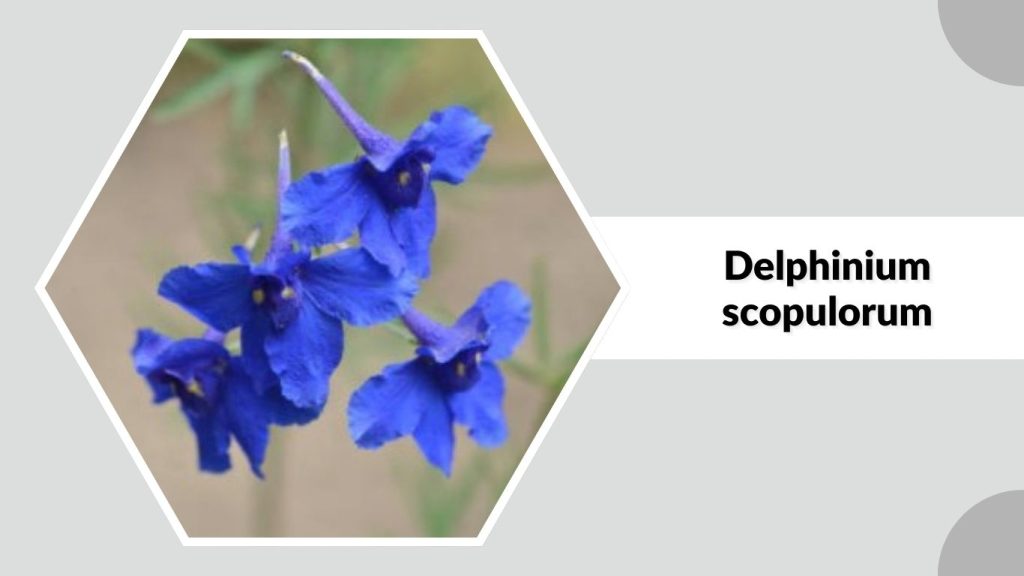
Delphinium scopulorum, commonly known as Rocky Mountain larkspur, is a perennial species admired for its tall, vibrant spikes of blue to violet flowers. It is a striking addition to garden borders, wildflower meadows, and naturalized landscapes, providing both height and color.
Identification
- Stems grow 1–1.5 meters tall
- Flower spikes of blue to violet blossoms
- Deeply lobed green leaves
Habitat
Native to the Rocky Mountains in North America, Delphinium scopulorum thrives in well-drained soil with full sun. It naturally grows in mountain meadows, slopes, and open woodland areas.
Growth and Care
This species benefits from staking due to its tall flower spikes. Regular watering and light fertilization promote healthy growth. Deadheading spent flowers encourages prolonged blooming.
Flowering Season
Delphinium scopulorum blooms from late spring to mid-summer, producing tall, elegant floral spikes that attract bees and butterflies.
25. Delphinium oxysepalum
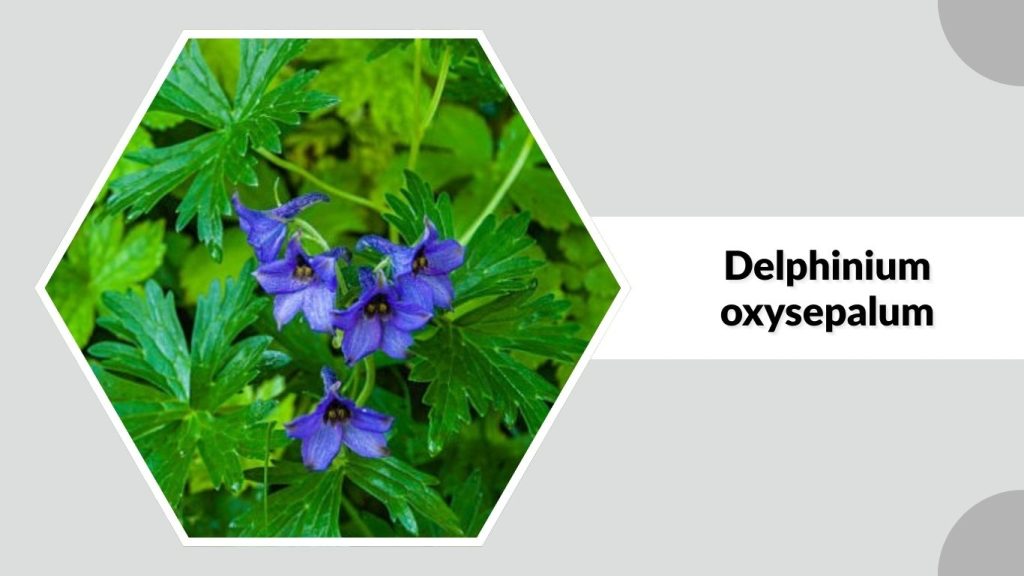
Delphinium oxysepalum, commonly known as sharp-sepal larkspur, is a perennial species noted for its slender, upright spikes of bright blue flowers. Its delicate appearance and compact growth make it ideal for rock gardens, borders, and pollinator-friendly plantings.
Identification
- Stems grow 40–90 cm tall
- Slender spikes of bright blue flowers
- Finely divided green foliage
Habitat
Native to central and eastern Asia, Delphinium oxysepalum thrives in well-drained, fertile soils with full sun to partial shade. It naturally grows on slopes, meadows, and rocky terrains.
Growth and Care
This species requires minimal maintenance. Occasional watering and light fertilization support healthy growth. Staking may be needed for taller flower spikes. Deadheading encourages longer flowering.
Flowering Season
Delphinium oxysepalum blooms from late spring to early summer, providing elegant blue floral spikes that attract pollinators.
26. Delphinium elatum ‘Magic Fountain’
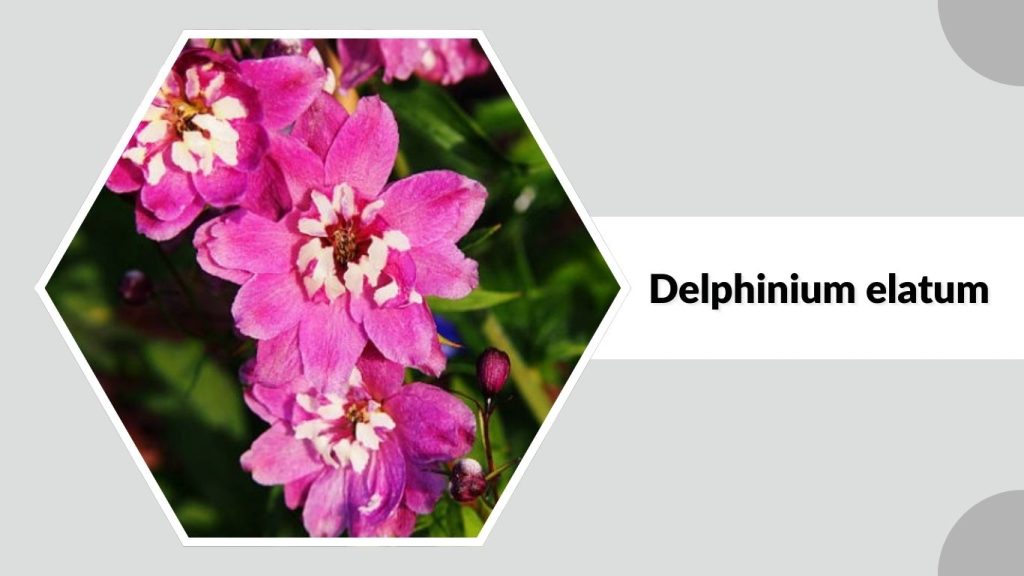
Delphinium elatum ‘Magic Fountain’ is a cultivated variety of tall larkspur, prized for its extra-large, vibrant flower spikes in shades of deep blue and violet. It is a popular choice for garden borders, cottage gardens, and cut flower arrangements due to its dramatic height and extended blooming period.
Identification
- Stems grow 1.5–2 meters tall
- Large, dense spikes of deep blue to violet flowers
- Deeply lobed, palmate green leaves
Habitat
Thrives in well-drained, fertile soil with full sun exposure. Prefers temperate climates and benefits from shelter against strong winds to protect its tall flower spikes.
Growth and Care
Requires staking to support tall flower spikes. Regular watering, mulching, and fertilization enhance growth and flowering. Deadheading spent blooms encourages longer flowering.
Flowering Season
Delphinium elatum ‘Magic Fountain’ blooms from mid to late summer, producing spectacular vertical floral displays that serve as a focal point in gardens.
27. Delphinium grandiflorum ‘Blue Butterfly’
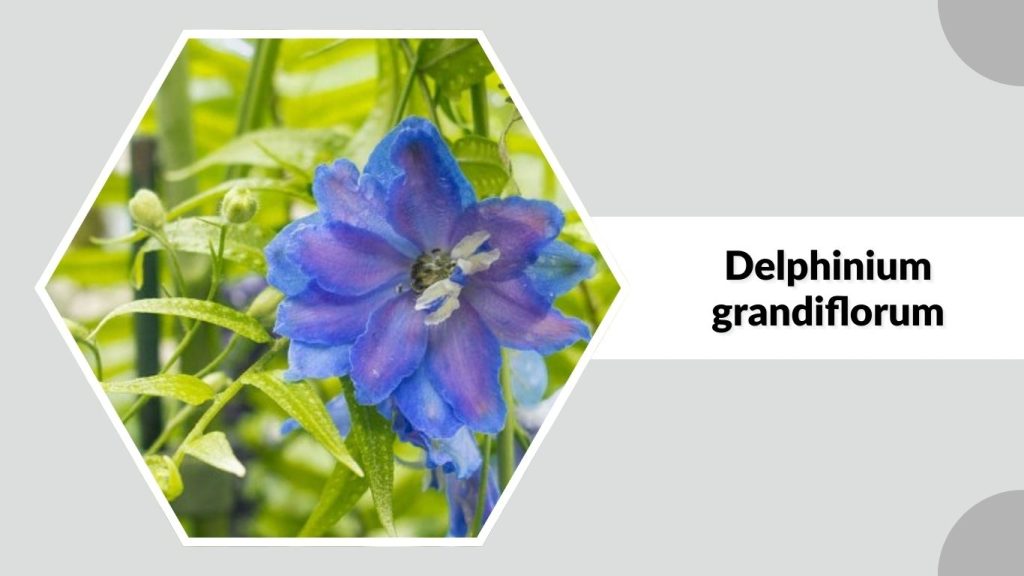
Delphinium grandiflorum ‘Blue Butterfly’ is a compact, perennial cultivar known for its delicate sky-blue flowers and low-growing habit. Ideal for rock gardens, borders, and containers, this variety adds a gentle splash of color while being easy to maintain and suitable for smaller garden spaces.
Identification
- Stems grow 30–60 cm tall
- Sky-blue, butterfly-shaped flowers
- Finely divided green leaves forming a basal rosette
Habitat
Thrives in well-drained soil with full sun to partial shade. Prefers cooler temperate climates and can tolerate rocky or sloped garden areas.
Growth and Care
Requires minimal maintenance. Regular watering during dry periods and light fertilization promote healthy growth. Deadheading spent flowers encourages rebloom and keeps the plant tidy.
Flowering Season
Delphinium grandiflorum ‘Blue Butterfly’ blooms from late spring to early summer, offering a charming and delicate floral display in compact garden spaces.
FAQs
What is the easiest Delphinium species to grow?
Delphinium grandiflorum and its cultivars, like ‘Blue Butterfly,’ are considered easiest to grow. They are compact, hardy, and require minimal staking. These species thrive in well-drained soil and tolerate cooler climates, making them ideal for small gardens or rockeries.
How tall do Delphinium flowers grow?
Most Delphinium species range from 30 cm to 2 meters tall. Taller species like Delphinium elatum or Delphinium exaltatum produce dramatic flower spikes, while compact varieties such as Delphinium grandiflorum stay lower, suitable for rock gardens or borders.
When do Delphiniums bloom?
Delphiniums generally bloom from late spring to mid-summer. Some species may continue flowering into early summer with proper care, deadheading, and fertilization. Bloom duration varies depending on species, climate, and garden conditions.
How do I care for Delphinium spikes?
Tall Delphiniums require staking to prevent bending or breaking. They benefit from regular watering, fertile well-drained soil, and light fertilization. Deadheading spent flowers encourages prolonged blooming, while mulching helps retain soil moisture.
Are Delphiniums safe for pets and humans?
Delphiniums contain toxic alkaloids in all parts of the plant. Ingestion can cause nausea, vomiting, or more severe reactions. Pets and children should be kept away, and care should be taken when handling the plants.