




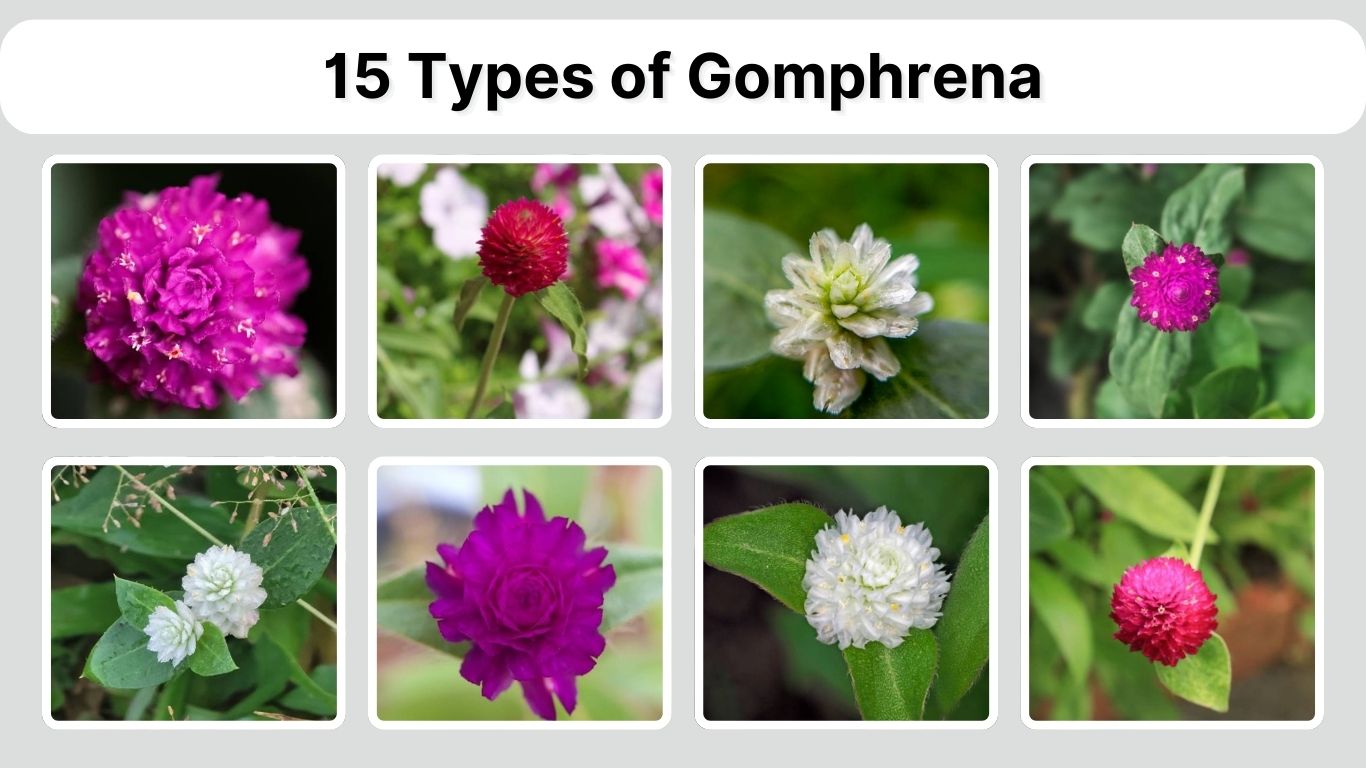
Gomphrena is a colorful and resilient flowering plant genus best known for its round, clover-like blooms and exceptional heat tolerance. Commonly called globe amaranth, these plants are widely grown in gardens for their bright colors, long blooming season, and ability to thrive in sunny, dry conditions. Native mainly to the Americas, Gomphrena species are also valued for cut flowers and dried arrangements because their papery blooms retain shape and color long after harvesting.
1. Gomphrena globosa (Globe Amaranth)
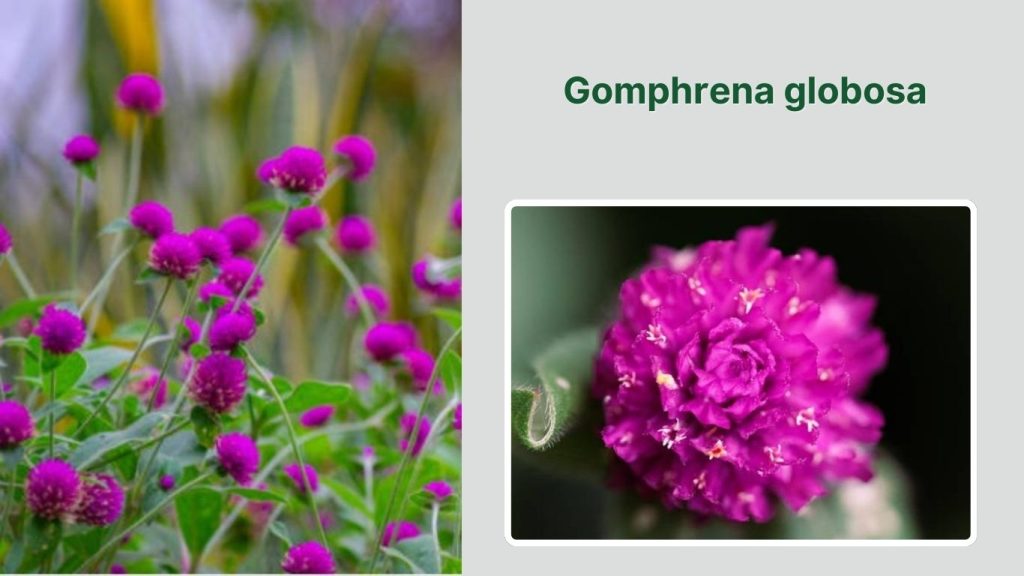
Gomphrena globosa is the most well-known and widely grown species of Gomphrena, loved for its round, clover-like flower heads and excellent drought tolerance. Native to Central America, this annual plant is popular in gardens, borders, and dried-flower arrangements because its blooms keep their color long after harvesting.
Identification
- Small, round, button-shaped flower heads
- Common colors: purple, pink, red, white, and lavender
- Upright, bushy growth habit
- Narrow, slightly hairy green leaves
- Average height: 12–24 inches
Habitat and Growth
Gomphrena globosa thrives in warm, sunny locations and grows best in well-drained soil. It is highly tolerant of heat and dry conditions, making it suitable for tropical, subtropical, and summer gardens. The plant grows quickly from seed and blooms continuously from early summer until frost.
Flowering and Appearance
The colorful “flowers” are actually papery bracts that surround tiny true flowers. This structure gives globe amaranth its long-lasting quality both on the plant and when dried. The blooms maintain their bright color even in strong sunlight and are attractive to butterflies and other pollinators.
Uses and Importance
Gomphrena globosa is widely used as an ornamental bedding plant, edging plant, and container flower. It is especially valued for dried floral crafts, bouquets, and potpourri. In some cultures, parts of the plant are also used in traditional herbal teas and decorative garlands.
2. Gomphrena haageana (Strawberry Globe Amaranth)
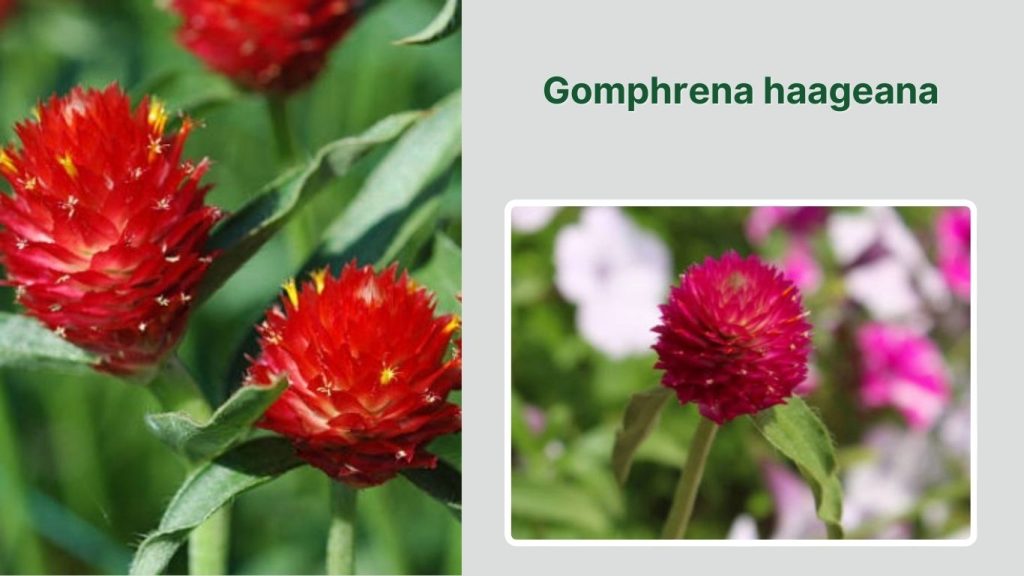
Gomphrena haageana is a vibrant Gomphrena species best known for its bright orange-red, strawberry-like flower heads and exceptional heat tolerance. Native to Mexico and parts of Central America, this species is widely grown as an ornamental garden plant, especially in hot, dry regions where many flowers struggle to thrive.
Identification
- Bright orange, scarlet, or red globe-shaped flower heads
- Slightly larger blooms than Gomphrena globosa
- Upright, bushy growth habit
- Soft, oval to lance-shaped green leaves
- Average height: 18–30 inches
Habitat and Growth
Gomphrena haageana prefers full sun and well-drained soil, performing best in warm climates with moderate to low humidity. It is drought-tolerant once established and grows rapidly from seed, producing flowers continuously throughout the summer and early fall.
Flowering and Appearance
The blooms are made of stiff, papery bracts that retain their rich color even after drying. Compared to globe amaranth, the flower heads are often slightly larger and more intensely colored, making this species a standout in garden beds and mixed borders.
Uses and Importance
Strawberry globe amaranth is commonly planted for bright seasonal color, pollinator gardens, and mass landscaping. Its flowers are excellent for cutting and drying, often used in wreaths, everlasting bouquets, and decorative craft projects.
3. Gomphrena serrata
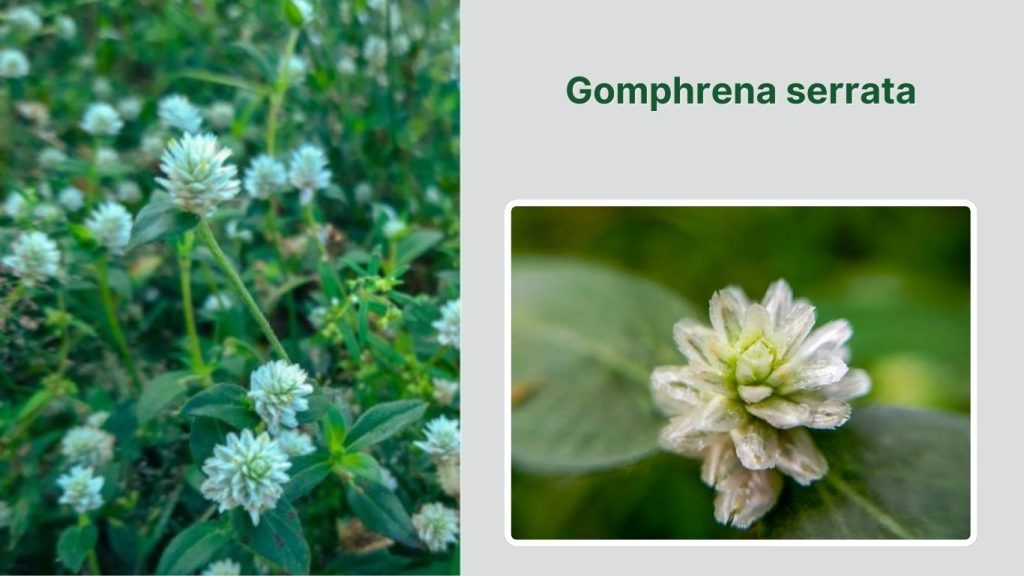
Gomphrena serrata is a lesser-known but attractive species of Gomphrena, valued for its compact growth and neatly rounded flower heads. Native to parts of South America, this species is adapted to warm climates and is often found growing naturally in open grasslands and lightly disturbed soils.
Identification
- Small, rounded flower heads, usually pink to purple
- Slightly toothed (serrated) leaf edges
- Low to medium, bushy growth habit
- Soft, oval to elongated green leaves
- Thin but sturdy, branching stems
Habitat and Growth
Gomphrena serrata grows best in full sun and well-drained, sandy or loamy soil. It tolerates heat and moderate drought, making it suitable for warm gardens and naturalistic landscapes. In the wild, it often appears in open fields, roadsides, and dry lowland regions.
Flowering and Appearance
The flower heads are made of papery bracts that surround tiny true flowers, giving the plant a long-lasting ornamental appeal. Blooming usually begins in early summer and continues into fall, with flowers holding their color well even under strong sunlight.
Uses and Importance
This species is mainly used as an ornamental plant in small garden beds, borders, and wildflower-style plantings. Its neat shape and persistent blooms also make it suitable for dried floral arrangements and decorative garden displays.
4. Gomphrena pulchella
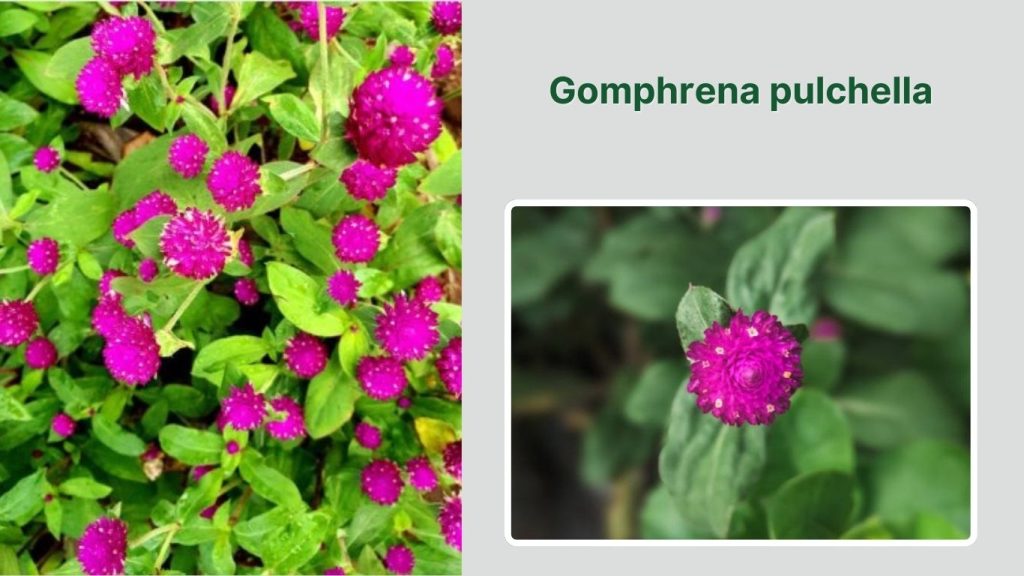
Gomphrena pulchella is a charming Gomphrena species recognized for its airy growth habit and soft, clover-like flower heads. Native to South America, especially Brazil and Argentina, it is often grown as an ornamental plant and is appreciated for its delicate look combined with strong heat tolerance.
Identification
- Small, rounded to slightly elongated flower heads
- Common colors: pale pink, lavender, and light purple
- Slender, branching stems with an open growth habit
- Narrow, soft-textured green leaves
- Light, bushy, and spreading form
Habitat and Growth
Gomphrena pulchella thrives in full sun and well-drained soil, especially in sandy or rocky conditions. It is well adapted to warm, dry environments and shows good resistance to heat stress. The plant grows quickly and flowers over a long season, from early summer into autumn.
Flowering and Appearance
The papery bracts form soft, pastel-colored heads that appear to float above the foliage on thin stems. This gives the plant a light, graceful appearance compared to more compact Gomphrena species. The flowers retain their color fairly well when cut and dried.
Uses and Importance
This species is mainly grown for ornamental purposes, especially in mixed borders, cottage-style gardens, and container plantings. Its delicate blooms add texture and softness to floral arrangements, both fresh and dried.
5. Gomphrena celosioides (Prostrate Globe Amaranth)
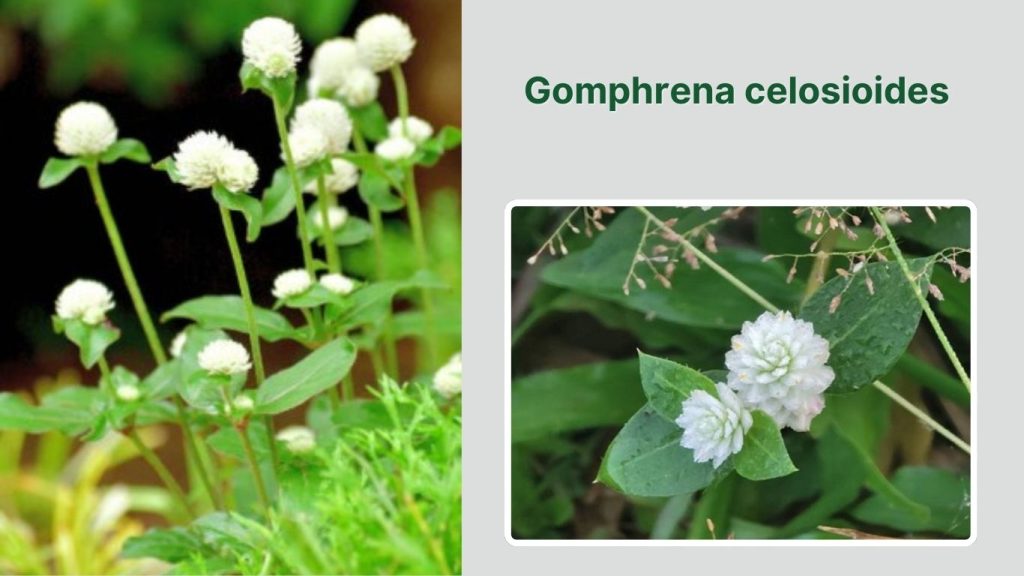
Gomphrena celosioides is a low-growing Gomphrena species known for its spreading habit and small, button-like white to pale pink flower heads. Native to tropical America, it is commonly found naturalized in warm regions and often grows along roadsides, lawns, and open fields.
Identification
- Small, round, white to pale pink flower heads
- Prostrate to low, spreading growth form
- Opposite, oval to oblong green leaves
- Fine hairs on stems and leaves
- Mat-forming or ground-hugging habit
Habitat and Growth
Gomphrena celosioides thrives in full sun and well-drained soils, including sandy and disturbed ground. It tolerates heat, drought, and poor soil conditions, which allows it to spread easily in tropical and subtropical environments. It often behaves as a hardy annual or short-lived perennial.
Flowering and Appearance
The tiny, papery flower heads appear at the tips of short stems and leaf axils, creating a scattered, dotted look across the plant. Although the blooms are smaller than those of garden globe amaranth, they are long-lasting and continue appearing through most of the warm season.
Uses and Importance
This species is sometimes used as a groundcover in warm climates and is also valued in traditional practices in some regions. Its tough nature makes it useful for soil stabilization, low-maintenance landscapes, and informal garden settings.
6. Gomphrena decumbens
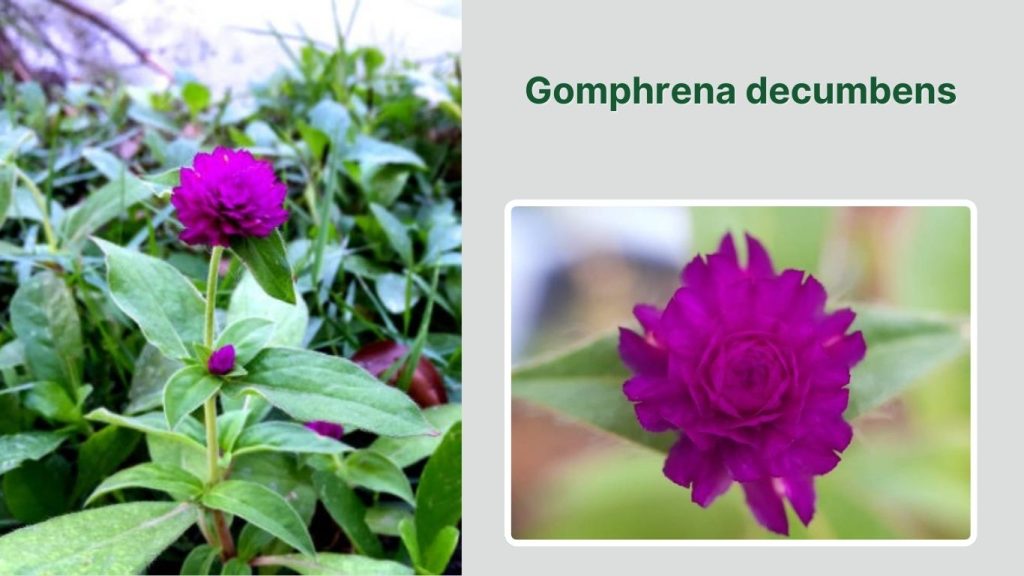
Gomphrena decumbens is a spreading Gomphrena species recognized for its low, trailing stems and small, rounded flower heads. Native to South America, it naturally grows in open, sunny habitats where soils are light and well drained, making it well adapted to warm and dry conditions.
Identification
- Small, globe-shaped flower heads, usually white to pale pink
- Decumbent (trailing and spreading) growth habit
- Slender, creeping stems that root at nodes
- Oval to oblong, soft green leaves
- Low-growing, mat-forming structure
Habitat and Growth
This species thrives in full sun and sandy or rocky soils with excellent drainage. It is drought tolerant once established and performs well in hot climates. In natural environments, it is often found in grasslands, open plains, and lightly disturbed areas.
Flowering and Appearance
The flowers form small papery heads that sit close to the foliage, creating a subtle but attractive carpet of blooms. Flowering usually continues from early summer through late fall, with blossoms maintaining their structure even after drying.
Uses and Importance
Gomphrena decumbens is mainly used as a groundcover or edging plant in warm-climate gardens. Its spreading habit makes it useful for covering bare soil, hanging baskets, and low borders, and it can also be harvested for small dried-flower arrangements.
7. Gomphrena macrocephala
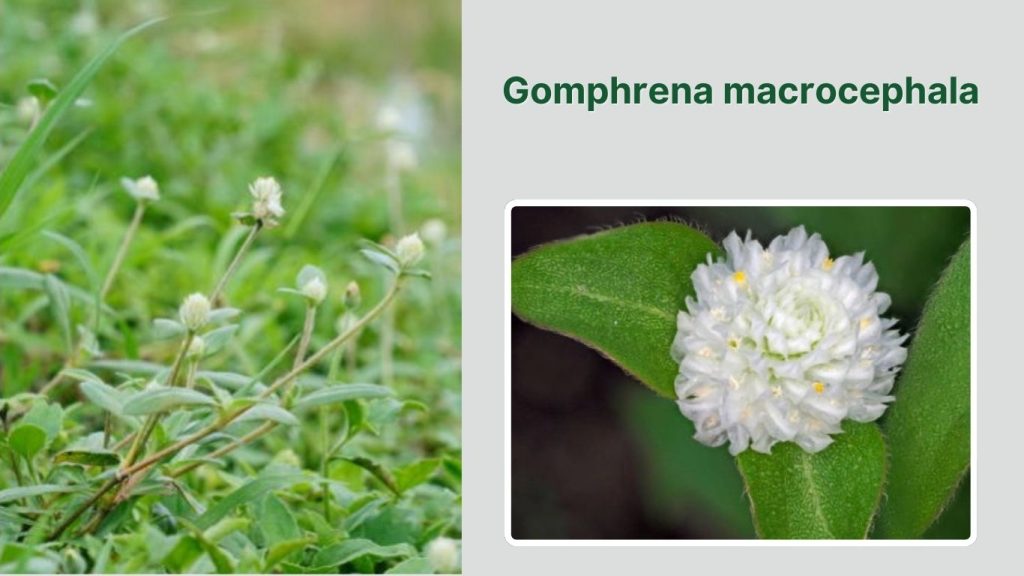
Gomphrena macrocephala is a striking Gomphrena species distinguished by its relatively large flower heads compared to many other members of the genus. Native to parts of South America, this species is adapted to open, sunny habitats and is valued for its bold appearance and long-lasting blooms.
Identification
- Larger, rounded flower heads than most Gomphrena species
- Colors often include deep pink, purple, or reddish tones
- Upright to semi-erect growth habit
- Broad, soft-textured green leaves
- Strong, straight stems supporting prominent blooms
Habitat and Growth
Gomphrena macrocephala grows best in full sun with well-drained, moderately fertile soil. It tolerates heat well and can handle short dry periods once established. In the wild, it is often found in open grasslands and lightly wooded areas of warm regions.
Flowering and Appearance
The prominent flower heads are made of stiff, papery bracts that hold their color well. Because of their size, the blooms stand out clearly above the foliage, making the plant visually bold in garden beds and borders. Flowering typically lasts from mid-summer into early fall.
Uses and Importance
This species is mainly cultivated for ornamental use, particularly where larger, eye-catching globe flowers are desired. It is suitable for flower beds, mixed borders, and cutting gardens, and its blooms are also useful for dried floral decorations.
8. Gomphrena martiana
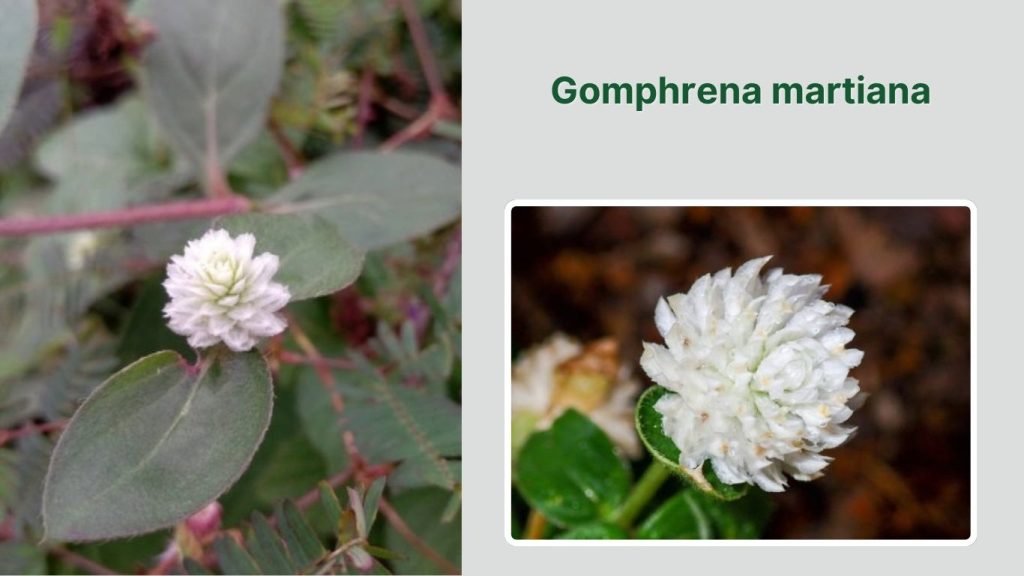
Gomphrena martiana is a South American Gomphrena species appreciated for its neat growth habit and soft-colored, rounded flower heads. It naturally occurs in warm, open environments and is adapted to bright sunlight and well-drained soils.
Identification
- Small to medium, rounded flower heads
- Colors typically pale pink, lilac, or light purple
- Upright to slightly spreading growth habit
- Narrow to oval green leaves with soft texture
- Thin but firm, branching stems
Habitat and Growth
This species thrives in full sun and light, well-drained soil, especially sandy or loamy substrates. It is tolerant of heat and moderate drought and is often found growing in grasslands, savannas, and open scrub areas across parts of South America.
Flowering and Appearance
The papery bracts form tidy, globe-like heads that sit just above the foliage. The plant usually blooms from early to late summer, maintaining good color and form even during hot, dry weather. The flowers also dry well and keep their shape.
Uses and Importance
Gomphrena martiana is primarily grown as an ornamental plant in warm-climate gardens. It works well in borders, wildflower-style plantings, and container gardens, and its blooms can also be used in small dried floral arrangements.
9. Gomphrena arborescens
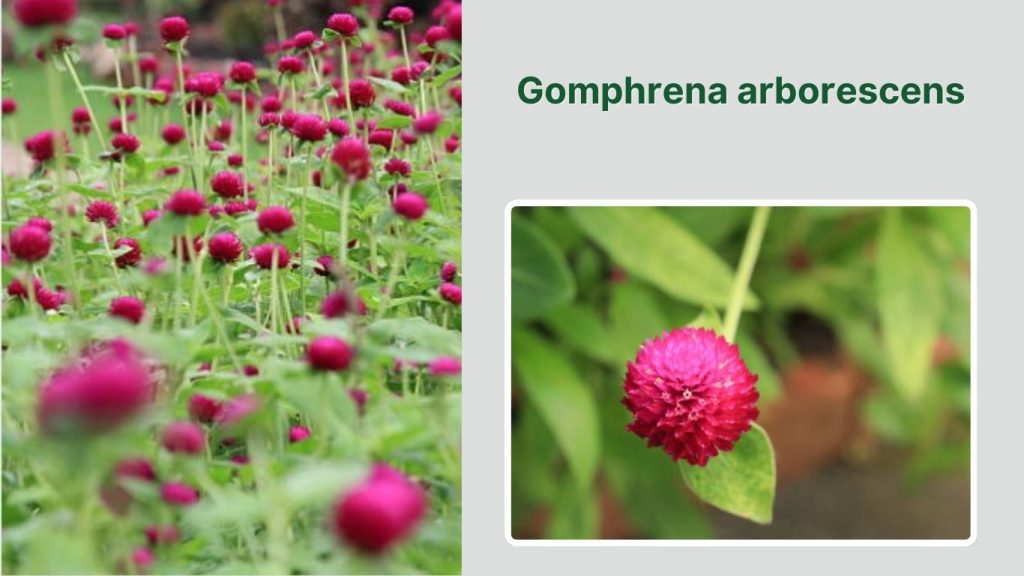
Gomphrena arborescens is an unusual, more robust Gomphrena species that develops a woody or shrub-like base as it matures. Native to parts of South America, this species stands out from most Gomphrena plants because of its stronger stems and taller, more permanent structure.
Identification
- Semi-woody, shrub-like growth habit
- Upright, branching stems
- Rounded to slightly elongated flower heads
- Flowers commonly pink, purple, or pale lavender
- Broader, thicker leaves than most annual Gomphrena
Habitat and Growth
This species prefers full sun and well-drained soil and is adapted to warm climates. It is more perennial in nature than garden globe amaranth and can survive for multiple seasons in frost-free regions. In the wild, it grows in open scrublands and dry, sunny hillsides.
Flowering and Appearance
The papery flower heads appear at the tips of branches and contrast attractively with the woody stems. Blooming usually occurs through the warmer months, and the blooms maintain their structure and color well, even after cutting and drying.
Uses and Importance
Gomphrena arborescens is mainly used as an ornamental plant in warm landscapes, where it can function as a small shrub or background plant. It is also suitable for dried-flower use and adds a unique, structural element to Gomphrena collections.
10. Gomphrena demissa
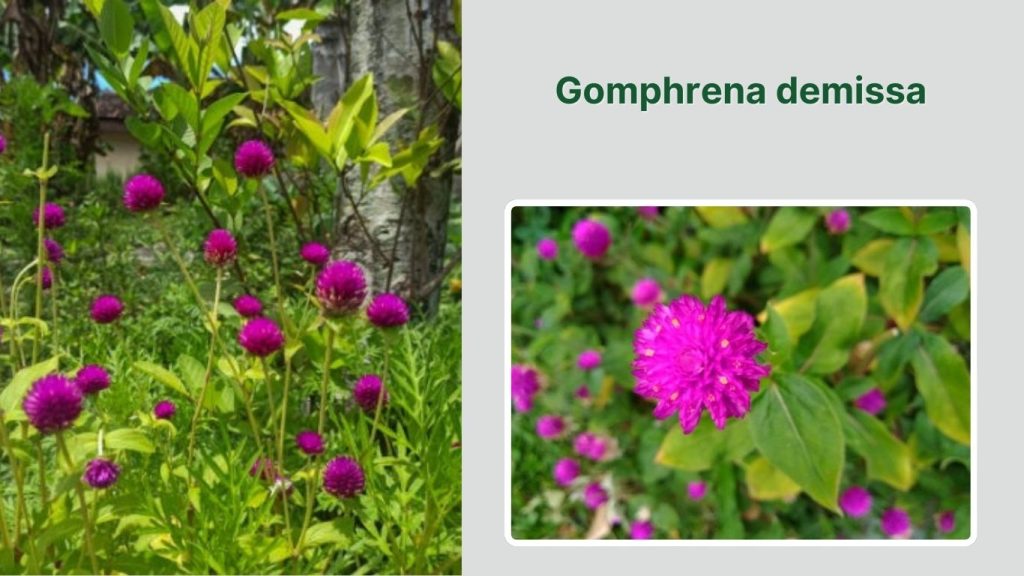
Gomphrena demissa is a low-growing Gomphrena species valued for its compact form and delicate, rounded flower heads. Native to South America, it naturally grows in open, sunny habitats and is well adapted to warm climates with periods of dryness.
Identification
- Small, globe-shaped flower heads
- Colors commonly white, pale pink, or light lavender
- Low, spreading, or slightly mat-forming growth habit
- Short, branched stems close to the ground
- Soft, oval green leaves
Habitat and Growth
This species thrives in full sun and well-drained soils, especially sandy or rocky ground. It tolerates heat and light drought well and is often found growing in grasslands, open plains, and lightly disturbed sites within its native range.
Flowering and Appearance
The flowers appear close to the foliage, creating a subtle, carpet-like display when in full bloom. The papery bracts help the blooms retain their shape and color for long periods, even after being cut and dried.
Uses and Importance
Gomphrena demissa is mainly used as a groundcover or edging plant in warm-climate gardens. Its compact size makes it suitable for borders, rock gardens, and container plantings, and it can also be used in small dried floral crafts.
11. Gomphrena perennis
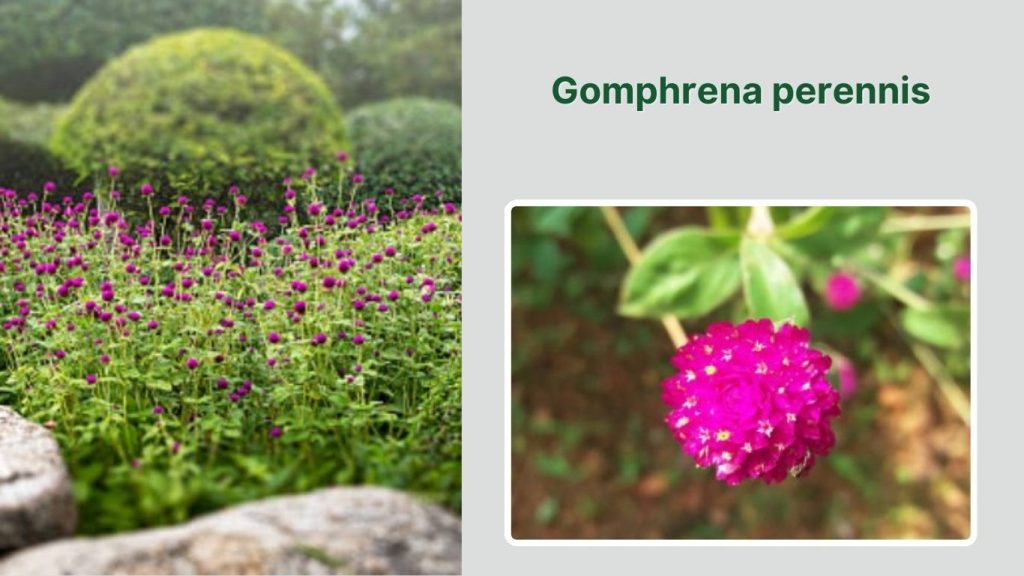
Gomphrena perennis is a perennial Gomphrena species known for its long-lasting flower heads and tougher, more enduring growth habit. Native to South America, it naturally occurs in open grasslands and dry regions, where it has adapted to heat, sun, and relatively poor soils.
Identification
- Rounded, globe-like flower heads
- Colors usually deep pink, magenta, or purple
- Upright to spreading perennial growth habit
- Narrow to oval, slightly rough-textured leaves
- Strong stems emerging from a persistent base
Habitat and Growth
This species prefers full sun and well-drained soils, particularly sandy or gravelly types. Unlike many annual Gomphrena species, Gomphrena perennis can survive for multiple years in warm, frost-free climates. It shows good tolerance to drought and high temperatures.
Flowering and Appearance
The papery bracts form bright, long-lasting flower heads that hold their color well throughout the blooming season. Flowering usually begins in early summer and may continue into fall, with blooms remaining attractive both on the plant and when dried.
Uses and Importance
Gomphrena perennis is mainly grown as an ornamental perennial in warm gardens. It is useful for borders, naturalistic plantings, and cutting gardens, and its durable blooms are also prized for dried-flower arrangements.
12. Gomphrena vaga
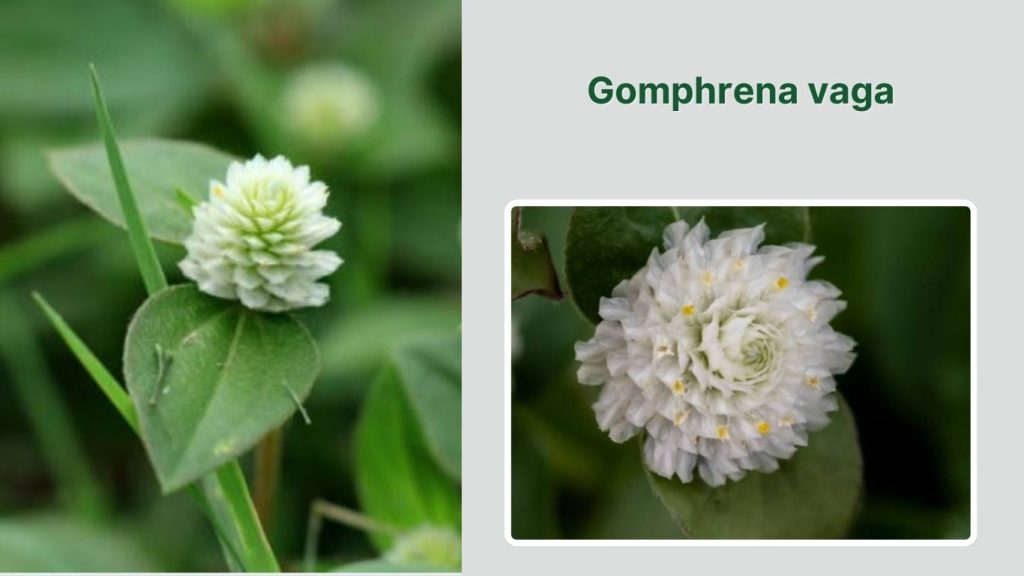
Gomphrena vaga is a lesser-known Gomphrena species native to parts of South America, where it grows naturally in open, sunny environments. It is valued for its simple beauty, neat form, and the soft, rounded flower heads typical of the genus.
Identification
- Small to medium, rounded flower heads
- Colors often pale pink, lilac, or light purple
- Upright to slightly spreading growth habit
- Slender, branching stems
- Narrow to oval, soft green leaves
Habitat and Growth
This species thrives in full sun and well-drained soil, particularly sandy or light loam. It is tolerant of heat and moderate drought and is often found growing in grasslands, open fields, and dry lowland habitats within its native range.
Flowering and Appearance
The papery bracts form neat, globe-like heads that sit above the foliage. Blooming typically occurs from early summer through late summer, with flowers retaining good color and structure even under strong sunlight and after drying.
Uses and Importance
Gomphrena vaga is mainly used as an ornamental plant in warm-climate gardens. It fits well into mixed borders, native plant gardens, and container plantings, and its blooms can also be harvested for small dried-flower arrangements.
13. Gomphrena desertorum
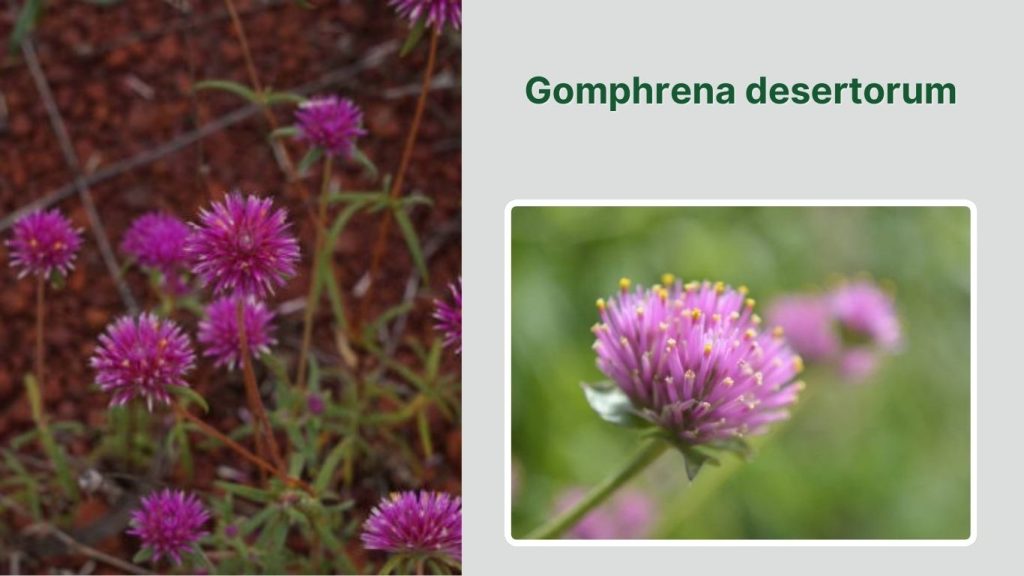
Gomphrena desertorum is a hardy Gomphrena species adapted to dry, open environments. As its name suggests, it is commonly associated with arid and semi-arid regions, where it survives intense sunlight, heat, and limited rainfall.
Identification
- Small, compact, globe-shaped flower heads
- Colors commonly creamy white, pale pink, or light purple
- Low, spreading to slightly upright growth habit
- Thickened stems adapted to dry conditions
- Small, narrow, often slightly fuzzy leaves
Habitat and Growth
This species grows best in full sun and very well-drained, sandy, or rocky soils. It is highly drought tolerant and is naturally found in desert margins, dry plains, and open scrublands. It performs poorly in heavy, waterlogged soils.
Flowering and Appearance
The papery flower heads sit close to the foliage and withstand strong sun without fading quickly. Blooming often occurs during warmer months, usually after seasonal rains, and the flowers maintain their form well even in harsh conditions.
Uses and Importance
Gomphrena desertorum is mainly of interest for dry-climate gardens, xeriscaping, and native plant collections. Its tough nature makes it suitable for low-water landscapes, rock gardens, and conservation plantings.
14. Gomphrena elegans
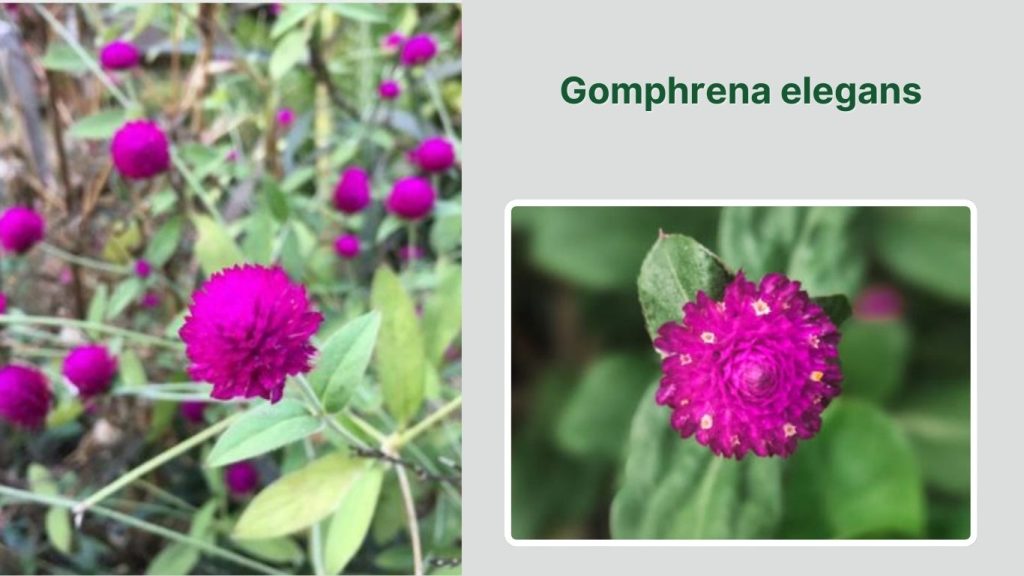
Gomphrena elegans is a delicate and graceful Gomphrena species admired for its refined form and softly colored flower heads. Native to South America, it naturally grows in open, sunny areas where the soil is light and well drained.
Identification
- Small to medium, rounded flower heads
- Common colors include soft pink, pale lavender, and light purple
- Slender, upright to gently spreading stems
- Narrow, smooth to lightly hairy green leaves
- Fine-textured, elegant overall appearance
Habitat and Growth
This species prefers full sun and sandy or loamy soil with excellent drainage. It tolerates heat well and can survive moderate dry periods. In the wild, it is often found in grasslands, open hillsides, and lightly disturbed soils.
Flowering and Appearance
The papery bracts form neat globe-like heads that appear lightly held above the foliage. Flowering typically takes place from early to late summer, and the blooms keep their shape and color for long periods, including after drying.
Uses and Importance
Gomphrena elegans is mainly grown as an ornamental plant for borders, cottage-style gardens, and container plantings. Its subtle beauty makes it especially suitable for soft garden color schemes and dried floral arrangements.
15. Gomphrena rupestris
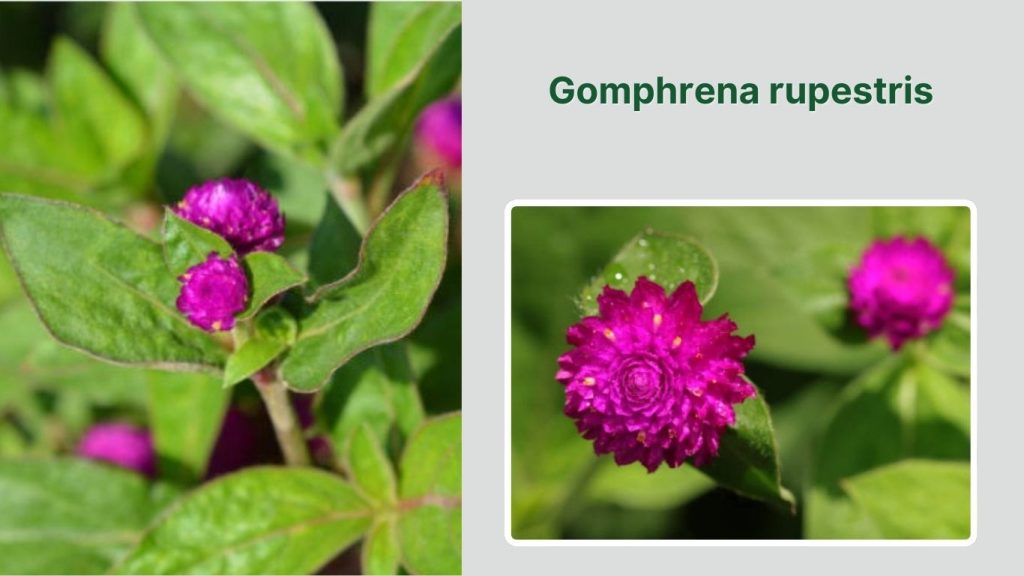
Gomphrena rupestris is a resilient Gomphrena species that naturally grows in rocky, well-drained environments. Native to parts of South America, it is adapted to bright sunlight, thin soils, and warm conditions, making it a tough but attractive member of the genus.
Identification
- Small, rounded flower heads
- Colors usually pale pink, white, or light purple
- Low to medium, spreading or slightly upright growth habit
- Tough, wiry stems suited to rocky ground
- Narrow, firm-textured green leaves
Habitat and Growth
This species thrives in full sun and very well-drained, rocky, or sandy soils. It tolerates heat and dry conditions well and is commonly found growing on rocky slopes, open outcrops, and dry hillsides within its native range.
Flowering and Appearance
The papery flower heads sit just above the foliage and are well adapted to intense sunlight and wind. Blooming usually occurs during the warmer months, and the flowers maintain their structure and color long after opening.
Uses and Importance
Gomphrena rupestris is mainly used in rock gardens, dry landscapes, and native plant collections. Its hardy nature makes it suitable for low-water gardening, while its long-lasting blooms also work well in dried floral crafts.
FAQs
What is Gomphrena best known for?
Gomphrena is best known for its round, button-like flower heads made of papery bracts that retain their color for a long time. These long-lasting blooms make Gomphrena popular in gardens, cut-flower arrangements, and dried floral crafts across many warm and temperate regions.
Is Gomphrena an annual or perennial plant?
Most commonly grown Gomphrena, such as Gomphrena globosa, are annuals, completing their life cycle in one season. However, some species like Gomphrena perennis are true perennials in warm, frost-free climates, returning year after year from a persistent root system.
Does Gomphrena need full sun to grow well?
Yes, Gomphrena grows best in full sun, usually requiring at least six to eight hours of direct sunlight daily. Strong sunlight encourages compact growth, more abundant flowering, and better color development, while too much shade can cause weak stems and fewer blooms.
Is Gomphrena drought tolerant?
Gomphrena is considered moderately to highly drought tolerant once established. Many species naturally grow in dry, open habitats and can handle short dry periods. However, regular light watering during extreme heat will support healthier plants and longer flowering.
Can Gomphrena flowers be dried for decoration?
Yes, Gomphrena flowers are excellent for drying. Their papery bracts hold shape and color very well after harvesting. Stems can be cut when blooms are fully developed and hung upside down in a dry, shaded place for long-lasting decorative use.