



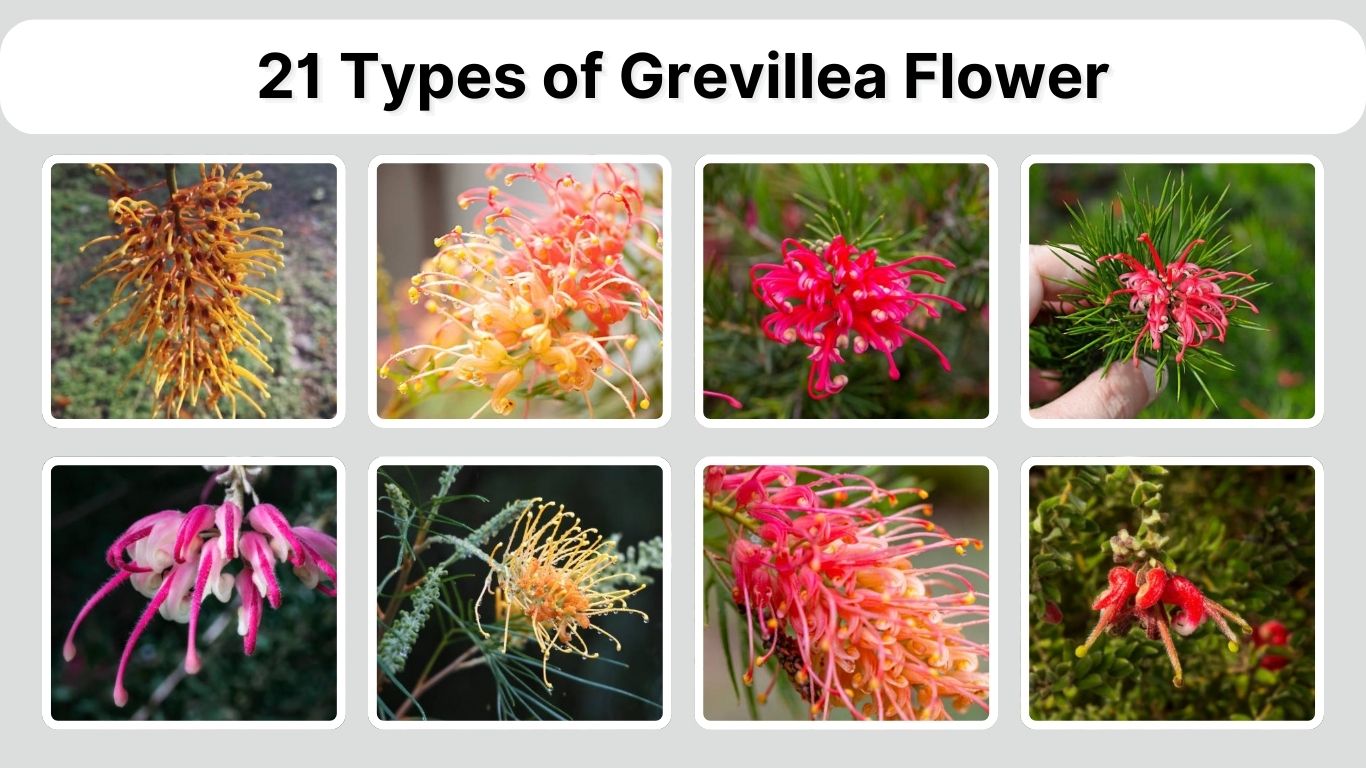
Grevillea flowers are among the most distinctive and diverse native plants of Australia, admired for their unusual shapes, vibrant colors, and strong attraction to birds and pollinators. The genus Grevillea includes over 350 species, ranging from low groundcovers to tall flowering trees, each adapted to different habitats such as coastal heathlands, forests, and mountain regions. Their spider-like and toothbrush-style blooms make them popular choices for ornamental, native, and wildlife-friendly gardens around the world.
1. Grevillea robusta (Silky Oak Grevillea)
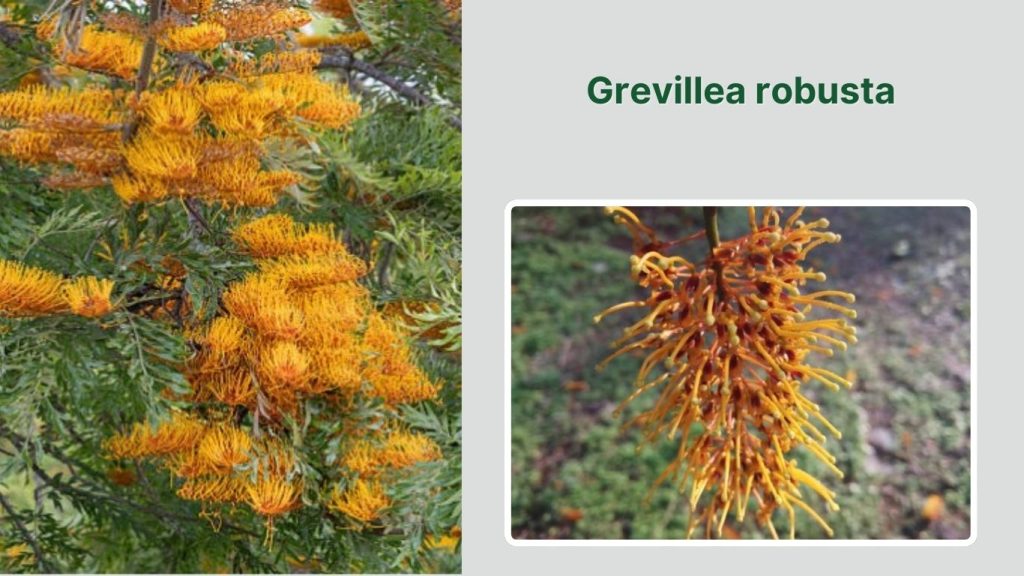
Grevillea robusta, commonly known as the Silky Oak, is one of the largest and most well-known species in the Grevillea genus. Native to eastern Australia, it is valued both as an ornamental flowering tree and as a shade or timber tree. Its golden-orange, toothbrush-shaped flowers appear in dense clusters and attract bees, birds, and other pollinators, making it a favorite in gardens, parks, and avenues.
Identification
- Tall evergreen tree that can reach 20–35 meters in height
- Fern-like, deeply divided green leaves with a silvery underside
- Bright golden-orange flower clusters shaped like curved brushes
- Flowers rich in nectar, strongly attractive to birds and insects
- Produces dark, leathery seed pods after flowering
Habitat
Grevillea robusta naturally grows in subtropical and warm temperate regions, especially along forest edges, riverbanks, and open woodlands of eastern Australia. It adapts well to a wide range of environments and is now widely planted in tropical and subtropical countries as an ornamental and shade tree.
Flowering and Growth Habit
The Silky Oak usually flowers in late winter to spring, producing abundant blooms that cover the canopy. It has a fast growth rate, developing a straight trunk and an open, spreading crown. When mature, it becomes a striking landscape tree known for both its flowers and its elegant foliage.
Uses and Importance
Grevillea robusta is widely used in landscaping, street planting, and agroforestry systems. Its flowers support pollinators, while its light but strong timber is used for furniture, cabinetry, and decorative veneers. Because of its beauty and adaptability, it remains one of the most cultivated Grevillea species worldwide.
2. Grevillea banksii (Banks’ Grevillea)
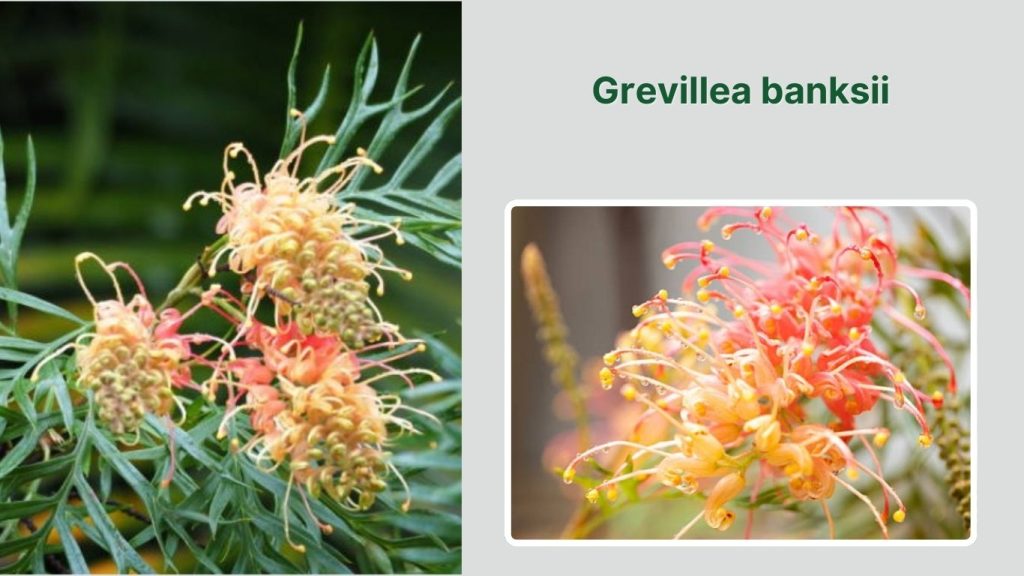
Grevillea banksii is a striking flowering shrub or small tree native to eastern Australia, especially Queensland. It is widely cultivated for its bold, spider-like flowers that appear in vivid red, pink, or creamy white forms. Because of its long blooming season and high nectar production, this species is especially popular in ornamental gardens and wildlife-friendly landscapes.
Identification
- Evergreen shrub or small tree, usually 2–8 meters tall
- Narrow, deeply divided leaves with pale or whitish undersides
- Large, spider-shaped flower clusters in red, pink, or white
- Long protruding styles that give flowers a spidery appearance
- Woody seed pods that split open when mature
Habitat
In the wild, Grevillea banksii grows in coastal forests, open woodlands, and sandy or well-drained soils of eastern Australia. It tolerates heat and moderate drought well, which has helped it become popular in tropical and subtropical regions around the world.
Flowering and Growth Habit
This species can flower for much of the year in warm climates, with peak blooming often in winter and spring. It has a bushy to open growth form and responds well to pruning, which encourages denser foliage and heavier flowering.
Uses and Importance
Grevillea banksii is widely planted as an ornamental shrub, hedge, or small feature tree. Its nectar-rich flowers strongly attract birds, butterflies, and bees. Many modern Grevillea hybrids used in gardens today are derived from this species because of its bright colors and vigorous growth.
3. Grevillea rosmarinifolia (Rosemary Grevillea)
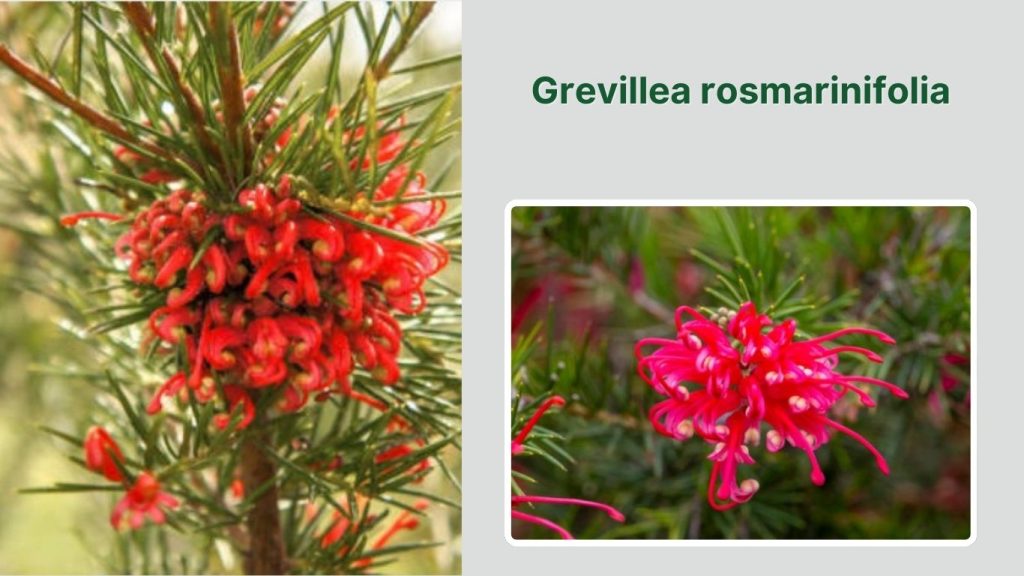
Grevillea rosmarinifolia is a compact, ornamental Grevillea species admired for its fine, rosemary-like foliage and profuse spider-shaped flowers. Native to southeastern Australia, it is especially popular in home gardens due to its manageable size, long flowering period, and excellent performance in pots, borders, and low hedges.
Identification
- Dense evergreen shrub, typically 1–3 meters tall
- Narrow, linear leaves resembling rosemary needles
- Red, pink, or occasionally white spider-like flowers
- Flowers borne in small clusters along the stems
- Fine-textured foliage giving the plant a soft, bushy look
Habitat
In its natural range, Grevillea rosmarinifolia grows on rocky slopes, open woodlands, and dry forest margins. It prefers well-drained soils and full sun to light shade, and it tolerates drought and light frost once established.
Flowering and Growth Habit
This species often flowers from late winter through summer, and in mild climates it may bloom sporadically year-round. It has a naturally rounded growth habit and can be lightly pruned after flowering to maintain shape and encourage new blooms.
Uses and Importance
Grevillea rosmarinifolia is widely used as a decorative shrub in landscaping. It works well in rock gardens, containers, and native plant gardens. Its nectar-rich flowers attract birds and beneficial insects, supporting local pollinator populations while adding color to the garden.
4. Grevillea juniperina (Juniper Grevillea)
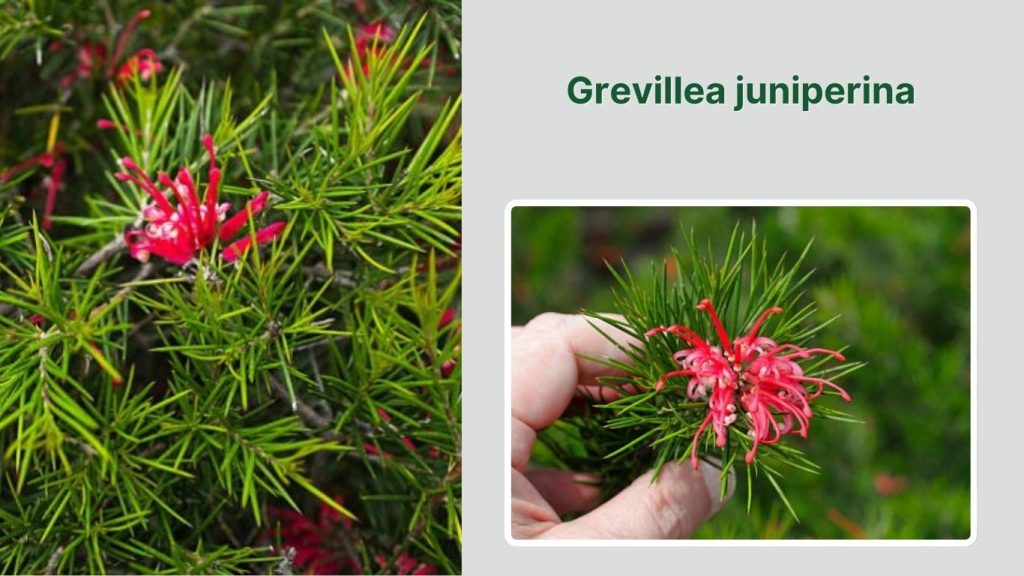
Grevillea juniperina is a hardy, low-growing Grevillea species valued for its fine, needle-like foliage and colorful spider-shaped flowers. Native to southeastern Australia, it is commonly used as a groundcover or small shrub in gardens, where it adds texture, year-round greenery, and reliable flowering.
Identification
- Low, spreading shrub, usually 0.3–2 meters tall
- Narrow, sharp-tipped leaves resembling juniper needles
- Spider-like flowers in red, yellow, orange, or green shades
- Flowers often appear in small clusters along the stems
- Dense, sometimes prickly foliage forming compact mounds
Habitat
In the wild, Grevillea juniperina grows in open forests, dry woodlands, and rocky hillsides. It thrives in well-drained soils and full sun, showing good tolerance to drought, heat, and light frost once established.
Flowering and Growth Habit
This species flowers mainly from winter to spring, though some forms bloom at other times of year. It has a naturally spreading to mounded growth habit, and pruning after flowering helps maintain shape and promote fresh growth.
Uses and Importance
Grevillea juniperina is widely planted as a groundcover, low hedge, or border shrub. Its bright flowers attract birds and insects, while its tough nature makes it suitable for erosion control, native gardens, and low-maintenance landscapes.
5. Grevillea longifolia (Long-leaf Grevillea)
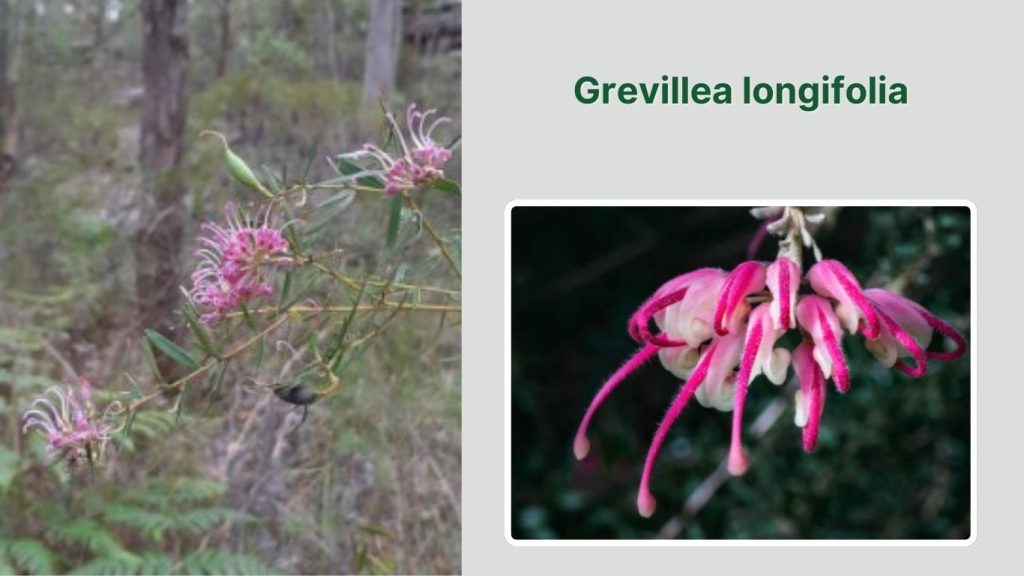
Grevillea longifolia is a striking Australian shrub to small tree known for its very long, narrow leaves and large, dramatic flower clusters. Native to New South Wales, it naturally grows near streams and moist forest margins. Its bold foliage and showy blooms make it a standout feature plant in warm, frost-free to mild-frost gardens.
Identification
- Large shrub or small tree, typically 3–8 meters tall
- Very long, narrow, leathery leaves with serrated edges
- Large toothbrush-shaped flower clusters, usually pink to red
- Flowers held at the ends of branches, rich in nectar
- Woody seed pods developing after flowering
Habitat
In nature, Grevillea longifolia is commonly found along creek lines, gullies, and moist forest edges. It prefers well-drained but reliably moist soils and performs best in full sun to light shade, especially in warmer climates.
Flowering and Growth Habit
Flowering usually occurs from late winter through summer, with peak displays in spring. The plant has an open, spreading habit and can grow quickly under good conditions. Regular pruning after flowering encourages denser growth and more abundant blooms.
Uses and Importance
Grevillea longifolia is planted as a feature shrub or screening plant in large gardens and parks. Its nectar-rich flowers attract birds and insects, while its bold leaves provide strong visual contrast among finer-textured plants.
6. Grevillea thelemanniana (Spider Net Grevillea)
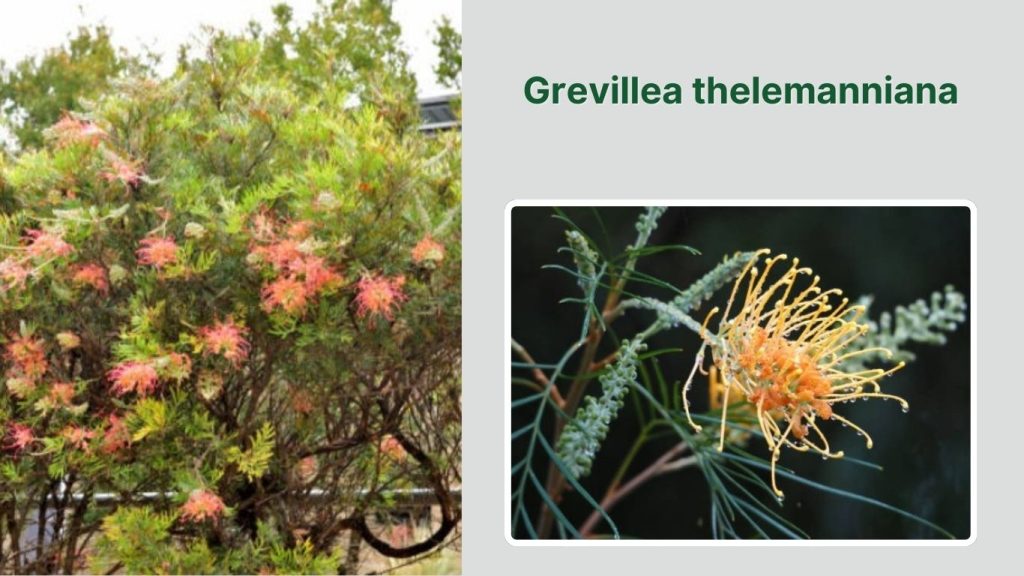
Grevillea thelemanniana is a rare and distinctive Grevillea species admired for its delicate, net-like flower clusters. Endemic to a small area of southwestern Australia, it is known for its fine foliage and unusual floral structure, which gives it a light, airy appearance compared to many other bold Grevilleas.
Identification
- Low, spreading shrub, usually under 1 meter tall
- Fine, narrow green leaves forming a soft, dense mat
- Unique net-like or tangled flower clusters, often pink to red
- Flowers held close to the foliage, rich in nectar
- Compact growth with a naturally rounded to spreading form
Habitat
In the wild, Grevillea thelemanniana grows in sandy soils, low heathlands, and open shrublands of Western Australia. It prefers very well-drained soil, full sun, and low humidity, making it well suited to Mediterranean-style climates.
Flowering and Growth Habit
Flowering mainly occurs in winter and spring, when the plant produces masses of intricate blooms. It has a slow to moderate growth rate and a spreading habit, making it suitable as a groundcover or low border plant.
Uses and Importance
This species is prized in native and specialty gardens for its unusual flowers and compact form. It attracts small nectar-feeding birds and insects and is often grown by collectors and conservation-minded gardeners because of its limited natural distribution.
7. Grevillea lanigera (Woolly Grevillea)
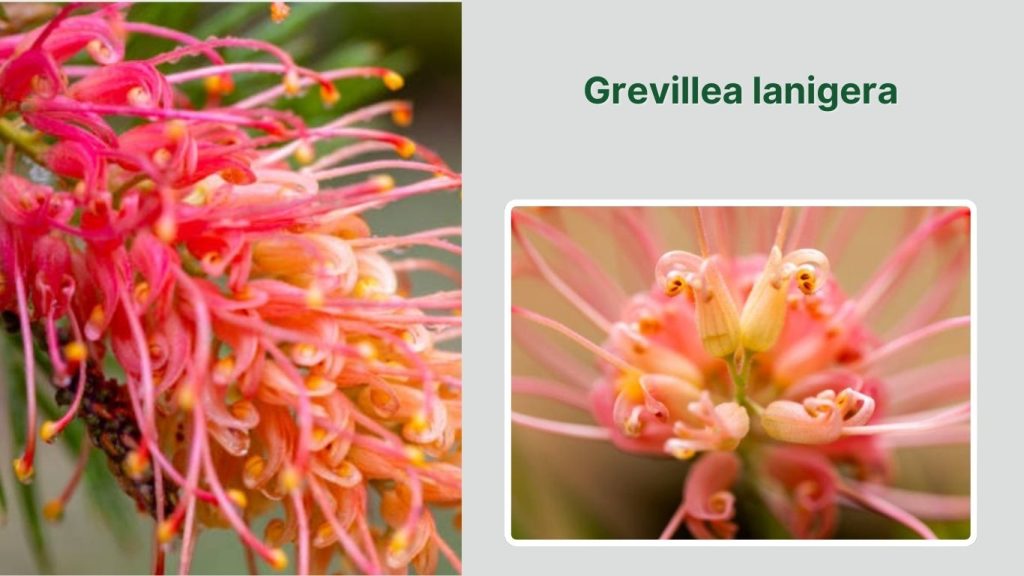
Grevillea lanigera, commonly called Woolly Grevillea, is a variable and attractive shrub known for its soft, hairy foliage and small but colorful spider-like flowers. Native to southeastern Australia, it grows in a wide range of habitats and is valued in gardens for its hardiness, compact size, and long flowering season.
Identification
- Low to medium evergreen shrub, usually 0.5–2 meters tall
- Leaves narrow to oval, often covered with fine, woolly hairs
- Spider-shaped flowers in pink, red, cream, or greenish tones
- Flowers produced in small clusters along the stems
- Soft-textured foliage giving the plant a silvery or grey-green look
Habitat
In the wild, Grevillea lanigera occurs in grasslands, open forests, and along river flats, often in well-drained or seasonally moist soils. It tolerates cold better than many Grevilleas and can survive light frost and occasional wet conditions.
Flowering and Growth Habit
This species can flower for much of the year, especially from winter to summer. It has a spreading to mounded habit and responds well to pruning, which helps maintain compact form and promotes continuous blooming.
Uses and Importance
Grevillea lanigera is widely used in native gardens, rockeries, and as a low hedge or groundcover. Its nectar-rich flowers support birds and insects, while its adaptability makes it one of the more reliable Grevillea species for home cultivation.
8. Grevillea alpina (Mountain Grevillea)
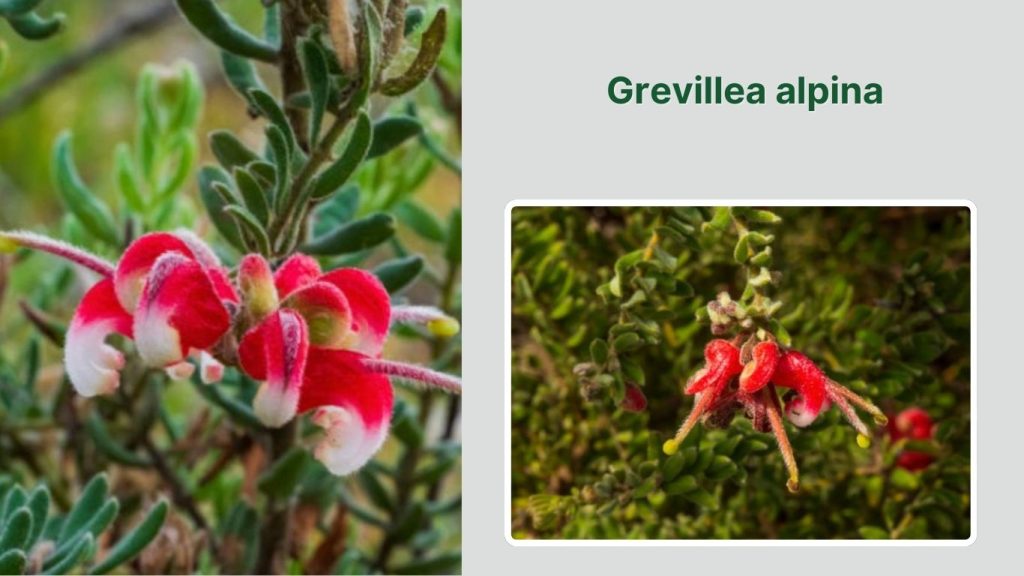
Grevillea alpina, often called Mountain Grevillea, is a highly variable species known for its colorful flowers and adaptability to cooler climates. Native to southeastern Australia, it naturally occurs from lowlands to mountainous regions, making it one of the hardier Grevilleas suitable for a wide range of garden conditions.
Identification
- Low to medium shrub, typically 0.3–2 meters tall
- Leaves narrow to broad, varying widely between forms
- Spider-like flowers in shades of red, pink, orange, yellow, or green
- Flowers usually appear in small clusters near branch tips
- Dense, bushy growth with fine to medium-textured foliage
Habitat
In the wild, Grevillea alpina grows in open forests, woodland edges, and rocky slopes. It tolerates poor soils, drought, and moderate frost, preferring well-drained ground and full sun to light shade.
Flowering and Growth Habit
Flowering often occurs from winter through late spring, with some forms blooming at other times of the year. The plant forms a compact to spreading shrub and benefits from light pruning to encourage dense growth and heavier flowering.
Uses and Importance
Because of its cold tolerance and wide range of flower colors, Grevillea alpina is popular in native, cottage, and low-maintenance gardens. It attracts nectar-feeding birds and insects and is frequently used in breeding programs to develop hardy Grevillea hybrids.
9. Grevillea victoriae (Royal Grevillea)
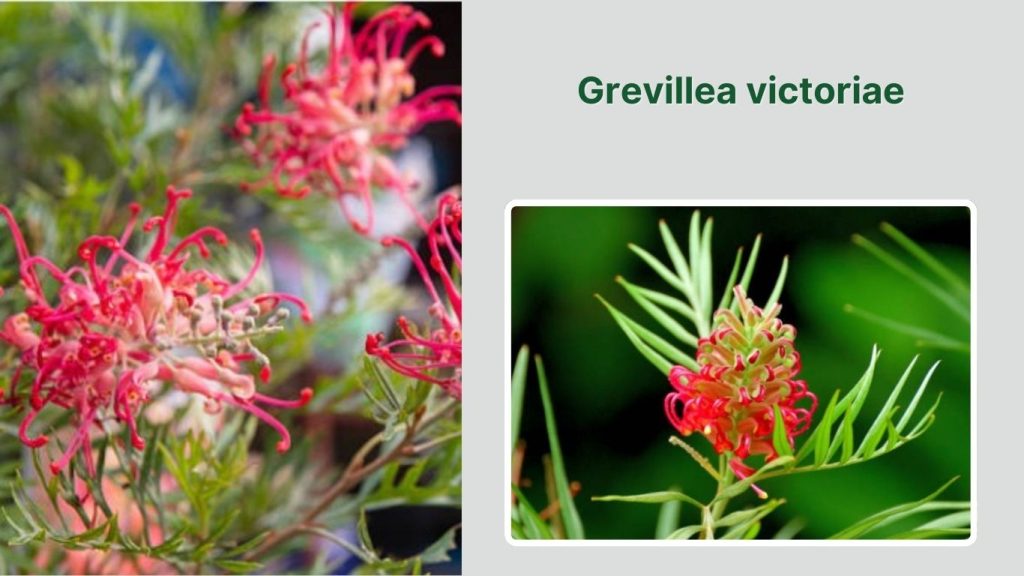
Grevillea victoriae, commonly known as Royal Grevillea, is a showy and robust shrub or small tree admired for its large, colorful flower clusters and long blooming season. Native to southeastern Australia, it naturally grows in mountainous and cool-climate regions, making it one of the better Grevilleas for temperate gardens.
Identification
- Large shrub or small tree, usually 2–6 meters tall
- Long, narrow to oval leaves, often with silvery or rusty undersides
- Large toothbrush-shaped flowers in red, orange, yellow, or pink
- Flowers produced in prominent clusters along the branches
- Dense, upright to spreading growth habit
Habitat
In nature, Grevillea victoriae grows in open forests, gullies, and mountain slopes, often in well-drained but moisture-retentive soils. It prefers cool to mild climates, full sun to partial shade, and good air circulation.
Flowering and Growth Habit
This species flowers mainly from late winter through summer, often providing color when few other shrubs are in bloom. It forms a vigorous, upright shrub and can be lightly pruned after flowering to maintain shape and encourage new growth.
Uses and Importance
Grevillea victoriae is widely planted as a feature shrub, screen, or small garden tree. Its nectar-rich flowers attract birds and insects, while its bold blooms make it a standout plant in native, woodland, and temperate-climate gardens.
10. Grevillea rhyolitica (Deua Grevillea)
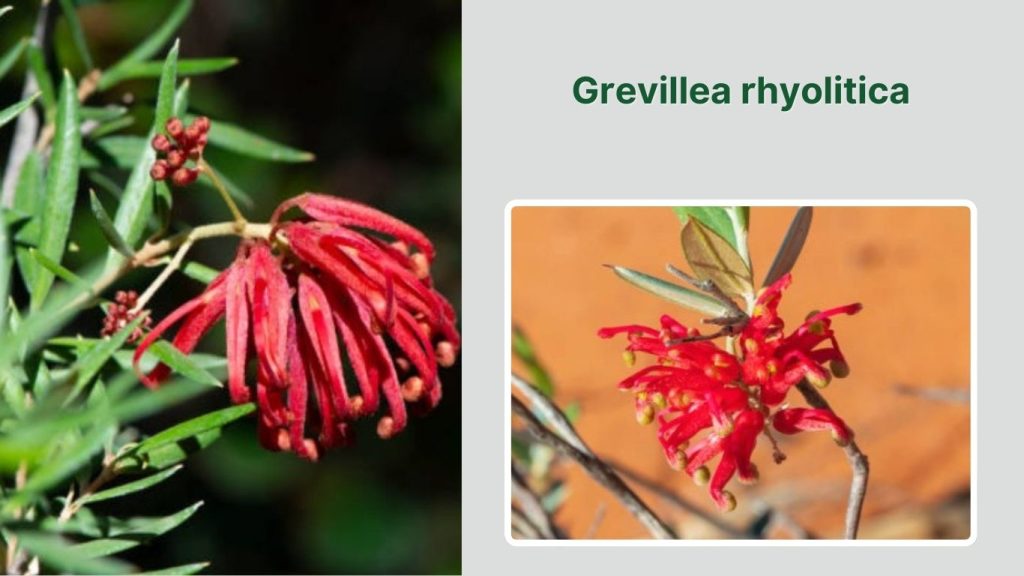
Grevillea rhyolitica is a rare and naturally restricted Grevillea species valued for its compact habit and clusters of delicate, curved flowers. Endemic to a small area of New South Wales, Australia, it is known for its conservation importance as well as its ornamental potential in native and specialty gardens.
Identification
- Compact to spreading shrub, usually 0.5–1.5 meters tall
- Narrow, linear to lobed green leaves
- Curved spider-like flowers, typically red to pink
- Flowers borne in small clusters along the branches
- Fine-textured foliage with a dense growth form
Habitat
In the wild, Grevillea rhyolitica grows on rocky rhyolite outcrops, open woodland, and heathland areas. It prefers very well-drained soils, full sun, and good air movement, reflecting its natural adaptation to exposed sites.
Flowering and Growth Habit
Flowering generally occurs from winter to spring, when the plant becomes covered in delicate blooms. It grows slowly to moderately and naturally forms a compact shrub, making it suitable for smaller gardens and containers.
Uses and Importance
This species is often grown by native plant enthusiasts and conservation-focused gardeners. It supports nectar-feeding birds and insects and is important in cultivation as a way to help preserve a Grevillea with a limited natural distribution.
11. Grevillea macleayana (Jervis Bay Grevillea)
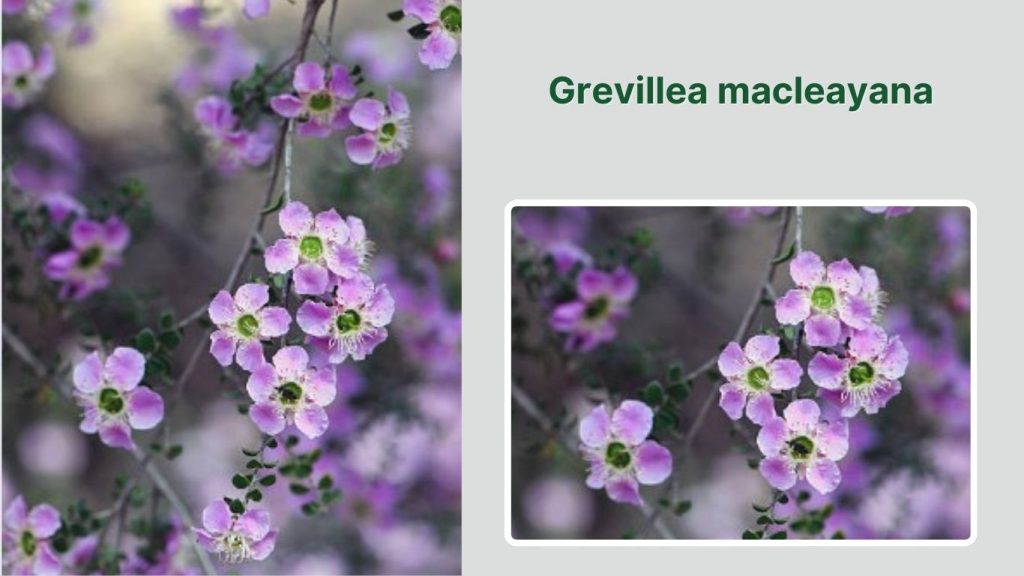
Grevillea macleayana is a rare and attractive shrub best known for its bright red, spider-like flowers and glossy green foliage. Endemic to a small coastal region around Jervis Bay in New South Wales, it is highly valued in cultivation for its compact habit, long flowering period, and strong ornamental appeal.
Identification
- Compact evergreen shrub, usually 1–3 meters tall
- Broad, glossy green leaves with lighter undersides
- Bright red spider-shaped flower clusters
- Long protruding styles giving a dramatic, spidery look
- Dense, rounded growth habit
Habitat
In the wild, Grevillea macleayana grows in sandy coastal heathlands and open forests. It prefers well-drained soils, full sun to light shade, and protection from heavy frost, reflecting its coastal origins.
Flowering and Growth Habit
This species often flowers from winter through summer, sometimes nearly year-round in mild climates. It grows at a moderate rate and maintains a neat, bushy form, with light pruning helping to encourage more flowering stems.
Uses and Importance
Grevillea macleayana is popular in ornamental gardens, native plant landscapes, and wildlife-friendly plantings. Its nectar-rich flowers attract birds and insects, and its rarity in the wild gives it additional conservation significance.
12. Grevillea sericea (Silky Grevillea)
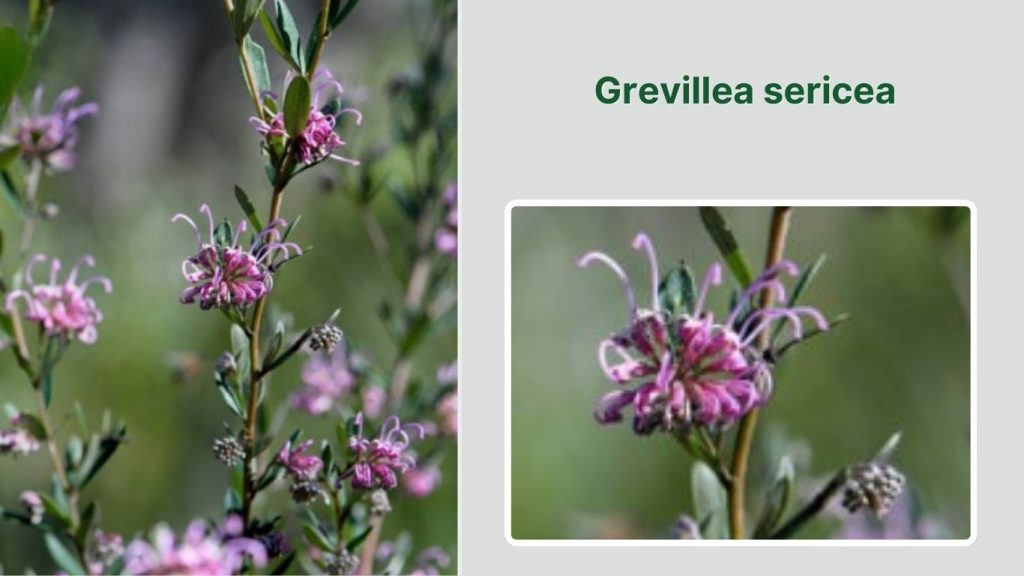
Grevillea sericea is an elegant shrub admired for its fine, silky foliage and small but vivid spider-like flowers. Native to coastal and near-coastal regions of New South Wales, Australia, it is often found growing on sandy soils and exposed headlands, giving it good tolerance to wind and salt.
Identification
- Low to medium evergreen shrub, usually 0.5–2 meters tall
- Narrow, silky-textured leaves, often grey-green beneath
- Spider-like flowers in pink to deep rose shades
- Flowers borne in small clusters close to the foliage
- Soft, fine-textured growth forming a rounded shrub
Habitat
In nature, Grevillea sericea grows in coastal heathlands, sandy forests, and rocky headlands. It thrives in very well-drained soils, full sun, and open, airy positions, and tolerates wind and light salt exposure.
Flowering and Growth Habit
Flowering usually occurs from late winter through summer, with peak displays in spring. The plant has a naturally compact, rounded form and benefits from light pruning to maintain density and encourage new flowering shoots.
Uses and Importance
Grevillea sericea is well suited to coastal gardens, rockeries, and native plant landscapes. Its flowers attract birds and insects, while its fine foliage adds soft texture and contrast among broader-leaved plants.
13. Grevillea petrophiloides (Coneflower Grevillea)
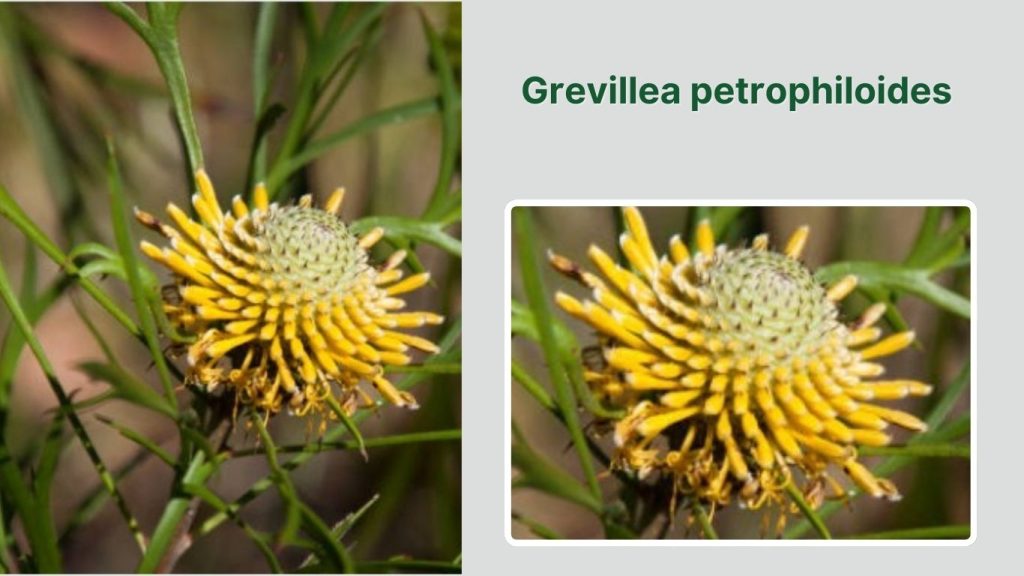
Grevillea petrophiloides is a distinctive Australian Grevillea species recognized for its unusual cone-like flower heads and stiff, divided foliage. Native to Western Australia, it stands out from many other Grevilleas because its blooms are arranged in dense, upright clusters rather than loose spider forms.
Identification
- Erect shrub, usually 1–3 meters tall
- Stiff, deeply divided, prickly green leaves
- Dense cone-shaped flower heads, usually red to pink
- Flowers packed tightly around upright stems
- Woody seed follicles developing after flowering
Habitat
In the wild, Grevillea petrophiloides grows in sandy or gravelly soils, open shrublands, and heath areas of Western Australia. It prefers full sun, excellent drainage, and low-nutrient soils, reflecting its natural adaptation to dry, nutrient-poor environments.
Flowering and Growth Habit
Flowering mainly occurs from winter through spring. The plant forms an upright, bushy shrub and grows at a moderate rate. Light pruning after flowering helps maintain shape and encourages fresh growth.
Uses and Importance
This species is valued in native and specialty gardens for its unusual flower structure and architectural form. Its nectar-rich blooms attract birds and insects, and its upright habit makes it suitable as a feature shrub or informal screen.
14. Grevillea preissii (Preiss’ Grevillea)
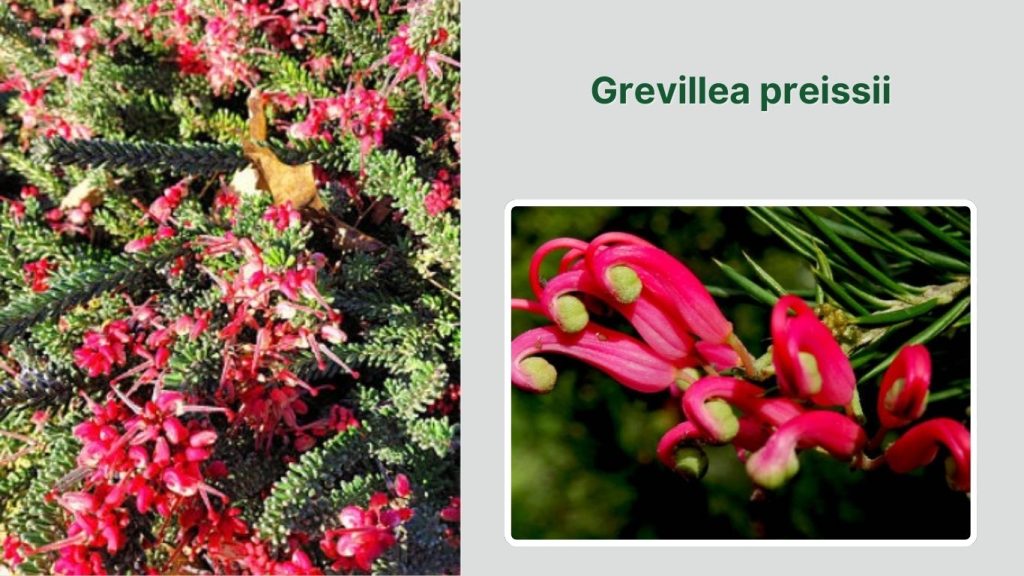
Grevillea preissii is a low-growing, spreading Grevillea species appreciated for its soft foliage and decorative spider-like flowers. Native to southwestern Western Australia, it is commonly found in sandy coastal plains and open shrublands, where it forms attractive mats or low mounds.
Identification
- Low, spreading shrub, often 0.3–1 meter tall
- Soft, narrow to lobed grey-green leaves
- Spider-shaped flowers, usually red to pink
- Flowers produced in small clusters near branch tips
- Prostrate to mounded growth habit
Habitat
In its natural environment, Grevillea preissii grows in sandy soils, coastal heathlands, and open scrub. It prefers very well-drained soil, full sun, and good air movement, and shows good tolerance to wind and mild coastal conditions.
Flowering and Growth Habit
Flowering typically occurs from winter to spring, sometimes extending into early summer. The plant spreads gradually, forming a low, dense cover. Occasional light pruning helps keep the growth compact and encourages new flowering shoots.
Uses and Importance
Grevillea preissii is widely used as a groundcover in native and water-wise gardens. Its flowers attract birds and insects, while its low habit makes it useful for erosion control, rockeries, and foreground planting.
15. Grevillea bipinnatifida (Fuchsia Grevillea)
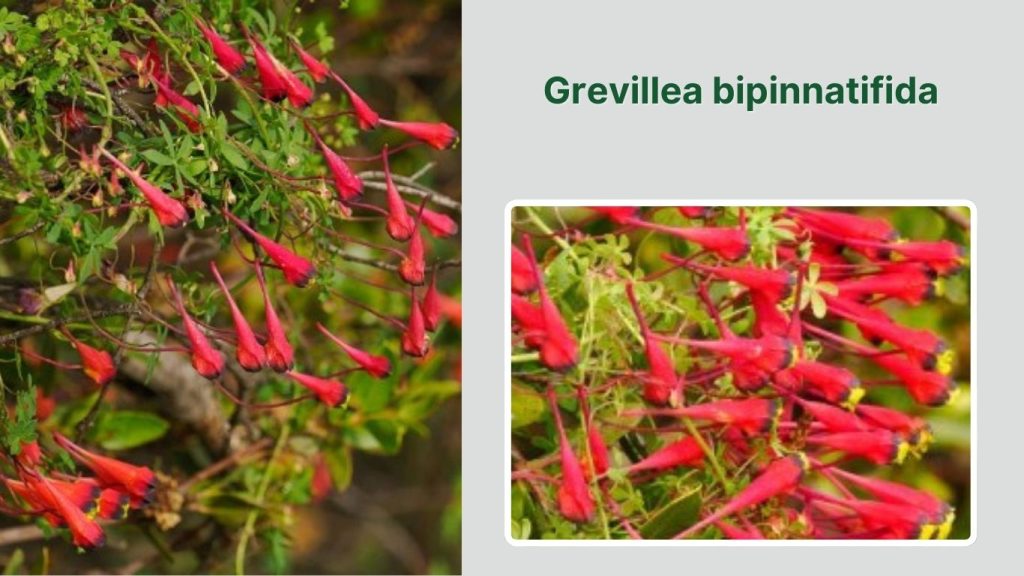
Grevillea bipinnatifida is an eye-catching Western Australian Grevillea known for its finely divided foliage and spectacular, pendulous flower clusters. Often called Fuchsia Grevillea, it produces long, hanging blooms that resemble fuchsia flowers, making it one of the most visually dramatic species in the genus.
Identification
- Upright shrub, usually 1–3 meters tall
- Finely divided, fern-like green leaves
- Long, pendulous flower clusters, typically red to orange
- Flowers hanging in chains beneath the foliage
- Open, airy growth habit with arching branches
Habitat
In the wild, Grevillea bipinnatifida grows in open shrublands and sandy or lateritic soils of Western Australia. It prefers full sun, excellent drainage, and low-phosphorus soils, and is adapted to dry, nutrient-poor environments.
Flowering and Growth Habit
Flowering usually occurs from winter through spring, when the plant becomes covered in hanging blooms. It grows at a moderate rate and develops a naturally open, arching form. Light pruning after flowering helps maintain structure and promote new growth.
Uses and Importance
This species is planted mainly as a feature shrub in native and specialty gardens. Its striking flowers attract nectar-feeding birds and insects, while its unique form adds strong visual interest to landscaped and naturalistic plantings.
16. Grevillea dryandri (Oak-leaved Grevillea)
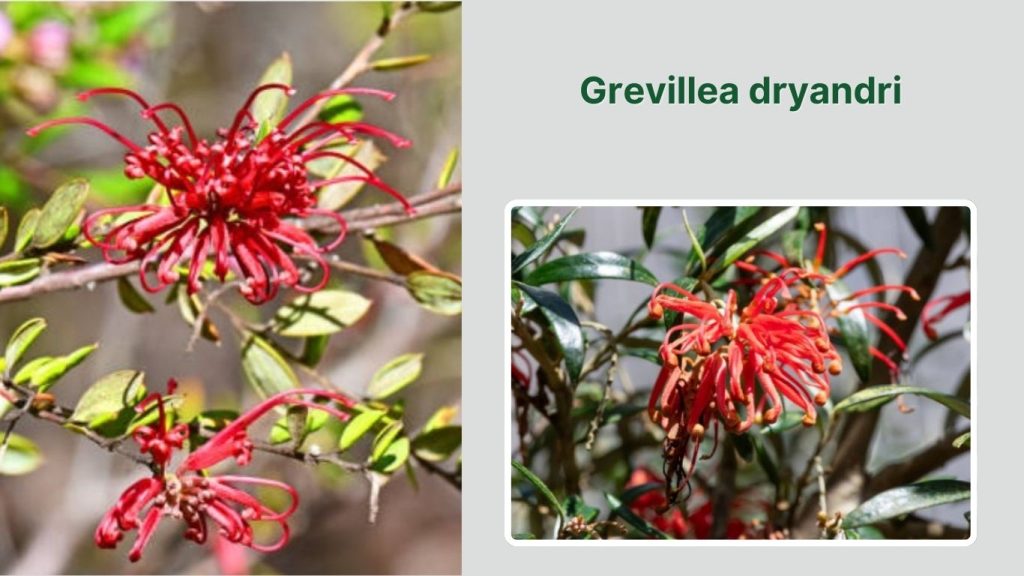
Grevillea dryandri is a distinctive Grevillea species recognized for its bold, oak-like leaves and attractive spider-shaped flowers. Native to Western Australia, it combines dramatic foliage with colorful blooms, making it a desirable ornamental shrub for native and drought-tolerant gardens.
Identification
- Spreading to upright shrub, usually 1–2.5 meters tall
- Broad, deeply lobed leaves resembling small oak leaves
- Spider-like flowers, typically red, pink, or orange
- Flowers borne in clusters near the branch ends
- Medium-textured foliage with a dense growth habit
Habitat
In the wild, Grevillea dryandri grows in open shrublands and woodland margins, often in sandy or gravelly soils. It prefers full sun, excellent drainage, and low-nutrient soils, reflecting its natural adaptation to dry Australian landscapes.
Flowering and Growth Habit
Flowering generally occurs from winter through spring. The plant forms a spreading, sometimes arching shrub and grows at a moderate pace. Light pruning after flowering helps maintain a compact form and encourages new flowering shoots.
Uses and Importance
Grevillea dryandri is used as an ornamental shrub in native gardens and water-wise landscapes. Its nectar-rich flowers attract birds and insects, while its bold leaves add contrast and structure among finer-textured plants.
17. Grevillea pteridifolia (Fern-leaf Grevillea)
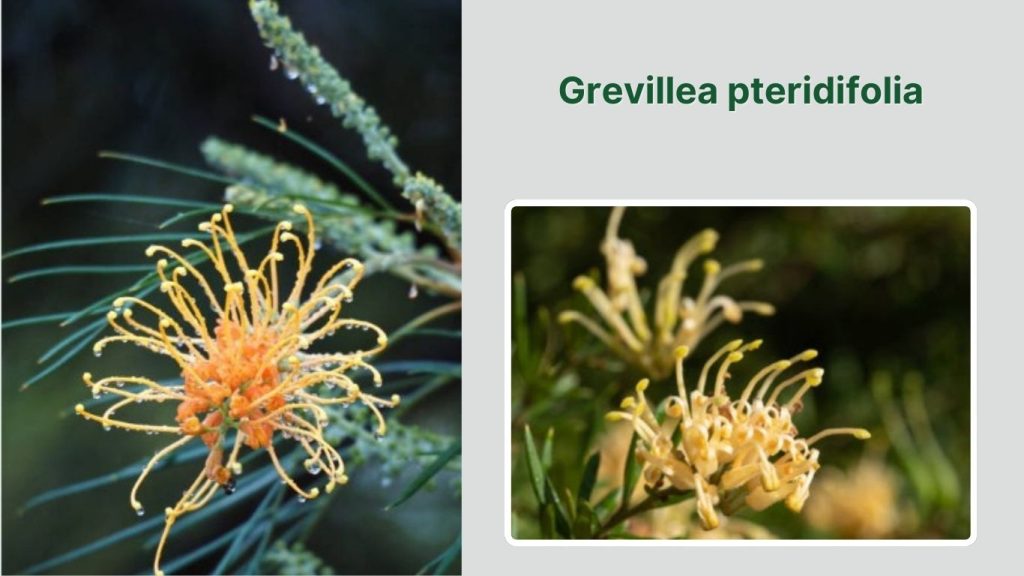
Grevillea pteridifolia, commonly called Fern-leaf Grevillea, is a tropical to subtropical species admired for its soft, fern-like foliage and upright, showy flower spikes. Native to northern Australia, it thrives in warm climates and adds a lush, exotic look to landscapes.
Identification
- Large shrub or small tree, usually 2–5 meters tall
- Finely divided, fern-like green leaves
- Upright toothbrush-shaped flower spikes, bright orange to red
- Flowers held above the foliage in dense clusters
- Open, spreading growth habit
Habitat
In nature, Grevillea pteridifolia grows in open woodlands, monsoon forests, and seasonally dry tropical regions. It prefers full sun, well-drained soils, and warm conditions, and shows good tolerance to heat and seasonal drought.
Flowering and Growth Habit
Flowering mainly occurs in the cooler months of the dry season, though timing varies by region. The plant grows moderately fast and forms an open, spreading shrub or small tree. Light pruning encourages bushier growth and repeated flowering.
Uses and Importance
This species is planted as a feature shrub or small tree in tropical and subtropical gardens. Its bright flowers attract birds and insects, while its soft foliage provides a contrasting texture to broad-leaved tropical plants.
18. Grevillea candicans (White-leaf Grevillea)
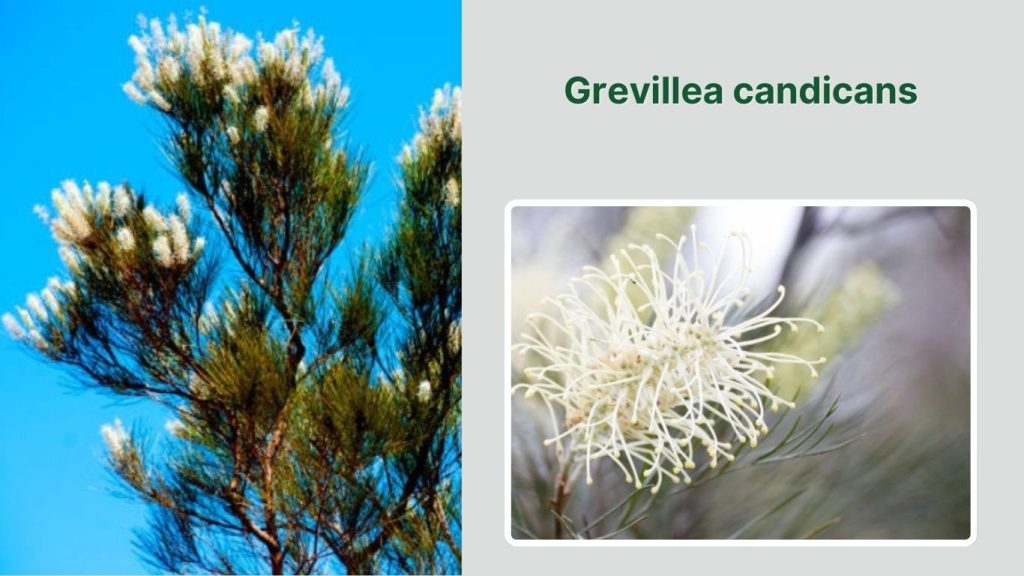
Grevillea candicans is a striking Western Australian species known for its dramatic silvery-white foliage and bold flower clusters. The contrast between its pale leaves and brightly colored blooms makes it one of the most visually distinctive Grevilleas used in ornamental landscaping.
Identification
- Large shrub, typically 2–4 meters tall
- Broad, deeply lobed leaves covered in white or silvery hairs
- Prominent spider-like flowers, usually red to pink
- Flowers borne in clusters at branch tips
- Strongly contrasting white foliage and colorful blooms
Habitat
In the wild, Grevillea candicans grows in open shrublands and woodland areas of Western Australia, often on sandy or gravelly soils. It prefers full sun, excellent drainage, and low-nutrient soils, and is adapted to dry, exposed environments.
Flowering and Growth Habit
Flowering usually occurs from winter through spring. The plant forms an upright to spreading shrub with a moderate growth rate. Occasional pruning helps maintain shape and encourages fresh growth.
Uses and Importance
Grevillea candicans is widely planted as a feature shrub because of its dramatic foliage color. Its nectar-rich flowers attract birds and insects, while its bright leaves provide year-round visual interest in native and drought-tolerant gardens.
19. Grevillea obtusifolia (Obtuse-leaf Grevillea)
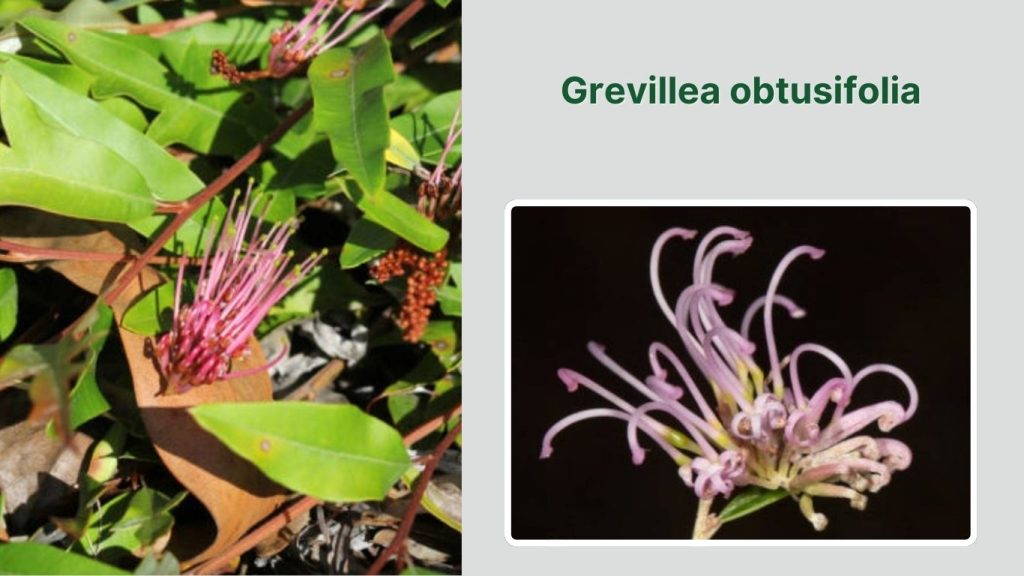
Grevillea obtusifolia is a compact and attractive shrub known for its rounded leaf tips and neat growth habit. Native to southeastern Australia, it is valued in cultivation for its manageable size, fine foliage, and delicate spider-like flowers that appear over a long season.
Identification
- Low to medium shrub, usually 0.5–1.5 meters tall
- Narrow leaves with blunt or rounded tips
- Small spider-like flowers, typically pink to red
- Flowers produced in small clusters along the stems
- Dense, compact growth form
Habitat
In the wild, Grevillea obtusifolia grows in open forests, heathlands, and sandy or rocky soils. It prefers well-drained ground, full sun to light shade, and moderate moisture, reflecting its natural adaptation to woodland margins.
Flowering and Growth Habit
Flowering commonly occurs from winter through spring, with occasional blooms at other times of year. The plant grows at a slow to moderate rate and naturally maintains a tidy, rounded shape.
Uses and Importance
Grevillea obtusifolia is suitable for small gardens, borders, and container planting. Its flowers attract nectar-feeding birds and insects, while its compact habit makes it easy to integrate into mixed plantings and native garden designs.
20. Grevillea humilis (Spreading Grevillea)
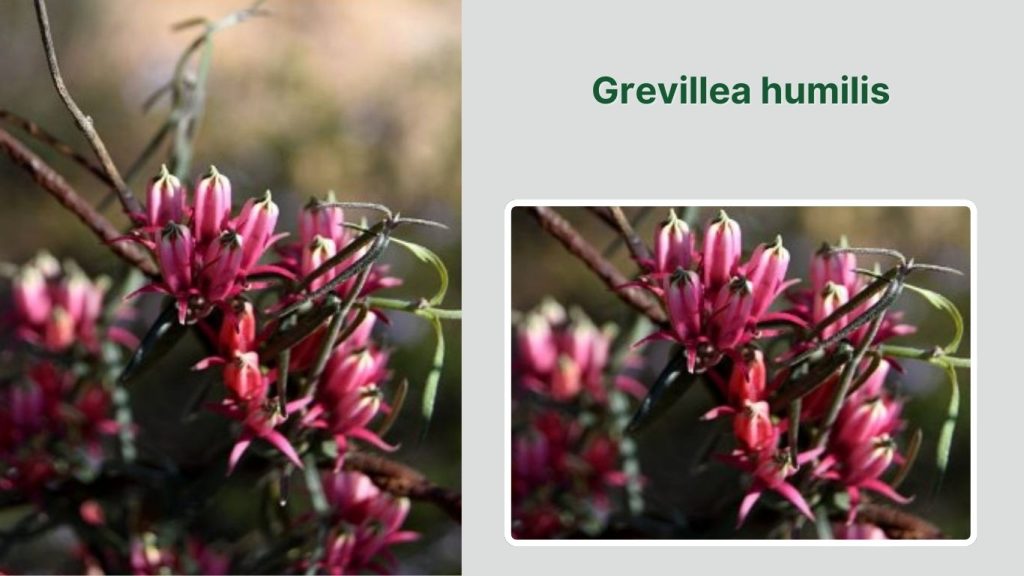
Grevillea humilis is a low-growing, spreading Grevillea species valued for its soft foliage and delicate spider-like flowers. Native to eastern Australia, it naturally forms ground-hugging mats in open woodlands and heathlands, making it well suited for groundcover use in gardens.
Identification
- Prostrate to low spreading shrub, usually under 0.5 meters tall
- Soft, narrow green leaves, sometimes slightly hairy
- Small spider-like flowers, often red, pink, or orange
- Flowers borne close to the foliage in loose clusters
- Mat-forming growth habit
Habitat
In nature, Grevillea humilis grows in sandy soils, open forests, and heath areas. It prefers well-drained soil, full sun to light shade, and tolerates dry conditions once established.
Flowering and Growth Habit
Flowering typically occurs from winter to spring, with occasional blooms at other times of year. The plant spreads gradually, forming a low, dense cover. Light pruning helps encourage fresh growth and maintains a neat appearance.
Uses and Importance
Grevillea humilis is widely used as a groundcover in native gardens, rockeries, and erosion-control plantings. Its nectar-rich flowers attract birds and insects, while its low habit makes it ideal for foreground and slope planting.
21. Grevillea speciosa (Showy Grevillea)
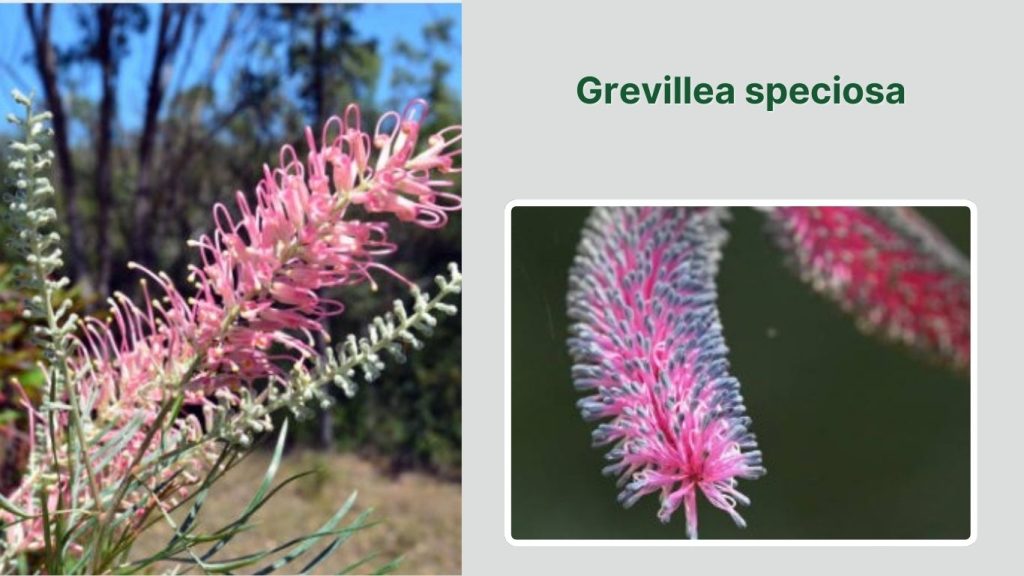
Grevillea speciosa is one of the most spectacular members of the genus, admired for its large, intensely colored flower clusters and glossy green foliage. Native to coastal regions of New South Wales, Australia, it is often considered one of the most ornamental Grevilleas because of its dramatic floral displays.
Identification
- Upright shrub, usually 2–5 meters tall
- Long, glossy green leaves with deeply divided margins
- Large spider-like flower clusters, typically bright red
- Very long protruding styles creating a dramatic, spidery look
- Open, airy growth habit
Habitat
In the wild, Grevillea speciosa grows in coastal forests and sandstone heathlands. It prefers well-drained, sandy soils, full sun to light shade, and protection from heavy frost, reflecting its natural coastal distribution.
Flowering and Growth Habit
Flowering mainly occurs from winter through spring, when the plant becomes covered in brilliant red blooms. It grows at a moderate rate and develops an upright, spreading form. Light pruning after flowering encourages bushier growth and future blooms.
Uses and Importance
Grevillea speciosa is widely planted as a feature shrub in ornamental and native gardens. Its nectar-rich flowers strongly attract birds and insects, while its brilliant color and flower size make it a focal point in landscape design.
FAQs
What is a Grevillea flower?
Grevillea is a large genus of flowering plants native mainly to Australia, known for their unusual spider-shaped or toothbrush-style blooms. They range from groundcovers to large trees and are widely grown as ornamentals because of their colorful flowers and ability to attract birds and pollinators.
Where do Grevillea plants naturally grow?
Most Grevillea species naturally grow in Australia, across habitats such as coastal heathlands, open woodlands, mountain forests, and dry shrublands. Different species are adapted to sandy soils, rocky slopes, riverbanks, or tropical savannas, depending on their native range.
Are Grevillea flowers good for wildlife gardens?
Yes, Grevillea flowers are excellent for wildlife-friendly gardens. Their nectar-rich blooms attract birds, bees, butterflies, and other pollinators. Many species flower in winter or early spring, providing an important food source when few other plants are in bloom.
How do you care for Grevillea plants?
Grevilleas generally prefer well-drained soil, full sun to light shade, and low-phosphorus fertilizers. Most species are drought-tolerant once established. Light pruning after flowering helps maintain shape and encourages more blooms, but heavy pruning into old wood is usually avoided.
Can Grevillea be grown outside Australia?
Yes, many Grevillea species are grown successfully in other warm and mild regions of the world. They perform well in Mediterranean, subtropical, and some temperate climates, provided they have good drainage, protection from severe frost, and suitable soil conditions.