




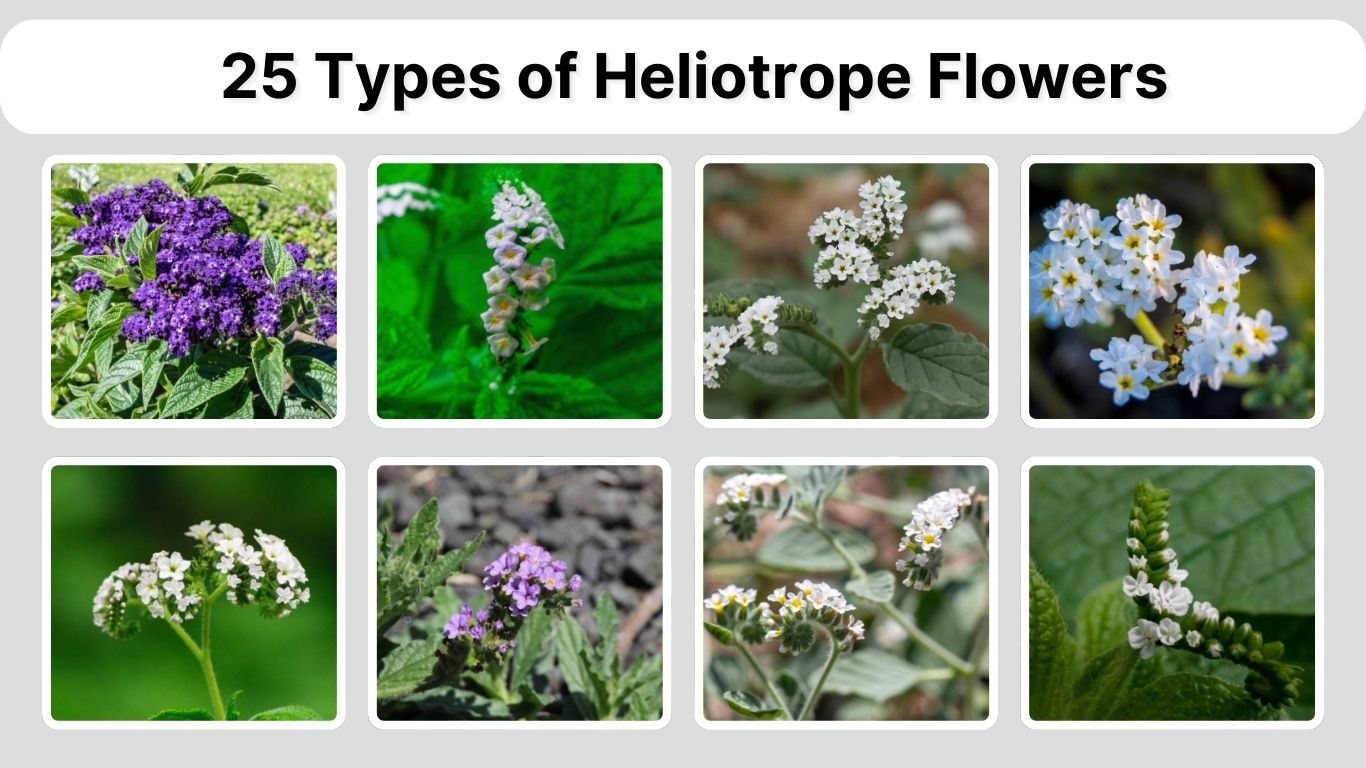
Heliotrope flowers are cherished for their vibrant purple blooms and sweet, vanilla-like fragrance, making them a favorite in gardens, borders, and containers. With over 25 species, these perennial plants vary in size, leaf shape, and growing conditions, yet all share the ability to attract pollinators like bees and butterflies. Easy to cultivate and low-maintenance, heliotropes thrive in sunny, well-drained soils, adding both color and fragrance to landscapes. Their ornamental charm and resilience make them a versatile choice for gardeners.
1. Heliotropium arborescens
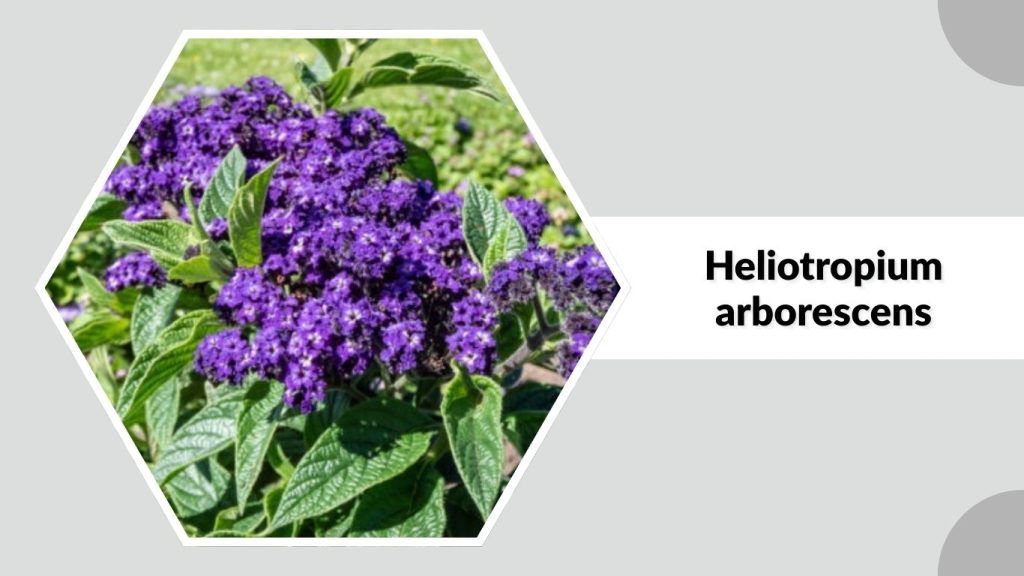
Heliotropium arborescens, commonly known as garden heliotrope, is a popular ornamental plant prized for its clusters of fragrant purple flowers and dark green foliage. It thrives in sunny locations and is often used in borders, containers, and garden beds. Known for attracting butterflies and pollinators, this perennial adds both visual appeal and a sweet vanilla-like scent to gardens.
Identification
- Scientific Name: Heliotropium arborescens
- Common Name: Garden Heliotrope
- Flower Color: Purple, occasionally white or violet shades
- Leaf: Dark green, ovate, slightly hairy
- Height: 30–60 cm (12–24 inches)
Habitat
Native to Peru, it prefers well-drained soil and full sun to partial shade. It is widely cultivated in temperate regions as an annual or perennial depending on climate.
Growth and Care
Heliotropium arborescens grows best with regular watering, moderate fertilization, and occasional pruning to maintain shape. It is sensitive to frost and may need protection in colder climates.
Flowering and Bloom Time
This species blooms from late spring to early autumn, producing dense clusters of small, fragrant flowers that attract bees, butterflies, and other pollinators.
2. Heliotropium indicum
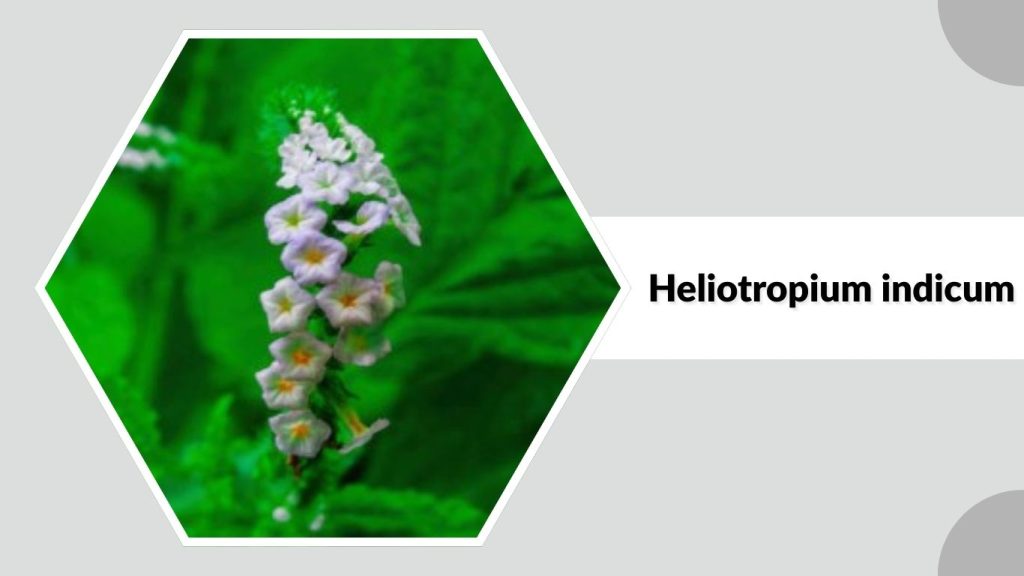
Heliotropium indicum, also known as Indian heliotrope, is a hardy flowering plant valued for its small, vibrant flowers and medicinal properties. It often grows as a wildflower in tropical and subtropical regions and is known for its adaptability in various soil types. This species is commonly used in traditional medicine and can thrive with minimal care, making it popular in home gardens and natural landscapes.
Identification
- Scientific Name: Heliotropium indicum
- Common Name: Indian Heliotrope
- Flower Color: Purple to lavender
- Leaf: Broad, green, and slightly rough in texture
- Height: 20–50 cm (8–20 inches)
Habitat
Native to tropical Asia, it grows well in sunny, open areas, along roadsides, and in disturbed soils. It tolerates a variety of soil conditions but prefers well-drained environments.
Growth and Care
This species is low-maintenance, requiring moderate watering and occasional pruning to remove dead flowers. It is drought-tolerant once established and can withstand hot climates.
Flowering and Bloom Time
Heliotropium indicum produces blooms throughout the year in favorable climates, attracting pollinators such as butterflies and bees.
3. Heliotropium europaeum
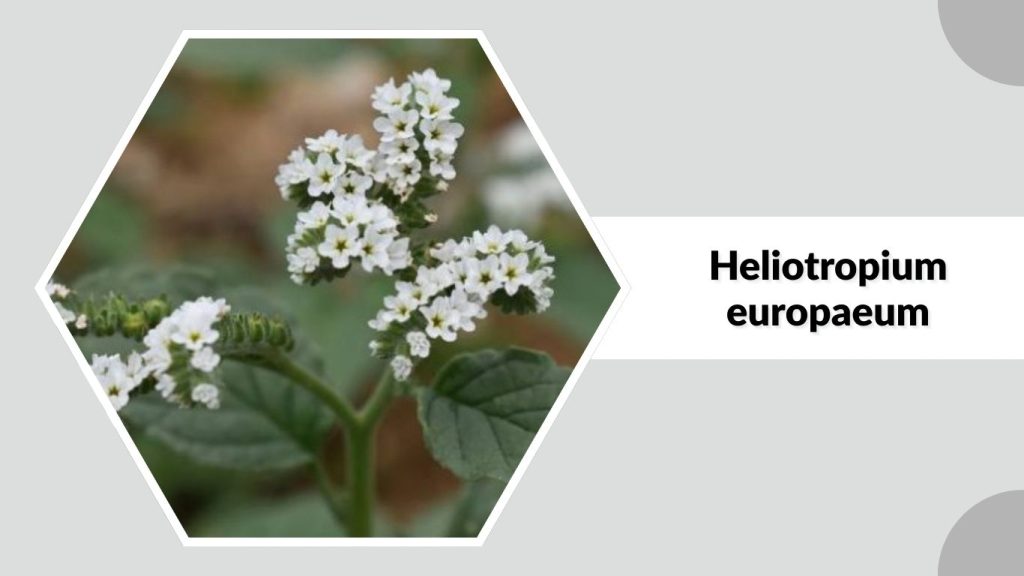
Heliotropium europaeum, commonly called European heliotrope, is a small, herbaceous plant known for its clusters of purple to violet flowers and slightly hairy stems. It is often found in dry, sandy soils and is valued for its ornamental appeal in rock gardens and naturalized areas. Despite its beauty, some parts of the plant are considered toxic if ingested, so care should be taken when planting near pets or children.
Identification
- Scientific Name: Heliotropium europaeum
- Common Name: European Heliotrope
- Flower Color: Purple to violet
- Leaf: Lance-shaped, grayish-green, slightly hairy
- Height: 10–40 cm (4–16 inches)
Habitat
Native to Europe, it thrives in dry, sandy, and disturbed soils. It prefers full sun and can tolerate drought conditions, making it suitable for low-maintenance gardens.
Growth and Care
Heliotropium europaeum requires minimal watering once established and grows well in poor soil. It is generally pest-resistant but should be monitored due to its toxic nature if ingested by humans or animals.
Flowering and Bloom Time
This species blooms from spring to early summer, producing fragrant flowers that attract pollinators while adding color to gardens and wildflower landscapes.
4. Heliotropium curassavicum
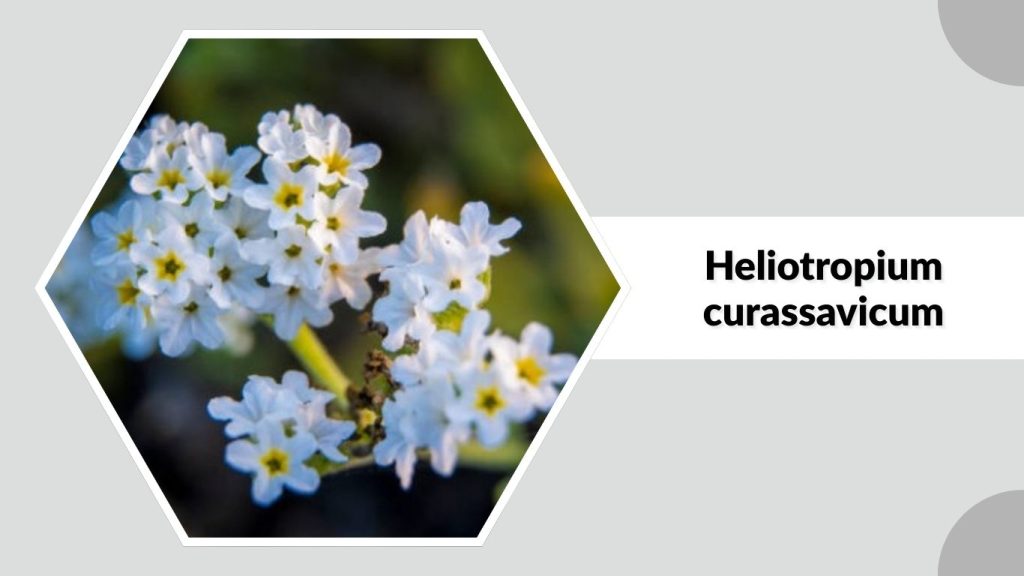
Heliotropium curassavicum, commonly known as seaside heliotrope or salt heliotrope, is a succulent-like plant that thrives in coastal regions and saline soils. It produces small clusters of purple to pink flowers and has fleshy, green leaves that help it retain water. This hardy species is often used in erosion control and landscaping near beaches due to its tolerance for salt and drought.
Identification
- Scientific Name: Heliotropium curassavicum
- Common Name: Seaside Heliotrope, Salt Heliotrope
- Flower Color: Purple to pink
- Leaf: Fleshy, green, slightly succulent
- Height: 5–30 cm (2–12 inches)
Habitat
Native to the Americas, it thrives in sandy, coastal soils and can tolerate saline conditions. It is commonly found along shorelines, roadsides, and dry, open areas.
Growth and Care
Heliotropium curassavicum is drought-tolerant and requires minimal watering. It prefers full sun and well-drained soil. Regular pruning is not necessary but can help maintain a neat appearance.
Flowering and Bloom Time
This species blooms throughout the warmer months, producing clusters of small, fragrant flowers that attract bees, butterflies, and other pollinators.
5. Heliotropium annuum
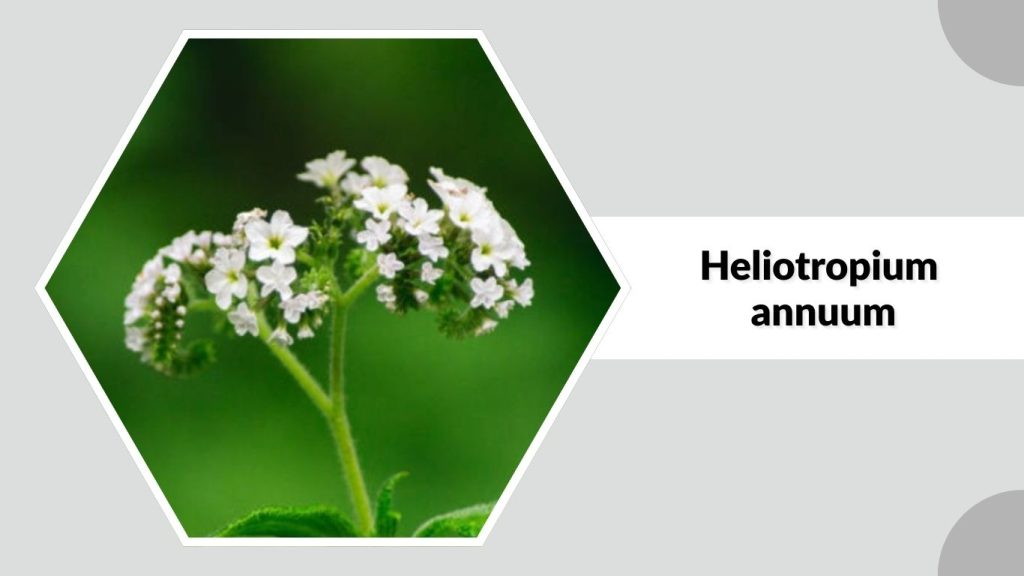
Heliotropium annuum, commonly called annual heliotrope, is a fast-growing, short-lived plant known for its fragrant clusters of purple or violet flowers. It is widely cultivated as an ornamental for borders, containers, and garden beds, offering a sweet vanilla-like scent that attracts pollinators. Its compact size and rapid growth make it ideal for adding color and fragrance to summer gardens.
Identification
- Scientific Name: Heliotropium annuum
- Common Name: Annual Heliotrope
- Flower Color: Purple to violet
- Leaf: Dark green, slightly hairy, ovate
- Height: 25–50 cm (10–20 inches)
Habitat
Native to the Americas, it thrives in sunny locations with well-drained soil. It is typically grown as an annual in temperate regions and can flourish in garden beds, borders, and containers.
Growth and Care
Heliotropium annuum prefers full sun and regular watering. Fertilization every few weeks encourages healthy foliage and abundant blooms. Deadheading spent flowers promotes continuous flowering throughout the season.
Flowering and Bloom Time
This species blooms from late spring to early autumn, producing dense, fragrant flower clusters that attract butterflies, bees, and other pollinators.
6. Heliotropium amplexicaule
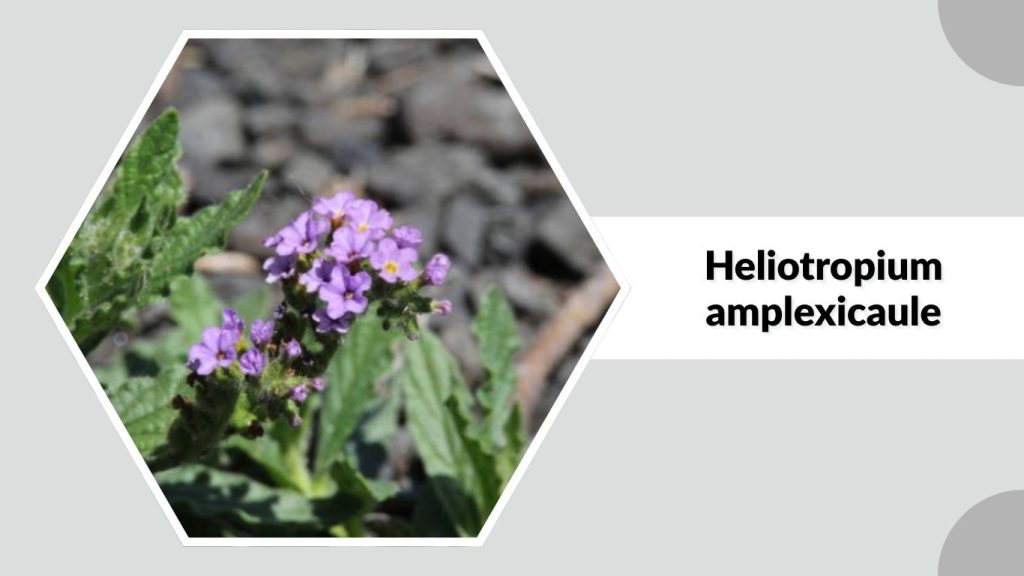
Heliotropium amplexicaule, commonly known as clasping-leaf heliotrope, is a perennial plant recognized for its delicate purple flowers and unique leaf structure that wraps around the stem. Native to South America, it is often used in gardens for ground cover and ornamental purposes. Its fast-spreading nature makes it effective for stabilizing soil, though it can become invasive in certain climates.
Identification
- Scientific Name: Heliotropium amplexicaule
- Common Name: Clasping-Leaf Heliotrope
- Flower Color: Light purple
- Leaf: Ovate, clasping the stem, green
- Height: 20–60 cm (8–24 inches)
Habitat
This species thrives in sunny to partially shaded areas and adapts to various soil types. It is commonly found in temperate gardens, fields, and open landscapes.
Growth and Care
Heliotropium amplexicaule grows well with moderate watering and minimal fertilization. Regular monitoring is needed to control spreading, as it can naturalize quickly in favorable conditions.
Flowering and Bloom Time
The plant blooms from spring to late summer, producing clusters of small, fragrant flowers that attract bees, butterflies, and other pollinators.
7. Heliotropium floridum
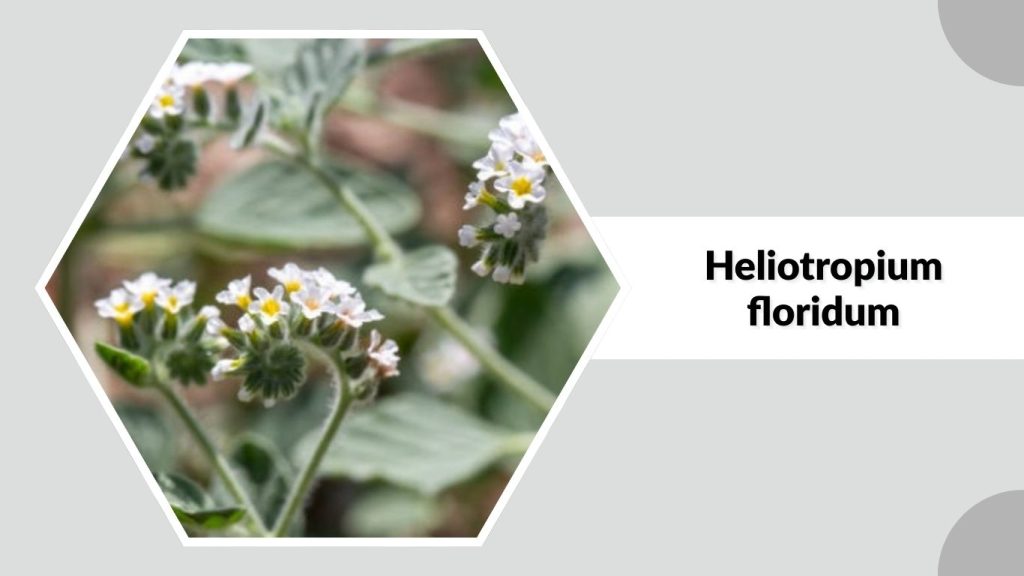
Heliotropium floridum, commonly called Florida heliotrope, is a perennial species native to the southeastern United States. It is admired for its vibrant purple flower clusters and aromatic foliage. This plant is often used in coastal and garden landscapes for its low maintenance needs and ability to attract pollinators such as butterflies and bees.
Identification
- Scientific Name: Heliotropium floridum
- Common Name: Florida Heliotrope
- Flower Color: Purple to violet
- Leaf: Lance-shaped, bright green, slightly hairy
- Height: 30–70 cm (12–28 inches)
Habitat
Native to Florida and nearby regions, it thrives in sandy, well-drained soils with full sun to partial shade. It is often found in coastal areas, gardens, and natural landscapes.
Growth and Care
Heliotropium floridum requires moderate watering and thrives in nutrient-rich, well-drained soils. It tolerates heat and occasional drought once established. Light pruning encourages bushier growth and more flower clusters.
Flowering and Bloom Time
The plant blooms from late spring through fall, producing dense clusters of fragrant flowers that attract bees, butterflies, and hummingbirds.
8. Heliotropium tenellum
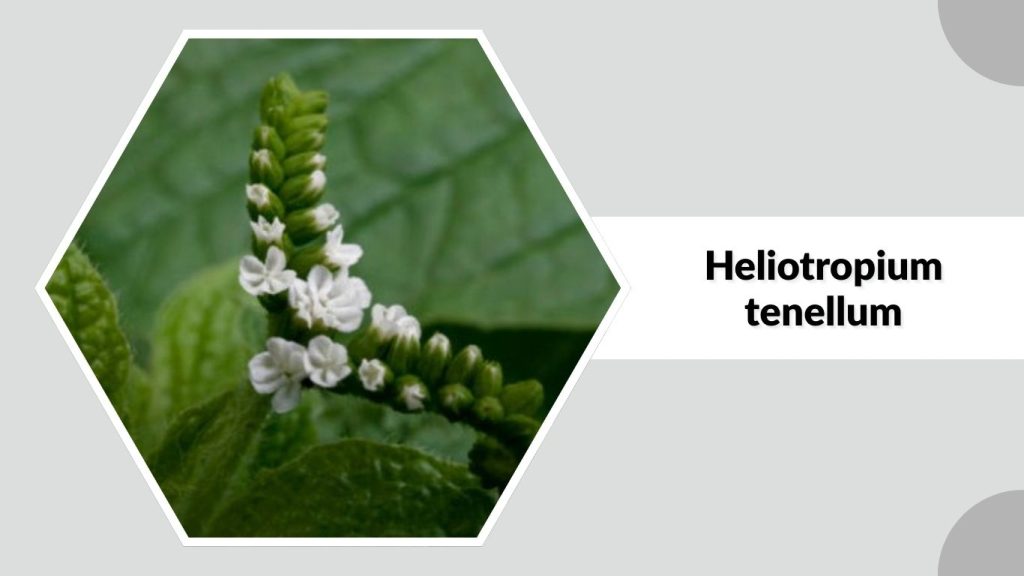
Heliotropium tenellum, commonly known as slender heliotrope, is a delicate and low-growing plant valued for its small purple flowers and fine-textured foliage. It is often found in sandy soils, roadsides, and open fields, making it suitable for naturalized gardens and wildflower mixes. Its compact size and subtle fragrance make it an attractive addition to pollinator-friendly landscapes.
Identification
- Scientific Name: Heliotropium tenellum
- Common Name: Slender Heliotrope
- Flower Color: Light purple
- Leaf: Small, narrow, green, slightly hairy
- Height: 10–30 cm (4–12 inches)
Habitat
Native to North America, it thrives in dry, sandy, and well-drained soils. It prefers full sun but can tolerate partial shade and is often found along roadsides, fields, and open woodlands.
Growth and Care
Heliotropium tenellum is low-maintenance, requiring minimal watering once established. It grows well in poor soils and does not demand fertilization, making it ideal for naturalized or xeriscape gardens.
Flowering and Bloom Time
This species blooms from late spring to early autumn, producing clusters of small, fragrant flowers that attract bees, butterflies, and other beneficial insects.
9. Heliotropium heteranthum
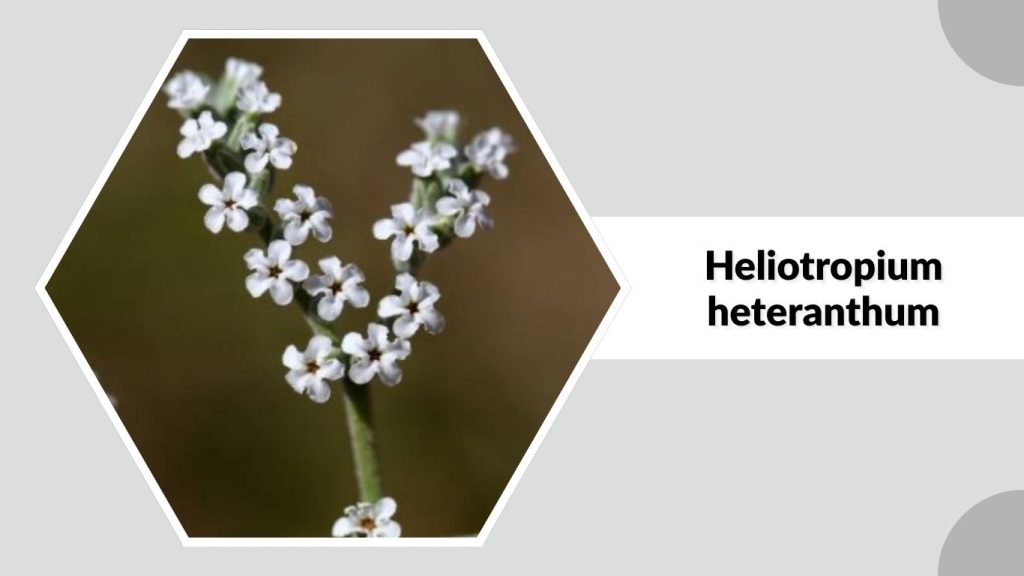
Heliotropium heteranthum, commonly known as variable-flower heliotrope, is a perennial plant appreciated for its diverse flower shapes and shades of purple. It grows in open fields and sunny garden spaces, often adding ornamental value with its clustered blooms. This species is also known for attracting pollinators and thriving in a variety of soil types.
Identification
- Scientific Name: Heliotropium heteranthum
- Common Name: Variable-Flower Heliotrope
- Flower Color: Purple to violet
- Leaf: Green, ovate, slightly hairy
- Height: 25–60 cm (10–24 inches)
Habitat
Native to tropical and subtropical regions, it prefers well-drained soil with full sun exposure. It can tolerate dry conditions and adapts to garden beds, borders, and open landscapes.
Growth and Care
Heliotropium heteranthum requires moderate watering and benefits from occasional fertilization to enhance flowering. Deadheading spent blooms encourages longer bloom periods and healthier plant growth.
Flowering and Bloom Time
This species blooms from spring through early autumn, producing fragrant clusters of flowers that attract bees, butterflies, and other pollinators.
10. Heliotropium ovalifolium
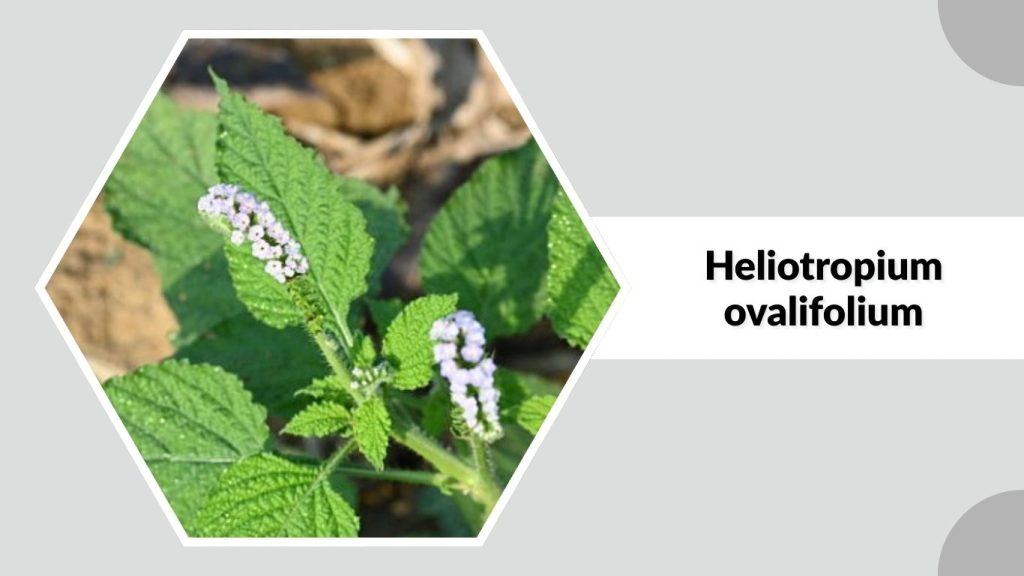
Heliotropium ovalifolium, commonly known as oval-leaf heliotrope, is a perennial species recognized for its broad, glossy leaves and clusters of small purple flowers. It is often cultivated in gardens for its ornamental appeal and its ability to attract pollinators. This hardy plant adapts well to a variety of soil types and can thrive in both sunny and partially shaded areas.
Identification
- Scientific Name: Heliotropium ovalifolium
- Common Name: Oval-Leaf Heliotrope
- Flower Color: Purple to violet
- Leaf: Broad, oval-shaped, dark green
- Height: 30–60 cm (12–24 inches)
Habitat
Native to tropical and subtropical regions, it grows best in well-drained soils with full sun to partial shade. It is commonly found in gardens, borders, and naturalized landscapes.
Growth and Care
Heliotropium ovalifolium requires moderate watering and occasional fertilization. Regular pruning helps maintain a compact shape and encourages denser flower clusters.
Flowering and Bloom Time
This species blooms from late spring to autumn, producing fragrant, dense clusters of small flowers that attract bees, butterflies, and other pollinators.
11. Heliotropium dasycarpum
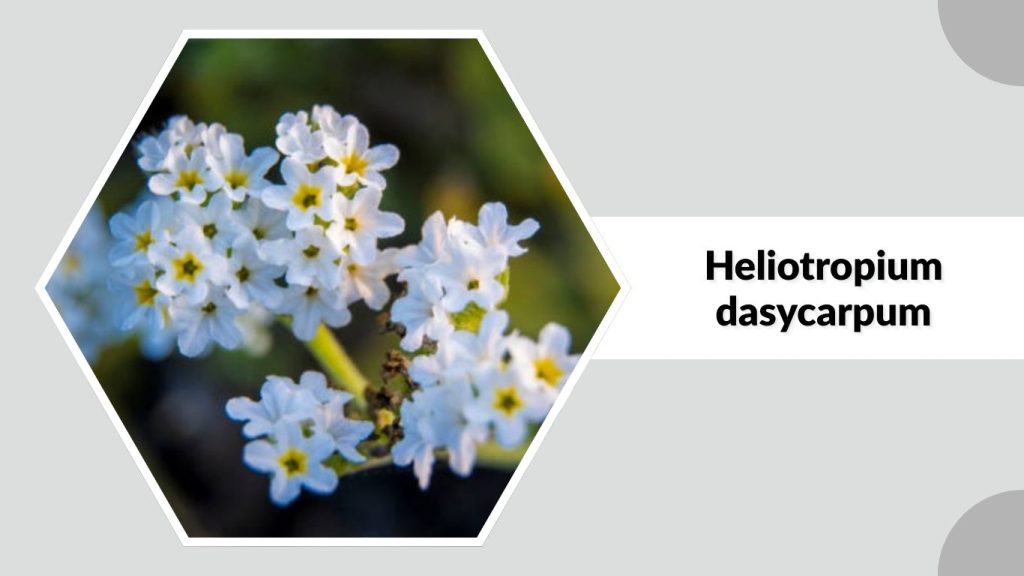
Heliotropium dasycarpum, commonly called hairy-fruited heliotrope, is a perennial plant distinguished by its small purple flowers and slightly hairy fruit capsules. It is often grown for ornamental purposes and adds charm to garden beds, borders, and naturalized areas. Its hardy nature allows it to thrive in a variety of soils, making it a versatile choice for low-maintenance gardens.
Identification
- Scientific Name: Heliotropium dasycarpum
- Common Name: Hairy-Fruited Heliotrope
- Flower Color: Purple
- Leaf: Green, ovate, with soft hairs
- Height: 20–50 cm (8–20 inches)
Habitat
Native to tropical regions, it grows well in full sun with well-drained soil. It is often found along roadsides, open fields, and cultivated garden areas.
Growth and Care
Heliotropium dasycarpum prefers moderate watering and occasional fertilization. Pruning dead stems and flowers helps maintain plant health and encourages new growth.
Flowering and Bloom Time
This species blooms from spring to early autumn, producing fragrant clusters of flowers that attract butterflies, bees, and other pollinators.
12. Heliotropium pauciflorum
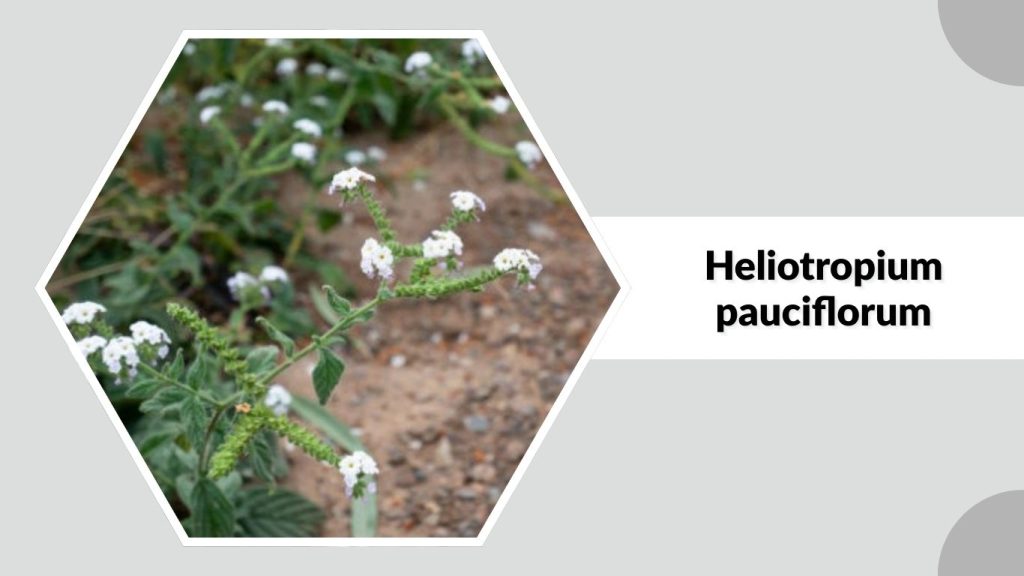
Heliotropium pauciflorum, commonly known as few-flowered heliotrope, is a compact perennial plant valued for its small, delicate clusters of purple flowers. It is well-suited for rock gardens, borders, and naturalized areas, offering subtle fragrance and ornamental appeal. Its low-maintenance nature makes it ideal for gardeners seeking attractive plants that thrive in dry, sunny conditions.
Identification
- Scientific Name: Heliotropium pauciflorum
- Common Name: Few-Flowered Heliotrope
- Flower Color: Purple
- Leaf: Small, green, lance-shaped
- Height: 15–40 cm (6–16 inches)
Habitat
Native to arid and semi-arid regions, it grows best in well-drained soils with full sun. It can tolerate poor soils and is often found along rocky slopes and open fields.
Growth and Care
Heliotropium pauciflorum requires minimal watering and thrives in sunny locations. Occasional pruning encourages a compact growth habit and promotes more flowering clusters.
Flowering and Bloom Time
This species blooms from late spring to early autumn, producing small, fragrant flower clusters that attract bees, butterflies, and other pollinators.
13. Heliotropium supinum
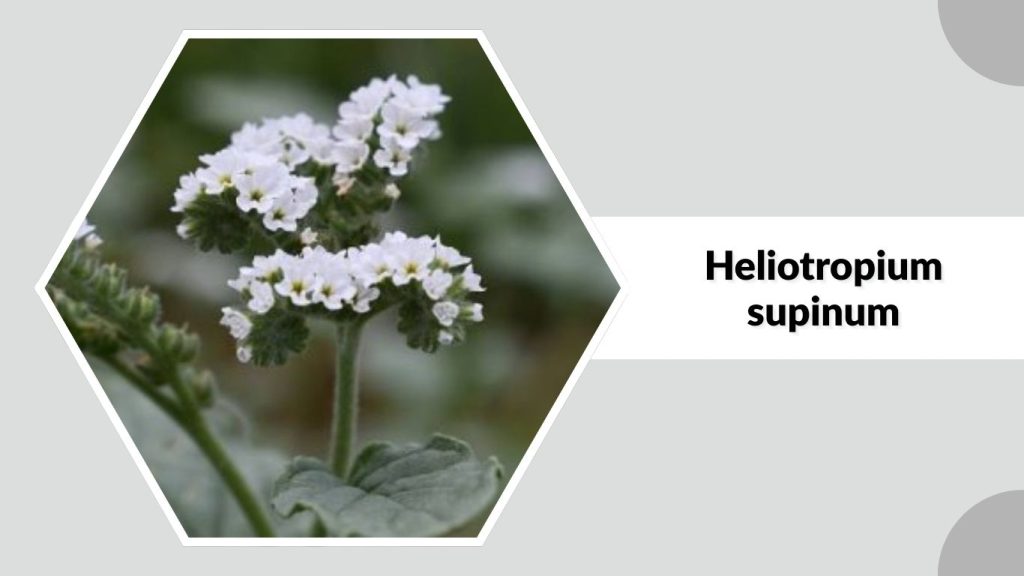
Heliotropium supinum, commonly known as prostrate heliotrope, is a low-growing perennial plant appreciated for its trailing habit and clusters of small purple flowers. It is ideal for ground cover, rock gardens, and container planting. Its ability to tolerate dry conditions and poor soils makes it a versatile choice for both ornamental and practical landscaping.
Identification
- Scientific Name: Heliotropium supinum
- Common Name: Prostrate Heliotrope
- Flower Color: Purple
- Leaf: Small, green, slightly hairy
- Height: 5–20 cm (2–8 inches)
Habitat
Native to semi-arid regions, it prefers sandy, well-drained soils and full sun. It is commonly found in open fields, rocky slopes, and garden landscapes.
Growth and Care
Heliotropium supinum requires minimal watering once established and thrives in sunny, dry locations. Occasional pruning helps maintain shape and encourages more blooms.
Flowering and Bloom Time
This species blooms from spring to early autumn, producing small, fragrant flowers that attract pollinators like bees and butterflies.
14. Heliotropium chenopodiaceum
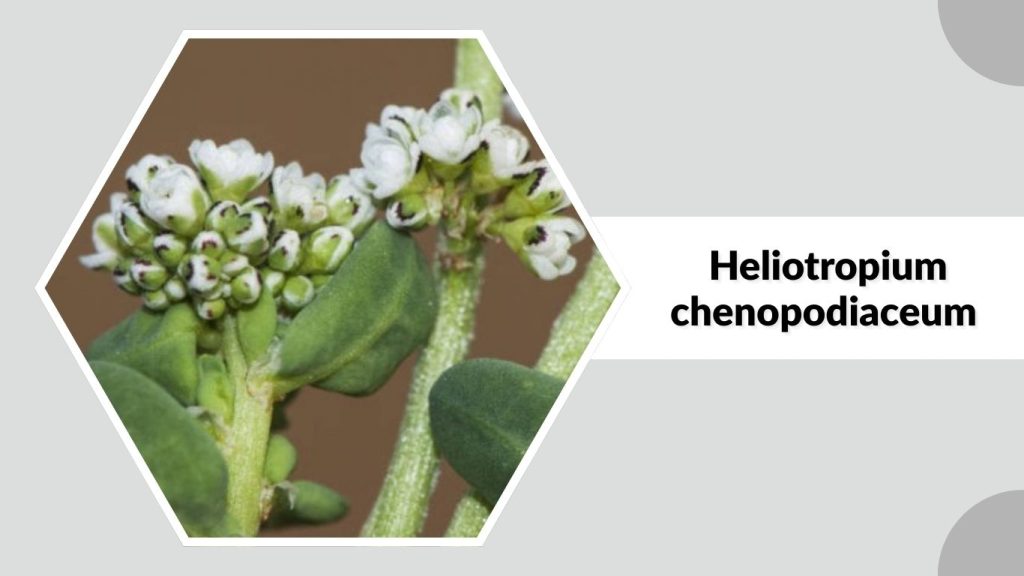
Heliotropium chenopodiaceum, commonly known as goosefoot heliotrope, is a hardy perennial plant noted for its small purple flowers and bushy green foliage. It is often found in open fields, disturbed soils, and garden landscapes, valued for its low-maintenance growth and ornamental appeal. This species can also tolerate a range of soil types, making it suitable for naturalized planting.
Identification
- Scientific Name: Heliotropium chenopodiaceum
- Common Name: Goosefoot Heliotrope
- Flower Color: Purple
- Leaf: Green, ovate, slightly fleshy
- Height: 20–50 cm (8–20 inches)
Habitat
Native to tropical and subtropical regions, it grows well in sunny, well-drained soils. It is commonly found along roadsides, fields, and open landscapes.
Growth and Care
Heliotropium chenopodiaceum thrives with moderate watering and minimal fertilization. Occasional pruning of spent flowers helps maintain its bushy shape and encourages continued blooming.
Flowering and Bloom Time
This species blooms from spring to early autumn, producing fragrant clusters of small flowers that attract bees, butterflies, and other pollinators.
15. Heliotropium procumbens
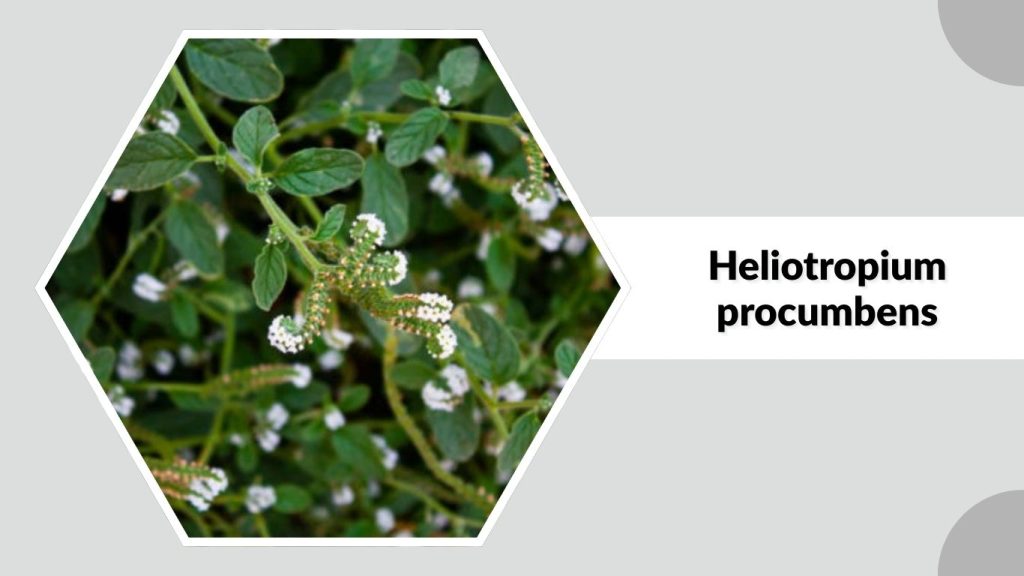
Heliotropium procumbens, commonly known as creeping heliotrope, is a low-growing perennial plant valued for its trailing stems and clusters of small purple flowers. It is ideal for ground cover, rock gardens, and container planting. Its spreading habit helps prevent soil erosion, and it attracts pollinators with its fragrant blooms.
Identification
- Scientific Name: Heliotropium procumbens
- Common Name: Creeping Heliotrope
- Flower Color: Purple
- Leaf: Small, green, slightly hairy
- Height: 5–25 cm (2–10 inches)
Habitat
Native to warm and temperate regions, it thrives in well-drained soils with full sun to partial shade. It is commonly found in open fields, sandy soils, and garden landscapes.
Growth and Care
Heliotropium procumbens requires minimal watering and grows well in poor soils. Pruning helps control spreading and encourages denser foliage and more flowers.
Flowering and Bloom Time
This species blooms from spring to autumn, producing small, fragrant flower clusters that attract bees, butterflies, and other pollinators.
16. Heliotropium ramosissimum
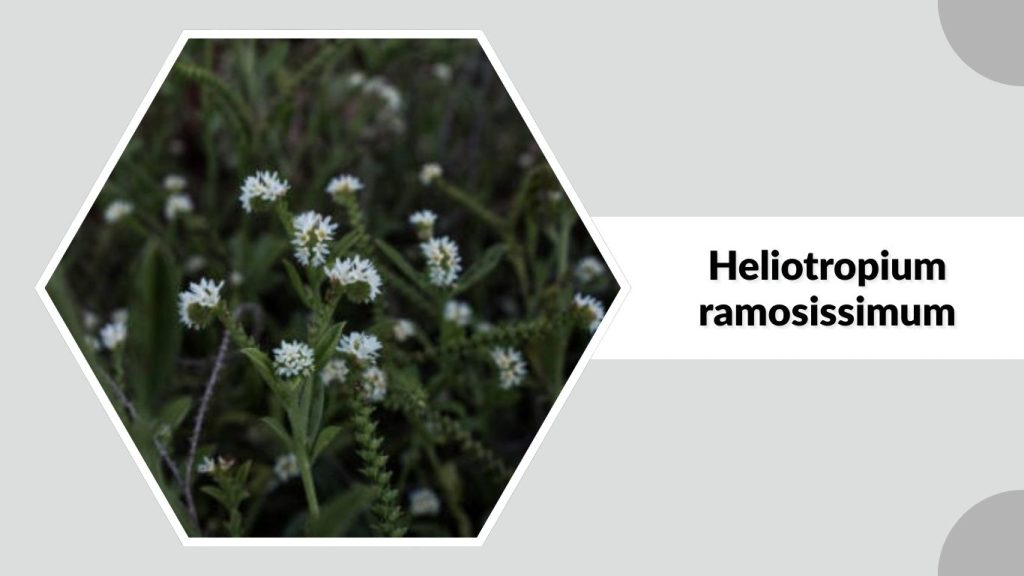
Heliotropium ramosissimum, commonly known as branched heliotrope, is a perennial plant distinguished by its many branching stems and clusters of small purple flowers. It is often used in gardens and naturalized areas for its ornamental appeal and ability to attract pollinators. Its adaptability to different soil types makes it a resilient choice for low-maintenance landscaping.
Identification
- Scientific Name: Heliotropium ramosissimum
- Common Name: Branched Heliotrope
- Flower Color: Purple
- Leaf: Green, lance-shaped, slightly hairy
- Height: 25–60 cm (10–24 inches)
Habitat
Native to tropical and subtropical regions, it thrives in full sun with well-drained soils. It can be found in gardens, open fields, and disturbed soils.
Growth and Care
Heliotropium ramosissimum requires moderate watering and occasional fertilization. Pruning helps maintain a neat appearance and encourages bushier growth with more flowers.
Flowering and Bloom Time
This species blooms from spring to late summer, producing fragrant clusters of small flowers that attract bees, butterflies, and other pollinators.
17. Heliotropium lineariifolium
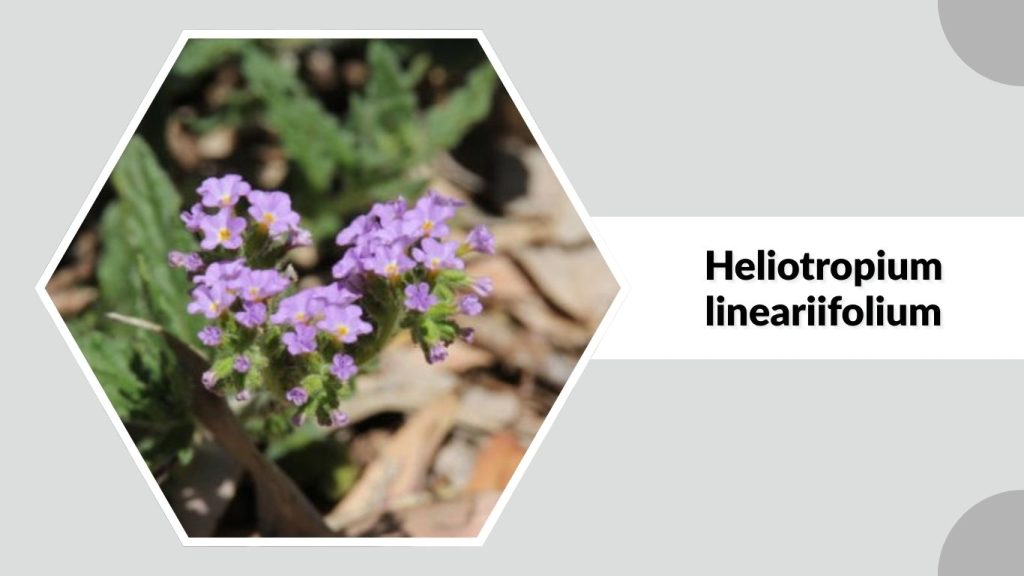
Heliotropium lineariifolium, commonly known as narrow-leaf heliotrope, is a perennial plant noted for its slender leaves and clusters of small purple flowers. It is often cultivated in gardens and rockeries for its ornamental beauty and ability to attract pollinators. Its compact growth and drought tolerance make it ideal for low-maintenance landscapes.
Identification
- Scientific Name: Heliotropium lineariifolium
- Common Name: Narrow-Leaf Heliotrope
- Flower Color: Purple
- Leaf: Narrow, linear, green
- Height: 15–40 cm (6–16 inches)
Habitat
Native to dry, open regions, it thrives in well-drained soils with full sun exposure. It is commonly found in rocky slopes, sandy fields, and garden landscapes.
Growth and Care
Heliotropium lineariifolium requires minimal watering once established and prefers sunny locations. Occasional pruning helps maintain its compact shape and encourages more flower clusters.
Flowering and Bloom Time
This species blooms from spring to early autumn, producing fragrant clusters of small flowers that attract bees, butterflies, and other pollinators.
18. Heliotropium pauciflorum var. glabrum
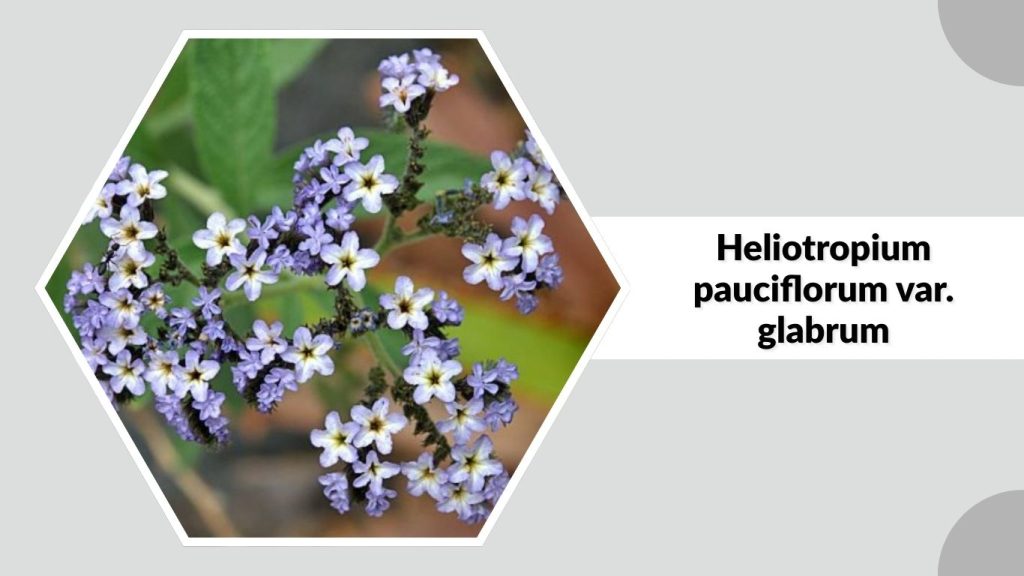
Heliotropium pauciflorum var. glabrum, commonly known as smooth few-flowered heliotrope, is a perennial variety appreciated for its small, delicate purple flowers and smooth foliage. It is ideal for rock gardens, borders, and naturalized areas. Its drought tolerance and low-maintenance requirements make it a popular choice for gardeners seeking ornamental yet resilient plants.
Identification
- Scientific Name: Heliotropium pauciflorum var. glabrum
- Common Name: Smooth Few-Flowered Heliotrope
- Flower Color: Purple
- Leaf: Smooth, green, lance-shaped
- Height: 15–35 cm (6–14 inches)
Habitat
Native to arid and semi-arid regions, it grows best in well-drained soils with full sun exposure. It is often found on rocky slopes, open fields, and garden landscapes.
Growth and Care
Heliotropium pauciflorum var. glabrum requires minimal watering and thrives in sunny, dry locations. Light pruning encourages more compact growth and additional flowering.
Flowering and Bloom Time
This species blooms from late spring to early autumn, producing small, fragrant flower clusters that attract bees, butterflies, and other pollinators.
19. Heliotropium squamatum
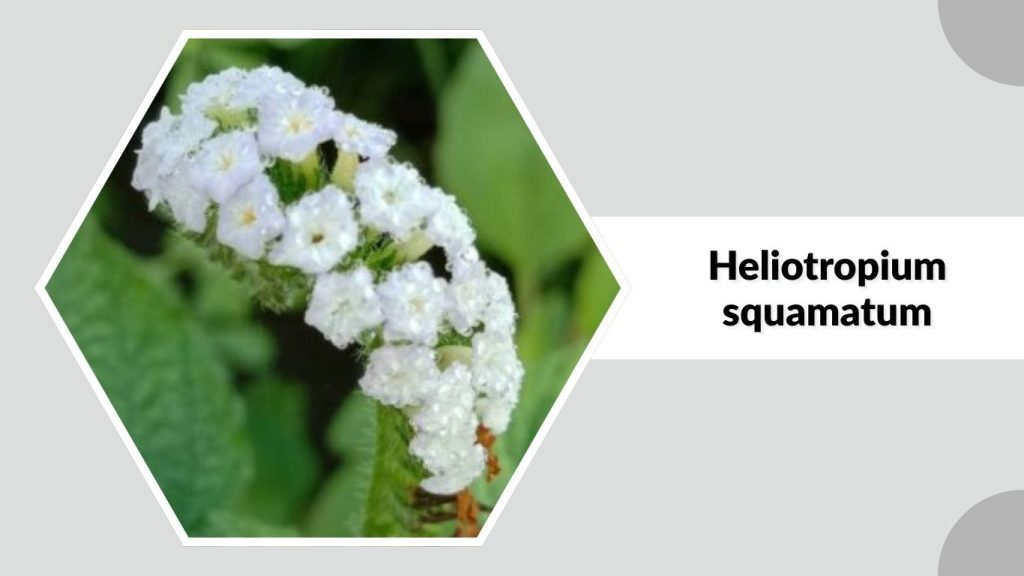
Heliotropium squamatum, commonly known as scaly heliotrope, is a perennial plant characterized by its small purple flowers and textured, scale-like leaves. It is often used in rock gardens, borders, and naturalized areas for its ornamental appeal and resilience in dry conditions. Its low-maintenance nature makes it ideal for gardeners seeking hardy, drought-tolerant plants.
Identification
- Scientific Name: Heliotropium squamatum
- Common Name: Scaly Heliotrope
- Flower Color: Purple
- Leaf: Green, small, with a scaly texture
- Height: 10–30 cm (4–12 inches)
Habitat
Native to arid and semi-arid regions, it thrives in sandy or rocky soils with full sun. It is commonly found in open fields, hillsides, and garden landscapes.
Growth and Care
Heliotropium squamatum requires minimal watering and grows well in well-drained soils. Occasional pruning can help maintain a tidy appearance and promote more blooms.
Flowering and Bloom Time
This species blooms from spring to late summer, producing small, fragrant clusters of flowers that attract bees, butterflies, and other pollinators.
20. Heliotropium wagneri
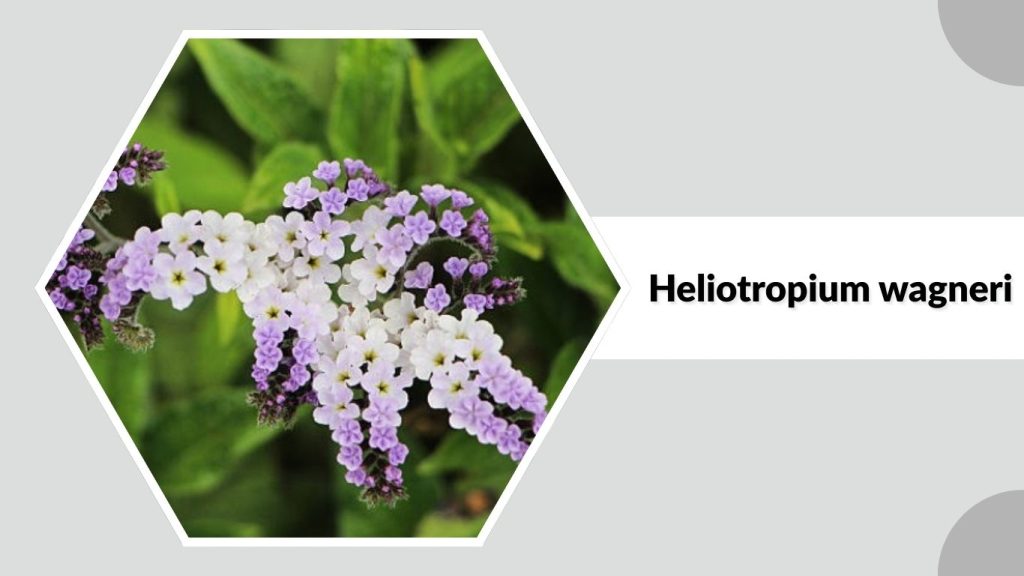
Heliotropium wagneri, commonly known as Wagner’s heliotrope, is a perennial plant valued for its vibrant clusters of small purple flowers and compact growth habit. It is often cultivated in gardens, borders, and rockeries for its ornamental appeal and ability to attract pollinators. Its adaptability to different soil types makes it a resilient choice for low-maintenance landscapes.
Identification
- Scientific Name: Heliotropium wagneri
- Common Name: Wagner’s Heliotrope
- Flower Color: Purple
- Leaf: Small, green, lance-shaped
- Height: 20–50 cm (8–20 inches)
Habitat
Native to subtropical regions, it thrives in well-drained soils with full sun exposure. It is commonly found in open fields, gardens, and rocky slopes.
Growth and Care
Heliotropium wagneri requires moderate watering and benefits from occasional fertilization. Pruning encourages bushier growth and denser flower clusters.
Flowering and Bloom Time
This species blooms from spring to early autumn, producing fragrant flower clusters that attract bees, butterflies, and other pollinators.
21. Heliotropium velutinum
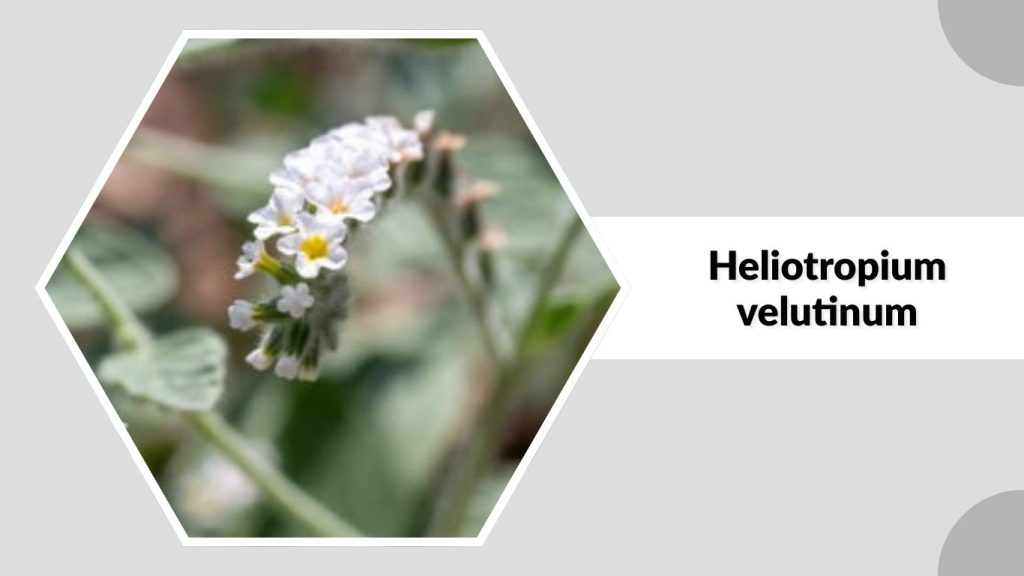
Heliotropium velutinum, commonly known as velvety heliotrope, is a perennial plant recognized for its soft, velvety leaves and clusters of small purple flowers. It is cultivated in gardens and naturalized areas for its ornamental value and its ability to attract pollinators. Its compact growth habit and adaptability to various soil types make it ideal for low-maintenance landscaping.
Identification
- Scientific Name: Heliotropium velutinum
- Common Name: Velvety Heliotrope
- Flower Color: Purple
- Leaf: Green, ovate, soft and velvety
- Height: 25–60 cm (10–24 inches)
Habitat
Native to subtropical regions, it thrives in well-drained soils with full sun to partial shade. It is commonly found in gardens, open fields, and rocky landscapes.
Growth and Care
Heliotropium velutinum requires moderate watering and occasional fertilization. Pruning promotes bushier growth and more abundant flowering.
Flowering and Bloom Time
This species blooms from spring to early autumn, producing fragrant clusters of flowers that attract bees, butterflies, and other pollinators.
22. Heliotropium trichotum
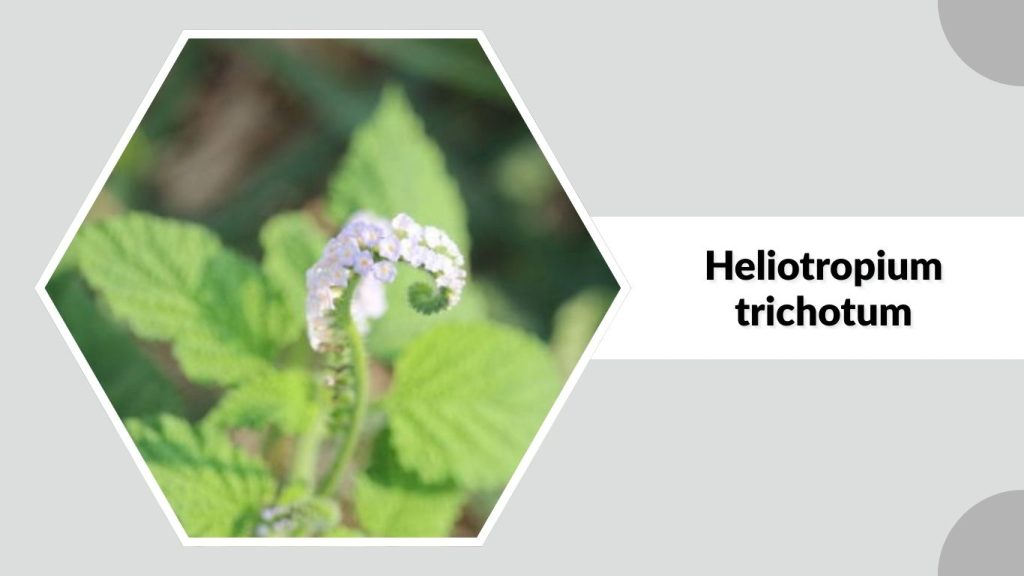
Heliotropium trichotum, commonly known as three-branched heliotrope, is a perennial plant notable for its branching stems and clusters of small purple flowers. It is often cultivated in gardens and natural landscapes for its ornamental beauty and ability to attract pollinators. Its adaptability to various soil types makes it a resilient choice for low-maintenance planting.
Identification
- Scientific Name: Heliotropium trichotum
- Common Name: Three-Branched Heliotrope
- Flower Color: Purple
- Leaf: Green, lance-shaped, slightly hairy
- Height: 20–55 cm (8–22 inches)
Habitat
Native to subtropical regions, it grows best in full sun with well-drained soils. It is commonly found in gardens, open fields, and rocky slopes.
Growth and Care
Heliotropium trichotum requires moderate watering and occasional fertilization. Pruning encourages denser growth and more abundant flower clusters.
Flowering and Bloom Time
This species blooms from spring through late summer, producing fragrant clusters of small flowers that attract bees, butterflies, and other pollinators.
23. Heliotropium crispum
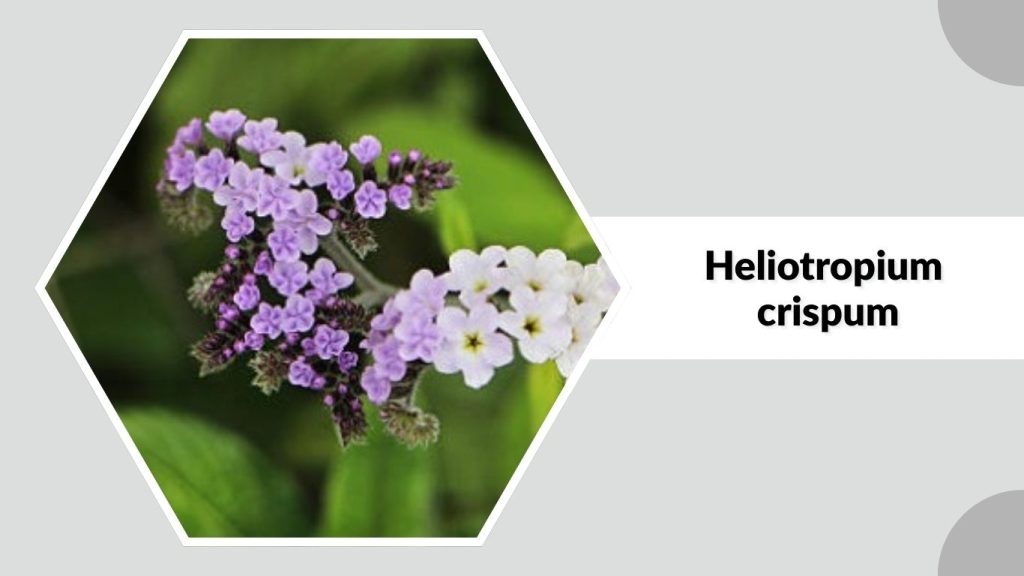
Heliotropium crispum, commonly known as crisped heliotrope, is a perennial plant valued for its wavy-edged leaves and clusters of small purple flowers. It is often cultivated in gardens, borders, and naturalized areas for its ornamental appeal and fragrant blooms. Its low-maintenance nature and adaptability to different soil types make it a resilient choice for gardeners.
Identification
- Scientific Name: Heliotropium crispum
- Common Name: Crisped Heliotrope
- Flower Color: Purple
- Leaf: Green, wavy-edged, slightly hairy
- Height: 20–50 cm (8–20 inches)
Habitat
Native to subtropical and tropical regions, it thrives in well-drained soils with full sun exposure. It is commonly found in gardens, open fields, and rocky landscapes.
Growth and Care
Heliotropium crispum requires moderate watering and occasional fertilization. Pruning encourages compact growth and more abundant flowering.
Flowering and Bloom Time
This species blooms from spring to early autumn, producing fragrant flower clusters that attract bees, butterflies, and other pollinators.
24. Heliotropium bovei
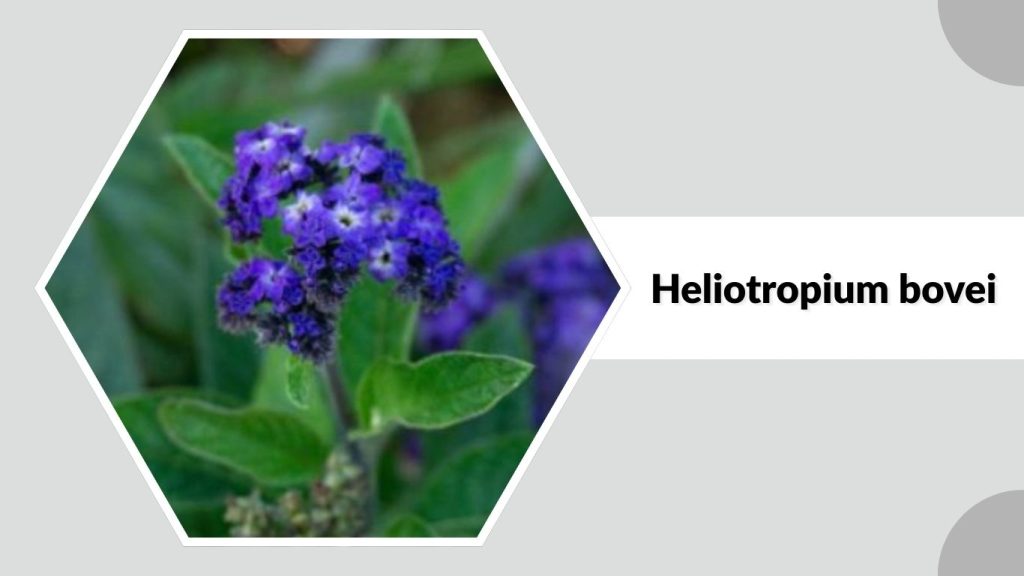
Heliotropium bovei, commonly known as Bove’s heliotrope, is a perennial plant admired for its vibrant purple flowers and bushy green foliage. It is often grown in gardens, borders, and rockeries for its ornamental appeal and ability to attract pollinators. Its adaptability to different soils and climates makes it a hardy and low-maintenance choice for gardeners.
Identification
- Scientific Name: Heliotropium bovei
- Common Name: Bove’s Heliotrope
- Flower Color: Purple
- Leaf: Green, ovate, slightly hairy
- Height: 25–60 cm (10–24 inches)
Habitat
Native to subtropical regions, it thrives in full sun with well-drained soils. It is commonly found in gardens, open fields, and rocky slopes.
Growth and Care
Heliotropium bovei requires moderate watering and occasional fertilization. Light pruning helps maintain a bushy shape and encourages denser flower clusters.
Flowering and Bloom Time
This species blooms from spring to early autumn, producing fragrant clusters of flowers that attract bees, butterflies, and other pollinators.
25. Heliotropium ellipticum
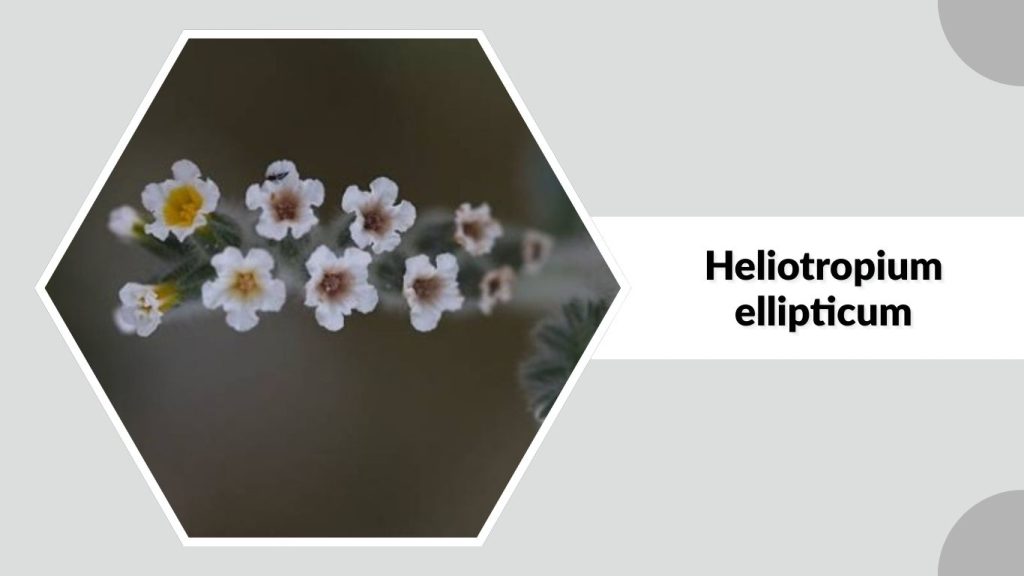
Heliotropium ellipticum, commonly known as elliptical heliotrope, is a perennial plant prized for its elliptical green leaves and clusters of small purple flowers. It is often grown in gardens, borders, and naturalized landscapes for its ornamental beauty and ability to attract pollinators. Its resilience and low-maintenance nature make it ideal for a variety of garden settings.
Identification
- Scientific Name: Heliotropium ellipticum
- Common Name: Elliptical Heliotrope
- Flower Color: Purple
- Leaf: Elliptical, green, smooth
- Height: 20–55 cm (8–22 inches)
Habitat
Native to subtropical and tropical regions, it thrives in well-drained soils with full sun to partial shade. It is commonly found in gardens, open fields, and rocky landscapes.
Growth and Care
Heliotropium ellipticum requires moderate watering and occasional fertilization. Pruning spent flowers encourages bushier growth and more abundant flowering.
Flowering and Bloom Time
This species blooms from spring to early autumn, producing fragrant clusters of flowers that attract bees, butterflies, and other pollinators.
FAQs
What is the best sunlight condition for Heliotrope flowers?
Heliotrope flowers thrive in full sun to partial shade. They require at least 6 hours of direct sunlight daily for optimal growth and abundant flowering. While they can tolerate partial shade, too little sunlight may reduce blooms and weaken the plant.
How often should I water Heliotrope plants?
Heliotrope plants prefer moderate watering. The soil should be kept consistently moist but well-drained. Overwatering can lead to root rot, while prolonged drought may reduce flowering and affect plant health.
Are Heliotrope flowers safe for pets?
Many Heliotrope species are toxic if ingested by pets. Their leaves and flowers contain compounds that can cause digestive upset or more serious health issues. Always plant them away from pets and supervise outdoor areas.
When do Heliotrope flowers bloom?
Most Heliotrope species bloom from late spring through early autumn. Under favorable conditions, they produce clusters of fragrant purple flowers throughout the growing season, attracting bees, butterflies, and other pollinators.
How can I encourage more blooms on Heliotrope plants?
Regular deadheading of spent flowers and occasional pruning help encourage bushier growth and more flower clusters. Providing moderate fertilization during the growing season also promotes healthy foliage and continuous blooming.