






Hellebores are prized winter- and early-spring-flowering plants that bring life to gardens when most other flowers are still dormant. Commonly known as Christmas roses and Lenten roses, hellebore flowers appear in a wide range of colors, including white, pink, purple, green, and near-black. These hardy perennials are loved for their long-lasting blooms, evergreen foliage, and shade tolerance. In this guide, you’ll explore 15 popular types of hellebore flowers and their key features.
1. Christmas Rose (Helleborus niger)
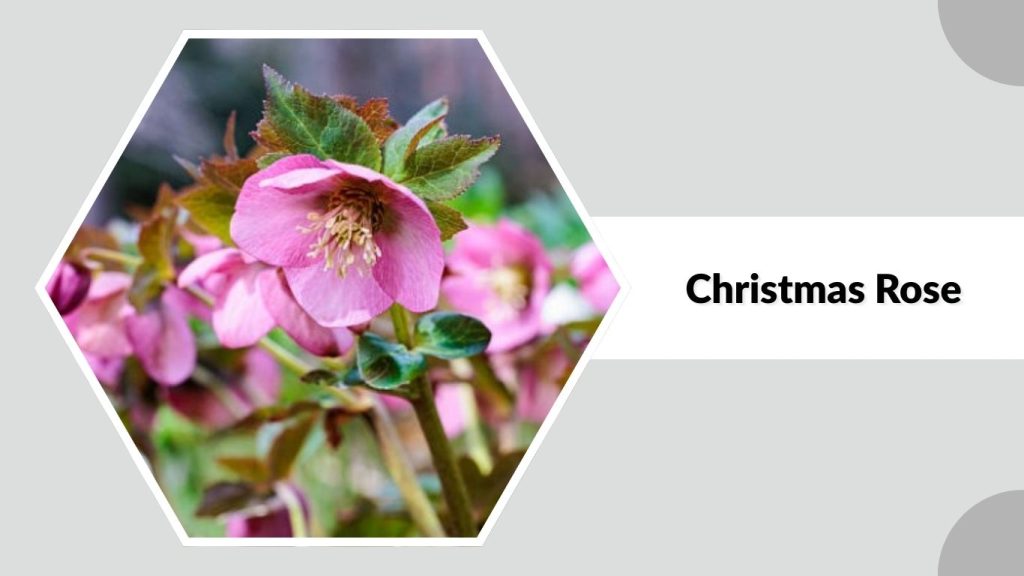
The Christmas rose is one of the most famous hellebore types, valued for its pure white to soft pink winter blooms and glossy evergreen foliage. Despite its name, it is not a true rose. This plant is especially popular in winter gardens because it flowers when most plants are dormant, often between December and early spring.
Identification
- Evergreen perennial with dark green, leathery leaves
- Large, bowl-shaped white flowers that may turn pink with age
- Blooms in winter to very early spring
- Grows about 9–12 inches tall
- Native to mountainous regions of Central and Southern Europe
Habitat
Christmas roses naturally grow in woodland edges, shaded slopes, and mountainous forest areas. They prefer cool climates and are often found in humus-rich soils under deciduous trees, where they receive winter sun and summer shade.
Blooming Season
This hellebore is famous for flowering in winter, sometimes even through snow. In mild climates, blooms can appear as early as December and continue into February or March, making it one of the earliest blooming ornamental perennials.
Uses in Gardening
Christmas roses are widely used in shade gardens, winter borders, woodland landscapes, and containers. Their long-lasting flowers and evergreen foliage make them ideal for adding structure and color when most other plants are not in bloom.
Toxicity
Like all hellebores, the Christmas rose is toxic if ingested. All parts of the plant contain compounds that can cause irritation or illness in humans and pets, so it should be planted with care in households with children or animals.
2. Lenten Rose (Helleborus orientalis)
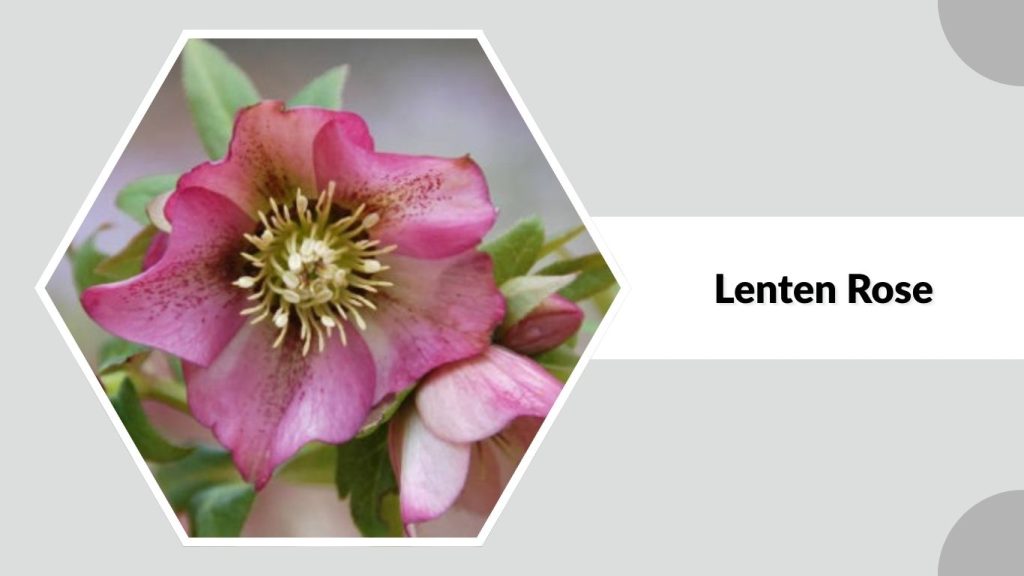
The Lenten rose is one of the most widely grown hellebore types, loved for its long blooming season and huge range of colors, patterns, and spotted forms. It typically flowers from late winter into early spring, often around the Christian season of Lent, which is how it earned its common name.
Identification
- Evergreen to semi-evergreen perennial with deeply divided leaves
- Cup-shaped flowers in shades of white, pink, purple, green, and near-black
- Often spotted, veined, or edged with contrasting colors
- Blooms from late winter to early spring
- Grows about 12–18 inches tall
Habitat
Lenten roses originate from woodland regions of Greece, Turkey, and nearby areas. They naturally grow along forest edges and shaded hillsides, where the soil is rich in organic matter and drains well.
Blooming Season
This hellebore usually starts blooming from February to April. The flowers last for many weeks, and even after pollination, the colorful sepals remain attractive well into spring.
Uses in Gardening
Lenten roses are extremely popular in shade gardens, borders, under trees, and mixed perennial beds. Their wide color variation makes them ideal for collectors, mass plantings, and winter-to-spring garden interest.
Toxicity
All parts of the Lenten rose are poisonous if eaten. The sap may also irritate sensitive skin, so gloves are recommended when pruning or dividing the plant.
3. Corsican Hellebore (Helleborus argutifolius)
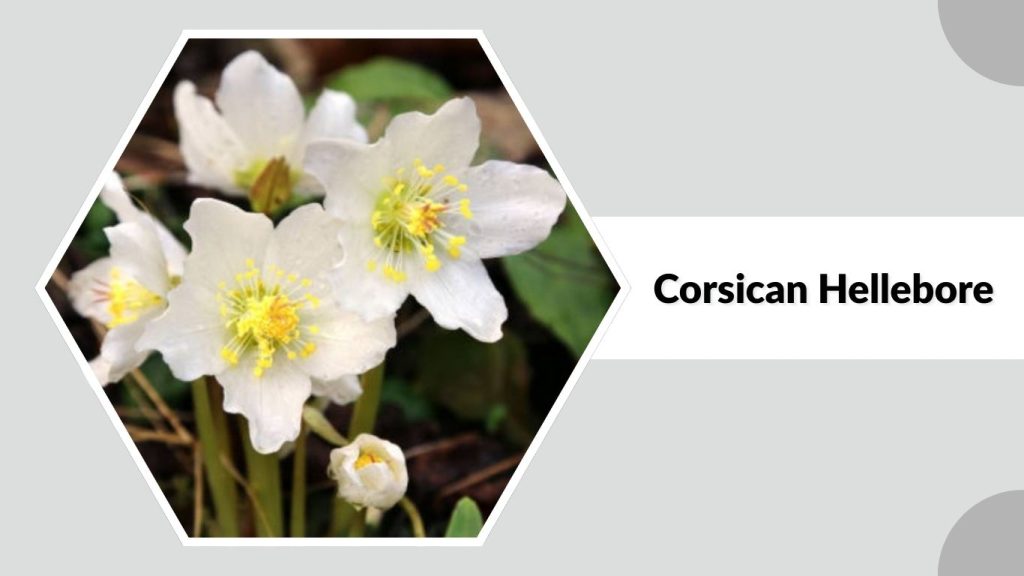
The Corsican hellebore is a bold, architectural species known for its tall stems, leathery leaves, and clusters of apple-green flowers. Unlike many low-growing hellebores, this type forms an upright shrub-like clump, making it a striking feature plant in winter and early spring gardens.
Identification
- Tall evergreen perennial with thick, serrated, bluish-green leaves
- Upright stems bearing large clusters of green, cup-shaped flowers
- Blooms from late winter to early spring
- Typically grows 2–4 feet tall
- Native to Corsica and Sardinia
Habitat
Corsican hellebore naturally grows on rocky hillsides, open woodlands, and coastal scrub areas. It prefers well-drained soils and tolerates more sun than most hellebores, especially in cooler climates.
Blooming Season
Flowering usually begins in late winter and continues into early spring. The long-lasting green blooms remain attractive for many weeks and are often followed by decorative seed heads.
Uses in Gardening
This species is commonly used as a structural plant in shade or part-shade gardens. Its height makes it suitable for the back of borders, woodland gardens, and large containers where vertical interest is needed.
Toxicity
Like all hellebores, Corsican hellebore is toxic. Ingestion can cause digestive upset, and sap contact may irritate skin, so careful handling is advised.
4. Stinking Hellebore (Helleborus foetidus)
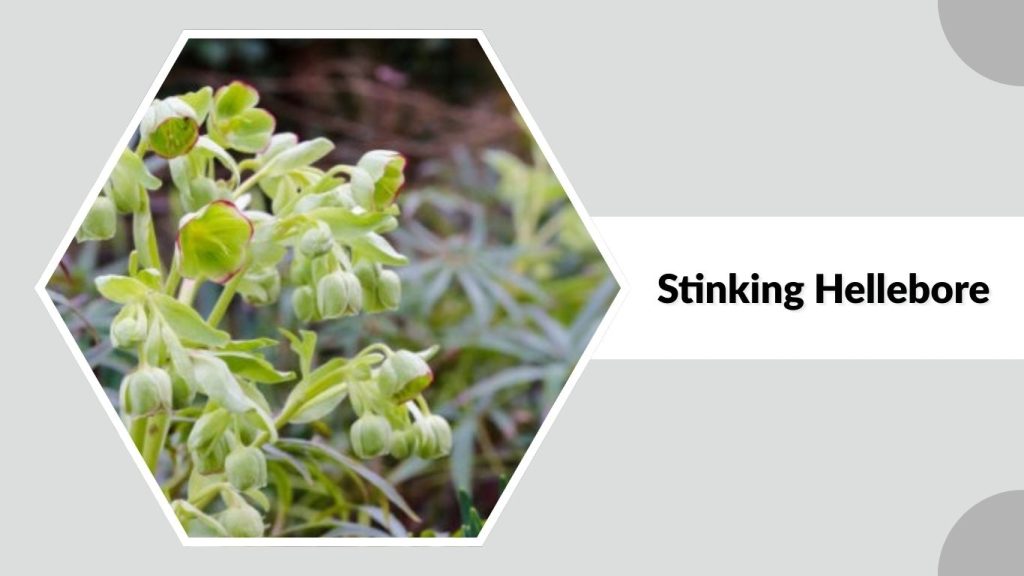
Stinking hellebore is a tough, fast-growing species recognized for its finely divided foliage and nodding clusters of green flowers edged in red. Despite its unusual name, the plant is admired for its airy texture, reliability, and ability to brighten shaded areas during late winter.
Identification
- Evergreen perennial with narrow, deeply cut, palm-like leaves
- Bell-shaped green flowers with reddish-purple margins
- Blooms from mid-winter to early spring
- Typically grows 2–3 feet tall
- Crushed leaves release a strong scent
Habitat
Stinking hellebore naturally grows in open woodlands, hedgerows, and rocky slopes across parts of Western and Central Europe. It tolerates drier soils better than many other hellebore species.
Blooming Season
Flowering usually begins in January or February and can last into early spring. The flowers are carried in loose clusters above the foliage, providing long-lasting winter interest.
Uses in Gardening
This hellebore is often planted in woodland gardens, under shrubs, and in naturalized areas. Its height and airy form make it suitable for filling gaps and adding winter structure.
Toxicity
All parts of stinking hellebore are poisonous. Handling the plant can also irritate skin, so gloves are recommended when cutting back old stems or dividing clumps.
5. Green Hellebore (Helleborus viridis)
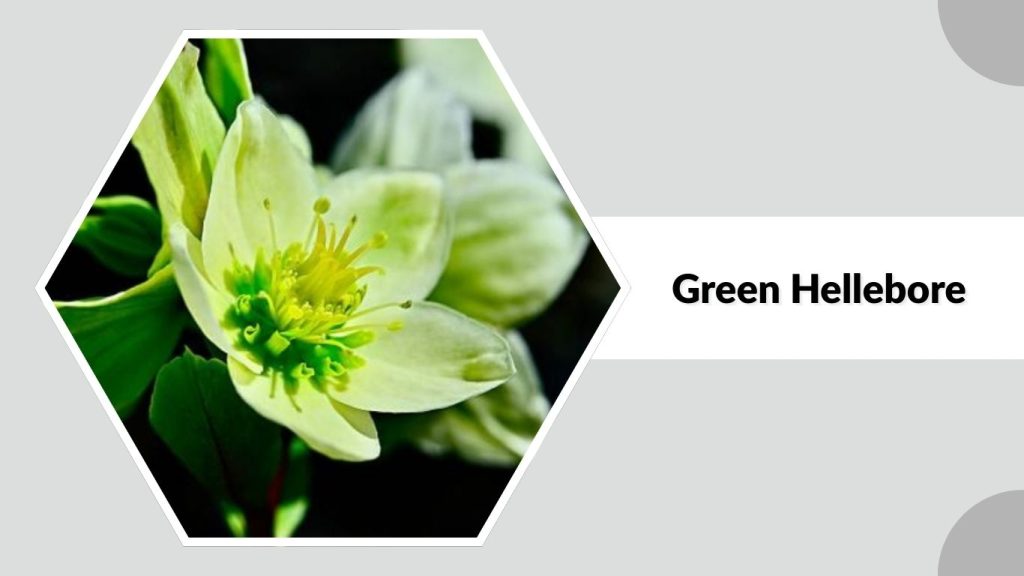
Green hellebore is a classic European species valued for its simple, nodding green flowers and deeply divided foliage. It has a more natural, woodland appearance than many hybrid hellebores and is often grown by gardeners who appreciate traditional, species-type plants.
Identification
- Herbaceous perennial with deeply lobed, bright green leaves
- Nodding, cup-shaped green flowers
- Blooms in late winter to early spring
- Grows about 12–18 inches tall
- Dies back partially after flowering in some climates
Habitat
Green hellebore naturally occurs in damp meadows, woodland edges, and forest clearings across parts of Central and Eastern Europe. It prefers fertile, moisture-retentive but well-drained soil.
Blooming Season
Flowering usually takes place from February to April. The green blossoms blend naturally into woodland gardens and remain attractive for several weeks.
Uses in Gardening
This species is well suited for woodland gardens, naturalized areas, and shaded borders. It combines well with early spring bulbs, ferns, and other shade-loving perennials.
Toxicity
Like other hellebores, green hellebore is toxic if ingested. Direct contact with sap may also cause mild skin irritation in sensitive individuals.
6. Bear’s Foot Hellebore (Helleborus foetidus ‘Bear’s Foot’)
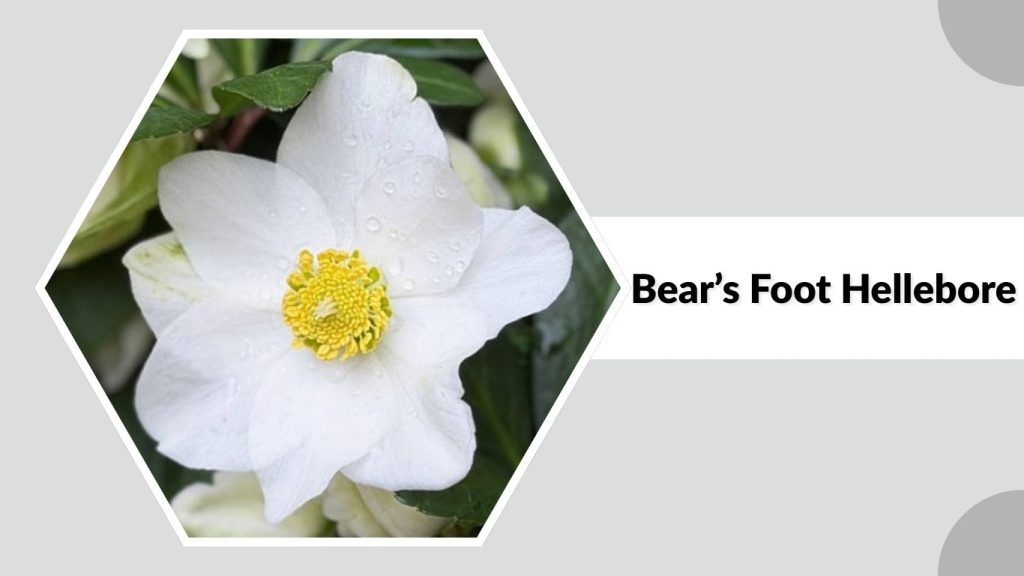
Bear’s Foot hellebore is a popular cultivated form of stinking hellebore, prized for its finely textured foliage and showy winter flower clusters. It gets its common name from the shape of its deeply divided leaves, which resemble an animal’s footprint. This variety is especially valued for adding height and soft greenery to winter gardens.
Identification
- Evergreen perennial with narrow, finely divided “paw-shaped” leaves
- Clusters of nodding, green bell-shaped flowers edged with red
- Blooms from mid-winter to early spring
- Upright growth, usually 2–3 feet tall
- Leaves may release a strong scent when crushed
Habitat
Bear’s Foot hellebore originates from the same environments as Helleborus foetidus, growing naturally in open woodlands, rocky slopes, and forest margins. It prefers well-drained soil and tolerates drier, shadier sites better than many other hellebores.
Blooming Season
Flowering generally begins in January or February and can continue into early spring. The blooms are long-lasting and often remain attractive for many weeks, even in cold conditions.
Uses in Gardening
This hellebore is commonly used in woodland gardens, under trees and shrubs, and in mixed shade borders. Its upright form makes it useful as a background plant or winter focal point.
Toxicity
All parts of Bear’s Foot hellebore are poisonous if ingested. The sap may also irritate skin, so gloves are recommended when pruning or handling the plant.
7. Caucasian Hellebore (Helleborus caucasicus)
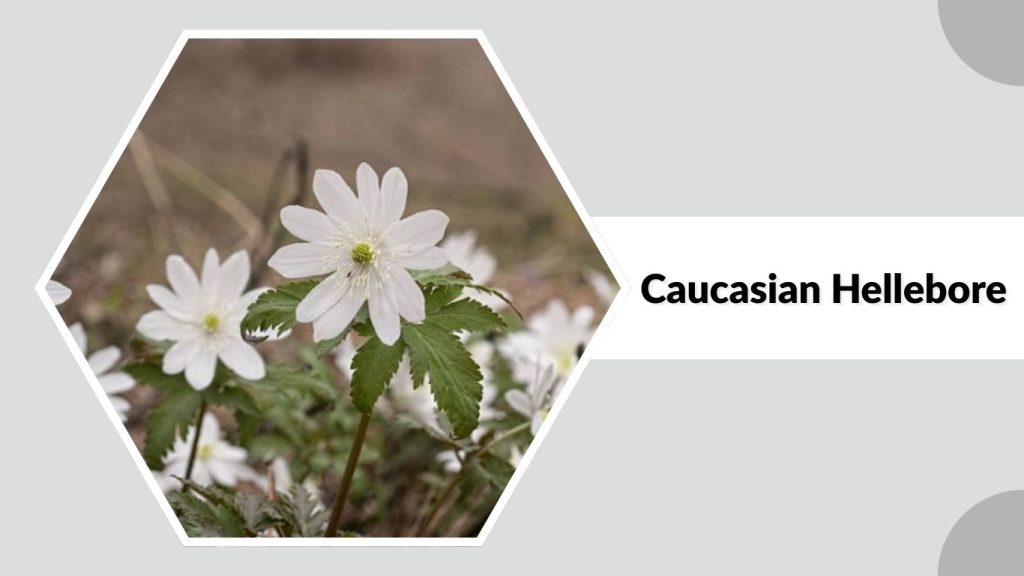
The Caucasian hellebore is an early-flowering species admired for its pale green to creamy blooms and robust evergreen foliage. It is one of the important parent plants used in breeding many modern hellebore hybrids, valued for its cold tolerance and strong winter performance.
Identification
- Evergreen perennial with thick, leathery, divided leaves
- Nodding flowers in shades of pale green, cream, or yellow-green
- Blooms from late winter to early spring
- Typically grows 12–18 inches tall
- Strong, clump-forming growth habit
Habitat
Caucasian hellebore is native to the Caucasus Mountains region, where it grows in forested slopes, woodland clearings, and mountainous meadows. It thrives in humus-rich, well-drained soils with consistent moisture.
Blooming Season
Flowering usually begins in late winter and often continues into early spring. The blooms persist for several weeks, gradually aging to softer, papery tones.
Uses in Gardening
This species is widely planted in shade gardens, woodland settings, and early-spring borders. It is especially valued by breeders and collectors for its reliability and ornamental foliage.
Toxicity
All parts of the Caucasian hellebore are toxic if eaten. Skin contact with sap may cause irritation, so careful handling is advised.
8. Tibetan Hellebore (Helleborus thibetanus)
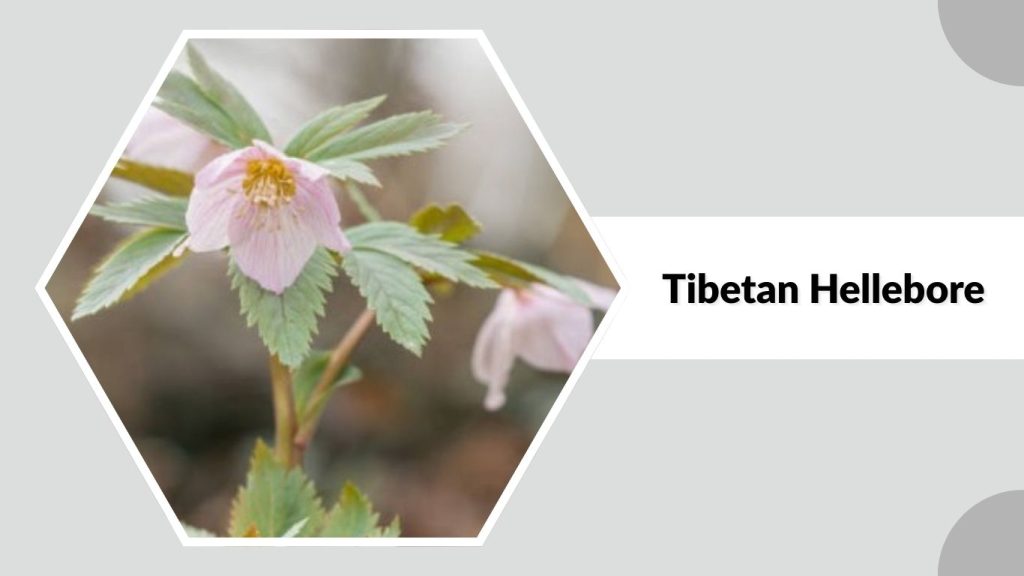
The Tibetan hellebore is a rare and distinctive species known for its elegant, cup-shaped flowers and refined foliage. Unlike many hellebores, it is deciduous rather than evergreen, giving it a lighter, more delicate presence in woodland-style gardens.
Identification
- Deciduous perennial with soft green, deeply lobed leaves
- Rounded, cup-shaped flowers in pale pink to creamy white
- Blooms in late winter to early spring
- Typically grows 12–16 inches tall
- Native to central China
Habitat
Tibetan hellebore naturally grows in cool woodland areas, forest margins, and grassy slopes. It prefers moist, humus-rich soil and sheltered positions protected from harsh afternoon sun.
Blooming Season
Flowering usually occurs from February to March. The blooms often appear before the new leaves fully expand, creating a clean and elegant floral display.
Uses in Gardening
This hellebore is especially suitable for woodland gardens, collector plantings, and shaded borders. Its deciduous nature makes it ideal for pairing with spring bulbs and low-growing perennials.
Toxicity
Like all hellebores, Tibetan hellebore is poisonous if ingested. Gloves are recommended when handling the plant to avoid possible skin irritation.
9. Stern’s Hellebore (Helleborus × sternii)
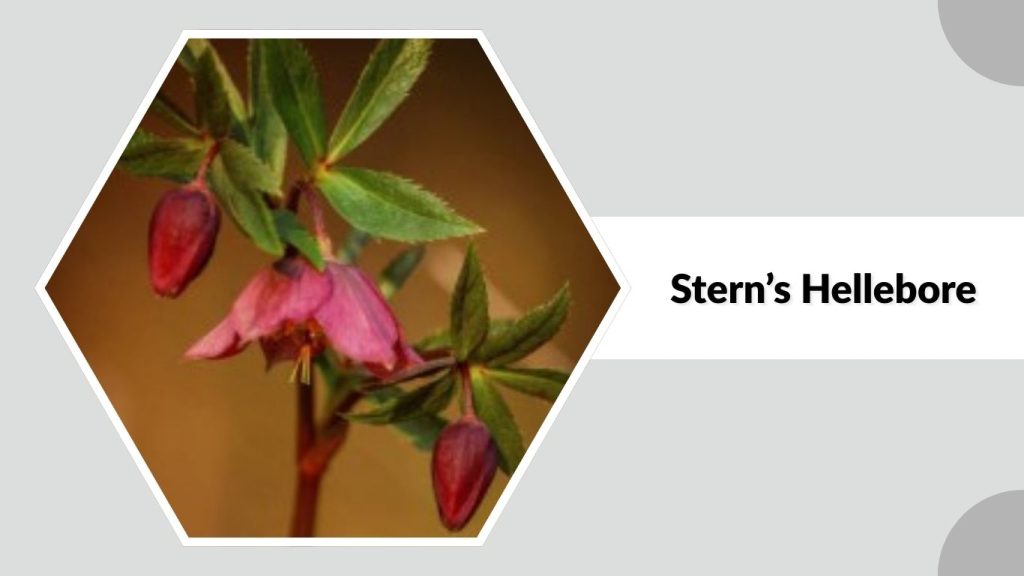
Stern’s hellebore is a naturally occurring hybrid between Corsican hellebore and green hellebore. It combines the toughness and height of Helleborus argutifolius with the softer leaf shape and coloring of Helleborus lividus, making it a favorite for modern winter gardens.
Identification
- Evergreen perennial with broad, bluish-green to silvery leaves
- Upright stems carrying clusters of pale green to pink-tinted flowers
- Blooms from late winter to early spring
- Typically grows 18–24 inches tall
- Strong architectural, clump-forming habit
Habitat
Stern’s hellebore thrives in similar conditions to its parent plants, preferring woodland edges, shaded borders, and well-drained, humus-rich soils. It tolerates wind and mild coastal conditions well.
Blooming Season
Flowering usually begins in late winter and continues into early spring. The flowers last for several weeks and are often followed by decorative seed heads.
Uses in Gardening
This hellebore is widely used as a structural accent in shade gardens, large containers, and mixed perennial borders. Its foliage provides year-round interest.
Toxicity
All parts of Stern’s hellebore are poisonous. Ingestion can cause illness, and sap may irritate sensitive skin.
10. Ballard Hybrid Hellebore
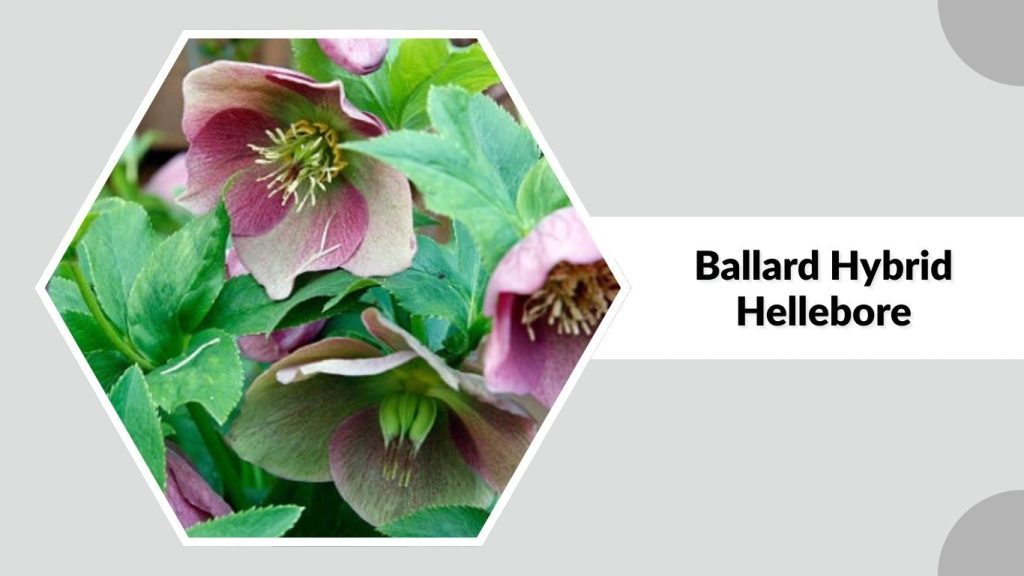
Ballard hybrid hellebores are a classic group of cultivated hellebores developed for garden performance and flower diversity. They are especially valued for their outward-facing blooms, strong stems, and wide color range, which includes white, pink, rose, plum, and spotted forms.
Identification
- Evergreen perennial with glossy, divided leaves
- Medium to large flowers in many colors, often freckled or veined
- Blooms from late winter to early spring
- Usually grows 12–18 inches tall
- Strong clumping growth habit
Habitat
Ballard hybrids are garden-bred plants that thrive in conditions similar to woodland hellebores. They prefer partial shade, well-drained but moisture-retentive soil, and protection from harsh midday sun.
Blooming Season
Flowering generally begins in late winter and can extend well into early spring. The blooms are long-lasting and remain attractive even as they mature and develop seed pods.
Uses in Gardening
These hellebores are widely used in shaded borders, woodland gardens, container plantings, and winter display beds. Their wide range of colors makes them ideal for decorative landscape designs.
Toxicity
All parts of Ballard hybrid hellebores are toxic if eaten. Sap contact may also irritate skin, so careful handling is recommended.
11. Harvington Hybrid Hellebore
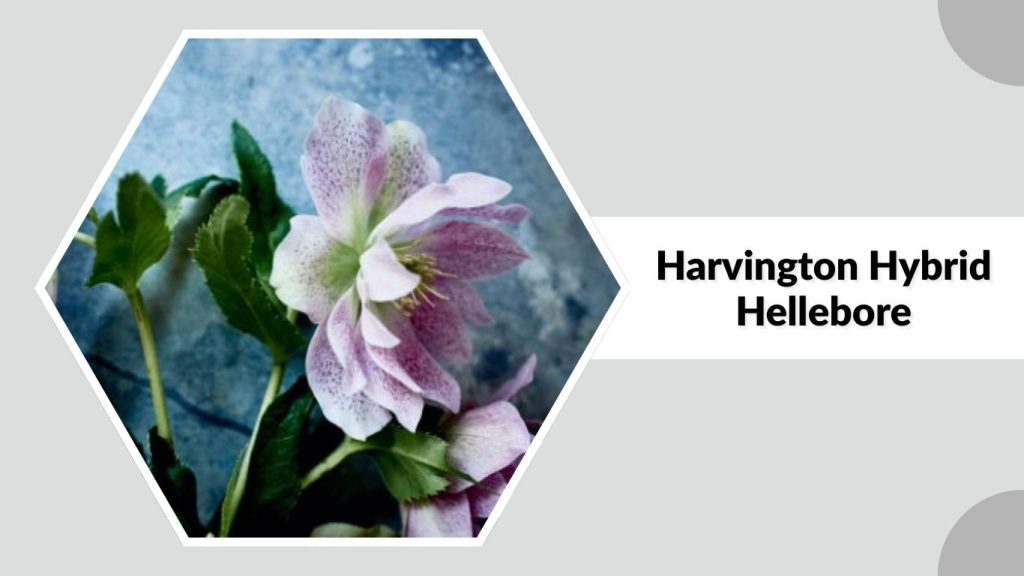
Harvington hybrid hellebores are modern garden cultivars bred for strong stems, large flowers, and exceptional color range. They are well known for their upward- and outward-facing blooms, which make the flowers more visible than many traditional hellebore types.
Identification
- Evergreen perennial with bold, leathery, divided leaves
- Large, showy flowers in white, pink, apricot, purple, slate, and near-black
- Often spotted, edged, or double-flowered
- Blooms from late winter to early spring
- Typically grows 12–18 inches tall
Habitat
Harvington hybrids perform best in woodland-style settings with partial shade and fertile, well-drained soil. They prefer consistent moisture but do not tolerate waterlogged conditions.
Blooming Season
Flowering usually starts in late winter and may continue into early spring. Many cultivars hold their flowers upright for easier viewing and extended ornamental value.
Uses in Gardening
These hellebores are popular in ornamental shade gardens, feature borders, and containers near entrances or walkways where winter flowers can be enjoyed up close.
Toxicity
All parts of Harvington hybrid hellebores are poisonous. Ingestion can cause digestive upset, and gloves are recommended when handling the plants.
12. Ivory Prince Hellebore (Helleborus ‘Ivory Prince’)
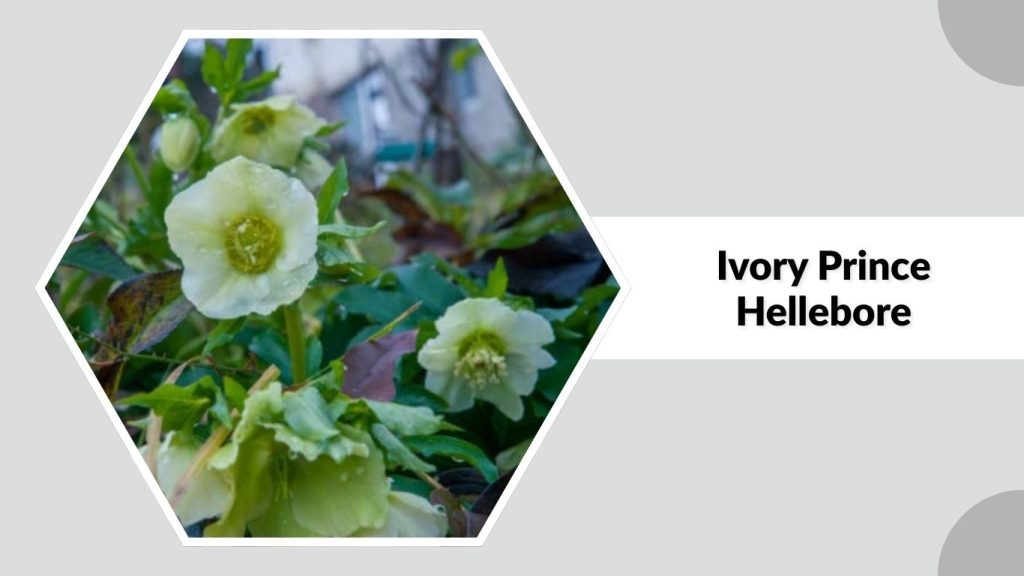
Ivory Prince hellebore is a well-known garden cultivar admired for its elegant, outward-facing flowers and attractive, marbled foliage. The blooms open creamy white and gradually develop soft pink and green tones as they mature, providing a long-lasting and changing winter display.
Identification
- Evergreen perennial with glossy, marbled, blue-green leaves
- Large, outward-facing flowers that shift from ivory to blush pink and green
- Blooms from late winter to early spring
- Typically grows 12–15 inches tall
- Strong, compact, clump-forming habit
Habitat
Ivory Prince hellebore thrives in partial shade, especially in woodland gardens and sheltered borders. It prefers humus-rich, well-drained soil with steady moisture.
Blooming Season
Flowering usually begins in late winter and can continue into early spring. The flowers remain decorative for many weeks, even as their colors deepen.
Uses in Gardening
This hellebore is commonly planted in shade borders, winter feature beds, and containers. Its upright flowers make it especially suitable for areas close to paths and patios.
Toxicity
All parts of Ivory Prince hellebore are toxic if ingested. Sap may irritate skin, so protective gloves are advised.
13. Double Ellen Hellebore
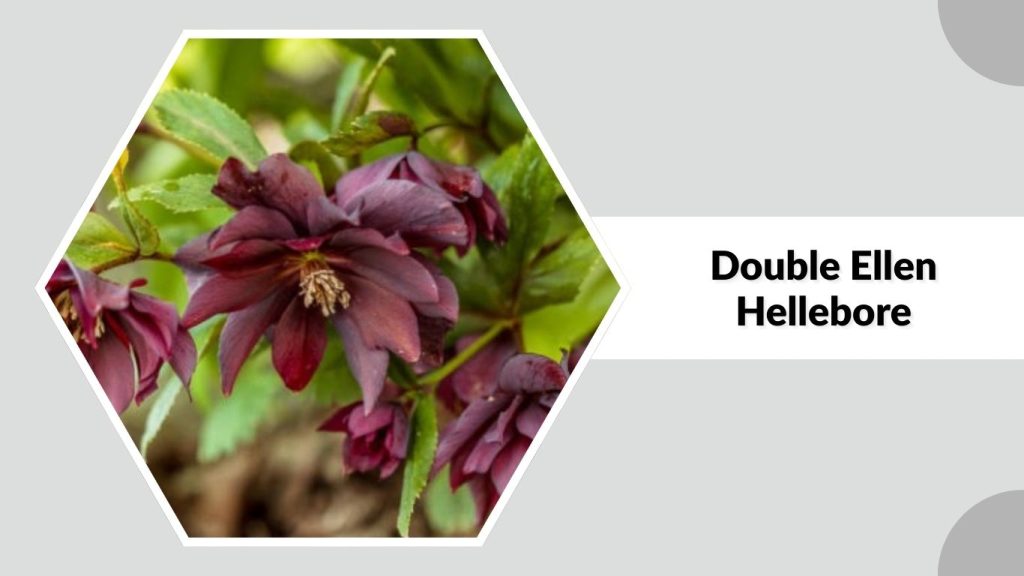
Double Ellen hellebores are a popular cultivar series known for their fully double, rose-like flowers and rich color range. Their layered petals give them a lush, ornamental look that stands out in late winter and early spring gardens.
Identification
- Evergreen perennial with deeply divided, dark green leaves
- Fully double flowers in white, pink, red, purple, yellow, and near-black
- Blooms from late winter to early spring
- Usually grows 12–16 inches tall
- Compact, clump-forming growth habit
Habitat
Double Ellen hellebores grow best in partial shade with fertile, well-drained soil. They are especially well suited to woodland-style plantings and sheltered garden borders.
Blooming Season
Flowering typically begins in late winter and often continues into early spring. The double blooms last a long time and retain their decorative form even as they mature.
Uses in Gardening
These hellebores are widely used in ornamental shade gardens, patio containers, and winter display beds. Their rose-like flowers make them ideal for focal points.
Toxicity
All parts of Double Ellen hellebores are poisonous. Ingestion can cause illness, and handling may irritate sensitive skin.
14. Pink Frost Hellebore (Helleborus ‘Pink Frost’)
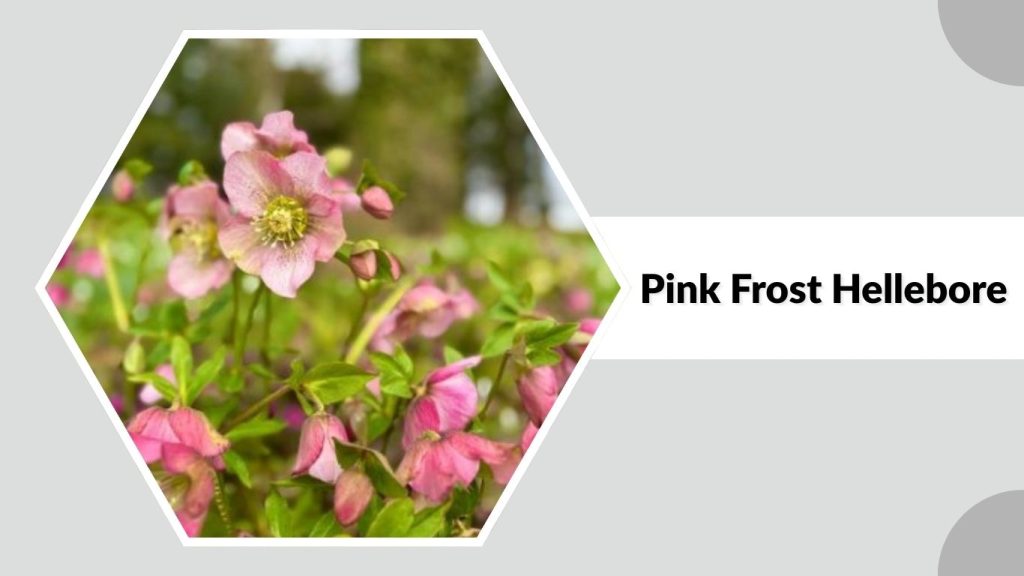
Pink Frost hellebore is a striking modern cultivar valued for its silvery, marbled foliage and soft pink winter blooms. Even when not in flower, the decorative leaves make this plant attractive year-round, giving it strong ornamental value in shaded gardens.
Identification
- Evergreen perennial with silver-veined, blue-green leaves
- Outward-facing flowers in pale pink to rose shades
- Blooms from mid-winter to early spring
- Typically grows 12–18 inches tall
- Upright stems with a neat, clumping form
Habitat
Pink Frost hellebore thrives in partial shade and sheltered garden locations. It prefers humus-rich, well-drained soil that stays slightly moist but never waterlogged.
Blooming Season
Flowering usually begins in mid to late winter and continues into early spring. The blooms gradually deepen in color as they age, extending seasonal interest.
Uses in Gardening
This hellebore is commonly planted in shade borders, winter containers, and woodland-style gardens. Its attractive foliage also makes it an excellent ground-level accent plant.
Toxicity
All parts of Pink Frost hellebore are toxic if ingested. Sap may irritate sensitive skin, so gloves are recommended when handling the plant.
15. Penny’s Pink Hellebore (Helleborus ‘Penny’s Pink’)
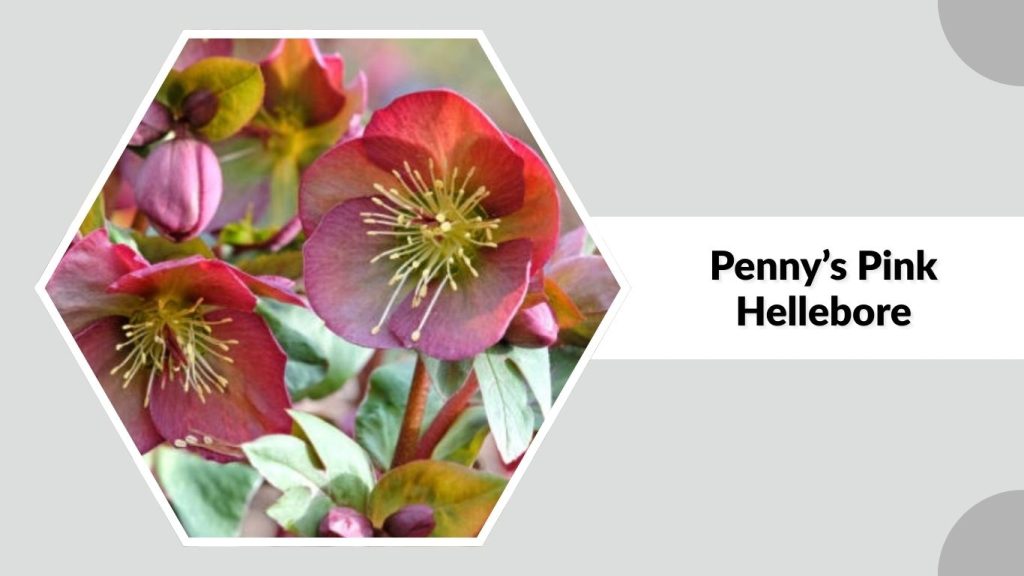
Penny’s Pink hellebore is a modern hybrid prized for its glossy, marbled foliage and elegant, outward-facing flowers. The blooms open soft pink and gradually shift to deeper rose and green tones, creating a long-lasting and changing winter display.
Identification
- Evergreen perennial with shiny, silver-veined dark green leaves
- Cup-shaped flowers in soft to medium pink shades
- Blooms from mid-winter to early spring
- Typically grows 12–18 inches tall
- Compact, clump-forming growth habit
Habitat
Penny’s Pink hellebore grows best in partial shade, particularly in woodland gardens and sheltered borders. It prefers fertile, well-drained soil with consistent moisture.
Blooming Season
Flowering usually starts in mid-winter and continues into early spring. The flowers remain attractive for many weeks, even as their colors deepen and soften.
Uses in Gardening
This hellebore is widely used in shaded borders, decorative containers, and winter feature plantings. Its attractive foliage ensures visual appeal even outside the blooming period.
Toxicity
All parts of Penny’s Pink hellebore are poisonous. Ingestion can cause digestive upset, and gloves are recommended when handling the plant.
FAQs
Are hellebore flowers poisonous?
Yes, all hellebore species are toxic. Every part of the plant contains natural compounds that can cause nausea, vomiting, or irritation if ingested. The sap may also irritate sensitive skin, so it is best to wear gloves when pruning, dividing, or handling hellebores in the garden.
When do hellebore flowers usually bloom?
Most hellebores bloom from late winter to early spring. Some varieties, such as the Christmas rose, can flower as early as December, while others continue blooming into March or April, depending on climate and growing conditions.
Do hellebores prefer sun or shade?
Hellebores grow best in partial shade. They enjoy winter sun and summer shade, making them ideal for planting under deciduous trees. Too much direct summer sun can scorch the leaves, while deep shade may reduce flowering.
How long do hellebore flowers last?
Hellebore flowers are long-lasting. Individual blooms can remain attractive for six to ten weeks. Even after pollination, the colorful sepals persist, gradually turning green and continuing to add visual interest.
Can hellebores grow in pots?
Yes, hellebores grow very well in containers. They need well-drained potting mix, drainage holes, and regular watering. Container-grown hellebores are perfect for patios, balconies, and near entrances where winter flowers can be enjoyed up close.