



Hydrangeas are beloved for their bold, beautiful blooms and wide variety of forms, from mopheads and lacecaps to panicles and climbers. With colors ranging from blue and pink to white and green, they suit every garden style and setting. In this list, you’ll discover 25 popular hydrangea types—each offering unique charm, blooming habits, and landscape value for your outdoor space.
1. Hydrangea macrophylla (Bigleaf Hydrangea)

Hydrangea macrophylla, commonly known as Bigleaf Hydrangea, is one of the most popular and widely grown hydrangea types. Known for its large, rounded flower heads and lush foliage, this species includes both mophead and lacecap varieties. It is especially admired for its ability to change flower color based on soil pH.
Identification
- Flower Type: Mophead or lacecap
- Color Range: Pink, blue, purple, or white
- Leaf Shape: Broad, ovate, with serrated edges
- Height: 3–6 feet
- Bloom Time: Late spring to early fall
Origin and Popularity
Native to Japan, Bigleaf Hydrangea has become a garden favorite across the world, especially in temperate regions. Its dramatic blooms and adaptability to containers and borders make it a centerpiece in many landscapes.
Growing and Blooming Season
Plant in early spring or fall. Blooms typically appear from late May through September. Performs best in USDA zones 5–9. Needs partial shade and well-drained, moist soil. The bloom color can be manipulated by adjusting soil pH: acidic soil yields blue flowers, while alkaline soil produces pink.
Companion Plants
Pairs beautifully with hostas, ferns, astilbes, and other shade-loving perennials. Their large blooms contrast well with fine-textured plants and are ideal for cottage gardens, woodland borders, and shaded foundations.
2. Hydrangea paniculata (Panicle Hydrangea)

Hydrangea paniculata, or Panicle Hydrangea, is a hardy and sun-tolerant species known for its cone-shaped flower clusters. These blooms start white or greenish and gradually turn pink, rose, or even red as the season progresses. It’s one of the most adaptable and cold-hardy hydrangeas.
Identification
- Flower Type: Cone-shaped panicles
- Color Range: White, green, pink, rose-red
- Leaf Shape: Oval to lance-shaped
- Height: 6–15 feet (depending on variety)
- Bloom Time: Mid to late summer into fall
Origin and Popularity
Native to eastern Asia, Panicle Hydrangeas have gained widespread popularity due to their strong stems, long-lasting blooms, and tolerance to full sun. Varieties like ‘Limelight’ and ‘Pinky Winky’ are among the most planted in modern landscapes.
Growing and Blooming Season
Plant in spring or fall. Blooms appear from July through September. Suitable for USDA zones 3–8. Thrives in full sun to partial shade and prefers well-drained, fertile soil. Unlike Bigleaf types, flower color is not influenced by soil pH.
Companion Plants
Excellent with ornamental grasses, Russian sage, echinacea, or daylilies. Their upright habit and extended bloom time make them ideal for back borders, privacy screens, or standalone accent shrubs.
3. Hydrangea arborescens (Smooth Hydrangea)
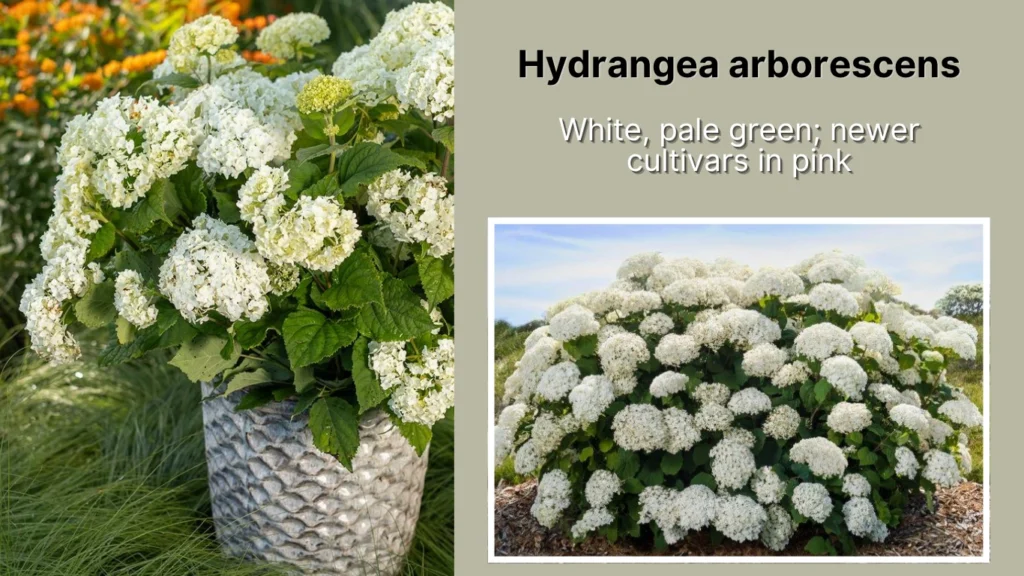
Hydrangea arborescens, commonly called Smooth Hydrangea, is a native North American species appreciated for its large, dome-shaped flower heads and exceptional cold tolerance. It’s often used in naturalized gardens and shaded woodland areas.
Identification
- Flower Type: Rounded or dome-shaped clusters
- Color Range: White, pale green; newer cultivars in pink
- Leaf Shape: Broad, thin, heart-shaped
- Height: 3–5 feet
- Bloom Time: Early to late summer
Origin and Popularity
Native to the eastern United States, Smooth Hydrangea is known for its hardiness and easy care. ‘Annabelle’ is the most famous cultivar, known for its massive white flower heads.
Growing and Blooming Season
Plant in spring or fall. Blooms from June through August. Ideal for USDA zones 3–9. Prefers part shade but tolerates full sun with enough moisture. Flowers develop on new wood, so it can be pruned back in late winter without sacrificing blooms.
Companion Plants
Pairs well with hostas, heucheras, coral bells, or shade-loving grasses. It’s perfect for woodland edges, native gardens, and shady borders, offering a lush and natural look.
4. Hydrangea quercifolia (Oakleaf Hydrangea)
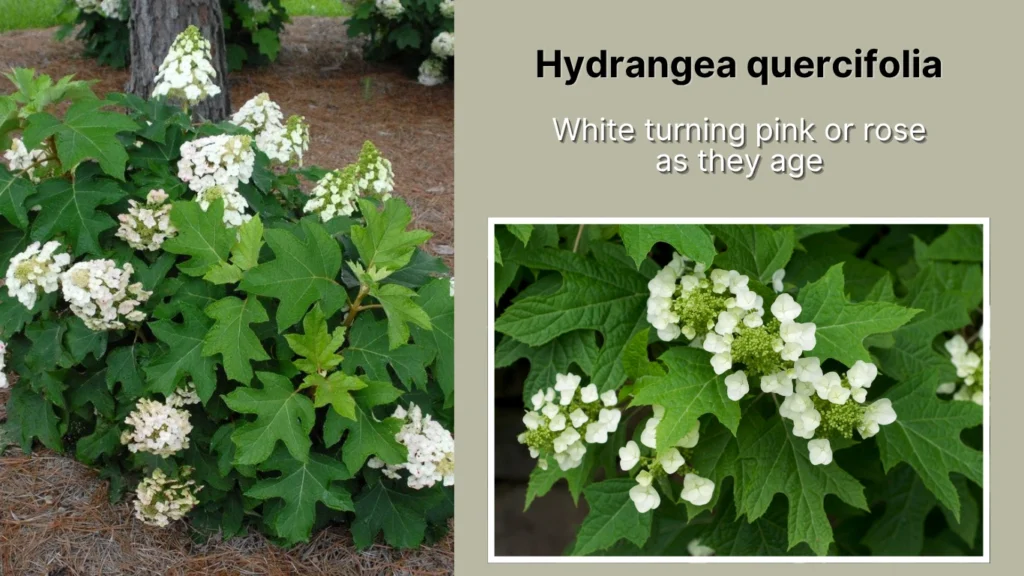
Hydrangea quercifolia, or Oakleaf Hydrangea, is a striking native U.S. species named for its deeply lobed, oak-like leaves. This hydrangea is prized not only for its elegant, cone-shaped white blooms but also for its dramatic fall foliage, which turns brilliant shades of red, orange, and purple.
Identification
- Flower Type: Cone-shaped (panicles)
- Color Range: White turning pink or rose as they age
- Leaf Shape: Deeply lobed, resembling oak leaves
- Height: 4–8 feet
- Bloom Time: Early to mid-summer
Origin and Popularity
Native to the southeastern United States, Oakleaf Hydrangea has become a landscape favorite for its multi-season interest. It’s valued for combining attractive blooms, bold foliage, and exfoliating bark in winter.
Growing and Blooming Season
Plant in spring or fall. Blooms from June through July. Best suited to USDA zones 5–9. Prefers part shade and rich, well-drained soil. Blooms on old wood, so pruning should be done immediately after flowering.
Companion Plants
Pairs well with ferns, woodland phlox, astilbes, or native grasses. It’s ideal for naturalized areas, woodland gardens, and as a specimen shrub where its bold leaves and fall colors can shine.
5. Hydrangea serrata (Mountain Hydrangea)
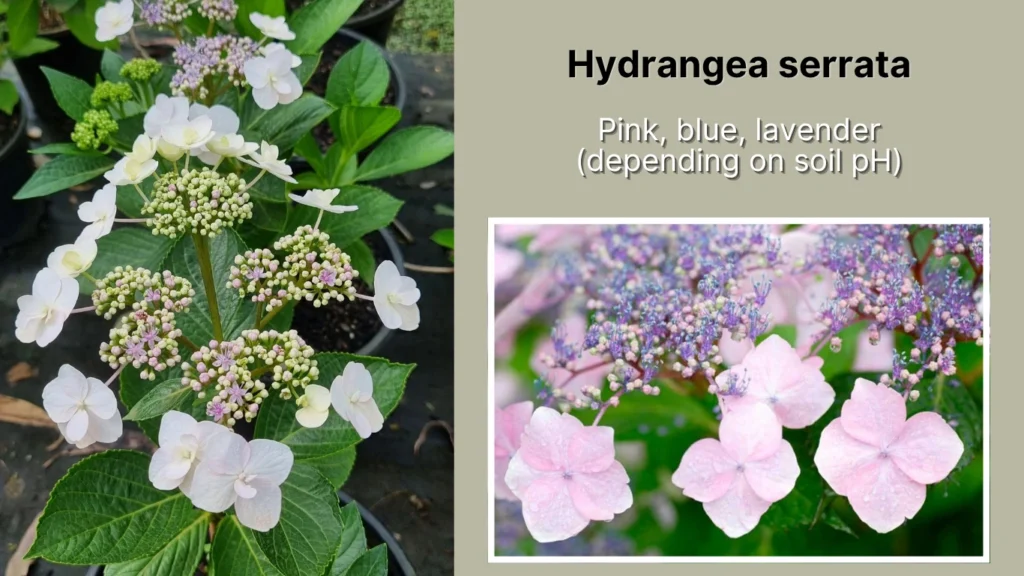
Hydrangea serrata, or Mountain Hydrangea, is a compact, delicate species closely related to Bigleaf Hydrangea but better suited to colder climates. It typically features lacecap-style blooms and is known for its refined appearance and tolerance to winter conditions.
Identification
- Flower Type: Lacecap
- Color Range: Pink, blue, lavender (depending on soil pH)
- Leaf Shape: Small, serrated, ovate
- Height: 2–4 feet
- Bloom Time: Early to mid-summer
Origin and Popularity
Native to mountainous regions of Korea and Japan, this hydrangea is a favorite in cottage and shade gardens. It’s particularly appreciated for its dainty appearance and resistance to spring frost damage.
Growing and Blooming Season
Plant in spring or fall. Flowers from June to July. Performs best in USDA zones 5–9. Prefers partial shade, well-drained, acidic soil, and consistent moisture. Like Bigleaf Hydrangeas, its color shifts with soil pH—blue in acidic and pink in alkaline soils.
Companion Plants
Excellent with hostas, brunnera, bleeding hearts, or dwarf azaleas. Perfect for foundation plantings, shady borders, and small-space gardens where a softer hydrangea look is desired.
6. Hydrangea anomala subsp. petiolaris (Climbing Hydrangea)
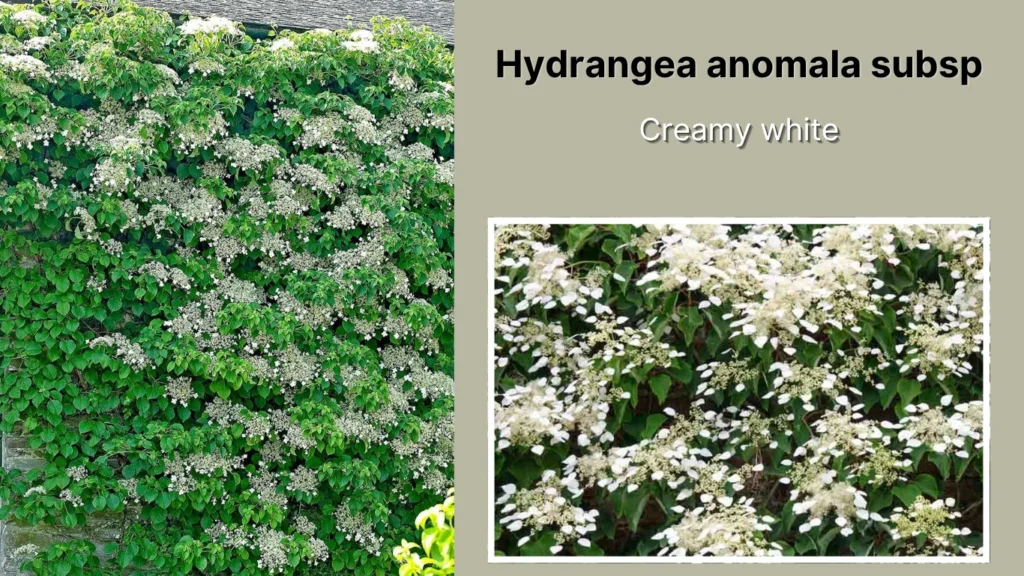
Climbing Hydrangea is a vigorous, woody vine species that produces large clusters of white, fragrant lacecap flowers. It climbs using aerial rootlets and is ideal for walls, trellises, pergolas, and even large trees, offering a unique vertical element to the garden.
Identification
- Flower Type: Lacecap
- Color Range: Creamy white
- Leaf Shape: Heart-shaped to oval with serrated edges
- Height: Up to 30–50 feet when mature
- Bloom Time: Late spring to early summer
Origin and Popularity
Native to Asia (Japan, Korea, Siberia), this hydrangea has grown in popularity in the U.S. and Europe for its versatility, strong climbing ability, and ornamental bark that adds winter interest.
Growing and Blooming Season
Plant in spring or fall. Blooms from late May to early July. Thrives in USDA zones 4–8. Prefers partial shade to full sun (in cooler climates) and rich, moist, well-drained soil. Slow to establish, but rewards with long-lasting, fragrant blooms once mature.
Companion Plants
Perfect for growing alongside clematis or ivy, or near shade-loving perennials like ferns and astilbe. It also works well climbing over arbors or fences to create living walls.
7. Endless Summer Hydrangea
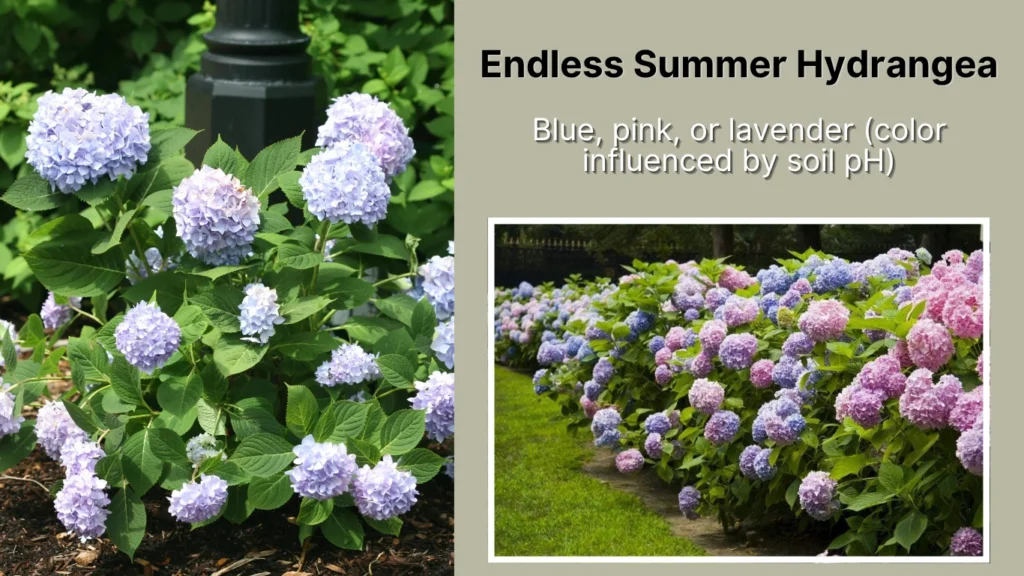
Endless Summer is a breakthrough variety of Hydrangea macrophylla known for its ability to bloom on both old and new wood. This reblooming feature allows it to flower multiple times in a season, offering continuous color from late spring to fall.
Identification
- Flower Type: Mophead or lacecap
- Color Range: Blue, pink, or lavender (color influenced by soil pH)
- Leaf Shape: Broad, serrated, dark green
- Height: 3–5 feet
- Bloom Time: Late spring through fall (reblooming)
Origin and Popularity
Introduced in the early 2000s, Endless Summer revolutionized hydrangea gardening. Its reliability and long blooming period made it a favorite among homeowners, especially in areas with unpredictable winters.
Growing and Blooming Season
Plant in spring or fall. Flowers appear from late May through October. Grows well in USDA zones 4–9. Requires partial shade and consistently moist, well-drained soil. Adjusting soil pH allows color control—acidic soil produces blue, alkaline yields pink.
Companion Plants
Pairs beautifully with foxgloves, salvia, or heuchera. Ideal for foundation plantings, cottage gardens, and containers where extended blooming and vibrant color are desired.
8. Limelight Hydrangea
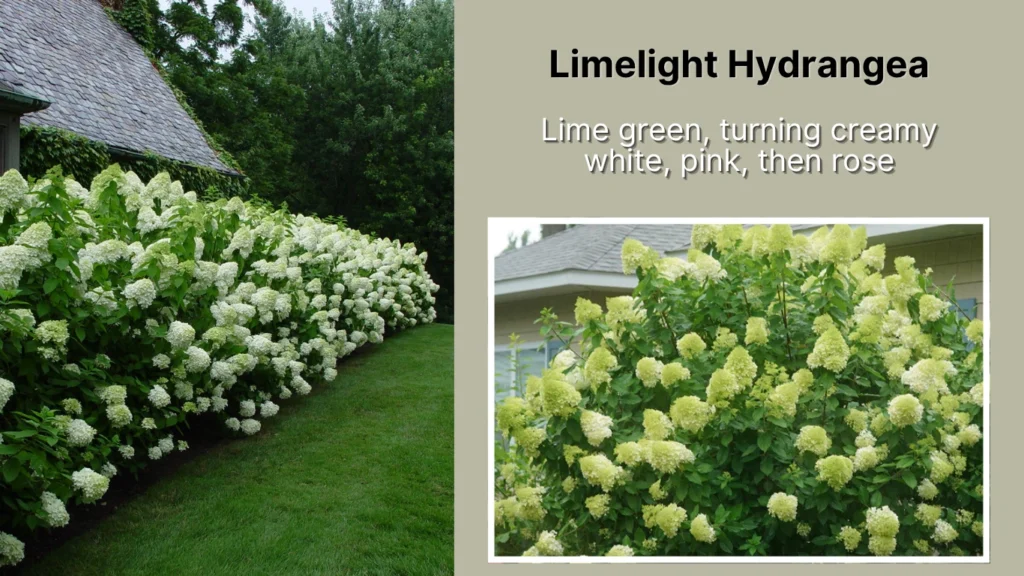
Limelight Hydrangea is a popular cultivar of Hydrangea paniculata, celebrated for its enormous lime-green flower panicles that slowly transition to creamy white, pink, and deep rose as the season progresses. Its sturdy stems and long bloom time make it a favorite for landscaping and floral arrangements.
Identification
- Flower Type: Cone-shaped panicles
- Color Range: Lime green, turning creamy white, pink, then rose
- Leaf Shape: Oval, dark green
- Height: 6–8 feet
- Bloom Time: Midsummer to fall
Origin and Popularity
Bred in the Netherlands, Limelight quickly became a best-seller in North America due to its strong performance, showy flowers, and tolerance for sun and heat. It’s widely used in both residential and commercial landscaping.
Growing and Blooming Season
Plant in spring or fall. Blooms from July through September. Thrives in USDA zones 3–8. Tolerates full sun better than most hydrangeas and performs well in well-drained, moderately fertile soil. Flowers on new wood—prune in late winter or early spring.
Companion Plants
Combines well with purple coneflowers, ornamental grasses, black-eyed Susans, and Russian sage. It makes a stunning focal point in garden beds and shrub borders.
9. Annabelle Hydrangea

Annabelle is a classic Hydrangea arborescens cultivar known for its massive, round, snowball-like white flower heads that can reach up to 12 inches across. It’s a staple in traditional and native-style gardens for its reliability and dramatic blooms.
Identification
- Flower Type: Rounded (mophead)
- Color Range: Pure white, fading to light green
- Leaf Shape: Broad, heart-shaped, medium green
- Height: 3–5 feet
- Bloom Time: Early summer to late summer
Origin and Popularity
Discovered in the United States near Anna, Illinois (hence the name), Annabelle has been a garden favorite for decades. It’s prized for its ability to thrive in shade and bloom reliably on new wood.
Growing and Blooming Season
Plant in early spring or fall. Blooms from June through August. Best in USDA zones 3–9. Grows well in part shade and moist, well-drained soil. Because it flowers on new wood, it can be cut back hard in winter or early spring.
Companion Plants
Excellent with hostas, ferns, brunnera, and other woodland plants. Ideal for shady borders, naturalized gardens, and foundation plantings where its giant blooms can really stand out.
10. Little Lime Hydrangea
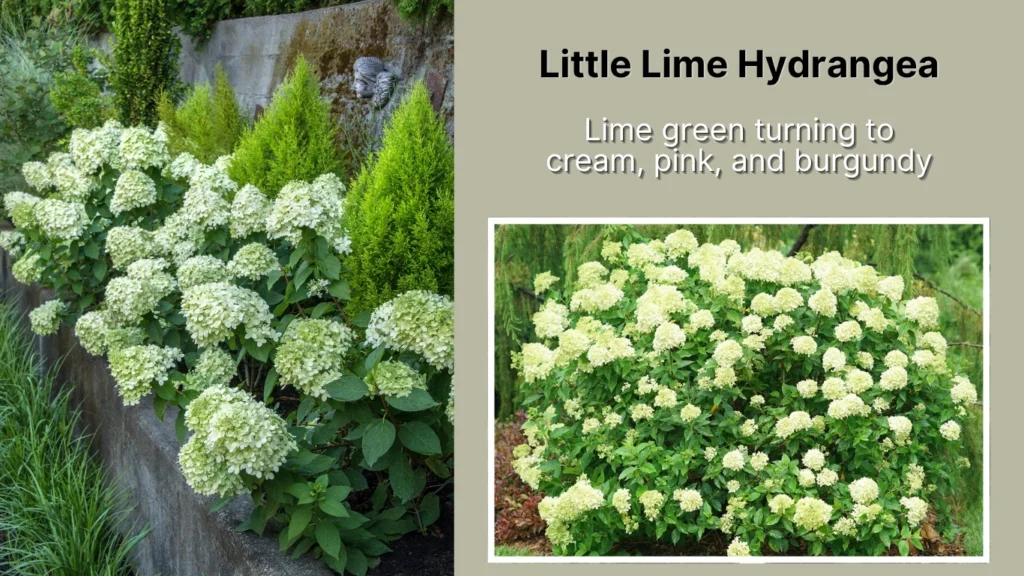
Little Lime is a compact version of the popular ‘Limelight’ Hydrangea paniculata. It offers the same cone-shaped lime-green blooms and vibrant seasonal color change but in a smaller, more manageable size—ideal for tight spaces and containers.
Identification
- Flower Type: Cone-shaped panicles
- Color Range: Lime green turning to cream, pink, and burgundy
- Leaf Shape: Oval, green
- Height: 3–5 feet
- Bloom Time: Midsummer to fall
Origin and Popularity
Bred for small gardens, patios, and urban landscapes, Little Lime retains all the charm of its larger cousin in a compact form. It’s highly favored by gardeners seeking bold blooms without overwhelming height.
Growing and Blooming Season
Plant in spring or fall. Flowers from July to September. Performs best in USDA zones 3–8. Tolerates full sun and blooms on new wood, so it benefits from pruning in late winter or early spring.
Companion Plants
Pairs beautifully with compact perennials like salvia, dwarf grasses, lavender, or nepeta. Perfect for containers, front yard landscaping, or mixed shrub borders.
11. Pinky Winky Hydrangea
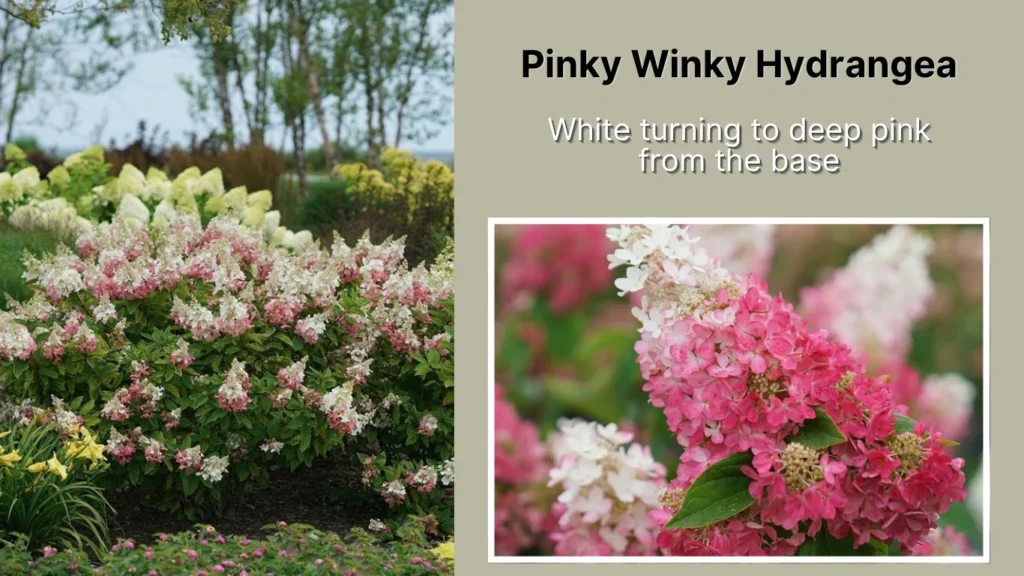
Pinky Winky is a striking Hydrangea paniculata cultivar featuring large two-toned flower panicles that open white and gradually develop bright pink from the base upward, creating a stunning bicolor effect throughout the season.
Identification
- Flower Type: Cone-shaped panicles
- Color Range: White turning to deep pink from the base
- Leaf Shape: Oval to lance-shaped
- Height: 6–8 feet
- Bloom Time: Mid to late summer into fall
Origin and Popularity
Introduced by Proven Winners®, Pinky Winky is prized for its bold, upright blooms, strong stems, and dynamic color change. It’s widely planted for visual impact in foundation beds and perennial borders.
Growing and Blooming Season
Plant in spring or fall. Blooms from mid-July through October. Hardy in USDA zones 3–8. Thrives in full sun to part shade with rich, well-drained soil. Prune in late winter for best flowering.
Companion Plants
Works well with black-eyed Susans, phlox, tall grasses, and echinacea. Ideal for large borders, background plantings, and focal points in summer and fall garden displays.
12. Incrediball Hydrangea
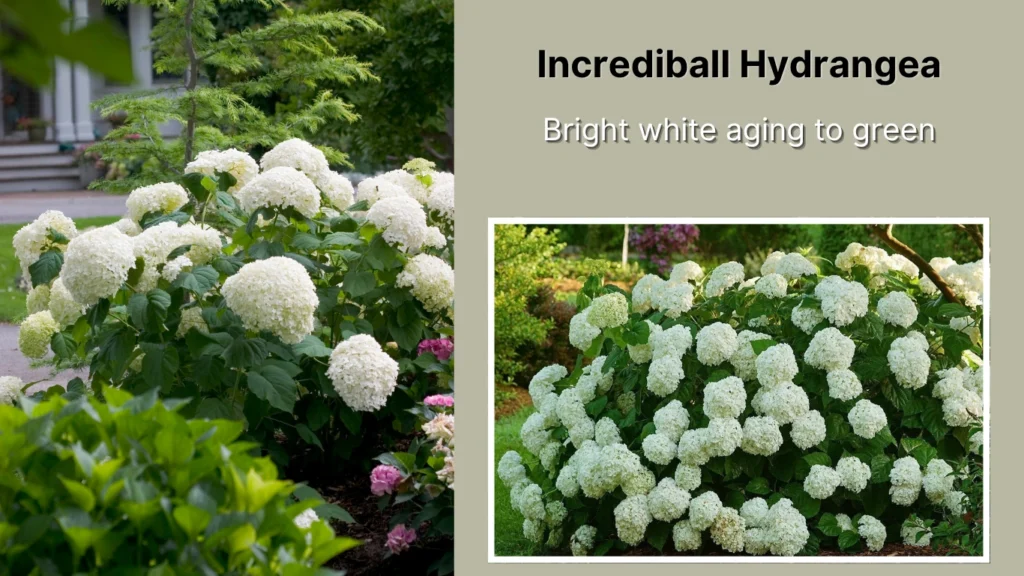
Incrediball is a robust cultivar of Hydrangea arborescens, known for its enormous, globe-shaped white blooms that can grow even larger and sturdier than the classic ‘Annabelle’. Its thick stems prevent flopping, making it an excellent choice for both aesthetics and structure.
Identification
- Flower Type: Rounded (mophead)
- Color Range: Bright white aging to green
- Leaf Shape: Broad, heart-shaped, deep green
- Height: 4–5 feet
- Bloom Time: Early to late summer
Origin and Popularity
A newer and improved selection of the Smooth Hydrangea group, Incrediball quickly became popular for its massive blooms, resilience, and ability to remain upright after rain—solving a common issue with older cultivars.
Growing and Blooming Season
Plant in spring or fall. Blooms from June to August. Thrives in USDA zones 3–9. Flowers on new wood, so prune back in late winter or early spring. Prefers part shade but tolerates full sun with adequate moisture.
Companion Plants
Great alongside shade perennials like hostas, astilbe, or coral bells. Its large blooms also contrast well with fine-textured plants and ferns in woodland or formal garden designs.
13. Tardiva Hydrangea
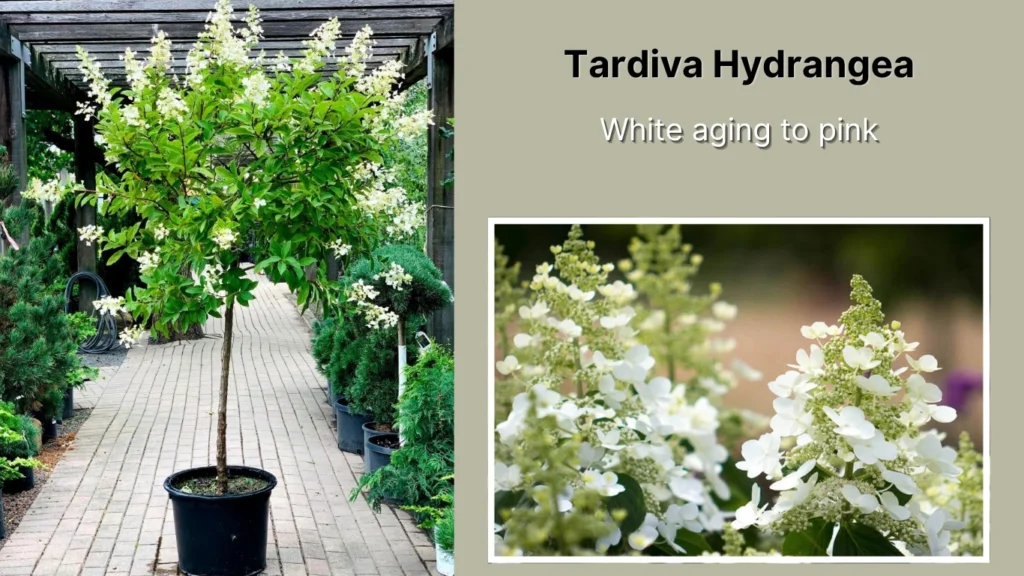
Tardiva is a late-blooming cultivar of Hydrangea paniculata that produces airy, elongated white flower clusters that gradually age to pink. Its elegant and natural appearance makes it ideal for extending garden interest into the fall.
Identification
- Flower Type: Loose, cone-shaped panicles
- Color Range: White aging to pink
- Leaf Shape: Pointed, dark green
- Height: 6–10 feet
- Bloom Time: Late summer to early fall
Origin and Popularity
As its name implies, Tardiva (meaning “late”) blooms well after many other hydrangeas have faded. Gardeners value it for its ability to provide late-season flowers and for its more delicate, open flower structure.
Growing and Blooming Season
Plant in spring or fall. Blooms from August through October. Best grown in USDA zones 3–8. Performs well in full sun to part shade and blooms on new wood, allowing for early-season pruning.
Companion Plants
Perfect with ornamental grasses, rudbeckia, asters, and sedums for a late-season display. Its airy blooms pair well with dense fall-flowering perennials and in more naturalistic or meadow-style plantings.
14. Cityline Rio Hydrangea
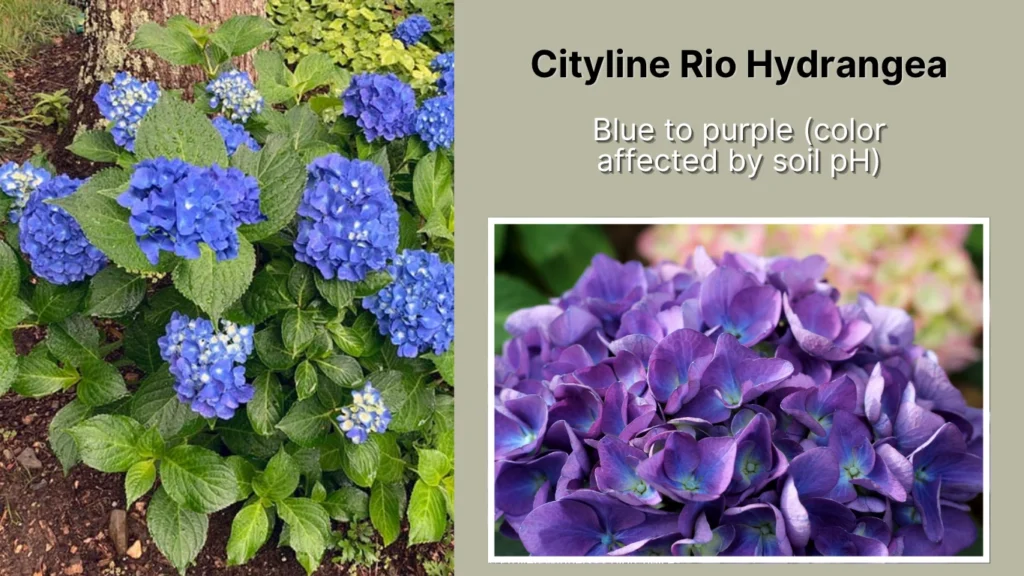
Cityline Rio is a compact, dwarf Hydrangea macrophylla cultivar known for its rich blue to violet blooms and strong, sturdy stems. It’s part of the Cityline series, specially bred for small gardens, patios, and container displays.
Identification
- Flower Type: Mophead
- Color Range: Blue to purple (color affected by soil pH)
- Leaf Shape: Broad, glossy, dark green
- Height: 1–3 feet
- Bloom Time: Early to mid-summer
Origin and Popularity
Developed in Germany, Cityline Rio gained popularity for its disease resistance, compact size, and vivid coloring. It’s an excellent choice for urban gardens, small yards, or borders where space is limited.
Growing and Blooming Season
Plant in spring or fall. Blooms from late spring through summer. Best in USDA zones 5–9. Prefers partial shade and rich, well-drained soil. Flowers on old wood—avoid heavy pruning. Acidic soil produces blue flowers; alkaline yields pink to violet tones.
Companion Plants
Pairs beautifully with compact heucheras, low-growing salvia, or white alyssum. Ideal for decorative containers, small garden borders, and pathways.
15. Bluebird Hydrangea

Bluebird is a charming Hydrangea serrata (Mountain Hydrangea) variety with elegant lacecap blooms surrounded by vivid blue or lavender sterile florets. It’s known for its graceful appearance and exceptional cold tolerance.
Identification
- Flower Type: Lacecap
- Color Range: Blue or lavender (color influenced by soil pH)
- Leaf Shape: Narrow, serrated, and dark green
- Height: 3–5 feet
- Bloom Time: Early to mid-summer
Origin and Popularity
Native to the mountainous regions of Japan, Bluebird has been a long-time favorite in temperate gardens, admired for its refined, airy look and adaptability in partially shaded areas.
Growing and Blooming Season
Plant in spring or fall. Flowers appear from June to July. Performs well in USDA zones 5–9. Prefers moist, well-drained acidic soil and dappled sun to light shade. Flowers on old wood—prune only after blooming.
Companion Plants
Beautiful alongside woodland plants like bleeding hearts, Japanese painted ferns, or lungwort. Its soft coloring and form are perfect for woodland borders, shade gardens, and cottage-style landscapes.
16. Let’s Dance Rhythmic Blue Hydrangea
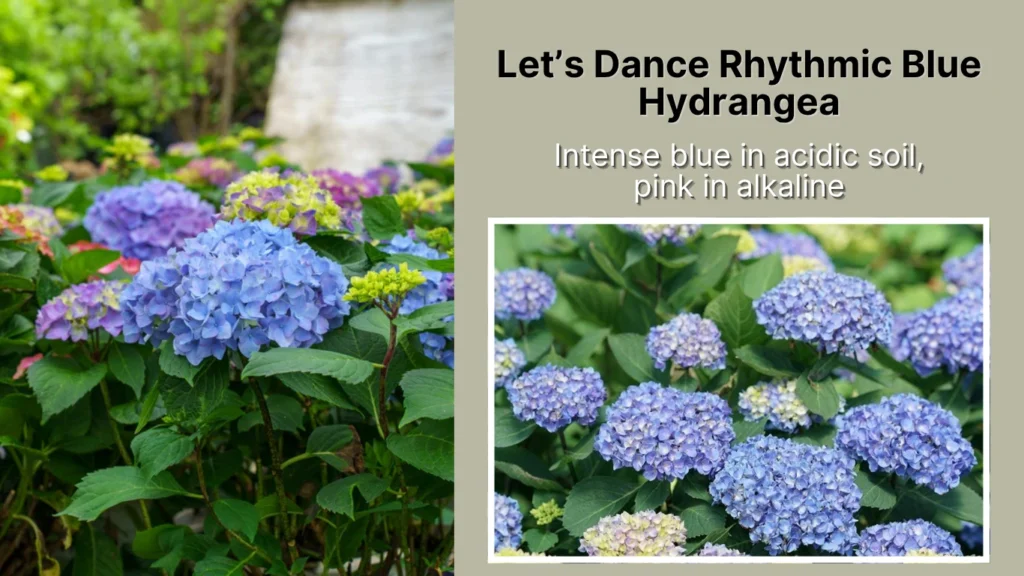
Let’s Dance Rhythmic Blue is a reblooming Hydrangea macrophylla that produces large, vivid blue to pink mophead flowers throughout the season. Known for its compact form and repeat blooming, it’s ideal for consistent color in small gardens and containers.
Identification
- Flower Type: Mophead
- Color Range: Intense blue in acidic soil, pink in alkaline
- Leaf Shape: Broad, serrated, deep green
- Height: 2–3 feet
- Bloom Time: Late spring to early fall (reblooming)
Origin and Popularity
Part of the Proven Winners® Let’s Dance series, this cultivar is bred for cold climates and repeat flowering. It’s highly regarded for vivid color and compact growth, making it a standout in foundation plantings and decorative pots.
Growing and Blooming Season
Plant in spring or fall. Blooms on both old and new wood from May through September. Hardy in USDA zones 5–9. Prefers partial shade and moist, rich, well-drained soil. Color can be adjusted with soil pH.
Companion Plants
Pairs well with dwarf boxwood, coral bells, and nepeta. A great choice for front-of-border plantings, modern containers, or layered flowerbeds with seasonal color rotation.
17. Twist-n-Shout Hydrangea
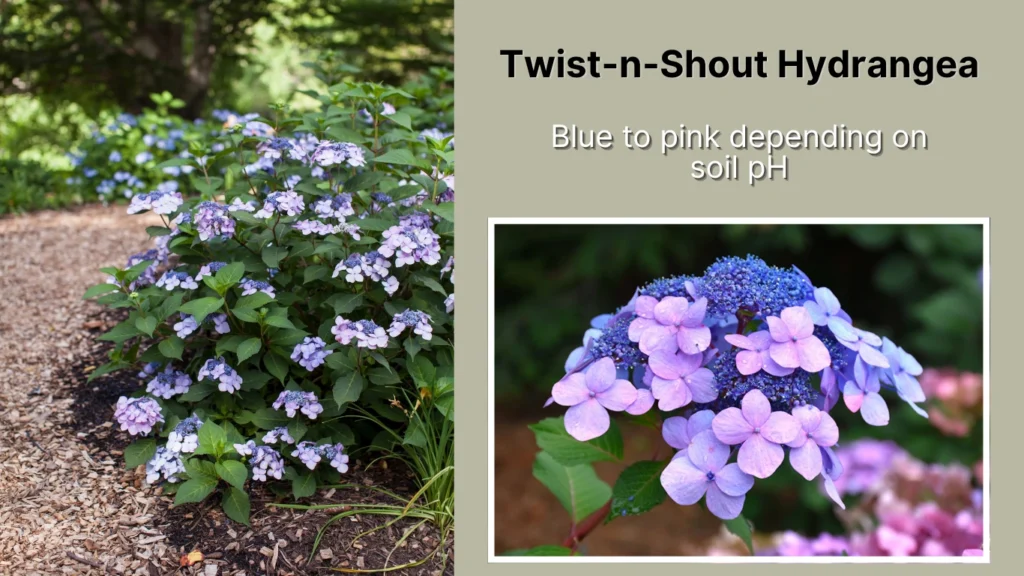
Twist-n-Shout is a reblooming Hydrangea serrata hybrid that features showy lacecap flowers and sturdy red stems. It’s the first re-blooming lacecap in the Endless Summer® series, offering delicate beauty with season-long performance.
Identification
- Flower Type: Lacecap
- Color Range: Blue to pink depending on soil pH
- Leaf Shape: Medium, serrated, bright green
- Height: 3–5 feet
- Bloom Time: Late spring through fall (reblooming)
Origin and Popularity
This variety quickly gained popularity as a versatile hydrangea that blends the elegance of lacecap blooms with the benefit of repeat flowering. Its strong stems and lacy texture make it a favorite for floral design and home landscapes.
Growing and Blooming Season
Plant in spring or fall. Blooms repeatedly from late May into October. Suitable for USDA zones 4–9. Prefers partial shade and well-drained, fertile soil. Blooms on both old and new wood.
Companion Plants
Lovely with bleeding hearts, dwarf astilbes, or ferns. Works beautifully in foundation beds, woodland borders, or mixed shrub groupings for ongoing color and textural variety.
18. Strawberry Sundae Hydrangea

Strawberry Sundae is a compact cultivar of Hydrangea paniculata, cherished for its creamy white blooms that blush to strawberry-pink as the season progresses. Its tidy size and eye-catching color transition make it perfect for small spaces and container gardens.
Identification
- Flower Type: Cone-shaped panicles
- Color Range: White turning to pink and rose-red
- Leaf Shape: Oval, dark green
- Height: 3–5 feet
- Bloom Time: Midsummer to fall
Origin and Popularity
Bred by the creators of the popular ‘Vanilla Strawberry’ hydrangea, Strawberry Sundae offers similar beauty in a more compact, manageable form. It’s widely planted in urban gardens, front yards, and patio containers.
Growing and Blooming Season
Plant in spring or fall. Blooms from July through September. Best for USDA zones 4–8. Prefers full sun to partial shade and well-drained soil. Blooms on new wood, so it can be pruned in early spring.
Companion Plants
Pairs well with dwarf grasses, echinacea, and black-eyed Susans. Its compact size makes it excellent for edging, foundation plantings, and colorful summer container displays.
19. Blushing Bride Hydrangea
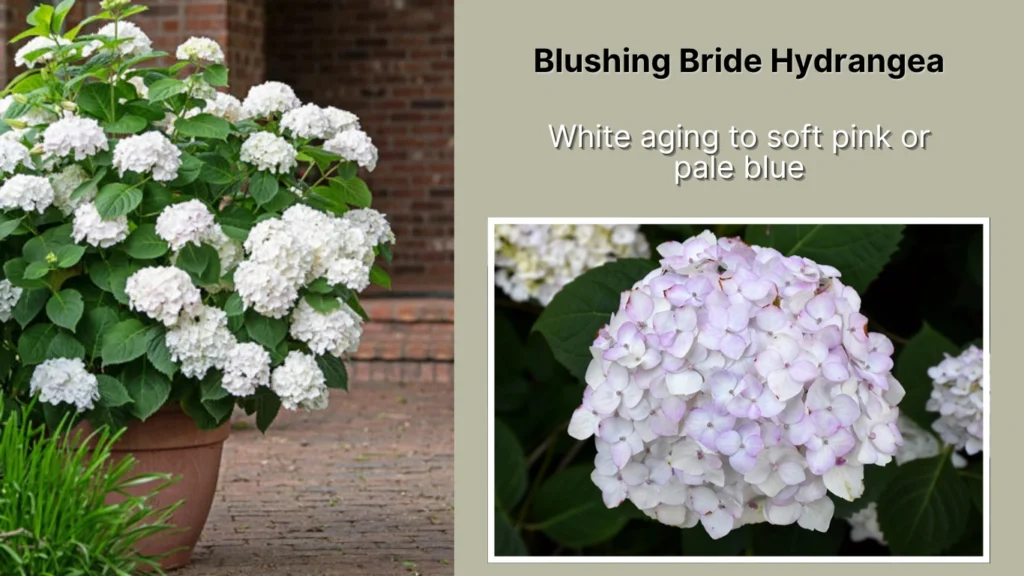
Blushing Bride is a stunning Hydrangea macrophylla cultivar in the Endless Summer® series. It begins with pure white mophead blooms that gradually take on soft blush tones of pink or pale blue, depending on the soil’s acidity.
Identification
- Flower Type: Mophead
- Color Range: White aging to soft pink or pale blue
- Leaf Shape: Broad, serrated, deep green
- Height: 3–5 feet
- Bloom Time: Late spring through fall (reblooming)
Origin and Popularity
As a companion to the original Endless Summer Hydrangea, Blushing Bride is prized for its romantic coloring and reblooming habit. It’s a favorite in wedding-themed gardens, formal beds, and elegant containers.
Growing and Blooming Season
Plant in spring or fall. Blooms from late May into early fall. Suitable for USDA zones 5–9. Prefers partial shade, rich well-drained soil, and blooms on both old and new wood. Prune lightly after flowering to encourage reblooming.
Companion Plants
Pairs beautifully with lavender, white daisies, hostas, and lamb’s ear. Ideal for use in bridal borders, serene garden designs, or any space needing soft, gentle floral tones.
20. Vanilla Strawberry Hydrangea
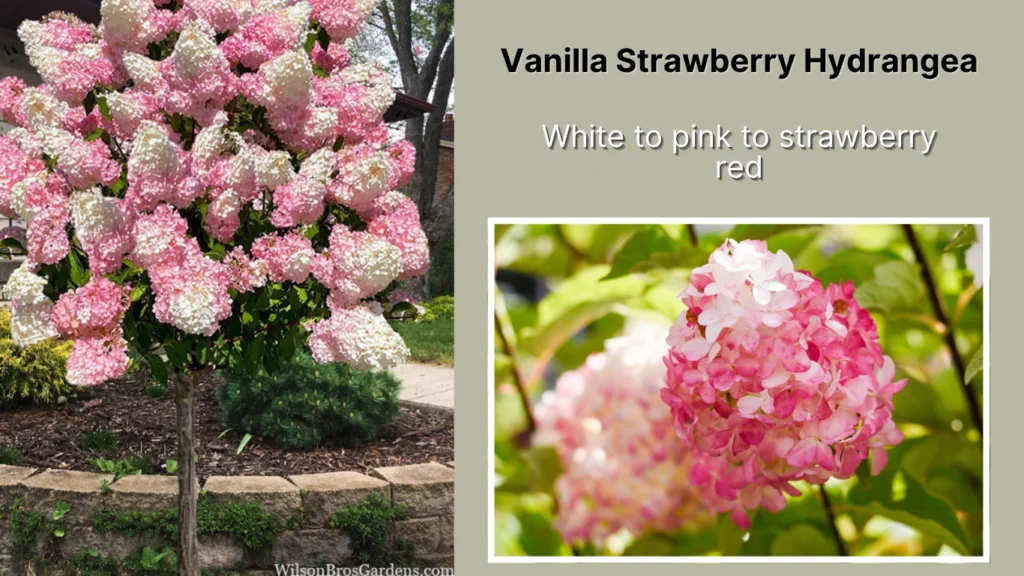
Vanilla Strawberry is a breathtaking Hydrangea paniculata cultivar known for its large flower panicles that open creamy white, then transition to soft pink, and finally deepen to strawberry red. This dramatic color shift occurs all on the same flower head, creating a beautiful multitone display.
Identification
- Flower Type: Cone-shaped panicles
- Color Range: White to pink to strawberry red
- Leaf Shape: Oval, dark green
- Height: 6–7 feet
- Bloom Time: Midsummer to fall
Origin and Popularity
Bred in France, Vanilla Strawberry quickly gained global popularity for its ever-changing blooms and strong visual impact. Its tall form and vibrant shades make it a favorite centerpiece in larger garden beds.
Growing and Blooming Season
Plant in spring or fall. Blooms from July to September. Thrives in USDA zones 4–8. Prefers full sun to part shade and fertile, well-drained soil. Prune in late winter or early spring, as it blooms on new wood.
Companion Plants
Stunning when paired with ornamental grasses, rudbeckia, phlox, or late-summer sedums. Ideal for mixed shrub borders, specimen planting, or cottage-style gardens where its showy blooms can steal the scene.
21. Invincibelle Spirit Hydrangea
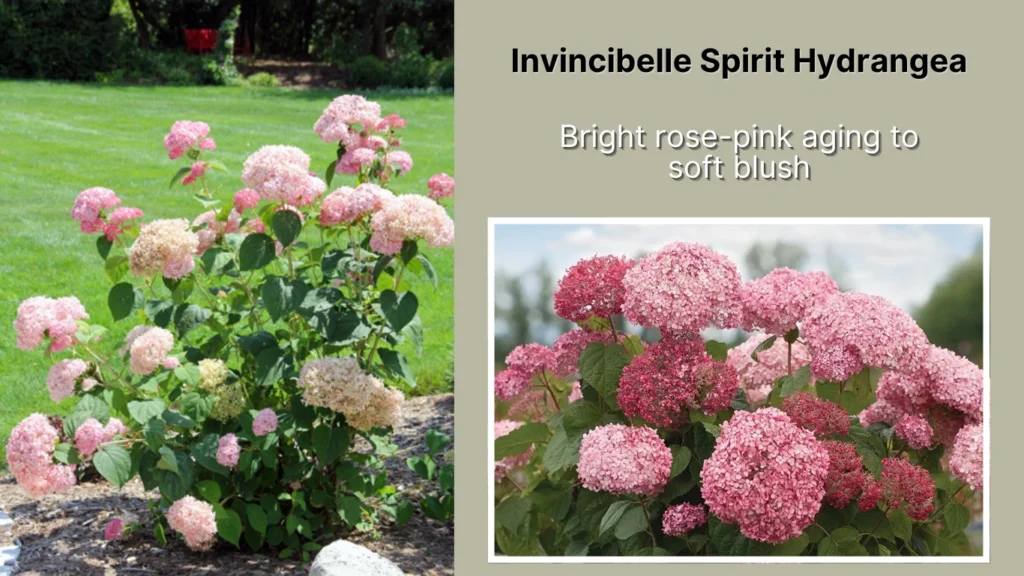
Invincibelle Spirit is a pink-flowered cultivar of Hydrangea arborescens, known as the first-ever pink Smooth Hydrangea. It features strong stems, large dome-shaped blooms, and excellent cold hardiness, offering bold color in areas where other hydrangeas may struggle.
Identification
- Flower Type: Mophead (rounded clusters)
- Color Range: Bright rose-pink aging to soft blush
- Leaf Shape: Broad, matte green
- Height: 3–4 feet
- Bloom Time: Early summer to fall
Origin and Popularity
A breakthrough introduction by Proven Winners®, Invincibelle Spirit has been praised for its vibrant color, reblooming ability, and sturdy growth. It also supports breast cancer research, giving it added symbolic value.
Growing and Blooming Season
Plant in spring or fall. Blooms from June through September. Best for USDA zones 3–8. Prefers full sun to part shade and well-drained soil. Blooms on new wood—prune in early spring for best performance.
Companion Plants
Pairs beautifully with echinacea, salvia, or coreopsis. Perfect for mass plantings, perennial borders, or cutting gardens where repeated pink blooms bring continuous summer charm.
22. Nikko Blue Hydrangea

Nikko Blue is a classic and widely beloved Hydrangea macrophylla cultivar, famous for its vibrant blue mophead flowers. It’s one of the most iconic blue hydrangeas and a go-to choice for gardeners aiming to achieve that traditional, rich hydrangea look.
Identification
- Flower Type: Mophead
- Color Range: Bright blue in acidic soil, lavender to pink in alkaline
- Leaf Shape: Large, serrated, dark green
- Height: 4–6 feet
- Bloom Time: Late spring to midsummer
Origin and Popularity
Introduced in the 20th century, Nikko Blue remains one of the most recognizable hydrangeas worldwide. Its reliable performance and striking bloom color make it a staple in both formal and cottage-style gardens.
Growing and Blooming Season
Plant in spring or fall. Blooms from late May through July. Ideal for USDA zones 6–9. Prefers partial shade and moist, well-drained, acidic soil. Flowers on old wood—avoid cutting back in spring.
Companion Plants
Perfect with hostas, azaleas, camellias, or Japanese forest grass. Ideal for use in shaded garden borders, foundation beds, or along woodland edges.
23. BloomStruck Hydrangea
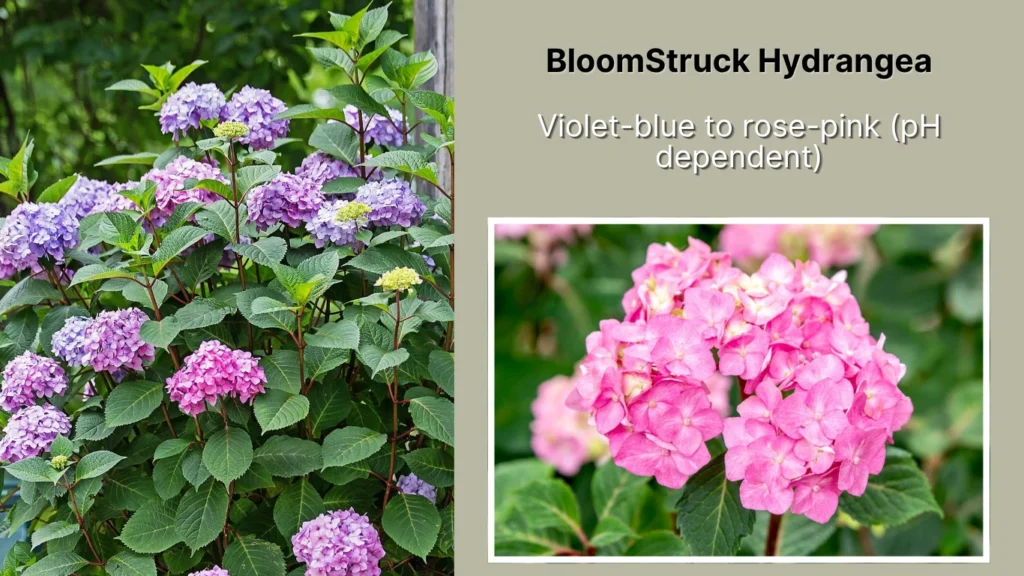
BloomStruck is a vibrant reblooming hydrangea in the Endless Summer® series, producing intense violet-blue to rose-pink mophead flowers depending on soil pH. It’s known for its glossy leaves, red stems, and exceptional heat and disease resistance.
Identification
- Flower Type: Mophead
- Color Range: Violet-blue to rose-pink (pH dependent)
- Leaf Shape: Glossy, serrated, dark green with reddish stems
- Height: 3–4 feet
- Bloom Time: Late spring through fall (reblooming)
Origin and Popularity
As a newer addition to the Endless Summer series, BloomStruck is celebrated for its improved resilience and extended blooming. It has quickly become a favorite for modern landscapes and long-season color.
Growing and Blooming Season
Plant in spring or fall. Blooms on both old and new wood from May through October. Grows well in USDA zones 4–9. Prefers part sun and rich, moist, well-drained soil. Adjust soil pH for desired bloom color.
Companion Plants
Complements compact boxwoods, lavender, dwarf spirea, or Japanese anemones. Excellent for foundation plantings, colorful borders, and decorative container displays.
24. Zorro Hydrangea
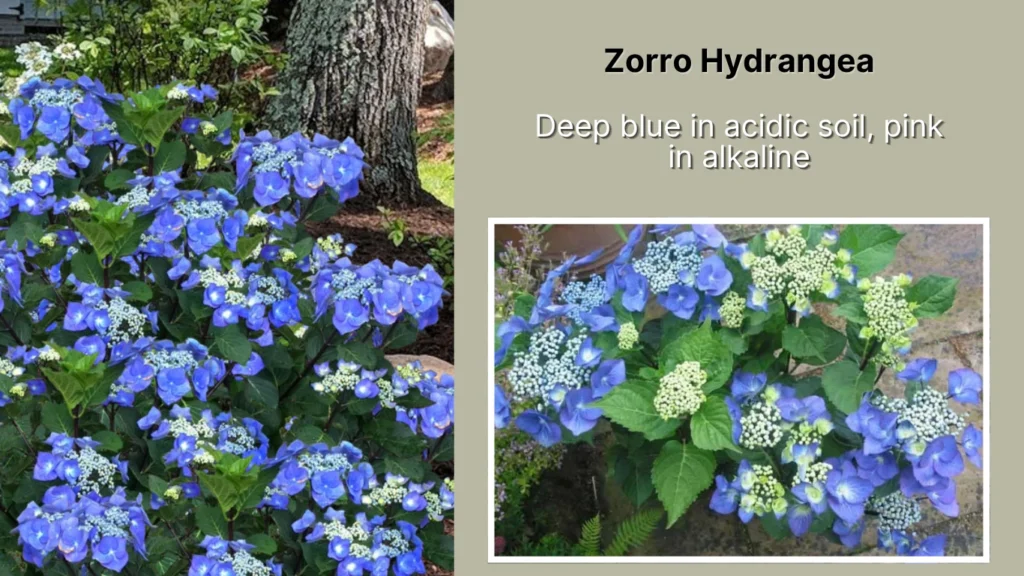
Zorro is a stunning Hydrangea macrophylla lacecap variety, recognized for its dramatic deep blue flowers (in acidic soil) and contrasting dark black-purple stems. Its elegant blooms and structural beauty make it a standout in shaded and semi-shaded gardens.
Identification
- Flower Type: Lacecap
- Color Range: Deep blue in acidic soil, pink in alkaline
- Leaf Shape: Broad, serrated, dark green
- Height: 4–6 feet
- Bloom Time: Early to mid-summer
Origin and Popularity
Zorro was bred in the Netherlands and is admired for its dark stems and vivid bloom colors. Its strong visual structure and shade tolerance make it a favorite among gardeners designing woodland borders or dramatic entryways.
Growing and Blooming Season
Plant in spring or fall. Blooms from June to July, sometimes with a light rebloom later. Best in USDA zones 5–9. Grows well in part shade and prefers moist, well-drained soil. Flowers on old wood—prune after flowering.
Companion Plants
Pairs well with Japanese ferns, hostas, and purple-leaved heucheras. Ideal for shady beds, underplanting trees, or creating cool-toned, sophisticated garden compositions.
25. Bobo Hydrangea
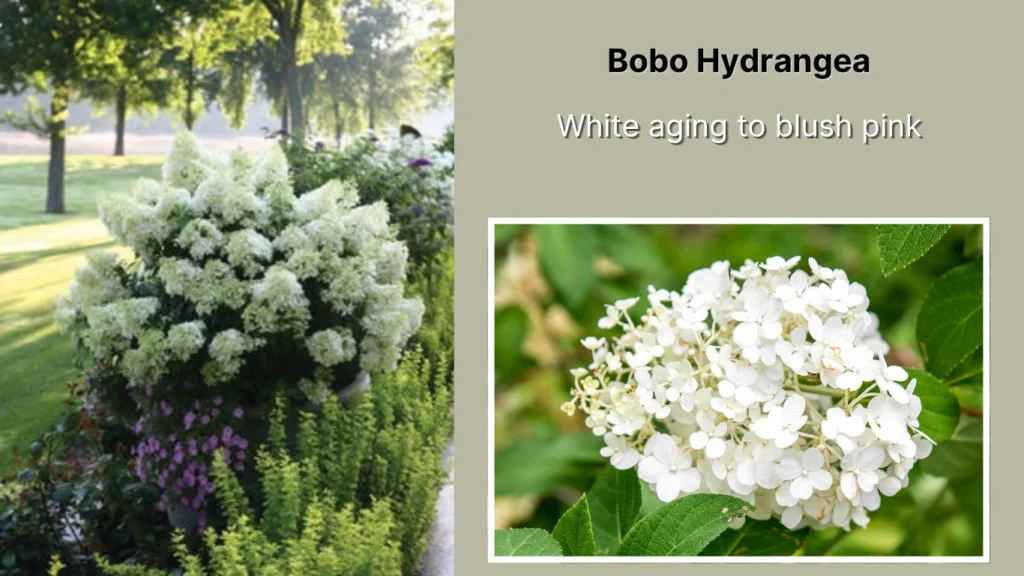
Bobo is a compact and vigorous Hydrangea paniculata variety known for its prolific, upright white flower heads that cover nearly the entire plant in bloom. Despite its small size, Bobo delivers a big impact in tight spaces or containers.
Identification
- Flower Type: Cone-shaped panicles
- Color Range: White aging to blush pink
- Leaf Shape: Oval, green
- Height: 2.5–3 feet
- Bloom Time: Midsummer to fall
Origin and Popularity
Introduced by Proven Winners®, Bobo quickly gained popularity for small garden spaces and front-yard landscaping. It offers the full drama of larger panicle hydrangeas in a manageable, dwarf form.
Growing and Blooming Season
Plant in spring or fall. Blooms from July through September. Best for USDA zones 3–8. Thrives in full sun to part shade and blooms on new wood—prune in early spring.
Companion Plants
Perfect with compact spirea, dwarf grasses, or annuals like petunias. Bobo fits beautifully in containers, low hedges, or border edges where dense, bright blooms can be fully appreciated.