


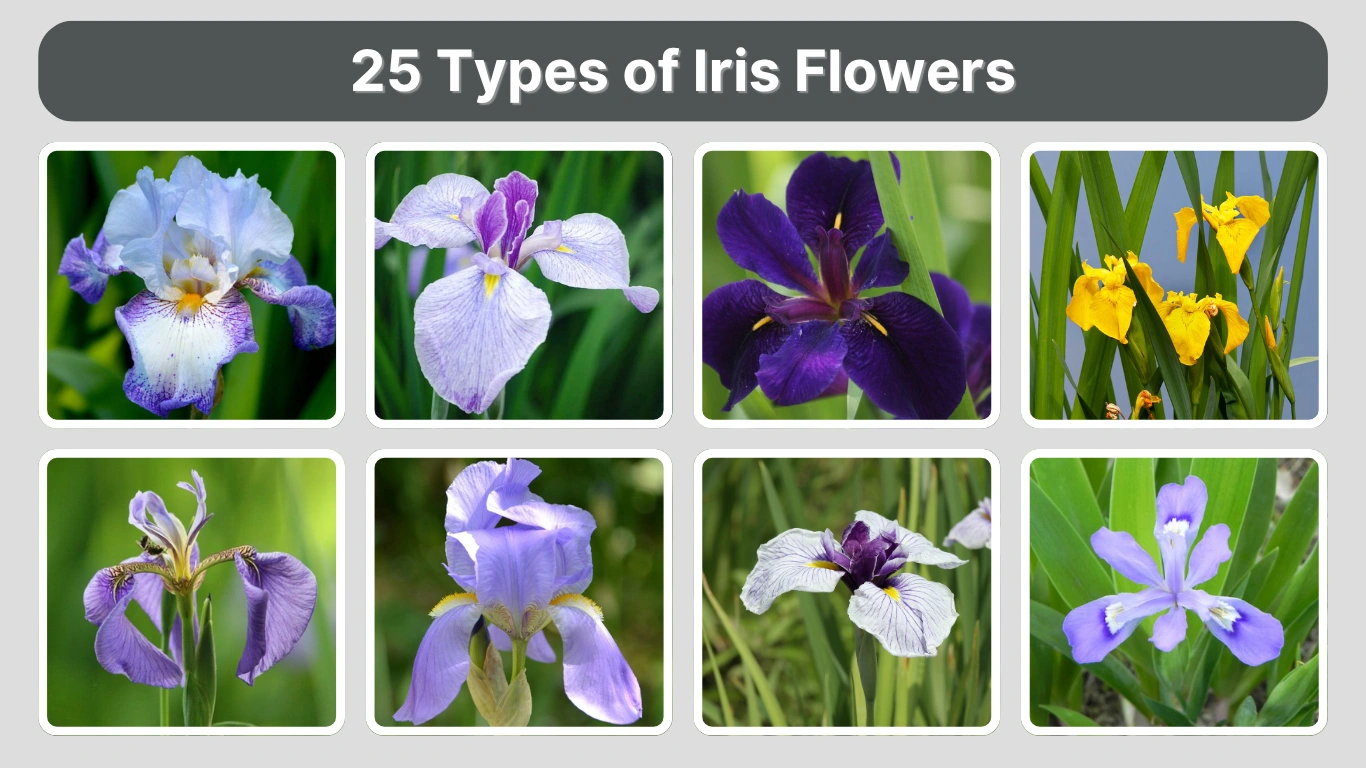
Irises are among the most diverse and enchanting flowering plants in the garden world. With their elegant blooms, sword-like foliage, and incredible range of colors and forms, irises bring both structure and beauty to landscapes from spring through early summer, and even into fall in some varieties. From classic bearded irises to delicate woodland types and water-loving species, this guide introduces 25 stunning types of iris flowers. Whether you’re planting a sunny border, a shaded woodland, or a moist pond edge, there’s an iris variety to match your garden’s style and growing conditions.
1. Bearded Iris

Bearded Iris is the most iconic and widely cultivated iris variety, known for its dramatic ruffled petals and distinctive “beard” — the fuzzy line along the center of its falls (lower petals). These stunning flowers are a highlight in spring gardens and come in nearly every color imaginable.
Identification
- Color: Wide range — purple, blue, white, yellow, pink, peach, orange, and bi-colors
- Bloom Size: 4–7 inches
- Plant Height: 8–38 inches (dwarf to tall types)
- Flower Structure: Three upright petals (standards) and three drooping petals (falls) with a central fuzzy “beard”
- Fragrance: Lightly to strongly fragrant depending on the cultivar
Growing and Blooming Season
Bearded irises typically bloom in late spring to early summer, with some varieties reblooming in late summer or fall. They thrive in USDA zones 3–9, preferring full sun and well-drained soil. Division every few years helps promote healthy blooms.
Companion Plants
Pairs beautifully with peonies, alliums, salvia, catmint, and ornamental grasses. Their bold vertical form and vivid colors contrast well with softer, mounding plants, making them excellent for mixed borders and focal planting.
2. Siberian Iris

Siberian Iris is an elegant, grass-like perennial with delicate blooms that offer a softer alternative to the showier bearded types. It’s known for its clump-forming habit, refined petals, and exceptional hardiness in cooler climates.
Identification
- Color: Blue, violet, purple, white, and soft yellow
- Bloom Size: 3–4 inches
- Plant Height: 24–36 inches
- Flower Structure: Upright standards with gracefully arching falls; no beard
- Foliage: Narrow, sword-like leaves that remain attractive after blooming
Growing and Blooming Season
Blooms in late spring to early summer. Grows well in USDA zones 3–9. Prefers full sun to part shade and moist, well-drained soil. Unlike bearded iris, Siberians tolerate wet soils and are low-maintenance.
Companion Plants
Looks graceful with astilbes, columbines, daylilies, and ferns. Ideal for cottage gardens, borders, and naturalized areas, especially around ponds or stream edges.
3. Japanese Iris

Japanese Iris (Iris ensata) is prized for its large, flat, orchid-like blooms and elegant garden presence. These moisture-loving irises are perfect for water gardens and add exotic flair to summer landscapes.
Identification
- Color: Purple, lavender, white, pink, and blue shades
- Bloom Size: 6–8 inches or larger
- Plant Height: 24–48 inches
- Flower Structure: Wide, flaring falls with reduced or absent standards; no beard
- Foliage: Tall, slender, grass-like leaves
Growing and Blooming Season
Blooms in early to mid-summer. Grows best in USDA zones 4–9. Needs full sun and moist to wet, acidic soil—especially during the growing season. Benefits from mulch and rich organic matter.
Companion Plants
Ideal with hostas, ligularia, marsh marigolds, and moisture-loving ferns. Great for rain gardens, boggy borders, or the edges of ponds and streams.
4. Dutch Iris
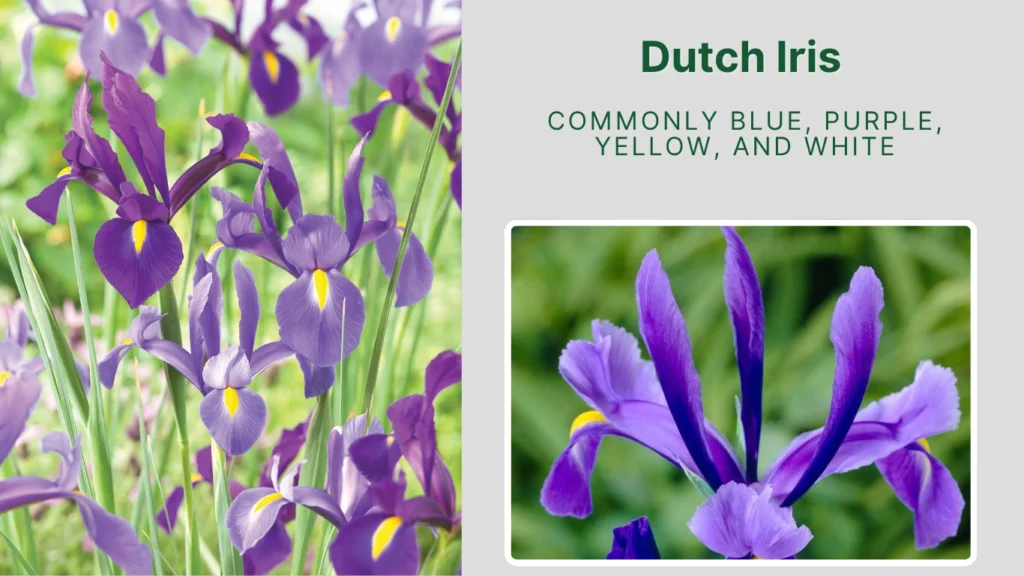
Dutch Iris is a graceful, bulbous iris often used in floral arrangements due to its long stems and elegant, orchid-like blooms. Unlike rhizomatous irises, it grows from bulbs and is easy to naturalize in sunny garden beds.
Identification
- Color: Commonly blue, purple, yellow, and white
- Bloom Size: 3–4 inches
- Plant Height: 18–24 inches
- Flower Structure: Slender falls with contrasting blotches, narrow upright standards
- Foliage: Narrow, strap-like leaves emerging in spring
Growing and Blooming Season
Blooms in late spring. Hardy in USDA zones 6–9 and grown as an annual or replanted in colder areas. Prefers full sun and well-drained soil. Often planted in fall along with other spring-flowering bulbs.
Companion Plants
Pairs beautifully with tulips, daffodils, anemones, and ornamental alliums. Great for cut flower gardens, borders, and mixed bulb displays.
5. Louisiana Iris

Louisiana Iris is a bold, moisture-loving iris native to the wetlands of the southern United States. Known for its vivid colors and vigorous growth, it’s a favorite for pond edges and rain gardens.
Identification
- Color: Red, purple, blue, yellow, pink, and white
- Bloom Size: 4–6 inches
- Plant Height: 24–40 inches
- Flower Structure: Wide falls, no beard, often with veining or color patterns
- Foliage: Tall, sword-shaped leaves in clumps
Growing and Blooming Season
Blooms in mid to late spring. Thrives in USDA zones 6–10, needing moist to wet soil and full to partial sun. Excellent in boggy or low-lying areas; tolerant of occasional flooding.
Companion Plants
Ideal with cannas, pickerelweed, marsh milkweed, and water irises. Adds bold color to water features, wet meadows, and rain-retention areas.
6. Yellow Flag Iris
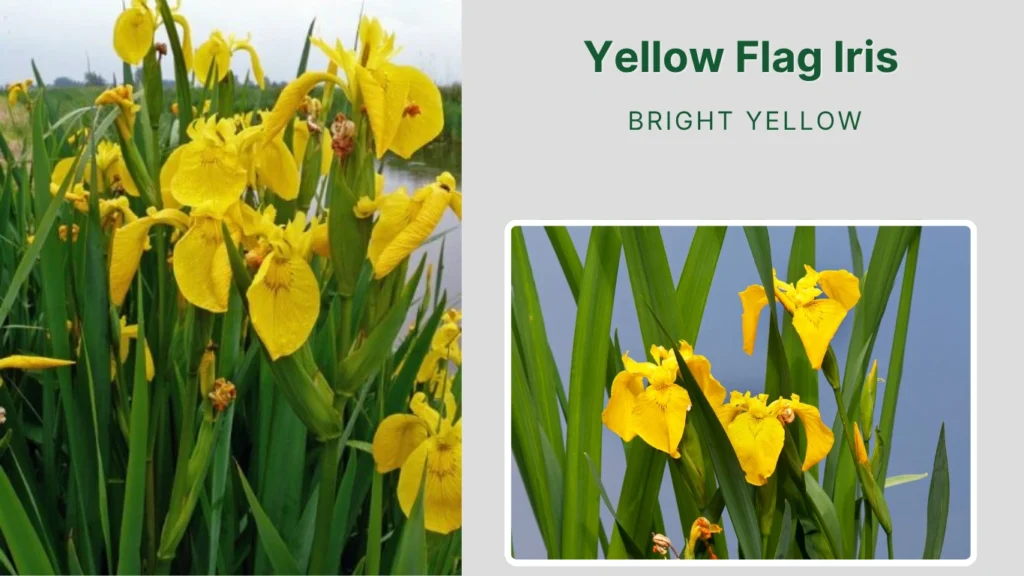
Yellow Flag Iris (Iris pseudacorus) is a striking wetland iris native to Europe, recognized by its bright yellow blooms and vigorous growth. Though beautiful, it can become invasive in some regions if not managed properly.
Identification
- Color: Bright yellow
- Bloom Size: 3–4 inches
- Plant Height: 36–48 inches
- Flower Structure: Drooping falls with faint markings; no beard
- Foliage: Tall, upright, sword-shaped green leaves
Growing and Blooming Season
Blooms in late spring to early summer. Hardy in USDA zones 4–9. Prefers full sun and wet to very moist soil. Often planted along streams, ponds, or in rain gardens—but control is needed in some areas.
Companion Plants
Pairs well with cattails, cardinal flower, and water-loving ferns. Ideal for large water gardens, but avoid planting near natural wetlands where spread is a concern.
7. Blue Flag Iris
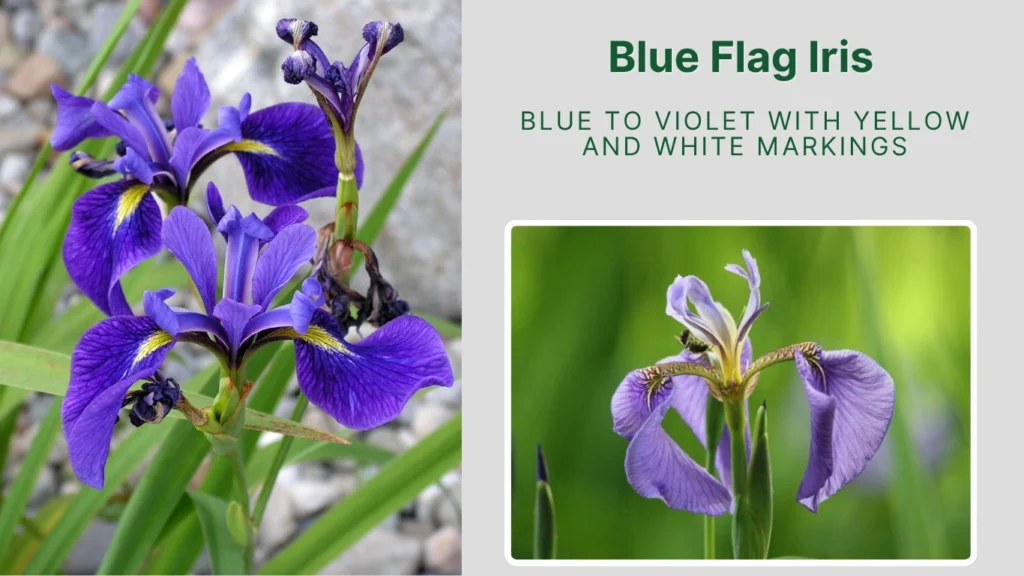
Blue Flag Iris (Iris versicolor) is a native North American iris known for its cool blue to violet flowers and adaptability to wet environments. It’s widely appreciated for supporting pollinators and adding elegance to naturalized plantings.
Identification
- Color: Blue to violet with yellow and white markings
- Bloom Size: 3–4 inches
- Plant Height: 24–36 inches
- Flower Structure: Three broad falls with contrasting veining, no beard
- Foliage: Narrow, upright, grass-like leaves
Growing and Blooming Season
Blooms from late spring into early summer. Hardy in USDA zones 3–9. Thrives in moist to wet soil and full sun to partial shade. Great for rain gardens and shoreline planting.
Companion Plants
Complements joe-pye weed, swamp milkweed, turtlehead, and sedges. Great for wildlife gardens and low-lying wet spots needing a splash of natural beauty.
8. Crested Iris

Crested Iris (Iris cristata) is a charming, low-growing iris native to eastern North America. It spreads by rhizomes to form a carpet of delicate, fringed blooms—perfect for shaded woodland gardens.
Identification
- Color: Pale blue to lavender with yellow and white crests
- Bloom Size: 1.5–2 inches
- Plant Height: 6–9 inches
- Flower Structure: Flattened blooms with a distinct yellow or white crest on each fall
- Foliage: Slender, sword-like green leaves forming dense clumps
Growing and Blooming Season
Blooms in mid to late spring. Grows best in USDA zones 3–9 in partial to full shade and moist, well-drained soil. Often used as a native ground cover under trees or in woodland settings.
Companion Plants
Great with ferns, trillium, columbine, and hostas. Ideal for naturalizing along shady slopes, woodland paths, or as an understory accent in native plant gardens.
9. Dwarf Bearded Iris

Dwarf Bearded Iris (Iris pumila) is a compact version of the classic bearded iris, featuring vibrant early blooms on short, sturdy stems. It’s perfect for rock gardens, edging, and containers.
Identification
- Color: Nearly every color—purple, yellow, white, pink, orange, and bi-colors
- Bloom Size: 2–4 inches
- Plant Height: 6–12 inches
- Flower Structure: Bearded falls, ruffled standards, typical iris shape in mini form
- Foliage: Narrow, upright leaves forming neat clumps
Growing and Blooming Season
Blooms in early to mid-spring, making it one of the first irises to flower. Hardy in USDA zones 3–9. Requires full sun and well-drained soil. Excellent for sunny borders or slopes.
Companion Plants
Pair with creeping thyme, alyssum, sedum, or tulips. Great for early spring color in compact spaces or dry, sunny rockeries.
10. Spuria Iris
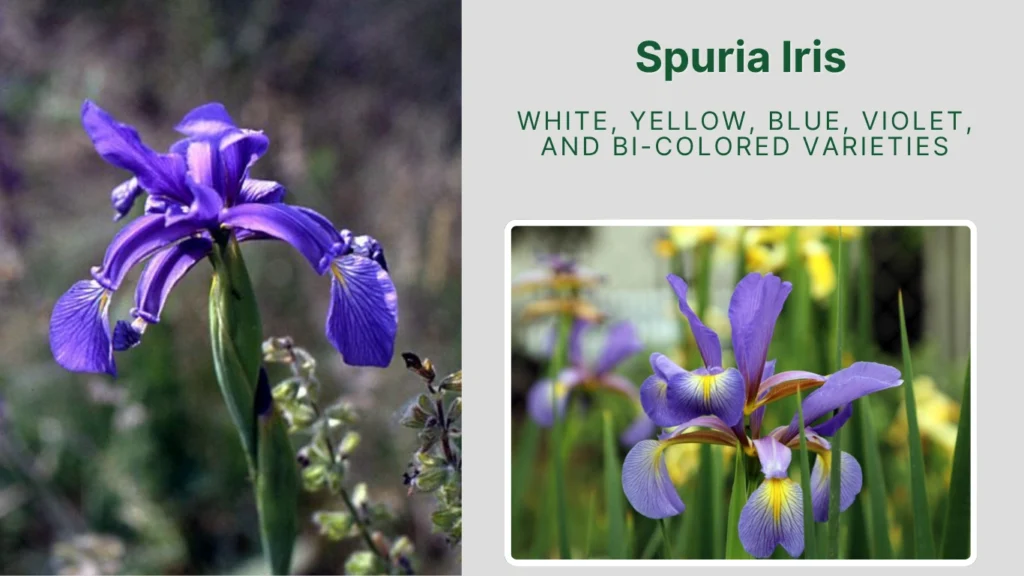
Spuria Iris is a tall, stately species known for its refined, orchid-like flowers and graceful presence. These irises resemble Dutch irises but grow from rhizomes and offer striking vertical structure in garden borders.
Identification
- Color: White, yellow, blue, violet, and bi-colored varieties
- Bloom Size: 4–6 inches
- Plant Height: 36–60 inches
- Flower Structure: Upright standards with slender, spreading falls; no beard
- Foliage: Narrow, vertical, sword-like green leaves
Growing and Blooming Season
Blooms in late spring to early summer, just after bearded iris season. Best in USDA zones 4–9. Prefers full sun and well-drained to slightly moist soil. Drought tolerant once established.
Companion Plants
Ideal with ornamental grasses, peonies, and alliums. Its vertical growth adds architectural interest to perennial beds and cutting gardens.
11. Iris pallida

Iris pallida, also known as Dalmatian Iris, is a fragrant species admired for its soft bluish-lavender blooms and gray-green, sword-like foliage. It’s an old garden favorite and a source of orris root in perfumery.
Identification
- Color: Pale lavender-blue with yellow beards
- Bloom Size: 3–5 inches
- Plant Height: 24–36 inches
- Flower Structure: Bearded with wide, ruffled falls and standards
- Foliage: Silvery-green, sword-shaped leaves with vertical growth
Growing and Blooming Season
Blooms in late spring to early summer. Grows best in USDA zones 4–9. Requires full sun and well-drained soil. Very hardy and drought tolerant once established.
Companion Plants
Perfect with roses, lavender, peonies, and salvias. Adds elegance to formal gardens and classic border arrangements, especially with silvery or gray-green planting themes.
12. Iris germanica

Iris germanica is the classic Tall Bearded Iris, renowned for its bold, showy flowers and vast range of colors. It’s the most hybridized iris species, forming the backbone of countless modern iris cultivars found in gardens worldwide.
Identification
- Color: Available in nearly every shade—blue, purple, yellow, pink, orange, white, and multicolors
- Bloom Size: 4–7 inches
- Plant Height: 24–40 inches
- Flower Structure: Large, ruffled standards and falls with a prominent fuzzy beard
- Foliage: Tall, sword-like, blue-green leaves forming fan-like clumps
Growing and Blooming Season
Blooms in mid to late spring, with many varieties reblooming in fall. Hardy in USDA zones 3–9. Prefers full sun and well-drained soil. Needs regular division every 3–4 years to maintain vigor.
Companion Plants
Stands out beside peonies, alliums, baptisia, and ornamental grasses. Ideal for borders, cottage gardens, and formal landscapes where bold color and structure are desired.
13. Iris ensata

Iris ensata, commonly called Japanese Water Iris, is celebrated for its large, flat, and artistic blooms. Unlike most irises, it thrives in acidic, moisture-rich soils and creates stunning summer displays.
Identification
- Color: Deep purple, violet, white, pink, and blended tones
- Bloom Size: 6–10 inches wide
- Plant Height: 24–48 inches
- Flower Structure: Broad, flaring falls with minimal or no standards; no beard
- Foliage: Tall, slender, grass-like leaves in dense vertical clumps
Growing and Blooming Season
Blooms in early to mid-summer. Best in USDA zones 4–9. Prefers full sun and acidic, moist to wet soil—perfect for pond edges or rain gardens.
Companion Plants
Excellent with hostas, ligularia, ferns, and water-loving perennials. Works beautifully in Japanese-style gardens, around water features, or as a vibrant summer accent in moist beds.
14. Iris reticulata

Iris reticulata is a petite, bulbous iris known for its early spring blooms and vibrant jewel-toned flowers. It’s one of the first irises to flower, often pushing through snow, making it a favorite for rock gardens and spring borders.
Identification
- Color: Rich violet, purple, blue, or yellow with gold or white markings
- Bloom Size: 2–3 inches
- Plant Height: 4–6 inches
- Flower Structure: Narrow petals with striking falls and a small, compact form
- Foliage: Thin, grassy leaves that appear after blooming
Growing and Blooming Season
Blooms in very early spring. Hardy in USDA zones 5–9. Grows from bulbs planted in fall. Prefers full sun and well-drained soil. Dormant in summer after a quick spring show.
Companion Plants
Looks great with early crocuses, snowdrops, and miniature daffodils. Perfect for containers, borders, and rock gardens where early color is needed.
15. Iris cristata

Iris cristata, or Dwarf Crested Iris, is a delicate native woodland species with fringed petals and a low-growing habit. It spreads gently by rhizomes, forming a lush groundcover in shady spots.
Identification
- Color: Pale lavender to deep blue with yellow-white crests
- Bloom Size: 1.5–2 inches
- Plant Height: 6–8 inches
- Flower Structure: Flat blooms with crested falls and narrow standards
- Foliage: Slim, sword-like green leaves forming dense mats
Growing and Blooming Season
Blooms in mid to late spring. Hardy in USDA zones 3–9. Prefers part to full shade and moist, well-drained woodland soil. Easy to grow and deer resistant.
Companion Plants
Blends well with woodland plants like trillium, foamflower, columbine, and hosta. Excellent for shady rock gardens, native borders, or naturalizing under trees.
16. Iris setosa

Iris setosa, also known as the Beachhead Iris or Arctic Iris, is a hardy species native to northern regions. It thrives in cool climates and moist soils, producing simple yet striking violet-blue flowers with elegant veining.
Identification
- Color: Violet to deep blue with white or yellow markings
- Bloom Size: 2–3 inches
- Plant Height: 12–24 inches
- Flower Structure: Narrow petals with upright standards and drooping falls; no beard
- Foliage: Grass-like, green leaves forming upright tufts
Growing and Blooming Season
Blooms in late spring to early summer. Hardy in USDA zones 2–7. Grows best in cool, moist soils and full sun to partial shade. Tolerates wet, boggy conditions well.
Companion Plants
Pairs well with marsh marigolds, blue-eyed grass, and other moisture-loving natives. Ideal for naturalized areas, rain gardens, and the edges of woodland paths or ponds.
17. Iris versicolor

Iris versicolor, commonly called Harlequin Blueflag, is a native North American iris known for its vibrant bluish-purple flowers with complex veining. It naturally thrives in wetlands and is often used in ecological restoration projects.
Identification
- Color: Violet-blue with white and yellow veining
- Bloom Size: 3–4 inches
- Plant Height: 24–36 inches
- Flower Structure: Elegant falls with veined patterns; no beard
- Foliage: Broad, sword-like leaves in vertical clumps
Growing and Blooming Season
Blooms in late spring to early summer. Thrives in USDA zones 3–9. Prefers wet to moist soil and full sun to partial shade. Attracts pollinators and supports native biodiversity.
Companion Plants
Combines beautifully with turtlehead, joe-pye weed, and sedges. Best for wetland gardens, pond edges, or as part of a pollinator-friendly native plant scheme.
18. Iris tectorum

Iris tectorum, commonly known as the Japanese Roof Iris, is a low-growing, rhizomatous species that was traditionally grown on rooftops in China and Japan. It’s known for its showy, slightly ruffled blooms and easy care in shaded spaces.
Identification
- Color: Lavender, blue-violet, or white with yellow crests
- Bloom Size: 3–5 inches
- Plant Height: 12–18 inches
- Flower Structure: Flattened, open blooms with crested falls; no beard
- Foliage: Broad, arching green leaves with a fan-like shape
Growing and Blooming Season
Blooms in late spring to early summer. Hardy in USDA zones 5–9. Prefers partial shade and humus-rich, moist, well-drained soil. Tolerant of light drought once established.
Companion Plants
Pairs well with bleeding hearts, pulmonaria, and hostas. Ideal for woodland edges, shaded borders, or traditional Asian garden designs.
19. Iris pumila

Iris pumila, or Dwarf Iris, is one of the smallest iris species and a popular early-blooming plant for rock gardens and containers. Its short stature and vivid colors make it a standout miniature in spring displays.
Identification
- Color: Purple, yellow, white, blue, or bi-colored
- Bloom Size: 2–3 inches
- Plant Height: 4–10 inches
- Flower Structure: Bearded blooms with ruffled standards and drooping falls
- Foliage: Compact, narrow, gray-green leaves
Growing and Blooming Season
Blooms in early to mid-spring. Hardy in USDA zones 4–9. Requires full sun and very well-drained soil. Excellent drought resistance once established.
Companion Plants
Best with creeping thyme, sedum, or small alpine perennials. Ideal for rock gardens, borders, and dry slopes where space is limited and early color is appreciated.
20. Iris unguicularis

Iris unguicularis, also known as the Winter Iris or Algerian Iris, is prized for its ability to bloom in the cooler months—often from late fall through early spring. Its fragrant flowers and evergreen foliage make it a unique addition to mild-climate gardens.
Identification
- Color: Soft lavender to deep violet with yellow and white markings
- Bloom Size: 2–4 inches
- Plant Height: 12–18 inches
- Flower Structure: Slender petals with slightly ruffled edges; no beard
- Foliage: Evergreen, grass-like clumps
Growing and Blooming Season
Blooms from late fall to early spring in mild climates. Hardy in USDA zones 7–10. Prefers full sun and dry, well-drained soil. It thrives in tough conditions and often blooms when little else does.
Companion Plants
Complements hellebores, cyclamen, and snowdrops. Great for winter borders, Mediterranean gardens, and areas near walkways where its cold-season fragrance can be appreciated.
21. Iris lactea

Iris lactea is a lesser-known species with delicate, soft-colored flowers and fine-textured foliage. Native to central Asia, it’s admired for its drought tolerance and graceful, understated charm.
Identification
- Color: Pale lavender to bluish-purple with white and yellow markings
- Bloom Size: 2–3 inches
- Plant Height: 12–24 inches
- Flower Structure: Simple blooms with narrow falls and short standards; no beard
- Foliage: Thin, grass-like leaves in upright clumps
Growing and Blooming Season
Blooms in late spring. Hardy in USDA zones 4–8. Prefers full sun and dry to moderately moist soil. Tolerant of poor soils and drought, making it suitable for xeriscaping.
Companion Plants
Pairs nicely with native grasses, yarrow, and small coreopsis. Great for dry meadows, prairie-style gardens, and informal mixed beds.
22. Iris innominata

Iris innominata, or Del Norte County Iris, is a compact and rare iris species native to the Pacific Northwest of the United States. It is admired for its deep color and is often used in native plant gardens and hybridization efforts.
Identification
- Color: Deep golden yellow to violet or bluish-purple, often with dark veining
- Bloom Size: 1.5–2.5 inches
- Plant Height: 6–12 inches
- Flower Structure: Small, narrow-petaled blooms with slight flaring falls; no beard
- Foliage: Thin, evergreen leaves forming tidy clumps
Growing and Blooming Season
Blooms in late spring to early summer. Hardy in USDA zones 6–9. Prefers part shade and well-drained, slightly acidic soil. Needs protection from intense summer heat.
Companion Plants
Perfect with native sedges, California poppies, and heuchera. Excellent for native plantings, woodland edges, and small shade gardens.
23. Iris douglasiana

Iris douglasiana, or Douglas Iris, is a beautiful native iris of California’s coastal regions. With its tolerance to sandy soil and salt spray, it’s an essential choice for coastal and native gardens.
Identification
- Color: Purple, blue, lavender, or white with yellow or cream markings
- Bloom Size: 2–4 inches
- Plant Height: 12–24 inches
- Flower Structure: Three falls and three standards with no beard; often reflexed
- Foliage: Long, evergreen, strap-like leaves
Growing and Blooming Season
Blooms in mid to late spring. Hardy in USDA zones 7–10. Prefers full sun to partial shade and sandy, well-drained soil. Drought-tolerant once established.
Companion Plants
Great with ceanothus, manzanita, and California fuchsia. Ideal for native plant gardens, coastal landscapes, and erosion-prone slopes.
24. Iris crocea

Iris crocea, also called Golden Iris or Kashmir Iris, is a vibrant species native to the Himalayas. Its bright golden-yellow flowers and sturdy form make it a standout in both formal and wild-style plantings.
Identification
- Color: Bright golden yellow, sometimes with darker markings
- Bloom Size: 3–4 inches
- Plant Height: 24–36 inches
- Flower Structure: Three large falls and three upright standards; no beard
- Foliage: Upright, green, lance-shaped leaves
Growing and Blooming Season
Blooms in early to mid-summer. Grows well in USDA zones 5–9. Prefers full sun and moderately moist, well-drained soil. Tolerates dry periods once established.
Companion Plants
Works well with lavender, coreopsis, and other heat-tolerant perennials. Ideal for sunny beds, borders, and cottage gardens needing warm, golden accents.
25. Iris albicans

Iris albicans, commonly known as the White Cemetery Iris, is an heirloom species often found in historic graveyards and Southern gardens. It’s one of the oldest cultivated irises and is treasured for its ghostly white blooms.
Identification
- Color: Pure white to silvery-white
- Bloom Size: 3–4 inches
- Plant Height: 18–24 inches
- Flower Structure: Bearded falls and ruffled standards
- Foliage: Gray-green, sword-like leaves in upright clumps
Growing and Blooming Season
Blooms in early spring. Hardy in USDA zones 4–9. Prefers full sun and dry to moderately moist, well-drained soil. Drought-tolerant and thrives with minimal care.
Companion Plants
Complements old roses, rosemary, and echinacea. Ideal for historic or drought-tolerant gardens, Mediterranean landscapes, or naturalizing in open areas.